
Free bill analysis - bring a power bill, get the production math for your actual roof, panel brands like Qcells and REC compared side by side
If the pitch starts at your door and ends with "sign tonight for the special," sleep on it. The sun will still be there tomorrow; so will we.
 Before
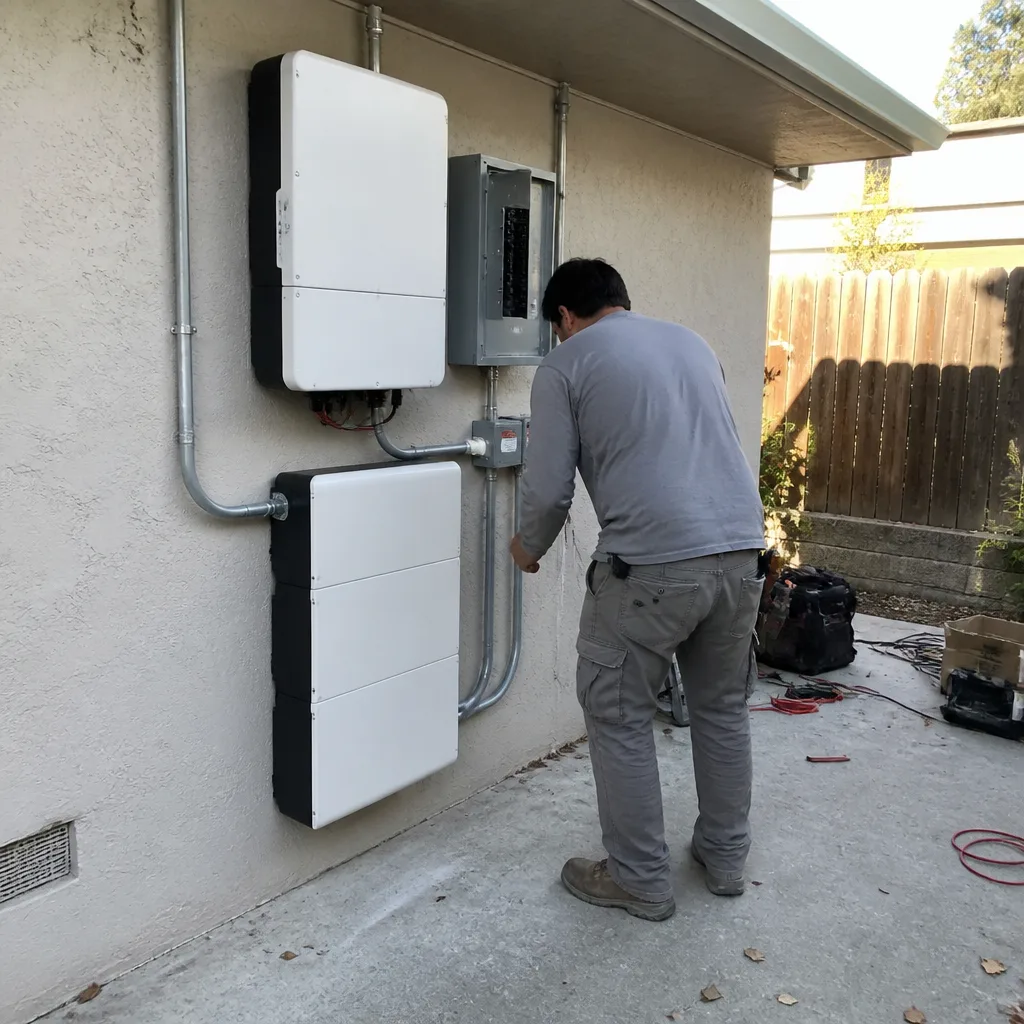 After
After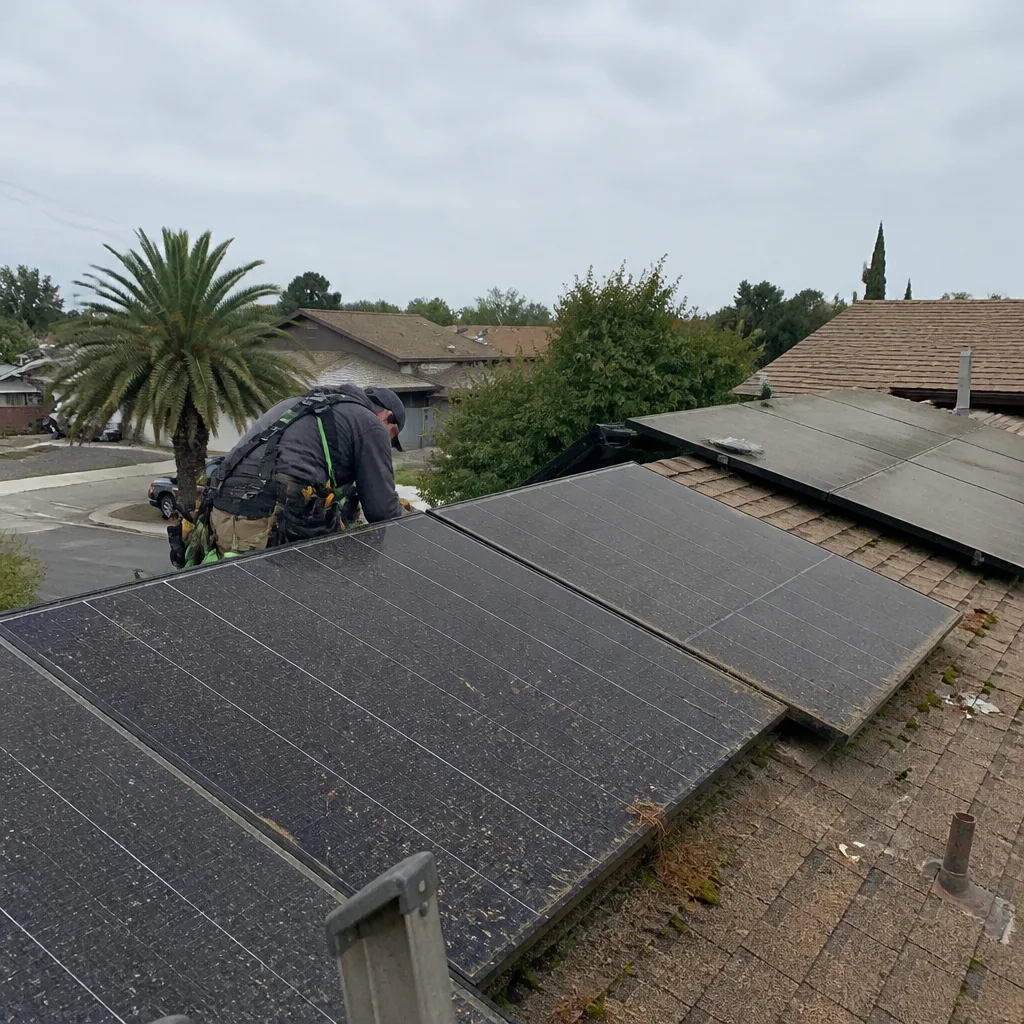 Before
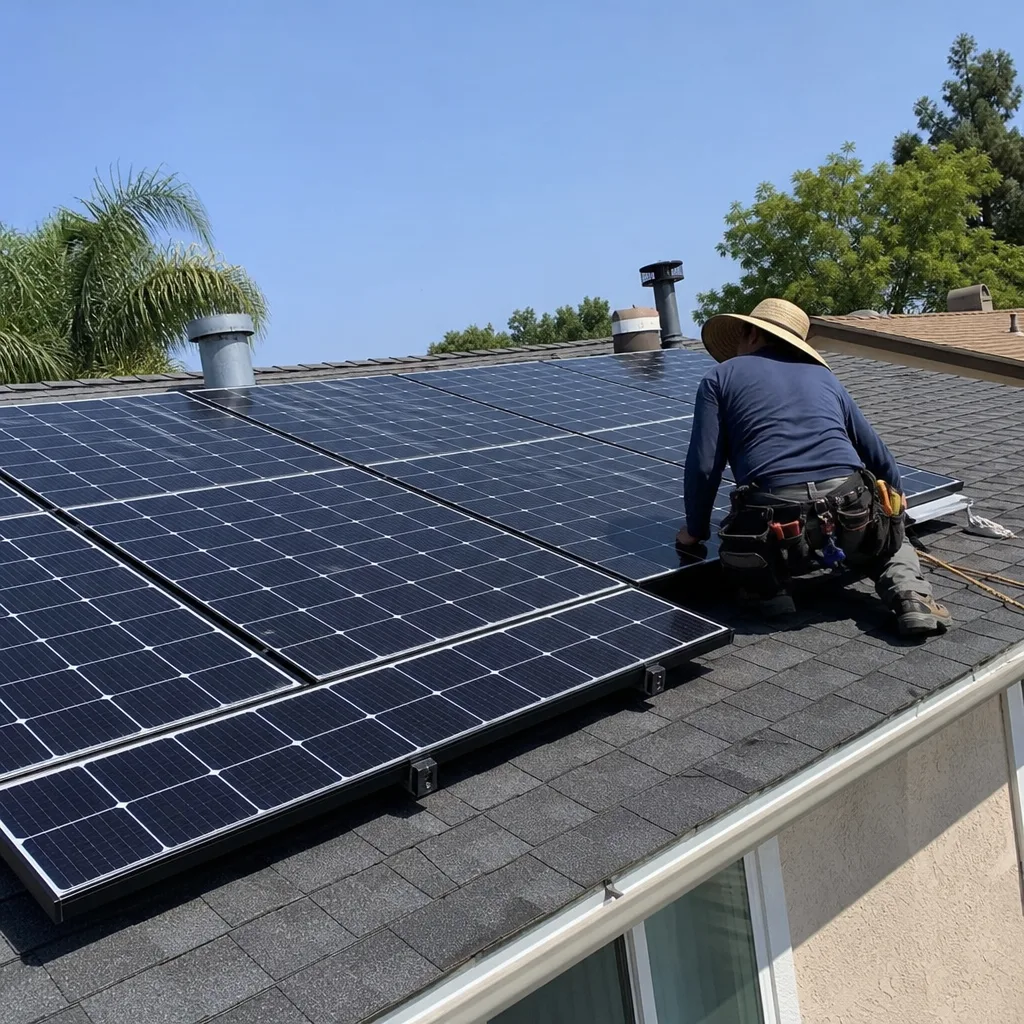 After
After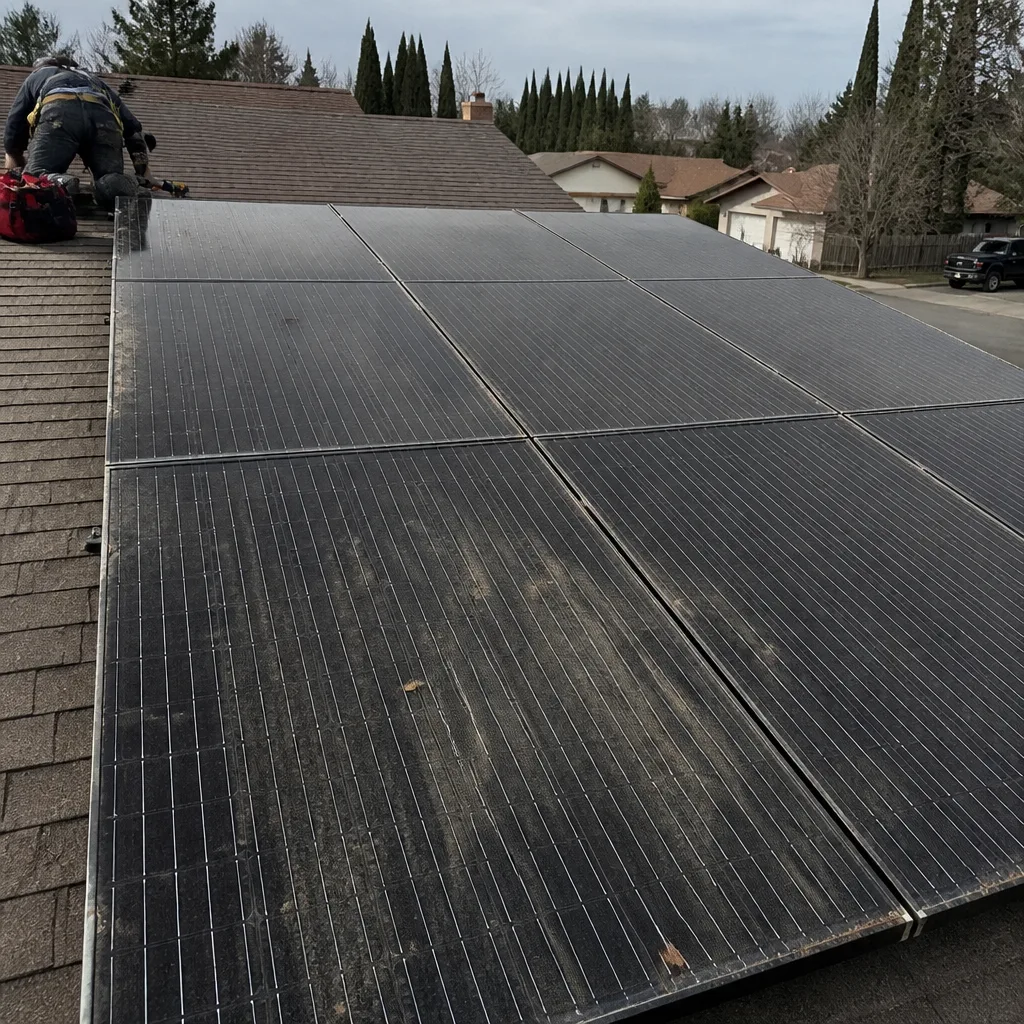 Before
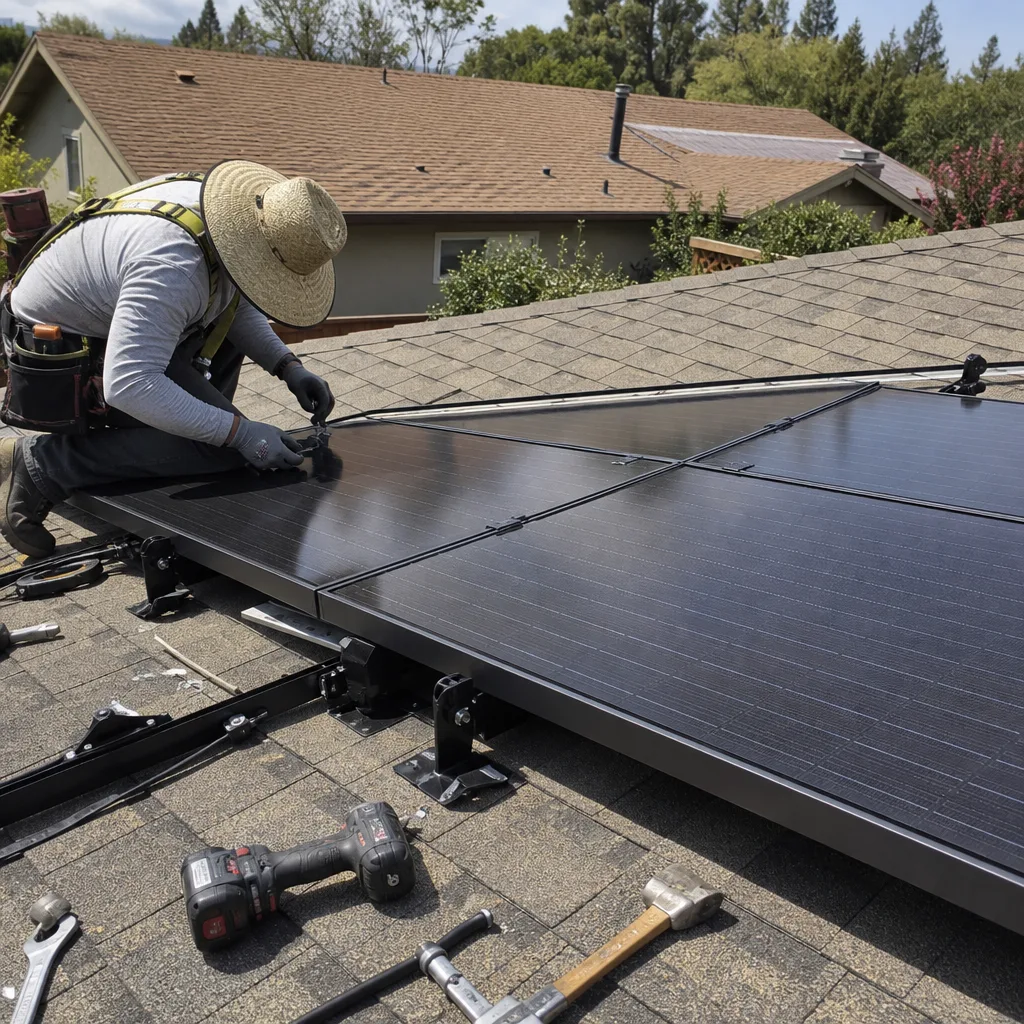 After
AfterFast, Reliable Solar Battery Storage & Backup Across Spring Valley Lake
Sitting at roughly 2,800 feet in the Mojave High Desert, Spring Valley Lake gets stronger sun than most of coastal Southern California. But that sun doesn’t help when the power drops at 9 p.m. and your refrigerator, medical equipment, or well pump goes dark. Solar battery storage fixes that gap. A properly sized battery system in Spring Valley Lake typically runs $12,000 to $18,500 installed after incentives, and Gus’s Solar handles everything from the first energy audit to the final sign-off with the Spring Valley Lake Association. Call (877) 550-6892 and we’ll come out, look at your actual usage, and give you a straight number.
Key Takeaways for Spring Valley Lake Homeowners
- Battery backup pricing in Spring Valley Lake runs roughly $12,000 to $18,500 after incentives, depending on capacity and whether a panel or inverter upgrade is needed.
- Every battery install here passes through the Spring Valley Lake Association’s Architectural Review Committee before San Bernardino County will even review the permit. We handle that whole path.
- NEM 3.0 export rates make time-of-use shifting the biggest financial reason to add a battery in Spring Valley Lake, not just outage protection.
- Hard freezes, desert dust, and lake-facing roof orientations all shape how we size and place battery systems in this specific community.
- Gus Petrakis answers his own phone. No call center, no voicemail maze. (877) 550-6892.
Why Gus’s Solar Is Spring Valley Lake’s Preferred Solar Battery Storage & Backup Company
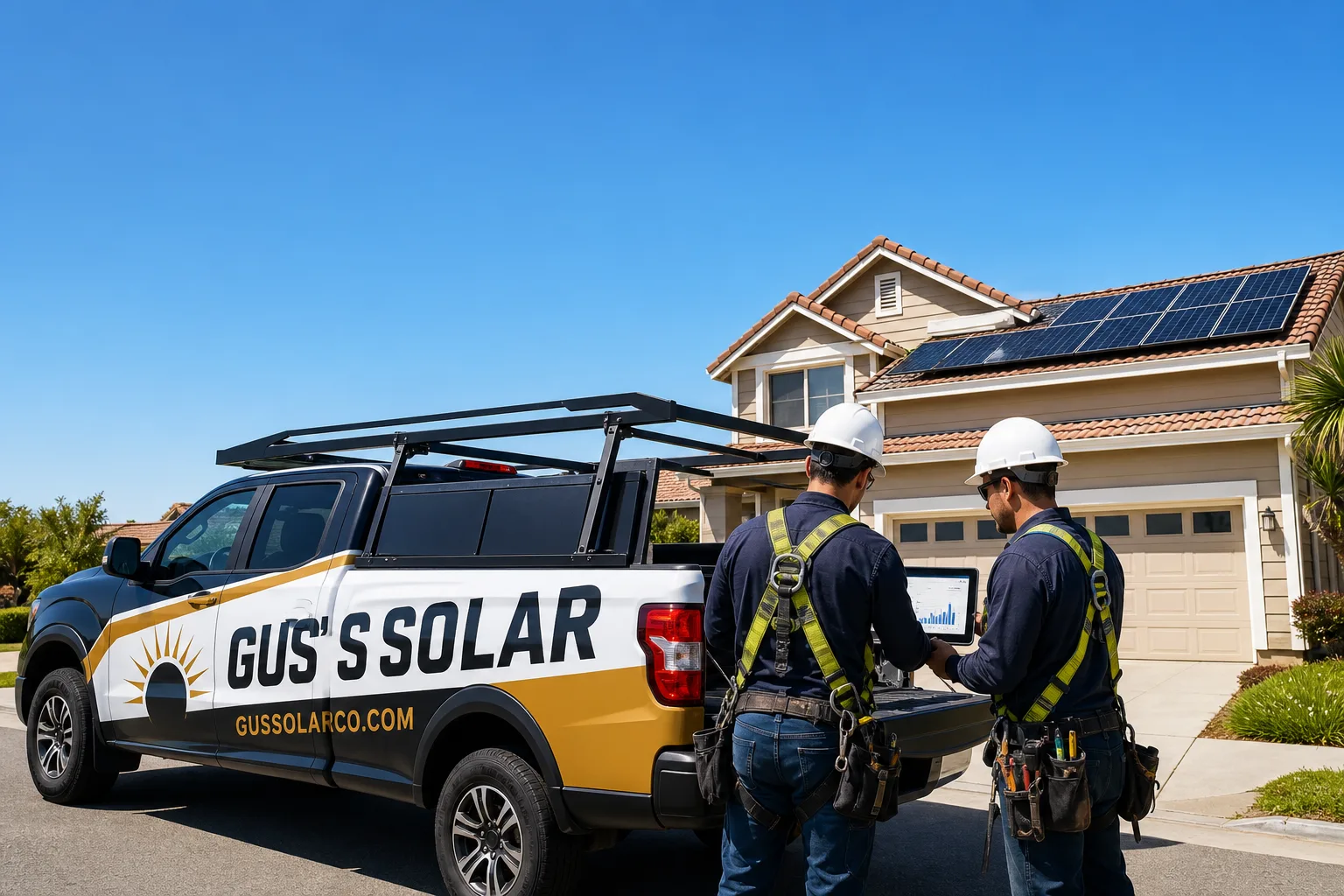
Gus Petrakis founded Gus’s Solar in 2011 and has kept it locally owned since day one. His name is on the truck, the quote, and the warranty. That matters in a place like Spring Valley Lake, where the Architectural Review Committee paperwork alone filters out the out-of-state crews that don’t know how to frame a battery placement submission. We know this HOA’s process because we’ve done it repeatedly. We know which battery enclosure colors pass aesthetic review, which wall faces trigger objections, and how to word the permit packet so San Bernardino County doesn’t kick it back.
Our crews serve Spring Valley Lake directly, coordinated from our Inland Empire office. When you call, a live person answers, 24/7. Not a ticketing portal. Not a call center in another state. We send background-checked, uniformed technicians who know the difference between a concrete tile roof off Lakeview Drive and an asphalt shingle tract in Victorville, because that difference changes the mounting hardware, the flashing detail, and the labor hours. Our 90-Day Done Right Promise is in writing on every job. If something isn’t right, Gus makes it right, and one call brings him back.
Our Solar Battery Storage & Backup Services in Spring Valley Lake
Tesla Powerwall Installation
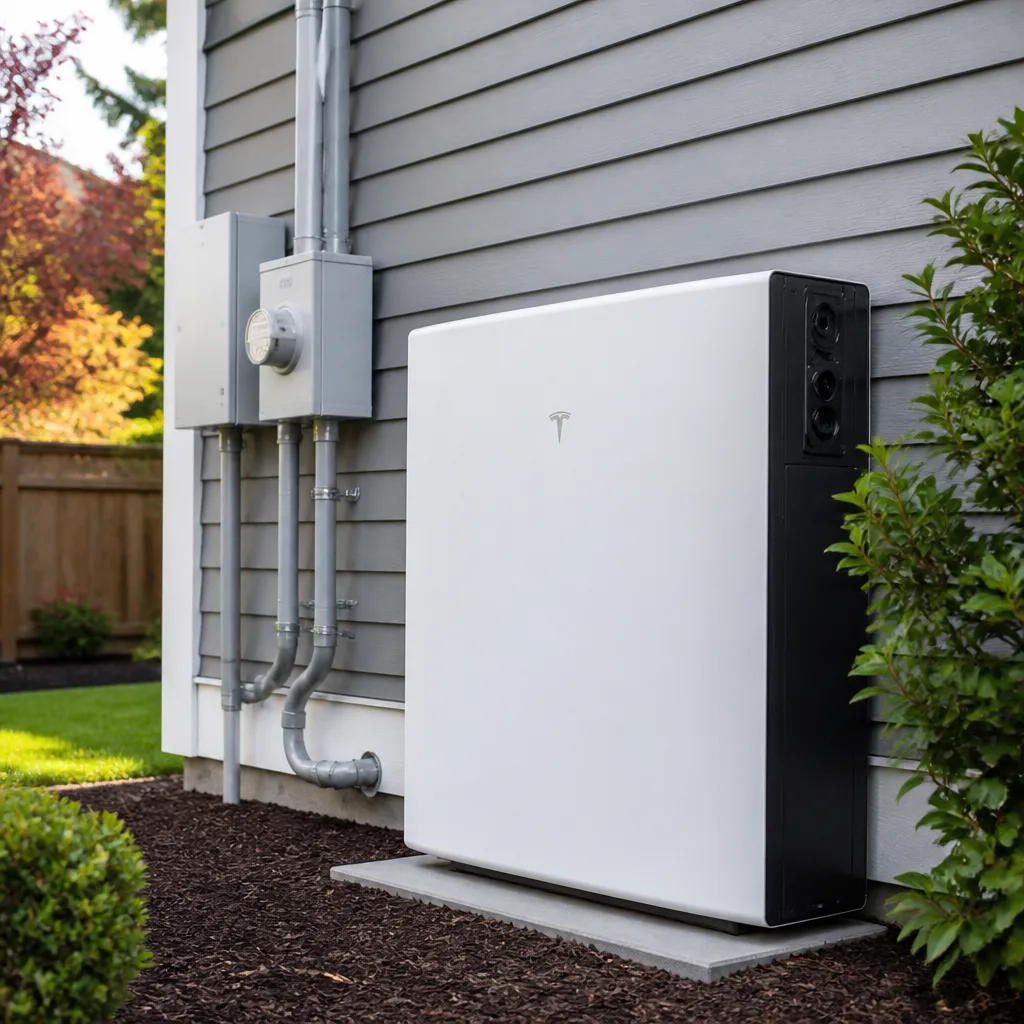
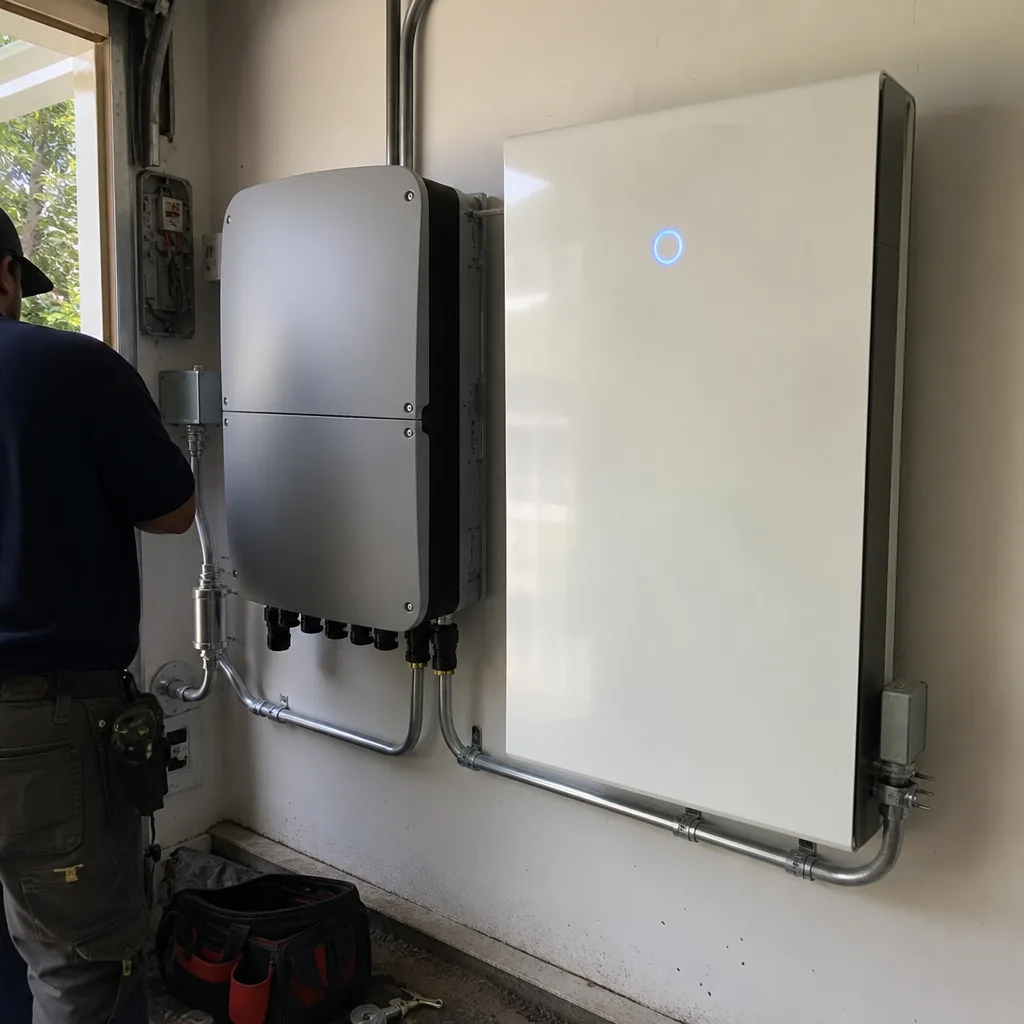
A Tesla Powerwall 3 installed in Spring Valley Lake typically runs $13,500 to $16,500 before incentives, and it integrates directly with Tesla solar inverters and the Tesla app. For lakefront homes where the garage is on the street-facing side, we often mount the Powerwall inside the garage to avoid ARC objections entirely. If your existing solar is Tesla, this is usually the cleanest upgrade path. The Powerwall’s built-in inverter also solves the problem for homes whose original string inverter lacks the communication ports for battery rapid shutdown.
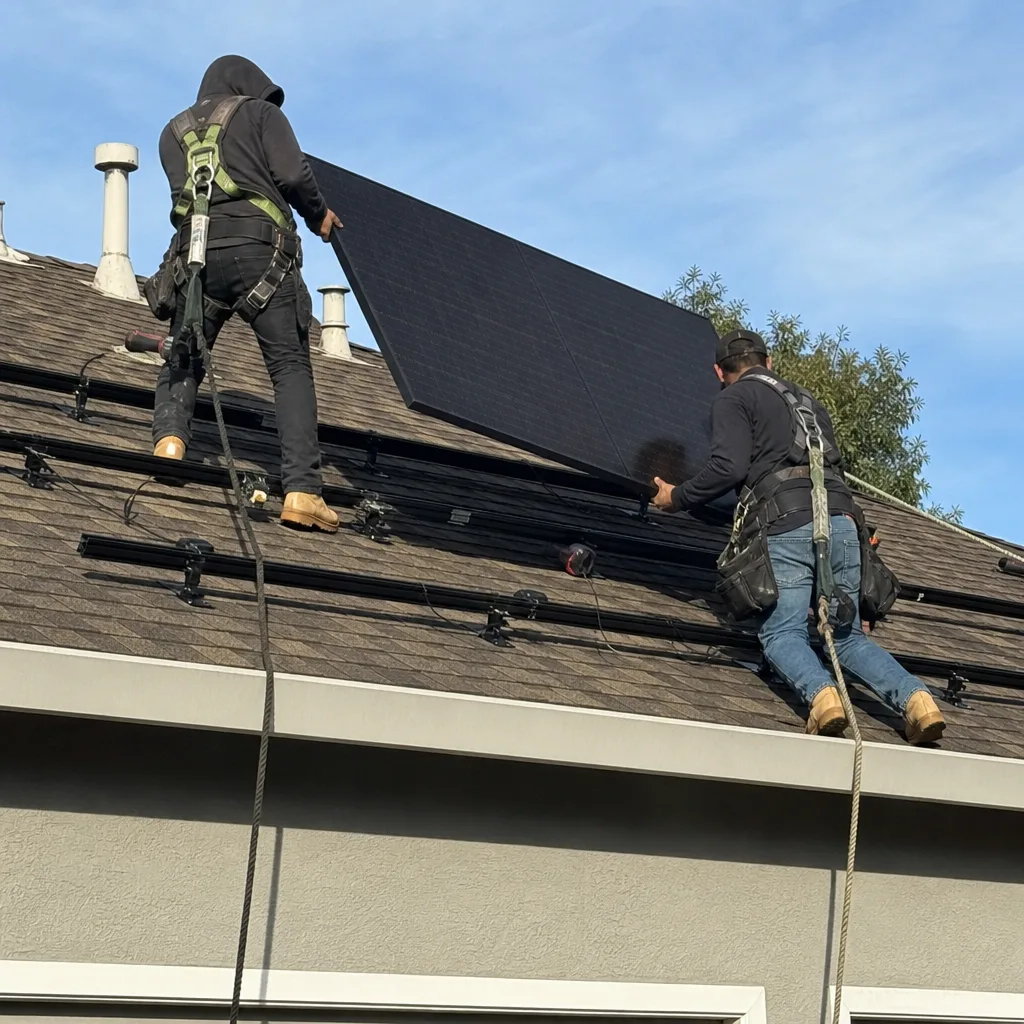
Enphase IQ Battery Installation
The Enphase IQ Battery 5P is the workhorse we recommend most often in Spring Valley Lake, especially for retrofits. Expect $12,000 to $15,000 installed for a 5 kWh unit, with most homes needing two for whole-home coverage. On a lakefront ranch off Lakeview Drive, our crew retrofitted an IQ Battery 5P behind a side-yard gate after the owner’s builder-grade inverter kept tripping during summer brownouts. We sized the system to cover the home’s true kWh offset during a 12-hour outage, labeled the battery enclosure a desert-tan finish to satisfy the ARC, and left the owner with a production estimate showing her payback period dropped from 14 to 9 years under NEM 3.0 time-of-use shifting.
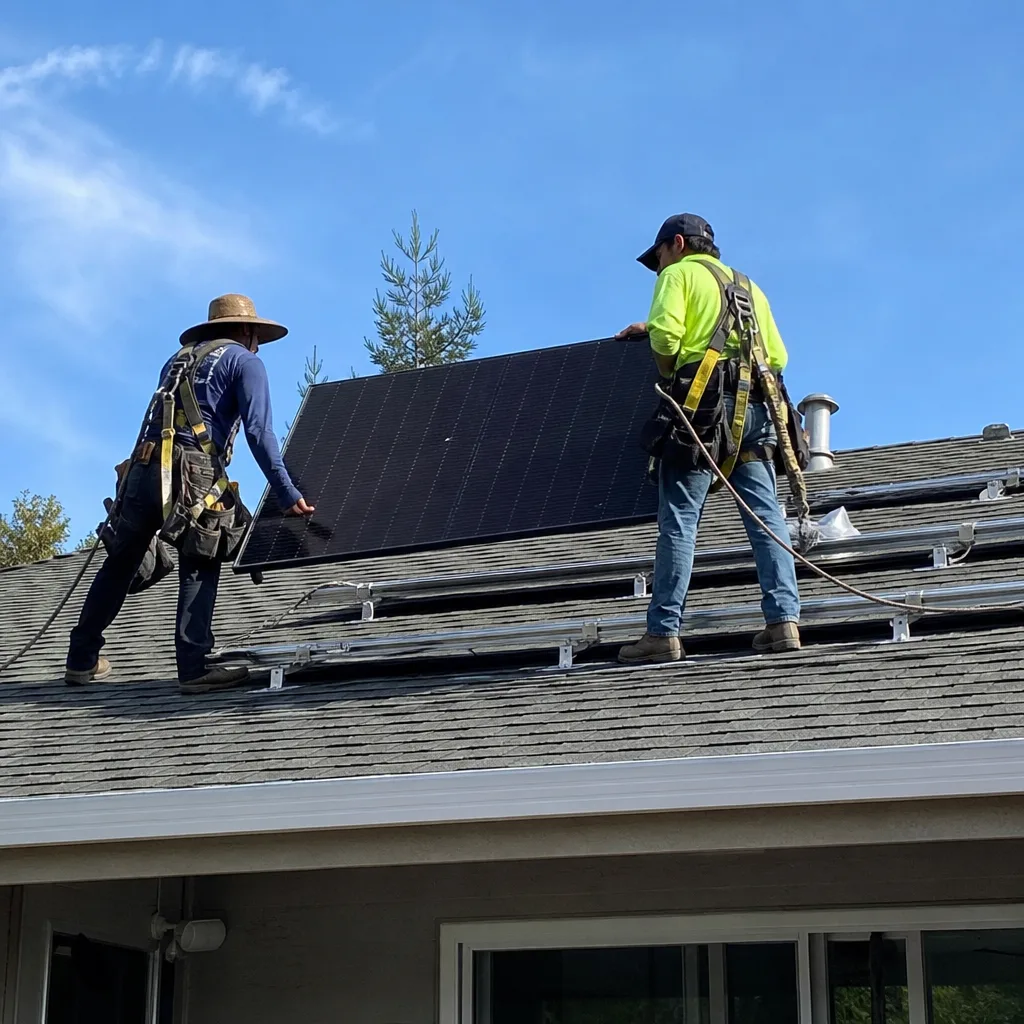
Whole-Home Backup Power
Whole-home backup in Spring Valley Lake means your AC, well pump, refrigerator, and lights all keep running when SCE shuts down or a Mojave windstorm takes out a line. A two-battery setup here generally runs $22,000 to $28,000 installed. The key variable is your true load. We read your actual utility bill, not a brochure estimate, and size to what your home uses, not what a salesperson hopes you buy. Gus’s rule: “Bring me a bill, I’ll bring you the math.”
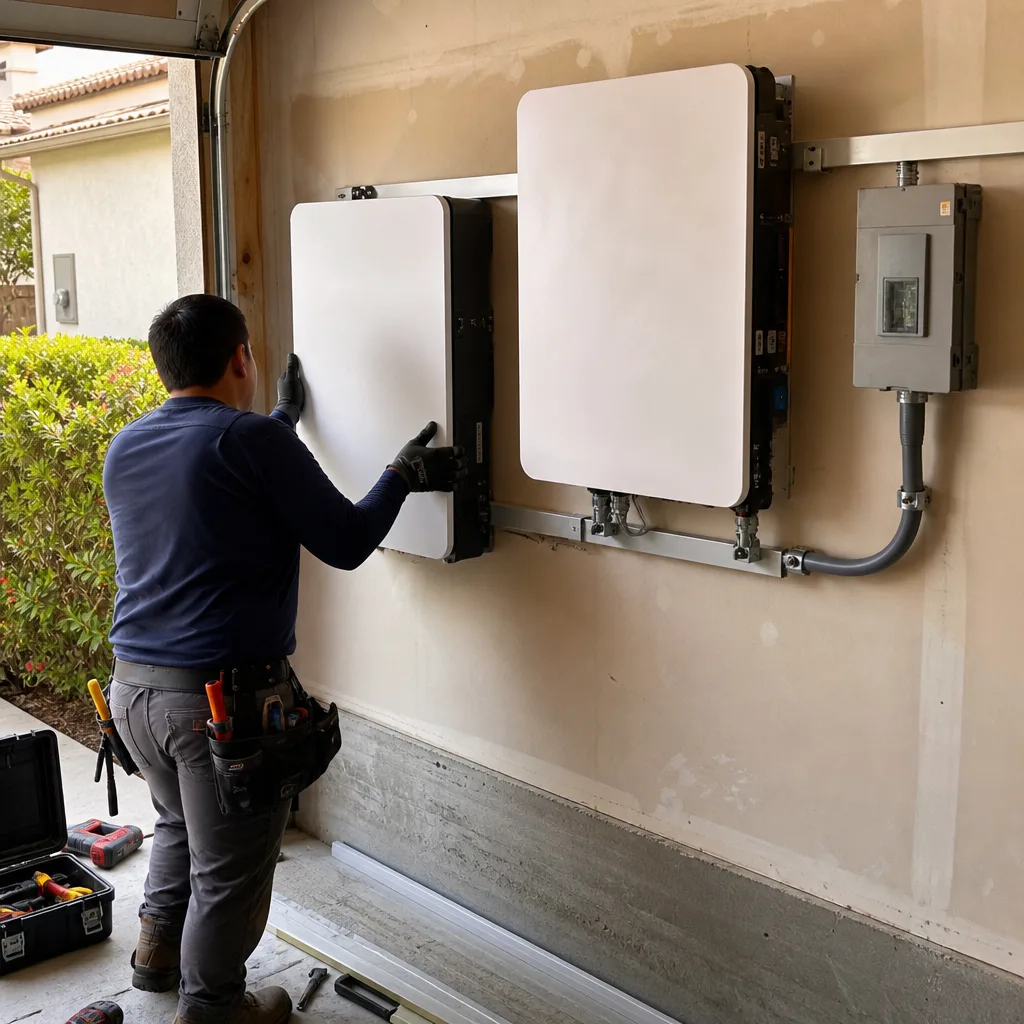
Battery Retrofit for Existing Solar
Homes in Spring Valley Lake built from the late 1970s through the 1990s often have working solar panels paired with inverters that predate modern battery communication standards. A retrofit that swaps in a hybrid inverter like the Enphase IQ8 or SolarEdge Home Hub typically adds $4,000 to $7,000 on top of the battery cost. If your inverter is still under warranty, we can sometimes add an AC-coupled battery without replacing it. If it isn’t, replacement is the smarter long-term play, and we’ll show you the year-25 output math, not just the day-one number.
What happens when you call
- 1
A real person answersNo phone trees - you reach a local pro.
- 2
You get an upfront price rangeHonest numbers before anyone is dispatched.
- 3
A background-checked tech heads outLicensed & insured, dispatched right away.
- 4
You approve before work beginsNothing starts until you say go.
Trusted Brands We Service in Spring Valley Lake
Gus’s Solar installs and services batteries from Tesla, Enphase, FranklinWH, and SolarEdge. That covers nearly every system currently installed in Spring Valley Lake. Because we run an owner-operated shop with a real parts inventory, we don’t wait on a distributor two states away when your system throws a fault code the night before a heat wave. We stock common inverters, communication boards, and conduit fittings locally, which means our turnaround on Spring Valley Lake battery repairs and expansions is measured in days, not weeks.
Common Solar Battery Storage & Backup Problems We See in Spring Valley Lake Homes
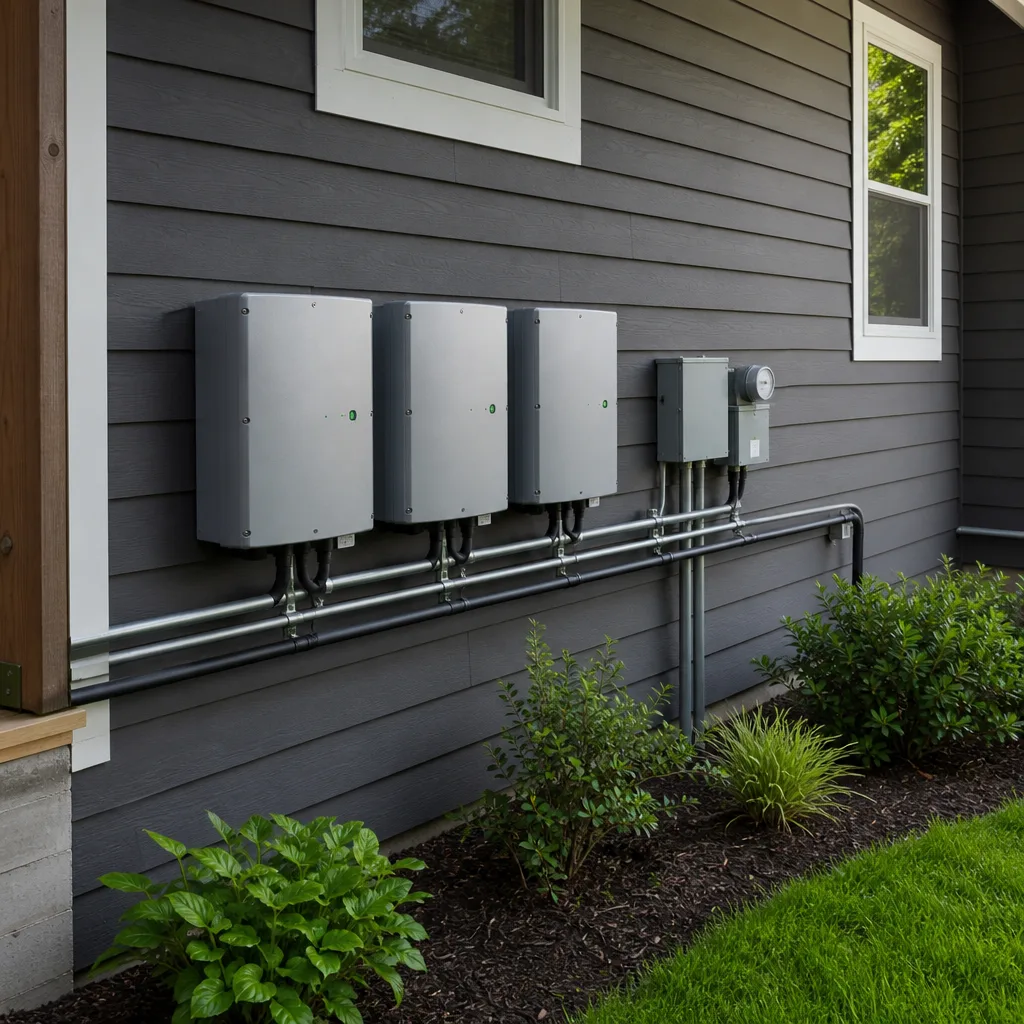
- Battery placement fails ARC aesthetic review. Installers who mount the battery on a street-facing wall or a lake-visible slope trigger a redesign from the Spring Valley Lake Association’s Architectural Review Committee. We pre-frame placement as “behind a side-yard gate” or “matching the home’s trim color” so the permit path doesn’t stall.
- Freeze-thaw cycles stress exterior conduit and fittings. Spring Valley Lake’s dramatic diurnal swings and occasional hard freezes expand and contract exterior conduit runs, which causes ground faults that trip the inverter. The irony is these failures happen on exactly the winter nights you most need backup. We use freeze-rated hardware and derate fill on every exterior run.
- West-facing lakefront roofs paired with undersized string inverters. Lake front tracts platted for water views often place the most prominent roof face toward the lake, not south. When an installer reuses the original undersized string inverter from the solar install, the battery’s rapid shutdown and time-of-use optimization never function correctly because the old inverter lacks the needed communication ports. We check this before quoting, not after install.
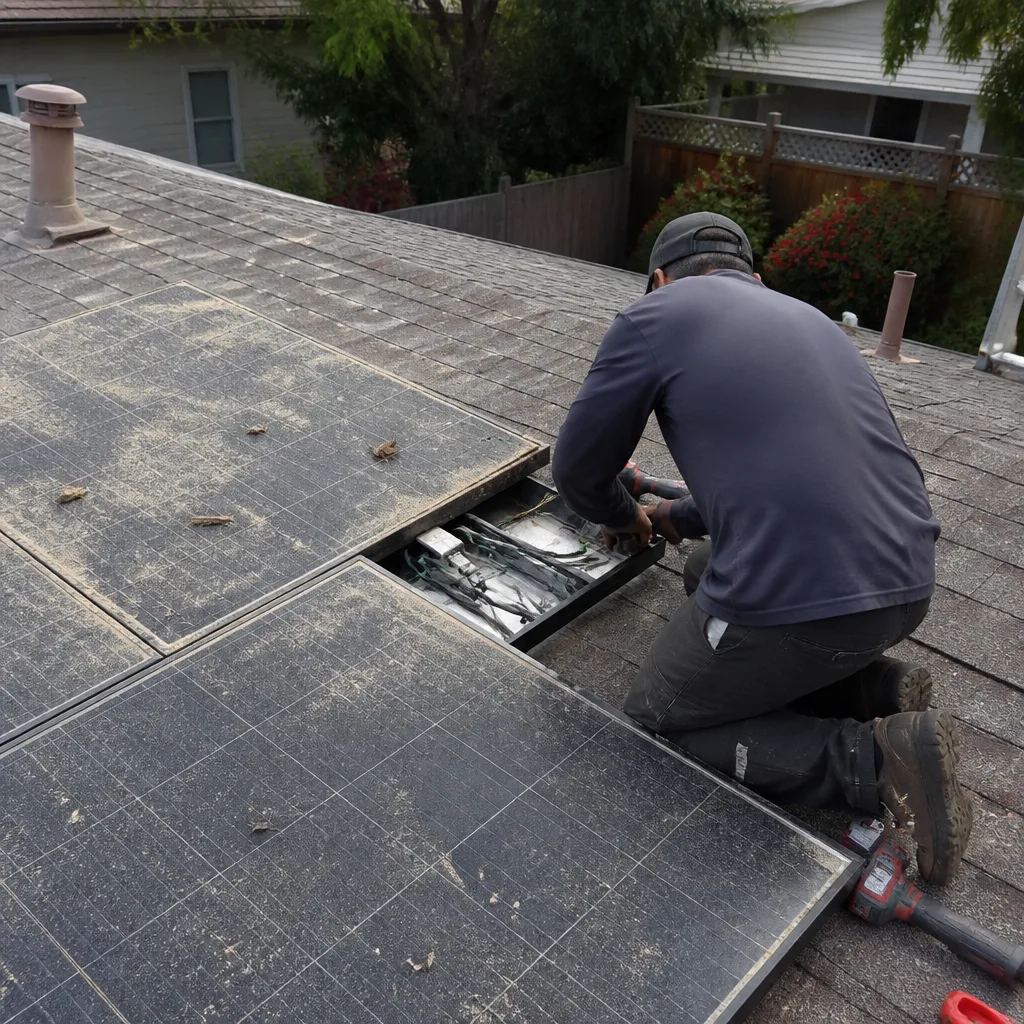
- Desert dust accelerates soiling on panels, which quietly drags down battery charge. Afternoon westerly winds channeled by the artificial lake push fine Mojave dust onto panel faces faster than most lower-desert markets. A 15% production loss from soiling means your battery never reaches full charge during the day. We factor cleaning intervals and panel gap into our sizing, and we offer Solar Battery Storage & Backup maintenance that includes panel cleaning.
Pricing for Solar Battery Storage & Backup in Spring Valley Lake, CA
Here are honest numbers for the Spring Valley Lake market, not a national average. A single Enphase IQ Battery 5P retrofit typically runs $12,000 to $15,000 after your federal tax credit. A Tesla Powerwall 3 install runs $13,500 to $16,500. Whole-home backup with two batteries runs $22,000 to $28,000. If your existing inverter needs replacement to support battery communication, add $4,000 to $7,000. Spring Valley Lake’s concrete tile and clay tile roofs add labor compared to asphalt shingle jobs in Victorville or Apple Valley, because tile hooks and flashing take longer to do correctly. Every quote we give is built off your actual utility bill and your home’s actual layout. Estimates are free. Call (877) 550-6892 and bring us a bill. Take two weeks to think about it. The price will be the same.
Something Only Spring Valley Lake Homeowners Deal With
Every battery install in Spring Valley Lake must pass the Spring Valley Lake Association’s Architectural Review Committee before San Bernardino County will even look at the permit. That is a dual-approval gauntlet that simply does not exist for Victorville or Apple Valley installers. The ARC cares about what’s visible from the lake path and the street. They care about enclosure color, conduit routing, and whether the battery protrudes past the home’s existing profile. California’s Solar Rights Act, Civil Code §714, limits what an HOA can legally block, but the ARC can still trigger redesigns that kill project momentum if the submission isn’t framed correctly. We’ve learned to pre-frame placement as “not visible from the lake path” or “matching the home’s trim color.” That negotiation is the difference between a battery that gets permitted in three weeks and one that dies in committee. This page is the only solar battery resource that explains the Spring Valley Lake Association ARC approval path alongside San Bernardino County permitting, so you avoid the exact lake-view aesthetic conflict that stalls battery retrofits in this HOA.
How Spring Valley Lake’s Climate and Lake Orientation Shape Your Battery System
At roughly 2,800 feet, Spring Valley Lake receives exceptional solar irradiance. Your panels produce more energy per square foot than most coastal California installations. But the same high-desert location brings dramatic diurnal swings. A 30-degree daytime-to-nighttime temperature spread stresses roof penetrations, conduit, and battery enclosures. Hard freezes arrive occasionally, and when they do, exterior battery electronics need freeze-rated mounting hardware and properly derated conduit. The artificial lake also does something most people don’t consider: it channels afternoon westerly winds that accelerate soiling from desert dust onto panel faces. That dust cuts production, which means your battery fills slower. We size systems assuming realistic post-soiling output, not the manufacturer’s clean-panel spec sheet.
And then there’s the lake itself. Lakefront lots were platted for maximum water views, and that means the most aesthetically prominent roof face often points east or west toward the water, not south. For a battery system, that changes the math. A west-facing array produces less midday energy but more late-afternoon energy, which actually pairs well with time-of-use shifting under NEM 3.0. Evening production charges the battery right before peak rates hit. We’ve done enough of these to know how to size a battery around a west-facing roof’s production curve, and how to position the battery enclosure so it never becomes an architectural committee problem.
Battery Retrofit and the NEM 3.0 Reality in Spring Valley Lake
NEM 3.0 changed the export math for every California solar owner. The old net metering gave you near-retail credit for exported energy. The new tariff pays far less, especially during midday when solar production peaks. That means the financial case for a battery in Spring Valley Lake is now about avoiding exports and consuming your own stored energy during evening peak hours. A home with a west-facing lakefront array and a properly sized battery can shift nearly all its export to self-consumption, which cuts effective energy cost more than adding panels ever will. We walk every Spring Valley Lake customer through their actual bill history and show exactly what time-of-use shifting does to their year-one number and their year-25 number. No brochure estimates. Just your usage, your rates, your roof, your math.
We Also Serve Cities Near Spring Valley Lake
Our crews work throughout the High Desert and Inland Empire. If you’re in Victorville, Apple Valley, Hesperia, or Oak Hills, we handle battery retrofits, whole-home backup, and new installs there too. But this page is for Spring Valley Lake specifically, because the Architectural Review Committee process here changes how every battery job gets planned. If you’re inside the gates, call us. If you’re just outside, call us anyway. (877) 550-6892.
Serving Spring Valley Lake, CA - Our Local Coverage Area
We’re based in the Spring Valley Lake area and know this community well. Use the map below to see our service coverage - if you’re nearby, we can almost certainly help.
FAQs - Solar Battery Storage & Backup in Spring Valley Lake
The Spring Valley Lake Association’s Architectural Review Committee must approve your battery placement and enclosure before San Bernardino County will issue the permit. That adds two to four weeks to a typical timeline, and it can trigger redesigns if the battery is placed on a street-facing wall or a lake-visible slope. We handle the full ARC submission, including photos, spec sheets, and the aesthetic framing the committee expects. Call (877) 550-6892 and we’ll tell you whether your specific placement will clear the ARC before you spend a dollar.
Yes, sometimes. If your existing inverter supports AC coupling or has open communication ports, we can add a battery without replacing it. Many Spring Valley Lake homes with solar installed in the early 2010s have string inverters that lack those ports, and those need a hybrid inverter swap to make battery backup work correctly. We’ll check your specific inverter model during the free estimate and tell you straight whether you’re looking at a simple add-on or an inverter replacement. The estimate is free, and it’s built off your actual equipment, not a sales script.
Yes, and that’s the primary financial reason to add a battery under NEM 3.0. Export credits during midday are now a fraction of what they were, so storing that midday production for evening use shifts you from near-zero export value to full retail offset. On a typical Spring Valley Lake home with a 6 to 8 kW solar array, a single 5 kWh battery cuts grid imports during peak hours by 40 to 60 percent. Call (877) 550-6892 with your last 12 months of bills and we’ll model the actual shift for your home.
Not necessarily. A west-facing array produces less midday energy but more late-afternoon energy, which aligns well with evening peak rates under NEM 3.0. The battery captures that afternoon production and discharges during the evening peak. Your total daily production drops compared to a south-facing array, but the value of each stored kilowatt-hour goes up because it offsets peak-priced grid power. We size lake-facing systems differently than south-facing ones, and we’ve done enough of both to know the real output curves.
Most modern batteries, including Tesla Powerwall and Enphase IQ, can operate down to about -4°F with built-in thermal management. Spring Valley Lake’s occasional hard freezes don’t damage the cells themselves. The failures we see are in exterior conduit, fittings, and communication wiring, where freeze-thaw cycles create gaps that let moisture in and cause ground faults. That’s why we use freeze-rated hardware and derated conduit fill on every exterior battery run in Spring Valley Lake. It adds a little labor cost and prevents the exact failure mode that leaves homes dark on cold winter nights.
Get a Straight Answer on Battery Backup in Spring Valley Lake
If you live in Spring Valley Lake and you’re wondering whether a battery makes sense for your home, call Gus’s Solar at (877) 550-6892. A live person answers. We’ll come out, look at your panels, your inverter, your roof orientation, and your actual utility bill. We’ll tell you what a battery costs for your specific house, how it interacts with the ARC process, and what your payback looks like under NEM 3.0. If a salesman needs an answer tonight, the answer is no. Ours won’t. Take two weeks. The price will be the same. That’s how we’ve done it since 2011, and that’s the name on the truck: Gus Petrakis.
Written by Gus Petrakis, Owner at Gus’s Solar, serving Spring Valley Lake and the surrounding High Desert communities.