
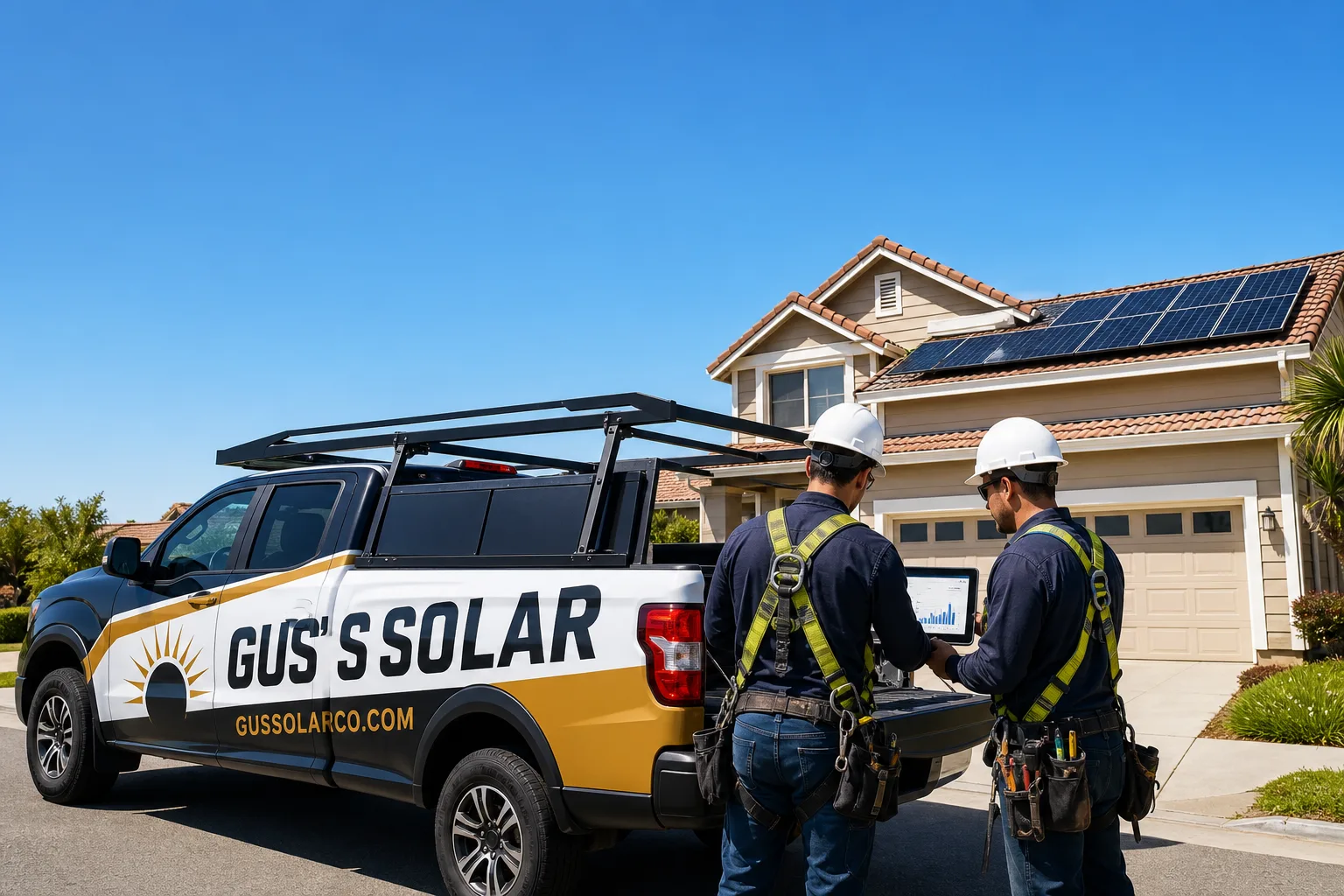
Free bill analysis - bring a power bill, get the production math for your actual roof, panel brands like Qcells and REC compared side by side
If the pitch starts at your door and ends with "sign tonight for the special," sleep on it. The sun will still be there tomorrow; so will we.
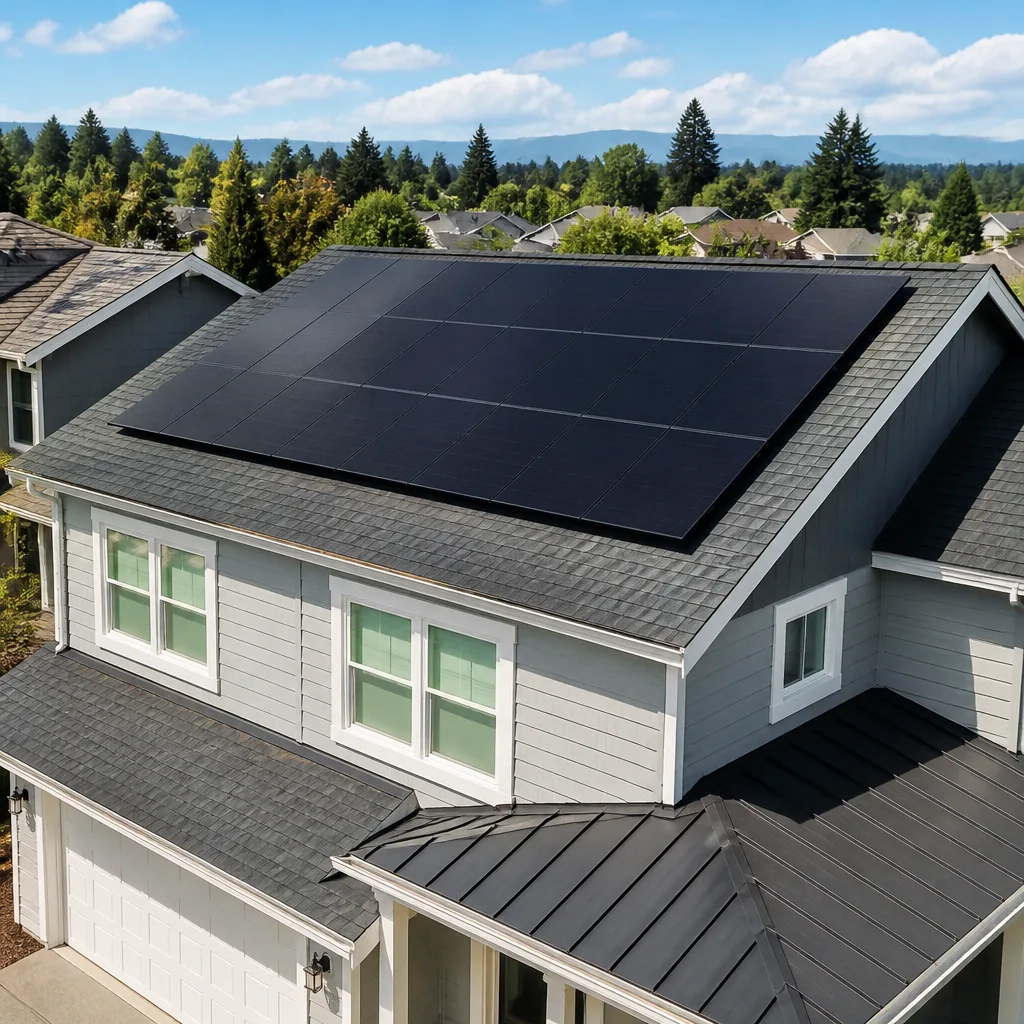
 Before
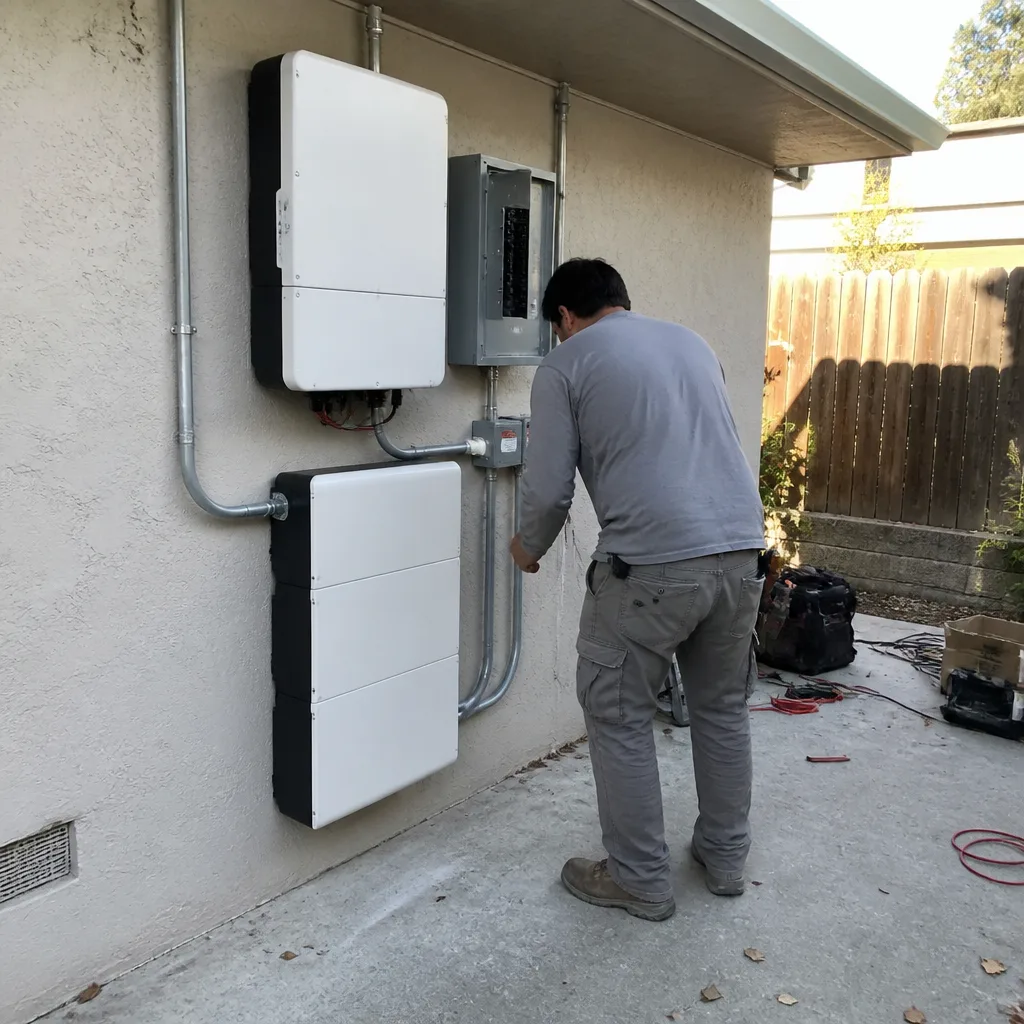 After
After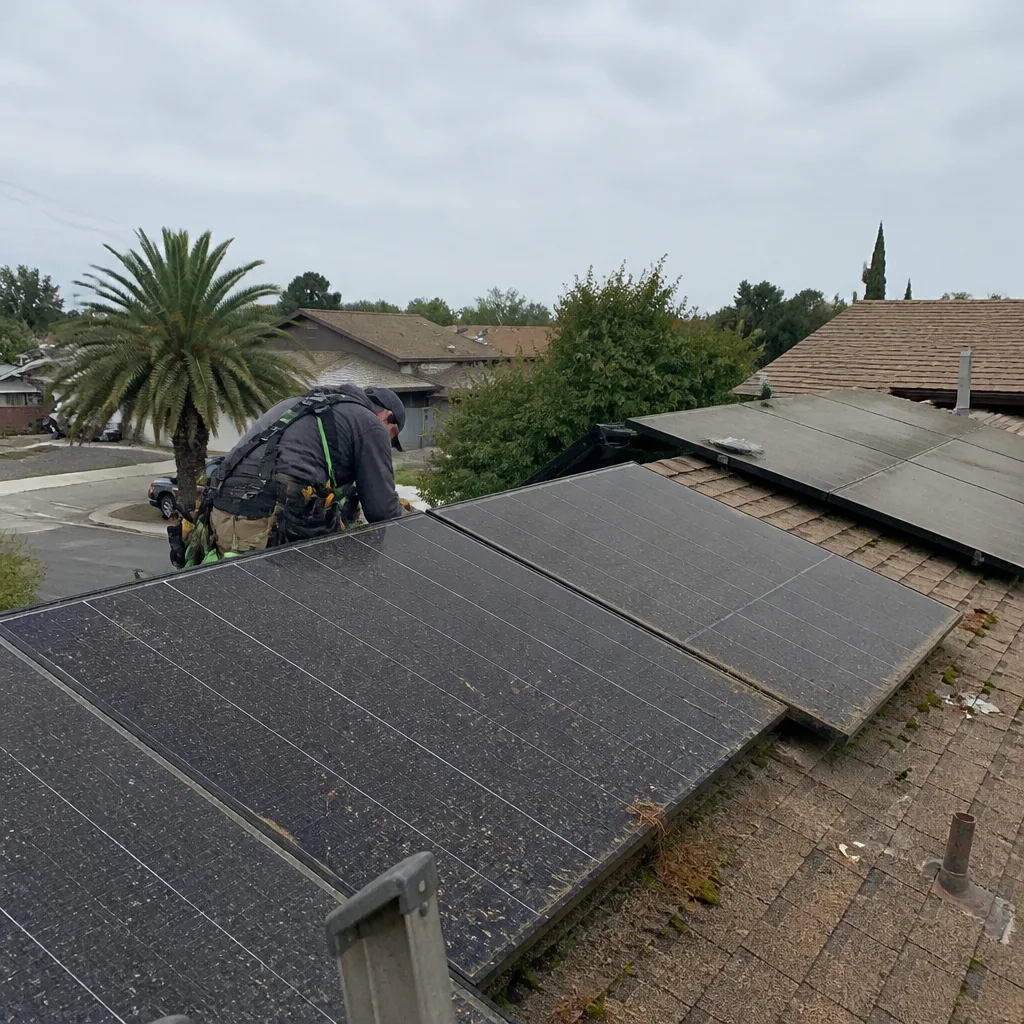 Before
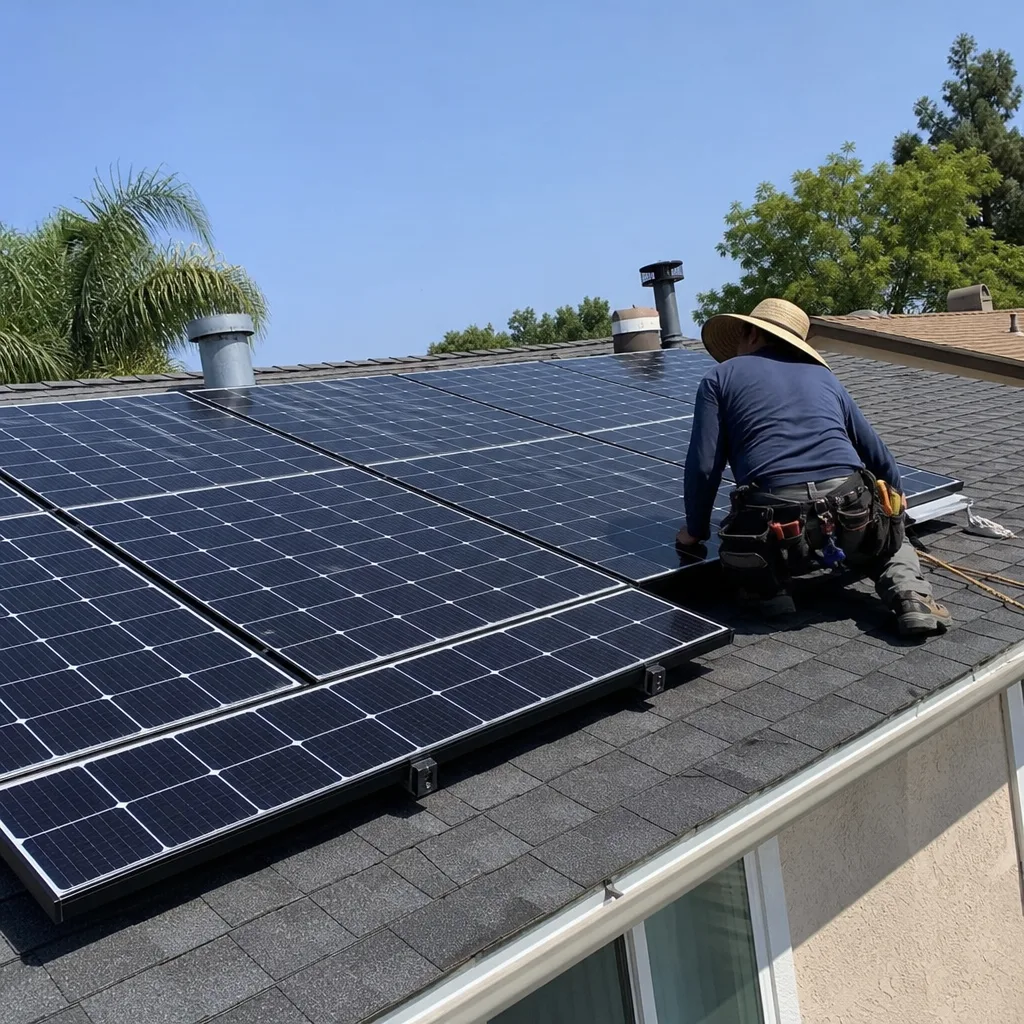 After
After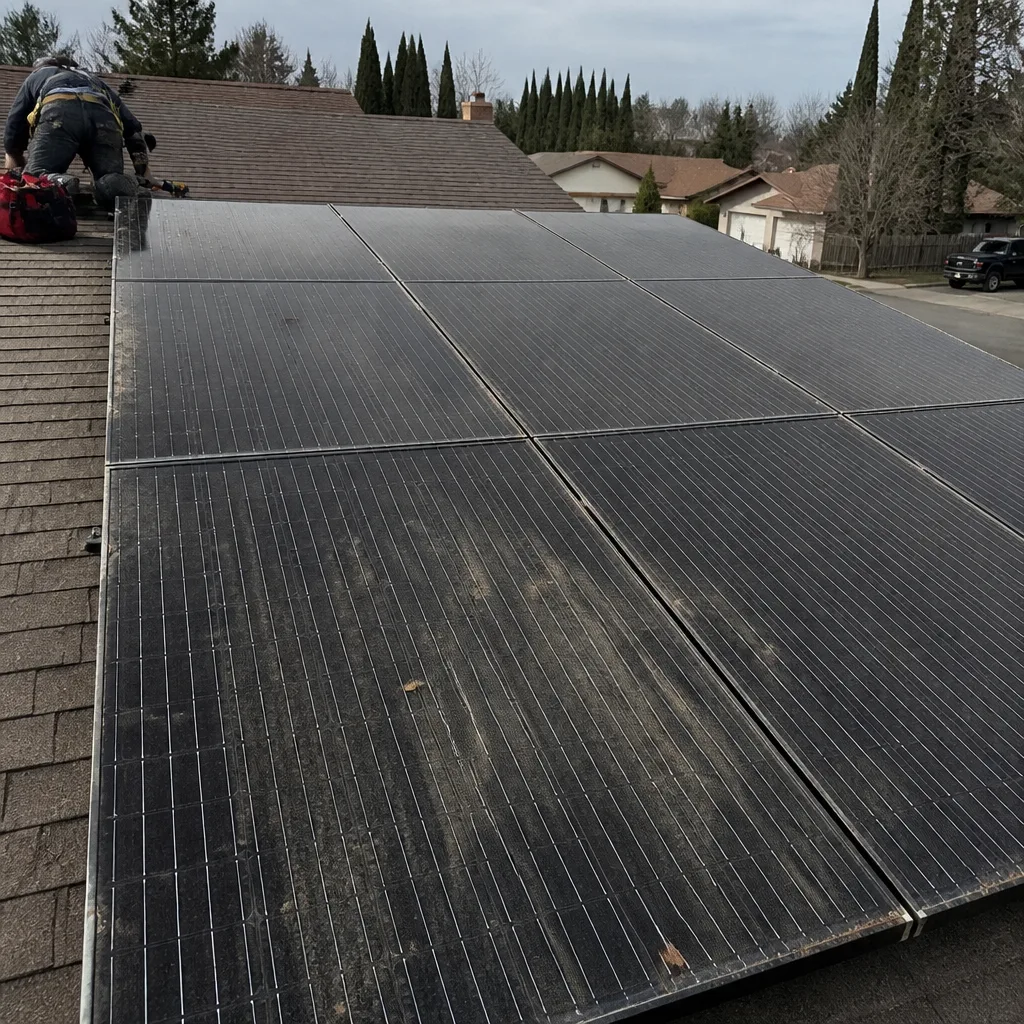 Before
 After
AfterFast, Reliable Commercial Solar Installation Across Lake Arrowhead
Commercial solar installation in Lake Arrowhead runs $2.85 to $4.10 per watt, which puts a typical 50 kW rooftop system between $142,000 and $205,000 before the federal tax credit. Most commercial jobs here take 8 to 14 weeks from permit to power-on, with San Bernardino County’s fire-zone review adding about two weeks compared to valley projects. If you own a business on the mountain and you’re tired of SCE outage losses or a shaded roof that some door-knocker promised would “work great,” call Gus’s Solar at (877) 550-6892. Gus quotes year-25 output off your actual bill, not a brochure number.
We know Lake Arrowhead. We know what a 5,100-foot elevation does to production math, what pine canopy does to string inverters, and what the county fire marshal looks for when he walks a commercial roof on North Bay Road or in the Village. This page is written for business owners in 92352 who need straight answers about mountain solar, not another sales pitch.
Key Takeaways for Lake Arrowhead Commercial Solar
- Microinverters or DC optimizers are the standard here, not an upsell. Dense ponderosa and cedar canopy makes string inverter design impractical on most commercial rooftops in Lake Arrowhead.
- Budget for a panel upgrade if your building dates from the 1950s to 1980s. Many commercial structures here still run 100-amp panels that will not pass fire-zone interconnection review.
- Battery storage is not optional in practice. SCE winter storm outages are frequent enough that most Lake Arrowhead businesses pair solar with a Tesla Powerwall or FranklinWH battery from day one.
- San Bernardino County, not a city building department, processes every Lake Arrowhead solar permit, and the High Fire Hazard Severity Zone adds inspection scrutiny you will not see in San Bernardino or Highland.
- Gus Petrakis puts his own name on the truck and answers his own phone. His crew does the install. No subs, no pressure, no “sign tonight” ultimatums.
Why Gus’s Solar Is Lake Arrowhead’s Preferred Commercial Solar Installation Company
Gus Petrakis founded Gus’s Solar in 2011 and has kept it owner-operated ever since. That matters in a mountain town where the national installers come up for the summer, knock doors in the Village, and disappear back down Highway 18 by October. Gus publishes his name, his address, and his license number. When you call (877) 550-6892, a live person answers, 24/7. Not a call center. Not a voicemail queue.
Lake Arrowhead business owners have told us the same story for over a decade: an out-of-state company quoted one number on the phone, sent a sales rep driving up from the valley, and suddenly the number changed. Gus runs on a different code. Bring him a bill, he’ll bring you the math. Take two weeks. Think about it. The price will be the same. If a salesman needs an answer tonight, the answer is no.
Every commercial job carries the 90-Day Done Right Promise in writing. If something isn’t right, Gus makes it right. One call brings him back. You won’t chase a ticket number or argue with a “customer experience” department three states away. You’ll talk to the guy whose name is on the building.
His crew is background-checked and uniformed. You’ll know exactly who’s on your roof before they set a ladder. And because our Commercial Solar Installation team does the work directly, not a subcontracted crew from the valley, the flashing on your roof penetrations gets done right the first time. In a High Fire Hazard Severity Zone, that’s not a nicety. That’s the difference between a passed inspection and a redo.
Our Commercial Solar Installation Services in Lake Arrowhead
Commercial Rooftop Solar
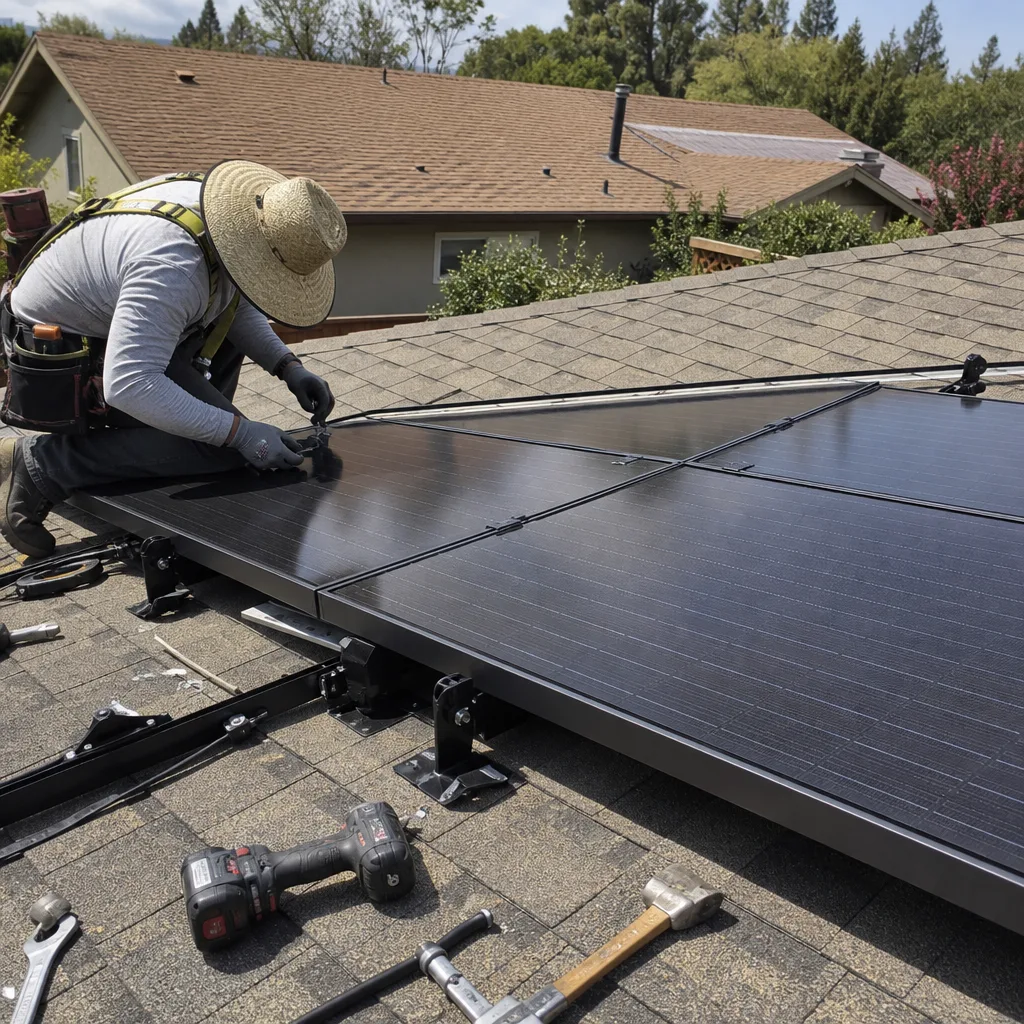
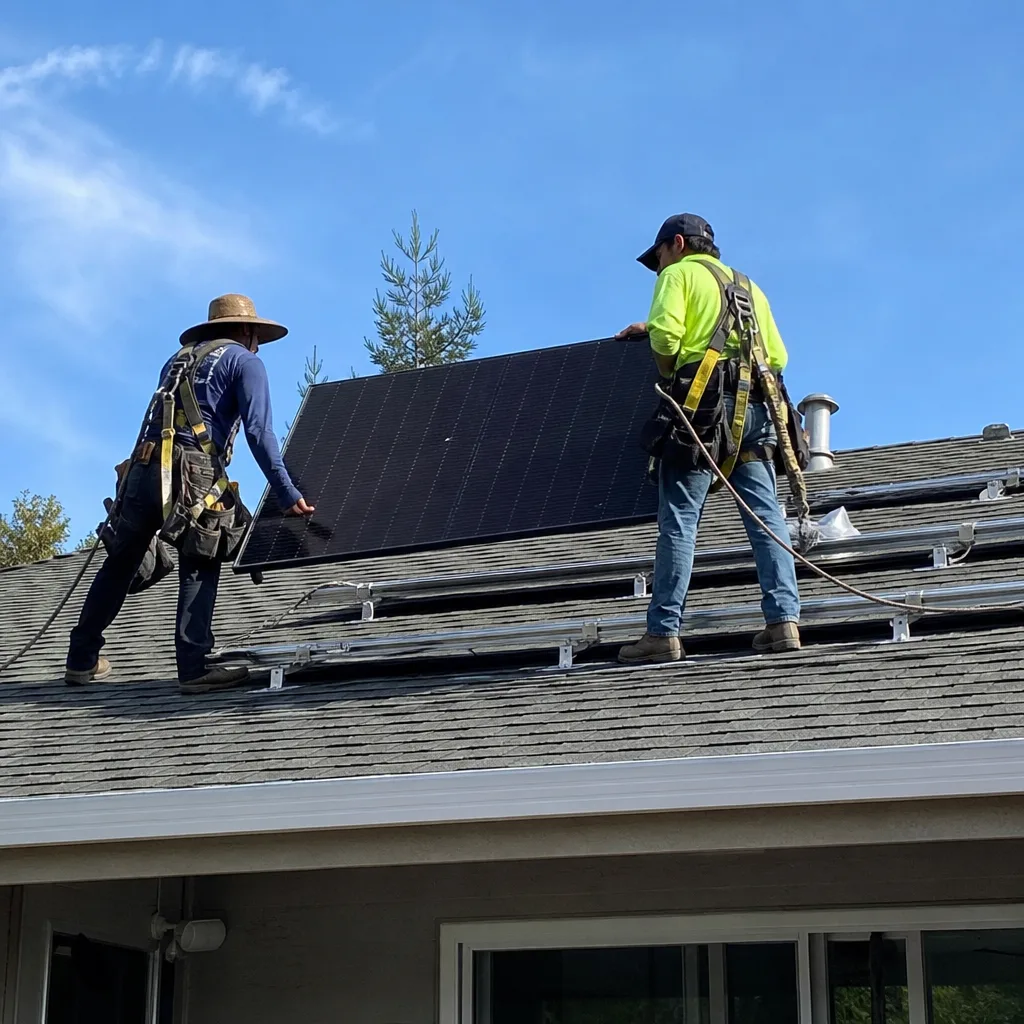
Most commercial rooftops in Lake Arrowhead are steep-pitched A-frame chalets or mid-century flat-roof structures built between the 1950s and 1980s. Each design has different mounting requirements, and both get scrutinized by county inspectors for fire-stopping and conduit routing near combustible siding. We design arrays that account for the pine and cedar canopy around your building, not just the square footage of your roof. A typical commercial rooftop system in 92352 runs $2.85 to $3.90 per watt depending on the roof structure, with a 30 to 75 kW system being the most common size range we install for Lake Arrowhead storefronts, lodges, and offices.
Warehouse & Industrial Solar
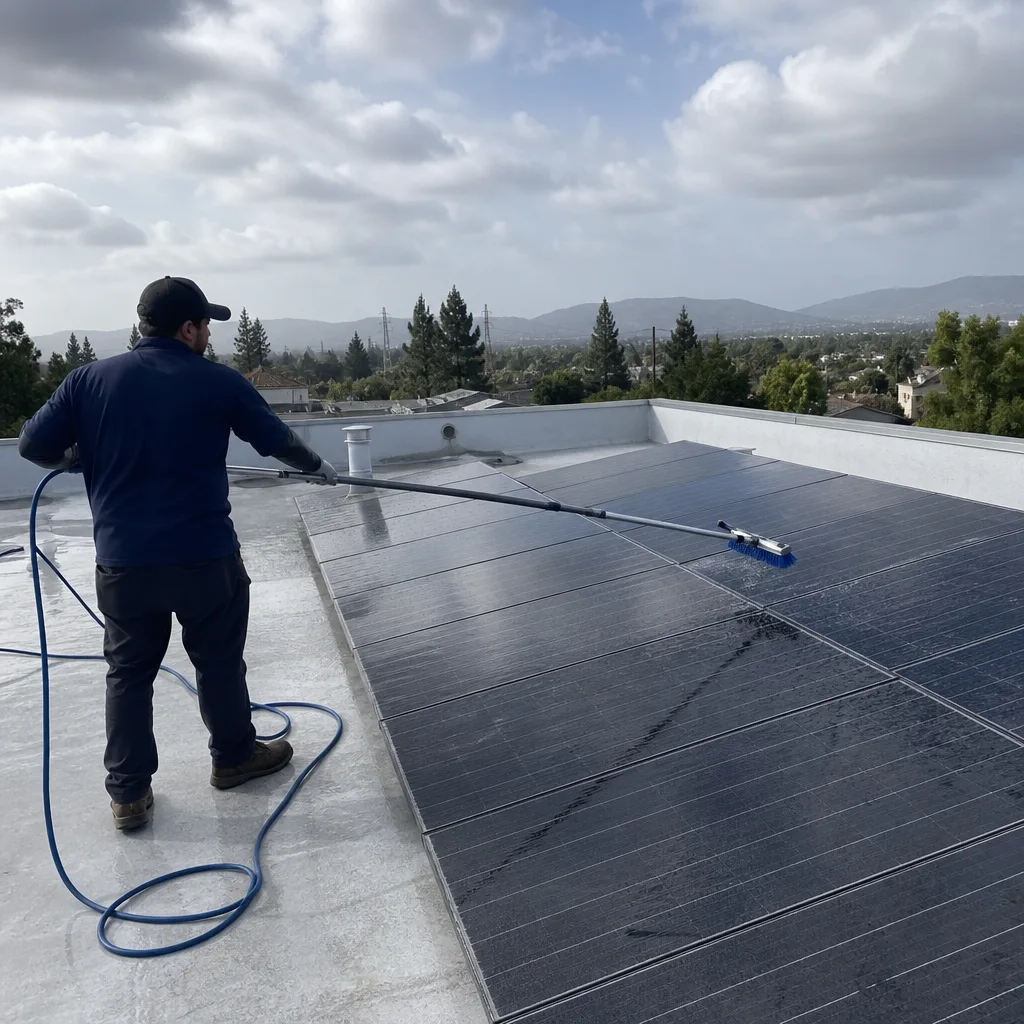
If you run a warehouse or industrial space off Highway 189 or Rim of the World Highway, you’ve probably dealt with flat or low-slope roofing and larger electrical loads. These buildings are often the best candidates for solar because the roof can hold a bigger array and the daytime usage is high. We install ballasted and penetrating flat-roof systems sized to your actual draw. You’ll also benefit from the higher-elevation irradiance that Lake Arrowhead gets on clear days. Your panels here will produce more per watt than an identical system in the San Bernardino Valley, sometimes 8 to 12 percent more on winter clear days. That’s real money over 25 years.
Solar Carport Installation
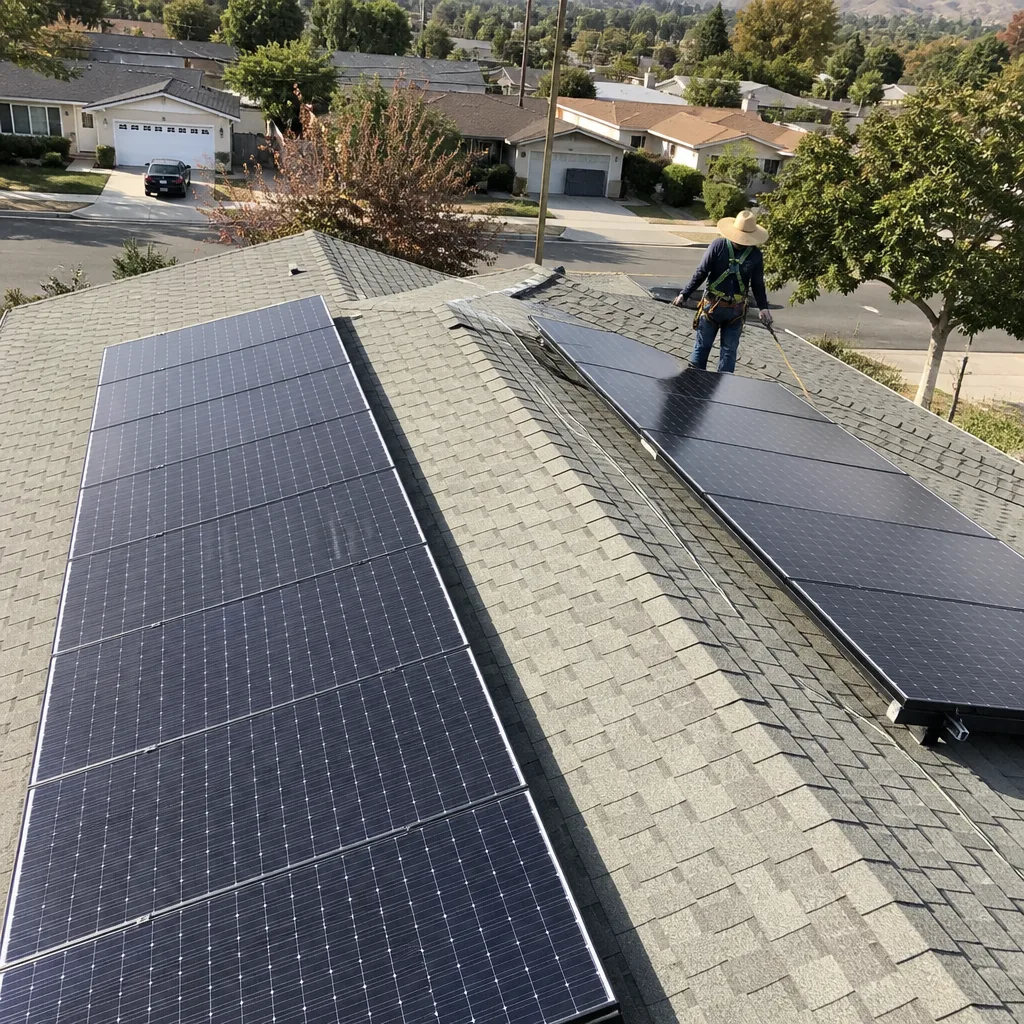
Carports work especially well in Lake Arrowhead because the snow load requirements are strict and the structure doubles as covered parking for your vehicles during winter. If your building’s rooftop is too shaded by mature pines to justify an array, a carport in an open area of your lot can often do the job. We design carport structures engineered for mountain snow loads, and we route conduit away from the cedar shake siding that so many commercial buildings here still have. A typical commercial carport array runs $3.10 to $4.10 per watt, with the steel structure being the largest cost driver.
Commercial Battery Storage
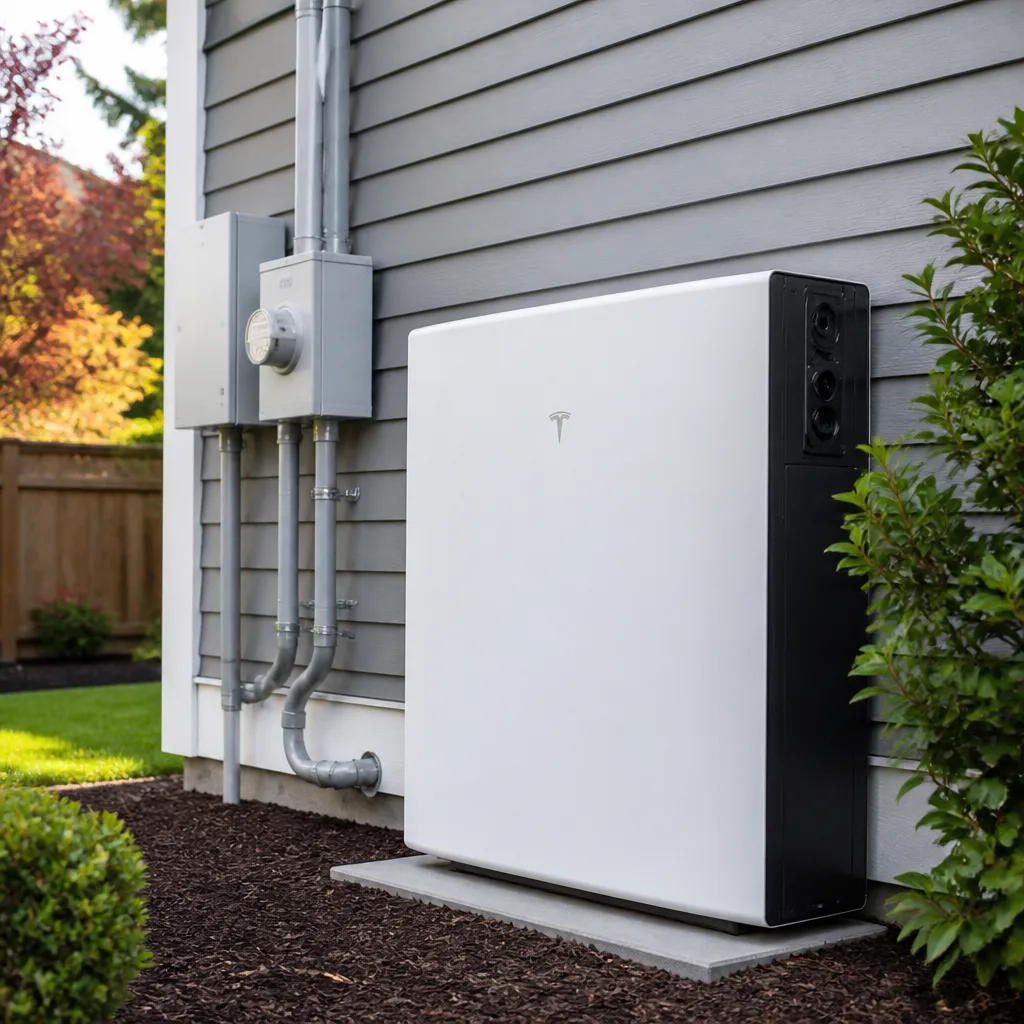
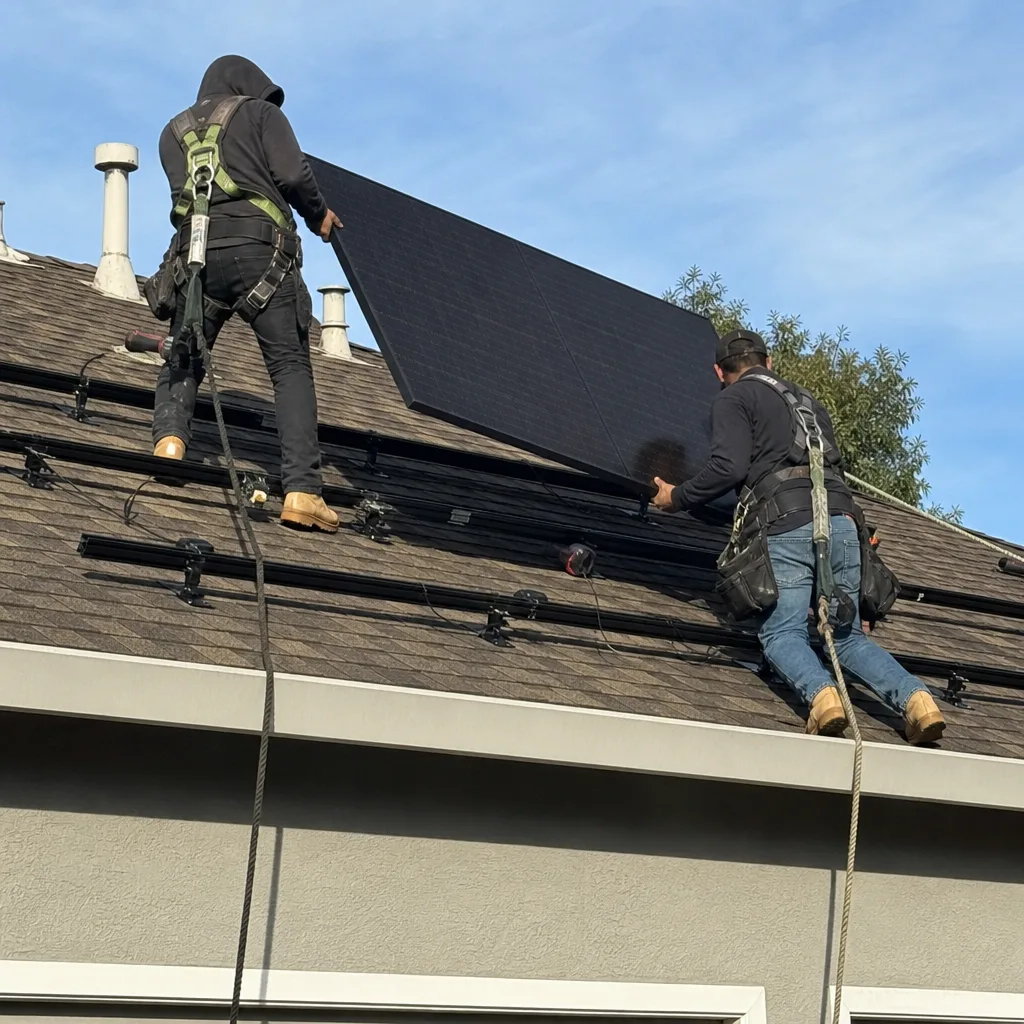
In Lake Arrowhead, battery storage is nearly always part of the conversation. SCE outages from winter storms are not occasional here. They’re seasonal. If your business loses refrigeration, internet, or heat during a three-day outage in January, the math on a battery changes fast. We install Tesla Powerwall, FranklinWH, and Enphase battery systems sized to keep your critical loads running through the longest expected outage. Pairing a battery with your commercial array also lets you time-shift production and avoid peak demand charges. Most Lake Arrowhead businesses we quote include at least one battery, and many add a second once they see the outage history on their own SCE statements.
What happens when you call
- 1
A real person answersNo phone trees - you reach a local pro.
- 2
You get an upfront price rangeHonest numbers before anyone is dispatched.
- 3
A background-checked tech heads outLicensed & insured, dispatched right away.
- 4
You approve before work beginsNothing starts until you say go.
Trusted Brands We Service in Lake Arrowhead
Gus’s Solar works with Enphase, Tesla, FranklinWH, and SolarEdge equipment because these are the brands that hold up in mountain conditions. Microinverters and DC optimizers from Enphase and SolarEdge handle partial shading better than any string setup, which is exactly what Lake Arrowhead commercial roofs deal with every day under the pine canopy. Tesla Powerwall and FranklinWH batteries have the cold-weather performance and remote monitoring that make sense for a second-home commercial property. We keep common parts on hand for Lake Arrowhead customers, and because our Lake Arrowhead service area is coordinated from our Inland Empire office, we can be on-site quickly when a component fails in February and your system is blanketed in snow.
Common Commercial Solar Installation Problems We See in Lake Arrowhead
- String inverter failure from shading and debris. Pine needles, squirrel damage, and mature trees casting long shadows across a string array cause hot spots and production collapse. We’ve replaced more failed string systems in Lake Arrowhead than we’ve installed new ones. Microinverters or DC optimizers are the fix, and they become the default for every quote we write up here.
- Fire-zone inspection rejections. San Bernardino County’s High Fire Hazard Severity Zone inspectors are strict about roof penetration fire-stopping, rapid-shutdown labeling, and conduit routing near combustible siding. Installers who only work the valley get caught off guard. We don’t. We know what the inspection list looks like before we pull the permit.
- Undersized 100-amp panels on aging buildings. Many commercial structures in Lake Arrowhead were built in the 1960s, 1970s, and 1980s with 100-amp or even 60-amp service. Interconnection with SCE fails unless the panel gets upgraded. We include that cost in the quote up front, not as a surprise change order after the permit review.
- Absentee owner monitoring gaps. A substantial share of Lake Arrowhead commercial properties are second homes or seasonal businesses. If you’re not there in January and the system faults during a snowstorm, you need to know. Cellular-connected monitoring from Enphase or Tesla is a frequent part of our mountain installs, so the owner gets an alert on a phone rather than discovering a dead system in May.
Our Commercial Solar Maintenance in Lake Arrowhead
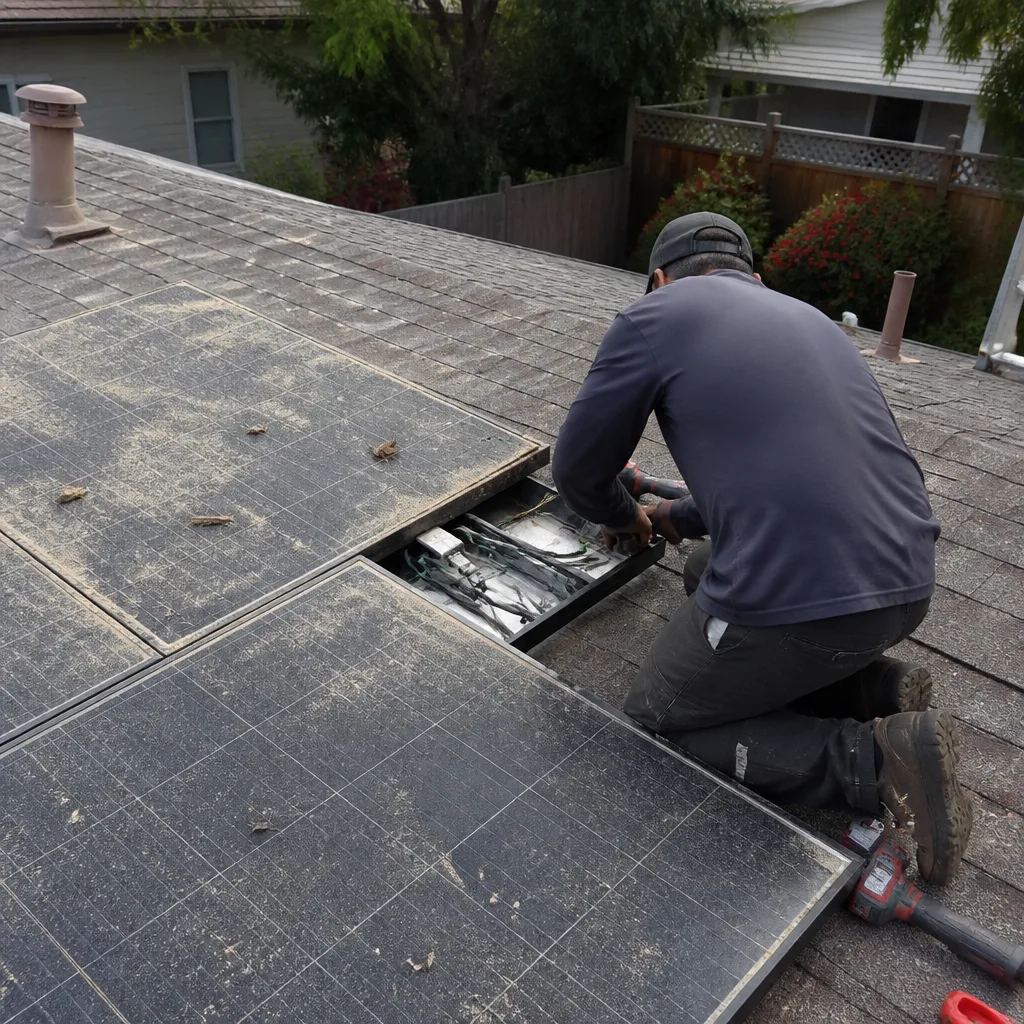
Solar panels at 5,100 feet need different maintenance than panels in the valley. Snow, pine needles, and wind-driven debris accumulate on rooftops. We offer scheduled maintenance that includes panel cleaning, connection checks, and a production report so you can see exactly what your system is doing versus what it should be doing. For commercial properties that sit vacant through winter, we recommend a pre-storm walkthrough and a spring inspection as a minimum. The cost of a maintenance visit is trivial compared to losing a full season of production because a pine branch took out a connector in November and nobody noticed until April.
We also see a lot of legacy string systems that were installed by now-defunct solar companies back when Lake Arrowhead first started getting solar in the mid-2000s. If your inverter is dead and the original installer’s phone number is disconnected, we can retrofit the array with microinverters and bring the system back to life without replacing every panel. That retrofit path often saves 40 to 60 percent versus a full system replacement.
Pricing for Commercial Solar Installation in Lake Arrowhead, CA
A typical commercial rooftop system in Lake Arrowhead runs $142,000 to $205,000 for a 50 kW array before incentives. Your federal Investment Tax Credit is 30 percent through 2032, and California’s SGIP battery rebate can offset a significant portion of a commercial battery install if you’re in a high-fire-threat zone, which most of Lake Arrowhead is. Here’s the honest breakdown:
| System Type | Typical Size | Price Range (Before ITC) |
|---|---|---|
| Commercial Rooftop Solar | 30-75 kW | $85,000-$290,000 |
| Warehouse / Industrial Solar | 50-150 kW | $142,000-$570,000 |
| Solar Carport | 25-60 kW | $78,000-$246,000 |
| Commercial Battery Storage | 13.5-40 kWh | $14,000-$42,000 |
Panel upgrade work on a 1960s-era commercial building typically adds $3,500 to $6,000. Fire-zone conduit and roofing compliance work adds $1,200 to $3,000 depending on the building. These are real numbers for Lake Arrowhead, not valley pricing with a mountain markup added at the end. Call (877) 550-6892 for a free estimate built from your actual SCE bill.
A Real Lake Arrowhead Job, in Our Own Words
We retrofitted a 1970s A-frame office on North Bay Road with a 22 kW Enphase microinverter array after a legacy string system failed. The original installer had placed panels right under the pine canopy, and between the pine needle accumulation and the squirrel damage, the string inverter had burned through two replacements before the owner called us. The building’s original 100-amp panel couldn’t pass high-fire-zone inspection, so we replaced it with a 200-amp solar-ready panel, rerouted all conduit away from the cedar shake siding, and added a Tesla Powerwall for the frequent SCE winter outages. That building has not lost power to a storm in two winters, and the owner’s production actually went up in January because the elevation and snow reflection added to the array’s clear-sky output. That’s not a brochure story. That’s the kind of job we do on this mountain.
We Also Serve Cities Near Lake Arrowhead
Gus’s Solar serves commercial customers across the San Bernardino Mountains and the valley below. We work in Crestline, Highland, Muscoy, and San Bernardino regularly. If your business is down the hill but you want the same straight-talking, owner-operated approach, call the same number. Same crew, same 90-Day Done Right Promise, same no-pressure quote process.
Serving Lake Arrowhead, CA - Our Local Coverage Area
We’re based in the Lake Arrowhead area and know this community well. Use the map below to see our service coverage - if you’re nearby, we can almost certainly help.
FAQs - Commercial Solar Installation in Lake Arrowhead
Because the pine and cedar canopy here shades most rooftops for part of the day, and a single shaded panel on a string system drags down the entire array. Microinverters or DC optimizers let each panel produce independently, which matters more at 5,100 feet under dense forest canopy than anywhere in the valley. Every commercial solar quote we write in Lake Arrowhead defaults to microinverters or optimizers, not as an upgrade but as the right design for this terrain. Call (877) 550-6892 for a site-specific assessment.
Usually yes. Most commercial buildings here from that era have 100-amp panels, and SCE won’t approve interconnection until the service can handle the solar feed. Budget $3,500 to $6,000 for a 200-amp solar-ready panel replacement. We include that in the quote up front so there’s no change order after the permit review. Gus’s rule: the price quoted is the price charged.
It means a county fire marshal will review your plans and inspect your roof for fire-stopping at every penetration, proper rapid-shutdown labeling, and conduit routed away from combustible siding. Installers who mostly work in the valley fail these inspections regularly. We don’t. We’ve been through enough Lake Arrowhead fire-zone inspections to know exactly what gets flagged, and we build to that standard from the start. That typically adds one to two weeks to the permit timeline compared to a valley job.
Because SCE winter outages are frequent enough here that a solar array without a battery is only half a solution. If the grid goes down during a January storm, a grid-tied solar system shuts off too. A battery keeps your critical loads running, whether that’s refrigeration, point-of-sale systems, or heat. Most Lake Arrowhead businesses we quote include at least one Tesla Powerwall or FranklinWH battery from day one. The SGIP rebate in high-fire-threat zones like most of 92352 can offset a meaningful share of the battery cost.
Payback here typically runs 5 to 7 years for a commercial system with battery storage, versus 4 to 6 years in the valley. The higher-elevation irradiance on clear days works in your favor, but the battery cost and fire-zone compliance work push the initial number up slightly. Once the system is paid off, the operational savings are higher here because SCE outage avoidance and demand-charge management add value the valley doesn’t see. Call (877) 550-6892 for a free estimate built from your actual bill, and Gus will show you the year-25 numbers, not the day-one brochure figure.
Get a Free Commercial Solar Estimate in Lake Arrowhead
If you own a business in Lake Arrowhead and you want straight answers about whether solar pencils out for your building, call Gus’s Solar at (877) 550-6892. Gus will ask for your SCE bill, run the real numbers, and give you a written quote with no signature wanted tonight. Take two weeks. Think about it. The price will be the same. And if the job isn’t done right, the 90-Day Done Right Promise means Gus makes it right. That’s how a local company should work on this mountain.
Written by Gus Petrakis, Owner at Gus’s Solar, serving Lake Arrowhead since 2011.