
Free bill analysis - bring a power bill, get the production math for your actual roof, panel brands like Qcells and REC compared side by side
If the pitch starts at your door and ends with "sign tonight for the special," sleep on it. The sun will still be there tomorrow; so will we.
 Before
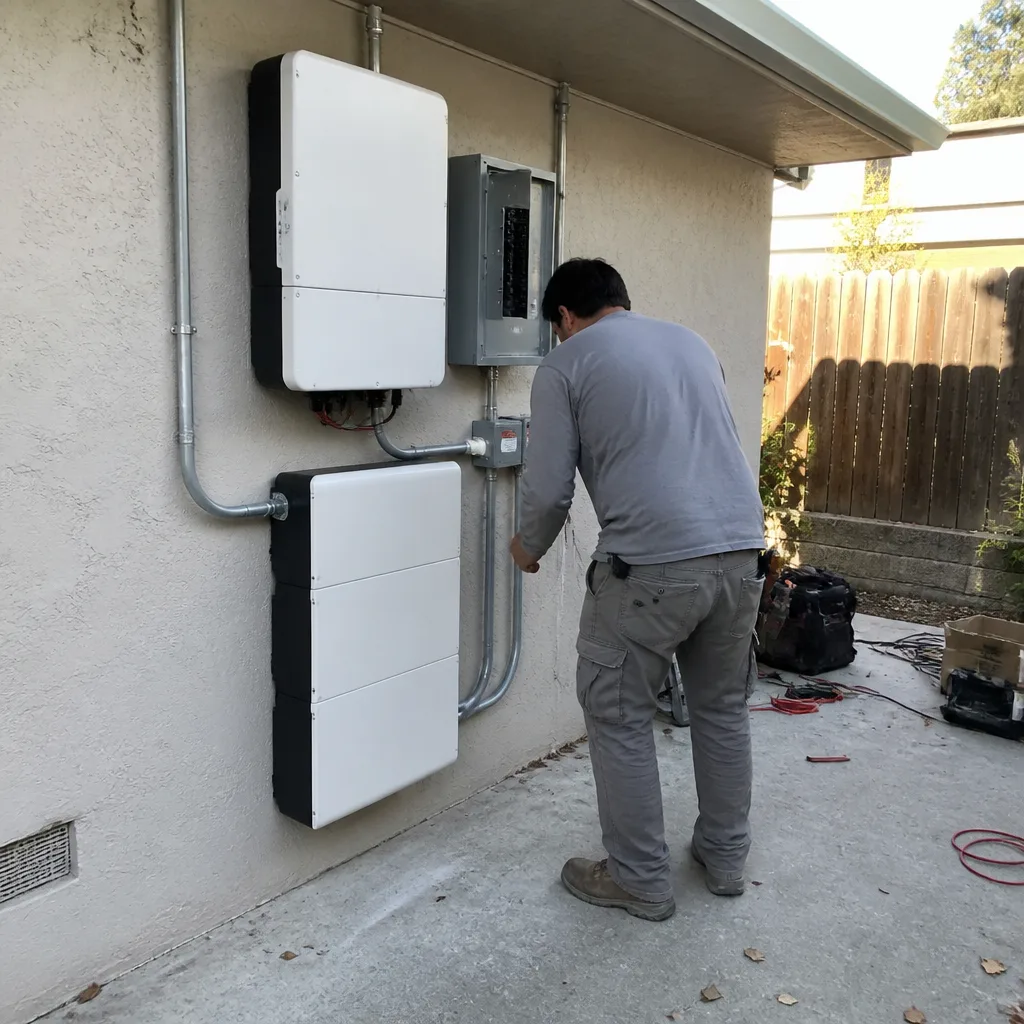 After
After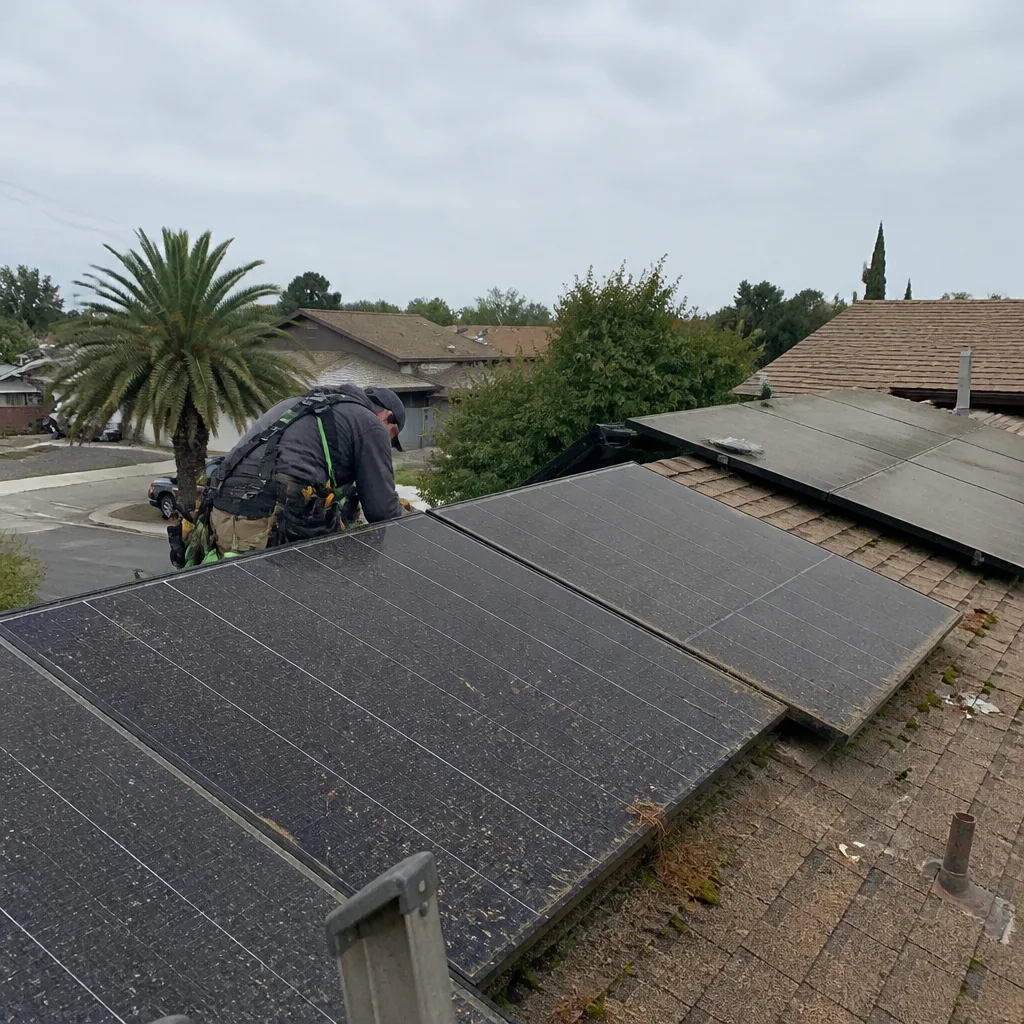 Before
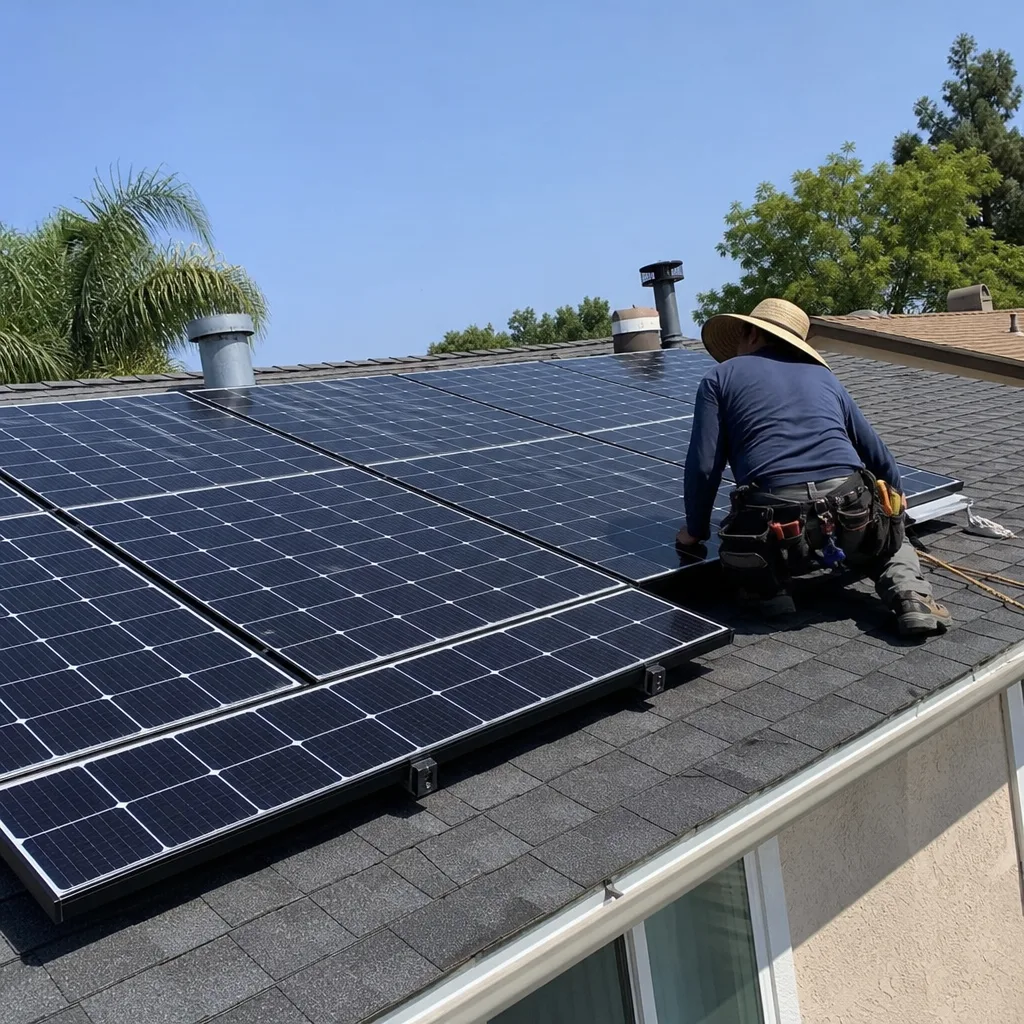 After
After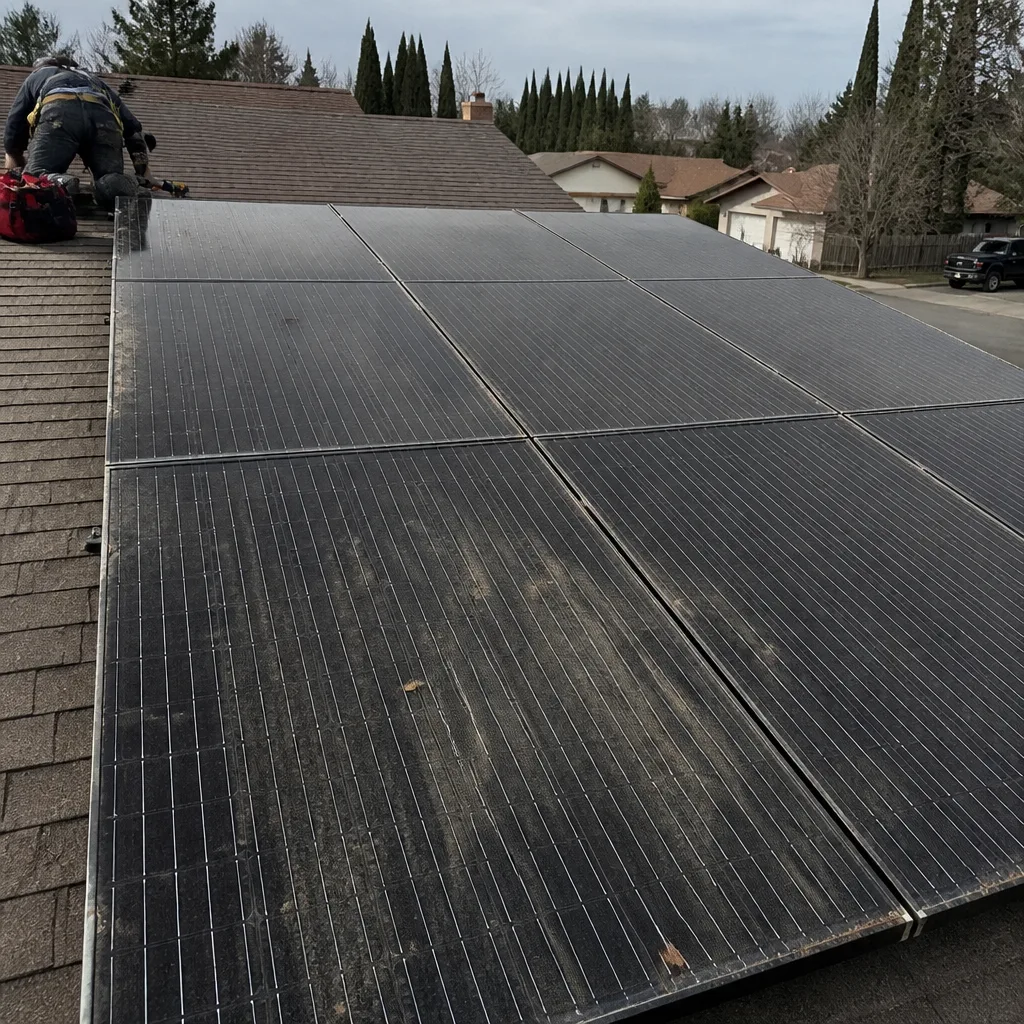 Before
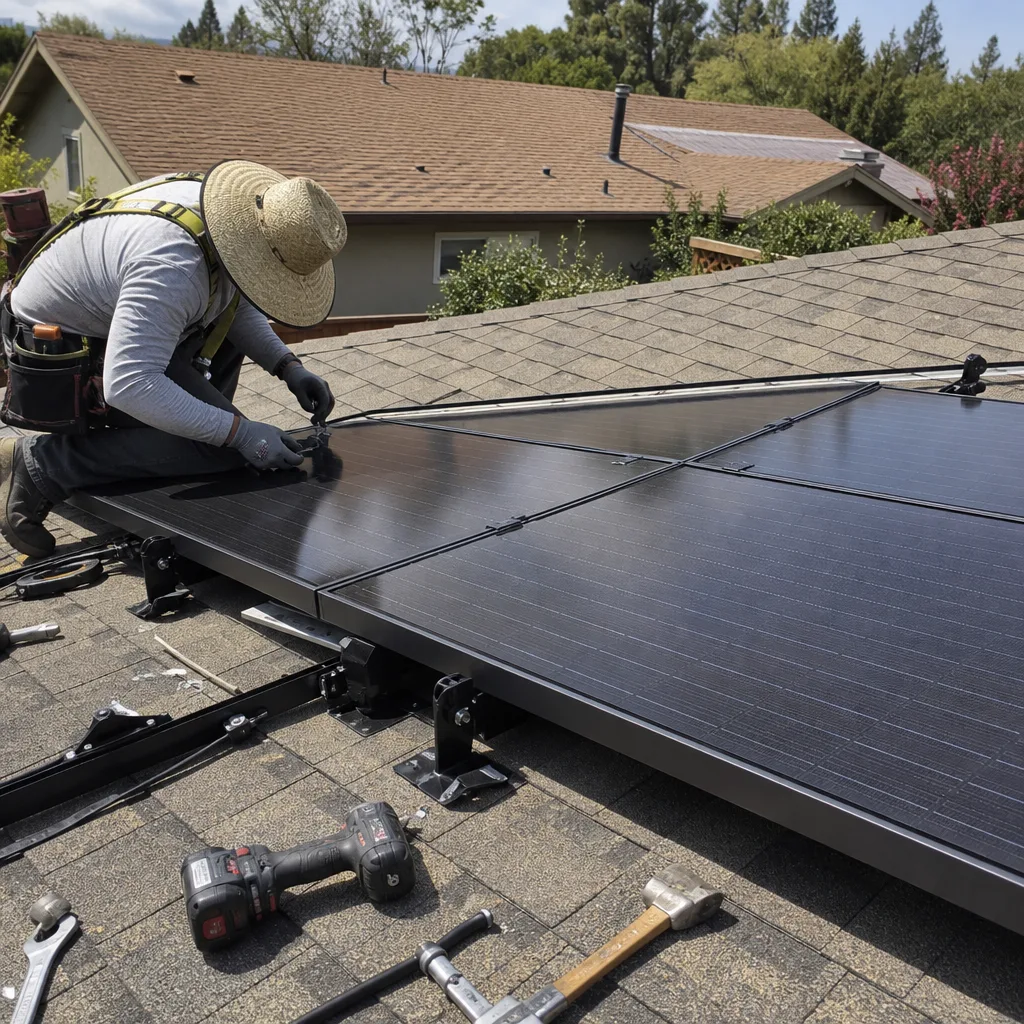 After
AfterFast, Reliable Solar Panel Maintenance & Monitoring Across Riverside
Solar panel maintenance and monitoring in Riverside typically costs $150-$350 per visit, and most underperformance issues can be diagnosed and fixed in one trip. We answer the phone 24/7 at (877) 550-6892, and our crew works Riverside neighborhoods from the Wood Streets to Orangecrest every week. If your system’s production has dropped or your monitoring app stopped updating, we can usually be there within 24 to 48 hours.
Riverside is our backyard. Gus Petrakis built this company in the Inland Empire, and his crew knows the difference between a Mission Revival roof in 92501 and a Spanish tile tract house in 92505. That matters when you’re trying to figure out why a system that worked fine in March is limping through August. We work with Riverside Public Utilities’ interconnection process every single week, and that’s something out-of-area contractors get wrong constantly.
Why Gus’s Solar Is Riverside’s Preferred Solar Panel Maintenance & Monitoring Company
Gus’s Solar was founded in 2011 by Gus Petrakis, a guy who puts his own name on the truck and answers his own phone. That’s not a marketing line. Riverside homeowners call (877) 550-6892 and a live person picks up, at 2 in the afternoon or 2 in the morning. No voicemail tree. No call center three states away. When a monitoring alert fires at midnight and you’re wondering if your system is down, that matters.
Our Solar Panel Maintenance & Monitoring team has a strong local reputation in Riverside because we do what we say we’ll do. The 90-Day Done Right Promise covers every job in writing. If the fix isn’t right, Gus comes back and makes it right. One call. That’s it.
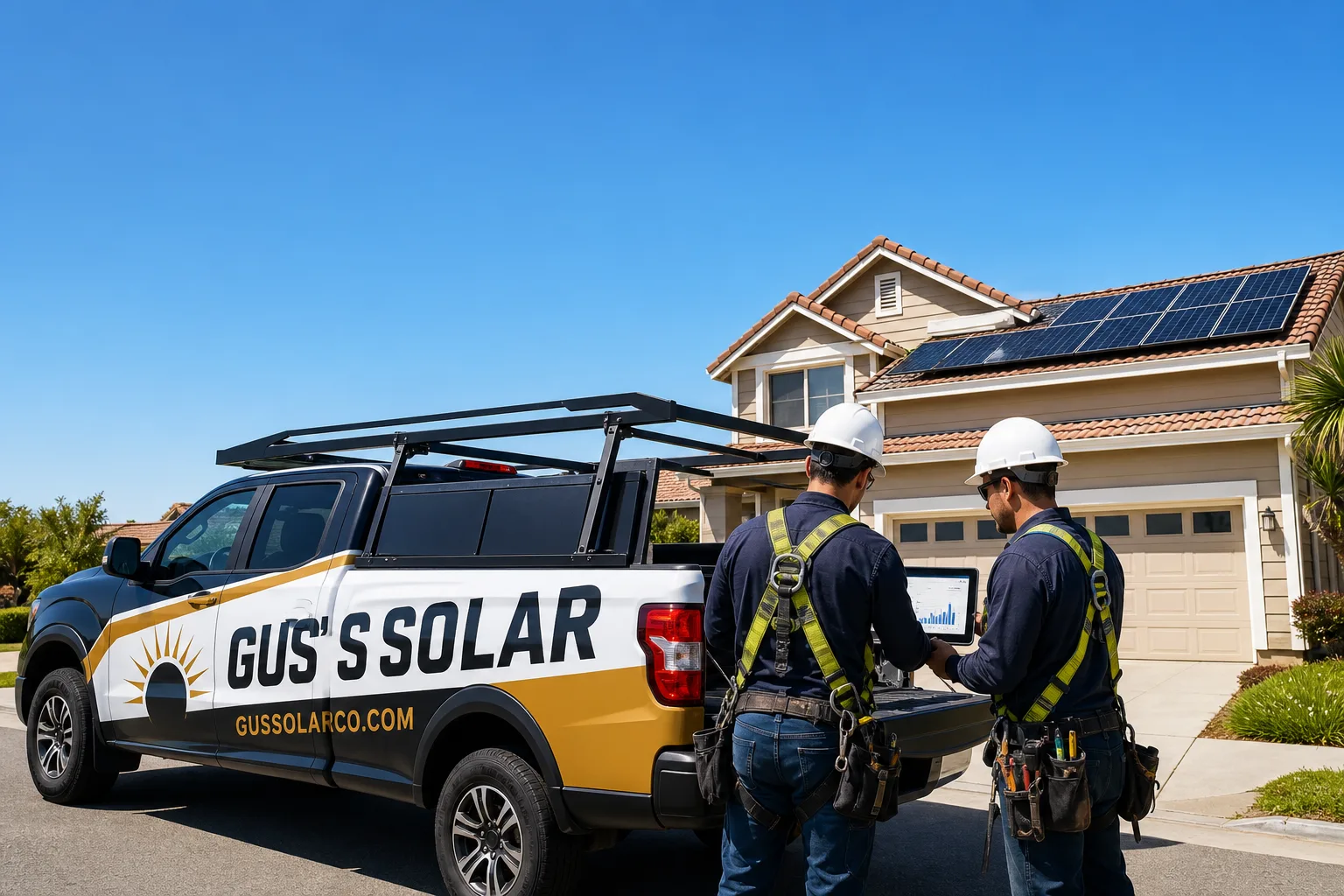
We serve Riverside homes with background-checked, uniformed technicians, and the work is never handed off to a sub. Gus’s own crew does the job. We know Orangecrest tile roofs, La Sierra tract homes, and the older Craftsman stock downtown. We also know that parking near the Wood Streets on a Tuesday can be harder than the actual repair. We plan for it.
Our Solar Panel Maintenance & Monitoring Services in Riverside
Annual System Inspection
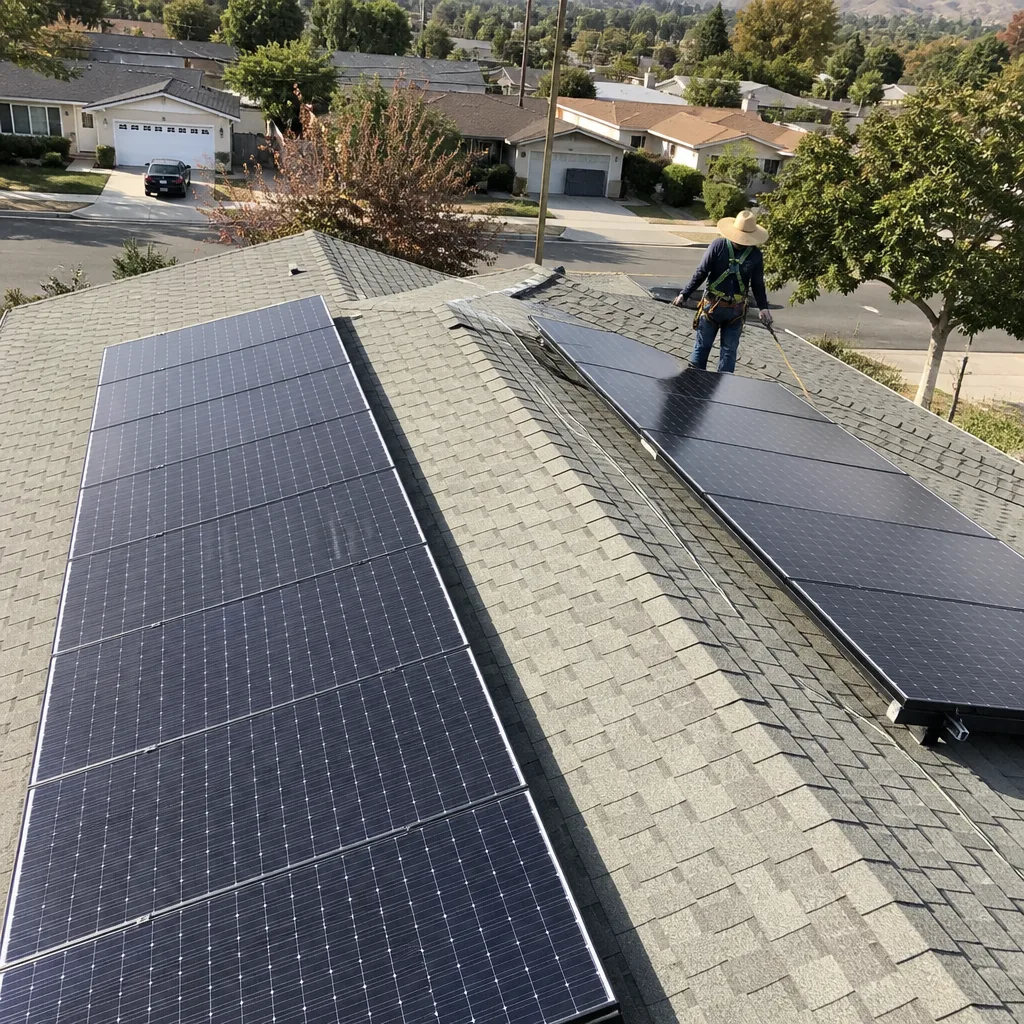
A full inspection in Riverside runs $150-$250 depending on system size and roof access. We check every panel, every connector, the inverter, the racking, and the monitoring gateway. On Riverside’s older homes with tile roofs, we pay special attention to tile-hook mounts that have been through a decade of 105-degree summers and thermal cycling. Loose hooks cause microcracks. We catch them before they become failed strings.
We also verify your system’s production against the modeled estimate for your specific azimuth and pitch. A system on an east-facing roof in Orangecrest should not be compared to a south-facing array in La Sierra. We read your actual bill, check your actual output, and tell you if something’s off.
Production Monitoring Setup
If your installer never configured your monitoring properly, or you bought a home with an existing system that has no app access, we can set it up. Monitoring setup in Riverside typically costs $100-$200, and it usually takes under two hours. We register the gateway, pair it with your inverter, configure alerts, and walk you through the app on your phone.
Here’s the Riverside-specific part: we configure your alerts to match RPU’s billing and true-up cycle, not a generic SCE schedule. Your production data should line up with what Riverside Public Utilities reports on your bill. If it doesn’t, the app becomes a toy instead of a tool. We set it up so the two actually agree.
Underperformance Diagnostics
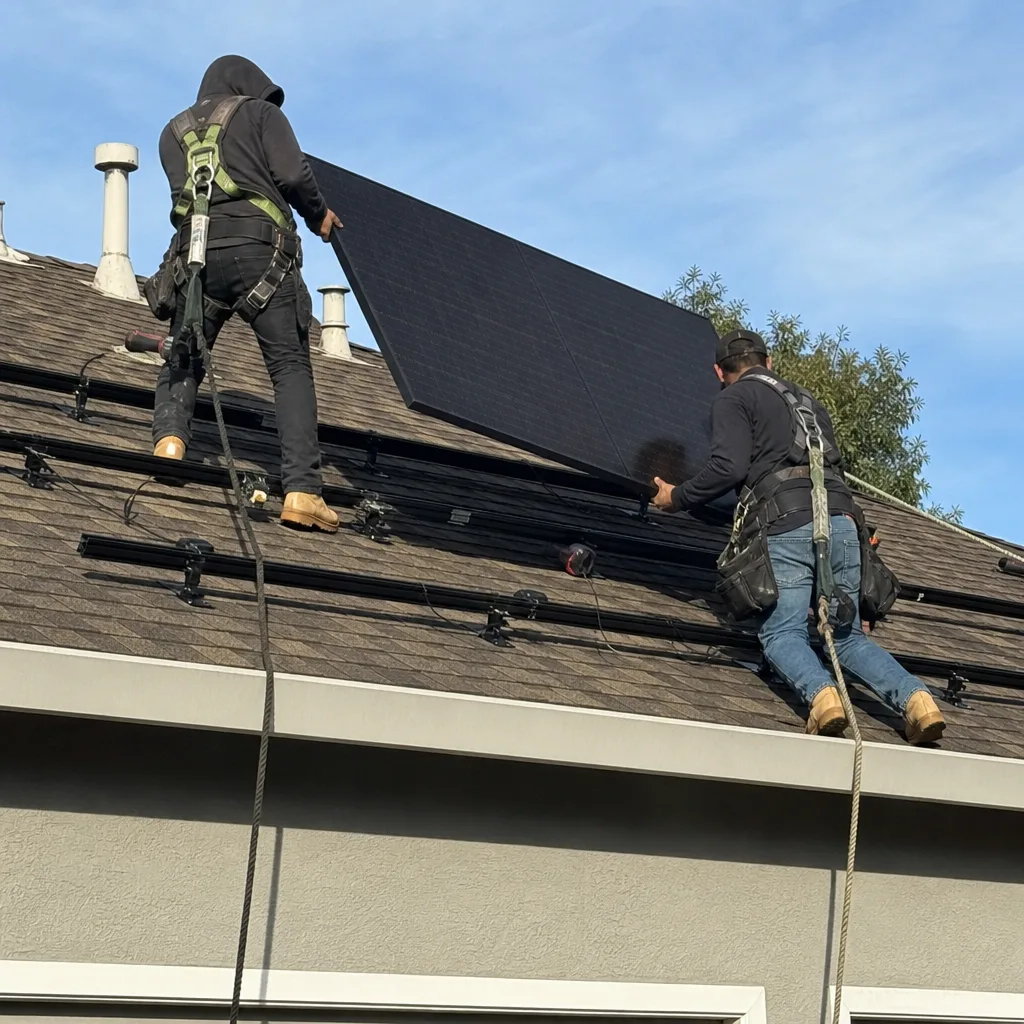
When your system’s output drops and no one can tell you why, that’s what we do best. Diagnostics in Riverside run $200-$350 for most residential systems, and the cost includes the fix when the problem is something minor like a loose connector or a misconfigured setting. We use Enphase, SolarEdge, and Tesla monitoring platforms to pull panel-level data, isolate the string or module that’s failing, and figure out whether it’s an equipment issue, a soiling issue, or something wrong with the array itself.
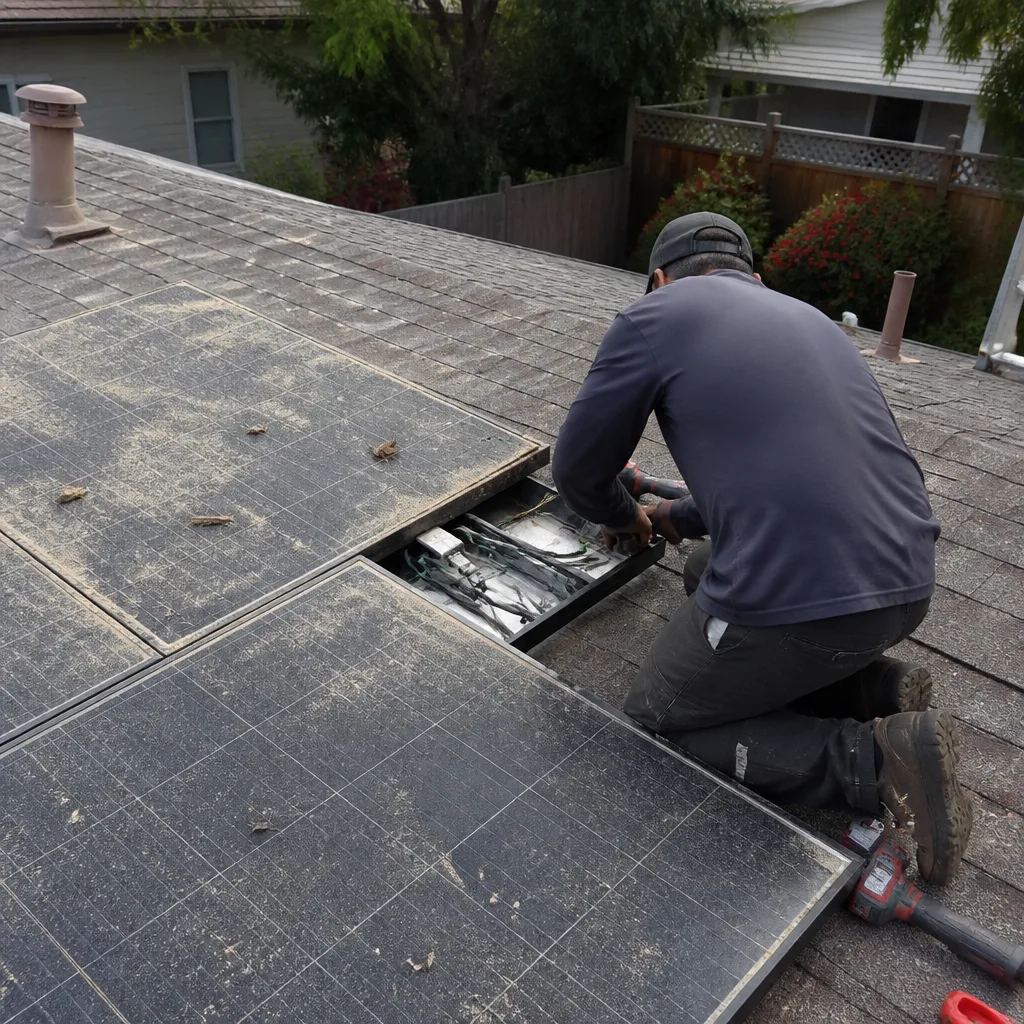
Our crew recently serviced a 2010 Spanish clay barrel-tile roof in Orangecrest where a SolarEdge inverter was reporting underperformance. We found the original tile-hook mounts had loosened from years of thermal cycling, causing microcrack damage on two Qcells panels and a 28% production drop from the azimuth’s modeled estimate. We replaced the damaged modules, re-flashed the tile penetrations, and reconfigured the monitoring gateway to match RPU’s true-up statement cycle. That’s the kind of thing a quick inspection from a ladder will miss.
Firmware & App Configuration
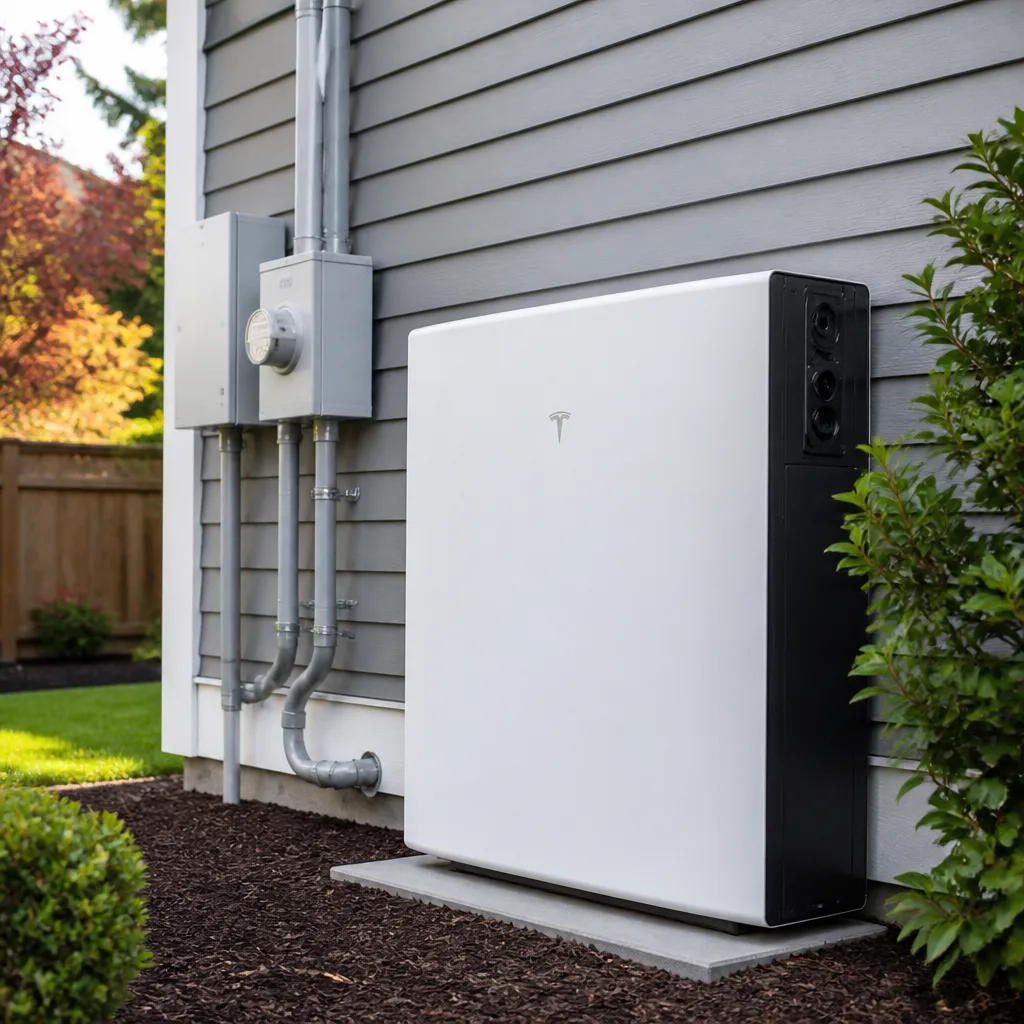
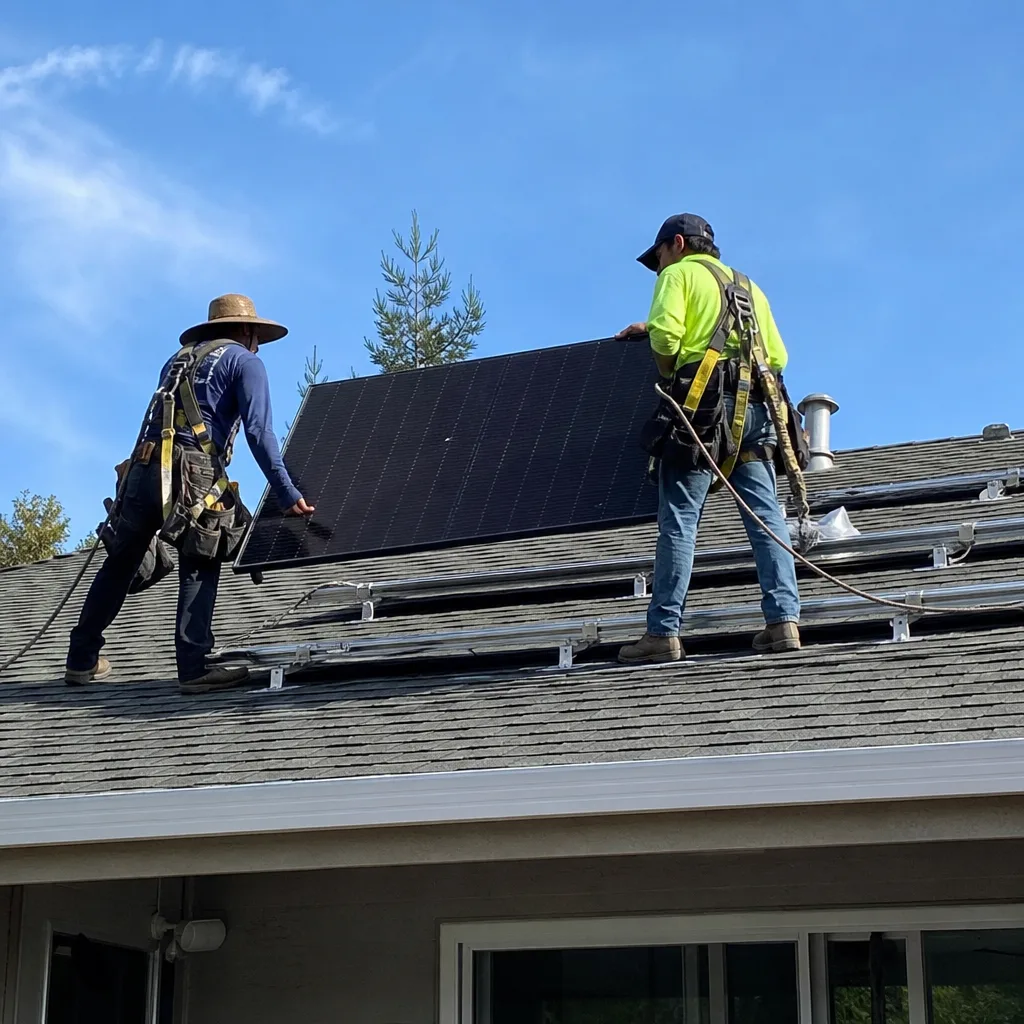
Inverters and gateways get firmware updates. Sometimes an update breaks the app connection or resets your production alerts. We handle firmware updates for Enphase, SolarEdge, Tesla, and FranklinWH systems and make sure the app on your phone actually shows what your array is doing. This is typically a $75-$150 service call in Riverside, and we can often fix connection issues remotely before we ever send a truck out.
If your installer went out of business or stopped answering calls (this happens more than people like to admit), we can take over the monitoring relationship. You don’t need to be stuck with a dead app and a system no one watches.
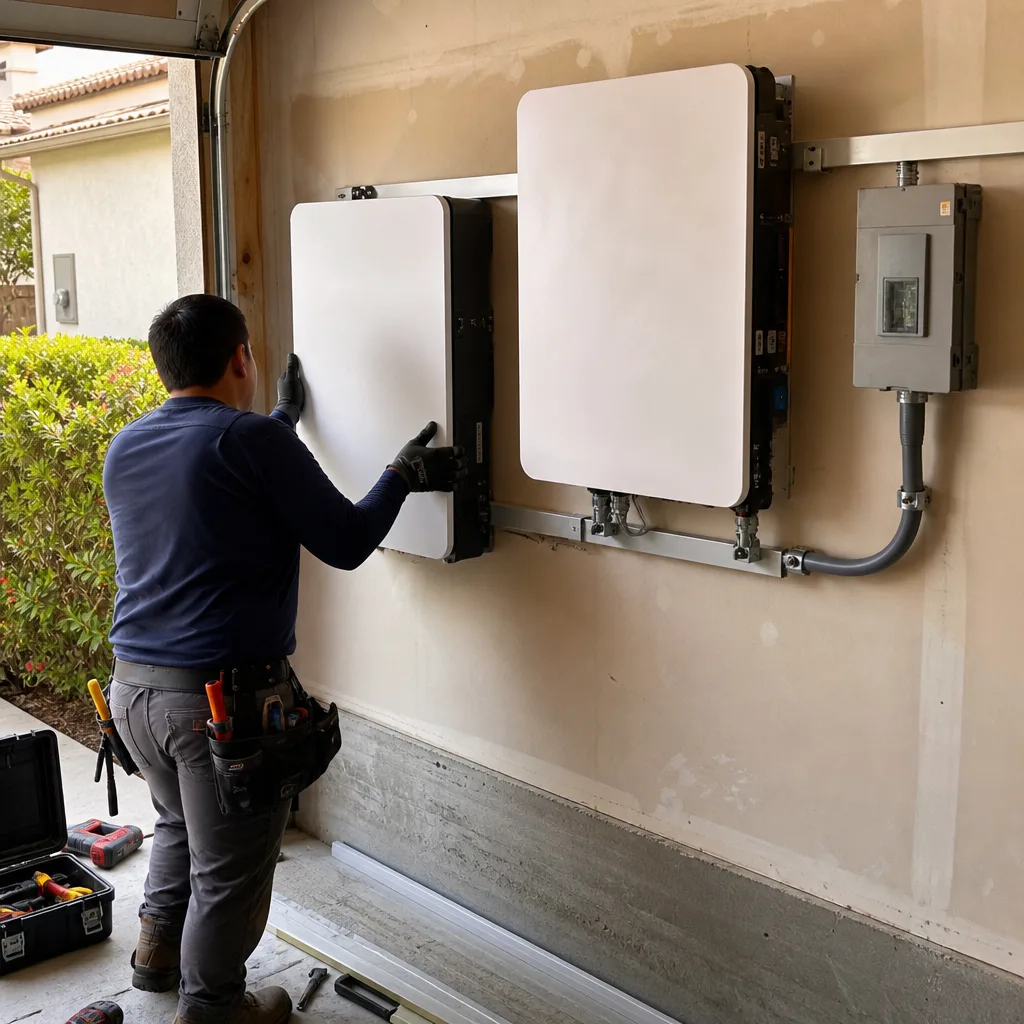
What happens when you call
- 1
A real person answersNo phone trees - you reach a local pro.
- 2
You get an upfront price rangeHonest numbers before anyone is dispatched.
- 3
A background-checked tech heads outLicensed & insured, dispatched right away.
- 4
You approve before work beginsNothing starts until you say go.
Trusted Brands We Service in Riverside
We service and maintain systems built on Enphase, SolarEdge, Tesla, and FranklinWH equipment, plus panels from Qcells, REC, Panasonic, and others. Because we install and service these same brands across the Inland Empire, we keep common replacement parts and connectors in our local inventory. That means a failed SolarEdge optimizer or an Enphase microinverter doesn’t mean waiting a week for a part to ship. We can usually swap it the same visit.
If you’re in Riverside and your system uses something we don’t stock locally, we’ll tell you that upfront and give you a real timeline, not a vague “should be there soon.”
Common Solar Panel Maintenance & Monitoring Problems We See in Riverside Homes
- Soiling that cuts production fast. Riverside sits in an inversion basin where particulate matter from the San Bernardino and San Jacinto mountains gets trapped. Panels here accumulate grime 30-40% faster than coastal markets, and we’ve measured up to an 8% drop in kWh offset between cleanings on systems that get ignored for a year or more.
- Summer heat triggering inverter derating. When Riverside afternoons push past 105°F, crystalline silicon panels lose efficiency and inverters throttle output to protect themselves. Poor airflow behind roof-mounted panels makes it worse, especially on low-slope roofs common in 1960s-1980s tract housing across the north and east sides of town.
- RPU interconnection delays leaving monitoring offline. Riverside Public Utilities runs its own review queue, and approval typically adds two to four weeks compared to an identical permit across the city line in Moreno Valley. Monitoring can’t be finalized against RPU’s net metering until that approval lands, and we see systems sitting offline for weeks because the original contractor didn’t schedule for it.
- Aged tile-hook mounts on Spanish barrel-tile roofs. The 1980s-2000s subdivisions in Orangecrest and parts of 92503 and 92505 are full of clay tile roofs that need specialized mounting hardware. A decade of Riverside’s hot-cold cycling loosens those hooks, which stresses the panel frames and leads to microcracks that a production report will flag long before you see physical damage.
Pricing for Solar Panel Maintenance & Monitoring in Riverside, CA
Here’s what Riverside homeowners should expect to pay, based on what we actually charge:
- Annual inspection: $150-$250
- Monitoring setup: $100-$200
- Underperformance diagnostic: $200-$350 (includes minor fixes)
- Firmware update or app fix: $75-$150
- Preventive maintenance plan: $180-$400 per year, depending on system size and visit frequency
What affects the price: roof pitch and tile type, system size, inverter brand, and whether we need to coordinate with RPU on anything utility-side. We offer a free second opinion on any written estimate you’ve received, no trip charge inside our own county, and a senior and veteran 10% discount that never expires. Call (877) 550-6892 and we’ll give you a straight number.
We Also Serve Cities Near Riverside
If you’re in Rubidoux, Glen Avon, Pedley, or Sunnyslope, we handle Solar Panel Maintenance & Monitoring in Riverside and the surrounding communities several days a week. The RPU interconnection process, the particulate soiling, the summer derating issues - they’re all the same in these nearby pockets, and we treat them as one service area.
Serving Riverside, CA - Our Local Coverage Area
We’re based in the Riverside area and know this community well. Use the map below to see our service coverage - if you’re nearby, we can almost certainly help.
FAQs - Solar Panel Maintenance & Monitoring in Riverside
Your panels are hot, and heat is the enemy of crystalline silicon. On a 108-degree Riverside afternoon, panel temperatures can exceed 145°F, and efficiency drops by roughly 0.35-0.45% per degree above 77°F. That means a system that produces 100% of its rated output on a 70-degree spring day might only hit 85% in August, even with spotless panels. This is normal physics, not a fault. But if your August output drops below 80% of what the same month produced in prior years, that’s worth a diagnostic call. Call (877) 550-6892 and we’ll pull your production logs and tell you what’s heat-related and what’s actually broken.
Riverside panels need cleaning roughly every 3 to 4 months, versus every 6 to 12 months in Newport Beach. The reason is geography: Riverside sits in an inversion basin where particulate matter from the San Bernardino and San Jacinto mountains gets trapped, plus the region ranks among the worst in the country for particulate air quality. That soiling builds up 30-40% faster here and can cut kWh offset by up to 8% between cleanings. Most Riverside homeowners do well with twice-a-year professional cleaning, with an extra rinse at the end of summer if wildfire smoke or Santa Ana winds left a film on the glass. We can set you up on a preventive maintenance plan that includes cleanings so you don’t have to track it yourself.
Yes, and this is where a lot of generic solar advice fails Riverside homeowners. Riverside Public Utilities runs its own net metering program with separate compensation terms and billing cycles from SCE’s NEM schedule. Your monitoring alerts should be tied to RPU’s true-up statement cycle, not a generic monthly production goal. We set up your app so that the daily, weekly, and monthly production targets match what RPU actually credits you for, and we flag anomalies against your own historical output rather than a national average. To get started, call (877) 550-6892 and we’ll pull your last RPU bill and baseline your alerts correctly.
Because RPU operates its own interconnection review queue, separate from SCE’s process. Your installer was right: approval on RPU jobs typically adds two to four weeks compared to identical systems across the city line in Moreno Valley or Corona. Until RPU approves the interconnection, monitoring can’t be finalized against their metering, so your system may sit dark or unmonitored even though the panels are physically installed. This is a Riverside-specific timeline issue that out-of-area contractors don’t know to plan for, and it’s one more reason to work with a local shop that files RPU paperwork every month. Gus’s Solar handles the interconnection coordination as part of any monitoring setup. We’ll give you a real timeline, not a guess.
First, check the actual degradation against the manufacturer’s year-8 spec, which is typically around 91-93% of day-one rated output. Most panels degrade 0.5-0.7% per year, so an 8-year-old system at 92-95% is completely normal. A warranty claim only makes sense if your output has fallen below the manufacturer’s guaranteed line, and most claims fail because soiling, shading, or a failed inverter was the real culprit, not panel degradation. Before filing, we run a panel-level diagnostic to isolate whether the loss is coming from the modules themselves or something fixable like a connector, an optimizer, or a monitoring error. If a claim is actually warranted, we’ll help you build the documentation the manufacturer requires. Call (877) 550-6892 and we’ll run the numbers on your specific system.
We’re Gus’s Solar, locally owned and operated by Gus Petrakis since 2011. We maintain and monitor solar for Riverside homeowners who want a straight answer and a fast fix, not a sales pitch. If your system’s acting up, or you just want a second set of eyes on a quote someone else gave you, call (877) 550-6892. A live person answers, any hour. Estimates are free, and we don’t ask for a signature tonight.
Written by Gus Petrakis, Owner at Gus’s Solar, serving Riverside homeowners with honest numbers and no-pressure maintenance since 2011.