
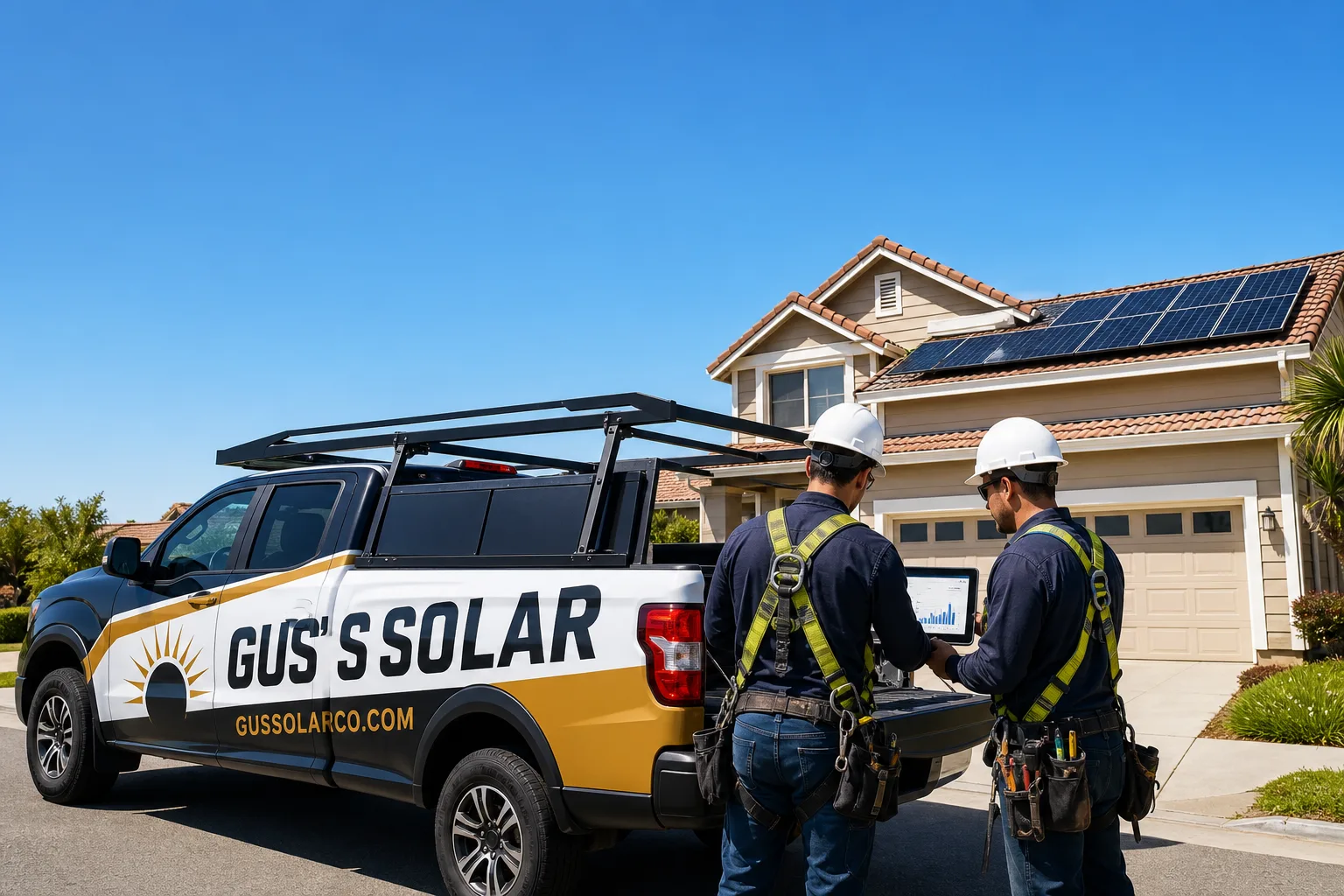
Free bill analysis - bring a power bill, get the production math for your actual roof, panel brands like Qcells and REC compared side by side
If the pitch starts at your door and ends with "sign tonight for the special," sleep on it. The sun will still be there tomorrow; so will we.
 Before
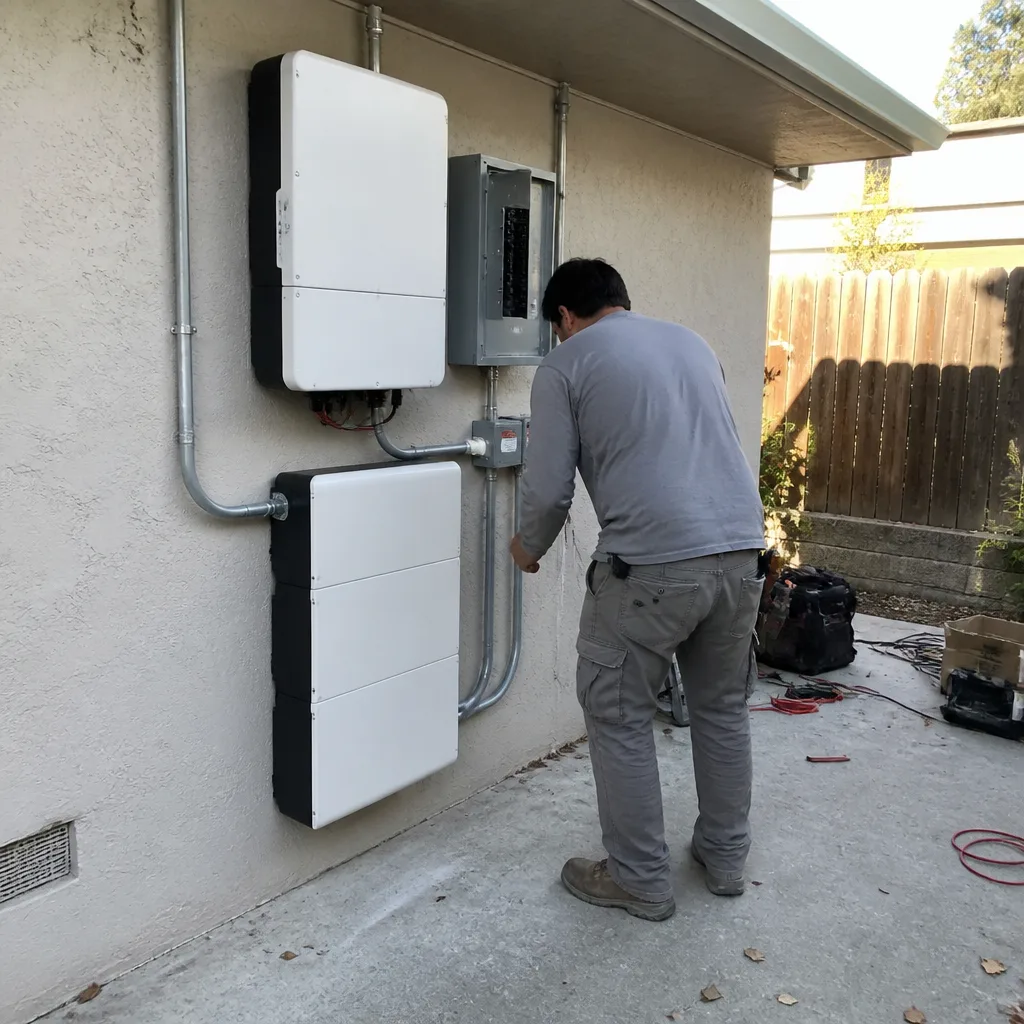 After
After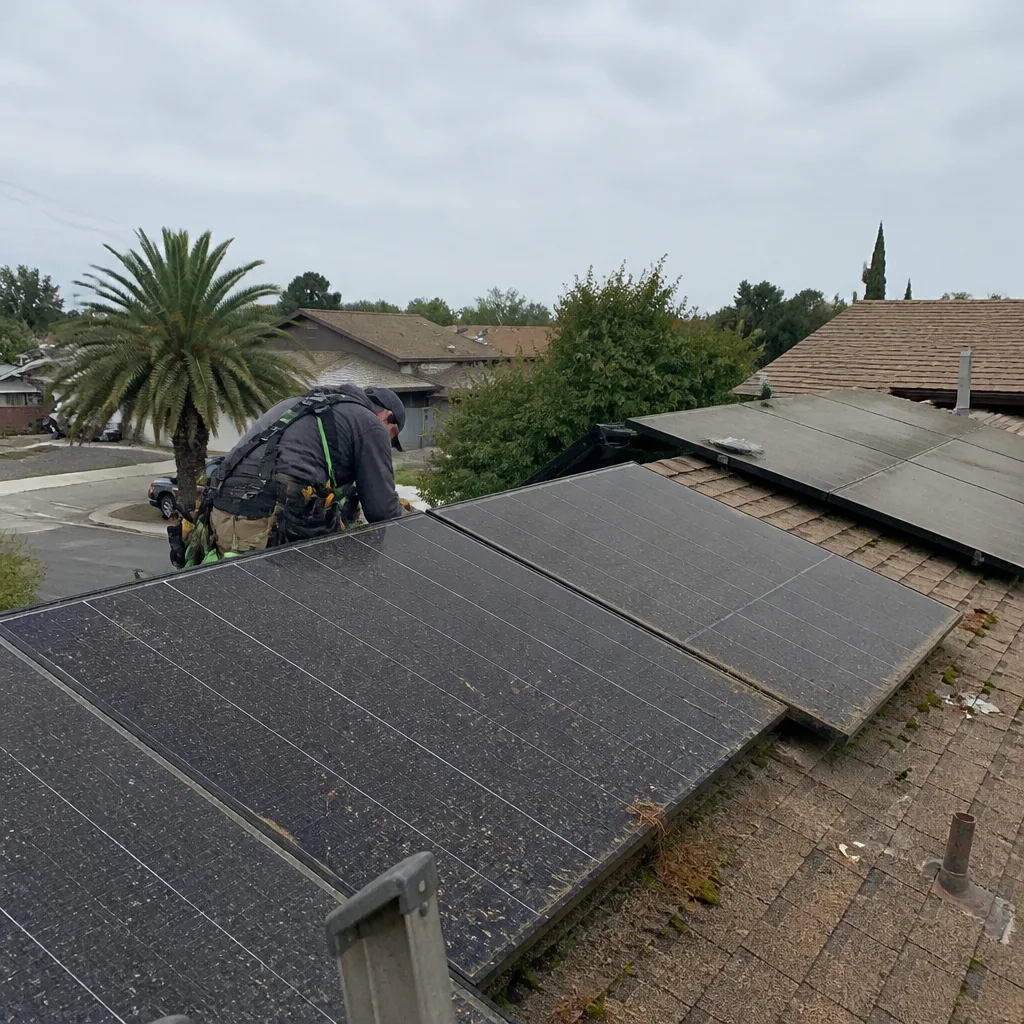 Before
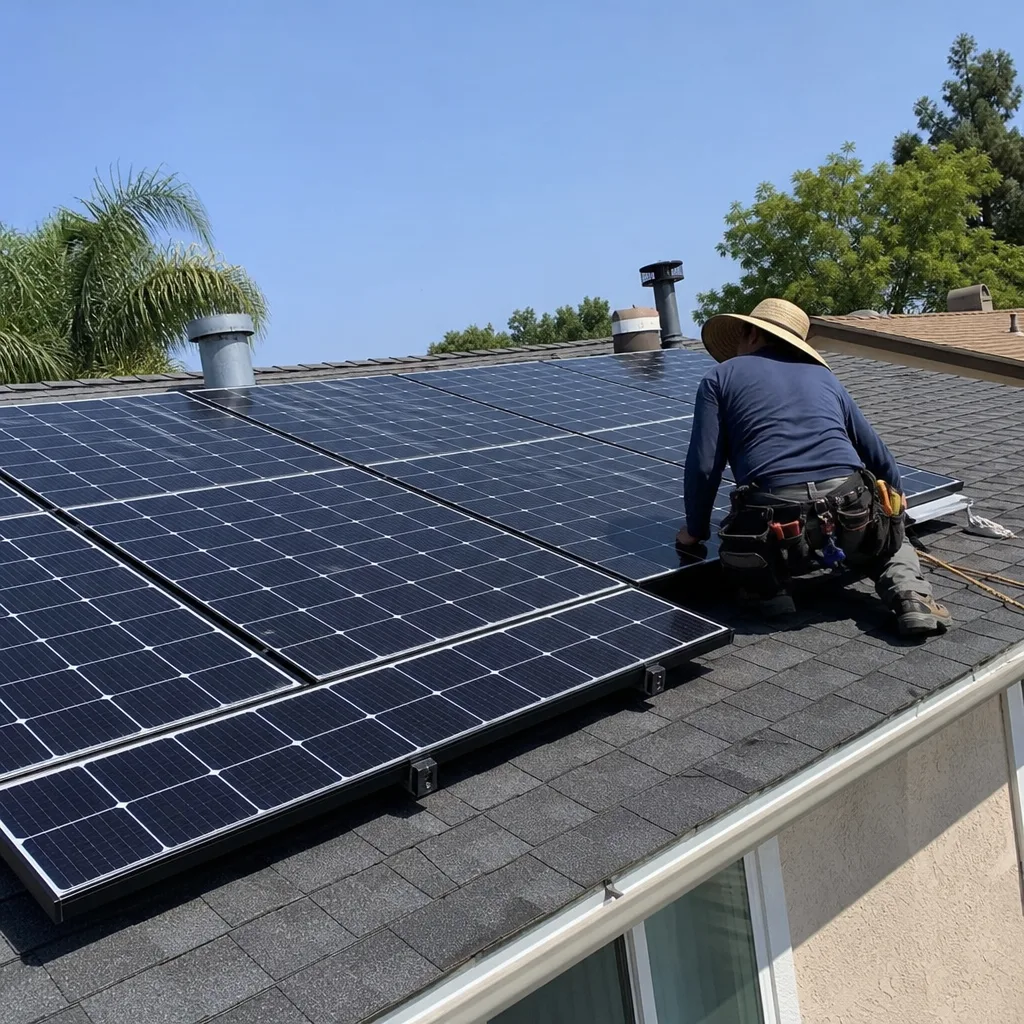 After
After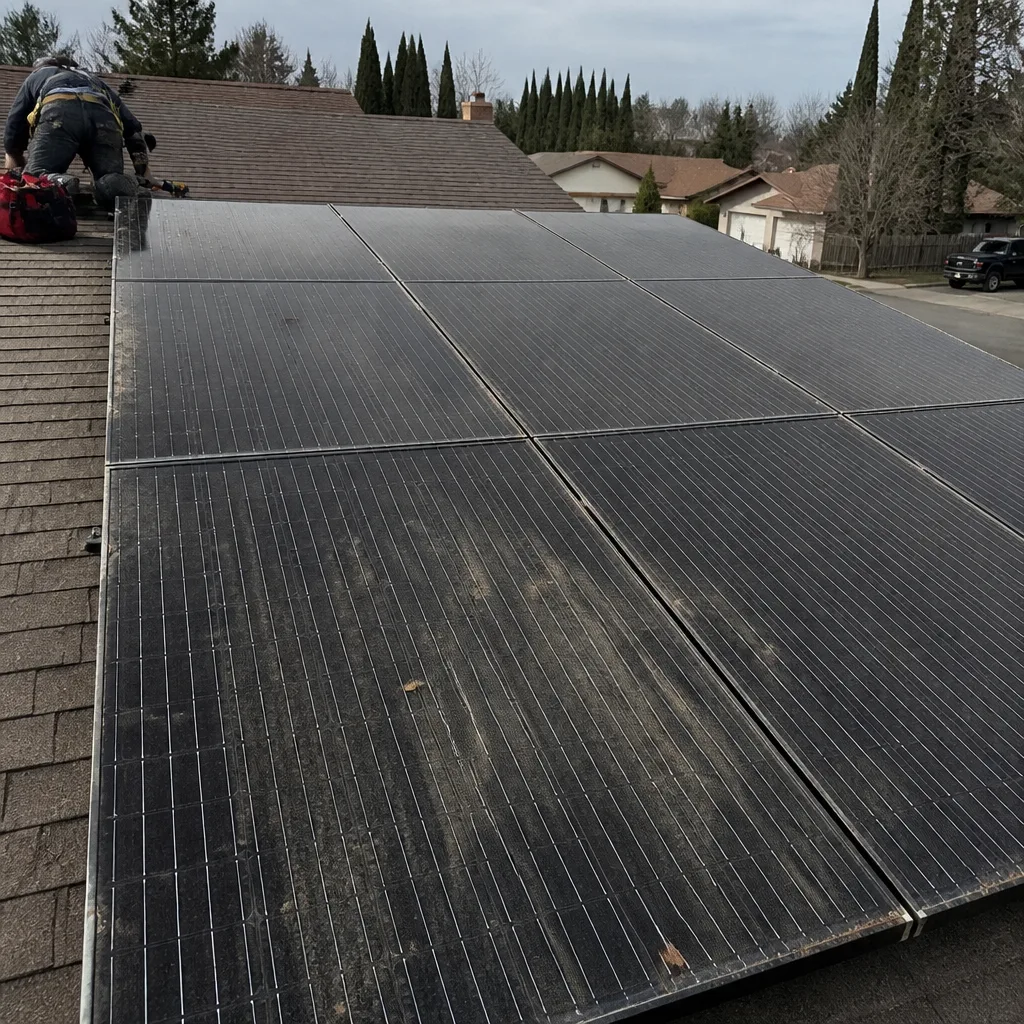 Before
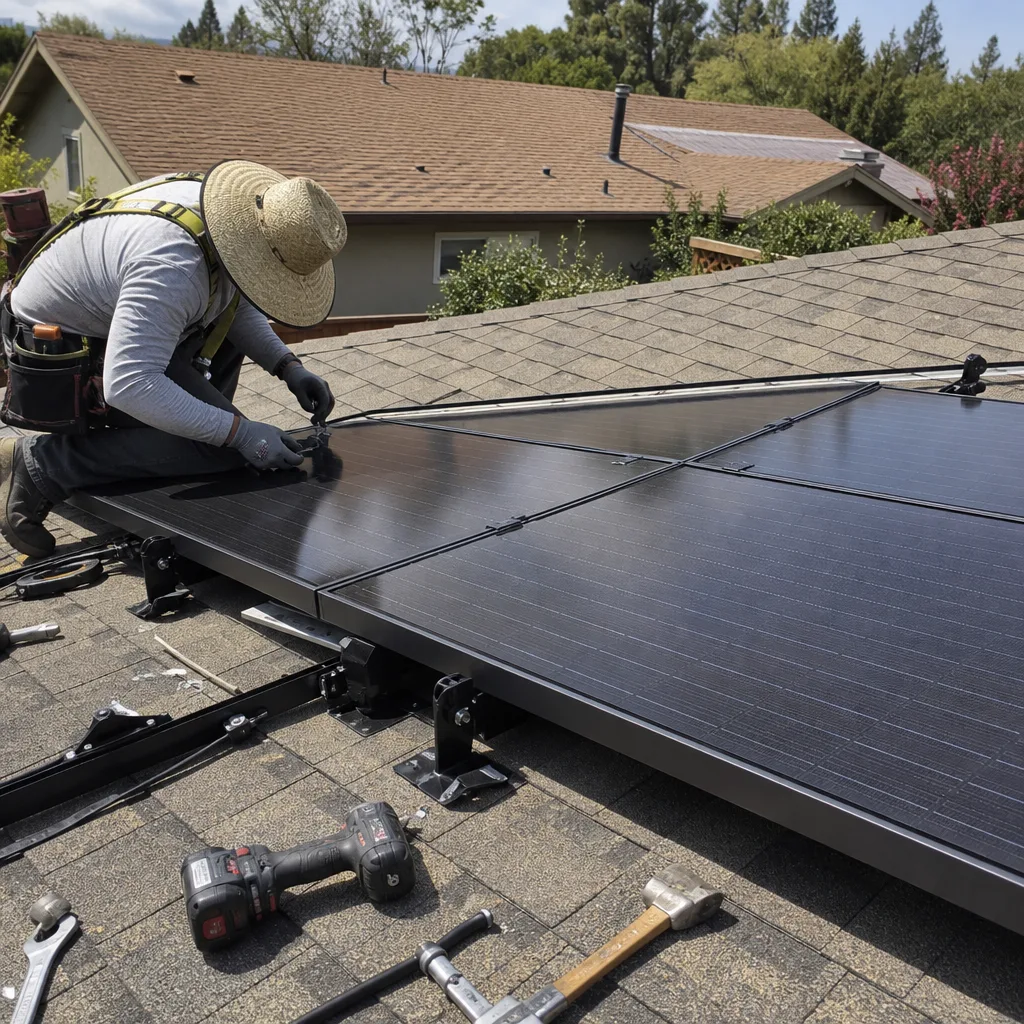 After
AfterFast, Reliable Solar Panel Maintenance & Monitoring Across Diamond Springs
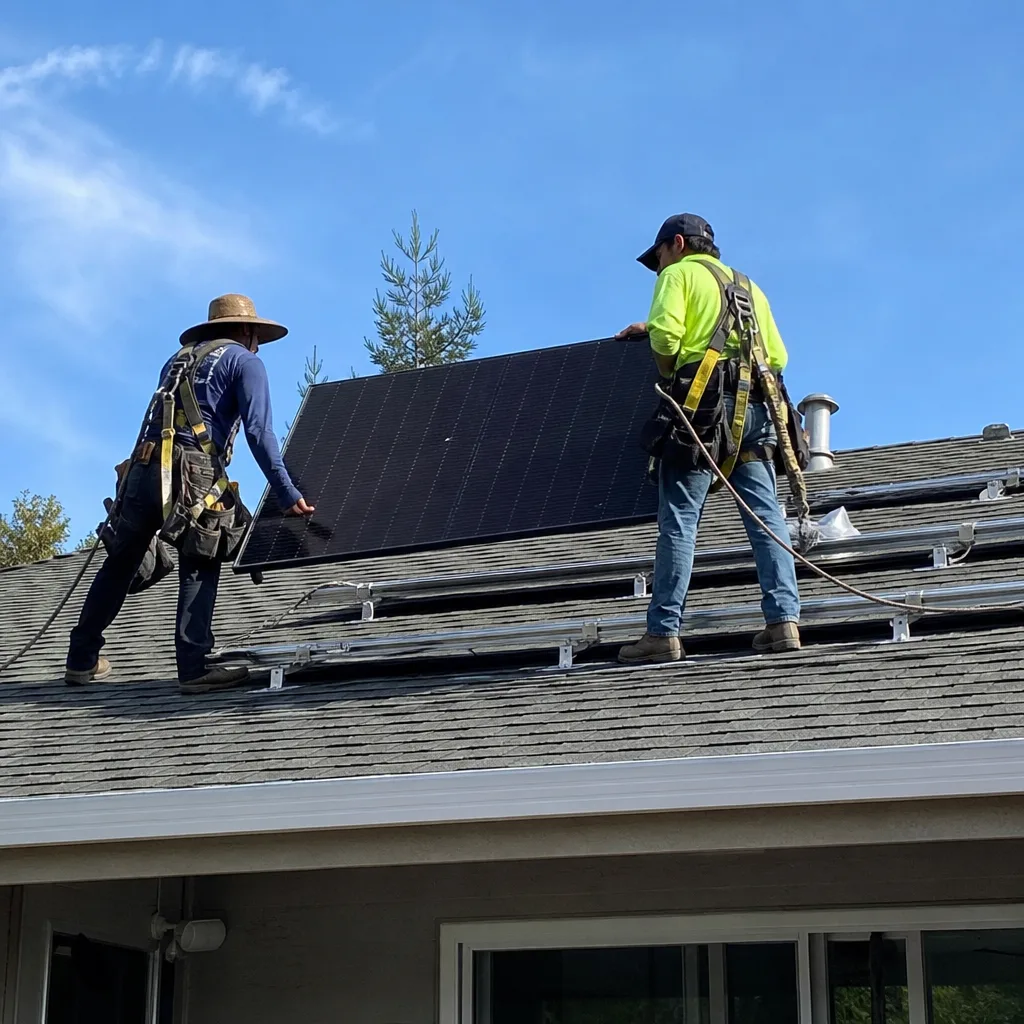
Solar panel maintenance and monitoring in Diamond Springs typically costs $149-$289 for an annual inspection and $299-$599 for a full underperformance diagnostic with repair. Most service calls in the 95619 zip code are completed same week, often same day when a system has gone completely dark. Gus Petrakis has been working on foothill solar arrays since 2011, and his crew knows the difference between a system that is actually underperforming and one that just looks that way on a homeowner’s app.
If your production numbers have dropped, your monitoring portal is throwing errors, or you simply have not had the array looked at in three years, call (877) 550-6892. A live person answers, and estimates are free.
- Annual solar inspections in Diamond Springs run $149-$289 and catch shade loss, inverter faults, and firmware drift before they compound.
- Blue oak and gray pine shade is the top cause of silent production loss on Diamond Springs rooftops. Microinverter monitoring is the fix.
- Gus’s Solar services Tesla, Enphase, SolarEdge, and FranklinWH equipment and stocks common parts locally for faster turnaround.
- Free estimates. Live person on the phone 24/7. (877) 550-6892.
Why Gus’s Solar Is Diamond Springs’s Preferred Solar Panel Maintenance & Monitoring Company
Diamond Springs homeowners tend to be done with high-pressure solar pitches. They have heard the door-knocker routine, they have seen the out-of-state van in the driveway, and they have learned the hard way that a national outfit’s “service department” often means a voicemail box and a three-week wait. Gus’s Solar is the opposite of that model. Gus Petrakis publishes his name, address, and license number, and he is the one who picks up the phone when you call about a monitoring alert at 7 a.m. on a Tuesday.
Gus has been locally owned since 2011 and has spent well over a decade on Diamond Springs rooftops specifically, dealing with the blue oaks, gray pines, custom racking, and older service panels that define this part of El Dorado County. His crew is background-checked, uniformed, and works directly under Gus, not through a subcontractor he has never met. When a Diamond Springs homeowner calls about a system that stopped reporting after a storm, the tech who shows up at Solar Panel Maintenance & Monitoring in Diamond Springs calls has likely been on that same stretch of road before.
Every service job carries the 90-Day Done Right Promise in writing. If something is not right, one call brings Gus back. No ticket queue, no case number. Just Gus.
Our Solar Panel Maintenance & Monitoring Services in Diamond Springs
This is the hands-on work that keeps Diamond Springs arrays producing at their real year-25 numbers, not the day-one brochure figure. If you have shading, old firmware, or a monitoring portal that stopped matching your utility bill, start here.
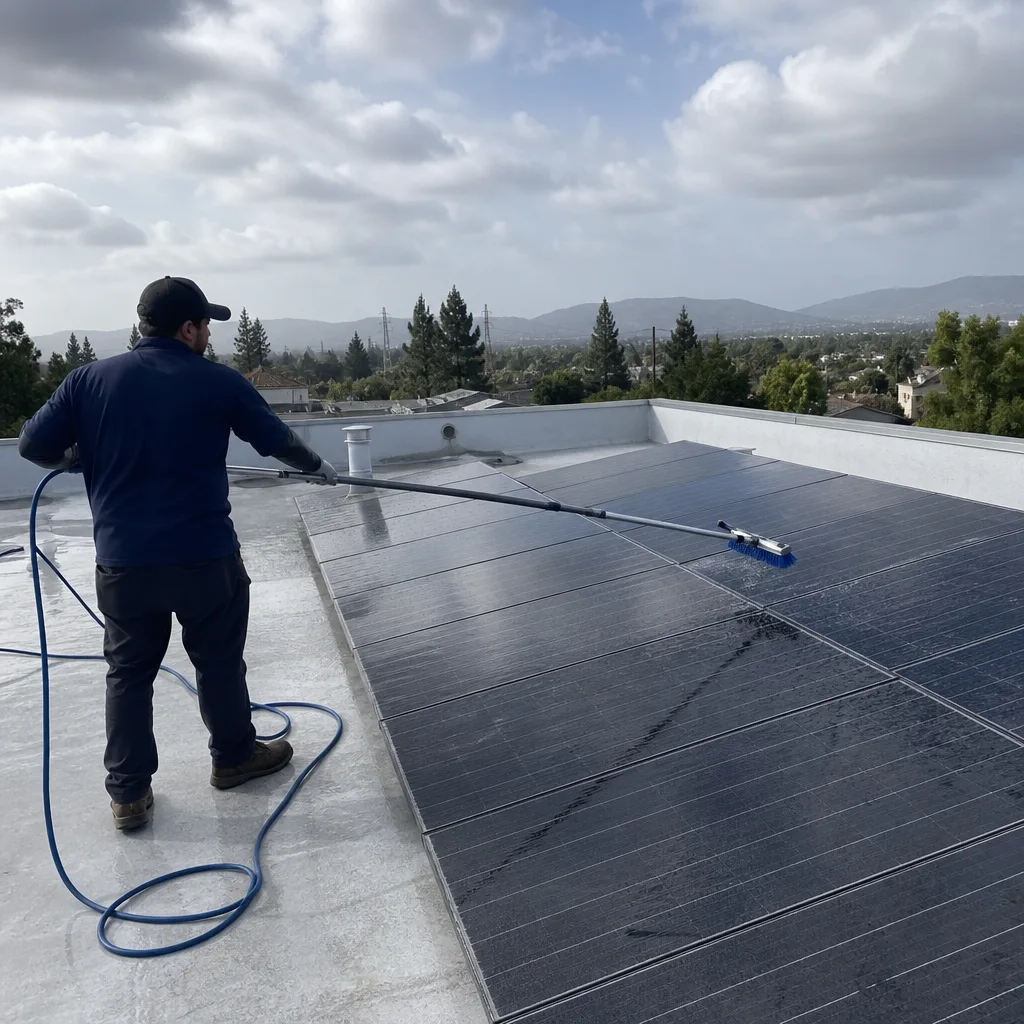
Annual System Inspection
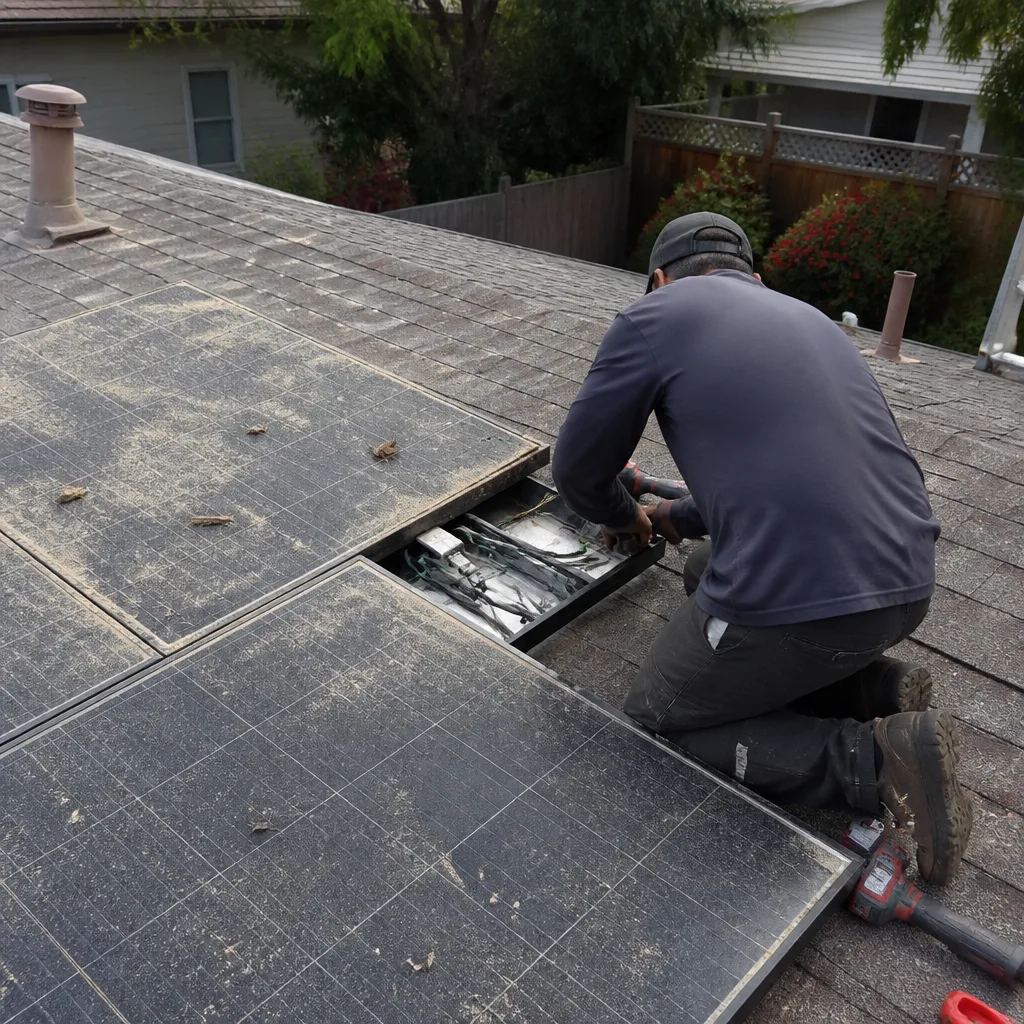
A full annual inspection in Diamond Springs runs $149-$289 depending on array size and roof access. We check every module, junction box, microinverter or optimizer, the disconnect, the service panel connection, and the racking. On Diamond Springs’ custom and semi-custom rooftops, where pitch and mounting vary wildly from house to house, a generic checklist is not enough. We look at what actually happens on your roof, including the oak limbs that have grown since last year.
Production Monitoring Setup
If your system was installed before monitoring was configured properly, or you have never been able to see per-panel production, we set that up and walk you through the app on your phone before we leave. On shaded Diamond Springs parcels, per-panel visibility is not a luxury. It is how you catch a single microinverter going silent behind a gray pine before it costs you hundreds on a true-up bill.
We configure monitoring for Enphase, SolarEdge, Tesla, and FranklinWH systems. Setup runs $199-$399 depending on whether we are commissioning from scratch or repairing an existing configuration.
Underperformance Diagnostics
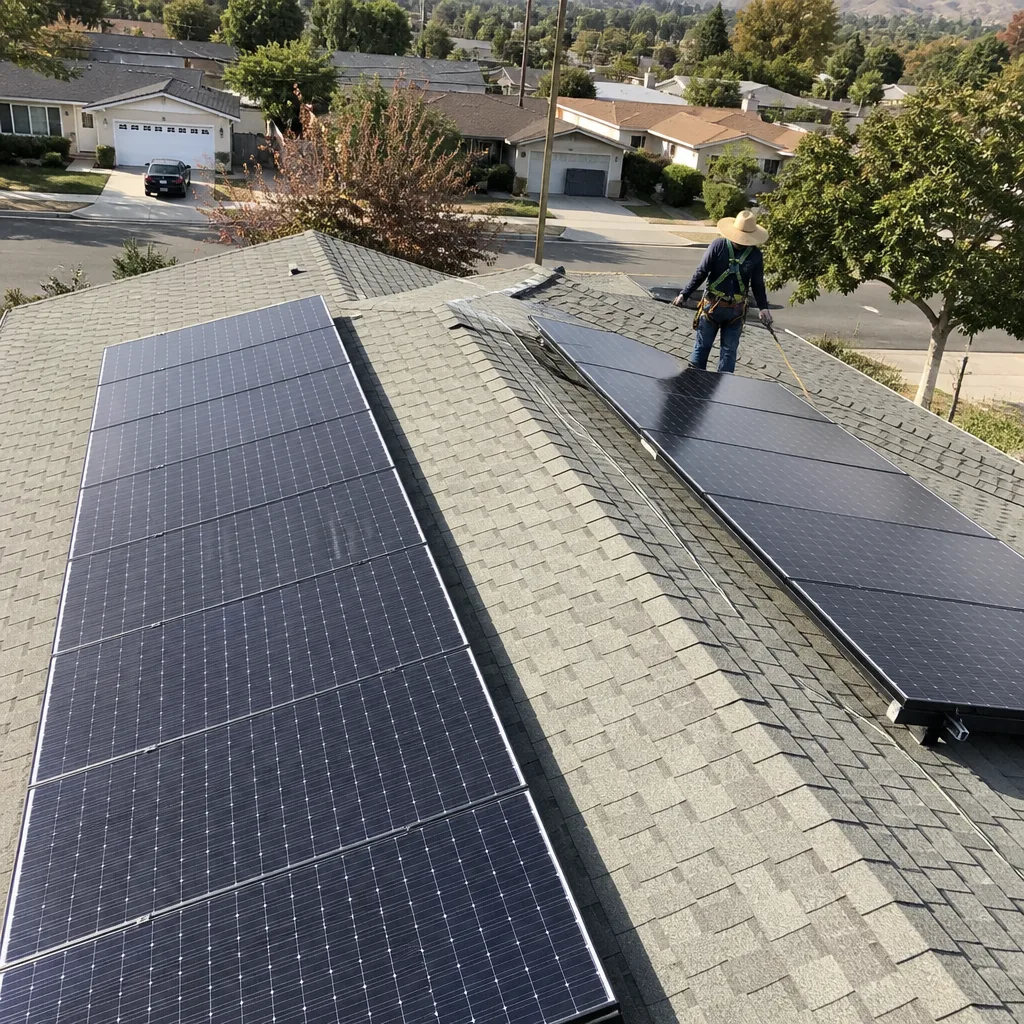
This is the service Diamond Springs calls for most often. Production looks normal on the main dashboard, but the annual true-up statement says otherwise. We run a full diagnostic across every module, inverter, and connection point, then compare actual output against the production estimate for your specific roof, orientation, and shade profile. Diagnostics run $299-$599 in Diamond Springs, including a written report with photos and specific recommendations. If the fix is simple, like a loose MC4 connector or a misconfigured production baseline, we often handle it on the same visit.
Firmware & App Configuration
Enphase and SolarEdge push firmware updates a few times a year, and those updates occasionally reset production baselines or drop panels from the monitoring map. Homeowners in Diamond Springs then see “zero production” alerts that are not real failures at all, just a configuration problem. We handle firmware verification and app reconfiguration for $99-$199, and we show you what normal looks like on your app so you are not calling us for ghosts.
What happens when you call
- 1
A real person answersNo phone trees - you reach a local pro.
- 2
You get an upfront price rangeHonest numbers before anyone is dispatched.
- 3
A background-checked tech heads outLicensed & insured, dispatched right away.
- 4
You approve before work beginsNothing starts until you say go.
Trusted Brands We Service in Diamond Springs
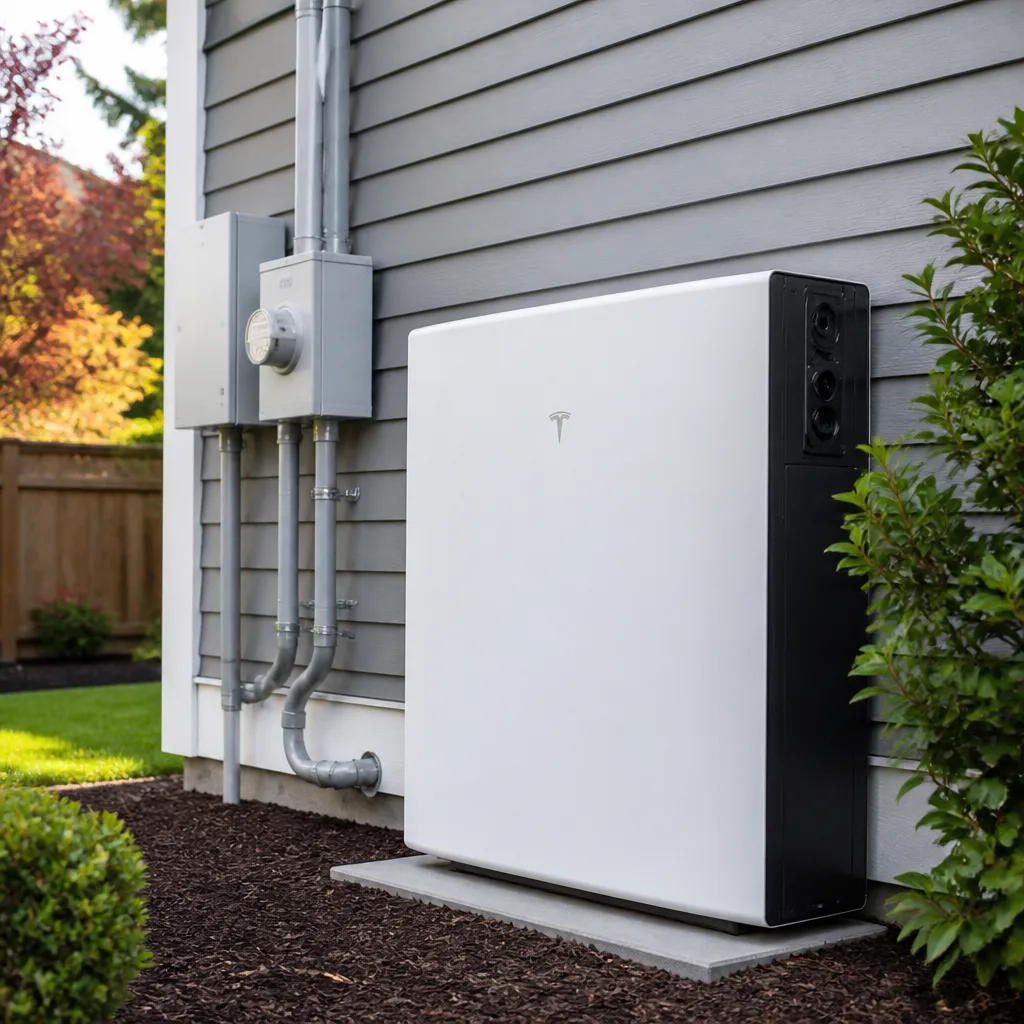
We work on the equipment already installed on Diamond Springs roofs: Enphase microinverters and monitoring, SolarEdge string inverters with DC optimizers, Tesla Powerwall and inverter products, and FranklinWH battery systems. Because we service these brands in the 95619 area every week, we keep common Enphase microinverters, SolarEdge optimizers, and monitoring components in local stock. That means fewer two-week parts delays when your system is down and your AC is running hard in August.
We do not push one brand over another. We service what you have and tell you honestly whether it is worth repairing or whether replacement makes better long-term sense.
Common Solar Panel Maintenance & Monitoring Problems We See in Diamond Springs Homes
- Blue oak and gray pine shade silently killing production. A single mature blue oak branch can shade two or three modules for three hours a day. On a string inverter system, that drags down the entire string. With microinverters, you lose only the shaded panels, but only if the monitoring map is configured correctly. Most Diamond Springs homes have the canopy, but their monitoring was set up with a generic layout that ignores it.
- Older 100-amp panels tripping rapid shutdown faults during PG&E PSPS events. When power cuts off and then returns, systems connected to 1960s-1990s service panels sometimes fail to reconnect cleanly. The inverter senses a wiring condition it does not like and refuses to restart. We see this on Diamond Springs ranch homes and custom builds all the time after PSPS disruptions.
- Firmware updates resetting production baselines. Enphase and SolarEdge occasionally push updates that drop the expected-production baseline, which triggers false underperformance alerts. Your system is fine, but the app says it is not. We reconfigure the site profile and clear the false flags.
- Microinverter fleets underreporting after partial shade events. On Pleasant Valley Road and the surrounding foothill parcels, we regularly find one or two microinverters out of nineteen or twenty that have stopped reporting altogether. The homeowner only notices when the annual true-up bill lands. That is why annual inspection matters more here than in open-roof communities.
One recent job sticks with us. A 1970s custom ranch on Pleasant Valley Road had an Enphase array underproducing by 18% against its original production estimate. Three of nineteen modules sat in a blue oak’s afternoon shadow, and one microinverter had failed entirely. We reconfigured the monitoring map, replaced the dead microinverter, and rebalanced the branch circuits. The system recovered 14% of lost daily kWh offset within the first week. That is not a brochure story. It is a Diamond Springs roof.
Pricing for Solar Panel Maintenance & Monitoring in Diamond Springs, CA
Here are real numbers for the Diamond Springs market. No “call for pricing” games. No signature wanted tonight.
| Service | Typical Diamond Springs Price |
|---|---|
| Annual System Inspection | $149-$289 |
| Production Monitoring Setup or Repair | $199-$399 |
| Underperformance Diagnostic (per-visit) | $299-$599 |
| Firmware & App Configuration | $99-$199 |
What moves the number: array size, roof pitch and access difficulty, whether we are diagnosing a single failed component or chasing a whole-system issue, and whether parts need replacement. Diamond Springs custom rooftops with steep pitches and awkward access points tend toward the higher end of these ranges. A simple single-microinverter replacement on a walkable roof falls at the low end.
Every estimate is free, and the price we quote is the price you pay. Bring us your utility bill and we will anchor the math to your actual usage and current export rates. Take two weeks to think about it. The price will be the same. Call (877) 550-6892 for an exact quote.
We Also Serve Cities Near Diamond Springs
Gus’s crew covers Diamond Springs and the surrounding foothill communities. We regularly service Placerville, Cameron Park, El Dorado Hills, and Pollock Pines. Same crew, same 90-Day Done Right Promise, same live person on the phone. If you are just outside the 95619 area, call and ask. We probably cover you.
Serving Diamond Springs, CA - Our Local Coverage Area
We’re based in the Diamond Springs area and know this community well. Use the map below to see our service coverage - if you’re nearby, we can almost certainly help.
FAQs - Solar Panel Maintenance & Monitoring in Diamond Springs
Shifting shade from mature blue oaks and gray pines causes individual modules to produce less during certain hours, and without per-panel monitoring, the system average hides that loss. On string inverter systems, one shaded panel pulls down the entire string. On microinverter or optimizer systems, only the shaded panels lose production, but only if your monitoring map reflects the actual shade pattern on your roof. In Diamond Springs, where the canopy is dense and irregular, we configure monitoring per-module and use shade-aware baselines so the app shows you real performance, not a generic estimate that ignores the oaks. If your monitoring readings look wrong, call (877) 550-6892 and we will come check.
Check your inverter or gateway for a rapid shutdown fault. On older Diamond Springs homes with 100- or 150-amp panels, the grid’s return after a PSPS event can trigger a rapid shutdown condition that prevents the system from reconnecting, even though power is back to the house. If you see a fault code or no LED status at all, do not attempt to reset high-voltage inverter internals yourself. Call (877) 550-6892 and we will diagnose it, clear the fault, and verify the system is producing within the visit.
Panel degradation is real and expected. Most manufacturers warrant their modules to produce around 85-92% of original rated output at year 25, depending on the panel. What matters for monitoring is that your system’s production profile is compared against the right baseline, not the day-one brochure number. If a previous installer left the monitoring baseline at the day-one figure, your system will show as underperforming every year even when it is performing exactly as designed. Gus quotes the year-25 output, not the day-one brochure number, and we set your monitoring baseline to match. If you want your baseline checked, call (877) 550-6892 and we will come verify it before you make any decisions.
Two reasons: shade and panel design. Diamond Springs sits in the foothills with a dense blue oak and gray pine canopy that casts irregular, shifting shade across rooftops through the day. El Dorado Hills, 15 miles west, has open, sun-exposed rooftops with far less tree cover. A string inverter performs fine on an open El Dorado Hills roof but loses significant production on a shaded Diamond Springs parcel. That is why we default to microinverters or DC optimizers on Diamond Springs rooftops almost as a rule. The hardware choice, plus the shade pattern, changes the real-world production curve, which changes the payback math. If you want a payback calculation based on your actual roof and shade profile rather than a generic county average, call (877) 550-6892 and bring us a bill. We will bring you the math.
Often, yes. Many Diamond Springs homes were built in the 1960s through 1990s with 100- or 150-amp service panels, and battery storage adds significant new load and interconnection requirements. A 100-amp panel may not meet current code for solar-plus-storage interconnection, meaning the panel must be upgraded before the battery can be permitted and connected. We will tell you the truth on the first visit, with the actual electrical scope written down. No surprise upgrade fees after you have already signed. Call (877) 550-6892 for a straight answer before you buy a battery on sale somewhere.
Ready to Get Your Diamond Springs Solar System Producing Like It Should?
If your monitoring portal shows numbers that do not match your roof, or your true-up bill looked wrong this year, do not wait. Shade problems compound. Microinverter failures spread. Firmware drift gets worse. Call (877) 550-6892 today and a live person will answer. We offer a free estimate, a free second opinion on any written estimate from another company, and no trip charge inside El Dorado County. If a salesman needs an answer tonight, the answer is no. Gus will still be here next week, and the price will be the same.
Written by Gus Petrakis, Owner at Gus’s Solar, serving Diamond Springs and the surrounding El Dorado County foothills since 2011.