

Free bill analysis - bring a power bill, get the production math for your actual roof, panel brands like Qcells and REC compared side by side
If the pitch starts at your door and ends with "sign tonight for the special," sleep on it. The sun will still be there tomorrow; so will we.

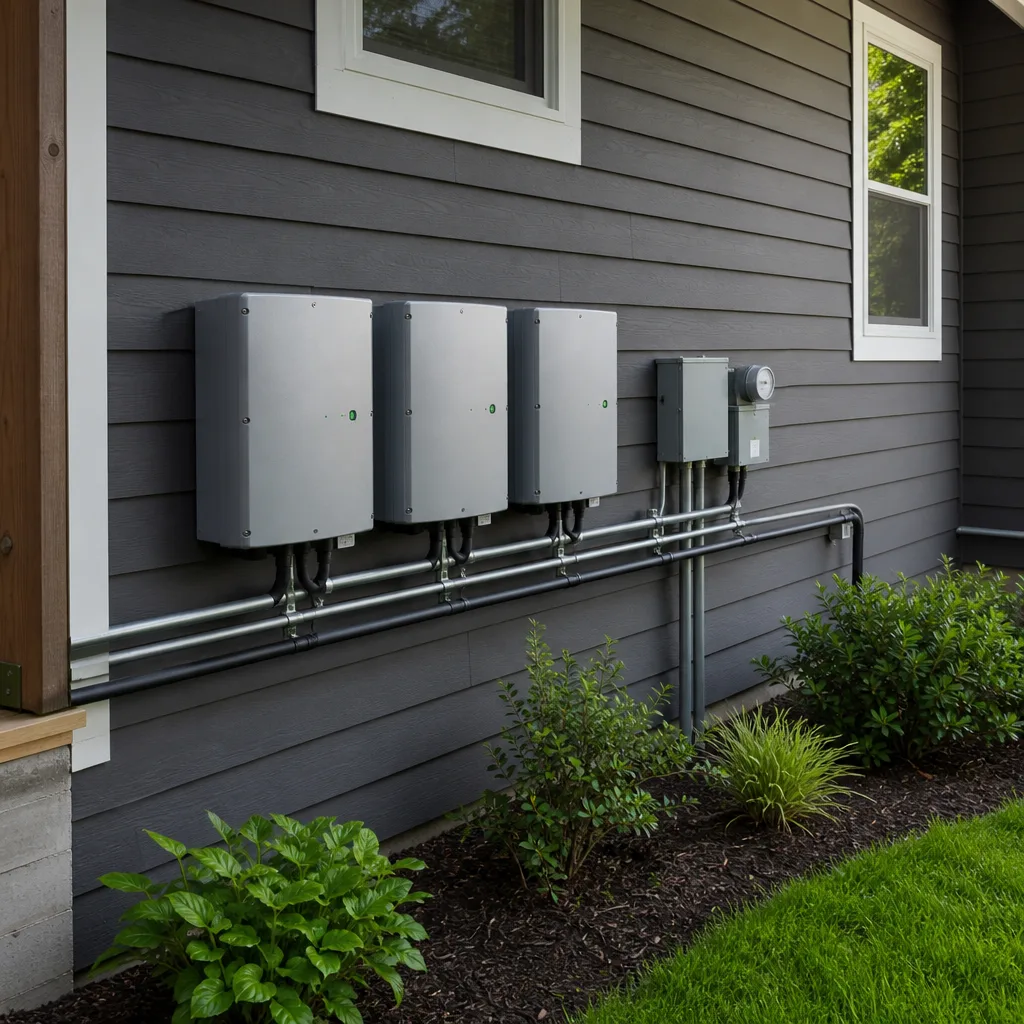
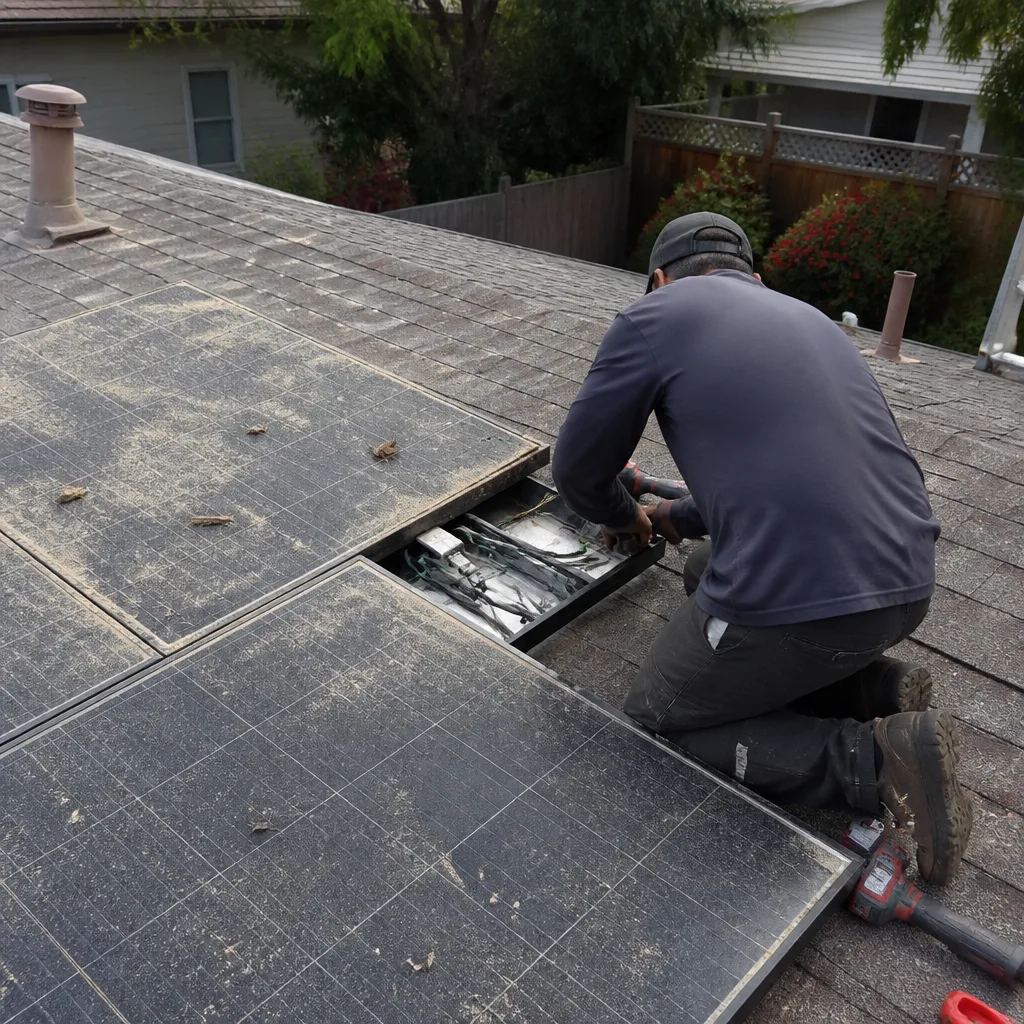 Before
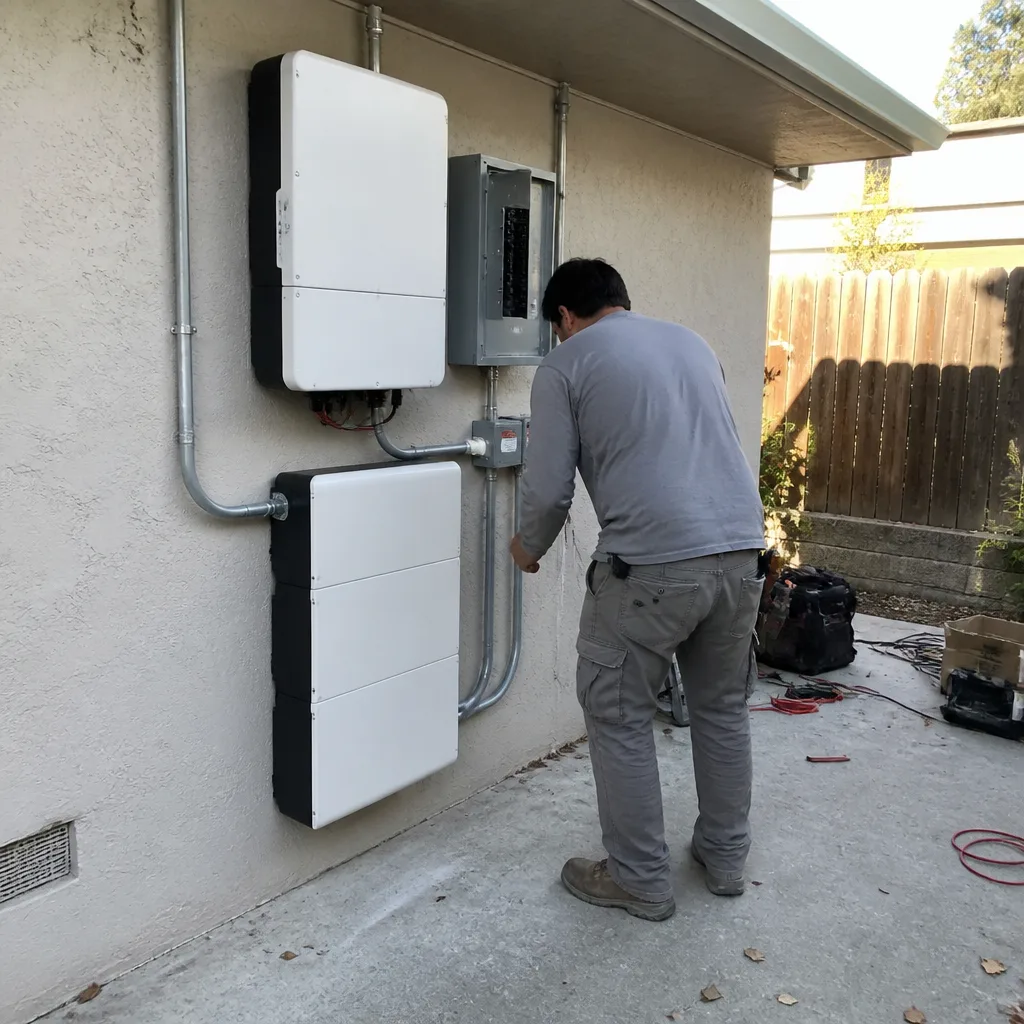 After
After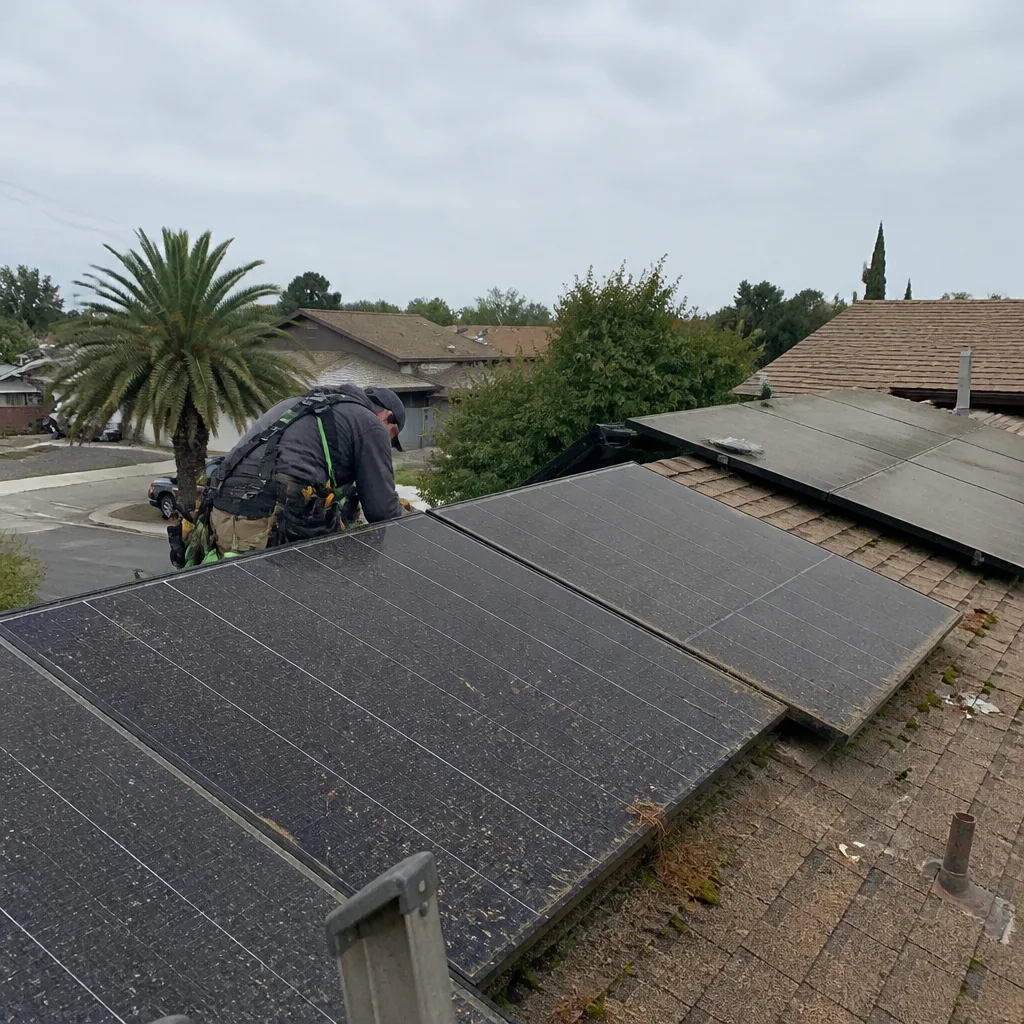 Before
 After
After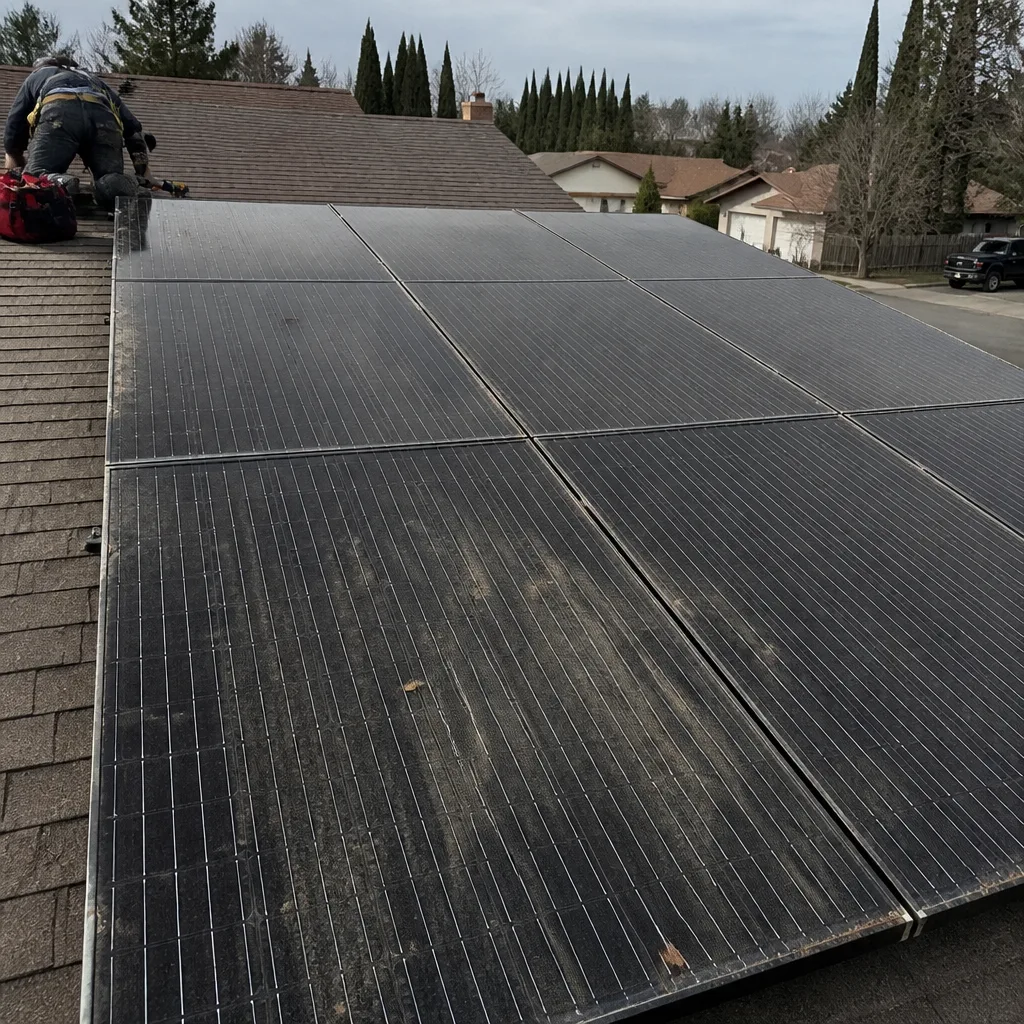 Before
 After
AfterFast, Reliable Solar Panel Installation Across Houston
Solar panel installation in Houston runs $16,500 to $38,000 for a typical 6 kW to 12 kW residential system before the federal tax credit, and the real question isn’t the sticker price, it’s whether the system is designed for how Houston electricity actually works. Gus’s Solar has been putting panels on Houston roofs long enough to know that a system sized on a California-style net metering assumption will disappoint you here. Houston sits in a deregulated ERCOT market, not a net metering market. If you’d like to talk through what that means for your actual utility bill, call us at (877) 550-6892 and bring a bill, we’ll bring the math.
Key Takeaways
- Houston’s deregulated market pays wholesale rates for exported solar, not retail net metering, so self-consumption design with battery backup usually beats export-heavy sizing.
- Older bungalows in ZIPs like 77007 and 77008 often need a 100-amp to 200-amp panel upgrade before CenterPoint Energy approves interconnection, adding $2,500 to $4,000.
- Summer panel temperatures above 140°F cut real-world output 15 to 25% during peak afternoon pricing hours, which most sales quotes don’t model.
- Gus’s Solar is locally owned since 2011, crew does every install, and a live person answers the phone 24/7.
Why Gus’s Solar Is Houston’s Preferred Solar Panel Installation Company
Gus Petrakis put his own name on the building back in 2011, and that name is still on every quote, every permit application, and every truck that pulls up in the Heights, Montrose, or Meyerland. Houston homeowners between 50 and 70 have told us the same story for years: a national outfit quoted one number on the phone, a different number at the door, and then went silent after the system went live. That’s the thing Gus built this company against.
Our Solar Panel Installation team is background-checked, uniformed, and employed by Gus himself, not a subcontractor with a borrowed logo. When a Houston customer calls the office, a live person answers. Not a voicemail tree. Not a ticketing portal. That matters at 11 p.m. during a freeze warning when someone in Bellaire just wants to know if their battery is set up right.
Every solar job carries the 90-Day Done Right Promise in writing. If something isn’t right, Gus makes it right. One call brings him back. We publish our address and license number because if you’re going to put a system on a Houston roof that has to survive 130 mph wind-load standards, the person behind it should be findable.
Our Solar Panel Installation Services in Houston
Most Houston homeowners start with rooftop solar, but the work that determines whether your system actually performs here happens long before panels go up. Here are the services that matter most for Houston homes.
Rooftop Solar Installation
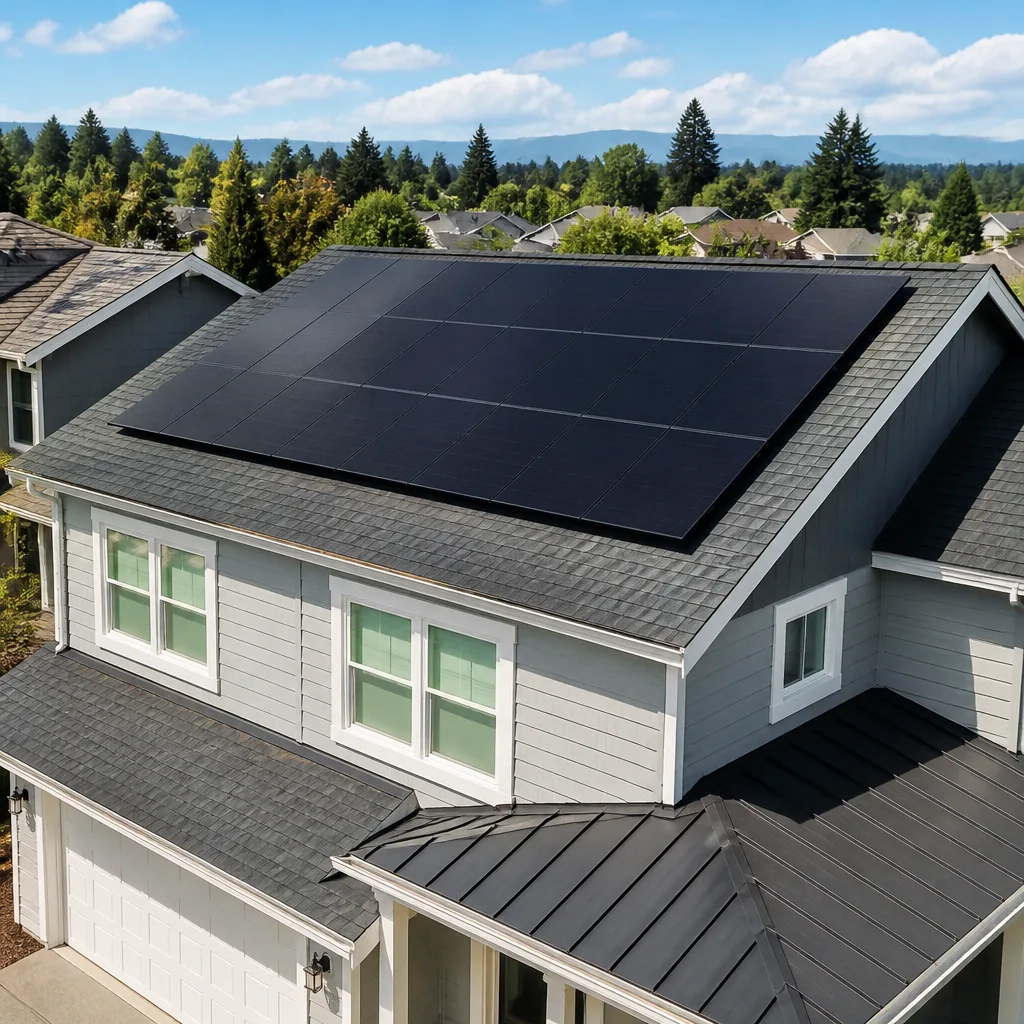
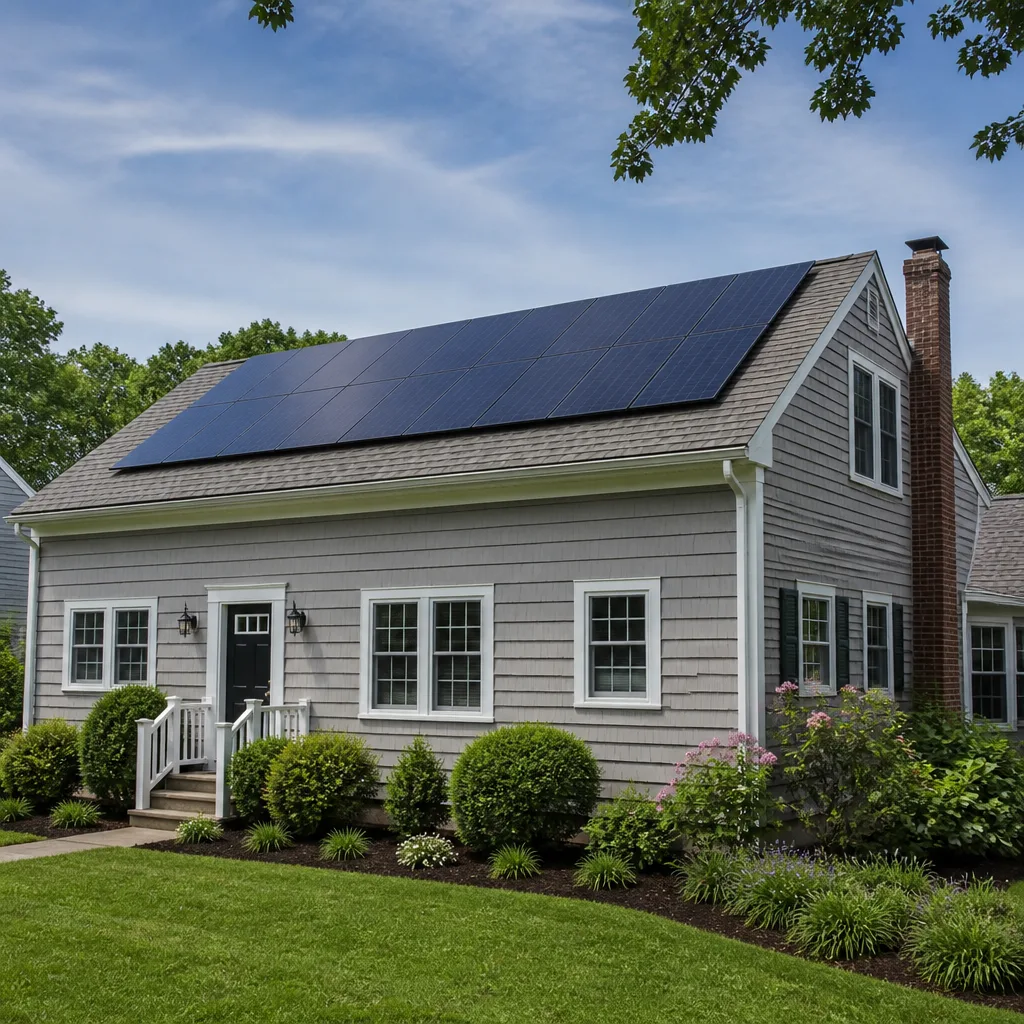
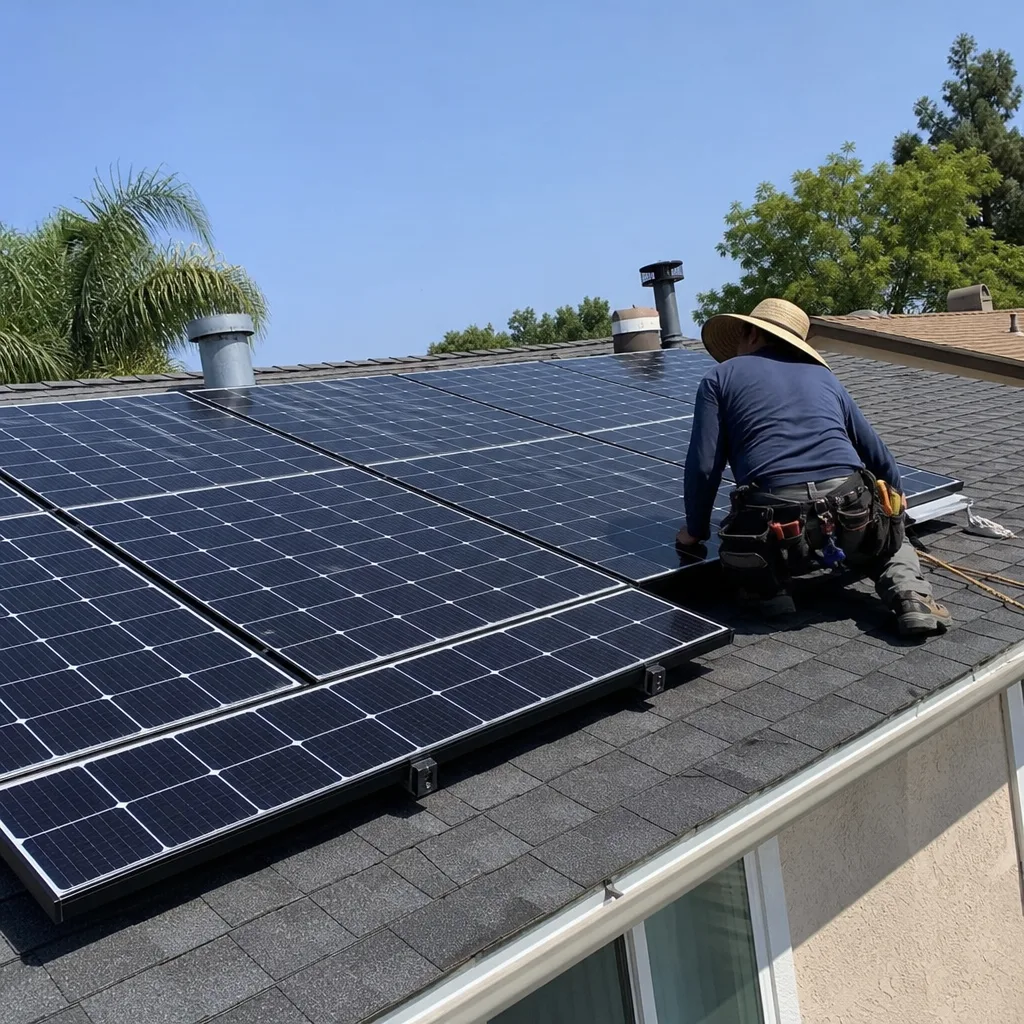
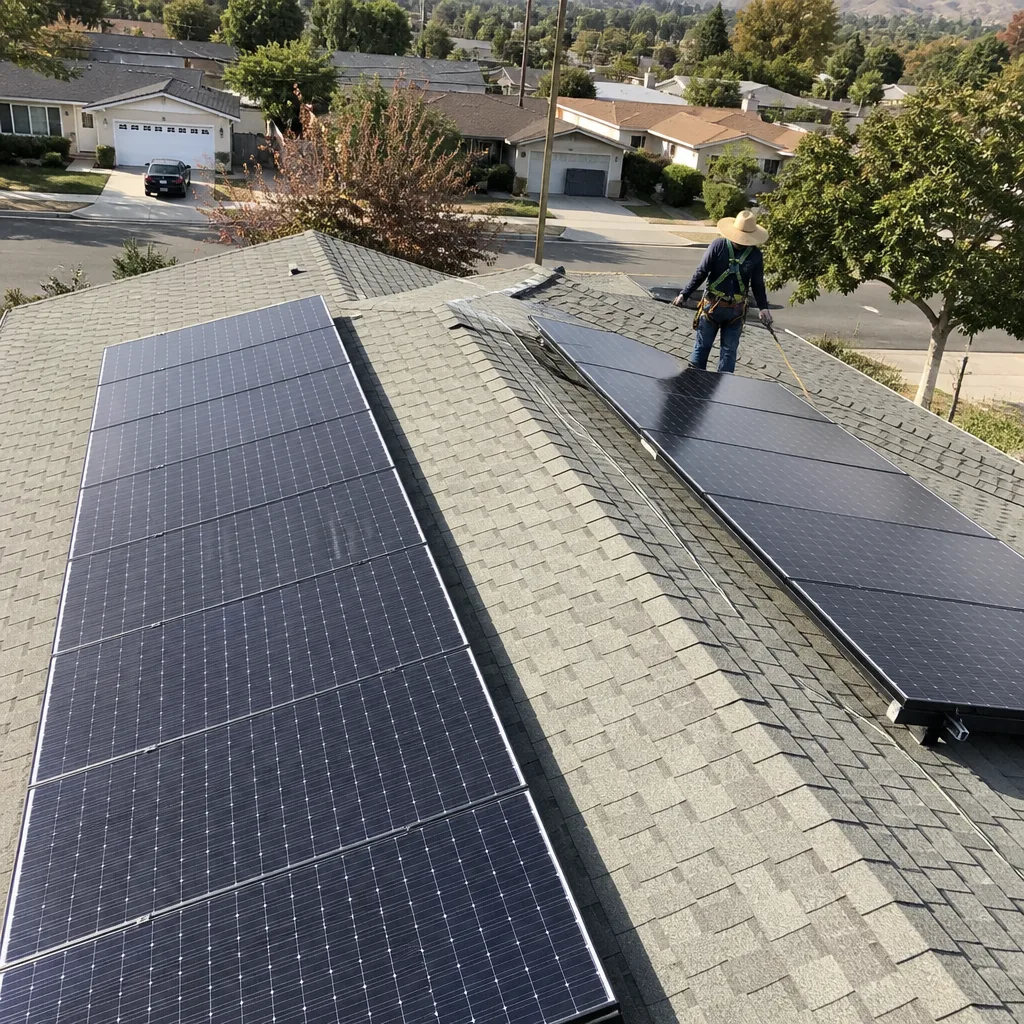
Rooftop solar in Houston has to handle a specific set of conditions: summer heat that pushes panels past 140°F, Gulf Coast wind loads, and roof decks that range from 1920s shiplap to post-2000 engineered trusses. We size the array to your actual consumption pattern, not a brochure average. In ZIPs like 77022 and 77023, where mid-century ranch slabs have wide south-facing roof planes, we can often hit 90 to 100% offset. On a 16-foot-wide townhome in 77006, the roof will cover 20 to 40% of your usage at best, and we’ll tell you that before you sign anything.
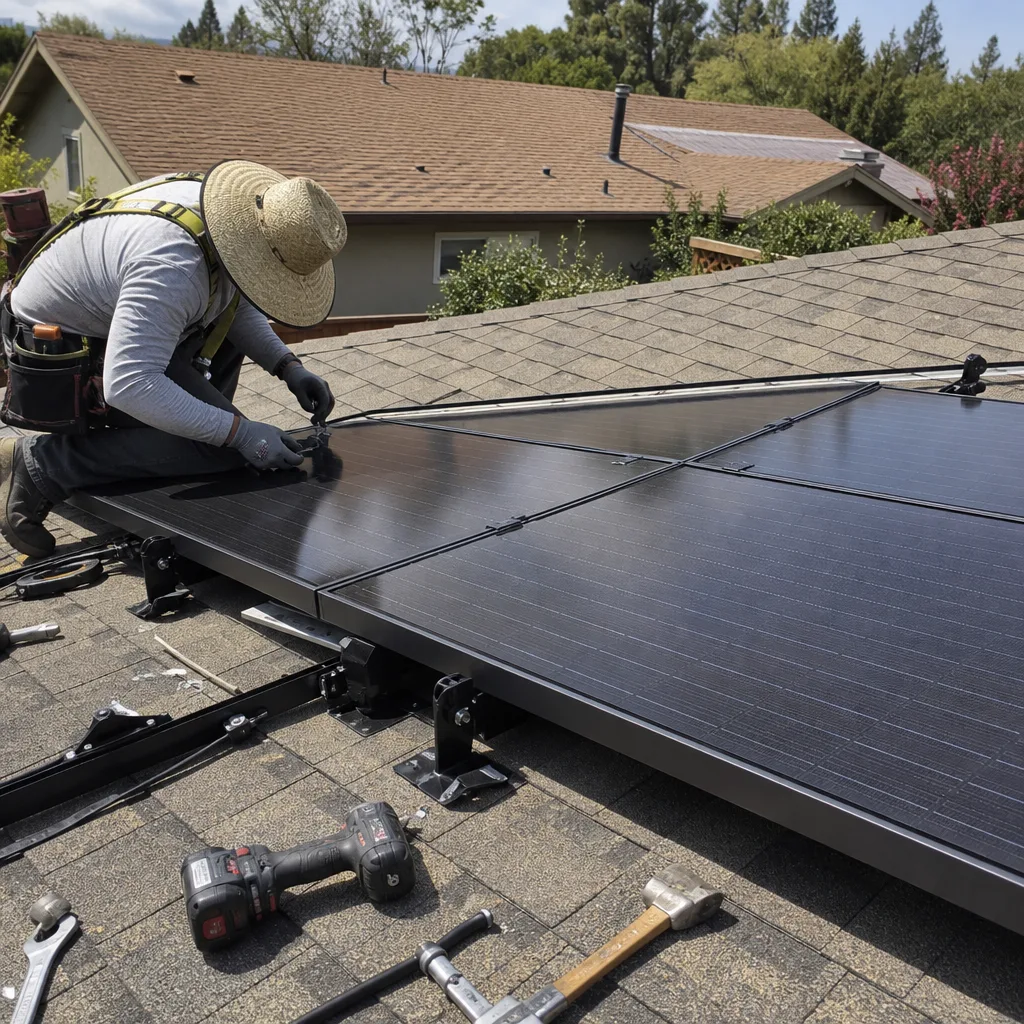
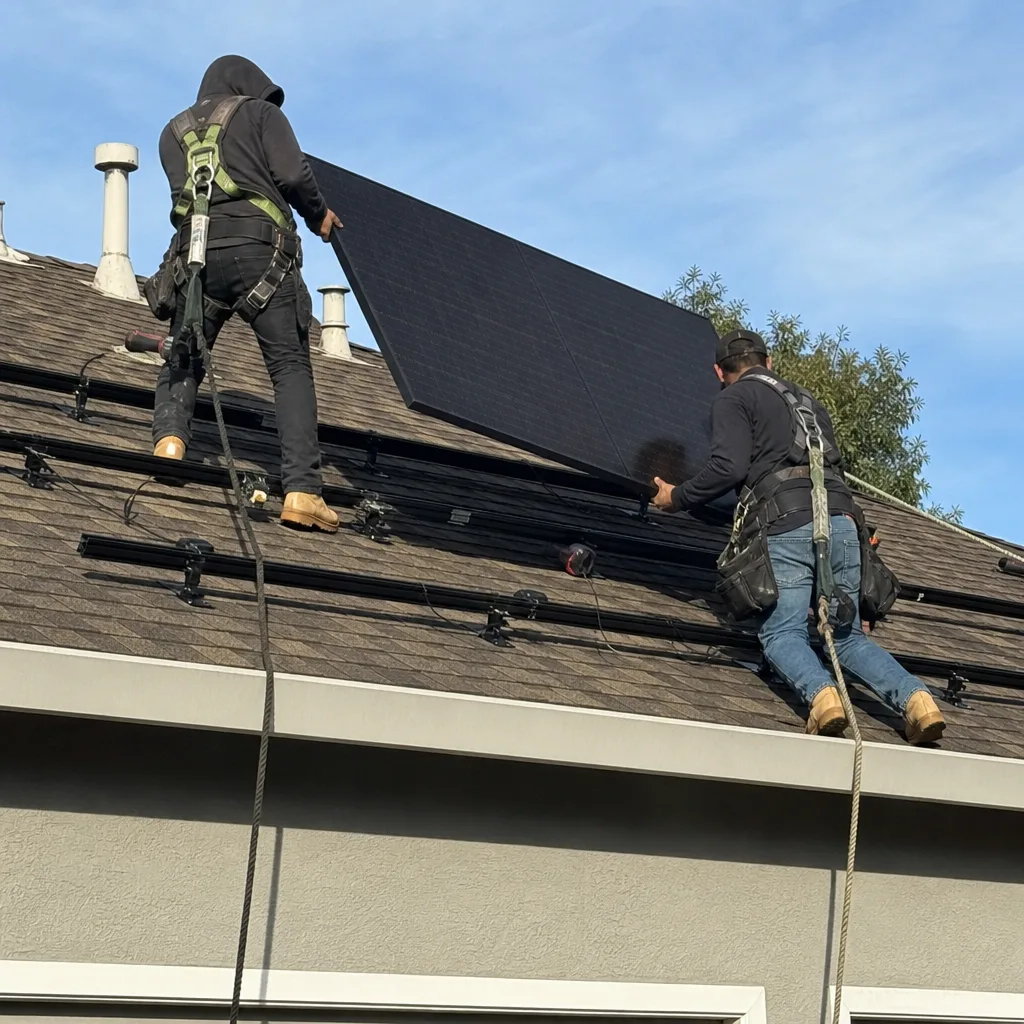
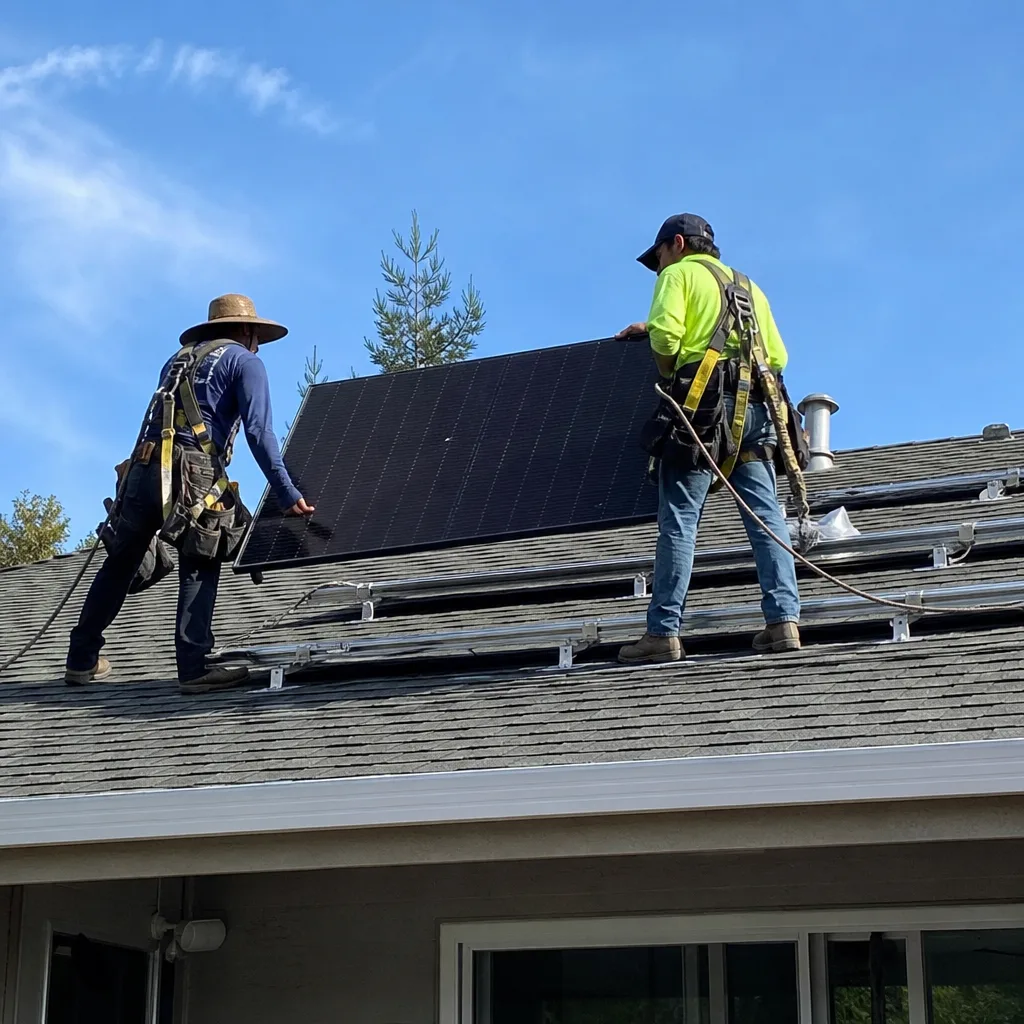
A typical rooftop install in Houston involves flashing every penetration properly and using racking rated for 130+ mph wind loads under TWIA guidelines. Low-bid crews skip this and fail inspection. We don’t.
Solar System Design & Permitting
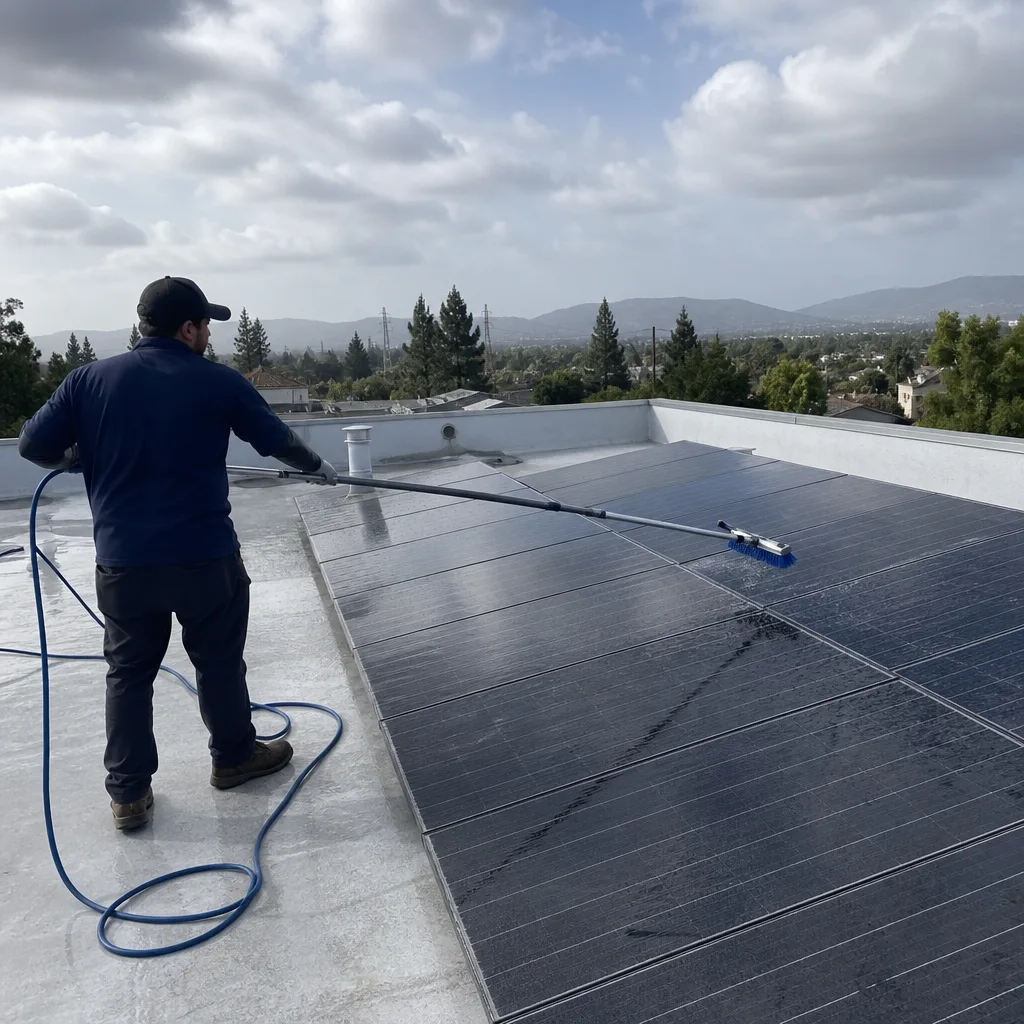
Design and permitting in Houston is where projects live or die. CenterPoint Energy reviews every interconnection application, and older homes in the Heights corridor, Montrose, and Eastwood frequently need a 100-amp to 200-amp service upgrade before the application moves forward. We handle the design, the panel upgrade coordination, the city permitting through the Houston Permitting Center, and the CenterPoint application as one package. When a homeowner tells us their previous installer “couldn’t get it through permitting,” nine times out of ten the problem was a 100-amp panel or a missing wind-load spec on the racking drawings.
Gus’s Solar quotes the year-25 output, not the day-one brochure number. That means the design accounts for Houston’s heat derating and your actual export rate, not a hypothetical retail credit.
Solar Panel Replacement
Houston’s climate ages panels faster than most people expect. Hail, salt-laden Gulf air, and sustained heat cycling degrade sealants and backsheets, and after a decade you may see output fall below warranty thresholds. We replace individual panels or entire arrays, and we’ll pull the production data from your monitoring system to show you exactly what’s still producing and what isn’t. If the original installer has disappeared or gone out of business, that’s a situation we see weekly in Houston, and taking over a system we didn’t install is something we do without finger-pointing.
Panel replacement in Houston typically runs $180 to $450 per panel including labor, depending on rack type and roof access. Because we stock Qcells, REC, and SunPower panels locally, the wait isn’t weeks.
Roof-Mount & Tile Roof Solar
Tile roof solar in Houston mostly means one thing: the barrel and flat concrete tiles common on 1980s and 1990s homes in Memorial and parts of the Energy Corridor. Standard racking doesn’t work on these, and crews that treat tile like shingle end up with cracked tiles and roof leaks by the second summer. We use tile-specific mounting hardware and replace any tile we break during install, on the spot.
For shingle roofs, a Houston install typically sits on standard rail or deck-mounted foot systems, flashed and sealed. If your roof is within five years of replacement, we’ll tell you to do the roof first. Putting fresh solar on a 20-year-old Houston roof is a $4,000 mistake you’ll feel in the first big storm.
What happens when you call
- 1
A real person answersNo phone trees - you reach a local pro.
- 2
You get an upfront price rangeHonest numbers before anyone is dispatched.
- 3
A background-checked tech heads outLicensed & insured, dispatched right away.
- 4
You approve before work beginsNothing starts until you say go.
Trusted Brands We Service in Houston
We install and service equipment from REC, Qcells, and SunPower, alongside inverter systems from Enphase and SolarEdge. For Houston specifically, we lean on REC and Qcells for their heat tolerance and warranty stability, and Enphase microinverters for their per-panel monitoring, which matters here because partial shading from live oaks and three-story townhome shadows is common across inner-loop neighborhoods. We stock replacement parts locally for Houston customers, so a failed microinverter in Garden Oaks doesn’t mean waiting on a shipment from out of state.
Common Solar Panel Installation Problems We See in Houston Homes
- 100-amp electrical panels blocking interconnection. Homes from the 1920s through the 1940s in ZIPs 77007, 77008, and 77023 frequently still run 100-amp service. CenterPoint won’t approve a solar interconnection on a 100-amp panel, and the upgrade to 200 amps runs $2,500 to $4,000. We flag this on day one, not after the permit application bounces.
- Roofs too small to make the sales pitch honest. The post-2000s infill townhomes in 77006 and the Heights corridor are often 16 to 20 feet wide with hip roofs. A rooftop array on one of these offsets 20 to 40% of household usage, not the 90% a door-knocker’s tablet might show. If that’s your roof, we’ll say so plainly and talk about whether battery storage plus load shifting makes sense instead.
- Heat derating that the original quote never modeled. Houston summer afternoons push panel temperatures past 140°F, cutting output 15 to 25% from the STC rating on the spec sheet. A system sized without that derating factor leaves you with a payback period years longer than the sales sheet promised.
- Under-spec racking that fails TWIA wind-load inspection. Gulf Coast exposure means Houston racking must be engineered for 130+ mph wind loads. Unpermitted or low-bid installs using lighter racking get caught at inspection, and the fix is a full tear-off and reinstall. We’ve had to correct several of these in Houston in the past year.
Why Houston’s Electricity Market Changes Everything About Solar Design
Houston’s deregulated ERCOT market means most retail providers only pay wholesale rates for the solar power you export to the grid, roughly 3 to 5 cents per kWh, while you buy power back at 12 to 18 cents or more. That is not the retail net metering arrangement a California or New York homeowner would assume. A solar array sized to offset 100% of a home’s kWh usage using net metering math would leave a Houston homeowner paying a much longer effective payback period, because every exported kWh earns only a fraction of what it would elsewhere. The design approach in Houston therefore shifts decisively toward self-consumption: you use the power you generate, charge a battery, and export as little as possible. That distinction changes panel count, battery sizing, and the way we lay out the array, and it’s the reason we ask to see your actual EFL (Electricity Facts Label) and usage history before we quote anything. Gus’s line on this is simple: bring me a bill, I’ll bring you the math.
Winter Storm Uri Changed What Houston Homeowners Ask For
Before February 2021, the first question Houston solar customers asked was about tax credits and payback. Since Uri, the first question is always: will this keep my heat on in another freeze? That question has become a design prerequisite in this market, and it shifts what we spec. We recently finished a rooftop solar installation on a 1920s craftsman bungalow in the Heights (77008), where the homeowner’s first question was exactly that. We paired a 7.2 kW REC system with Enphase microinverters to a critical-load subpanel serving the HVAC fan, refrigerator, and lights, then swapped the gas furnace for a heat-pump mini-split so the solar could power emergency heat without depending on natural gas. The interconnection application required a 100-amp to 200-amp service upgrade before CenterPoint Energy would approve it, and the final design used a 130 mph wind-load racking system to meet TWIA guidelines, which pushed the install time to four days. That’s a Houston-specific project in every dimension: the questions, the codes, the equipment, the timeline.
Pricing for Solar Panel Installation in Houston, TX
| Service | Typical Houston Price Range | Notes |
|---|---|---|
| Rooftop solar install (6 kW to 8 kW) | $16,500 - $24,000 | Before federal tax credit; shingle roof, standard rail racking |
| Rooftop solar install (10 kW to 12 kW) | $28,000 - $38,000 | Before tax credit; larger arrays for high-usage homes |
| 100-amp to 200-amp panel upgrade | $2,500 - $4,000 | Required on most pre-1950 Houston homes before interconnection |
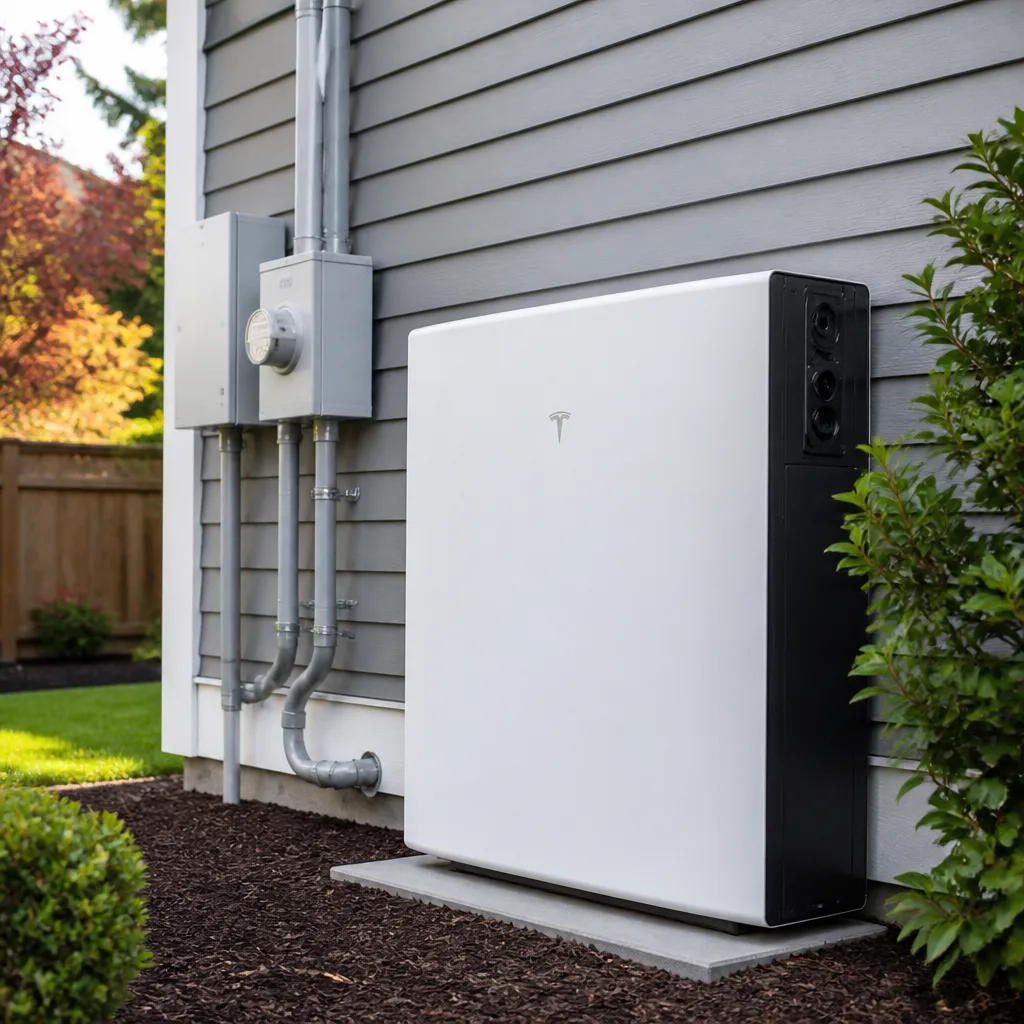
| Battery storage add-on (10-13 kWh) | $9,000 - $15,000 | FranklinWH or Enphase; critical-load subpanel included |
| Solar panel replacement (per panel) | $180 - $450 | Includes labor and disposal; varies by rack type and roof height |
| Tile roof mounting add-on | $1,200 - $3,000 | Tile-specific hardware; varies by tile type and array size |
The numbers above are what we see across Houston right now, not a national average. What shifts the price on your specific roof: panel count, roof type and pitch, electrical service, and whether you want battery backup. The price we quote is the price you pay, no signature wanted tonight. Call (877) 550-6892 for a free estimate, and take two weeks to think about it. The price will be the same.
Inverter Selection and Monitoring in Houston
In Houston’s tree-covered inner loop, microinverters under each panel almost always beat a single string inverter. The live oaks and three-story townhome shadows in Montrose, the Heights, and Museum Park create uneven panel shading through the day, and a string inverter lets one shaded panel drag down the whole system. Enphase and SolarEdge both make solid equipment, but for Houston roofs with partial shade, we default to microinverters. The per-panel monitoring also means when something degrades, we see exactly which panel dropped and when. Gus’s Solar monitors our systems actively, which means when a Houston customer’s array underperforms, we often call them before they notice.
We Also Serve Cities Near Houston
Beyond Houston proper, our Solar Panel Installation in Houston service area covers Bellaire, West University Place, Galena Park, and Jacinto City. If you’re in one of those towns, the permitting is different, the utility may be different, and the roof stock is different, but the process is the same: honest numbers, real math, and a live person on the phone. Call us and we’ll tell you what changes.
Serving Houston, TX - Our Local Coverage Area
We’re based in the Houston area and know this community well. Use the map below to see our service coverage - if you’re nearby, we can almost certainly help.
FAQs - Solar Panel Installation in Houston
Only if it’s designed for that. A grid-tied solar system without battery backup shuts off when the grid goes down, by code. To keep heat on during an outage in Houston, you need a battery or generator paired with a critical-load subpanel that serves your heating source, and ideally an electric heat-pump or strip heat that doesn’t depend on natural gas infrastructure. We design these systems daily in Houston. Call (877) 550-6892 and we’ll walk through your exact setup.
In almost every case, it’s a 100-amp electrical panel. Homes from the 1920s through the 1940s across the Heights and inner loop were built with 100-amp service, and CenterPoint will not approve a solar interconnection application until a service upgrade to 200 amps is completed. The upgrade typically runs $2,500 to $4,000 and takes one to two weeks. We identify this on the first visit so the application doesn’t bounce months into the project.
Yes, but at wholesale rates, not retail. Most Houston retail electricity providers pay roughly 3 to 5 cents per kWh for exported solar, while you buy power back at 12 to 18 cents or more. That means exporting is not a money-maker in Houston, which is why we design for self-consumption with battery storage. For an exact breakdown on your current plan, our Solar Panel Installation team can pull your EFL and show you the real numbers.
It depends on your actual roof footprint and panel count, but for a 16-to-20-foot-wide infill townhome with a hip roof, you’re typically looking at offsetting 20 to 40% of household usage, not the 100% a national sales pitch might imply. That doesn’t mean solar is a bad idea, but it does change the math. In those cases we often recommend pairing a smaller array with battery storage so the power you do generate gets used when it matters most. Call (877) 550-6892 and we’ll give you a straight answer before any paperwork.
Under Houston’s summer conditions, with panel operating temperatures above 140°F, real-world output runs 15 to 25% below the STC-rated capacity listed on the spec sheet. The drop happens exactly when afternoon grid demand and variable-rate ERCOT prices peak. Most generic production estimates don’t model this, which is why we run a Houston-specific heat derating calculation on every system we quote in this market.
Call Gus’s Solar for Straight Answers in Houston
If you live in Houston, Bellaire, West University Place, Galena Park, or Jacinto City and want solar numbers that hold up to a winter freeze and a CenterPoint review, call us at (877) 550-6892. A live person answers, 24/7. We’ll ask for a copy of your current EFL and usage history, and we’ll give you a quote built off your actual bill, not a brochure. Take two weeks. Think about it. The price will be the same, and if a salesman needs an answer tonight, the answer is no.
Written by Gus Petrakis, Owner at Gus’s Solar, serving Houston, TX since 2011.