
Free bill analysis - bring a power bill, get the production math for your actual roof, panel brands like Qcells and REC compared side by side
If the pitch starts at your door and ends with "sign tonight for the special," sleep on it. The sun will still be there tomorrow; so will we.
 Before
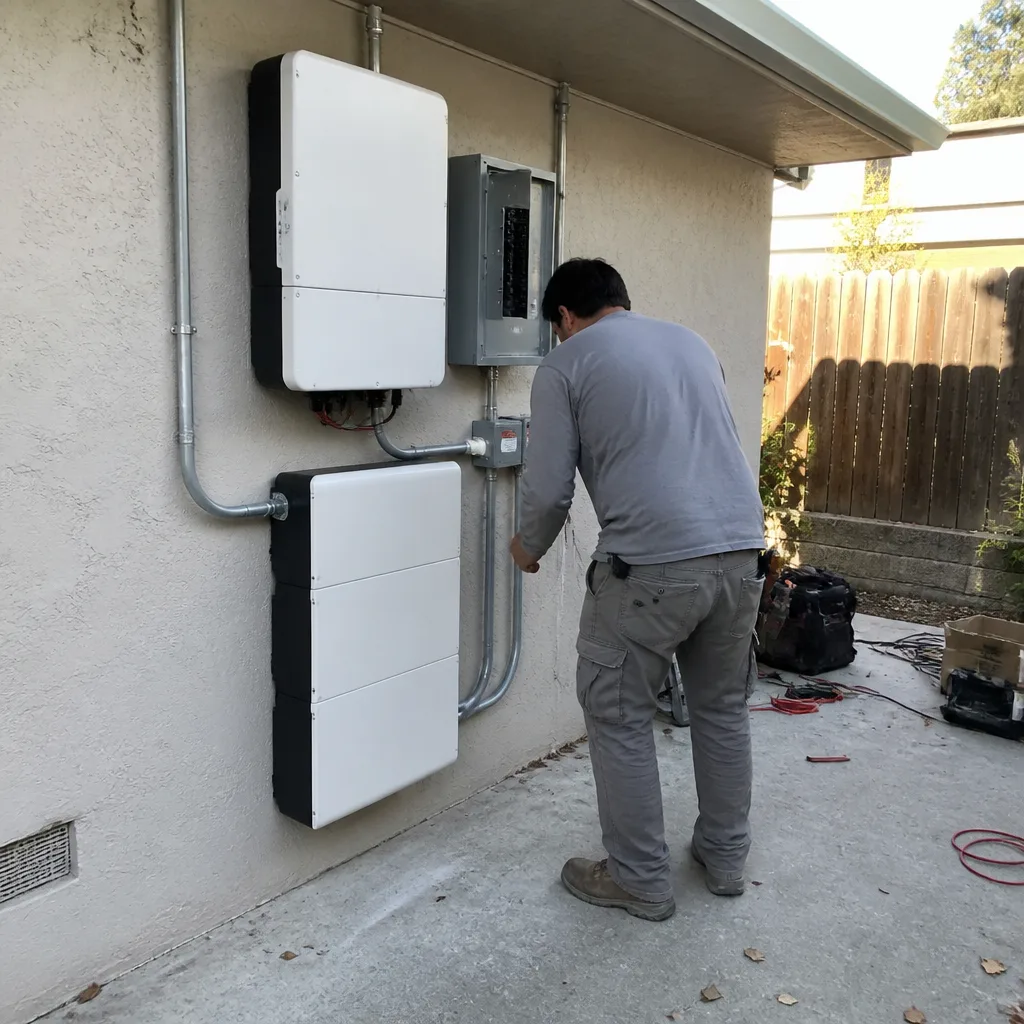 After
After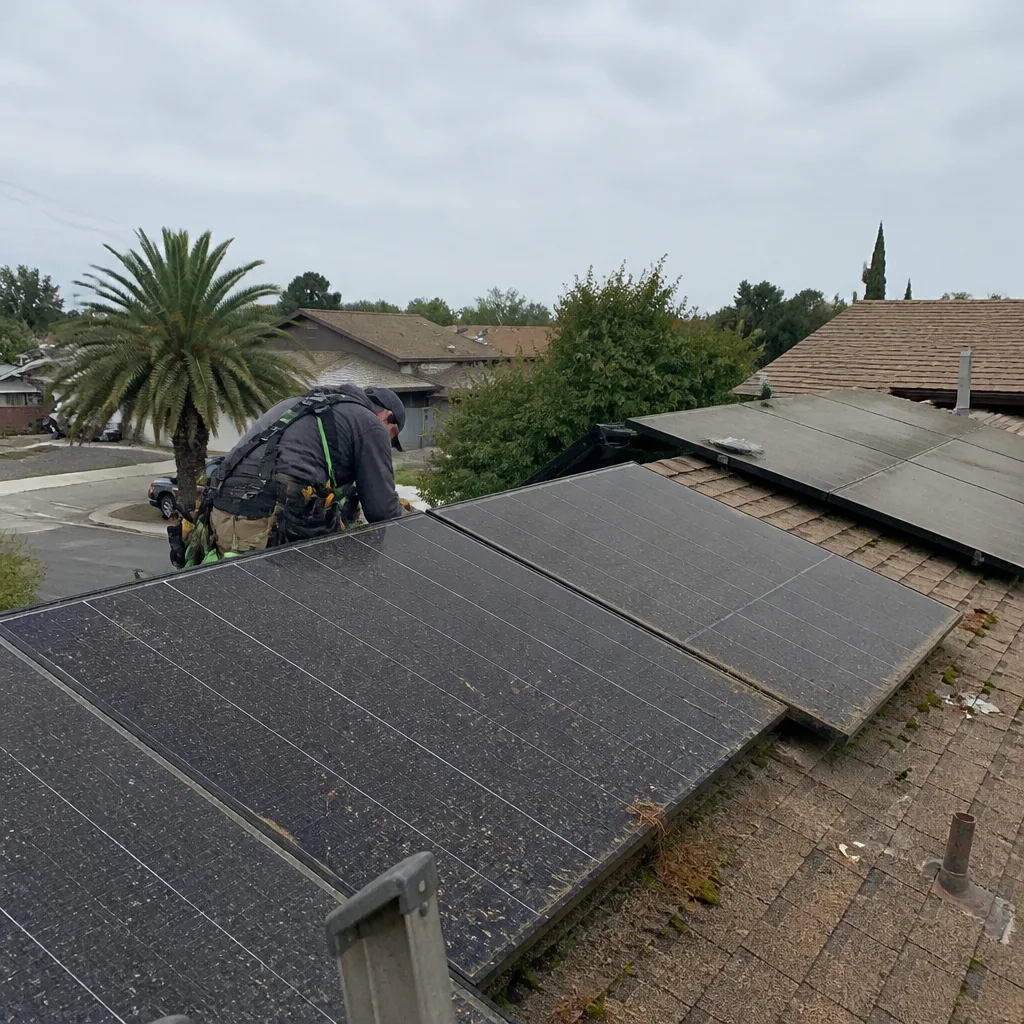 Before
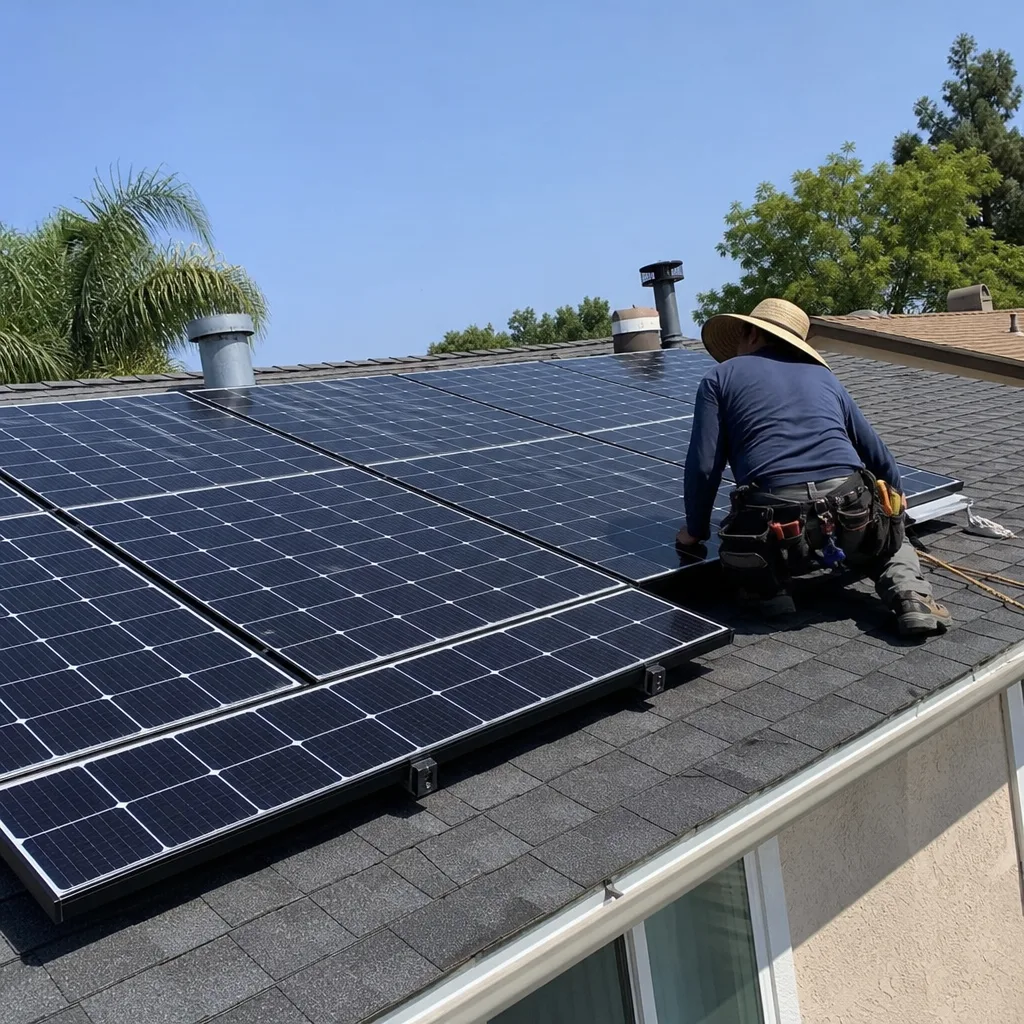 After
After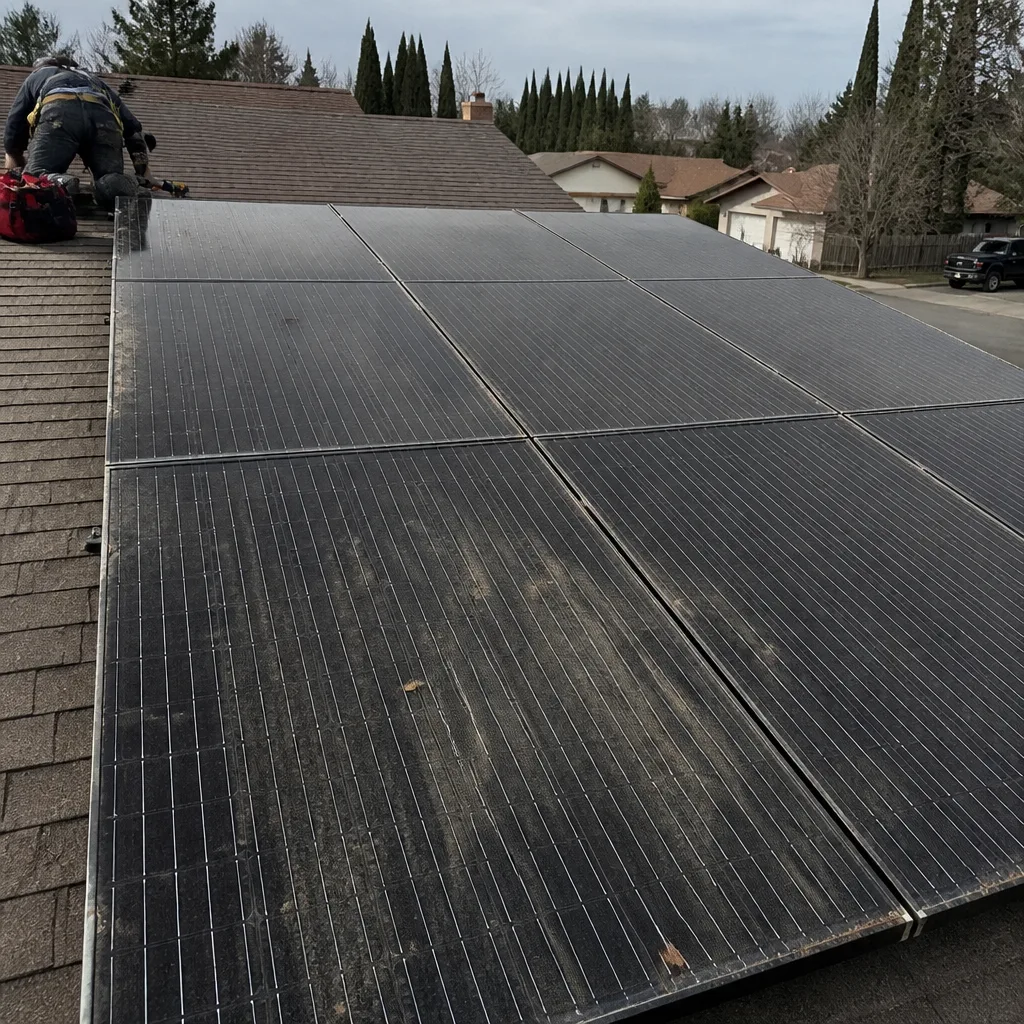 Before
 After
AfterFast, Reliable Solar Panel Cleaning Across San Francisco
Solar panel cleaning in San Francisco typically costs $150-$320 for a standard residential array of 20-30 panels, and most jobs are completed in under two hours. The real question is not whether you need cleaning, but which fog zone your roof sits in. Panels in the Mission accumulate dry dust that bakes on. Panels in the Sunset collect a marine-layer film that slowly etches glass. We zone our cleaning approach by neighborhood, because a city-wide average here means nothing. Call (877) 550-6892 for a quote based on your actual block, not a brochure.
Gus’s Solar has cleaned panels on Victorian row houses in Noe Valley, flat commercial arrays in SoMa, and single-family homes from Visitacion Valley to the Outer Richmond. We know which roofs hold fog film longer, which alleys attract pigeons, and which cypress trees drop sap on low-slope arrays. That local knowledge changes how we clean, what we clean with, and how often you actually need us back.
Why Gus’s Solar Is San Francisco’s Preferred Solar Panel Cleaning Company
Gus Petrakis founded this company in 2011 and put his own name on the door. That means something in San Francisco, where homeowners have learned to be skeptical of door-knockers and out-of-state outfits that vanish after the install. When you call us, a live person answers 24/7. Not a voicemail. Not a ticketing queue. Not a call center three states away. When we say we’ll be on your roof Tuesday, the truck shows up Tuesday, and the person on your roof is background-checked and wearing a uniform with Gus’s name on it.
We’re one of the Solar Panel Cleaning teams in the Bay Area that actually tracks production recovery after every wash. We tell you what your array made before cleaning, what it made after, and what that means in real dollars on your true-up statement. If it’s not done right, the 90-Day Done Right Promise applies. One call brings Gus back. That’s the standard that governs every page and every job.
Senior and veteran discounts never expire at Gus’s Solar. You get 10% off, every time, no fine print. Free second opinions on any written estimate. No trip charge inside our own county. That’s how a neighbor does business.
Our Solar Panel Cleaning Services in San Francisco
Residential Panel Cleaning
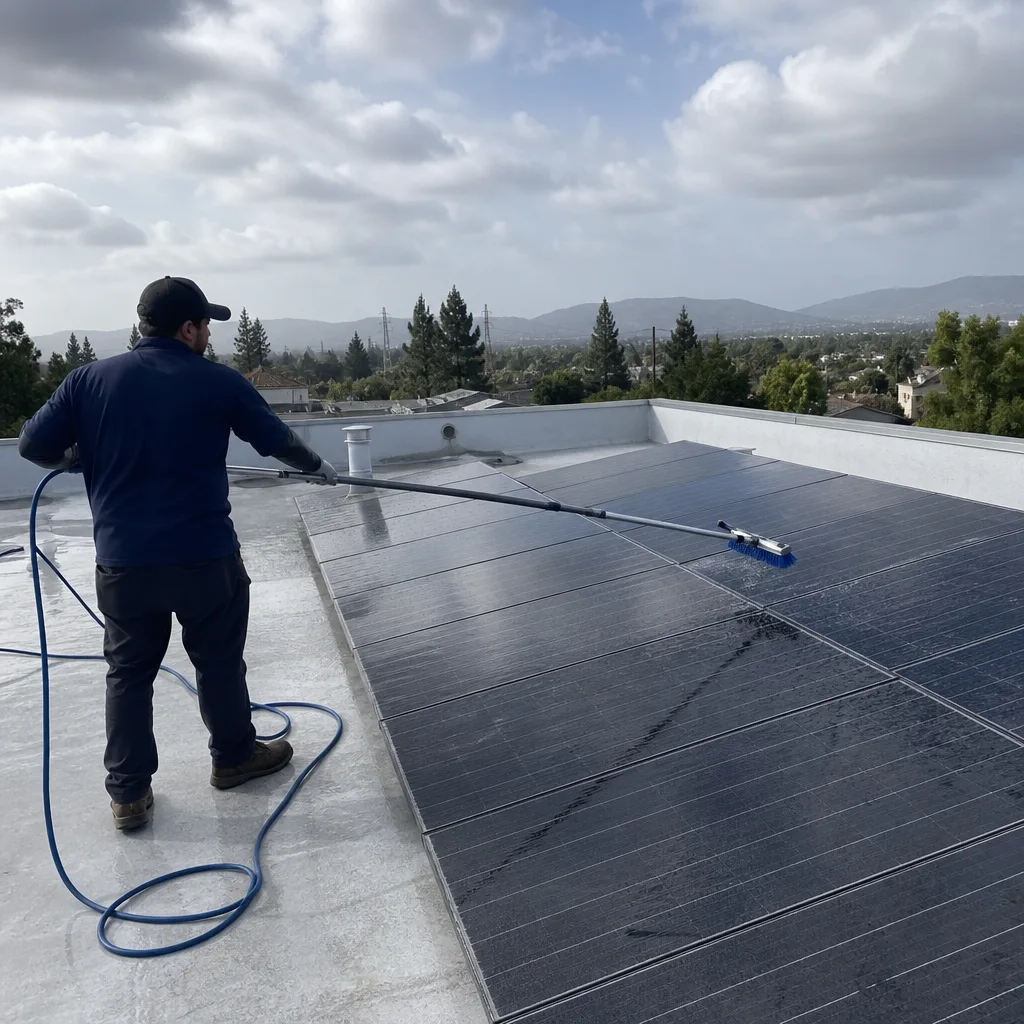
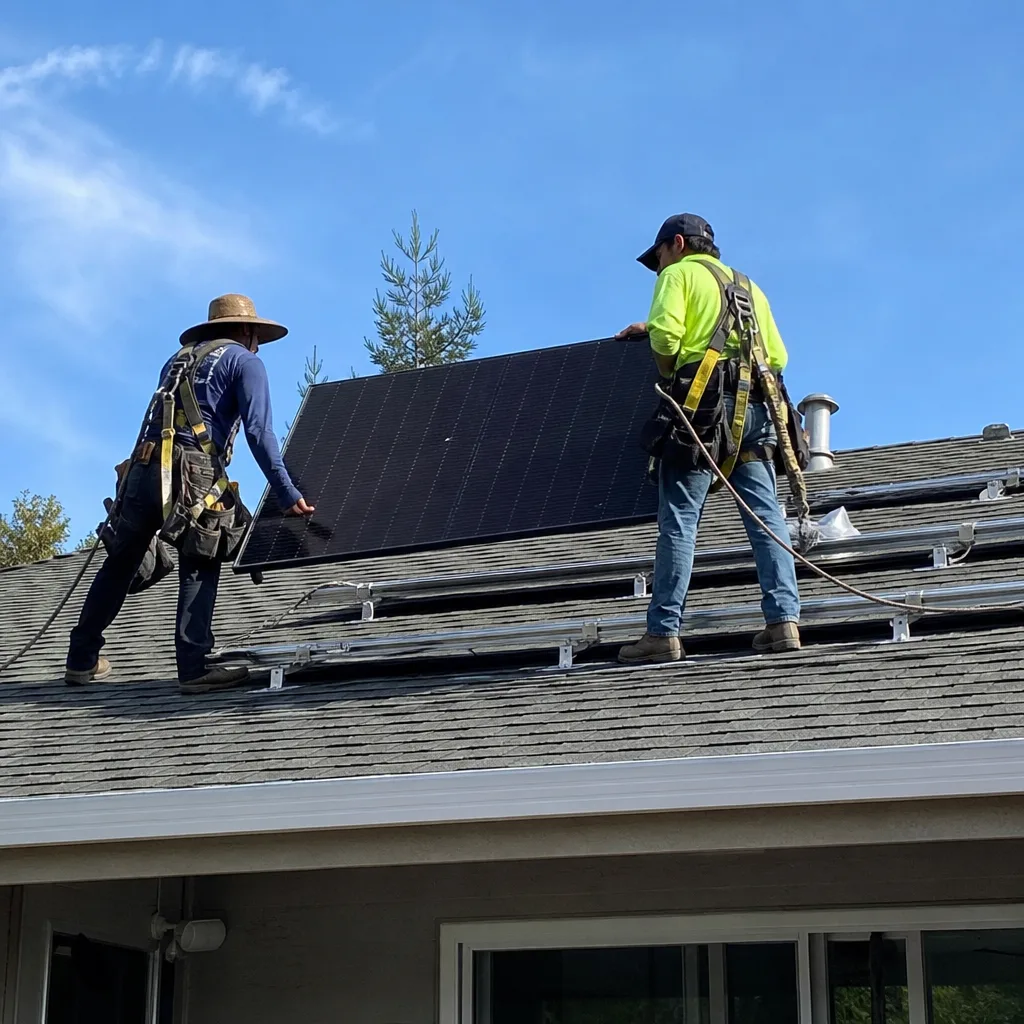
Most San Francisco homes sit on tight lots with low-slope or flat roofs. That means we’re often working from ladders in narrow side yards or carefully navigating shared party walls. We hand-wash panels with deionized water and soft brushes, never pressure washers. For a typical 20-panel array on a Marina or Noe Valley home, expect to pay $150-$260 depending on roof access and array height.
Commercial Array Cleaning
SoMa and the Financial District have a growing number of flat-roof commercial arrays. These roofs are pigeon magnets. Nesting debris blocks drainage channels, and after the first real rain you get water pooling and inverter faults. We clean commercial arrays from 30 panels to 300, quote by the panel or by the project, and can schedule recurring cleanings around your building’s access restrictions. Commercial cleaning in San Francisco ranges from $300-$1,800 depending on array size and roof logistics.
Bird & Critter Guard Installation
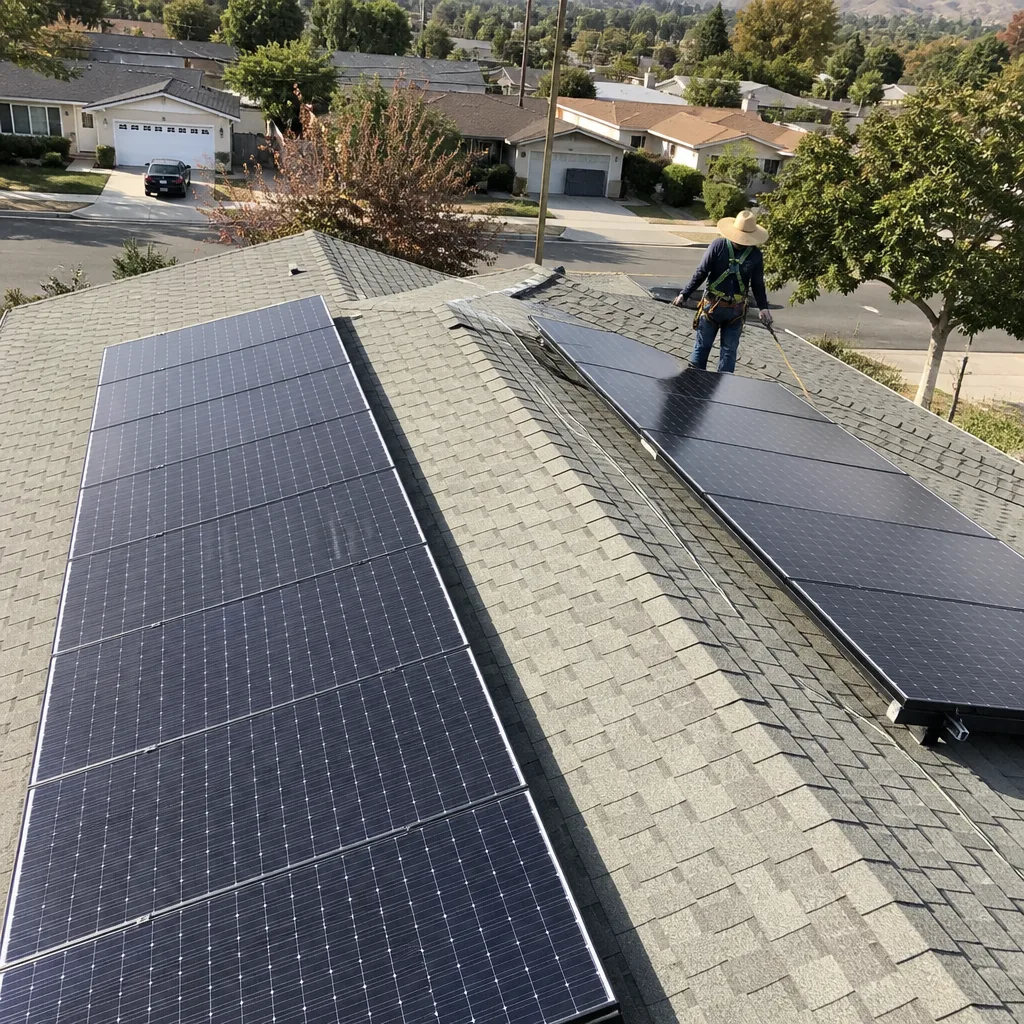
Pigeons are endemic in San Francisco. They roost under panel edges, their droppings are highly acidic, and their nesting material traps moisture against your roof. We install powder-coated steel mesh guard around array edges that keeps birds out without trapping heat. Installation on a typical residential array runs $400-$850. On commercial flat roofs in SoMa, we size the guard after cleaning so we can see exactly where the birds have been roosting.
Debris & Soiling Removal
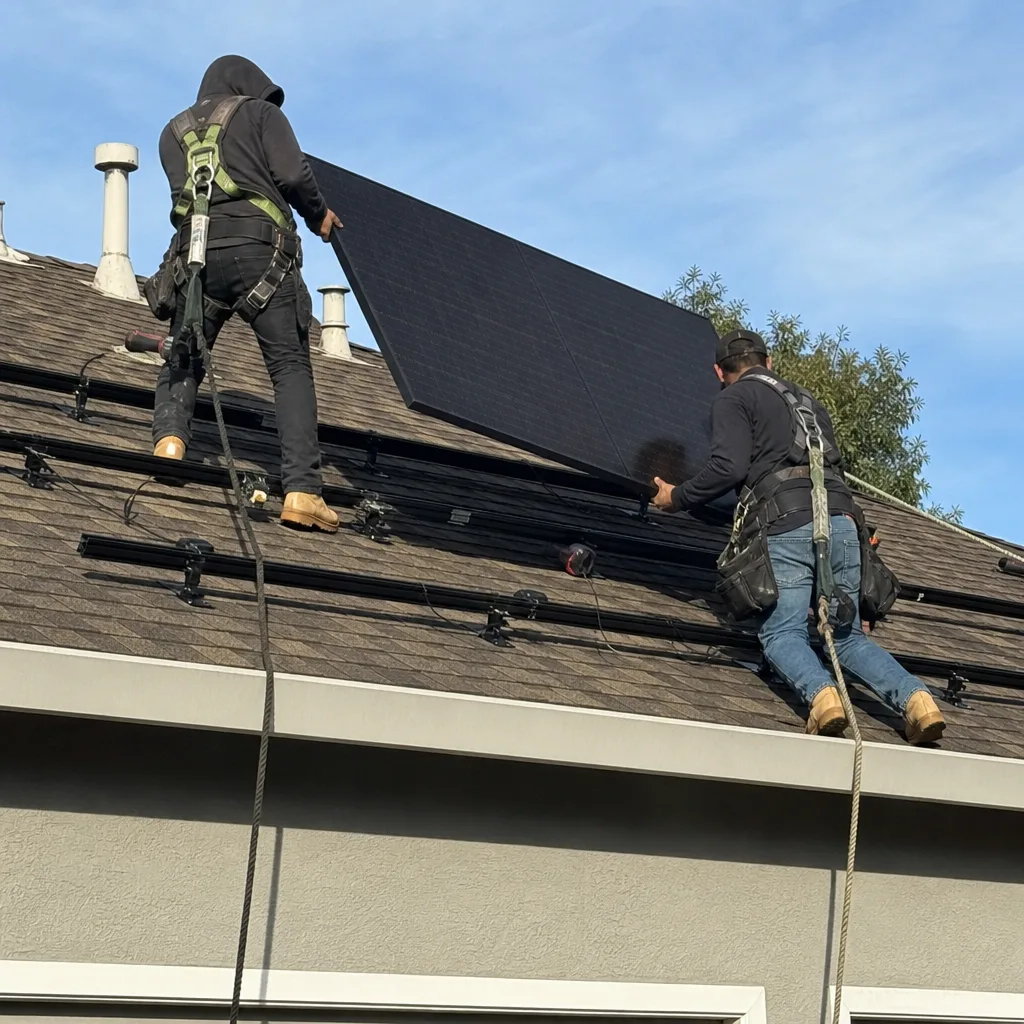
This is the service we emphasize most in San Francisco, because soiling here is not uniform. A Mission District array with a southern azimuth may go 12+ months between cleanings. A west-facing array in the Outer Richmond may need quarterly washing because of fog film. We remove cypress sap, pollen, dust, bird droppings, and the sticky residue that accumulates under mature street trees. Debris removal for a standard array runs $120-$230, and we always check production before and after so you see the actual recovery.
What happens when you call
- 1
A real person answersNo phone trees - you reach a local pro.
- 2
You get an upfront price rangeHonest numbers before anyone is dispatched.
- 3
A background-checked tech heads outLicensed & insured, dispatched right away.
- 4
You approve before work beginsNothing starts until you say go.
Trusted Brands We Service in San Francisco
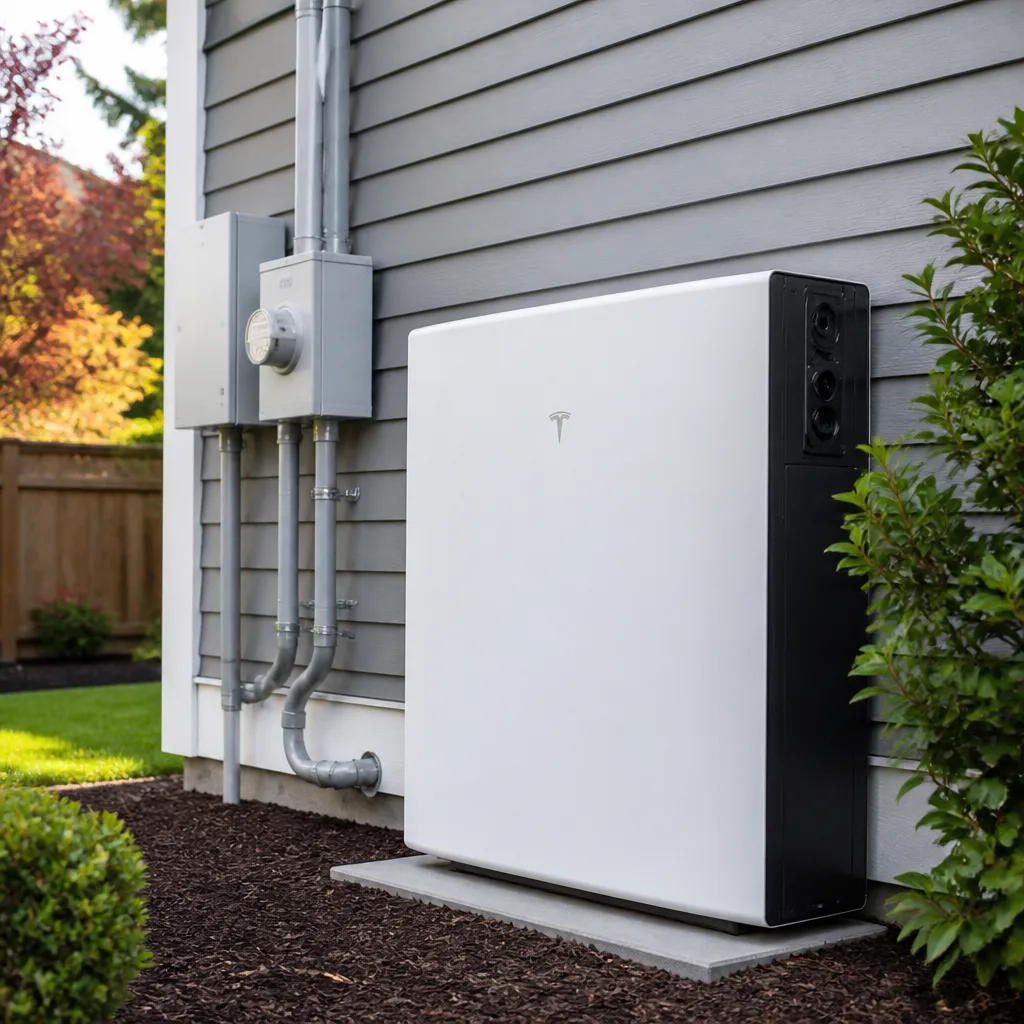
We clean and maintain arrays built with Panasonic, Canadian Solar, JinkoSolar, Tesla, Enphase, and FranklinWH equipment. We do not push one brand over another. What matters is that your system produces what it was supposed to produce. If you have a Tesla Powerwall paired with your array, we coordinate cleaning around battery charge cycles so nothing shuts down mid-service. If your Enphase microinverters are throwing rapid shutdown faults because water got under a frame from a previous pressure-wash job, we can usually correct that on the first visit. We keep common replacement parts in stock for San Francisco customers, which means faster turnaround when a bird guard section fails or a connector needs replacement.
Common Solar Panel Cleaning Problems We See in San Francisco Homes
- Fog film on Sunset and Richmond arrays. The marine layer leaves a fine mineral film that slowly etches glass. Washing it off with high pressure drives water under frames and trips rapid shutdown faults on microinverters. We use low-pressure DI water and spot-treat the glass, never the seams.
- Pigeon roosting on flat commercial roofs. SoMa is dense with pigeons, and they love the space under a raised array. Nesting debris blocks drainage channels. First rain, water pools. Then the inverter faults. We clean, then install guard, then check drainage in that order.
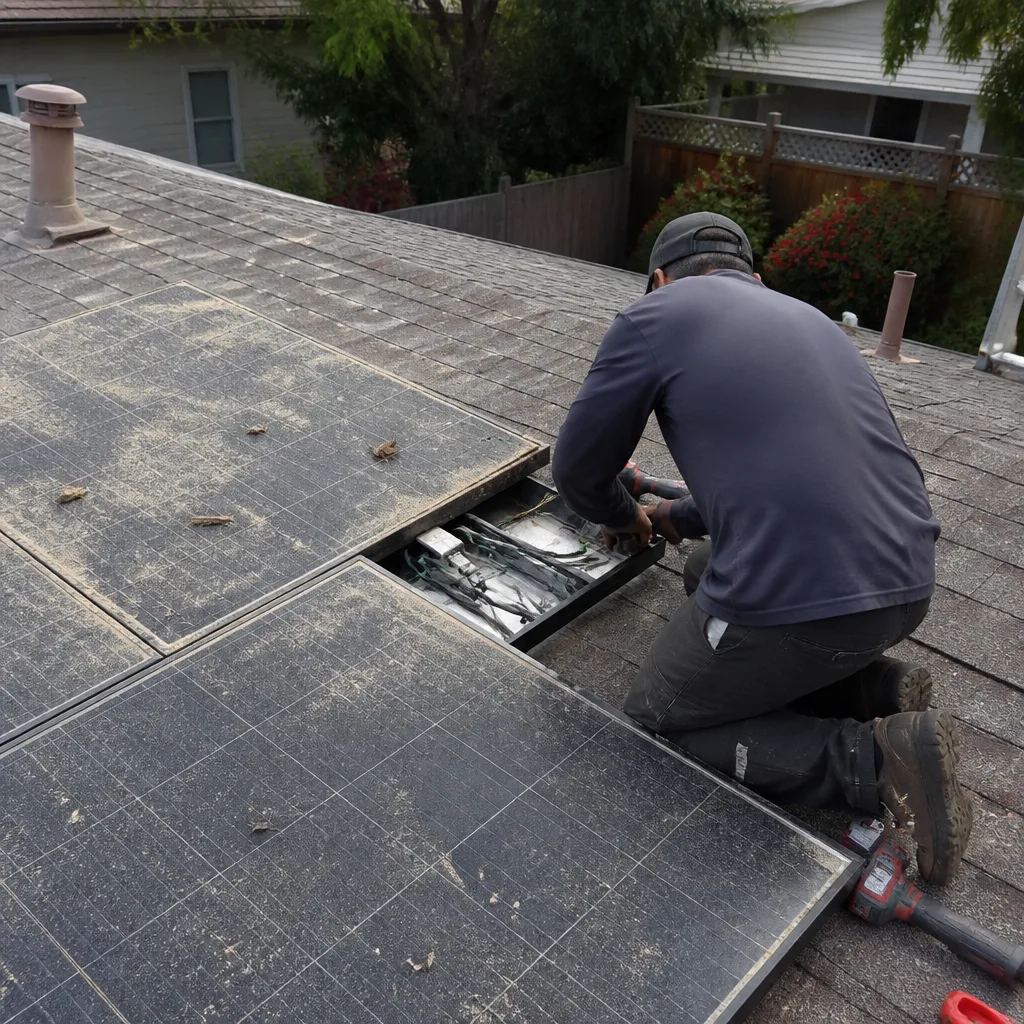
- Sap and pollen from mature street trees. San Francisco’s older neighborhoods have mature cypress, eucalyptus, and pine that drop sap and pollen onto low-slope roofs. On a Noe Valley Victorian, our tech found a sticky pollen-sap mix that had cut production by roughly 30%. Hand-washing with DI water and a soft brush, then installing critter guard, restored production to within 4% of the original estimate on the next clear day.
- Wrong cleaning interval for the wrong block. A single city-wide cleaning interval is the most expensive mistake we see. Mission District arrays can go a full year. Outer Richmond west-facing arrays may need quarterly washing. We give you a cleaning plan based on your fog zone, not an average.
How San Francisco’s Fog Zones Change Your Cleaning Schedule
Here’s the thing most cleaning companies will not tell you because they quote one number for the whole city. Panel soiling in San Francisco differs block by block, and it is driven by fog microclimates. Panels in the Mission, Potrero Hill, and Noe Valley accumulate dry dust and bird droppings that bake on during sunnier periods. Those just two miles west in the Sunset or Richmond get a persistent marine-layer film that etches glass over time. Cleaning frequency and chemistry must be zoned, not city-averaged.
This is the only page you will find that gives you a fog-zone-by-fog-zone cleaning plan for San Francisco’s four ZIP clusters. 94127 (West of Twin Peaks, Forest Hill, Miraloma) sits high enough to shed fog but catches more wind-blown debris. 94101 (north waterfront) gets the least fog but heavy gull and pigeon pressure. 94102 (Civic Center, Hayes Valley) is dense with older low-slope roofs and mature street trees. 94103 (SoMa, Mission Bay) is flat, windy, and full of commercial arrays that double as pigeon habitat. A panel that needs quarterly washing in the Outer Sunset may go a full year in Potrero Hill. That granularity is the difference between paying for cleanings you do not need and losing production you did not know you were losing.
Pricing for Solar Panel Cleaning in San Francisco, CA
Residential cleaning on a standard 20-30 panel array in San Francisco runs $150-$320. That includes hand-washing with DI water, spot treatment for sap or bird droppings, and a before-and-after production check. Debris and soiling removal alone runs $120-$230. Bird and critter guard installation adds $400-$850 for a typical residential array, less if we’re already on the roof for a cleaning. A scheduled cleaning plan (quarterly, biannual, or annual) drops the per-visit cost by roughly 15-20% versus one-off calls. Post-storm panel cleaning after a winter atmospheric river runs $180-$300, and we prioritize those calls within 48 hours. Every estimate is free, and the number we quote is the number you pay. Call (877) 550-6892 and we’ll give you a price before we send a truck.
We Also Serve Cities Near San Francisco
Our crews serve the Mission District, Noe Valley, Chinatown, and Visitacion Valley with the same one-trip standard we use across Solar Panel Cleaning in San Francisco. If you’re within the city limits or just over the line, we can usually be at your door within 24-48 hours of your call.
Serving San Francisco, CA - Our Local Coverage Area
We’re based in the San Francisco area and know this community well. Use the map below to see our service coverage - if you’re nearby, we can almost certainly help.
FAQs - Solar Panel Cleaning in San Francisco
Fog is the single biggest variable in San Francisco soiling rates. In the Mission or Potrero Hill, where fog burns off earlier, panels mostly collect dry dust and bird droppings and can go 12 months between cleanings. In the Sunset or Richmond, marine-layer film builds a mineral crust that can cut production by 8-15% within six months. West-facing arrays in fog-heavy zones often need quarterly washing. East- and south-facing arrays in sunnier zones usually need it twice a year at most. Call (877) 550-6892 and we’ll tell you which zone you’re in and what schedule actually makes sense.
No. Cleaning, debris removal, and bird guard installation are maintenance activities, not modifications. San Francisco’s Department of Building Inspection does not require a permit for washing panels or installing non-structural critter guard. Planning review only applies if you’re changing the array’s footprint, elevation, or visible hardware. If your system needs a repair that does require review, we’ll flag it early so nothing surprises you.
Yes, and more than most people think. Pigeon droppings are highly acidic and opaque. They block the cells directly beneath them and, when baked on, can reduce a panel’s output by 10-20%. On a net-metered system, that lost production is not sent back to the grid, which means your true-up credit shrinks. In neighborhoods with heavy pigeon pressure, like SoMa or parts of the Mission, a single season of roosting can cost hundreds of dollars in lost credits.
Because production estimates use local irradiance data for your specific fog zone, not a generic city average. Immediately after cleaning, on a clear day, you should see recovery to within a few percent of the original estimate. On a foggy day, that number will be lower, and that’s normal. Fog suppresses production in San Francisco more than any other variable in summer months. We always compare post-cleaning output against a clear-day baseline, not against the day the cleaning happened to fall on.
We work from the roof deck itself, not from ladders leaning against the parapet. On flat and low-slope Victorian roofs, we use a carbon-fiber extension pole with a soft brush head, which lets us reach the entire array without ever touching the ornate street-facing parapet or the cornice. We also lay down roof pads to spread weight on older wood-frame construction. The parapet never gets pressure, never gets scraped, and never gets used as an anchor point.
Schedule a Cleaning with Gus’s Solar Today
You’ll talk to a live person when you call (877) 550-6892. We’ll ask about your roof, your array, your fog zone, and whether you’ve seen bird activity. Then we’ll give you a price and a time window. No pressure, no signature-required-tonight, no fine print. Take two weeks. Think about it. The price will be the same. If a salesman needs an answer tonight, the answer is no. We’re the company that answers the phone and stands behind the work. That’s how Gus Petrakis has run this business since 2011, and that’s how we’ll treat your home in San Francisco.
Written by Gus Petrakis, Owner at Gus’s Solar, serving San Francisco since 2011.