
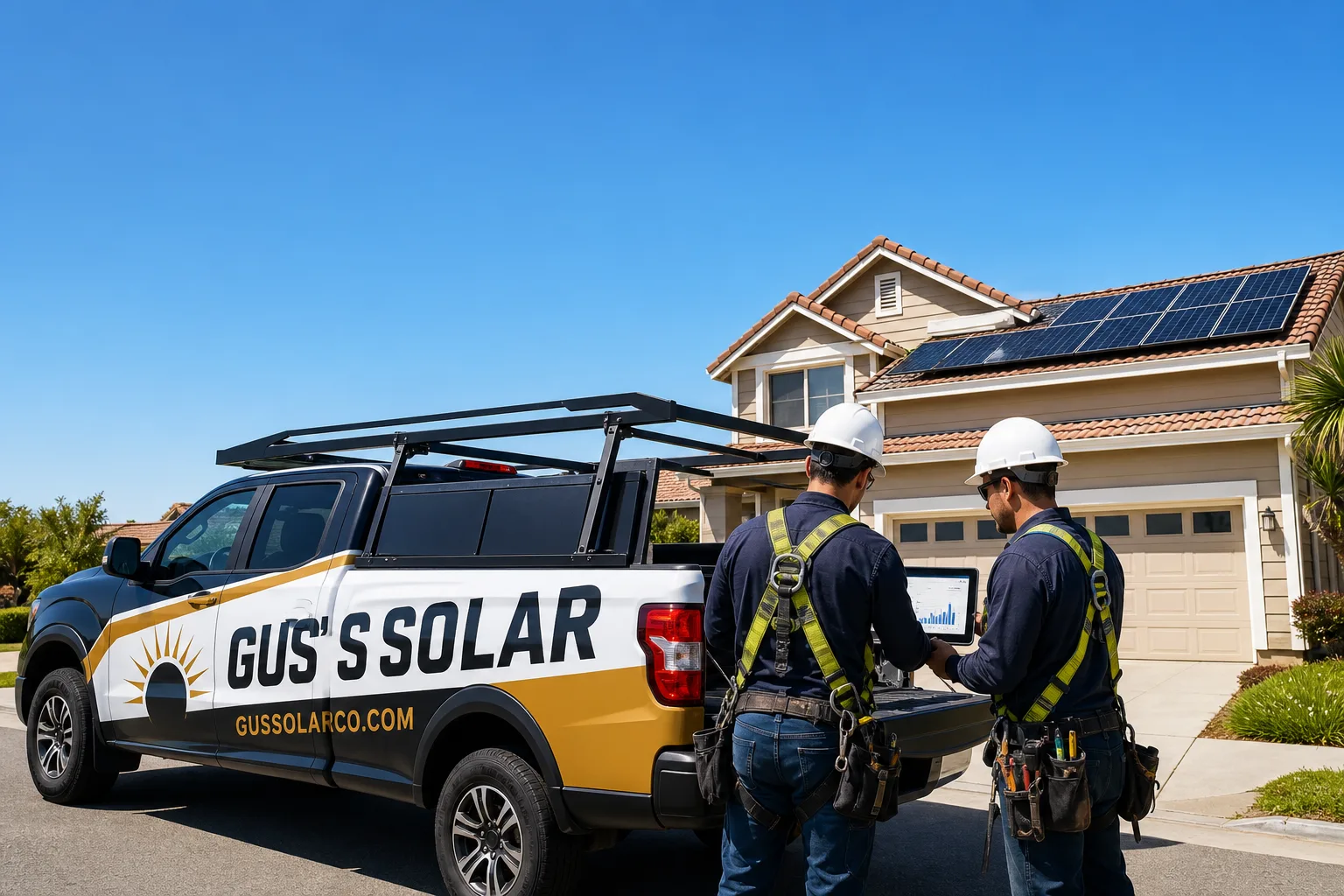
Free bill analysis - bring a power bill, get the production math for your actual roof, panel brands like Qcells and REC compared side by side
If the pitch starts at your door and ends with "sign tonight for the special," sleep on it. The sun will still be there tomorrow; so will we.
 Before
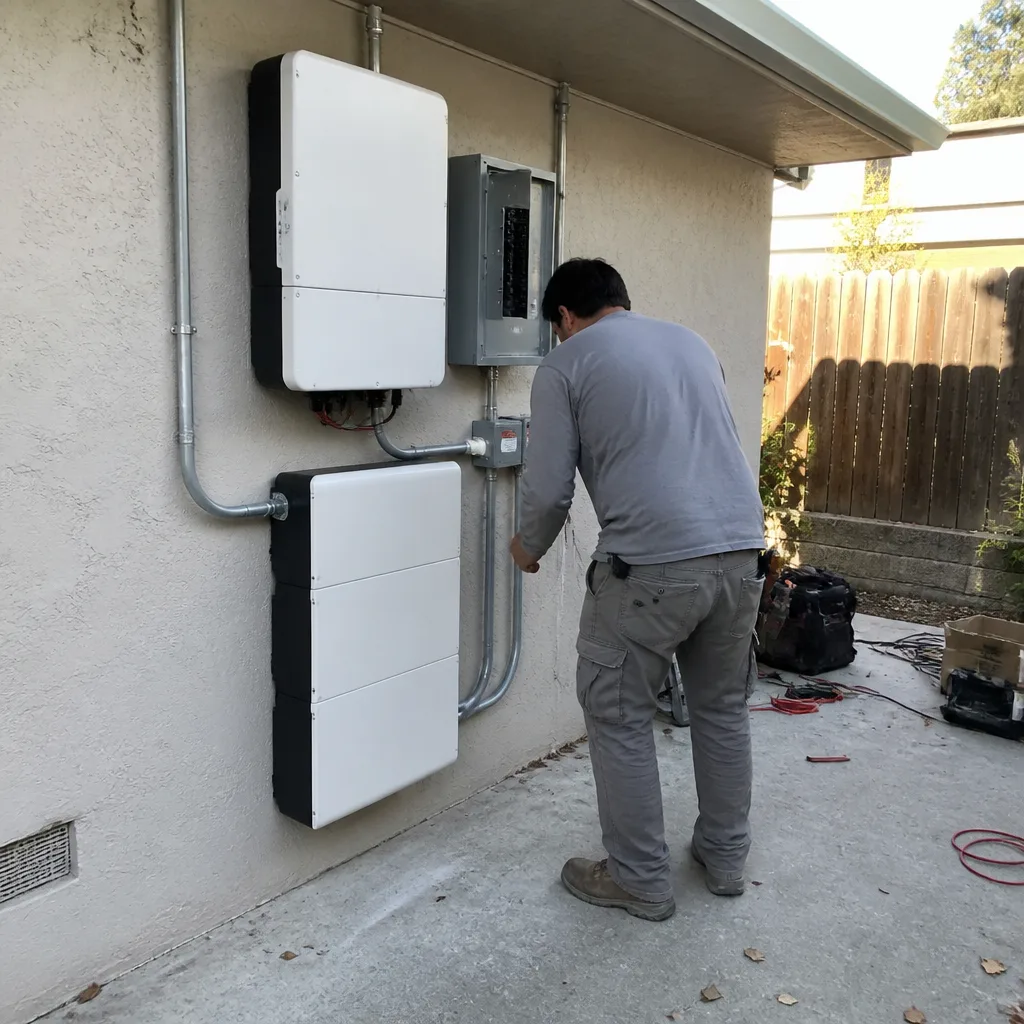 After
After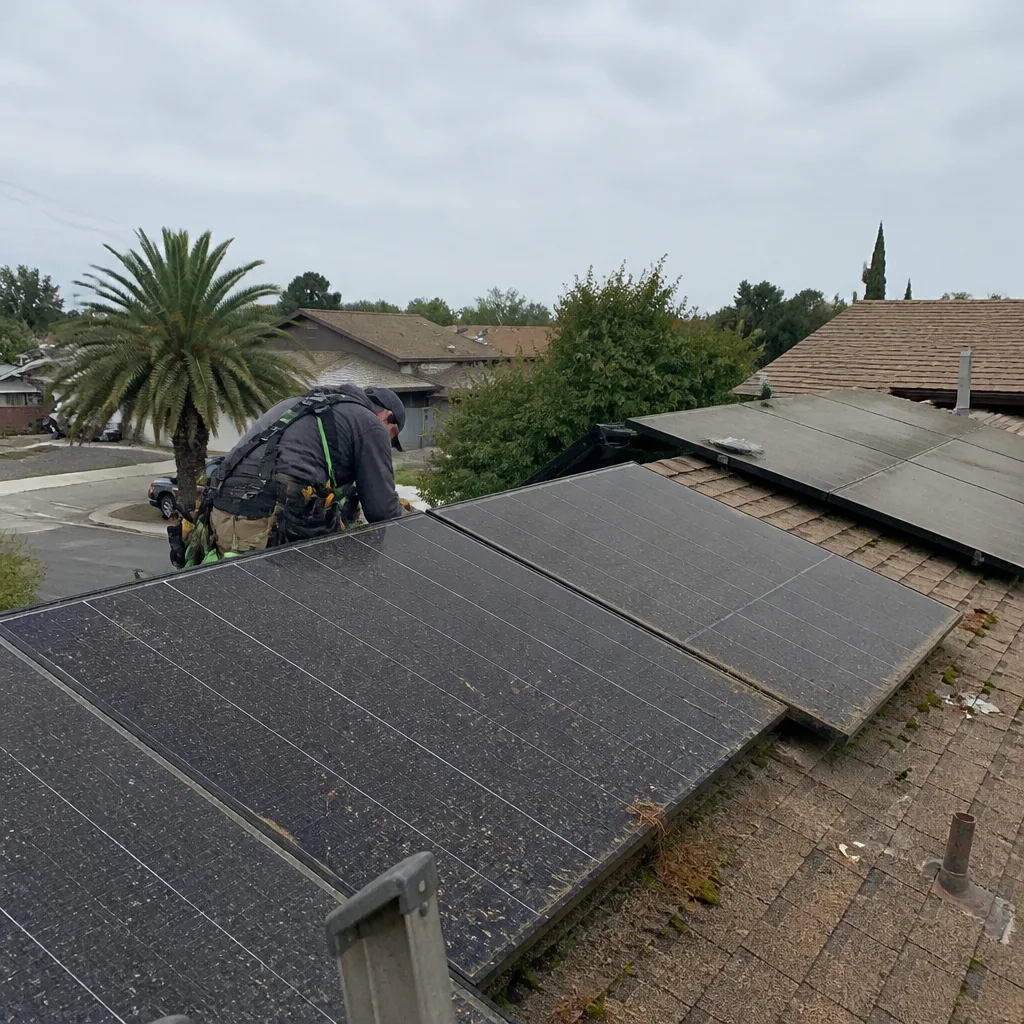 Before
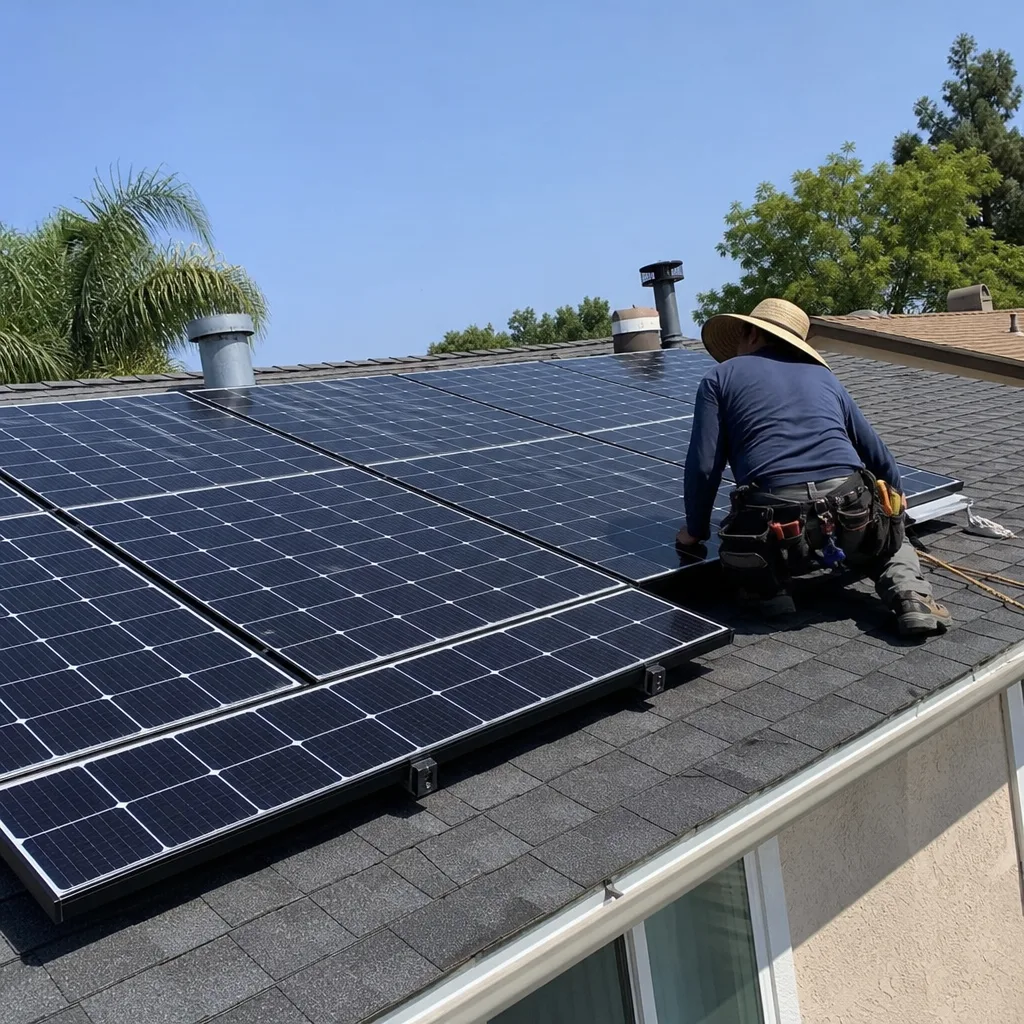 After
After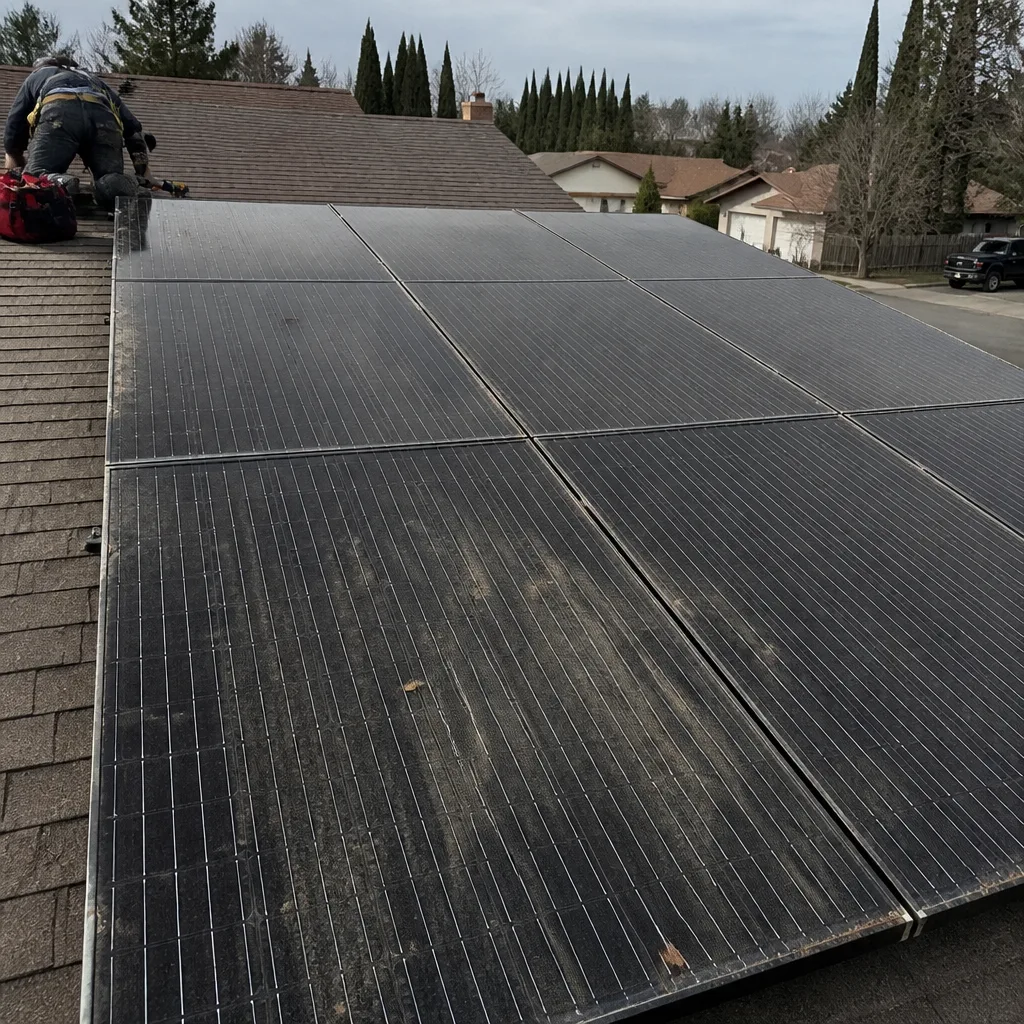 Before
 After
AfterFast, Reliable Solar Panel Cleaning Across Sacramento
Solar panel cleaning in Sacramento typically runs $150-$350 for a residential array and restores 5-20% of lost production, depending on how long the panels have sat under the city’s oak canopy and tule fog film. We’re Gus’s Solar, and we’ve been cleaning arrays from Midtown to Curtis Park long enough to know that a SMUD homeowner with dirty panels isn’t just losing kWh. They’re paying real money on a true-up statement that could have been smaller. Call (877) 550-6892 and we’ll send a crew that knows Sacramento’s specific grime, not a generic wash team.
Why Gus’s Solar Is Sacramento’s Preferred Solar Panel Cleaning Company
Gus Petrakis puts his name on the truck and answers his own phone when you call (877) 550-6892. That matters in Sacramento, where homeowners have dealt with out-of-state installers who vanish after the paperwork clears. We’re the opposite. Our crew shows up in uniform, background-checked, and we know where to park in East Sacramento without blocking the alley, where the oak pollen settles hardest in Land Park, and what a 1940s Craftsman roofline does to panel access. A live person answers 24/7. Not a voicemail. Not a ticketing portal. Someone in Sacramento who knows the difference between SMUD and PG&E.
Our work carries the 90-Day Done Right Promise in writing. If we miss a spot or a panel doesn’t look right after we leave, one call brings Gus back. No runaround, no subcontractor blame game. His own crew does the cleaning, and we treat your roof like we’d treat our own grandmother’s house in Curtis Park.
We also offer free second opinions on any written cleaning estimate you’ve received. Bring us the quote. If we can’t do better or match it with honest work, we’ll tell you that plainly. Take two weeks to think about it. The price won’t change.
Key Takeaways: Solar Panel Cleaning in Sacramento
- Sacramento’s tule fog, oak pollen, and pigeon droppings are a heavier soiling load than most of the Bay Area sees. Cleaning pays off faster here.
- SMUD true-up statements make production losses visible in dollars. Dirty panels inflate your payback period on paper.
- We clean residential and commercial arrays with deionized water and soft-bristle brushes, safe for SunPower, REC, Tesla, and Enphase systems.
- Bird and critter guard installation prevents the squirrel and pigeon damage we routinely find in older Sacramento neighborhoods.
- Our scheduled cleaning plans let you time a wash before your SMUD true-up date so the production numbers work in your favor.
Our Solar Panel Cleaning Services in Sacramento
We don’t just spray panels and leave. Each service starts with a visual inspection of the array, the racking, and the roof penetration, because in Sacramento the failure usually starts somewhere besides the glass. Whether you’re in a 1920s bungalow in Midtown or a newer build near Arden-Arcade, our Solar Panel Cleaning team treats the whole system, not just the surface. Here’s what we do most often across Sacramento.
Residential Panel Cleaning
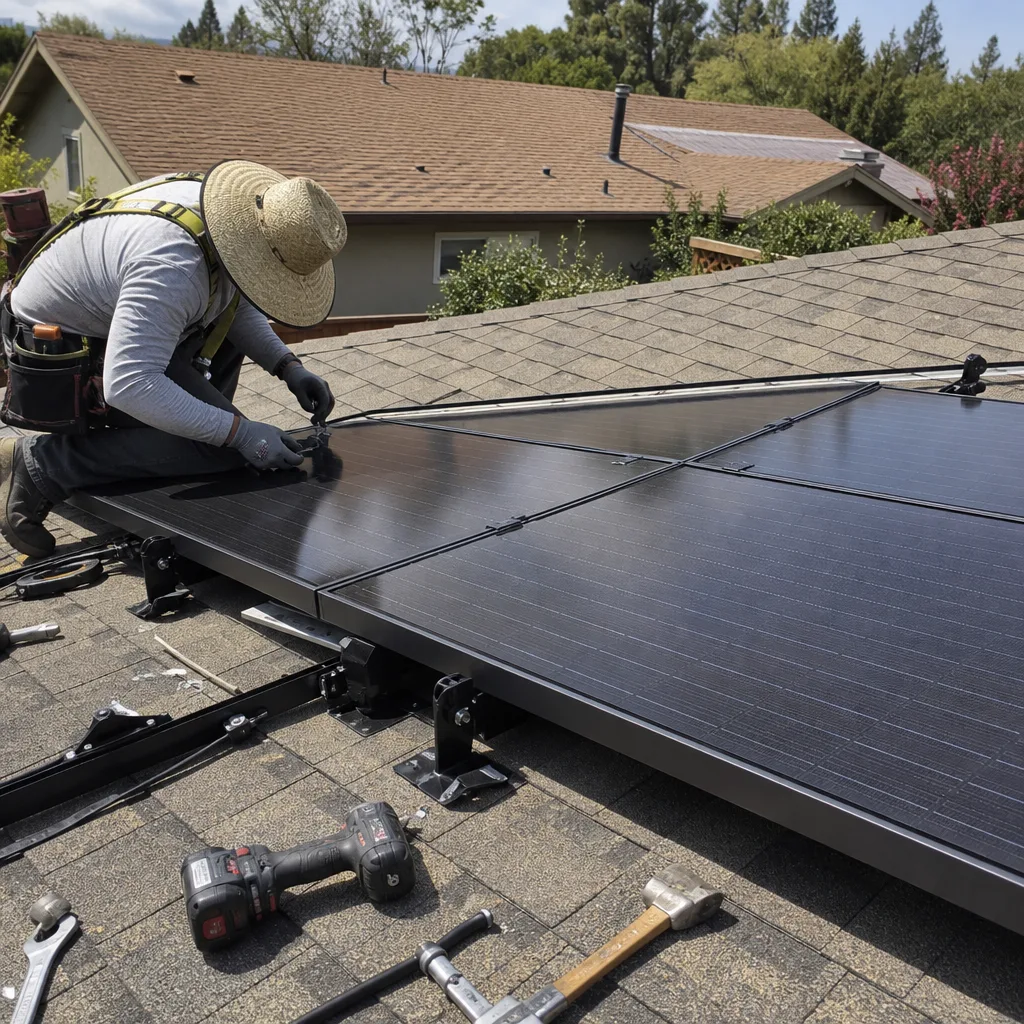
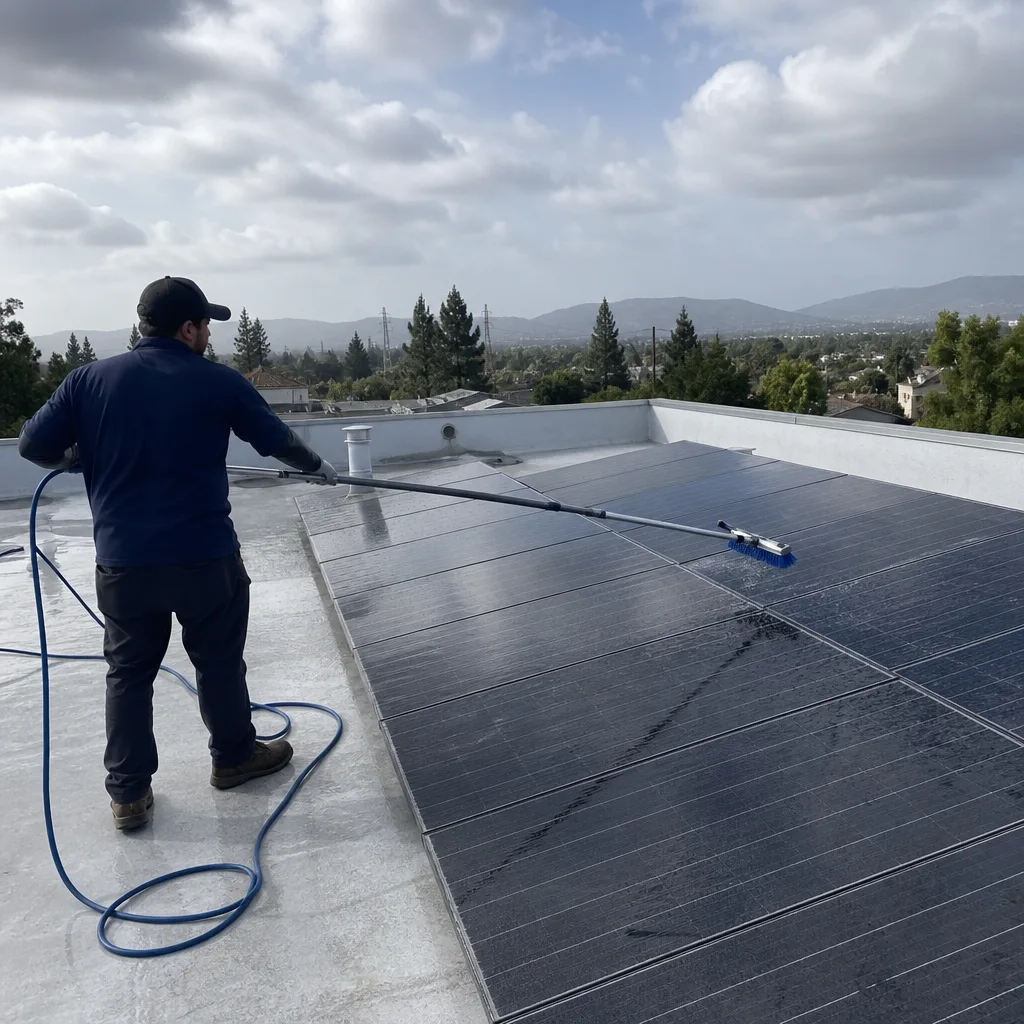
A typical home array in Sacramento takes our crew 45-90 minutes to clean properly. We use deionized water and soft-bristle brushes that won’t scratch the anti-reflective coating on SunPower or REC glass, and we check each panel’s microinverter or optimizer connection while we’re up there. Sacramento’s summer heat bakes pollen and dust into a film that plain tap water won’t lift; deionized water cuts it without leaving mineral spots that would actually reduce output on their own.
Commercial Array Cleaning
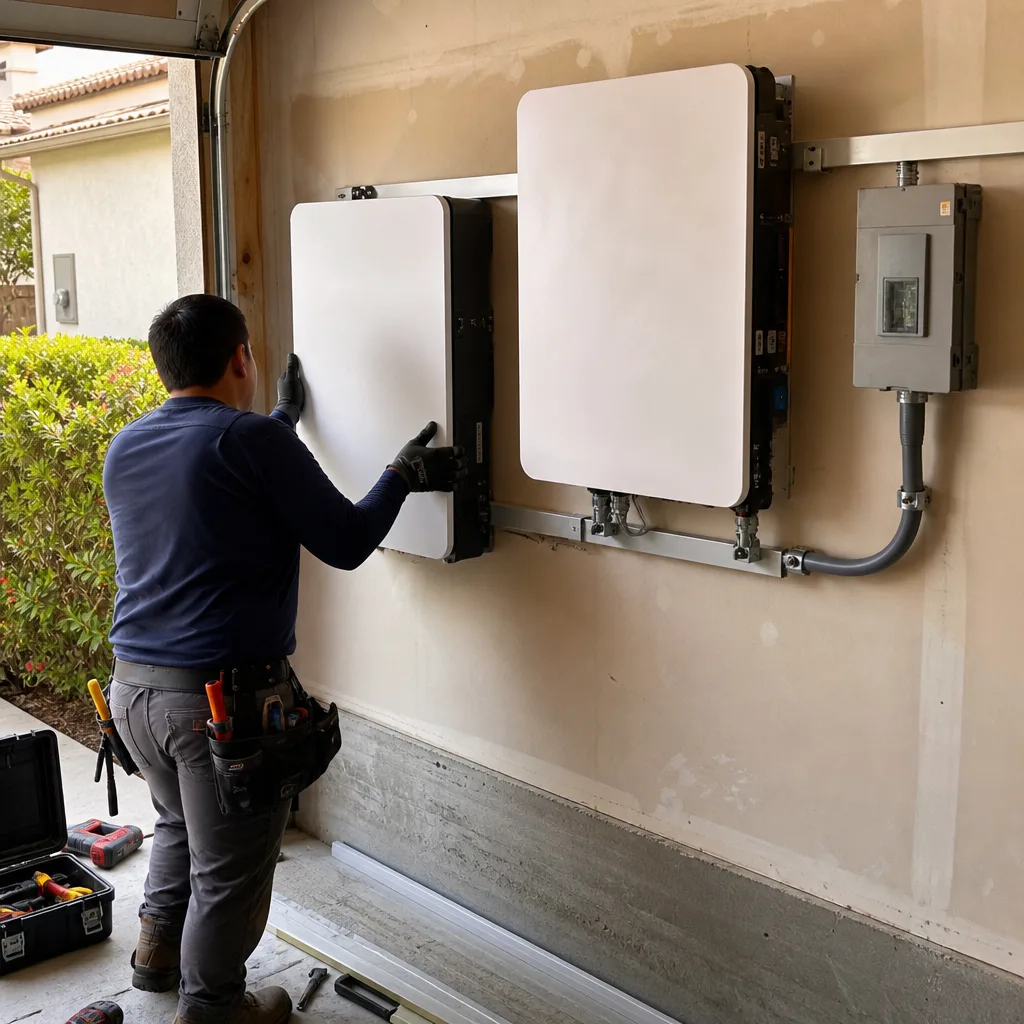
Commercial solar installations in Sacramento with flat-roof systems in warehouse districts collect a different kind of grime. Gravel dust from surrounding lots, diesel particulate from truck routes off Fruitridge Road, and weeks of unshaded sun create a crust that reduces output on big dc strings fast. Our commercial crews clean large arrays with the same soft-bristle, deionized-water method, but we schedule around your business hours and provide before-and-after production snapshots so your accountant sees the improvement in the SMUD export data.
Bird & Critter Guard Installation
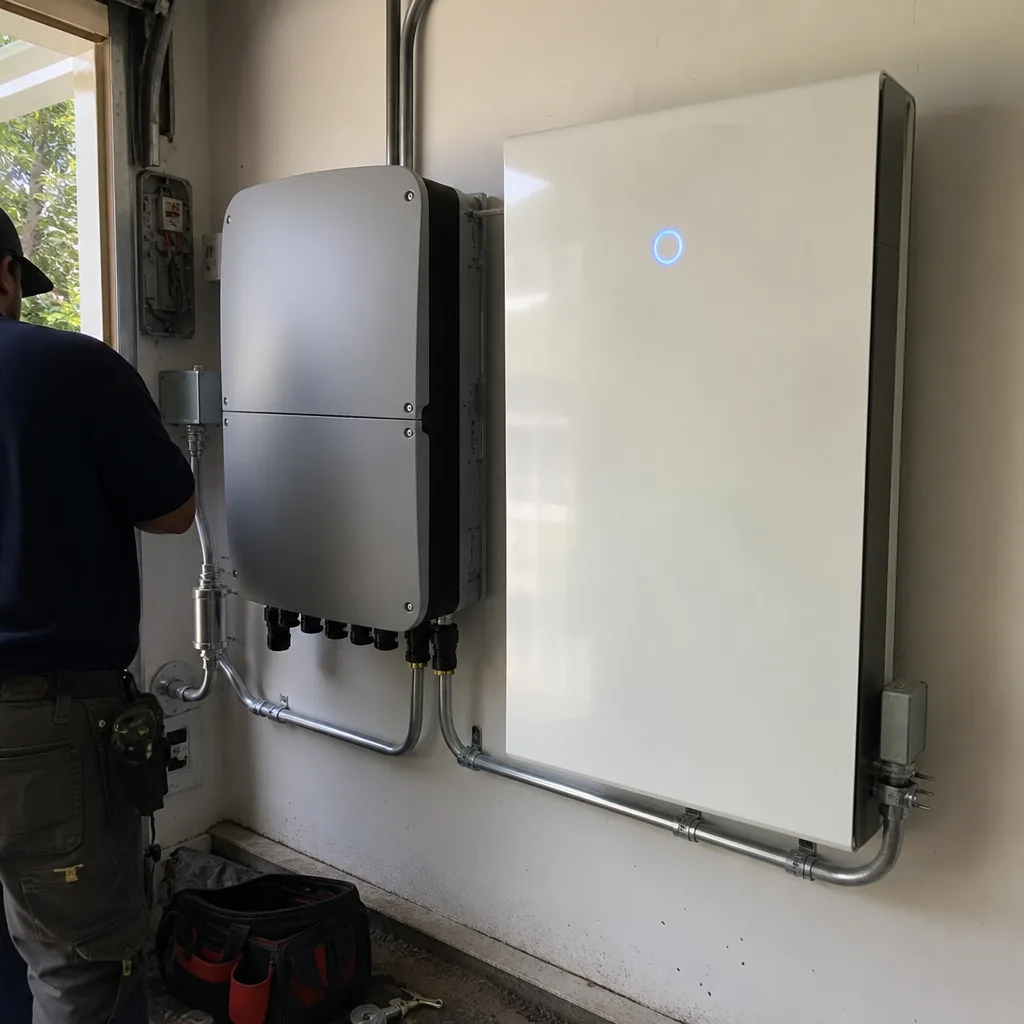
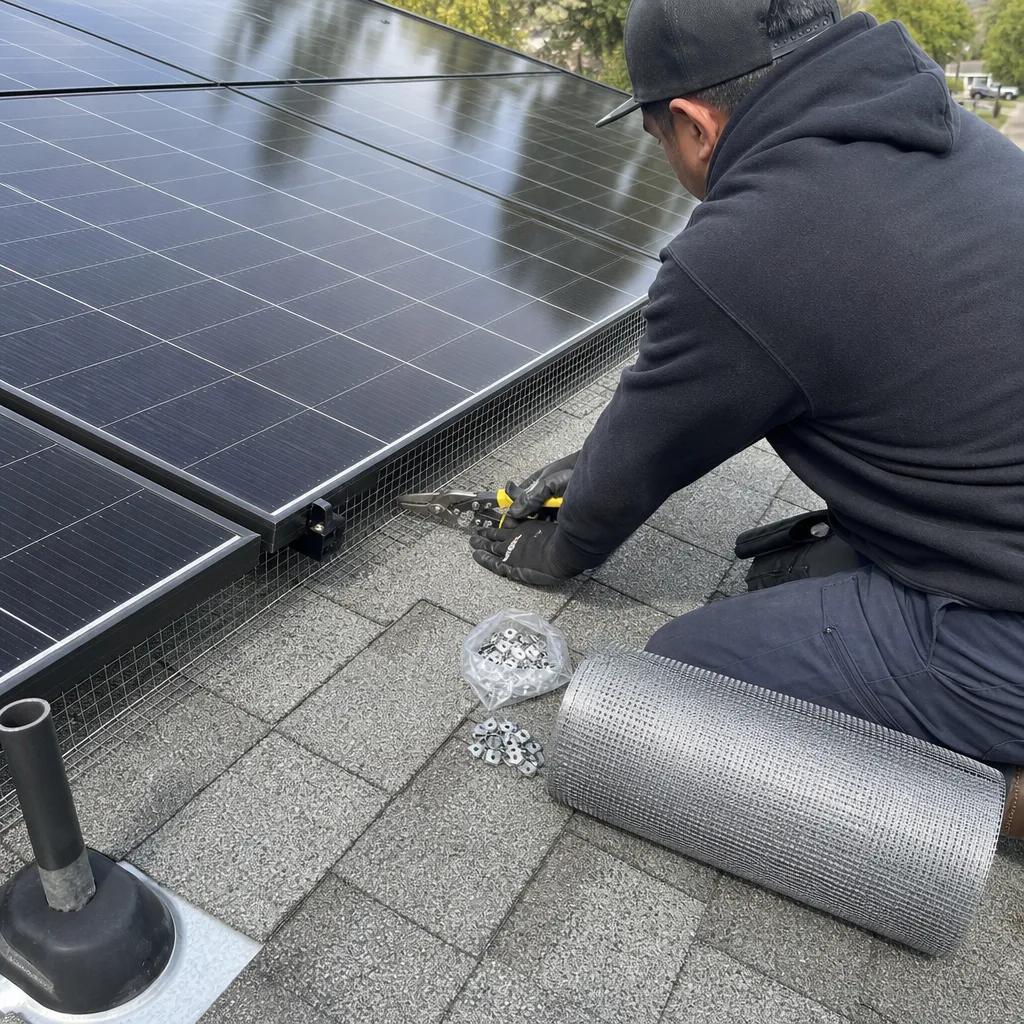
Pigeons and squirrels are the number one reason Sacramento homeowners call us for a “cleaning” that turns out to be a wildlife eviction. Older neighborhoods like Land Park and Curtis Park have mature trees and original wood fascia, which squirrels chew through to nest under panels. Pigeon droppings are acidic enough to etch aluminum frames, and once guano builds up under an array, it’s a roof leak waiting to happen. We install critter guard skirting around the panel perimeter, seal gaps, and clean out what the birds left behind. This is not an upsell. In Sacramento’s canopy neighborhoods, it’s solar panel maintenance and monitoring.
Debris & Soiling Removal
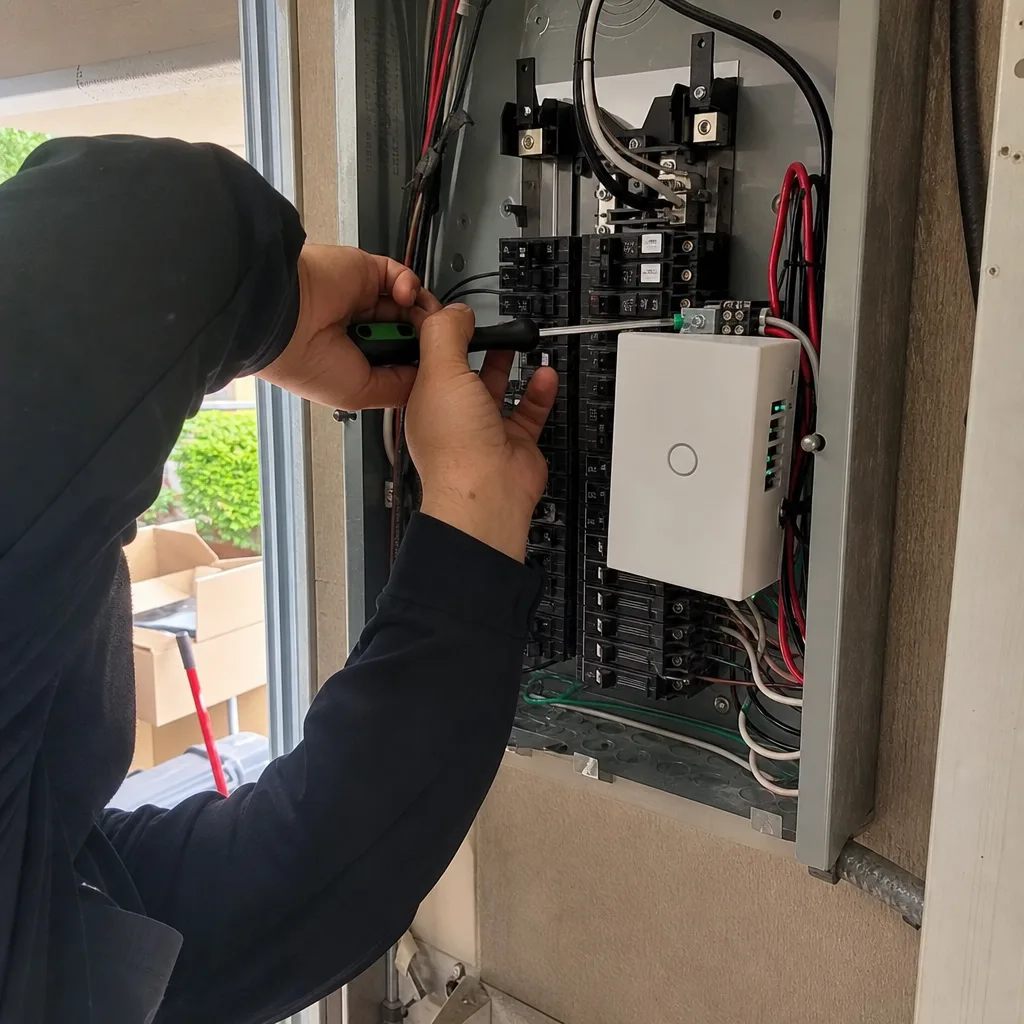
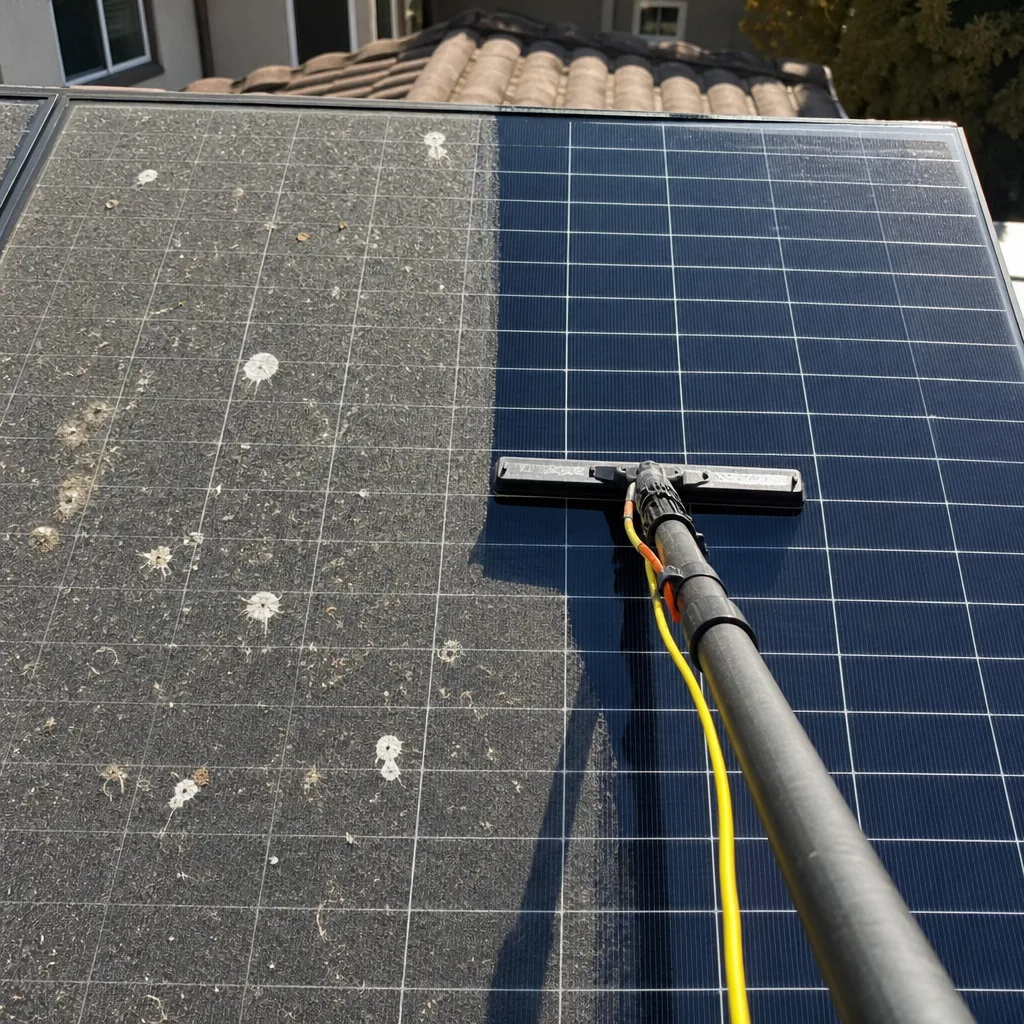
After a week of tule fog, followed by a 105°F afternoon, Sacramento panels develop a baked-on film that visible inspection won’t fully describe. We remove leaf litter, sap, soot, bird droppings, and the fine particulate that the fog leaves behind. Where the oak canopy in Midtown dumps leaves every November, we clear the gutter edge and the space under the array so drainage keeps working. Debris that sits under a panel holds moisture against the roof flashing, and that’s a repair much more expensive than a cleaning call.
Post-Storm Panel Cleaning
Sacramento doesn’t get coastal storms, but heavy valley rain and wind push dirt, leaves, and shingle grit onto panels. After a strong front moves through the Valley, we come out and restore the array. Post-storm cleaning is also the right time to check for lifted flashing or cracked glass, because SMUD’s interconnection rules mean any physical damage eats into production numbers you’ll see on your next true-up.
Scheduled Cleaning Plans
We set up Sacramento homeowners on cleaning plans timed to their SMUD true-up date. If your true-up lands in March, we clean in late February so your final production numbers reflect a clean array. If your true-up moves through fall, we clean after the oak leaf drop. The plan is built off your meter date and your neighborhood’s tree cover, not a generic calendar reminder. Most Sacramento customers schedule twice a year; heavily shaded Midtown and Land Park homes sometimes do three.
What happens when you call
- 1
A real person answersNo phone trees - you reach a local pro.
- 2
You get an upfront price rangeHonest numbers before anyone is dispatched.
- 3
A background-checked tech heads outLicensed & insured, dispatched right away.
- 4
You approve before work beginsNothing starts until you say go.
Trusted Brands We Service in Sacramento
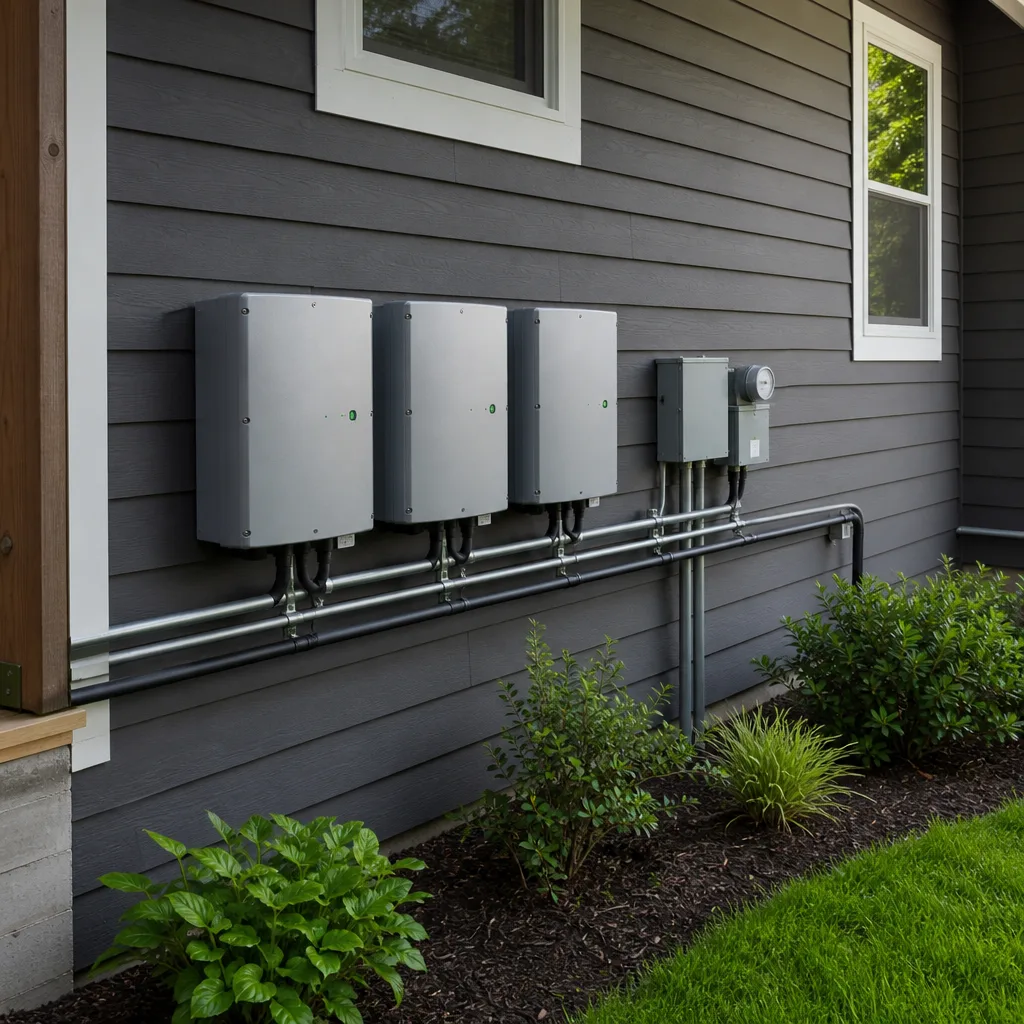
We clean and inspect arrays built on Tesla, Enphase, and SolarEdge hardware every week in Sacramento, and we also handle Qcells service in Sacramento. Those three brands dominate the city’s residential install base, whether it’s a Tesla Powerwall paired array in East Sacramento or an Enphase microinverter system on a ranch home in Arden-Arcade. We don’t need to call the manufacturer to know how to handle the rapid shutdown electronics or the monitoring gateway on the side of the house. Our crews are trained on these systems, and we stock common replacement parts locally, so when a critter guard needs a new clip or a panel edge needs touch-up, we’re not waiting a week on a shipment. You’ll also find us working on SunPower and REC panels constantly, especially on the older installs in Land Park and Curtis Park that have been producing for seven or ten years under Sacramento’s heat load.
Common Solar Panel Cleaning Problems We See in Sacramento Homes
- Tule fog soiling film: From November through February, the Sacramento Valley gets blanketed in tule fog. That fog carries fine particulate from the Delta and agricultural land, and it settles on panels as a gray film. When March sun hits it, the film bakes on and cuts production by 5-8% until it’s properly cleaned with deionized water.
- Oak and elm sap plus leaves: Midtown and Land Park have some of the densest tree canopies in Sacramento. Leaves clog the under-array space, sap creates sticky hot spots on the glass, and the combination accelerates degradation on cells that overheat while shaded neighbors stay cool.
- Squirrel and pigeon damage: We see it weekly on 1920s and 1940s bungalows with original wood fascia. Squirrels chew through to make nests, pigeons roost and coat the array with acidic guano, and both problems get worse the longer you wait. The droppings don’t just look bad; they etch aluminum frames and eventually compromise the panel seal.
- High-heat mounting stress: Sacramento’s summer afternoons push 105°F and 110°F repeatedly. That thermal cycling stresses rack mounting feet and roof flashing, especially on older homes. We regularly find rusted or loosened mounting hardware during a cleaning visit, and we flag it before a winter rain turns a loose flashing into a ceiling stain.
Pricing for Solar Panel Cleaning in Sacramento, CA
Residential solar panel cleaning in Sacramento usually runs $150-$350 depending on array size, roof pitch, and how long it’s been since the last wash. Commercial arrays start around $350 and go up with square footage and roof access. Bird and critter guard installation adds $200-$600 depending on the perimeter length and the condition of the fascia we’re attaching to. Debris and soiling removal on a heavily shaded Midtown home with extensive under-array buildup may hit $400. Scheduled cleaning plans start at $150 per visit, with savings when you prepay for a two-visit or three-visit annual plan. We quote the price over the phone before we come out. No trip charge inside our own county. Call (877) 550-6892 for a free estimate, and bring us a bill, we’ll show you the math on what a clean array does to your SMUD true-up.
We Also Serve Cities Near Sacramento
Our Solar Panel Cleaning in Sacramento team also covers West Sacramento, Fruitridge Pocket, Arden-Arcade, and La Riviera. If you’re across the river in West Sacramento or down toward La Riviera, the same crew, same pricing, and same 90-Day Done Right Promise apply. We don’t farm work out to subcontractors; it’s Gus’s crew on every roof.
How SMUD’s Net Metering Changes the Cleaning Math in Sacramento
Sacramento is served by SMUD, not PG&E, and that changes the financial case for cleaning your panels more than most people realize. SMUD runs its own net metering program with its own rate structure and true-up date. When your panels underproduce because of soiling, you buy more kilowatt-hours back from SMUD at retail rate, and you lose the credit you would have earned on overproduction. In PG&E territory, the rate math is different, and some homeowners can absorb a 5% soiling loss without noticing. In Sacramento, where SMUD’s true-up statement shows the exact dollar impact of every lost kWh, dirty panels create a visible line item. We’ve sat at kitchen tables in Curtis Park and Arden-Arcade where a homeowner’s SMUD bill showed a $120 true-up shortfall that traced directly to six months of unwashed panels under an oak tree. A $200 cleaning would have erased most of it. That’s not a sales pitch; it’s arithmetic.
The other SMUD angle: interconnection rules mean your system’s production data feeds directly into the utility’s calculations. If panels are dirty and output sags, SMUD doesn’t know why. All it sees is lower generation from your array. When your next true-up arrives, the utility settles based on that lower number. Keeping panels clean is the cheapest way to protect the value of the system you already paid for. And if you call around for cleaning quotes, you’ll find out fast which companies have worked in SMUD territory before. The ones that haven’t sometimes price the job like a PG&E customer, and the math doesn’t transfer.
A Real Job in Curtis Park: What Sacramento Grime Actually Does
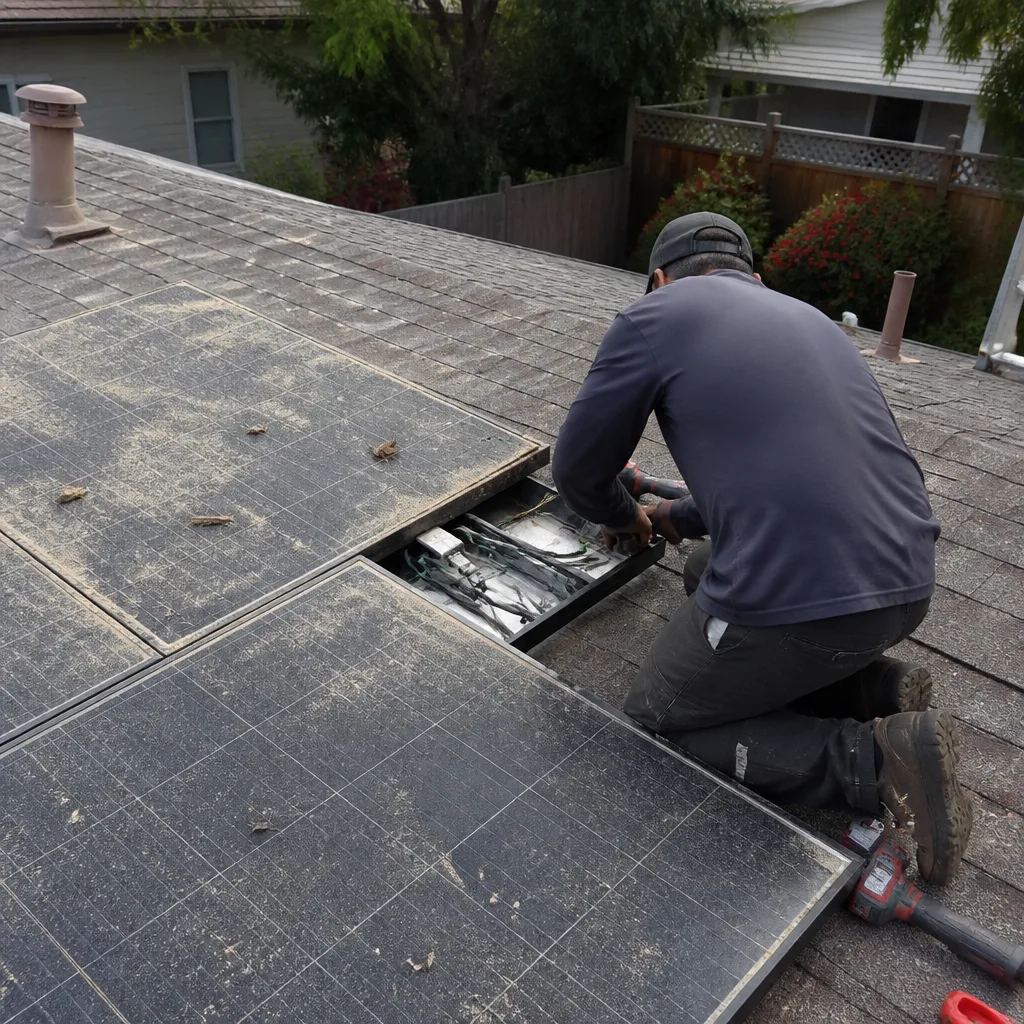
We cleaned a 2019 Tesla array on a 1940s Craftsman in Curtis Park. The panels sat under a mature oak and had been through a full tule fog season. They were coated with a gray-brown film that looked like dust but was actually baked-on particulate from the fog plus oak pollen. Our crew used soft-bristle brushes and deionized water to pull the film off without scratching the glass. While on the roof, we noticed rust forming on the mounting feet where the summer heat and winter moisture had cycled the metal dozens of times. We flagged it before it ate into the roof flashing. That’s the difference between a generic panel wash and a local crew that knows what Sacramento’s climate does to an array. We didn’t just make the panels produce again; we caught a repair that would have cost far more if it had waited until the next inspection window.
Serving Sacramento, CA - Our Local Coverage Area
We’re based in the Sacramento area and know this community well. Use the map below to see our service coverage - if you’re nearby, we can almost certainly help.
FAQs - Solar Panel Cleaning in Sacramento
SMUD’s net metering settles your production against your consumption on a monthly true-up cycle, so every kilowatt-hour your panels fail to produce because of soiling directly costs you money at SMUD’s retail rate. A residential array losing 5-8% to dust, pollen, and fog film over six months can create a $100-$250 shortfall on a SMUD true-up statement. Cleaning at $150-$350 erases most of that. Call (877) 550-6892 and we’ll look at your last true-up statement with you before recommending a cleaning schedule.
Yes. Sacramento neighborhoods like Midtown, Land Park, and Curtis Park have dense oak and elm canopy that drops leaves, sap, and pollen directly onto panels. Homes in those areas typically need cleaning two to three times per year, while homes in newer, less shaded subdivisions near Arden-Arcade often do fine with twice annually. The fastest way to check is to look at your production curve in your monitoring app; a dip in output that doesn’t track the weather is usually soiling.
Yes, and it’s worse than most people expect. Tule fog forms when temperature inversions trap moisture and particulate from the Delta and agricultural land near the ground. That moisture condenses on panels and dries, leaving a fine gray film. After a few weeks of fog cycles followed by sun, the film bakes into a layer that reduces output and doesn’t rinse off with rain. It requires deionized water and agitation to remove completely.
Yes. We clean SunPower and REC panels with soft-bristle brushes and deionized water only. We don’t use pressure washers, which can void panel warranties and damage the seals around junction boxes and microinverter connections. We’re trained on rapid shutdown electronics, so we know how to work around the components without triggering a fault or leaving a loose connection. Enphase, Tesla, and SolarEdge systems are all handled the same way, with the same care.
Yes. We build scheduled cleaning plans around your specific SMUD true-up date so the panels are washed shortly before the settlement period closes. If your true-up lands in March, we clean in February before the fog fully lifts. If it lands in October, we clean after the oak leaf drop so the debris and sap don’t sit through the winter. The plan is built from your meter date and your tree cover, and it’s priced per visit as a flat rate. Call (877) 550-6892 and we’ll set up the first visit around your next true-up.
Contact Gus’s Solar in Sacramento, CA
If your panels haven’t been cleaned in six months or more, or you’ve noticed your SMUD production numbers trending down, call us. We’ll give you an honest price over the phone, send Gus’s own crew, and back the work with the 90-Day Done Right Promise in writing. We offer free second opinions on any written estimate, no trip charge inside the county, and a Senior and Veteran 10% discount that never expires. Take two weeks to decide. The price will be the same. Call (877) 550-6892 today and talk to a live person who actually knows Sacramento.
Written by Gus Petrakis, Owner at Gus’s Solar, serving Sacramento and the surrounding communities since 2011.