

Free bill analysis - bring a power bill, get the production math for your actual roof, panel brands like Qcells and REC compared side by side
If the pitch starts at your door and ends with "sign tonight for the special," sleep on it. The sun will still be there tomorrow; so will we.

 Before
 After
After Before
 After
After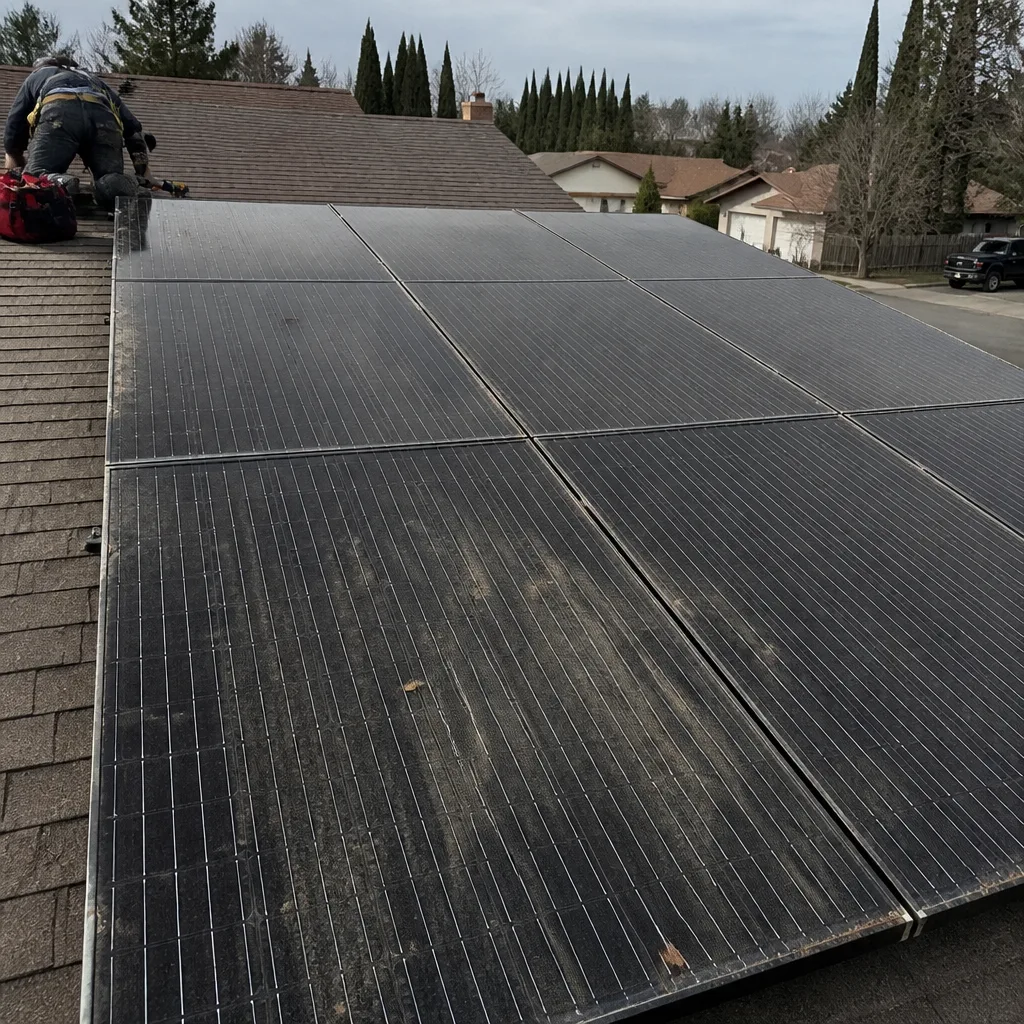 Before
 After
AfterFast, Reliable Solar Panel Cleaning Across Live Oak
Solar panel cleaning in Live Oak runs $150-$320 for a typical residential array, and the job usually takes our crew under two hours. The Sacramento Valley’s tule fog does something most generic cleaning pages never mention: it bonds valley dust and fog residue to your glass in a film that quietly eats output all winter, right when your system is already fighting for every photon. Gus Petrakis has worked these flat, foggy valley roofs for over 29 years, and his crew answers the phone when you call (877) 550-6892. We know Live Oak’s panels need different attention than panels up in the foothills, and we price the work honestly.
Why Gus’s Solar Is Live Oak’s Preferred Solar Panel Cleaning Company
Live Oak homeowners keep our number saved because we show up when we say we will, and the person on the phone is the same person whose name is on the truck. Gus Petrakis started this business in 2011 and never turned it into a call center. When you call about cleaning your array off Larkin Road, you talk to someone who has actually cleaned panels on Larkin Road. No ticket queue. No “we’ll have a technician in your area sometime next week.”
Our crews are background-checked, uniformed, and work directly for Gus. We don’t hand Live Oak jobs off to subcontractors. The 90-Day Done Right Promise applies to cleaning work too: if something isn’t right, one call brings the crew back, in writing. Live Oak residents tell us the same thing over and over: a real local name, a published license number, and a person who remembers their roof from last year. That’s the whole pitch, and it works.
Our Solar Panel Cleaning Services in Live Oak
Live Oak sits on flat Sutter County valley floor, which means dust, agricultural drift, and fog do most of the dirty work on your panels. We built these services around what actually happens here, not a generic menu.
Residential Panel Cleaning
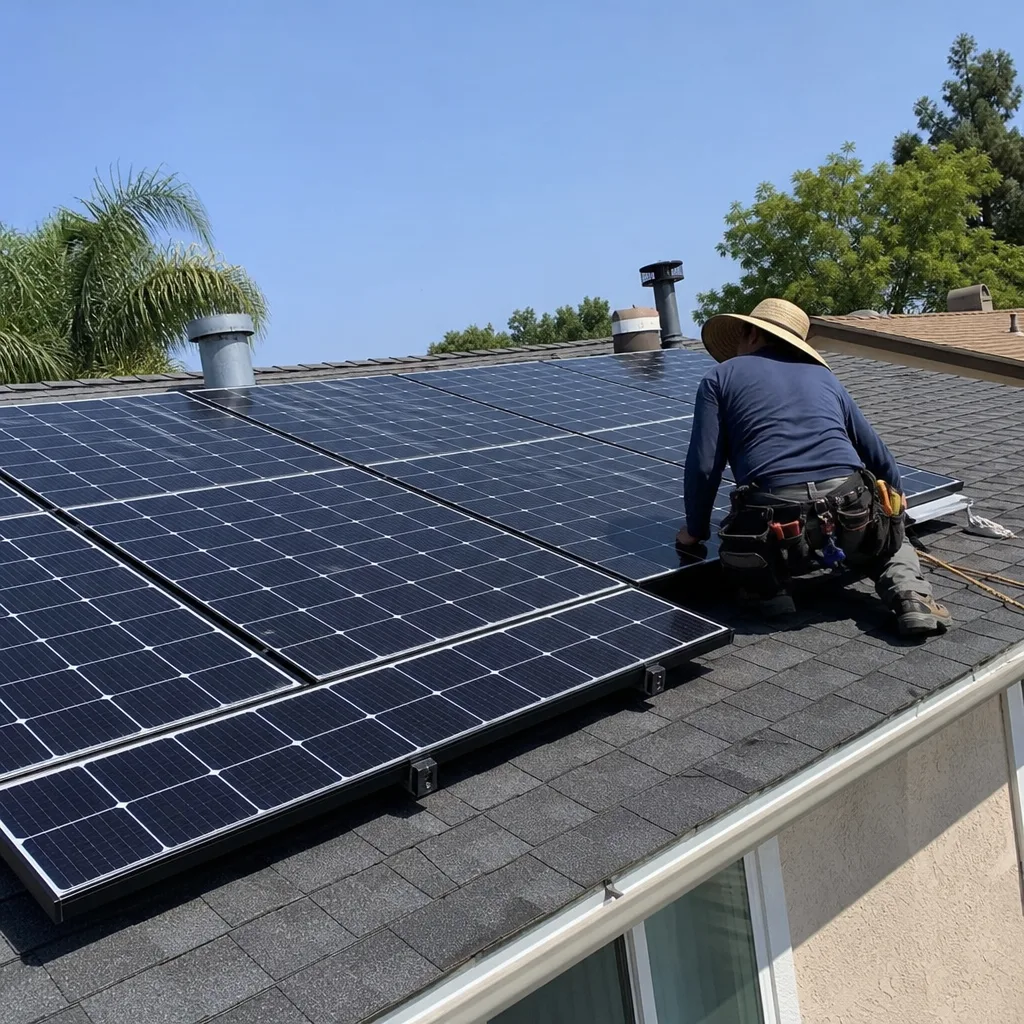
Most Live Oak homes we clean are 1950s-to-1970s ranch houses with compact roof footprints and arrays sized close to usage. A standard cleaning takes 60 to 90 minutes, uses deionized water, and leaves no calcium streaks on your Panasonic or Canadian Solar glass. We schedule around your work day and text you when we’re 20 minutes out.
Commercial Array Cleaning
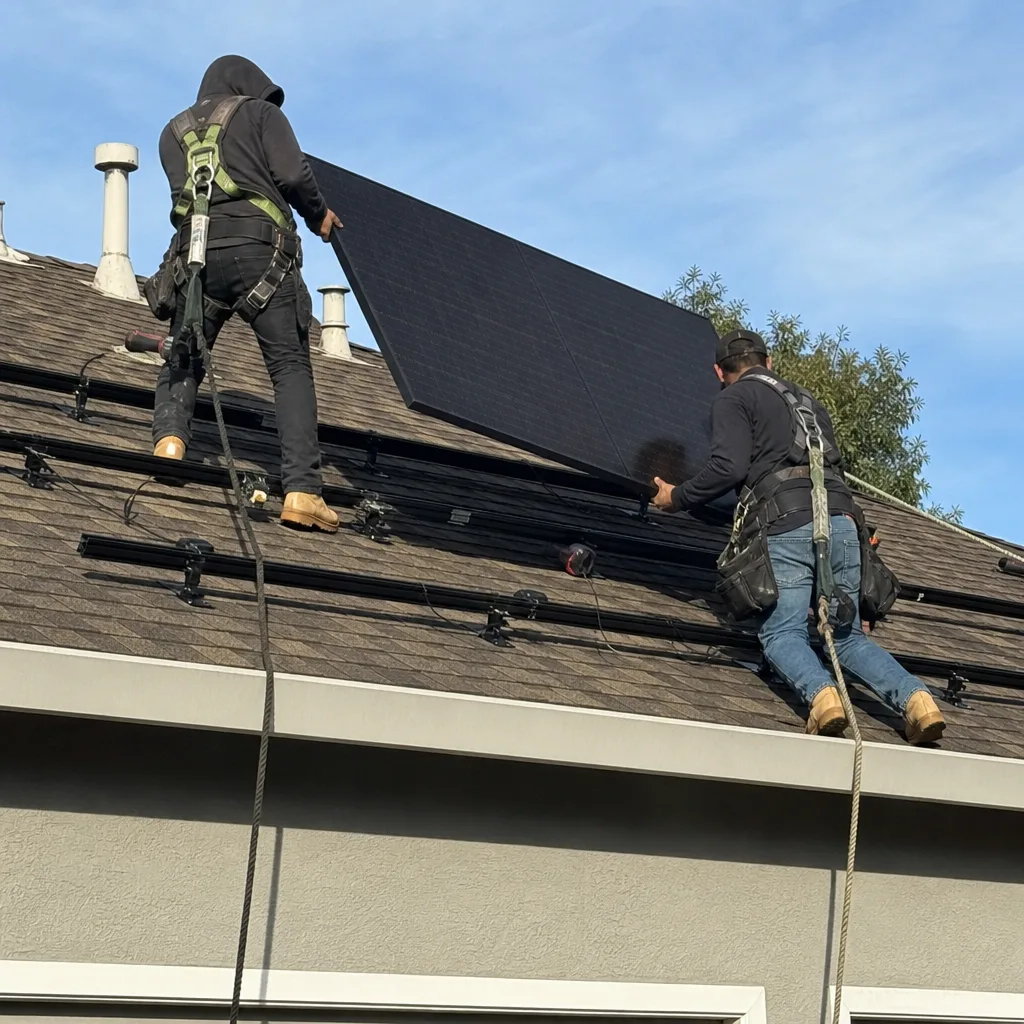
Live Oak’s agricultural businesses, packing sheds, and commercial roofs collect a heavier soiling load than residential arrays: field dust, diesel particulate from farm equipment, and fog that settles into a crust. We clean commercial arrays early mornings before the heat builds, and we work around your operating hours so production isn’t interrupted mid-day. Ask about scheduled quarterly cleanings if you run a true-up-sensitive operation.
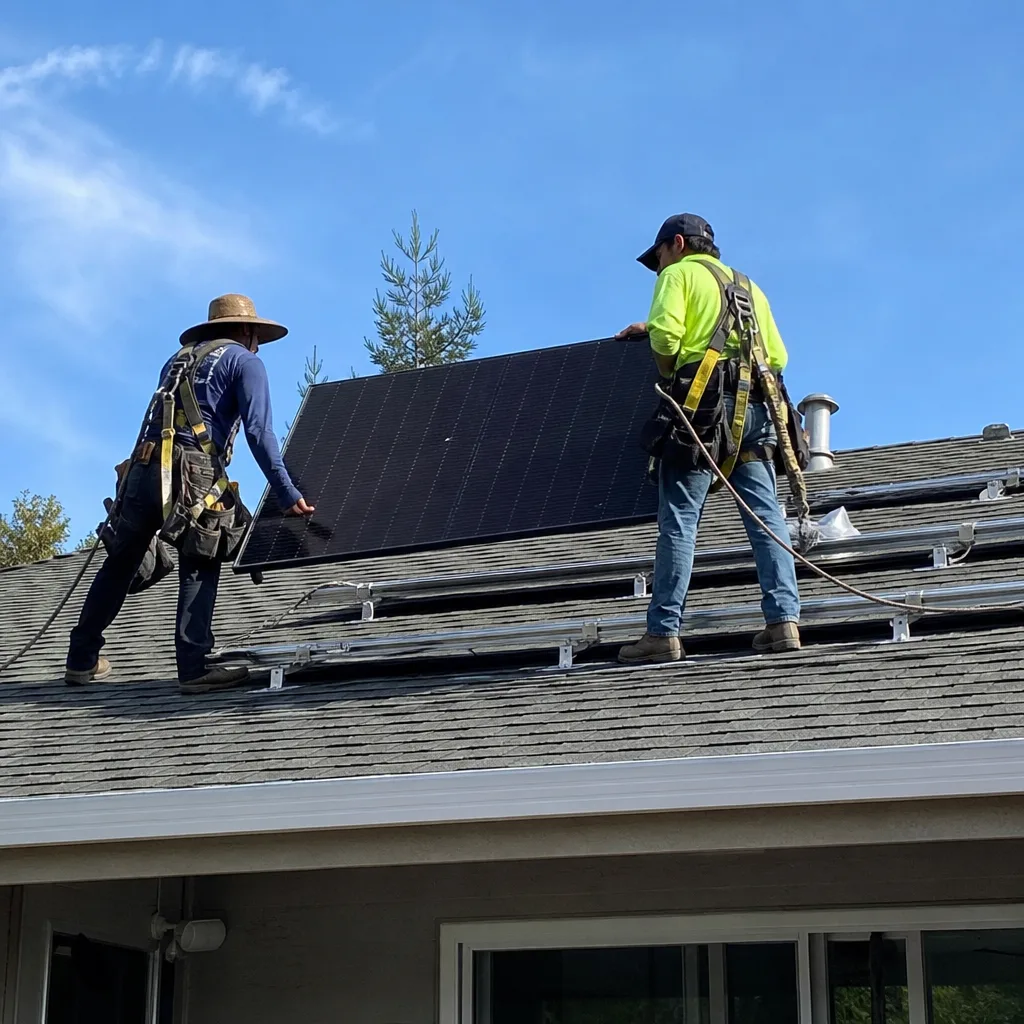
Bird & Critter Guard Installation
Pigeons and swallows nest under panels, and their droppings are the single most aggressive soiling agent on valley arrays. We install commercial-grade wire mesh around panel perimeters and skirt the edges so birds can’t get underneath. The mesh also keeps nesting debris from trapping moisture against the frames during wet fog cycles. For Live Oak homes near orchards or open fields, this is not optional, it’s the difference between annual cleanings and quarterly salvage jobs.
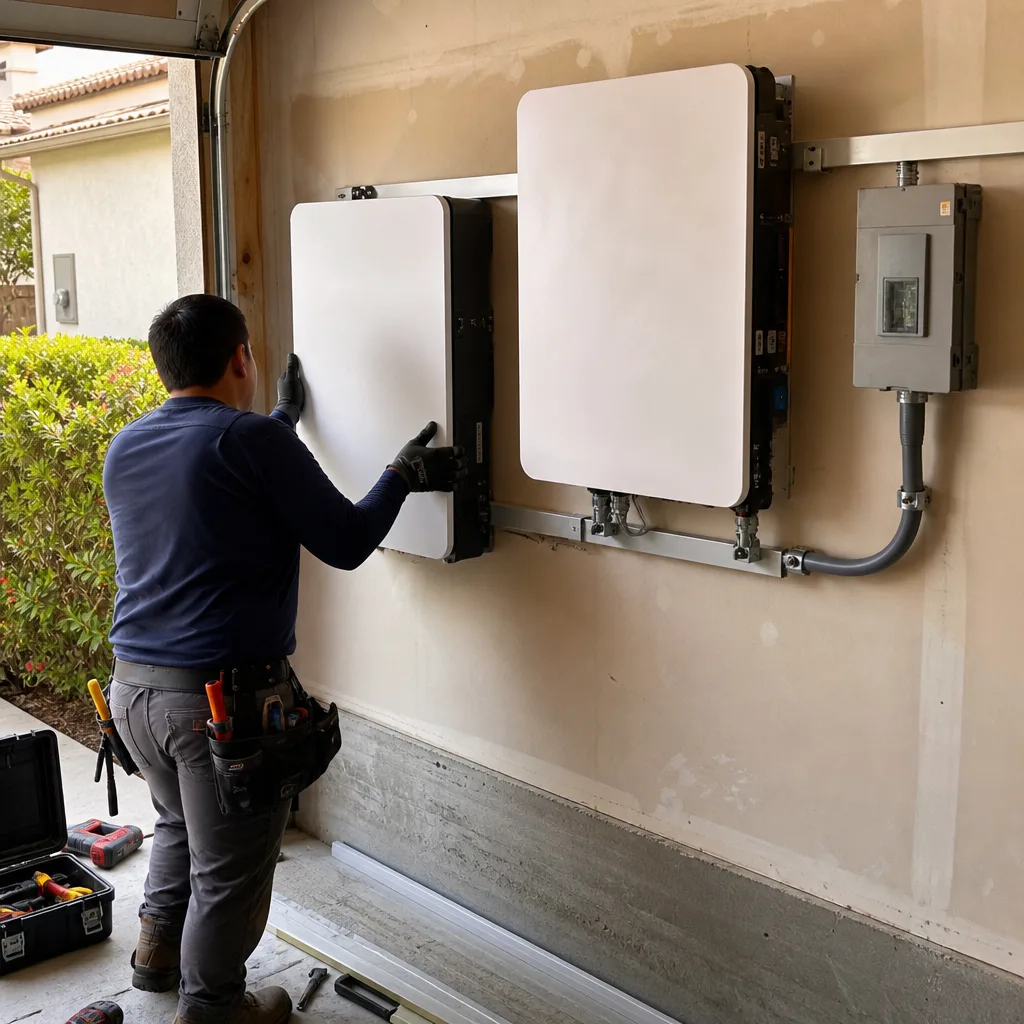
Debris & Soiling Removal
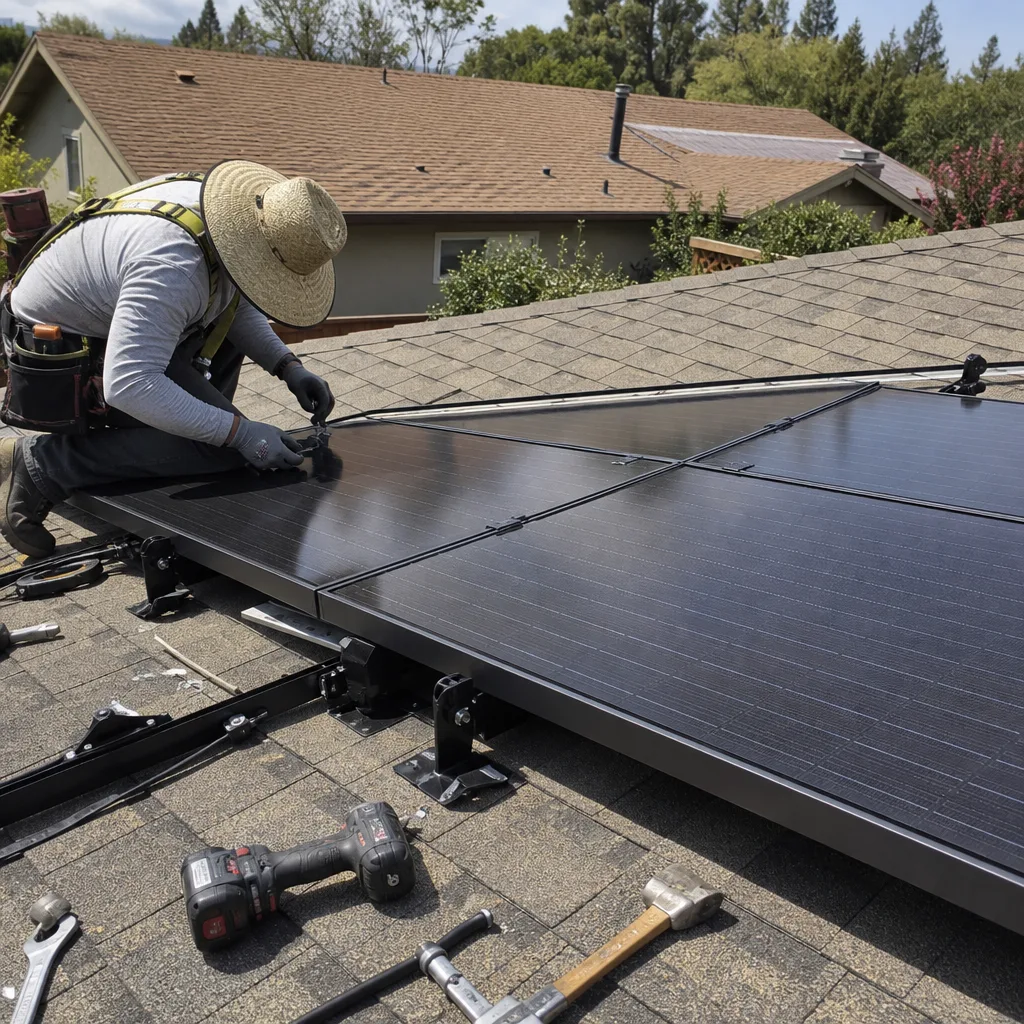
Leaf litter from valley oaks, cottonwood fuzz in spring, and wind-blown field debris all collect along array edges on Live Oak roofs. Our debris removal includes clearing the frame line, checking the microinverter area for organic buildup, and a final rinse that leaves no streaks. On the 1960s ranch homes off Pennington Road with older roof profiles, we pay extra attention to low corners where moisture pools and debris mats.
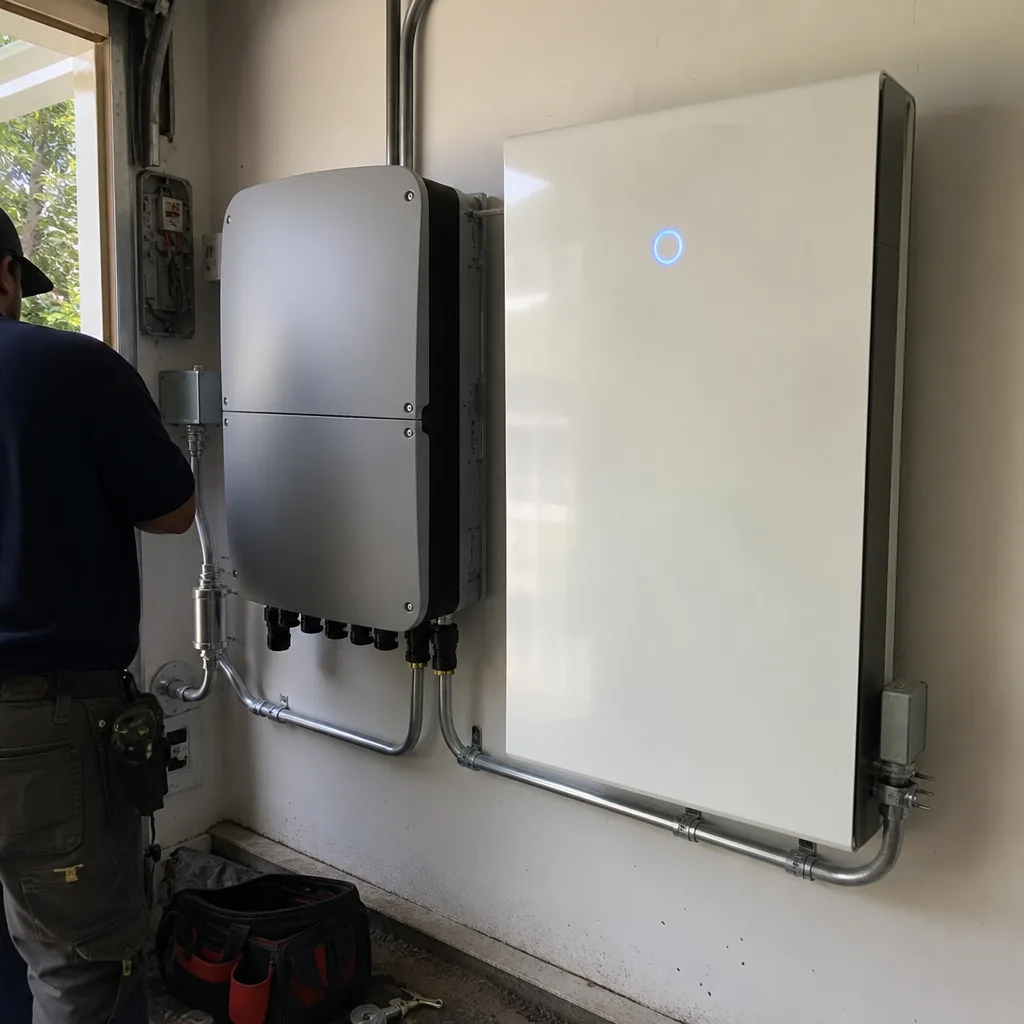
What happens when you call
- 1
A real person answersNo phone trees - you reach a local pro.
- 2
You get an upfront price rangeHonest numbers before anyone is dispatched.
- 3
A background-checked tech heads outLicensed & insured, dispatched right away.
- 4
You approve before work beginsNothing starts until you say go.
Trusted Brands We Service in Live Oak
We clean every major panel brand, and we stock local parts for Live Oak customers when something needs tightening or a mounting clip walks loose. You’ll see a lot of REC, Qcells, Canadian Solar, JinkoSolar, and Panasonic glass on Live Oak roofs, plus Enphase microinverters on most 2015-or-newer installs. If you have SunPower or Tesla panels, we know the rail profiles and microinverter placement. FranklinWH batteries too, but the cleaning work is all about the glass and the frames. Fast turnaround is normal for us; we’re not a national outfit with a regional parts backlog.
Common Solar Panel Cleaning Problems We See in Live Oak Homes
- Mineralized fog residue etched into glass. Tule fog lifts fine valley dust and agricultural particulate, then settles it on your panels in a micro-thin film. Wait until spring’s first 90°F day and that film bakes on, making permanent micro-etching a real risk. The fix is a winter cleaning cycle, not an apology phone call on your true-up statement.
- Hard-water calcium streaks from DIY hose rinses. Live Oak’s municipal water is not soft. When a homeowner hoses panels and lets the water dry, calcium and magnesium scale onto the glass, acting like shade over the cells it covers. Pure-water cleaning removes those streaks; a hose adds more.
- Bird droppings compounded by fog suppression. Winter fog already drops production to near zero for multi-day stretches. Layer pigeon droppings on top and you’re losing the few kWh the season offers. Live Oak arrays near orchards see this every winter, and it eats true-up credit faster than any single other problem we fix.
- Leaf litter trapping moisture against panel frames. Valley oak and cottonwood debris build along the bottom frame edge, hold moisture during fog cycles, and accelerate aluminum corrosion on older racks. Live Oak’s 1960s ranch roofs with original mounting rails are especially prone, and clearing that debris line is the cheapest long-term protection you’ll buy.
Pricing for Solar Panel Cleaning in Live Oak, CA
A typical residential panel cleaning in Live Oak runs $150-$320 depending on array size, roof pitch, and whether bird guard was previously installed. Small 10-to-14-panel systems sit at the low end; larger 24-plus-panel arrays with steep or cut-up roof sections run higher. Commercial arrays are quoted by panel count and access, and we walk the roof before we quote, so the number you hear is the number you pay. Adding a bird and critter guard install typically adds $400-$900 depending on perimeter length. No trip charge inside Sutter County, and seniors and veterans always get 10% off. Call (877) 550-6892 for an exact number, the estimate is free and takes one roof walk.
We Also Serve Cities Near Live Oak
We take care of Live Oak and the surrounding Sutter County communities. You’ll find our crews regularly in Gridley, South Yuba City, Tierra Buena, and Marysville for Solar Panel Cleaning, bird guard installs, and post-storm washes. Same crew, same plain-spoken pricing, no out-of-area markup.
Serving Live Oak, CA - Our Local Coverage Area
We’re based in the Live Oak area and know this community well. Use the map below to see our service coverage - if you’re nearby, we can almost certainly help.
FAQs - Solar Panel Cleaning in Live Oak
A fog-heavy winter in Live Oak can cost a typical residential array 8-15% of its annual production if panels aren’t cleaned mid-season; in hard numbers, that’s $90-$250 in lost PG&E true-up credits on a modest 6-8 kW system, and more if bird droppings or leaf debris compound the soiling.
After a week of dense fog, the bonded film of dust and residue we remove off Live Oak roofs is directly visible in the production data. If your true-up statement dropped and the panels look clean to the naked eye, the problem is usually micro-film from fog. Call (877) 550-6892 for a roof walk and an honest read on whether cleaning will actually recover that loss.
Yes, most Live Oak homes need one extra cleaning per year compared to Sacramento homes, because valley-floor fog, agricultural dust, and orchard-adjacent debris load the glass faster here and hold it longer against the surface.
Sacramento gets urban soot and occasional fog; Live Oak gets weeks of tule fog that bonds agricultural particulate. If you’re on a true-up billing year, a January cleaning and a second post-spring wash usually keeps production within 2-3% of panel spec. If you wait for the annual spring bloom, you’re giving away winter kWh in the one valley where winter production is already at its lowest.
Yes, bird droppings clean off with deionized water and soft brushes, and our crews know exactly where the Enphase microinverters sit on Live Oak systems, so we never direct water into the connector points or the AC trunk line.
The risk isn’t from the droppings themselves; it’s from aggressive scraping or high-pressure spray near the microinverter housing. We use pure-water fed-pole systems that dissolve the uric acid droppings without pressure, then we hand-wipe the inverter area with microfiber and electrical-safe practices. That’s why we recommend you don’t do this one off a ladder with a hose and a car-wash brush.
No, cleaning your panels with a professional pure-water system will not void the REC or SunPower output warranty; in fact, both manufacturers explicitly list periodic cleaning as required maintenance for their performance guarantees.
Where warranties get voided is when homeowners use hard water, abrasive cleaners, or pressure washers that micro-etch the glass. Live Oak’s hard municipal water makes hose rinses a genuine risk. Our deionized water and soft-brush method is exactly what the manufacturers recommend, and we document the cleaning date and method for your records in case of any claim.
Yes, post-storm cleaning in Live Oak targets a different soiling profile: wind-blown orchard debris, mud splatter from driving valley rain, and leaf mats that trap moisture against the frames and rail ends; a post-storm visit also includes a rack and microinverter inspection that a regular wash skips.
Strong Sutter County wind events push debris into the undersides of arrays on ranch homes with high roof profiles, and that debris holds water against aluminum long after the storm passes. If your array sits near an orchard or open field, a post-storm visit is cheaper than a corroded rail replacement. Call (877) 550-6892 and we’ll be out same day or next morning, because the window to prevent frame etching closes fast.
One More Local Thing About Live Oak That Matters
Live Oak sits squarely in the Sacramento Valley’s tule fog belt, and that dense radiation fog can blanket the flat valley floor for days or weeks at a stretch between November and February. Every solar proposal in this town has to size around a winter production penalty that foothill cities like Oroville or Chico mostly escape, and the same goes for cleaning: days of fog-deposited film, then a hard freeze-thaw cycle, then a 65°F afternoon, and the residue bakes before you notice it. We cleaned a 6.2 kW Enphase microinverter system on a 1960s ranch home off Pennington Road after a week of dense tule fog; the panels had a bonded film of dust and fog residue, and the homeowner saw a 14% dip on their PG&E true-up statement. Our crew used pure-water fed-pole washing to restore output to the original production estimate, and we also cleared leaf litter from the array edges that had been trapping moisture against the frame. That is not a rare Live Oak story; it is the standard winter pattern on flat valley floor.
If your December or January true-up number looks wrong, don’t wait for spring. Call Gus’s Solar at (877) 550-6892 for a free estimate and an honest roof walk. We’ll tell you if cleaning will actually recover production, and if it won’t, we’ll tell you that too. Take two weeks to think about it. The price will be the same.
Written by Gus Petrakis, Owner at Gus’s Solar, serving Live Oak and Sutter County since 2011.