
Free bill analysis - bring a power bill, get the production math for your actual roof, panel brands like Qcells and REC compared side by side
If the pitch starts at your door and ends with "sign tonight for the special," sleep on it. The sun will still be there tomorrow; so will we.
 Before
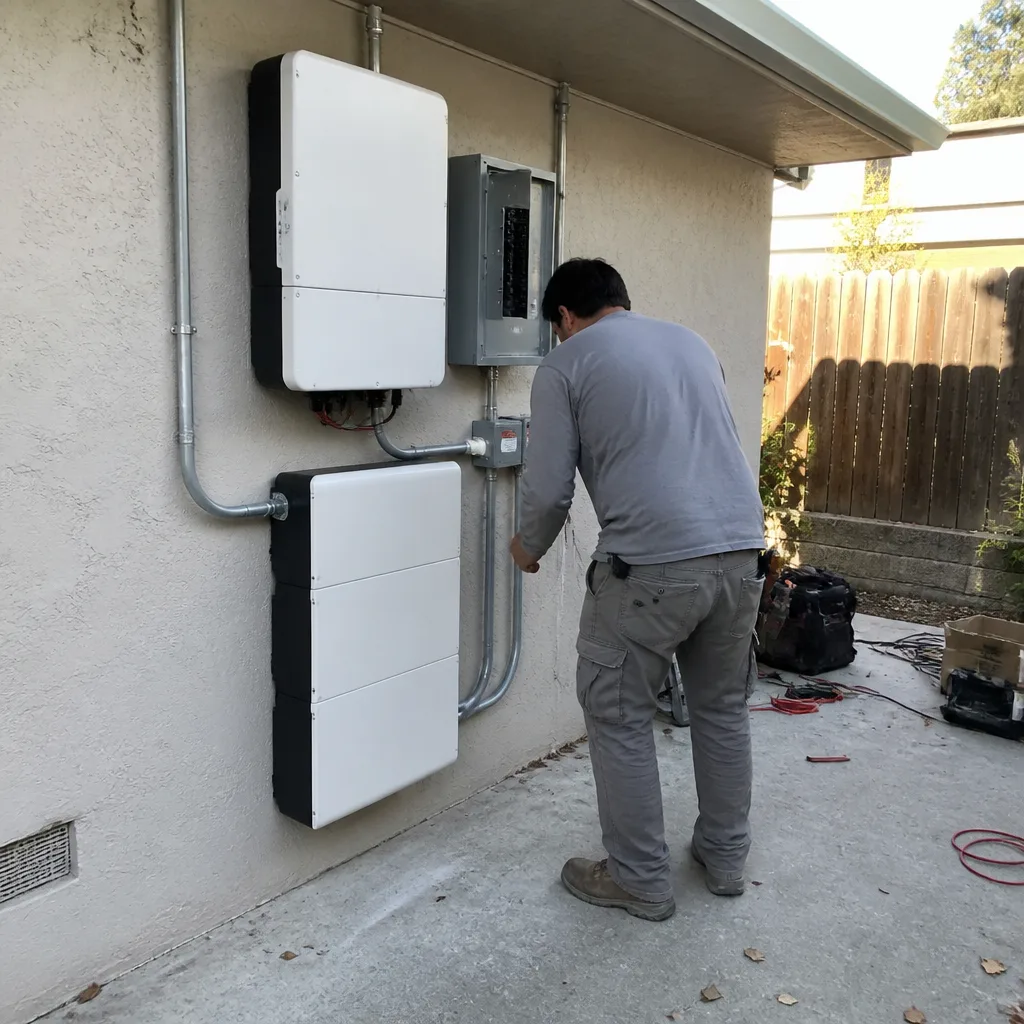 After
After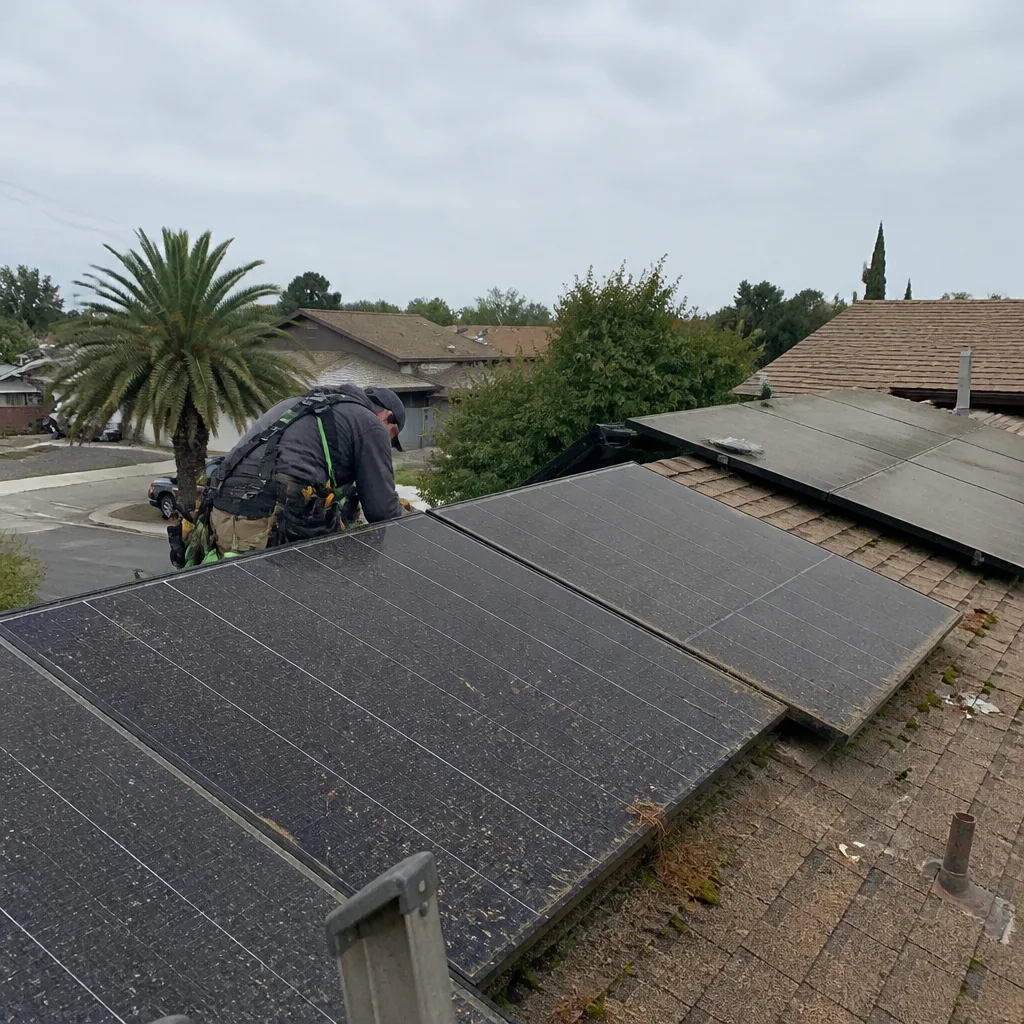 Before
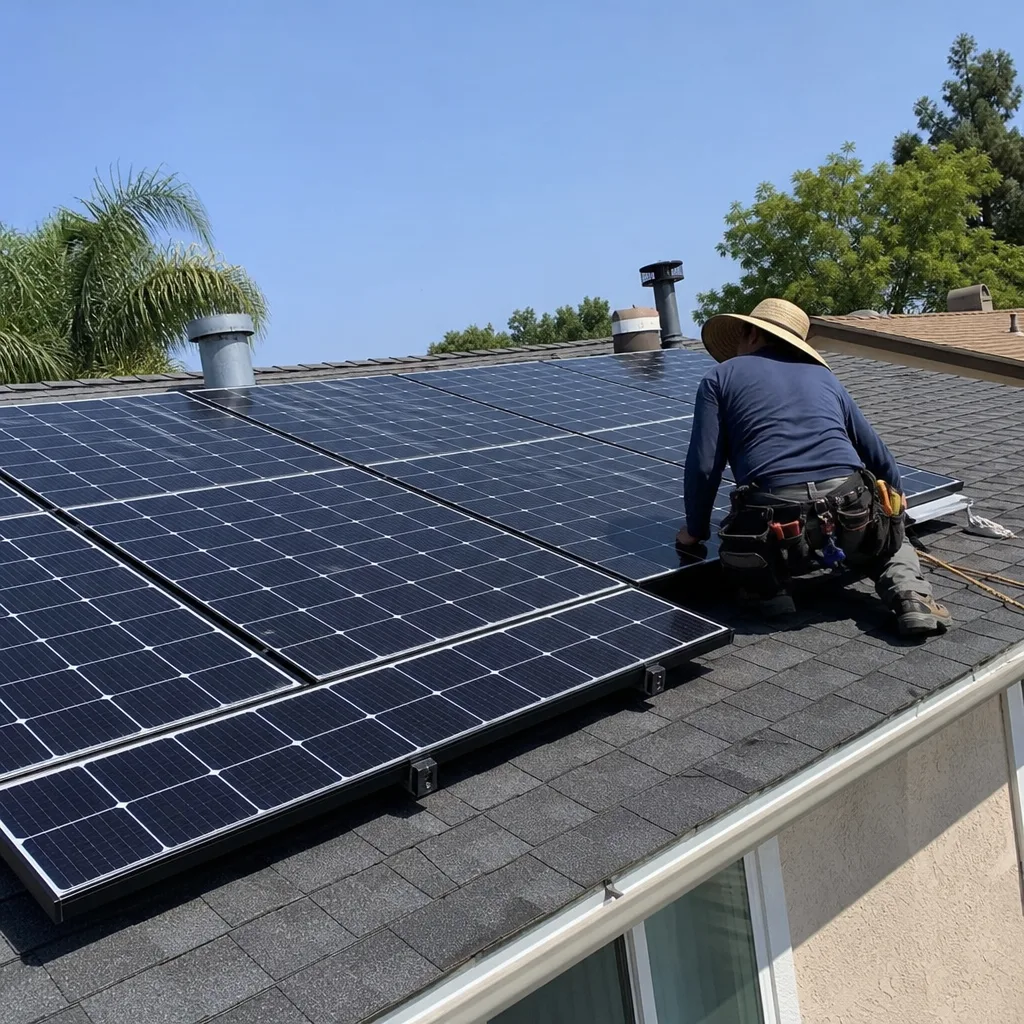 After
After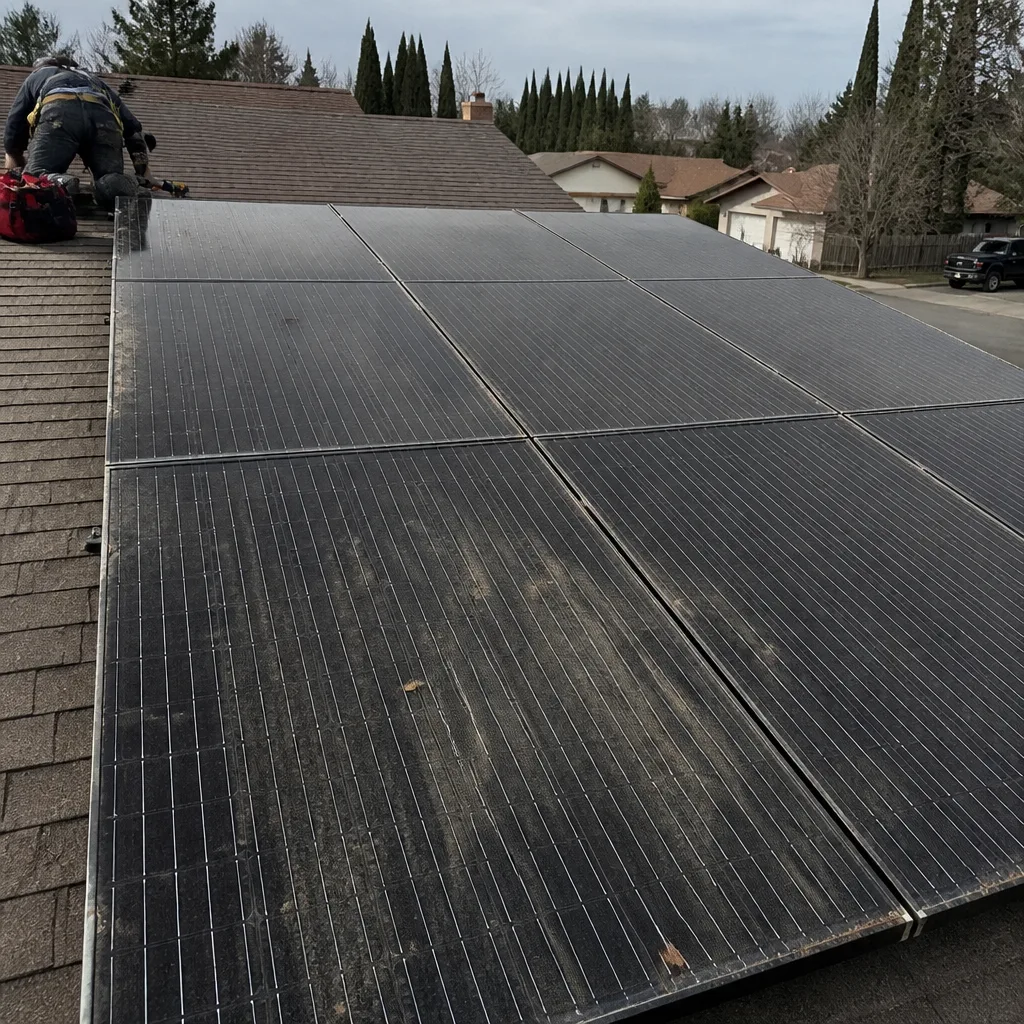 Before
 After
AfterFast, Reliable Solar Panel Cleaning Across Hanford
Solar panel cleaning in Hanford isn’t a once-a-year nicety. It’s how you protect a system that the San Joaquin Valley spends six months trying to bury under dairy dust, cottonfield debris, and the mineral film tule fog leaves behind. Our Solar Panel Cleaning team works the 93230 and 93232 ZIP codes year-round, and we schedule most Hanford visits within 48 to 72 hours. Call (877) 550-6892 and a live person picks up. No ticket queue, no call center in another state.
Why Gus’s Solar Is Hanford’s Preferred Solar Panel Cleaning Company
Gus Petrakis put his name on this company in 2011 and has kept a published address, a license number, and a direct phone line ever since. That matters in Hanford, where a lot of folks got burned by an out-of-state installer that quoted one number on the phone and another at the door. We don’t do that. The price we quote is the price you pay, and nobody is going to ask you to sign before you’ve had time to think.
Background-checked, uniformed technicians do the work. Gus’s own crew, not a sub. When something isn’t right, one call brings him back. The 90-Day Done Right Promise is in writing on every job. If the cleaning doesn’t hold up, or a streak develops, or you see production drift again within three months, we return and make it right.
We also answer the phone 24/7. A live person, not a voicemail. If your inverter throws a fault at 6 a.m. because a bird built a home under your array, you’ll talk to a human who can send someone to Hanford that same day.
Our Solar Panel Cleaning Services in Hanford
Residential Panel Cleaning
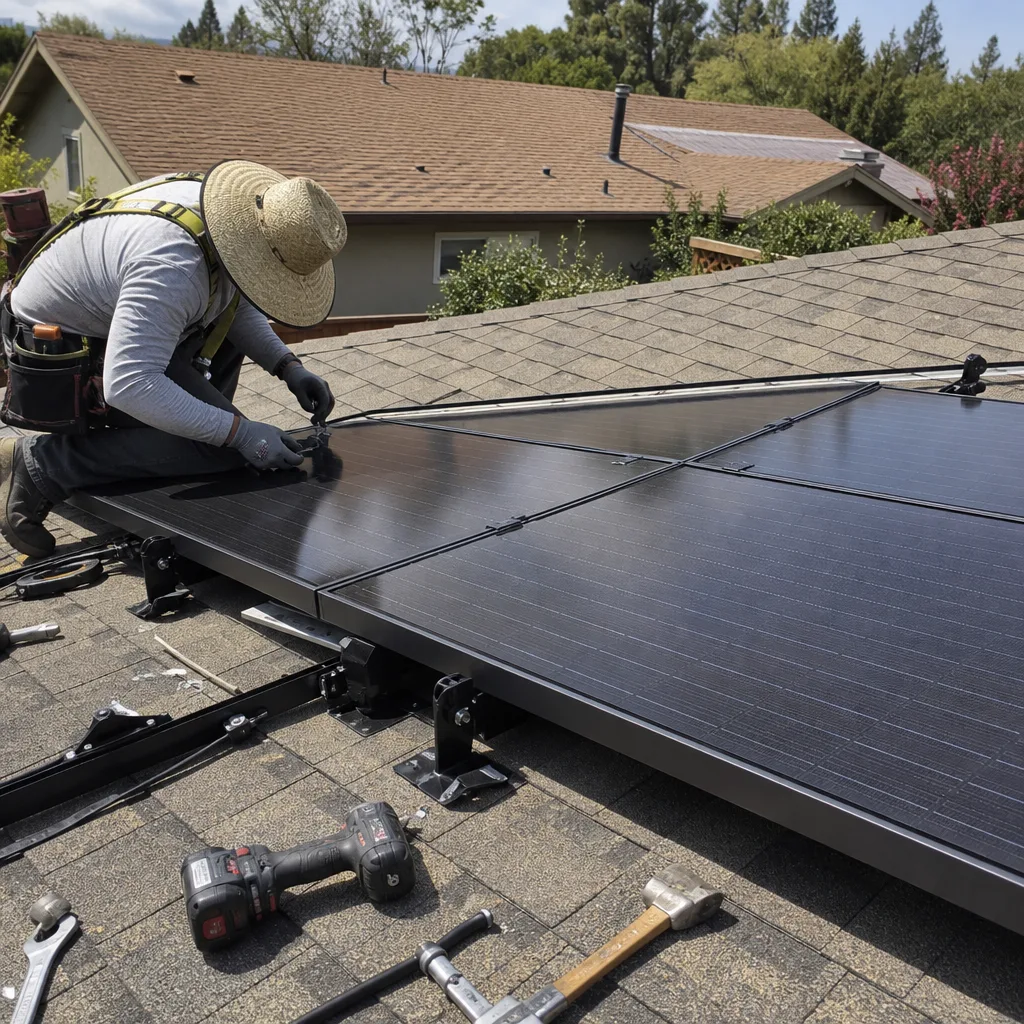
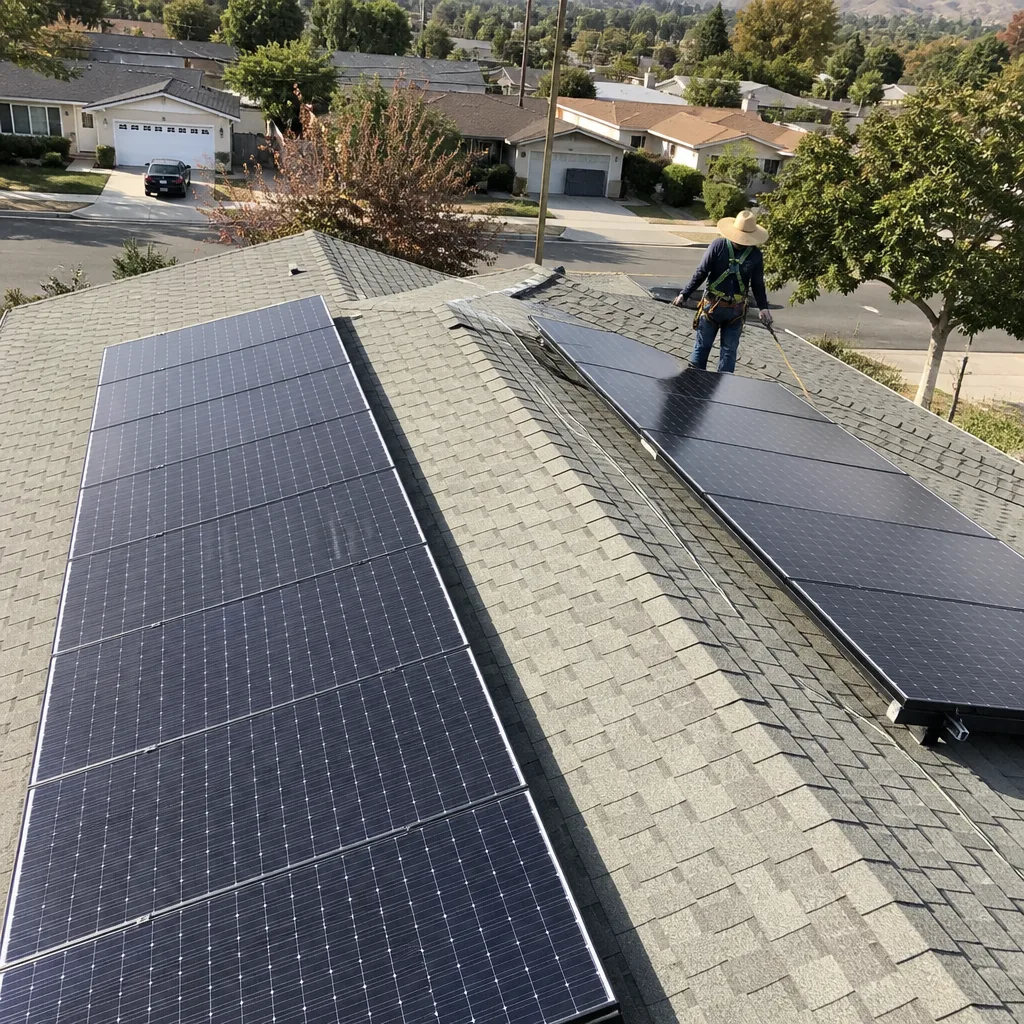
Most Hanford homes sit on single-story ranch-style lots built between the 1960s and 1990s. Low-pitch gable rooflines are easy on our crew but hard on your glass, because dust settles and stays. We use a soft-water rinse followed by a microfiber scrub. No pressure washers. No abrasive brushes. High pressure can etch glass and void manufacturer warranties, and on a 1970s roof near Hidden Valley Park, the last thing you want is water driven under aging flashing.
A typical residential cleaning in Hanford runs $150 to $280 for a system up to 30 panels, depending on roof pitch, accessibility, and how much crust has built up. Heavily soiled arrays with bird droppings or baked-on agricultural dust can run $300 to $400 when we need extra dwell time and multiple rinse passes.
Commercial Array Cleaning
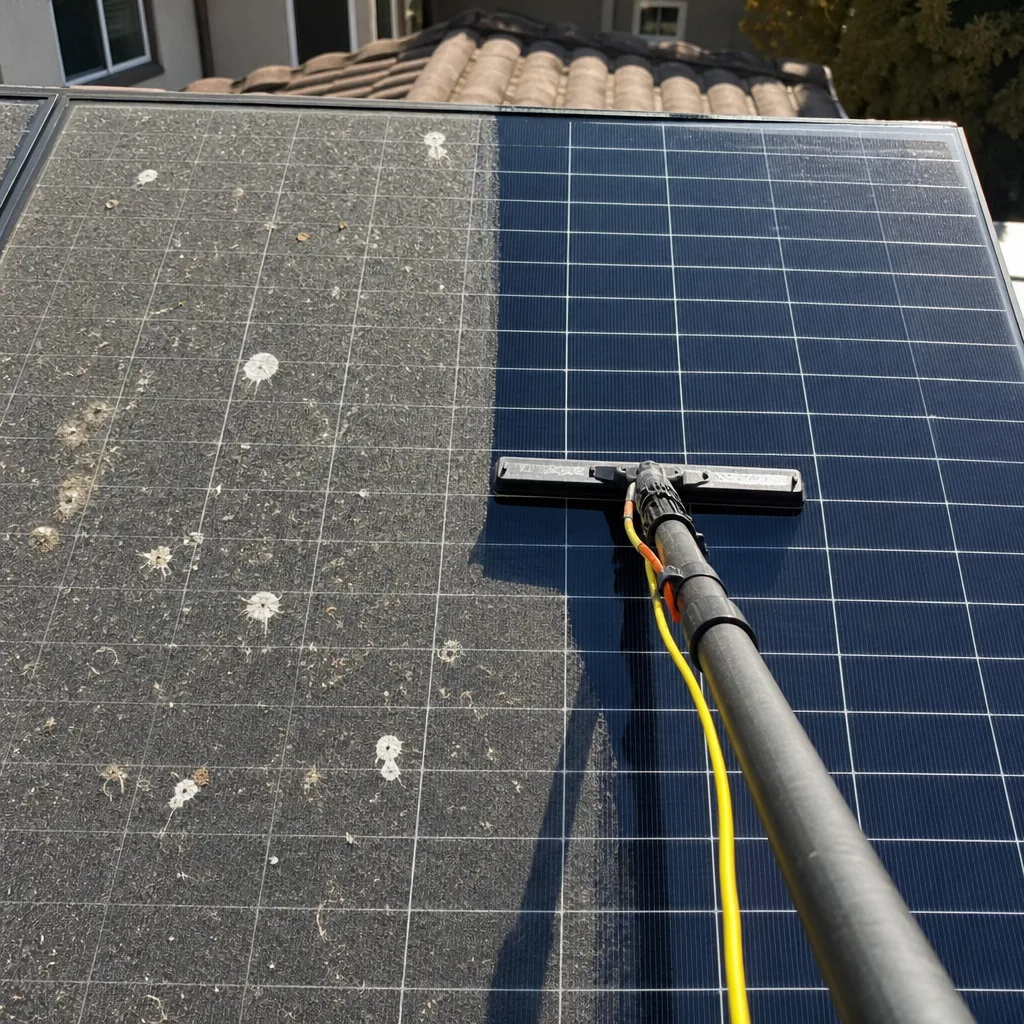
Hanford’s commercial rooftops along 12th Avenue, Lacey Boulevard, and the industrial corridors near the rail line collect the same dust but on a much larger plane. We clean flat-roof commercial arrays with soft-bristle brushes on extendable poles and RO-filtered water, which prevents the mineral streaking that Kings County tap water leaves on glass. Commercial pricing runs $0.08 to $0.15 per watt of installed nameplate capacity for a standard single-story roof, with a minimum service call of $450. That includes a pre-clean production baseline pulled from the inverter or monitoring portal, so you can see exactly what the cleaning bought you.
Bird & Critter Guard Installation
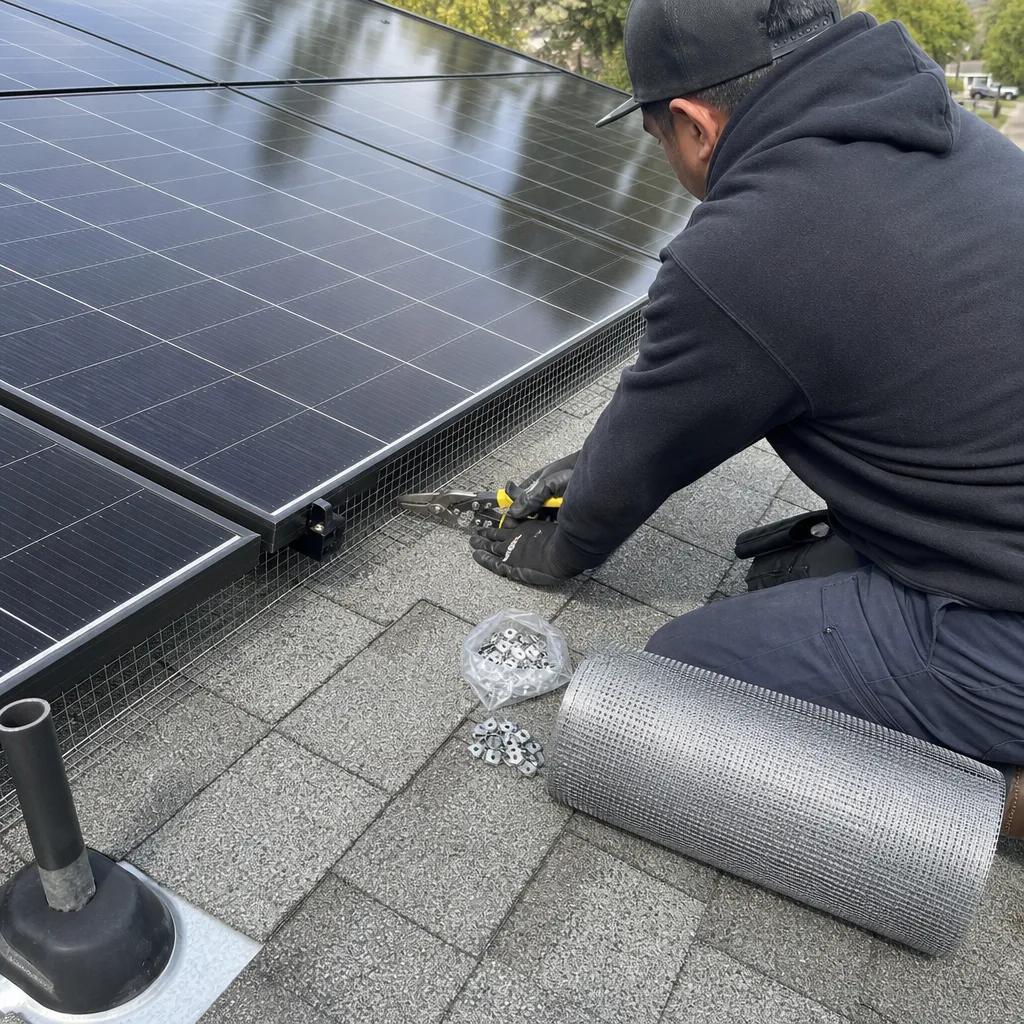
Pigeons, starlings, and ground squirrels love the space between your panels and the roof deck. Under-array nesting is a real problem on older Hanford homes with low-pitch gable roofs, where racking sits close to the shingles and creates a shaded, dry tunnel. Birds bring twigs, droppings, and debris that obstruct drainage and create hot spots on the cells behind the nest. That accelerates degradation beyond the manufacturer’s warranty baseline.
We install galvanized wire mesh around the array perimeter, fastened to the racking, not the roof. On a typical 20-panel Hanford system, bird and critter guard installation runs $20 to $35 per linear foot, or roughly $600 to $1,100 for a complete perimeter job, depending on the array layout and roof access. We do this alongside cleaning to catch the problem in one visit.
Debris & Soiling Removal
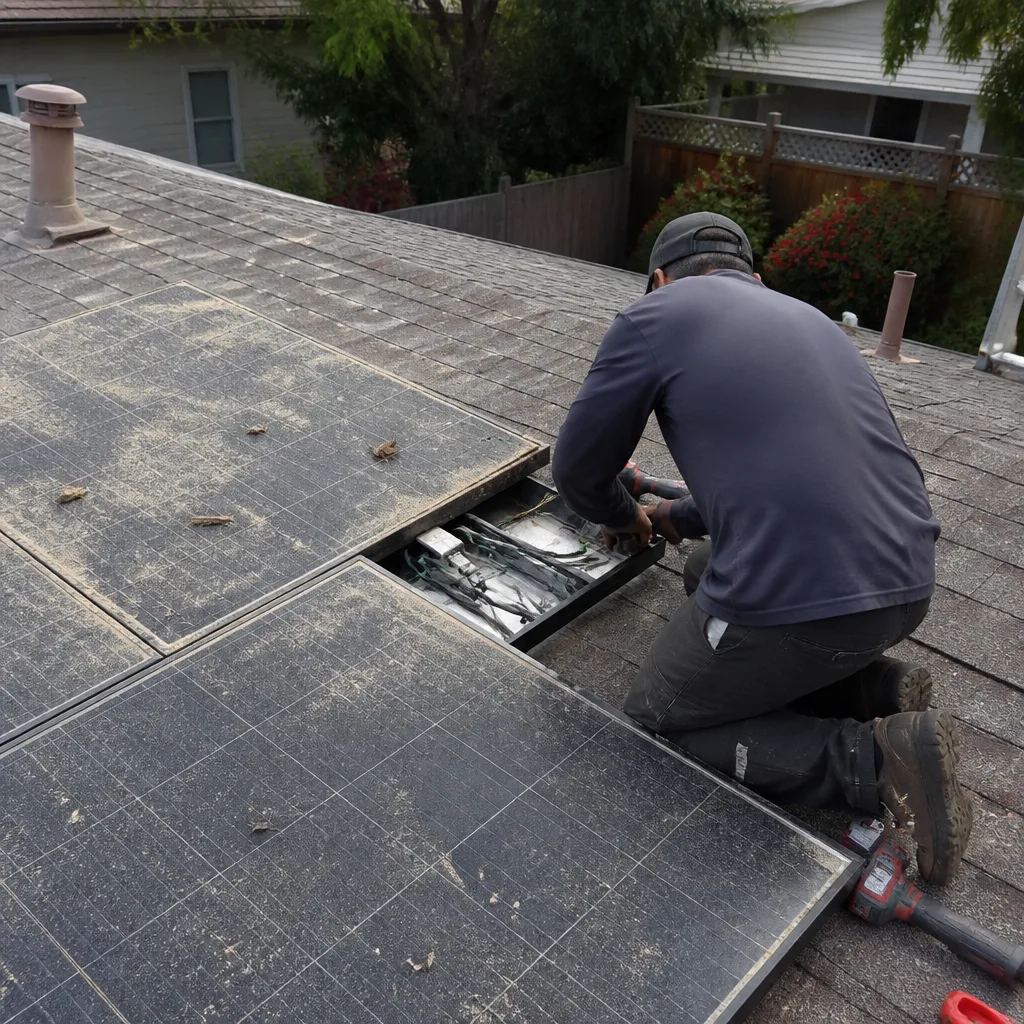
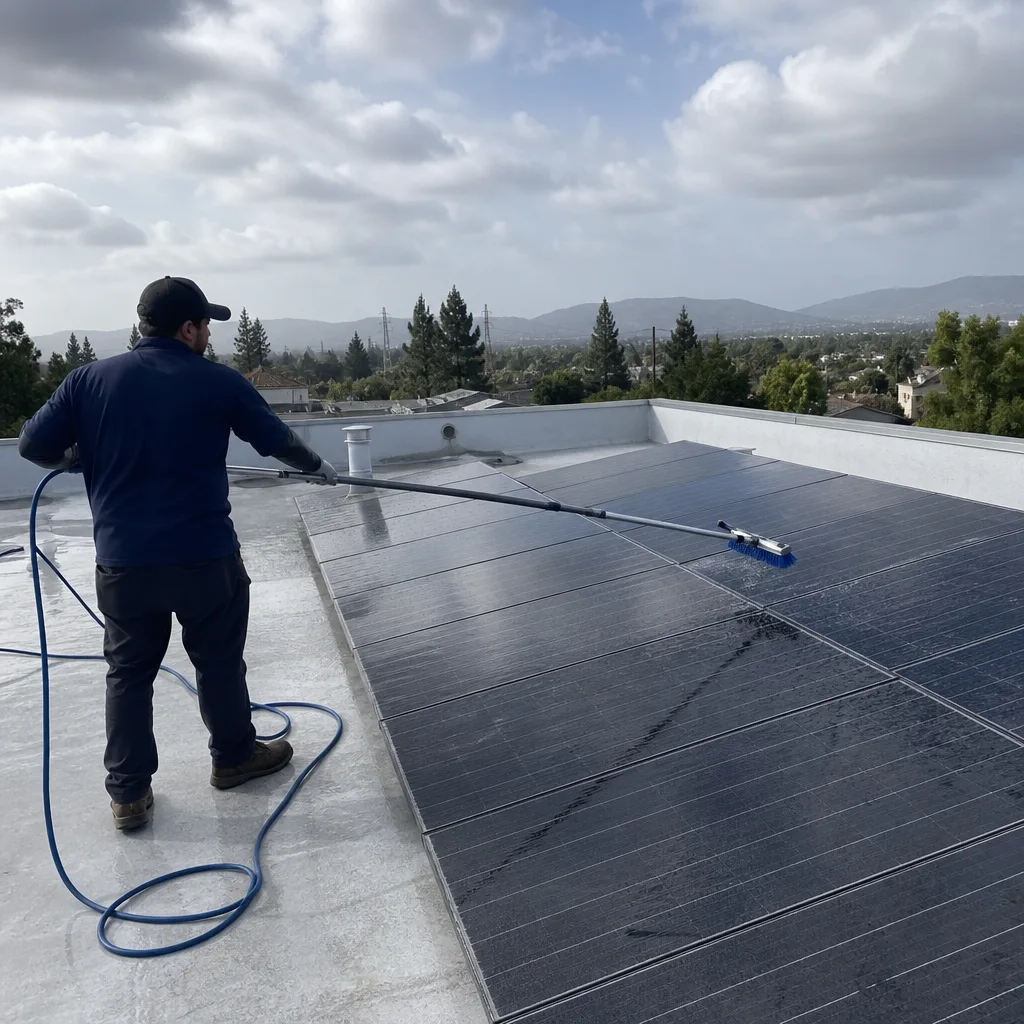
Kings County doesn’t get enough rain between April and October to naturally rinse your panels. What you get instead is a cycle: dew or fog wets the dust, the dust bakes into a crust, and the next layer sticks to that. After a few weeks, you’re losing 10 to 15 percent of potential production. We remove that crust with a low-pressure, RO-filtered wash and hand agitation. Then we check every panel for micro-cracking, delamination, and seal integrity while we’re up there. The cleaning is one thing. The inspection is what catches a failing diode or a module that’s drifting before it takes your whole string down.
What happens when you call
- 1
A real person answersNo phone trees - you reach a local pro.
- 2
You get an upfront price rangeHonest numbers before anyone is dispatched.
- 3
A background-checked tech heads outLicensed & insured, dispatched right away.
- 4
You approve before work beginsNothing starts until you say go.
Common Solar Panel Cleaning Problems We See in Hanford Homes
- Baked-on dairy dust and crop debris. Hanford’s agricultural perimeter means airborne dust from dairies and row-crop operations settles on glass daily. After fog or dew wets it, the layer hardens. A garden hose won’t touch it, and scrubbing it dry will scratch the glass.
- Tule fog mineral film. Between November and February, valley-floor fog can sit for days or weeks. It leaves a fine mineral residue that blocks light even when panels look clean from the ground. Most coastal cleaning schedules completely miss this, because the phenomenon doesn’t exist over there.
- Bird activity under low-pitch racking. Older ranch homes in the 93230 ZIP have low-slope rooflines that put racking close to the shingles. That’s an open invitation for pigeons and starlings. Nests block airflow, droppings etch glass over time, and the resulting hot spots can push a module past its degradation warranty early.
- Inverter-side soiling mismatch. We regularly see Hanford systems where the monitoring portal shows the inverter clipping or underreporting, and the homeowner assumes the hardware is failing. A quick clean restores the expected current. It’s the cheapest fix nobody tries first.
Pricing for Solar Panel Cleaning in Hanford, CA
A standard residential panel cleaning in Hanford runs $150 to $280 for most systems up to 30 panels. Larger arrays or heavily crusted panels push that to $300 to $400. Commercial flat-roof work runs $0.08 to $0.15 per watt, with a $450 minimum. Bird and critter guard installation runs $20 to $35 per linear foot. Every quote is free, and the number we give you is the number on the invoice. Call (877) 550-6892 and we’ll walk through your roof details, panel count, and what we expect to find based on where in Hanford you live.
Trusted Brands We Service in Hanford
We clean and inspect every panel manufacturer that’s common in the Hanford market, including Panasonic, Canadian Solar, JinkoSolar, and FranklinWH paired systems. We don’t stock parts for one brand only. If a cleaning turns up a failing module or a bad optimizer on an older Enphase or SolarEdge setup, we can order the replacement that same week and return to install it. Most Hanford customers who call us for cleaning also use us for repair work later, because they don’t want to explain their system to a stranger twice.
We Also Serve Cities Near Hanford
Our Hanford scheduling covers the city proper plus the surrounding Kings County communities. If you’re in Lemoore Station, Kingsburg, Lemoore, or Selma, the same crew that works Hanford handles your cleaning, and the scheduling stays tight because we batch routes by ZIP. Call (877) 550-6892 and we’ll tell you exactly when we can be there.
Serving Hanford, CA - Our Local Coverage Area
We’re based in the Hanford area and know this community well. Use the map below to see our service coverage - if you’re nearby, we can almost certainly help.
FAQs - Solar Panel Cleaning in Hanford
Twice a year for most Hanford residential systems, usually once in late spring after the fog lifts and once in early fall before the wet season starts. Systems facing active dairy or row-crop operations within a half mile may need three or four cleanings a year. A free production audit will tell you where your soiling rate falls. Call (877) 550-6892 and we’ll pull your monitoring data and give you an honest schedule.
Yes. The fog carries fine mineral particles that settle as a thin film on panel glass. It doesn’t rinse off with a hose and will slowly reduce output through the winter if left alone. Our RO-filtered wash breaks the film down without leaving tap-water mineral streaks. If you’ve been seeing lower winter production even on bright days, this is the most common cause we fix in Hanford.
Yes. Nests block airflow under the array, and the resulting heat buildup raises the module temperature past what the inverter’s MPPT algorithms expect. Droppings on the glass also create shaded cells, which pull down the entire string’s output. We recommend adding perimeter critter guard at the same time as your cleaning if you’ve seen birds around the roof. The fix is permanent.
Usually, yes. If your array has been running 10 to 15 percent below its model due to Hanford’s dust and fog film, a proper cleaning restores most of that loss. The effect shows up on your next billing cycle as higher solar offset, which reduces what you owe at true-up. We don’t oversell this. The actual improvement depends on how dirty the glass was and how many hours of good sun you get after the cleaning.
Look at three things. First, check your monitoring app for a gap between the inverter’s current output and what a clear, cool day should produce. Second, look at the glass from the ground at an angle, if you can, and see whether it looks hazy or tan instead of dark. Third, just call us. We’ll pull your production history, compare it to a local irradiance baseline for the 93230 ZIP, and tell you over the phone whether a cleaning is worth the trip. The consult is free at (877) 550-6892.
When to Clean, Not Replace: A Hanford Reality Check
Hanford’s fog-dust cycle is the single biggest reason local systems underperform, and it’s also the least understood. The same panel array in Fresno or Visalia doesn’t see the same soiling profile. They get heat, but they don’t get the wet-crust cycle that Kings County’s dairies and row crops produce. This means generic cleaning advice, written for generic California, doesn’t apply here. If your system was sized with a coastal or suburban soiling model, you’re already leaving production on the table.
Our crew cleaned a 24-panel array on a 1970s ranch home in the 93230 ZIP near Hidden Valley Park. The homeowner’s production estimate was consistently 12 percent below the inverter’s logged output, and our tech found a thick layer of dairy dust and cottonfield debris baked onto the glass. After a soft-water rinse and microfiber scrub, the system’s daily kWh offset jumped back to within 2 percent of the original azimuth-adjusted model. That’s not a sales pitch. That’s what Hanford dirt does, and what a proper cleaning undoes.
Gus’s Solar has been doing this since 2011, and we’re not a pop-up crew. The L.O.C.A.L. values are on every quote we write: Local roots, On time, Community first, Accountable, Loyal. If you’re in the 93230 or 93232 ZIP and think your panels have been working too hard for too little output, call (877) 550-6892. Free estimate, honest numbers, and a crew that knows exactly what Kings County puts on your glass.
Written by Gus Petrakis, Owner at Gus’s Solar, serving Hanford and Kings County since 2011.