
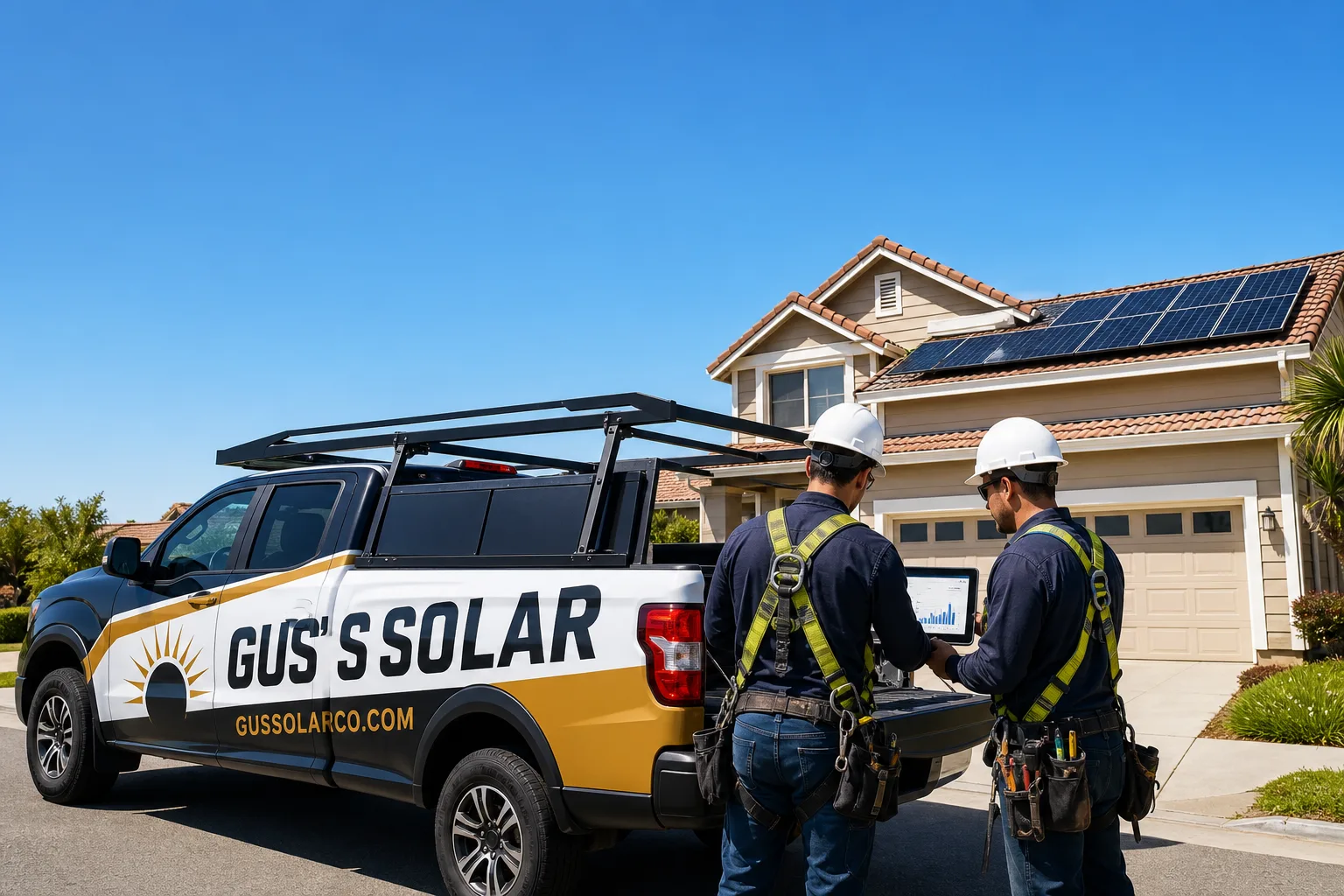
Free bill analysis - bring a power bill, get the production math for your actual roof, panel brands like Qcells and REC compared side by side
If the pitch starts at your door and ends with "sign tonight for the special," sleep on it. The sun will still be there tomorrow; so will we.
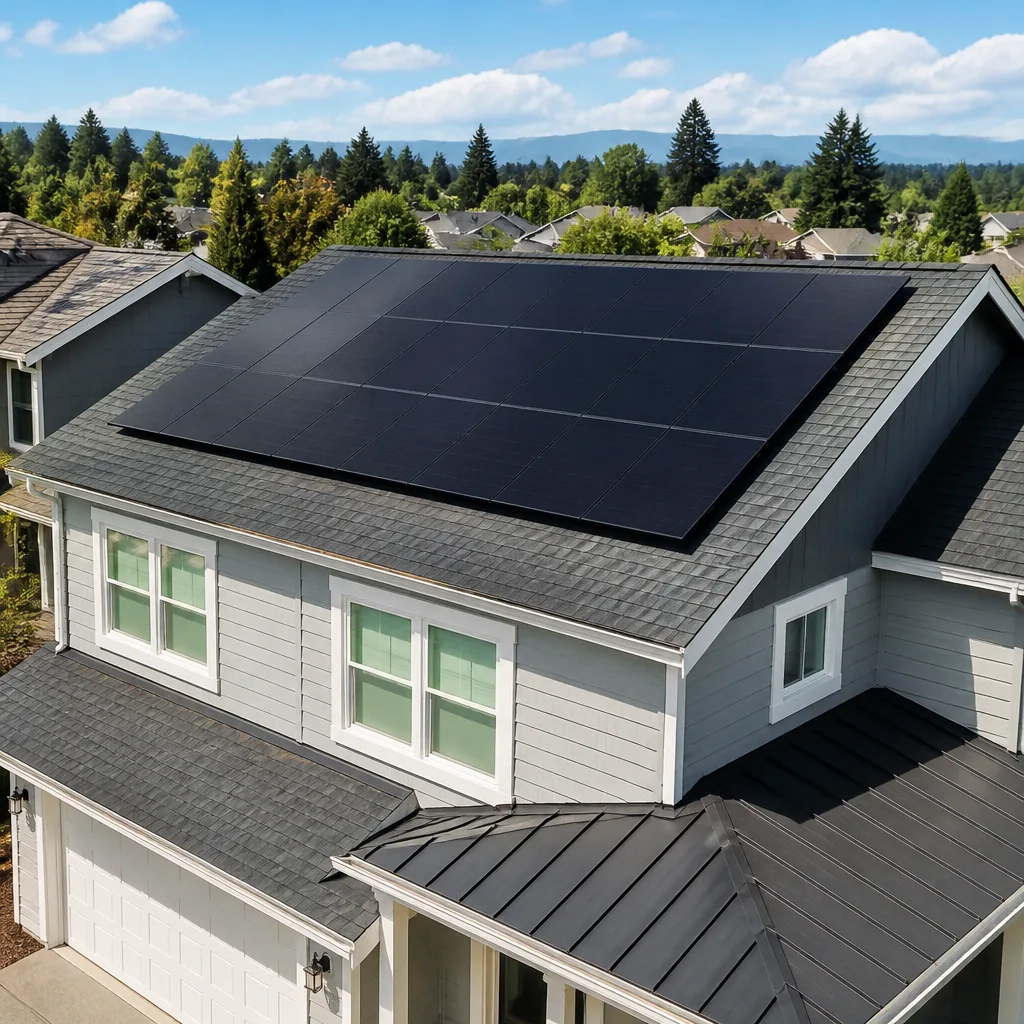
 Before
 After
After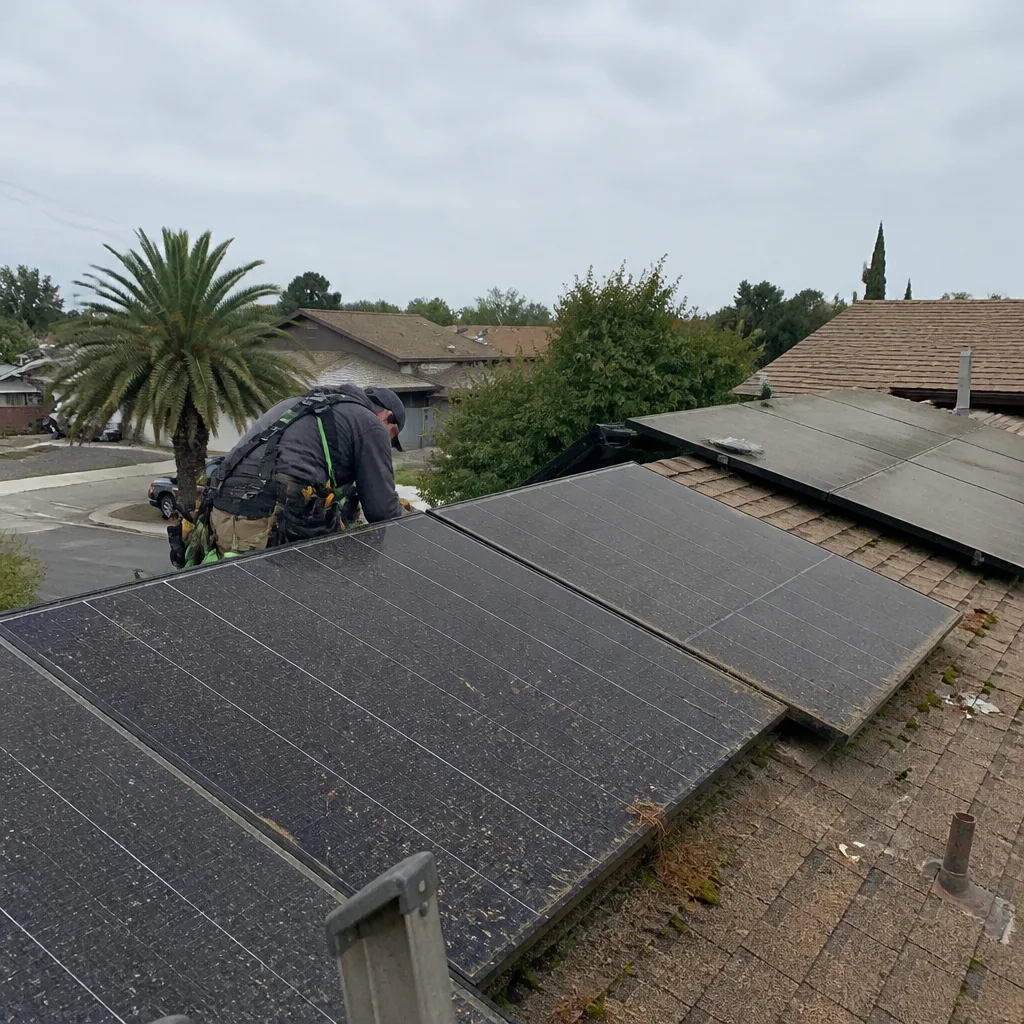 Before
 After
After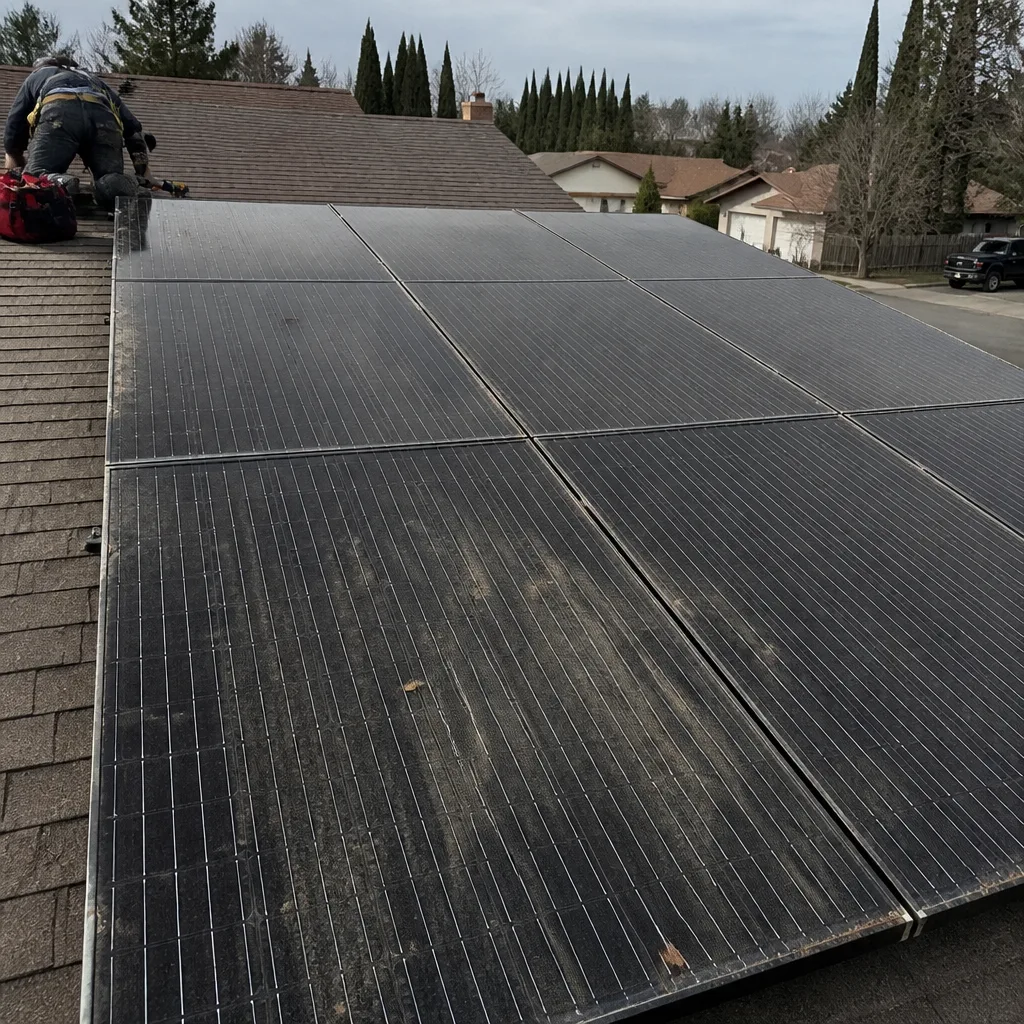 Before
 After
AfterFast, Reliable Solar Panel Cleaning Across Bakersfield
Solar panel cleaning in Bakersfield typically runs $150 to $325 for a standard residential array, and most jobs are completed in under two hours. If your system’s monitoring app shows output dropping while the weather stays sunny, the problem is almost never the panels themselves. It’s the dirt. Bakersfield’s particular mix of oil-field dust, harvest particulate, and inversion-trapped smog cakes onto glass faster than almost anywhere else in California, and we’re the crew that gets it off. Call Gus’s Solar at (877) 550-6892 and we’ll have someone out to your neighborhood within 48 hours, usually sooner.
Why Gus’s Solar Is Bakersfield’s Preferred Solar Panel Cleaning Company
We’re not a pop-up cleaning service that chases hail storms. Gus Petrakis founded this company in 2011, put his own name on the door, and still answers the phone himself. When you call about Solar Panel Cleaning, you talk to a person who knows what a caliche crust does to tempered glass and why August in the 93311 ZIP is the wrong time to skip a rinse. Our crew has cleaned panels on stucco tract homes in the southwest, 1940s bungalows in central Bakersfield, and commercial arrays out by the Kern River fields. The phone rings, a live person answers, and you get a straight answer about whether your soiling is worth the service call.
Bakersfield homeowners tell us the same thing over and over: a national outfit installed their system, took the check, and vanished. Then the output dropped and nobody called back. That’s not how we work. Every job carries the 90-Day Done Right Promise in writing. If the panels aren’t clean or something got missed, Gus comes back and makes it right. No ticket queue, no subcontracted crew you’ve never heard of. Background-checked, uniformed technicians show up in a marked truck, and they’re the same people next time you call.
Our Bakersfield customers also get the standing offers we’ve kept in place for years: $40 off any repair over $200, a free second opinion on any written estimate, no trip charge inside our own county, and a 10% senior and veteran discount that never expires. If you’ve got a written quote from someone else, bring it to us. We’ll tell you if it’s fair. That’s the kind of shop we run. One call brings Gus back, every time.
Our Solar Panel Cleaning Services in Bakersfield
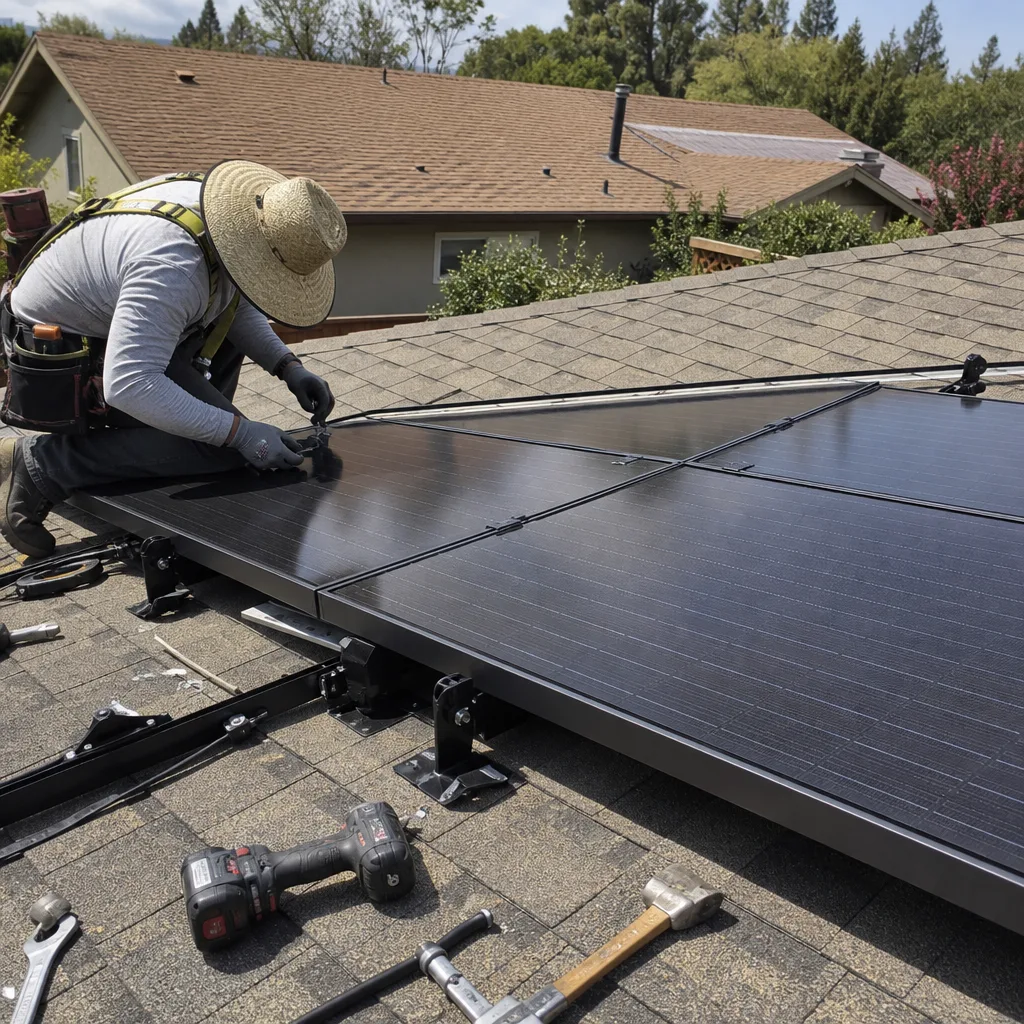
Residential Panel Cleaning
A typical residential array in Bakersfield, something in the 6 to 10 kW range on a south-facing stucco tract home, costs between $150 and $275 to clean properly. We use soft-bristle brushes and deionized water, never hard tap water from your outside spigot. Hard water on hot panels leaves mineral streaks that actually attract more dust, and in Bakersfield’s caliche-heavy air that means you’re cleaning twice as often for half the benefit. We hand-dry the panels after the rinse so you don’t get spotting, and we check the racking and wiring while we’re up there.
Commercial Array Cleaning
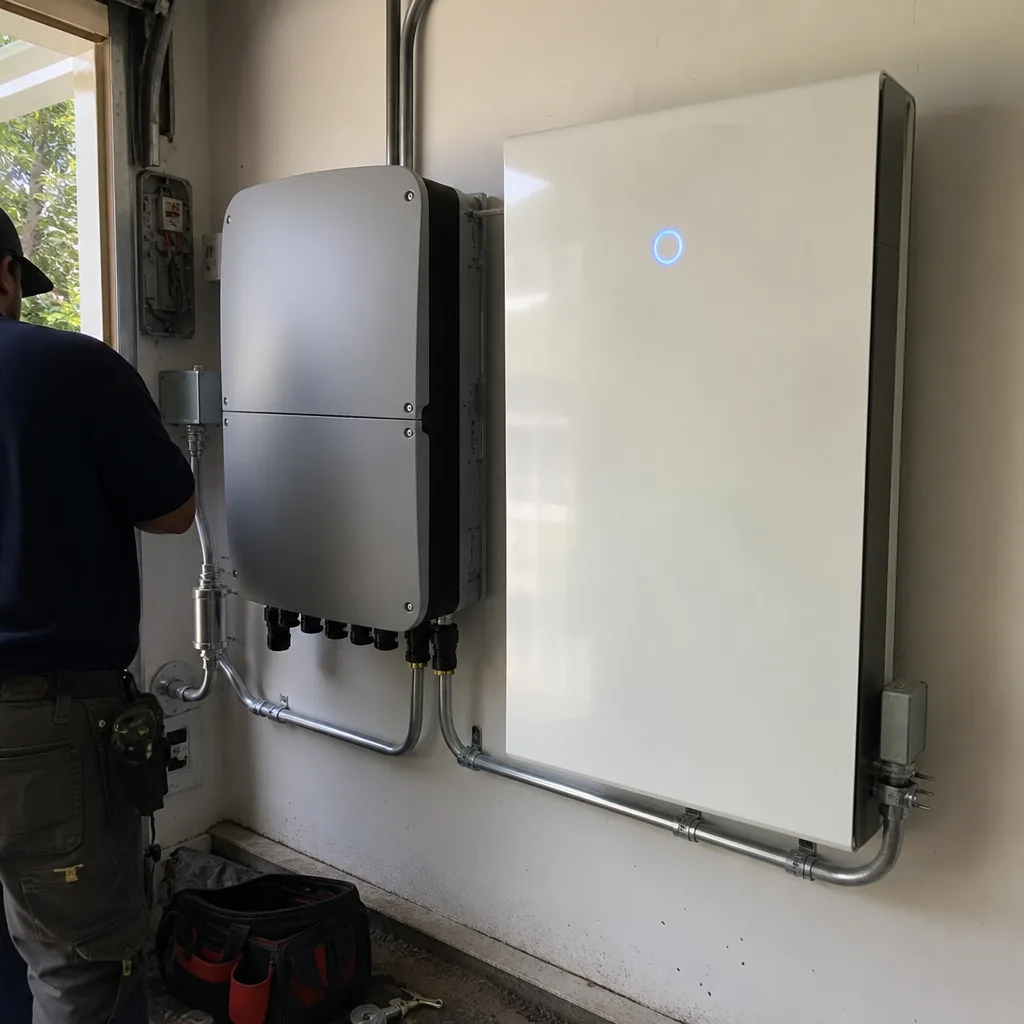
Commercial arrays in Bakersfield, whether on warehouse rooftops near the 99 or ground-mount systems along the Kern River fields, run $1.50 to $3.50 per panel depending on access and soiling severity. These bigger systems take a harder hit from harvest dust and oil-field emissions because there’s usually nobody watching the monitoring app daily. We schedule commercial cleans around your operating hours and can put you on a quarterly or semi-annual plan so the array stops silently losing output between visits.
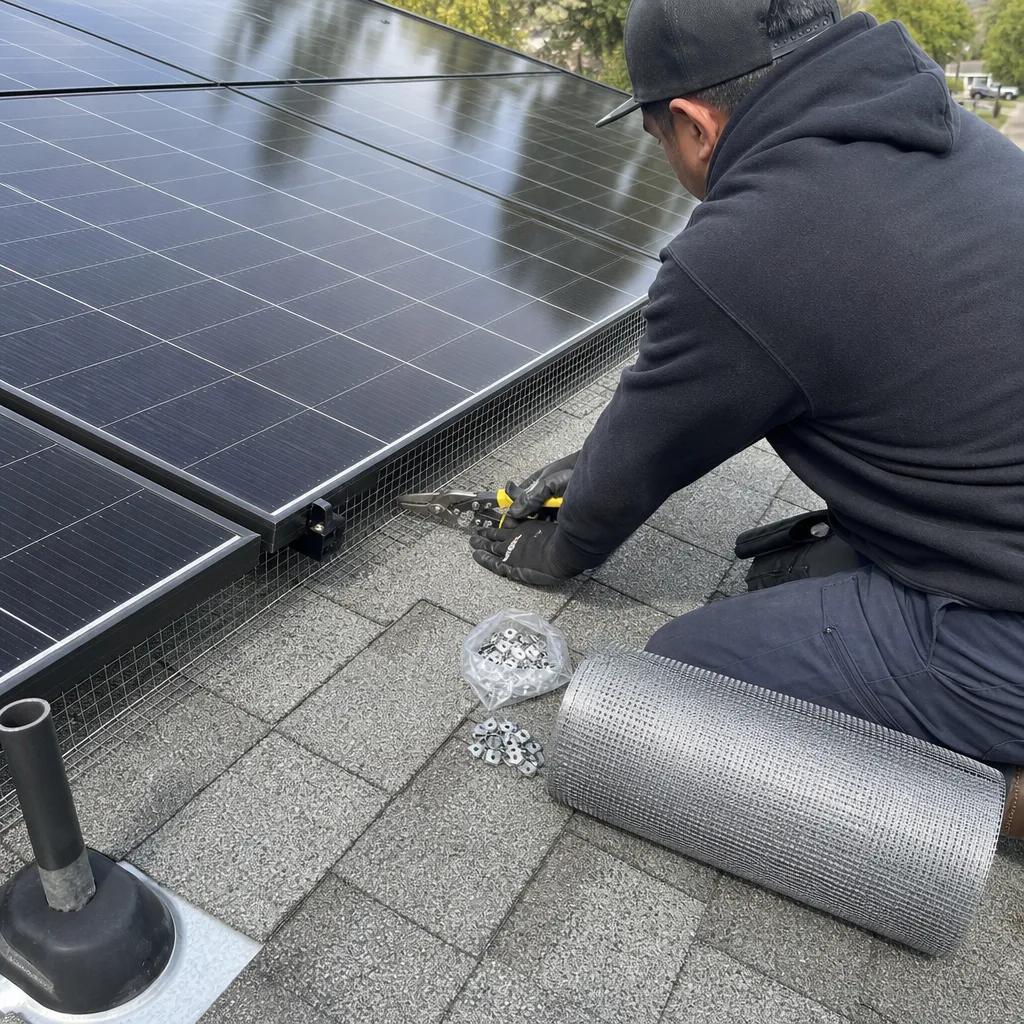
Bird and Critter Guard Installation
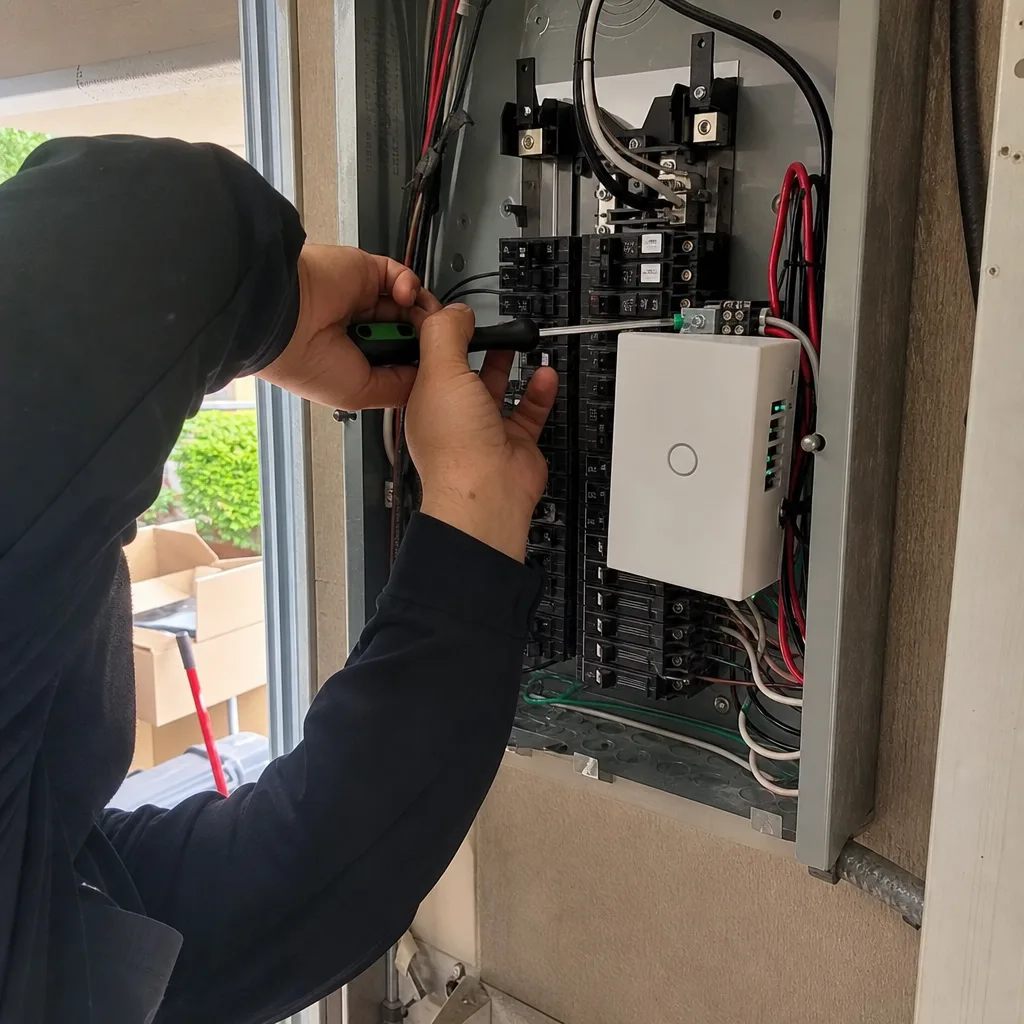
Pigeons love the space under rooftop panels, and Bakersfield’s older neighborhoods with mature trees, especially around 93301 and 93305, have real pigeon pressure. We install critter guard along the panel perimeter for $450 to $800 on a typical residential array, using galvanized steel mesh that keeps birds out without trapping heat. If you’re hearing cooing under your panels or seeing droppings on the concrete below, the time to act is before they build a nest and you end up paying for both removal and guard installation.
Debris and Soiling Removal
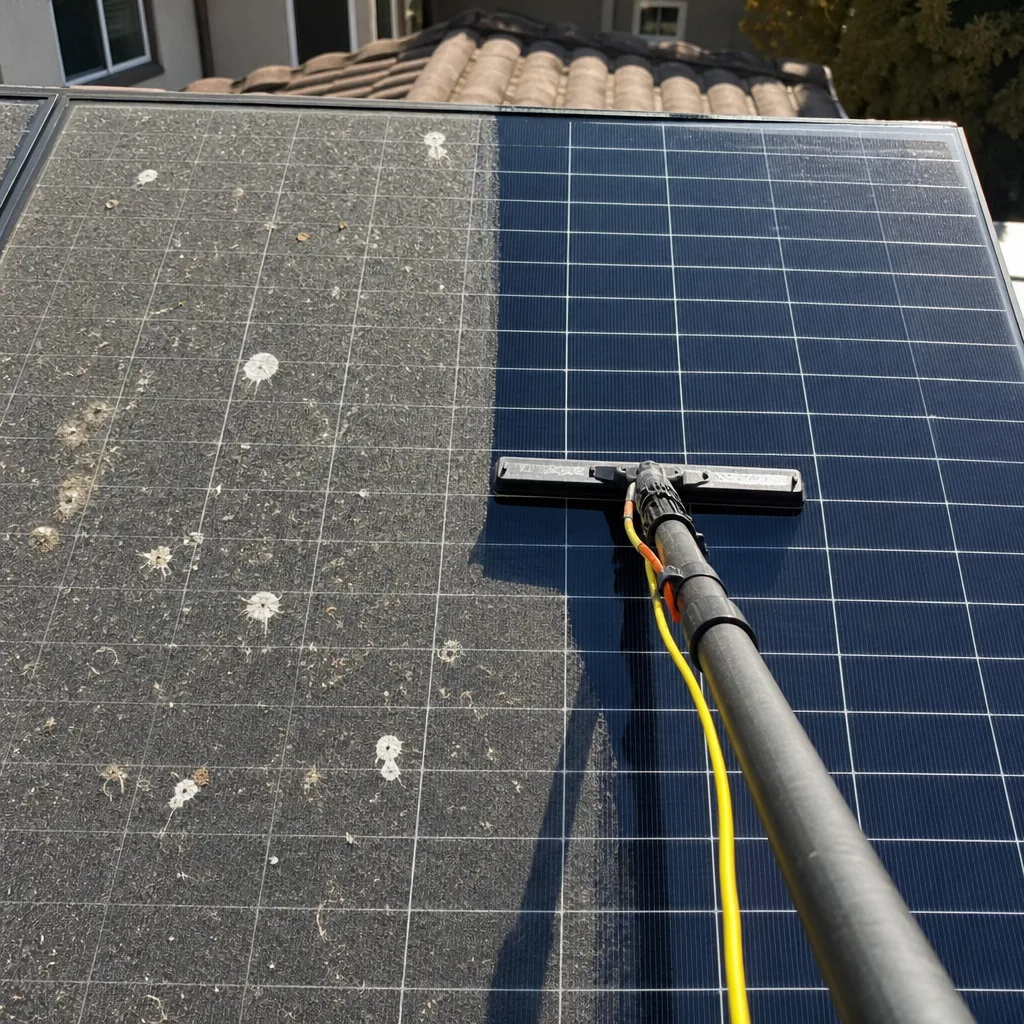
Bakersfield’s seasonal inversions trap agricultural dust, oil-field particulate, and Valley haze at ground level for days at a stretch. That grime doesn’t rinse off with rain because the Valley gets so little of it. A debris and soiling removal visit, typically $120 to $200, includes clearing leaves and twigs from under the array, lifting the visible grime with a deionized rinse, and a production check against your inverter’s logged baseline. If your array is under a pecan or oak that drops debris in fall, ask us about scheduling a post-leaf-drop clean.
What happens when you call
- 1
A real person answersNo phone trees - you reach a local pro.
- 2
You get an upfront price rangeHonest numbers before anyone is dispatched.
- 3
A background-checked tech heads outLicensed & insured, dispatched right away.
- 4
You approve before work beginsNothing starts until you say go.
Trusted Brands We Service in Bakersfield
We clean and inspect panels from every major manufacturer, and we see a lot of REC, Qcells, and SunPower arrays across Bakersfield rooftops. Panasonic systems show up regularly on the newer southwest tract homes. The brand matters less than the cleaning method: all of these panels get the same soft-brush, deionized rinse, and hand-dry treatment regardless of what’s printed on the frame. If a panel has a microcrack or hotspot we didn’t cause, we’ll tell you and recommend whether to file a warranty claim or replace it. We don’t upcharge for brand names and we don’t upsell coatings that don’t work in this climate.
Common Solar Panel Cleaning Problems We See in Bakersfield Homes
- Pre-harvest neglect leads to post-harvest regret. Skip the clean in August and September’s ag dust bakes onto panels during 110°F inversions. By late September, that gray film is a crust that soft-brush work alone won’t fully remove.
- Hard water mineral streaking from hoses and sprinklers. Bakersfield’s municipal water is hard, and spraying panels with a garden hose leaves calcium deposits that become secondary soil traps. Deionized water is the difference between a clean that lasts and a clean that fails in six weeks.
- Inversion-season crust on west-facing arrays. The 93311 and 93309 neighborhoods have large, relatively unshaded west-facing panels that catch afternoon sun during peak SCE rates. When those panels are dirty, you lose output at the exact moment electricity costs the most.
- Monitoring app drops blamed on the installer, not the dirt. We hear it constantly: the system was fine for two years, then output dropped, so the installer must have done something wrong. Most of the time it’s just soiling. Before you blame the equipment, check whether the panels look gray instead of black.
The Bakersfield Soiling Problem: Why Your Panels Lose Output Faster Here
Bakersfield sits where the southern San Joaquin Valley’s oil patch meets California’s worst particulate pollution corridor. That’s not a dig at the city, it’s the working reality of living here and it has a direct effect on your solar production. Oil-field caliche dust blows in from the Kern River fields across the 93308 and 93311 ZIPs. Harvest-season particulate from almond, pistachio, grape, and cotton operations joins it. Then the Valley’s thermal inversions trap all of it at ground level for days, sometimes weeks, during the hottest stretches of the year. The result is a soiling rate that can cut annual output by 15 to 25 percent on a system that never gets cleaned. On a 8 kW array, that’s the difference between a true-up bill you barely notice and one that stings in February.
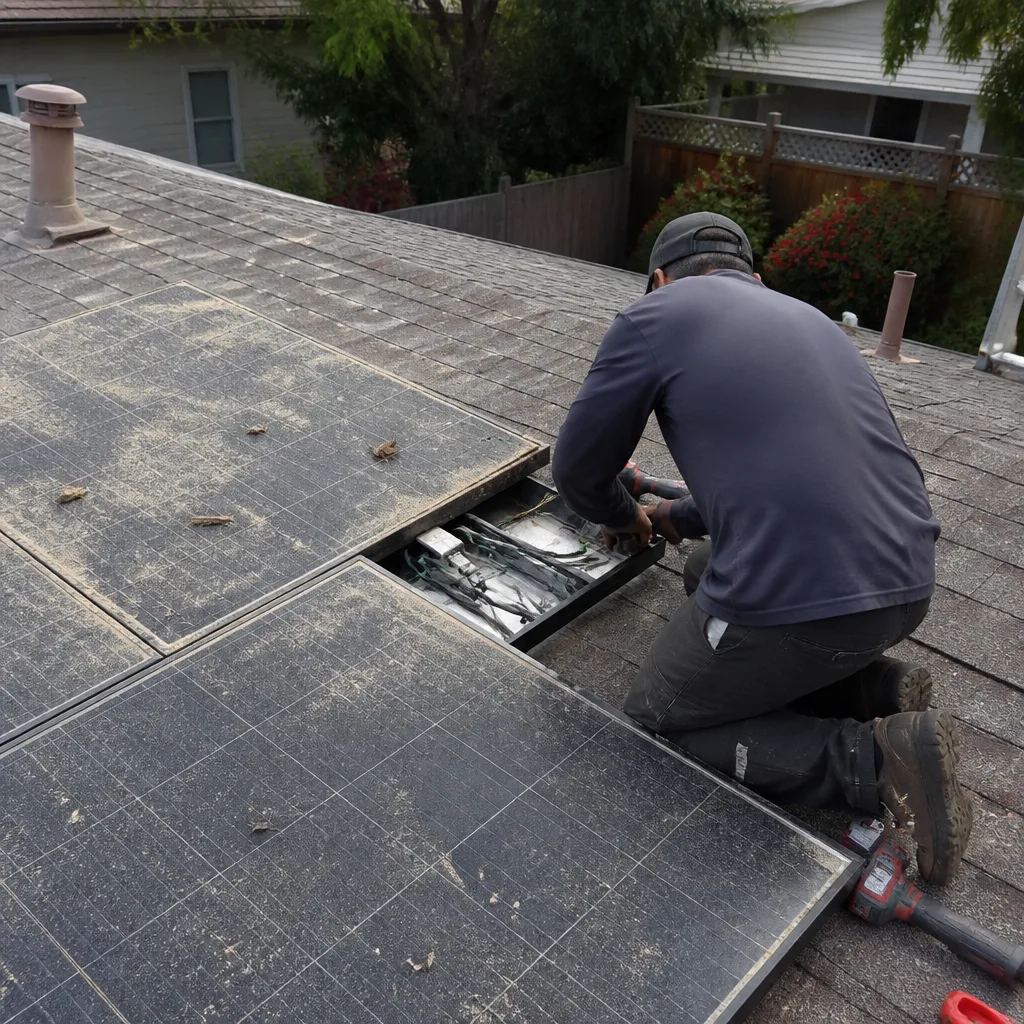
We see one phenomenon in Bakersfield that we almost never encounter in coastal markets: soiling severe enough that the homeowner notices it on the monitoring app before they notice it on the roof. The output curve dips, the array was installed two or three years ago, and the owner assumes something failed. Nine times out of ten, it’s dirt. One time in particular stands out: we cleaned a 2012-era REC array on a stucco tract home in the 93309 ZIP, where the owner’s monitoring app showed a 19 percent drop below the predicted kWh offset. Our techs found a gray caliche crust and harvest dust bonded to the south-facing panels. After a soft-brush deionized rinse and hand-drying, the same afternoon readout recovered 21 percent against the inverter’s logged baseline. We scheduled the next clean for pre-harvest season, and the owner stopped blaming his installer.
This is the information gain that matters for Bakersfield specifically: the oil-field and harvest dust interaction with your production math means semi-annual cleaning is the single biggest non-install factor in whether your system hits its year-one estimate. Panels in San Diego or Fresno don’t face this same combination. In Bakersfield, a semi-annual clean is not optional maintenance, it’s part of the production equation.
Pricing for Solar Panel Cleaning in Bakersfield, CA
Residential panel cleaning in Bakersfield runs $150 to $325 for a typical array, with most jobs landing around $200. Commercial arrays price out per panel, usually $1.50 to $3.50 each depending on size and access. Bird and critter guard installation runs $450 to $800 on a standard residential system. Scheduled cleaning plans start at $220 per visit when you commit to two or four cleans a year, and they lock in your rate. If you’re in a neighborhood with older, mature trees, expect the higher end of the range because there’s more debris loading and sometimes more cautious ladder work. Every quote is upfront and free. The number we give you on the phone is the number on the invoice. No trip charge inside our county. Call (877) 550-6892 and we’ll walk you through it off your actual address, not a brochure estimate.
A quick note on timing: if you wait until the monitoring app shows a 20 percent dip, your system has already lost four to six weeks of peak-irradiance production. Net metering credits, whatever SCE is currently crediting for exports, cannot fully recover that lost window. The clean is cheaper than the lost kWh, every time.
We Also Serve Cities Near Bakersfield
Gus’s Solar runs crews to Solar Panel Cleaning in Bakersfield and the surrounding communities, including Lamont, Oildale, Greenacres, and Rosedale. Scheduling is coordinated from our Los Angeles office, but the technicians on your roof are local, background-checked, and familiar with the soiling patterns in each of these neighborhoods. If you’re in any of these areas, the pricing and the 90-Day Done Right Promise apply exactly the same.
Serving Bakersfield, CA - Our Local Coverage Area
We’re based in the Bakersfield area and know this community well. Use the map below to see our service coverage - if you’re nearby, we can almost certainly help.
FAQs - Solar Panel Cleaning in Bakersfield
Twice a year, minimum. Pre-harvest is the critical one: schedule a clean in late July or early August, before the almond and pistachio harvest kicks up dust that bakes onto panels during September’s 110°F inversions. The second clean should come in late winter, after the inversion season has deposited its worst particulate load. Some homeowners near the Kern River fields need a third visit in late fall. Call (877) 550-6892 and we’ll tell you honestly whether your roof needs two or three cleans a year.
The 93311 and 93309 areas in southwest Bakersfield have large, unshaded, south- and west-facing arrays that catch more afternoon sun, which means soiling costs you more during SCE peak-rate hours. The older central neighborhoods, 93301 and 93305, have more tree canopy, so panels there pick up leaf debris and bird droppings alongside the regional dust. Both areas need semi-annual cleaning, but the failure mode is different: southwest arrays lose peak-rate production, central arrays lose total output to shade-debris combination.
Yes, and in Bakersfield it compounds. Panels already run 40 to 50°F above the 77°F standard test condition on summer afternoons, and every degree Celsius above rated temperature costs roughly 0.4 percent output. A heavy layer of dark dust and soiling acts as an additional insulator, pushing temperatures higher still and cutting output right when your AC is pulling hard and SCE peak rates are in effect. A clean panel runs cooler and produces more. That’s the whole story, and it’s why a $200 clean can more than pay for itself in August alone.
It will, because every kWh you produce offsets what you’d otherwise pull from the grid at retail rates. In Bakersfield’s heat, a dirty array might lose 15 to 25 percent of its annual output. Over a year, that’s a meaningful chunk of your expected offset. If you’re on net metering with SCE and your true-up statement came in higher than the installer projected, check the physical condition of your panels. If they’re gray with dust, that’s the answer. Give us a call at (877) 550-6892 and we’ll tell you if a clean is worth it before you spend money on anything else.
Deionized water matters a lot in Bakersfield because the municipal water is hard. Tap water from a garden hose leaves calcium and magnesium deposits when it evaporates off hot panels, and those mineral streaks become secondary traps for caliche dust. The result is a panel that looks clean for two weeks and then attracts dirt faster than before. We use a deionized rinse and hand-dry every panel we clean. The extra effort is exactly why a professional clean lasts longer than a DIY rinse.
If your panels look gray instead of black, or your monitoring app shows a drop you can’t explain, call Gus’s Solar at (877) 550-6892. We’ll give you an honest answer, a real price, and a clean that actually lasts in Bakersfield’s air. Take two weeks to think about it. The price will be the same.
Written by Gus Petrakis, Owner at Gus’s Solar, serving Bakersfield with his own crew on every job.