
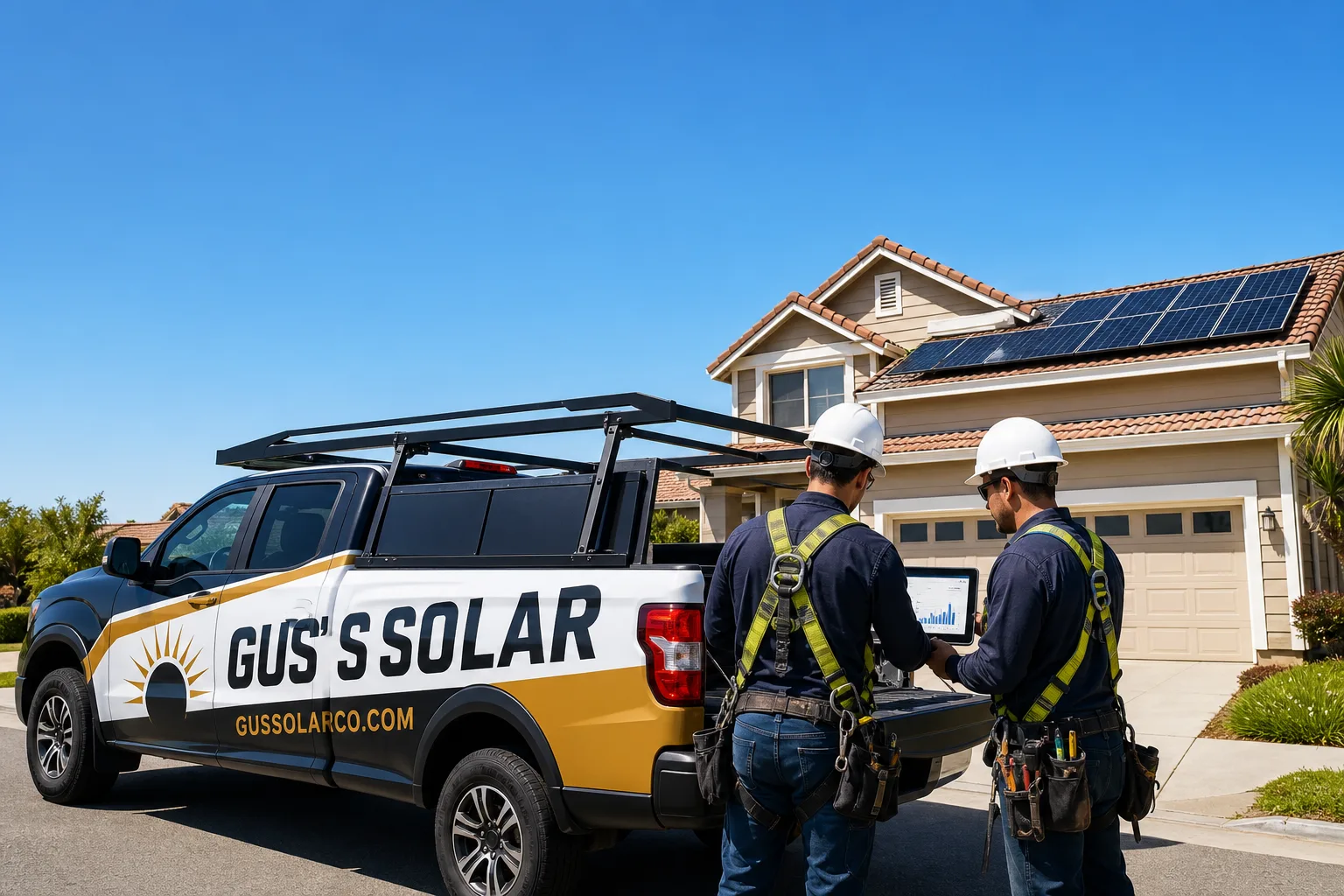
Free bill analysis - bring a power bill, get the production math for your actual roof, panel brands like Qcells and REC compared side by side
If the pitch starts at your door and ends with "sign tonight for the special," sleep on it. The sun will still be there tomorrow; so will we.
 Before
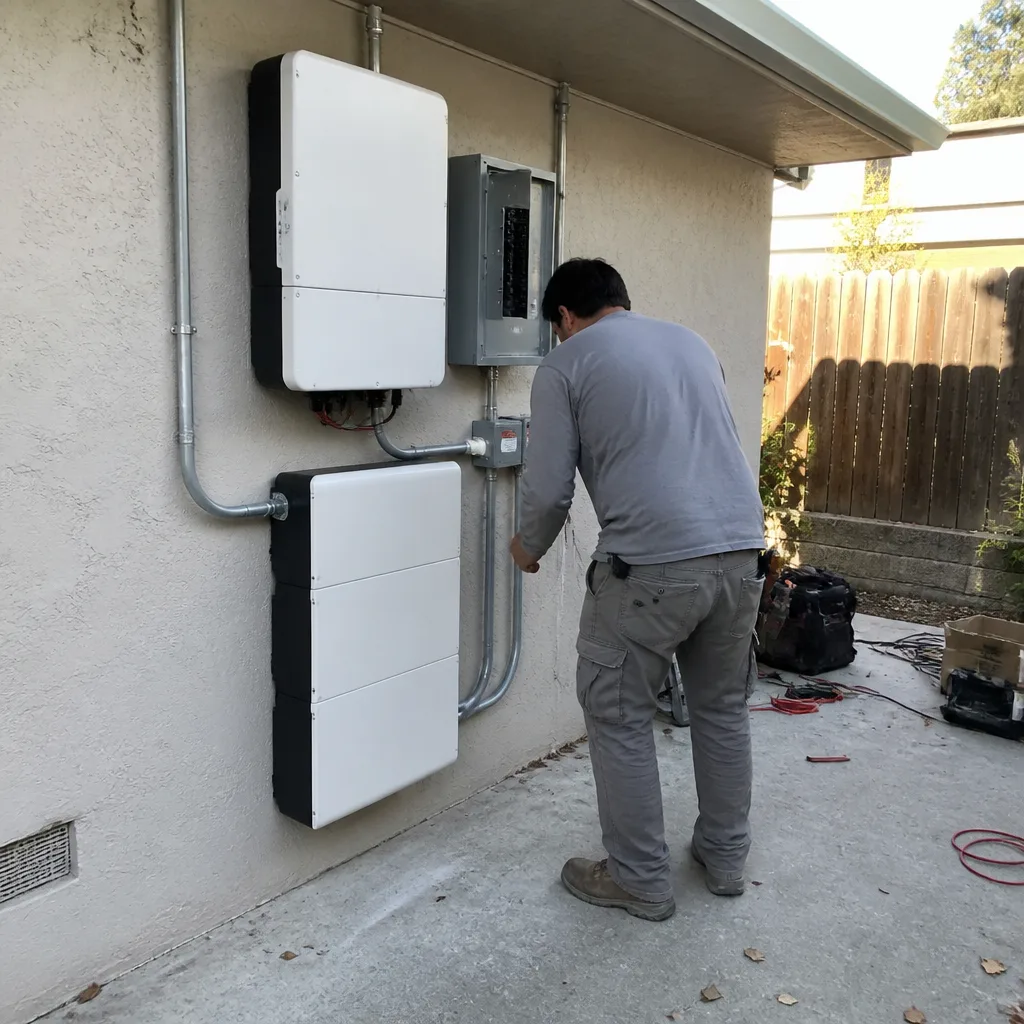 After
After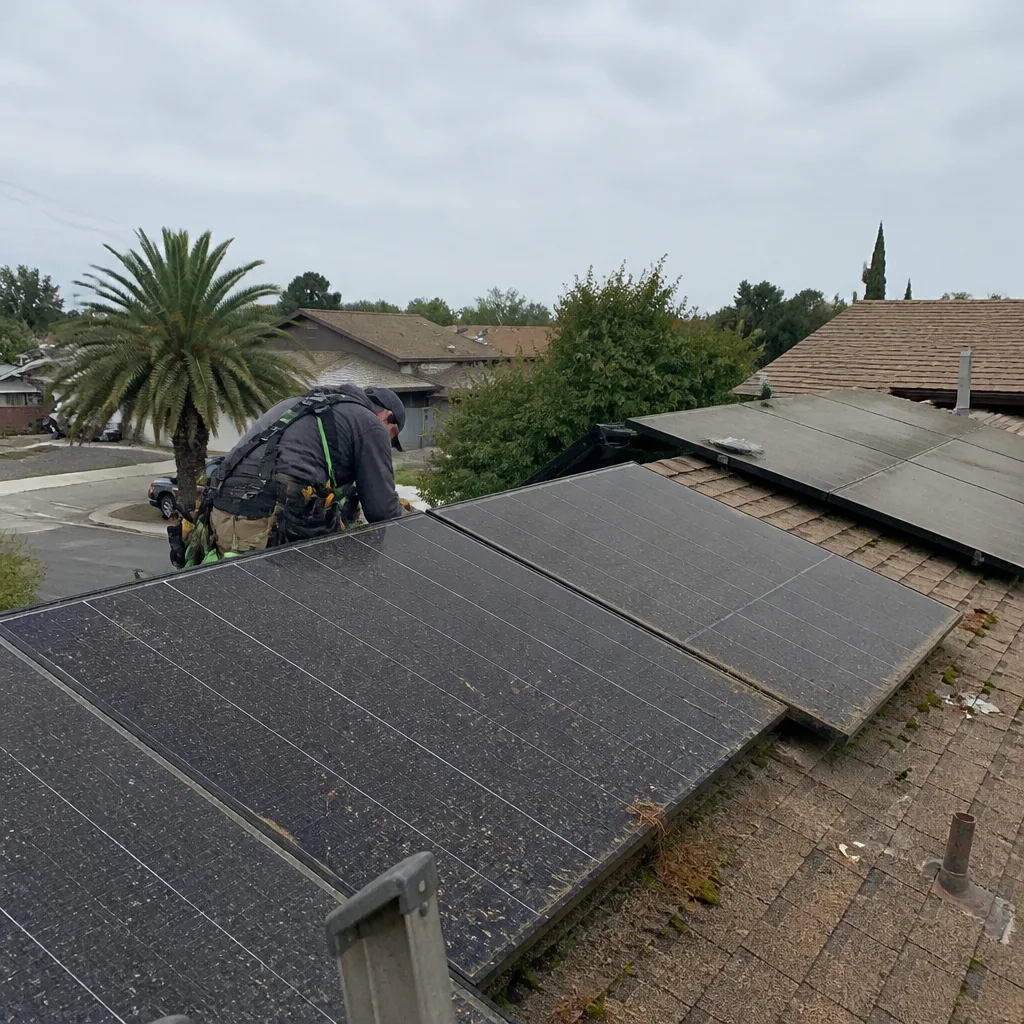 Before
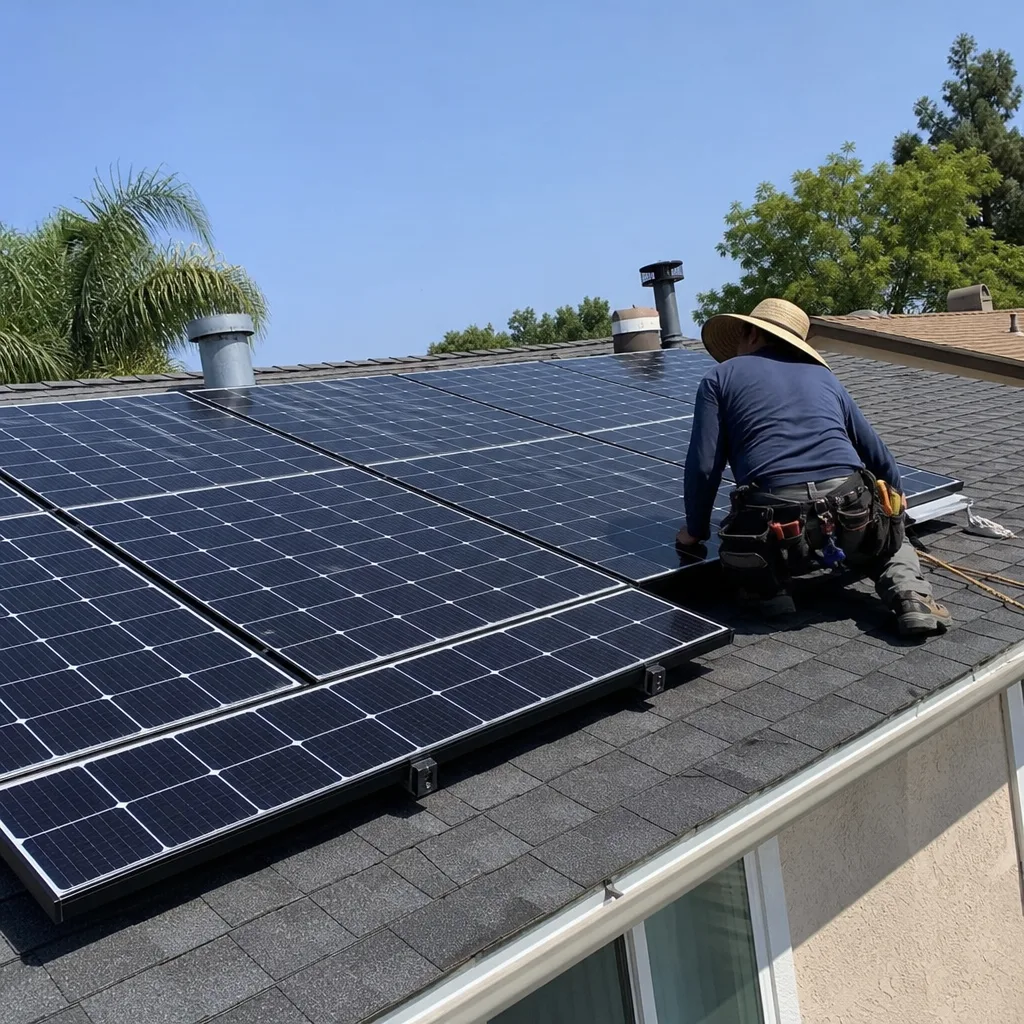 After
After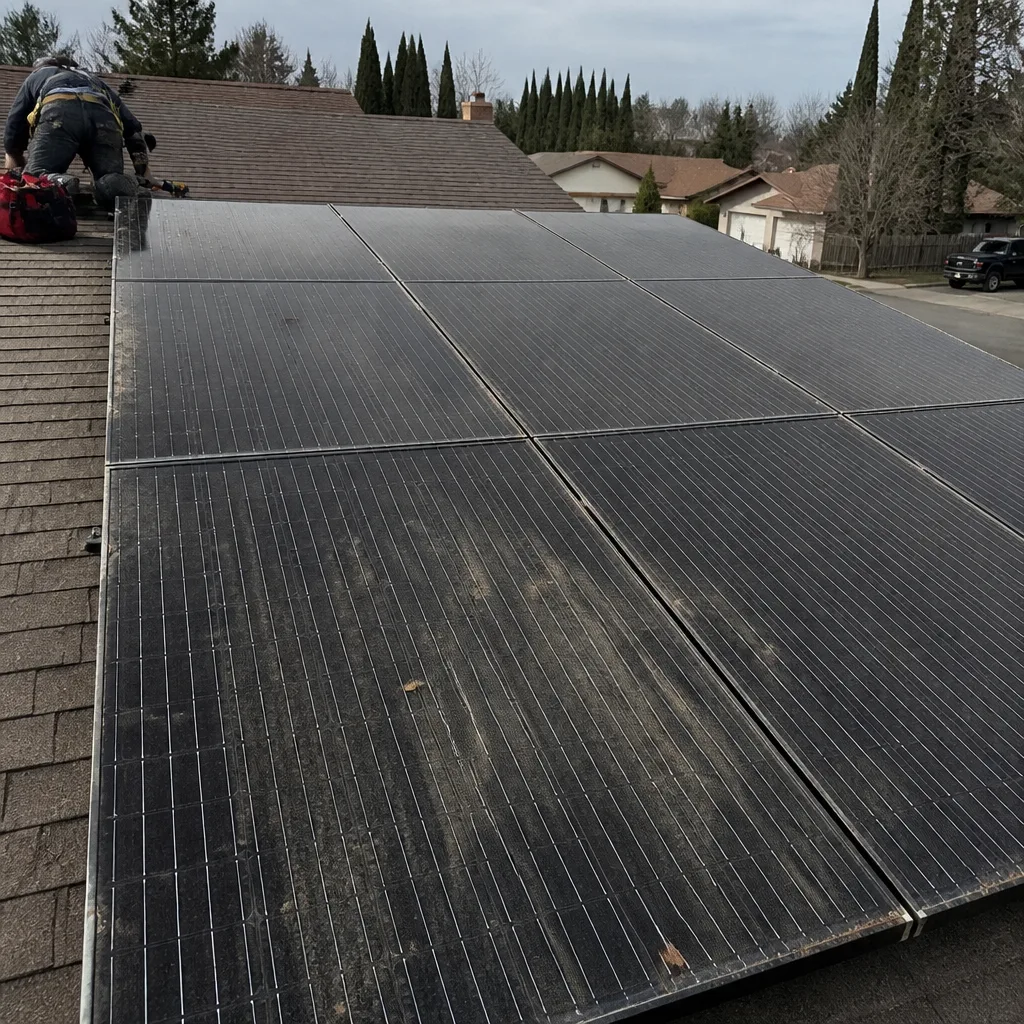 Before
 After
AfterFast, Reliable EV Charger Installation Across Desert Hot Springs
EV charger installation in Desert Hot Springs costs between $950 and $2,800 for most homes, depending on panel capacity, wire run distance, and whether you need a NEMA 4X enclosure for wind-driven sand. Most jobs are done in a single day. Gus’s Solar has been putting chargers on Desert Hot Springs homes long enough to know exactly what the San Gorgonio Pass wind does to outdoor electrical work, and we build every install to handle it. Call (877) 550-6892 for a straight quote off your actual panel and your actual driveway, not a brochure number.
Why Gus’s Solar Is Desert Hot Springs’s Preferred EV Charger Installation Company
Gus Petrakis put his name on this business in 2011 and he still answers his own phone. Homeowners in Desert Hot Springs tend to appreciate that, especially the ones who’ve dealt with out-of-town outfits that quote one price over the phone and send a subcontractor with a different number on the work order. Our crew does the install. No subs, no call center, no “we’ll get back to you within 48 hours.”
We work throughout the 92240 and 92241 ZIP codes, from the neighborhoods off Mission Lakes Boulevard down to the tract homes along Pierson Boulevard and the manufactured-home communities near Two Bunch Palms. Desert Hot Springs has more 100-amp panels and older 1970s tract construction than almost anywhere else in the Coachella Valley. That changes how we scope a charger job. We check the panel first, not after the charger is already bolted to the wall.
Every job is backed by the 90-Day Done Right Promise. If something isn’t right, Gus comes back and makes it right. In writing. And a live person answers calls 24/7, which matters when a charger trips its breaker at 9:30 on a Friday night and you need to know whether it’s safe to reset.
Our EV Charger Installation Services in Desert Hot Springs
We install chargers the way we’d install them on our own homes here, which means accounting for sand, wind, heat, and older panels before the first conduit gets bent. Here’s what that looks like in practice.
Level 2 Charger Installation
A Level 2 charger is the workhorse for Desert Hot Springs homeowners. It runs on a 240-volt circuit and typically delivers 25 to 44 miles of range per hour, which means an overnight charge covers most daily driving. In Desert Hot Springs, we hardwire these units rather than using plug-and-cord connections whenever possible, because the San Gorgonio Pass wind works plugs loose and lets sand pack into receptacles. Hardwiring eliminates the weakest link in a dusty environment.
Tesla Wall Connector Installation
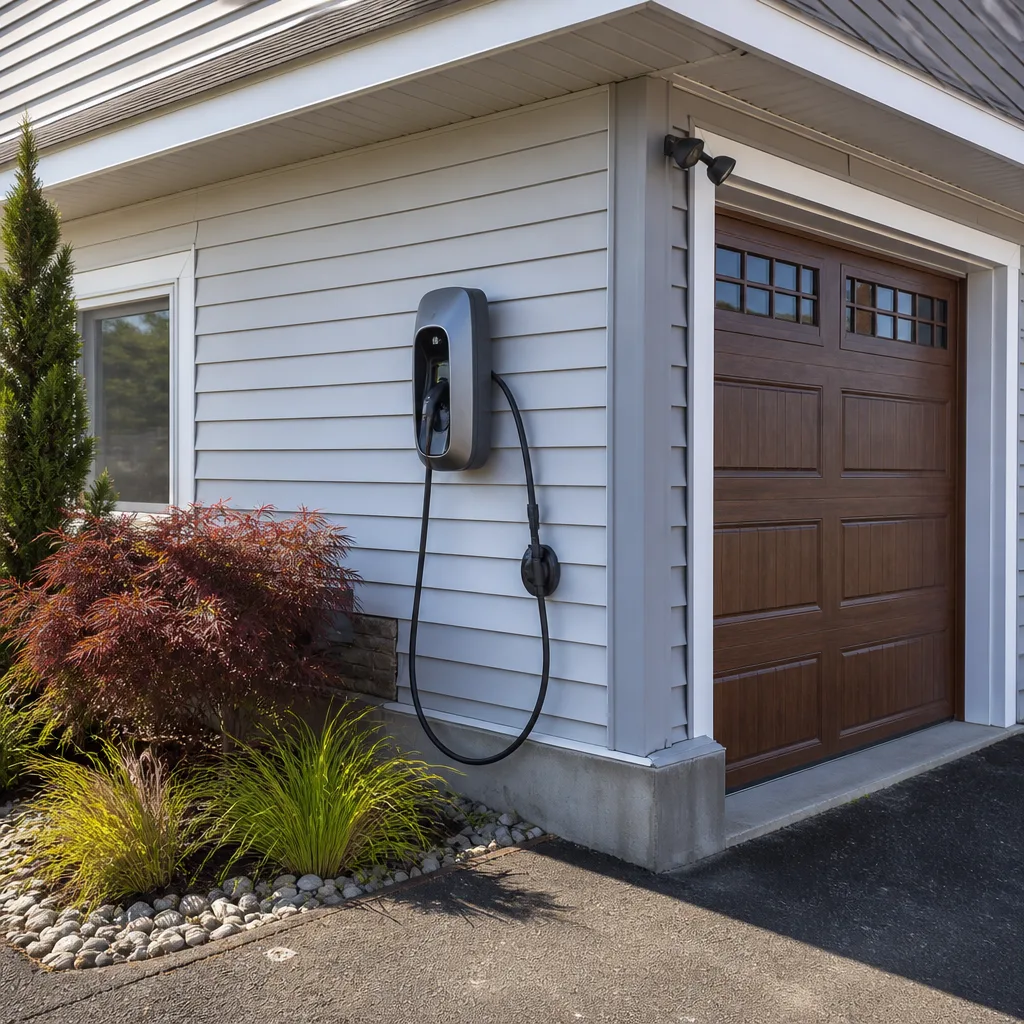
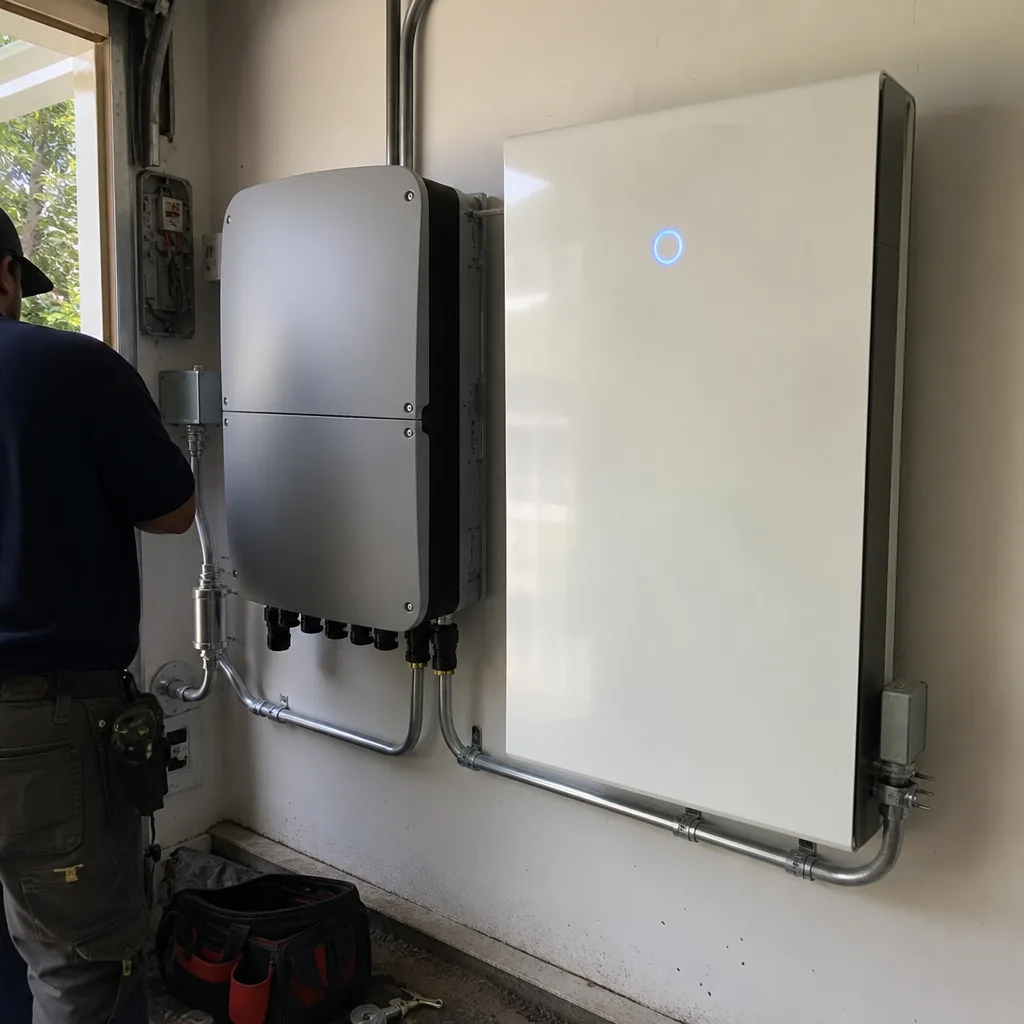
The Tesla Wall Connector is one of the most common units we install in Desert Hot Springs, and it needs more attention to detail here than in calmer cities. The unit is rated for indoor or outdoor use, but outdoor mounting on an exposed west-facing garage wall in 115°F direct sun with wind-driven sand requires a sealed conduit entry and stainless hardware. We also verify the home’s amperage setting matches the actual breaker and wire gauge, because a 48-amp continuous draw on undersized wire is a fire hazard no matter what the app says.
Panel Upgrade for EV Charging
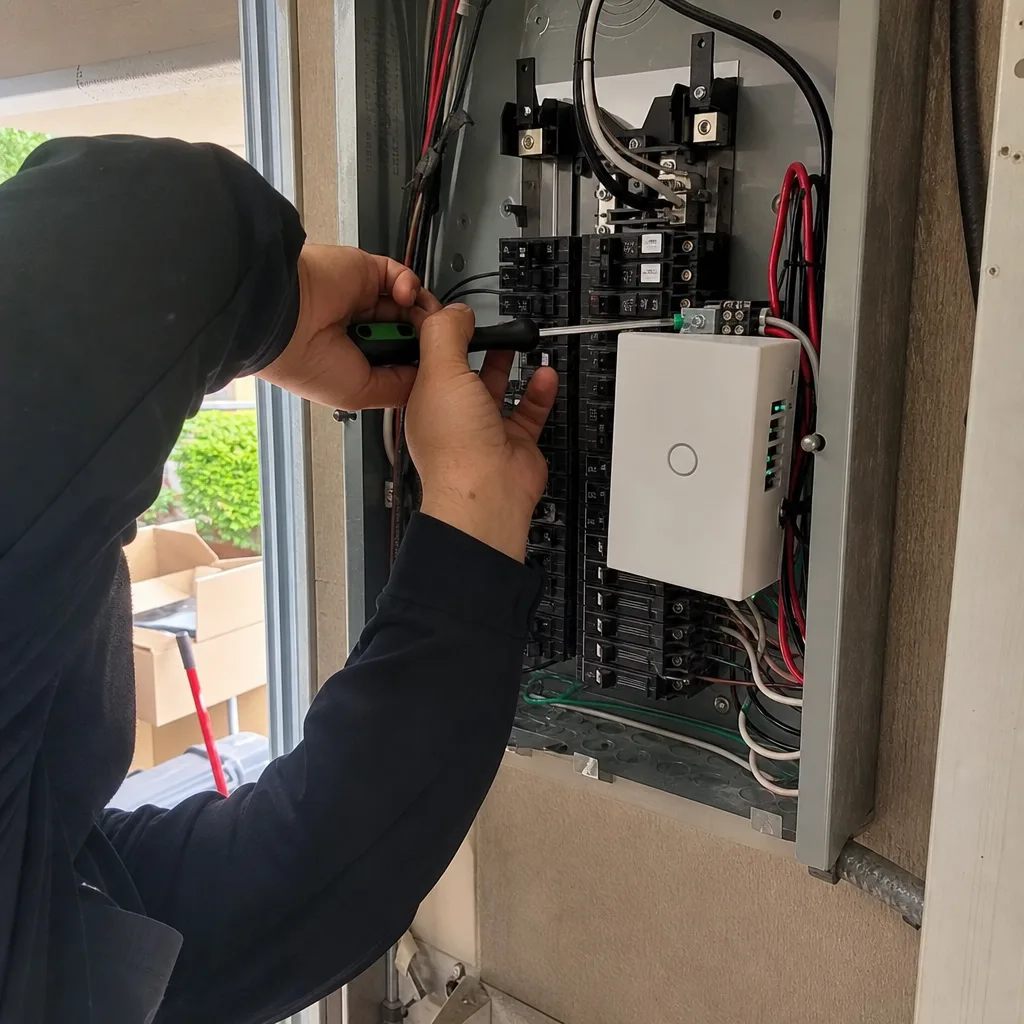
This is the big one in Desert Hot Springs. A significant share of homes here, especially the 1970s and early 80s tract stock and manufactured homes, still runs on 100-amp service. Adding a 48-amp charger to a 100-amp panel often exceeds the load calculation, which means the city inspector won’t sign off until the panel is upgraded. We handle the panel swap and the charger install as one job, which saves you a second permit and a second round of scheduling. A 200-amp panel upgrade in Desert Hot Springs typically runs $2,800 to $4,500, and we’ll tell you honestly if your existing panel can handle the charger without one.
Garage & Driveway Charger Wiring
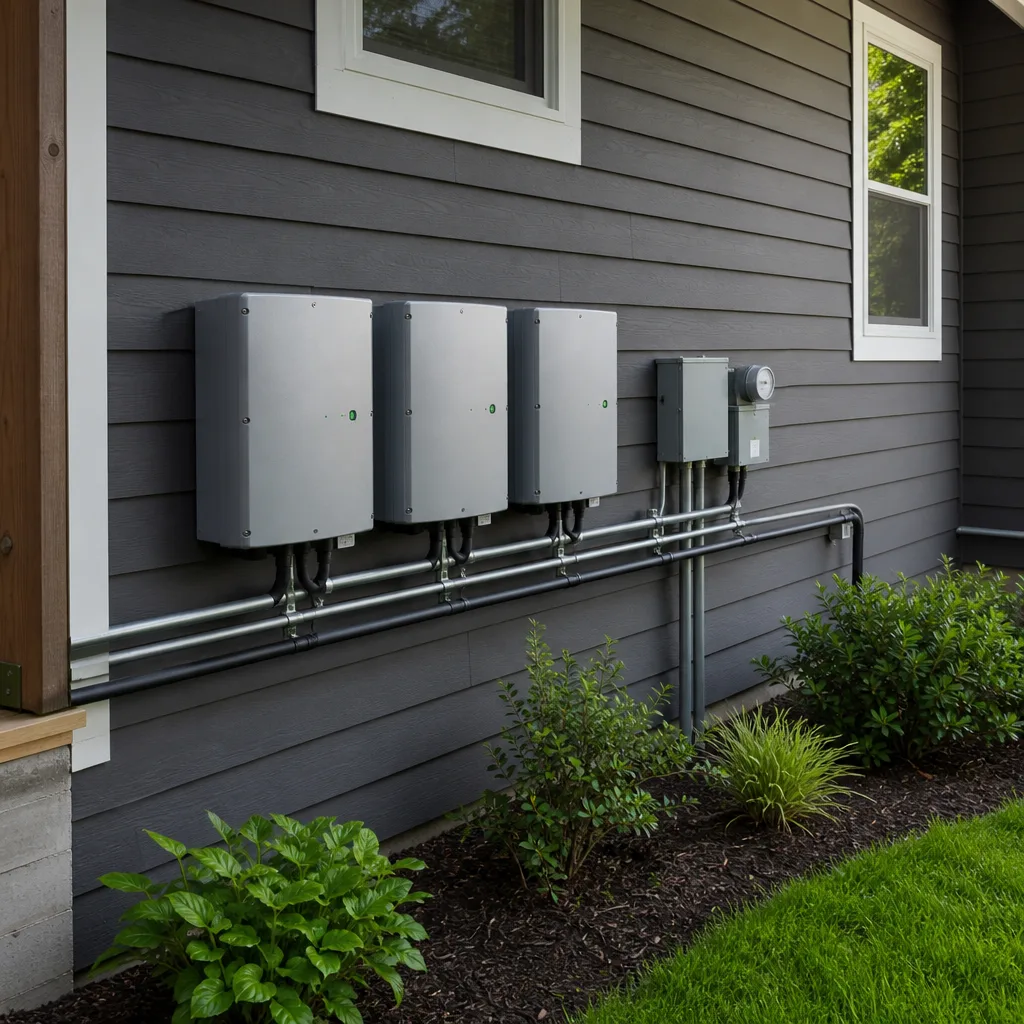
Whether your car lives in the garage off Little Morongo Road or in a carport off Desert View Avenue, the wire run matters. Longer runs mean heavier gauge wire, and in Desert Hot Springs, any conduit run across an exterior wall has to be sealed against wind-blown fine sand. We route conduit along protected surfaces where possible and use weatherproof seal fittings at every entry point. A 40-foot run through an attic with 6-gauge THHN wire costs less than a 20-foot run that requires trenching under a driveway, and we’ll walk you through the difference before we quote it.
What happens when you call
- 1
A real person answersNo phone trees - you reach a local pro.
- 2
You get an upfront price rangeHonest numbers before anyone is dispatched.
- 3
A background-checked tech heads outLicensed & insured, dispatched right away.
- 4
You approve before work beginsNothing starts until you say go.
Trusted Brands We Service in Desert Hot Springs
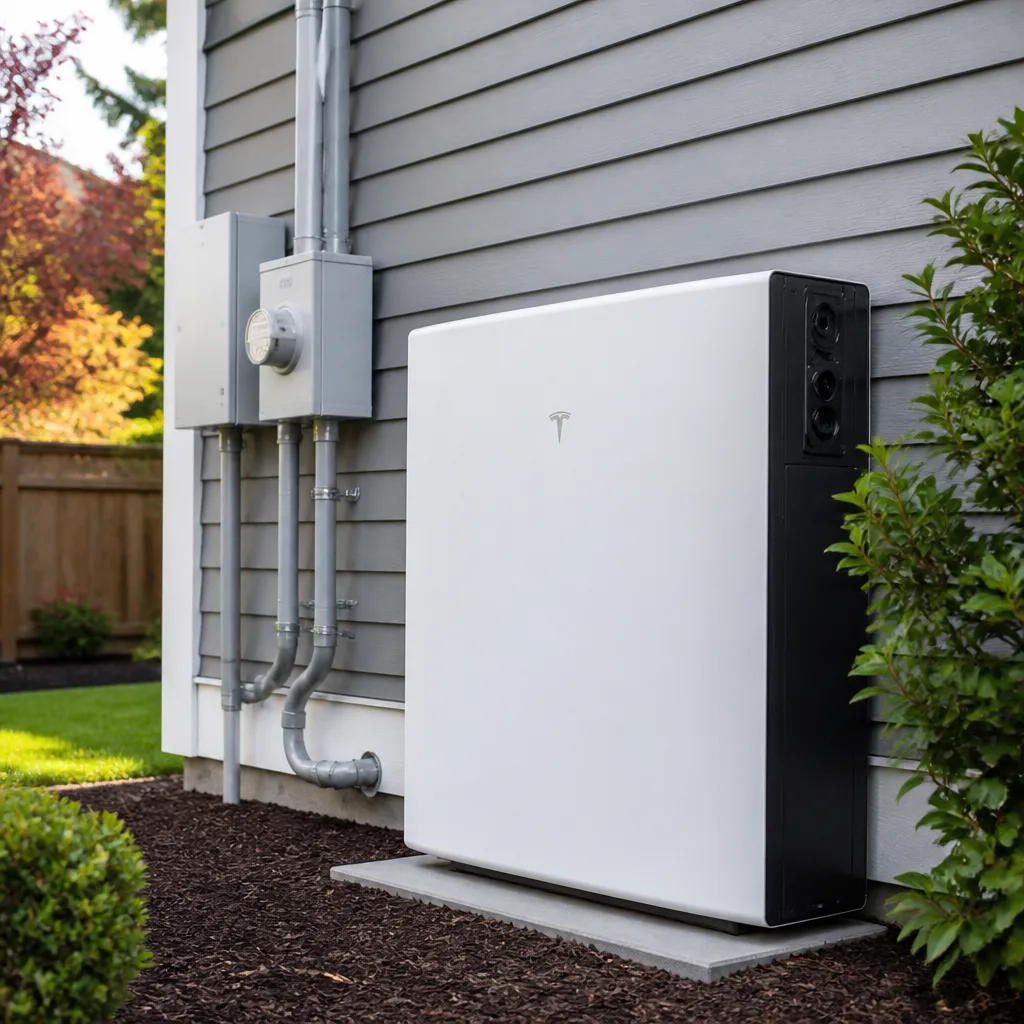
We work with Tesla, Enphase, and FranklinWH equipment regularly, and we stock common wear parts and breakers locally so we don’t wait on a parts truck from Phoenix when a Desert Hot Springs customer needs something fixed. If you already have a charger brand in mind, we’ll install it. If you don’t, we’ll tell you which units hold up best in San Gorgonio Pass conditions and why. We’ve watched enough chargers bake in the summer heat here to have strong opinions.
Common EV Charger Installation Problems We See in Desert Hot Springs Homes
- Wind-driven sand packing into J1772 connectors. The fine desert sand that blows through the Pass gets into the charging plug and the vehicle inlet, causing poor contact, overheating, and eventually a failed charge session. We see this within months on unprotected outdoor installs, which is why we recommend sealed connector holsters and regular cleaning.
- Sustained gusts loosening conduit and charger brackets. Surface-mounted conduit on an exterior wall flexes under 60+ mph sustained gusts, and fasteners work themselves out over time. Loose conduit means compromised connections and arc-fault risk. We anchor every run with more support points than a standard inland install would use.
- 100-amp panels failing load calculations. This is the most common call we get from Desert Hot Springs homeowners who bought a charger online and found out the hard way that their panel can’t support it. The fix is a panel upgrade, and we handle it as part of the charger install rather than leaving you to find an electrician on your own.
- Component overheating in direct summer sun. A charger mounted on a west or south-facing exterior wall in Desert Hot Springs sits in 115°F+ ambient temperatures with direct solar gain on the enclosure. Internal electronics run hotter than their design spec, which shortens their life and can cause nuisance tripping. We recommend shaded mounting locations or NEMA 4X enclosures with proper ventilation where shade isn’t possible.
Pricing for EV Charger Installation in Desert Hot Springs, CA
Here are real numbers for the Desert Hot Springs market. A basic Level 2 charger installation with a short wire run and no panel work typically runs $950 to $1,800. A Tesla Wall Connector install with a moderate run lands around $1,200 to $2,200, depending on whether it’s indoor or outdoor and how much conduit sealing the location requires. A panel upgrade plus charger install runs $3,700 to $6,500 combined if your home needs 200-amp service. If you’re pairing the charger with solar, add $500 to $1,200 for the load-management wiring and configuration. These aren’t “starting at” numbers. They’re what we actually quote on this street, in this city. Call (877) 550-6892 and we’ll give you an exact figure off photos of your panel and a description of your home. Free estimate, no signature wanted tonight.
EV Charger Installation in Desert Hot Springs: What the Wind Changes
Desert Hot Springs sits at the northern edge of the Coachella Valley, directly in the San Gorgonio Pass wind corridor. That’s the same geography that keeps the wind farms spinning along Highway 62 and I-10. It also means everything mounted on an exterior wall here gets sandblasted, year-round. We don’t install a standard NEMA 3R enclosure on an exposed west-facing wall in Desert Hot Springs and call it done. That’s a recipe for sand-packed terminals, corroded connections, and a charger that trips or fails within two years. We spec NEMA 4X-rated enclosures, stainless hardware, and sealed conduit entry points as standard practice here, not as an upgrade. It costs a little more up front and it’s the only honest way to do the job. Any crew that quotes a Desert Hot Springs charger install without accounting for the wind is either new here or doesn’t care about the callback they’ll get in eighteen months.
How the Heat and Sand Affect Your Charger Over Time
The 115°F summer days in Desert Hot Springs don’t just make you uncomfortable. They push charger electronics to their thermal limits, especially when the unit is mounted in direct afternoon sun. Internal capacitors and power electronics degrade faster in sustained high heat, and we’ve seen chargers that should last 10 years start tripping breakers at year four because they were mounted on a baking west wall. The fix is a shaded mount, a ventilated enclosure, and sometimes an oversize wire gauge to reduce resistance heating in the run itself. On one job near Miracle Hill Road just off Highway 62, our crew mounted a Tesla Wall Connector on an exterior garage wall for an older 1970s tract home. We used a NEMA 4X-rated enclosure with stainless hardware and sealed all conduit entry points against wind-driven sand, then upgraded the home’s 100-amp panel to 200 amps because the existing service couldn’t support a 48-amp continuous load plus the owner’s solar. The charger now delivers around 44 miles of range per hour, even during wind events that would have packed a lesser install full of sand within a season.
This page tells you exactly how San Gorgonio Pass wind, sand, and 115°F heat change the hardware, permits, and inspection schedule for an EV charger in Desert Hot Springs. That’s the kind of thing you only learn by doing the work here, not by reading a spec sheet.
We Also Serve Cities Near Desert Hot Springs
Our crews handle EV Charger Installation work throughout the upper Coachella Valley, including Garnet, Thousand Palms, Cathedral City, and Palm Springs. If you’re in Desert Hot Springs or anywhere nearby, call us and we’ll be out the same day or next morning, depending on when you call.
Serving Desert Hot Springs, CA - Our Local Coverage Area
We’re based in the Desert Hot Springs area and know this community well. Use the map below to see our service coverage - if you’re nearby, we can almost certainly help.
FAQs - EV Charger Installation in Desert Hot Springs
Yes. Wind-driven fine sand from the San Gorgonio Pass infiltrates standard NEMA 3R enclosures and packs into connector terminals within months. We spec NEMA 4X-rated enclosures with sealed conduit entries and stainless hardware for any exterior-mounted charger in Desert Hot Springs, especially on west-facing walls. Call (877) 550-6892 for an exact recommendation based on your mounting location.
Sustained 115°F ambient temperatures combined with direct solar gain on an enclosure push charger electronics past their design limits, which can cause nuisance tripping and shortened component life. Output itself doesn’t drop, but reliability does. We recommend shaded mounting, ventilated enclosures, and sometimes oversize wire to reduce resistance heating in the run. Call us and we’ll tell you if your planned location is a problem.
Sometimes. If your existing 100-amp panel has enough capacity after a load calculation, a lower-amperage Level 2 charger at 16 or 24 amps may work without a panel swap. But most Desert Hot Springs homes with 100-amp service and an electric dryer, air conditioning, and a pool pump will fail the calculation for a 48-amp charger. We’ll run the numbers off your actual panel, not a guess. Call (877) 550-6892 for a free load check.
Pairing an EV charger with solar means charging during daylight generation hours, which requires either a smart charger that follows your solar production or an energy-management system like the ones from Enphase or FranklinWH that we configure regularly. The goal is to pull from your panels when they’re producing instead of drawing from the grid at peak rates. Call us and we’ll tell you what works with your existing inverter and what it costs.
Sand packs into the J1772 connector, abrades the contact surfaces, and causes poor connections that overheat. The cable jacket also wears faster in a sandy environment. In Desert Hot Springs, we recommend inspecting and cleaning connectors every three months, and more often during spring wind season. Call (877) 550-6892 if you notice a hot plug, a loose fit, or a charger that starts and stops charging on its own.
Get a Straight Quote From a Local Crew
If you live in Desert Hot Springs and you’re ready for a charger that’s built for the wind, the sand, and the heat, call Gus Petrakis and his crew at (877) 550-6892. We’ll come out, look at your panel, look at your mounting location, and give you a number that matches the work. Bring your utility bill if you have solar or you’re thinking about pairing the two. We’ll make the math plain. Take two weeks to think about it. The price will be the same. If a salesman needs an answer tonight, the answer is no. Ours doesn’t.
Written by Gus Petrakis, Owner at Gus’s Solar, serving Desert Hot Springs and the Coachella Valley since 2011.