
Free bill analysis - bring a power bill, get the production math for your actual roof, panel brands like Qcells and REC compared side by side
If the pitch starts at your door and ends with "sign tonight for the special," sleep on it. The sun will still be there tomorrow; so will we.
 Before
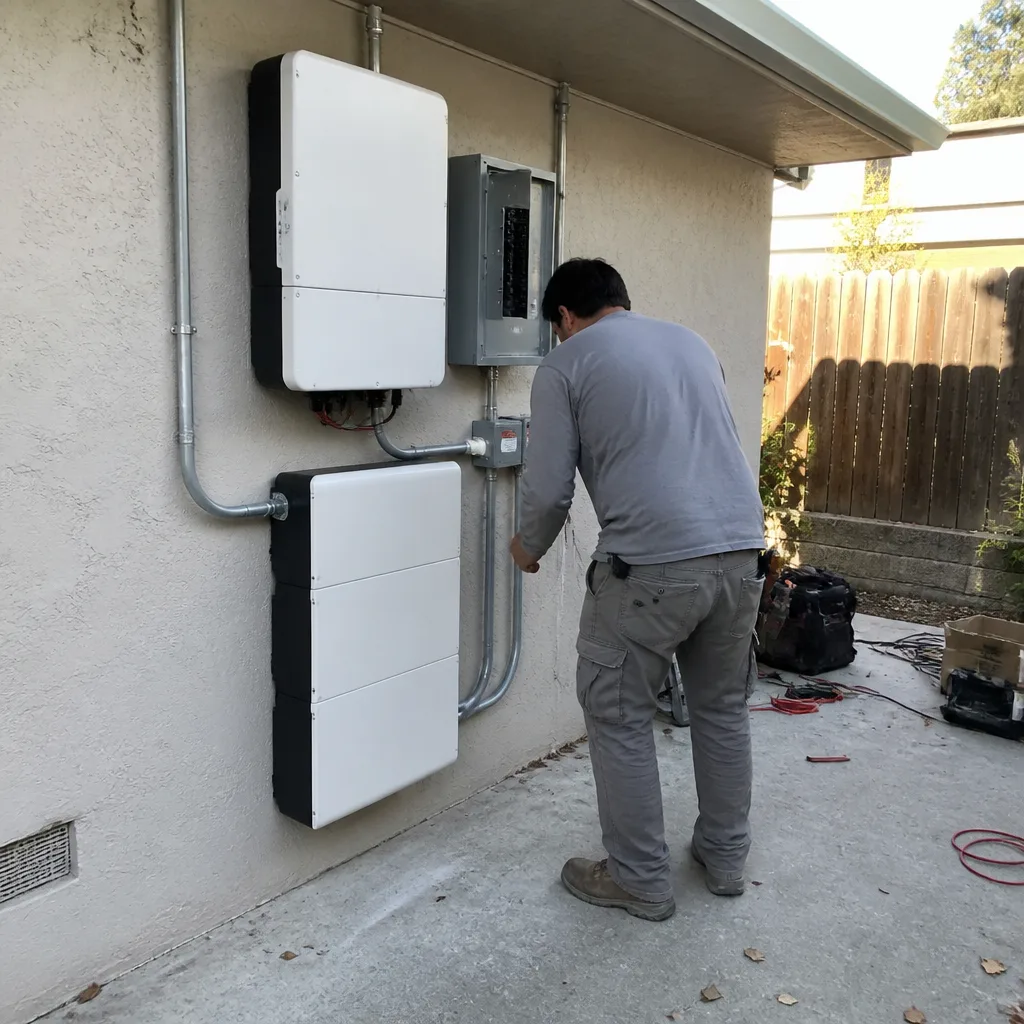 After
After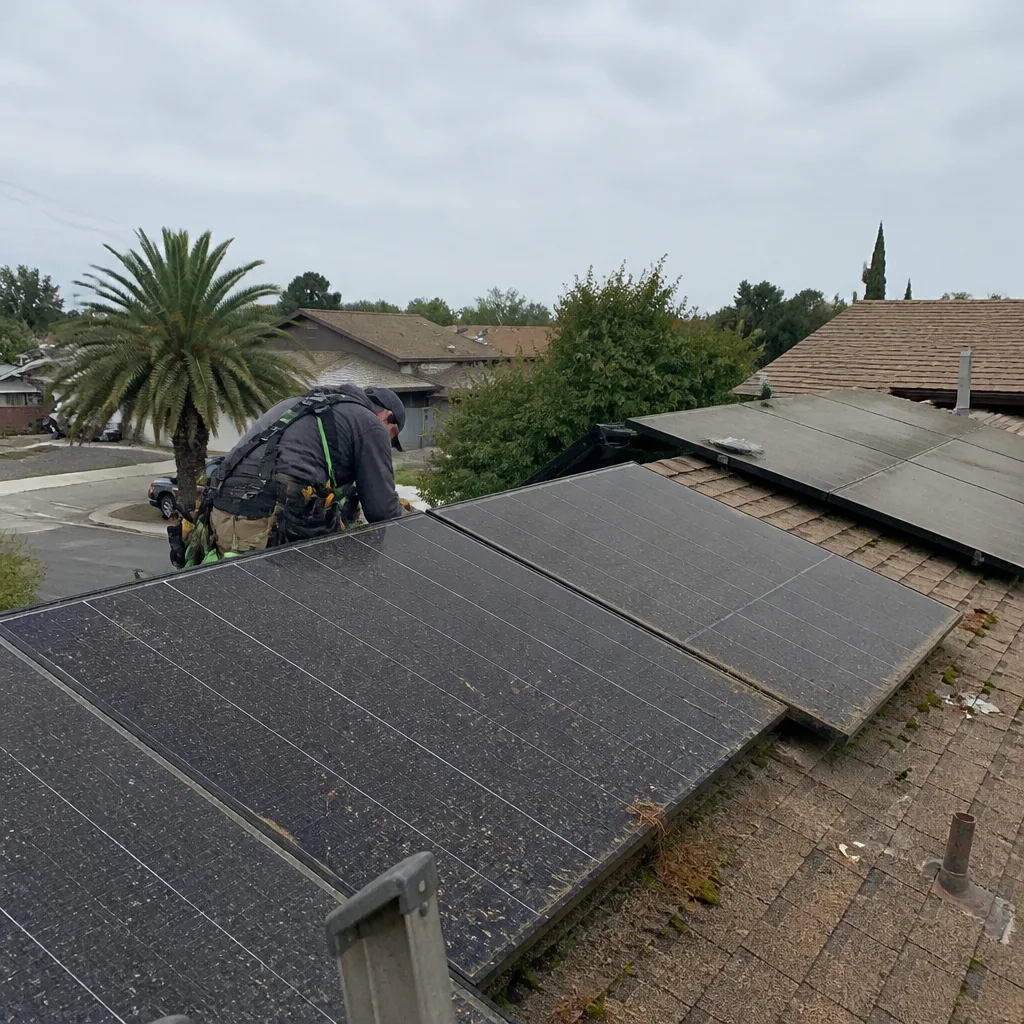 Before
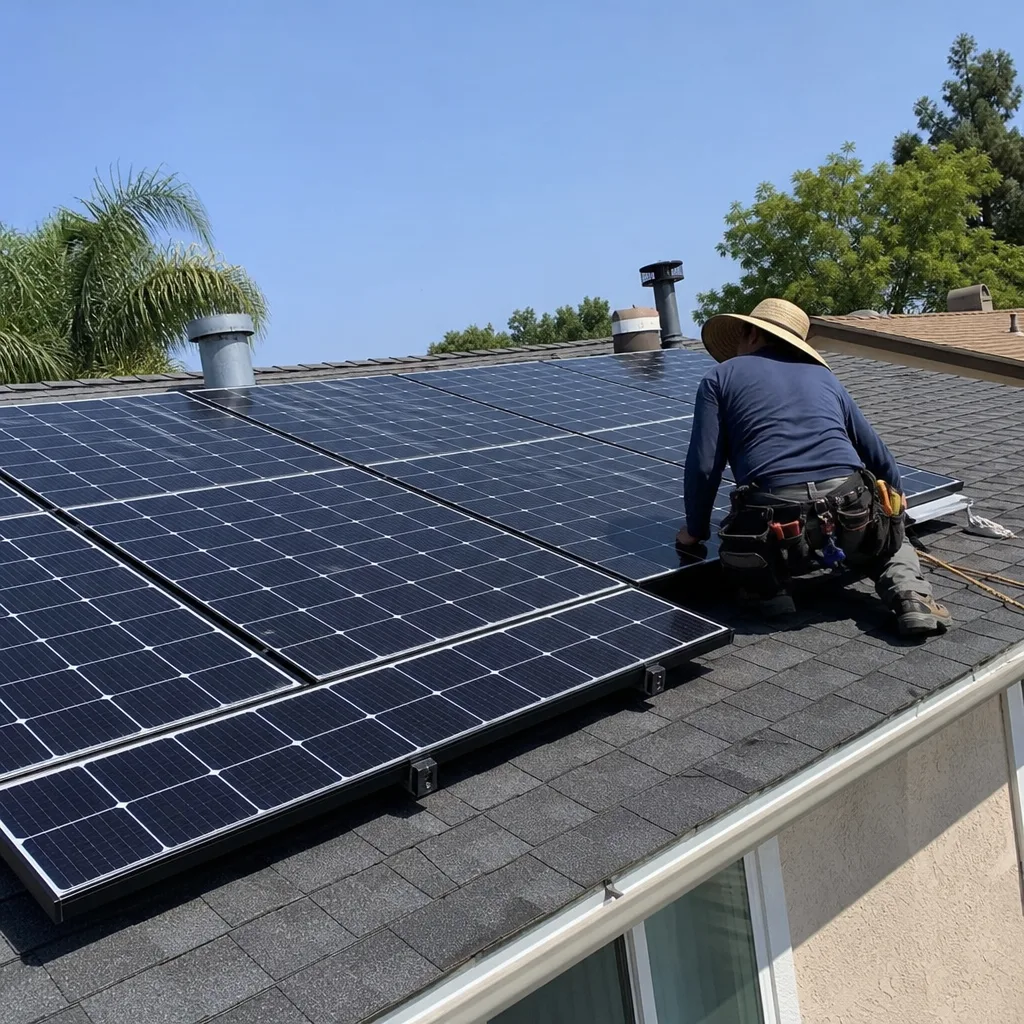 After
After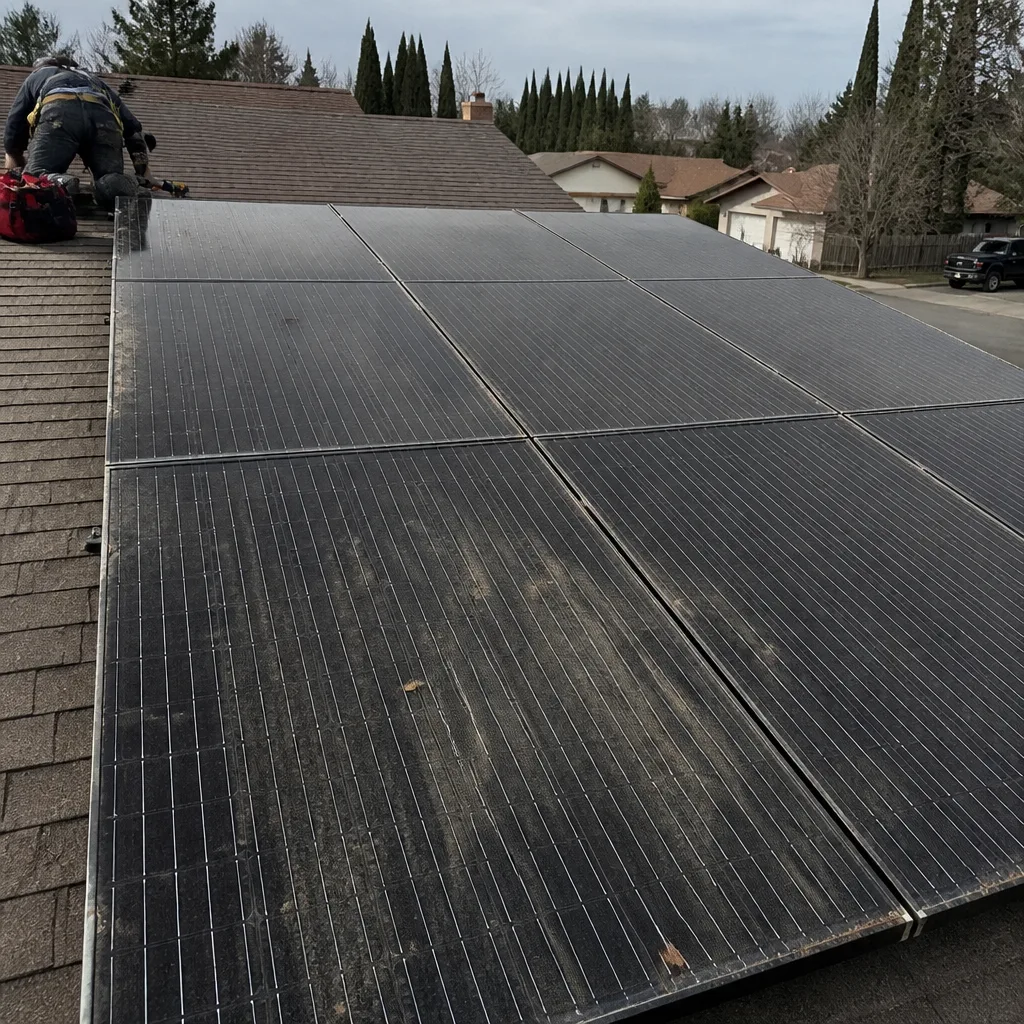 Before
 After
AfterFast, Reliable Commercial Solar Installation Across Homeland
Commercial solar installation in Homeland runs $55,000 to $220,000 for most rural and light-industrial projects, and the work typically takes 3 to 6 weeks from permit to permission-to-operate once Riverside County’s unincorporated building department signs off. Most jobs here land on manufactured homes, detached carports, or agricultural outbuildings rather than conventional commercial rooftops, which means standard racking designs often will not pass inspection. If you own a business or acreage property in the 92548 ZIP, call Gus’s Solar at (877) 550-6892 and we will quote the system off your actual utility bill, not a brochure estimate.
We have worked enough jobs along Highway 74 and the rural parcels east of Menifee to know what county inspectors look for. That matters here more than most places.
Why Gus’s Solar Is Homeland’s Preferred Commercial Solar Installation Company
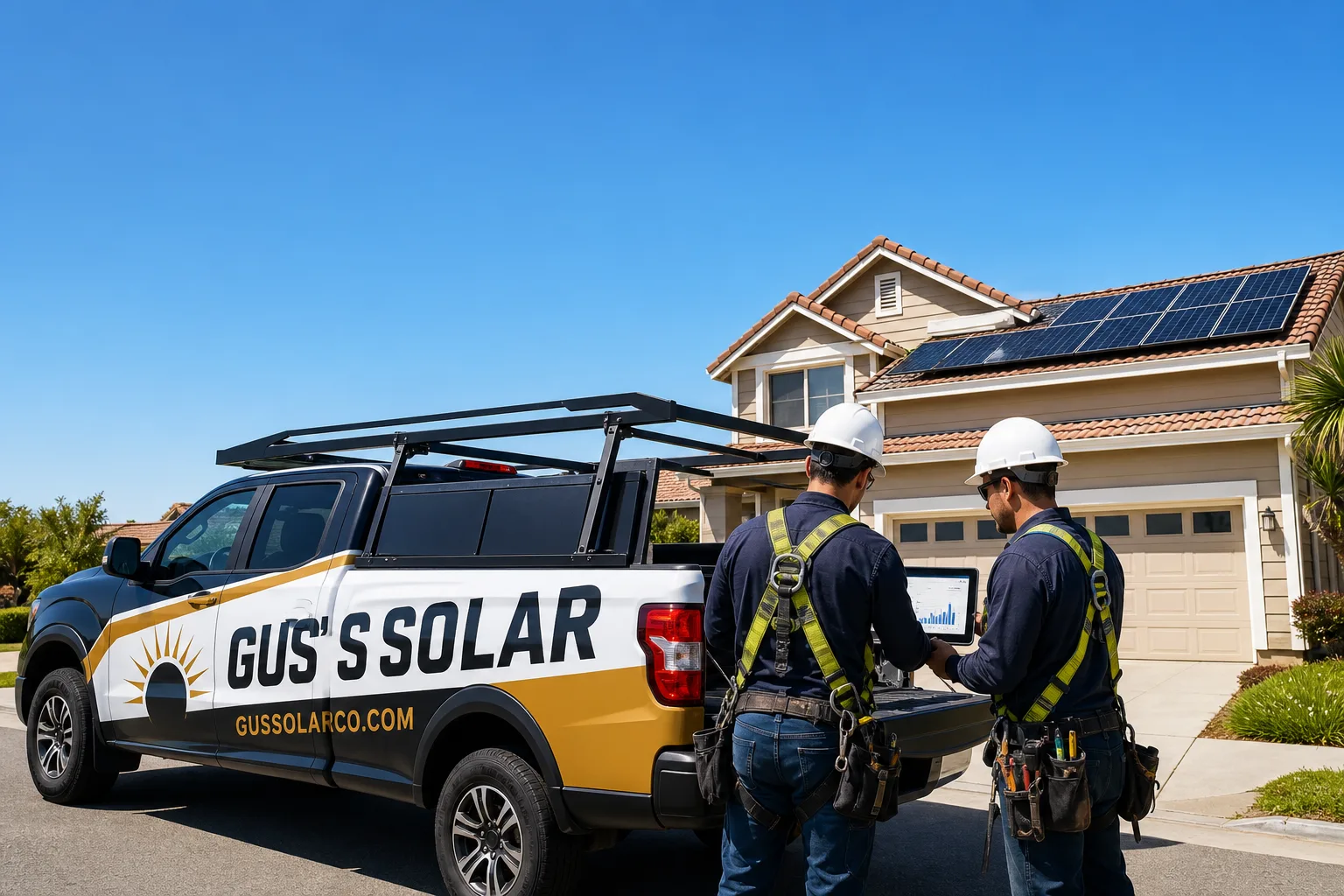
Gus Petrakis founded Gus’s Solar in 2011 and still answers his own phone. The crew that shows up on your Homeland property is his own background-checked, uniformed team, not a subcontract crew hired through a call center. Every job carries the 90-Day Done Right Promise in writing: if something is not right, one call brings Gus back to make it right.
We are not a pop-up sales crew working a zip code for a season. We answer calls live, 24/7. When a Homeland customer has a question about a production dip or a Santa Ana wind event worried them about their racking, they get a person, not a ticket number. That is the whole point of hiring a locally owned shop.
Gus’s L.O.C.A.L. values are not marketing language. Local roots, On time, Community first, Accountable, Loyal. That code governs how we quote, how we install, and how we follow up. If a salesman needs an answer tonight, the answer is no. We tell every Homeland customer the same thing: take two weeks, think about it, the price will be the same.
Our Commercial Solar Installation team has deep experience with the specific racking and permitting challenges that define work in Homeland’s 92548 ZIP. That is not something a national outfit learns from a training module.
Our Commercial Solar Installation Services in Homeland
Homeland’s commercial-scale solar work looks different than a strip-mall job in Menifee or a warehouse build in Perris. The properties are older, the roofs are lighter, and the county review process has its own rhythm. Here is what we actually do out here.
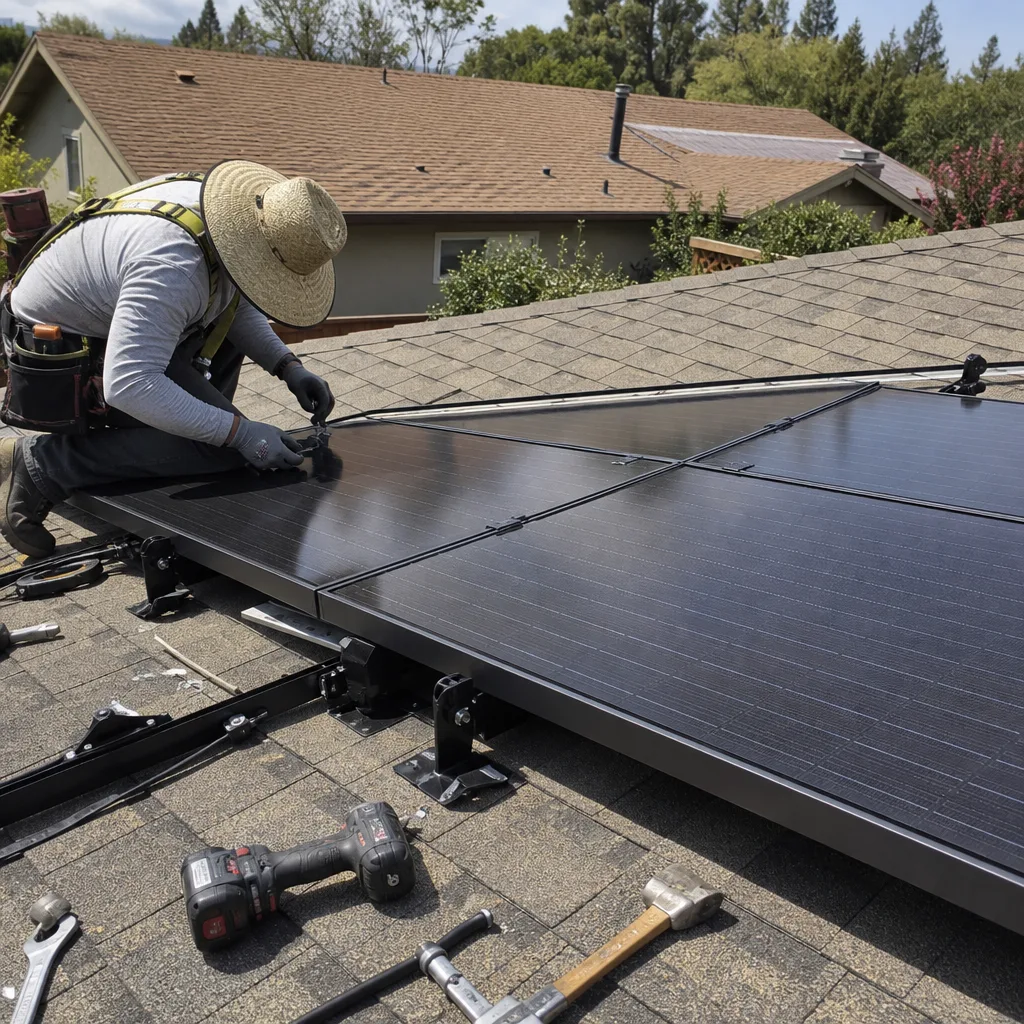
Commercial Rooftop Solar
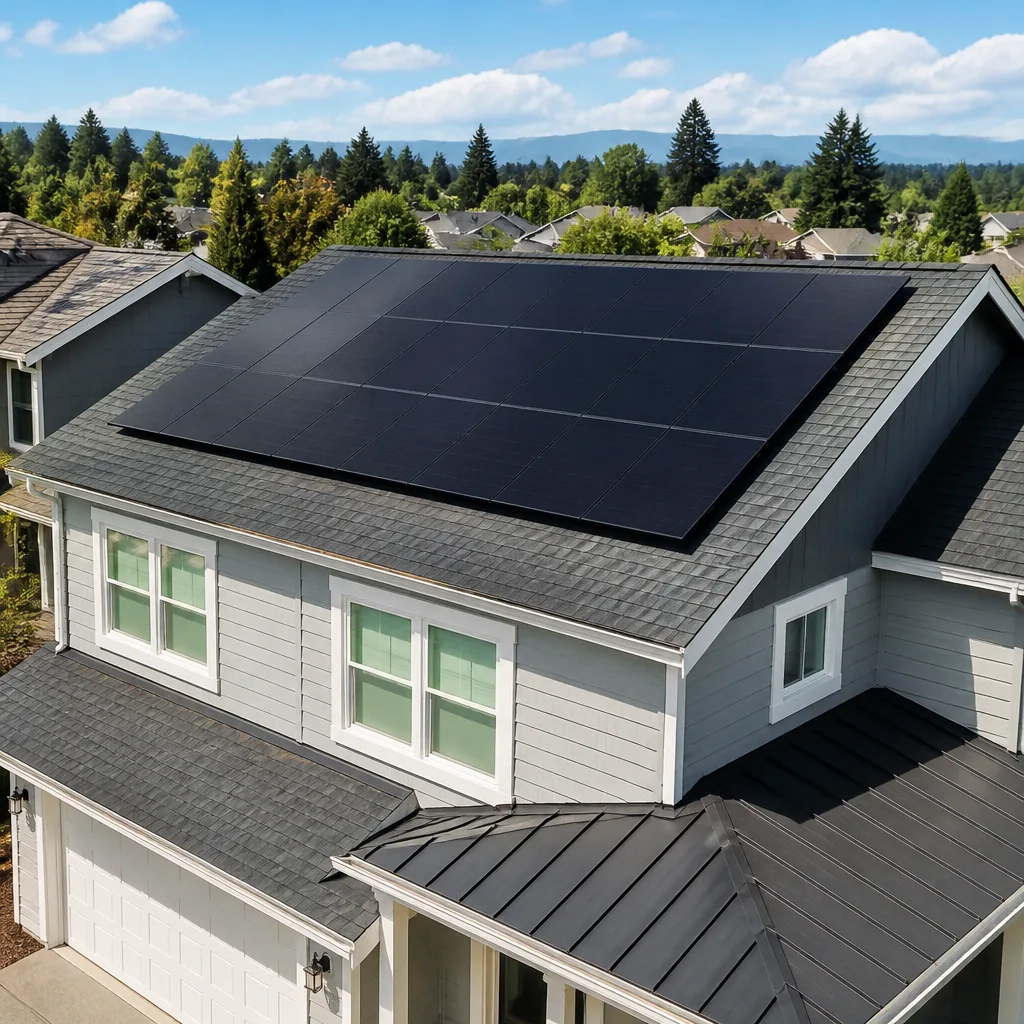
Most commercial rooftop work in Homeland is on outbuildings, workshops, or business structures with standing-seam metal or composition shingle roofs. We size systems conservatively for the inland San Jacinto Valley’s summer heat, because a 105°F afternoon cuts panel output well below nameplate if the temperature coefficient is not modeled honestly. Gus quotes the year-25 output, not the day-one brochure number.
Warehouse & Industrial Solar
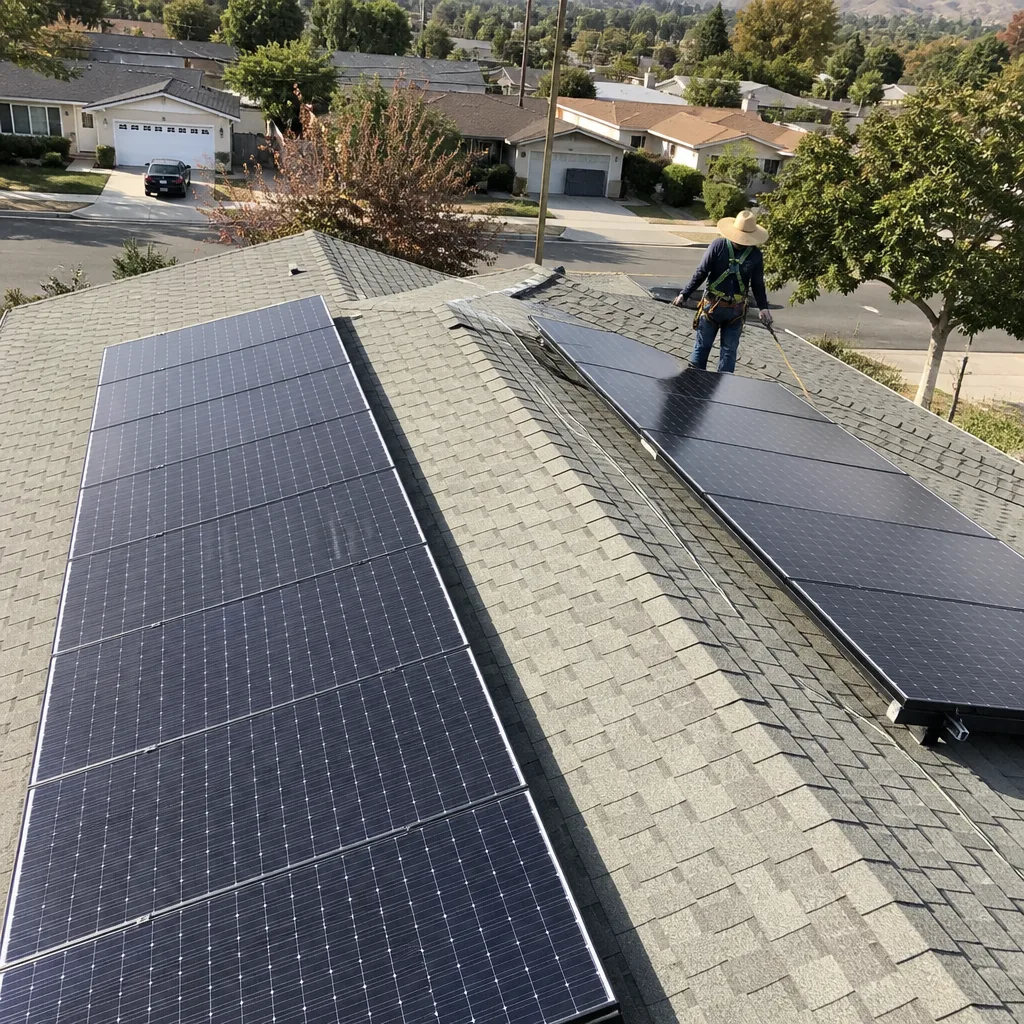
Homeland has a handful of light-industrial and storage operations scattered along the Highway 74 corridor and the rural industrial parcels east of the 215. These buildings usually have the roof load capacity for standard racking, but the real constraint is often the existing electrical service. We handle the service upgrade, the panel coordination, and the SCE interconnection paperwork as one package.
Solar Carport Installation
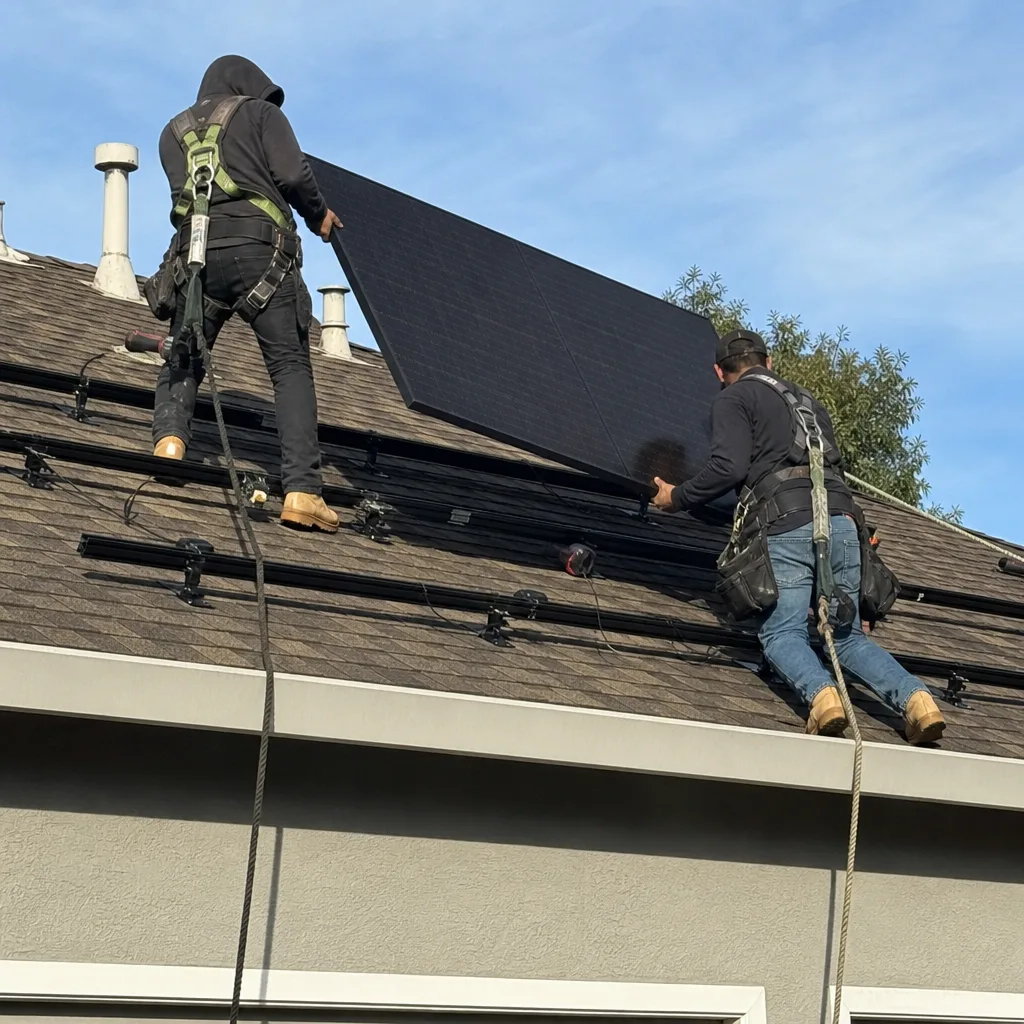
On Homeland acreage where the manufactured home roof cannot carry racking loads, a detached carport or shade structure often becomes the solar host. This is a common workaround on rural parcels in the 92548 ZIP. Carport arrays require their own structural plan and county grading/setback review, but they frequently produce better than a low-slope manufactured roof because we can set azimuth to due south and avoid shading from mature eucalyptus and pepper trees that line many Homeland parcels.
Commercial Battery Storage
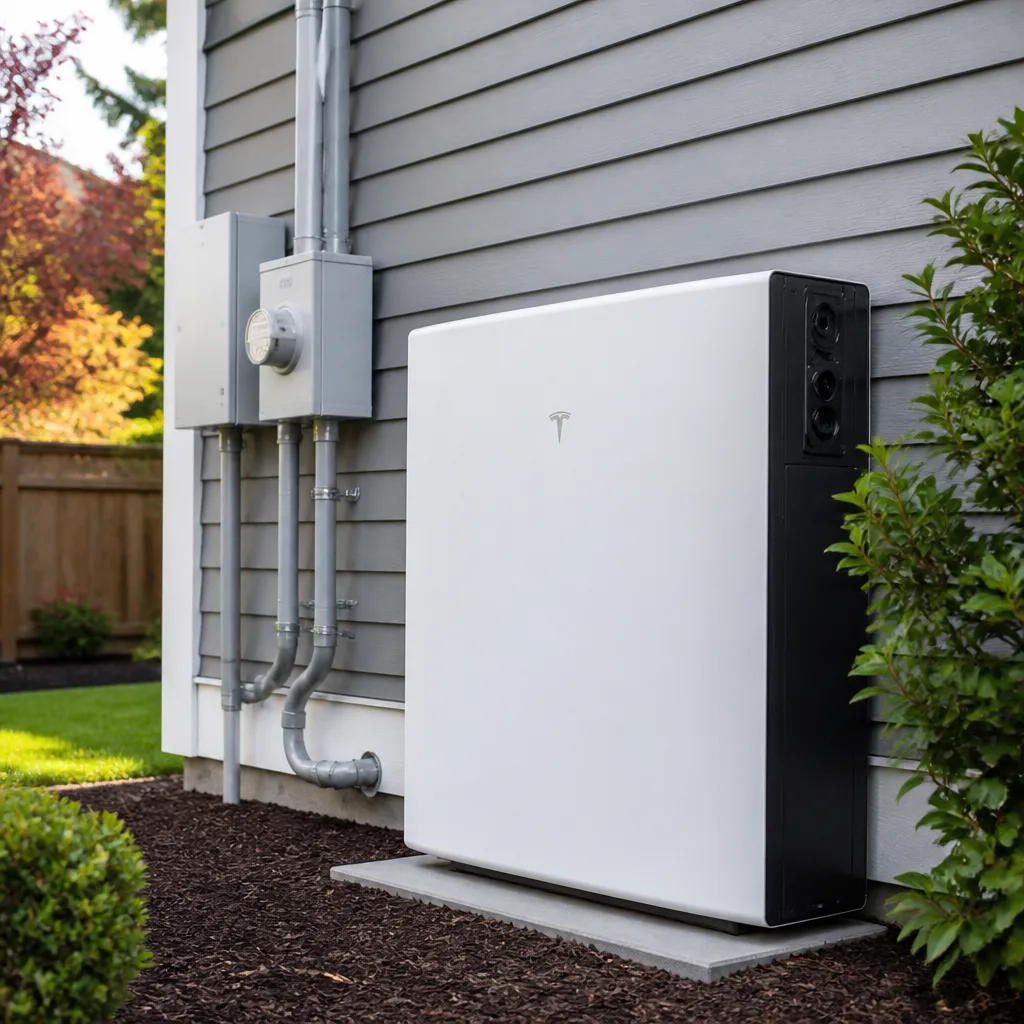
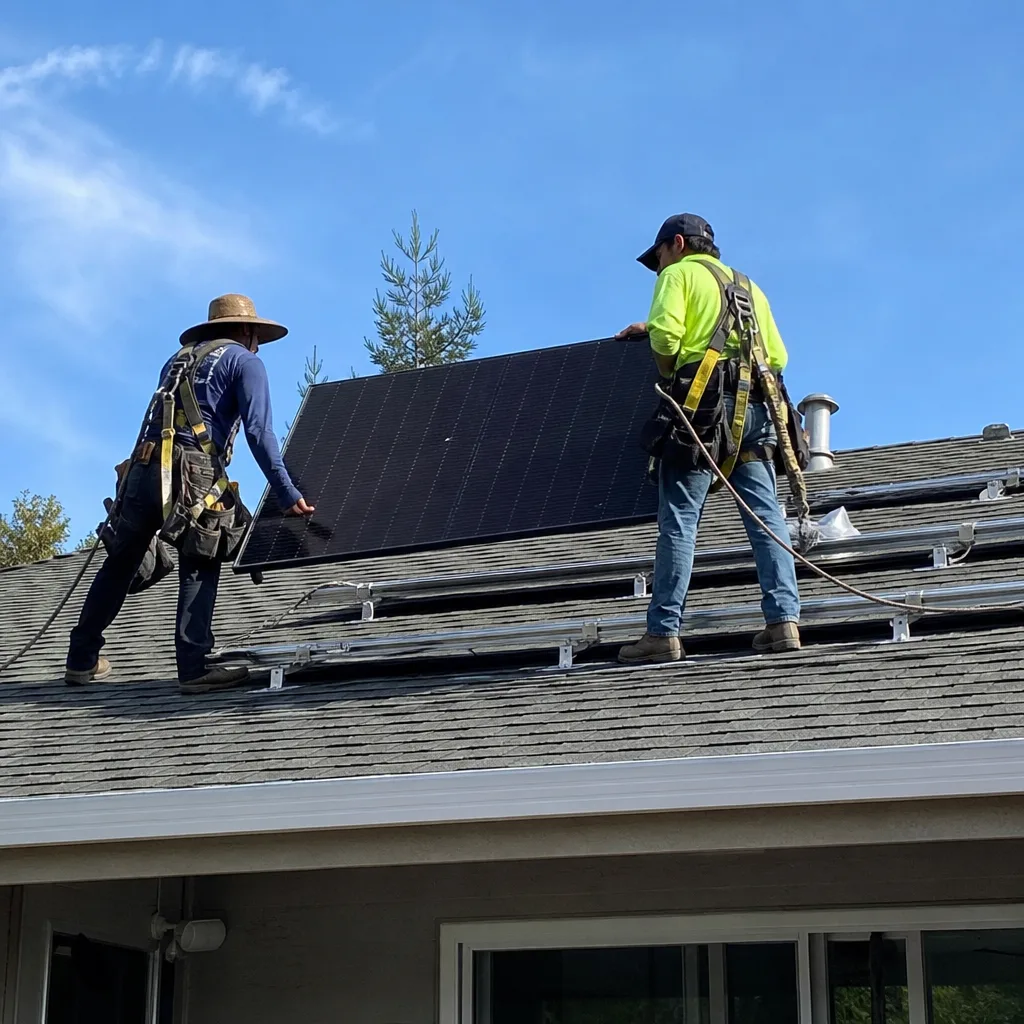
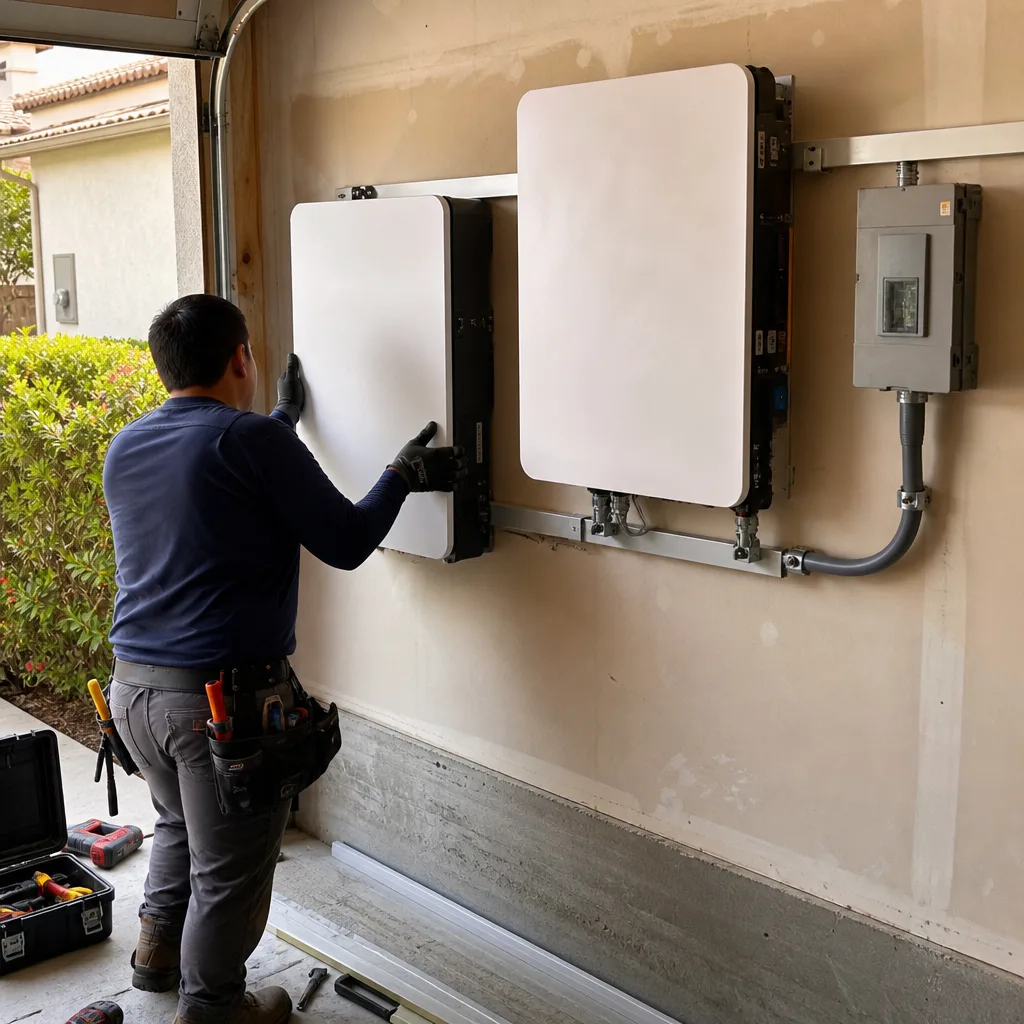
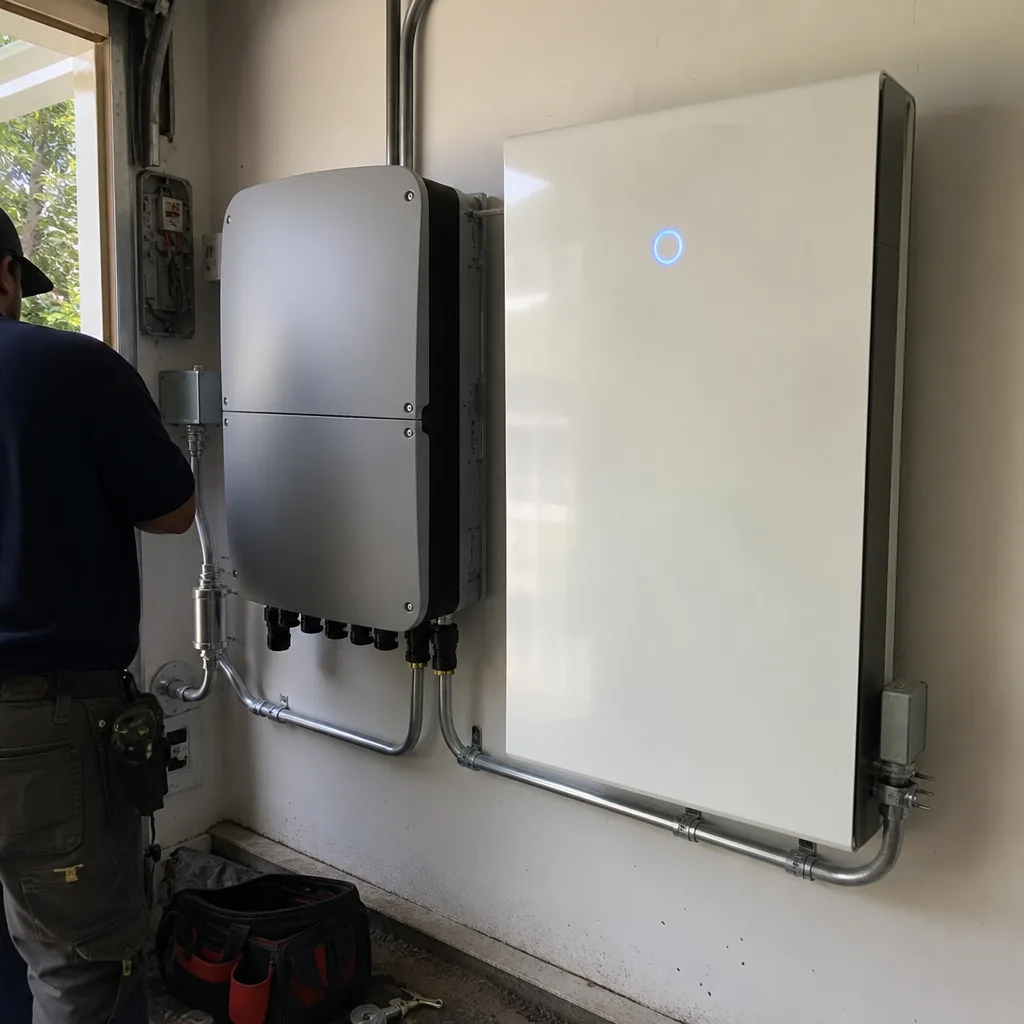
Backup power matters more on rural parcels where outages take longer to restore. We install FranklinWH, Tesla Powerwall 3, and Enphase battery systems sized to your actual load profile. For Homeland businesses running refrigeration, well pumps, or livestock-watering equipment, a properly sized battery bank is the difference between an inconvenience and inventory loss. Live monitoring comes with every install, and Gus is the one who calls you if something looks wrong.
Agricultural & Ground-Mount Solar
This is the work we do most in Homeland. Rural acreage parcels with detached workshops, barns, or open pasture often have room for a ground-mount array that a manufactured home roof simply cannot support. Ground-mount systems cost more than roof-mount, typically $3.10 to $3.80 per watt before incentives, but they avoid the structural sign-off problems entirely and we can angle the array for maximum annual production.
Commercial Solar Maintenance
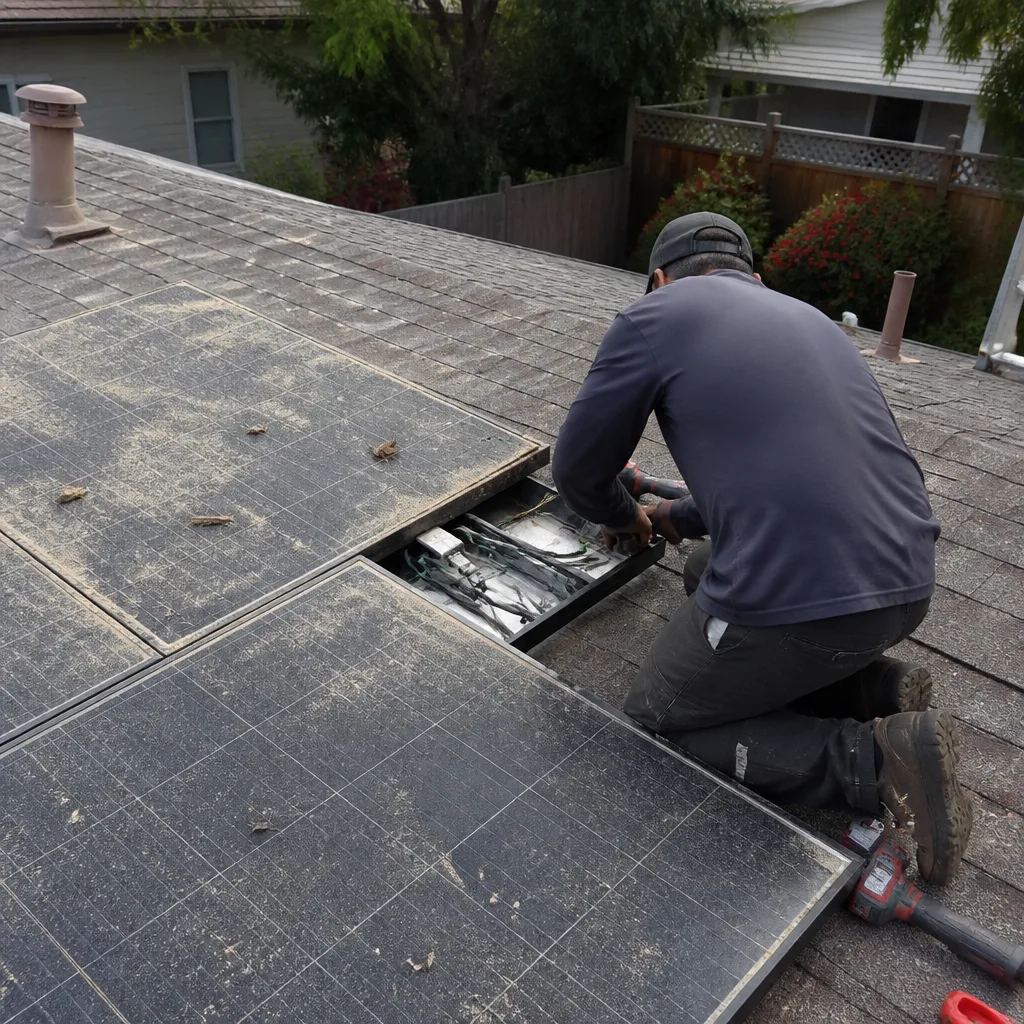
Homeland’s climate punishes solar hardware. Dust from unpaved roads and neighboring agricultural activity accumulates on panels faster than in tract subdivisions, and summer heat accelerates inverter wear. We offer scheduled cleaning and maintenance visits for commercial systems throughout the 92548 ZIP, keeping production where the original estimate said it would be.
What happens when you call
- 1
A real person answersNo phone trees - you reach a local pro.
- 2
You get an upfront price rangeHonest numbers before anyone is dispatched.
- 3
A background-checked tech heads outLicensed & insured, dispatched right away.
- 4
You approve before work beginsNothing starts until you say go.
Trusted Brands We Service in Homeland
We stock and service equipment from Tesla, Enphase, SolarEdge, and FranklinWH, and we keep common parts in our Inland Empire yard so a Homeland customer is not waiting two weeks on a shipped component. If your existing system uses a brand we carry, we can maintain it. If it does not, we will give you an honest assessment on whether a repair is worth your money. We do not upsell replacements for systems that have years of life left.
Common Commercial Solar Installation Problems We See in Homeland Homes
- Standard lag-bolt racking on manufactured home roofs. The roof deck on many Homeland manufactured homes lacks structural depth for conventional attachment hardware. Bolts pull out under Santa Ana lateral loads, and Riverside County’s unincorporated inspectors reject the racking plan on first review. We specify engineered attachment solutions from the start.
- Under-sizing inverters for 105°F summer derating. A system sized for nameplate output loses real production in Homeland’s inland heat. If the inverter is not sized with conservative temperature coefficients, the owner’s payback period stretches years beyond the proposal. We model Homeland’s actual summer conditions, not a coastal baseline.
- Wrong permit pathway through a city-style workflow. Installers unfamiliar with unincorporated Riverside County waste weeks filing through the wrong channels. SCE will not approve net metering until the county’s structural sign-off lands. We run the county process directly and know the reviewers.
- Ignoring detached outbuildings as better solar hosts. Homeowners are told their manufactured home roof is the only option when a nearby carport or barn actually has better orientation and fewer structural constraints. We evaluate every structure on the parcel before recommending a mounting location.
Pricing for Commercial Solar Installation in Homeland, CA
Here are honest numbers for the Homeland market. A commercial rooftop system on an outbuilding or workshop runs $55,000 to $120,000 for systems in the 20 to 45 kW range. A ground-mount agricultural array typically lands between $75,000 and $220,000, depending on trenching distance, racking type, and whether a service upgrade is needed. A carport-mounted array with battery backup generally runs $90,000 to $180,000, with the battery bank accounting for roughly $18,000 to $45,000 of that depending on chemistry and capacity.
What changes the price: the condition of your existing electrical panel, trenching length from array to service entrance, county grading review requirements, and whether we need a third-party structural sign-off before SCE interconnection. We quote the year-25 output off your actual utility bill, and the number we quote is the number you pay. No signature wanted tonight. Estimates are free. Call (877) 550-6892 and Gus will walk you through the math.
Commercial Solar Done Right on Homeland’s Rural Parcels
In Homeland’s 92548 ZIP, most commercial-scale solar on rural properties lands on manufactured homes or detached outbuildings where the roof deck often lacks the structural depth for standard lag-bolt racking. Riverside County’s unincorporated building department requires engineered attachment plans and sometimes a third-party structural sign-off before SCE will even queue interconnection. That single requirement trips up out-of-area installers more than anything else we see. A crew that does not know the county’s standalone workflow files a city-style permit, stalls out, and the customer loses a season of production. We run that process every week.
We recently finished a ground-mount array behind a detached carport on a Homeland acreage parcel where the manufactured home’s roof could not handle racking loads. Our crew ran Tesla Powerwall 3 batteries, set the azimuth to due south, and sized the system with conservative temperature coefficients for 105°F summer days. After county grading and setback review, we netted the owner a production estimate that cut their true-up statement by over 90 percent. That is the kind of outcome that only comes from knowing the parcels, the roofs, and the reviewers out here.
Homeland’s housing stock is heavily weighted toward manufactured homes and older rural residential parcels, a profile sharply different from the newer tract subdivisions in neighboring Menifee or Sun City. Most solar jobs here require specialized non-penetrating or manufactured-home-rated mounting systems rather than standard lag-bolt-into-rafter installs. Rural parcels frequently have detached carports, shade structures, or agricultural outbuildings that can host ground-mounted or structure-top arrays when the manufactured home roof is too light for standard racking. That workaround requires separate structural and county grading/setback review, and it is the kind of local knowledge you only get from working the 92548 ZIP year after year.
Homeland sits in the inland San Jacinto Valley where summer highs routinely exceed 105°F. While annual irradiance is excellent, panel temperature derating at those temperatures meaningfully reduces real-world output versus nameplate. We model every Homeland system with conservative temperature coefficients so the year-25 production estimate matches what the meter will actually show. Seasonal Santa Ana wind events also create lateral load concerns for roof-mounted racking on the lightweight roof systems common to manufactured housing. Our crew accounts for that in the attachment plan, which is why county reviewers have learned to trust the plans that come in with our name on them.
This page is the only commercial solar guide built for manufactured homes, detached carports, and Riverside County’s unincorporated permit workflow that actually governs every Homeland project, not generic tract-home solar advice. If you want a second opinion on a written estimate from another company, we do those free. Bring us a bill, we will bring you the math.
We Also Serve Cities Near Homeland
Gus’s Solar serves commercial customers across the inland region, including Homeland, Nuevo, Sun City, Menifee, and Good Hope. If your business is on a rural parcel or in a manufactured home community anywhere in the 92548 ZIP or the surrounding unincorporated county area, we can quote the job properly. Dispatch and scheduling are coordinated from our Inland Empire office, with crews serving Homeland locally.
Serving Homeland, CA - Our Local Coverage Area
We’re based in the Homeland area and know this community well. Use the map below to see our service coverage - if you’re nearby, we can almost certainly help.
FAQs - Commercial Solar Installation in Homeland
Net metering works the same as it does elsewhere in SCE territory: your system exports excess daytime production to the grid and you receive credits against your consumption. The difference in Homeland is that SCE will not approve interconnection until Riverside County’s unincorporated building department issues its structural sign-off. We handle that sequence in the right order so you do not lose weeks waiting on paperwork. Call (877) 550-6892 and we will map your timeline.
Yes, and on many Homeland parcels that is the better call. A detached carport or outbuilding with sound structural members can host an array without the engineered attachment complications of a manufactured home roof. You will still need a county structural review and grading/setback approval, but the system often produces better because we can orient the array to due south. We evaluate every structure on the parcel before recommending a host.
We model with temperature coefficients specific to the panel brand and series we are quoting, typically between -0.30% and -0.39% per degree Celsius above 25°C. For a Homeland summer afternoon at 105°F ambient, that means a real production reduction of 12 to 18 percent versus nameplate. Most cheap proposals ignore this entirely. We do not, because Gus quotes the year-25 output, not the day-one brochure number.
Yes. The county requires engineered attachment plans whenever the roof deck lacks structural depth for standard lag-bolt racking, which applies to most manufactured homes in the 92548 ZIP. Depending on the age and condition of the structure, a third-party structural sign-off may be required before SCE will queue interconnection. We prepare that documentation as part of the quote so you are not surprised mid-project. Call (877) 550-6892 for a free estimate.
Plan on 5 to 8 weeks total. The county grading and setback review usually takes 2 to 3 weeks, the structural plan for the ground-mount racking runs concurrently, physical installation takes 4 to 7 working days, and SCE interconnection approval typically adds 1 to 2 weeks after final inspection. We coordinate every step and keep you updated by phone, not a portal. The 90-Day Done Right Promise applies in writing to every Homeland job we install.
Written by Gus Petrakis, Owner at Gus’s Solar, serving Homeland since 2011.