
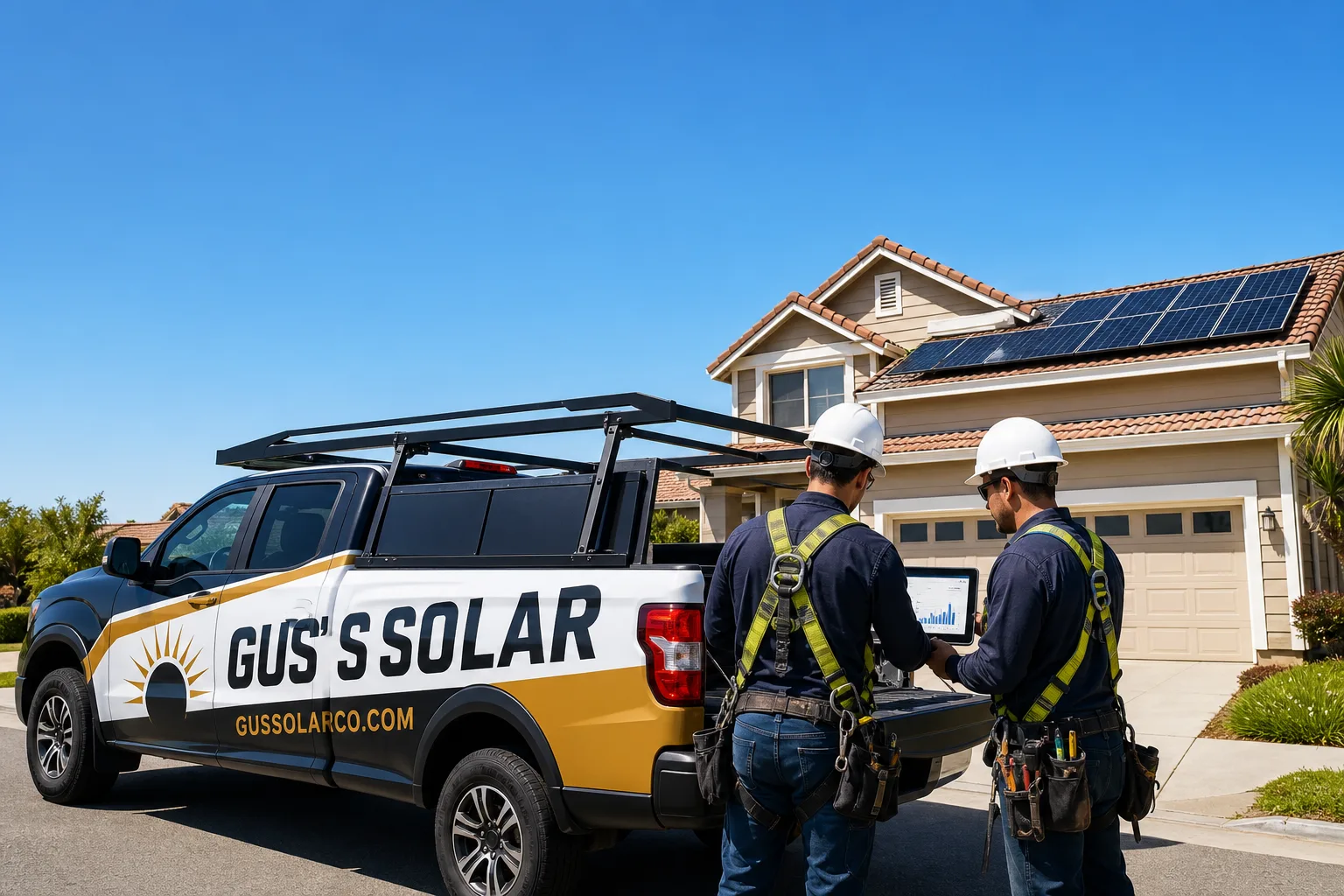
Free bill analysis - bring a power bill, get the production math for your actual roof, panel brands like Qcells and REC compared side by side
If the pitch starts at your door and ends with "sign tonight for the special," sleep on it. The sun will still be there tomorrow; so will we.
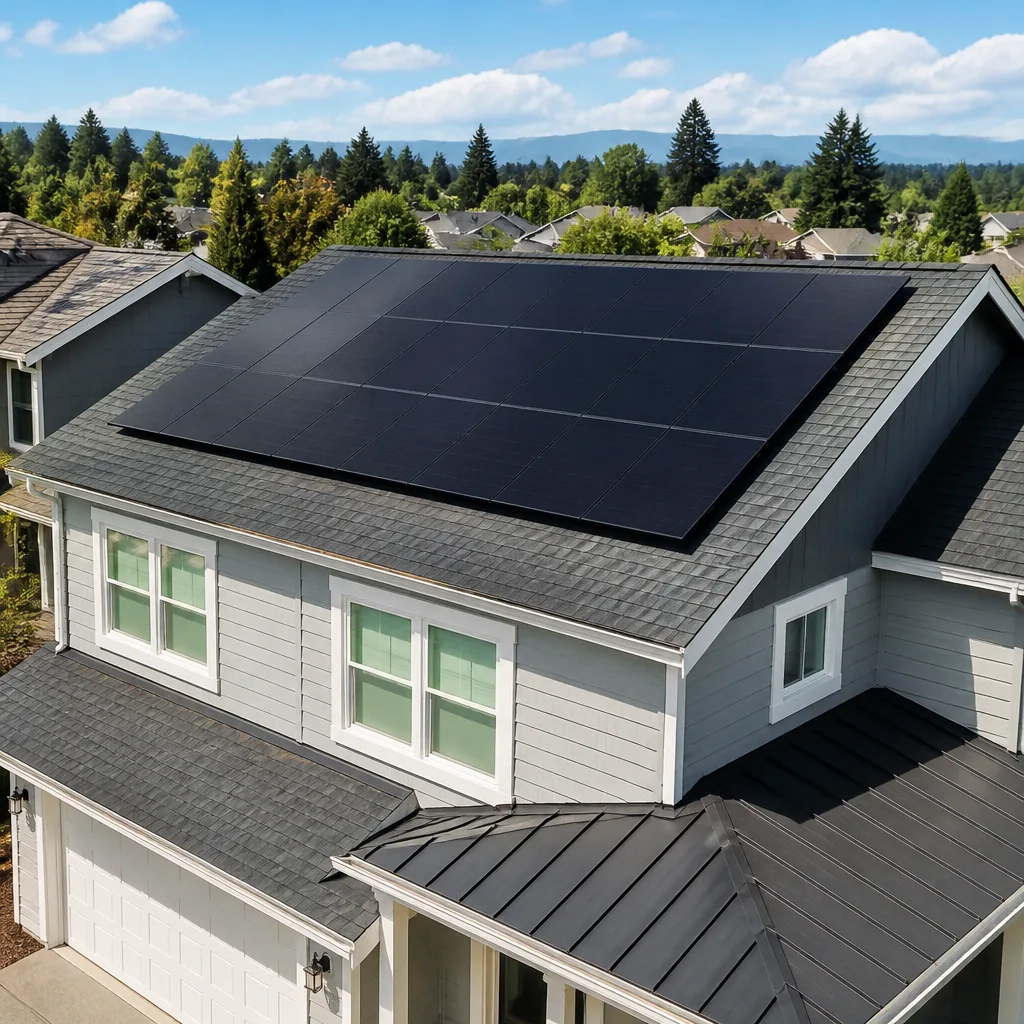
 Before
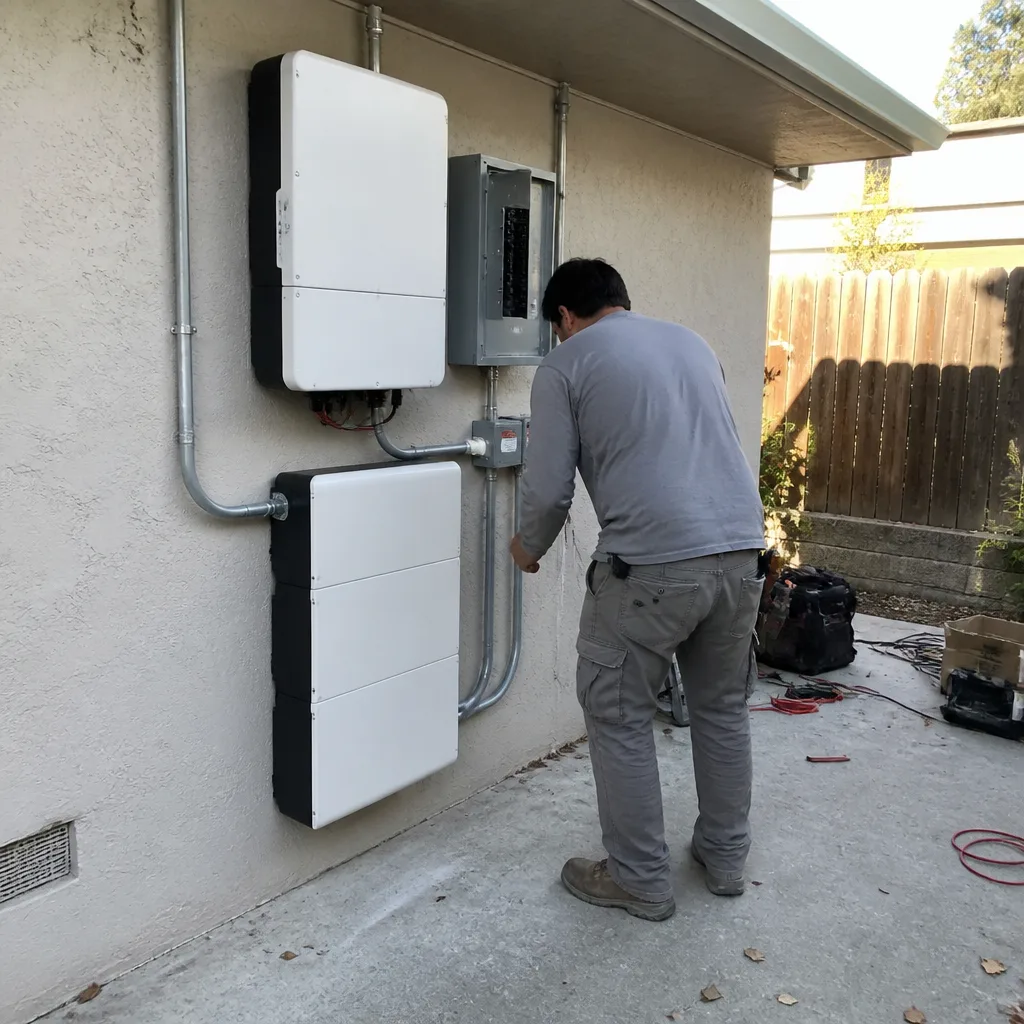 After
After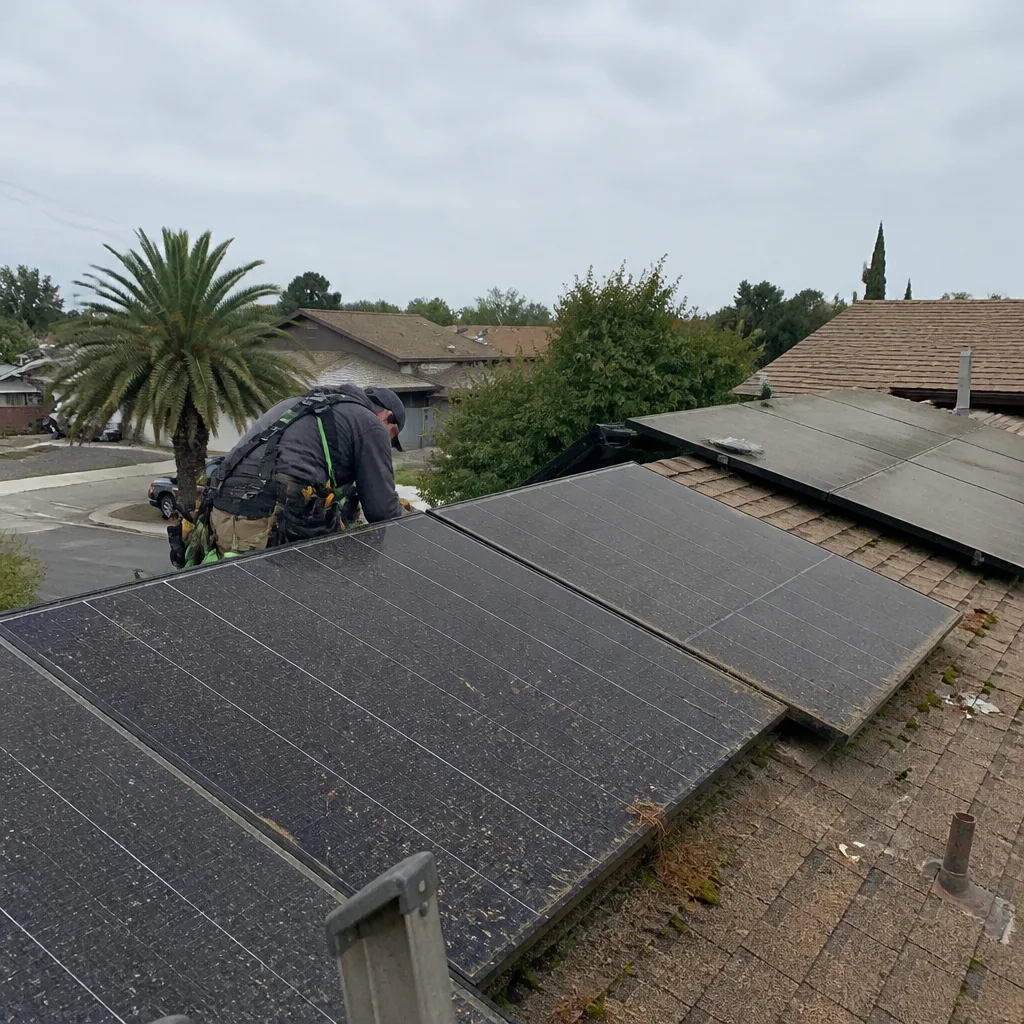 Before
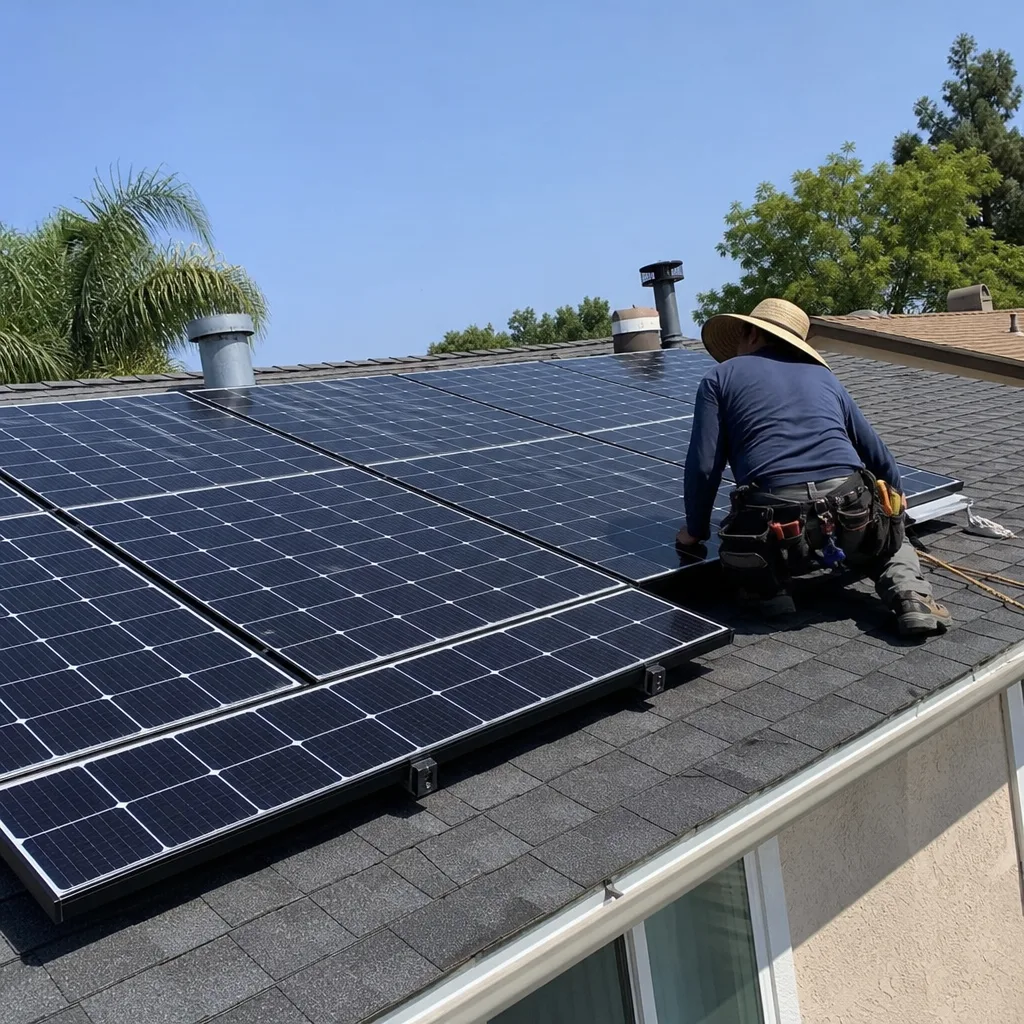 After
After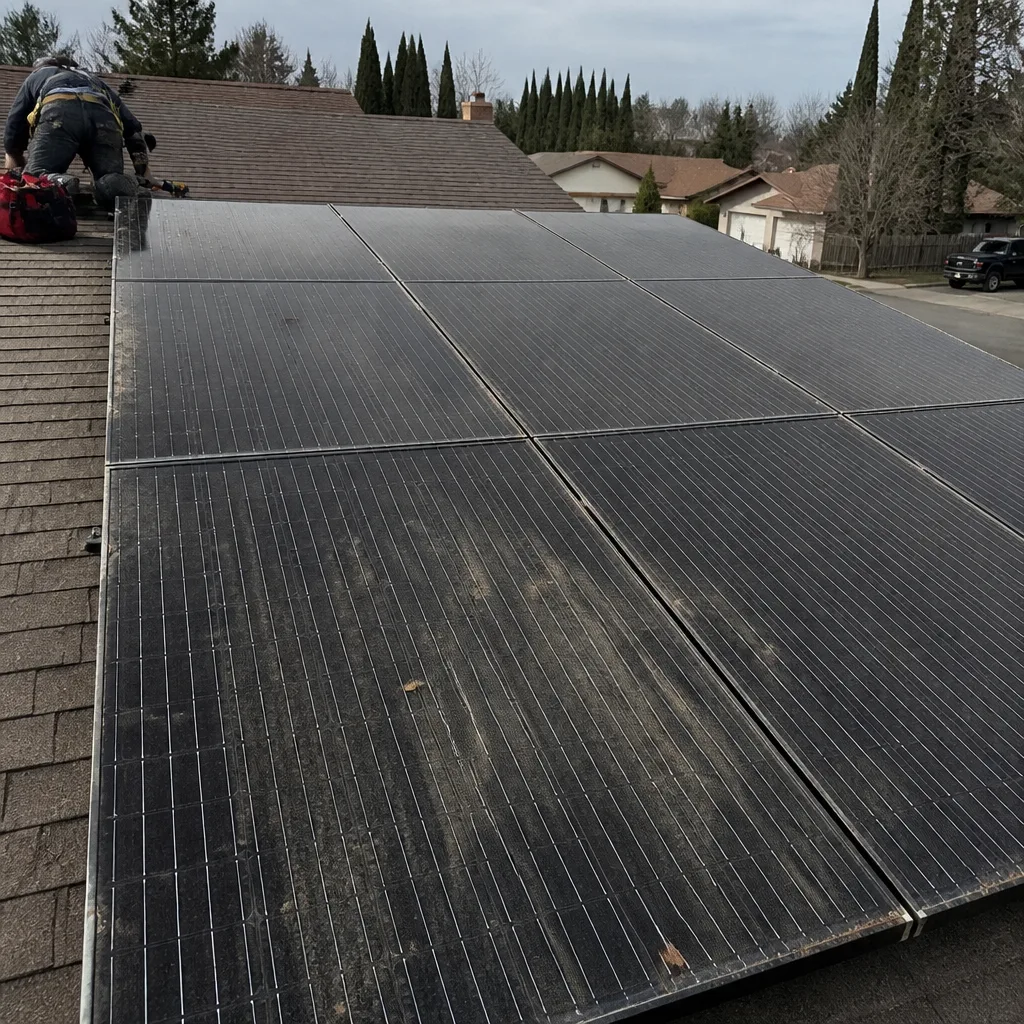 Before
 After
AfterFast, Reliable Commercial Solar Installation Across El Paso
Commercial solar installation in El Paso typically runs $2.10-$2.85 per watt before incentives, meaning a 100kW warehouse system lands between $210,000 and $285,000 before the federal tax credit and EPE interconnection rebates. Most commercial projects in El Paso take 8-16 weeks from signed agreement to energized array, depending on EPE’s queue and roof condition. We know every wrinkle in that process because we work inside it daily. Call (877) 550-6892 for a real number built off your actual kWh usage, not a brochure.
There’s a reason we keep a live person on the phone around the clock. A 1970s warehouse off Dyer Street in 79904, a restaurant row strip off Alameda in 79907, a carport fleet yard out past Horizon City in 79928. Each one has different roof geometry, different EPE tariff exposure, different dust realities. You shouldn’t have to explain El Paso to an out-of-state call center. You won’t have to.
Why Gus’s Solar Is El Paso’s Preferred Commercial Solar Installation Company
Gus Petrakis puts his name on the truck. That sounds simple, but it’s rare in this industry. We’re not a franchise, not a sales org that contracts installs to whichever crew is cheapest that month. Gus’s Solar has been locally owned since 2011, and the same people who quote your job are the ones who show up in uniform, background-checked, ready to work. If something isn’t right, the 90-Day Done Right Promise means one call brings Gus back. In writing. Every job.
El Paso business owners tell us the same thing over and over: a national outfit knocked on the door, quoted a low teaser number, then vanished after the paperwork dried. That’s not how we operate. Bring us a year of EPE bills and we’ll build the math off what you actually use. Take two weeks. Think about it. The price will be the same. If a salesman needs an answer tonight, the answer is no. We’d rather earn the work than pressure you into it.
We also stock parts locally for the El Paso market. No waiting on a warehouse in Phoenix or Dallas when a string inverter goes down in July. Our trucks run the Franklin Mountains corridor, the lower valley, the northeast, and out toward Fort Bliss every week. You’ll see us at the hardware store long after your array is live. That’s the point.
Our Commercial Solar Installation Services in El Paso
Commercial Rooftop Solar
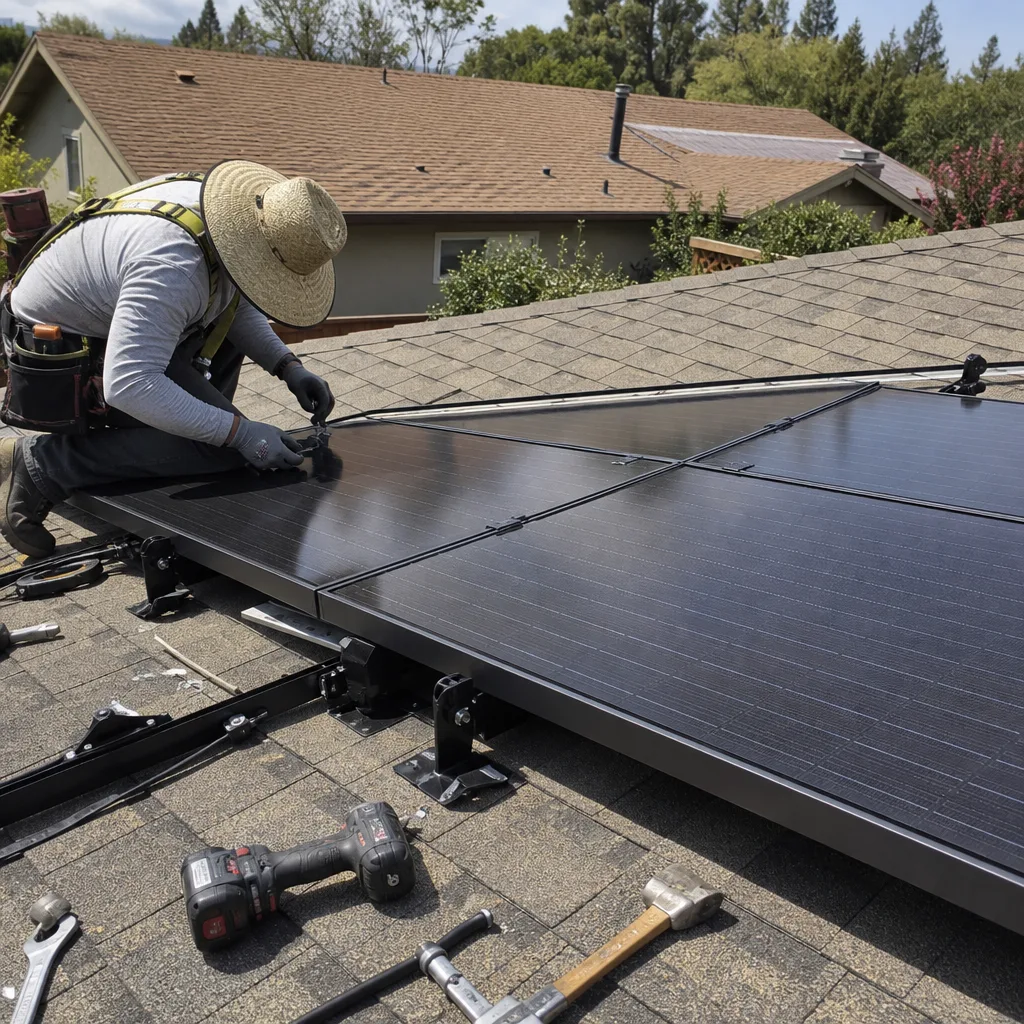
Most commercial roofs in El Paso are low-slope or near-flat stucco-and-adobe builds, especially the postwar tracts in 79904 and 79907. That means ballasted racking or low-slope penetrations, not the pitched-roof mounts you’d see in other markets. We size arrays around actual roof footprints, which are often smaller than the kW goal would suggest. High-efficiency panels like Qcells 480W or Canadian Solar’s 450W+ lines become the difference between hitting your offset target and falling short. If roof space is tight, we’ll tell you on the first visit, not after the permit is filed.
Warehouse & Industrial Solar
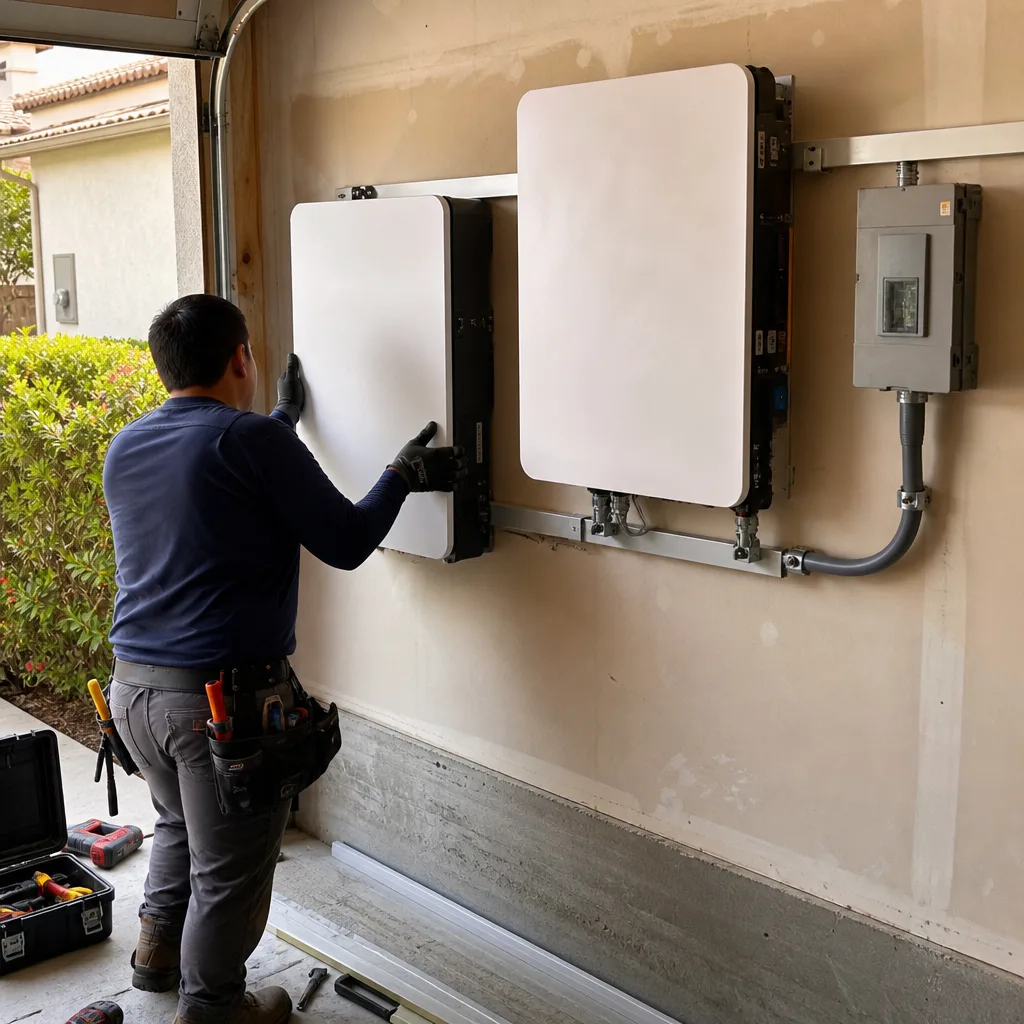
El Paso’s logistics and light-industrial base lives along the I-10 corridor, Dyer, Alameda, and out near the Zaragoza port of entry. These buildings run big daytime loads under EPE’s commercial time-of-use schedule. A properly sized warehouse array here routinely clears payback in five to seven years, but only if the array is modeled against EPE’s actual tariff tiers, not a generic Texas assumption. We run that math off your real interval data. Our Commercial Solar Installation team handles everything from engineering to EPE interconnection paperwork, so you don’t get stuck in the utility queue alone.
Solar Carport Installation
Parking lots in El Paso bake. The asphalt radiates heat from April through October, and employees walk through 110-degree lots to cars that hit 140 inside. A solar carport solves two problems at once: shaded parking and generation on land you already own. These are steel structures engineered for wind, and El Paso spring gusts off the Franklin Mountains regularly hit 50-60 mph. We spec racking rated for those loads, not the generic spec a national firm would copy from a California job file. Carport solar also plays well with EPE’s commercial rules since the structure doesn’t touch your roof membrane, which matters on older buildings where roof warranty is a concern.
Commercial Battery Storage
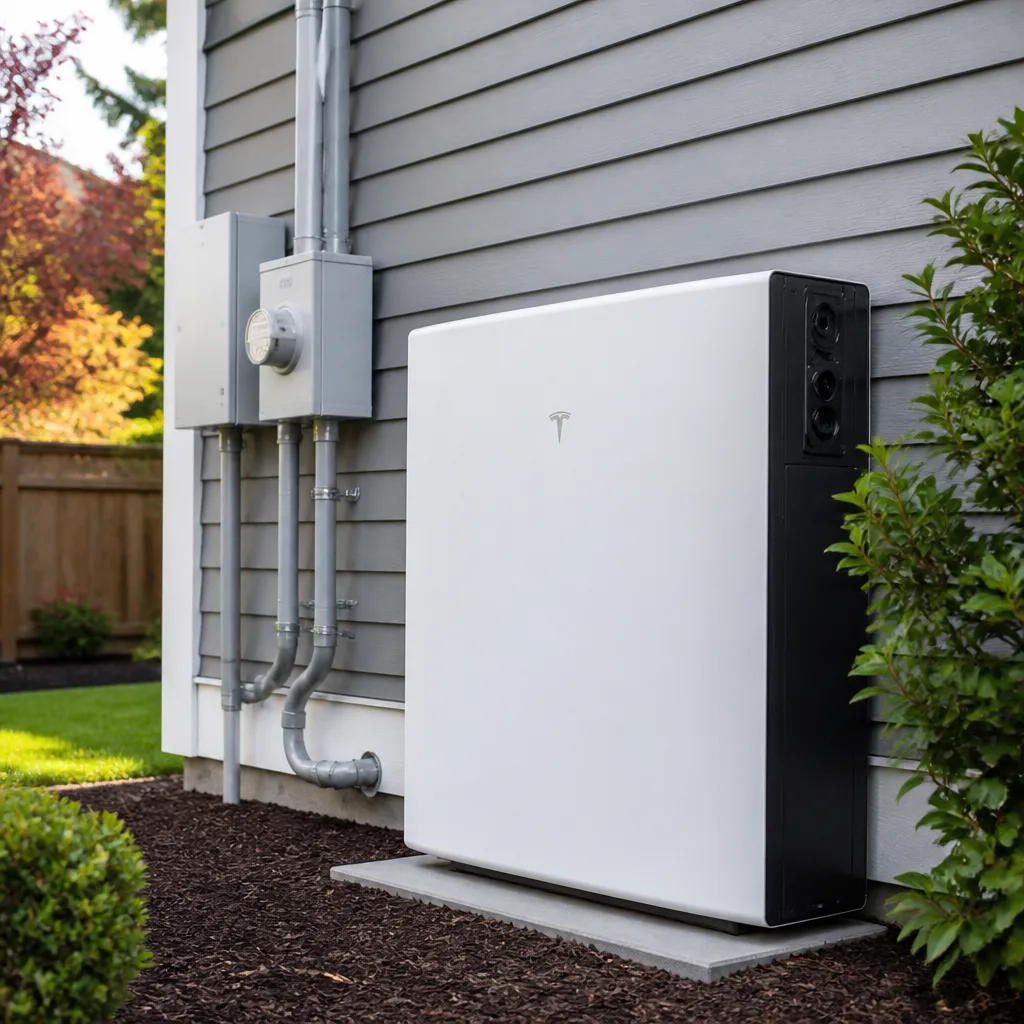
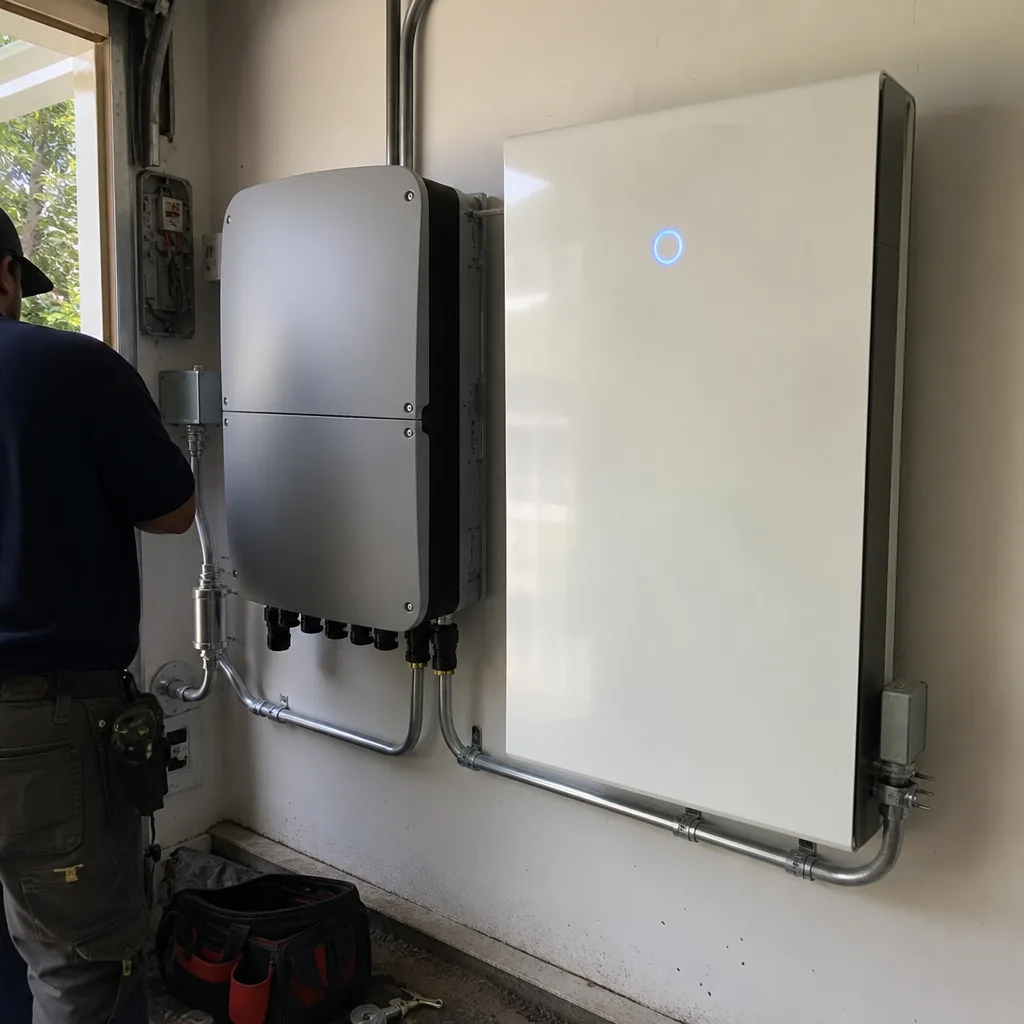
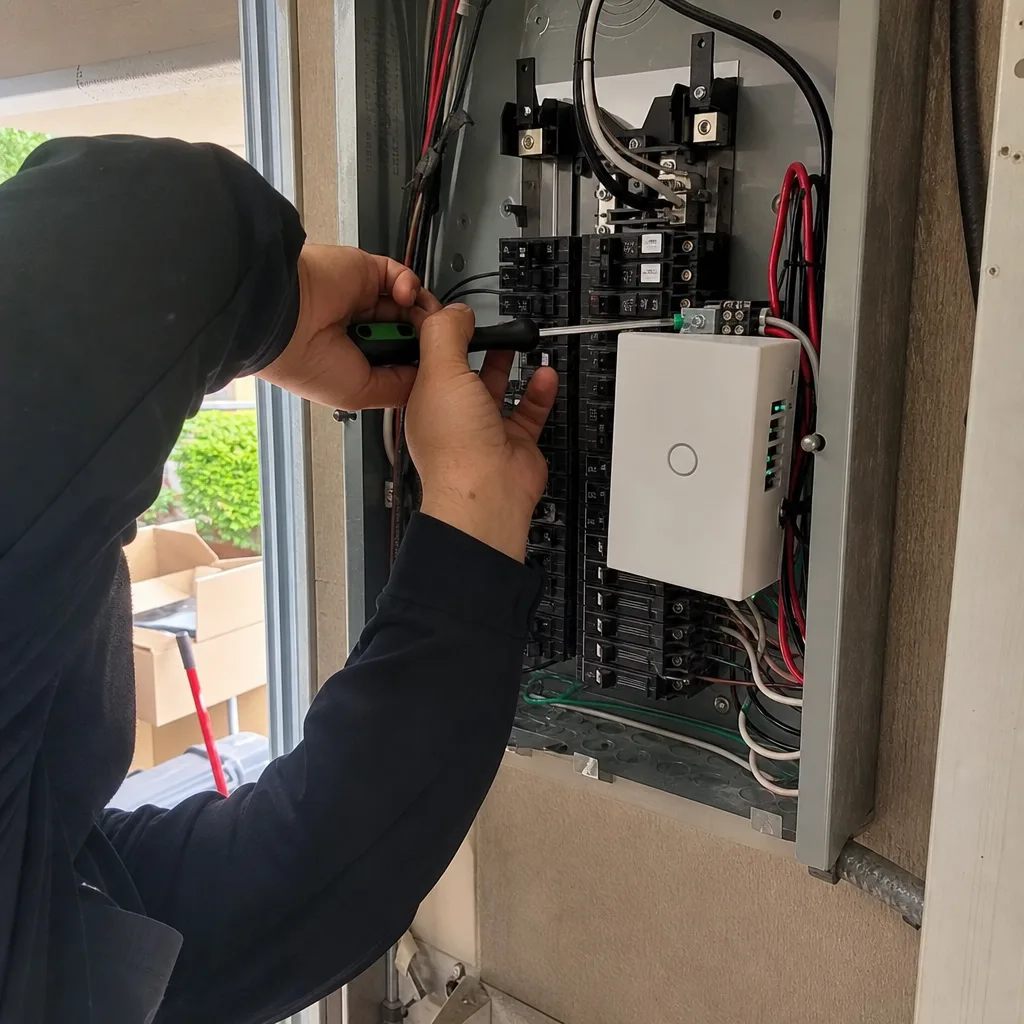
EPE’s time-of-use tiers punish afternoon peak demand. A FranklinWH or similar commercial battery lets you discharge during those expensive windows and arbitrage the spread. For El Paso businesses with refrigeration, cold storage, or server loads, batteries also flatten the risk of voltage sags during monsoon-season storms. We pair battery sizing with your interval data so you’re not buying more storage than your rate schedule justifies. Commercial solar and storage in El Paso is as much about tariff literacy as it is about hardware.
What happens when you call
- 1
A real person answersNo phone trees - you reach a local pro.
- 2
You get an upfront price rangeHonest numbers before anyone is dispatched.
- 3
A background-checked tech heads outLicensed & insured, dispatched right away.
- 4
You approve before work beginsNothing starts until you say go.
Trusted Brands We Service in El Paso
We work with Panasonic, Canadian Solar, JinkoSolar, and FranklinWH, among others. More importantly, we know which ones perform in the Chihuahuan Desert. Extreme UV irradiance at 3,700 feet elevation favors panels with strong temperature coefficients, and dust-tolerant racking matters more than brand stickers. We stock El Paso parts locally where it counts, so a warranty replacement doesn’t wait on a freight truck from Nevada. You get the brand’s warranty plus our 90-Day Done Right Promise on the workmanship. Two layers of protection, both in writing.
Common Commercial Solar Installation Problems We See in El Paso Homes
- Undersized arrays on small postwar roof footprints. Homes and small commercial buildings in 79904 and 79907 were built tight and low during Fort Bliss expansion. Rooftops simply don’t have the square footage for a big array, so installers who don’t know El Paso spec the wrong panels and the project misses its kW target. We size for the roof you have, not the roof we wish you had.
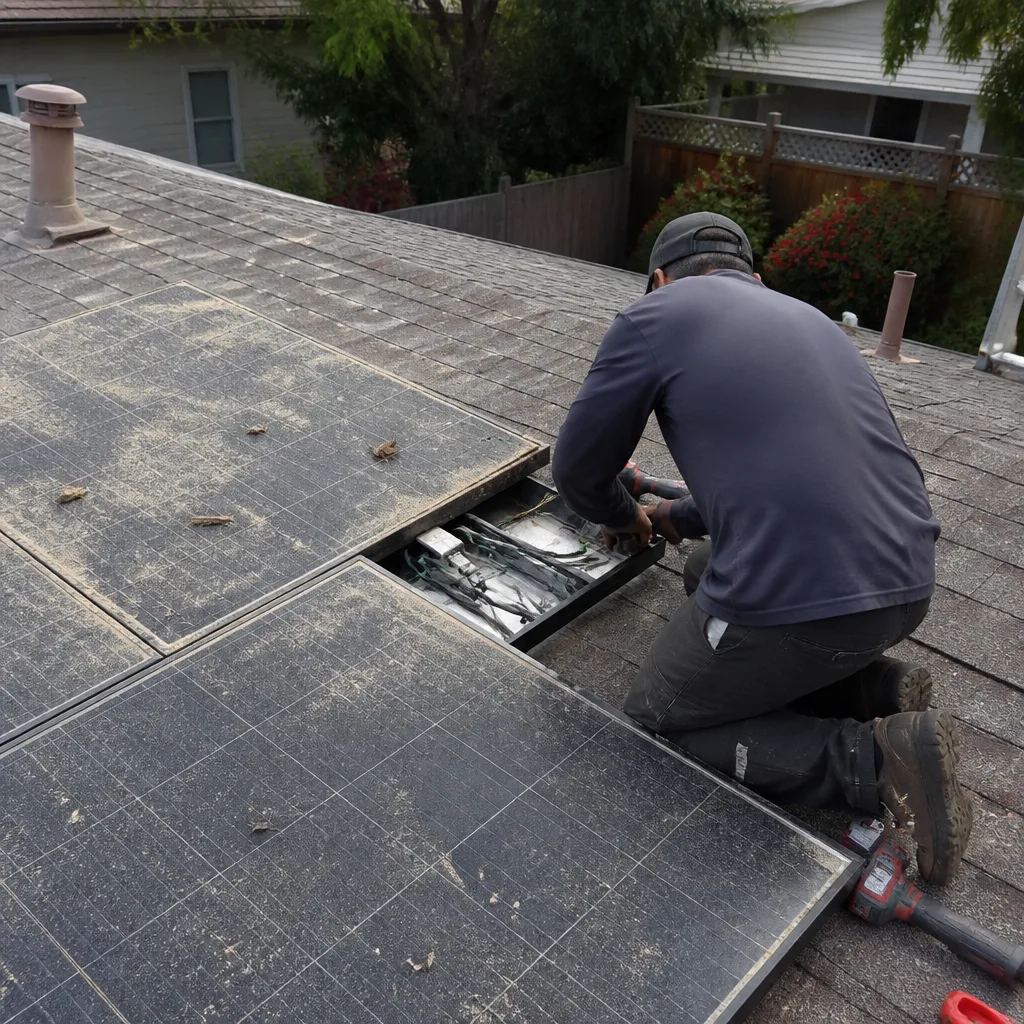
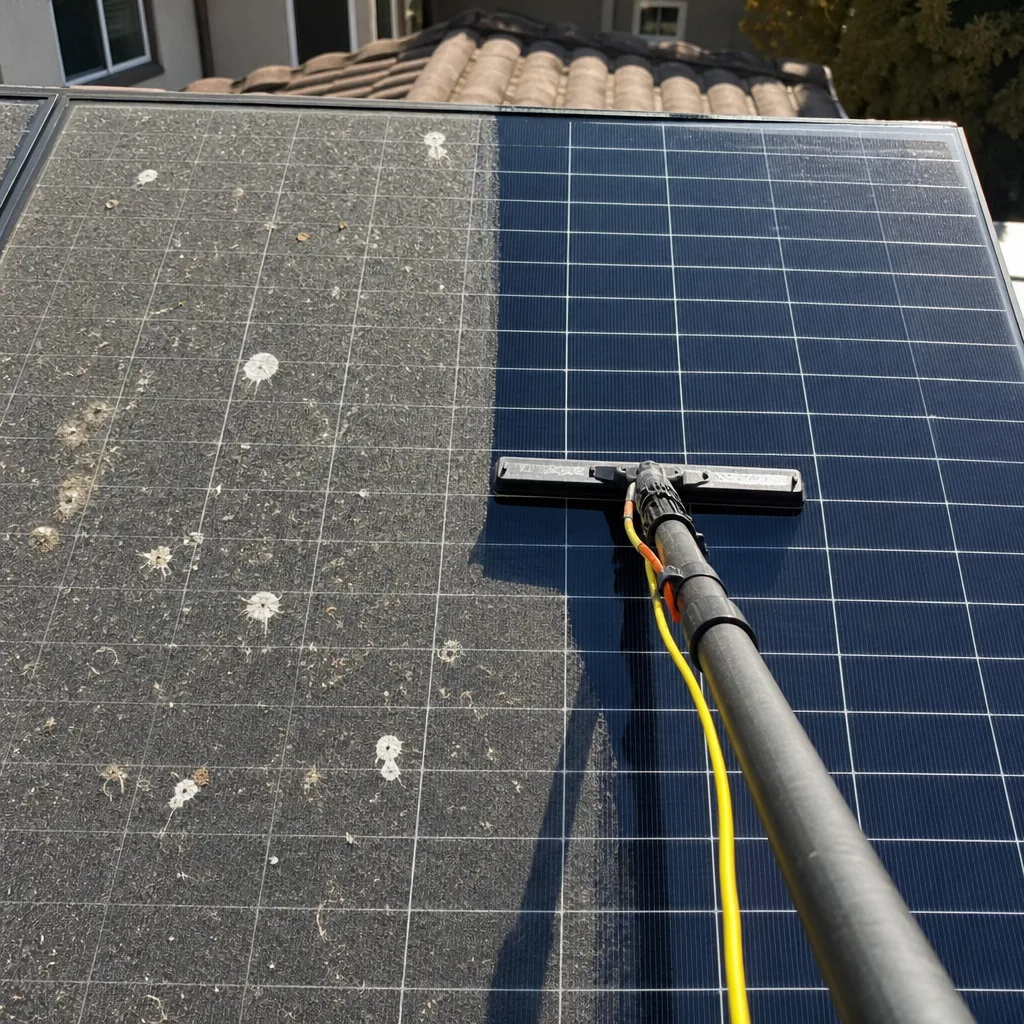
- Caliche dust buildup between wash cycles. Spring dust storms deposit a fine, mineral-heavy crust on arrays all over El Paso. Left unwashed, that layer cuts production 10-25%. Installers who skip a maintenance clause leave you holding that loss. We write panel-washing schedules into commercial contracts as standard, because in El Paso it’s not optional.
- Franklin Mountain winter shading. West-facing properties in 79902 and 79911 lose morning sun to the ridgeline from November through February. Production models that ignore mountain horizon angles run 15-20% high on winter output, which quietly wrecks your true-up math. We model horizon elevation for every El Paso project.
- EPE net metering surprises. EPE isn’t ERCOT. The utility’s net metering caps mean oversized systems can get pushed onto buy-all/sell-all tariffs, which destroys payback if it isn’t modeled upfront. We run interconnection scenarios before you sign, so the system on paper matches the system in reality.
Staying with El Paso’s Climate and Terrain
El Paso sits outside the ERCOT grid entirely. Every commercial solar system in this city interconnects with El Paso Electric under Western Interconnection rules, and EPE’s net metering caps and time-of-use tiers dictate your payback far more than panel efficiency alone. That’s not a footnote. It’s the whole game. A 100kW array on a warehouse off Alameda and a 100kW array on a warehouse in Dallas are completely different financial instruments because the utility rules are different. Most solar companies treat El Paso like any other Texas city. That’s a modeling error that costs real money.
Add in the dust. At roughly 3,700 feet in the Chihuahuan Desert, El Paso combines brutal UV with low humidity, which maximizes panel output, but spring winds drop caliche-heavy particulate that settles on every horizontal surface. We’ve measured 20% production loss on arrays that haven’t been washed in six months. A panel-washing contract in El Paso isn’t an upsell. It’s the difference between projected true-up credits and a bill that still stings. If you’re paying for commercial solar, you should be collecting every kWh the panels produce. We help you do that.
Then there’s the mountain. Properties on the west-facing slopes below the Franklin Mountains in 79902 and 79911 lose morning sun in winter, not because of clouds but because of ridgeline geometry. Installers who’ve never worked El Paso model trees and roof pitch and call it done. We model the actual horizon. If your winter production estimates matter to your EPE true-up (and they do), that detail is non-negotiable.
One real example from our crew. We recently retrofitted a 1970s warehouse off Dyer Street in 79904 where the original T12 fluorescents still hummed over a roof caked with caliche from years of spring storms. We installed 480W Qcells with SolarEdge optimizers on a ballasted low-slope rack, added rapid shutdown to meet current code, and the owner now clears a 6-year payback under EPE’s commercial time-of-use schedule. That building had been written off by two other solar companies as a bad candidate. It wasn’t. It just needed someone who understood El Paso.
Pricing for Commercial Solar Installation in El Paso, TX
Here are the numbers, no games. Commercial rooftop solar on a low-slope El Paso warehouse runs $2.10-$2.85 per watt, depending on racking type, roof condition, and inverter selection. A smaller 25kW medical office in central El Paso typically lands $52,000-$71,000 before incentives. A 250kW industrial array out near the Zaragoza corridor runs $525,000-$712,000 before the federal tax credit and EPE rebates. Commercial battery storage with FranklinWH equipment adds $700-$1,100 per kWh of capacity, installed. These are real El Paso ranges, not national averages dressed up. Call (877) 550-6892 and we’ll put an exact number on your building in a few days. Estimates are free, and no signature is wanted tonight.
We Also Serve Cities Near El Paso
Our trucks cover El Paso and the surrounding communities daily: Fort Bliss, Homestead Meadows North, Homestead Meadows South, and Socorro. If your commercial property sits just outside city limits, you’re still in our service area. Learn more about our Commercial Solar Installation in El Paso coverage, or call (877) 550-6892 and ask. A live person answers. Every time.
Serving El Paso, TX - Our Local Coverage Area
We’re based in the El Paso area and know this community well. Use the map below to see our service coverage - if you’re nearby, we can almost certainly help.
FAQs - Commercial Solar Installation in El Paso
EPE’s net metering cap directly caps the size of system you can bank credits on, and if your array exceeds the cap, you’re moved onto a buy-all/sell-all tariff that pays wholesale for your export and retail for your import, which can stretch payback by several years. In other Texas cities on ERCOT, different utilities have different caps or none at all, so comparing payback across cities without modeling the specific utility is meaningless. We run EPE interconnection scenarios before you sign anything. Call (877) 550-6892 for a real payback model built on your actual EPE bills.
Yes, but only if the ballast is engineered for El Paso’s 50-60 mph spring gusts, not the generic 90 mph uniform spec that a national firm would lift from an inland California job file. We spec racking and ballast loads against local wind data, and we build dust-mitigation into maintenance so caliche doesn’t erode production between washes. The short version: ballasted racking is standard on low-slope El Paso roofs, but the engineering has to be local or the array won’t survive a bad spring.
Your building likely sits on the west-facing slopes below the Franklin Mountains, and the ridgeline blocks morning sun from November through February. Installers who don’t model mountain horizon elevation will overestimate winter production by 15-20%, which quietly inflates your true-up credits and stretches payback. We measure horizon angles on site. That one detail is often the difference between a good deal and a bad one. If you already have a quote, bring it to us for a free second opinion at (877) 550-6892.
For older El Paso buildings with uneven roof exposures, dust-prone low-slope sections, or partial winter shading from the mountains, microinverters typically outperform string inverters because each panel operates independently, so a shaded or dusted panel doesn’t drag down the whole string. However, microinverters cost more upfront, and a string inverter with optimizers and rapid shutdown often makes more financial sense on large, open warehouse roofs with full sun exposure. We’ll show you both math on the same roof. That’s the only honest way to answer.
Most El Paso commercial arrays need washing every 60-90 days during the spring dust season and every 4-6 months the rest of the year, and yes, it directly affects your EPE true-up because a caliche-crusted array produces 10-25% less kWh than a clean one, which means fewer export credits and a bigger utility bill. We include panel-washing schedules in commercial contracts as standard. If your current installer didn’t mention it, call (877) 550-6892 and we’ll tell you what your array is actually producing versus what it should be.
Call Gus’s Solar at (877) 550-6892 for a free commercial solar estimate in El Paso. No pressure, no signature tonight, just real numbers from a local owner who answers his own phone.
Written by Gus Petrakis, Owner at Gus’s Solar, serving El Paso and the surrounding communities with locally owned commercial solar installation since 2011.