
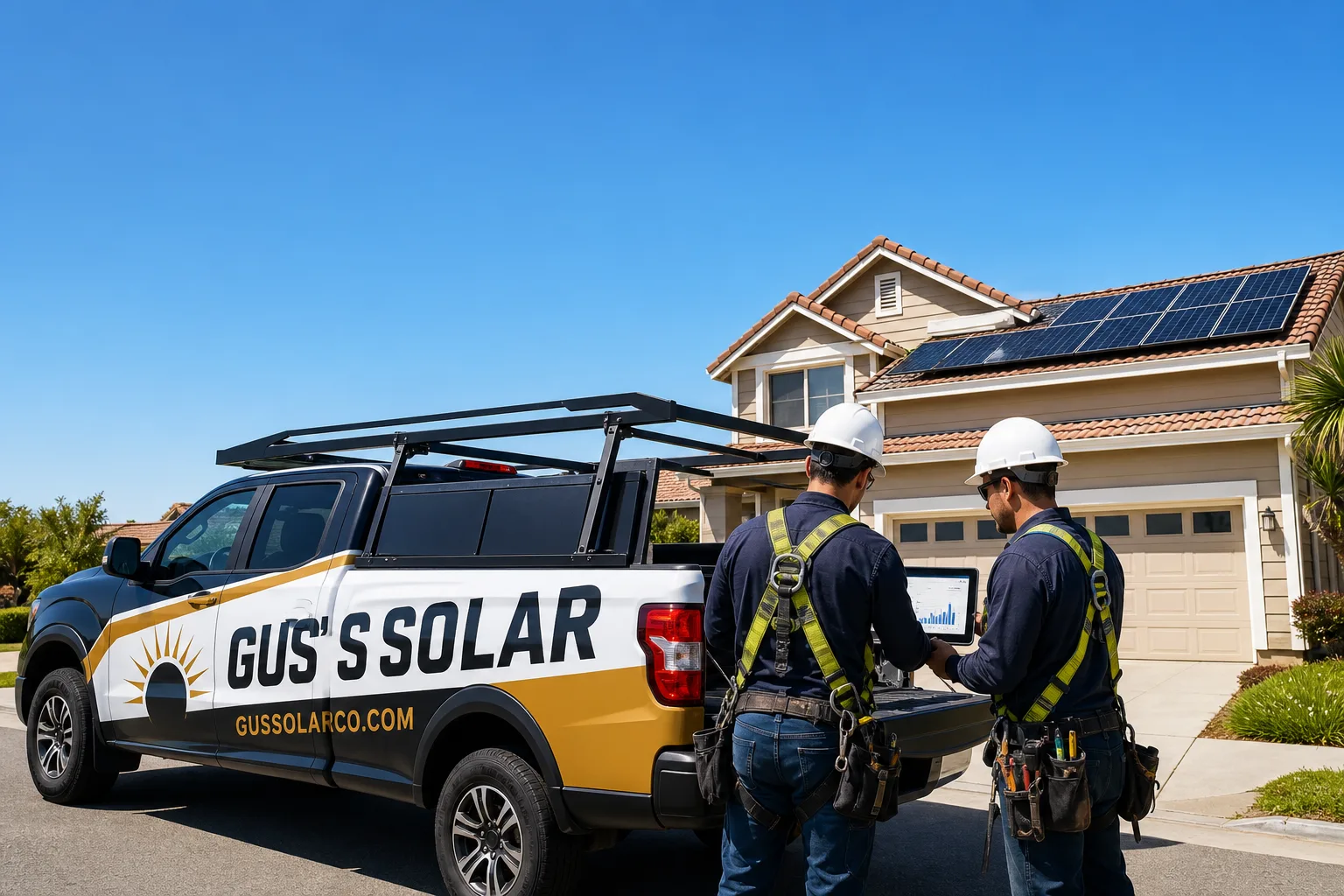
Free bill analysis - bring a power bill, get the production math for your actual roof, panel brands like Qcells and REC compared side by side
If the pitch starts at your door and ends with "sign tonight for the special," sleep on it. The sun will still be there tomorrow; so will we.
 Before
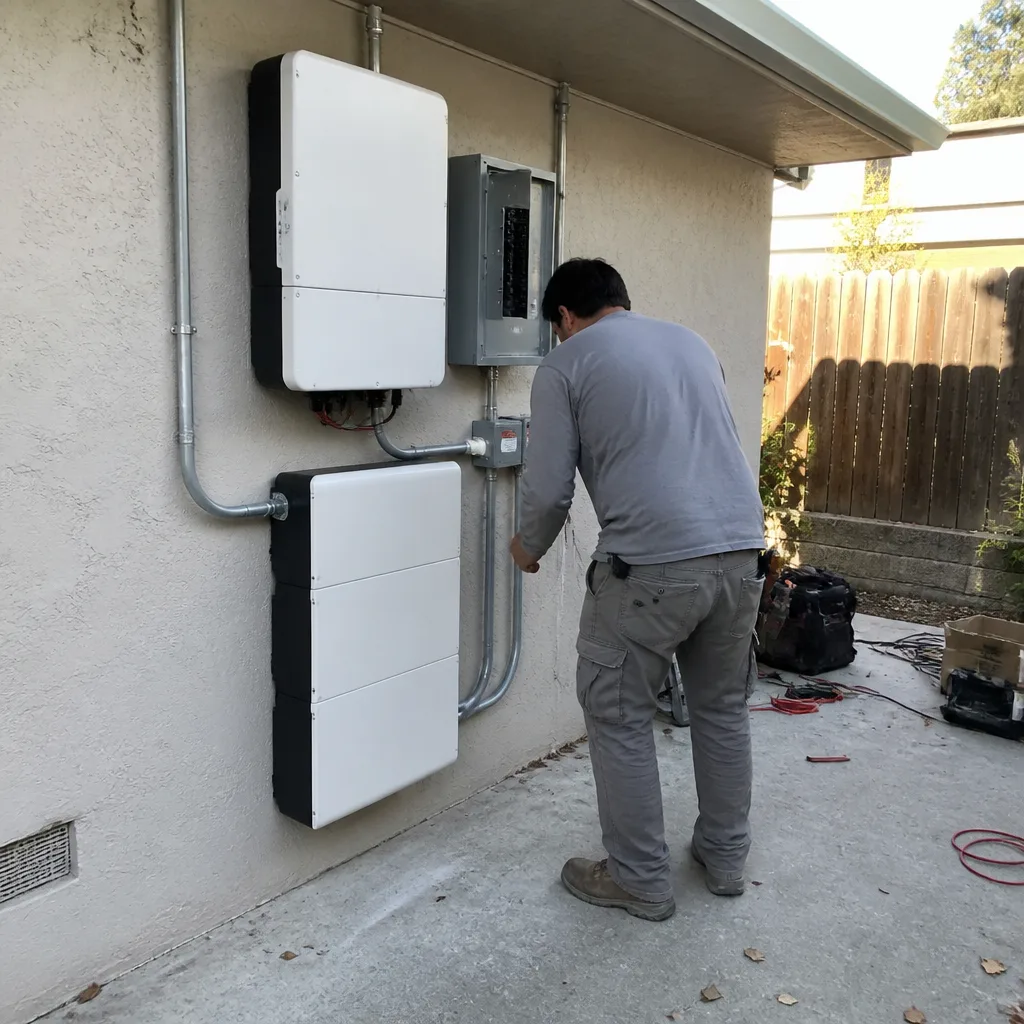 After
After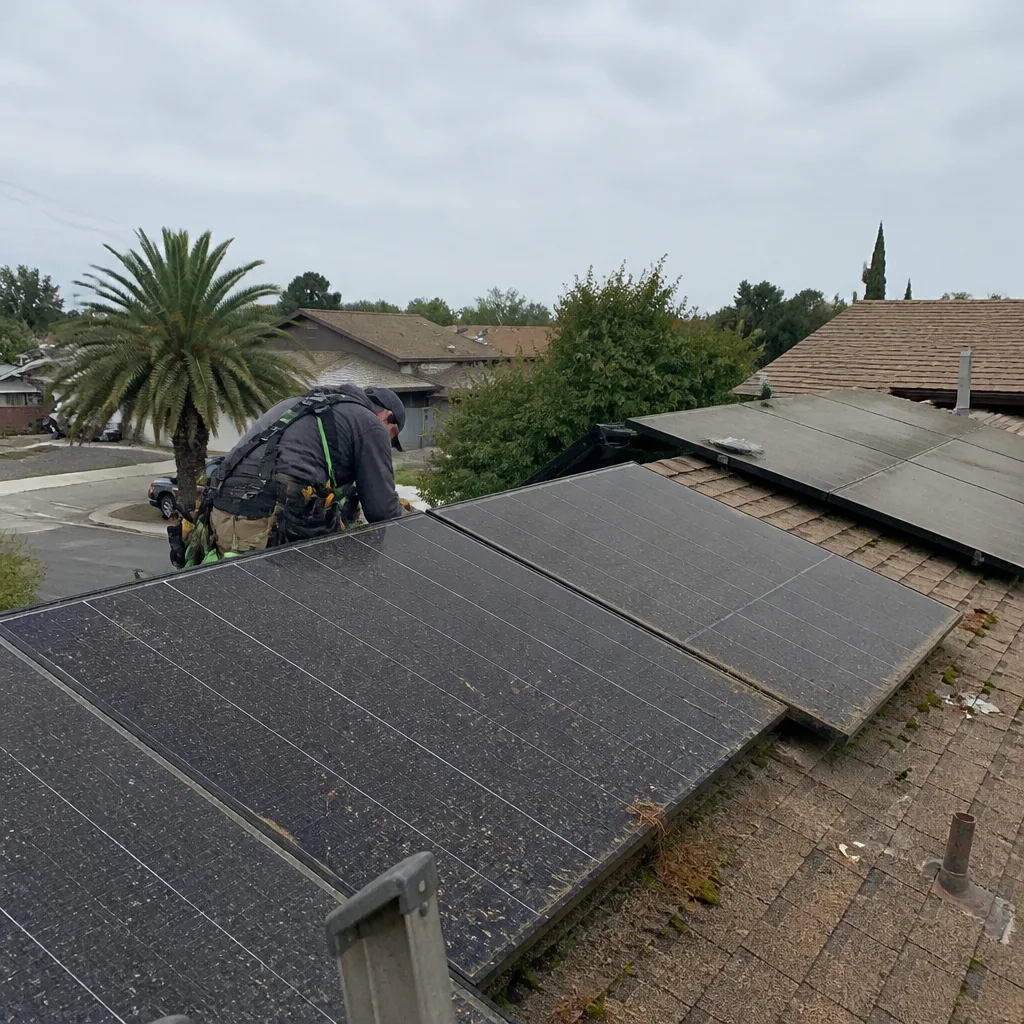 Before
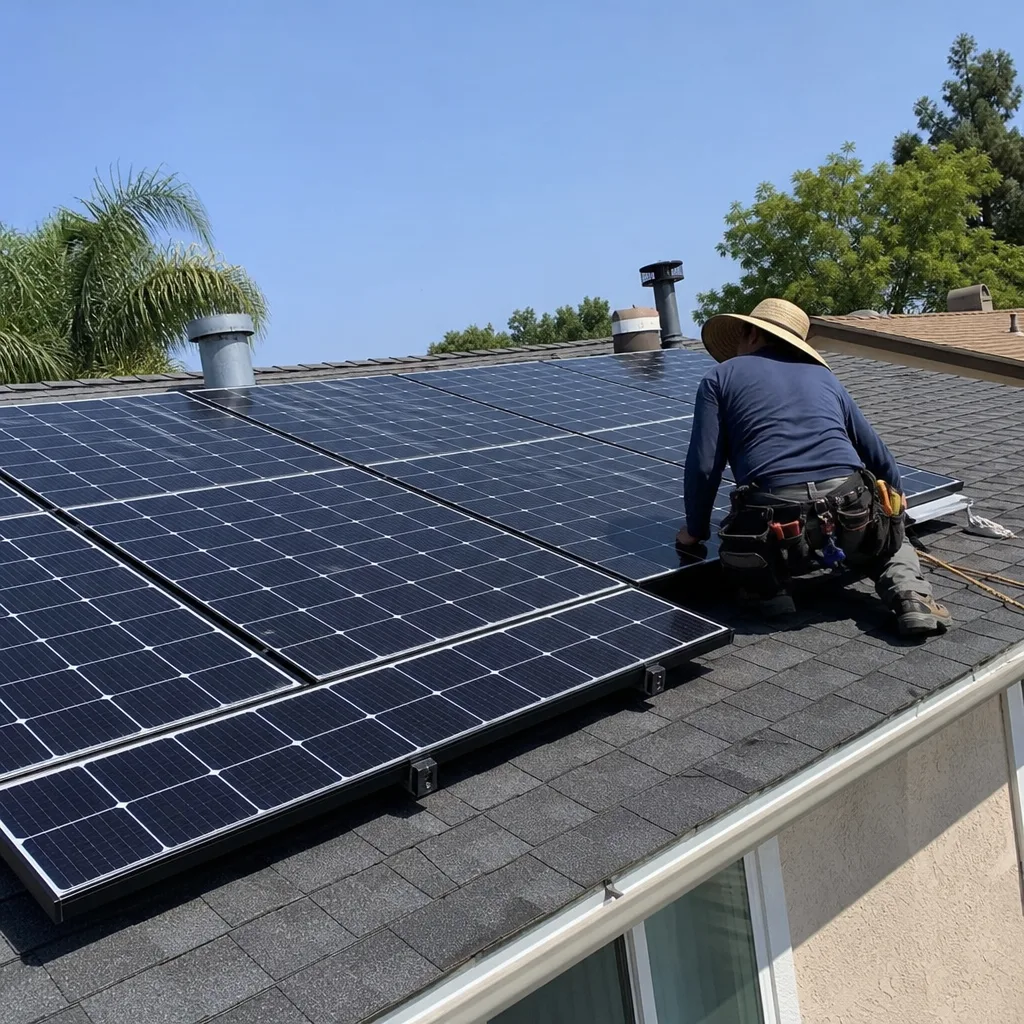 After
After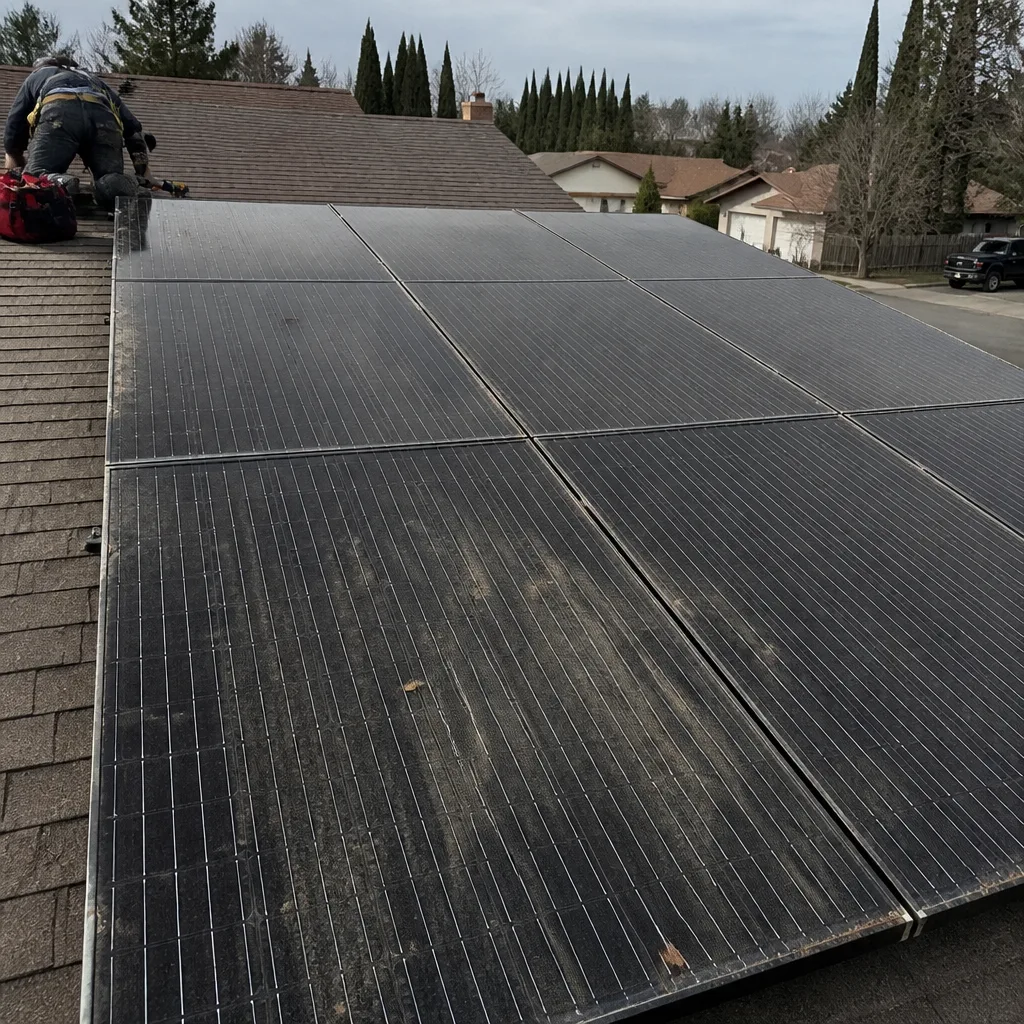 Before
 After
AfterFast, Reliable Commercial Solar Installation Across Alpine
Commercial solar installation in Alpine typically runs $2.40 to $3.10 per watt for rooftop systems, meaning a 100 kW warehouse array lands between $240,000 and $310,000 before the federal Investment Tax Credit. Most Alpine projects take 8 to 16 weeks from permit to power-on, and that timeline stretches longer if your installer doesn’t understand the County’s dual-agency review. If you own a warehouse, farm building, or commercial property anywhere from Tavern Road to South Grade Road, call Gus’s Solar at (877) 550-6892. We’re owner-operated, we know Alpine’s fire-zone rules cold, and we’ll quote you real year-25 numbers based on your actual SDG&E bill, not a brochure.
Our Commercial Solar Installation team handles everything from rooftop arrays to carport canopies and battery backup. We serve Alpine directly with our own crew: background-checked, uniformed, and trained on the exact wind-load and fire-setback requirements San Diego County enforces in this specific hillside corridor.
Why Gus’s Solar Is Alpine’s Preferred Commercial Solar Installation Company
Alpine business owners have dealt with enough out-of-town crews that quote one number over the phone and hand over a different contract on site. We don’t work that way. Gus Petrakis puts his name on every job, publishes his license number and address, and answers the phone when you call. That’s been the operating code since 2011, and it’s why our reputation in Alpine, Jamul, and Lakeside is built on repeat business rather than door-knocking.
Gus’s crew has installed and serviced commercial arrays across Alpine’s 91901 and 91903 ZIP codes, from warehouses near the I-8 corridor to agricultural buildings off Japatul Valley Road. Our customers call knowing two things: a live person answers 24/7, and if something isn’t done right, the 90-Day Done Right Promise means one call brings Gus back. In writing, on every job. No voicemail trees, no corporate call centers three states away.
Response time to Alpine is same-day or next-day in most cases, and because we coordinate from our San Diego office while staging equipment locally, we’re not hauling crews from Riverside or LA. Take two weeks to think about any quote we give you. The price will be the same. If a salesman needs an answer tonight, the answer is no.
Key Takeaways:
- Commercial solar in Alpine costs $2.40-$3.10/watt installed, before tax credits or depreciation.
- Every commercial permit here goes through San Diego County’s Department of Planning & Development Services plus a separate CAL FIRE review.
- Alpine’s VHFSZ designation means required panel setbacks and clear zones shrink usable roof area by 15-30% compared to incorporated cities.
- Gus’s Solar is owner-operated, licensed, insured, and answers calls 24/7 with a live person.
Our Commercial Solar Installation Services in Alpine
Commercial Rooftop Solar
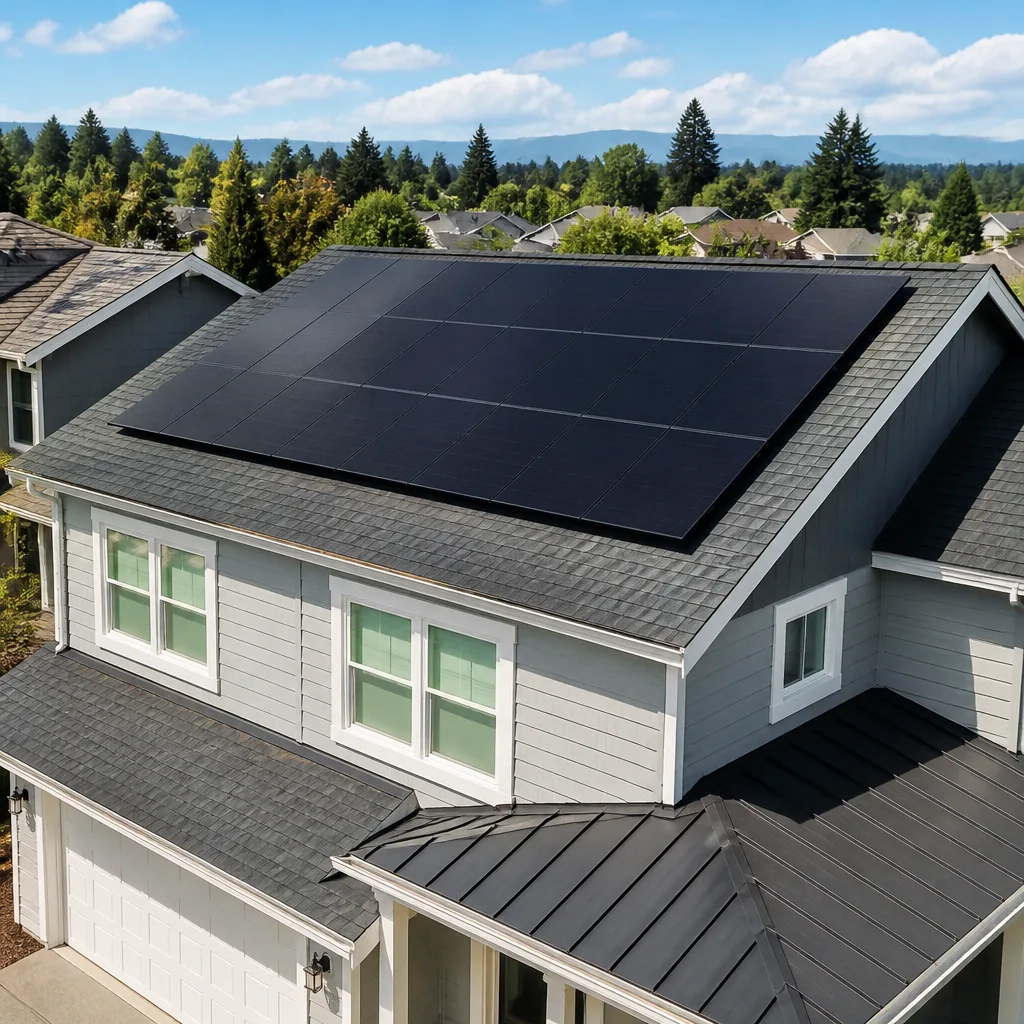
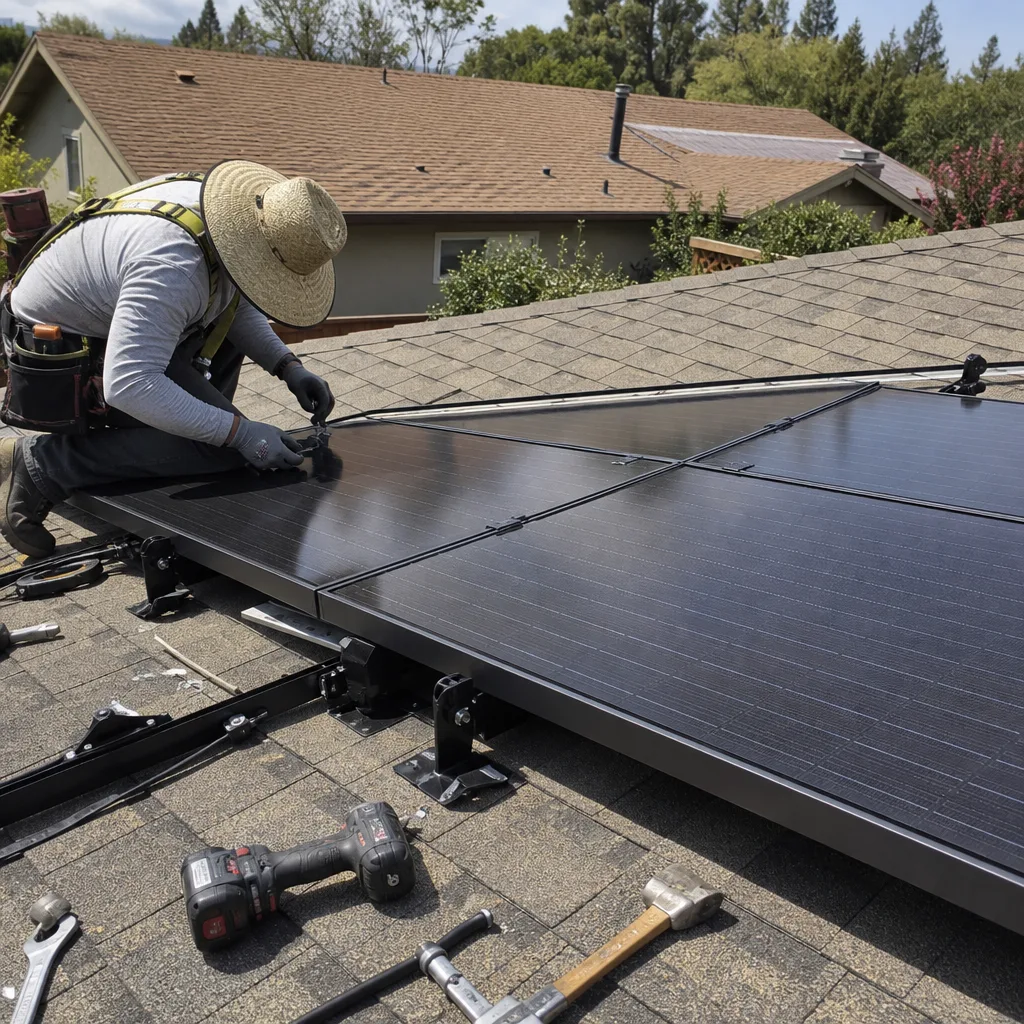
Rooftop arrays on Alpine’s commercial buildings have to satisfy stricter rules than almost anywhere else in inland San Diego County. The Wildland-Urban Interface overlay means CAL FIRE mandates specific panel setbacks from ridge lines, eaves, and vents, plus clear zones for firefighter access. We map your actual usable roof area before we quote, so the system size we put on paper reflects what the County and CAL FIRE will actually approve. That’s the difference between a proposal and a working array.
Warehouse & Industrial Solar
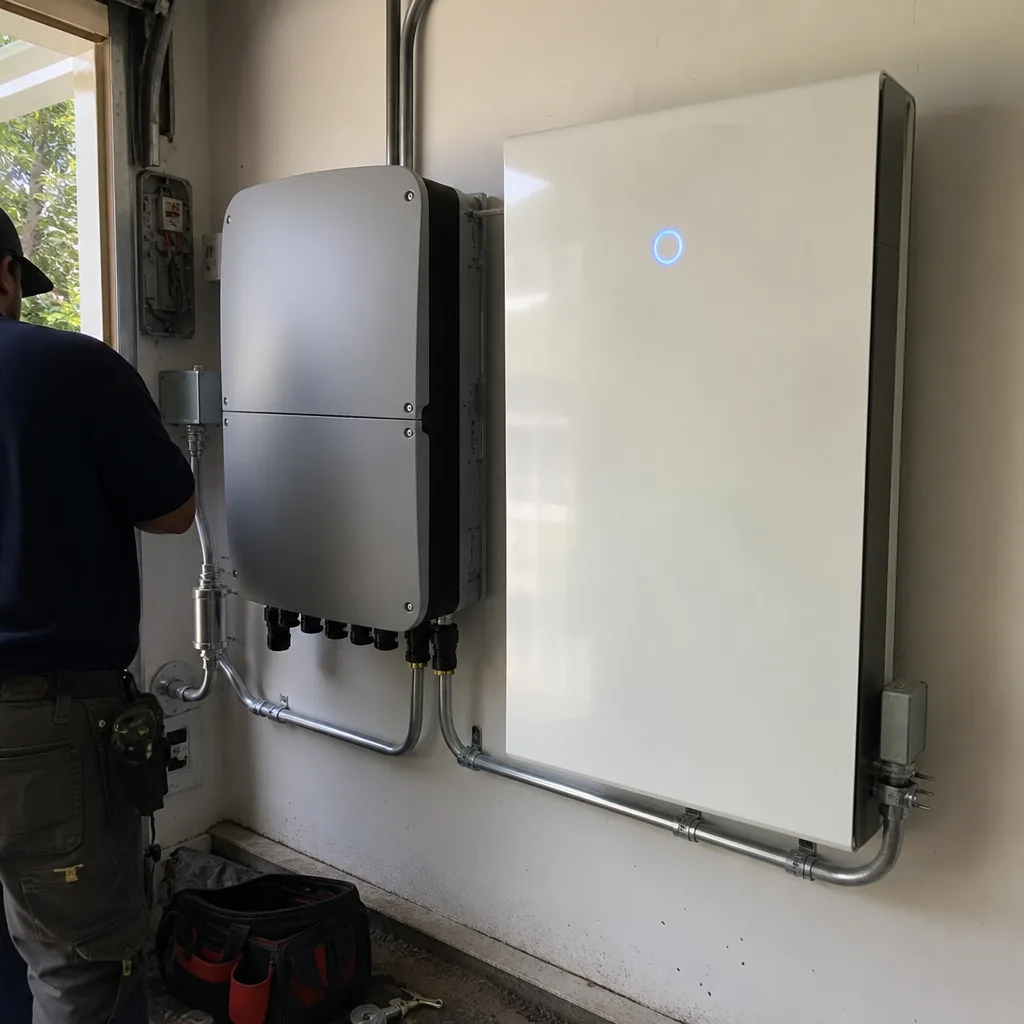
Warehouse buildings along Alpine’s commercial corridors, particularly around the Alpine Boulevard and Tavern Road area, tend to be low-slope with wide clear spans. That’s good for solar, but the same buildings often sit in wind-exposed positions where Santa Ana gusts funnel hard through the foothills. Standard 90 mph wind-load racking isn’t enough. We spec racking to Alpine’s 110 mph uplift rating, and every bolt gets torqued to the VHFSZ specification with documentation your permit reviewer will actually accept.
Solar Carport Installation
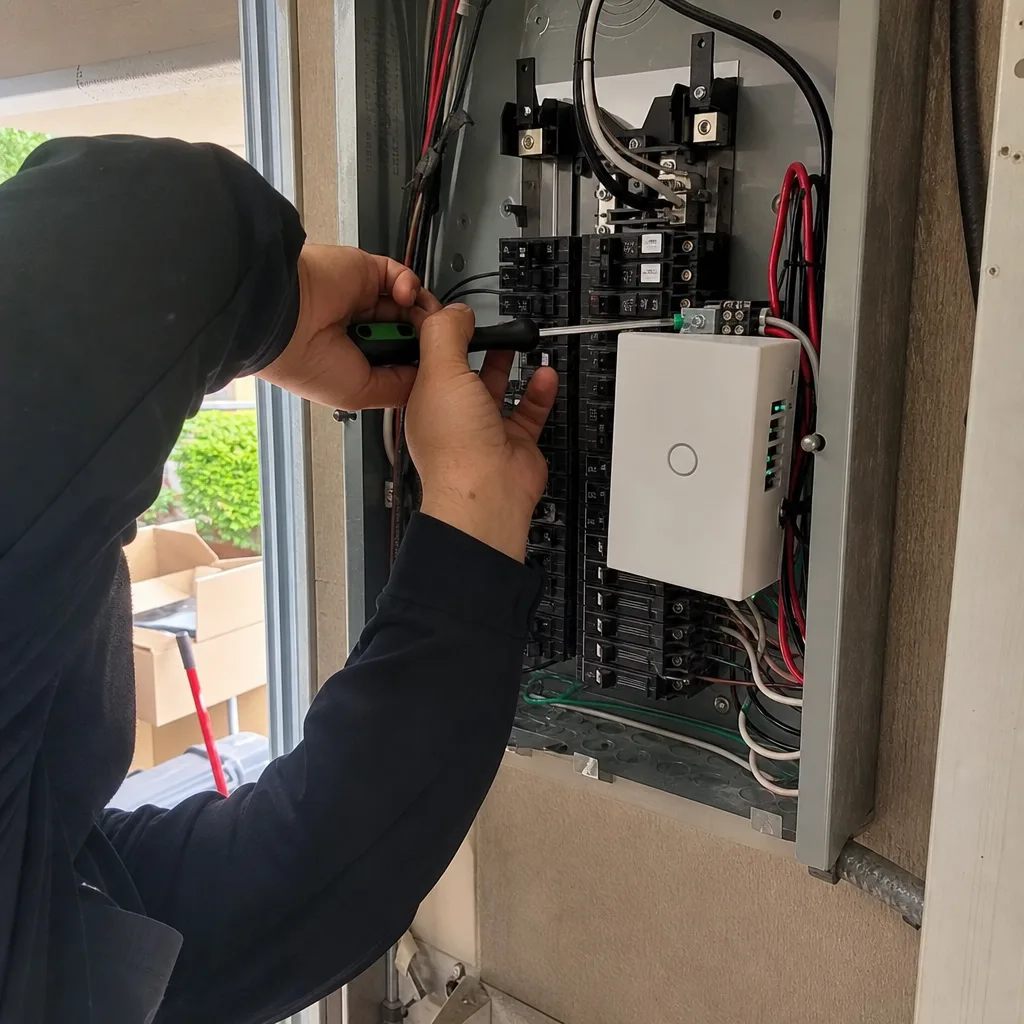
A solar carport often makes more sense in Alpine than another rooftop array, especially on parcels where fire setbacks carve into usable roof space. The canopy structure can go over parking without touching your building’s construction, which bypasses several roof-specific CAL FIRE concerns entirely. Carports also solve the shading problem that Alpine’s steep terrain creates: a free-standing structure can be placed and angled for optimal sun exposure regardless of roof orientation. Expect $3.00 to $3.50 per watt for a carport system in Alpine.
Commercial Battery Storage
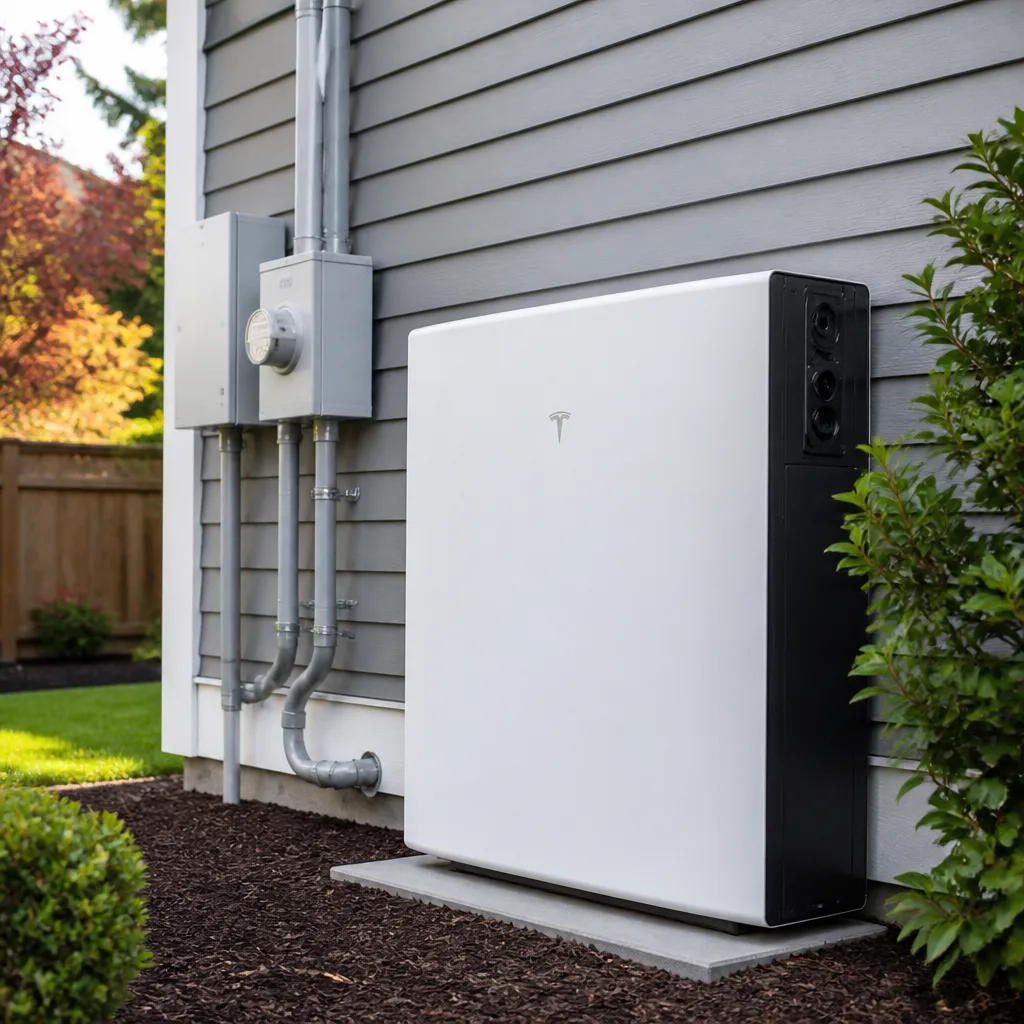
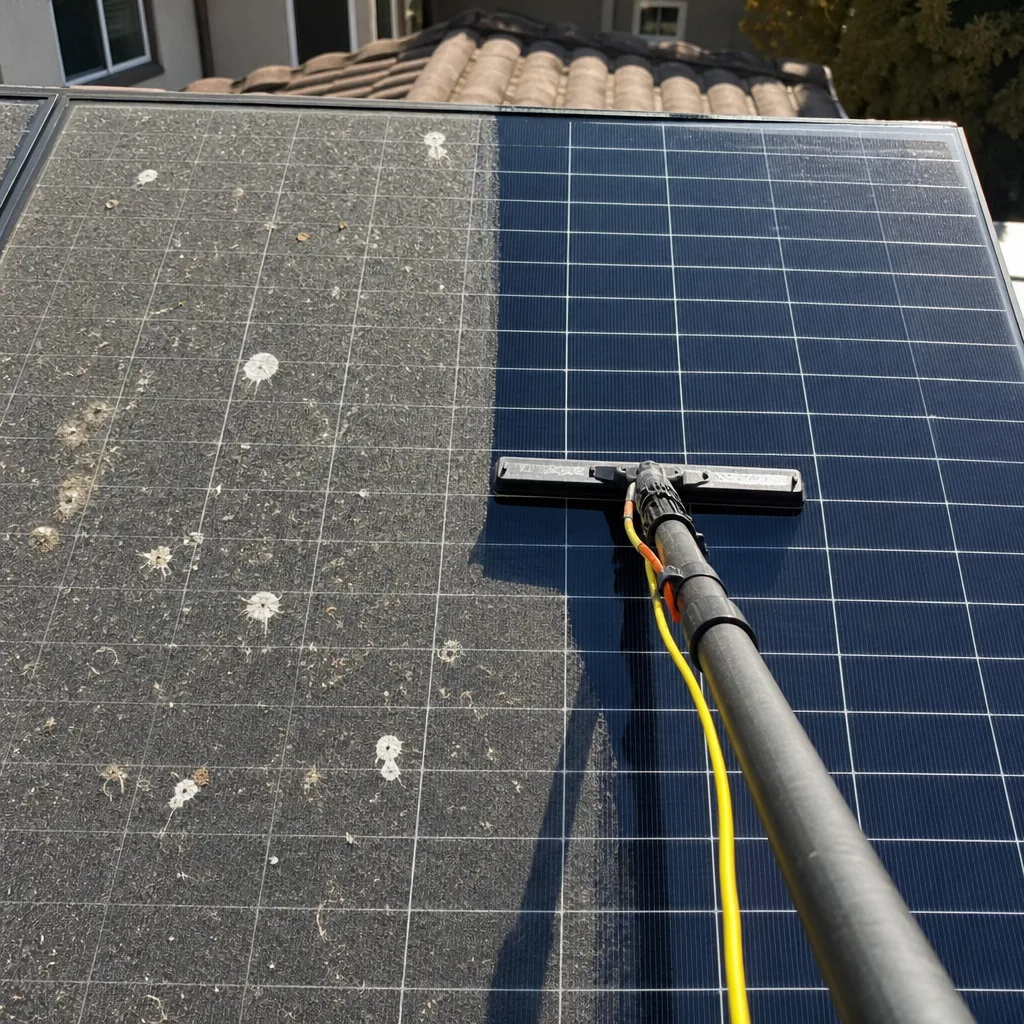
Alpine’s fire-zone reality makes battery storage a priority, not an upgrade. When SDG&E initiates Public Safety Power Shutoffs during high-wind fire weather, Alpine businesses near the rural interface are among the first affected. A properly sized commercial battery system keeps refrigeration, security, and core operations running through a multi-day shutoff. We install and maintain FranklinWH and Tesla Powerpack systems sized to your building’s actual load profile, not a generic formula. In Alpine, the battery isn’t an add-on. It’s the part of the system that keeps your doors open when the grid drops.
What happens when you call
- 1
A real person answersNo phone trees - you reach a local pro.
- 2
You get an upfront price rangeHonest numbers before anyone is dispatched.
- 3
A background-checked tech heads outLicensed & insured, dispatched right away.
- 4
You approve before work beginsNothing starts until you say go.
Trusted Brands We Service in Alpine
We work with the equipment Alpine’s conditions demand: Panasonic modules for high-efficiency commercial rooftops where fire setbacks squeeze usable area, Canadian Solar panels for larger ground-mount agricultural arrays where cost per watt matters more than maximum density, and FranklinWH battery systems for dependable backup through Santa Ana-driven outages. Because we have deep stock relationships and keep common parts staged for Alpine routes, we can usually handle RMA swaps and inverter replacements days faster than an out-of-area crew waiting on a freight shipment.
Common Commercial Solar Installation Problems We See in Alpine Homes
- Racking specified to coastal wind loads, not Alpine’s 110 mph uplift rating. The first strong Santa Ana lifts panels, shears bolts, and micro-cracks cells that nobody notices until production data drops. By then the installer is long gone. We torque every mounting point to Alpine’s VHFSZ spec on day one.
- Interconnection delayed 4-6 weeks because the CAL FIRE compliance form wasn’t filed with the County permit packet. Alpine runs a dual-agency permitting path, and missing the parallel fire review stalls your net metering start while your system sits finished but dark. We file both agencies’ paperwork together, every time.
- Reusing pre-2007 composite shake roof penetrations without fire-rated flashing. On older Alpine ranch-style commercial buildings, this triggers a CAL FIRE correction notice mid-install and shuts the job down. We inspect every penetration before we mount anything.
- 100A panels from 2008-2013 Witch Creek rebuilds can’t handle modern solar-plus-storage. The 2009-era load centers common in Alpine’s post-fire commercial rebuilds need upgrading to 200A before SDG&E will clear interconnection. We catch this during the site survey, so it doesn’t surprise you at final inspection.
How Alpine’s Wildfire History Changes Commercial Solar
Alpine sits inside a state-designated Very High Fire Hazard Severity Zone, which changes commercial solar in ways most property owners don’t see coming. Every rooftop array must satisfy CAL FIRE-mandated panel setbacks from ridges, eaves, and roof vents, plus clear zones that give firefighters physical access. On a typical Alpine commercial roof, that trims usable array space by 15 to 30 percent compared to what a contractor would install in El Cajon or La Mesa. A generic commercial solar quote ignores this math. Ours starts with it.
The 2007 Witch Creek Fire destroyed hundreds of Alpine homes and commercial buildings, producing a wave of 2008-2013 rebuilds with modern framing and updated structural panels. Those buildings are generally solar-ready from a dead-load standpoint, but their electrical infrastructure is not. Many went up with 100A service panels because that’s all the owner needed in 2009. Today, adding a commercial array plus battery backup nearly always requires a load-center upgrade to 200A before SDG&E clears interconnection. We identify this in the site survey, quote the upgrade honestly, and complete it with our own licensed crew so you’re not juggling two contractors.
What Alpine’s Dual-Agency Permitting Actually Means for Your Timeline
Alpine is unincorporated San Diego County, which means commercial solar permits don’t go through any city building department. They route through the County’s Department of Planning & Development Services, then enter a separate CAL FIRE wildland-urban interface compliance review. That’s two agencies, two sets of comments, and two opportunities for a delay that an installer unfamiliar with Alpine won’t anticipate. We’ve pulled dozens of commercial permits through this exact path. We know which County reviewer handles solar plan checks, what CAL FIRE wants to see on the fire-rated flashing detail, and how to sequence the paperwork so neither agency waits on the other. For a warehouse on Tavern Road or a farm building off Japatul Valley Road, that local knowledge regularly saves four to six weeks on the back end.
Pricing for Commercial Solar Installation in Alpine, CA
Here’s honest math for Alpine’s commercial market. A typical warehouse rooftop system lands between $2.40 and $2.80 per watt depending on racking complexity, roof condition, and access. A commercial carport runs $3.00 to $3.50 per watt because the steel structure adds cost that a roof-mounted array doesn’t carry. Ground-mount agricultural systems on Alpine’s larger rural parcels typically come in at $2.60 to $3.10 per watt before trenching and interconnection upgrades. A commercial battery system sized for a small warehouse or ranch operation runs $18,000 to $45,000 depending on capacity and chemistry.
What moves these numbers in Alpine specifically: fire-zone panel setbacks that shrink usable area (and raise your cost per usable watt), 110 mph wind-rated racking that costs more than coastal spec, and 100A-to-200A panel upgrades on post-Witch Creek rebuilds. We show you every line item. Bring me a bill, I’ll bring you the math: the price quoted is the price charged. Call (877) 550-6892 for a free, no-pressure estimate on your Alpine commercial property.
We Also Serve Cities Near Alpine
Our crews work throughout the inland foothills and East County. Beyond Alpine, we regularly install commercial systems in Jamul, Eucalyptus Hills, Lakeside, and Bostonia. Each has its own permitting quirks and terrain challenges, and we’ve pulled permits through all of them. If your property sits anywhere in the 91901 corridor or neighboring East County ZIP codes, we’ll come out and give you a straight answer.
Serving Alpine, CA - Our Local Coverage Area
We’re based in the Alpine area and know this community well. Use the map below to see our service coverage - if you’re nearby, we can almost certainly help.
FAQs - Commercial Solar Installation in Alpine
Alpine’s location inside a Very High Fire Hazard Severity Zone triggers a mandatory CAL FIRE wildland-urban interface review on every commercial solar permit. CAL FIRE requires specific panel setbacks from ridge lines, eaves, and vents so firefighters can move across your roof safely during an active fire. On most Alpine commercial rooftops, this reduces usable array space by 15 to 30 percent compared to non-hazard-zone cities. We calculate the actual usable square footage before quoting, so the system we propose is one the County and CAL FIRE will both approve. Call (877) 550-6892 for a site assessment that includes the setback math.
Santa Ana events funnel through Alpine’s foothill topography and have produced documented gusts above 80 mph in fire conditions. Standard coastal racking is typically rated to 90 mph uplift. Alpine’s County-enforced VHFSZ standard is 110 mph. We specify racking, bolts, and mounting hardware to that 110 mph rating and torque every connection to the documented spec. Underspecified racking fails at the fasteners and micro-cracks the cells, and you won’t see the production loss until months later. If you’ve got an existing array that hasn’t been checked since installation, we’ll inspect the mounting points and pull a torque report.
Count on 6 to 9 years for a well-designed Alpine warehouse system after the federal Investment Tax Credit and accelerated depreciation, assuming your business can use the full tax benefits. Alpine’s higher peak sun hours help: at 1,700 to 2,200 feet with far less marine-layer suppression than coastal SDG&E territory, panels here produce more usable energy per year than equivalent systems in El Cajon or La Mesa. The fire-zone racking and setback costs add maybe 8 to 12 percent to the upfront number, but the production bonus from Alpine’s clearer inland sun recovers that within the first two years of operation.
No. A 100A service panel cannot safely handle a commercial solar array plus battery backup, and SDG&E will not clear interconnection until the load center is upgraded. Most Alpine commercial properties rebuilt between 2008 and 2013 went in with 100A panels because that met the load at the time. Today, solar-plus-storage pushes those panels past their rated capacity. A 200A upgrade is typically mandatory. We include this in the site survey and complete the panel upgrade with our own licensed crew before your array is even mounted, so the interconnection review doesn’t stall out.
Yes. Alpine commercial solar permits run through San Diego County’s Department of Planning & Development Services plus a separate CAL FIRE compliance review. Incorporated cities like El Cajon and La Mesa run a single-agency path through their own building departments. The Alpine dual-agency route regularly adds three to five weeks to the approval timeline, and it’s the most common reason we see out-of-area installers blow deadlines. We file both agencies’ paperwork together and track the review actively, which is the only way to keep an Alpine commercial job moving on schedule.
Written by Gus Petrakis, Owner at Gus’s Solar, serving Alpine since 2011.