
Free bill analysis - bring a power bill, get the production math for your actual roof, panel brands like Qcells and REC compared side by side
If the pitch starts at your door and ends with "sign tonight for the special," sleep on it. The sun will still be there tomorrow; so will we.
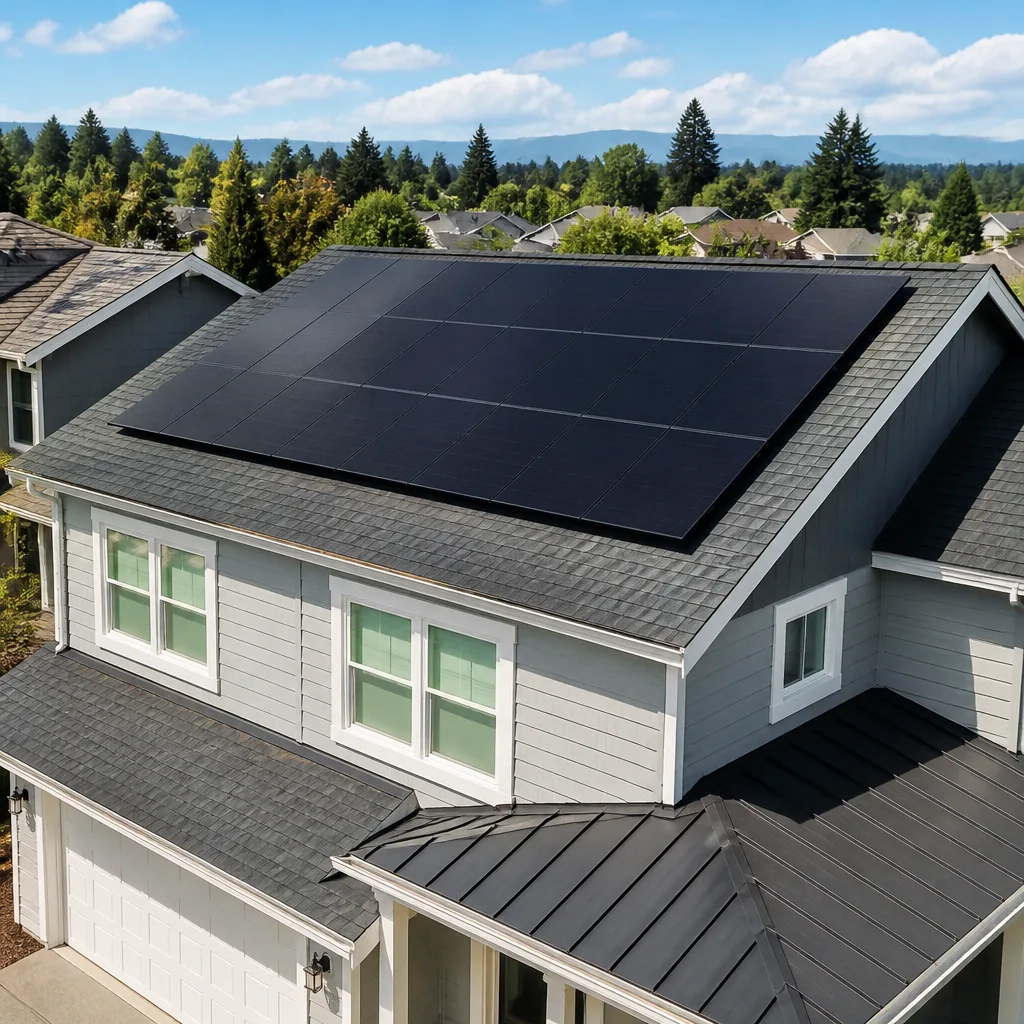
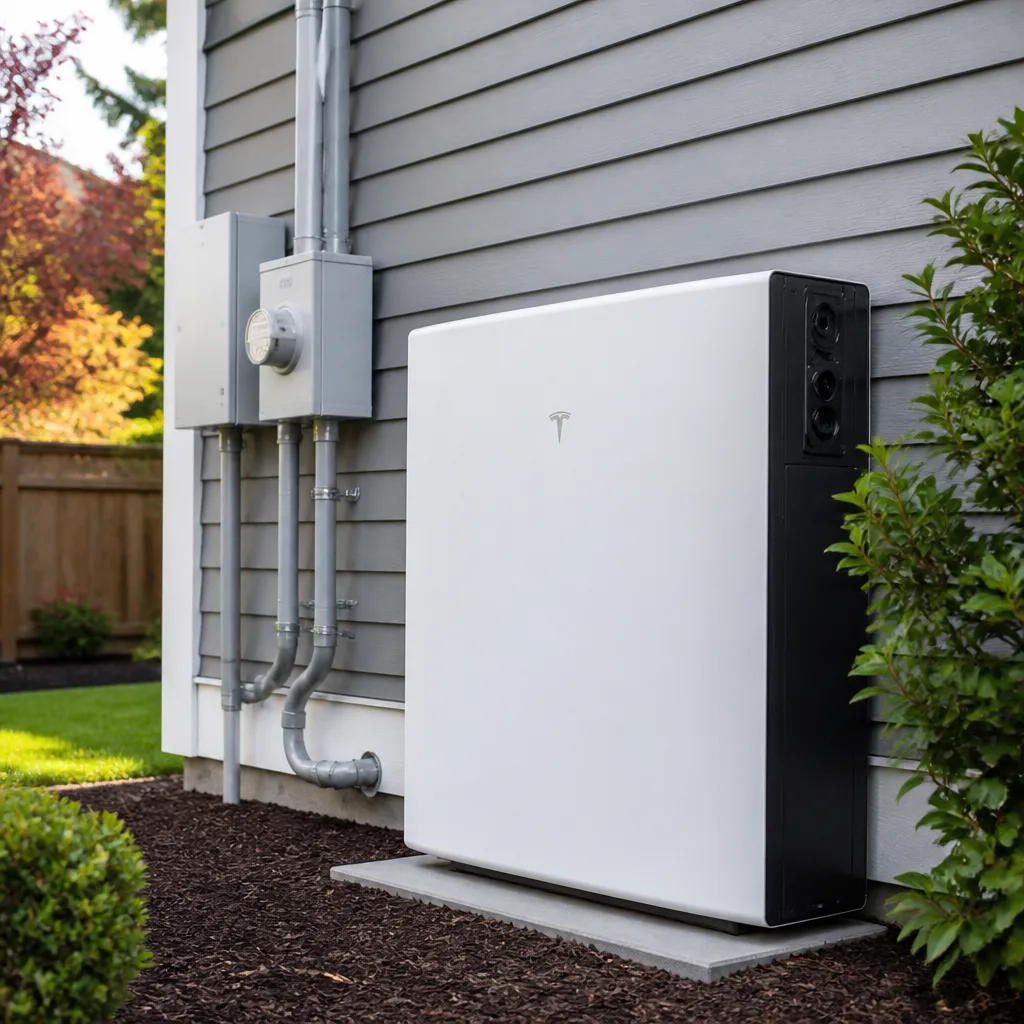
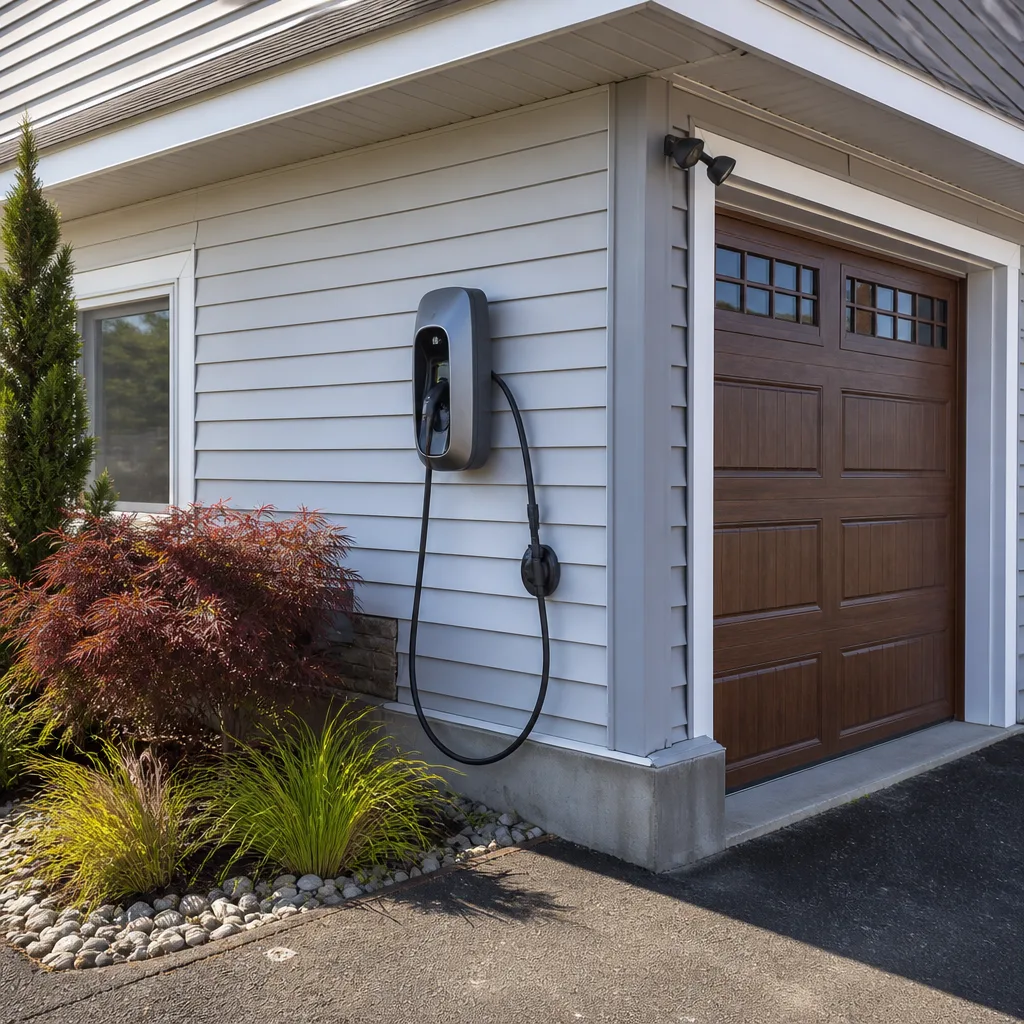
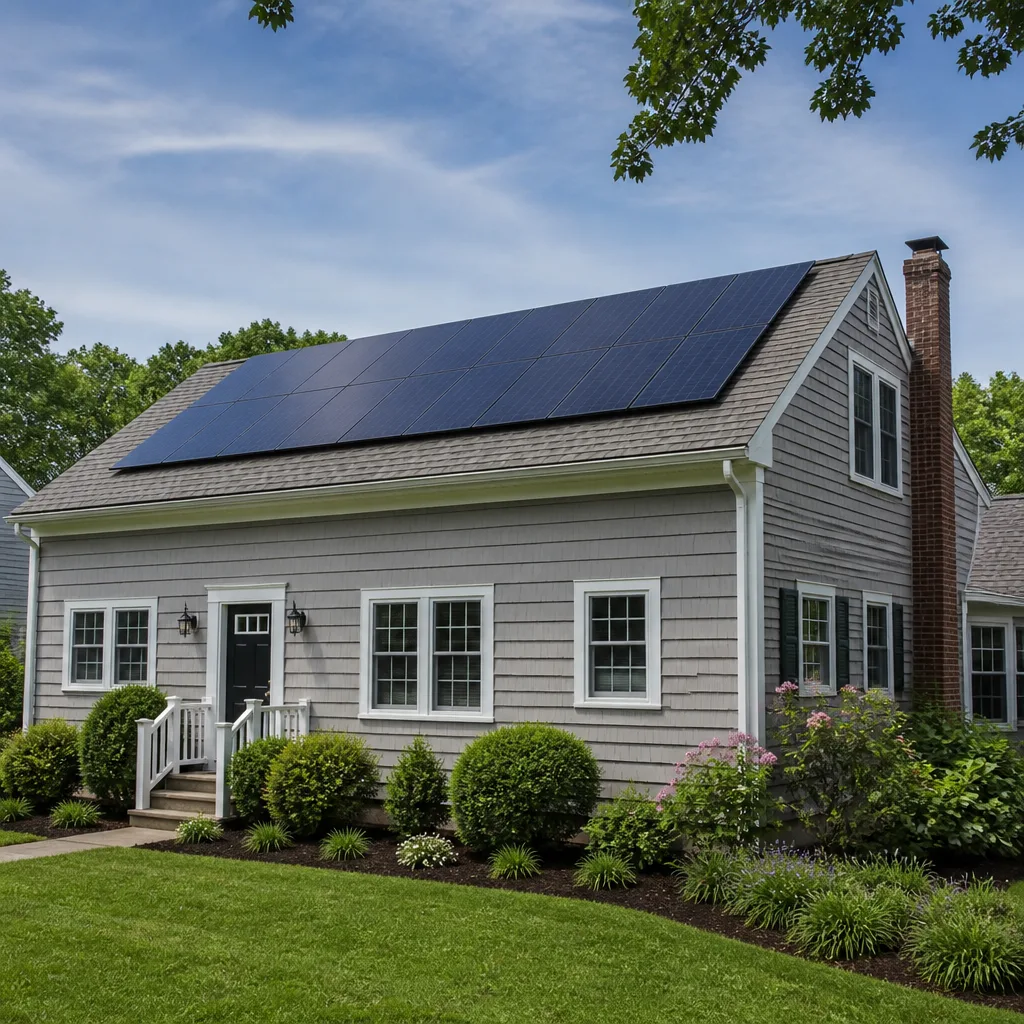
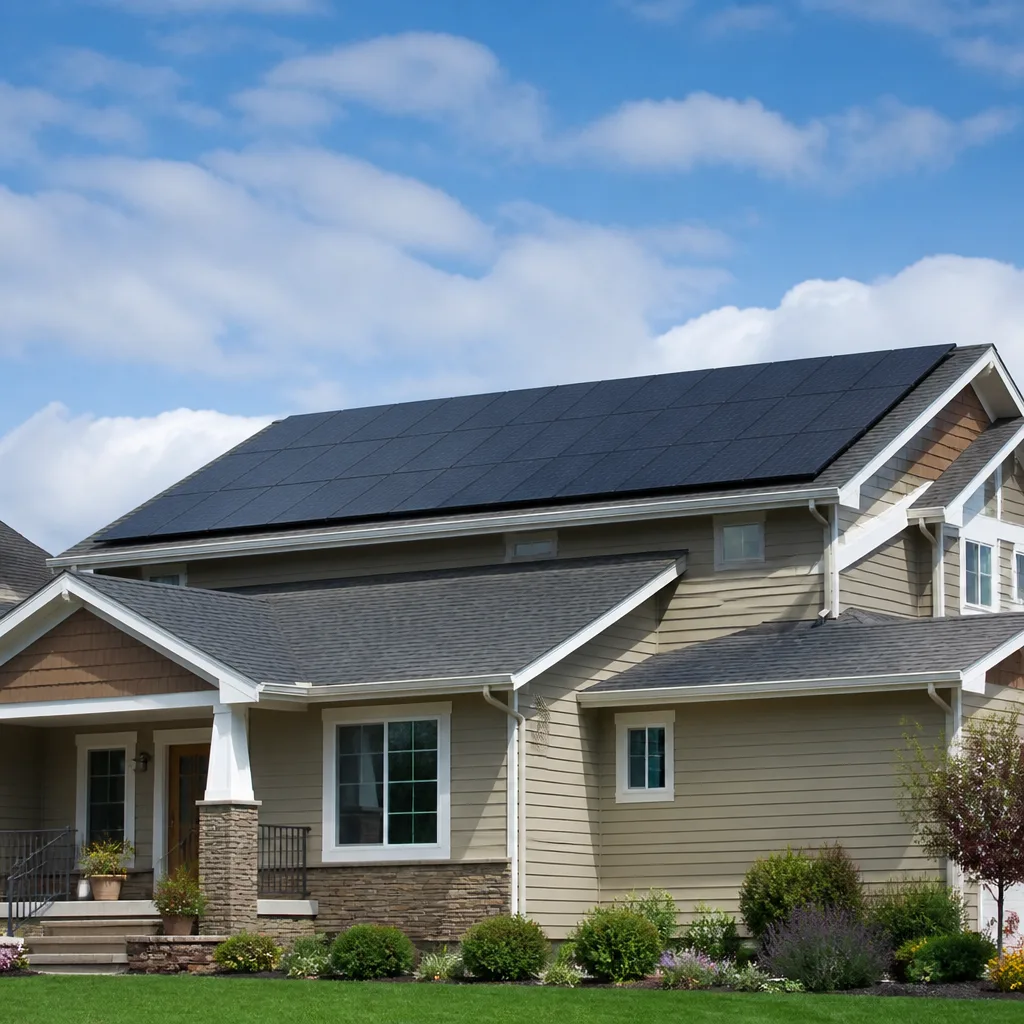
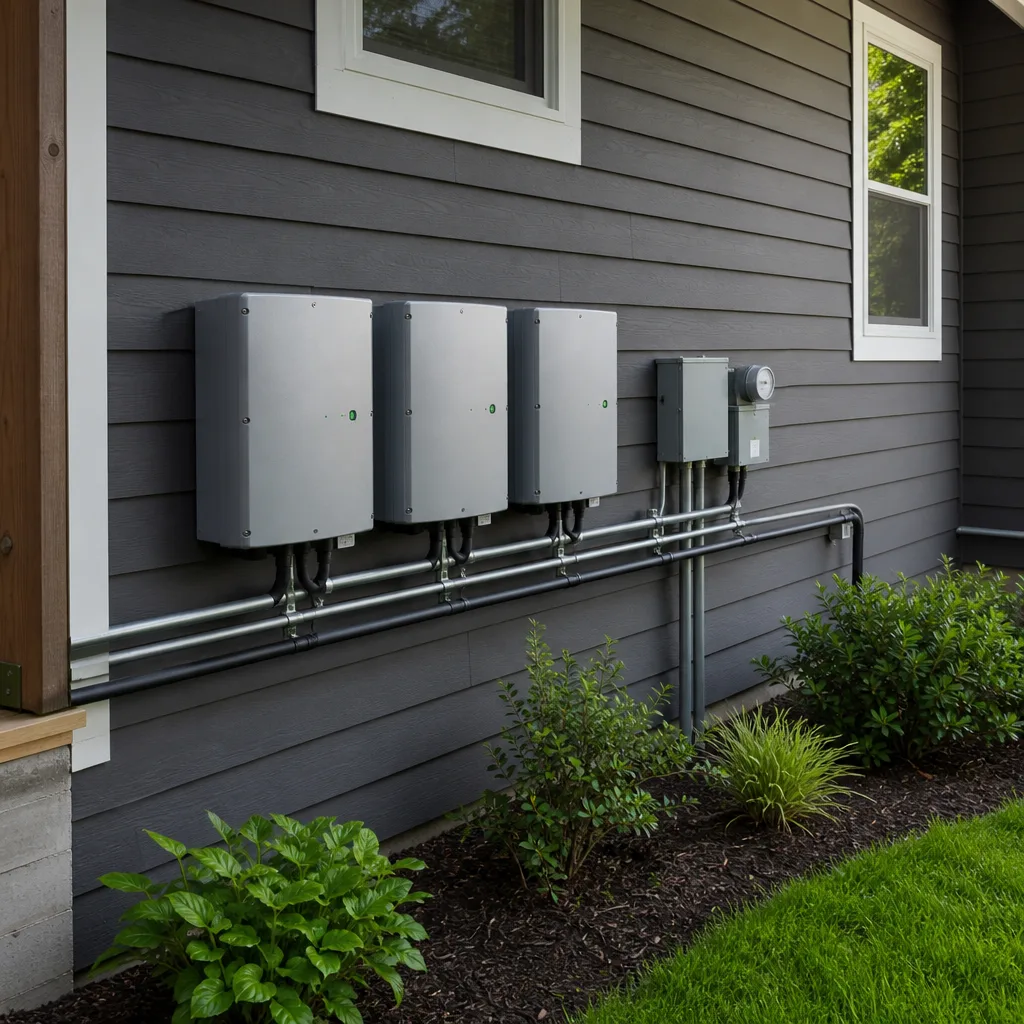
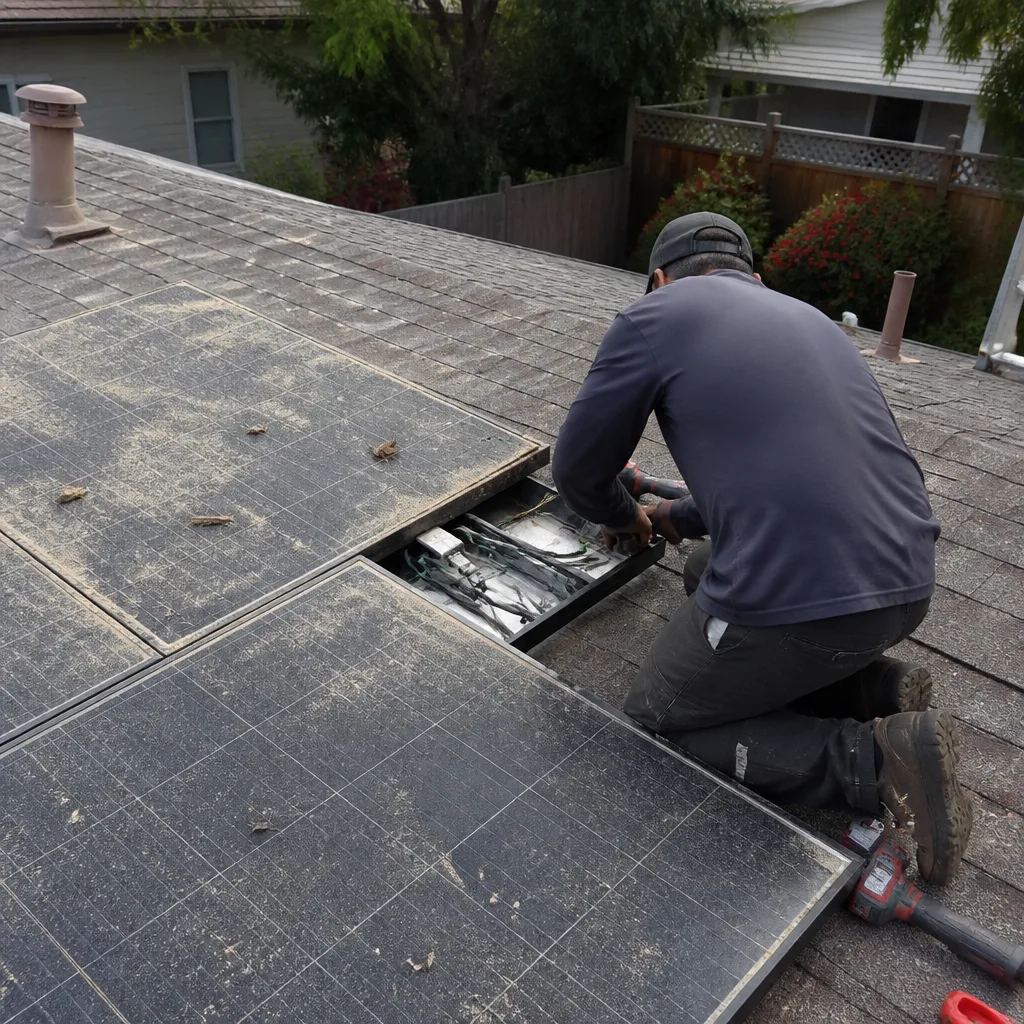 Before
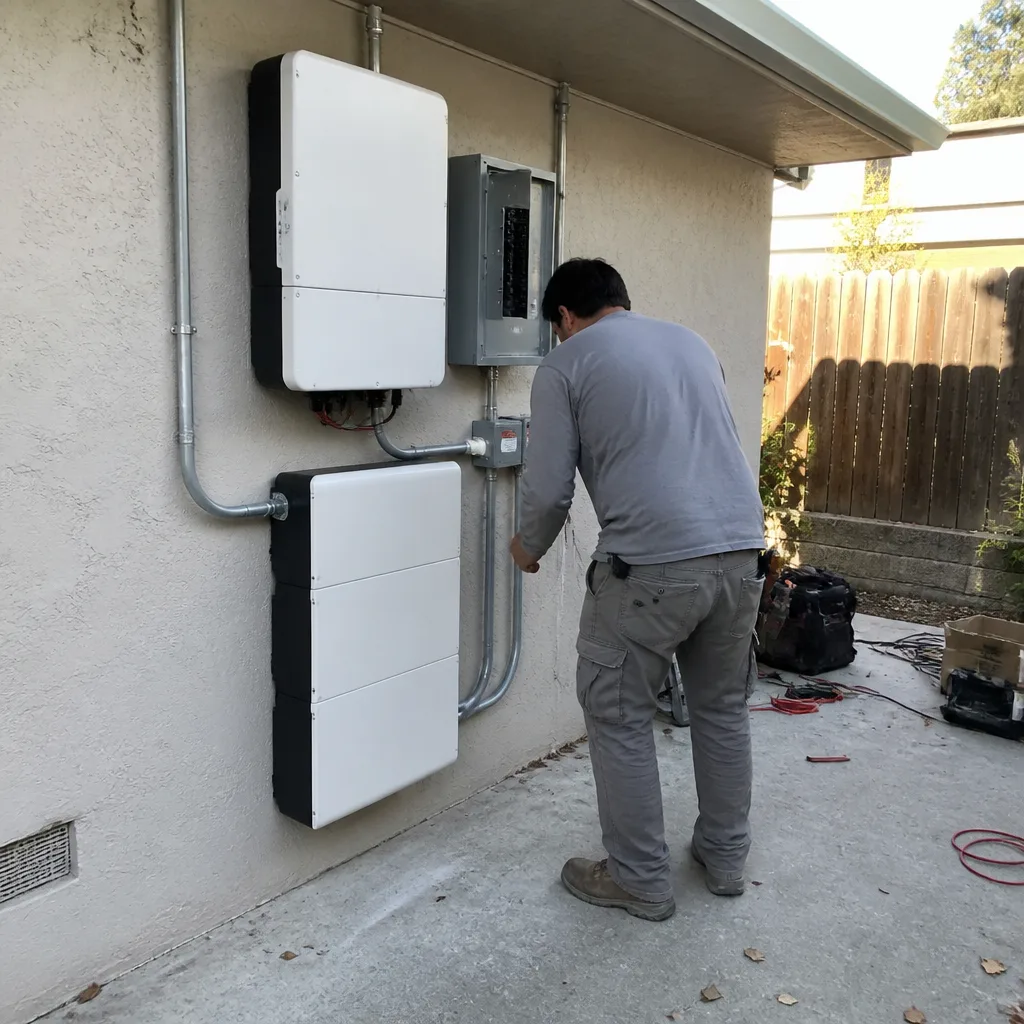 After
After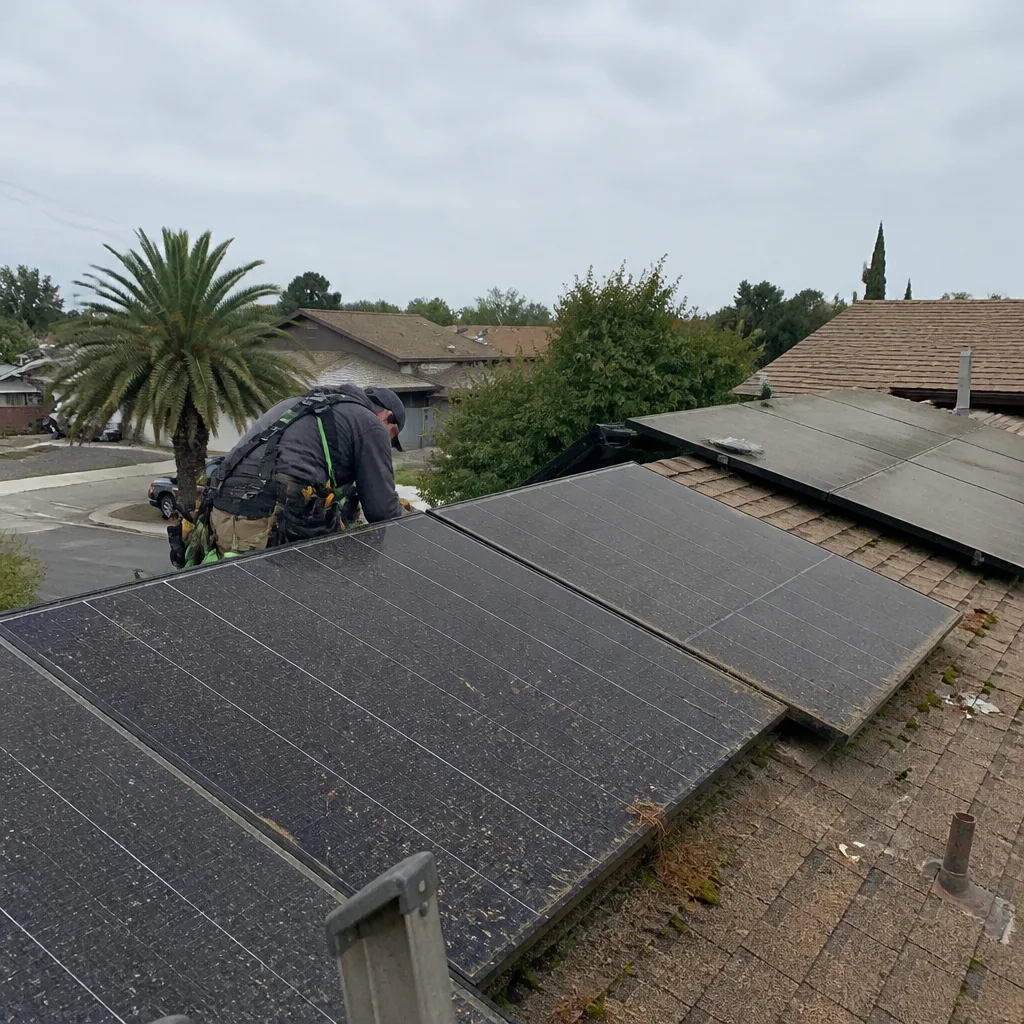 Before
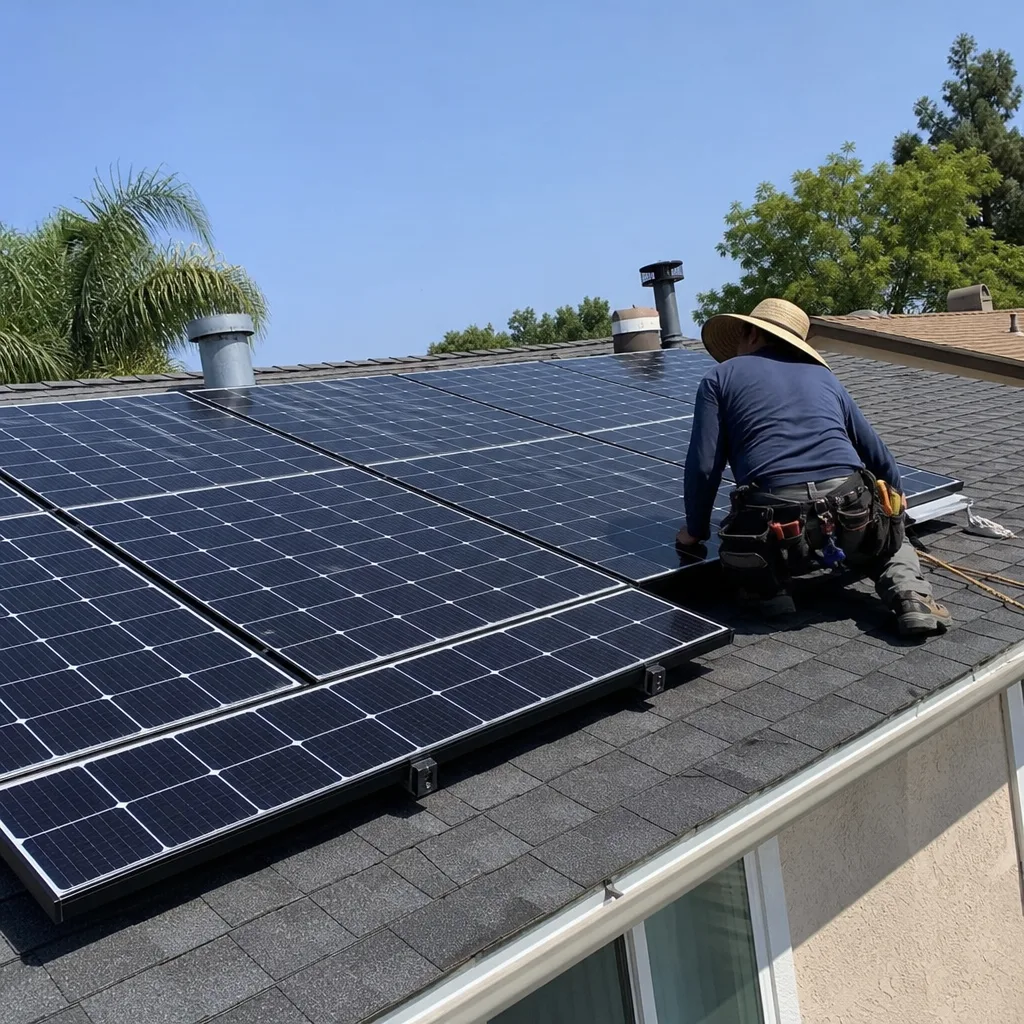 After
After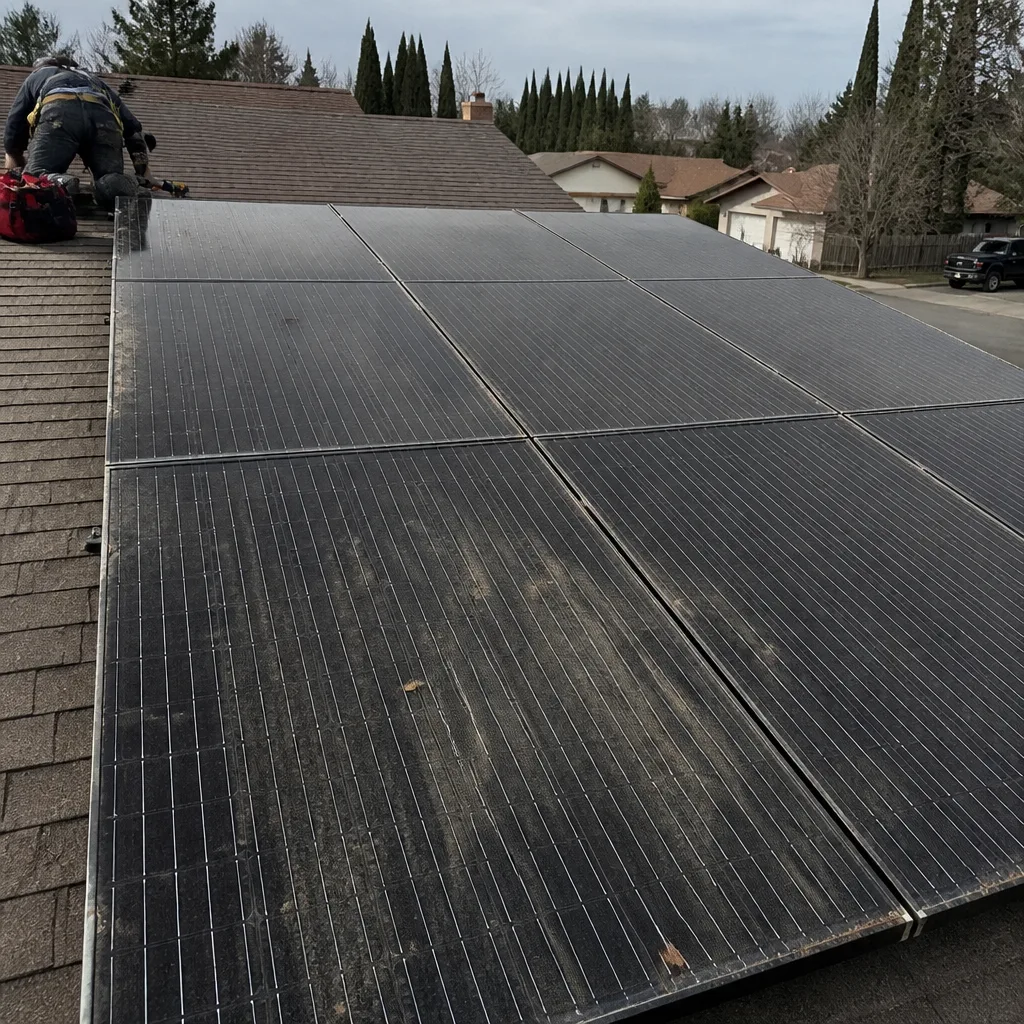 Before
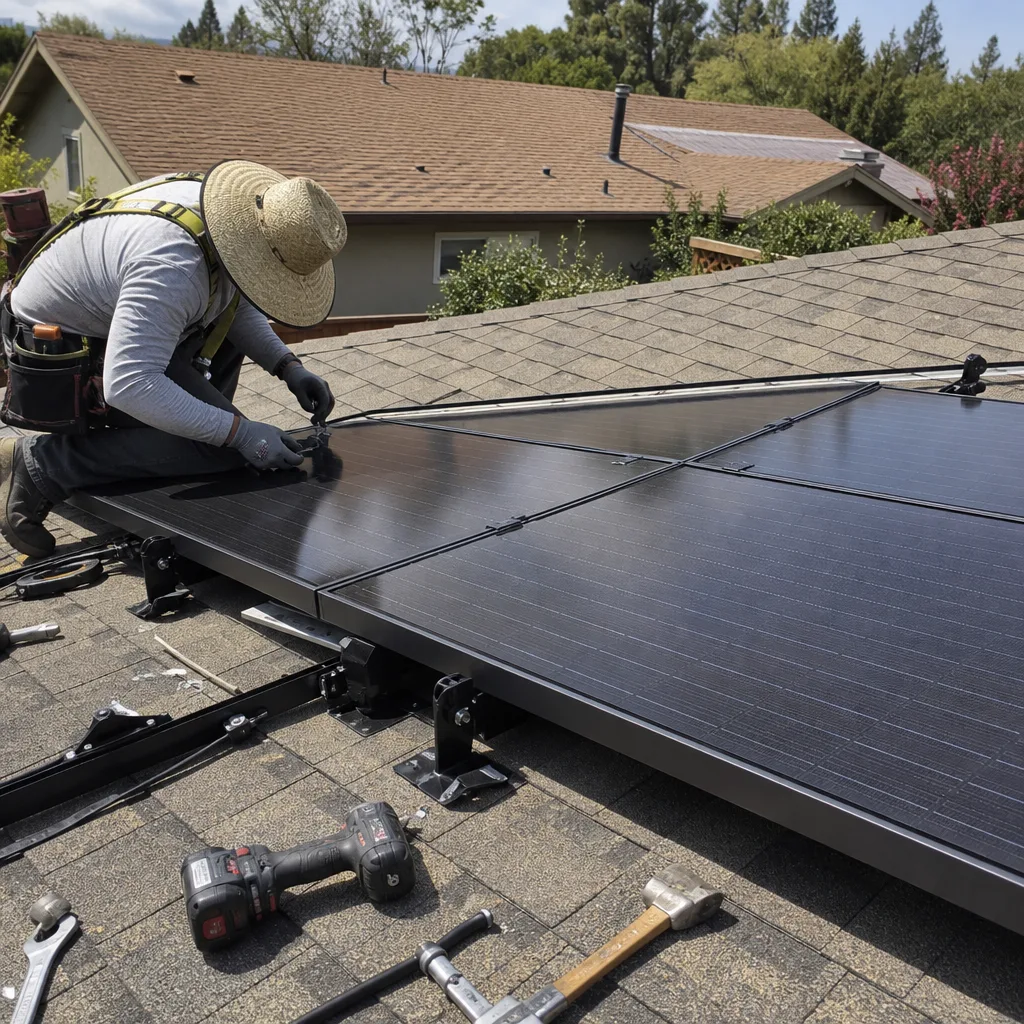 After
AfterTesla Solar Panel Repair: The San Jose Owner’s Guide
We repair and replace Tesla solar panel components throughout San Jose, with most jobs priced between $220 and $680 depending on what failed, and same-day or next-day service in most neighborhoods. The typical call we get starts the same way: the Tesla app shows a panel or string producing less than the others, a breaker tripped, or a panel is cracked from a falling branch or a roof repair gone wrong. We’re an independent shop, not affiliated with Tesla, but we work on Tesla systems every week and stock the parts that fail most often right on the truck.
If your system is throwing an alert, don’t ignore it. A single failing panel or a worn connector drags the whole string down, and in San Jose’s sun, a few weeks of reduced output is real money. Here’s what you need to know before you call anyone.
Which Tesla Models This Applies To
Most San Jose homes with Tesla solar have one of three setups: Tesla Solar Roof (the glass tiles that act as the roof itself), Tesla Panels installed between roughly 2019 and 2023, or a retrofit system built around a Tesla inverter paired with older panels from a previous installation. Each one uses different parts, and the repair path is not interchangeable.
The practical way to identify what you have: open the Tesla app and look at your system name. Tesla Solar Roofs say “Solar Roof” and list tile production individually. Tesla Panels show up as “Solar Panels” with a string inverter or per-panel microinverters. If you see “Tesla Inverter” listed with non-Tesla panels, that’s a retrofit. The part number you need is usually printed on a label under the panel or on the inverter’s side panel. Don’t climb up to read it; send us a photo from the ground or your install paperwork and we can usually match it from that.
One compatibility gotcha we run into regularly: Tesla changed connector types and panel dimensions between manufacturing runs. A 2020 Tesla 425W panel will not drop into a 2022 system without adapter work, and Tesla’s own replacement panels have been on backorder for months at a time. We stock quality aftermarket equivalents with matching specs and proper UL listing, so you don’t wait on a supply chain that has other priorities.
Signs Your Tesla Solar Panel Repair Is Failing
- A panel showing 0W or a fraction of the others in the Tesla app. This is usually a failed bypass diode, a cracked cell group, or a burned connector on that panel. The rest of the system keeps working, but that panel is dead weight.
- The Tesla inverter shows a red fault light or error code. Common codes point to DC ground faults, arc faults, or isolation failures. A ground fault often means moisture got into a connector or a wire rubbed through against the roof flashing, which happens more often on San Jose roofs with tile or metal decking than on comp shingle.
- A visible crack, dark spiderwebbing, or milky haze on the panel glass. Cracks from impact lower output immediately. The milky haze, called delamination, lets moisture in and grows slowly worse. In San Jose’s dry summers it may hold steady, but the wet season pushes it over the edge.
- Breaker trips in the solar subpanel or main panel. If the solar breaker trips repeatedly, something is shorting or grounding out. Resetting it over and over can damage the inverter and, in rare cases, start a fire. Call us instead of flipping it a fifth time.
- Production drops across the whole string while panels look clean. This points to a failed optimizer or microinverter that the string runs through. One failed unit can cut output to every panel behind it in the circuit, which is why your system shows a cliff, not a dip.
Replacement Cost & What’s Included
In San Jose, here’s what we see for repair pricing on Tesla systems:
- Single panel replacement (aftermarket, UL-listed): $220 to $340 installed
- Tesla OEM panel replacement (if available): $450 to $680 installed
- Optimizer or microinverter replacement: $180 to $420 per unit, depending on model and roof access
- Connector or wiring repair (arced connector, cut cable): $120 to $240
- Tesla inverter diagnostic and minor repair: $150 to $300, major board swap quoted separately
Every price includes the part, the labor, the roof work, and a system test before we leave. We do not charge a trip fee inside our own county, and we’ll put the 90-Day Done Right Promise in writing: if it’s not right, we come back and make it right. The spread in those ranges comes down to roof pitch, single-story versus two-story access, and whether the failed part is in an easy spot or buried behind an array that has to be partially lifted off. If someone quotes you $99 over the phone to “come look,” that’s a fishing trip. Bring us your written estimate and we’ll give you a free second opinion.
DIY or Call Us?
There’s one thing you can safely do: document. Take photos of the error code, the panel label if reachable from the ground, and your production graph if the app is showing one. Then send them to us. That’s it. Tesla systems run at 400 to 600 volts DC, and a solar array cannot be switched off at the panel like a ceiling light. Even with the inverter off and the disconnect thrown, the panels make voltage the moment sunlight hits them. Working on a live DC string without the right training, meter, and arc-flash gear is how roof fires and hospital visits start. We’ve seen the aftermath of a homeowner who figured “the breaker’s off, it’s dead.” He was wrong, and so was his roof.
Here’s what I’d do if it were my roof. I’d send a photo, let us quote the repair, and keep the family off the ladder. We’ve been doing this in San Jose since 2011. Call (877) 550-6892 and a live person answers, 24/7. We’ll tell you honestly if the part is worth replacing or if you’re better off waiting until a second failure. That conversation costs nothing.
FAQs
Most Tesla panels are warrantied for 25 years of output, but in San Jose’s climate, real-world useful life before noticeable output degradation runs closer to 20 to 22 years. Heat cycling from hot days to cool nights, plus our season of morning fog burning off under a hot sun, accelerates the slow chemical wear on the cells. You’ll see output dip a few tenths of a percent per year, which is normal, but a panel showing 30% below its neighbors is not degradation, it’s a failure. That’s repairable.
In practice, replacement is the repair. A cracked cell group or failed diode can sometimes be bypassed to keep a panel limping along, but the panel will never make full production again, and the issue usually spreads. We don’t patch glass or solder diodes on a roof. We swap the panel for a matched new or quality aftermarket unit, clean the connectors, and test the string. It’s faster, safer, and costs less than chasing a temporary fix.
Most single-panel swaps take 45 minutes to two hours on site, depending on roof access and whether the surrounding array needs to be shifted. If we have your panel details ahead of time, we arrive with the right part on the truck and you’re done the same day. Call (877) 550-6892 with a photo of the panel label and we’ll confirm the part before we come out.
We stock the most common Tesla aftermarket panel replacements, microinverters, optimizers, and connectors on the truck. Specific Tesla OEM parts may take a few days because Tesla’s supply chain has been inconsistent. We also keep parts on hand for Enphase, SolarEdge, and Qcells systems, and many of those cross-compatible components work fine on Tesla arrays. If we don’t have it, we’ll tell you the real timeline before you commit to anything.
Call Gus’s Solar for Straight Answers in San Jose
If your Tesla system is acting up, don’t nurse it along. Send us a photo, give us a call, and we’ll tell you what’s actually wrong and what it actually costs. No pressure, no signature tonight, and no call center. Gus Petrakis puts his name on every job, and if it’s not done right, the 90-Day Done Right Promise means we make it right. Call (877) 550-6892 for a free estimate, and remember: seniors and veterans get 10% off, every day, no expiration.
Written by Gus Petrakis, Owner, Gus’s Solar at Gus’s Solar, serving San Jose and nearby areas.