
Free bill analysis - bring a power bill, get the production math for your actual roof, panel brands like Qcells and REC compared side by side
If the pitch starts at your door and ends with "sign tonight for the special," sleep on it. The sun will still be there tomorrow; so will we.
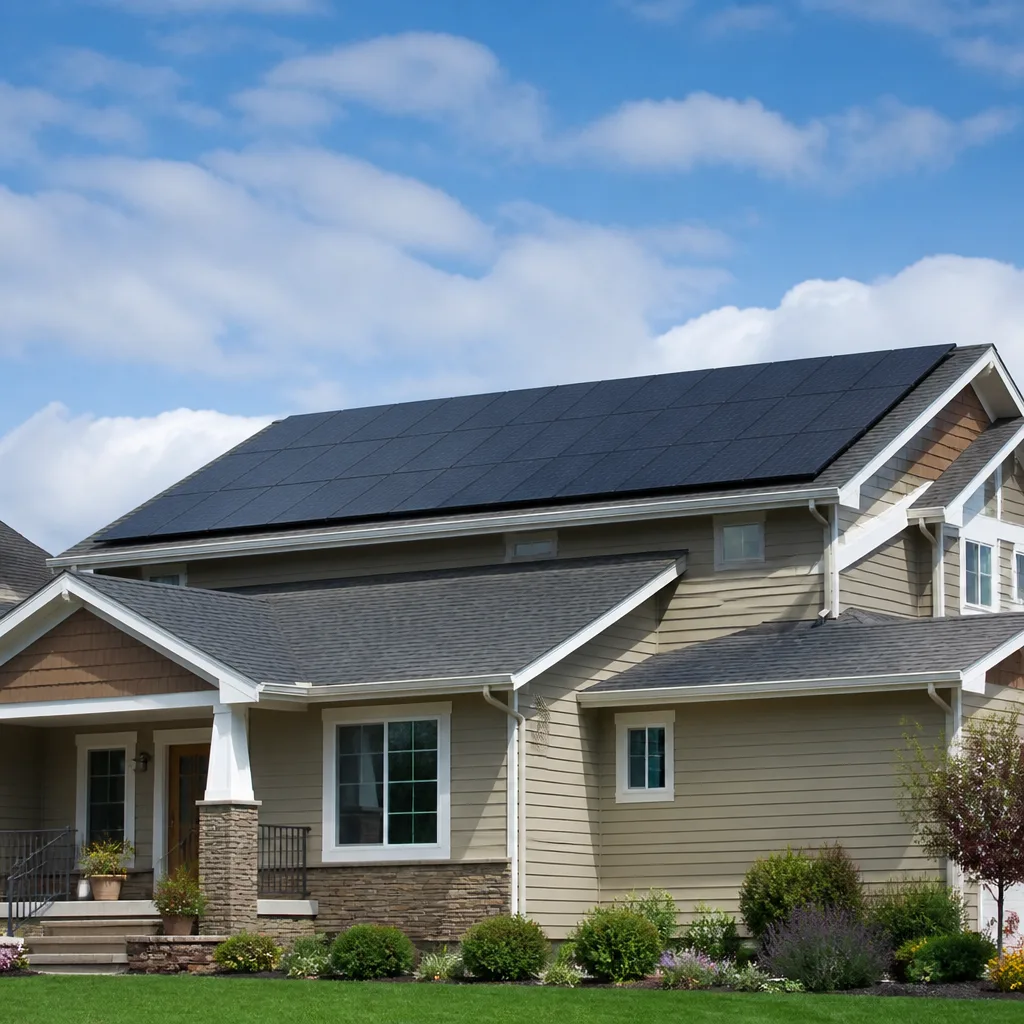
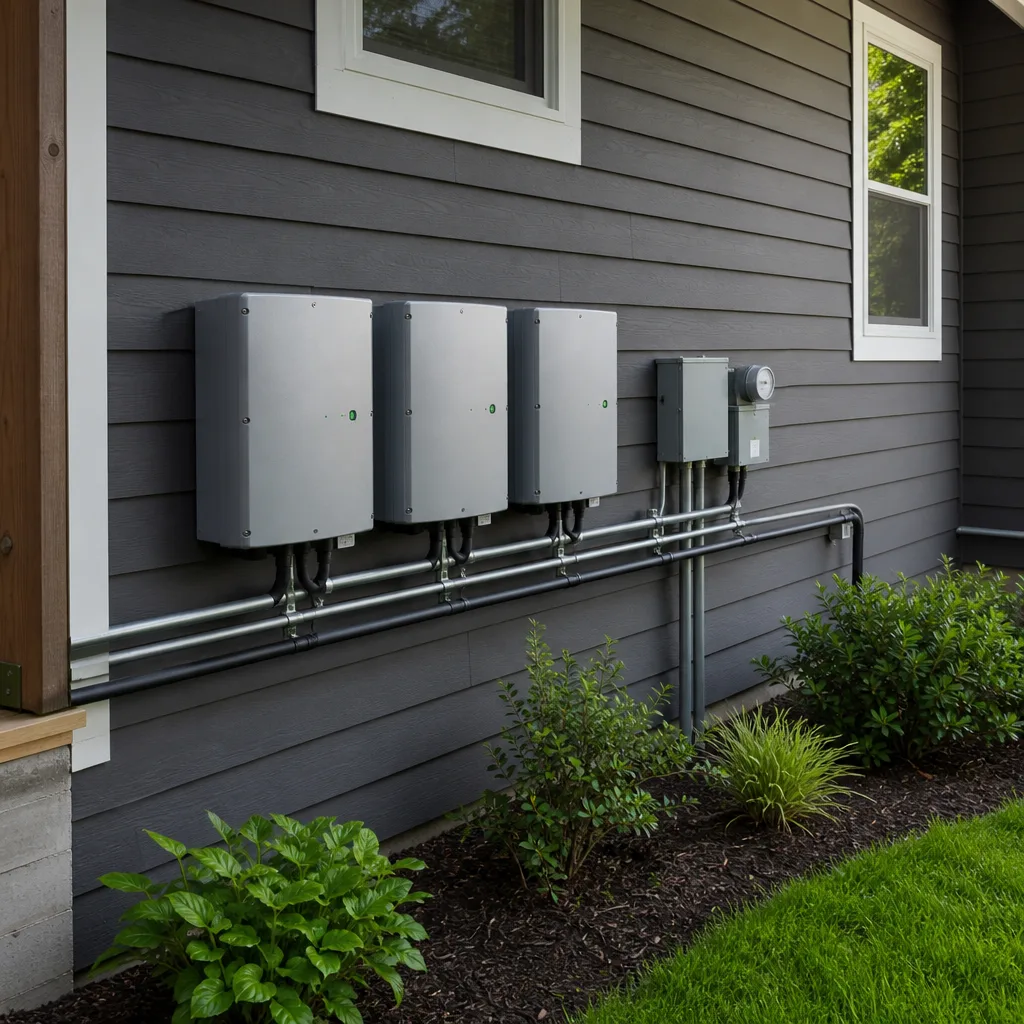
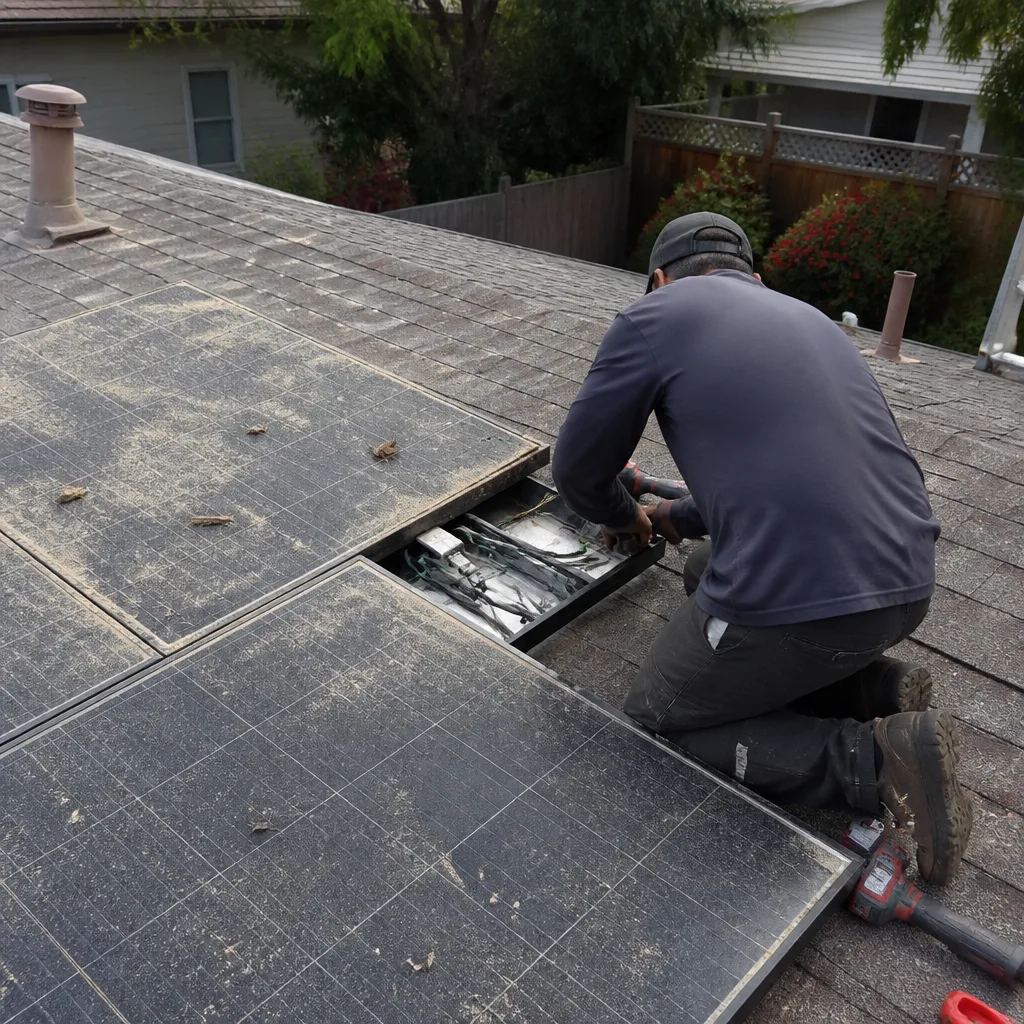 Before
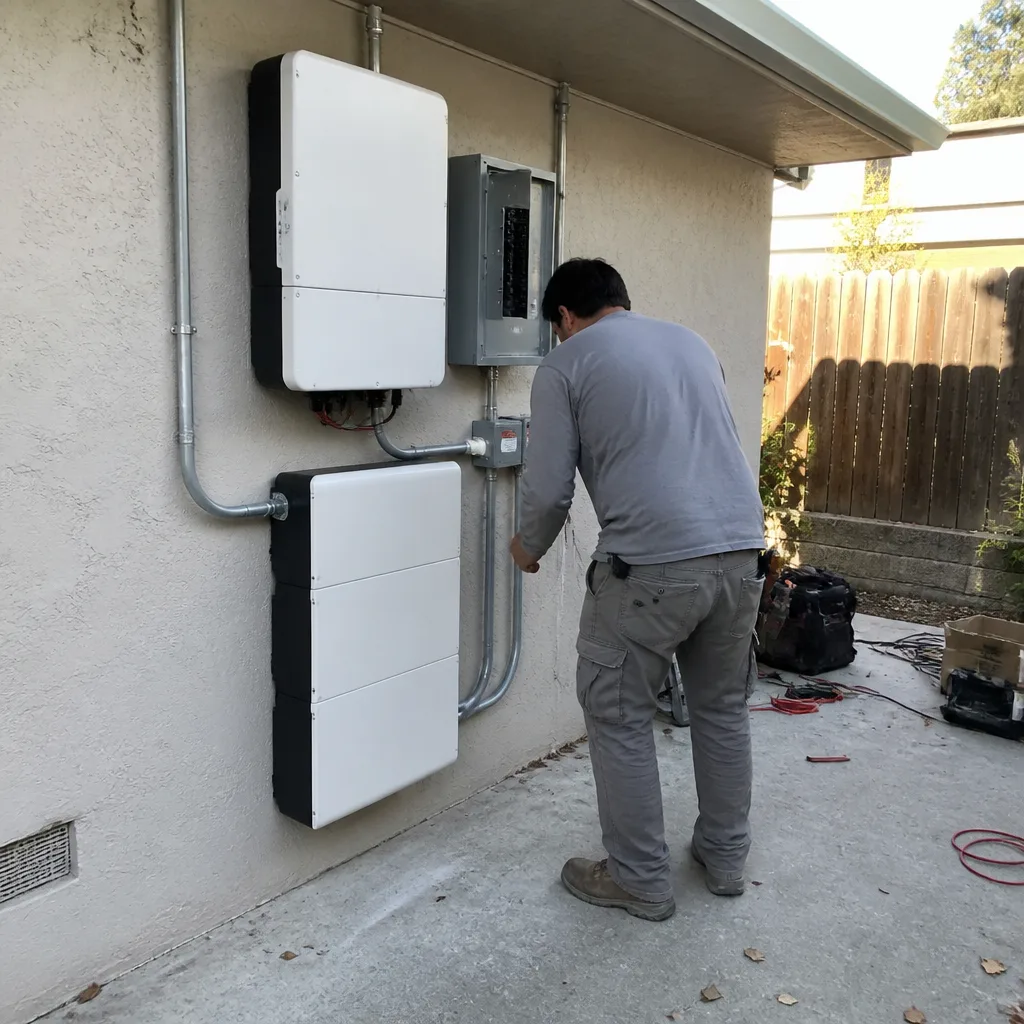 After
After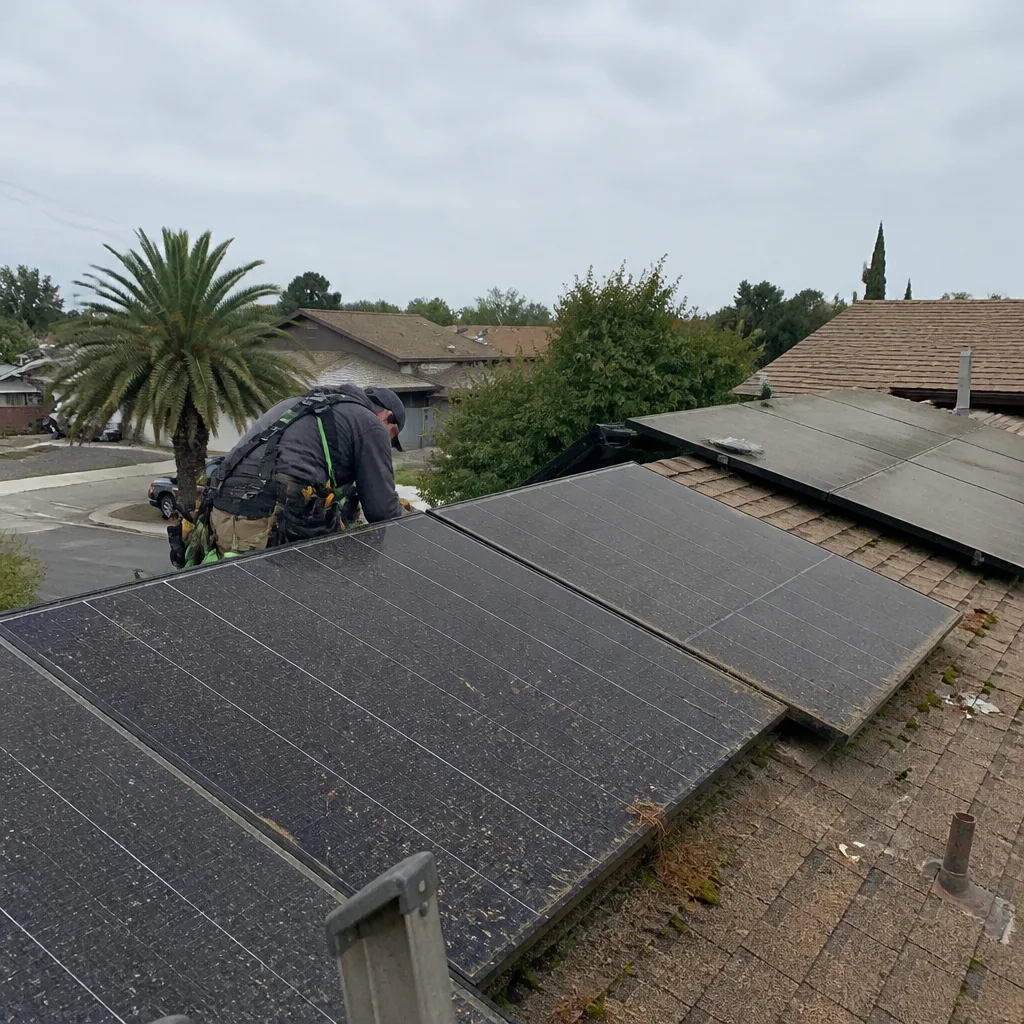 Before
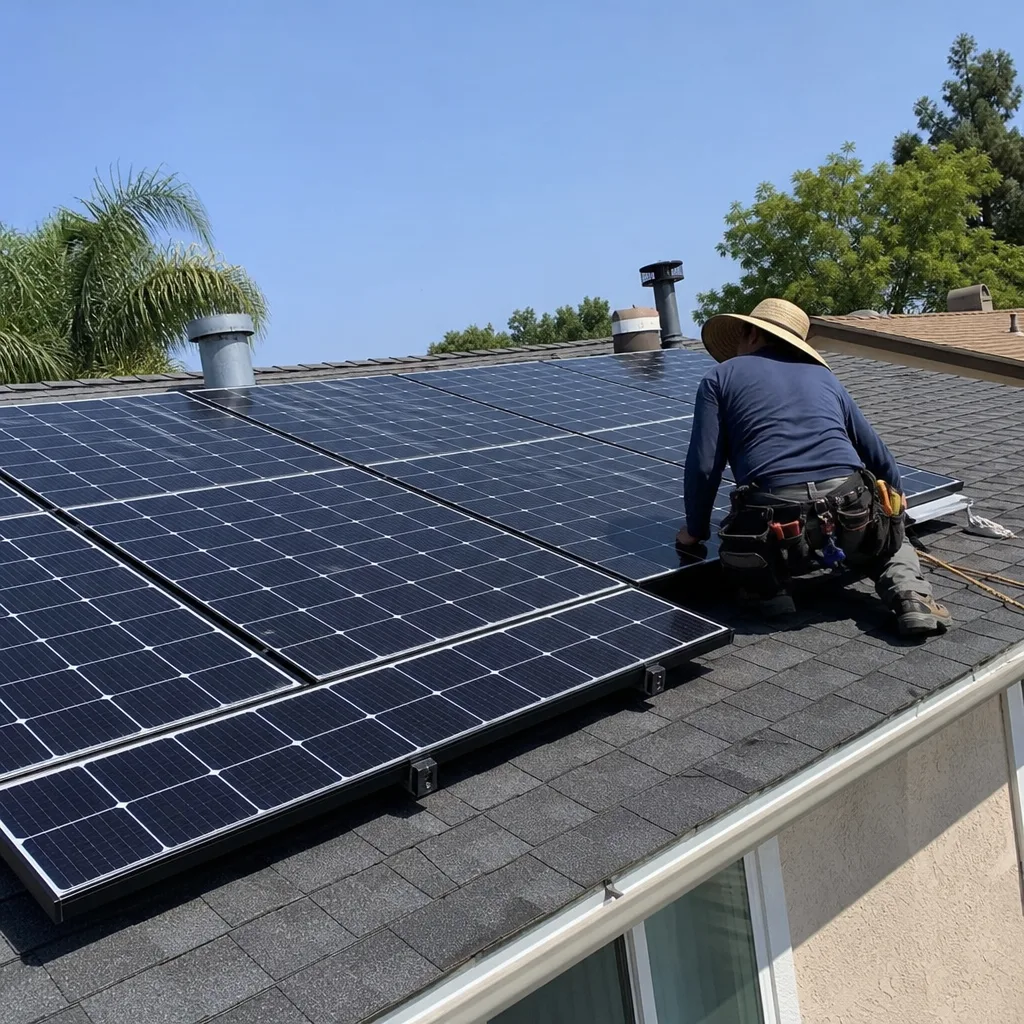 After
After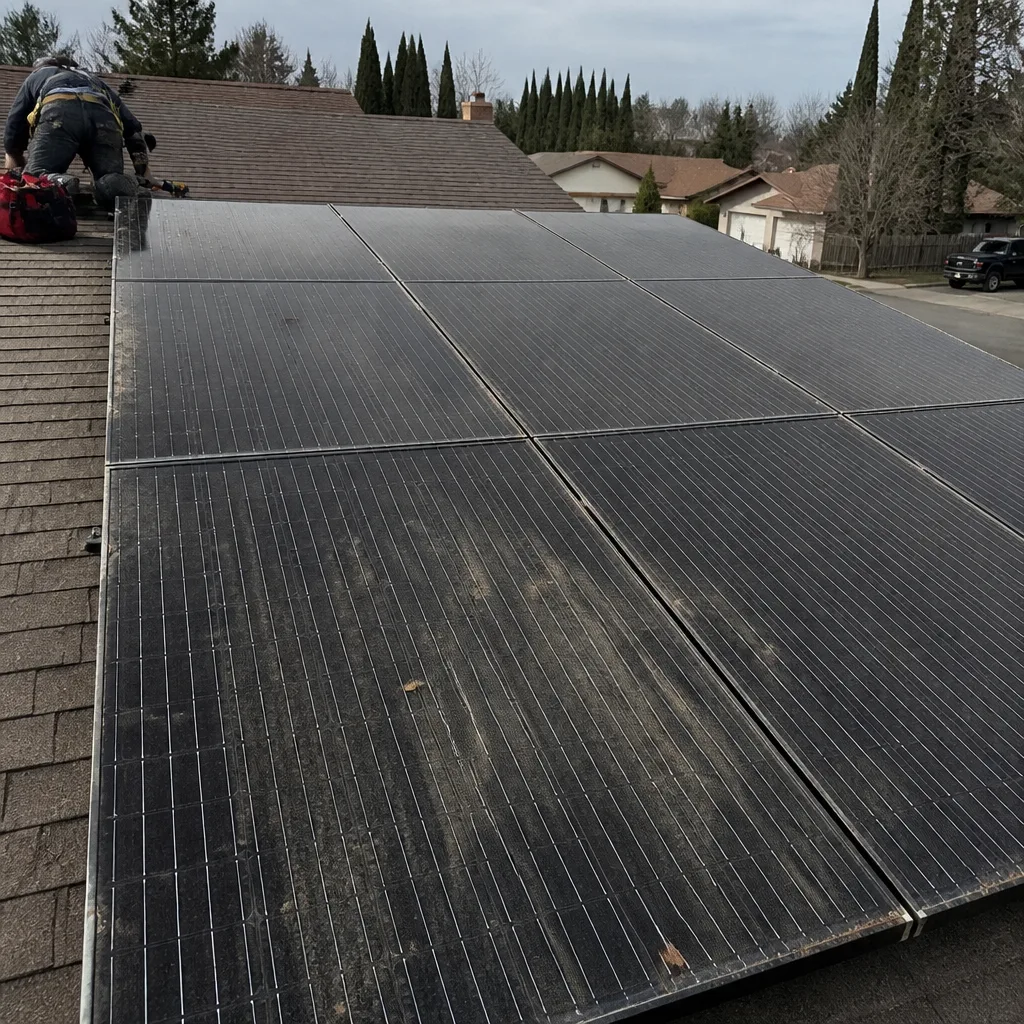 Before
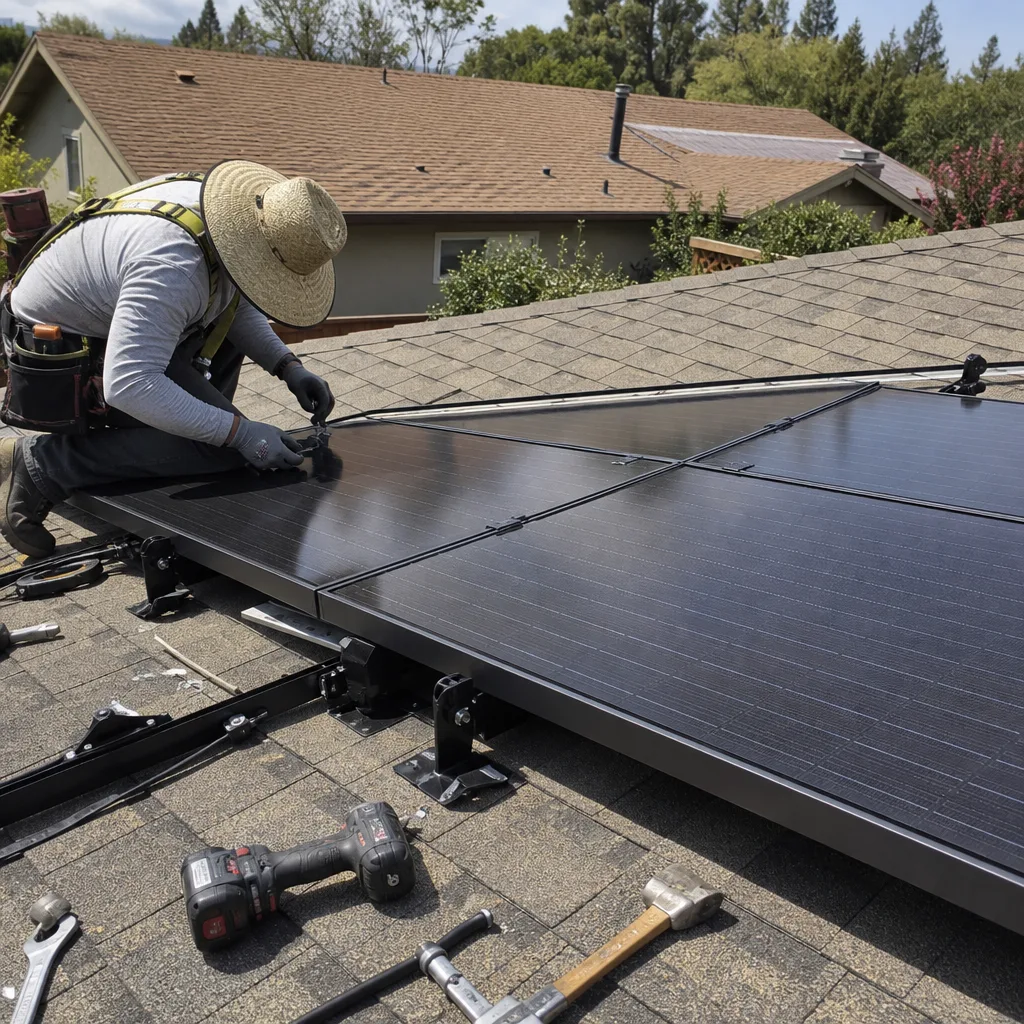 After
AfterTesla Solar Panel Installation: The San Jose Owner’s Guide
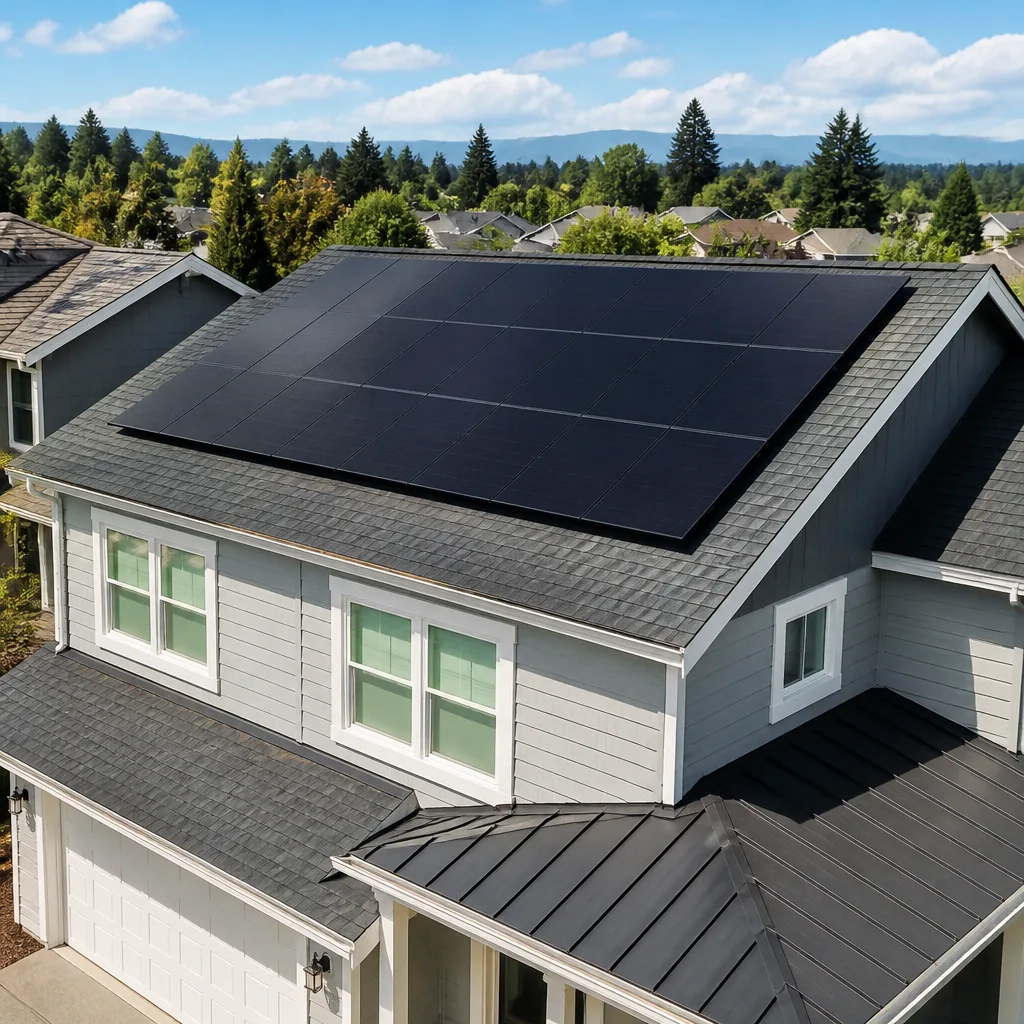
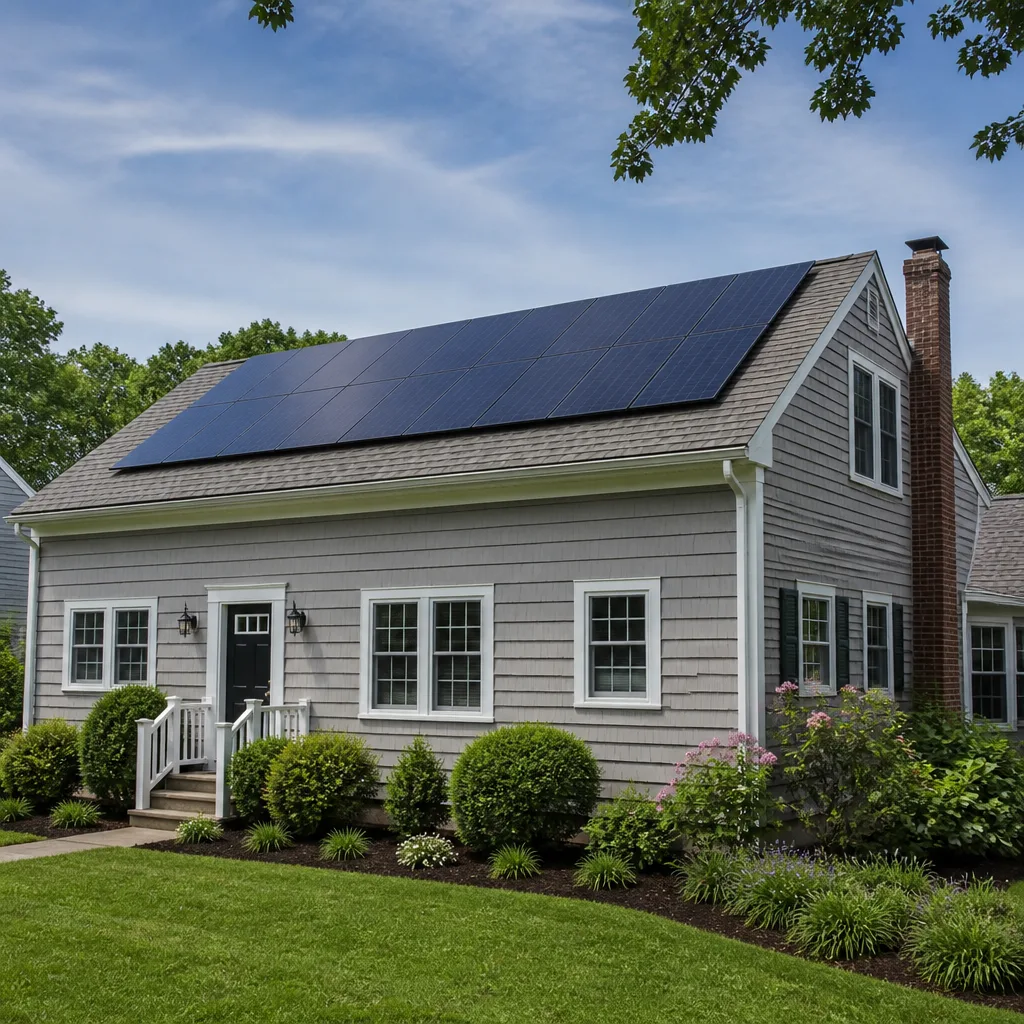
We install and service Tesla solar panels throughout San Jose, and most full panel replacements run between $450 and $900 per panel including labor, mounting hardware, and wiring. If your Tesla panel has cracked glass, a dead microinverter, or output that’s dropped well below the rest of the array, we can usually get a crew to your roof within 48 hours. The most common way San Jose homeowners discover a failed panel is through the Tesla app: one panel in the string reads 30 to 40 percent lower than its neighbors, or the system flags a ground fault that won’t clear. You may also spot visible damage from the ground – a shattered corner where a branch came down, or delamination where the laminate is peeling at the edges under California’s UV load.
We’re an independent San Jose installer, not affiliated with Tesla, and we’ve been working on their equipment since the early SolarCity days. That matters because Tesla’s panel hardware has changed a few times over the years, and matching the wrong replacement to your existing string is the single most common mistake we see from out-of-town crews.
Which Tesla Models This Applies To
Tesla has sold three main panel lines under its own name since acquiring SolarCity in 2016, and the compatibility rules differ for each. The Tesla T-Series panels (typically 325W to 345W black-on-black panels, roughly 65 by 39 inches) were the standard install through about 2020. The Tesla S-Series (a slimmer 60-cell panel, usually 325W) appeared on some South Bay homes between 2018 and 2020 before being phased out. The current Tesla X-Series panels (400W to 435W, slightly larger at about 74 by 41 inches) are what Tesla installs today and what most San Jose homeowners have if their system went in after 2021.
The gotcha most people don’t know: Tesla’s older panels use proprietary MC4-style connectors pinned differently than standard industry connectors, and the mounting clamps from the T-Series won’t grab the X-Series’ thicker frame. If you’re mixing panels on one string, you also need to match the Imp (current at max power) within about 5 percent, or the whole string derates to the weakest panel. We’ve replaced T-Series panels with quality aftermarket equivalents on San Jose roofs plenty of times – brands like REC and Qcells make drop-in matches for most Tesla form factors – and they often cost 30 to 40 percent less than a Tesla OEM panel with the same or better degradation warranty. We’ll tell you honestly which route makes sense for your roof, not just which one makes us a bigger margin.
Signs Your Tesla Solar Panel Installation Is Failing
- One panel reads 30%+ lower than the rest in the Tesla app. This usually points to a failed bypass diode or a cracked cell. The panel still produces, just at a fraction of its rating, and it drags down every panel on the same string.
- Visible glass cracking or spider-webbing from the ground. San Jose gets hail every few years, and orchard trees drop branches in the fall. Cracked glass lets moisture in, and moisture corrodes the cell connections within months, not years.
- Brown or yellow discoloration, usually in one corner of the panel. This is hotspot damage from shading or a failed cell running hot. We see it most often on San Jose homes where a neighbor’s redwood or oak has grown over the array since install.
- Delamination – the laminate peeling or bubbling at the panel edges. California’s UV exposure is relentless, and Tesla’s older T-Series panels are reaching the age where edge seal failure shows up. Delaminated panels can’t be re-sealed; they need replacing.
- Your inverter keeps throwing a ground-fault or arc-fault code. Sometimes the panel is fine and it’s a wiring issue in the J-box or a failing Enphase microinverter behind the panel. But when the fault is isolated to one panel’s circuit, that panel is usually the culprit.
Replacement Cost & What’s Included
In San Jose, a single Tesla solar panel replacement typically runs $450 to $700 when we’re matching an existing panel with a compatible aftermarket unit, and $600 to $900 when you need a Tesla OEM panel or a newer X-Series model with the updated mounting hardware. Multiple panels bring the per-panel labor down, since the crew is already on the roof with the right ladder setup and safety gear.
Every quote includes the panel itself, matching mounting clamps or adapters, new MC4 connectors where needed, re-flashed roof penetrations, and the full removal and disposal of the failed panel. We don’t charge a separate “trip fee” inside Santa Clara County, and you’ll see the same number on your final invoice that we quoted before we started. If a panel fails on us within the warranty window, we come back and make it right under our 90-Day Done Right Promise. That’s in writing on every job.
DIY or Call Us?
Here’s what I’d do if it were my roof. What you can safely do yourself: log your panel outputs from the Tesla app for a week, check for visible glass damage from the ground, and clear any branches shading the questionable panel. That’s useful information to have before you call anyone. What I wouldn’t do is get on a two-story San Jose roof with a torque wrench and start pulling 40-volt DC connectors apart. Roof work plus live DC wiring is a bad combination for a homeowner, and one misaligned clamp or under-torqued bolt means a panel that lifts in the next Santa Ana wind event and becomes a missile aimed at your neighbor’s window. If you’ve got a panel that failed, call us at (877) 550-6892 and tell us what the Tesla app is showing. We’ll give you a straight answer on whether it’s actually the panel, and what the fix should cost, before anyone climbs up there.
FAQs
Tesla panels carry a 25-year production warranty, but in San Jose’s climate – think 300 sunny days a year, high UV, and occasional coastal fog that leaves mineral residue – most panels realistically produce at 85 to 90 percent of their original rating by year 20. Heat accelerates cell degradation, and San Jose’s summer roof temps routinely top 140 degrees.
Almost never. Cracked glass, failed bypass diodes, and delamination are all sealed inside the laminate, and there’s no field repair that restores a panel to safe working condition. If the issue is actually the microinverter or a wiring connector behind the panel, that’s a repairable item, and we’ll check that before quoting a panel replacement. Call (877) 550-6892 and we’ll help you figure out which problem you actually have.
Most single-panel replacements take us 60 to 90 minutes on the roof, and we can usually be there within two business days of your call. If you need several panels or a string rewire, plan on a half day.
We keep common T-Series and X-Series compatible panels in our San Jose shop, along with Tesla mounting clamps and the right connectors. That means most replacements happen in one visit – no “we’ll order the part and come back in three weeks.”
Written by Gus Petrakis, Owner, Gus’s Solar at Gus’s Solar, serving San Jose and nearby areas.