
Free bill analysis - bring a power bill, get the production math for your actual roof, panel brands like Qcells and REC compared side by side
If the pitch starts at your door and ends with "sign tonight for the special," sleep on it. The sun will still be there tomorrow; so will we.
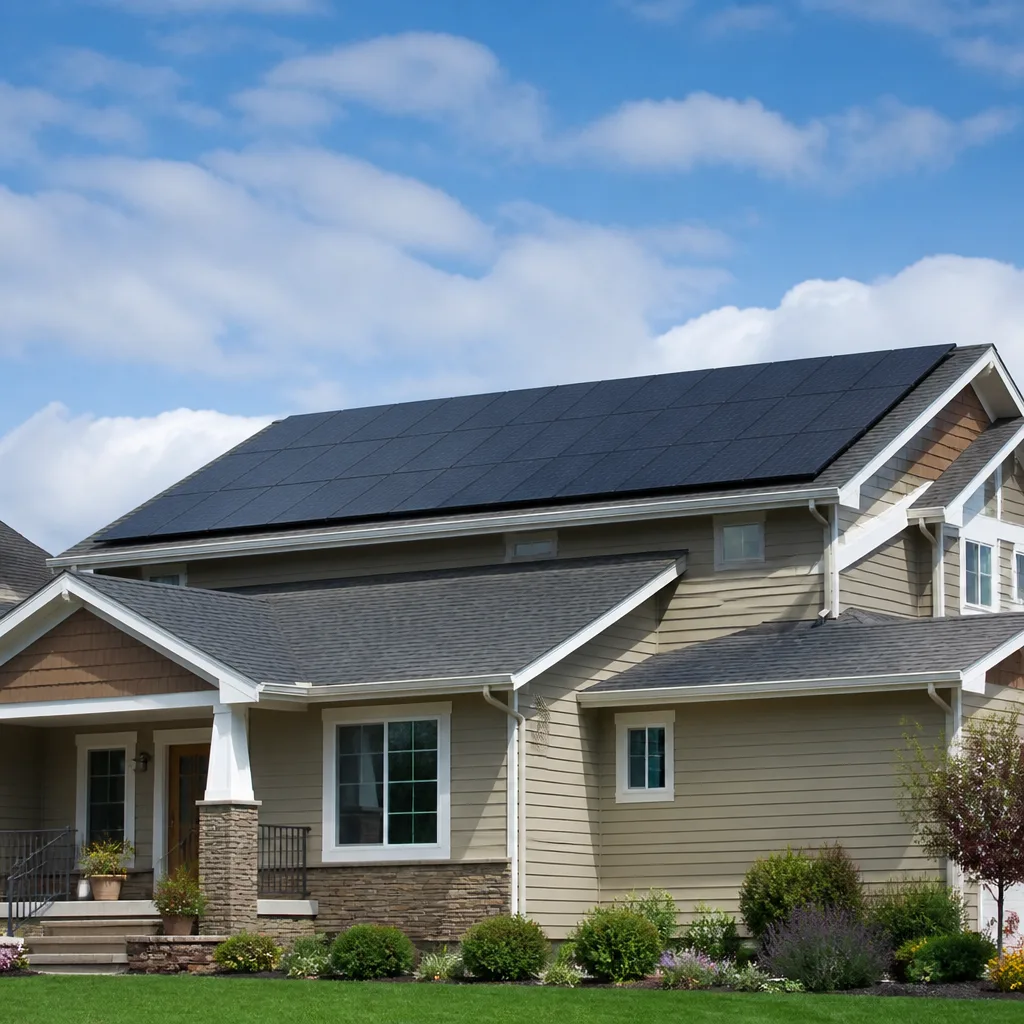
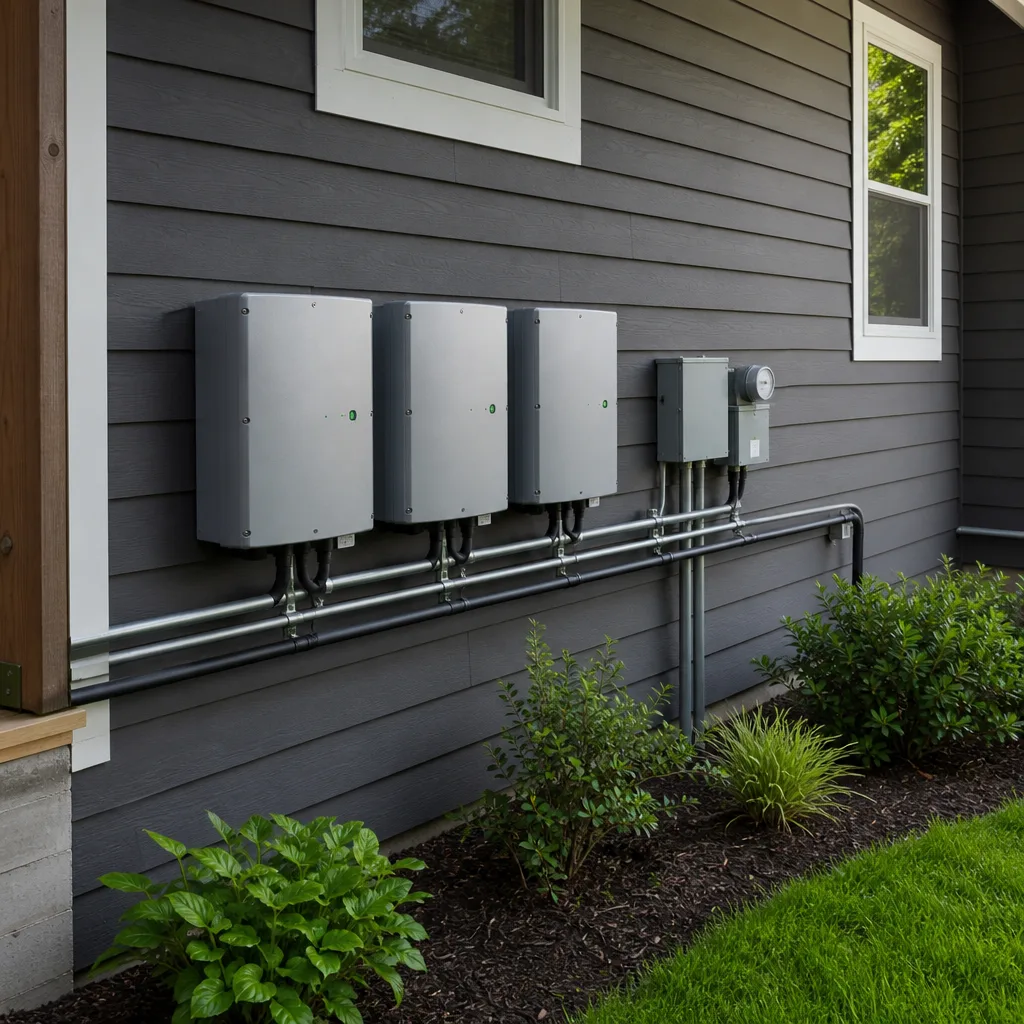
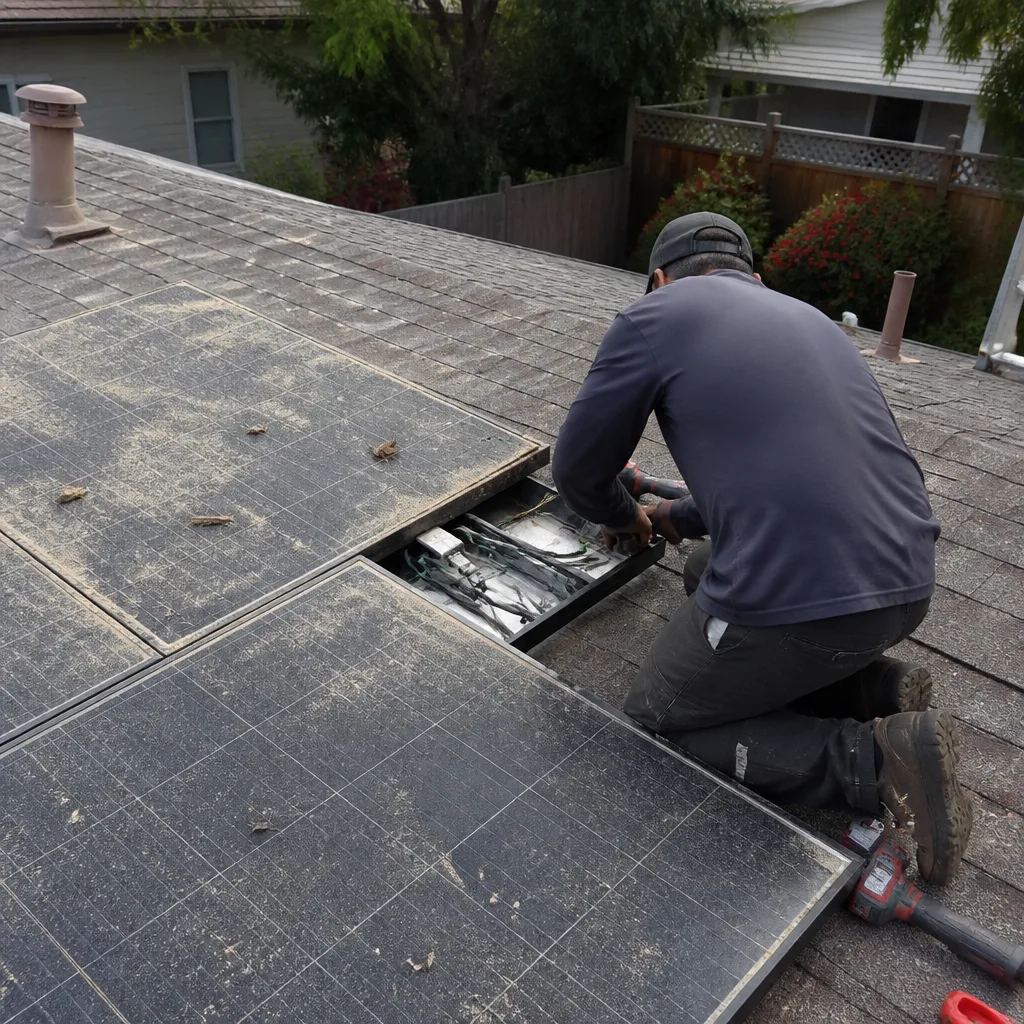 Before
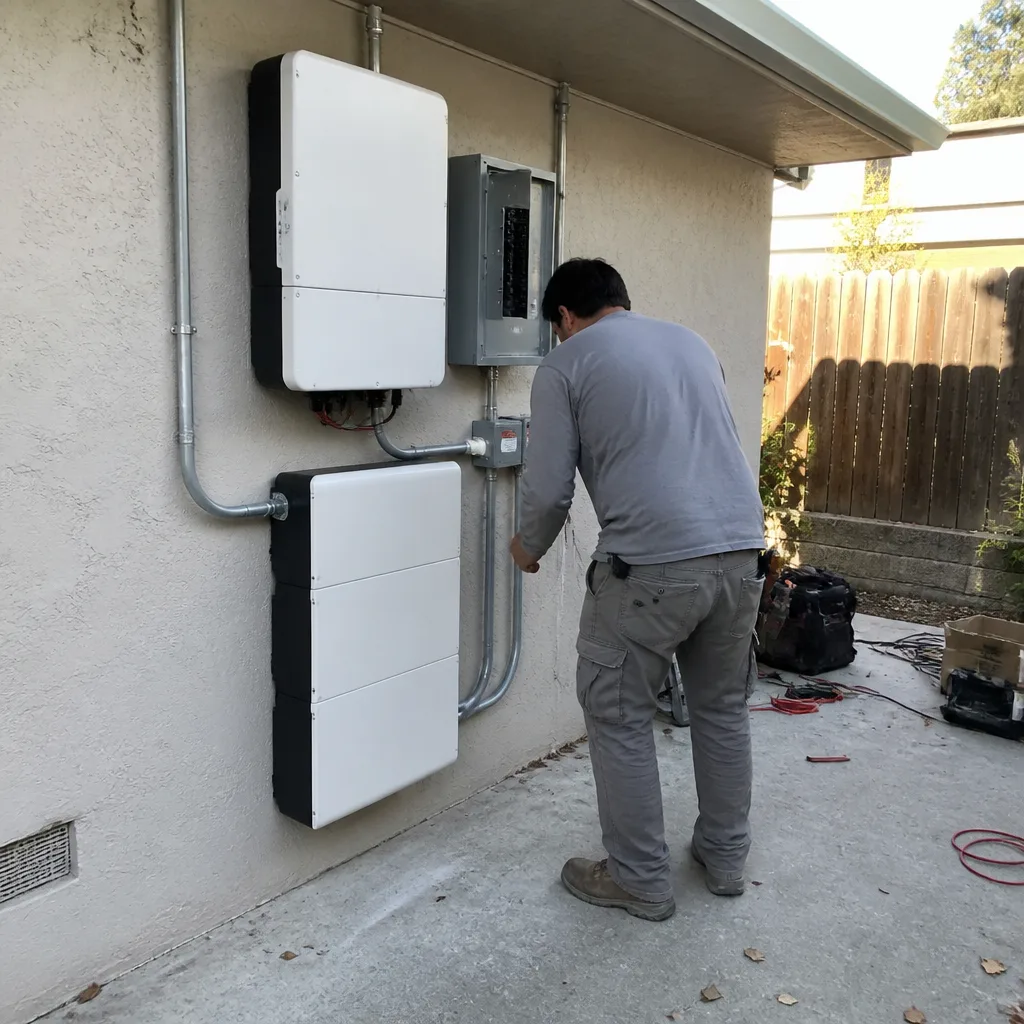 After
After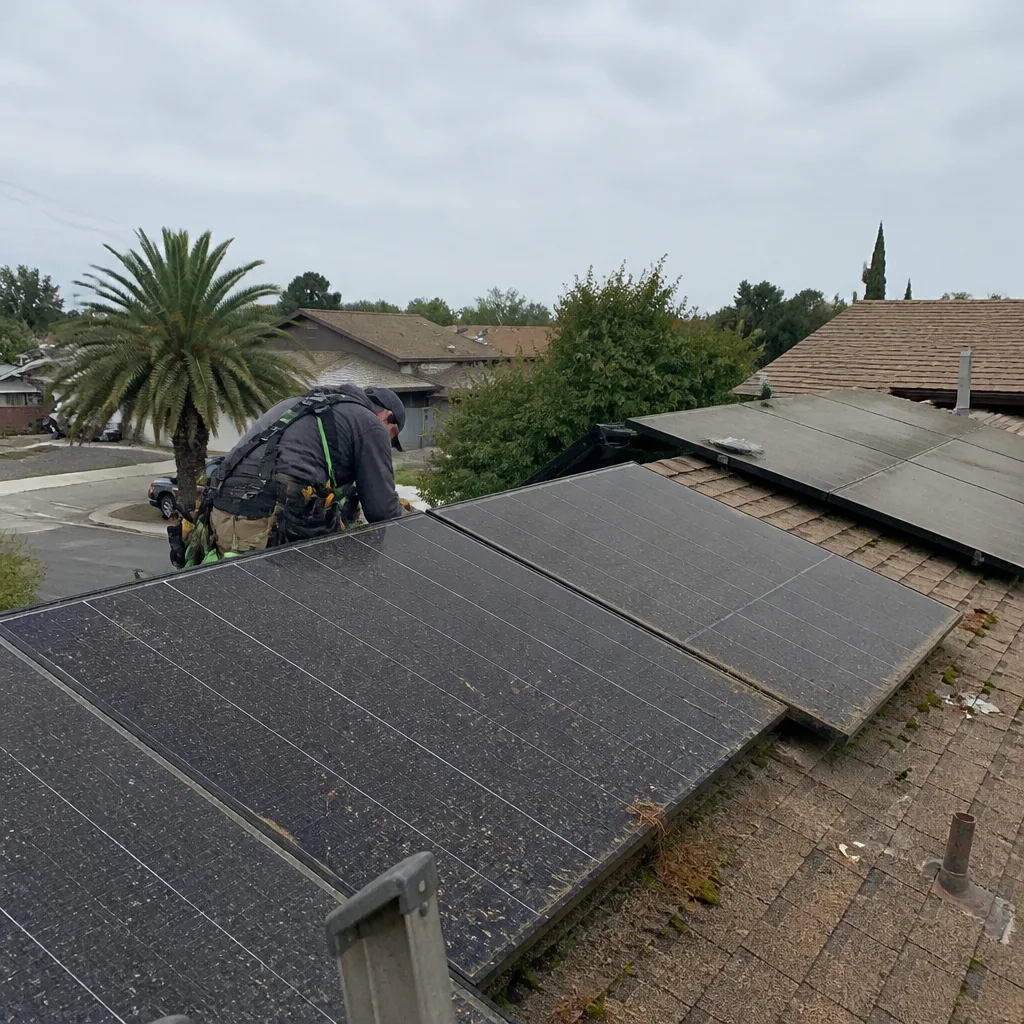 Before
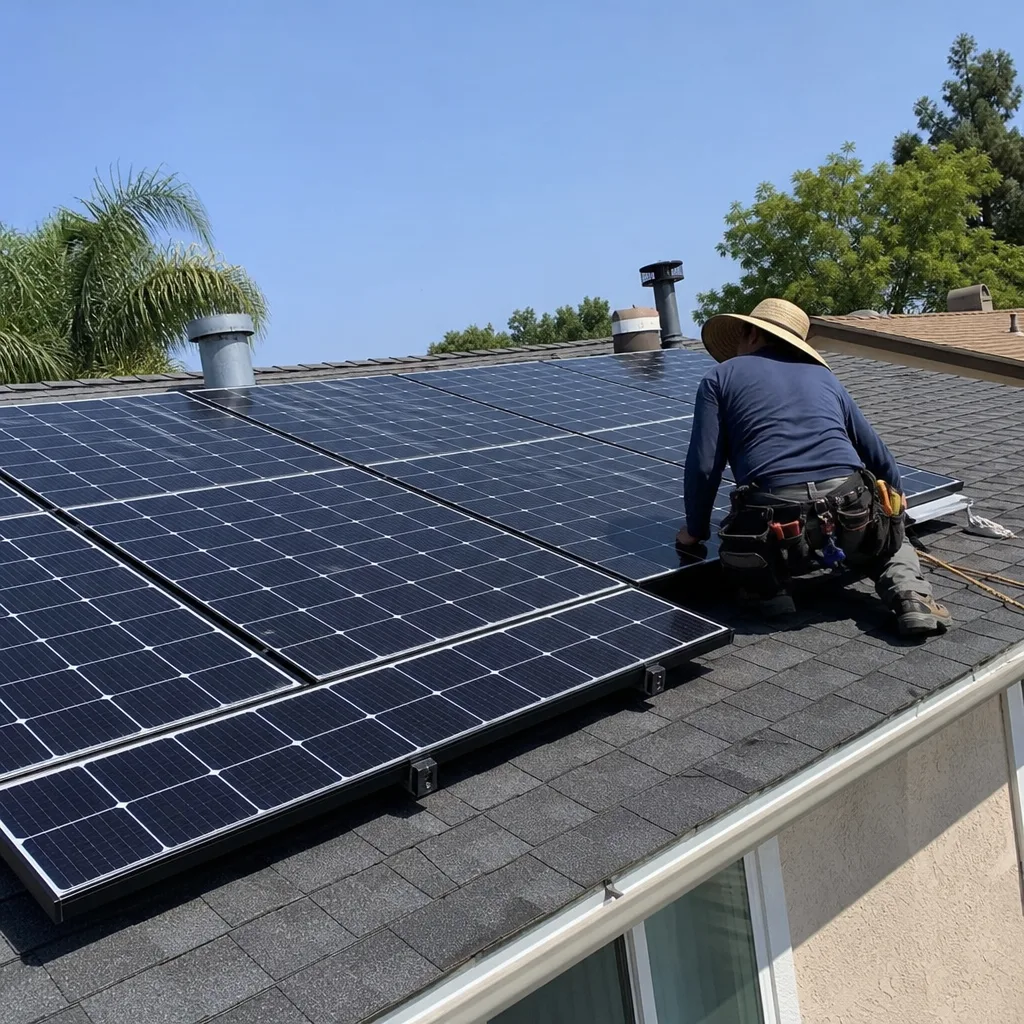 After
After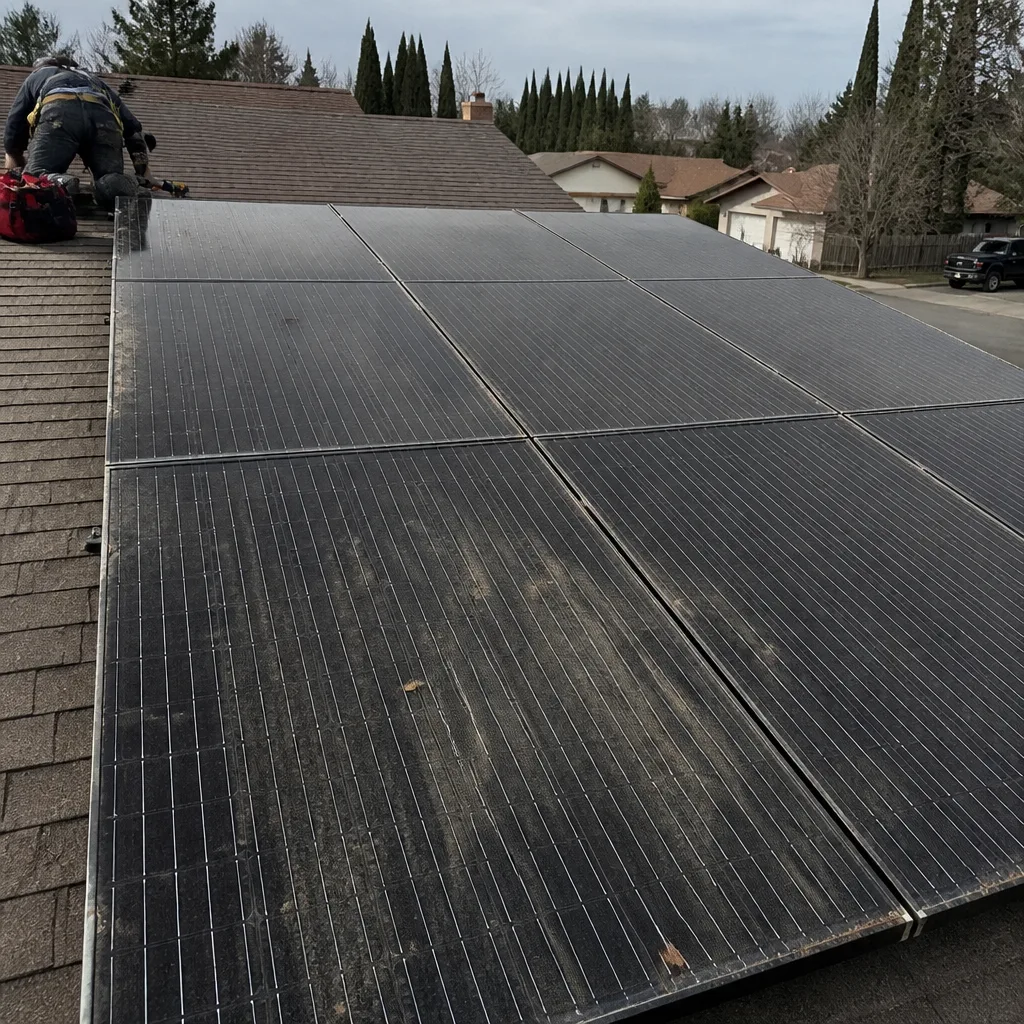 Before
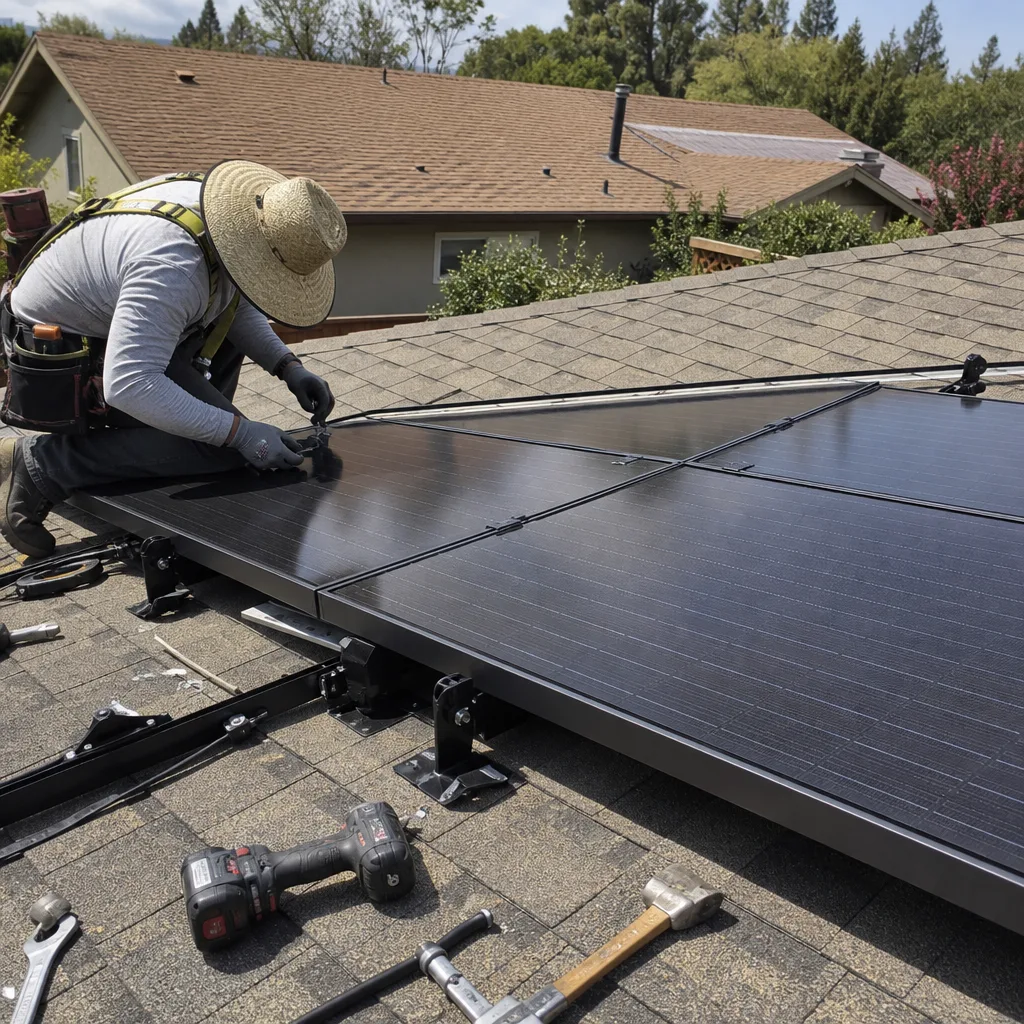 After
AfterSunPower Solar Panel Repair: The San Jose Owner’s Guide
SunPower solar panel repair in San Jose typically runs $350 to $1,800 installed, depending on whether we’re replacing a microinverter, optimizer, connector, or the panel itself. We stock SunPower-compatible parts on the truck and can usually be on your roof within 48 hours. Most San Jose homeowners discover the problem the same way: the monitoring app shows one panel underperforming, or the utility bill creeps up while the system claims everything’s fine.
SunPower built its reputation on panels that outlast most roofs. But a panel is only as good as its weakest connection, and in San Jose’s dry summers and damp winters, that connection is usually the first thing to go.
We’re an independent service provider, not affiliated with SunPower. That means we fix what’s broken without pushing a full system replacement.
Which SunPower Models This Applies To
If your system went in before 2019, you likely have SunPower’s E-Series or X-Series panels. These used a 96-cell or 104-cell layout that’s physically larger than most competitors’ panels, and the connectors are SunPower-specific. The A-Series and M-Series, which came later, switched to a more standard form factor but kept SunPower’s integrated microinverter design on many residential installs. The U-Series is SunPower’s entry line, and those panels use a more traditional string inverter setup.
The compatibility gotcha: a San Jose homeowner with a 2016 X-Series panel can’t just swap in any 96-cell panel. The physical dimensions differ by about two inches from other 96-cell brands, and the mounting rails were set for SunPower’s frame profile. We match the replacement panel to the original’s exact dimensions, wattage class, and connector type. For E-Series and X-Series specifically, we often use SunPower OEM parts because the aftermarket equivalents rarely match the frame geometry.
To identify your panel, check the label on the back of the panel or the underside edge. You’ll see a model number starting with SPR- followed by a series code. If you can’t get on the roof safely, call us and we’ll read it when we come out.
Signs Your SunPower Solar Panel Repair Is Failing
- One panel reads low in the monitoring app. SunPower’s monitoring shows per-panel output, and a panel running 20% below its neighbors almost always points to a failed microinverter or a damaged connector. In San Jose’s summer heat, microinverters on sun-facing roofs fail more often than the panels themselves.
- Your bill creeps up with no change in usage. A single underperforming panel won’t show up dramatically on your bill, but several degrading connections will. If your system produced less this July than last July and the weather was comparable, something’s wrong.
- Burn marks or discoloration around the junction box. This is the one we tell people not to ignore. Discoloration means arcing or heat buildup at the connection point, and that’s both a fire risk and a sign the connector needs replacement now.
- Snail trails or cloudy patches on the panel face. This is a SunPower-specific failure mode in some older E-Series batches. Micro-fractures in the cell allow moisture in, and the resulting discoloration looks like a snail crawled across the glass. Output drops slowly, but it never recovers.
- Intermittent drops in production on windy days. If output dips when the wind kicks up and recovers when it’s calm, you likely have a loose MC4 connection or a cracked wire crimp. These get worse over time and eventually fail completely.
Replacement Cost & What’s Included
Here’s what San Jose homeowners actually pay for SunPower repair work:
- Microinverter replacement (per unit): $350 to $650 installed. Includes the replacement inverter, rooftop labor, and re-sealing the roof penetration.
- Connector or junction box repair: $180 to $400, depending on accessibility and whether we need to replace the panel leads.
- Full panel replacement (E-Series or X-Series OEM): $900 to $1,800 installed. The range depends on panel wattage, roof pitch, and whether your racking needs adjustment for the new frame.
- Full panel replacement (M-Series or U-Series): $700 to $1,400 installed. Newer series are easier to source and faster to swap.
The price includes the part, the labor, and the cleanup. We don’t add a line item for “miscellaneous roofing materials” or “permit processing” unless a permit is genuinely required by San Jose code, and we’ll tell you before the work starts. Every repair is covered by our 90-Day Done Right Promise: if it’s not right, Gus comes back and makes it right. That’s in writing.
We also honor a $40 discount on any repair over $200, and seniors and veterans get 10% off for life.
DIY or Call Us?
If you’re comfortable on a ladder and own a multimeter, there are two things you can safely check: your monitoring app for per-panel output, and your main panel for a tripped breaker. A tripped solar breaker is free to fix and requires no roof work. Loose MC4 connectors at ground level, where the array connects to the conduit, are also a safe visual check.
Here’s where DIY goes wrong: SunPower panels with integrated microinverters carry live DC voltage the moment sunlight hits the panels. You can’t just “turn them off.” A disconnected DC line under load will arc, and that arc can start a fire on your roof. We’ve seen homeowners bypass a failed microinverter with a cheap string inverter, only to have the mismatched voltage profile damage the remaining healthy inverters within a year. That $300 weekend project turned into a $4,000 array rebuild.
Here’s what we’d do if it were our roof: call a licensed solar technician, get a per-panel diagnosis, and replace the failed part before it drags down the panels around it. Our number is (877) 550-6892, and a live person answers.
FAQs
SunPower panels are engineered for 25+ years of production, and in San Jose’s climate most E-Series and X-Series panels are still producing at 85-90% of their original rating after 12 to 15 years. What fails first isn’t the panel; it’s the microinverter or the connector, which typically last 10 to 15 years in San Jose’s sun load.
If the failure is a connector, junction box, or microinverter, yes, we repair it on site without touching the panel glass. If the panel itself shows snail trails or cell damage, the panel gets replaced; there’s no field repair for cracked or degraded cells. Call (877) 550-6892 and we’ll tell you which one you’re dealing with over the phone, usually from a photo.
Most microinverter and connector replacements take 60 to 90 minutes once we’re on the roof, and we schedule within 48 hours for most San Jose addresses. Full panel replacement adds about an hour, and we handle the old panel disposal. If your system is down entirely, say so when you call and we’ll prioritize the visit same-day when our schedule allows.
We keep SunPower-compatible microinverters, MC4 connectors, junction box components, and mounting hardware on the truck for most E-Series, X-Series, M-Series, and U-Series models. For full panel replacements, we source OEM panels from local San Jose suppliers and usually have them in hand within three to five business days. We also carry parts for Tesla, Enphase, and SolarEdge systems.
Written by Gus Petrakis, Owner, Gus’s Solar at Gus’s Solar, serving San Jose and nearby areas.