
Free bill analysis - bring a power bill, get the production math for your actual roof, panel brands like Qcells and REC compared side by side
If the pitch starts at your door and ends with "sign tonight for the special," sleep on it. The sun will still be there tomorrow; so will we.
 Before
 After
After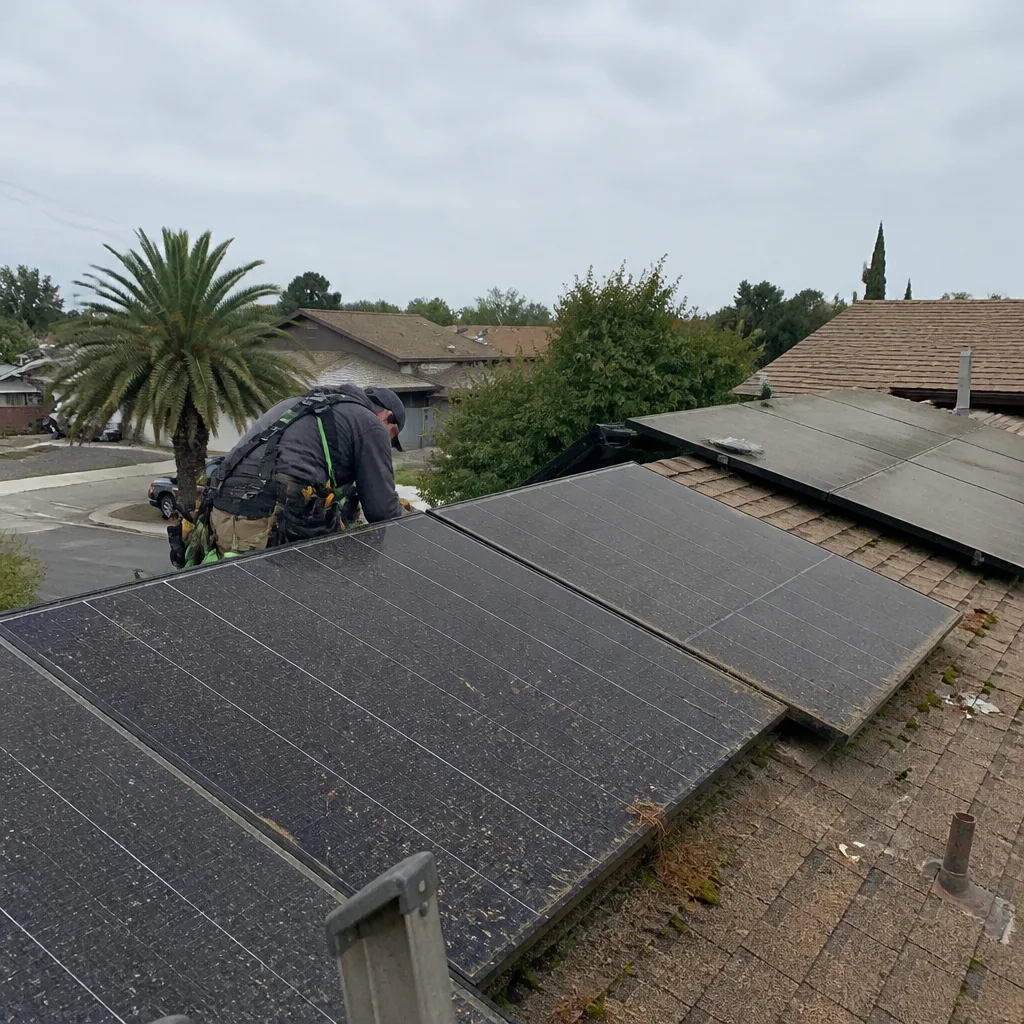 Before
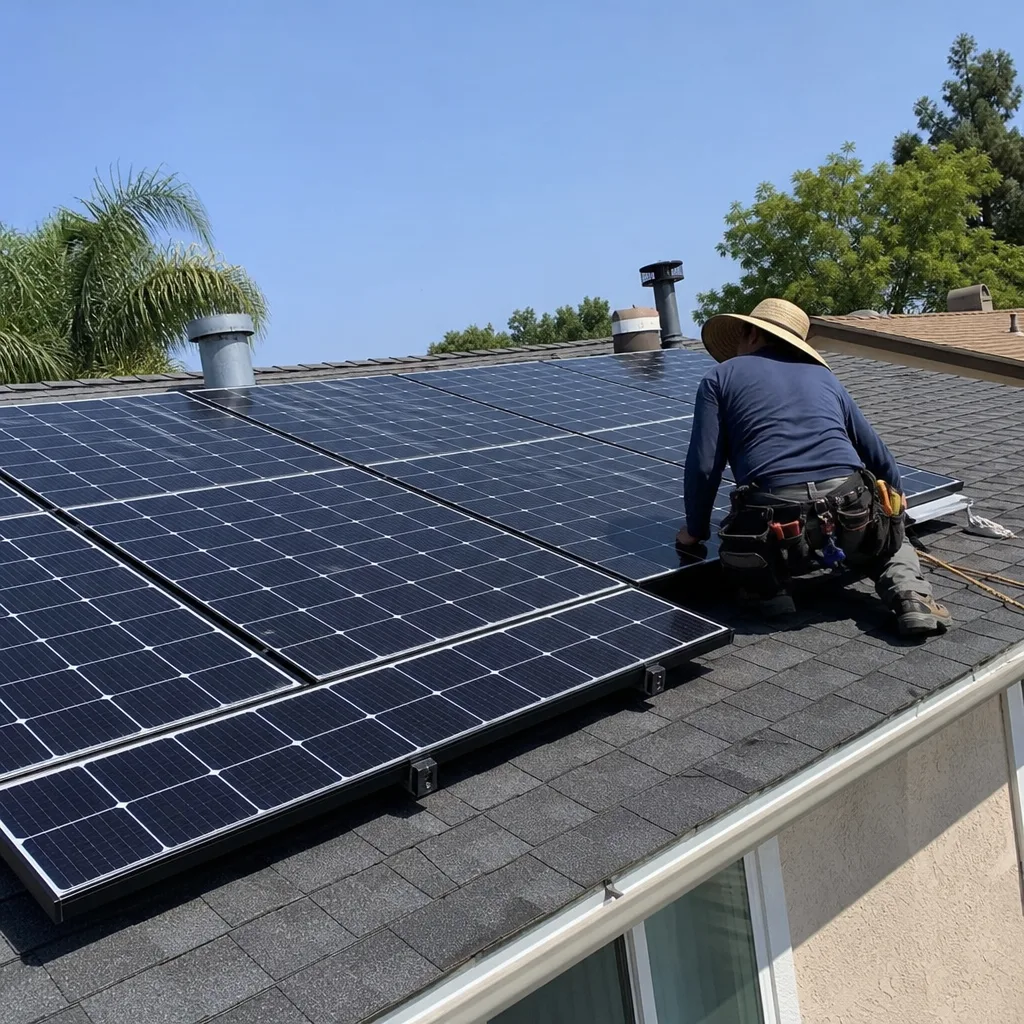 After
After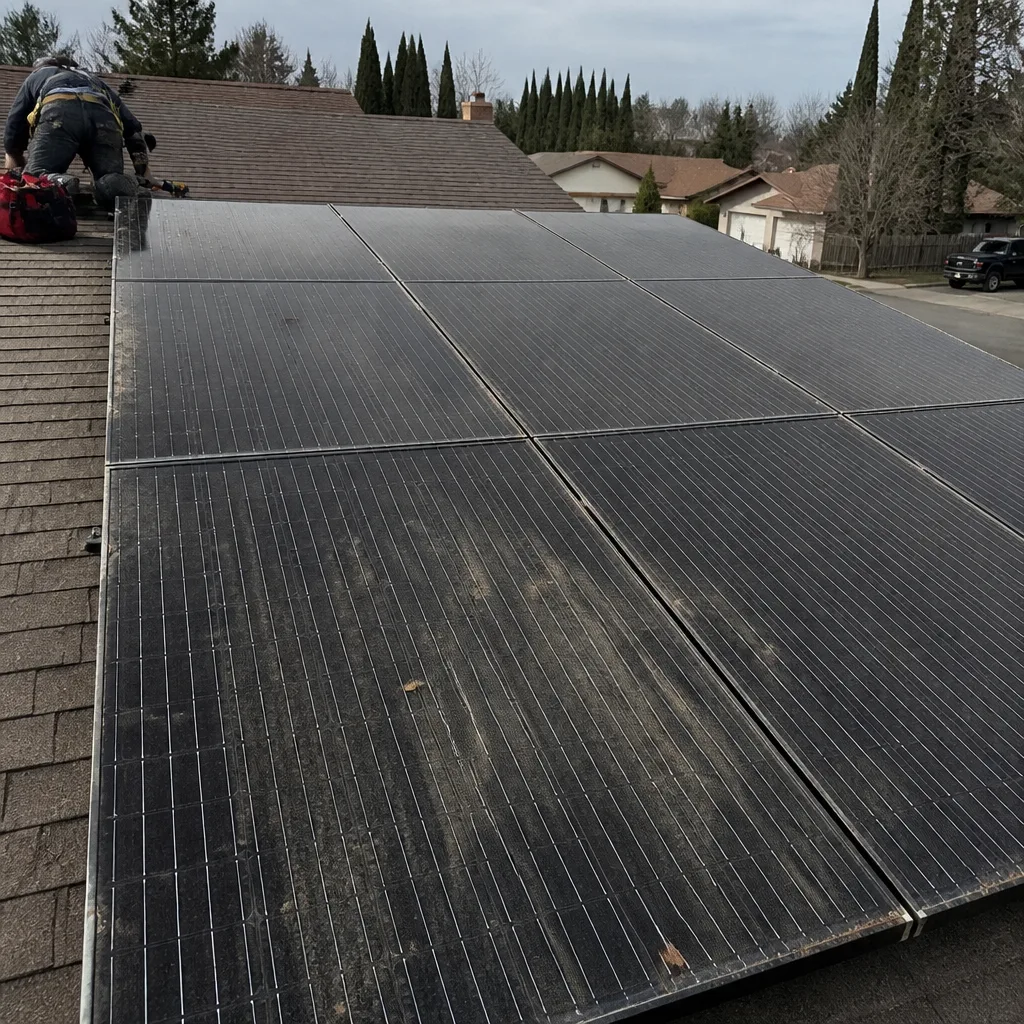 Before
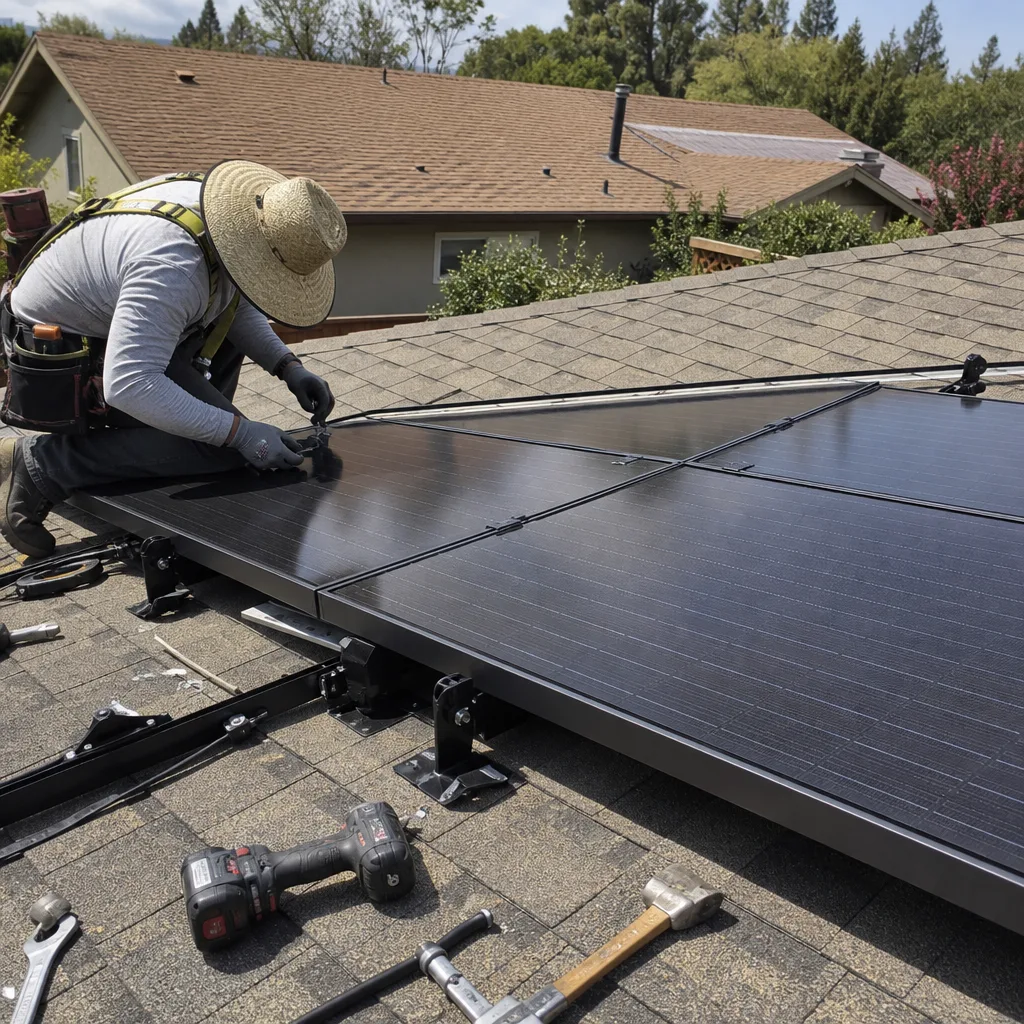 After
AfterSolarEdge EV Charger Installation: The San Jose Owner’s Guide
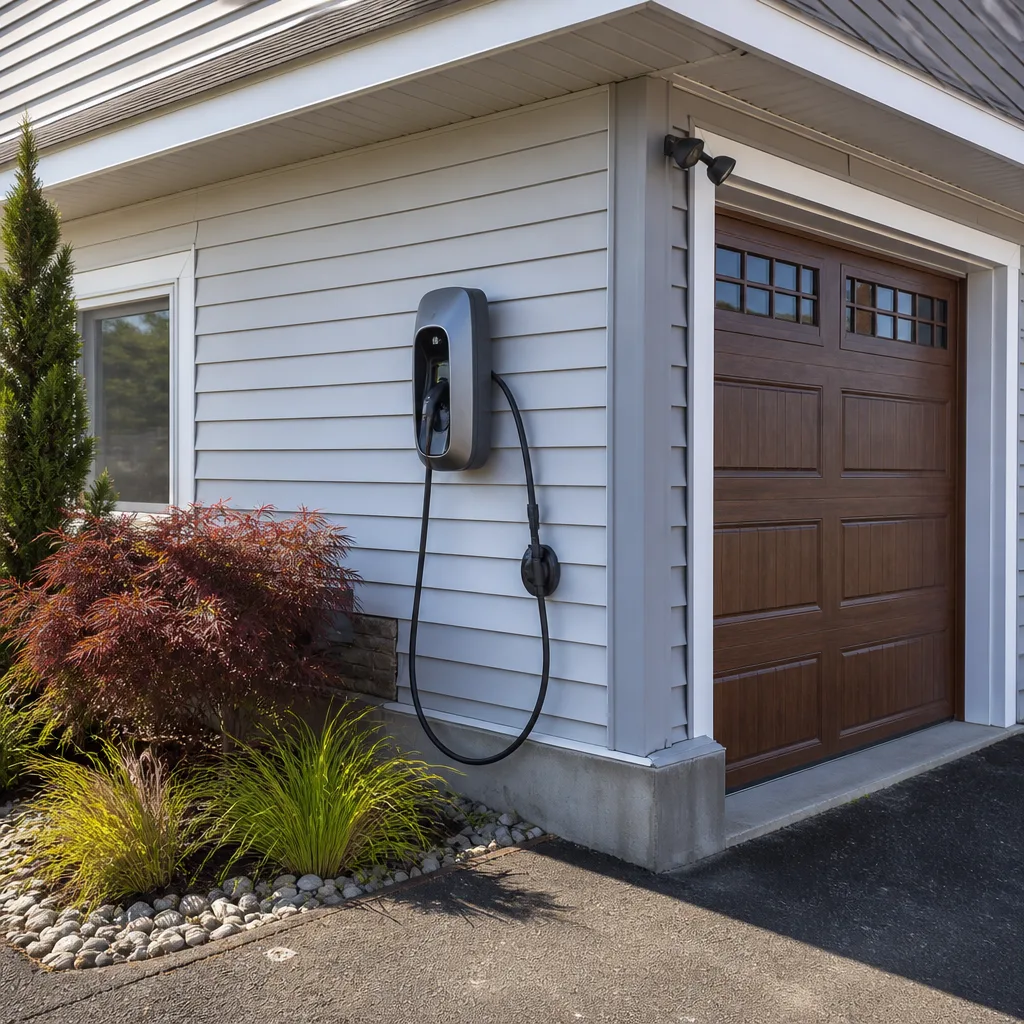
If you’re holding a SolarEdge EV charger that’s dead, tripping breakers, or throwing error codes, here’s the straight answer: we install and replace SolarEdge EV chargers across San Jose and the South Bay, with most installations running $1,350 to $2,850 fully installed, and we can usually be there within 24 to 48 hours. That price includes the hardware, the branch circuit, the breaker, and our labor, quoted upfront before we touch a single wire. Most owners don’t discover their charger is failing until their car doesn’t charge overnight, or the unit starts cycling on and off while the EV app shows “charging interrupted.” By then, the charger itself is usually the culprit, but not always, and that’s the first thing we check.
Gus Petrakis grew up in Willow Glen and has been wiring EV chargers in San Jose since the early days when a “Level 2” was still a novelty. We’re an independent shop, not affiliated with SolarEdge, which means we tell you when the charger is worth replacing and when it’s a $40 breaker on the panel that’s actually failed. Here’s what I’d do if it were my roof: I’d spend ten minutes checking the breaker and the plug before I spent a dime on a new charger. That’s what we do on every call.
Which SolarEdge Models This Applies To
SolarEdge’s EV charger line is still relatively young, and the compatibility picture is simpler than their inverter lineup. The main units we see in San Jose are the SolarEdge EV Charger (2-in-1, Model EVSA-32A-9P for 32A output) and the newer SolarEdge Home EV Charger (Model SE-EVSA-40A-9P), which steps up to 40A on a 50A circuit. Both are Level 2, 240V units. The 2-in-1 naming matters because these units integrate with the SolarEdge inverter through the SolarEdge Home Network, which means if your inverter is a SolarEdge HD-Wave or Energy Hub, the charger talks to it directly and can throttle charge rate based on solar production. That integration is the whole reason people buy SolarEdge chargers instead of a generic $400 wall unit, so when we replace one, we don’t swap in a random brand and call it done unless you tell us to.
Here’s a compatibility gotcha we run into regularly in San Jose: the SolarEdge EV charger requires a Zigbee connection to the inverter’s communication board, and that board is not present on every HD-Wave inverter sold before 2019. If your inverter is older or was installed without the SolarEdge Home Network module, the charger works, but you lose the solar-aware charging features. We check that before quoting so you know what you’re actually getting. The other thing to know is that neither SolarEdge charger model supports plug-in installation out of the box; they’re designed for hardwired connection to a dedicated 40A or 50A circuit. If you currently have a NEMA 14-50 outlet setup, we’ll need to convert it to a hardwired junction box, which changes the quote slightly.
Signs Your SolarEdge EV Charger Installation Is Failing
When a SolarEdge charger starts going bad, the symptoms are usually consistent. Here’s what we see most often on calls across San Jose, from Almaden to Berryessa:
- Charger clicks on, then shuts off within 30 seconds. This is almost always a communication fault between the charger and the inverter, not a dead unit. The Zigbee module inside the charger loses pairing, and the charger enters a protective shutoff loop. Reset is possible sometimes, but if it happens weekly, the comm board is on its way out.
- Car charges fine for an hour, then drops to zero or trickle charge. The charger’s internal temperature sensor may be tripping early, especially in San Jose garages that hit 100+ degrees in August. We see this more often with the older EVSA-32A units that were installed 4-5 years ago and have accumulated dust inside the enclosure.
- Breaker trips at the panel, not at the charger. This is important. If the branch breaker trips, the problem may be the wiring between the panel and the charger, not the charger itself. Loose connections at the breaker or at the charger’s terminal block will trip a 50A breaker under load. We always check the full path before condemning the unit.
- Error code 3A or 3B on the charger’s LED ring. These codes indicate a ground fault detection fault inside the unit. On the SolarEdge chargers, the GFCI circuit is built into the control board, and once it fails, repair isn’t practical. The board is the charger.
- Charger works, but only charges at half the expected rate. A SolarEdge charger set to 40A should deliver around 9.6kW. If you’re seeing 4kW or less, one of two things is happening: the charger has dropped into reduced-current mode because the inverter told it to, or there’s a voltage drop on the circuit from a corroded connection. Both are fixable, but the fix is different, and guessing wrong wastes a service call.
Replacement Cost & What’s Included
For a SolarEdge EV charger installation in San Jose, expect to pay between $1,350 and $2,850 depending on what we find. Here’s how that breaks down:
| Item | Typical Range (San Jose) |
|---|---|
| SolarEdge EV charger unit (32A or 40A) | $650 to $950 |
| New 50A breaker (if needed) | $25 to $75 |
| Conduit and wire run, 10-50 ft | $250 to $700 |
| Hardwire junction box conversion (if replacing plug setup) | $150 to $300 |
| Labor (2-4 hours) | $400 to $800 |
| City of San Jose permit (if panel upgrade required) | $100 to $200 |
The big variable is distance between your electrical panel and the garage or driveway. A 15-foot run through an unfinished garage is quick; a 70-foot run through a finished wall and across a crawl space is not. We also have to check your panel’s capacity. If your panel is maxed out, we’ll need a load calculation and possibly a lighter circuit, which changes the numbers. Every quote includes the full parts breakdown, our labor, and our 90-Day Done Right Promise on the workmanship. If something isn’t right, Gus makes it right. The charger itself carries SolarEdge’s manufacturer warranty, typically 3 years.
DIY or Call Us?
I’m going to be honest about this one. Installing any EV charger means working inside a live electrical panel, and that’s not a place for using a forum tutorial and a prayer. If you know which labeled breaker feeds what, you can safely do the diagnostic checks: reset the breaker, check whether the LED ring shows any color at all, and verify the car charges on a different outlet to rule out the vehicle’s charge port. Those checks cost you nothing and help us zero in on the problem before we’re on site.
But once you’re taking the cover off a panel or opening the charger enclosure, stop. A 240V circuit has enough current to stop a heart, and a San Jose home built before 1987 may have aluminum branch wiring that behaves differently when you re-torque a connection. We stock SolarEdge chargers and the common repair parts on the truck, and we don’t charge a trip fee inside our own county. If you’re in San Jose, Campbell, Los Gatos, or anywhere in Santa Clara County, call (877) 550-6892 and we’ll come out, diagnose it, and give you a fixed quote. You don’t have to decide the same day. Take two weeks. The price will be the same.
FAQs
A SolarEdge EV charger installed in San Jose typically lasts 7 to 10 years, though garage heat and dust can shorten that to 5-6 years if the unit is in direct sun or near a dryer vent. The components that wear first are the DC relay contacts and the internal cooling fan. If your charger is older than 6 years and acting up intermittently, replacement is usually more cost-effective than chasing repairs. Call (877) 550-6892 and we’ll tell you which side of the line your unit falls on.
Some failures are repairable on the SolarEdge chargers: a failed cooling fan, a loose internal connection, or a comms reset can often be sorted for $150-$350 in parts and labor. But a failed ground-fault board or a smoked control board means replacement is the only practical path, because the board is the majority of the charger’s cost. We won’t sell you a repair that doesn’t make sense, and a free second opinion on any written estimate is always on the table.
A straightforward replacement where we’re pulling the old SolarEdge charger and putting a new one on the same circuit takes about 2 to 3 hours. A fresh installation with a new cable run and panel work can take 4 to 6 hours and may require a City of San Jose electrical permit depending on scope. We’ll give you a time window before we start, not a 4-hour “we’ll be there sometime” window.
We keep SolarEdge EV chargers on the truck along with the common repair parts, so most San Jose jobs are done same-day or next-day. If your unit has the older comms module that needs matching to a specific inverter firmware version, we may need one extra day to source the right variant for your setup. We also carry Tesla, Enphase, SolarEdge, Qcells and the rest of the major brands, so if the smart move is switching brands, you’re not stuck waiting on a backorder.
Written by Gus Petrakis, Owner, Gus’s Solar at Gus’s Solar, serving San Jose and nearby areas.
If your SolarEdge EV charger is down, call (877) 550-6892. A live person answers, and we’ll have a straight answer for you.