
Free bill analysis - bring a power bill, get the production math for your actual roof, panel brands like Qcells and REC compared side by side
If the pitch starts at your door and ends with "sign tonight for the special," sleep on it. The sun will still be there tomorrow; so will we.
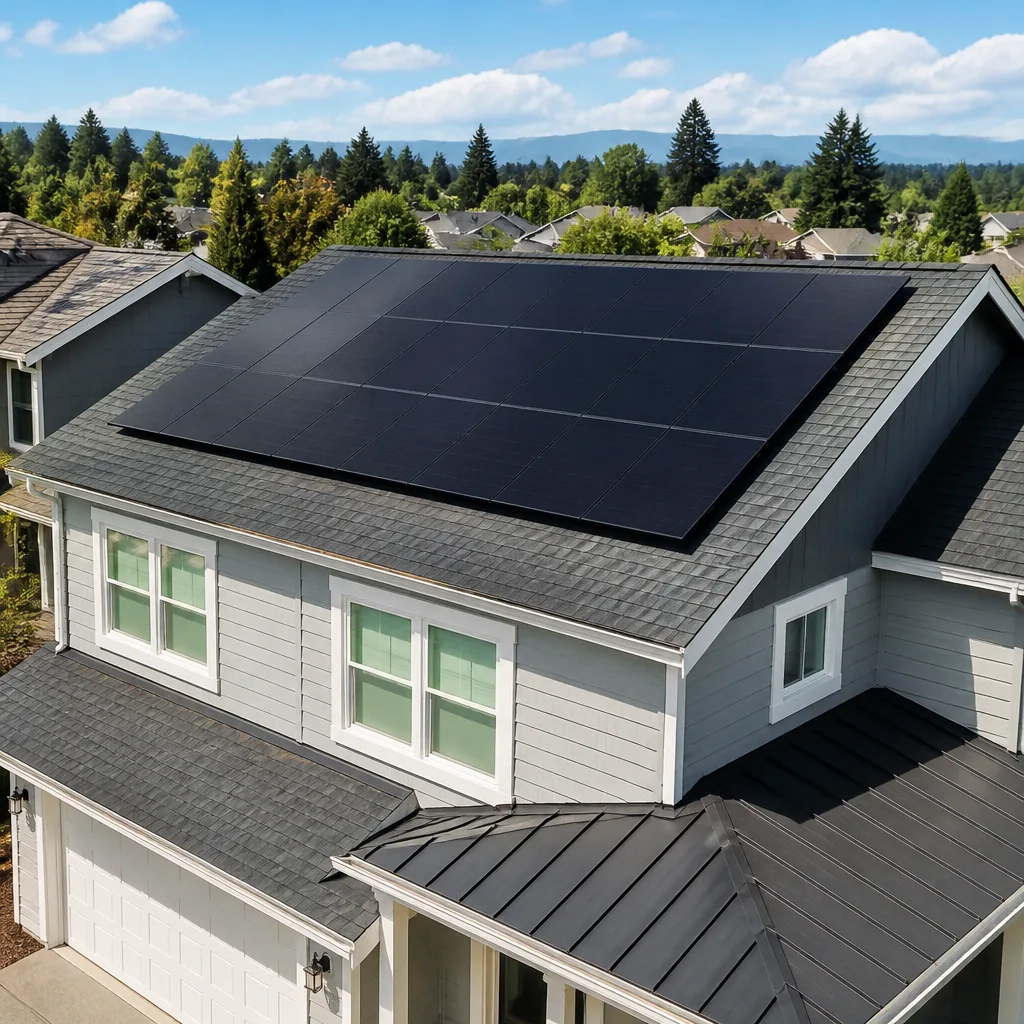
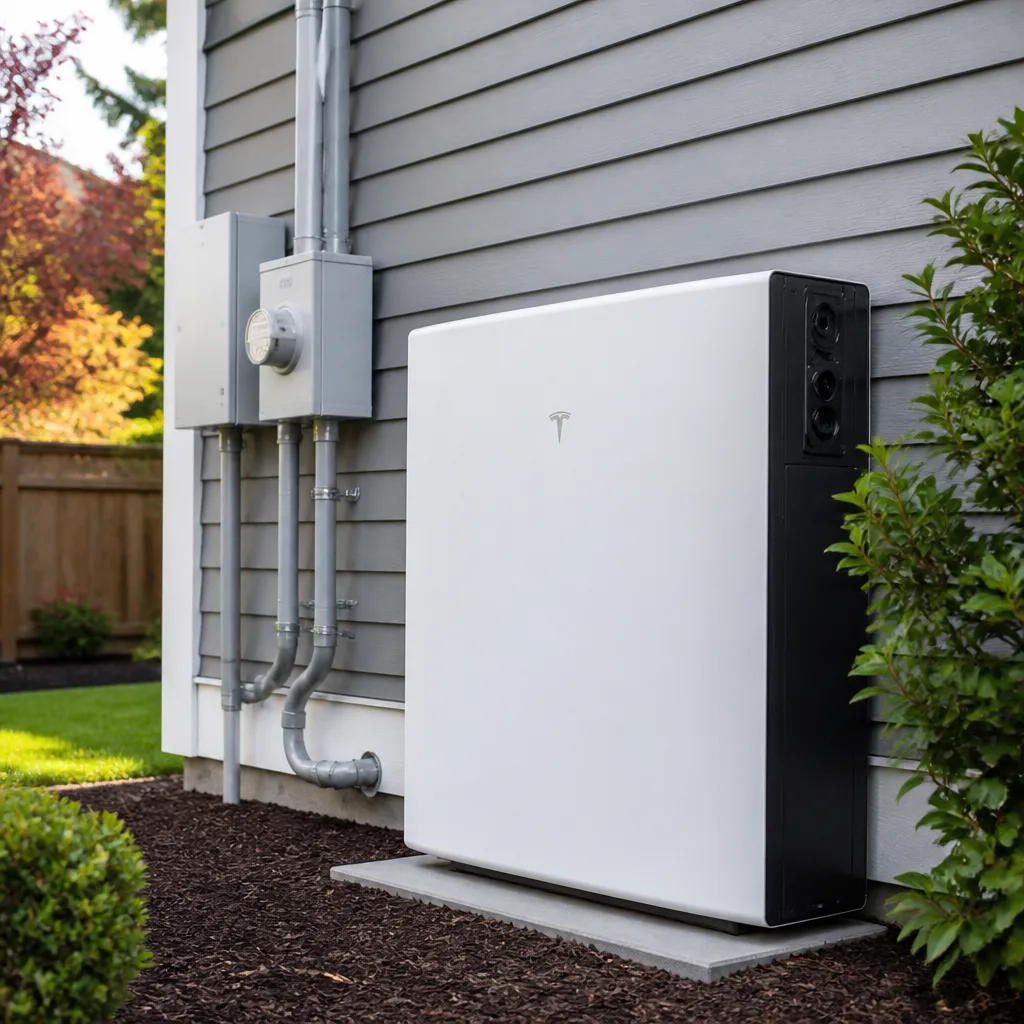
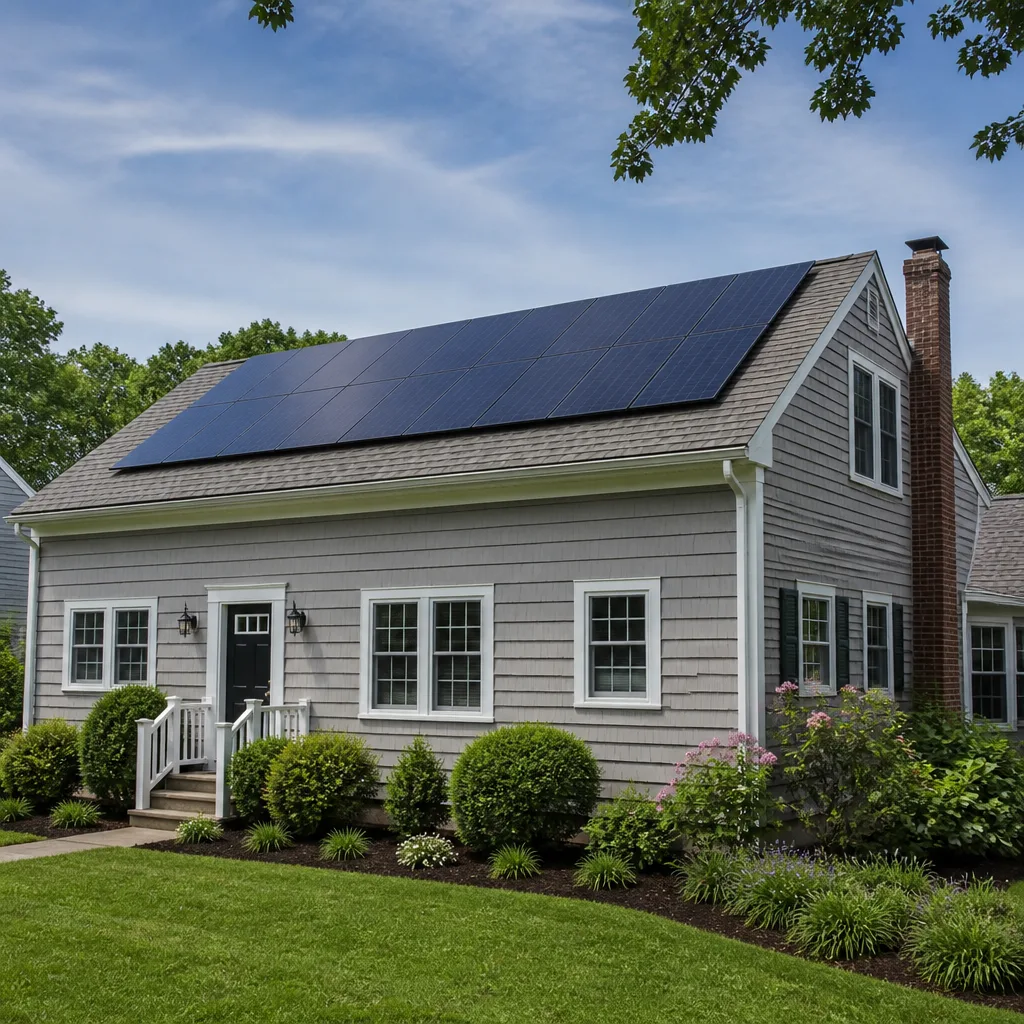
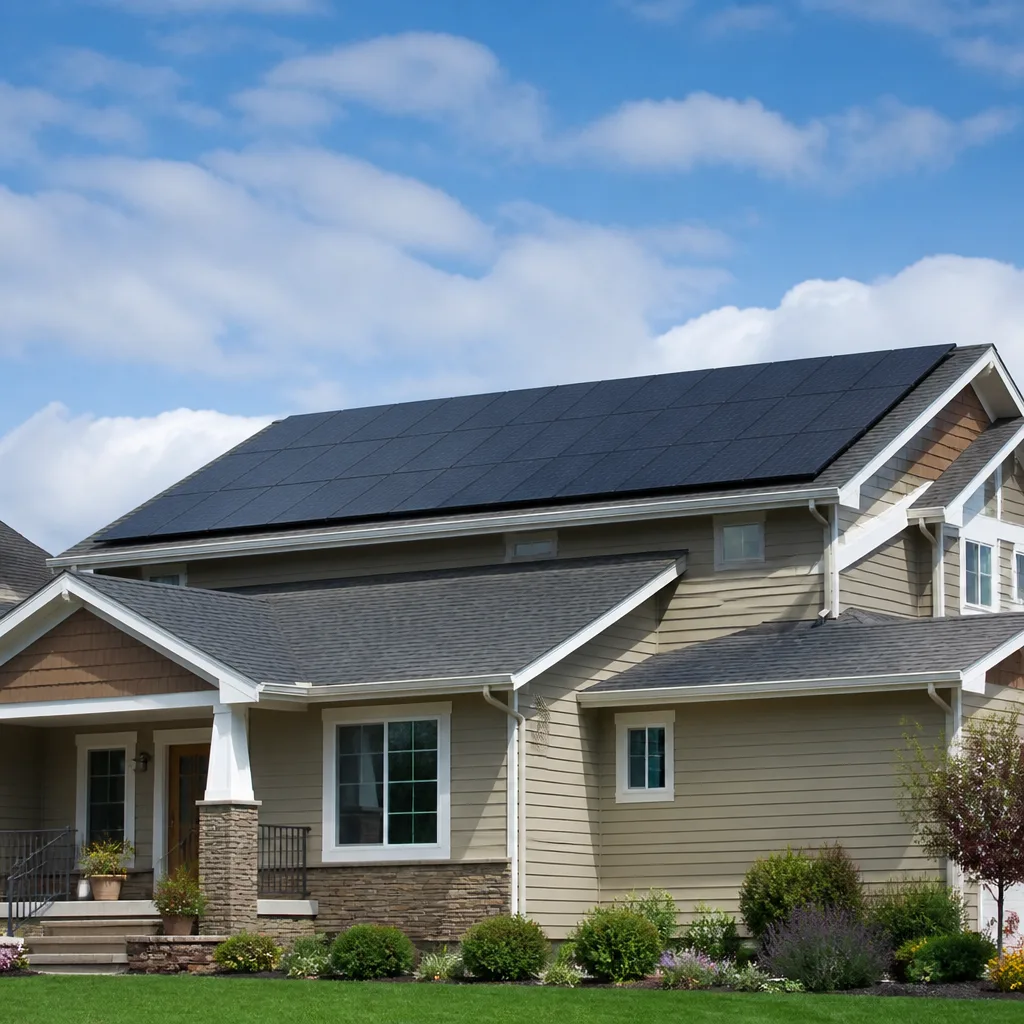
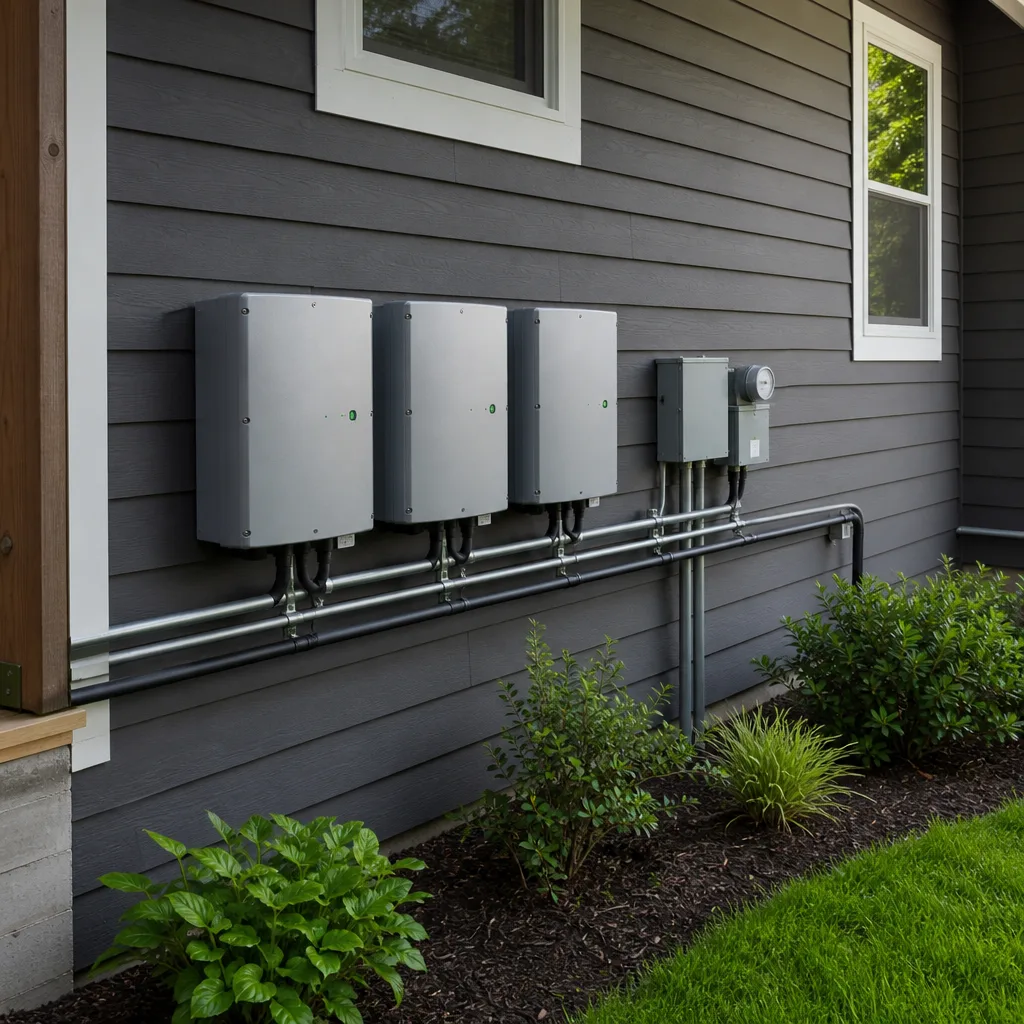
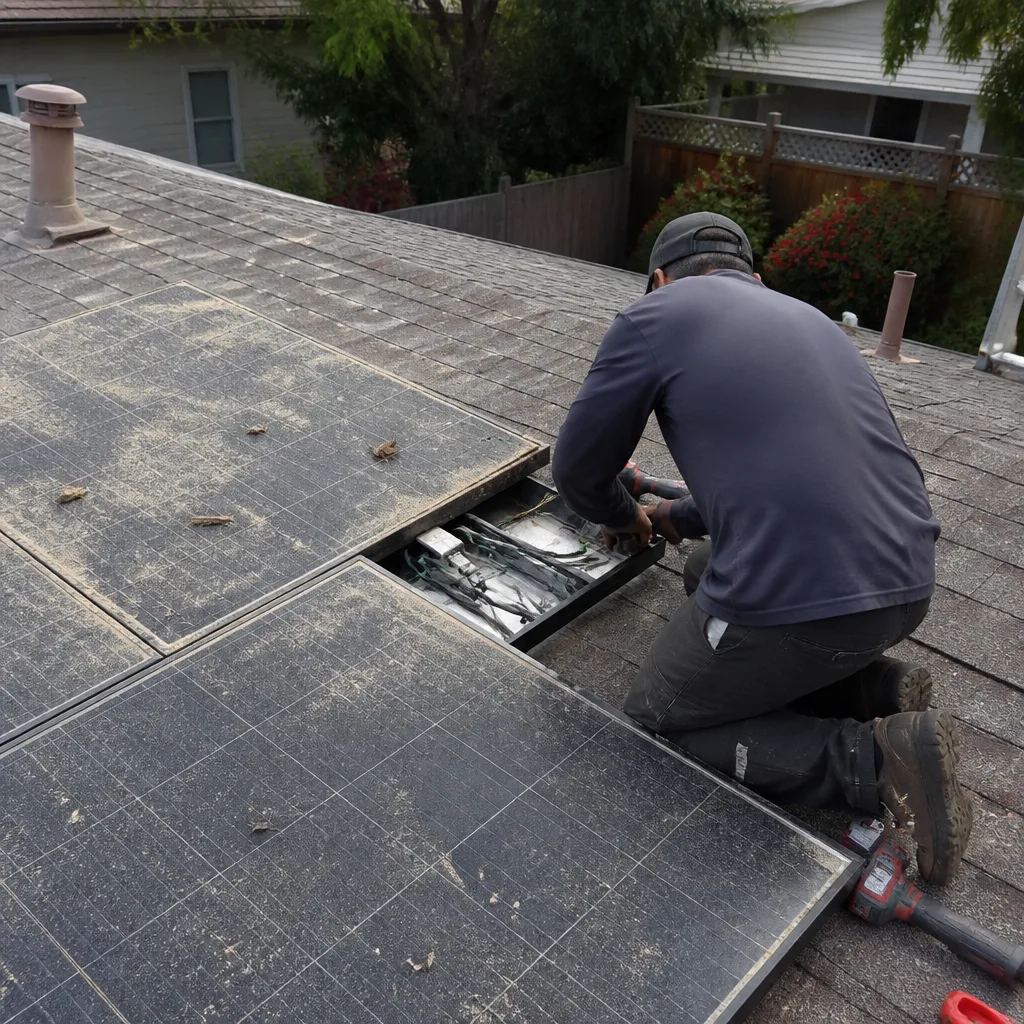 Before
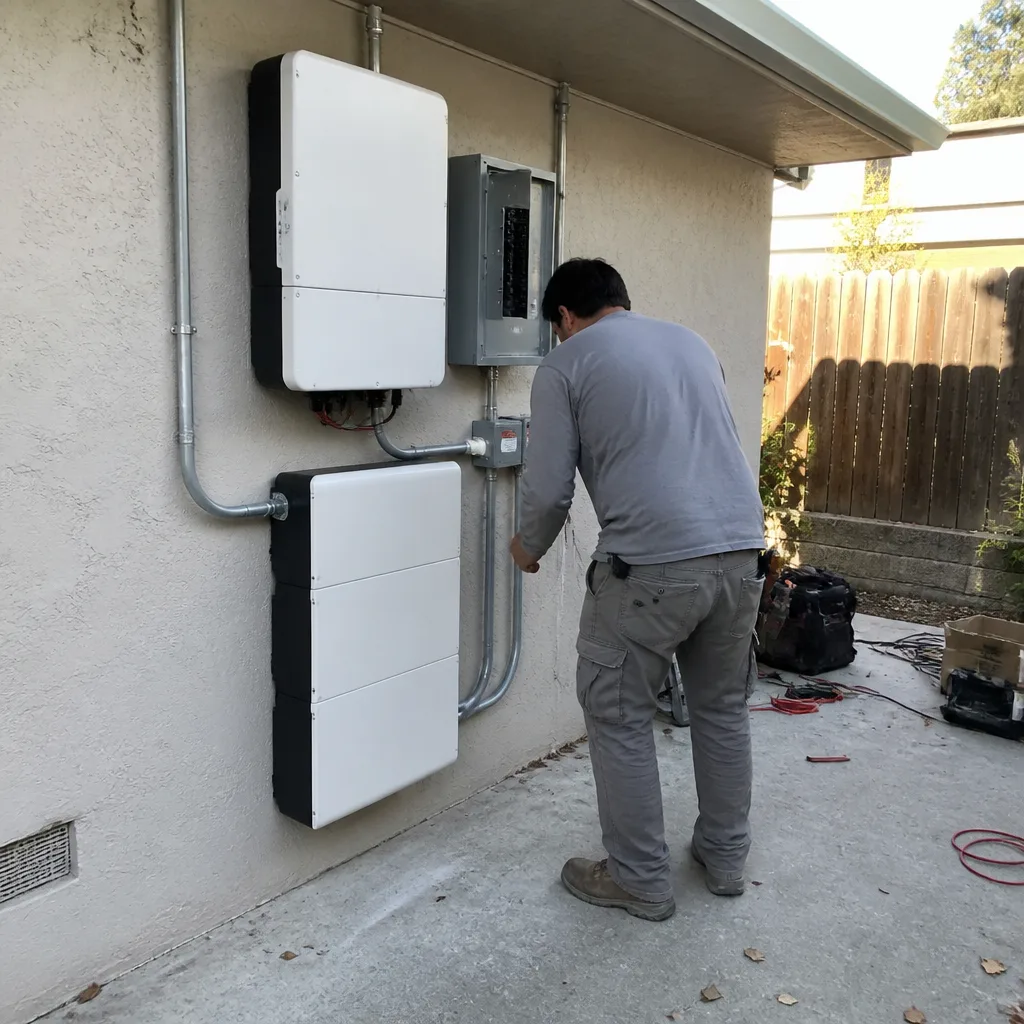 After
After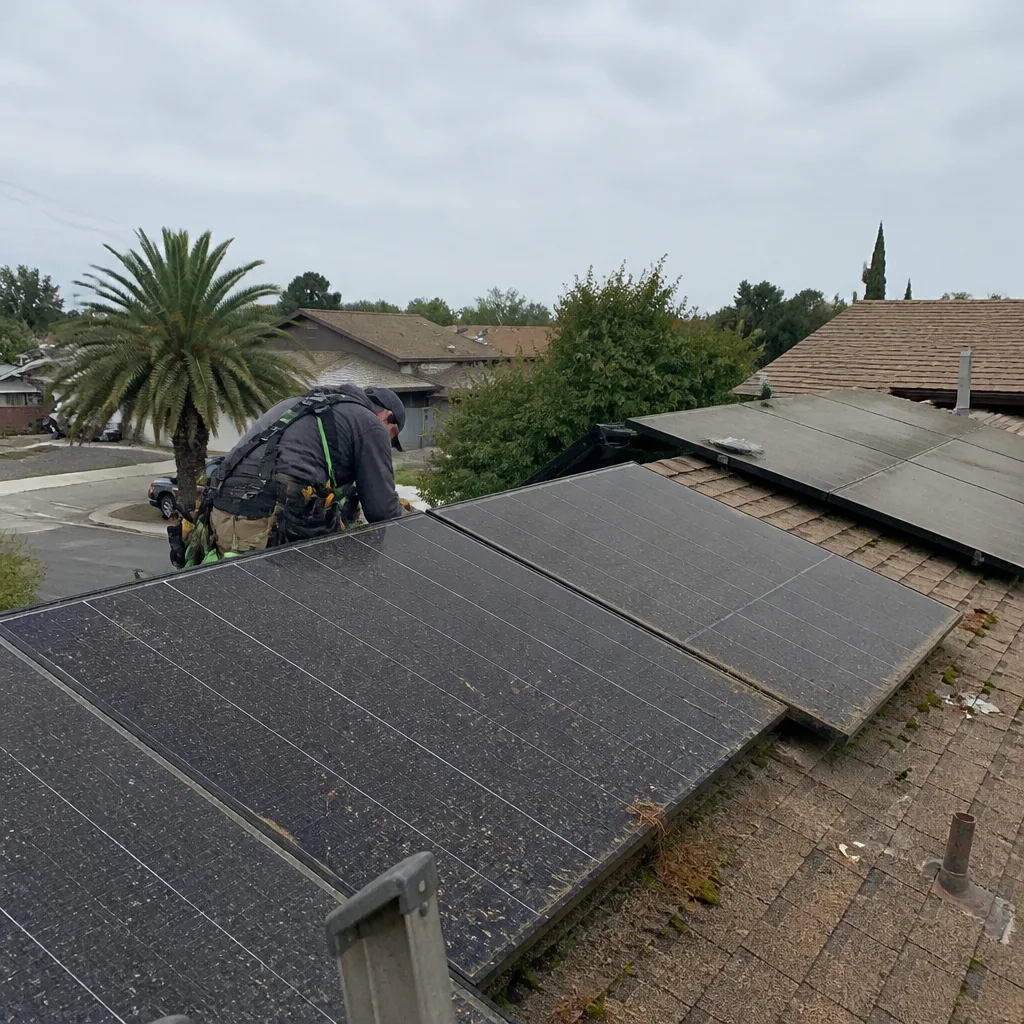 Before
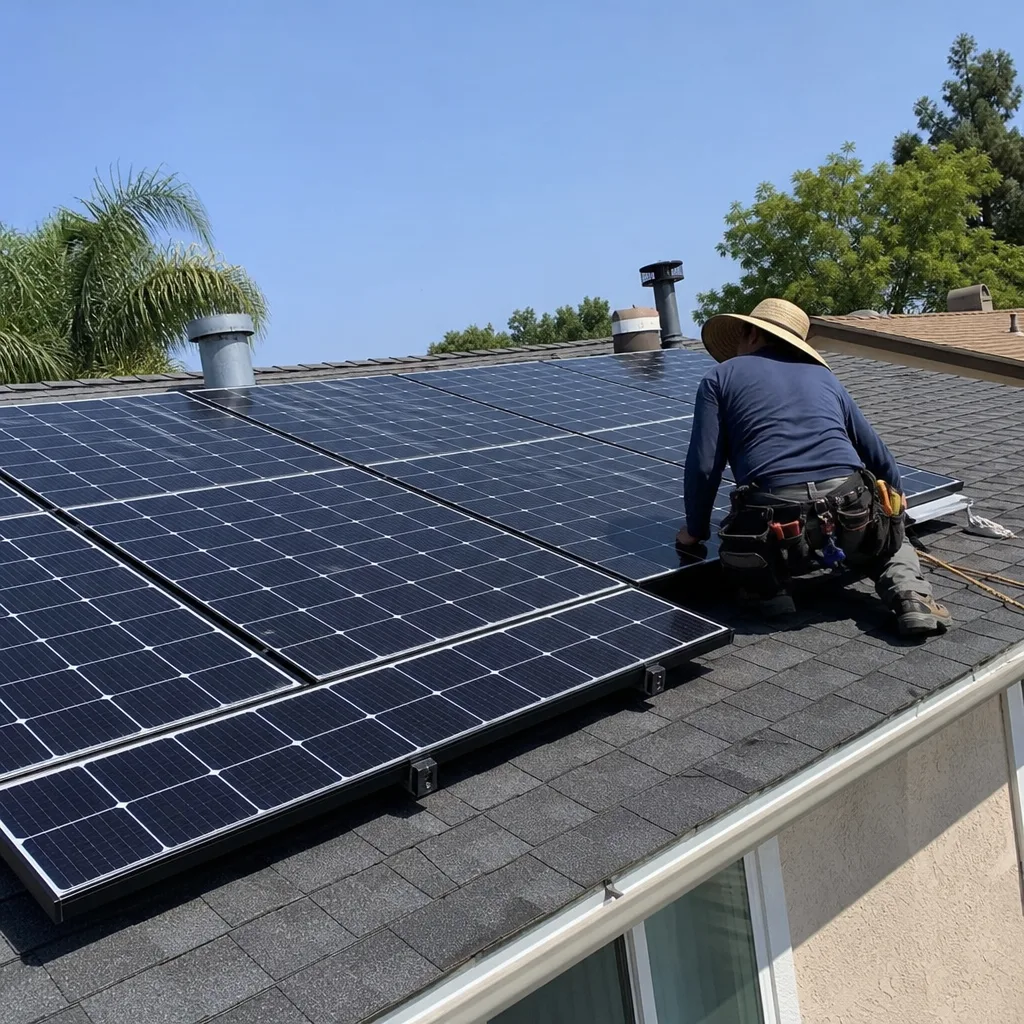 After
After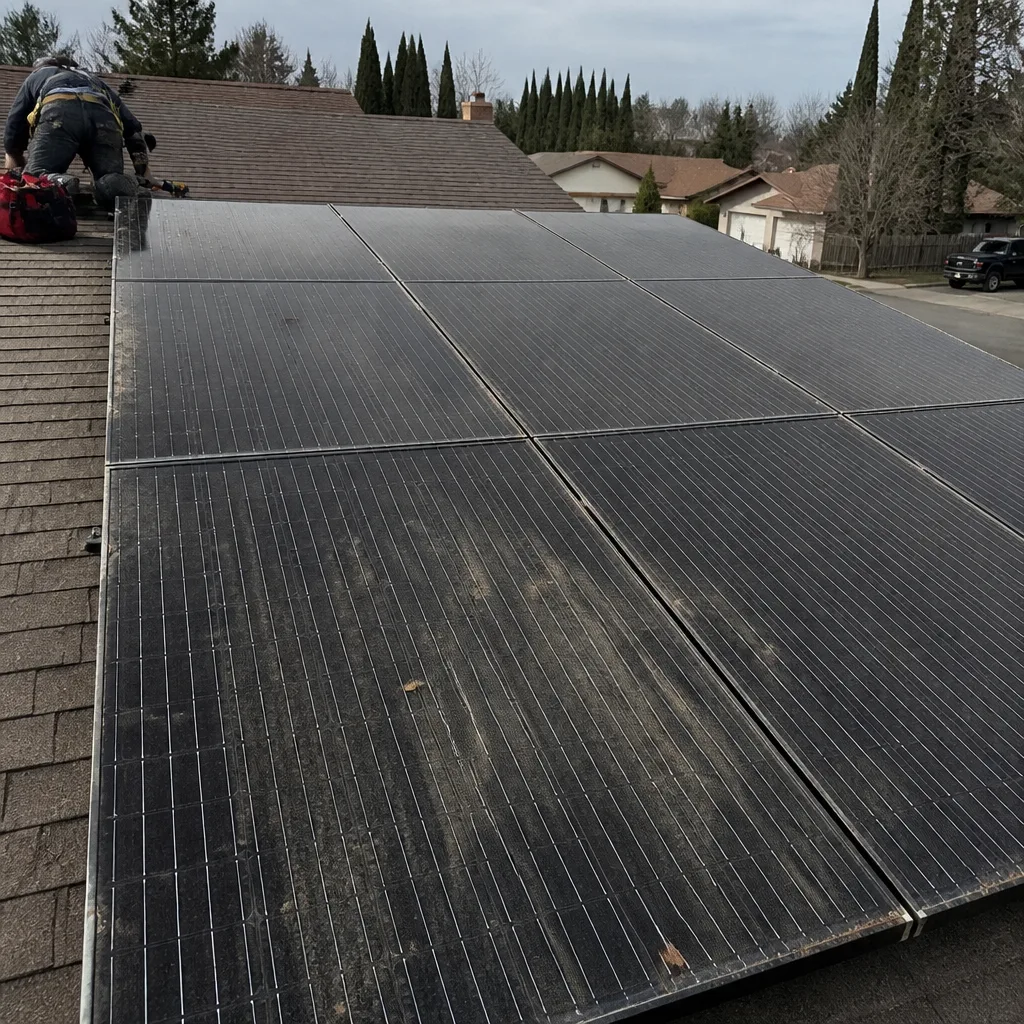 Before
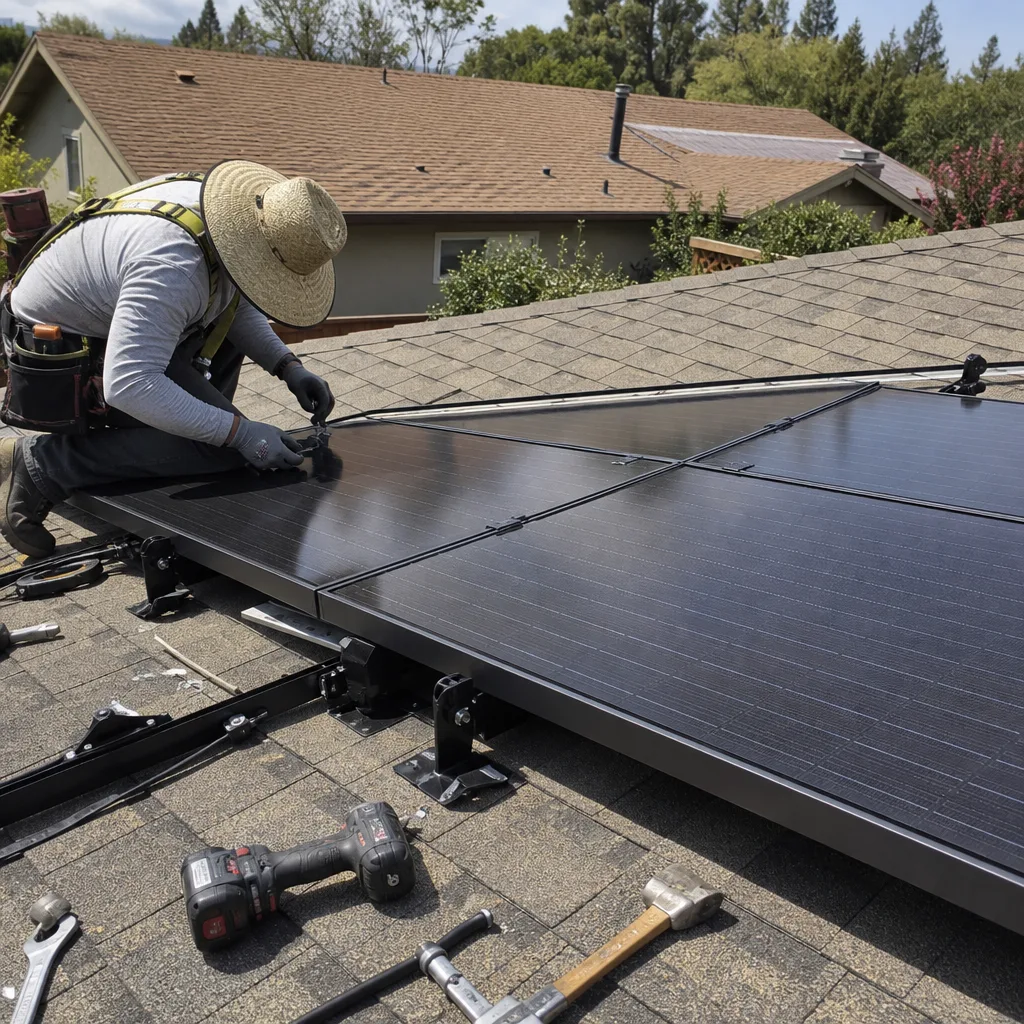 After
AfterPanasonic Solar Panel Repair: The San Jose Owner’s Guide
We stock Panasonic-compatible repair parts on the truck and install them for $380-$1,400 depending on what failed, with most jobs done same or next day in San Jose. The part most owners call about isn’t actually the panel itself; it’s the microinverter or a burned connector at the junction box. You’ll usually spot the trouble on your monitoring app first: one panel’s output drops to near zero while the rest of the array hums along fine.
Gus Petrakis has been repairing Panasonic arrays across San Jose since before the HIT series became the EverVolt line. Here’s what we’ve learned about what breaks, what it costs, and whether it’s worth fixing.
Which Panasonic Models This Applies To
Panasonic has sold residential panels in San Jose under three main lines: the HIT N-series (N330, N325, N320), the EverVolt series (EVPV400, EVPV410, and the newer EVPV410HK black-on-black), and a smaller number of VBHN and AC-series modules running with integrated Enphase microinverters. The AC-series panels are the ones we see most often in San Jose installations from 2015-2019, and they’re the trickiest to diagnose because the microinverter sits under the panel frame, not on the racking where you can read the serial number easily.
Here’s the compatibility gotcha: a Panasonic EVPV410HK is not a drop-in replacement for an older HIT N330 even if the frame dimensions match. The electrical characteristics differ enough that mixing them on a single string drags down the whole circuit. When a single panel in a string fails, you either match the exact model and wattage, or you replace the string with a matched set. We keep both OEM Panasonic stock and quality aftermarket equivalents on hand for the most common San Jose installations, and we’ll tell you honestly when a newer aftermarket panel is the better value than hunting down a discontinued OEM module at double the price.
Signs Your Panasonic Solar Panel Repair Is Failing
- One panel reads zero on your monitoring app while neighbors show normal output. That’s the classic microinverter or optimizer failure signature. The panel glass is likely fine; the electronics underneath it have quit.
- Visible burn marks or melted plastic at the junction box on the back of the panel. We see this in San Jose’s older HIT installations where years of heat cycling have degraded the diode housing. This is a fire-risk item and worth a same-day call.
- Your system’s overall output dropped 15-20% without any shading changes. One dead panel in a string can take the entire series circuit down to the level of its weakest performer. Your inverter reports the string at the lowest panel’s output, so a single failure masquerades as a system-wide problem.
- Snail trail discoloration across the face of one or two panels. That silvery-brown marking is moisture intrusion through micro-fractures in the cell encapsulation. It typically shows up in panels that caught a branch or had a bad seal from day one, and in San Jose’s wet winters it accelerates fast.
- Intermittent output on hot afternoons. Panasonic built a reputation on low temperature coefficient, but any panel with a weakening solder joint inside the cell string will read normal at 8 a.m. and sag hard at 2 p.m. when the roof surface is 140 degrees in a San Jose summer.
Replacement Cost & What’s Included
What you’ll pay in San Jose depends on whether we’re swapping a microinverter or a full panel, and whether we’re matching an existing string or upgrading the whole circuit.
- Microinverter replacement (Enphase IQ7 or IQ8 compatible with Panasonic AC-series): $380-$650 installed, including the part, the roof work, and the monitoring reconnect.
- Single Panasonic panel replacement with OEM match: $550-$950 installed, depending on whether we can source an exact-model match or need to buy new-old-stock.
- Full string replacement (3-6 panels, matched aftermarket set): $1,200-$2,800 installed, including removal of the old set and compatibility re-check of your inverter.
- Junction box or diode repair on a single panel: $250-$450 if the panel is otherwise sound and accessible.
The price you’re quoted is the price you pay. We don’t add trip charges inside Santa Clara County, and every repair is covered by our 90-Day Done Right Promise in writing. We also honor a 10% senior and veteran discount that never expires, and we take $40 off any repair over $200. If you booked a diagnostic, we put the diagnostic fee toward the repair if you move forward with us.
DIY or Call Us?
Here’s what I’d do if it were my roof. If you’re comfortable on a ladder and your array is on a single-story section, you can safely read the label on the underside of a failing panel to get the model and serial number. That’s useful information to have when you call. What you should not do is open a junction box on a live DC circuit or try to swap a microinverter yourself. Panasonic panels run 40-60 volts DC per module in series, and a string of eight panels carries enough voltage to stop your heart. That’s not scare language; that’s the electrical reality we train every one of our techs around.
Also, the monitoring platform matters. If your system runs on Enphase monitoring, we need to re-provision the new microinverter to your envoy before it reports correctly. If a DIY swap goes wrong there, you’ll have a panel that works fine but reads zero on your app forever. That’s a half-hour fix for our crew and a multi-day headache for most owners. Call us at (877) 550-6892 and we’ll be straight with you about what’s worth paying for and what isn’t.
FAQs
Panasonic’s HIT and EverVolt panels carry a 25-year product and performance warranty, and most of the modules we installed across San Jose in the early 2010s are still producing at 85-90% of their original output. What fails first in our climate isn’t the silicon; it’s the power electronics and the connector hardware around the panel. We regularly see microinverters fail at year 10-12 and MC4 connectors corrode at year 8-10, especially on roofs with no tree cover and full afternoon exposure. Call us at (877) 550-6892 if you want us to run a quick output comparison on your own array.
Sometimes. If the issue is a failed diode, a burned junction box, or a corroded connector, we can usually repair the existing module for under $450. If the cell string itself is compromised or water has entered through micro-fractures, there is no reliable field repair; the panel gets replaced. We’ll show you the test readings and tell you which one you’re looking at before you spend a dollar.
Most single-panel or single-microinverter swaps take 2-3 hours on site, including the monitoring reconnection and a final output check. We carry the common Panasonic-compatible part numbers on the truck, so we can often do it the first visit. Call (877) 550-6892 in the morning and there’s a good chance your array is producing again by dinner.
We keep a rolling stock of Panasonic-compatible microinverters, MC4 connectors, junction box kits, and a small number of exact-match Panasonic panels in our San Jose shop. Some older HIT models we source new-old-stock or through our parts network, which adds a day or two. Every job, we quote the part and the labor separately so you see exactly what you’re paying for.
Call (877) 550-6892 for a free estimate on Panasonic solar panel repair in San Jose. Gus answers his own phone, and he’ll give you a straight answer about whether it’s worth fixing.
Written by Gus Petrakis, Owner, Gus’s Solar, serving San Jose and nearby areas.