
Free bill analysis - bring a power bill, get the production math for your actual roof, panel brands like Qcells and REC compared side by side
If the pitch starts at your door and ends with "sign tonight for the special," sleep on it. The sun will still be there tomorrow; so will we.

 Before
 After
After Before
 After
After Before
 After
AfterJinkoSolar Solar Battery Storage & Backup: The San Jose Owner’s Guide
We stock and install JinkoSolar-compatible solar battery storage and backup components across San Jose, with most swaps running between $800 and $2,400 installed depending on your model and what failed. If your JinkoSolar system has stopped holding a charge or keeps tripping offline during peak-rate hours, we can usually be there same day. Most owners discover the problem the hard way: the battery shows “full” at noon, then dies by 9 p.m., and suddenly PG&E is billing you for evening power at $0.45 a kilowatt-hour.
Here’s the short version: this is a repairable problem, not a system death sentence. Gus Petrakis has been working on JinkoSolar equipment in the South Bay since the brand started showing up on local rooftops, and we keep the common failure parts on the truck. No pressure, no overnight decisions. Just a straight answer about what failed and what it costs to fix.
Which JinkoSolar Models This Applies To
JinkoSolar’s storage lineup in the U.S. market splits into two main families: the JKS-series residential batteries (the JKS-B51100 and JKS-B51200 low-voltage modules you’ll see paired with older hybrid inverters) and the newer EAGLE line, which runs high-voltage and talks directly to JinkoSolar’s own hybrid inverter stack. They are not interchangeable. A JKS battery module will not communicate with an EAGLE inverter, and vice versa. We see this mismatch at least twice a month in San Jose, usually after someone bought a “deal” online.
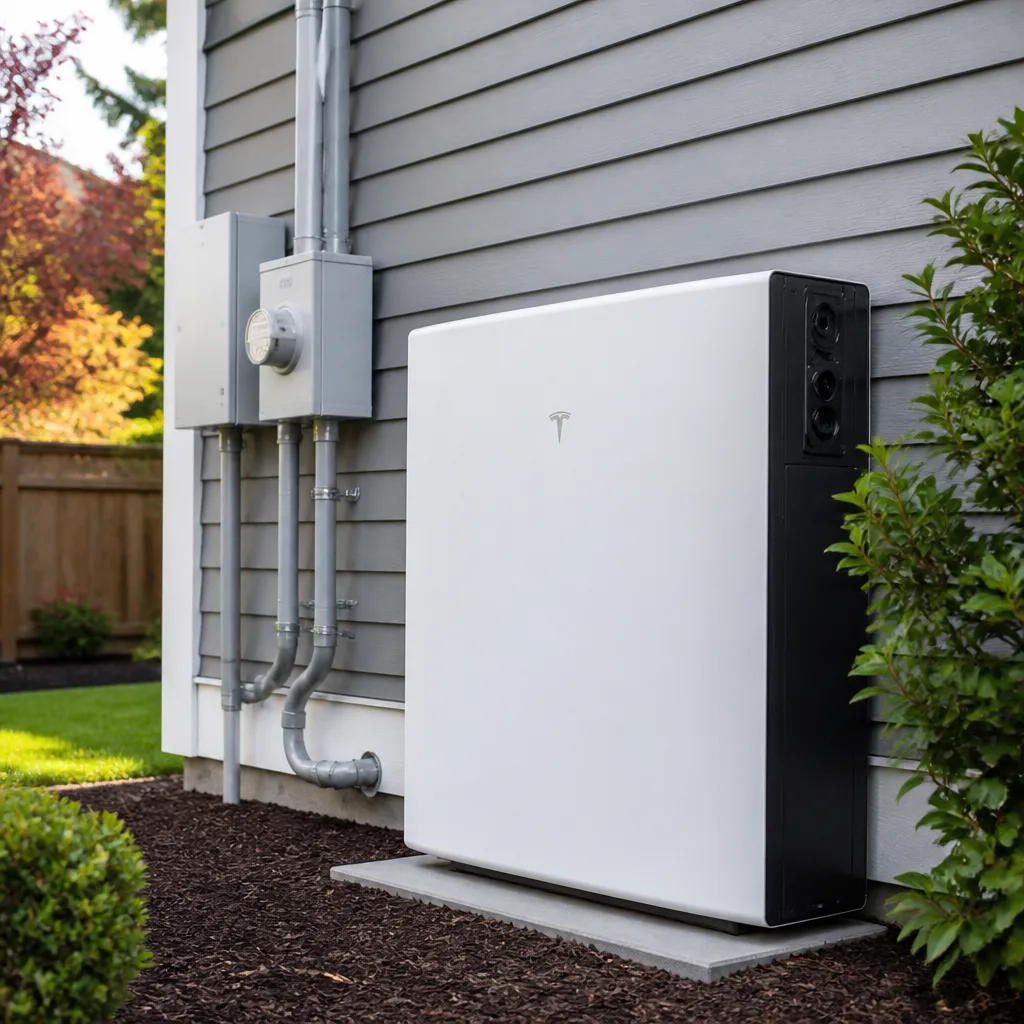
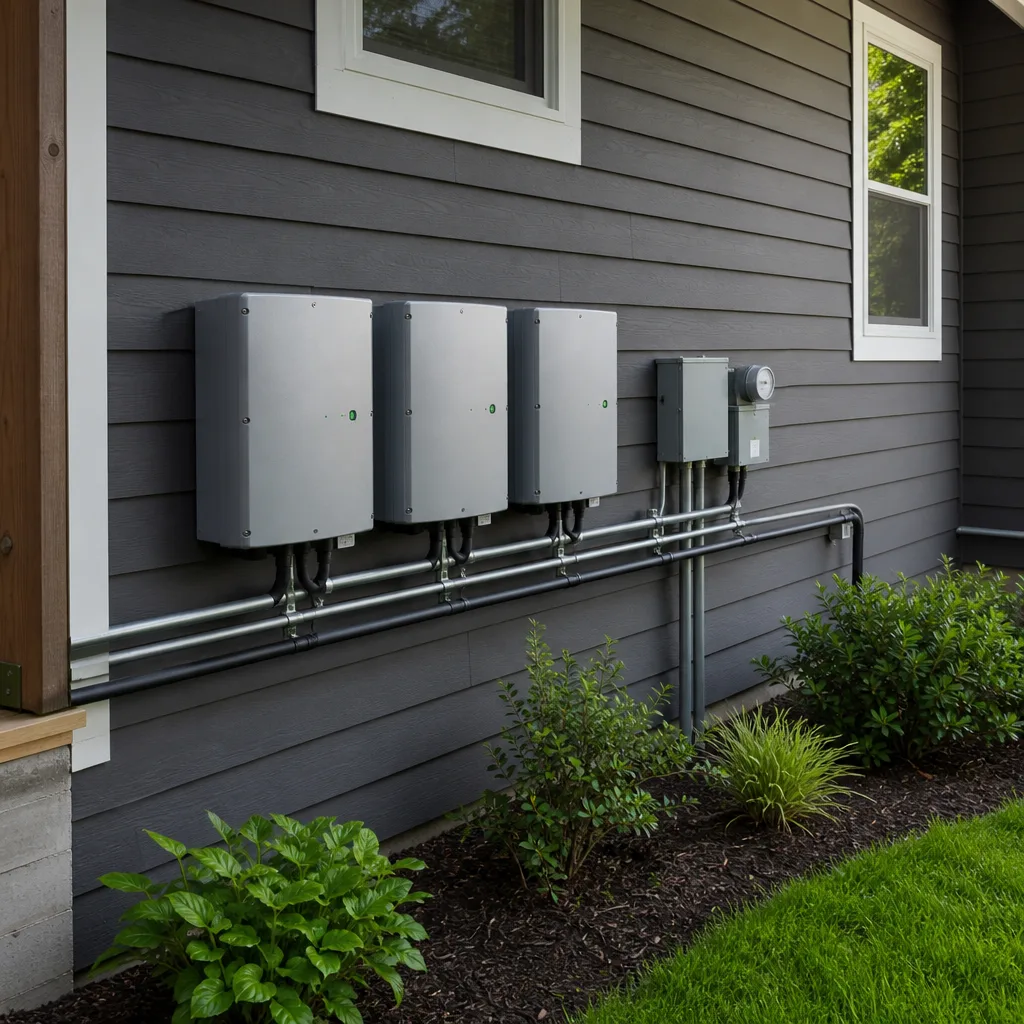
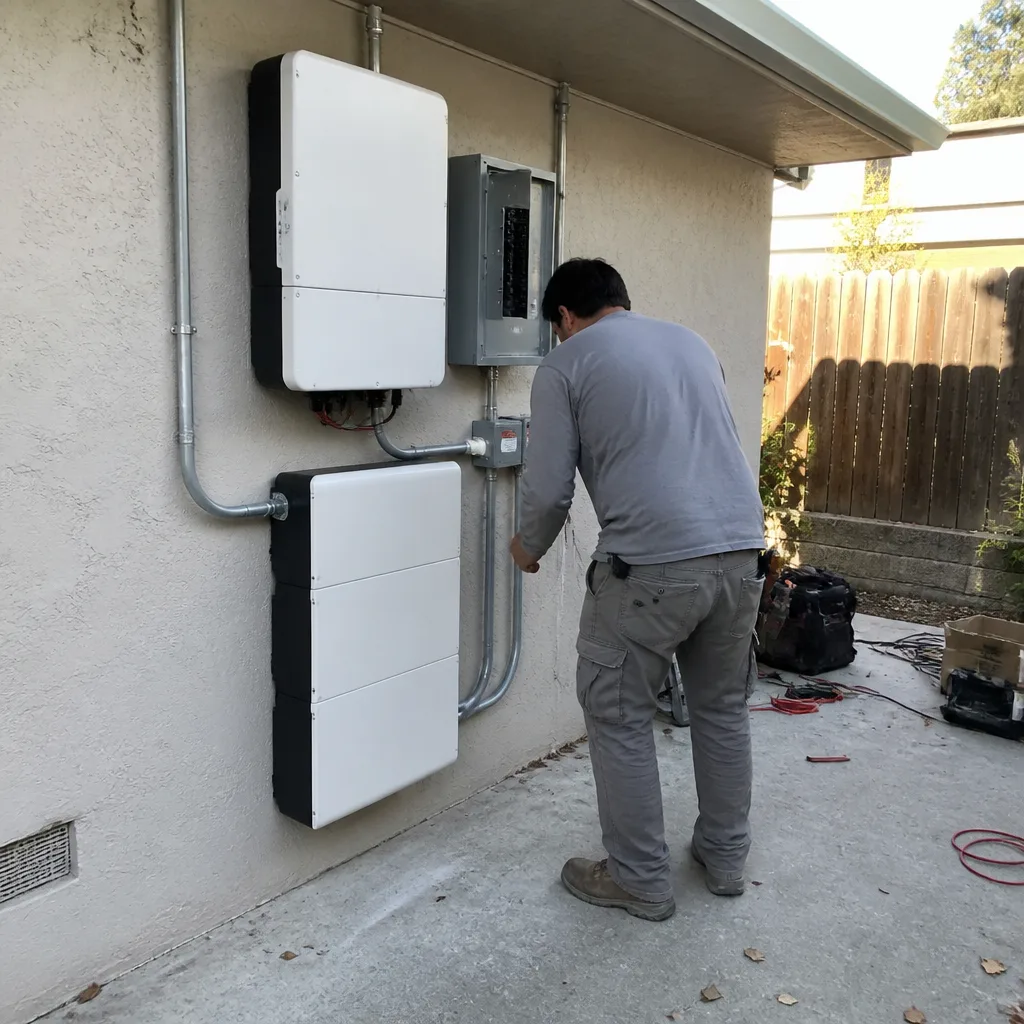
The fastest way to identify what you have: open your inverter cabinet and look for the battery communication port label. If it says “CAN/RS485” and your battery has a blue latch handle, you’re on the JKS low-voltage family. If the battery connects with a single orange high-voltage cable and the label reads “HV-BUS,” that’s the EAGLE line. Replacement BMS boards, cell-balancing modules, and communication cards are all model-specific on JinkoSolar gear, more so than on Tesla or Enphase equipment. The good news: we carry both OEM JinkoSolar parts and a few quality aftermarket equivalents for the JKS series where the specifications match exactly. For EAGLE, OEM only. We’ve tried the off-brand EAGLE replacements and the failure rate isn’t worth passing along to a neighbor.
Gus’s Solar is an independent service provider, not affiliated with JinkoSolar. What that means for you: we stock the parts, we do the work, and we don’t route you through a manufacturer warranty phone tree unless there’s a legitimate warranty claim to file.
Signs Your JinkoSolar Solar Battery Storage & Backup Is Failing
- Battery charges fully during the day but drains within two hours after sunset. This is the classic JinkoSolar JKS symptom, and it usually points to one or two dead cells dragging down the entire module. The BMS reads “100%” because the good cells are full, but actual usable capacity has collapsed.
- Inverter throws a “BMS Communication Lost” or “Battery Disconnected” fault at random intervals. On the EAGLE line, the comm card inside the battery is the weak link. Heat accelerates it, and San Jose attics and garage walls get hot enough to cook electronics over three or four summers.
- Battery bank doesn’t charge past a certain percentage, like 72% or 85%, no matter how much sun hits the roof. That’s a cell-balancing failure. The BMS stops charging early because one cell is hitting its voltage ceiling while others lag behind. We fix this with a balancing module replacement, not a full battery swap.
- Audible buzzing or clicking from the battery cabinet when it’s charging or discharging. Clicking once at startup is normal. Persistent buzzing under load usually means a failing DC contactor or loose internal busbar. Catch it early and it’s a $300 fix instead of a $2,000 replacement.
- Your backup circuit doesn’t kick in during a PG&E outage, or kicks in and drops out within minutes. This is the one that matters most. It’s typically the transfer switch or the battery’s internal relay, and it means you don’t actually have backup power when you need it. In San Jose, with wildfire-season shutoffs, that’s not a theoretical problem.
Replacement Cost & What’s Included
For San Jose homeowners, here’s the honest number range we quote on JinkoSolar battery storage repair and replacement work. It varies based on which family you own and what failed.
| What You Need | Typical Installed Cost Range |
|---|---|
| JKS low-voltage BMS board replacement | $280 – $520 |
| JKS cell-balancing module | $350 – $650 |
| JKS communication board (CAN/RS485) | $400 – $750 |
| EAGLE high-voltage comm card | $600 – $950 |
| Single JKS battery module replacement (installed) | $1,200 – $1,800 |
| EAGLE battery module replacement (installed) | $1,800 – $2,400 |
Every quote includes the part, labor, testing, and a written warranty on our work. We’re not the cheapest in town, and we won’t pretend to be. What we do is quote a number, show up when we say we will, and stand behind it. If a $40 repair turns out to need a $2,000 battery, you’ll know before we touch anything. And if it’s not done right, our 90-Day Done Right Promise means one call brings Gus back.
DIY or Call Us?
Here’s the honest split. You can safely check a few things yourself: whether breakers on the battery cabinet are tripped, whether the battery’s indicator lights show anything at all, and whether the inverter display shows a fault code you can screenshot and send us. That helps us diagnose before we even roll the truck.
What you should not do: open a JinkoSolar battery cabinet. These aren’t lead-acid car batteries. A JKS module carries anywhere from 48 to 51.2 volts DC, and the EAGLE line runs high-voltage DC at levels that can stop a heart. There is stored energy in the cells even when the system is fully shut down, and the capacitors inside don’t discharge just because you flipped the breaker off. We wear insulated gloves and use insulated tools for a reason. If you’ve popped the cabinet open and touched the wrong thing, the best case is a fried board. The worst case isn’t worth typing out here.
If your JinkoSolar storage is acting up, call us at (877) 550-6892. A live person answers, day or night, not a voicemail queue. Tell us what you’re seeing and we’ll tell you whether it’s worth a service call.
FAQs
Plan on 8 to 12 years of real-world service from a JinkoSolar residential battery in the San Jose climate before cell degradation becomes noticeable. Heat is the main killer, and batteries installed in unconditioned garages or exterior walls facing west lose capacity faster than those in shaded, ventilated spaces. The BMS and communication boards typically fail before the cells do, which is actually good news since boards are cheaper to replace.
Yes, often. If the cells themselves still hold reasonable voltage and the failure is in the BMS, communication card, or balancing module, we can replace that component and get you back online for a few hundred dollars instead of a few thousand. The exception is when multiple cells have gone bad or a module has swollen, at which point replacement is the only sensible path. Call (877) 550-6892 and describe your fault code before you assume the worst.
A straightforward BMS or comm card replacement takes one to two hours on site. A full battery module swap, including balancing the new module with the existing stack, takes half a day. We bring the parts we think we’ll need based on your fault description, and our trucks carry the common JinkoSolar spares for the San Jose area.
We keep the JKS BMS boards, balancing modules, communication cards, and a limited number of battery modules in stock locally. EAGLE high-voltage components sometimes require a two-to-three-day order from our distributor, but we’ll tell you that upfront before you pay a dime. We also carry parts for Tesla, Enphase, and SolarEdge systems, so if you’ve got mixed equipment we can sort it out on the same visit. Call (877) 550-6892 and we’ll check inventory while you’re on the phone.
Written by Gus Petrakis, Owner, Gus’s Solar at Gus’s Solar, serving San Jose and nearby areas.