
Free bill analysis - bring a power bill, get the production math for your actual roof, panel brands like Qcells and REC compared side by side
If the pitch starts at your door and ends with "sign tonight for the special," sleep on it. The sun will still be there tomorrow; so will we.
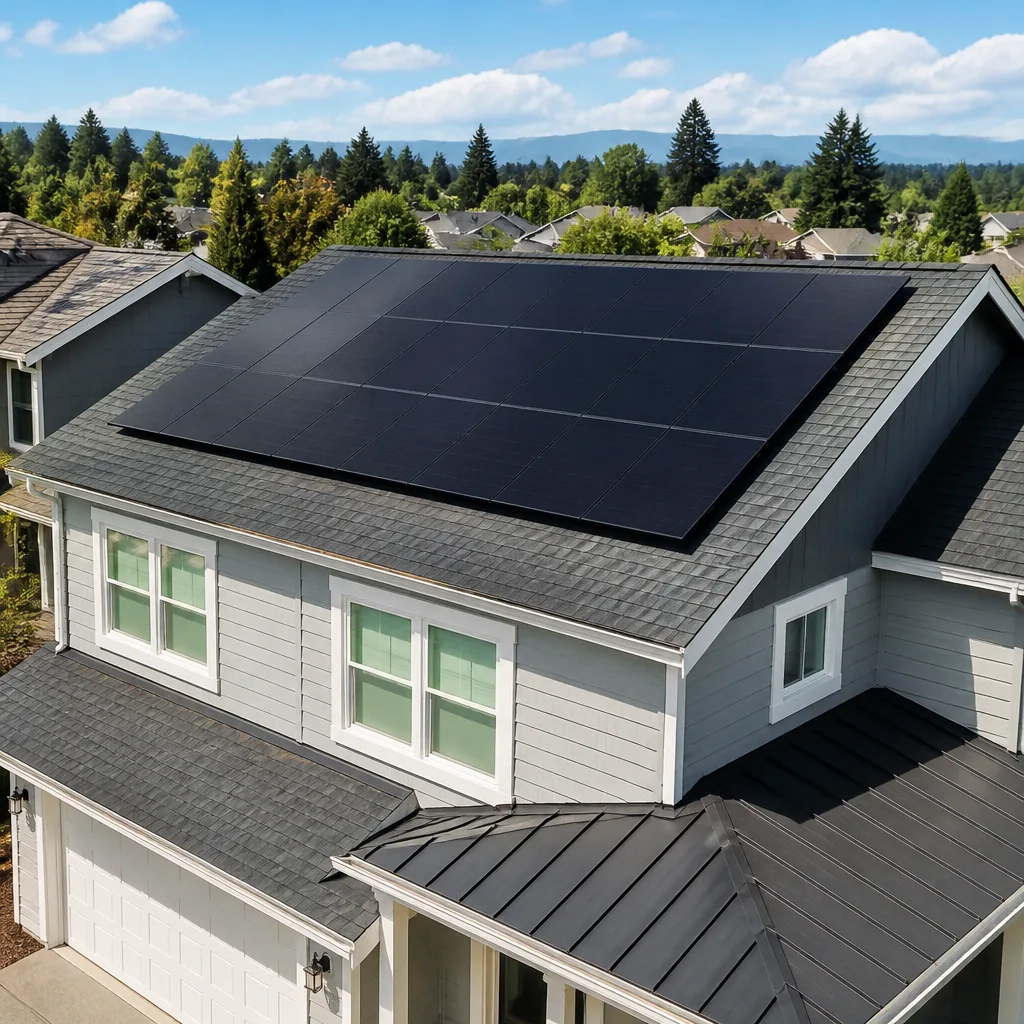
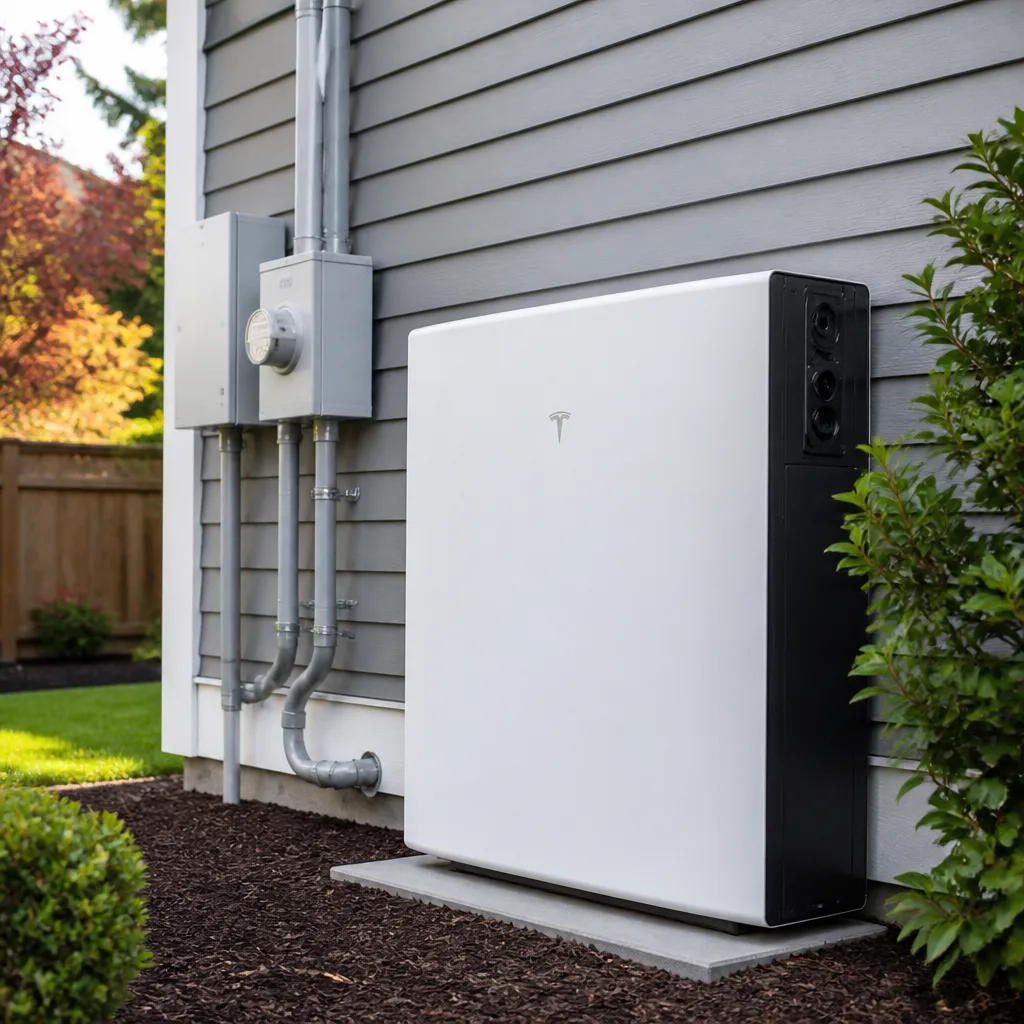
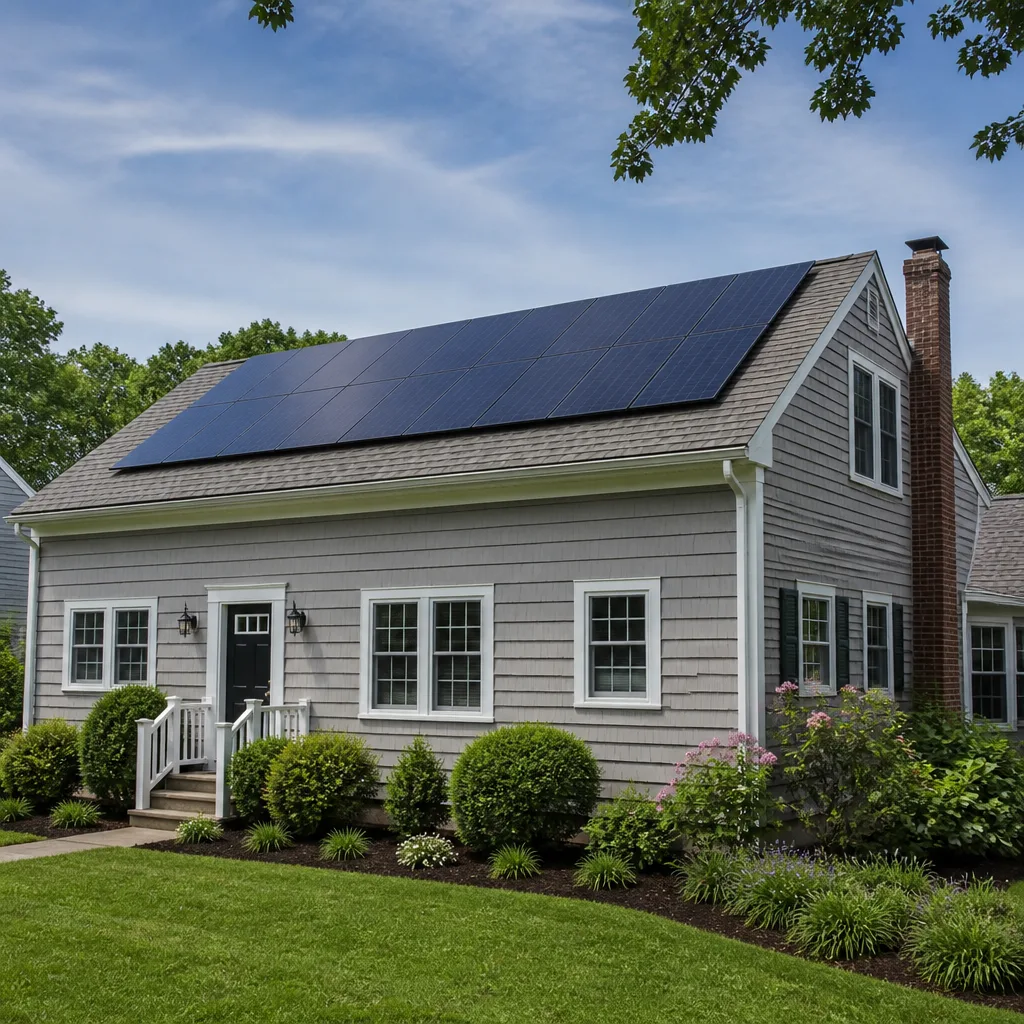
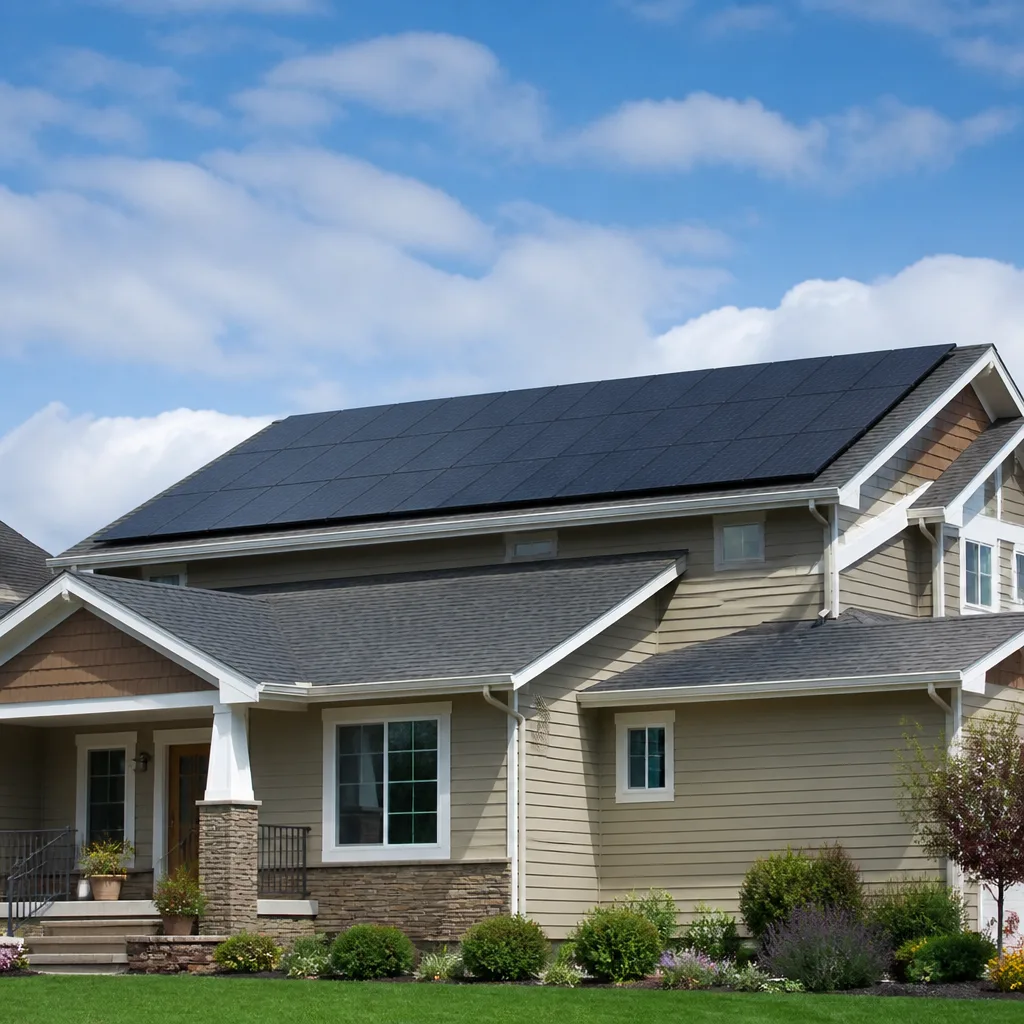
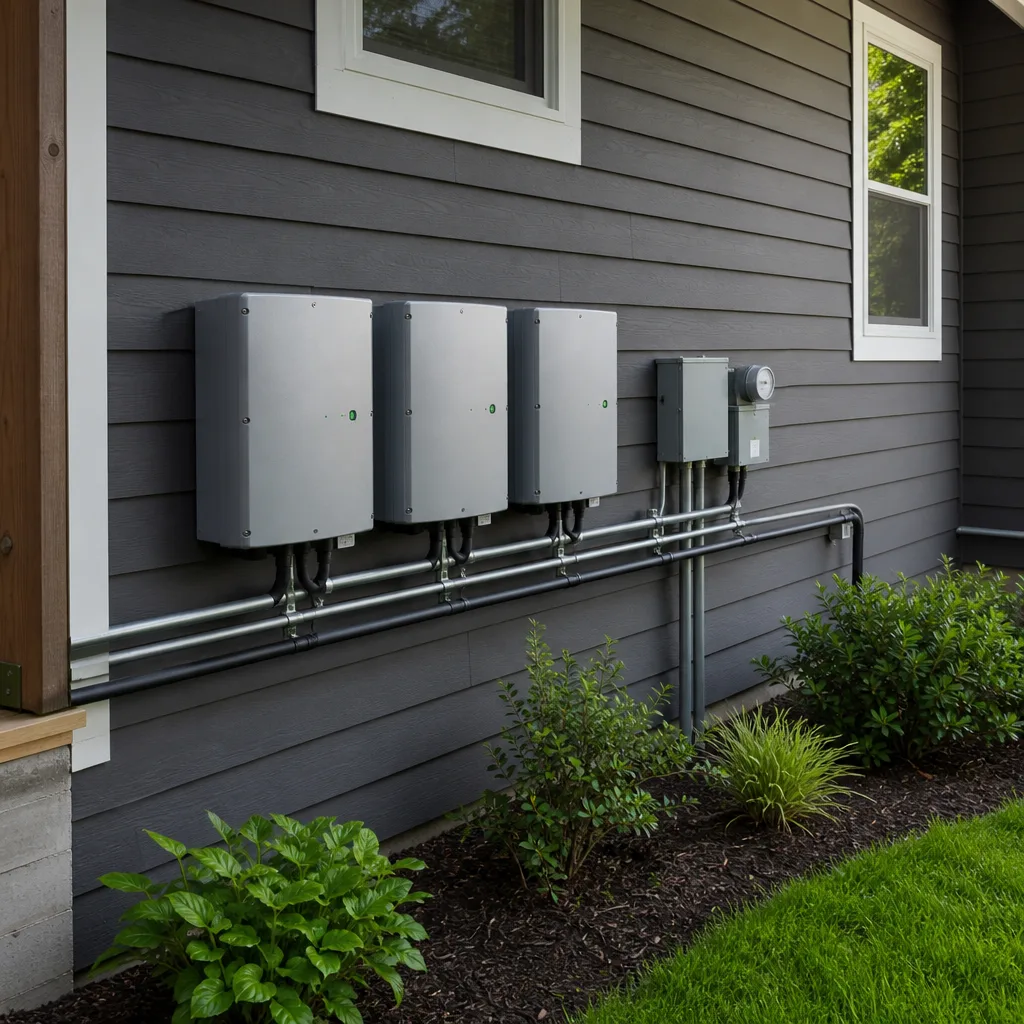
 Before
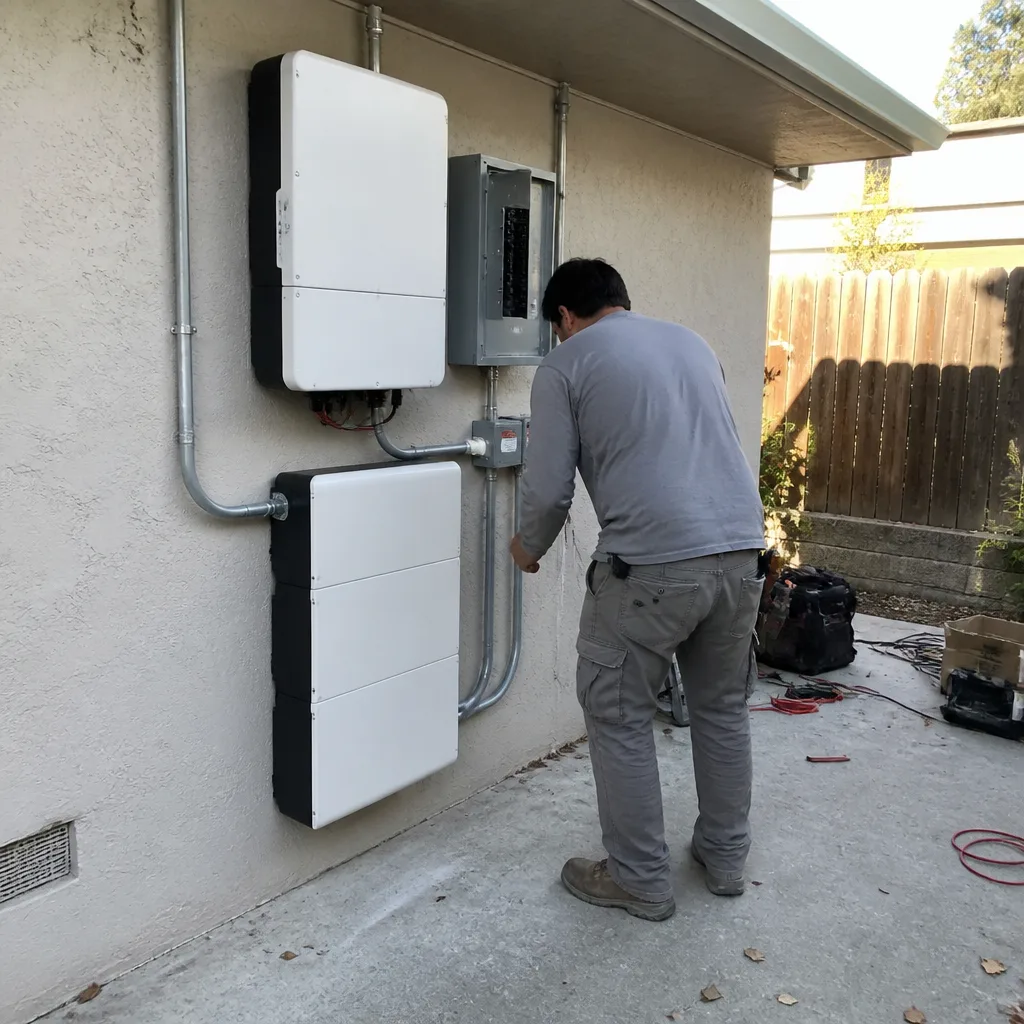 After
After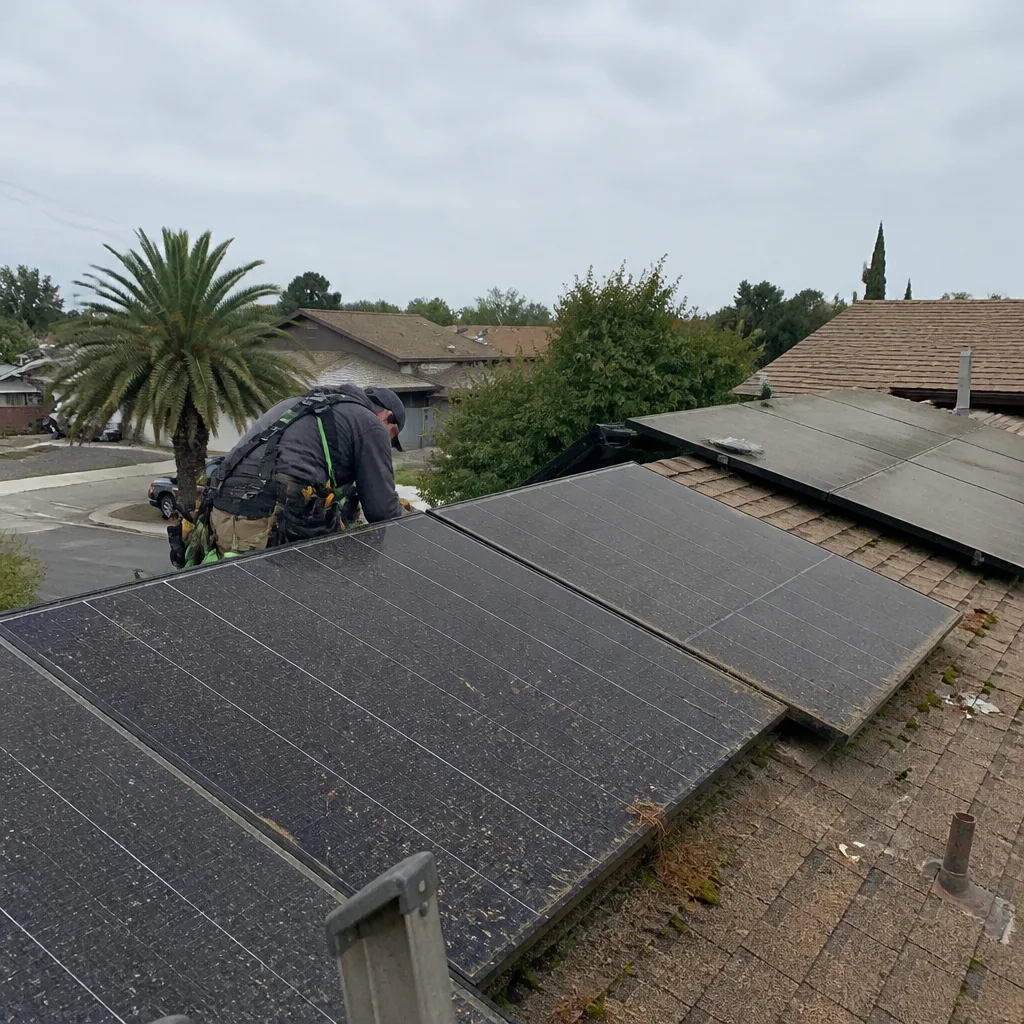 Before
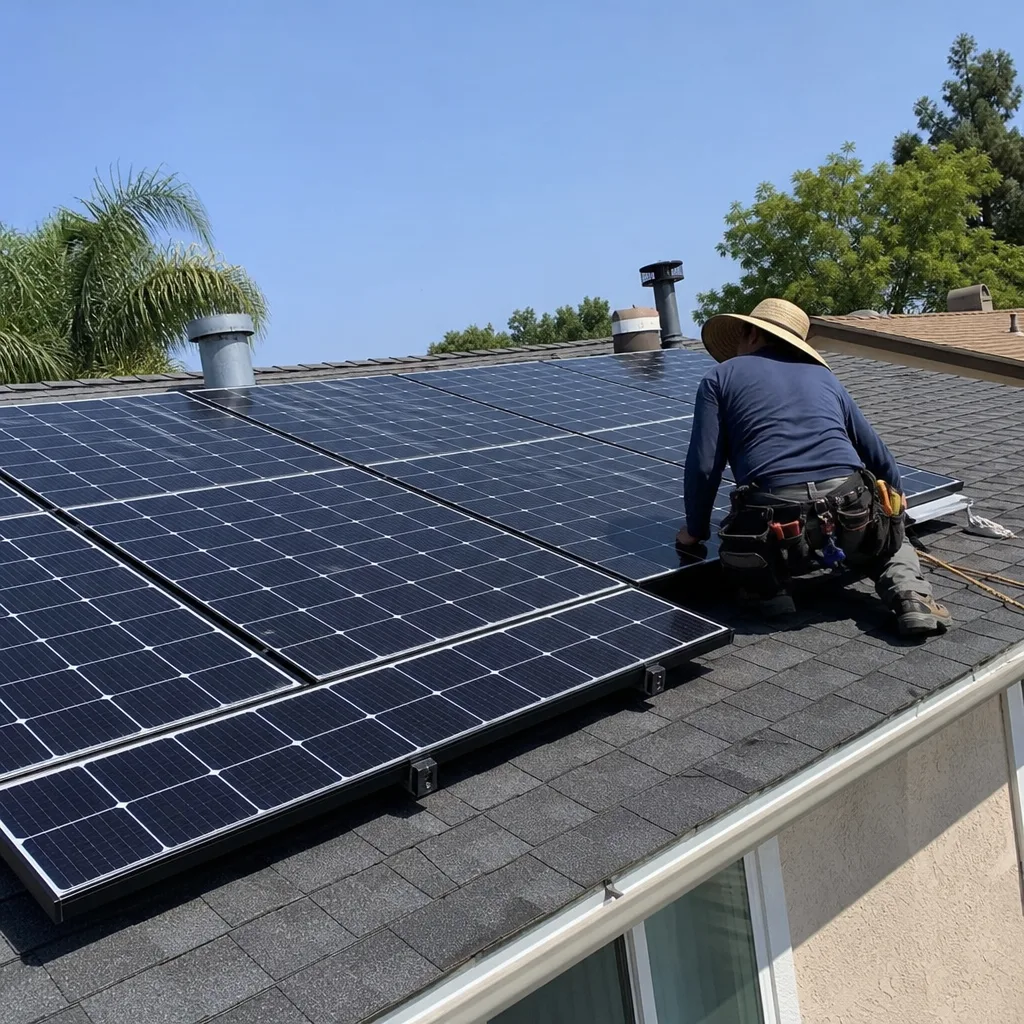 After
After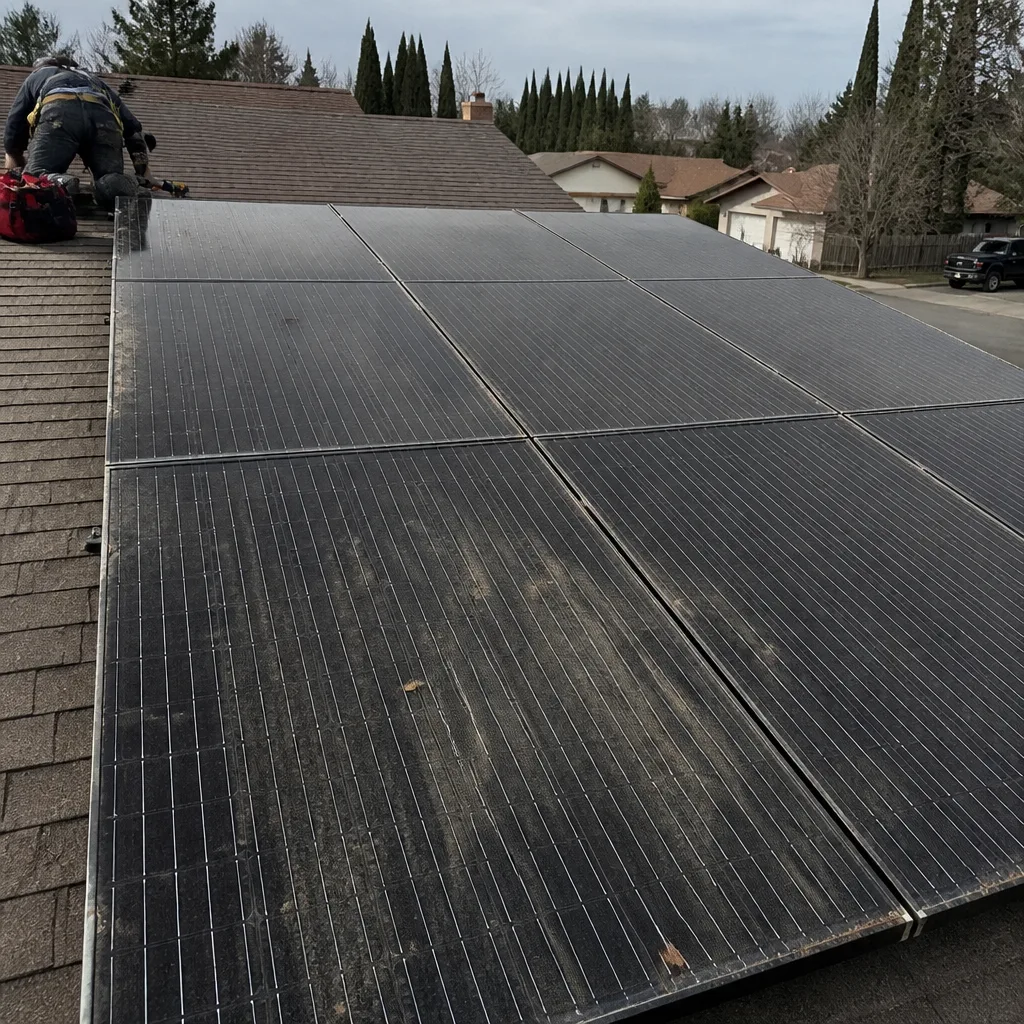 Before
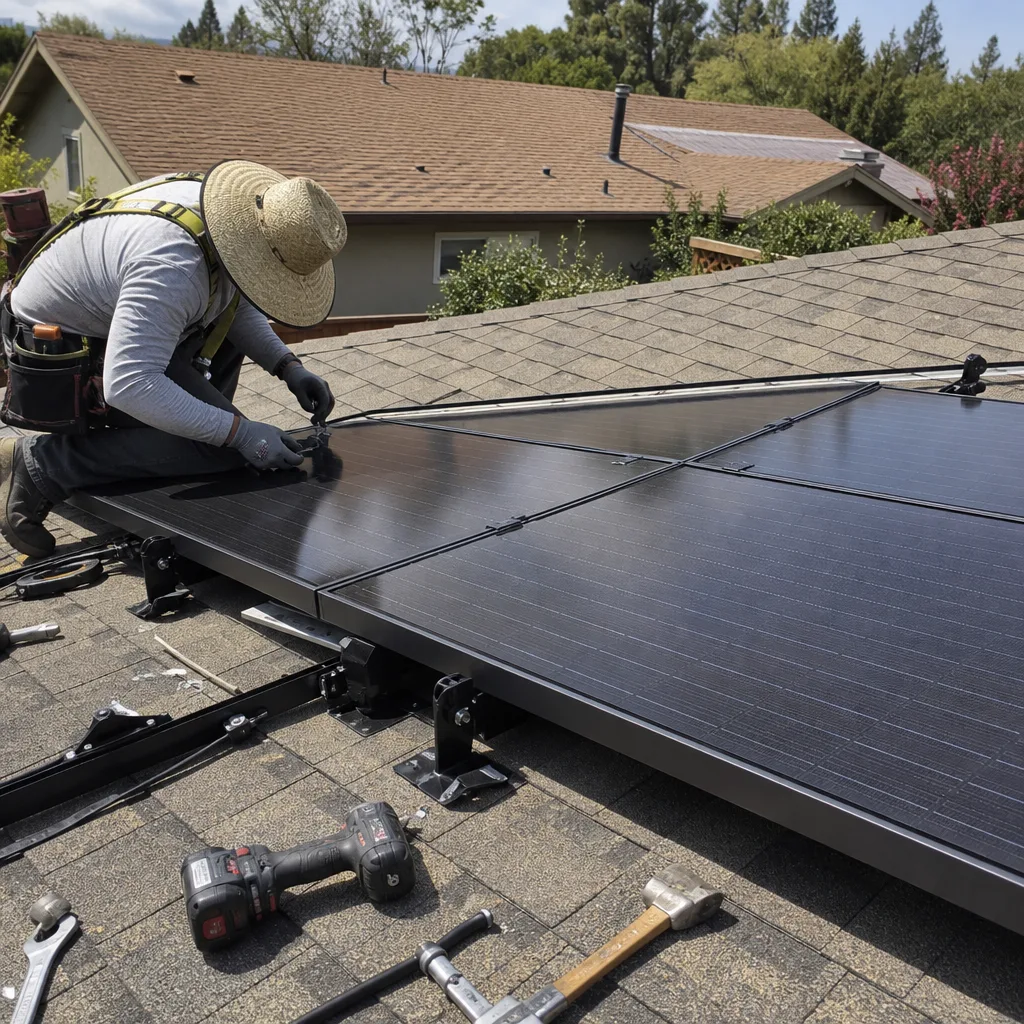 After
AfterFranklinWH Solar Panel Repair: The San Jose Owner’s Guide
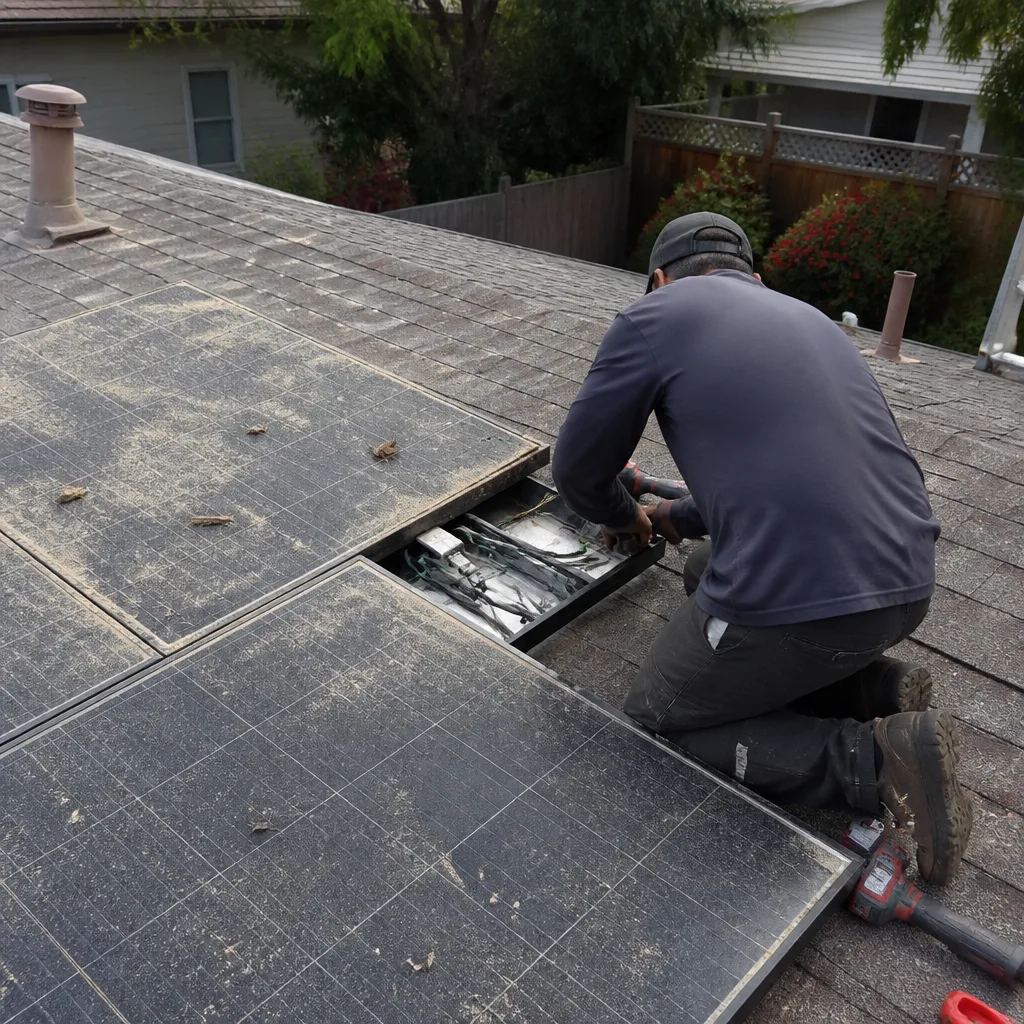
FranklinWH solar panel repair in San Jose typically runs $220 to $680 installed, and we stock most common FranklinWH-compatible parts on our trucks for same-day service. Most San Jose homeowners discover they need this repair when their FranklinWH app throws an arc-fault or ground-fault alert, or when production drops noticeably on a string while the rest of the array keeps humming. Sometimes it’s a failed MC4 connector, sometimes a bypass diode in the panel junction box, sometimes a damaged panel that needs swapping entirely.
Here’s the thing about FranklinWH systems: the panels on your roof are almost never FranklinWH-branded panels. FranklinWH makes the aGate controller and aPower battery, but the solar modules feeding that system are typically Qcells, REC, Canadian Solar, or another major manufacturer. So when we talk about “FranklinWH solar panel repair,” we’re usually talking about the panel and DC-side components on the array that feeds your FranklinWH storage system. That’s an important distinction, and it changes what you need to know about parts matching.
We’re an independent service provider. We’re not affiliated with FranklinWH, but we work on their equipment every week and we know how the DC side integrates with the aGate.
Which FranklinWH Models This Applies To
This repair guidance applies to rooftop solar arrays paired with any FranklinWH aGate model, including the original aGate and the newer aGate X, and aPower or aPower 2 batteries. The panel-level repair work is the same regardless of which FranklinWH controller you have. What matters is the panel make, model, and the inverter type.
The big compatibility gotcha with FranklinWH systems is the inverter pairing. FranklinWH’s aGate is battery and energy-management hardware, not a string inverter. Your panels run through either Enphase IQ-series microinverters, SolarEdge power optimizers and string inverters, or Tesla-branded string setups. When a panel fails, you need to match the replacement panel’s wattage and voltage specs to what the inverter channel expects. On SolarEdge systems in particular, we often see homeowners install a random 400W panel to replace a failed 330W panel, which throws the string optimization off. Panel wattage should match within about 10 percent on optimizers, and the voltage range needs to sit inside the inverter’s MPPT window. For San Jose roofs, where mixed sun and fog can push voltage swings wider than people expect, matching close matters more than in most climates.
When it comes to OEM versus aftermarket for FranklinWH-connected arrays, the panels are standard commodity modules. A quality Tier-1 panel from REC, Qcells, or Canadian Solar is a fine replacement as long as the specs match. We don’t push OEM-only on the DC side. But the DC connectors and wiring harnesses feeding the aGate are a different story: we use only proper Staubli MC4 connectors and UL-listed PV wire, because cheap Amazon-tier connectors are the single most common cause of arc faults we find on San Jose roofs.
One more checkable detail: most residential panels installed in San Jose since 2015 came with 12-year product warranties and 25-year linear performance warranties, but those warranties often don’t transfer to second owners and rarely cover labor. If you bought the house with the system already on it, don’t assume the panel failure is someone else’s to fix.
Signs Your FranklinWH Solar Panel Repair Is Failing
- Arc-fault or ground-fault alert in the FranklinWH app. These alerts usually point to a bad MC4 connector or a pinched wire run, not the panel itself. We chase these down with a thermal camera and usually find the hotspot in under an hour.
- One string producing noticeably less than the others. This is the classic panel-level diode failure. A bypass diode in the junction box shorts, and that panel starts dragging the whole string down, especially in afternoon heat.
- Visible browning, snail trails, or cracked glass. San Jose’s hot-dry summers plus winter rain cycles stress panel laminates. Snail trails are a sign of micro-cracks that start as hairline fractures and spread over 18 to 36 months.
- Your aPower battery charges slower than it used to on sunny days. The aGate is doing its job, but the array isn’t feeding it enough DC. If your battery hits full at 6 p.m. in July instead of 2 p.m., something upstream is underproducing.
- One panel’s tempered glass is shattered but still producing. It’s from a branch, a rock thrown by a mower, or a kid with a slingshot. Shattered glass doesn’t always kill a panel, but moisture ingress will, usually within one rainy season.
Replacement Cost & What’s Included
Here’s the honest math for San Jose. A single panel replacement, including the panel, labor, flashing checks, and disposal of the old panel, runs $380 to $680 depending on panel wattage and roof pitch. A connector or junction-box repair runs $180 to $320. A full-string diagnostic visit is $95, and we take that off the repair bill if you hire us for the fix.
What drives the range: panel wattage and brand (a 400W REC costs more than a 330W Qcells), whether your roof is single-story or two-story, tile or composition, and whether we need to pull panels to access a buried wire run. For San Jose tile roofs, expect the higher end of the range for anything that requires lifting tiles. We quote parts and labor separately, so you know exactly what the panel costs and exactly what the crew time costs. Every repair carries our 90-Day Done Right Promise, and as always, seniors and veterans get 10 percent off, no expiration date.
DIY or Call Us?
Here’s what I’d do if it were my roof. Actually, here’s what we tell every San Jose customer who asks: you can safely check the visible stuff. Look for shattered glass, check the app for alerts, and eyeball your conduit runs for obvious damage. That’s worth doing and it costs nothing.
What you should not do is get on a two-story tile roof with a multimeter and start probing DC circuits. These systems run 300 to 600 volts DC. That’s not 120-volt house current - it’s the voltage that will arc across an air gap and hurt you badly before a breaker thinks about tripping. If the failure is a connector, a diode, or a hidden wire, the fix belongs to someone with the right meter, the right connectors, and a good understanding of how the FranklinWH aGate expects that DC input to behave. One wrong connector crimp and you’ve not fixed the fault, you’ve moved it. Give us a call at (877) 550-6892 and we’ll have a straight answer for you.
FAQs
Expect 25 to 30 years of useful production from quality panels in San Jose’s climate, with performance degrading roughly 0.4% to 0.5% per year. After 12 to 15 years, we start seeing individual panel failures like diode shorts and connector corrosion, which is exactly what repair visits are for. Call (877) 550-6892 for an honest assessment of your array’s condition.
Connector failures, junction-box diode shorts, and pinched wires are repairs we do all the time, often for under $300. Cracked glass or deep micro-fractures mean panel replacement. We’ll tell you which one you’ve got before we touch a wrench. Estimates are free, and we won’t push a replacement if a repair does the job.
Most single-panel swaps and connector repairs take 2 to 3 hours from arrival to cleanup. We stock common 330W to 400W panels and MC4 connector kits on the truck, so we usually don’t need a second trip. Call (877) 550-6892 and a live person will give you the next available window, not a voicemail.
We stock the DC-side parts that fail most often: Staubli MC4 connectors, PV wire, junction-box diodes, and common panel replacements from REC, Qcells, and Canadian Solar. FranklinWH aGate and aPower internal components are proprietary and ordered direct when needed. Most San Jose repairs are same-day with what we carry.
Written by Gus Petrakis, Owner, Gus’s Solar at Gus’s Solar, serving San Jose and nearby areas.