
Free bill analysis - bring a power bill, get the production math for your actual roof, panel brands like Qcells and REC compared side by side
If the pitch starts at your door and ends with "sign tonight for the special," sleep on it. The sun will still be there tomorrow; so will we.

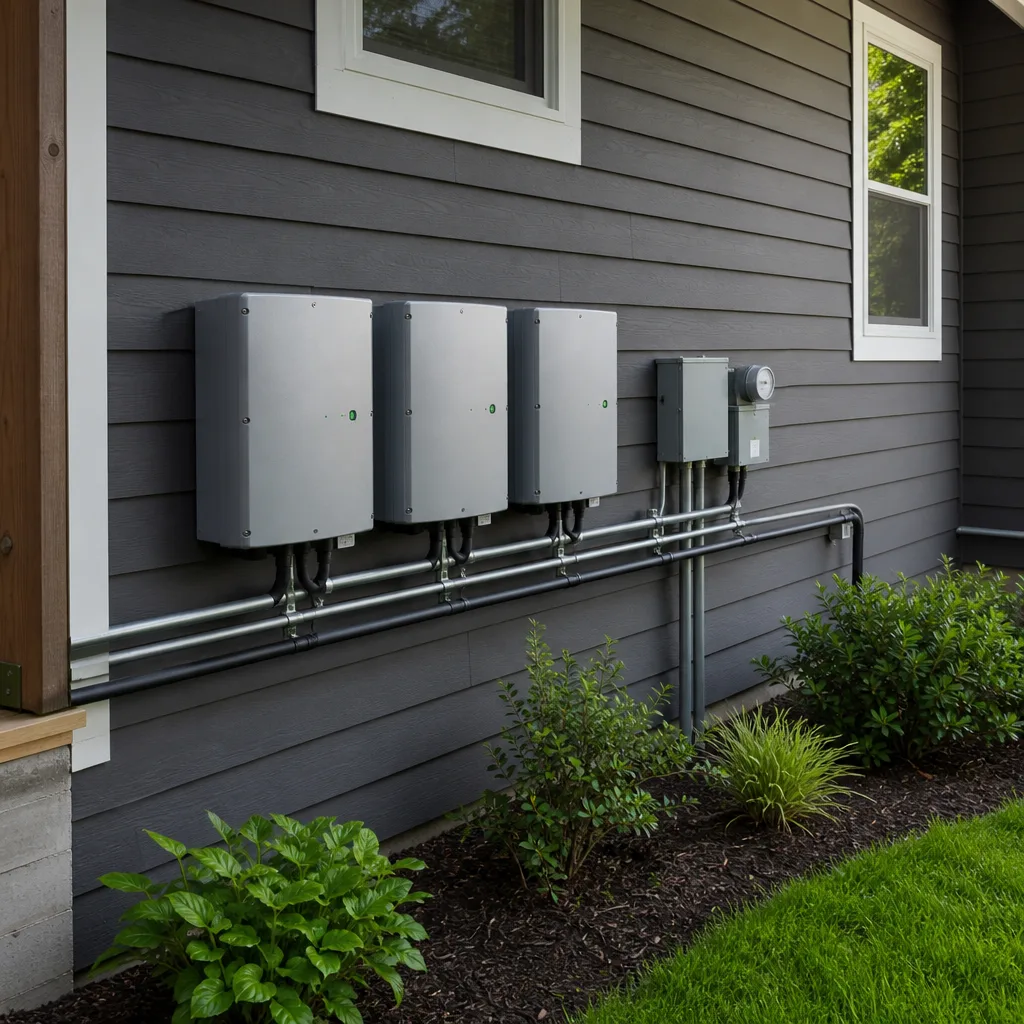
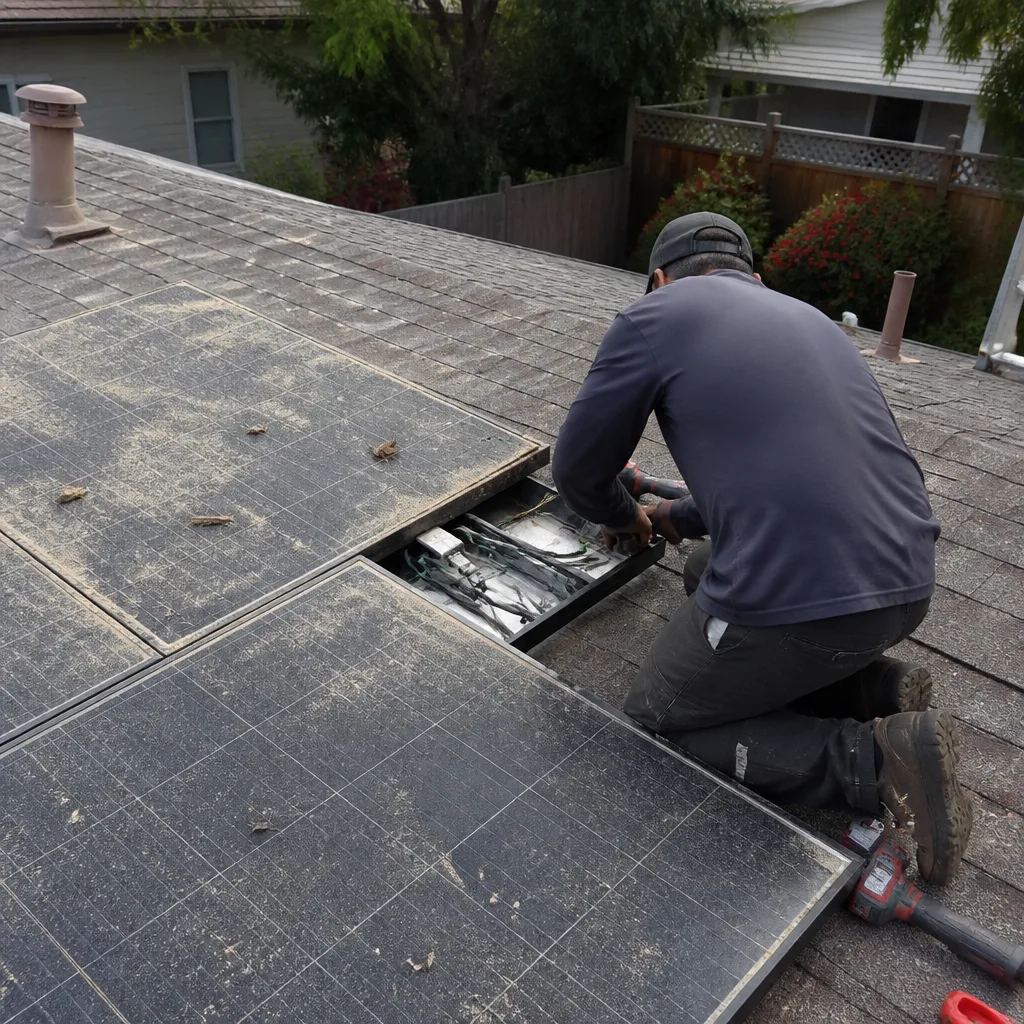 Before
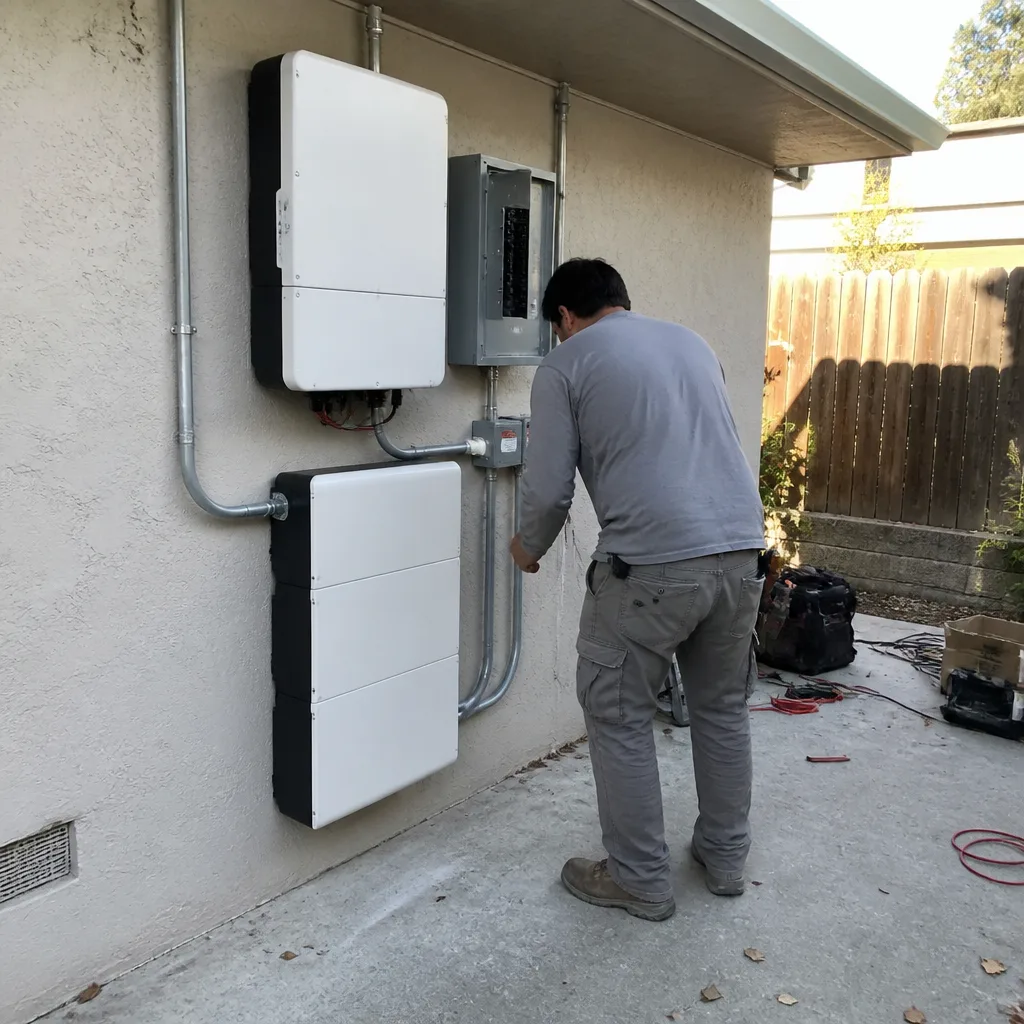 After
After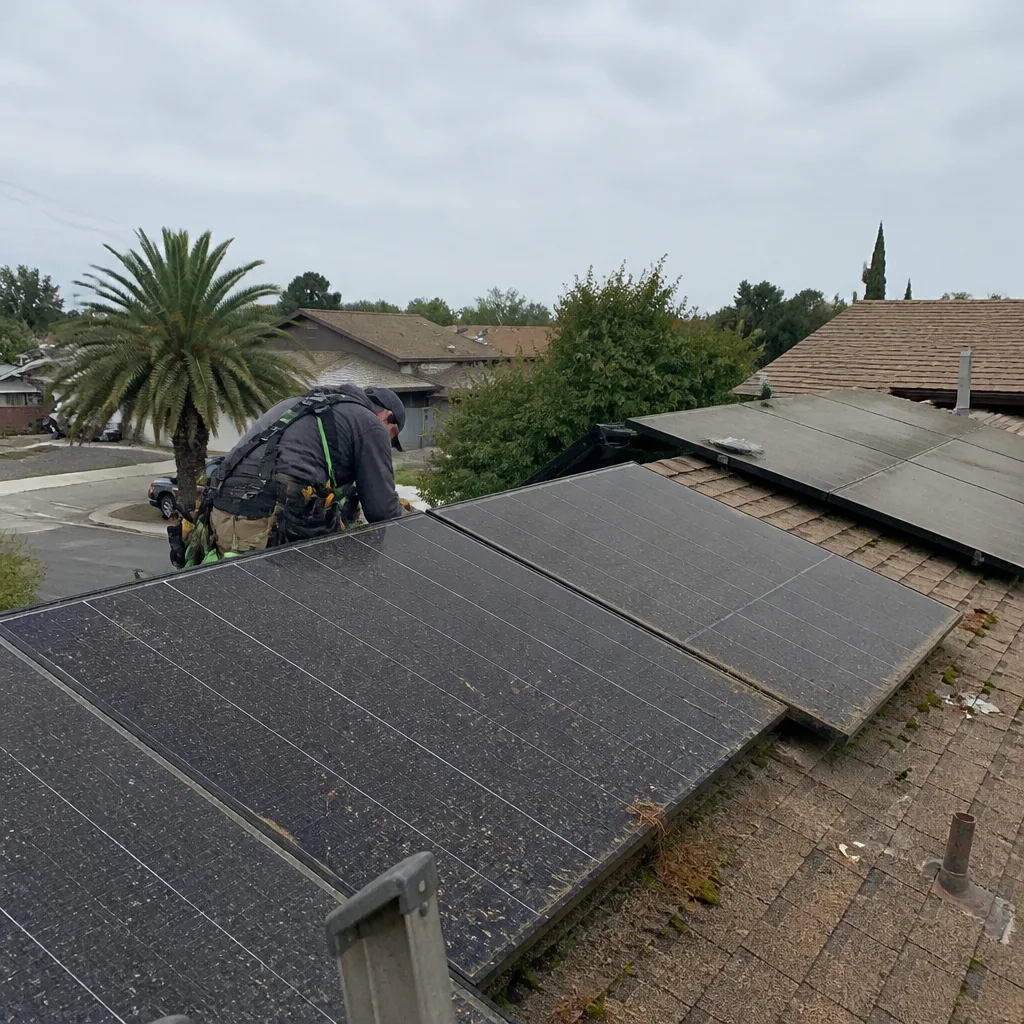 Before
 After
After Before
 After
AfterEnphase Solar Battery Storage & Backup: The San Jose Owner’s Guide
If your Enphase battery stopped holding a charge or your system is throwing error codes, we stock Enphase IQ Battery 3T, 10T, and 5P replacement units and can typically have a crew at your San Jose home same week. An installed Enphase battery replacement in San Jose generally runs $5,800 to $12,500 depending on which model you’re replacing and whether we’re also swapping the System Controller or backup wiring. Most owners notice trouble the same way: the app shows a battery that won’t charge past a certain percentage, or the house loses power during an outage when the battery should have kicked in.
Here’s what I’d do if it were my roof. We see a fair number of San Jose systems where the battery itself is fine and the real problem is a failed communication board or a breaker that tripped inside the IQ System Controller. That’s why we don’t quote a replacement until one of our own guys has put eyes on the equipment. You don’t want to pay for a new battery when a $400 board swap fixes it.
If you’re reading this because your Enphase system went dark, call (877) 550-6892. A live person answers, and we’ll talk through what you’re seeing before we ever send a truck. A quick phone diagnosis costs you nothing.
Which Enphase Models This Applies To
We work on the full Enphase storage lineup, but the three you’re most likely to have in the San Jose market are the IQ Battery 3T (3.9 kWh), the IQ Battery 10T (10.5 kWh), and the newer IQ Battery 5P (5.0 kWh). The 3T and 10T use the older IQ8 microinverter architecture, while the 5P runs on Enphase’s newer bidirectional converter design. That difference matters when it comes to parts availability and what we stock on the truck.
One compatibility gotcha worth knowing: you cannot mix the older 3T/10T batteries with the newer 5P units on the same Enphase system controller. Enphase will tell you the same thing. If you have a 10T on the wall and want to add capacity, you’re adding another 3T or 10T, not a 5P. We see this come up when a San Jose homeowner gets a quote from someone who doesn’t actually know the Enphase ecosystem and tries to sell them the wrong unit.
For identifying what you have: the battery unit has a label on the bottom right corner with the model number printed clearly, usually starting with “ENCHARGE” for the older line or “IQ Battery” for the current models. If you can’t find it, open the Enphase app, tap on your battery, and the model will be listed under device details. When it comes to replacement parts, we use OEM Enphase components almost exclusively. There are no quality aftermarket equivalents for Enphase battery internals worth the risk, and we won’t install a used or refurbished battery pulled from another system. That’s a fire risk and a warranty headache you don’t need.
Signs Your Enphase Solar Battery Storage & Backup Is Failing
- The battery won’t charge past a certain threshold. You’ll see it stuck at 40%, 60%, or 80% in the app regardless of how much sun hits the panels. This often points to a cell-level imbalance or a failing BMS (battery management system) inside the unit.
- Error codes in the Enphase app. Common ones include “Battery Comms Lost,” “Islanding Fault,” or “DC Voltage Out of Range.” Each points to a different failure mode, but none of them mean you should ignore the system. A comms fault can be a loose cable or a dead communication board; a voltage fault is more serious and usually requires a full unit replacement.
- The house loses power during a PG&E outage even though your battery shows a charge. This is a System Controller issue in most cases. The controller that manages islanding and backup switching can fail independently of the battery itself. We’ve replaced several of these in the Almaden Valley and Rose Garden neighborhoods this year alone.
- The battery runs noticeably hotter than it used to. Enphase units have thermal management, but a failing cooling loop or aging cells can make the enclosure feel warm to the touch. In San Jose’s summer heat, that thermal strain accelerates. If the unit is hot enough to be uncomfortable on your hand, shut the system down at the breaker and call us.
- Reduced total capacity. If your 10T used to run the house all night and now dies by 2 a.m., the cells are degrading. Normal degradation is about 3-5% per year, but a sudden drop of 20% or more in a season points to a cell failure. Enphase warranties cover defect-driven capacity loss, and we handle warranty claims for our customers.
Replacement Cost & What’s Included
In San Jose, a full Enphase battery replacement installed by our crew typically falls between $5,800 and $12,500. Where you land in that range depends on three things: the battery model (a 3T is less than a 10T, and a 5P is usually in the middle but requires less wiring work), whether the System Controller also needs replacement (that adds roughly $1,500 to $2,200), and how accessible your existing install is.
Every quote we give includes the battery unit, all wiring and conduit, mounting hardware, the Enphase commissioning process, and the labor to remove and dispose of the old unit. There’s no “installation fee” popped on at the end. The price we quote is the price you pay, and we encourage you to take two weeks to think about it. The number won’t change.
- IQ Battery 3T replacement: $5,800 to $7,200 installed
- IQ Battery 5P replacement: $6,500 to $8,500 installed
- IQ Battery 10T replacement: $8,000 to $10,500 installed
- System Controller 2 or 3 replacement: $1,500 to $2,200 when paired with a battery swap
- Diagnostic service call: Free when we do the replacement; otherwise our standard trip charge applies outside our own county
Our work carries the 90-Day Done Right Promise in writing. If something’s not right after we leave, Gus Petrakis comes back and makes it right. That’s been the standard since 2011, and it’s why a lot of San Jose neighbors call us instead of whoever put the system in originally.
DIY or Call Us?
Let’s be straight: this is not a DIY repair. An Enphase battery stores enough DC voltage to seriously injure or kill you even when the system appears off. The battery keeps voltage at its terminals until the internal disconnect is properly engaged, and the System Controller has live AC and DC circuits that don’t de-energize just because you flipped the visible breaker. We do not recommend anyone open an Enphase enclosure without manufacturer training.
What you can safely do is narrow the problem down before calling us. Check your breakers, confirm the app is showing a comms connection to the battery, and note any error codes you see. Write them down, take a screenshot, and have that ready when you call. That saves us a diagnostic step and sometimes saves you a trip charge.
If the battery is throwing codes or running hot, call (877) 550-6892. We’ll either talk you through a safe reset or send a background-checked, uniformed technician from our own crew. We don’t hand work off to subs, and we don’t send a salesman to “assess” a repair. You get a technician who works for Gus.
FAQs
Enphase rates their batteries for 10 years or 4,000 cycles at 70% retained capacity, whichever comes first. In San Jose, where summer heat pushes enclosure temperatures above 100 degrees on south-facing walls, we typically see noticeable degradation starting around year 7 or 8. Systems mounted on north or east walls in shaded areas can hit year 10 with minimal loss. If your battery is under warranty and has failed prematurely, we’ll handle the claim paperwork for you. Call (877) 550-6892 and we’ll pull your system records and check your warranty status before recommending anything.
Sometimes, yes. If the failure is in the communication board, a contactor, or the System Controller interface, we can often repair the unit for $400 to $1,200 instead of replacing a $6,000 battery. But if the cells themselves have failed or the BMS is reporting a permanent fault, a full replacement is the only safe option. We’ll tell you which one you’re dealing with after diagnosis, and we won’t sell you a battery you don’t need.
A straightforward Enphase battery swap takes our crew 3 to 5 hours on site. The old unit gets removed and disposed of properly, the new unit gets mounted and wired, and then we run the Enphase commissioning process to register the battery with your system and verify backup operation. If the System Controller also needs replacing, plan on a full day. We schedule San Jose jobs Monday through Saturday, and we set a firm arrival window, not “sometime between 8 and 6.”
We stock the Enphase IQ Battery 5P and 10T at our shop for quick San Jose installs, along with System Controller 3 units and the common communication and contactor boards for the older 3T/10T line. If you need a 3T specifically, we usually have one on order or can source it within a week. We also keep parts for Tesla, SolarEdge, and Qcells systems on hand for neighbors with mixed-brand setups. Call us at (877) 550-6892 and we’ll confirm what’s on the shelf today.
Written by Gus Petrakis, Owner, Gus’s Solar at Gus’s Solar, serving San Jose and nearby areas.