
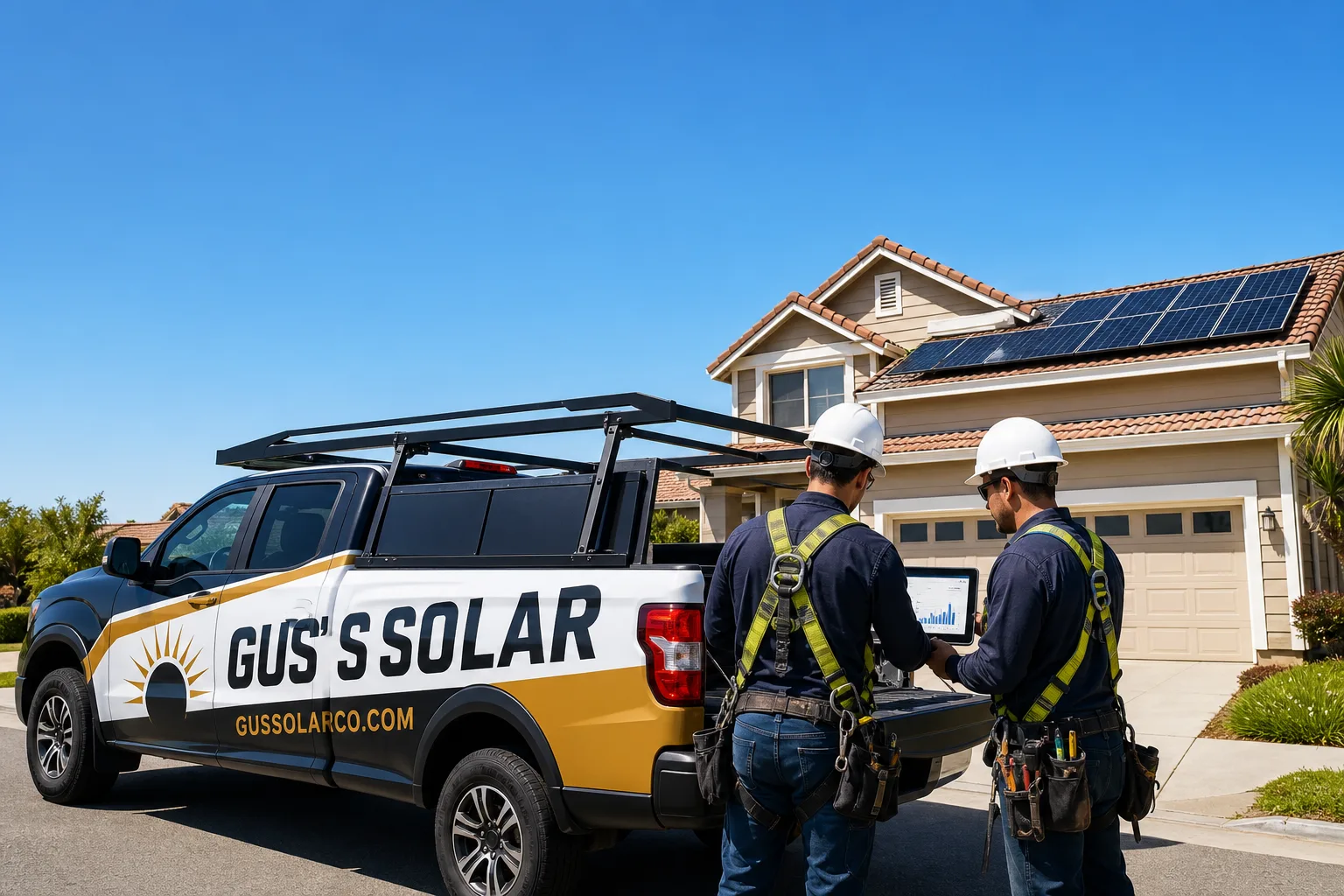
Free bill analysis - bring a power bill, get the production math for your actual roof, panel brands like Qcells and REC compared side by side
If the pitch starts at your door and ends with "sign tonight for the special," sleep on it. The sun will still be there tomorrow; so will we.
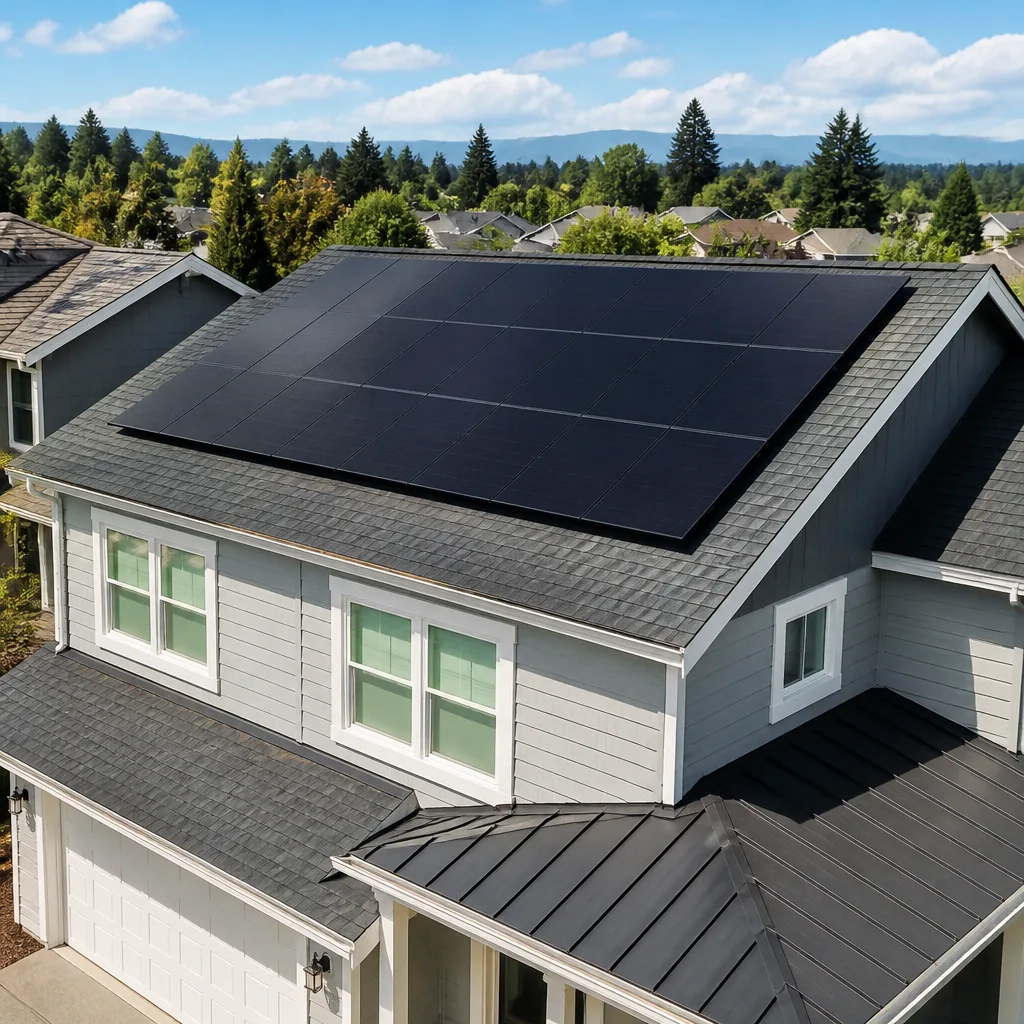
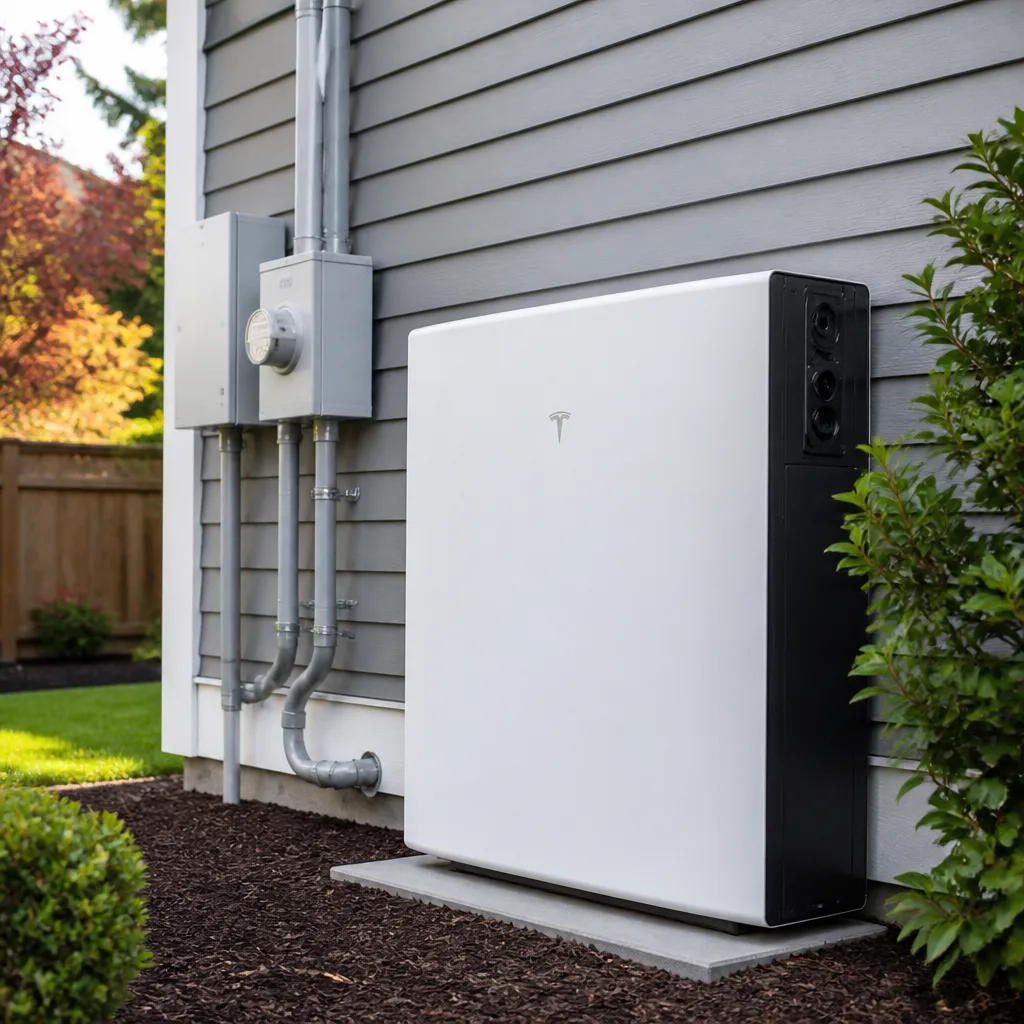
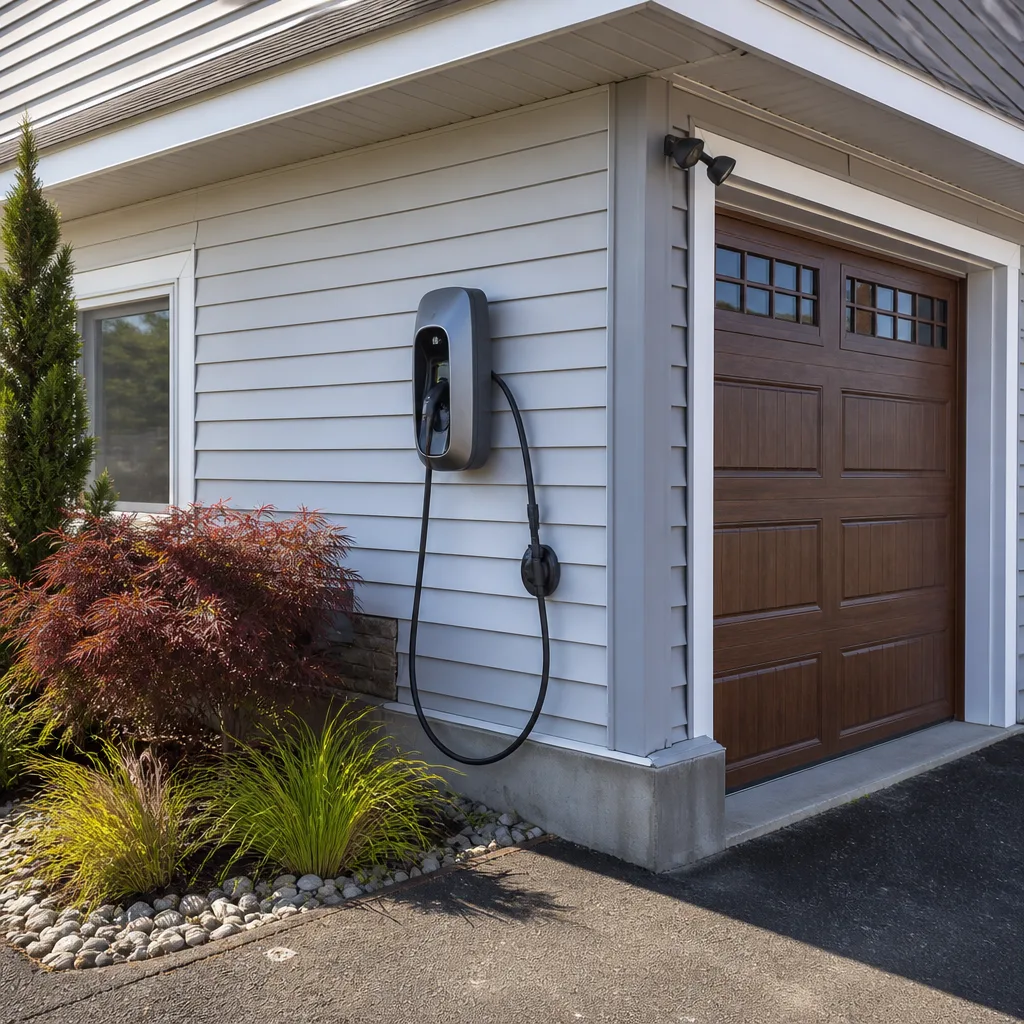
 Before
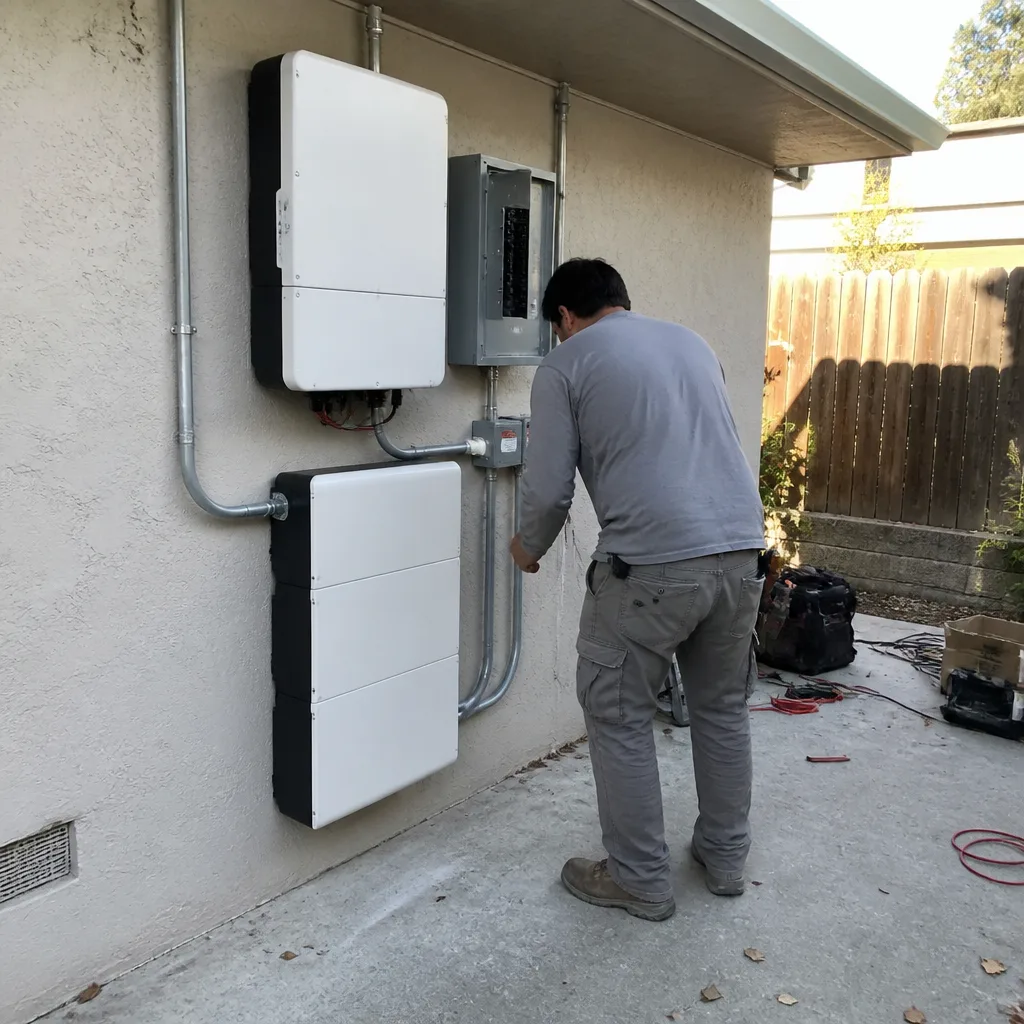 After
After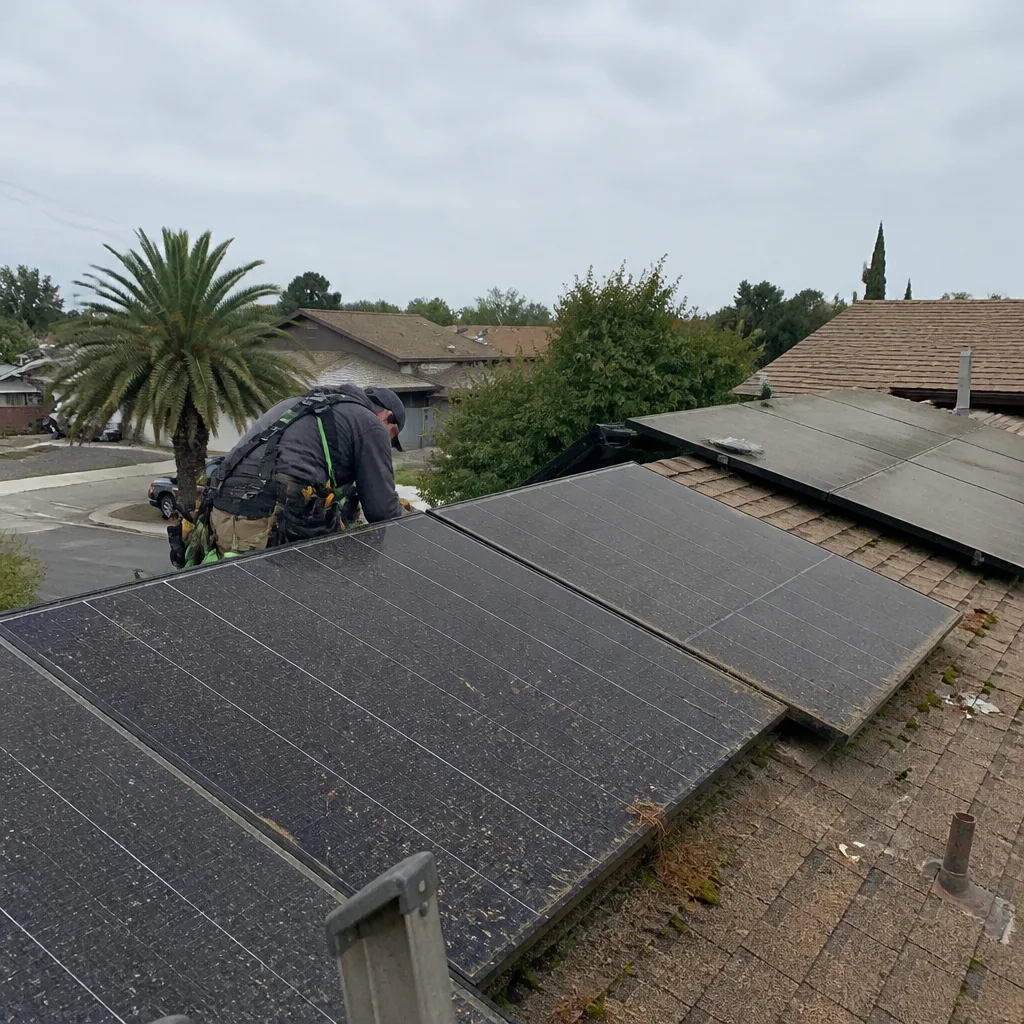 Before
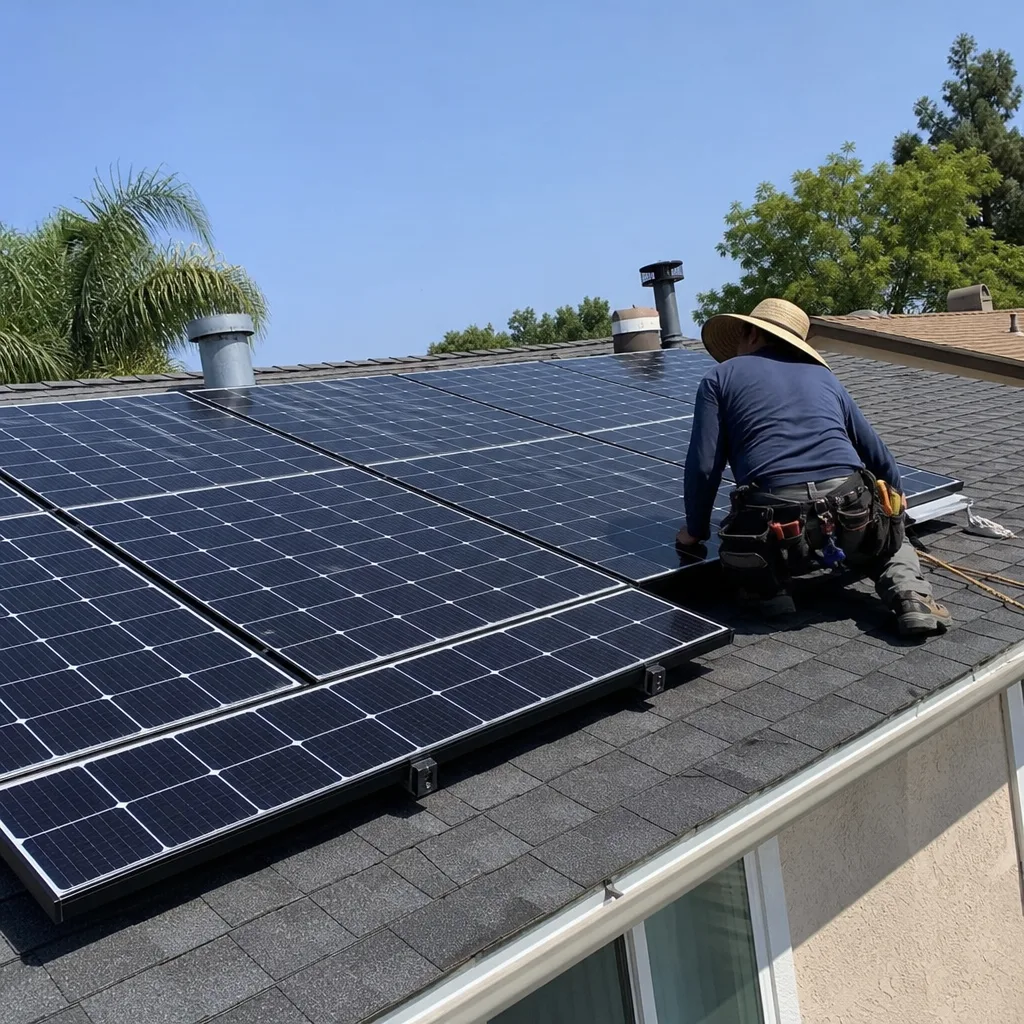 After
After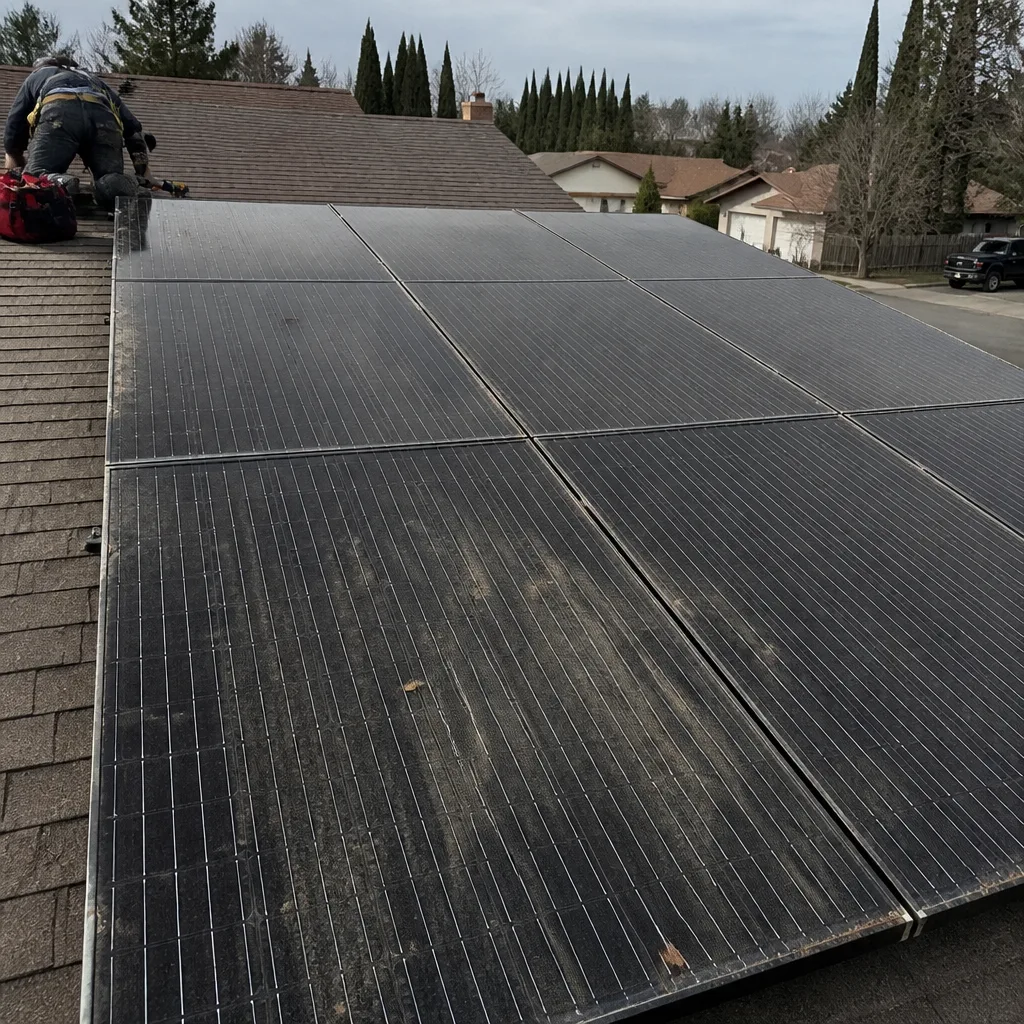 Before
 After
AfterFast, Reliable Solar Panel Maintenance & Monitoring Across Carpinteria
Solar panel maintenance in Carpinteria costs roughly $150-$450 for a standard inspection and cleaning visit, while full monitoring setup with consumption tracking typically runs $300-$800 depending on your inverter and panel count. Most Carpinteria homeowners book us within the same week they call. The coastal conditions here, persistent salt air and that stubborn morning marine layer, mean a system that ran fine in Santa Barbara proper might be quietly underperforming a mile west. Call (877) 550-6892 and we’ll come take a look with honest numbers, not a sales pitch.
Why Gus’s Solar Is Carpinteria’s Preferred Solar Panel Maintenance & Monitoring Company
Gus Petrakis founded this company in 2011 and has kept it owner-operated ever since. When Carpinteria homeowners call about a maintenance issue, they’re not routed to a call center in another state. They get Gus or one of his crew on the phone, someone who knows what a composition shingle roof in the 93013 ZIP looks like after 60 years of salt air. Carpinteria customers have reviewed this company well over the years because the work is done by the same people who sell it: background-checked, uniformed, and accountable to a name that’s on the truck.
Response time to Carpinteria matters when a suddenly inflated electric bill or an inverter fault light is staring at you from the garage wall. We schedule service calls in Carpinteria within the same week in most cases, and for urgent issues like ground faults or arc-fault trips that shut your whole array down, we’ll send someone out as fast as the 101 allows. If you’re in the hills off Shepard Mesa or closer to the bluffs off Palm Avenue, our crew knows both the roads and the roof conditions that come with them.
The company’s operating code, what Gus calls the L.O.C.A.L. values, applies here: Local roots, On time, Community first, Accountable, Loyal. That last one is why we monitor systems we installed years ago and call you when production drops, not the other way around.
Our Solar Panel Maintenance & Monitoring Services in Carpinteria
We handle the full range of Solar Panel Maintenance & Monitoring work, but these four services cover most of what Carpinteria homeowners call us for. Each one starts with a look at your actual production data and ends with plain-English recommendations, not an upsell.
Annual System Inspection
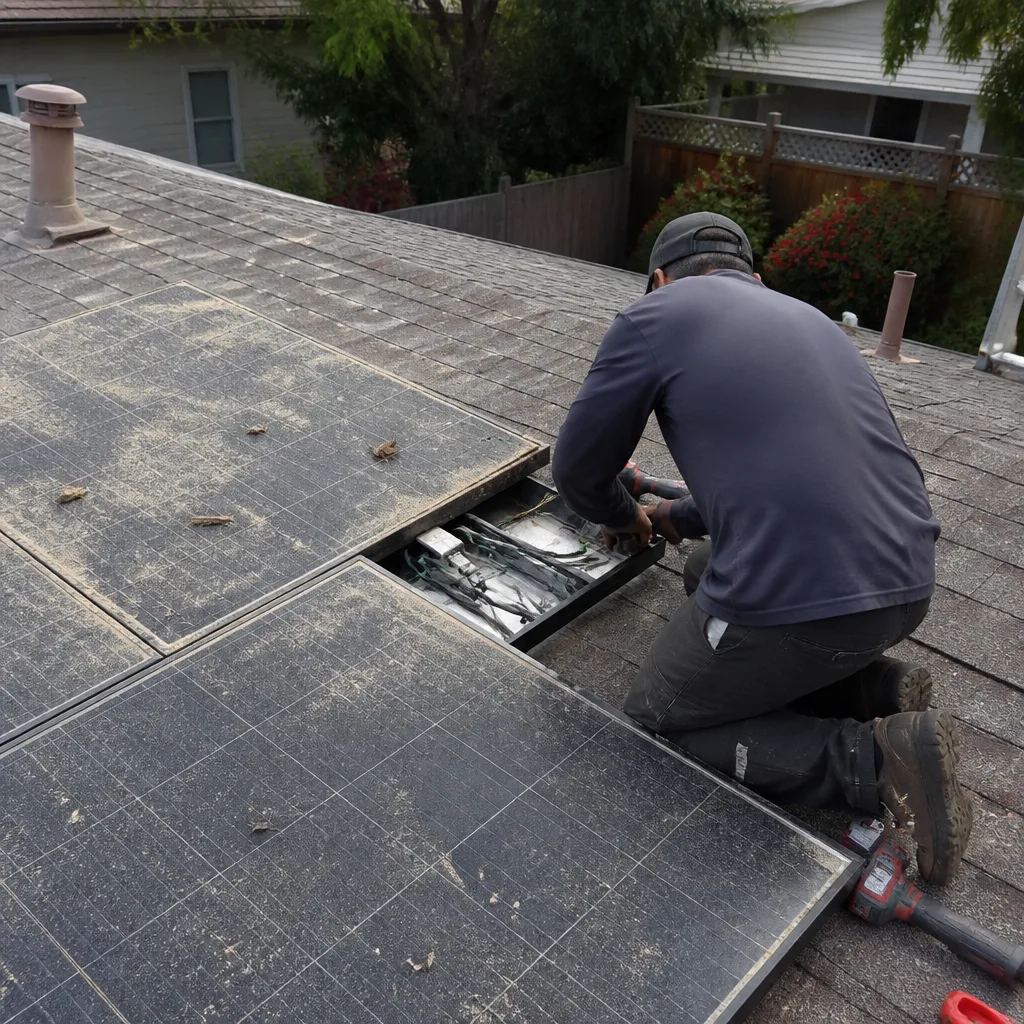
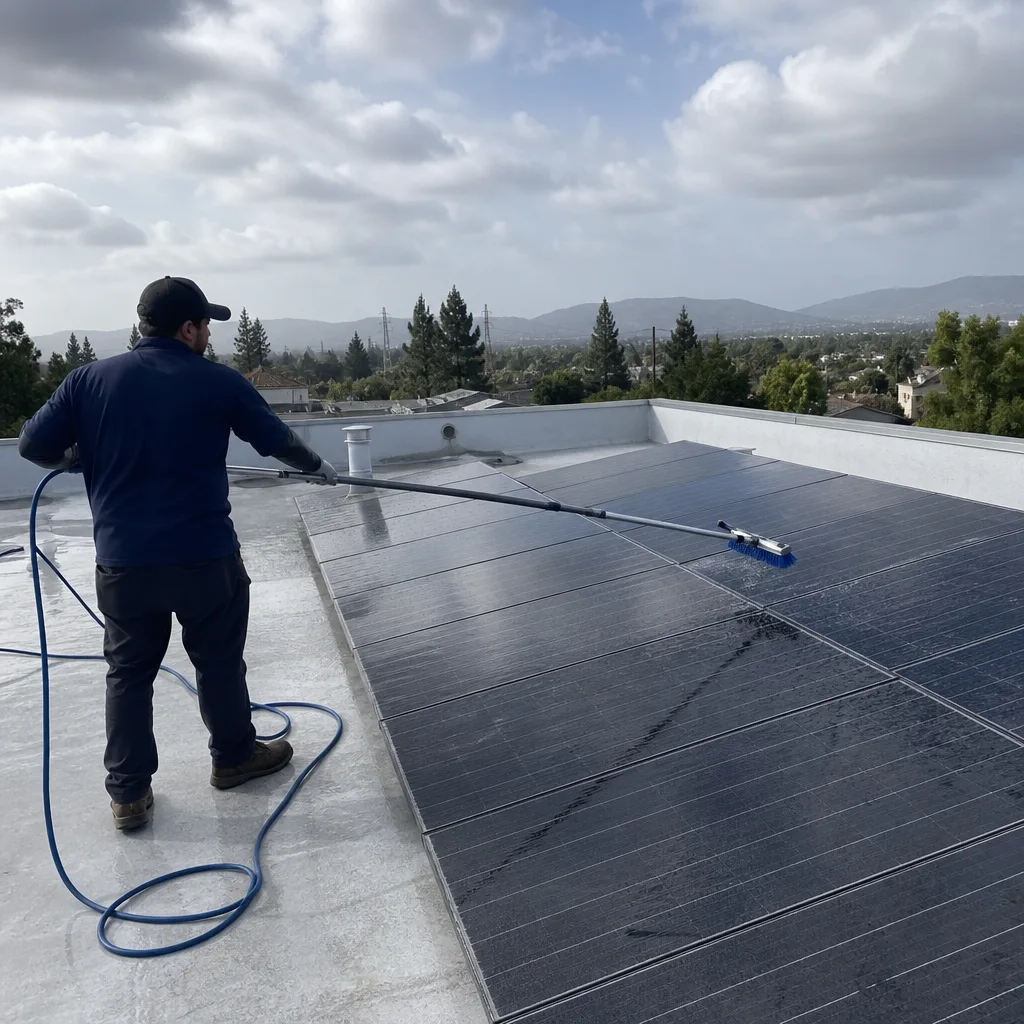
Every Carpinteria system should get a physical inspection once a year, and here’s why that matters more than inland: the salt-laden onshore air that rolls off the Pacific every afternoon corrodes aluminum racking and DC connectors at about twice the rate we see in Ojai or Mira Monte. Our inspection walks the full array, checks every visible connector for corrosion or heat damage, inspects roof penetrations for signs of moisture intrusion, and tests inverter output against expected production curves for your specific roof plane and azimuth. We hand you a written report with photos and specific fixes, not a vague “everything looks fine.”
Production Monitoring Setup
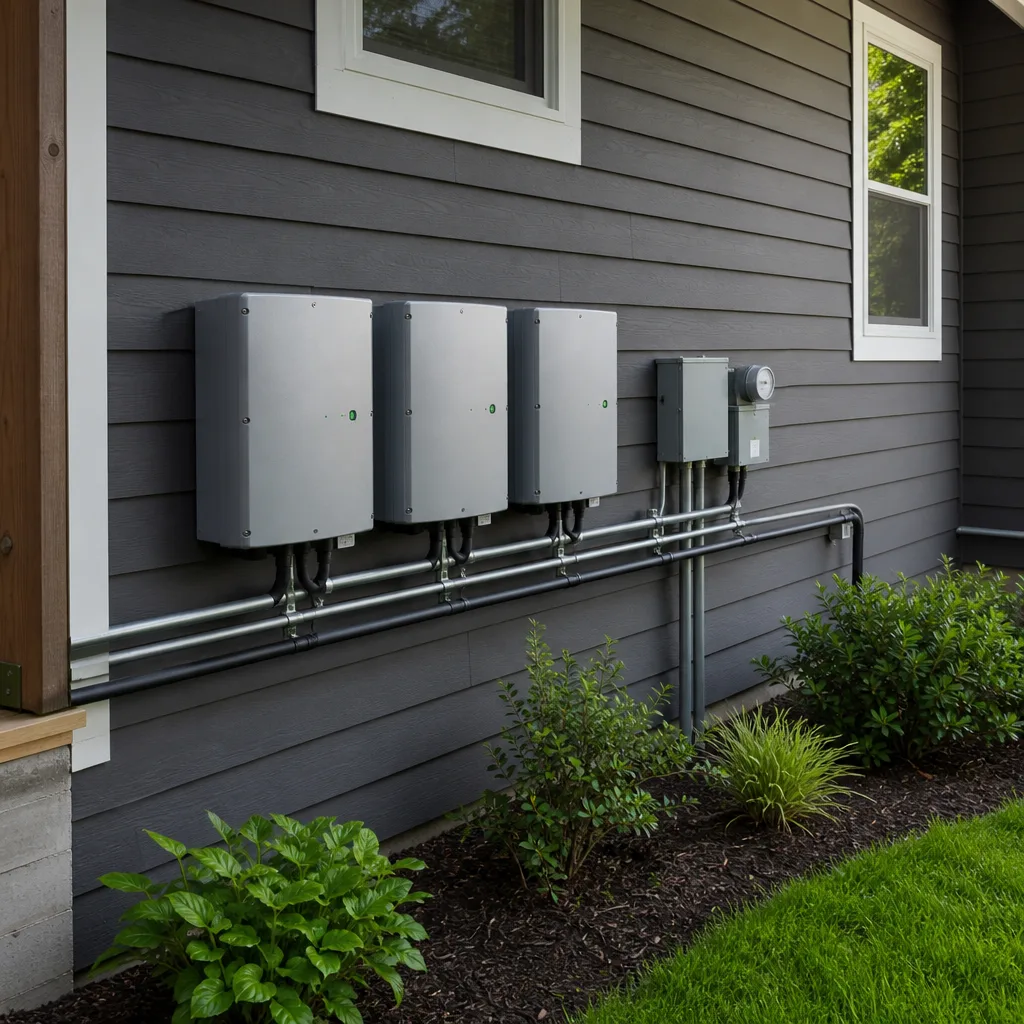
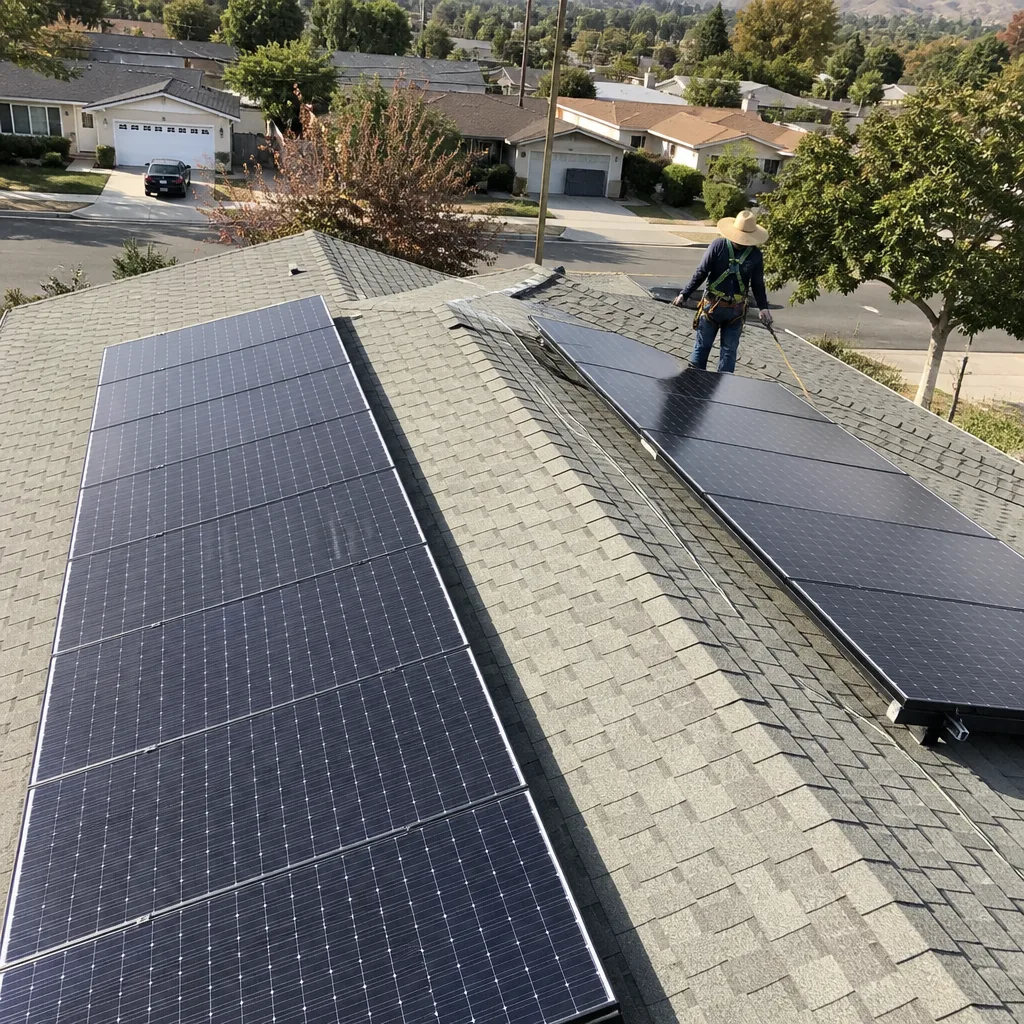
If your system was installed before monitoring was standard, or if your installer vanished and took the app access with them, we can set you up with production monitoring that actually tells you something useful. We configure your existing Enphase or SolarEdge portal, or set up third-party monitoring through a $200-$500 hardware add-on, then calibrate the expected-output curve to Carpinteria’s real conditions. That means your alerts won’t fire every morning because the marine layer is doing what the marine layer does. You’ll know the difference between normal coastal behavior and an actual problem, and so will we.
Underperformance Diagnostics
We see this all over Carpinteria: a homeowner got a utility bill that jumped, or a monitoring app that keeps flagging low production, and nobody can tell them why. Most of the time it’s not dead panels. It’s salt-corroded DC connectors creating resistance along a string, or a ground fault that’s tripping the inverter intermittently. We trace the system circuit by circuit, identify the fault, and quote the fix separately so you can see exactly what you’re paying for. In Carpinteria, we’ve diagnosed enough of these to know the usual suspects by neighborhood and panel brand.
Firmware & App Configuration
Solar inverters need firmware updates, and monitoring apps occasionally lose their minds after an update or a utility meter swap. If your Enphase Envoy or SolarEdge gateway isn’t reporting, or your app won’t connect to the local network, we can reconfigure it. This is also where we recalibrate system settings after panel additions, battery retrofits, or when you move into a Carpinteria home that already has solar and the previous owner’s credentials left with them. Firmware work is usually a quick service call, and it’s one of the most common requests we get from new homeowners in the 93013 and 93014 ZIP codes.
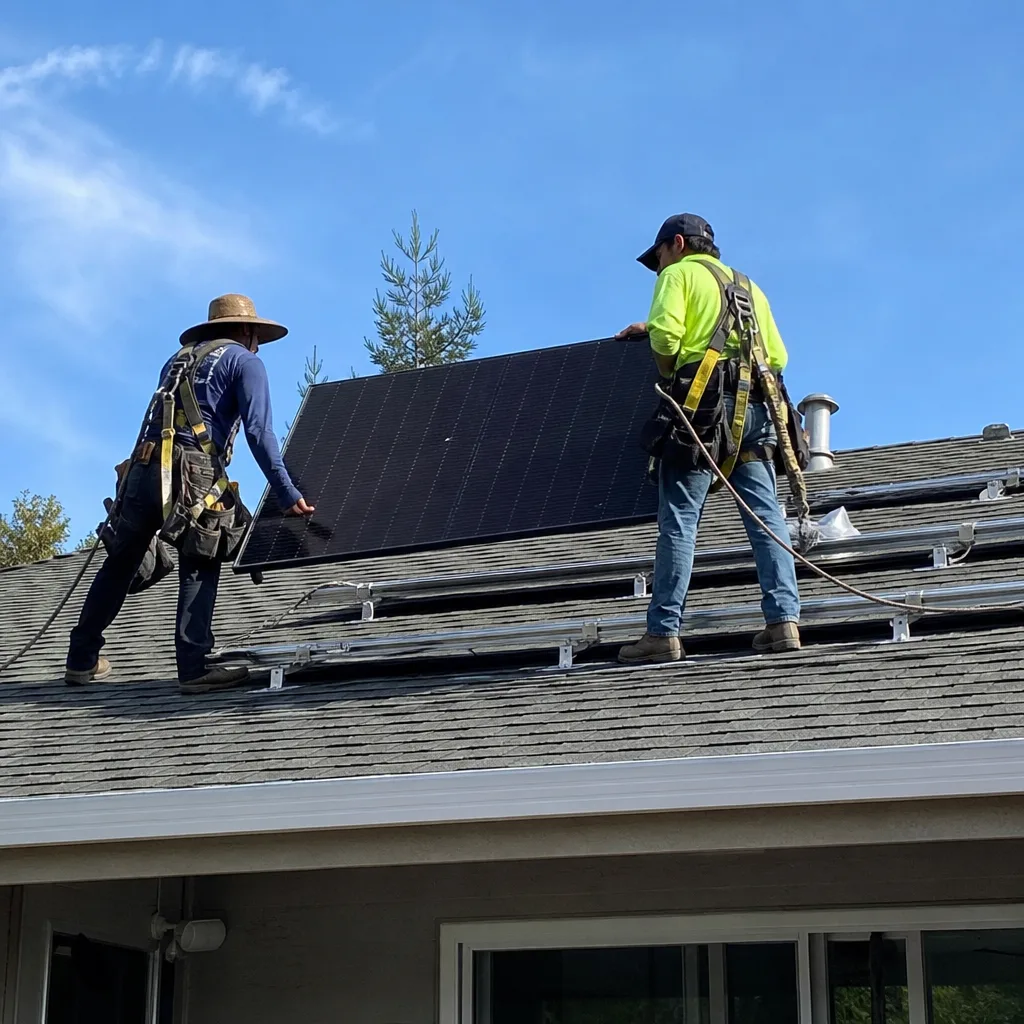
What happens when you call
- 1
A real person answersNo phone trees - you reach a local pro.
- 2
You get an upfront price rangeHonest numbers before anyone is dispatched.
- 3
A background-checked tech heads outLicensed & insured, dispatched right away.
- 4
You approve before work beginsNothing starts until you say go.
Trusted Brands We Service in Carpinteria
We work on systems built around Panasonic, Canadian Solar, Qcells, SolarEdge, Enphase, Tesla, and most other residential brands. For Carpinteria customers, we keep a local stock of the consumables that coastal air eats through fastest: replacement DC connectors, stainless or hot-dip galvanized racking bolts, and weather-sealed junction box covers. If you’ve got a Panasonic array on a hillside home off Foothill Road, or Canadian Solar panels on a 1960s ranch near the Franklin Creek area, we can usually source and install replacement parts in days rather than weeks because we stock for this climate specifically. We also service FranklinWH battery systems and can tie monitoring from your battery into the same dashboard as your panels.
Common Solar Panel Maintenance & Monitoring Problems We See in Carpinteria Homes
- Salt-corroded DC connectors and aluminum racking. The onshore air flow here carries salt mist that pits aluminum within 5 to 7 years. That corrosion builds resistance and triggers ground faults or arc-fault inverter shutdowns that get misdiagnosed as dead panels all the time. In Carpinteria, we check connector resistance on every inspection.
- Morning marine layer suppressing production. Especially from May through July, the cloud deck lingers until 10 or 11 AM. Systems with east-facing or north-facing roof planes might not start producing meaningfully until mid-day, which triggers false underperformance alerts and confuses monitoring apps calibrated with inland irradiance data.
- Leaks around racking on aging composition shingle roofs. Most homes here were built between the 1950s and 1970s, and those roofs are either near the end of their service life or held together by patches. Racking bolted through old shingles eventually allows moisture in, and by the time you see a stain on the ceiling, the fix is panel removal, re-roofing, and reinstallation. A maintenance plan catches this before it becomes a $3,000-plus surprise.
- Ridge shading from the Santa Ynez Mountains in winter. Hillside parcels near the mountain base, places like the homes along Shepard Mesa Road and the upper reaches of Carpinteria Avenue, get real shading from the ridge itself in winter mornings. If your monitoring is calibrated with a flat, open-sky assumption, your winter numbers will look bad even when the system is working correctly. We recalibrate expected output to account for actual terrain.
Pricing for Solar Panel Maintenance & Monitoring in Carpinteria, CA
A standard annual inspection in Carpinteria runs $150-$250 for most residential systems, depending on array size and roof accessibility. Production monitoring setup costs $300-$700, including hardware if needed and full app configuration calibrated to your actual site. Underperformance diagnostics are billed at $120-$200 as a diagnostic service call, which we credit toward the repair if you do the fix with us. Firmware updates and app reconfiguration are usually $100-$175, often wrapped into an inspection visit if we’re already on site.
Preventive maintenance plans, which bundle annual inspection, cleanings, monitoring review, and priority scheduling, typically run $250-$450 per year for Carpinteria homes. We also offer a free second opinion on any written estimate, no trip charge inside our own county, and a standing 10% discount for seniors and veterans. Call (877) 550-6892 and we’ll quote your actual system, not a brochure number.
We Also Serve Cities Near Carpinteria
Our crews cover the whole coastal stretch and the valleys behind it, including Solar Panel Maintenance & Monitoring in Carpinteria‘s neighboring communities of Montecito, Santa Barbara, Mira Monte, and Ojai. If you’re a few minutes east off the 101 or tucked up 192, we’re already working in your area. Same crew, same live-answer phone, same no-pressure quote.
Serving Carpinteria, CA - Our Local Coverage Area
We’re based in the Carpinteria area and know this community well. Use the map below to see our service coverage - if you’re nearby, we can almost certainly help.
FAQs - Solar Panel Maintenance & Monitoring in Carpinteria
If the shingles are crumbling, granule-shedding, or already patched in multiple places, replacing the roof first is almost always the cheaper path long-term. Our crew was called to a 1960s ranch-style home near the base of the Santa Ynez Mountains where an aging composition shingle roof had been re-patched before racking was installed. The original aluminum racking was pitted from salt spray, and several DC connectors showed corrosion-induced resistance, causing intermittent inverter faults. We replaced the affected connectors with IEC 61701 salt-mist rated components, confirmed rapid shutdown compliance, and recalibrated the production estimate to account for the winter-morning ridge shading on the north-facing azimuth. That job taught us again what we already knew: patching under existing racking works for a few years, but a full re-roof before panel installation costs less than panel removal, re-roofing, and reinstallation later. Call (877) 550-6892 and we’ll inspect the roof and tell you straight which path makes sense for your specific house.
That’s the salt air doing what salt air does in Carpinteria, and most standard aluminum racking warranties do not cover corrosion in coastal environments. The persistent onshore breeze carries salt particles that microscopically pit aluminum and eat at DC connector housings. Most manufacturers require IEC 61701 salt-mist certified components for coastal installs, but a lot of out-of-state installers skip that spec because they quote the same hardware everywhere. If you’re seeing visible white pitting or green crust on connector terminals within 5 years, it’s worth having us check resistance and replace affected parts before the system starts faulting. We can also tell you whether your equipment is actually rated for this environment or was under-specced by the original installer.
Corrosion-related underperformance tends to be intermittent; you’ll see output drop when humidity is high or after foggy mornings, then recover on dry afternoons. Panel degradation is steady and progressive. If your monitoring shows jagged, up-and-down production curves instead of a smooth bell shape, that’s usually resistance in the DC path, and in Carpinteria it’s usually corrosion on connectors or junction box terminals before it’s panel failure. We can test each string with insulation resistance testing and thermal imaging on a service call, identify the specific connector or junction box that’s failing, and replace just those components. Call (877) 550-6892 for diagnostics, and we’ll show you exactly what’s failing and what it costs to fix.
Yes, for some hillside homes in Carpinteria it does. If your roof plane faces north or is on a parcel sitting tight against the mountain base, winter sunrise comes late and the ridge itself can block direct sun until 9:30 or 10 AM. That truncates your winter production hours and stretches the payback period, sometimes by a year or two more than a flat, unobstructed coastal lot would see. It’s not a reason to skip solar, but it is a reason to size and quote the system based on real terrain data, not generic ZIP-code irradiance tables. We pull shading data for your specific roof plane and adjust the year-25 output projection accordingly. Bring us a bill, we’ll bring you the math based on what your panels will actually see in December, not a brochure number.
We respond to urgent system failures in Carpinteria as fast as scheduling allows, usually same week for non-emergency work and same day for faults that have shut your entire array down. Call (877) 550-6892 and a live person answers, even at night. We’ll walk through what you’re seeing, decide if it’s urgent, and send a crew member out from our coastal service route. Estimates are free, and we don’t charge a trip fee anywhere in our own county.
If your panels aren’t producing, your inverter is throwing fault codes, or your monitoring app is showing numbers that don’t match your bill, call (877) 550-6892. Gus’s Solar will answer, take a look at your data, and tell you honestly what’s going on. No signature tonight, no pressure. Take two weeks to think about it. The price will be the same.
Written by Gus Petrakis, Owner at Gus’s Solar, serving Carpinteria homeowners with coastal-specific solar service and straight answers.