

Free bill analysis - bring a power bill, get the production math for your actual roof, panel brands like Qcells and REC compared side by side
If the pitch starts at your door and ends with "sign tonight for the special," sleep on it. The sun will still be there tomorrow; so will we.
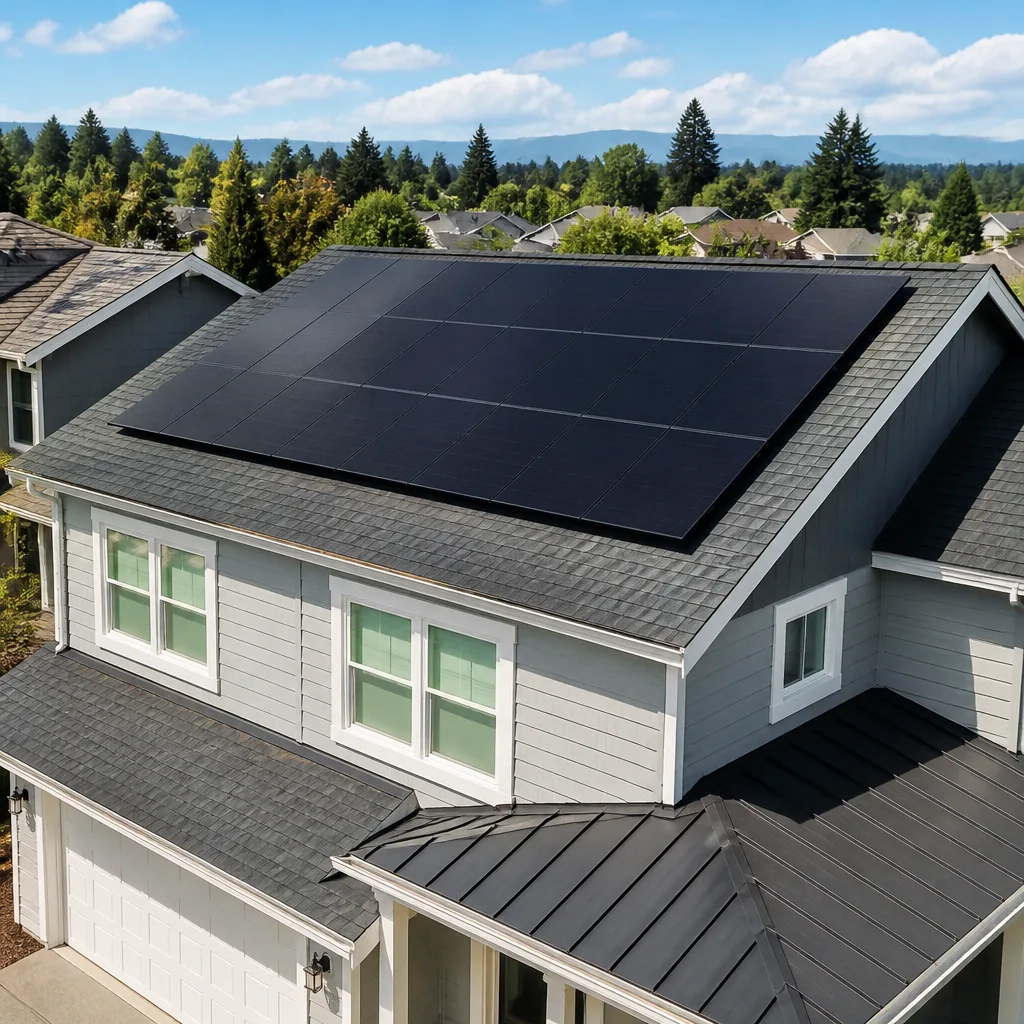
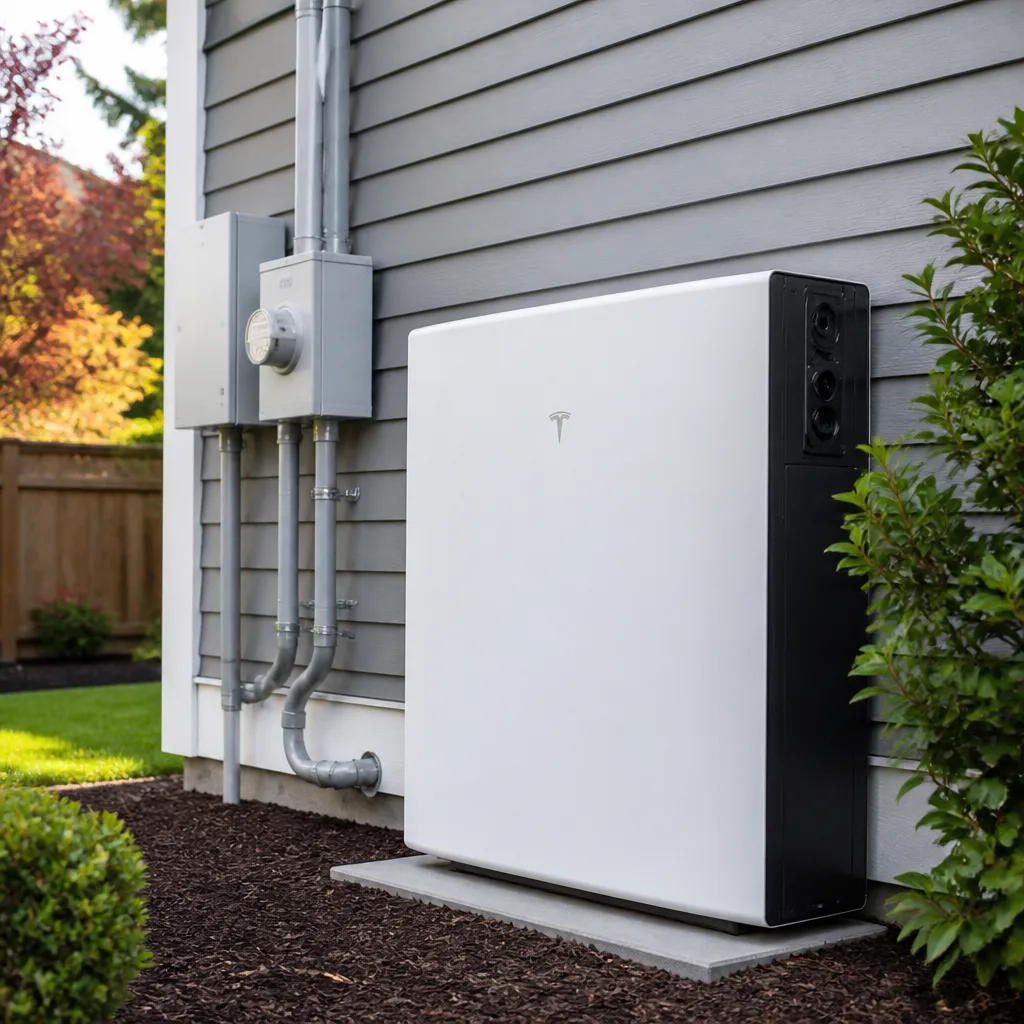
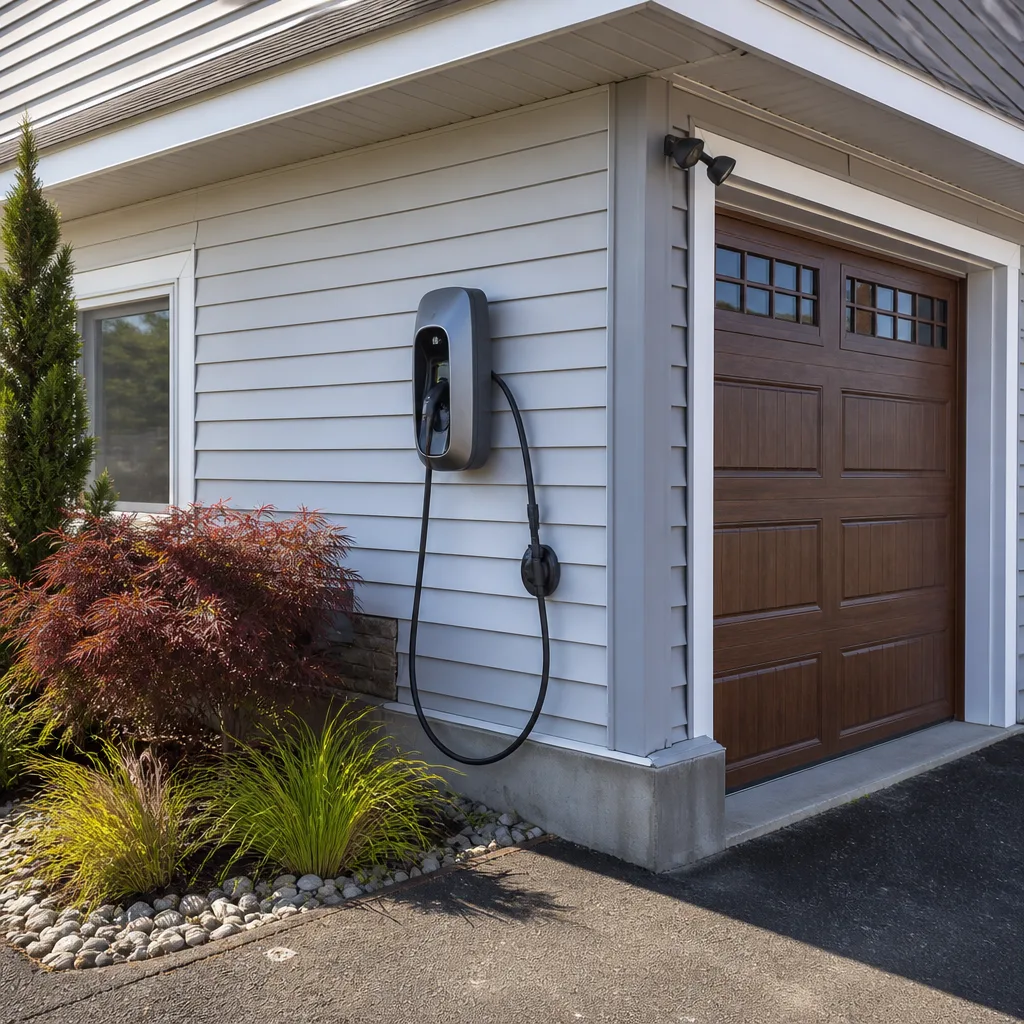
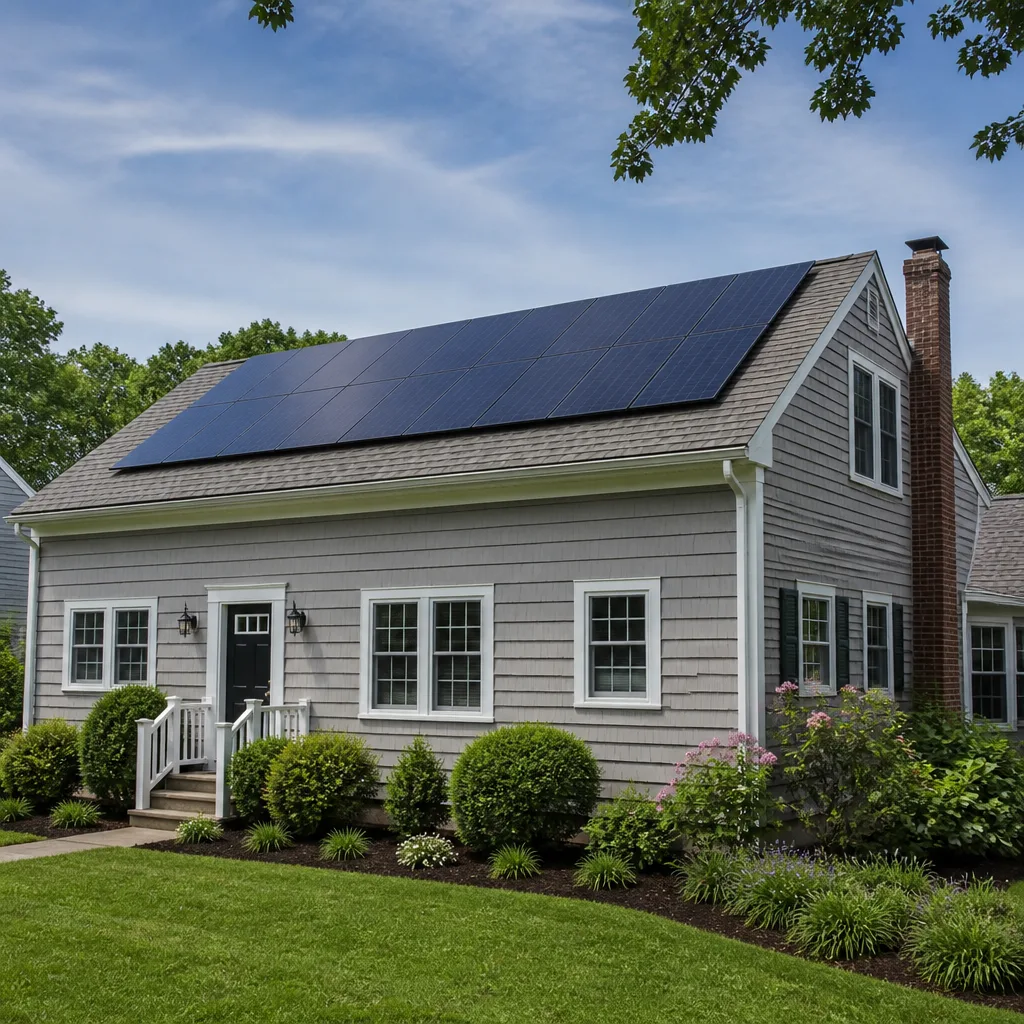
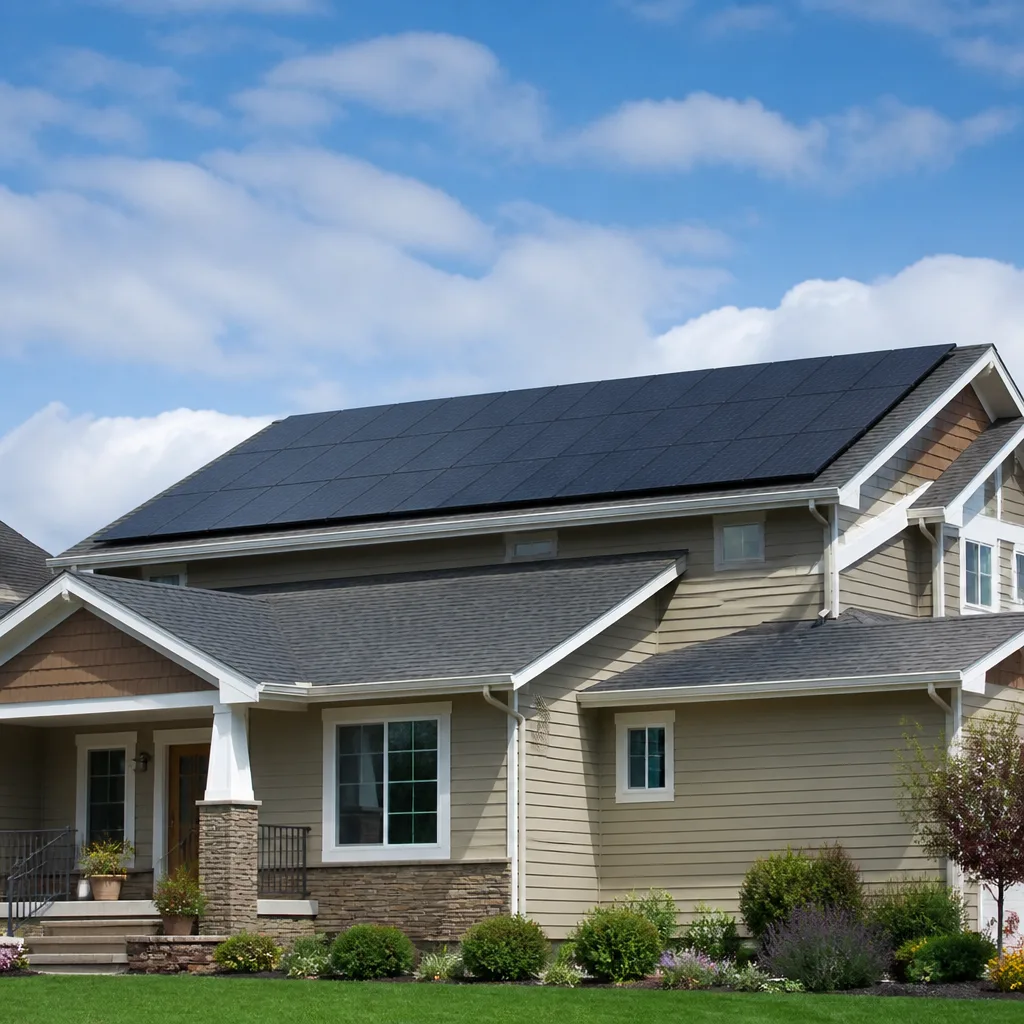
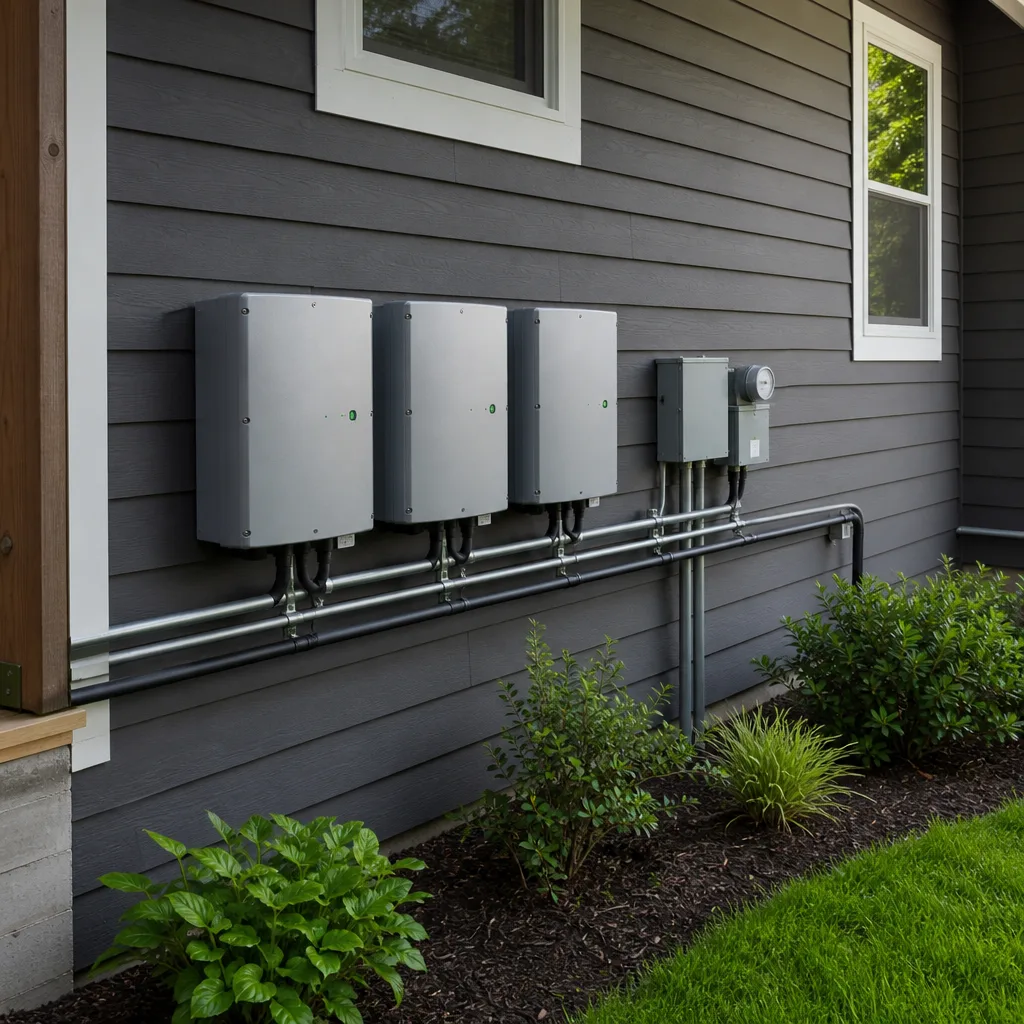
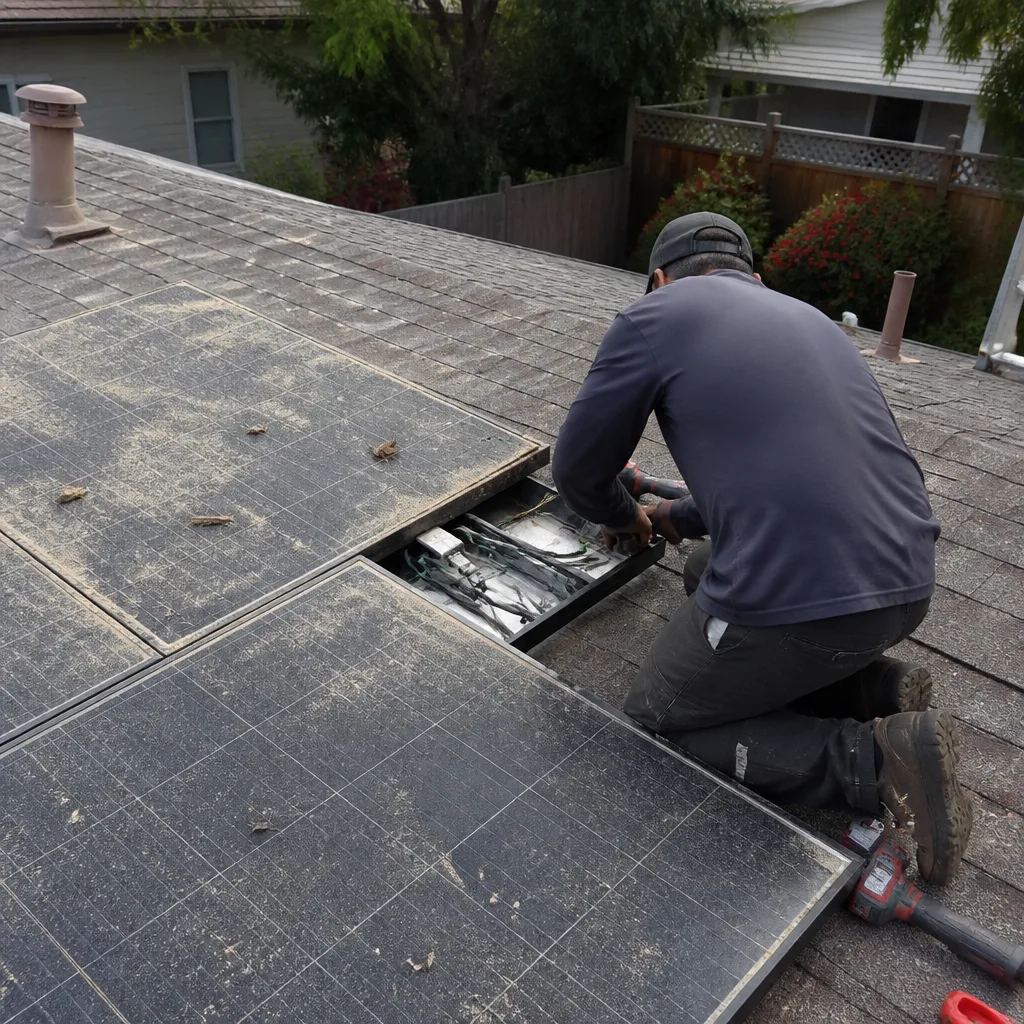 Before
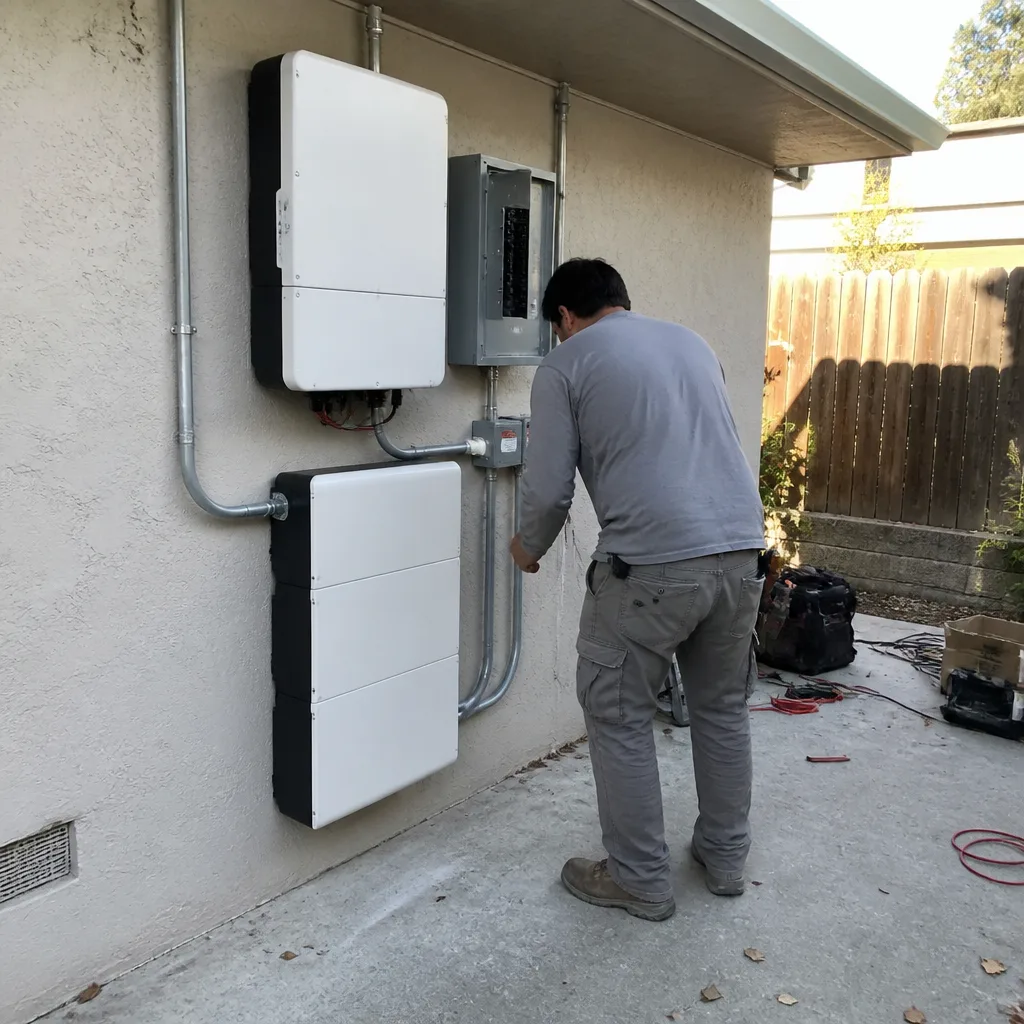 After
After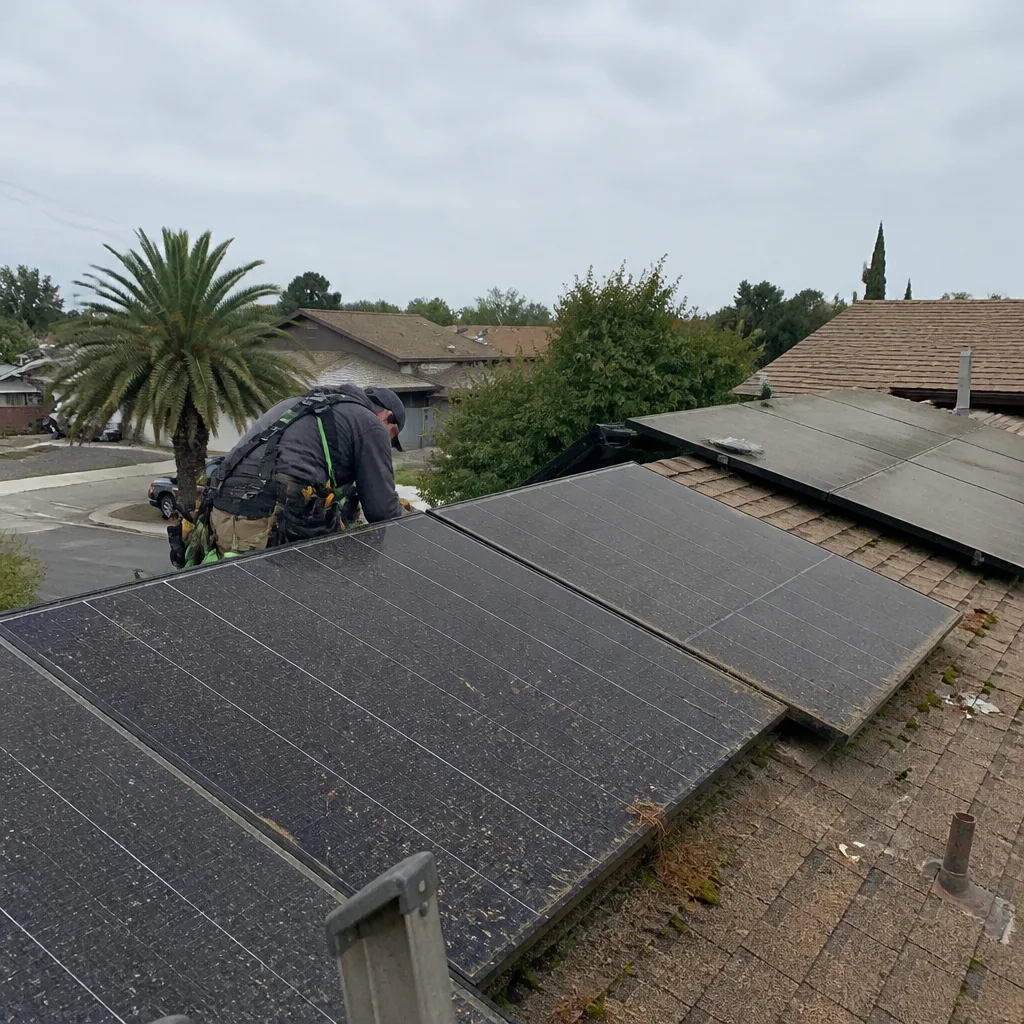 Before
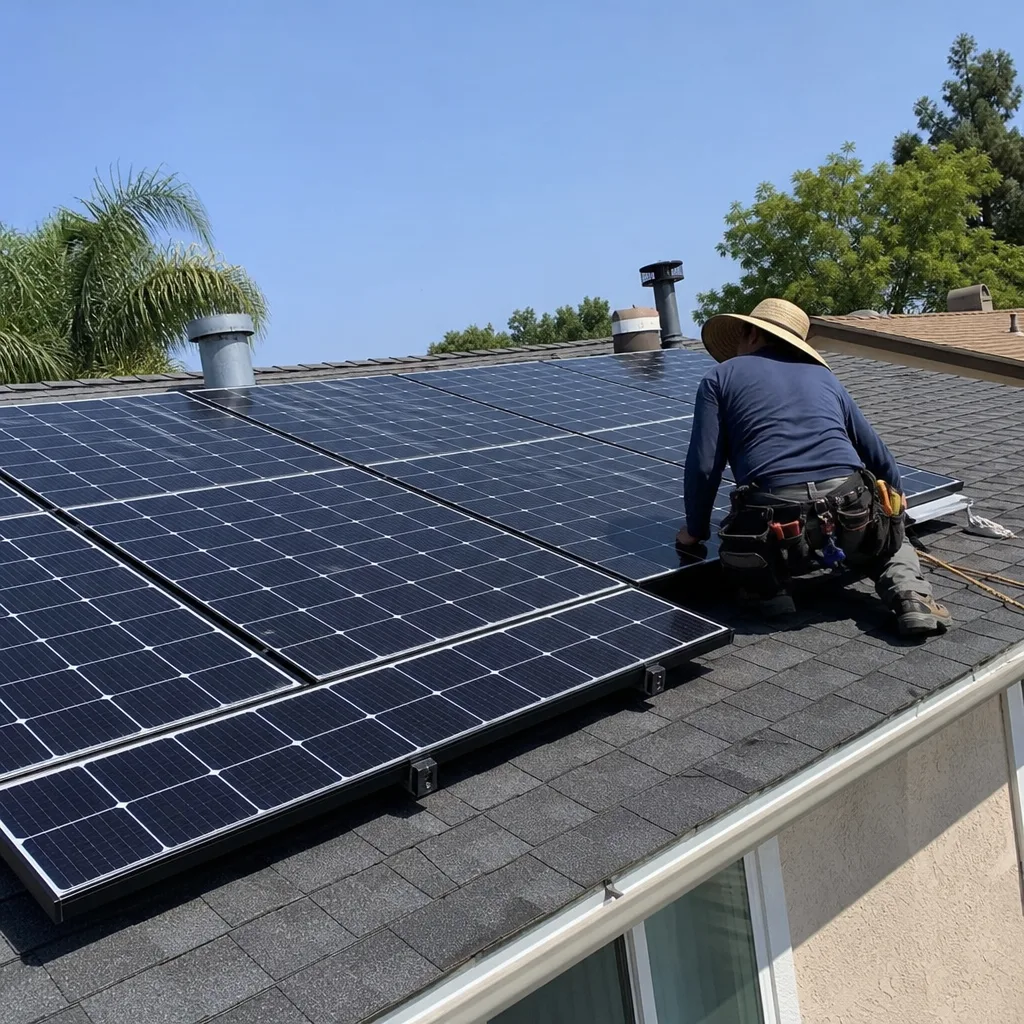 After
After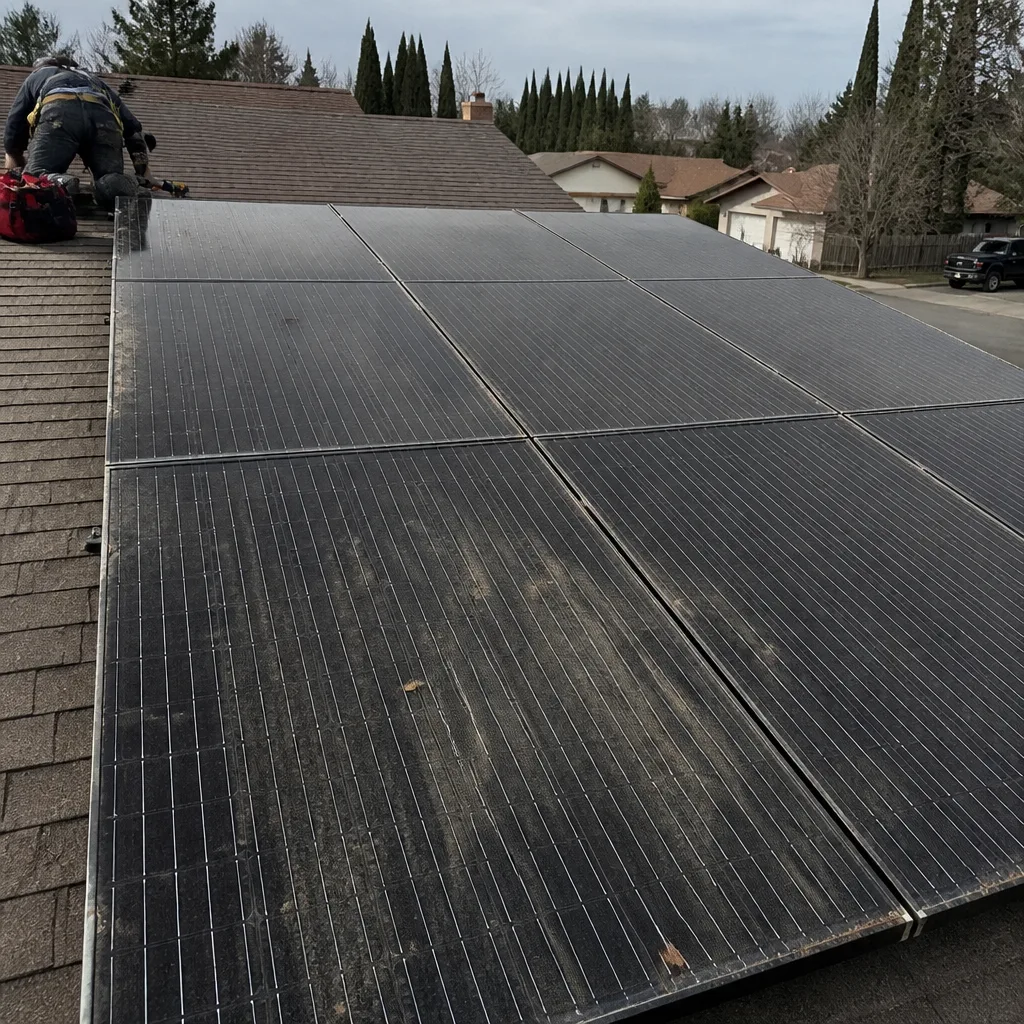 Before
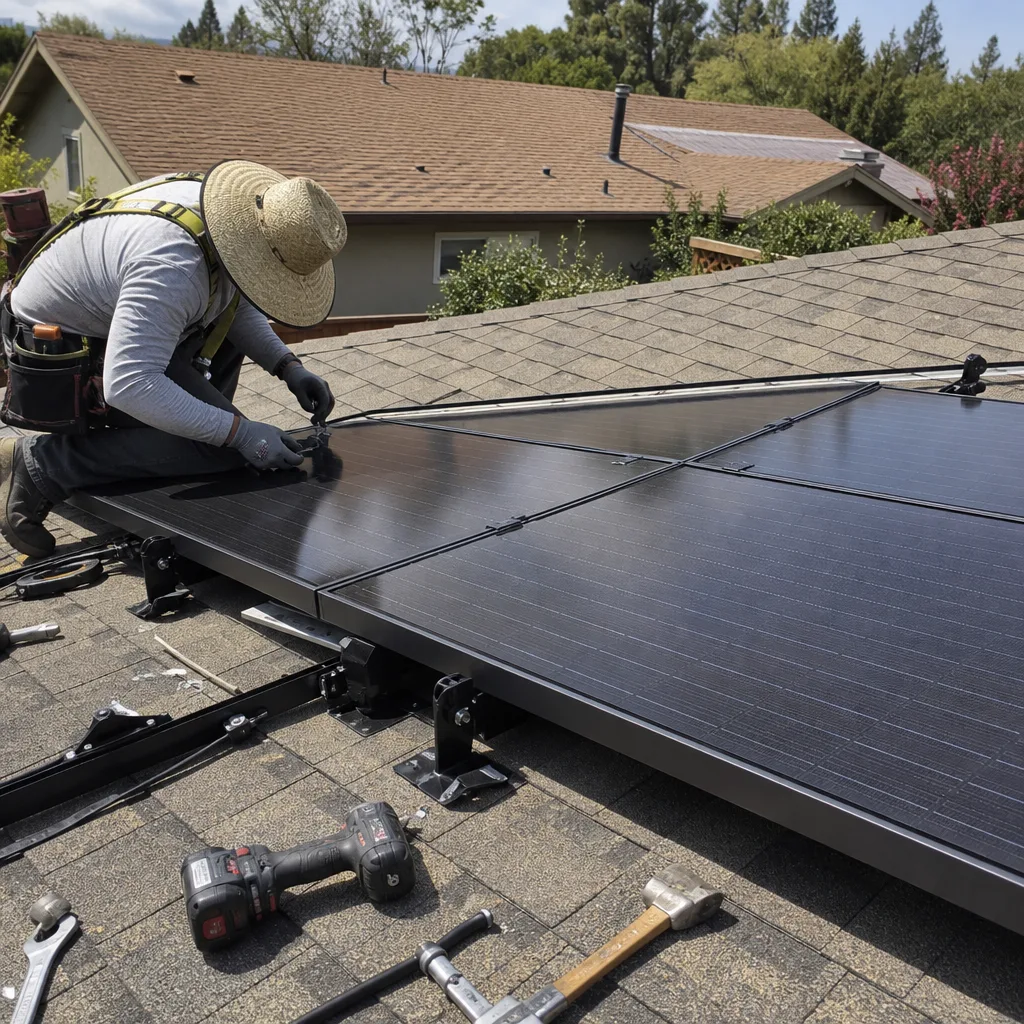 After
AfterFast, Reliable Solar Panel Maintenance & Monitoring Across August
Solar panel maintenance in August, CA runs $149-$385 for a full inspection with cleaning, and we can usually have a crew out to your home within 2-3 business days. The 95205 corridor sits right in the path of San Joaquin Valley agricultural dust, which means panels here soil faster than almost anywhere else in California. That’s not a guess. It’s what we see every week when we pull up to ranch homes off French Camp Road and Cherokee Road. If your production numbers have slipped and you’re not sure why, call us at (877) 550-6892. Gus Petrakis answers his own phone, and he’ll tell you straight whether a wash and an inspection will fix it or whether something deeper is going on.
Why August Homeowners Call Gus’s Solar for Panel Maintenance
We’re not a call center that dispatches a subcontractor from three counties away. Gus’s Solar is owner-operated, founded in 2011 by Gus Petrakis, and the crew that shows up at your door in August is the same crew that’s been working Central Valley rooftops for over a decade. When a homeowner near August School calls about a production drop, we know before we arrive that almond dust from the orchards east of town is the likely culprit. When someone off El Dorado Street reports an inverter fault after a week of Tule fog, we know to check the Enphase microinverters for moisture ingress before we even climb the ladder.
Gus puts his name on the truck. His August customers know they can find him at the hardware store, at the diner, or on the other end of the phone at 2 a.m. if a system alarm goes off. That’s the L.O.C.A.L. code we operate by: Local roots, On time, Community first, Accountable, Loyal. Every job comes with the 90-Day Done Right Promise in writing. If something’s not right, one call brings Gus back. No ticket number. No voicemail maze.
Our Solar Panel Maintenance & Monitoring Services in August
Every August homeowner gets a plan built around what their system actually needs, not a brochure checklist. Here’s what we handle most often in the 95205 area.
Annual System Inspection
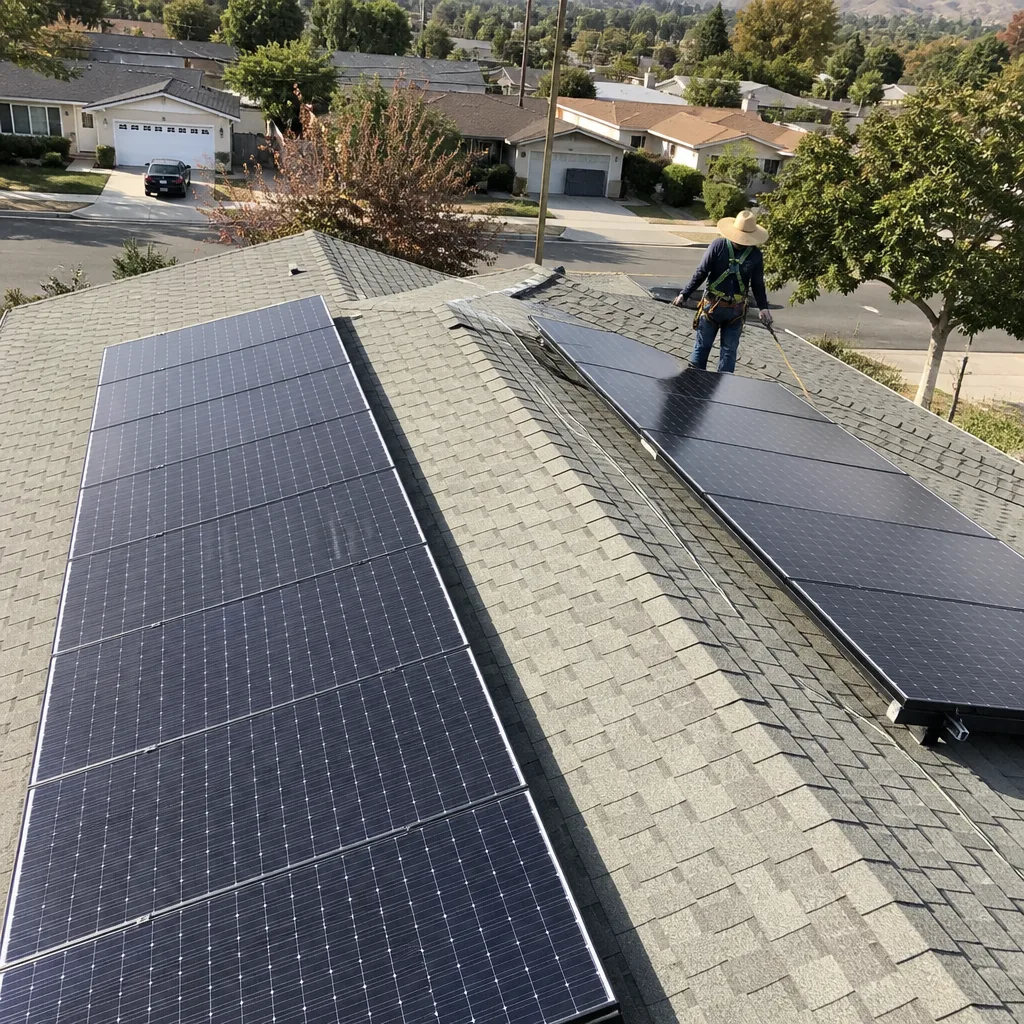
A full inspection in August means checking every panel, every microinverter, every rail fastener, and every conduit run. On the post-WWII ranch homes that dominate this neighborhood, we pay special attention to roof penetrations. Composition shingle roofs from the 1960s and 70s don’t forgive sloppy flashing, and valley heat plus winter fog cycles can pull old sealant loose faster than you’d think. We inspect the mounting hardware, torque-check the clamps, and document everything with photos so you have a record.
Production Monitoring Setup
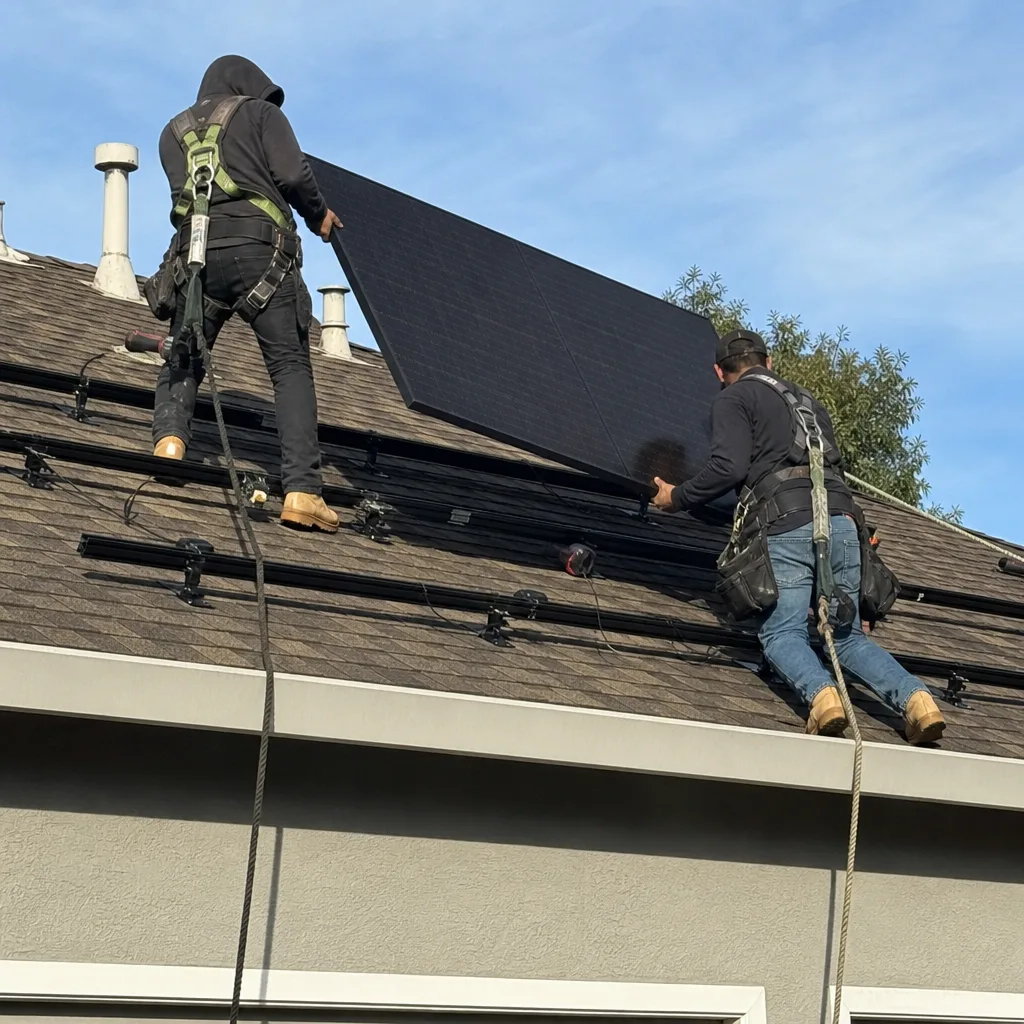
Most August systems we see were installed with monitoring apps that nobody ever configured properly. The homeowner gets a login, sees a number, and assumes it’s correct. It often isn’t. We set up Enphase, Tesla, SolarEdge, and FranklinWH monitoring portals so you can see real production, real consumption, and real export credits against your PG&E bill. More importantly, we set the alerts so a production drop hits your phone the same day, not three months later when your true-up bill arrives and you’ve lost hundreds of dollars.
Underperformance Diagnostics
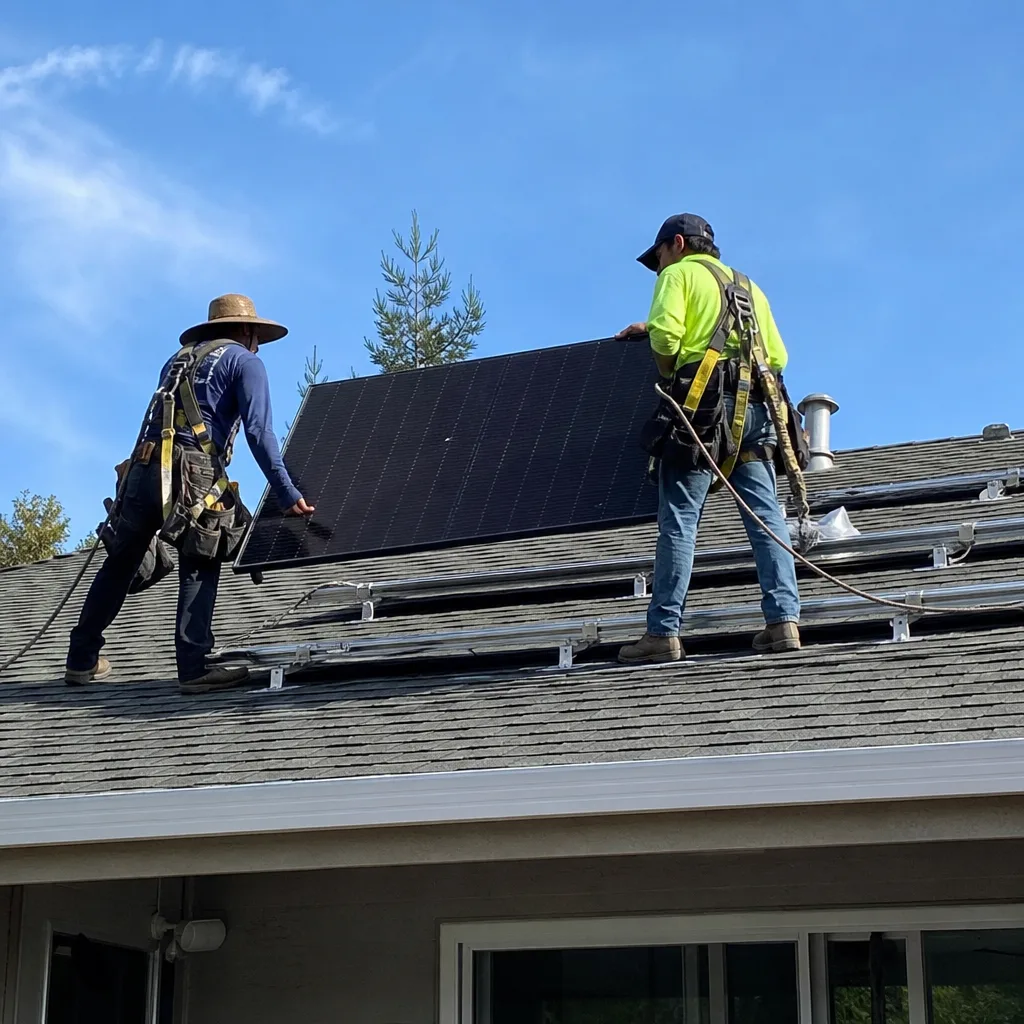
When a system in August underperforms, the cause is usually one of three things: dust, heat derating, or a failing component. We start with the monitoring data, then confirm with on-site testing. A panel that tests fine on a cool morning can throttle hard at 105°F if the temperature coefficient is off for valley conditions. We don’t compare your numbers to Bay Area averages. We compare them to what a properly modeled system should produce in San Joaquin Valley heat, with the dust load your specific roof accumulates.
Firmware & App Configuration
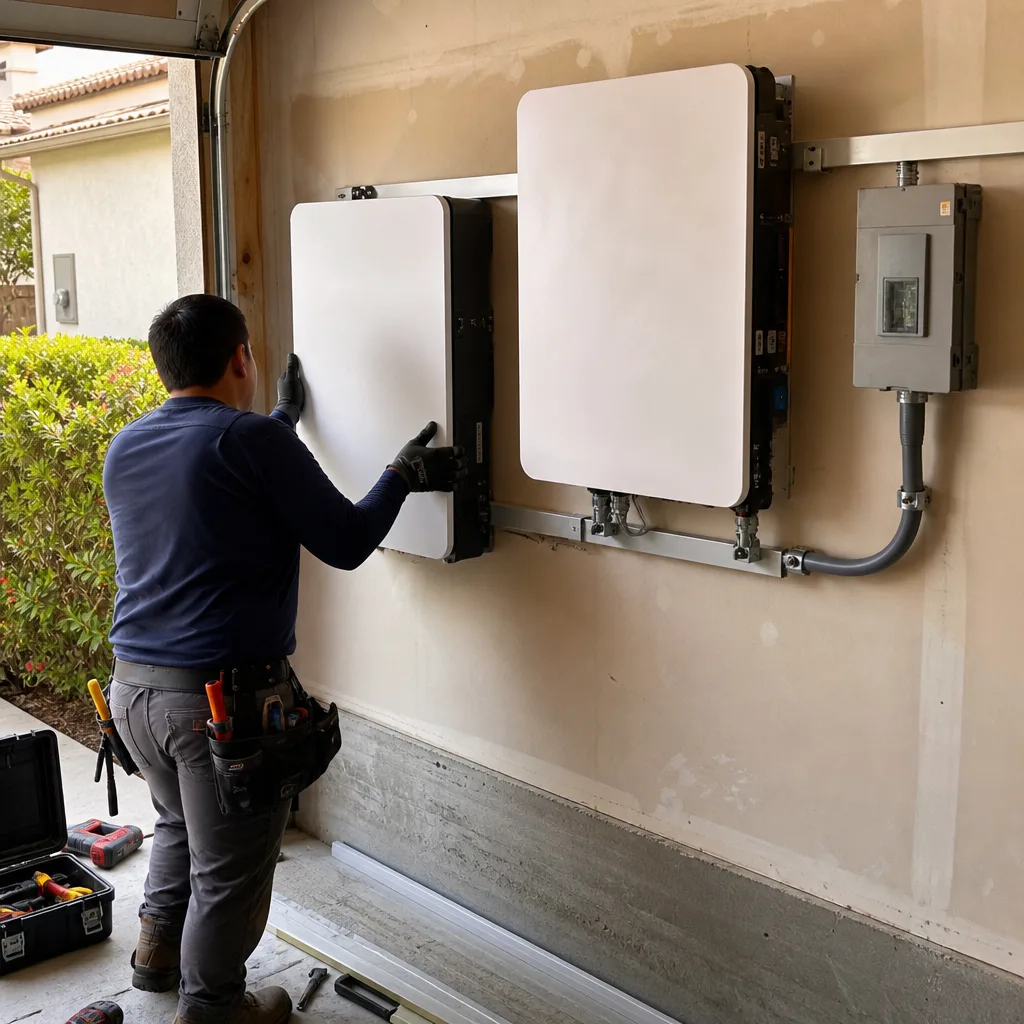
Inverters and batteries ship with firmware that’s often outdated by the time it’s installed. In August, where PG&E’s NEM 3.0 rates changed the economics of solar, having your battery discharge window programmed correctly matters. We update firmware on Tesla Powerwalls, Enphase IQ batteries, and FranklinWH systems, then configure the discharge schedule so your stored power is used during evening peak rates, not wasted at noon when panels are already covering your load. That’s money, not just software.
What happens when you call
- 1
A real person answersNo phone trees - you reach a local pro.
- 2
You get an upfront price rangeHonest numbers before anyone is dispatched.
- 3
A background-checked tech heads outLicensed & insured, dispatched right away.
- 4
You approve before work beginsNothing starts until you say go.
Trusted Brands We Service in August
We work on Tesla, Enphase, SolarEdge, Panasonic, Canadian Solar, JinkoSolar, REC, and FranklinWH systems every week in August. If your system uses Panasonic panels with Enphase microinverters, we know that combination’s failure patterns. If you’ve got a Canadian Solar array on a JinkoSolar-heavy roof, we know how those modules handle valley heat. Because we install and service these brands locally, we keep common parts in stock rather than waiting a week for a distributor. That means faster diagnostics and faster fixes for August homeowners.
Common Solar Panel Maintenance & Monitoring Problems We See in August Homes
- Almond dust and crop residue buildup. The farmland east of 95205 releases fine particulate that settles on panels within days. On low-pitch roofs common to August’s ranch homes, dust doesn’t wash off with rain. It bakes on, cutting output by up to 20% between seasonal rains.
- Heat-driven production drops that look like equipment failure. Panels lose efficiency as they heat up, and August regularly hits 105°F. A homeowner sees production drop at 3 p.m. and assumes the inverter is dying. Usually it’s thermal derating. Proper monitoring setup tells the difference.
- Tule fog misread as inverter failure. Winter fog in the San Joaquin Valley can suppress generation for days at a time. We’ve had August customers convinced their microinverters were dead when the real issue was three straight days of fog. Good monitoring data prevents that panic.
- Aging roof decking discovered during maintenance. Many 95205 homes were built in the 1960s and 70s with plywood decking that’s now 50+ years old. A maintenance visit is a good time to spot soft spots or water intrusion before they become a reroofing emergency under a solar array.
Pricing for Solar Panel Maintenance & Monitoring in August, CA
An annual inspection with a panel wash in August typically runs $149-$249 depending on system size and roof access difficulty. Production monitoring setup, including app configuration and alert thresholds, runs $199-$349 one-time. Underperformance diagnostics with full testing runs $249-$449, and if that diagnostic finds a part failing under warranty, we handle the warranty claim paperwork for you. Preventive maintenance plans that include two washes per year, spring and fall, plus monitoring review run $399-$699 annually for most residential August systems. Call (877) 550-6892 for an exact quote. Estimates are free, and we honor our standing offer: no trip charge inside our own county.
We also offer Solar Panel Maintenance & Monitoring services across the wider Central Valley, so if you’re just outside the August area, we still cover you.
We Also Serve Cities Near August
Our crews regularly work in Stockton, Country Club, Garden Acres, and Lathrop. If you’re in one of those communities and your solar production has dropped, the same team that handles August’s dust and heat issues handles yours. Same Gus Petrakis. Same 90-Day Done Right Promise. One call to (877) 550-6892 covers it.
Serving August, CA - Our Local Coverage Area
We’re based in the August area and know this community well. Use the map below to see our service coverage - if you’re nearby, we can almost certainly help.
FAQs - Solar Panel Maintenance & Monitoring in August
Every 2-3 months during the May-through-October dry season, and once more after the almond and tomato harvests in late summer and early fall. The dust load in ZIP 95205 is heavy enough that waiting for rain means losing up to 20% of your output for months at a time. A wash-and-monitor plan scheduled around harvest and Tule fog keeps production within a few percent of design. Call (877) 550-6892 and we’ll set up a schedule that matches your roof’s actual soiling rate.
Yes, but it will show a gradual decline, not a sudden fault, and most apps won’t tell you whether that decline is dust, shading, or a failing component. That’s where a diagnostic visit helps. We pull the per-panel data, compare it against temperature-adjusted expectations for August’s climate, and tell you whether you need a wash, a repair, or a firmware update.
Yes. Under NEM 3.0, the export credit rate is much lower during midday when your panels produce the most, and higher during evening peak hours. That means you need to monitor not just total production but when you produce and when you consume. If you have a battery, the discharge schedule matters more than ever. We configure monitoring so you can see exactly what you’re saving, not just what you’re generating. Call us for a system review, and we’ll show you the math off your actual PG&E bill.
Yes, and that’s exactly why we train our crew for August’s older housing stock. The 1960s and 70s ranch homes in 95205 often have plywood decking that’s seen five decades of valley heat. We walk the roof carefully, use proper fall protection, and avoid unnecessary foot traffic on aged shingles. We also inspect the decking around each mounting point and let you know if we see early signs of rot or water intrusion. Background-checked, uniformed technicians do the work, and Gus personally reviews the photos from every roof before we call the job done.
Panel manufacturers typically spec 0.5-0.8% annual degradation, but in August’s conditions, the practical degradation rate is often higher than spec because soiling, heat cycling, and UV exposure all compound. The good news is that most of the production loss we see in 95205 is recoverable. Dust washes off. Thermal derating reverses when panels cool. Inverter firmware updates restore lost efficiency. A real annual maintenance and monitoring plan keeps your system performing within 2-5% of original design for years longer than a neglected system would. Call (877) 550-6892 and we’ll quote the year-25 output, not the day-one brochure number.
Call Gus’s Solar for Solar Panel Maintenance in August
If your system’s production has slipped, or you just want to know whether it’s doing what it should, call (877) 550-6892. Gus Petrakis or one of his crew will answer live, 24/7. We’ll schedule a visit, show up on time, and give you a straight answer. Free second opinion on any written estimate. Senior and veteran discount: 10%, never expires. Take two weeks to think about it. The price will be the same. If a salesman needs an answer tonight, the answer is no. Gus doesn’t work that way, and never will.
Written by Gus Petrakis, Owner at Gus’s Solar, serving August since 2011.