
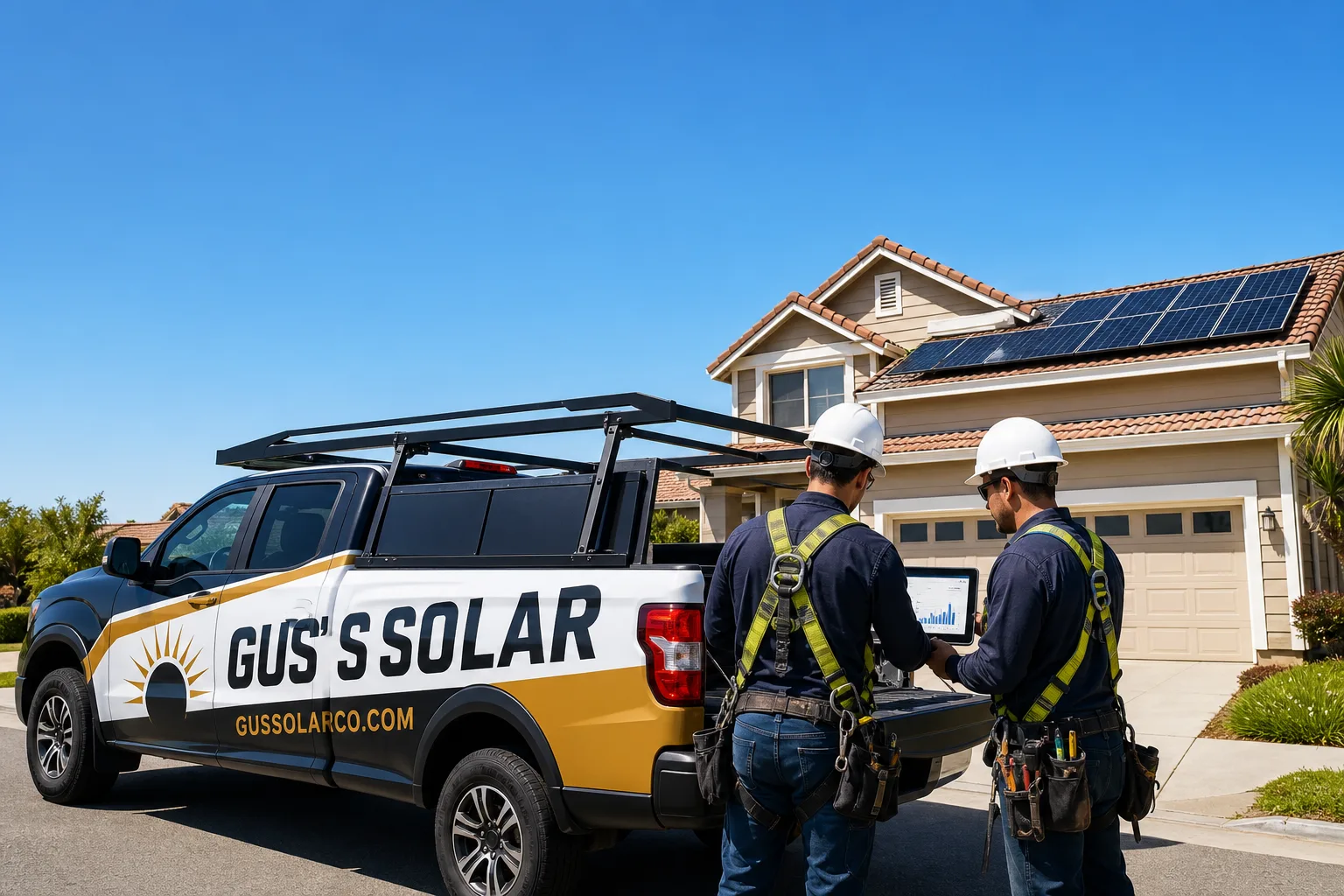
Free bill analysis - bring a power bill, get the production math for your actual roof, panel brands like Qcells and REC compared side by side
If the pitch starts at your door and ends with "sign tonight for the special," sleep on it. The sun will still be there tomorrow; so will we.
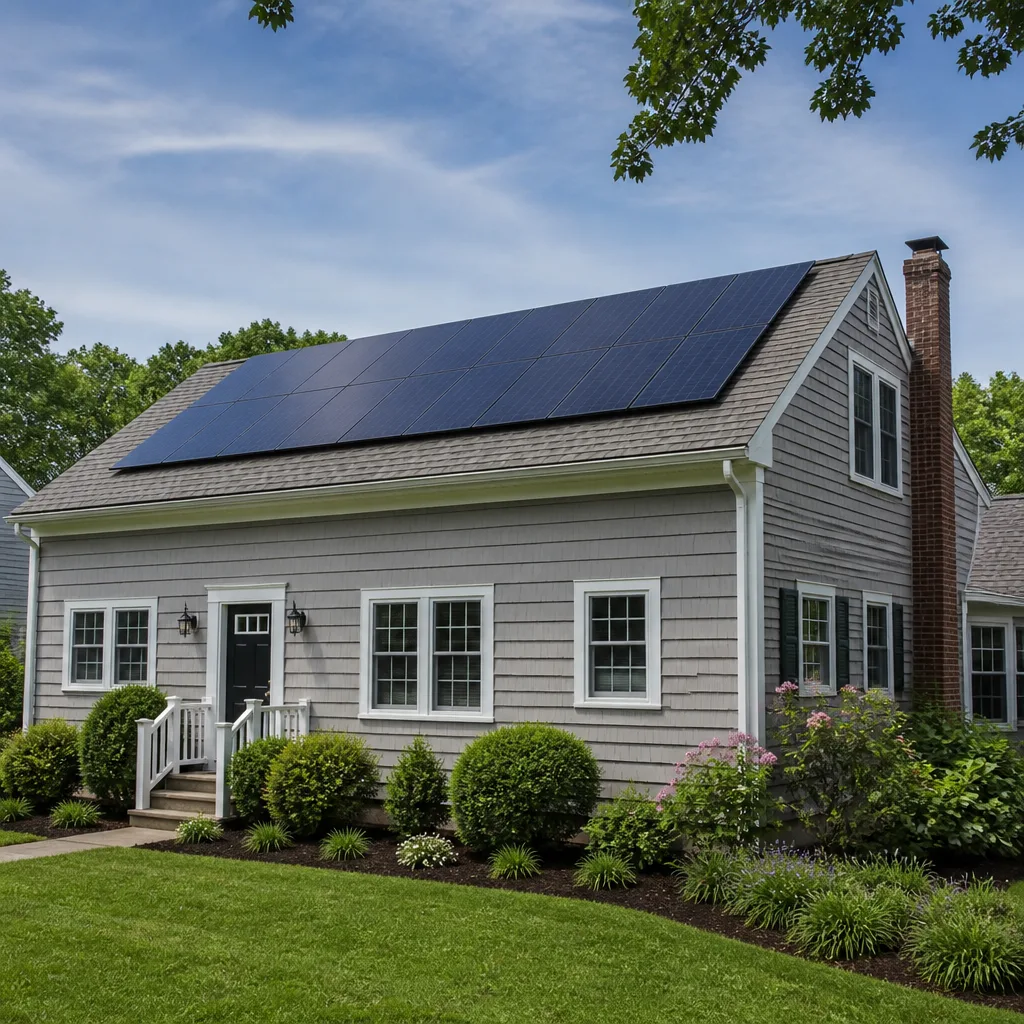
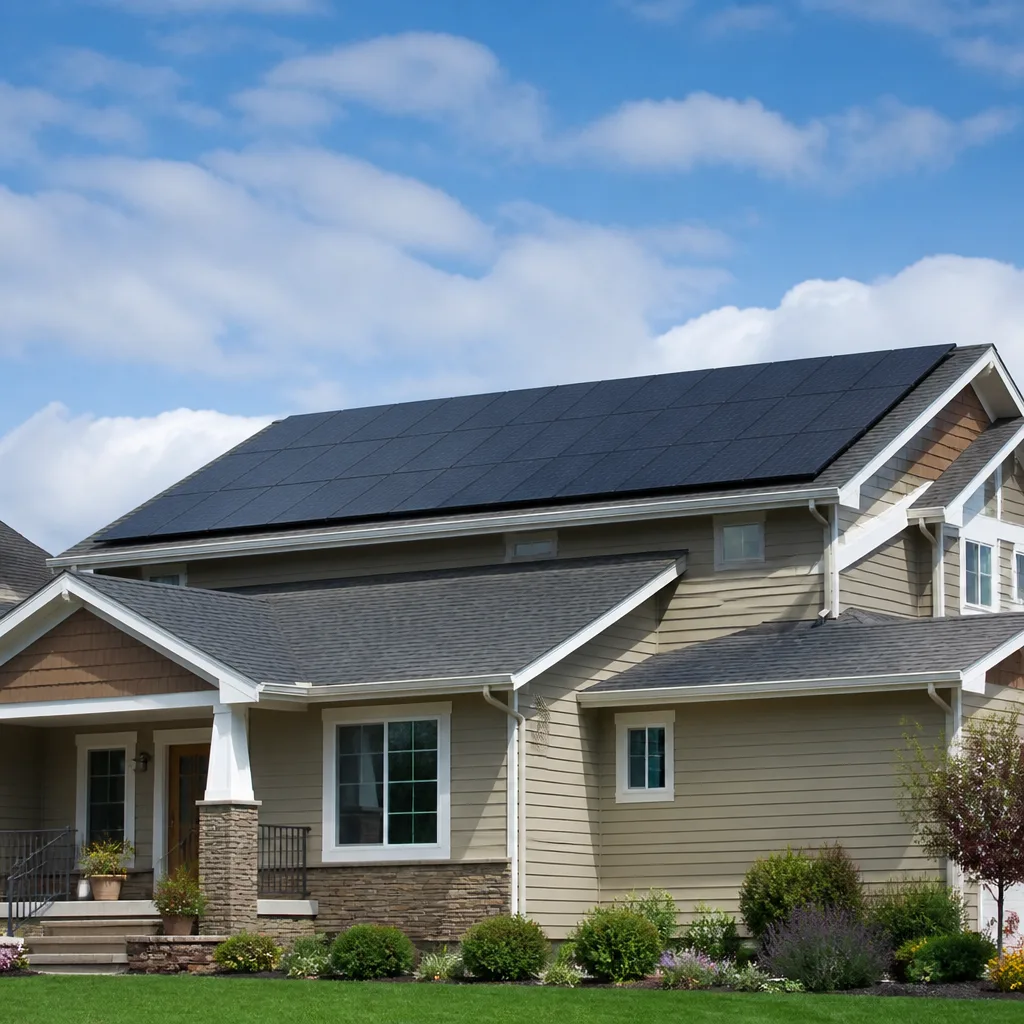
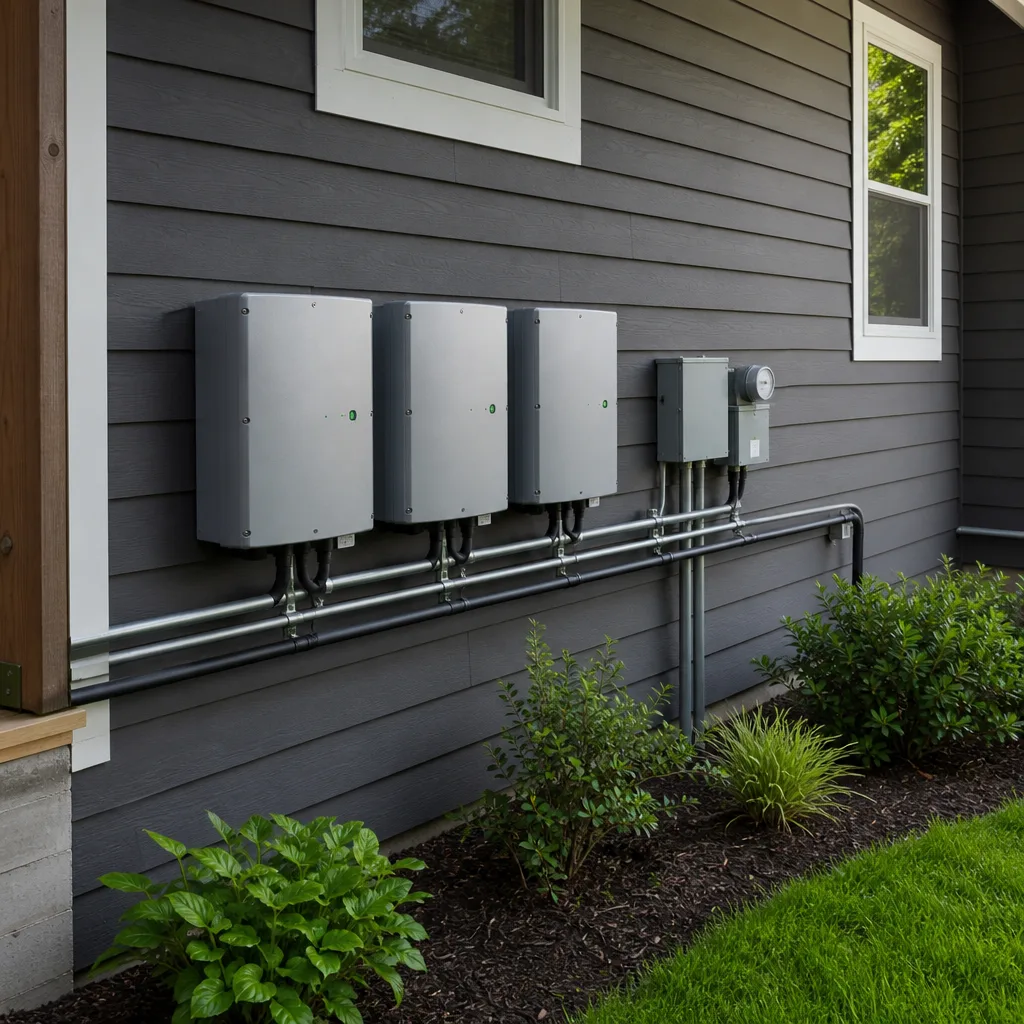
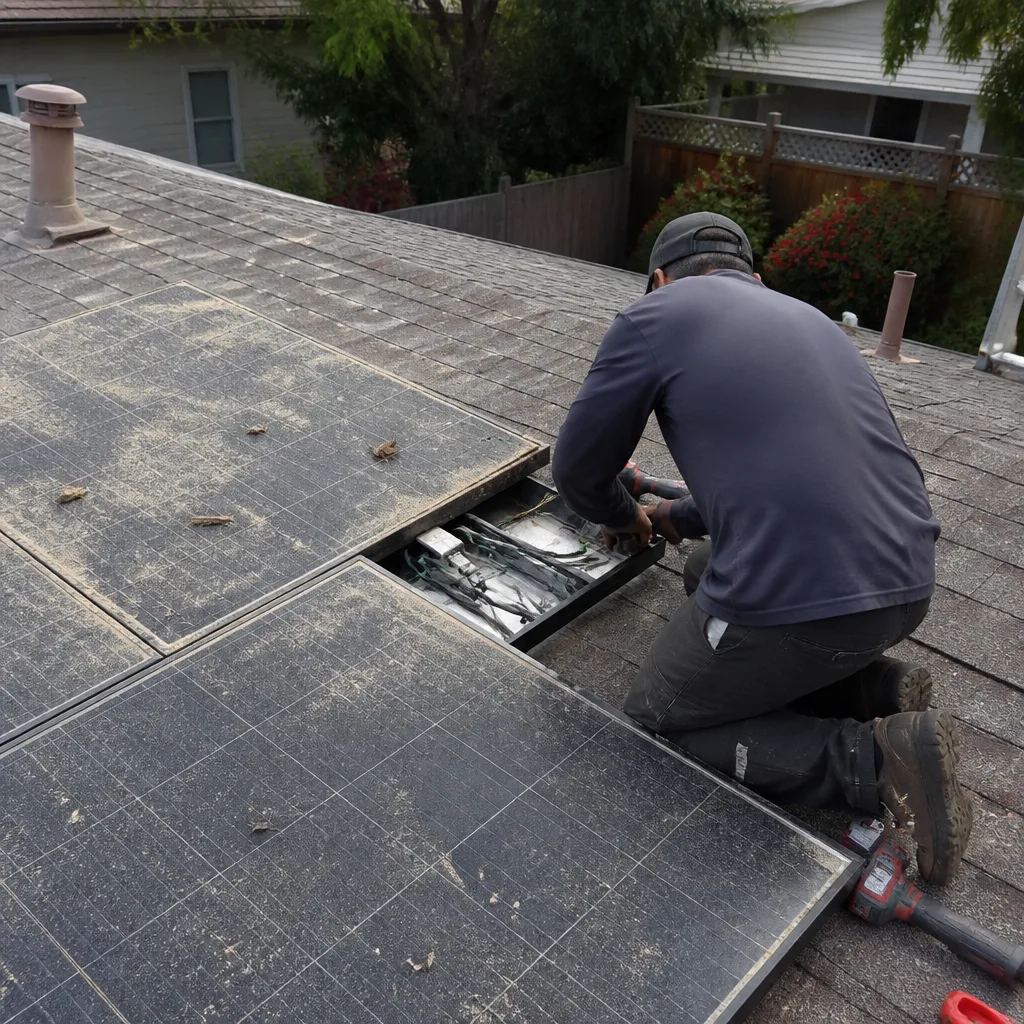 Before
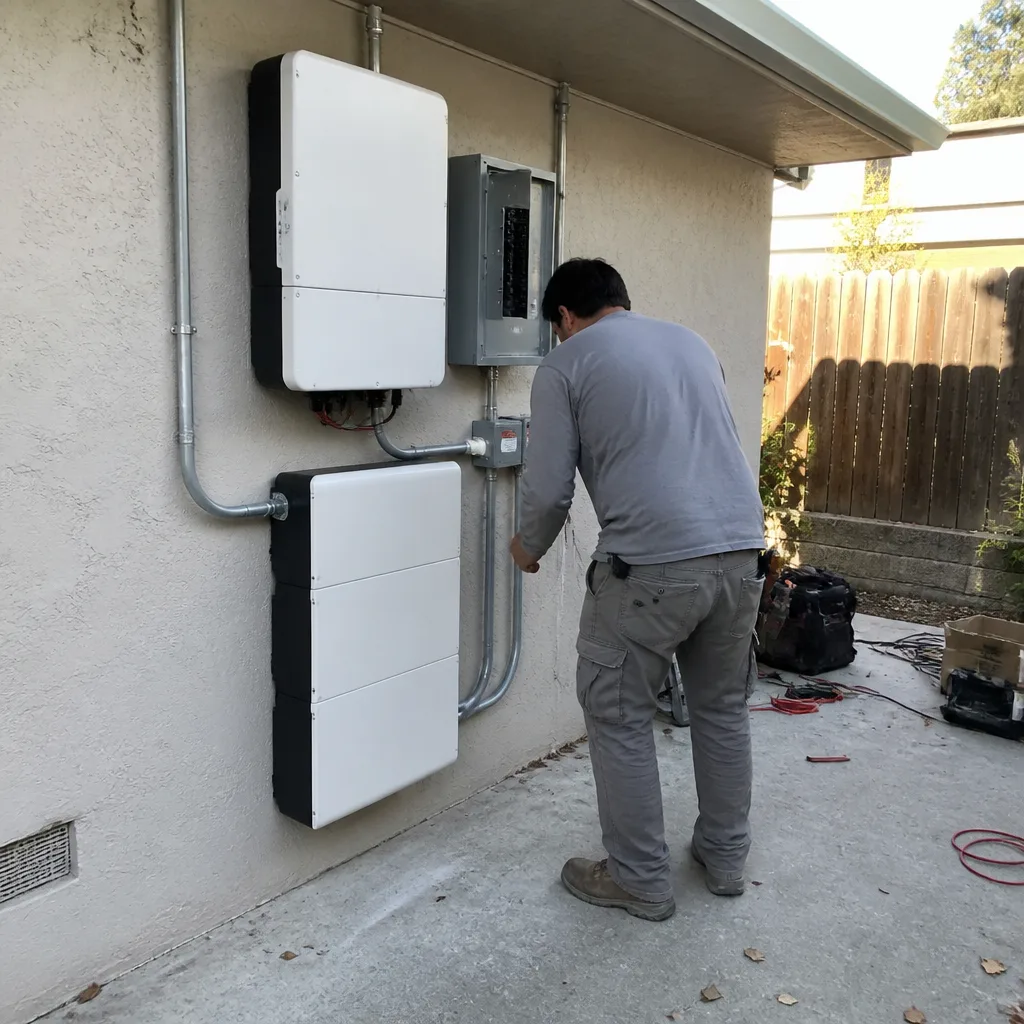 After
After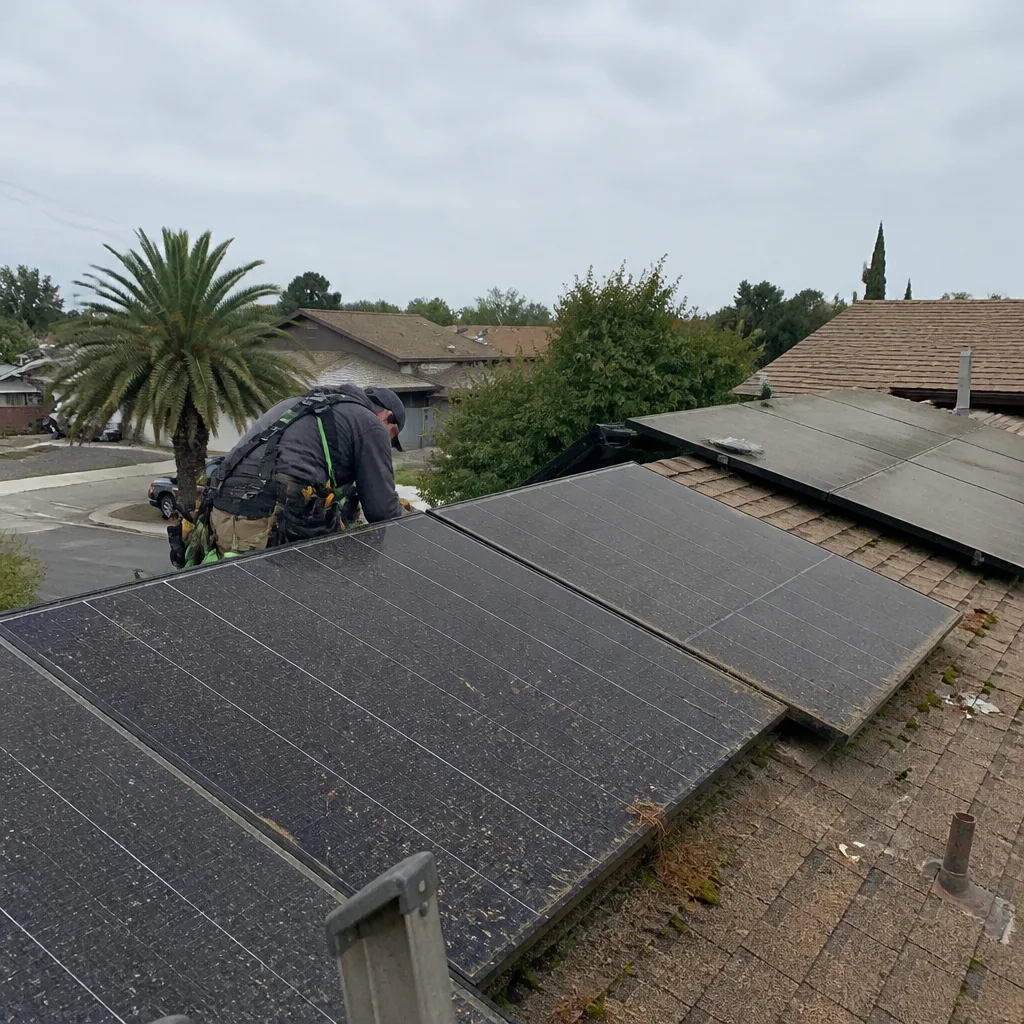 Before
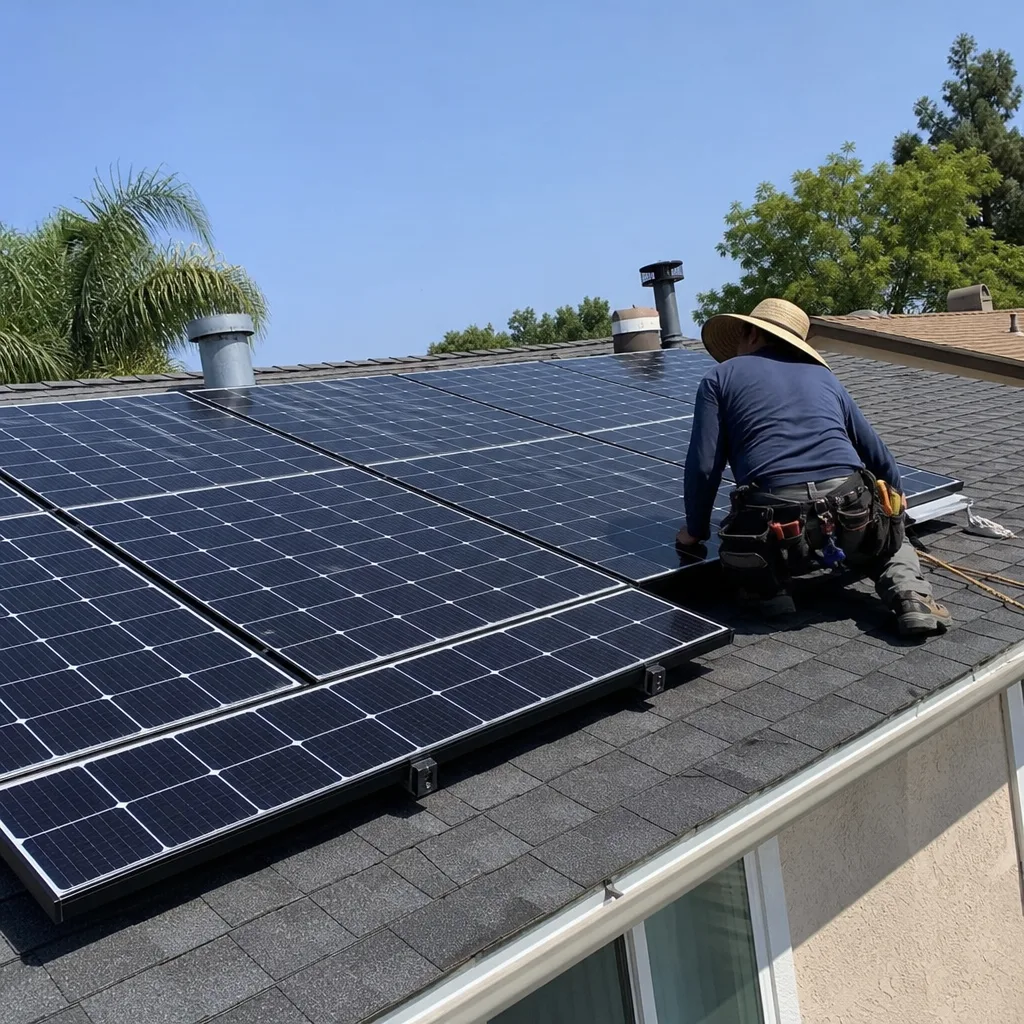 After
After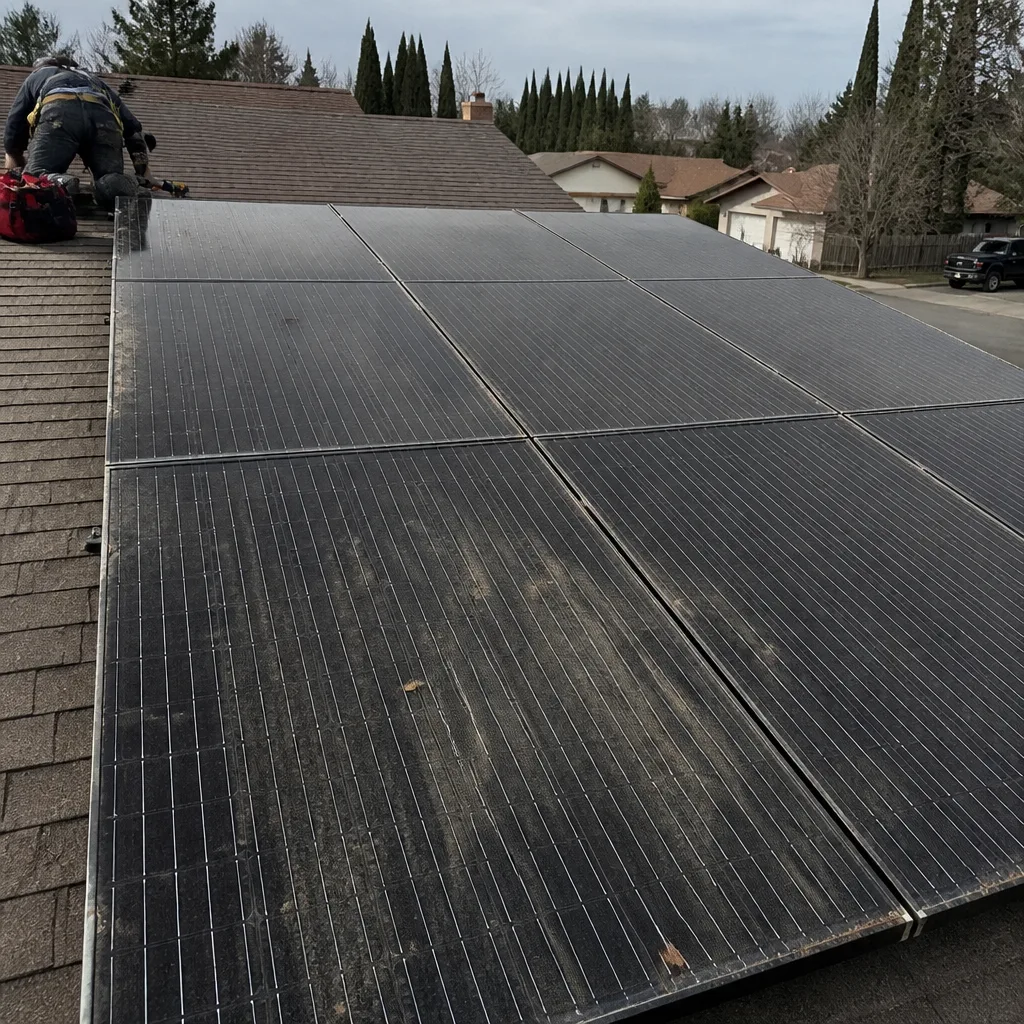 Before
 After
AfterFast, Reliable Solar Panel Installation Across Palm Desert
Solar panel installation in Palm Desert typically runs $15,000 to $38,000 before incentives, and a properly engineered system here can offset 85 to 100 percent of your annual Southern California Edison bill. Gus’s Solar installs rooftop systems across every Palm Desert zip code, 92211, 92255, 92260, and 92261, and we answer the phone when you call. If you’re tired of door-knockers promising one number and delivering another, call Gus Petrakis directly at (877) 550-6892. He’ll quote the year-25 output off your actual bill, not a brochure estimate.
Palm Desert isn’t like coastal California. The same desert sun that makes this one of the best solar markets in the country also pushes rooftop panel temperatures past 150 degrees, and the HOA-governed golf communities here add layers of approval most installers never mention until it’s too late. We handle both, before you sign anything.
Key Takeaways:
- A typical residential Solar Panel Installation in Palm Desert costs $15,000 to $38,000 before the 30% federal tax credit and California incentives.
- Palm Desert’s concrete-tile, low-slope roofs usually need tilted racking to hit optimal production angles, which changes both cost and design.
- HOAs like Indian Ridge, Ironwood, Desert Falls, and Bighorn can legally restrict panel placement on fairway-facing roof planes, and we handle that approval process for you.
- Thermal derating matters here more than almost anywhere in California. We specify modules with temperature coefficients built for 110-degree summers.
- We serve Indian Wells, Rancho Mirage, La Quinta, and Thousand Palms with the same owner-operated crew.
Why Gus’s Solar Is Palm Desert’s Preferred Solar Panel Installation Company
Gus Petrakis founded this company in 2011 and put his name on the truck. He still answers his own phone. When you call about solar in Palm Desert, you will not get a call center three states away. You get Gus, or someone on his crew who knows exactly which HOA in this city requires what documentation.
We’ve been doing Palm Desert installs long enough to know that Indian Ridge plays by different rules than Desert Falls, and that a Spanish-tile roof in a 1990s gated community needs different racking than a 2005 desert-contemporary. That local knowledge is not something a national outfit can fake. Our Google reviews from Palm Desert homeowners mention the same things: we showed up on time, the crew was background-checked and uniformed, and the price we quoted on day one matched the final invoice. No pressure. Take two weeks. The price will be the same.
Our response time to Palm Desert is same-day for emergencies and typically within 48 hours for scheduled consultations and site visits. Whether you’re in a second home off Portola Avenue or a permanent residence near El Paseo, we come out, read your SCE bill, walk the roof, and tell you the truth about what your home can produce.
Our Solar Panel Installation Services in Palm Desert
Solar System Design & Permitting
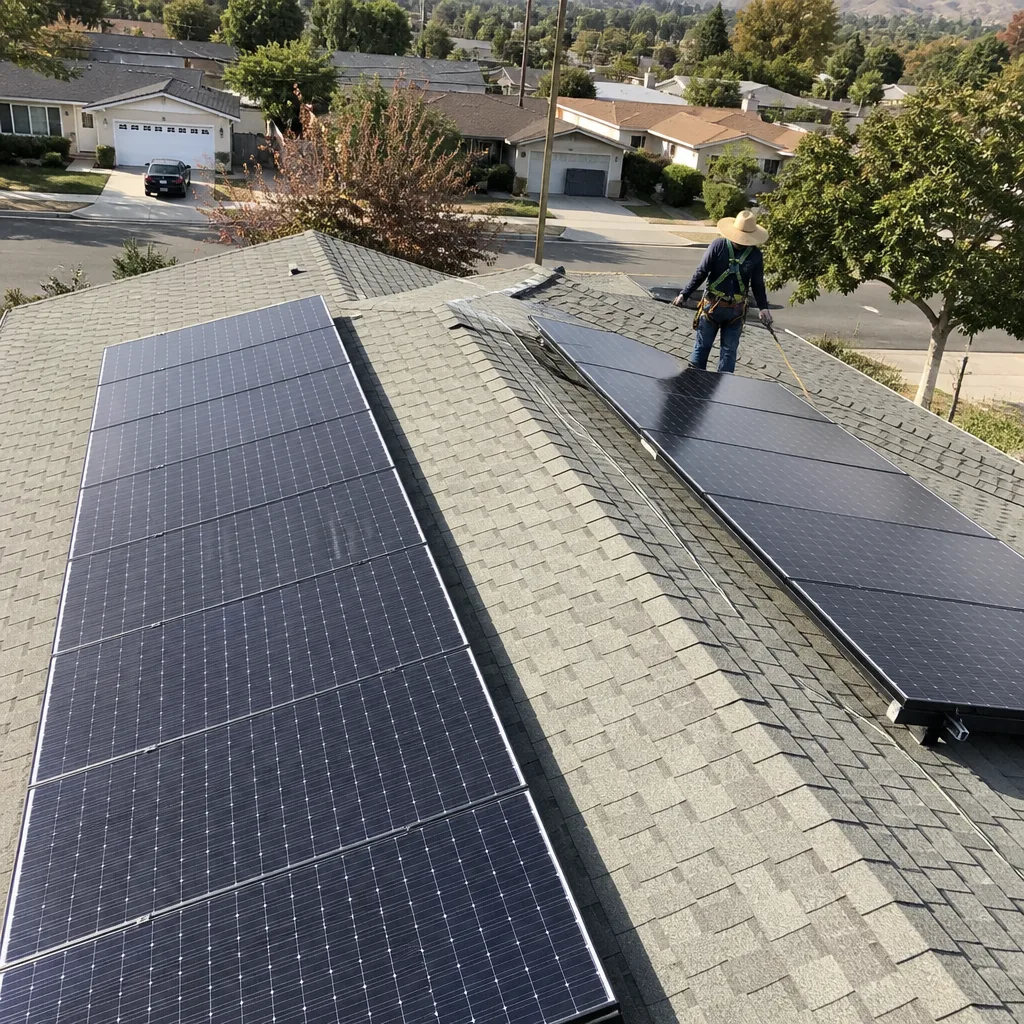
Designing a system for a Palm Desert home starts with your actual utility usage, not a generic spreadsheet. We pull 12 months of SCE history, factor in Palm Desert’s 310 sunny days per year, and then model production using the specific roof plane your HOA will actually approve. The city’s permitting process moves reasonably well, but the Architectural Review Committees in golf communities like Bighorn and Ironwood can add two to six weeks of review time. We submit everything, including the site drawings that prove your panels will not be visible from the shared fairway. That drawing alone has saved dozens of Palm Desert homeowners from rejection letters.
Rooftop Solar Installation
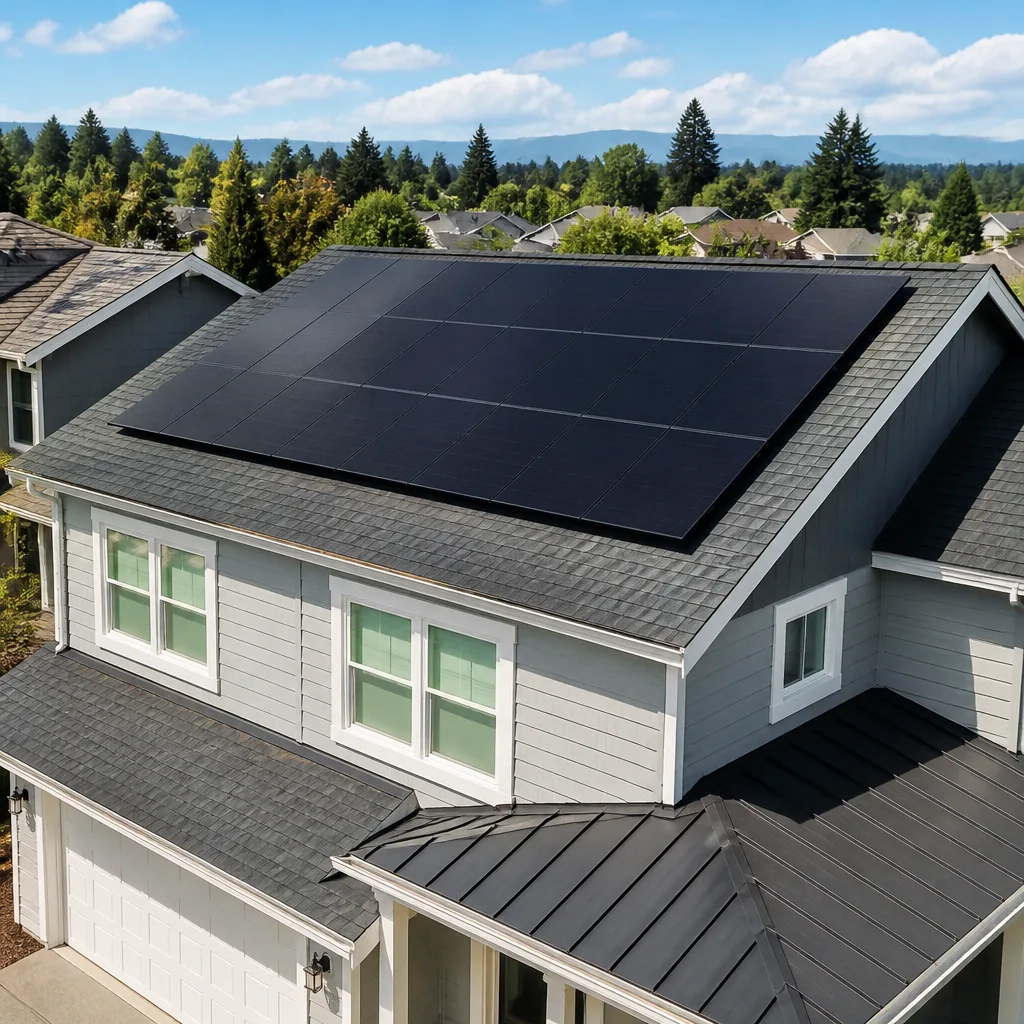
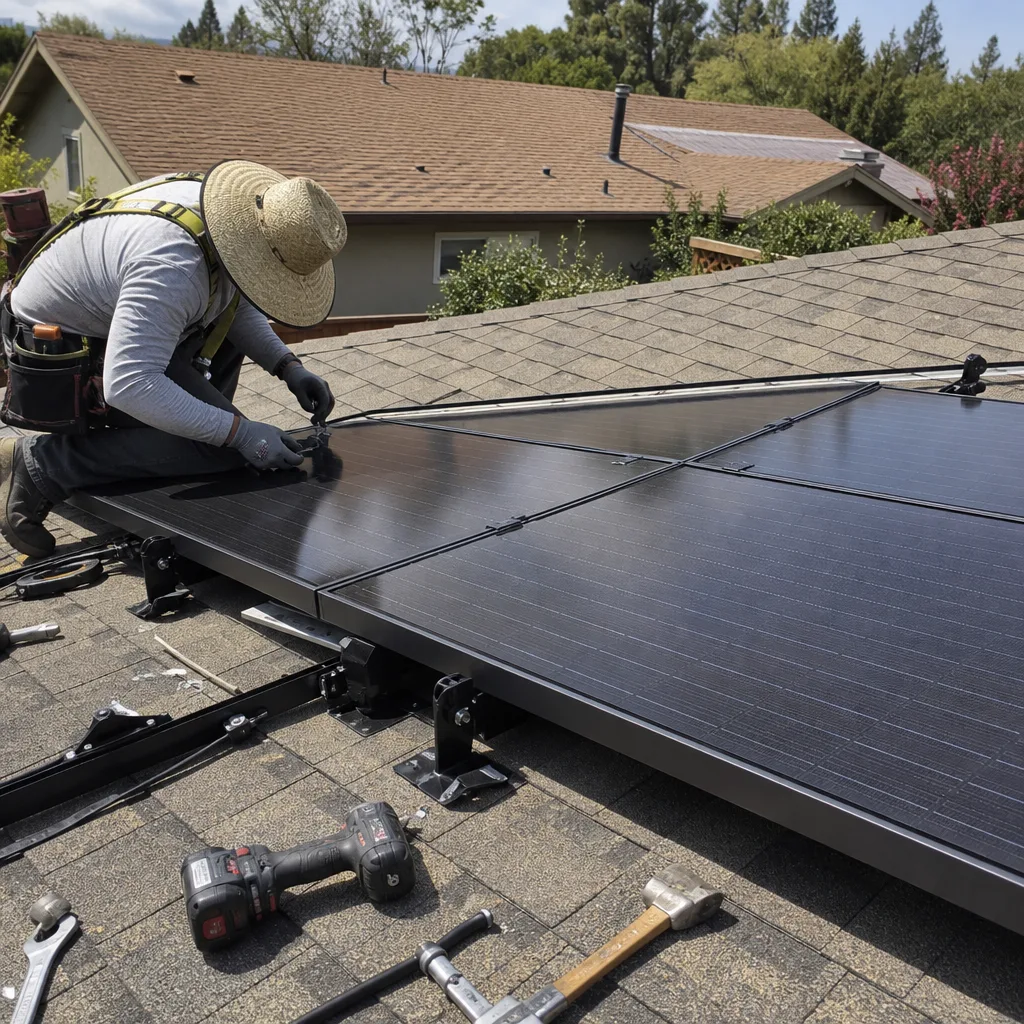
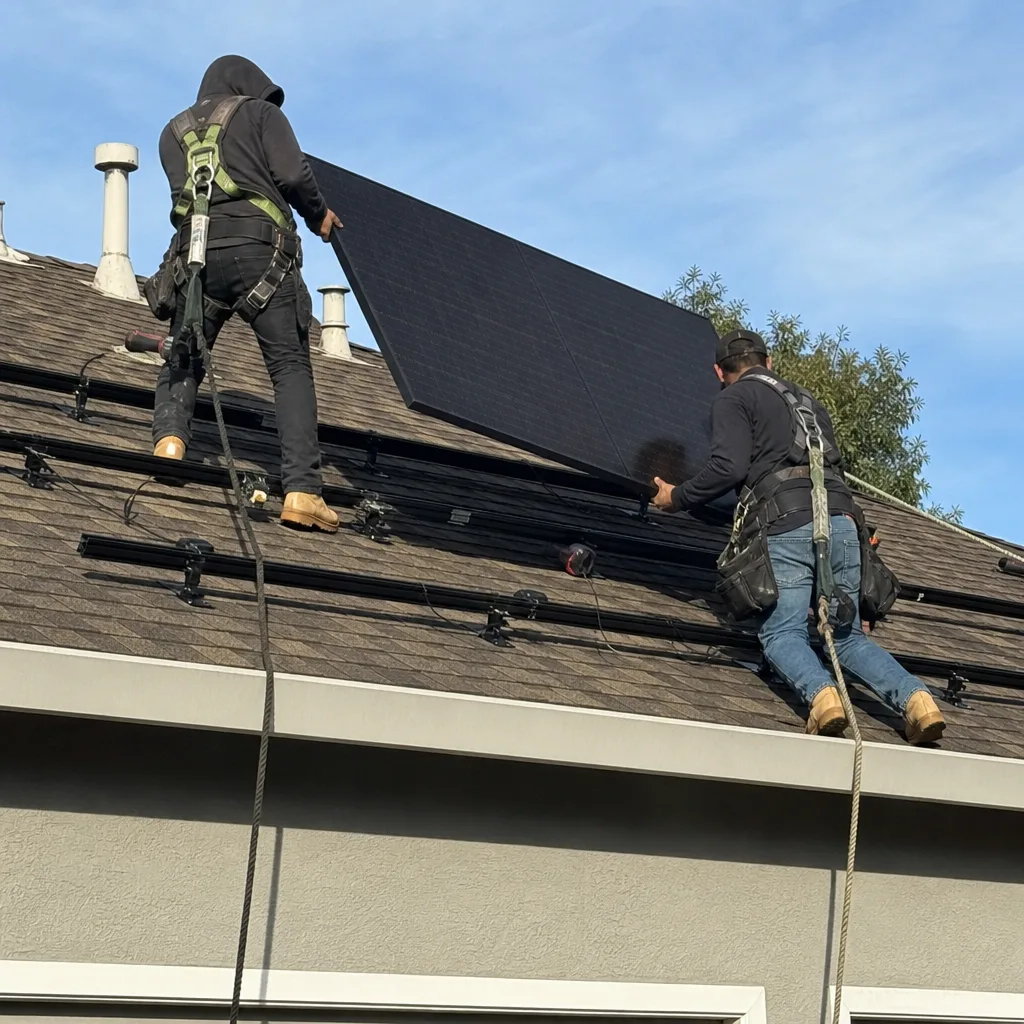
Every rooftop installation in Palm Desert gets engineered for the heat. That means proper flashing on every roof penetration, tilted racking where the low-slope concrete tile demands it, and microinverters or power optimizers rather than a single string inverter that will cook itself on a 115-degree afternoon. Our crew handles the full mechanical and electrical install, from the first rail to the final rapid shutdown test. No subcontractors. The same people you meet at the estimate are the people on your roof.
Roof-Mount & Tile Roof Solar
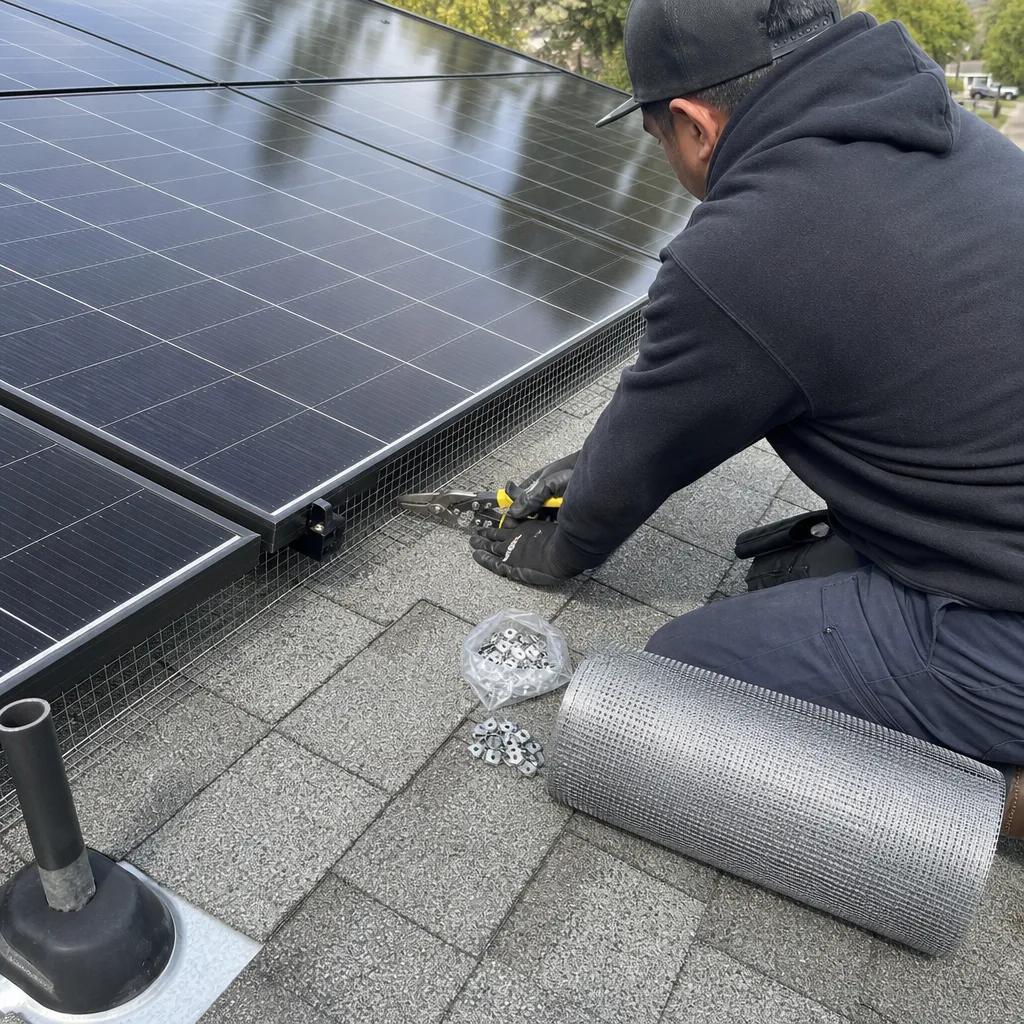
Most Palm Desert homes built between 1980 and 2010 have low-slope or nearly flat concrete-tile roofs. That means the panels need tilted racking to reach an angle that actually captures enough sun. We use racking systems designed for this exact roof type, with tile-replacement mounts where needed. If your roof has 10 to 15 years of life left, we still flash every penetration correctly, and we never leave a conduit run that looks like an afterthought. In communities where the HOA demands panels stay invisible from the street, the rear roof plane on a concrete-tile home is almost always where the array goes.
Solar Panel Replacement
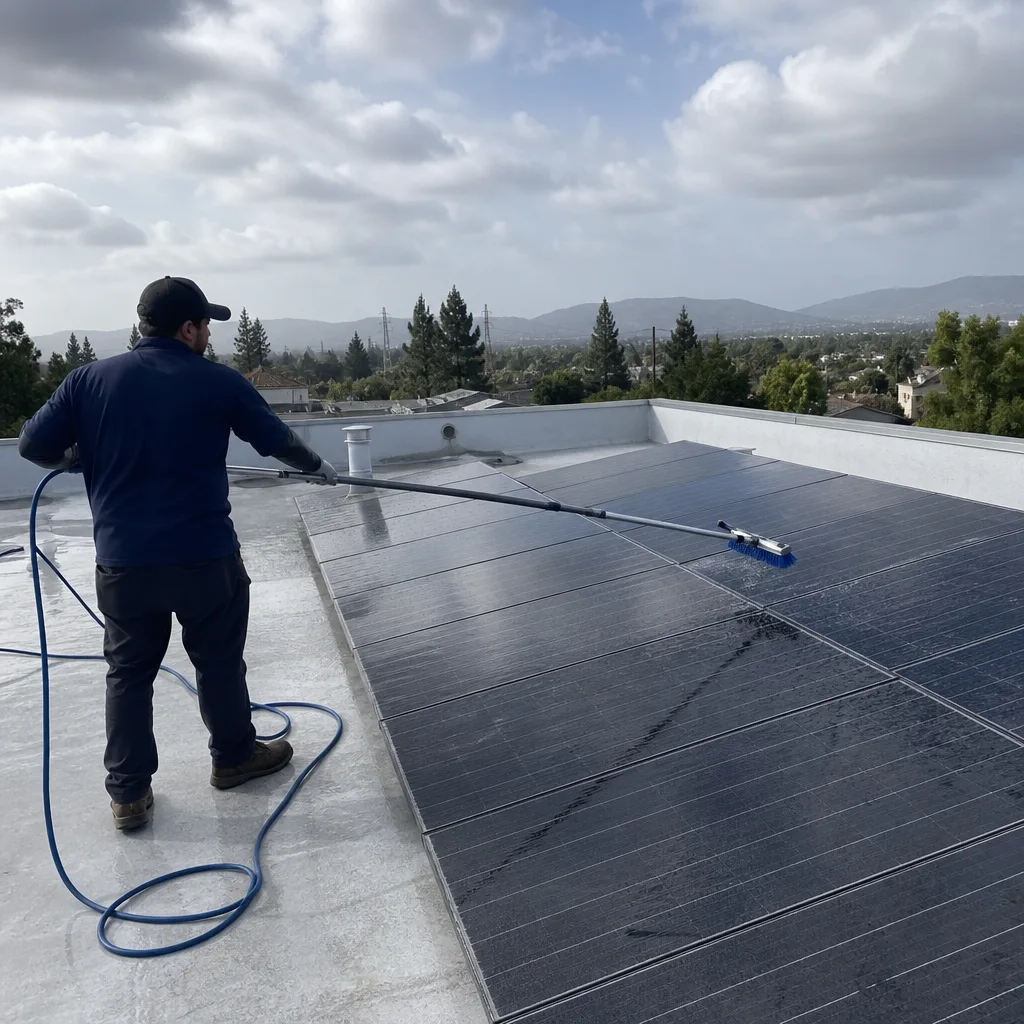
If an existing Palm Desert system has underperforming panels, cracked glass from the monsoon-season windstorms, or a string inverter that keeps tripping in the heat, we replace components with current-generation modules and Enphase or SolarEdge electronics. Many of these homes are second properties, and owners often discover a failed system only when the July SCE bill shows up and it’s triple what it should be. We diagnose, replace, and re-interconnect with SCE properly.
What happens when you call
- 1
A real person answersNo phone trees - you reach a local pro.
- 2
You get an upfront price rangeHonest numbers before anyone is dispatched.
- 3
A background-checked tech heads outLicensed & insured, dispatched right away.
- 4
You approve before work beginsNothing starts until you say go.
Trusted Brands We Service in Palm Desert
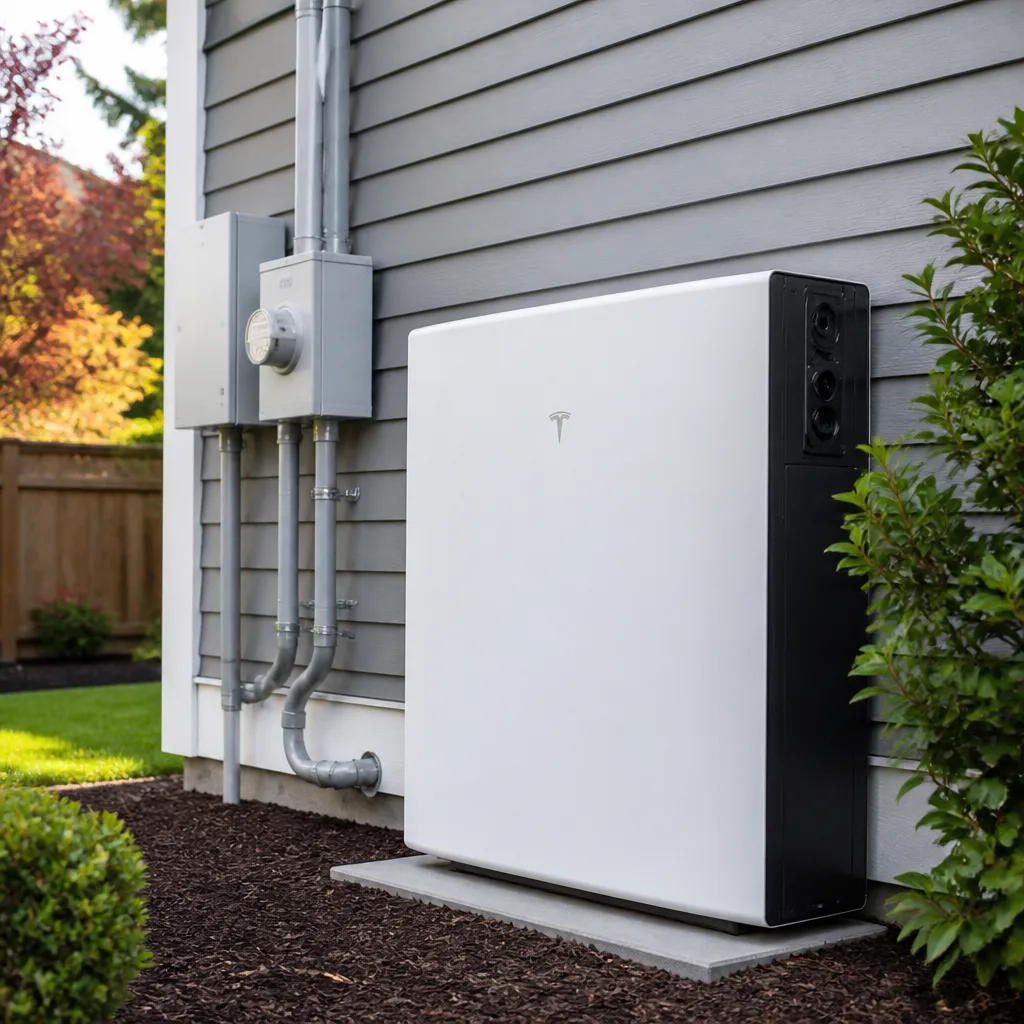
We install and service equipment from Tesla, Enphase, SolarEdge, Qcells, REC, and FranklinWH. For Palm Desert specifically, we tend to recommend Qcells or REC modules paired with Enphase microinverters, because that combination handles rooftop surface temperatures past 150 degrees without degrading the way some string-inverter systems do. We keep common replacement parts and rapid shutdown components in stock locally, which means a failed optimizer in a Thousand Palms or Palm Desert system does not leave you waiting two weeks for a part to ship from a warehouse in Nevada.
Common Solar Panel Installation Problems We See in Palm Desert Homes
- HOA Architectural Review rejection. A homeowner signs a contract, the installer submits a generic site plan, and the Indian Ridge or Desert Falls committee rejects it because panels are visible from the 7th fairway. Now the design changes, the price changes, and the timeline slips. We pull CC&Rs and submit the correct drawings before you sign anything.
- Thermal derating killing projections. A panel spec sheet gives a production number at 77 degrees. On a Palm Desert roof in August, the actual cell temperature is 155 degrees, and output drops about 0.3 to 0.5 percent per degree above 77. If the installer specified a cheap module with a -0.45 percent temperature coefficient, you lose real production every single summer day, year after year.
- String inverter failures on low-slope roofs. One big inverter on the side of a house that bakes in direct afternoon sun from April through October is a known failure point in the Coachella Valley heat. Microinverters under the panels run cooler and fail far less often here.
- Undersized systems for second homes. Palm Desert has a huge number of seasonal residences. The owner is gone all summer, but the AC is set to 82, the pool pump runs, and the SCE bill spikes. If the installer sized the system off winter usage only, the summer offset is terrible. We size off full-year data and tell you exactly what your May-through-September offset will look like.
Pricing for Solar Panel Installation in Palm Desert, CA
A rooftop solar installation in Palm Desert typically runs $15,000 to $38,000 before incentives, depending on system size, roof type, and HOA constraints. A 6 kW system on a standard concrete-tile roof with tilted racking runs roughly $16,000 to $21,000. A 10 kW system with Enphase microinverters and an HOA-mandated rear-roof placement runs $28,000 to $36,000. The 30 percent federal tax credit and California’s net metering program both improve that math. Solar panel replacement in Palm Desert runs $4,500 to $12,000 depending on how many modules and whether the inverter needs swapping too. Tilted racking adds $0.15 to $0.30 per watt compared to a standard flush-mount on a comp shingle roof. Bring a bill, we’ll bring the math. Call (877) 550-6892 for a free estimate. No signature wanted tonight.
We Also Serve Cities Near Palm Desert
Our crew covers the whole Coachella Valley. That includes Indian Wells, Rancho Mirage, La Quinta, and Thousand Palms. If you’re in any of those cities and tired of solar sales pitches, call (877) 550-6892 and ask for Gus. Same owner, same crew, same no-pressure math built off your actual bill.
Serving Palm Desert, CA - Our Local Coverage Area
We’re based in the Palm Desert area and know this community well. Use the map below to see our service coverage - if you’re nearby, we can almost certainly help.
FAQs - Solar Panel Installation in Palm Desert
Your HOA’s Architectural Review Committee can require flush-mount placement on a rear roof plane to keep panels invisible from shared fairways and streets, and California Civil Code Section 714 only protects you if that restriction provably cuts production by less than 10 percent or adds more than $1,000 in cost. We pull your CC&Rs, calculate that production impact, and submit the required site drawings before you sign a contract. Call (877) 550-6892 and we’ll handle the whole approval process.
Yes, every panel produces less power as it heats up, and around 0.3 to 0.5 percent per degree above 77 degrees Fahrenheit. On a 115-degree Palm Desert afternoon with rooftop surface temps at 155 degrees, that’s a 20 to 25 percent production drop. The fix is specifying modules with a low temperature coefficient, around -0.30 percent per degree, rather than a cheaper -0.45 percent panel. That difference is worth real money on every SCE bill over 25 years, and we build it into every quote.
Almost always, yes. Most Palm Desert homes from the 1980s through 2000s have low-slope or nearly flat concrete-tile roofs, and tilted racking is required to reach the 25 to 35 degree angle that captures enough sun year-round. Expect tilted racking to add $0.15 to $0.30 per watt compared to a standard flush-mount, and it also creates the space for proper cooling airflow under the panels, which helps offset thermal derating. For an honest quote with the math spelled out, call (877) 550-6892.
HOAs in golf communities like Bighorn and Desert Falls care because their design guidelines are built around preserving fairway sightlines, so they will often force panels to a north-facing rear roof plane. North-facing panels in Palm Desert produce about 20 to 30 percent less than south-facing ones, which does stretch out your payback period, but the desert’s high peak sun-hours still make most north-facing arrays viable. We run the production model both ways and show you the actual dollar difference before you accept a placement. Call (877) 550-6892 for a free estimate with both scenarios.
Under SCE’s current net metering rules, your system earns export credits at the time-of-use rate when you send power back to the grid, and those credits apply against what you pull in the evenings and during high-use periods. For a seasonal Palm Desert home, that means your spring and fall overproduction builds a credit balance that offsets the summer AC load even if the house sits empty for weeks at a time. We size the system using your actual 12-month usage history, not a guess based on square footage. Bring a bill, we’ll bring the math. Call (877) 550-6892 for an exact figure.
Written by Gus Petrakis, Owner at Gus’s Solar, serving Palm Desert and the Coachella Valley.