

Free bill analysis - bring a power bill, get the production math for your actual roof, panel brands like Qcells and REC compared side by side
If the pitch starts at your door and ends with "sign tonight for the special," sleep on it. The sun will still be there tomorrow; so will we.
 Before
 After
After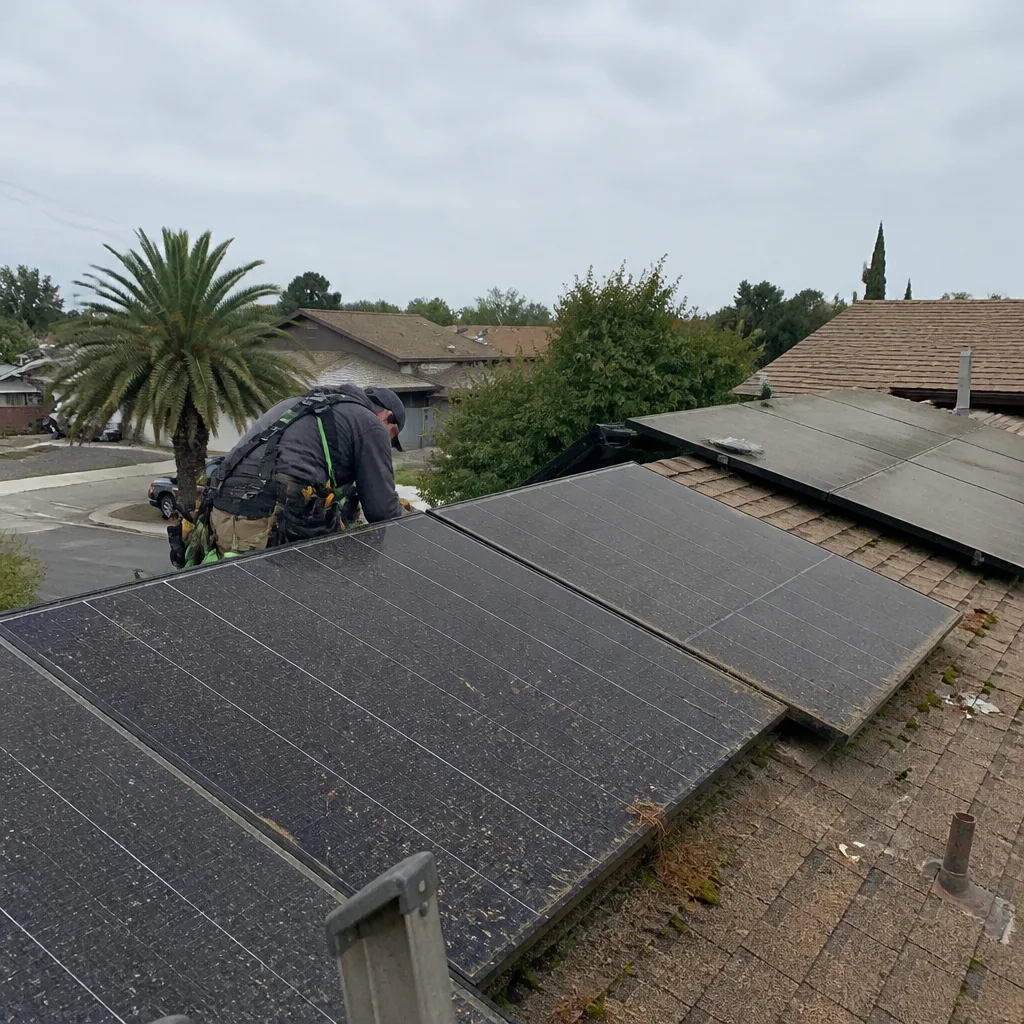 Before
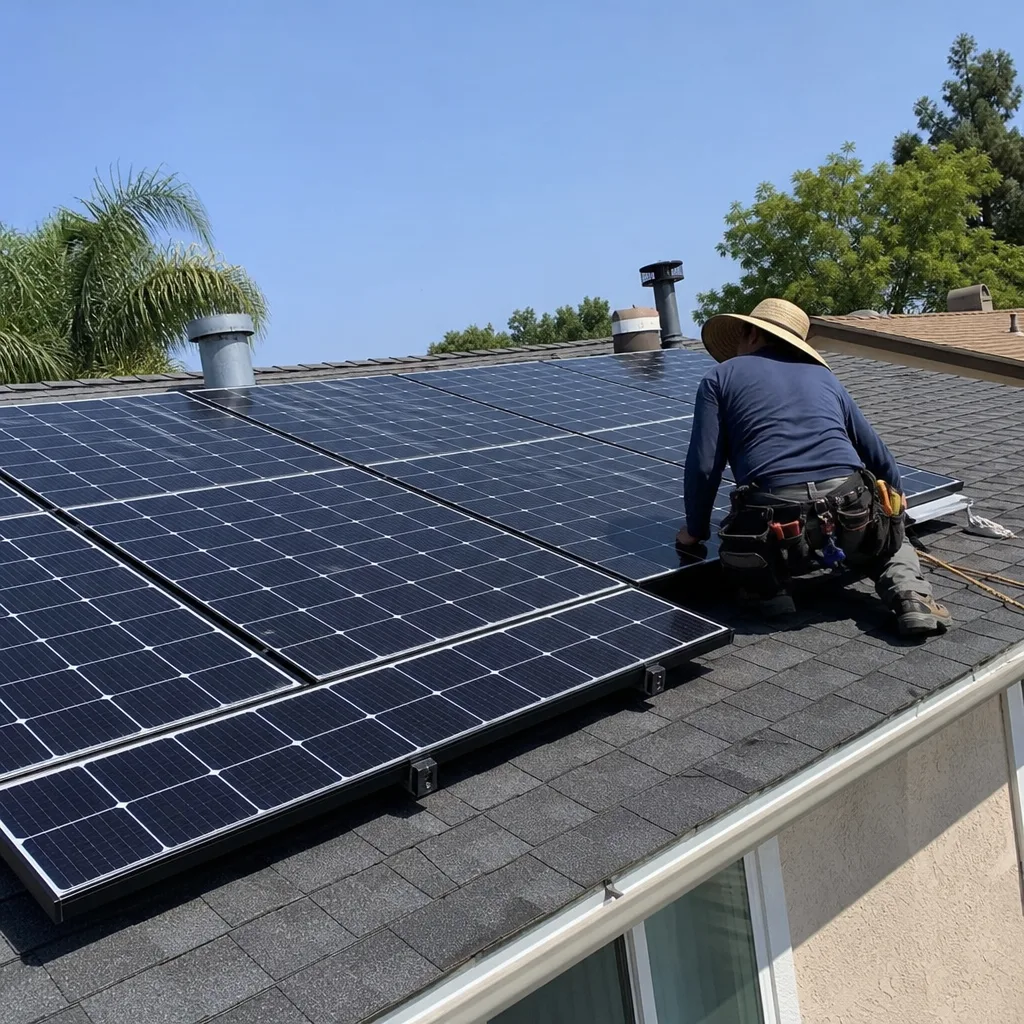 After
After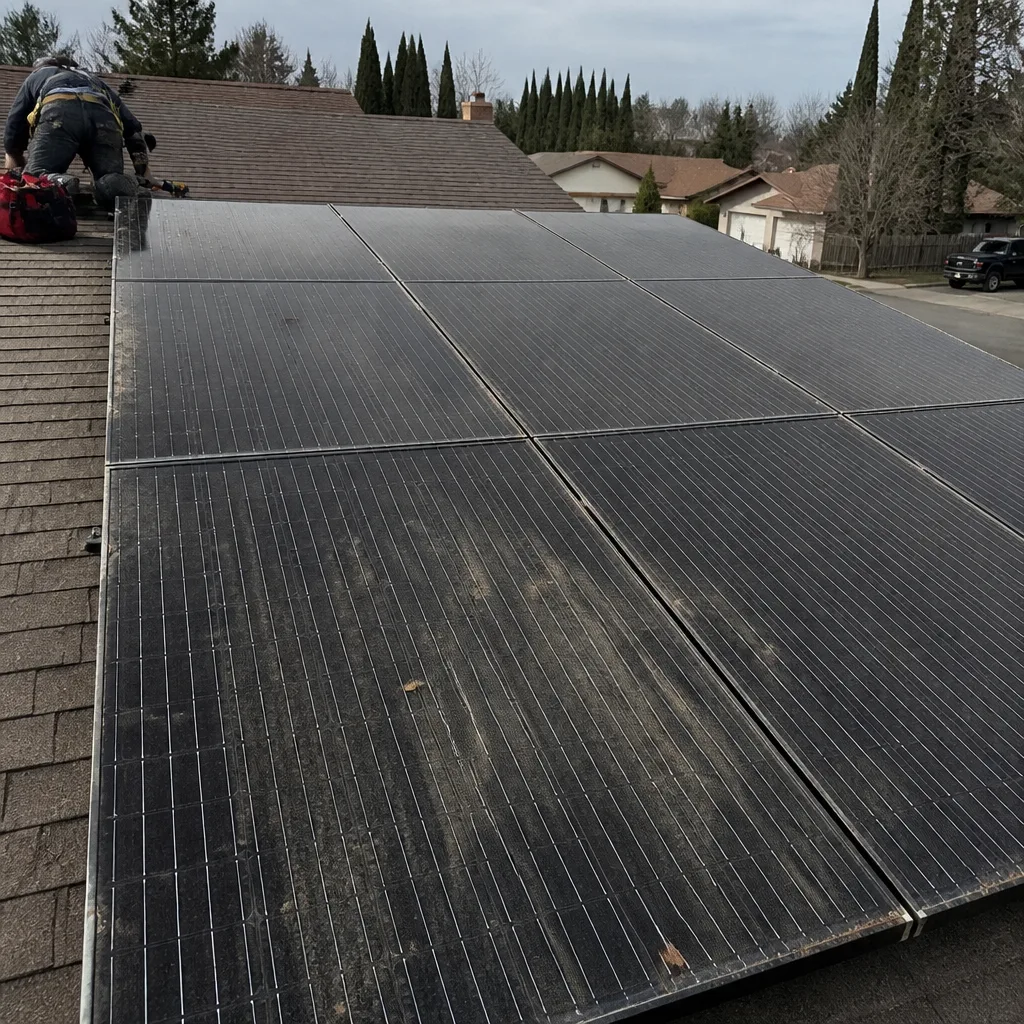 Before
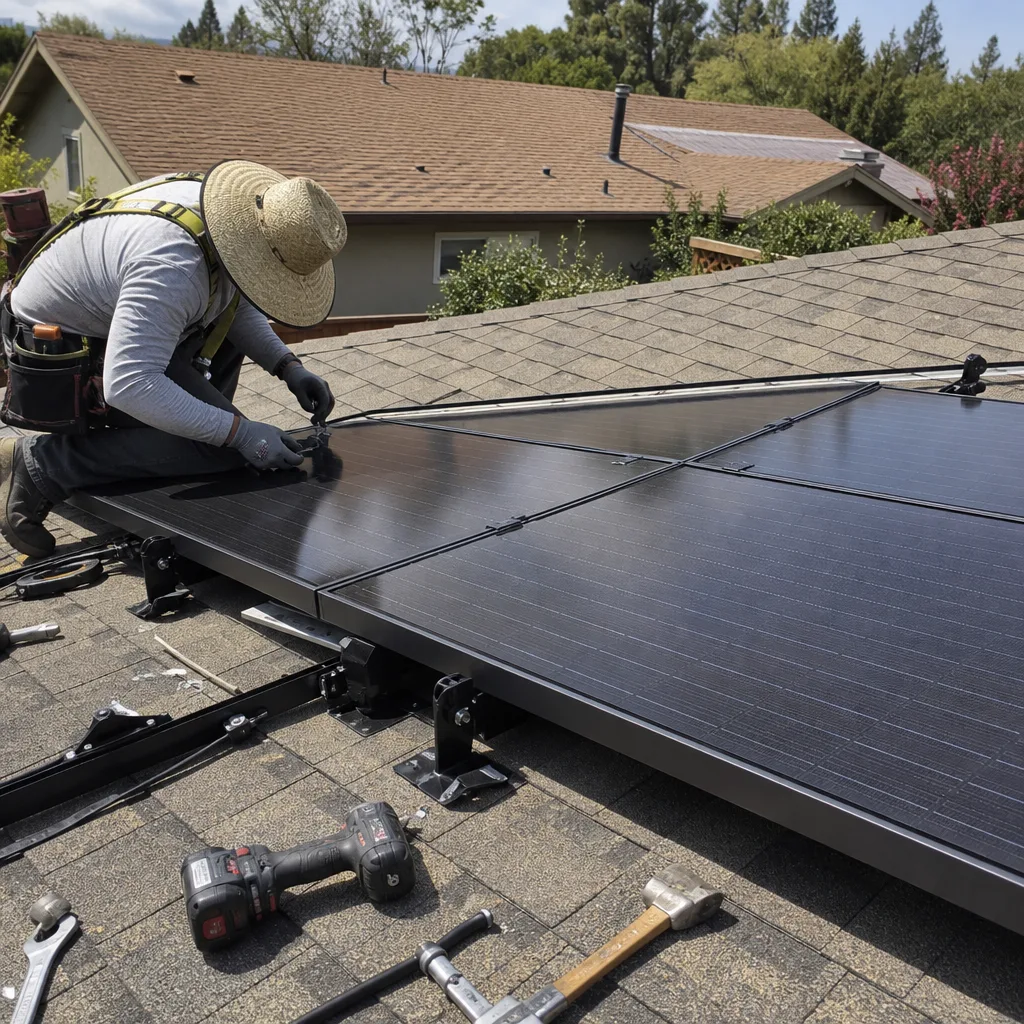 After
AfterFast, Reliable Solar Panel Cleaning Across Sugar Land
Solar panel cleaning in Sugar Land typically costs $150-$350 for a standard residential array, and most jobs are done the same week. That’s the straight answer. What actually matters here is that Sugar Land’s master-planned communities, live oak pollen, and Gulf humidity create a soiling pattern you won’t see in most Texas suburbs. Our crew knows the difference. We’ve been cleaning arrays in First Colony, Telfair, and New Territory long enough to know which roofs collect crepe myrtle debris and which ones bake pollen into a film that cuts production by 8-12%. Call (877) 550-6892 and we’ll give you a real quote, not a brochure number.
Why Gus’s Solar Is Sugar Land’s Preferred Solar Panel Cleaning Company
Gus Petrakis founded this company in 2011, and his name is on the truck. That matters in Sugar Land, where HOAs keep contractors accountable and homeowners have already been burned by out-of-state crews that vanish the morning after the job. We’re not that crew. We show up in uniform, background-checked, and we answer the phone when you call.
Our Sugar Land customers keep calling us back for one reason: we clean panels like we’d clean our own roof. No shortcuts, no pressure to sign a maintenance contract before we even look at the array. If you’re in 77479 or 77498, we can usually have a crew out within 48 hours. In 77487 and 77496, figure 2-3 business days depending on the week.
Every job carries the 90-Day Done Right Promise, in writing. If the cleaning isn’t right, Gus makes it right. One call brings him back, and he does not hand the work to a subcontractor. The crew you see on your roof is our crew.
Our Solar Panel Cleaning Services in Sugar Land
Residential Panel Cleaning
Residential panel cleaning in Sugar Land runs $150-$300 for most single-family homes, though larger two-story arrays in New Territory or Greatwood with complex hip-and-gable rooflines may run $250-$400. We use deionized water and soft brushes, never abrasive scrub pads. The goal is to remove the film, not etch the glass. For homes with HOA-mandated rear slope installations, we adjust our access plan accordingly; those arrays collect pollen faster than street-facing panels ever will.
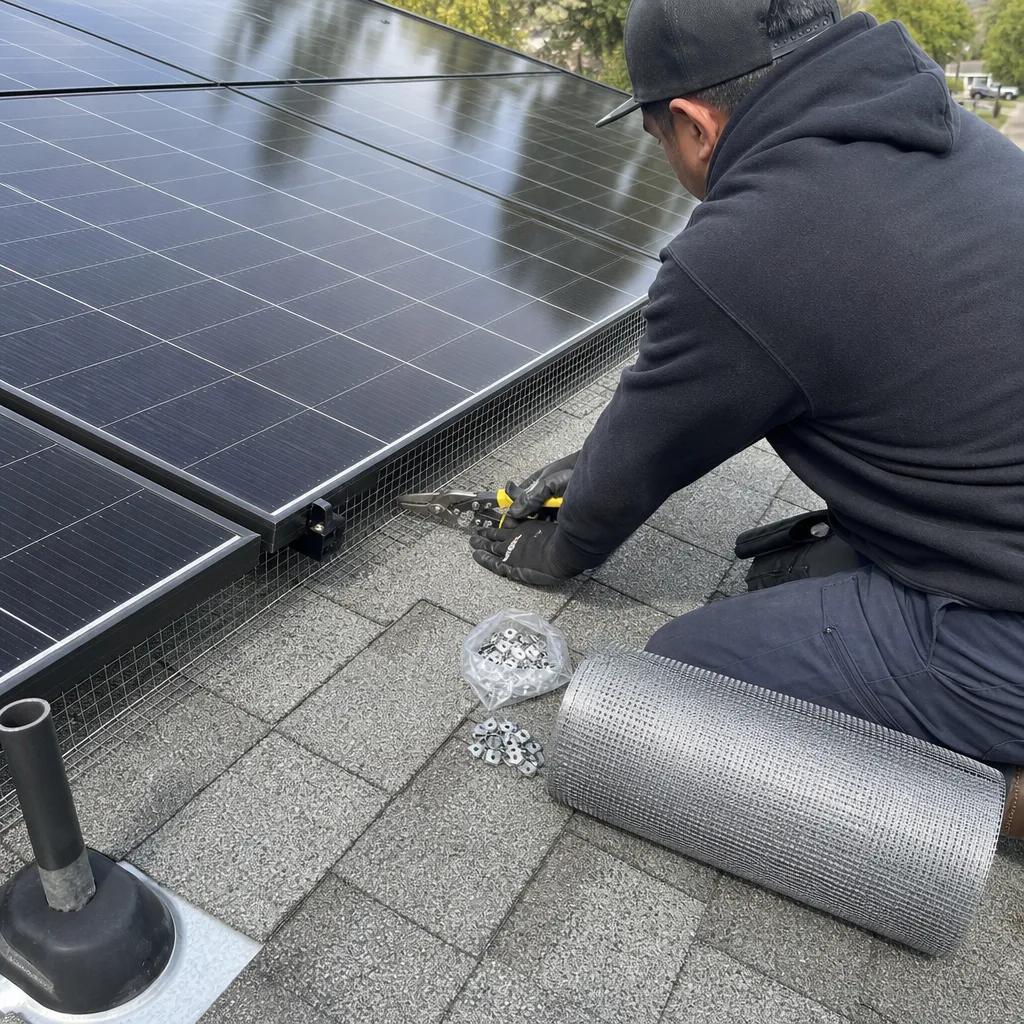
Bird & Critter Guard Installation
Pigeons and grackles are a real problem in Sugar Land, especially on two-story brick homes with deep eave overhangs that give birds a shaded ledge. We install galvanized steel mesh critter guard around the array perimeter, sealing the gap between panel and roof. Installation typically runs $8-$12 per linear foot in Sugar Land, and we do not reuse flimsy plastic guard that squirrels chew through in a season. If birds have already nested, we clear the area safely before we start cleaning.
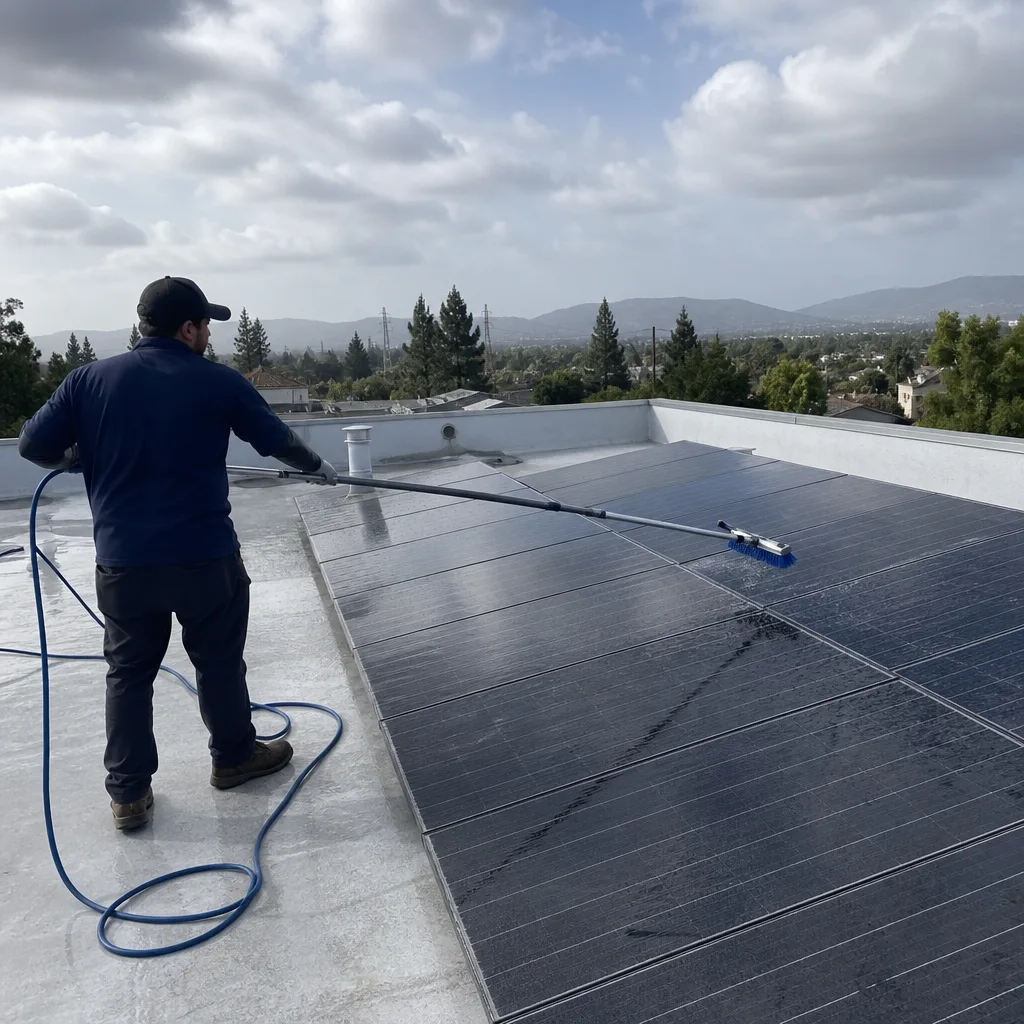
Debris & Soiling Removal
Live oak pollen, construction dust from ongoing master-planned build-out, and fine silt from Sugar Land’s clay-heavy soil all settle on panels differently than plain dirt. This is the service most Sugar Land homeowners need and do not know they need. We remove the caked layer that rain alone will not wash off, paying attention to the lower corners of each panel where dust wicks upward with morning humidity. A standard debris removal on a 20-40 panel array runs $200-$325.
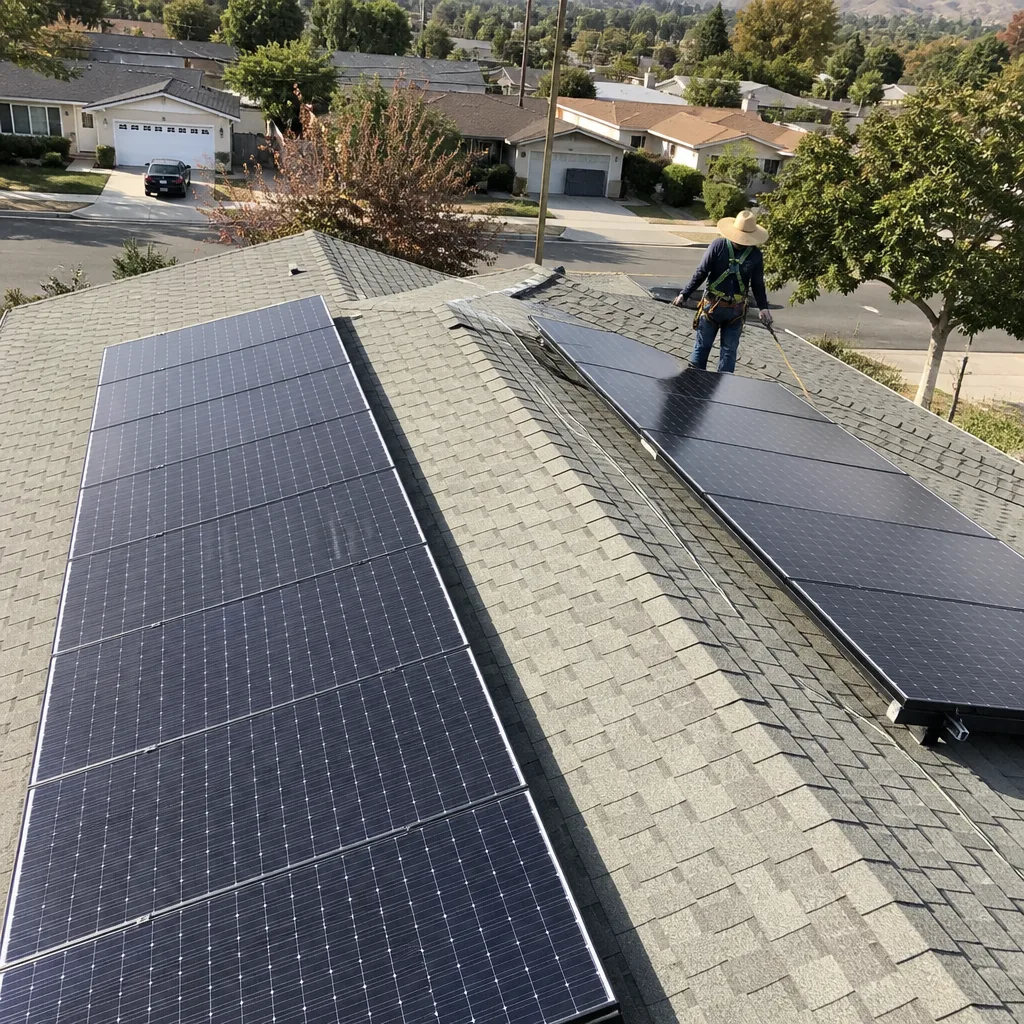
Post-Storm Panel Cleaning
After a Gulf storm rolls through Fort Bend County, panels end up with leaf litter, mud splatter, and sometimes asphalt shingle grit. Our post-storm cleaning gets your array back to full output within days, not weeks. We also check for shifted panels or loose mounting hardware while we’re up there. In Sugar Land, post-storm cleaning starts at $200 and is worth every dollar if you’re watching your true-up statement climb.
What happens when you call
- 1
A real person answersNo phone trees - you reach a local pro.
- 2
You get an upfront price rangeHonest numbers before anyone is dispatched.
- 3
A background-checked tech heads outLicensed & insured, dispatched right away.
- 4
You approve before work beginsNothing starts until you say go.
Trusted Brands We Service in Sugar Land
We clean and maintain arrays built with SunPower, REC, Qcells, and Panasonic panels, and we work with Enphase microinverters on a weekly basis across Sugar Land’s neighborhoods. Because we’re closely tied to our Solar Panel Cleaning team, we do not have to special-order basic cleaning supplies or common connector components. For Sugar Land homeowners with REC or SunPower systems still under manufacturer warranty, we can also document panel condition so any warranty claims stay clean. That documentation matters when production dips and the manufacturer asks for proof of maintenance.
Common Solar Panel Cleaning Problems We See in Sugar Land Homes
- HOA rear-slope soiling - Panels placed on secondary roof slopes to satisfy Architectural Control Committee rules collect crepe myrtle debris and live oak pollen far faster than street-facing arrays. We see production losses of 8-12% on these installations between cleanings.
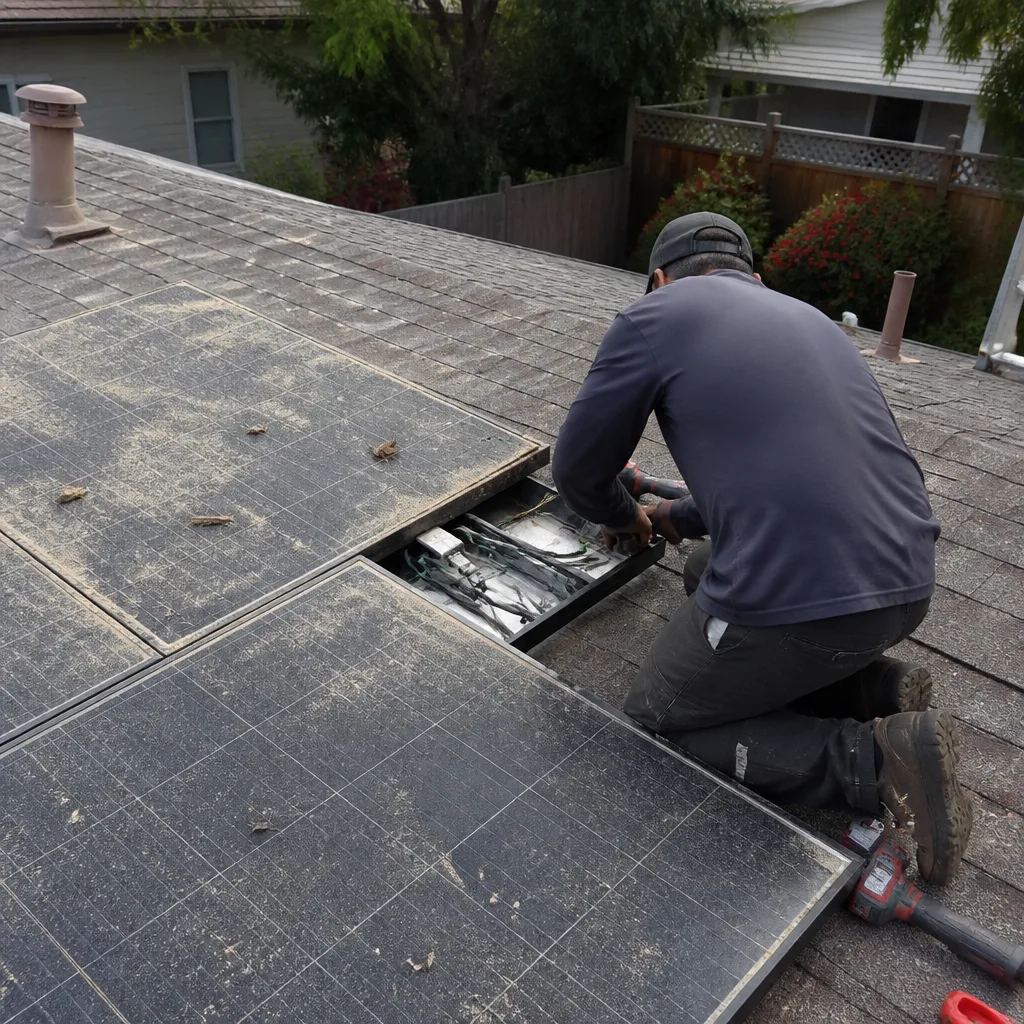
- MC4 connector corrosion - Sugar Land’s Gulf humidity gets into MC4 connectors and combiner boxes within 3-5 years. A cleaning crew that never looks underneath the panel misses this, and by the time output drops noticeably, you’ve already lost a season of production.
- Construction dust film - Sugar Land is still building. Telfair, New Territory expansion, and infill around First Colony throw fine silt into the air, and humid mornings set it onto panel glass like a glaze. Rain will not remove it; mechanical cleaning is the only fix.
- Bird nesting under two-story arrays - Grackles and pigeons love the shaded gap under panels on large brick two-story homes. Nesting blocks airflow, raises panel temperature, and piles acidic droppings onto the roof deck. We remove nests and install guard the same visit.
Pricing for Solar Panel Cleaning in Sugar Land, TX
Here’s what you can expect to pay in Sugar Land:
- Residential cleaning (up to 25 panels): $150-$250
- Residential cleaning (26-40 panels, two-story): $250-$400
- Commercial or large residential arrays (40+ panels): $400-$800+
- Bird & critter guard installation: $8-$12 per linear foot
- Post-storm cleaning and debris removal: $200-$350
- Scheduled cleaning plans (quarterly or semi-annual): $120-$220 per visit
What changes the number is roof complexity, panel count, and whether the array sits on a steep hip-and-gable section in Telfair or a low single-story ranch in Stafford. We quote the price before we start, and the number you hear is the number you pay. No trip charge inside our own county, and a free estimate comes with every call. Bring us your last electric bill and we’ll show you what dirty panels are actually costing you.
We Also Serve Cities Near Sugar Land
Our crews work throughout Fort Bend County, including New Territory, Stafford, Greatwood, and Richmond. If you’re just outside the Sugar Land city limits but still inside the county, call (877) 550-6892 and ask; there’s no trip charge inside our county, and we’ll work you into the schedule.
Serving Sugar Land, TX - Our Local Coverage Area
We’re based in the Sugar Land area and know this community well. Use the map below to see our service coverage - if you’re nearby, we can almost certainly help.
FAQs - Solar Panel Cleaning in Sugar Land
Yes, cleaning is not restricted, and your HOA cannot prevent maintenance under Texas Property Code §202.010. What your HOA’s Architectural Control Committee likely controlled was where the panels were installed in the first place – many Sugar Land arrays are tucked onto rear slopes to stay ‘not visible from the street.’ That placement affects how fast they soil, not whether you can clean them. If you’re unsure, we can tell you what we see on similar homes in your neighborhood. Call (877) 550-6892 for a straight answer.
Most Sugar Land homes benefit from cleaning every 6-9 months, not once a year. Live oak pollen season runs February through April, and construction dust is nearly constant in areas still building out. Homes on rear-slope HOA placements should lean toward the 6-month schedule; arrays with full south exposure can often go 9 months. After the first cleaning, we’ll tell you what we actually found on the glass, and you can set a schedule from there instead of guessing.
Yes, directly. Sugar Land sits inside CenterPoint Energy’s territory within ERCOT’s deregulated market, so your solar credits are calculated against your specific retail plan’s buyback rate – which can be anywhere from 9 to 16 cents per kWh depending on your contract. If a soiling loss of 10% costs you 1,200 kWh over a year, that’s roughly $108-$192 in lost credits at Sugar Land’s retail rates. Cleaning pays for itself faster here than in areas with lower buyback rates. That’s the math we do before we quote anything.
Yes, every time. Sugar Land’s Gulf humidity corrodes MC4 connectors and combiner boxes within 3-5 years, and we’ve caught failing connections on arrays in First Colony that were losing 5-7% of output before the homeowner noticed anything. A basic visual cleaning that ignores connectors is a half-job. We check them, document what we find, and tell you if a replacement is needed. No upsell, just information.
Yes. Telfair’s hip-and-gable rooflines are steep enough that we bring fall-protection gear and use soft-wash equipment from the roof edge where possible. We do not walk on the panels, ever. We clean from the perimeter, use deionized water to avoid hard-water spotting on dark glass, and we check the roof flashing before and after. If your array was installed on a complex slope to satisfy the HOA, we’ve cleaned dozens just like it and know how to reach it without tearing up shingles. Call (877) 550-6892 and we’ll tell you exactly how we’d approach your roofline.
Why Sugar Land Solar Panel Cleaning Is Different Here
Sugar Land’s master-planned communities – First Colony, Telfair, New Territory – empower HOA Architectural Control Committees under Texas Property Code §202.010 to require panels be ‘not visible from the street.’ That means cleaning crews in Sugar Land often work on arrays deliberately tucked onto rear hip-roof slopes or low-visibility gable sections, not the prime south-facing street side. Those rear slopes catch morning shade, hold moisture longer, and collect pollen and crepe myrtle debris at a rate street-facing arrays never see. Generic once-a-year cleaning advice does not apply here. Your schedule should be based on where your HOA forced the panels to go, not where they should have been installed.
In First Colony, our crew cleaned a 32-panel REC array on a 2004 brick two-story where the HOA had forced the install onto a rear west-facing hip slope to keep panels off the street view. The shaded morning azimuth and accumulated live oak pollen had cut production by nearly 11%, but after a deionized rinse and bird-guard check, the Enphase microinverters reported a 9% kWh offset recovery on the next true-up statement. That’s the difference between a real cleaning and a rinse job.
Builders in Sugar Land rarely install rapid shutdown-compliant disconnects that are easy to isolate for cleaning, so our crews must navigate complex roof geometries to safely power down arrays before we begin. That adds labor and requires a crew that actually understands the equipment. It’s part of why we train our people on Enphase, SolarEdge, and Tesla systems specifically – Sugar Land homes run on those brands more than anything else.
And here’s the thing no one tells you: Sugar Land’s Gulf humidity causes MC4 connector and combiner-box corrosion within 3-5 years. A cleaning that skips connector inspection misses early production losses that compound month after month. We inspect. We document. We tell you what we saw, even when it means you do not need to call us again for another nine months. That’s the honest way to run a cleaning business, and it’s the only way Gus has ever done it.
If you want a cleaning schedule that reflects your actual roof, your HOA’s placement rules, and your real CenterPoint retail-rate math, call (877) 550-6892. Estimates are free, we answer the phone today, and the price will be the same tomorrow. Take two weeks to think about it if you want. The quote holds.
Written by Gus Petrakis, Owner at Gus’s Solar, serving Sugar Land, TX.