
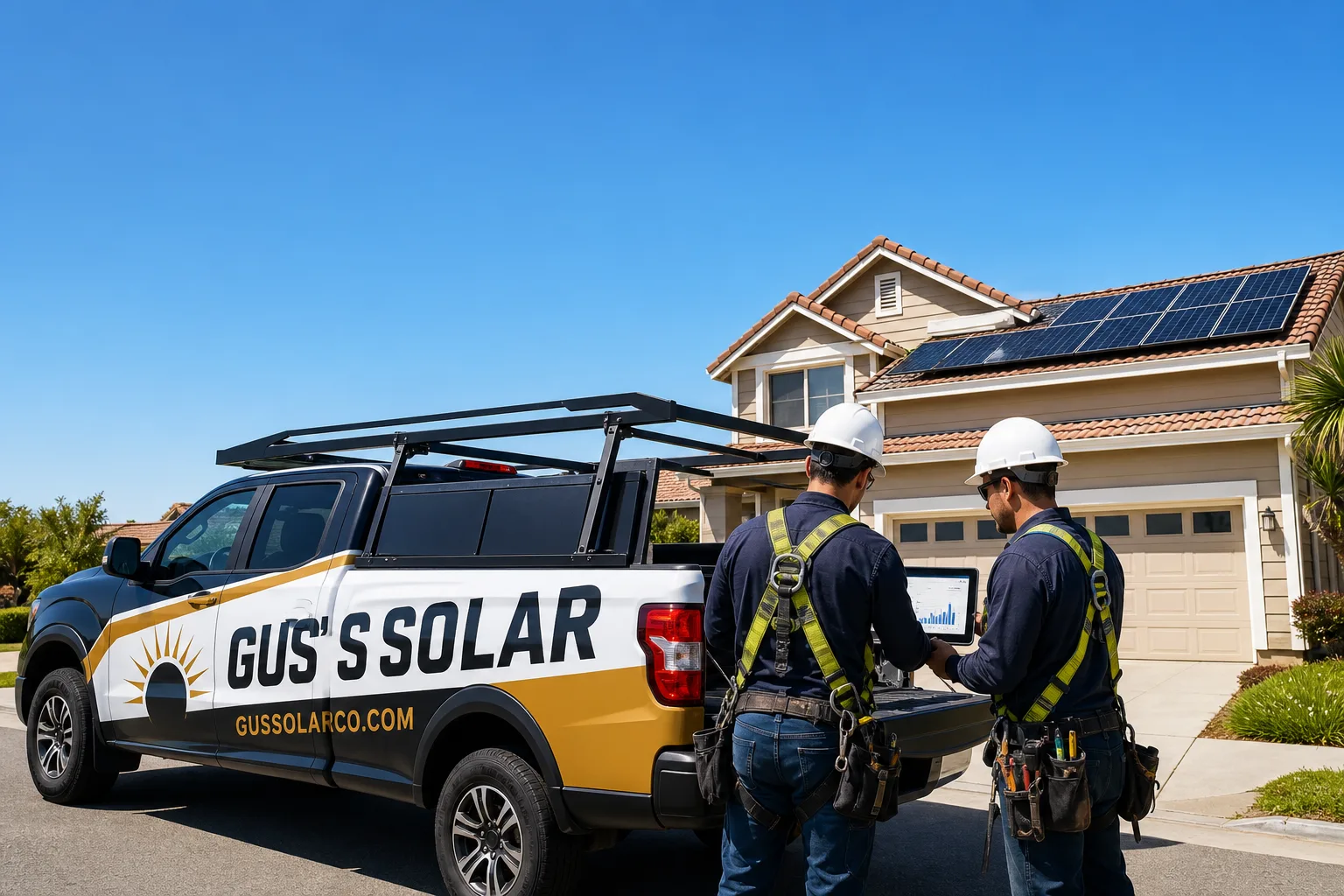
Free bill analysis - bring a power bill, get the production math for your actual roof, panel brands like Qcells and REC compared side by side
If the pitch starts at your door and ends with "sign tonight for the special," sleep on it. The sun will still be there tomorrow; so will we.
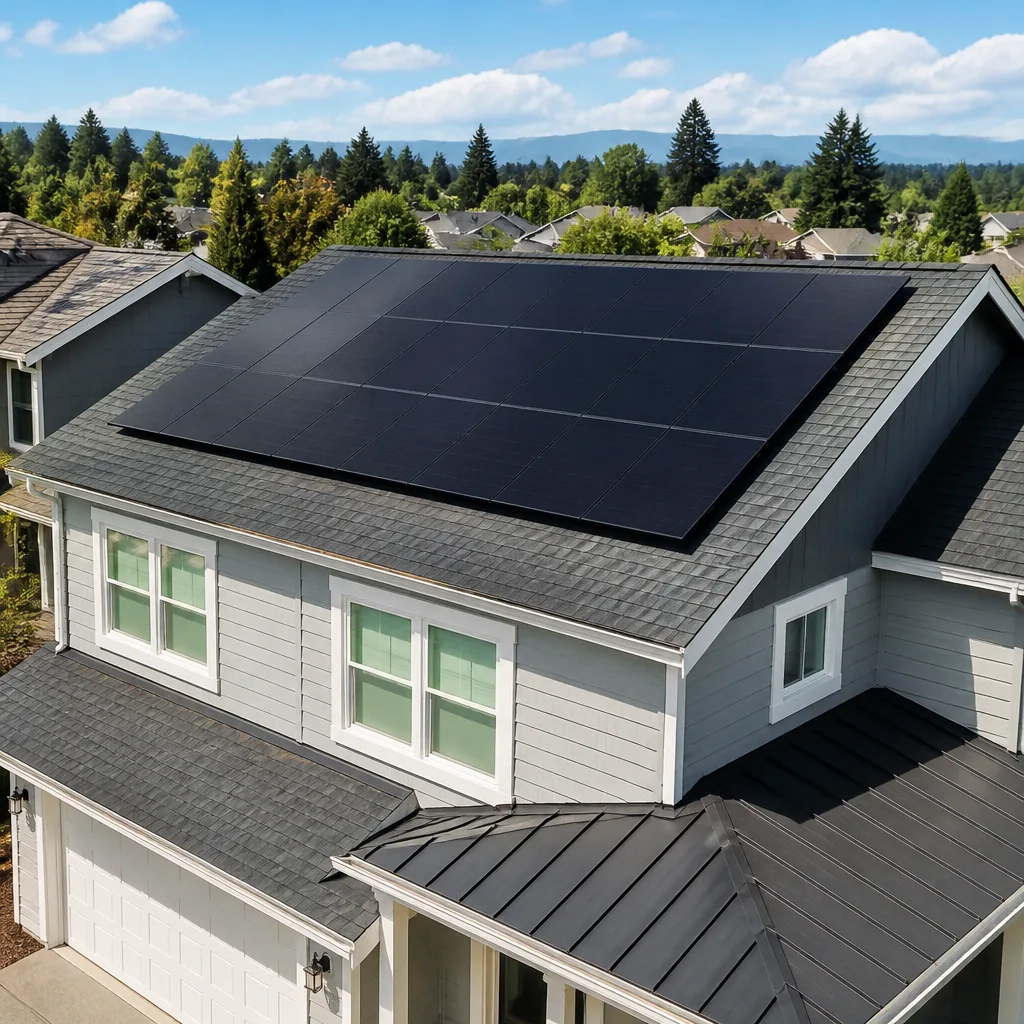
 Before
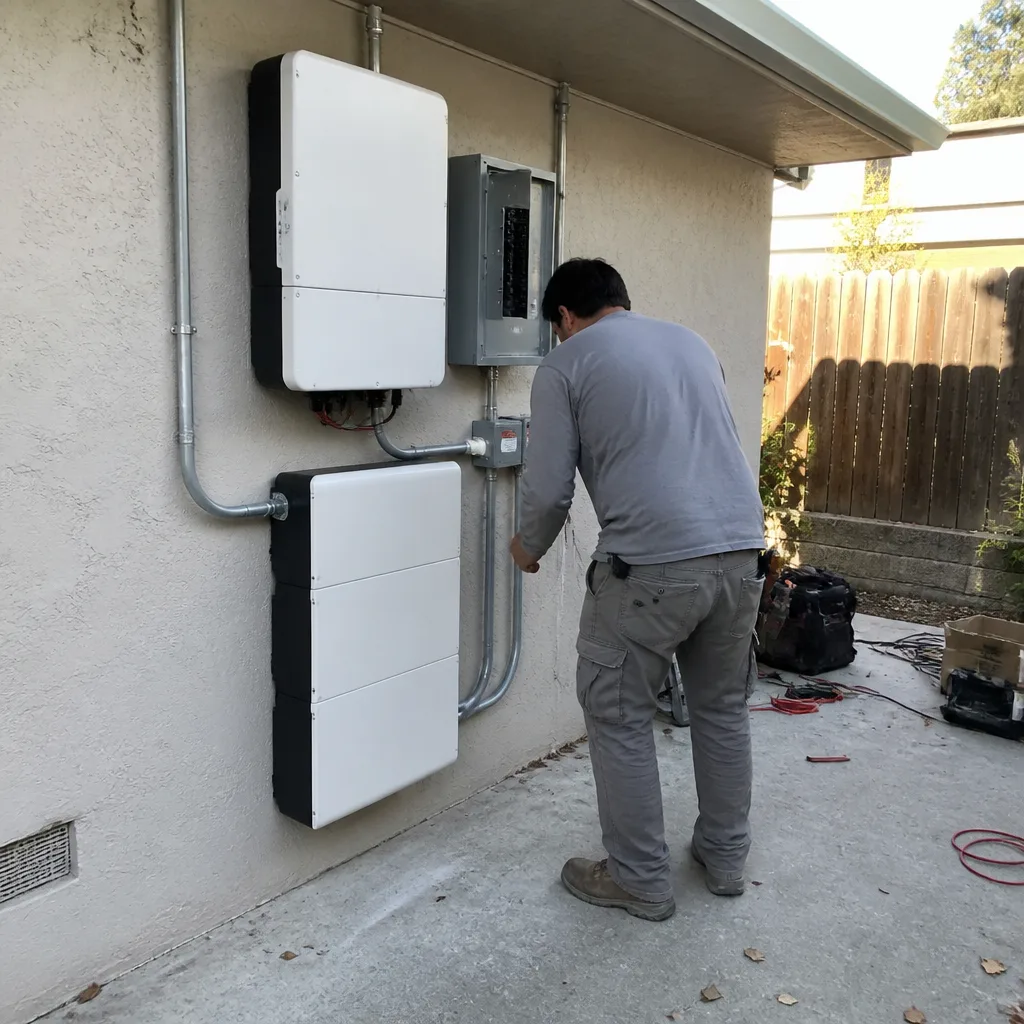 After
After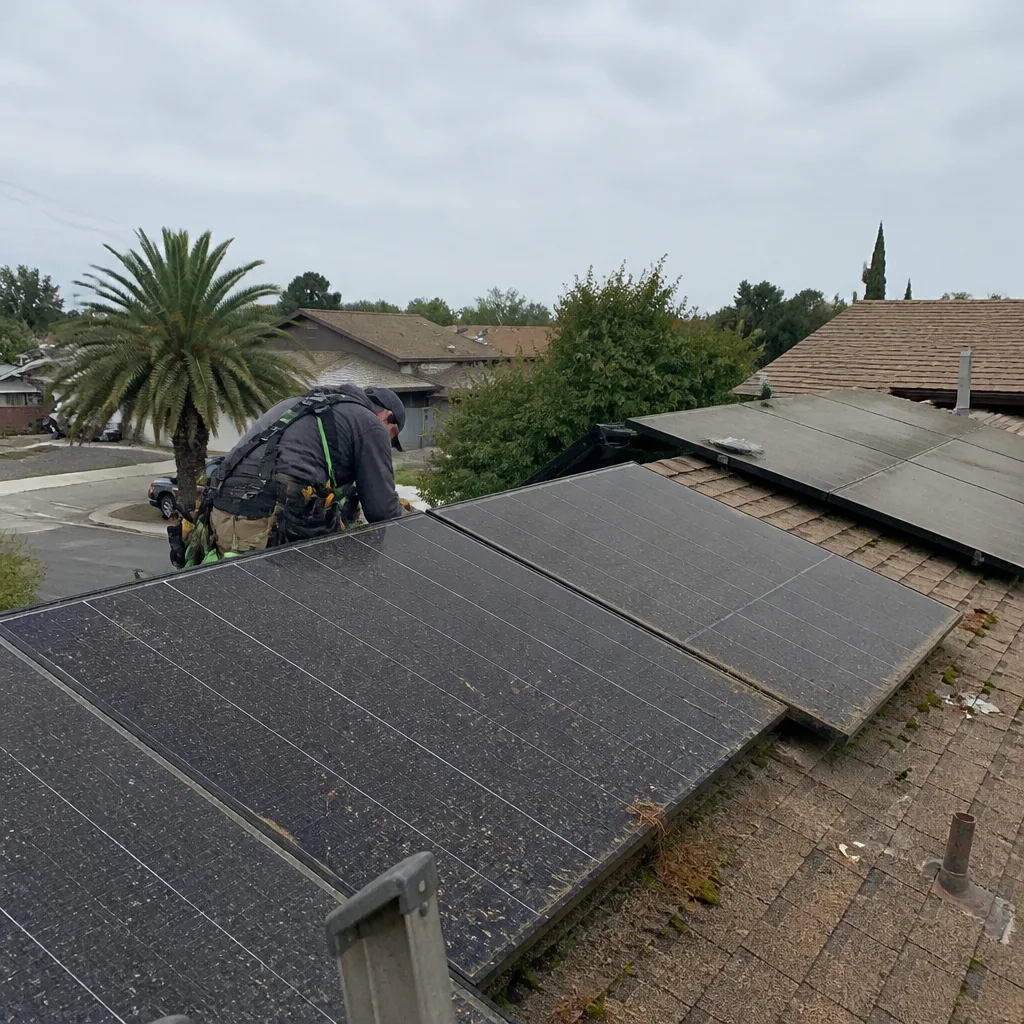 Before
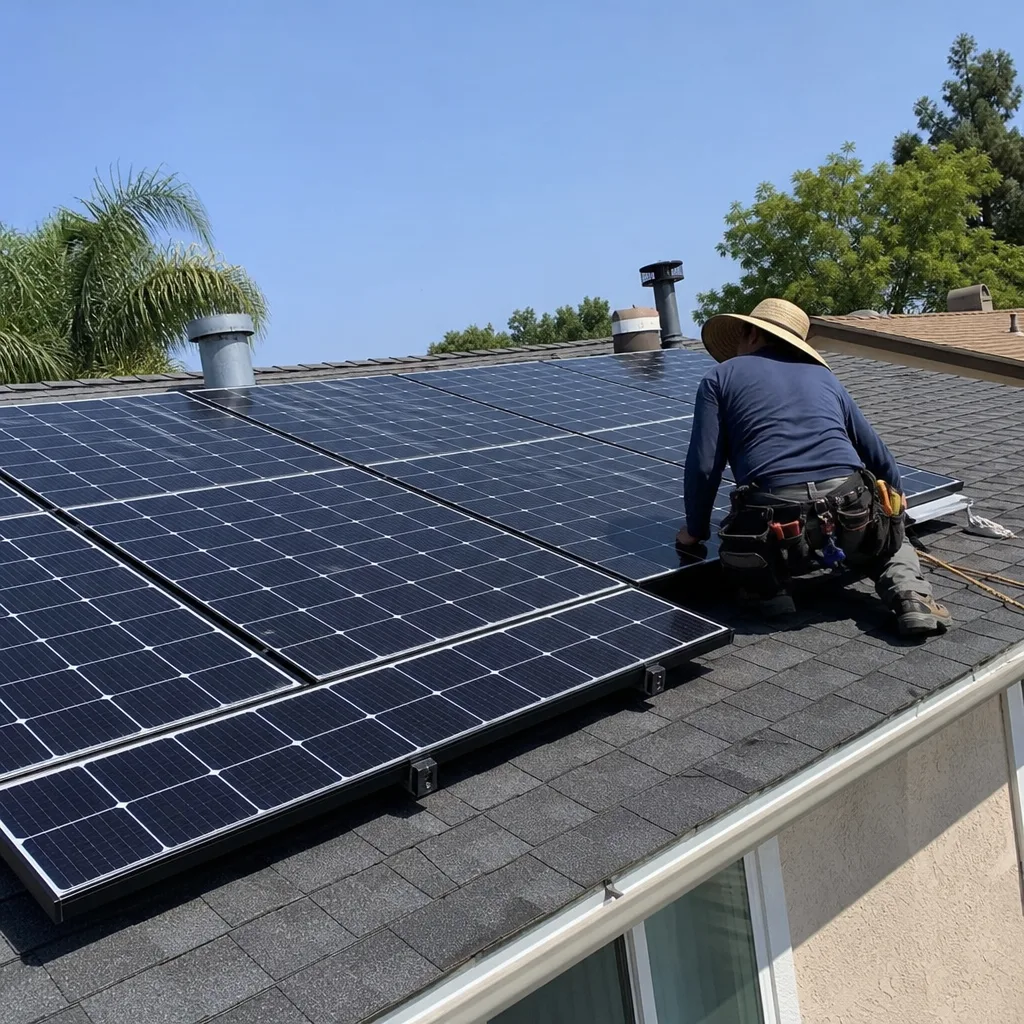 After
After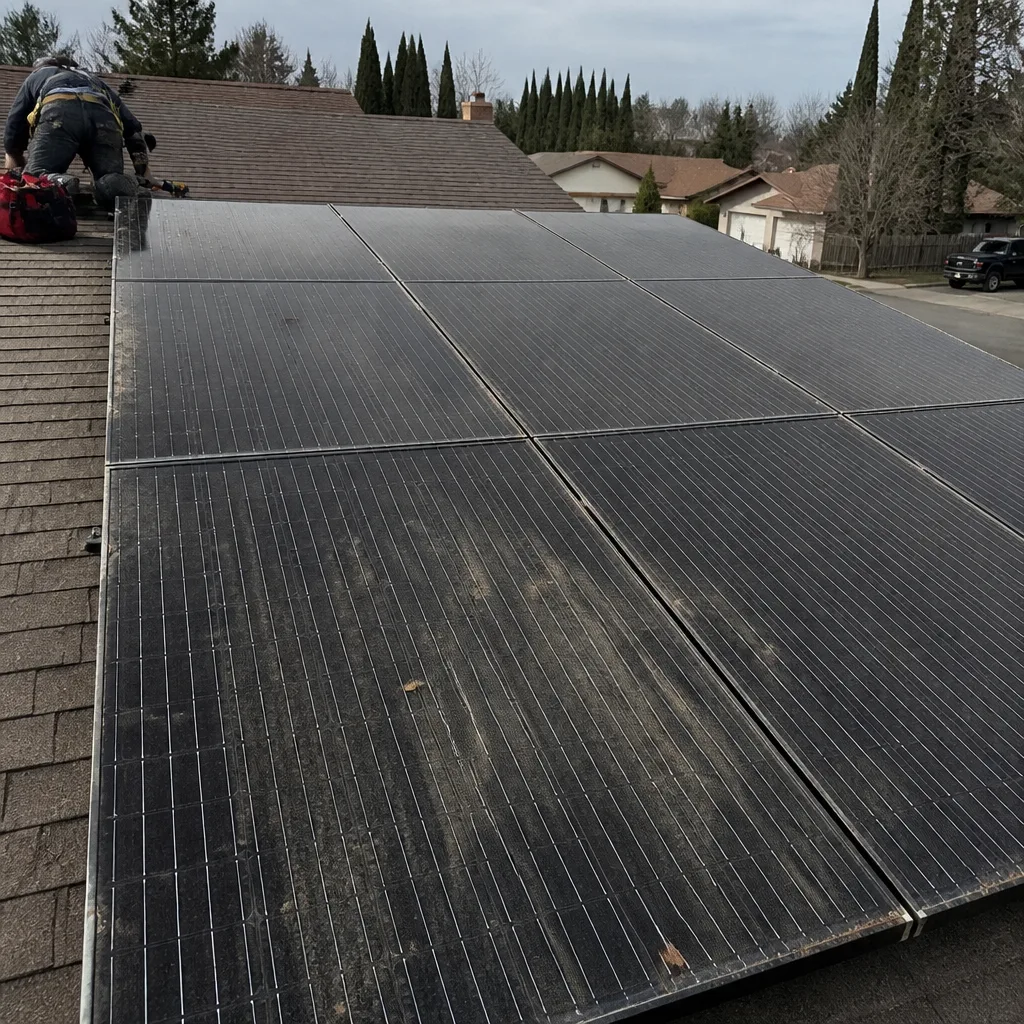 Before
 After
AfterFast, Reliable Solar Panel Cleaning Across Shadow Hills
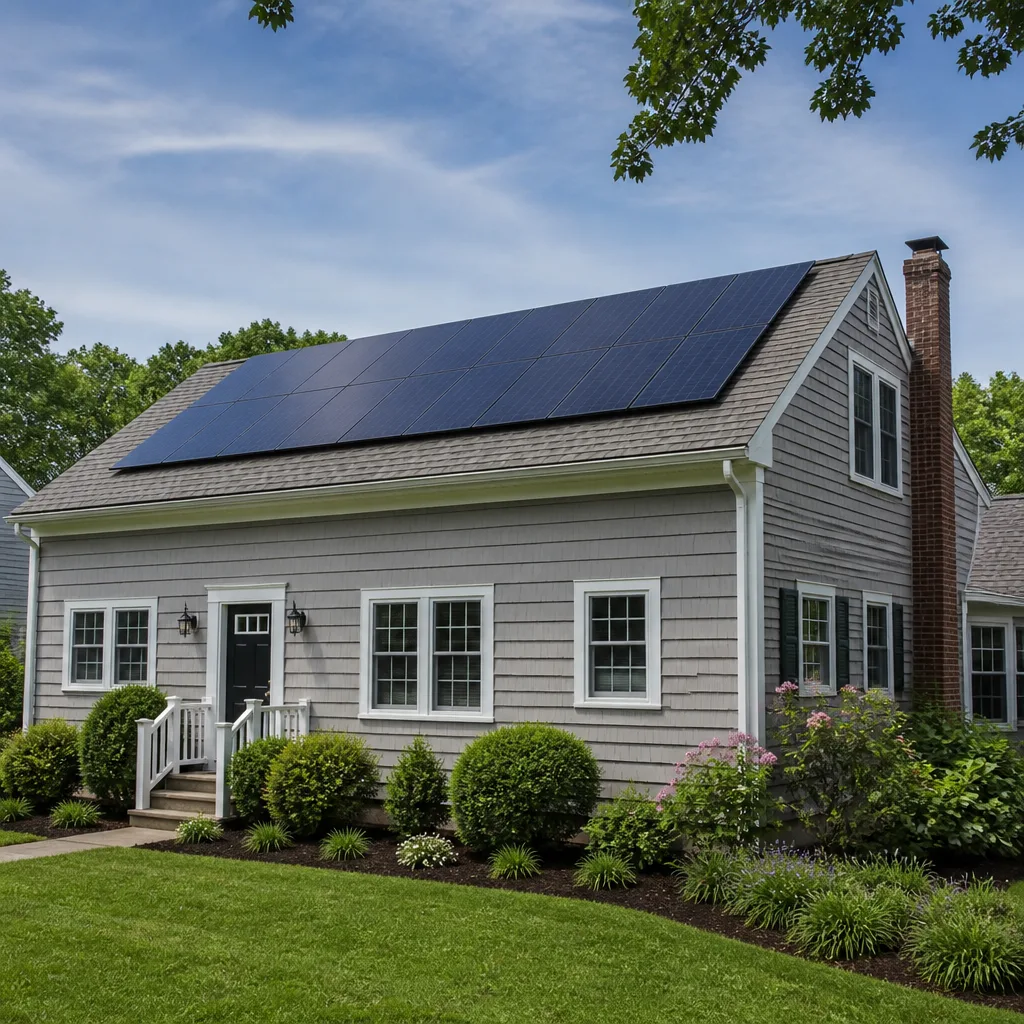
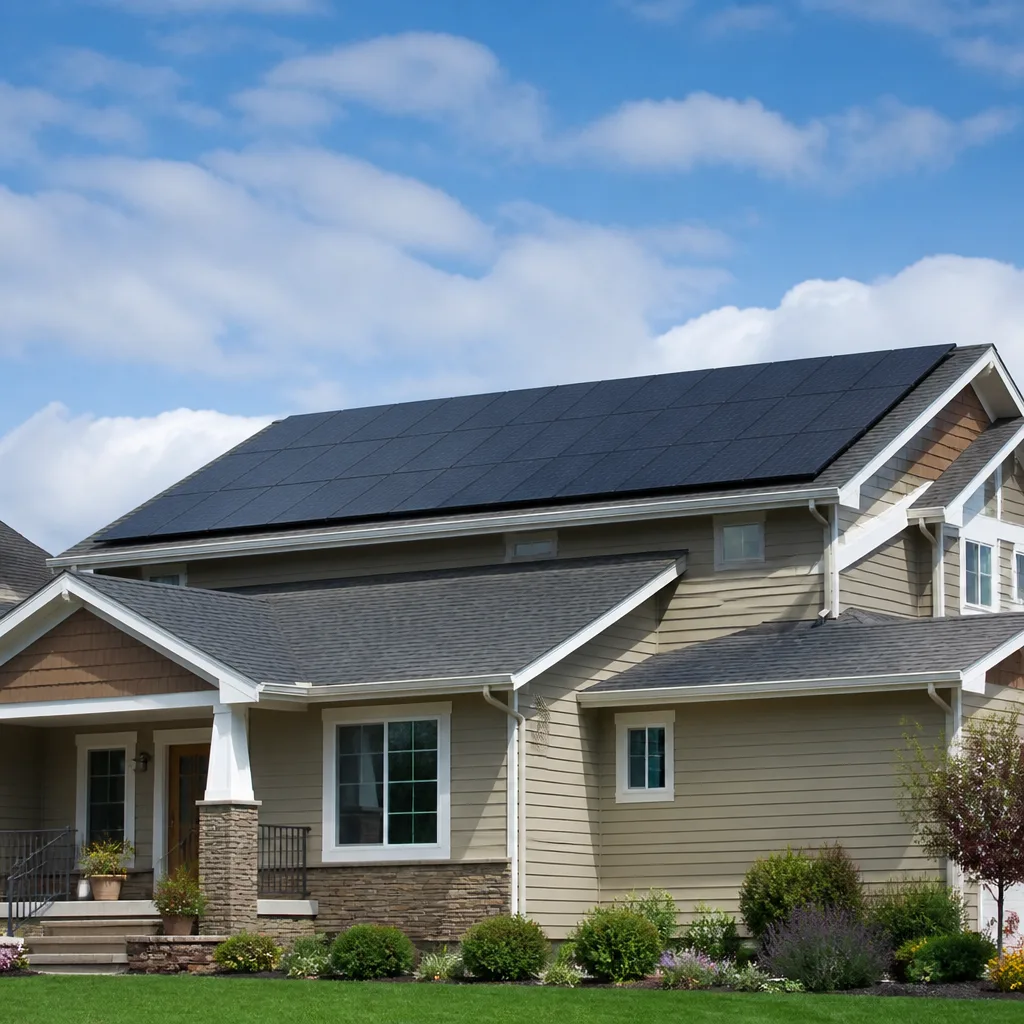
Solar panel cleaning in Shadow Hills typically costs $150-$340 for a standard residential array of 20-30 panels, and most jobs are completed in under two hours. The question isn’t whether you need it after a Santa Ana wind season, it’s whether you catch the soiling before it bakes onto the glass. We’ve been cleaning panels across Shadow Hills long enough to know that timing matters more here than in flat Valley neighborhoods, and the right clean at the right time protects your LADWP net metering credits month over month.
If your system’s production has dropped and you’re watching your true-up bill climb, call Gus’s Solar at (877) 550-6892. We’ll send a background-checked crew from our team, not a subcontractor, and we’ll quote you a real number before anyone climbs a ladder.
Why Gus’s Solar Is Shadow Hills’s Preferred Solar Panel Cleaning Company
Gus Petrakis founded this company in 2011 and he still puts his name on the truck, answers his own phone, and stands behind a 90-Day Done Right Promise on every job. That matters in Shadow Hills, where a lot of homeowners want to know the person on their roof is the same person they’ll see at the hardware store in Sunland next week. We’re not a call center. When you call, a live person answers, 24/7.
Our crews work on oversized residential lots most afternoons. Cleaning a 28-panel ground array on a half-acre off Sunland Blvd takes a different approach than a 12-panel roof mount in Burbank. We know that because we do the work, not because we read a spec sheet. Shadow Hills homeowners tend to notice a production drop fast. They check their monitoring apps. They ask smart questions about racking, critter guards, and wash frequency. We like those customers. They’re usually right.
Response time to Shadow Hills is same-day in most cases, and next-morning during the spring wind season when calls spike. If you’re between Tujunga and La Tuna Canyon, we’re already working a route near you most weeks. Scheduling is coordinated from our Los Angeles office, but the crews live and work here in the foothill communities.
Our Solar Panel Cleaning Services in Shadow Hills
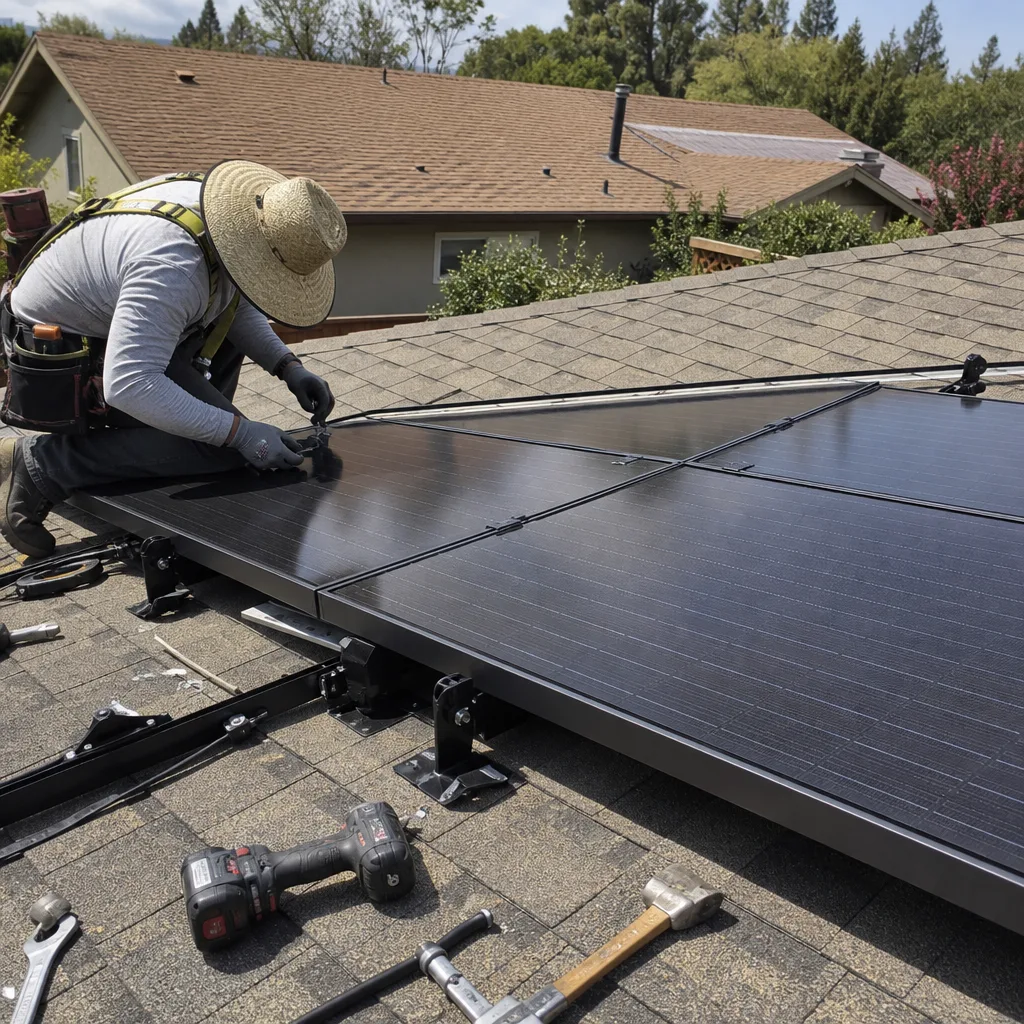
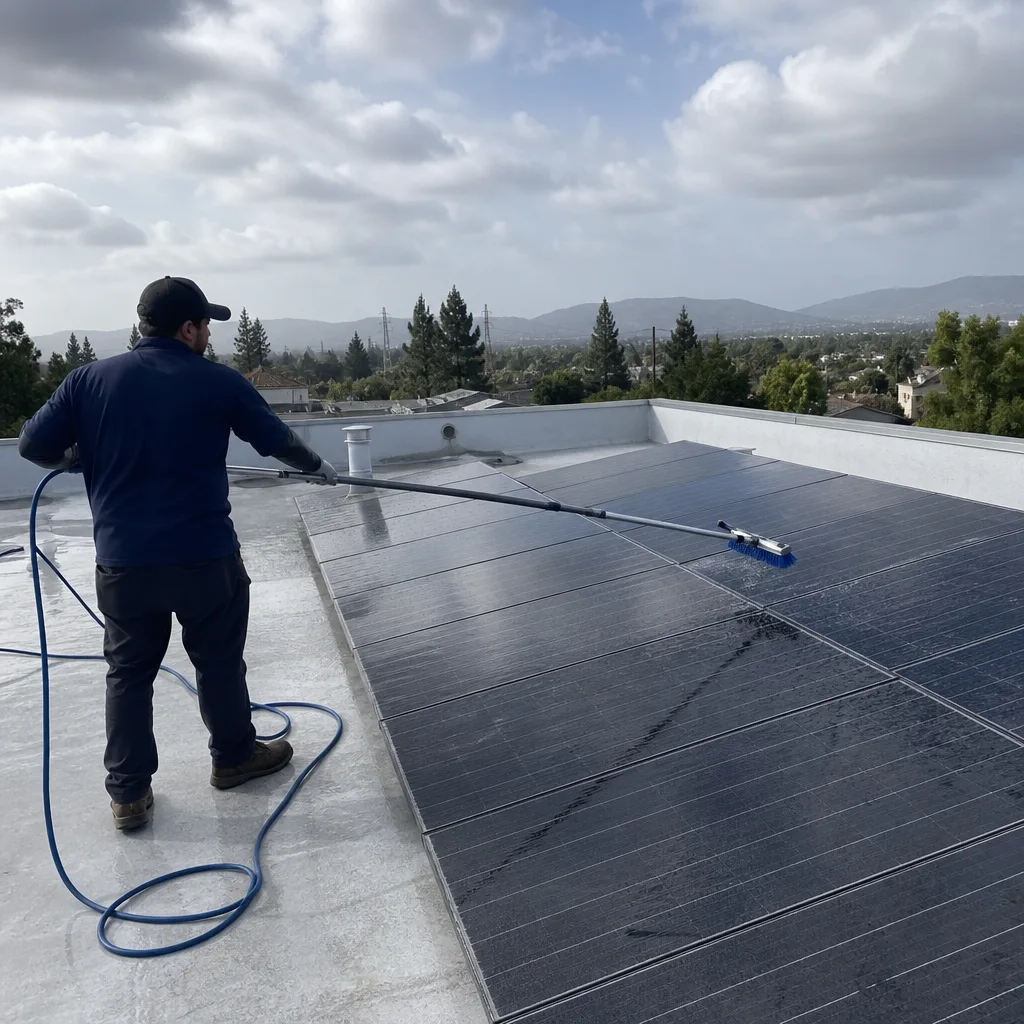
We don’t send a trainee with a garden hose and a squeegee to clean your solar array. Our crew uses soft-brush systems with deionized water, because the anti-reflective coatings on modern panels scratch easy and hard water leaves mineral haze that cuts output further. Here’s what we handle across Shadow Hills:
Residential Panel Cleaning
Most Shadow Hills homes have 20-to-35-panel arrays on low-pitch ranch roofs or ground racks over graded dirt pads. We remove wind-driven grit, eucalyptus debris, and bird droppings without scratching the glass. A standard residential clean in Shadow Hills runs $150-$280 depending on array size and roof pitch. If your panels are on a second-story eave or a steep section, that pushes toward the higher end.
Commercial Array Cleaning
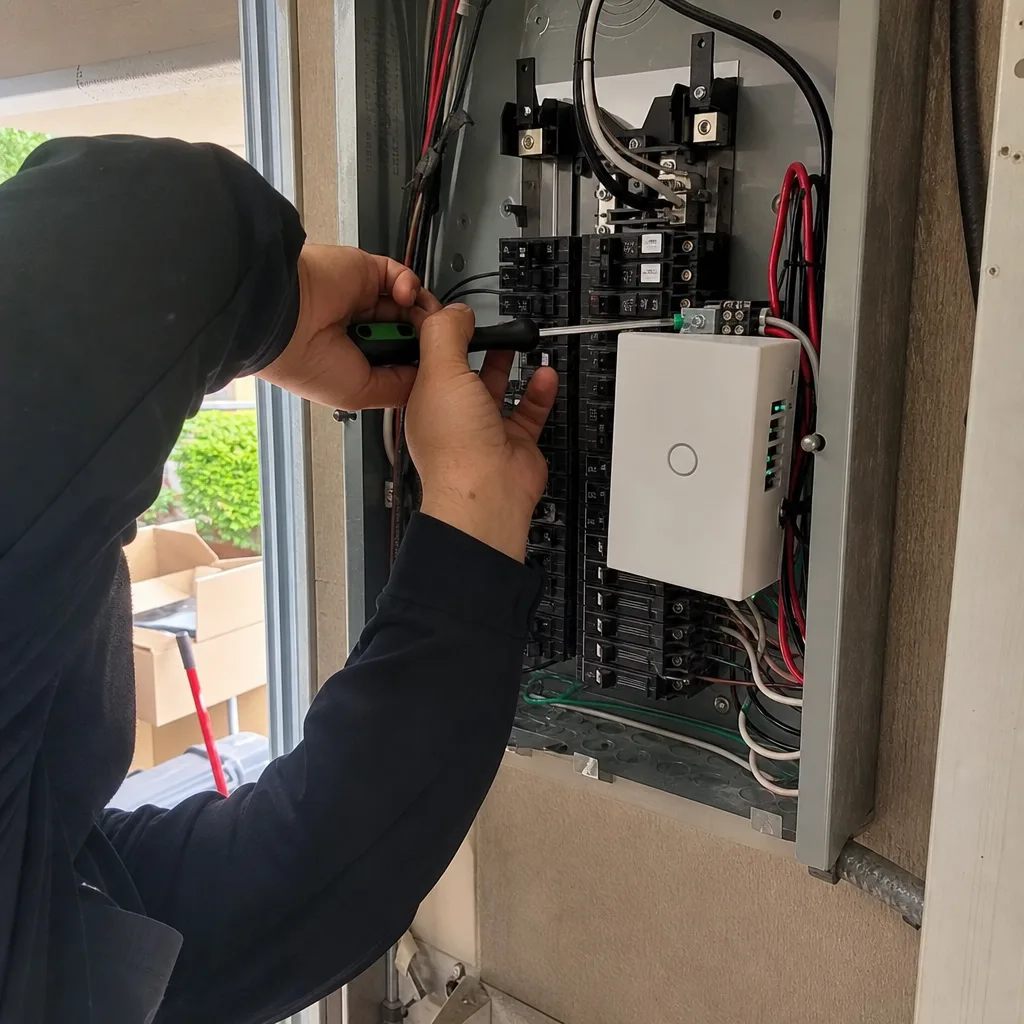
Shadow Hills has more commercial solar than most LA neighborhoods, thanks to equestrian facilities, boarding stables, and small industrial lots along San Fernando Road. We clean barn-roof arrays, carport canopies, and ground-mounted commercial systems. Pricing for commercial arrays in Shadow Hills starts around $400 and scales with panel count and access difficulty. We’ll walk the site, count panels, and give you a fixed number before we start.
Bird & Critter Guard Installation
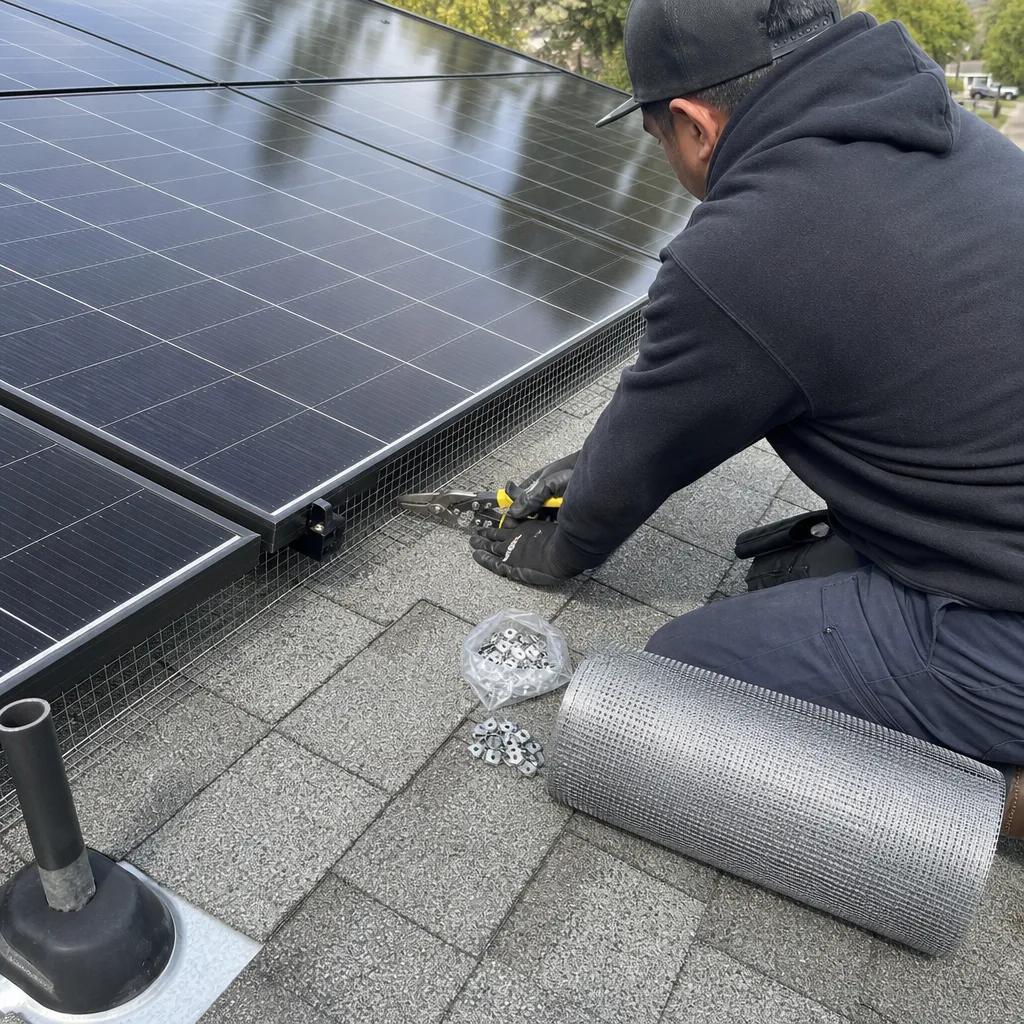
This is the service we recommend most often to Shadow Hills homeowners with ground-mounted arrays. Squirrels, rats, and nesting pigeons love the shaded space under a rack over an old corral pad. They chew through Enphase microinverter wiring, trigger rapid shutdown faults, and leave mounds of droppings that attract more pests. We install galvanized or PVC-coated mesh guard around the array perimeter. Most Shadow Hills ground array guards run $350-$650 installed, depending on linear footage and whether we’re sealing a concrete pad edge or working around irregular terrain.
Debris & Soiling Removal
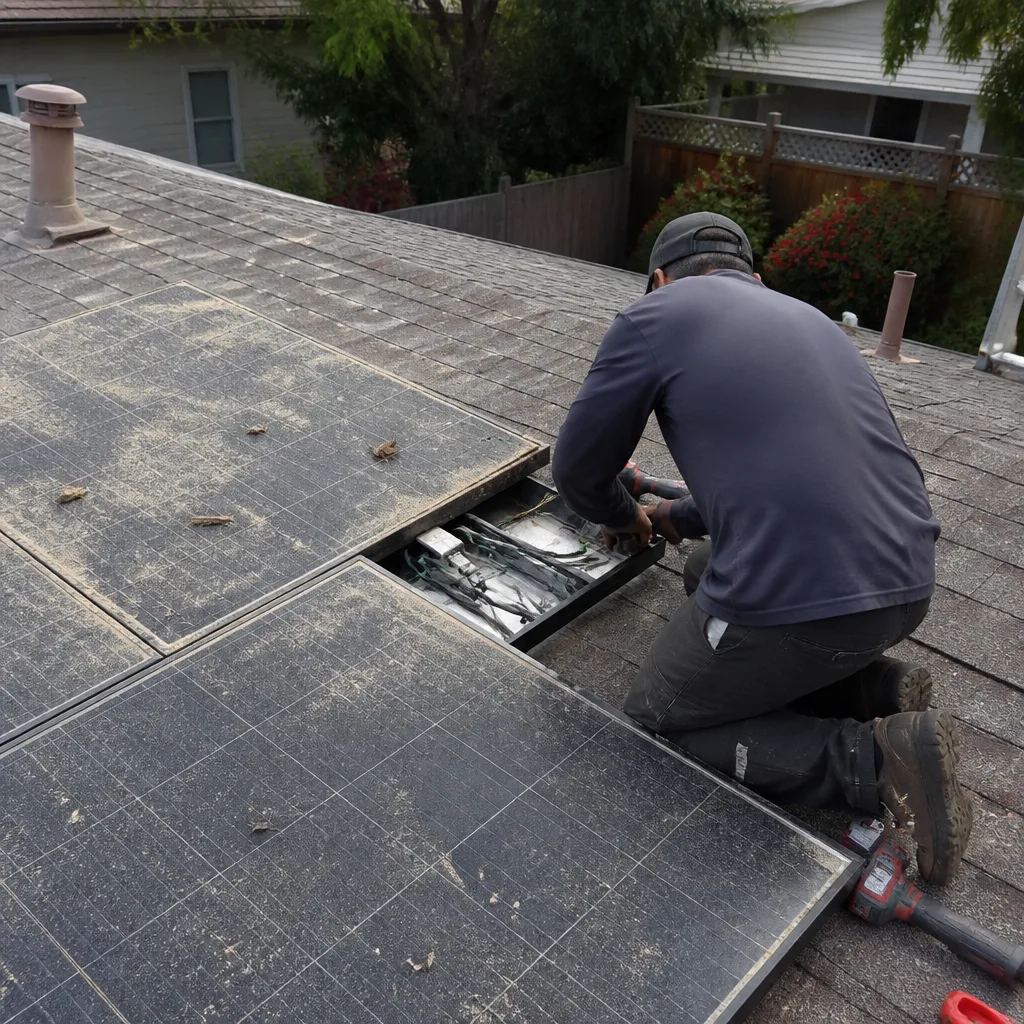
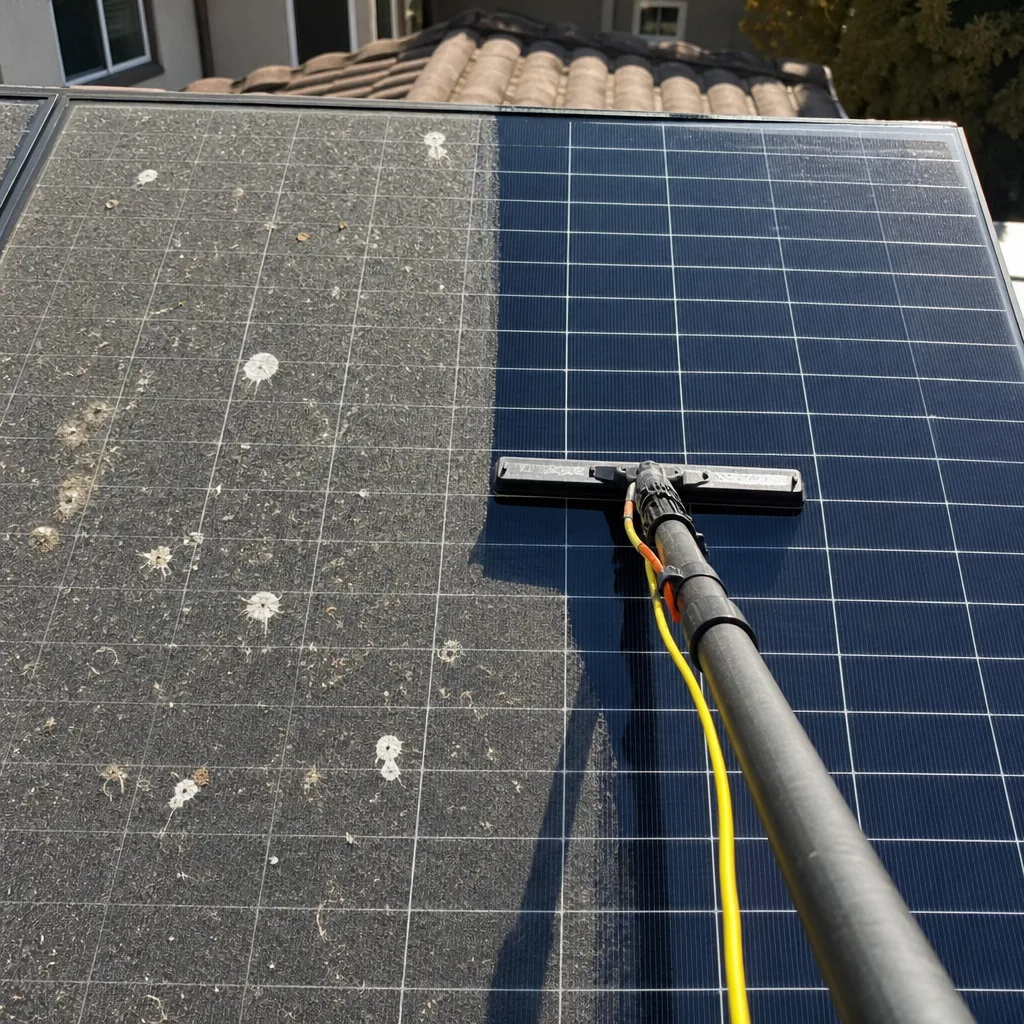
Santa Ana winds push a fine, abrasive dust through the Shadow Hills corridor every fall and spring. It settles on panel glass, then morning dew turns it into a crust that ordinary rain doesn’t wash off. We remove baked-on soiling with a deionized water and soft-brush method that lifts the grit without micro-scratching the coating. A soiling-removal service call in Shadow Hills runs $180-$320 for a typical rooftop array, and $220-$380 for a ground array over dirt or gravel that requires extra rinsing.
What happens when you call
- 1
A real person answersNo phone trees - you reach a local pro.
- 2
You get an upfront price rangeHonest numbers before anyone is dispatched.
- 3
A background-checked tech heads outLicensed & insured, dispatched right away.
- 4
You approve before work beginsNothing starts until you say go.
Trusted Brands We Service in Shadow Hills
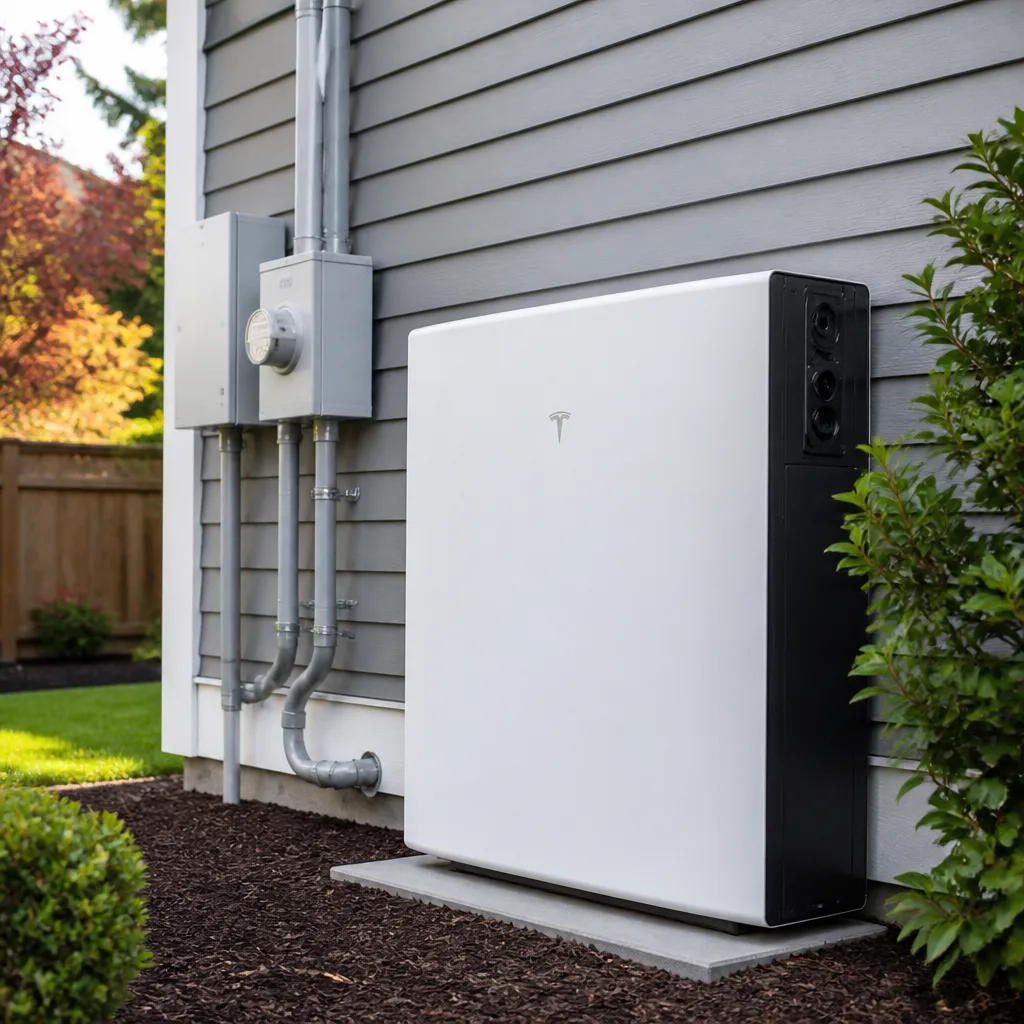
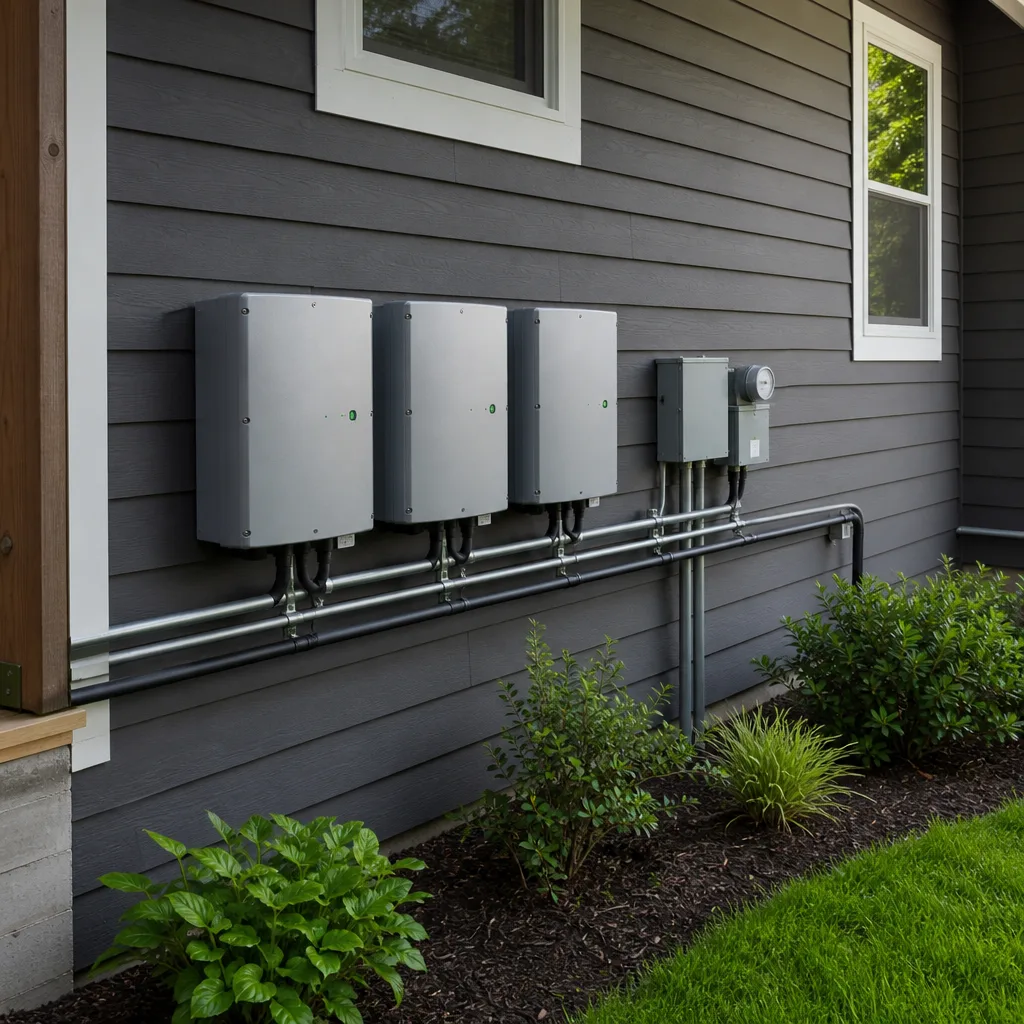
We service every major panel brand and inverter system you’re likely to have on a Shadow Hills roof or ground rack. Most of the systems we see here are built on Panasonic, Canadian Solar, or JinkoSolar panels, paired with Enphase microinverters or FranklinWH storage. We also clean and maintain Tesla solar systems, and we see a fair number of those on the newer builds off Wheatland Ave. If you know your panel brand, tell us when you call. It helps us bring the right cleaning solution and the right replacement parts if we find a cracked panel or a loose connector. We keep common parts on our trucks, so a cleaning call often turns into a one-trip fix.
Common Solar Panel Cleaning Problems We See in Shadow Hills Homes
- Baked-on Santa Ana dust that hard water only makes worse. After two or three wind events, the dust on Shadow Hills panels forms a gritty film that standard tap water can’t lift. Worse, hard water loaded with minerals leaves a white haze that permanently reduces light transmission. We use deionized water for a reason.
- Critter damage on ground arrays over old corral pads. The ground-mounted systems we clean in Shadow Hills sit over compacted dirt that runs right up against horse paddocks and open chaparral. Squirrels and pack rats move in underneath, chew through microinverter cables, and trigger faults that show up as a dead panel cluster on your monitoring app.
- Scratched panels from previous cleaning crews using abrasive brushes. Wind-driven grit embeds itself in panel glass and acts like sandpaper when a tech scrubs with a nylon brush. We see this on systems cleaned by pool services or handymen before the owner calls us. The damage is permanent, which is why we refuse to cut corners on brush type.
- Production drops that go unnoticed until the true-up statement arrives. Many Shadow Hills homeowners check their monthly output only when the annual LADWP true-up bill shows a shortfall. By then, the soiling has been baking for months and removal takes longer. We suggest quarterly monitoring, especially during wind season.
Pricing for Solar Panel Cleaning in Shadow Hills, CA
Here’s what you can expect to pay in Shadow Hills. These are real ranges based on the work we’ve done across this community, not brochure numbers:
- Residential rooftop cleaning: $150-$280
- Ground-mounted array cleaning: $220-$380
- Commercial or barn-roof array cleaning: $400 and up
- Bird and critter guard installation: $350-$650
- Debris removal after a storm: $180-$320
What moves the price: total panel count, roof pitch and access, wiring condition, and whether we’re adding a critter guard while we’re on site. If you bring us a written estimate from another company, we’ll give you a free second opinion. We also offer a 10% discount for seniors and veterans that never expires, and $40 off any repair over $200. Call (877) 550-6892 and we’ll give you a fixed price before we schedule the crew.
The Shadow Hills Reality Most Generic Solar Pages Skip
Shadow Hills sits inside LA city limits but feels like rural horse country, and that dual status creates a solar landscape unlike any other neighborhood in the Valley. Your power comes from LADWP, not Southern California Edison, which means your solar system operates under LADWP’s interconnection queue and net metering agreement terms, not SCE’s. That has a direct impact on cleaning. When your panels are underproducing because of dust, you’re not just losing generation, you’re losing LADWP net metering credits at their full retail rate. A filthy array in Shadow Hills costs more in lost credits than a similar array in Burbank or Sunland, because LADWP’s true-up structure and time-of-use multipliers reward clean production differently.
On top of the utility landscape, the entire Shadow Hills community falls within LA’s Very High Fire Hazard Severity Zone. That triggers mandatory roof-edge setbacks and ember-resistant underlayment requirements on new solar installs. It also means any work we do adjacent to the array, including adding a critter guard that changes the airflow under the rack, has to be done with the VHFHSZ standards in mind. A generic solar cleaning crew from outside the Valley may not understand why that matters. We do, because we work within those rules on nearly every job in this 91040 zip code.
The terrain here also shapes how panels hold dirt. Shadow Hills sits at the base of the foothills between the Verdugo and San Gabriel Mountains, which forms a heat pocket that pushes summer production higher than the rest of the Valley, but the same corridor channels Santa Ana winds directly through. That wind carries fine grit, eucalyptus leaf litter, and stable dust from the equestrian properties. Your panels sit in a dusty chute for a few weeks every season, and if the dust isn’t removed before the first heavy dew or light rain, it turns into a hardened film that’s harder to clean and more likely to scratch.
A few months ago, we cleaned a 28-panel ground-mounted array on a 1.2-acre ranch off Sunland Blvd where the homeowner’s Tesla system had dropped to 82% of its original kWh offset after two Santa Ana wind seasons. The panels sat at a low tilt over a compacted dirt pad, and a thick layer of gritty foothill dust mixed with eucalyptus debris had settled across the glass. Our team used a soft-brush, deionized water system to lift the soiling without scratching the anti-reflective coating. Then we installed a Critter Guard under the racking, because the ground squirrels had already started working on the Enphase microinverter wiring. Post-cleaning, production rebounded to 97% of the original estimate, and the owner is now on a quarterly scheduled clean to beat the next wind season before it starts.
That’s the part a generic solar page misses: in Shadow Hills, the LADWP interconnection queue, the VHFHSZ fire rules, and the wind-driven dust all collide on your roof. We’re the local crew that works within all three, every day.
We Also Serve Cities Near Shadow Hills
Our crews cover the surrounding foothill communities with the same one-trip, done-right approach. You’ll see us in Sunland, Tujunga, La Crescenta-Montrose, and Burbank on any given week. If you’re in one of those areas and need Solar Panel Cleaning, call (877) 550-6892 and we’ll route the nearest crew. If you’re still in Shadow Hills, read on. We built this page for you.
Serving Shadow Hills, CA - Our Local Coverage Area
We’re based in the Shadow Hills area and know this community well. Use the map below to see our service coverage - if you’re nearby, we can almost certainly help.
FAQs - Solar Panel Cleaning in Shadow Hills
Your LADWP true-up reconciliation happens once a year, and the timing of that reconciliation is set by your original interconnection agreement, not by when you first notice dirt on the panels. If your array is underperforming during the months that feed your true-up calculation, you lose net metering credits at full retail value. That means cleaning before and during the winter wind season matters more in Shadow Hills than a spring-only schedule suggests. Call (877) 550-6892 and we’ll help you align your cleaning schedule with your LADWP true-up cycle so you’re not losing credits to dust.
Not with our method. We use deionized water and low-pressure soft brushes specifically so the rinsing process doesn’t kick up abrasive dust from the pad underneath. The key is pre-wetting the panel surface and washing top-down, so the dirty water flows away from the array rather than across clean glass. We also recommend adding a critter guard on ground arrays over dirt pads, because the open space under the rack invites rodents regardless of how clean the panels are.
Yes, and Shadow Hills is entirely within the VHFHSZ boundary. Any permanent addition near the array, including a critter guard, must not create a new ember trap or block required roof-edge setbacks. We install guards that are wildlife-rated but also fire-aware: no solid panels that collect debris, no wood or combustible materials, and no changes to the required clearances. Gus’s crew works inside VHFHSZ rules on nearly every Shadow Hills job, so we won’t install something that puts your fire-safety compliance at risk.
Yes. Corrugated metal barn roofs flex under foot traffic, so we use stand-off pads and ridge-anchored fall protection rather than walking directly on the roof where possible. The cleaning method itself stays the same, soft brushes and deionized water, but we’re more careful about working around standing seams and metal edge flashings. Many Shadow Hills barn arrays also sit at lower angles, which means they hold dust longer and may need cleaning more often than a steep residential roof.
Most Shadow Hills homeowners do well with a quarterly scheduled clean, with one of those visits timed to land right after the worst of Santa Ana season. The wind corridor through the Verdugo-San Gabriel gap loads panels with gritty dust and eucalyptus debris in a way that flat, protected Valley lots just don’t see. If you’re on a half-acre or larger lot with open dirt and horse activity nearby, twice a year isn’t enough. Call (877) 550-6892 for a recommendation based on your specific array location, tilt angle, and surroundings. Estimates are free.
Written by Gus Petrakis, Owner at Gus’s Solar. Gus has been running his own crew since 2011 and answers his own phone. If you have a question about your Shadow Hills solar array, call (877) 550-6892 and you’ll get him, or someone who works directly for him, not a call center.