
Free bill analysis - bring a power bill, get the production math for your actual roof, panel brands like Qcells and REC compared side by side
If the pitch starts at your door and ends with "sign tonight for the special," sleep on it. The sun will still be there tomorrow; so will we.
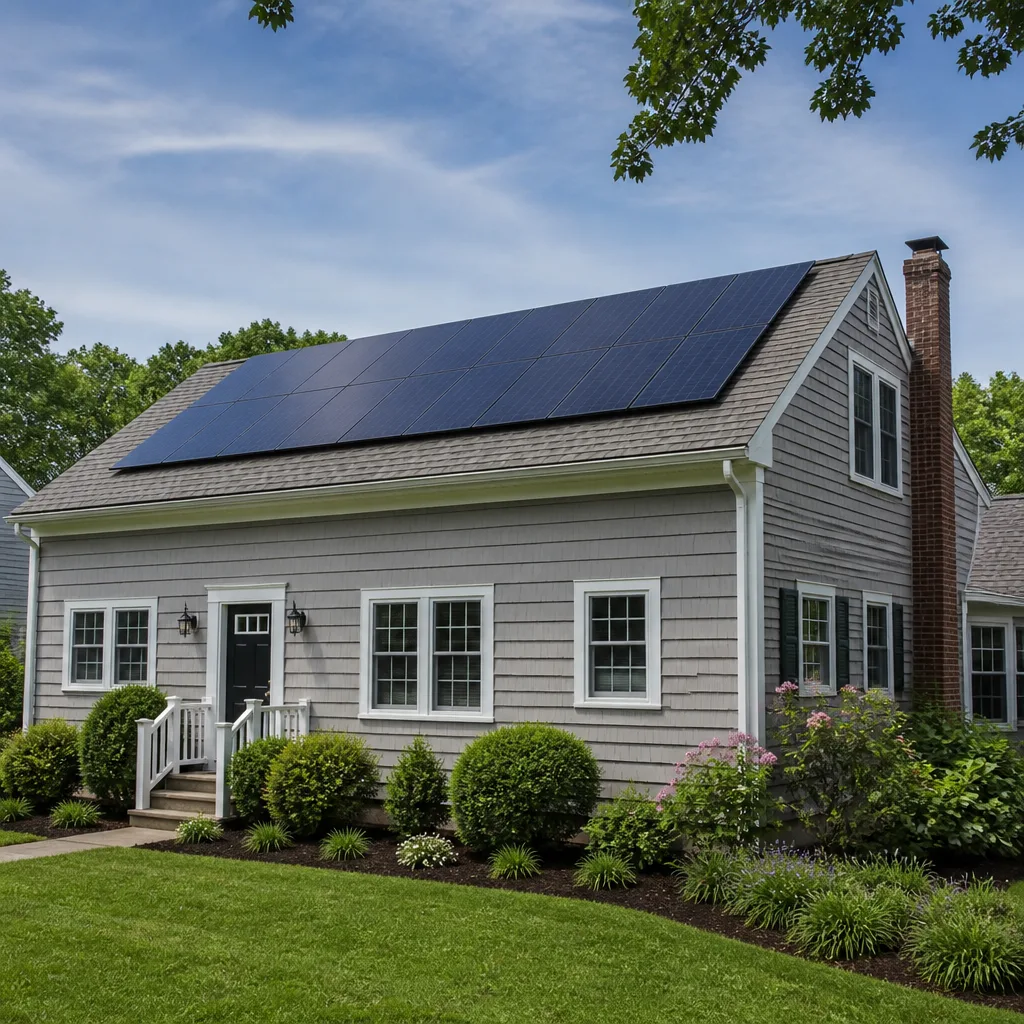
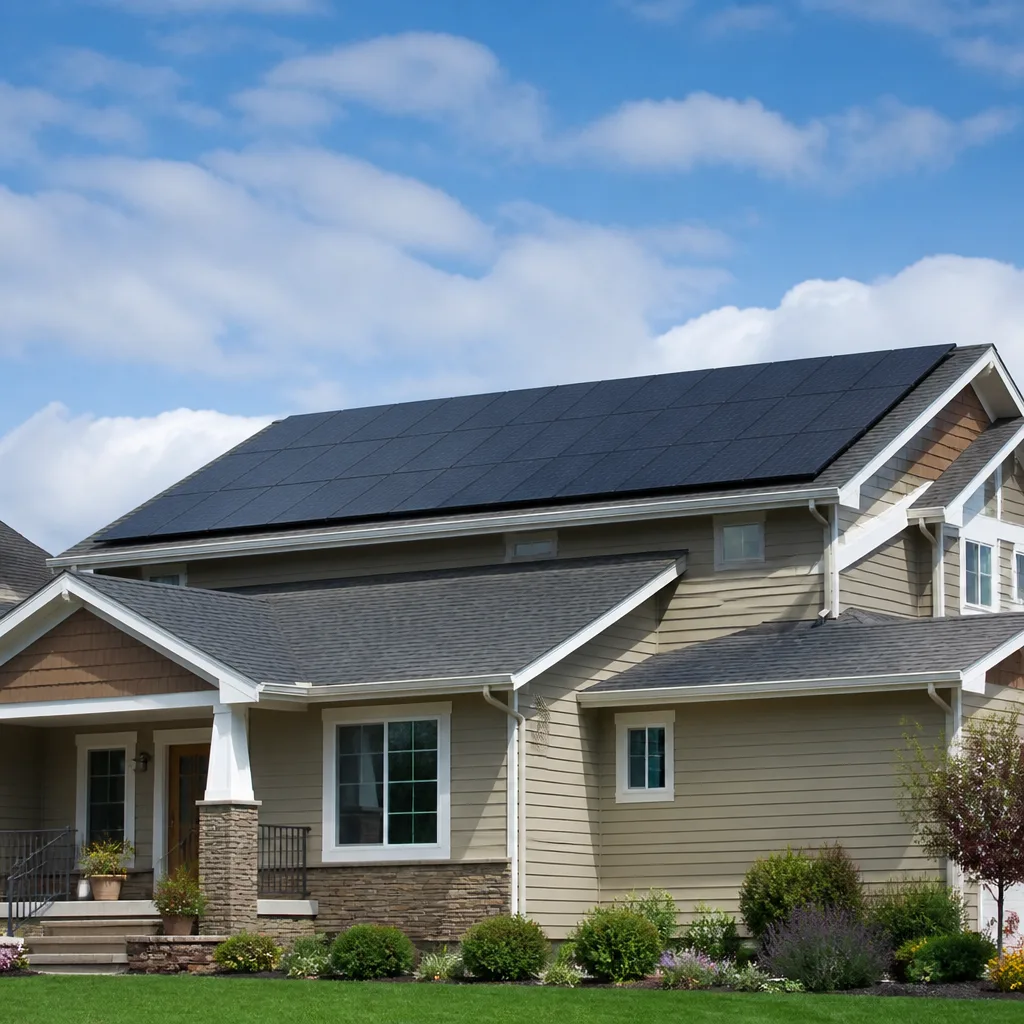
 Before
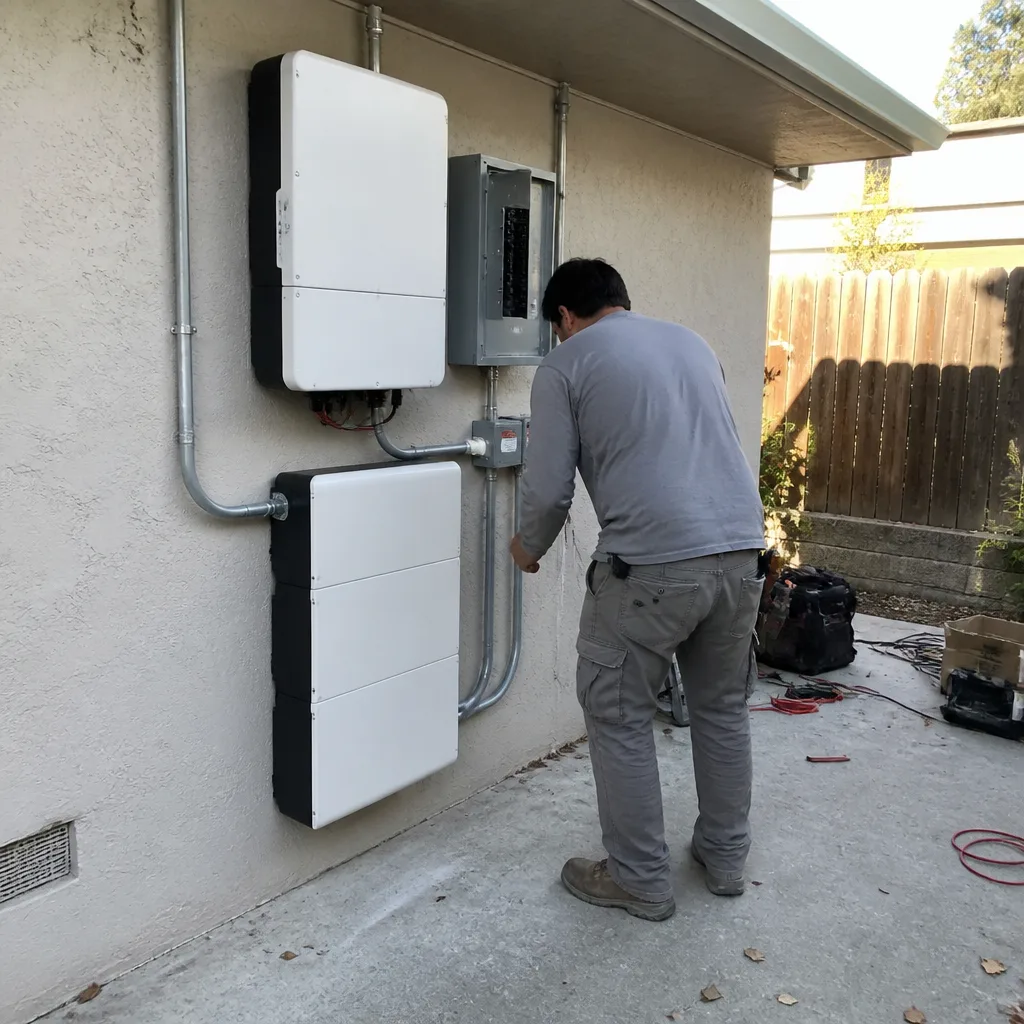 After
After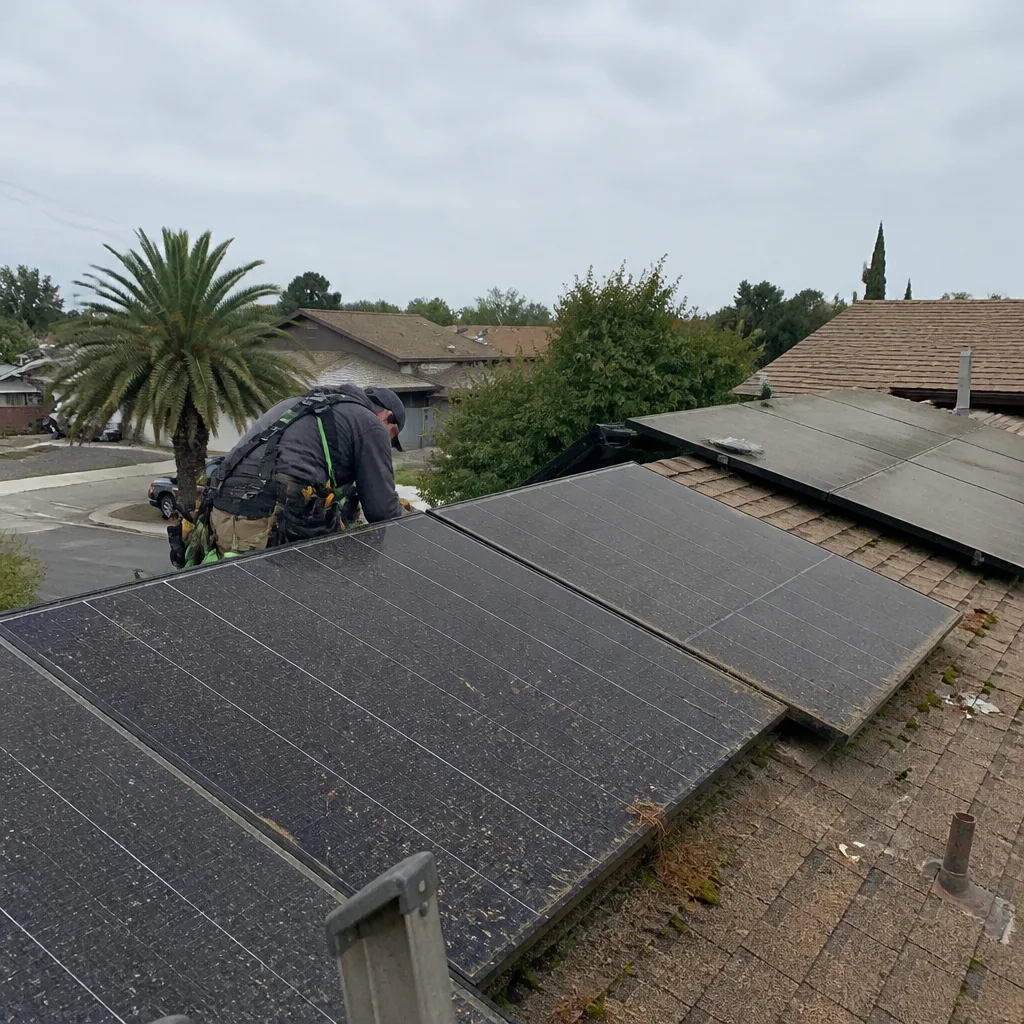 Before
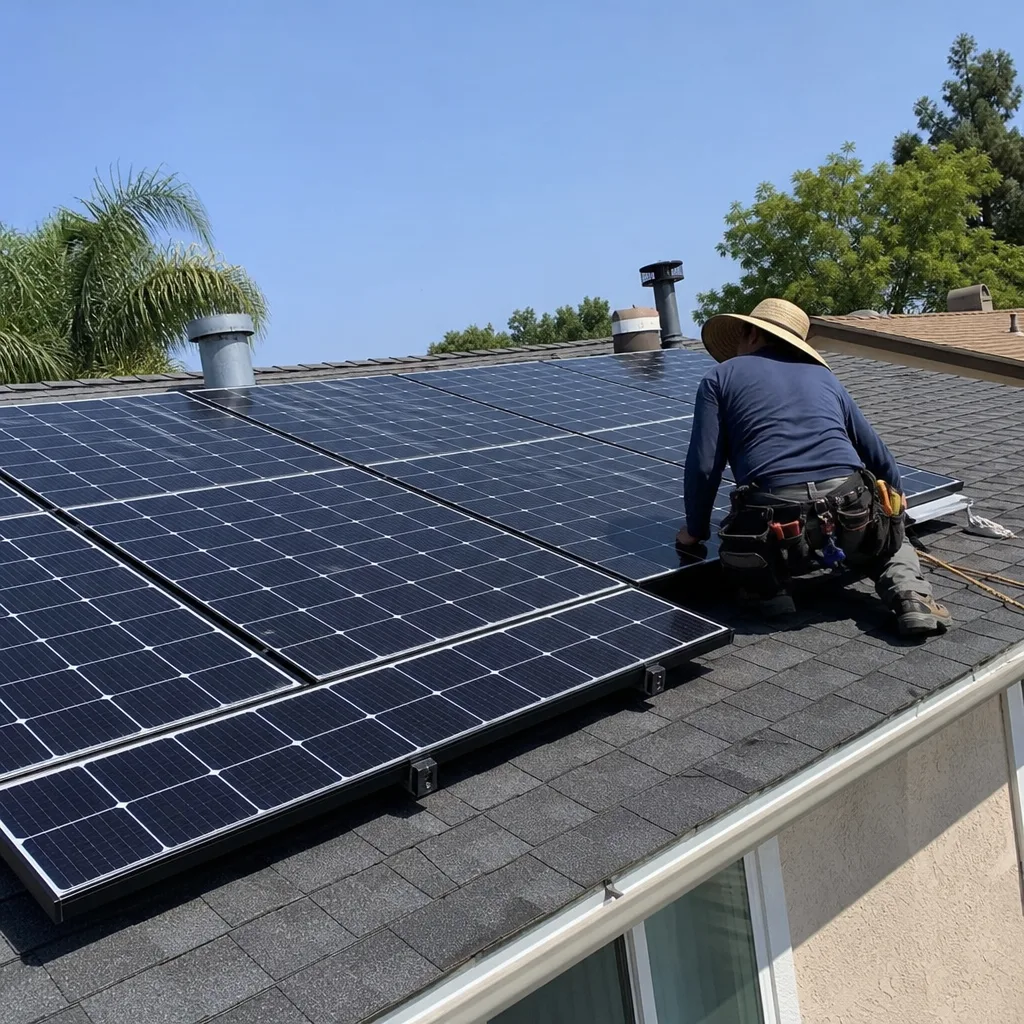 After
After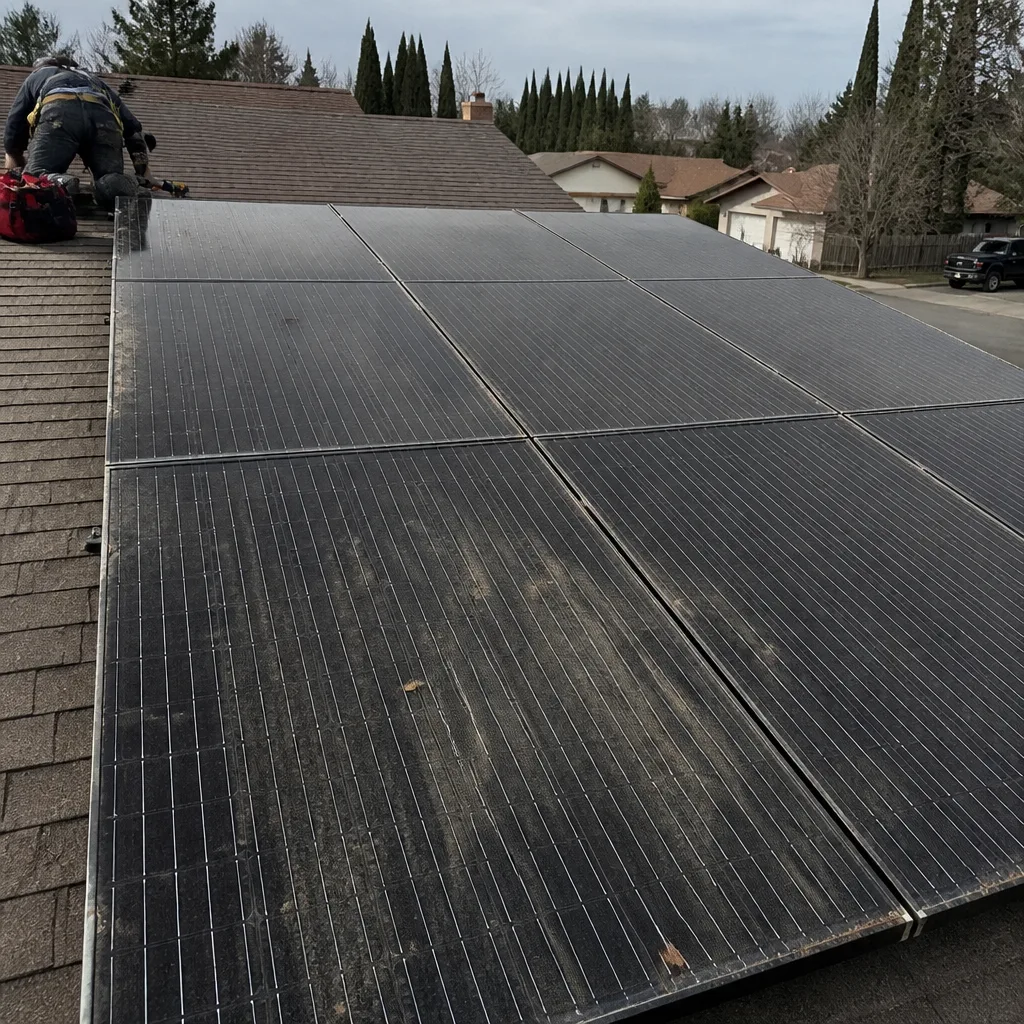 Before
 After
AfterFast, Reliable Solar Panel Cleaning Across Dinuba
Solar panel cleaning in Dinuba typically runs $140-$280 for a standard residential array under 30 panels, and Gus’s crew can usually be on your roof within 48 hours of your call. Dinuba’s position in the heart of raisin and table-grape country means your panels collect a film most Valley homeowners never deal with: tacky, organic harvest dust that hardens under 270-plus days of direct sun. We’re a locally owned shop with a published address, a real license number, and an owner named Gus Petrakis who answers his own phone. If your panels are producing less than they did in May, call (877) 550-6892 and we’ll come take a look.
Why Gus’s Solar Is Dinuba’s Preferred Solar Panel Cleaning Company
We’ve been cleaning panels on ranches, tract homes, and commercial rooftops across 93618 long enough to know which streets battle raisin dust and which ones face Tule fog buildup each winter. Gus Petrakis founded this company in 2011, and he still runs it the way a Dinuba farmer runs a harvest: show up on time, do the job right, and stand behind the work in writing. That’s the 90-Day Done Right Promise. If it’s not done right, Gus comes back. One call. That’s it.
Our office is in the Fresno, Central Valley area, and our crews serve Dinuba locally. The person who answers our phone at 2 a.m. is a live person, not a ticketing system or a call center three states away. When a customer off Road 80 calls about a post-harvest production drop in September, we know exactly what they’re describing before they finish the sentence. Our DINUBA customers get background-checked, uniformed crews, no-hassle pricing that matches the quote, and a second opinion on any written estimate from another company, free. No pressure. Take two weeks, think about it. The price will be the same.
One more thing worth saying plainly: our Solar Panel Cleaning work carries the same 90-Day Done Right Promise as our installs. If a streak, a missed corner, or a dirty edge shows up after we leave, call. Gus’s name is on the truck, and it’s on the work.
Our Solar Panel Cleaning Services in Dinuba
Residential Panel Cleaning
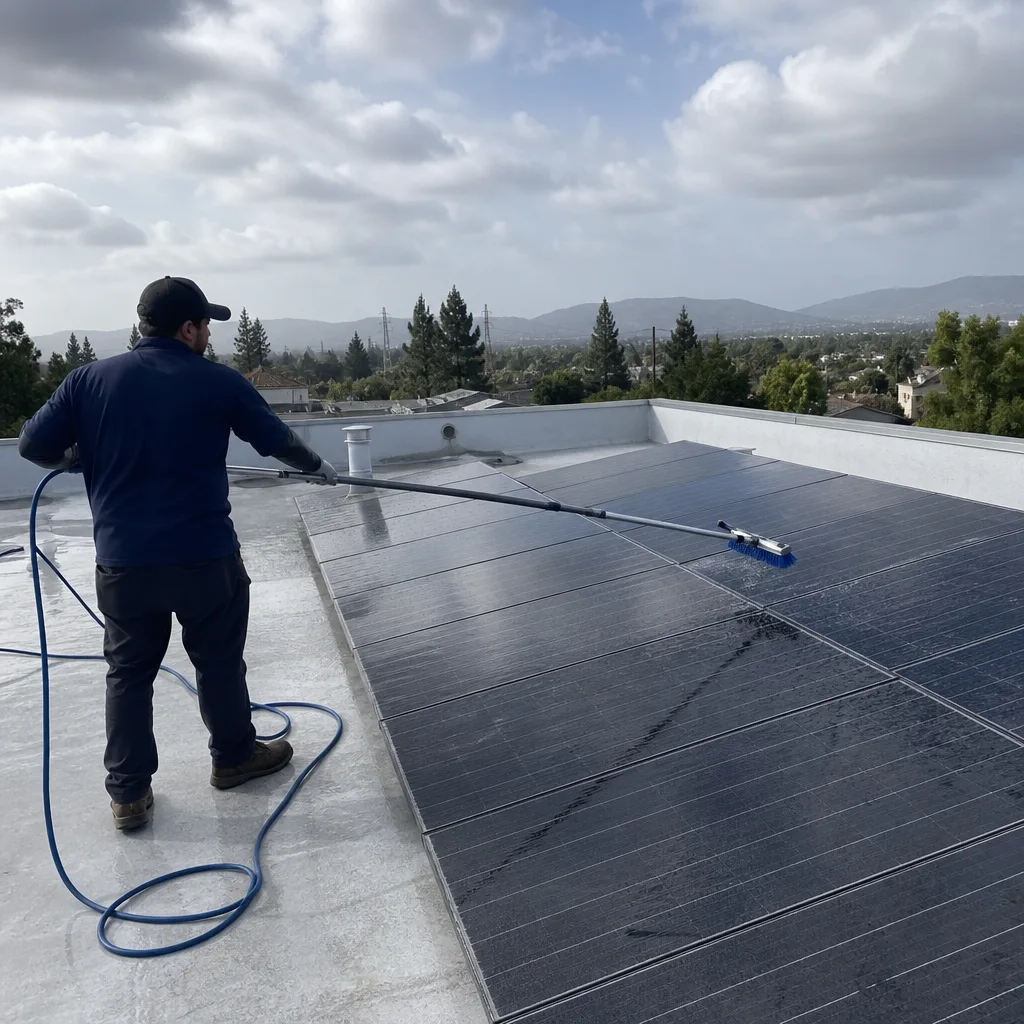
Most Dinuba homes sit on modest, single-story ranch-style lots built between the 1950s and 1980s. Those low-pitch roofs are straightforward to walk, but the panels sit close to trees, irrigation lines, and in some cases, adjoining agricultural parcels. A standard cleaning on a 20- to 30-panel array in Dinuba runs $140-$280, depending on soiling level and roof access. We use soft-bristle brushes and deionized water, never pressure washers and never untreated hose water. Hard water minerals bake into glass under Dinuba’s high irradiance and accelerate long-term degradation.
Commercial Array Cleaning
Cold-storage facilities, packing sheds, and ag-processing buildings across the Dinuba area run rooftop or ground-mount arrays that take a beating from exhaust fans, loading-dock dust, and harvest-season particulate. We schedule commercial cleanings around operating hours so your production drops as little as possible. Most Dinuba commercial arrays in the 50- to 200-panel range run $400-$1,200 per cleaning, with scheduled plans reducing the per-visit cost. If your operation runs high-draw refrigeration or irrigation pumps, a dirty array costs you real money every month on your PG&E bill.
Bird & Critter Guard Installation
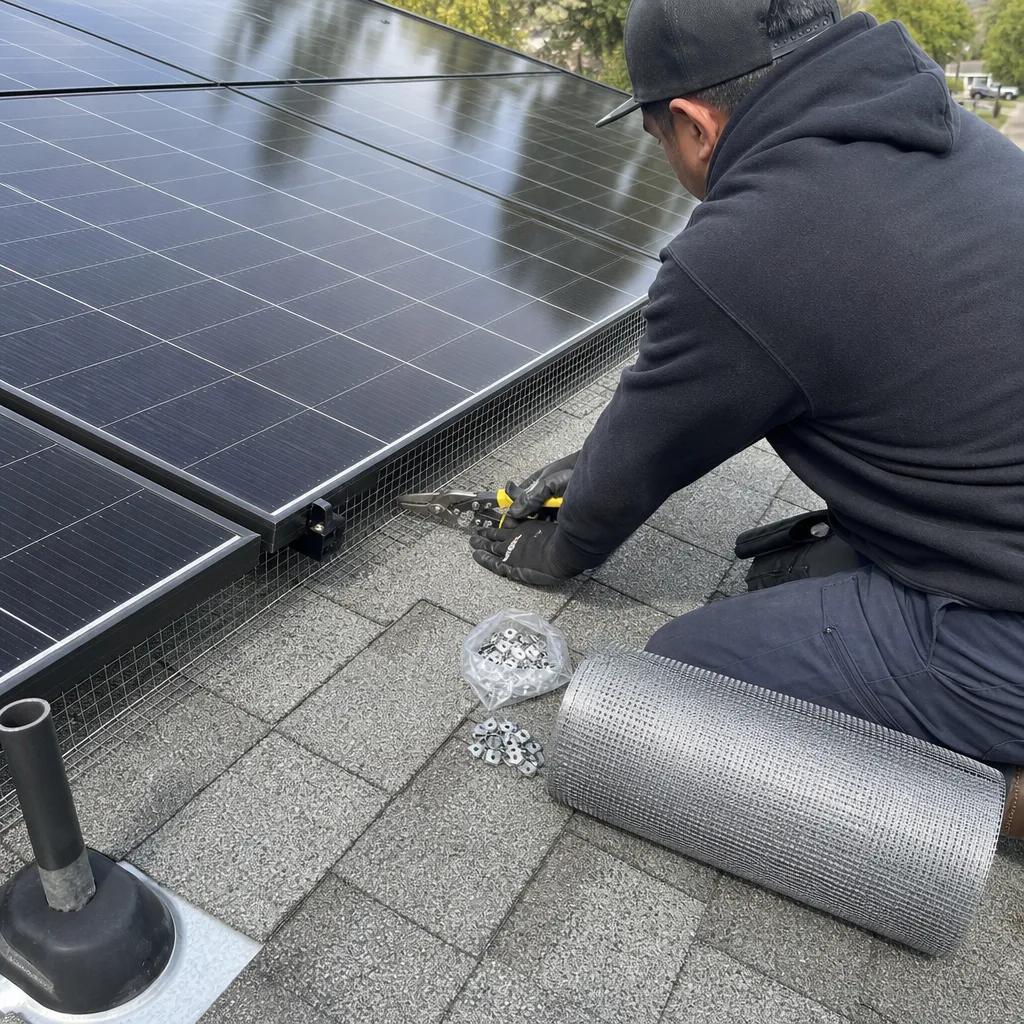
Pigeons and sparrows nest under panels on Dinuba rooftops, drawn by the shade and the protection from Valley heat. Their droppings are caustic, and nesting material blocks airflow, which raises panel temperature and shortens microinverter life. We install powder-coated steel mesh guard systems sized to your array’s specific rail profile. Installed cost for a typical single-story Dinuba home runs $350-$700, and it keeps birds out for the life of the roof. If you’re already seeing droppings along your eaves below the array, call before the nesting season peaks in spring.
Debris & Soiling Removal
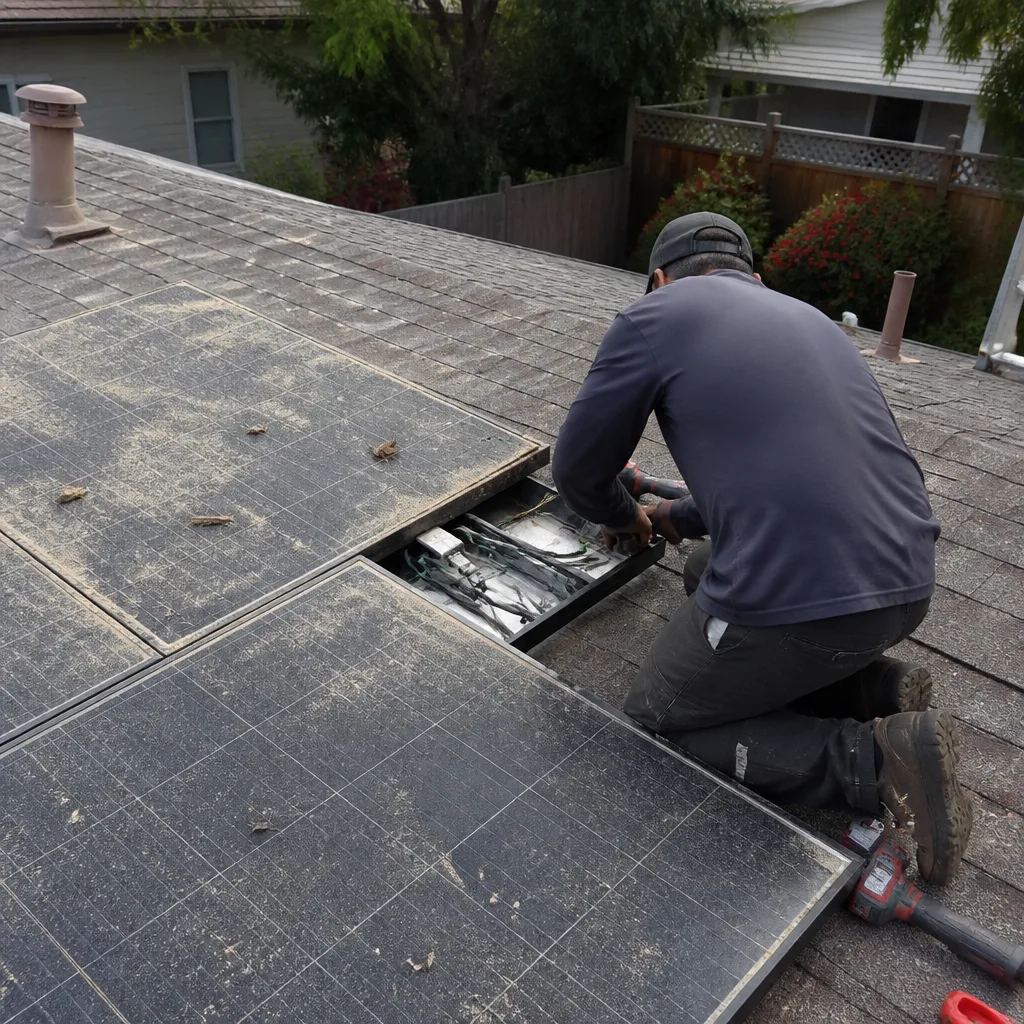
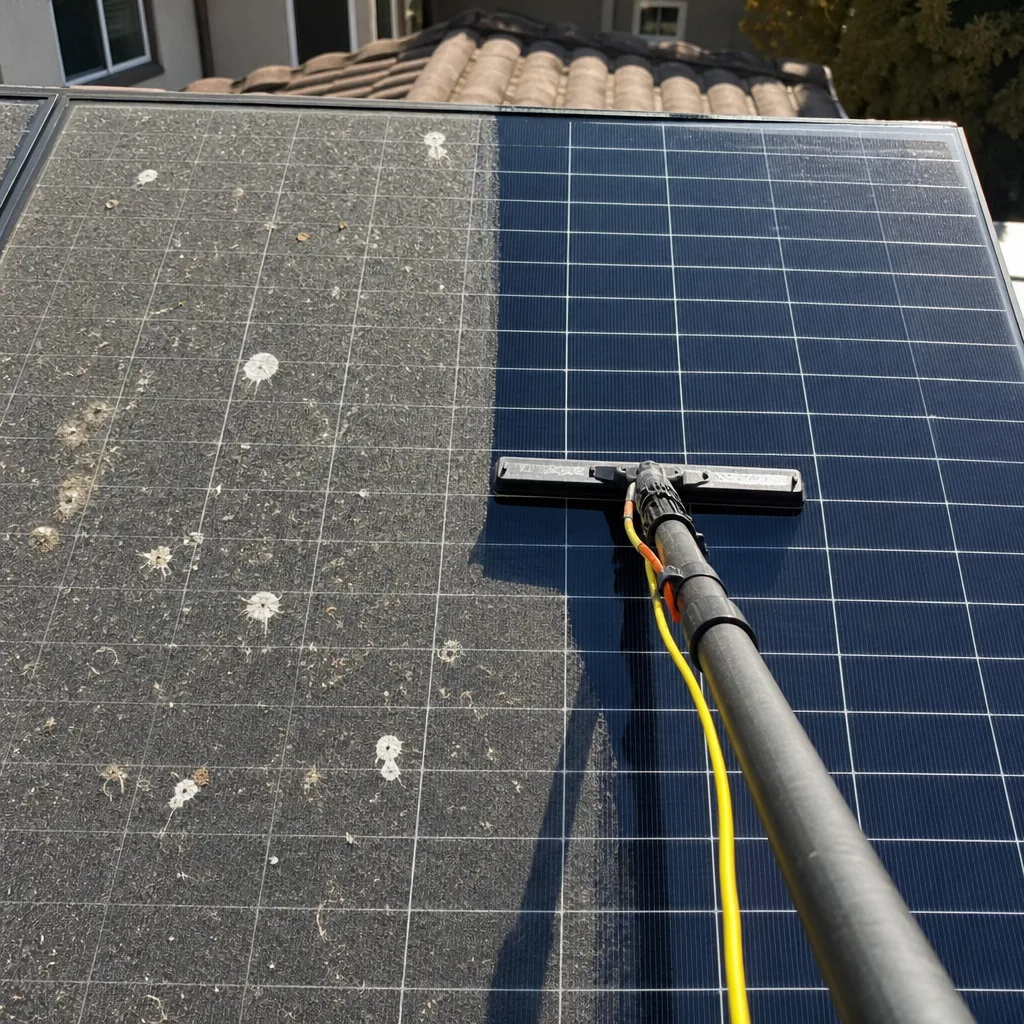
This is the service Dinuba needs more than any other Valley town we work in. The late-summer grape and raisin harvest sends dense, sticky organic dust into the air for six to eight weeks. Mechanical raisin-drying equipment kicks up vineyard soil, dried fruit residue, and grape sugars that settle on panel glass and bond under heat. In Fresno or Visalia, soiling is mostly road dust you can rinse. In Dinuba, it’s a tacky film that needs a citrus-based degreaser in a soft-brush application followed by a deionized rinse. We developed our Dinuba-specific cleaning protocol after years of watching standard washes simply smear the residue around. This is not a generic service. It’s built for what lands on your roof.
Scheduled Cleaning Plans
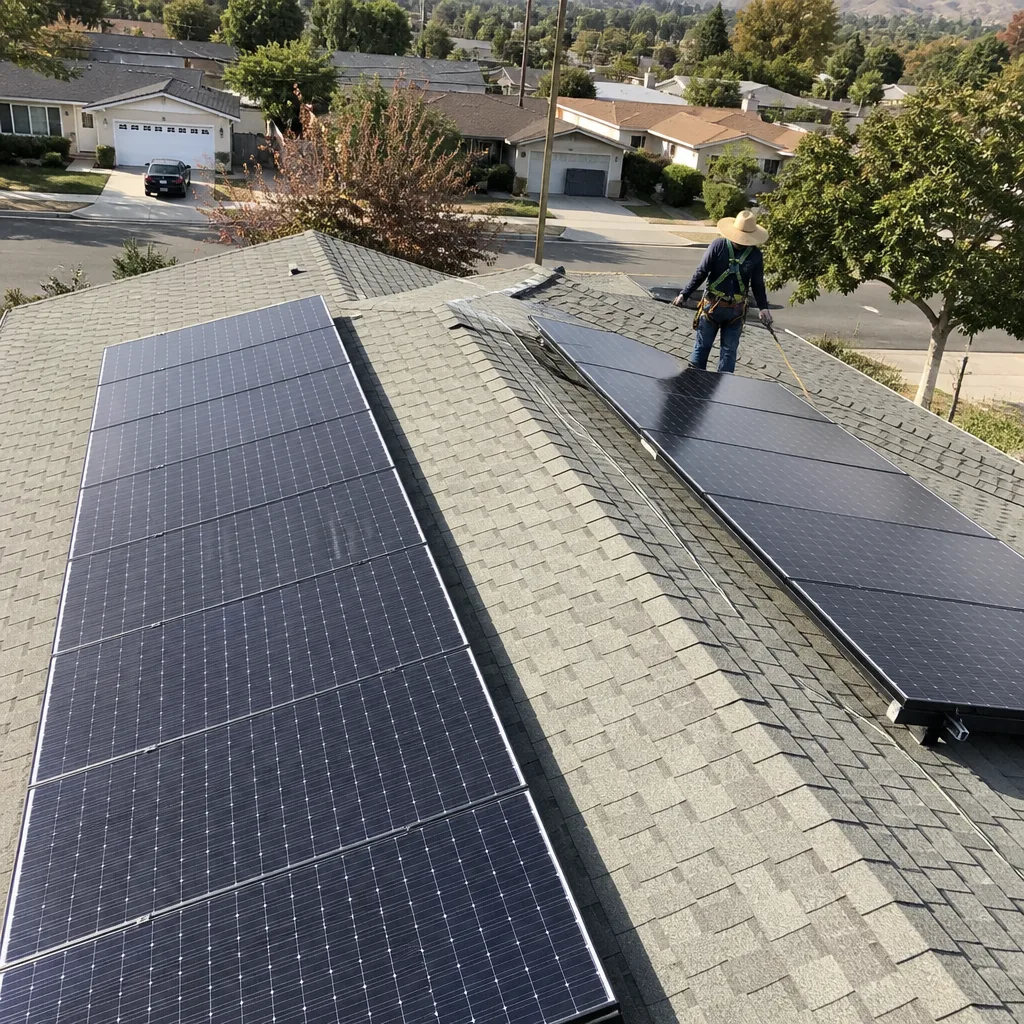
For Dinuba homeowners with acreage, a well, and an array east of a vineyard row, we recommend a twice-annual schedule: once in May or June before peak production season, and once in mid-September after the worst of the harvest dust has settled. Annual plans start at $240 for a standard residential array, and each visit includes a visual inspection of panel surfaces, rail clamps, junction boxes, and microinverter readings. You’ll get a report after each visit, not a sales pitch.
Post-Storm Panel Cleaning
Valley storms are rare, but when a wet front blows through during harvest, the combination of rain mist and grape dust leaves a streaked, mineral-rich film that cuts production fast. We prioritize post-storm calls for existing plan customers and respond to first-time callers in Dinuba within two business days. A post-storm cleaning runs $180-$320 for most residential arrays. If a storm hit and your panels look streaked or spotted, don’t wait for your next scheduled visit. The longer that residue sits, the harder it is to remove cleanly.
What happens when you call
- 1
A real person answersNo phone trees - you reach a local pro.
- 2
You get an upfront price rangeHonest numbers before anyone is dispatched.
- 3
A background-checked tech heads outLicensed & insured, dispatched right away.
- 4
You approve before work beginsNothing starts until you say go.
Trusted Brands We Service in Dinuba
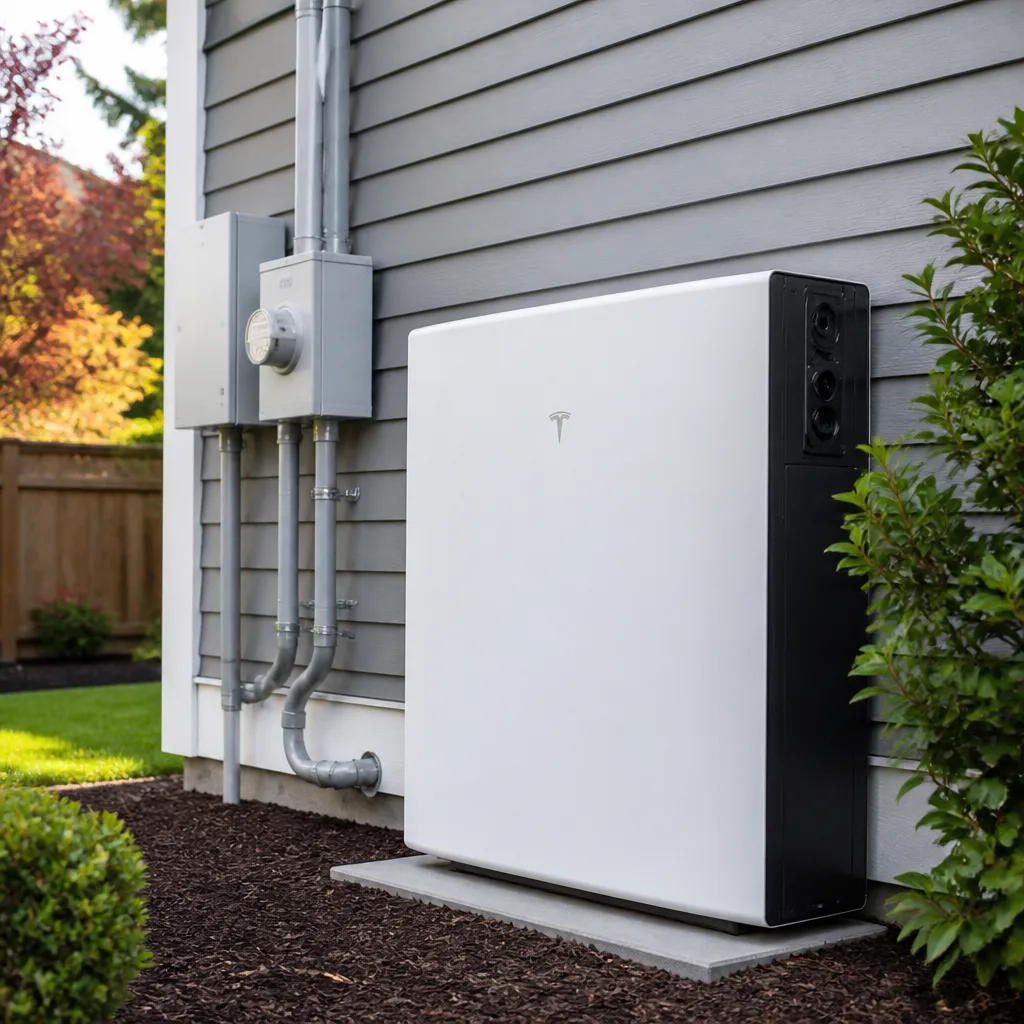
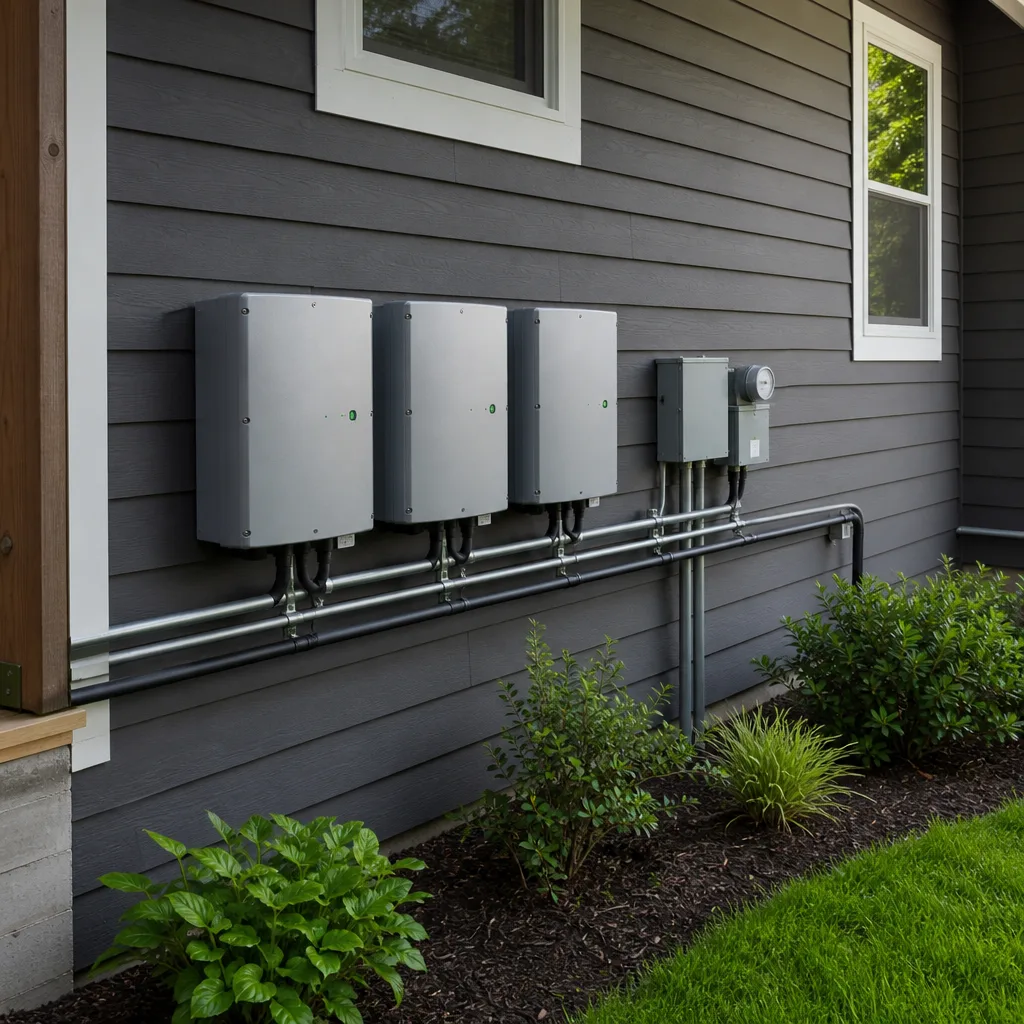
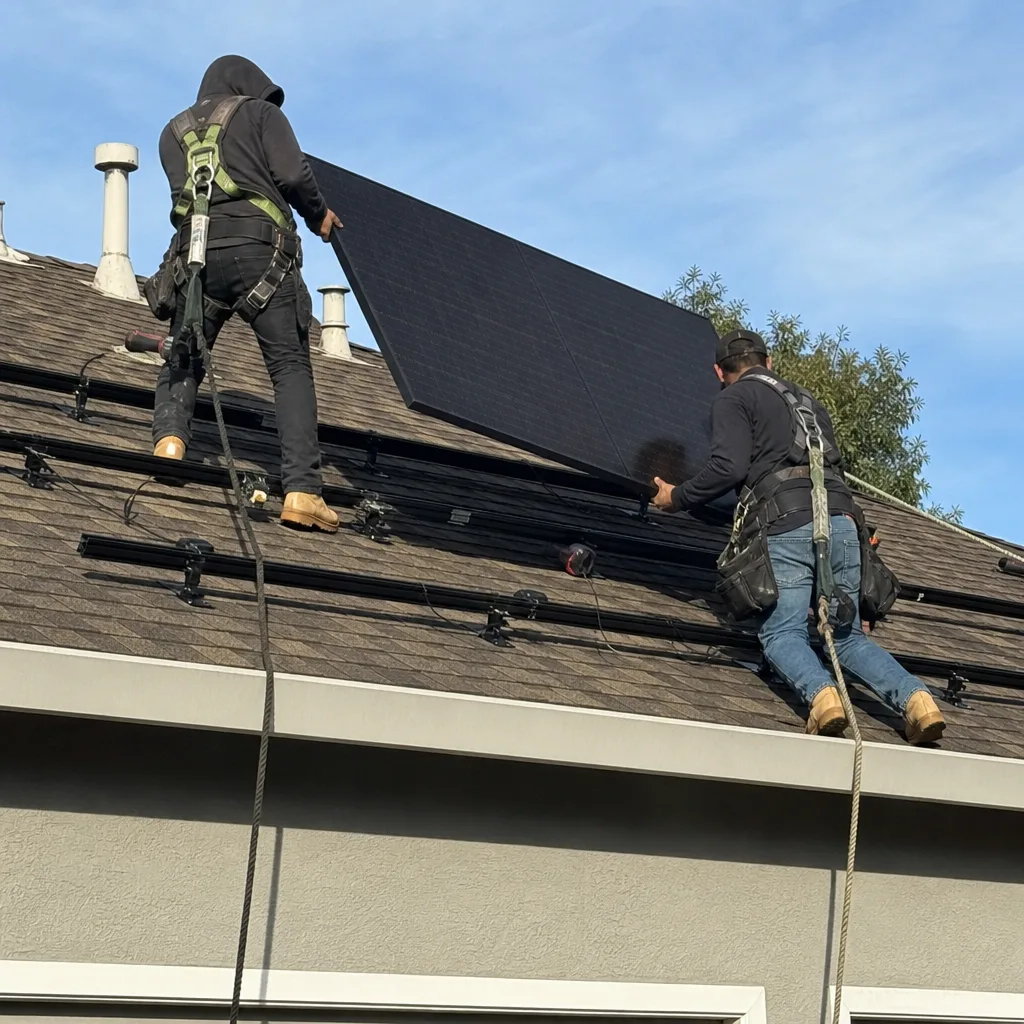
Our Solar Panel Cleaning in Dinuba team works on arrays built with Panasonic, Canadian Solar, JinkoSolar, REC, and Qcells modules, paired with Enphase and SolarEdge electronics. We don’t need to call the manufacturer to know the right cleaning chemistry for your specific glass coating. If your system includes FranklinWH battery storage, we can also check the inverter and battery connections during the same visit and flag anything that looks off before it becomes a service call. That’s the advantage of a company that installs, cleans, repairs, and monitors systems under one roof.
Common Solar Panel Cleaning Problems We See in Dinuba Homes
- Grape-sugar residue bonding to panel glass. This is the dominant failure mode in 93618 during August and September. Standard water-only rinses leave a hazy film that keeps cutting output for weeks. We see it most on arrays within 300 yards of active vineyard rows or raisin-drying pads.
- Mineral spotting from DIY hard-water cleaning. Dinuba’s municipal water has high dissolved solids, and irrigation well water is worse. When homeowners spray panels with an untreated hose, the minerals flash off in the sun and etch the glass. We see this on ranch-style homes along Alta Avenue and Road 80 regularly.
- Uneven soiling on west-facing arrays. Panels facing west catch late-afternoon wind patterns that carry harvest dust from west-side vineyard blocks. The lower third of those panels cakes up while the top stays relatively clean, and the homeowner sees a confusing production drop with no obvious visual pattern from ground level.
- Bird nesting under panels near irrigation ditches. Property lines along district canals and tailwater ditches attract pigeons and grackles. The droppings concentrate on specific panels, and the acid in the waste eats into anti-reflective coatings over time. By the time the damage is visible, production has been dropping for months.
Pricing for Solar Panel Cleaning in Dinuba, CA
Here are straight numbers for Dinuba and the surrounding 93618 service area:
- Residential panel cleaning (under 30 panels): $140-$280
- Residential panel cleaning (30-60 panels, larger ranch homes): $280-$500
- Commercial array cleaning (50-200 panels): $400-$1,200
- Bird guard installation, single-story home: $350-$700
- Post-storm or heavy-soiling cleaning add-on: $50-$120
- Scheduled plan, two visits per year: from $240 annually
What changes the price on your specific house: roof pitch and walkability, array size, soiling severity, and whether we’re also checking inverters or battery connections. What doesn’t change the price: the day of the week, who answers the phone, or whether you need a decision in a hurry. The number we quote is the number you pay. Call (877) 550-6892 for a free estimate. Bring us your PG&E bill and we’ll show you the production numbers that matter, not a brochure figure.
We Also Serve Cities Near Dinuba
Our crews cover the surrounding Tulare County communities, including Reedley, Cutler, Orosi, and Orange Cove. If you’re just outside Dinuba city limits on a county road, you’re still in our service area. Scheduling for nearby towns follows the same 48-hour response window that Dinuba customers get, and the same local knowledge applies. The raisin dust that lands on your roof in Cutler is the same dust we’re cleaning off panels on El Monte Way in Dinuba.
Serving Dinuba, CA - Our Local Coverage Area
We’re based in the Dinuba area and know this community well. Use the map below to see our service coverage - if you’re nearby, we can almost certainly help.
FAQs - Solar Panel Cleaning in Dinuba
Grape harvest dust is stickier and more production-degrading than typical road dust because it contains plant sugars, fruit residue, and fine vineyard soil that bond to the glass when heated. A heavily soiled array in Dinuba during September can lose 12-18% of its daily output, whereas road dust in a city like Fresno might drop production by 5-8%. The difference is that grape dust requires a degreaser and soft-brush application, not just a rinse. If your true-up statement shows a late-summer production dip that doesn’t match your usage pattern, call (877) 550-6892 and we’ll come assess it.
Schedule it after the main harvest dust settles in mid-to-late September, and optionally once more in spring before peak irradiance. Cleaning before the harvest means your panels are covered in grape dust again within days. Cleaning after the heaviest soiling period restores peak output heading into fall and early winter, when every kilowatt-hour counts against shorter days. For homes that run irrigation pumps or cold storage, a second cleaning in May or June makes financial sense.
Panels near irrigation canals, tailwater ditches, and mature eucalyptus windbreaks attract more nesting birds because those features provide water and cover. Properties with exposed roof edges and few nearby trees see less bird pressure. The panels closest to a food or water source get the most droppings, and those droppings are corrosive. If you’re seeing concentrated bird activity along one section of your roofline, bird guard installation costs less than the production loss and panel damage from continued exposure. We can add guards during a regular cleaning visit.
Tule fog doesn’t create new soiling, but it condenses on dirty panel surfaces and leaves behind a streaked, mineral-rich residue when it burns off. That residue amplifies the production loss from whatever dirt was already there. Winter is also when every generated kilowatt-hour matters most, since fog already cuts output by 40-60% for days at a stretch. Panels that are clean going into fog season produce more during clear breaks than panels with September harvest dust still baked on. A late-November or early-December cleaning for Dinuba customers who skipped the post-harvest visit is often the difference between finishing the winter in credit or with a surprise true-up bill.
You can rinse them, but rinsing with Dinuba’s hard water leaves mineral spots that cut production permanently. The safe approach for a single-story ranch is a soft-bristle brush, deionized water, and for harvest-season residue, a citrus-based degreaser, never dish soap or household cleaners, and never a pressure washer. If your roof is low-pitch and you can reach every panel from a stable ladder without walking on the array, a basic rinse between professional cleanings is fine. But if the residue has baked on through a Valley summer, or if you’re seeing streaky spots you can’t remove, it’s time to call a crew that does this for a living. A professional cleaning in Dinuba costs less than one month of lost production on most systems.
Call Gus’s Solar for Solar Panel Cleaning in Dinuba
If your panels are carrying harvest dust, bird droppings, or mineral film, we’ll come clean them properly and show you the production difference on your monitoring app. Call (877) 550-6892 for a free estimate. A live person answers, 24/7, and the quote we give you is the price you pay. Senior and veteran customers in Dinuba get 10% off, every time, forever. And if you have a written estimate from another company, bring it in. We’ll give you a free second opinion and tell you honestly whether their number is fair.
Written by Gus Petrakis, Owner at Gus’s Solar, serving Dinuba and the surrounding Central Valley since 2011.