
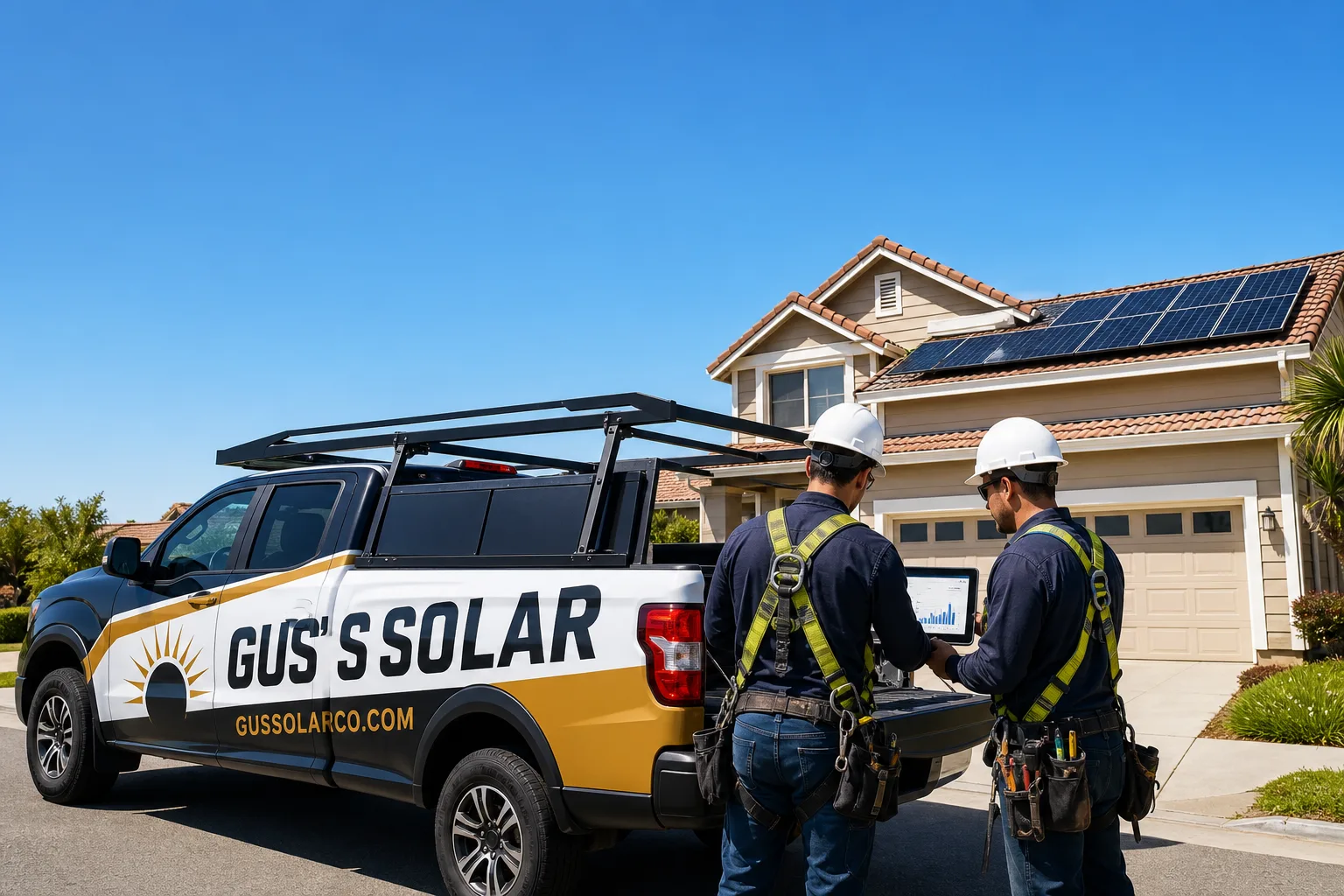
Free bill analysis - bring a power bill, get the production math for your actual roof, panel brands like Qcells and REC compared side by side
If the pitch starts at your door and ends with "sign tonight for the special," sleep on it. The sun will still be there tomorrow; so will we.
 Before
 After
After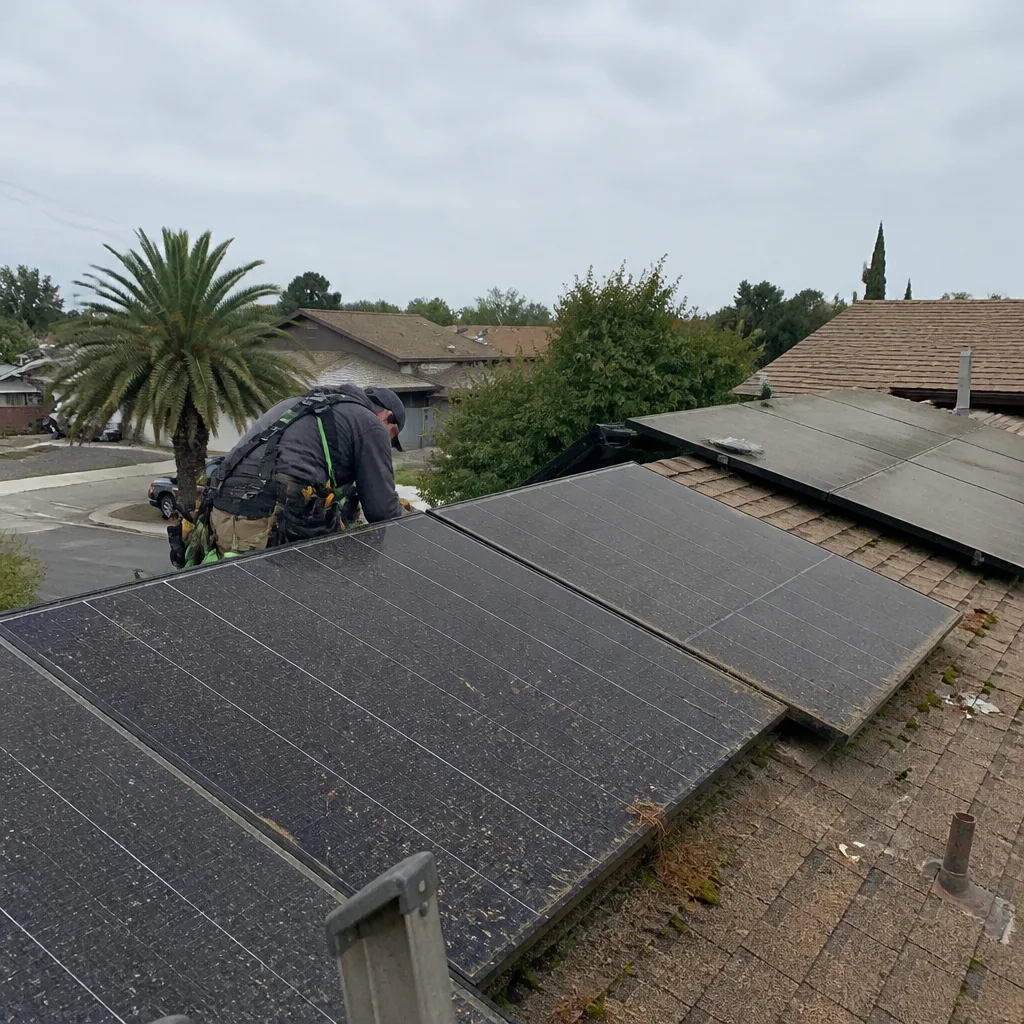 Before
 After
After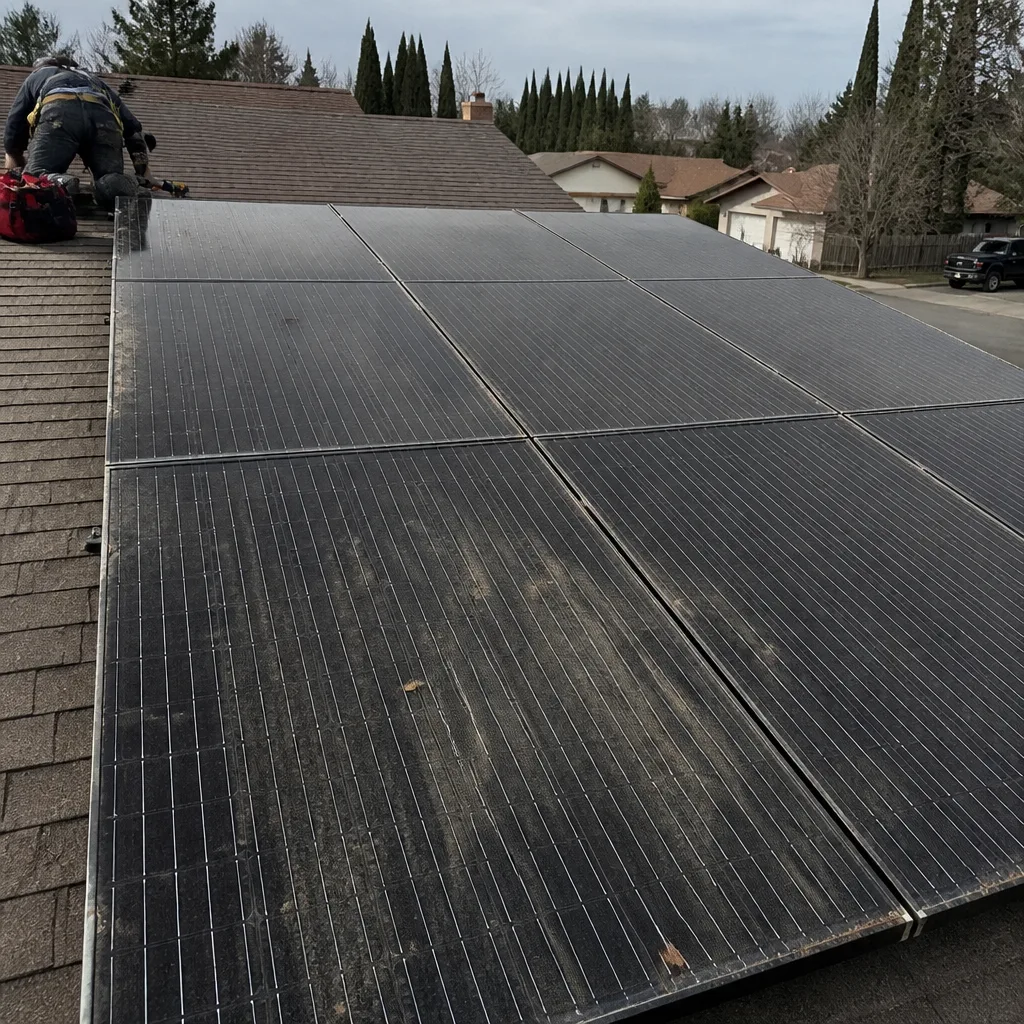 Before
 After
AfterFast, Reliable Solar Battery Storage & Backup Across Stockton
A solar battery in Stockton does two jobs: it keeps your lights on when PG&E shuts power off, and it lets you store the cheap afternoon sun for use after dark. In Stockton’s specific climate and rate environment, sizing that battery correctly means accounting for weeks of Tule fog and triple-digit summer heat, not just looking at a glossy average. Our crew has been doing exactly that for Stockton homeowners since 2011, and we quote numbers off your actual utility bill, not a brochure. Call (877) 550-6892 and bring us a bill. We’ll bring you the math.
Key Takeaways
– Stockton’s Tule fog season, roughly Thanksgiving through mid-February, can cut daily generation to near zero for multi-day stretches. Battery sizing here must be built around that valley reality.
– A typical whole-home battery installation in Stockton runs $14,000 to $22,000 before incentives, depending on brand and panel count.
– PG&E time-of-use rates and NEM 3.0 make batteries a financial tool here, not just a blackout backup.
– South and central Stockton homeowners may stack DAC-SASH incentives with battery storage, a combination few other California markets can match.
Why Gus’s Solar Is the Local Choice for Battery Backup in Stockton
Gus Petrakis founded this company in 2011 and put his own name on the truck. That matters in Stockton, where plenty of homeowners have already been burned by an out-of-state outfit that quoted one number on the phone and another at the door. Our team answers calls with a live person 24 hours a day, seven days a week, not a voicemail tree. When you call about a battery that’s draining too fast during a fog stretch, you talk to someone who actually knows what Stockton’s winter generation curve looks like.
If a salesman needs an answer tonight, the answer is no. That’s not how we work. You get a written quote, you take two weeks to think about it, and the price is the same when you come back. Every battery install is covered by our 90-Day Done Right Promise. If something isn’t right, Gus makes it right. One call brings him back.
Our Solar Battery Storage & Backup Services in Stockton
We focus on the specific battery work Stockton homeowners actually need, and we don’t hand the job to a sub. Gus’s own background-checked, uniformed crew does every install.
Whole-Home Backup Power
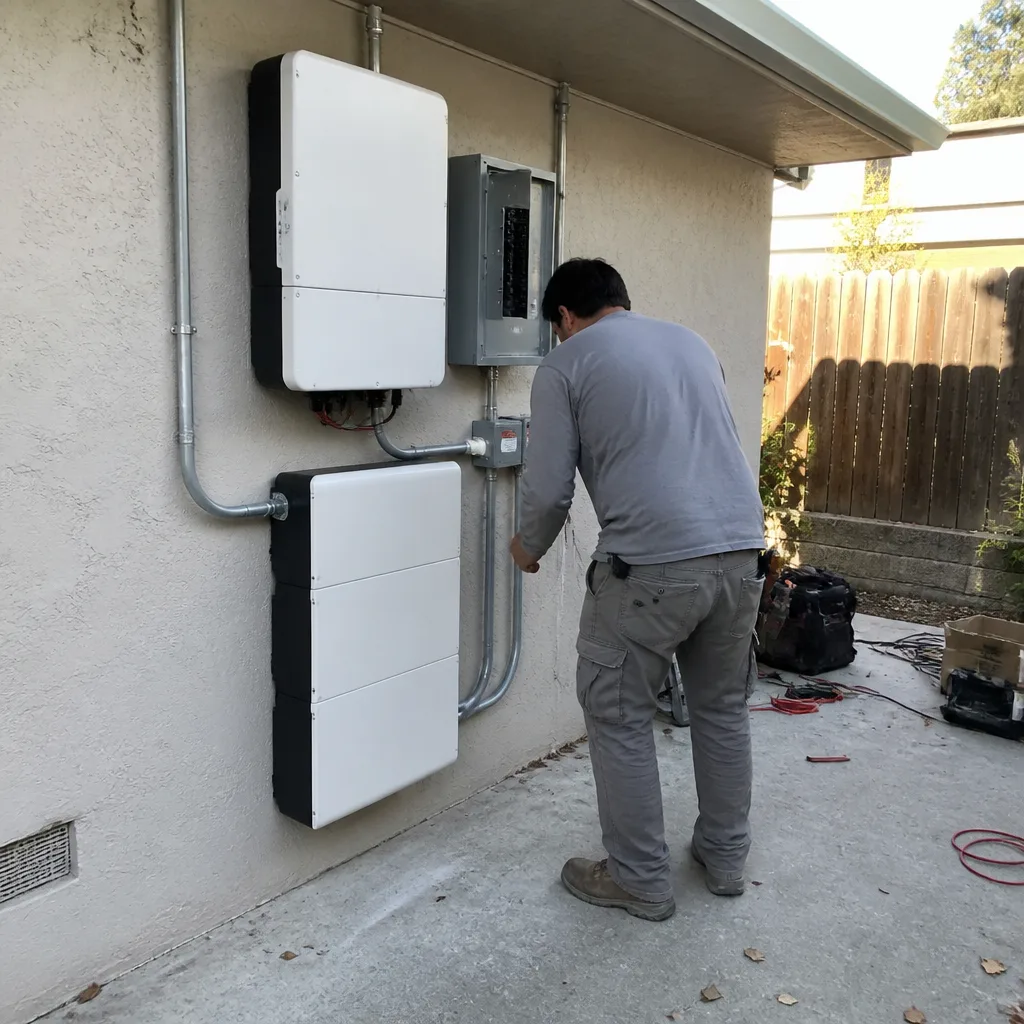
Stockton sits at the end of some of California’s longest distribution feeder lines. When PG&E throws a Public Safety Power Shutoff during a heat advisory, whole-home backup in Stockton isn’t a luxury, it’s the difference between a livable house and a 105°F box. We size whole-home battery systems around your real summer load, including that aging 4-ton AC compressor, and we install load-shedding relays so a single battery doesn’t trip the moment the compressor kicks on. A correctly configured whole-home backup for a 1,800 to 2,400 square-foot Stockton tract home typically lands between 20 and 30 kWh of storage.
Battery Retrofit for Existing Solar
If you already have panels on your roof, you don’t need to replace them to add storage. We retrofit batteries onto existing systems regularly, including older string-inverter arrays and newer microinverter setups. The question we answer first is whether your current inverter can accept a DC-coupled battery or whether an AC-coupled unit like the Tesla Powerwall 2 or a FranklinWH aPower makes more sense. In Stockton homes with 1990s-era arrays, AC coupling is often the cleaner path because the original inverter isn’t worth replacing just to change the battery chemistry.
Time-of-Use & NEM 3.0 Optimization
Stockton homeowners who went solar before April 2023 are on older net metering agreements that still credit retail rates. Adding a battery under NEM 3.0 rules changes the math, and not always in the way a glossy brochure says. Our team looks at your actual year-round consumption, your fog-season generation dips, and PG&E’s current Stockton rate schedule before recommending a battery size or dispatch mode. We quote the year-25 output, not the day-one number. If the battery doesn’t pay for itself under your real usage pattern, we’ll tell you that before you spend a dollar.
Tesla Powerwall & Enphase IQ Battery Installation
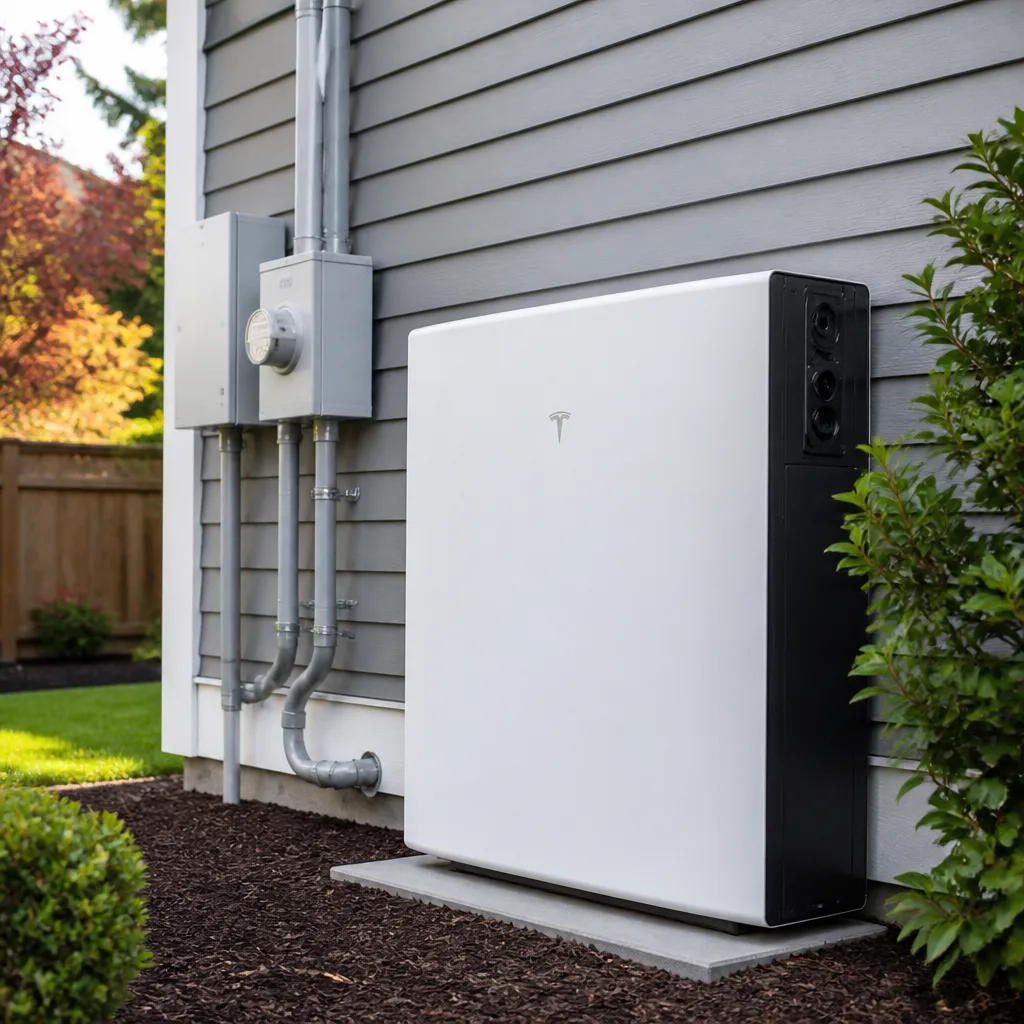
We install and service both Tesla Powerwall and Enphase IQ Battery systems in Stockton. Each has a different cold-weather and high-heat profile, and in a city that swings from 28°F December mornings to 115°F garage afternoons, that profile matters. The Enphase IQ series tends to handle partial-shade and microinverter integration gracefully. The Powerwall 2 offers higher peak output for starting big inductive loads like well pumps and older compressors. We’ll walk you through which fits your home and your panel setup, and we’ll show you the warranty terms in writing before you sign.
What happens when you call
- 1
A real person answersNo phone trees - you reach a local pro.
- 2
You get an upfront price rangeHonest numbers before anyone is dispatched.
- 3
A background-checked tech heads outLicensed & insured, dispatched right away.
- 4
You approve before work beginsNothing starts until you say go.
Solar Battery Storage & Backup Is Different in Stockton
Here’s the information-gain section: the stuff a generic battery page never tells you. Stockton sits squarely in the San Joaquin Valley’s peak solar irradiance corridor, one of the highest in California. Your summer sun is exceptional, routinely driving panel surface temps above 150°F. But your winter is a different animal entirely. Tule fog blankets the valley floor for weeks each December through February, suppressing daily generation to near zero for multi-day stretches. Coastal and Bay Area customers never see that kind of yield cliff.
That means a battery sized off a generic California production estimate will leave you in the dark on day two of a fog stretch. We size Stockton batteries around the worst ten days of winter, not the best ten days of July. A 10 kWh battery that works fine in San Jose can drain to empty before sunrise in north Stockton if the array underproduces for three consecutive foggy days. We also account for the valley’s brutal summer afternoons, because a battery in an unconditioned garage that hits 115°F in August will throttle its inverter and refuse a full charge. Every battery quote we write for Stockton includes an installation-location assessment, because battery performance is a thermal problem as much as a solar problem.
Then there’s the incentive picture. Large parts of south and central Stockton fall within census tracts that qualify for California’s DAC-SASH program, which stacks additional incentives on top of federal storage credits for eligible single-family homes. That means a homeowner near the 95204 or 95206 ZIP can sometimes bring a battery’s net cost down by thousands more than a homeowner in, say, Tracy or Lodi. We’ll check your address against the current DAC-SASH eligibility list before we quote you, so you know what you actually qualify for, not what a sales pitch promises.
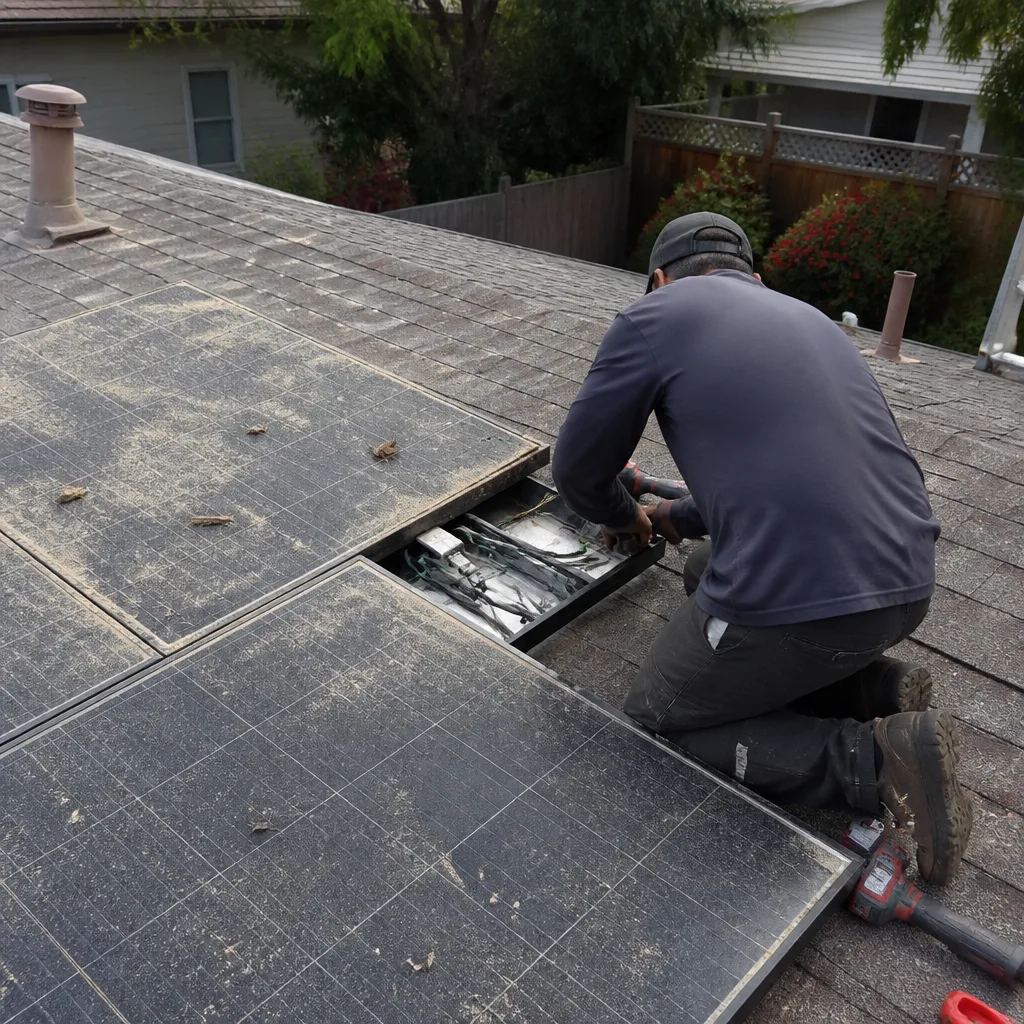
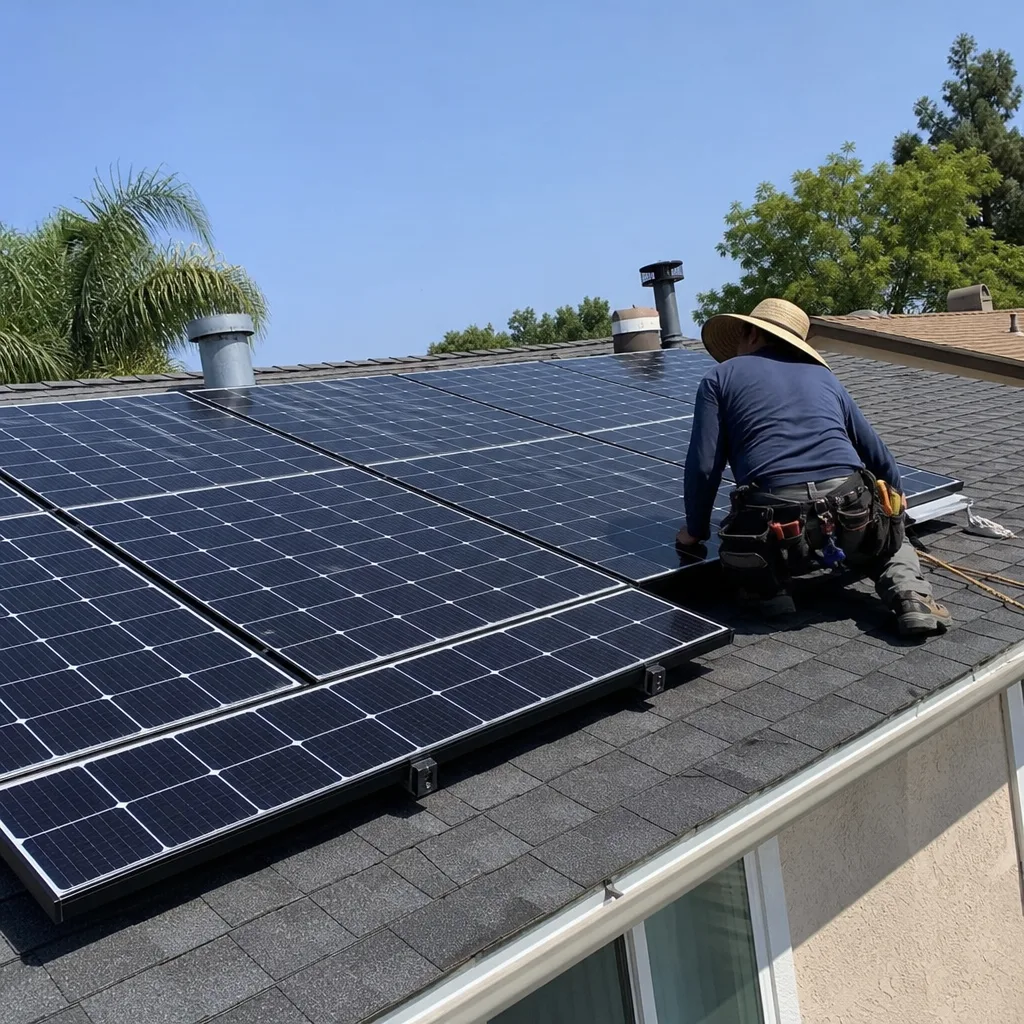
One more Stockton-specific truth: agricultural dust, wildfire smoke particulate, and almond and walnut harvest debris settle on arrays here at rates far higher than in coastal markets. Panels in Stockton can lose 15 to 20% of output by midsummer without a spring cleaning, which directly affects how much energy your battery can store. Our team makes a maintenance-plan conversation a standard part of every battery consult, because a dirty array plus a foggy winter equals a battery that never gets a full charge. That’s not something a national installer’s online configurator ever asks about.
What Battery Storage Costs in Stockton
You deserve real numbers. Here’s what we see in Stockton’s market today:
- Single-battery retrofit (10-13.5 kWh, e.g. one Powerwall 2 or FranklinWH aPower): $11,500-$14,500 installed, before incentives.
- Whole-home backup with two batteries (20-27 kWh): $21,000-$28,000 installed, before incentives.
- Whole-home backup with three batteries (30-40 kWh): $30,000-$38,000 installed, before incentives.
- Battery retrofit for existing solar (AC-coupled, single battery): $12,000-$16,500 installed, depending on inverter compatibility and main-panel work.
- Federal investment tax credit (ITC): 30% of system cost, including battery storage.
- DAC-SASH stacking (eligible south/central Stockton tracts): Varies by household income and program year, but can offset $3,000-$10,000+ on qualifying projects.
What moves the price up or down in Stockton? Whether your main panel needs a service upgrade, whether your garage needs a heat-rejection solution for the battery, whether your roof is a 1980s comp-shingle tract roof or a pre-1960s bungalow with an aging rafter system. We don’t guess. We look at your house, your bill, and your breaker panel before we quote anything. Estimates are free, and the price we quote is the price you pay.
The Tule Fog Story
We want to tell you one field story, because it explains why we size Stockton batteries the way we do. Our crew retrofitted a Tesla Powerwall 2 on a 1990s tract home near the 95210 ZIP boundary, right after the homeowner showed us a true-up statement where December fog had cratered their kWh offset to 3%. A generic battery sizing tool would’ve called that house “already solar-producing” and moved on. We didn’t. We paired the Powerwall with a load-shedding relay for the aging 4-ton AC compressor so the battery wouldn’t trip during a July heatwave afternoon when the inverter was already derating from panel surface temps above 150°F. That’s the difference between a battery that works in Stockton and one that works on a simulation screen in some office a thousand miles away.
And that philosophy carries through every job. This is Gus’s name on the work. L.O.C.A.L. values, as we put it: Local roots, On time, Community first, Accountable, Loyal. It’s not a slogan. It’s the operating code.
Common Battery Storage Problems We See in Stockton Homes
- Battery sized off a coastal-style annual estimate, then draining to zero before sunrise during a three-day fog stretch. We see this most often on systems installed by out-of-state outfits that never factored Tule fog into the model. The fix is often adding a second battery or reconfiguring the load-shedding relay map.
- Backup panel wired without a rapid shutdown bypass, so the whole-home circuit can’t island safely when PG&E kills power. This is a code and safety issue. If your battery was wired that way, it won’t protect you during a heat-advisory blackout, and it often needs a main-panel upgrade to correct.
- Battery installed in an unconditioned garage that hits 115°F in August, causing the inverter to throttle and the battery to refuse a full charge. Stockton garages get brutal. We now recommend active or passive heat management for any garage-mounted battery, especially the FranklinWH aPower and Powerwall, which both derate above 110°F ambient.
- Valley dust and harvest debris cutting panel output 15-20% by midsummer, so the battery never sees a full charge in July. A spring array cleaning paired with a storage battery makes a measurable difference in Stockton, and we’ll show you the before-and-after output data.
Trusted Brands We Service in Stockton
We work with the brands Stockton homeowners ask for: Tesla, Enphase, SolarEdge, FranklinWH, Panasonic, and Canadian Solar. We stock common replacement parts and firmware-update tools for these systems in our Central Valley service trucks, so when your Powerwall throws an error or your Enphase battery won’t hold a charge, we can often fix it in one trip instead of scheduling a “diagnostic visit” and then coming back twice. If you have a written estimate from a national installer, bring it in. We’ll give you a free second opinion, and if your panels are dirty while we’re out, we’ll tell you that too. Senior and veteran homeowners get a 10% discount that never expires.
Battery FAQs for Stockton Homeowners
Bigger than the same house would need in the Bay Area. A Stockton home that averages 18-22 kWh of daily usage needs roughly 25-30% more usable battery capacity to ride out a five-day fog stretch with minimal sun, because the array produces almost nothing for several consecutive days. That typically means two batteries instead of one for whole-home backup through the worst of December and January. Call (877) 550-6892 and we’ll model your house against actual fog-season generation data from north Stockton arrays, not generic California averages.
Yes, in most cases adding a battery to an existing system under a pre-NEM 3.0 agreement keeps your original export crediting intact. The longer answer depends on whether you’re DC-coupling to your current inverter or AC-coupling a standalone battery like the Tesla Powerwall. Our team handles both configurations in Stockton, and we’ll confirm your interconnection status with PG&E before any work starts. Call us with your current true-up statement in hand and we’ll map out your exact path.
A battery isn’t the only way to keep essentials running during a PSPS, but it’s the cleanest for most south Stockton homes in the 95206 ZIP, where summer outages can stretch for 12-24 hours or longer. A correctly wired whole-home battery with a rapid shutdown bypass keeps your refrigerator, medical equipment, and a room AC or fan running without the noise and fuel logistics of a portable generator. For south Stockton homeowners who qualify for DAC-SASH incentives, the net cost of adding that protection is lower here than almost anywhere else in California.
Three reasons: your summer cooling load is far higher, your garage gets hot enough to throttle the battery’s inverter, and your winter array generation drops harder during Tule fog. In Oakland, a Powerwall 2 often recharges by noon on a partly cloudy winter day. In Stockton, the same battery might go three days with almost no recharge in December, then cycle deeper and faster when the fog finally lifts. That’s why we size and thermal-manage Stockton installations differently.
Yes, in eligible south Stockton census tracts, DAC-SASH and battery storage incentives can stack with the 30% federal ITC, bringing net costs down by several thousand dollars. Eligibility is tied to your specific address and household income, and the program years have changed several times since launch. We check your ZIP and property against the current list before we write a quote, so you get the real available stacking, not a sales brochure number. Estimates are free; the phone number is (877) 550-6892.
We Also Serve Cities Near Stockton
Our crew covers Stockton and the surrounding communities: Country Club, August, Garden Acres, and Lathrop. If you’re in one of those neighboring towns and you’re looking at Solar Battery Storage & Backup in Stockton because that’s where you found us, call anyway. We schedule Stockton-area jobs same-week whenever possible, and the same local pricing and DAC-SASH eligibility checking applies to the whole service area.
Ready to Talk Battery Backup? Call Gus’s Solar
You don’t need to decide today. Take two weeks. Think about it. The price will be the same. But if you want to know what a correctly sized battery actually costs for your Stockton home, with your fog season, your DAC-SASH status, and your real utility bill in the math, call (877) 550-6892. A live person answers, 24 hours a day. Bring us a bill and we’ll bring you the math. That’s the whole pitch.
Serving Stockton, CA - Our Local Coverage Area
We’re based in the Stockton area and know this community well. Use the map below to see our service coverage - if you’re nearby, we can almost certainly help.
Browse Our Solar Battery Storage & Backup Services
Looking for more on the full scope of what we do? Visit our Solar Battery Storage & Backup page for an overview of brands, installation timelines, and our 90-Day Done Right Promise.
Written by Gus Petrakis, Owner at Gus’s Solar, serving Stockton since 2011.