
Free bill analysis - bring a power bill, get the production math for your actual roof, panel brands like Qcells and REC compared side by side
If the pitch starts at your door and ends with "sign tonight for the special," sleep on it. The sun will still be there tomorrow; so will we.
 Before
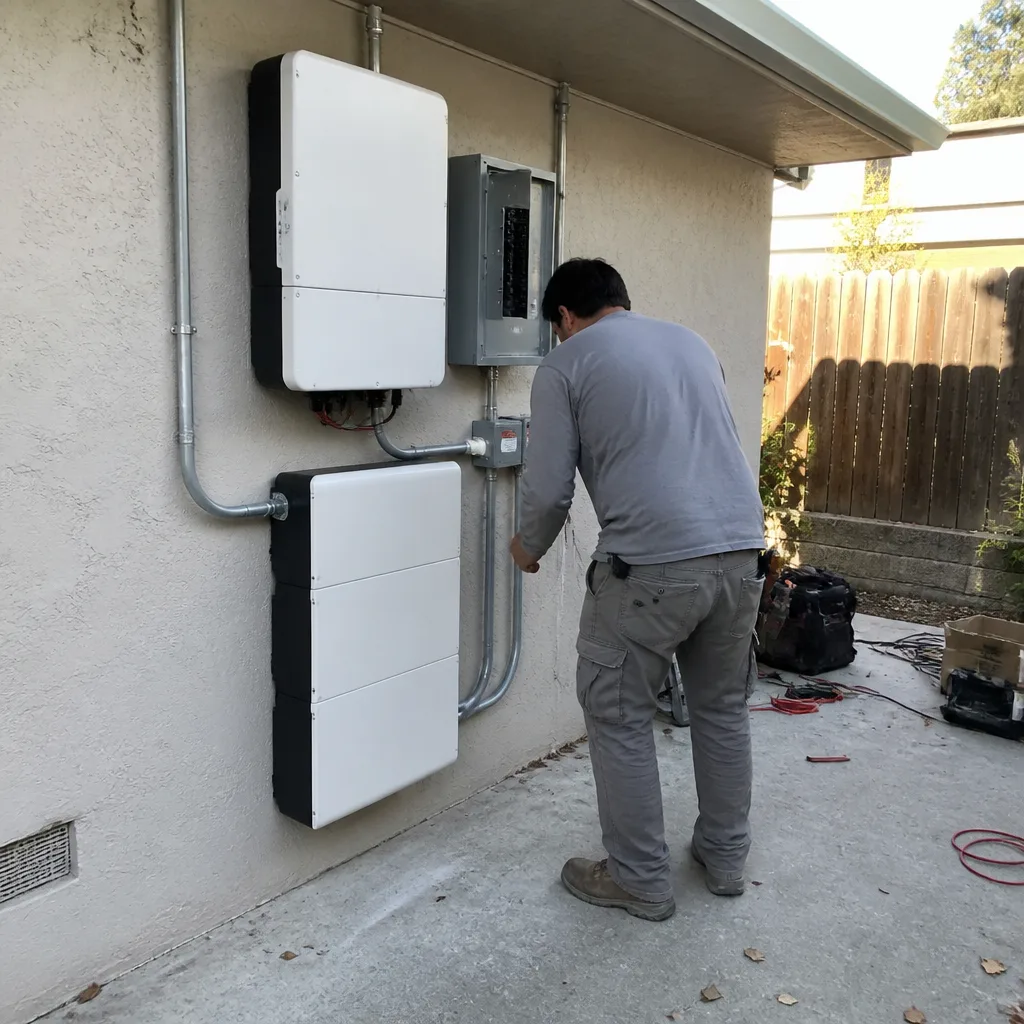 After
After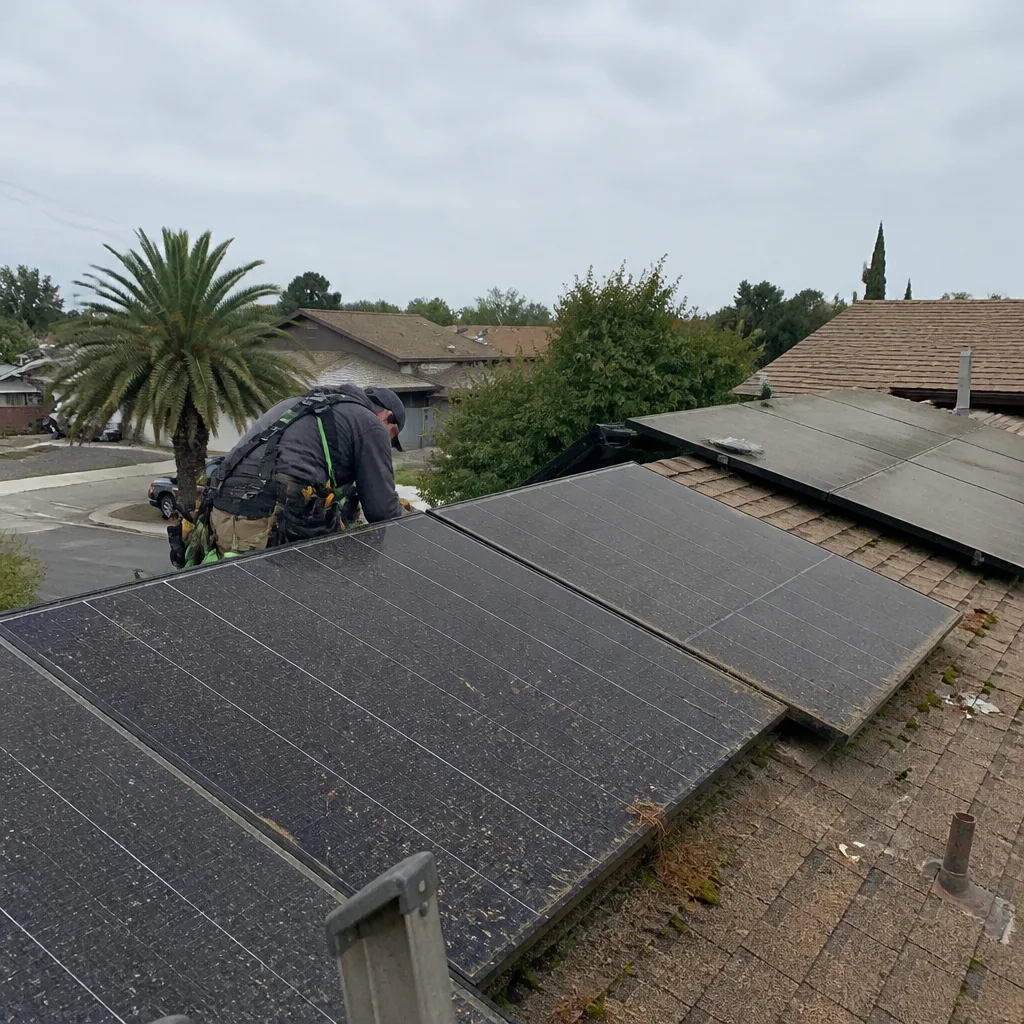 Before
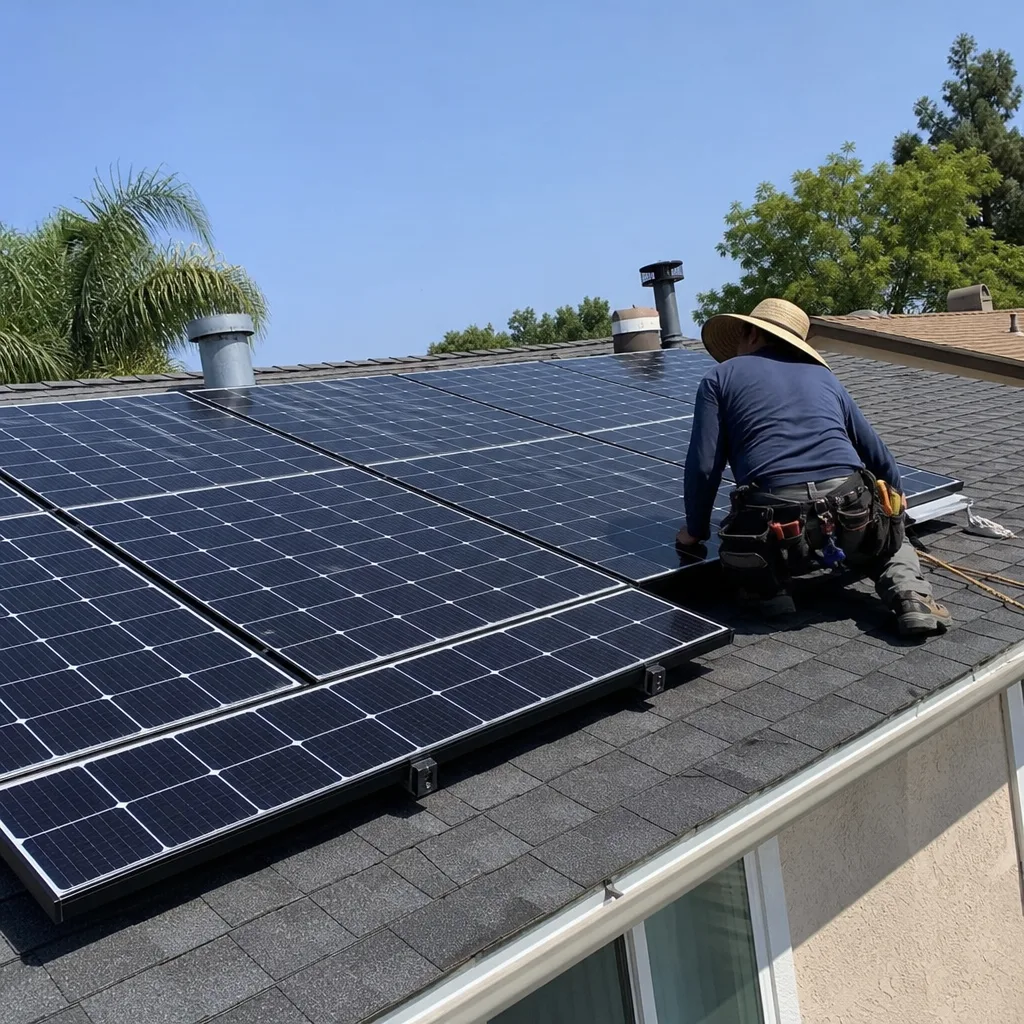 After
After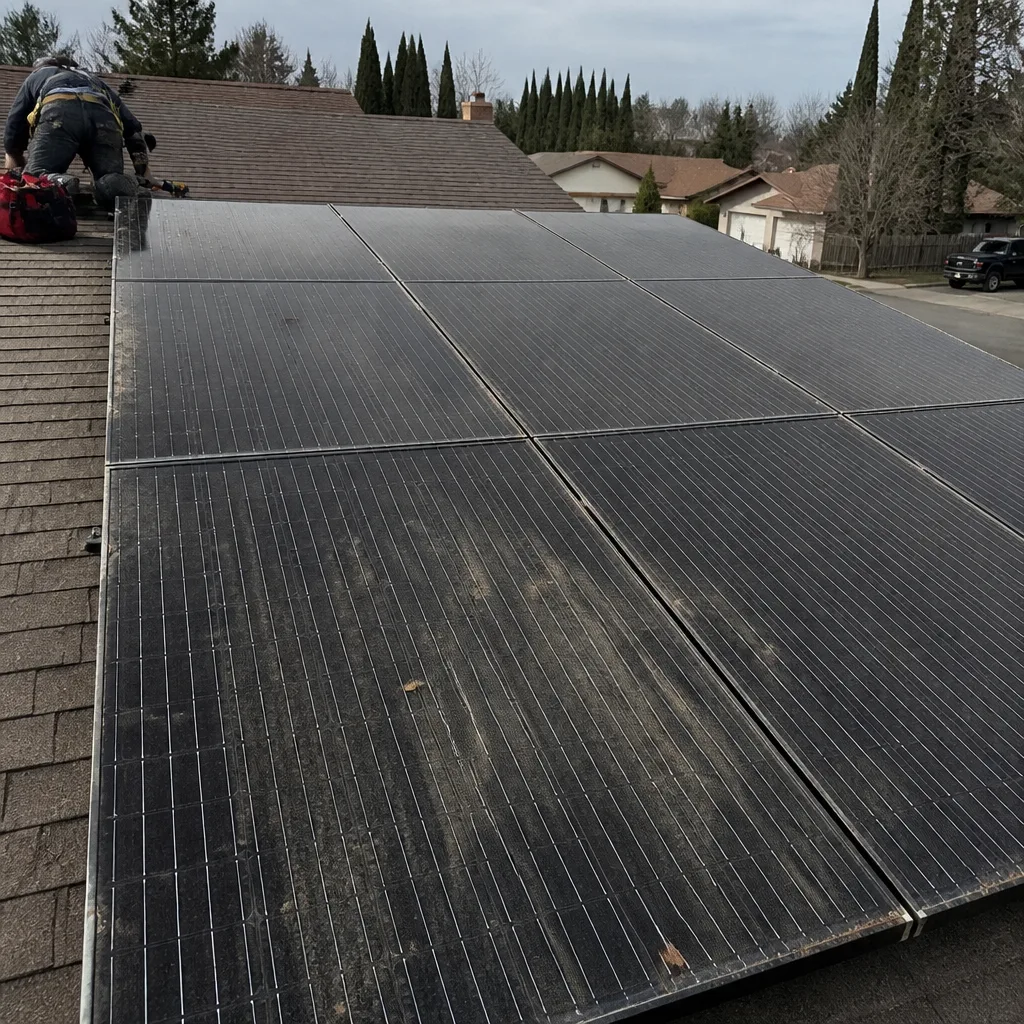 Before
 After
AfterFast, Reliable EV Charger Installation Across Corona
EV charger installation in Corona typically costs $450-$1,400 for a standard Level 2 unit on an existing panel, and $2,800-$5,500 when the job includes a 200-amp panel upgrade. Most Corona homes we service are 1990s-2000s tract builds with original 150-amp panels, which changes the math on what’s involved. Gus Petrakis and our EV Charger Installation crew have been wiring chargers into Corona garages long enough to know that the heat here isn’t a footnote, it’s the main story. If you’re plugging in a Tesla, a Rivian, a Ford Lightning, or a plug-in hybrid off the 91 or the 15, call us at (877) 550-6892 and we’ll give you a straight number before anyone touches a wire.
We answer the phone like a neighbor, not a call center. That’s been the standard since Gus founded this company in 2011, and it hasn’t changed. Bring us your SCE bill, tell us what you drive, and we’ll tell you what the charger, the circuit, and the panel are going to cost. Take two weeks to think about it. The price will be the same.
Why Gus’s Solar Is Corona’s Preferred EV Charger Installation Company
Corona homeowners have a specific problem with EV chargers: the heat. We don’t mean the kind of heat that makes you uncomfortable. We mean the kind that causes a 48-amp breaker installed in an uninsulated garage to nuisance-trip every August afternoon because the ambient temperature inside that garage hit 120°F before the charger even started pulling current. We’ve pulled failed chargers off south-facing garage walls in the 92883 corridor that were mounted exactly where the original installer thought they looked cleanest, and we’ve replaced them on shaded interior walls where they actually belong.
Our reputation in Corona is built on showing up when we say we will and leaving the job looking like we were never there except for the charger bolted to the wall and the permit signed off. Background-checked, uniformed technicians on every job, Gus’s own crew, not a sub we’ve never met. The 90-Day Done Right Promise applies to every EV charger install, in writing: if it’s not right, one call brings Gus back. That promise has been on every solar job we’ve done across the Inland Empire, and it rides along on EV work too.
Scheduling and dispatch for Corona are coordinated from our Inland Empire office. A live person answers the phone 24/7, which means when your charger stops charging at 11 p.m. and you need the car for a 6 a.m. commute, you talk to a human, not a voicemail tree.
Our EV Charger Installation Services in Corona
Most Corona EV installations fall into one of four categories. Here’s what we actually do, and what it costs in this market.
Level 2 Charger Installation
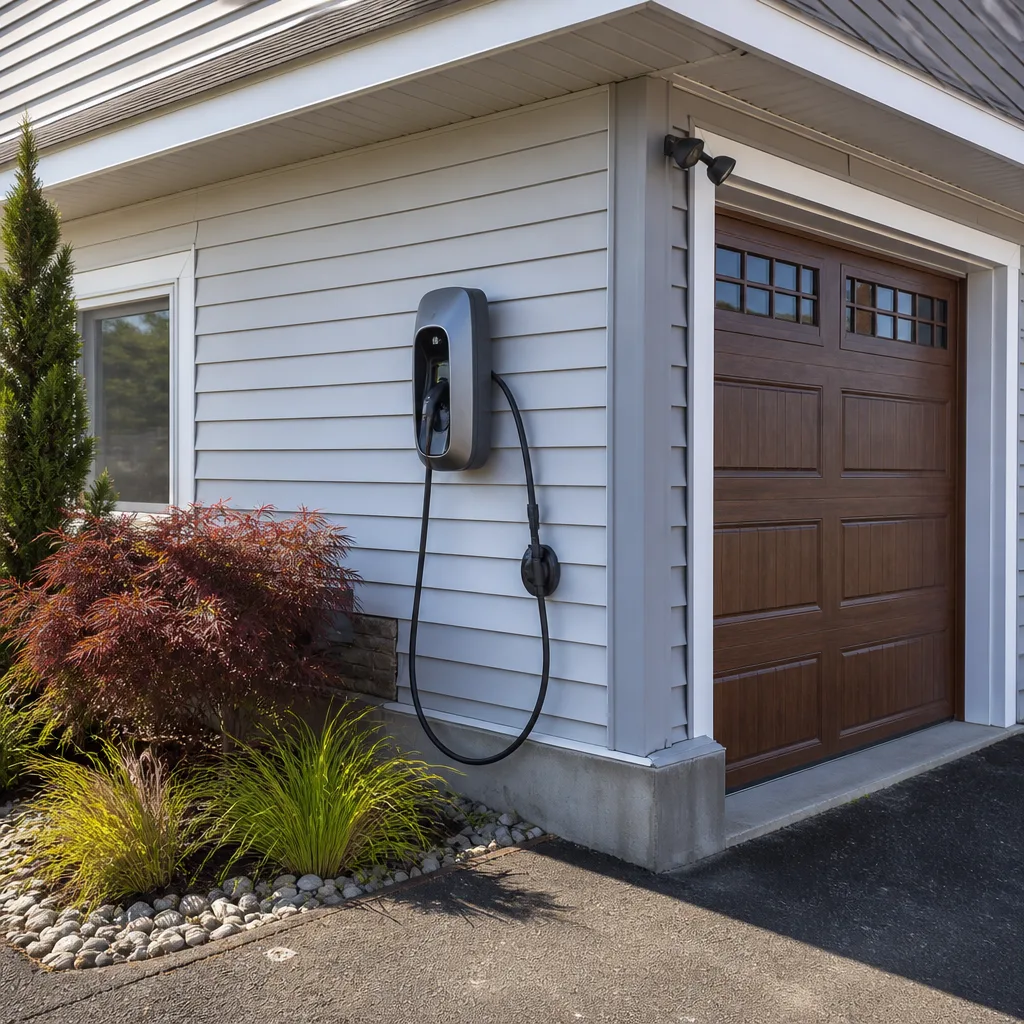
A hardwired Level 2 charger on an existing 200-amp panel with a short garage run typically runs $450-$900 in Corona. That includes the charger, the breaker, the wire, the permit, and the Riverside County inspection. If your panel is in the garage and the charger mounts on the same wall, the job is usually done in a morning. Most of the Level 2 units we install in Corona are 40-48 amp, which delivers 25-30 miles of range per hour of charging, easily a full charge overnight on any EV sold today.
Tesla Wall Connector Installation
Tesla is the most common EV brand we see across Corona, from the 92882 neighborhoods near Corona High through the newer developments off Temescal Canyon Road. Tesla Wall Connector installation in Corona runs $500-$1,200 depending on amperage and run length. The Wall Connector’s 48-amp continuous draw is where we see the most trouble in Corona garages: if the panel is original 150-amp and anything else is on it, the load calculation won’t pass plan check. We set the Wall Connector to 40 amps on those jobs or upgrade the panel, which we’re honest about before we start.
Panel Upgrade for EV Charging
This is the one that surprises people moving into 1990s tract homes in the 92879, 92880, and 92881 ZIPs. A 150-amp main panel that was perfectly fine for a gas-powered household can’t legally carry a 48-amp continuous EV load plus an air conditioner compressor plus an electric dryer plus whatever else is running on a 105°F afternoon. Panel upgrade for EV charging in Corona runs $2,500-$4,800 including the panel, labor, and permit. We pull the SCE disconnect, swap the panel, re-terminate every circuit, and get it inspected. It’s a one-day job for our crew in most cases. The reason this costs more than in coastal Orange County is that Riverside County plan check is stricter about load calculations than neighboring jurisdictions, and the inspectors actually enforce it.
Garage & Driveway Charger Wiring
If your charger needs to live outside, whether it’s a driveway mount or a pedestal near the curb, Corona has a specific headache: HOA architectural committees. Master-planned communities in the 92883 corridor routinely reject surface-mounted conduit along garage exteriors. The fix is an underground run, which adds trenching and conduit and typically pushes the job from one day to three, and the cost from $500 to $1,200-$2,000 depending on the distance. We pull HOA CC&Rs before we submit the Riverside County permit. It’s not glamorous, but it’s the difference between a charger that’s running in two weeks and one that’s tied up in HOA review for six.
What happens when you call
- 1
A real person answersNo phone trees - you reach a local pro.
- 2
You get an upfront price rangeHonest numbers before anyone is dispatched.
- 3
A background-checked tech heads outLicensed & insured, dispatched right away.
- 4
You approve before work beginsNothing starts until you say go.
Trusted Brands We Service in Corona
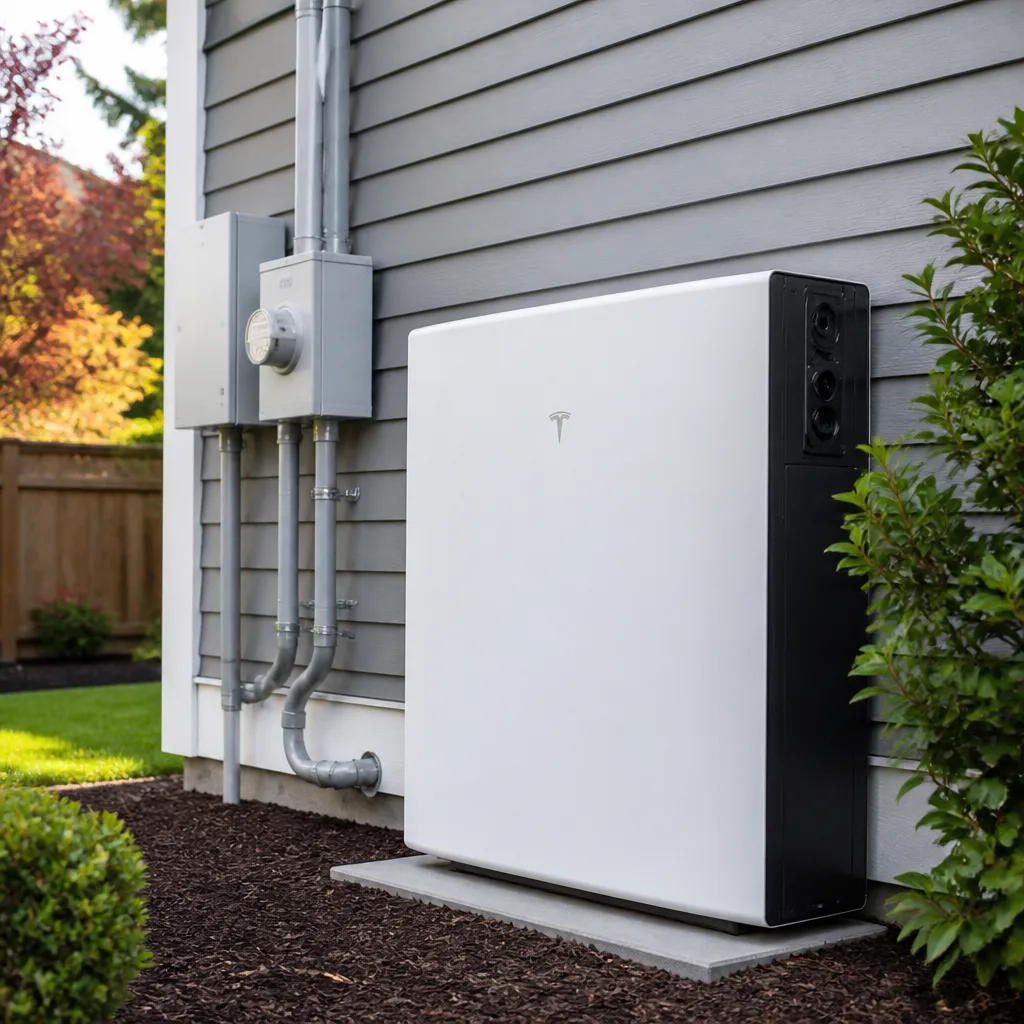
We install and wire chargers from Tesla, ChargePoint, Wallbox, Emporia, and Enphase, and we service existing chargers from every major brand. For solar-paired EV charging, we work most often with Enphase microinverters and batteries from FranklinWH and Panasonic, because those pair cleanly with EV circuits and hold up under Corona’s sustained summer heat. We stock common breakers, wire, and connectors locally, which means most repair and replacement parts don’t ride an Amazon truck in from two states away. If you have a charger that’s tripped or dead, we can usually diagnose it same-day in most Corona ZIP codes.
Common EV Charger Installation Problems We See in Corona Homes
- August breaker trips on chargers that passed inspection in March. Corona’s uninsulated garages hit 120°F+ during Santa Ana heat waves, and a 48-amp breaker that’s fine at 80°F will trip at 115°F ambient. We derate the circuit or relocate the charger to a shaded wall, which fixes the problem permanently.
- HOA rejections on surface conduit. We’ve seen more than a dozen Corona homeowners get a charger quote, buy equipment, then stall out because their HOA denied the conduit plan. Pulling CC&Rs before submitting the permit is standard practice for us, and it saves three to six weeks.
- Under-flashed roof penetrations on solar-paired charger installs. When a charger shares a circuit with rooftop solar, the conduit has to cross from the roof into the attic. S-tile roofs in Corona need specialized flashing, and we’ve seen water intrusion after the first winter rain from installers who skipped it. We flash every penetration like it’s a roof repair, because it is.
- Chargers mounted on south-facing garage walls that run hot and fail early. August surface temps on those walls hit 130°F. The charger’s internal electronics can’t shed that heat, and the unit cooks itself. We mount on shaded interior walls and specify NEMA 3R enclosures when the install has to live outside. Corona’s Santa Ana dust is another reason: it infiltrates rail-mounted electronics within two seasons without a proper gasket.
Pricing for EV Charger Installation in Corona, CA
Here are the numbers we quote in Corona, and these are upfront, no-hidden-math prices:
- Level 2 charger on existing 200-amp panel: $450-$900
- Tesla Wall Connector installation: $500-$1,200
- Panel upgrade (150-amp to 200-amp): $2,500-$4,800
- Garage or driveway charger with underground run: $1,200-$2,000
- Solar-paired EV charging circuit (with solar or battery system): module cost varies by system size; the EV circuit itself adds $400-$900
What moves the number in Corona: whether your panel is 150 or 200 amps, whether the HOA wants a surface or underground run, how far the charger is from the panel, and whether you’re pairing it with solar or battery. Bring us your SCE bill and tell us what you drive. We’ll give you the year-25 output math on a solar-paired charger if that’s the route you’re considering, not a brochure number. Estimates are free, and there’s no trip charge inside our own county. Call (877) 550-6892.
We Also Serve Cities Near Corona
Our Corona service area covers the whole city from the 92882 neighborhoods near downtown out to the 92883 corridor, and we regularly run jobs in Home Gardens, El Cerrito Corona, Eastvale, and Norco. If you’re in one of those cities and your HOA just sent back your conduit application, call us. We’ve probably worked with that exact HOA before.
Serving Corona, CA - Our Local Coverage Area
We’re based in the Corona area and know this community well. Use the map below to see our service coverage - if you’re nearby, we can almost certainly help.
FAQs - EV Charger Installation in Corona
Yes, and it’s the single biggest math shift for Corona homeowners. Under NEM 3.0, the export credit rates SCE pays for excess solar dropped sharply, which means the old model of “oversize the system, sell power back at retail rates” no longer pencils out. The way to make a solar-paired EV charger pay in Corona is to charge during the day when your panels are producing, and to pair the system with a battery like FranklinWH so you’re not pulling daytime production into the grid at pennies and buying it back at 40 cents. That combination, solar plus battery plus daytime charging, is how the year-25 numbers actually work in this market. Call (877) 550-6892 and we’ll build the math off your actual SCE bill, not a generic spreadsheet.
Heat load. A 150-amp panel feeding a 48-amp continuous EV circuit plus a 5-ton AC compressor running flat-out on a 105°F Corona afternoon has a real-world load calculation that simply doesn’t pencil out, and Riverside County plan check enforces that calculation. Coastal Orange County runs cooler, the AC isn’t working as hard, and the same panel might squeak through. In Corona, the numbers don’t lie: most 150-amp panels in 1990s-2000s tract homes can’t legally carry a full-size Level 2 circuit. We’ll tell you before you buy the charger whether your panel passes or needs an upgrade. No surprises at the permit counter.
Homes in the 92883 hillside developments face higher wind-uplift specs that Riverside County plan check flags routinely. Santa Ana events off the Santa Ana Mountains push sustained winds through that corridor, and any outdoor charger pedestal or conduit run needs to meet the county’s specified anchoring and strapping requirements. We’ve done enough of these to know what passes on the first try. For hillside homes, we typically specify heavier anchor bolts, strap conduit at closer intervals, and avoid exposed runs on windward walls. It adds a little cost and a day of engineering, but it keeps the charger on the wall when the wind actually blows.
It doesn’t slow the electrons, but it does trip the equipment. A 48-amp charger pulls the same current at 105°F as it does at 70°F, but the breaker and the charger’s internal electronics are rated for specific ambient conditions. When a Corona garage hits 120°F in August, a 48-amp breaker that’s fine in spring will nuisance-trip because the thermal trip curve shifts with ambient heat. The charger itself can also throttle or shut down if its internal temperature sensor hits its limit. The fix is simple: mount on a shaded interior wall, derate to 40 amps if the panel is marginal, and use a breaker rated for high-ambient conditions. We do all three as standard on Corona jobs.
Yes, and this is the timeline killer nobody warns you about. Corona’s densest HOA activity is in the master-planned communities off Temescal Canyon Road and throughout the 92883 corridor, and many of those HOAs have specific architectural requirements about conduit routing, mounting location, and even charger color. We pull the CC&Rs before we submit the Riverside County permit, because if the HOA rejects the conduit plan after the permit is in, you lose three to six weeks. When we do it in the right order, the HOA approval runs in parallel with the county’s plan check, and the job stays on schedule. Call (877) 550-6892 for an exact quote on your specific home, HOA and all. Free estimates, no pressure, and the number we give you is the number you pay.
Call Gus’s Solar for EV Charger Installation in Corona
If a salesman needs an answer tonight, the answer is no. That’s not how Gus has run this shop since 2011, and it’s not how we treat Corona homeowners now. L.O.C.A.L. values, Local roots, On time, Community first, Accountable, Loyal, those aren’t a poster in our office, they’re the reason we answer the phone when you call.
We just wrapped a Tesla Wall Connector install off Temescal Canyon Road in a 2007 tract home in the 92883 ZIP. The homeowner’s original 150-amp main panel couldn’t pass Riverside County plan check for the 48-amp circuit, so our crew replaced it with a 200-amp panel, ran 6/2 Romex through the garage chase, and set the Wall Connector to 40 amps to keep the breaker at 125% of continuous load. The real killer was the heat: we mounted the unit on the shaded interior garage wall because south-facing garage walls hit 130°F surface temps in August, and we specified a NEMA 3R enclosure gasket since Santa Ana dust infiltrates rail-mounted electronics within two seasons. That’s what we mean when we say we know Corona. We’re not guessing.
Call (877) 550-6892 and ask for Gus. Bring us a bill, we’ll bring you the math. Take two weeks. The price will be the same.
Written by Gus Petrakis, Owner at Gus’s Solar, serving Corona since 2011.