
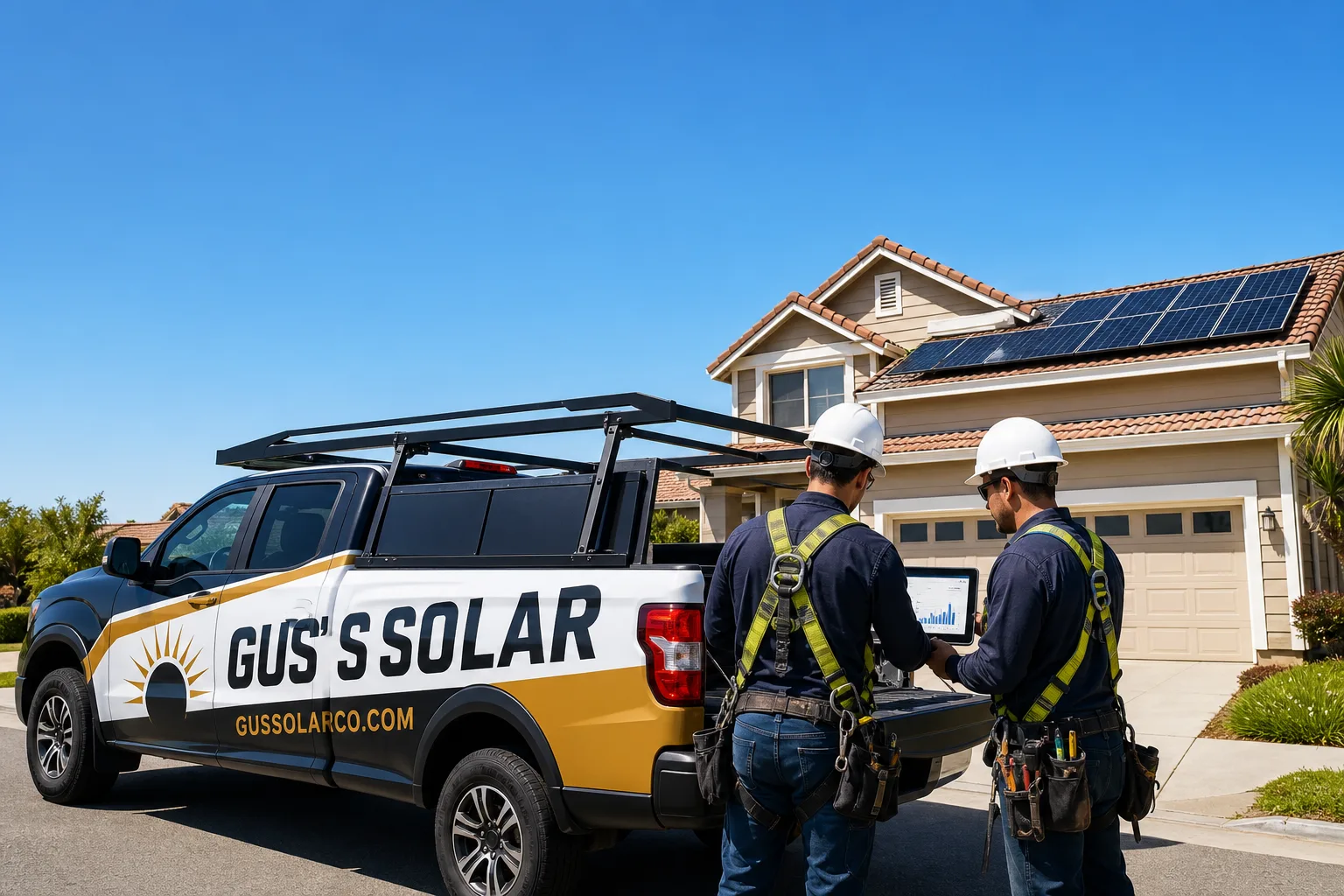
Free bill analysis - bring a power bill, get the production math for your actual roof, panel brands like Qcells and REC compared side by side
If the pitch starts at your door and ends with "sign tonight for the special," sleep on it. The sun will still be there tomorrow; so will we.
 Before
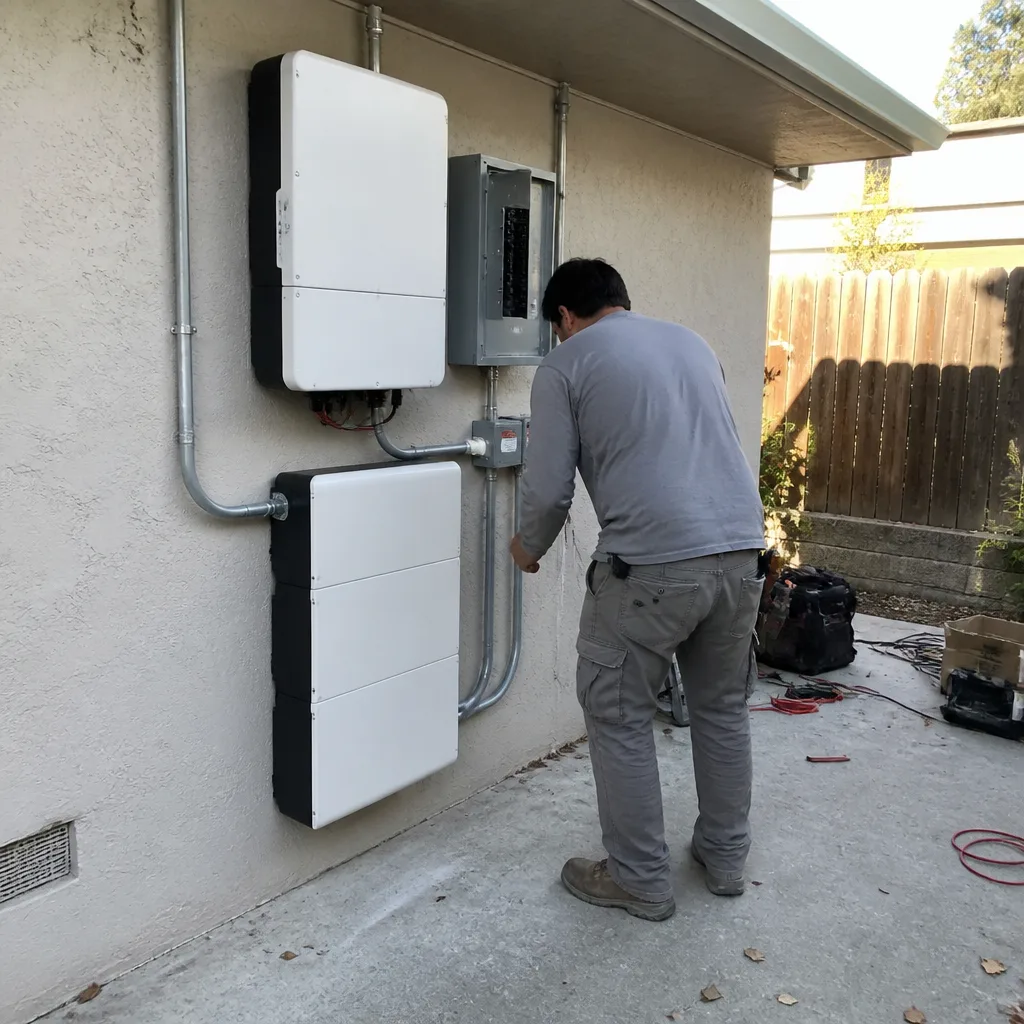 After
After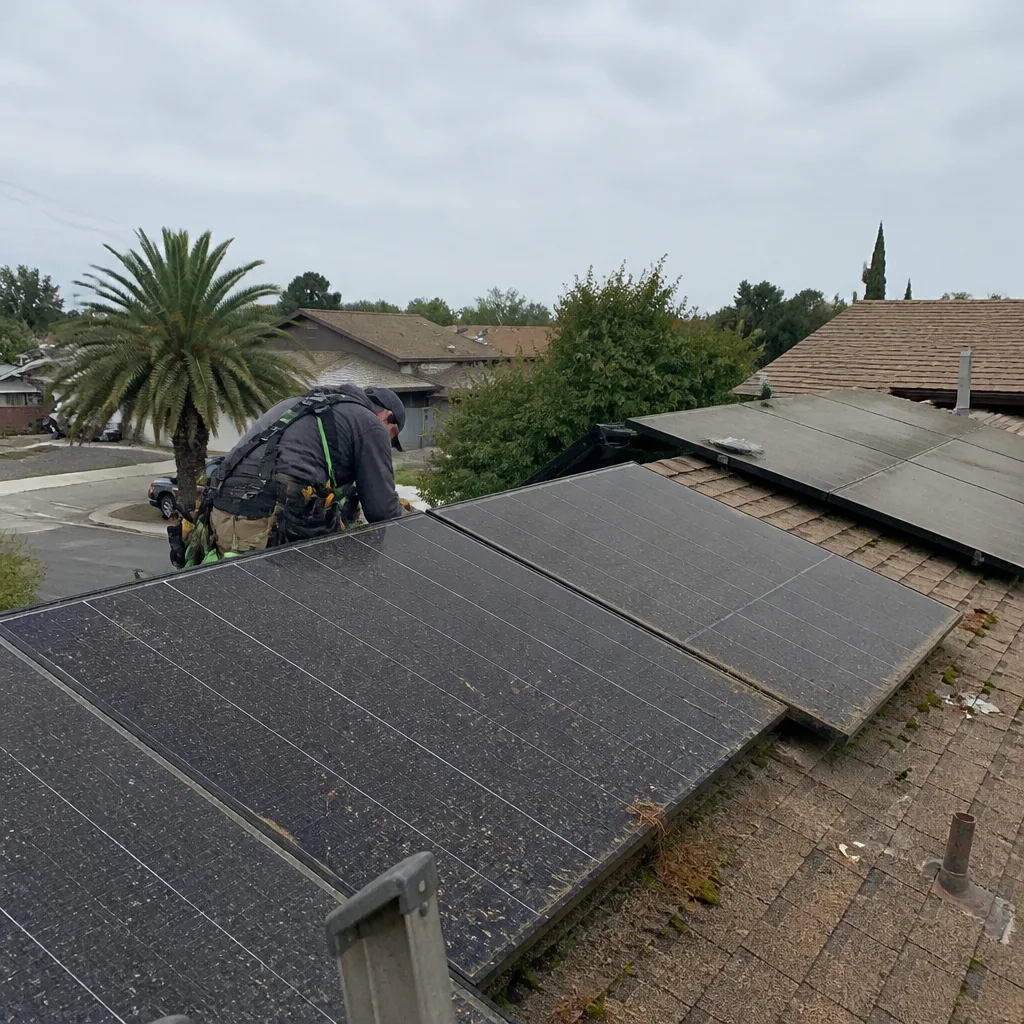 Before
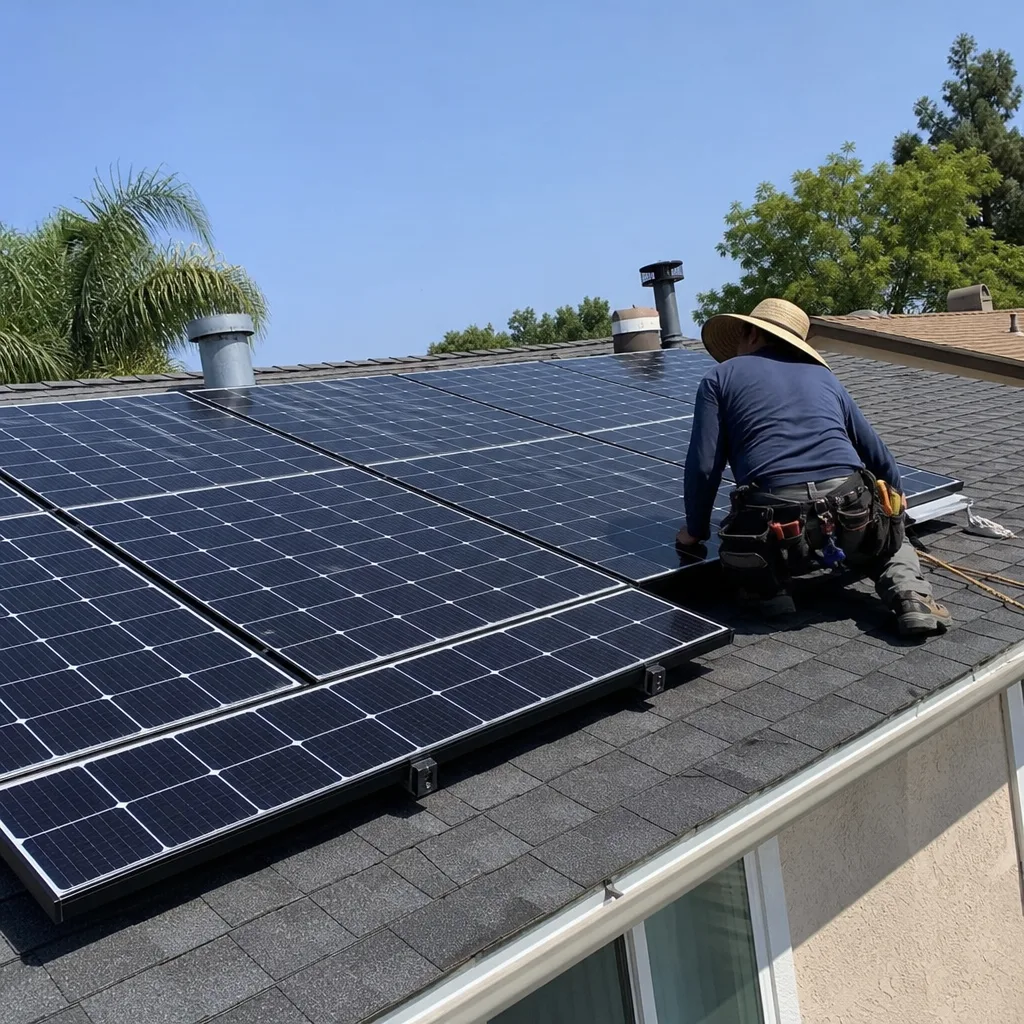 After
After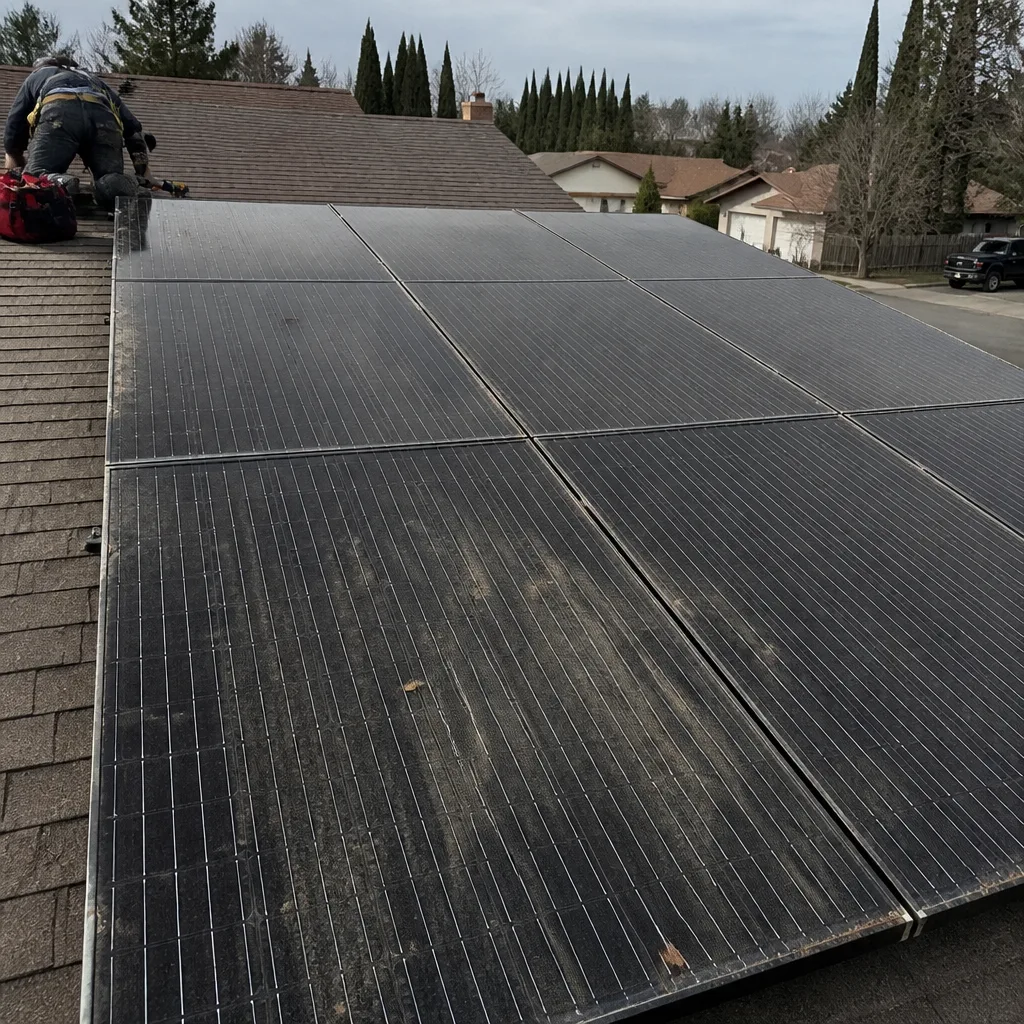 Before
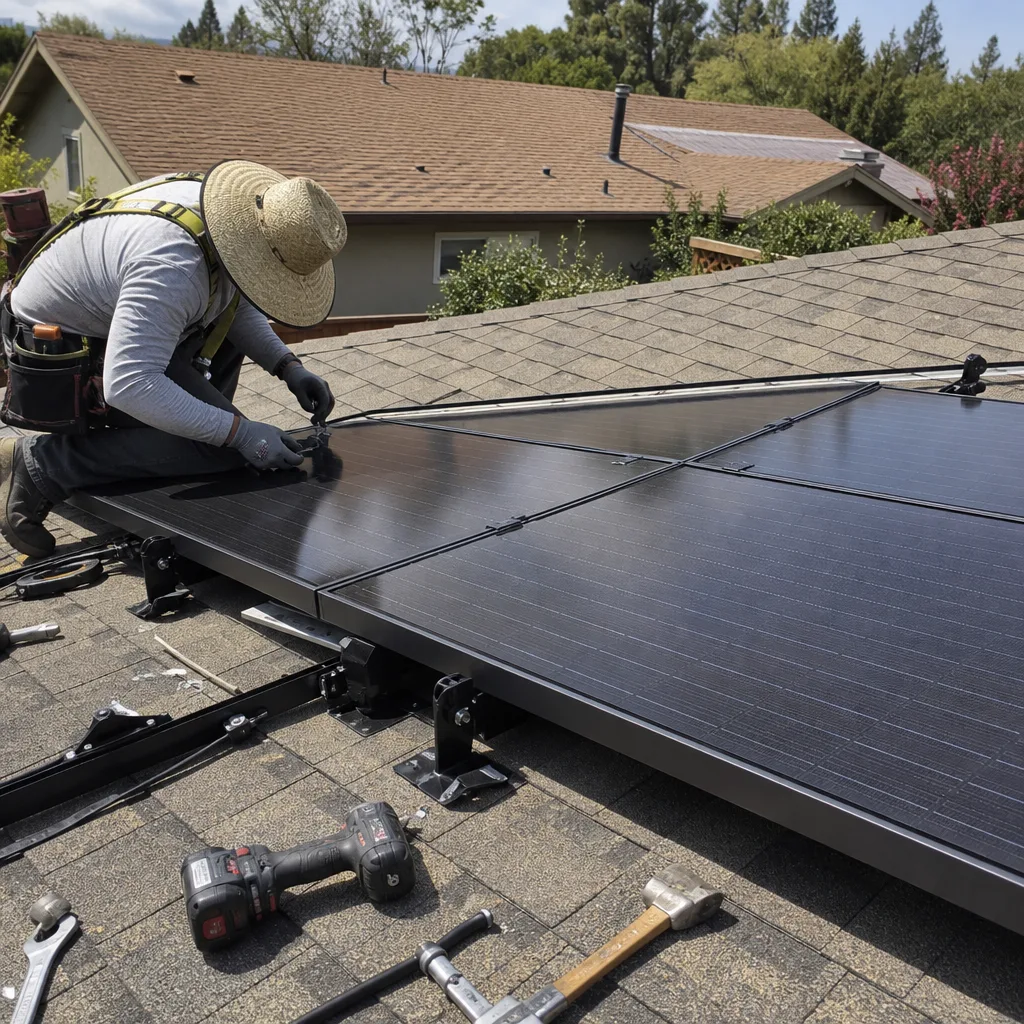 After
AfterFast, Reliable Commercial Solar Installation Across Hurst
Commercial solar installation in Hurst runs $2.10 to $2.85 per watt for most warehouse and retail rooftops, meaning a 100 kW system typically lands between $210,000 and $285,000 before federal tax credits and depreciation. Most Hurst commercial projects we quote include two line items that generic national estimators miss entirely: a hail-rated panel upgrade and a 100-to-200-amp electrical panel swap. That second item is not optional in this city. Oncor will not approve interconnection on a 1960s-era Federal Pacific panel, period.
We’re Gus’s Solar. Gus Petrakis founded this company in 2011 and put his own name on the truck, the building, and every quote we write. We know Hurst’s streets, its building stock, and the two ZIP codes we serve here: 76053 and 76054. Call us at (877) 550-6892 and a live person answers. Not a call center. Not a voicemail that takes three days. Gus or one of his crew.
Why Gus’s Solar Is Hurst’s Preferred Commercial Solar Installation Company
We’re not a pop-up sales crew that parachutes into Hurst, signs a bunch of contracts, and vanishes. Gus’s Solar has been locally owned since day one, and Gus publishes his name, his license number, and his address where anyone can find them. That matters in a city where a lot of commercial property owners have already been burned once by an out-of-state installer who quoted one number on the phone and a different number at the door.
Hurst business owners talk. When we complete a Commercial Solar Installation on one warehouse off Pipeline Road, we typically get calls from two or three neighboring businesses within a month. That’s how local reputation works here, and we’ve spent over 29 years as a company, since 2011 under Gus’s Solar, building it the honest way. Our crews are background-checked and uniformed. You’ll know who’s on your roof before they get there, and it’s our own team doing the work. Not a subcontractor Gus has never met.
Response time to Hurst? Same day for most service calls. We keep a live person on the phone 24/7. If your system throws a fault at 9 p.m. on a Tuesday, you call, we answer, and we’ll have someone out the next morning. That’s not marketing language. That’s how Gus runs the shop.
Our Commercial Solar Installation Services in Hurst
Commercial Rooftop Solar
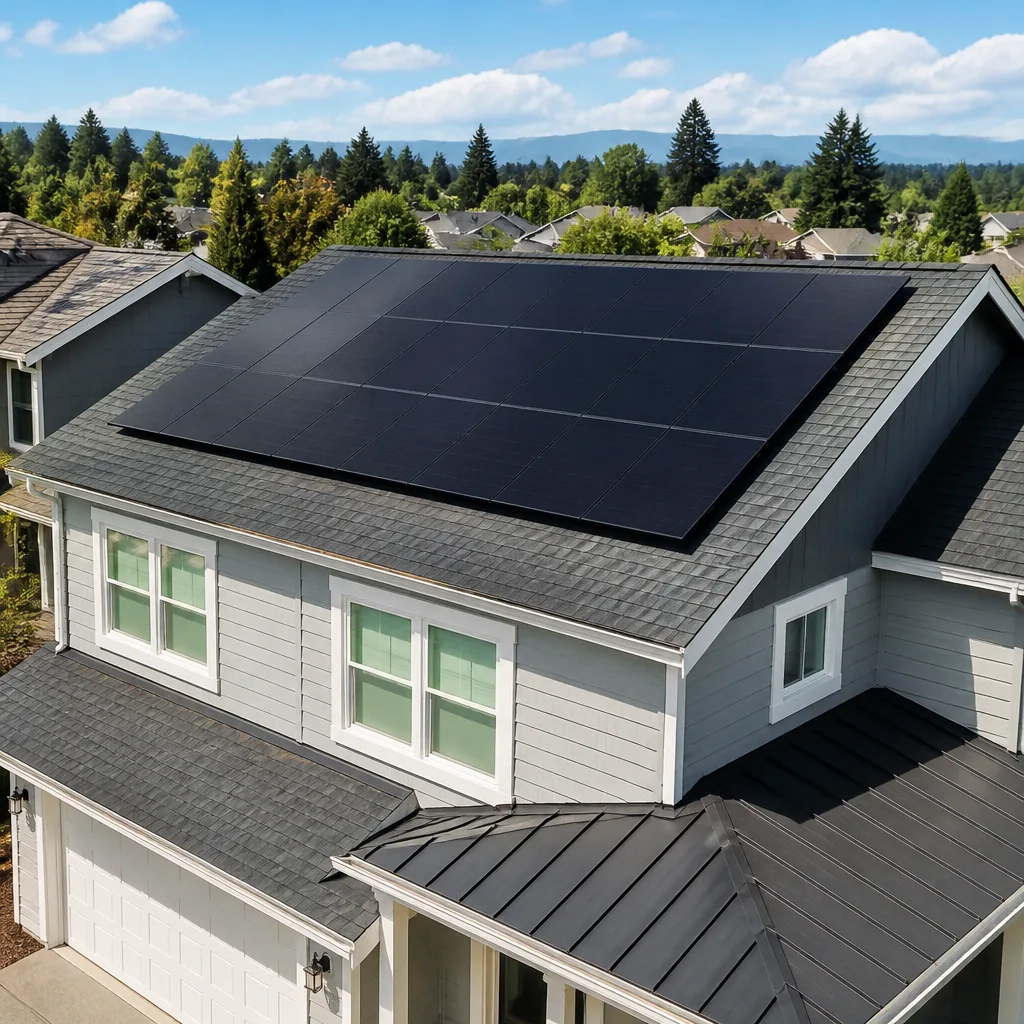
Most Hurst commercial rooftops fall into two categories: flat membrane roofs on retail and office buildings, and low-pitch gable or hip roofs on older warehouse stock from the 1970s and 1980s. Both work for solar, but they need different racking and different panel selection. Flat roofs give us south-facing tilt freedom, so we can max out production even when the building’s orientation isn’t ideal. The catch in Hurst is hail. A standard panel without IEC 61215 impact resistance will not hold up through three or four Tarrant County hailstorms, and we’ve seen microcracks cut output by 20 percent or more after a bad spring. We specify hail-rated panels on every commercial rooftop here, and we quote the year-25 output, not the day-one brochure number.
Warehouse & Industrial Solar
Warehouse solar in Hurst is a straightforward math problem, and we like straightforward math. Big flat roof, low energy density inside, and a utility bill that spikes every summer when the AC load hits. A 150 kW system on a 40,000-square-foot warehouse off Grapevine Highway can offset 70 to 85 percent of annual usage, depending on the meter profile and the roof’s usable square footage after vents, HVAC units, and skylights take their share. The panel-swap issue looms larger here than anywhere else in the service area because so many of these buildings still run original 100-amp Federal Pacific or Zinsco mains. We’ll flag it on the first site visit, not the third invoice.
Solar Carport Installation
Carports solve the problem that Hurst’s compact Mid-Cities lots create: not enough unshaded roof space for the array size the building needs. A carport array over employee parking or a loading zone turns dead asphalt into generation capacity, and it’s often the difference between covering 60 percent and 90 percent of annual load. We’ve designed carport arrays for medical office buildings along Precinct Line Road and for a church parking lot just south of the TCC Northeast campus. Engineering matters here. Carport structures need wind ratings for Tarrant County storm loads, and the concrete footings have to be poured to spec. Gus’s crew handles all of it in-house.
Commercial Battery Storage
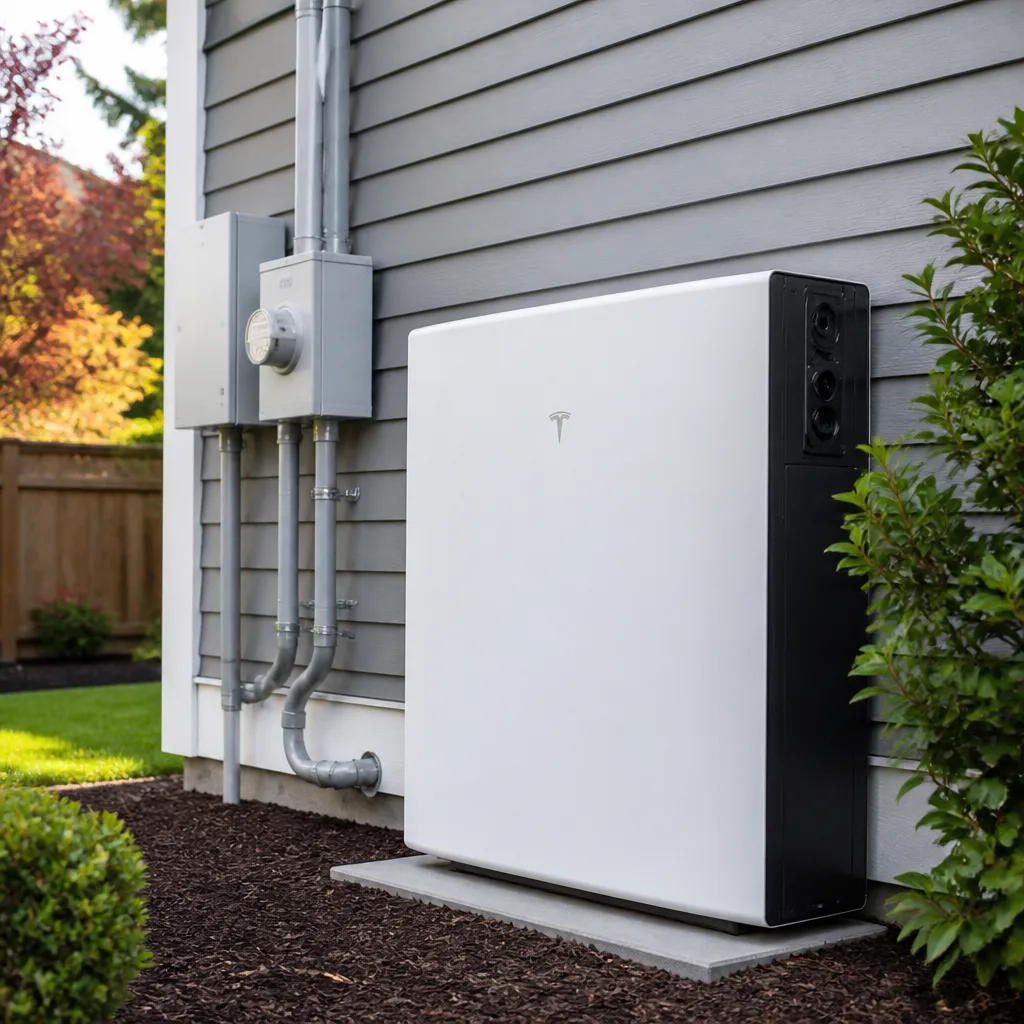
Commercial battery storage in Hurst makes sense for two reasons. First, Oncor’s commercial time-of-use rates punish peak afternoon demand, and a FranklinWH or Tesla Powerpack-sized unit lets you shave that peak. Second, Hurst sits in a storm corridor where grid outages are a question of when, not if. A battery bank sized for critical loads means your freezers, servers, or security systems stay on through the next big thunderstorm. We pair Enphase and FranklinWH batteries with commercial arrays regularly, and the economics have shifted enough in the last three years that payback on battery storage for demand-charge-heavy businesses is now under seven years in most cases.
What happens when you call
- 1
A real person answersNo phone trees - you reach a local pro.
- 2
You get an upfront price rangeHonest numbers before anyone is dispatched.
- 3
A background-checked tech heads outLicensed & insured, dispatched right away.
- 4
You approve before work beginsNothing starts until you say go.
Trusted Brands We Service in Hurst
We install and service equipment from Tesla, Enphase, SolarEdge, and FranklinWH, and we stock common parts and microinverters for rapid replacement across the Mid-Cities. If your existing Hurst system has a failed Enphase microinverter or a SolarEdge optimizer, we can usually swap it same-day without waiting on a distributor shipment. For commercial systems specifically, we’ve standardized on Enphase microinverters for most rooftop arrays because of the shade tolerance and panel-level monitoring, and FranklinWH for battery backup because of the cycle life and the straightforward commercial integration. Bring us a bill and we’ll walk you through the equipment recommendation with real numbers, not a brochure pitch.
Common Commercial Solar Installation Problems We See in Hurst Homes
Actually, let’s be clear: these are problems we see on Hurst buildings, not homes. Commercial properties here have their own failure modes, and most of them trace back to when Hurst was built:
- Legacy 100-amp Federal Pacific or Zinsco panels. Hurst was largely subdivided and built out between 1960 and 1985. Entire cul-de-sacs and industrial parks share the same original panels, many of which are known fire hazards even before you add solar backfeed. Oncor’s interconnection review will flag these panels every time. We see it on nearly every commercial quote we write in 76053 and 76054.
- Hail-damaged panels from non-rated arrays. The original panels on a lot of Hurst commercial rooftops, especially systems installed around 2010 to 2012 during the first big solar push, were not IEC 61215 rated. One good Tarrant County hailstorm and output drops, often invisibly until the utility bill climbs. By the time the owner notices, the 25-year warranty is void because the microcracks aren’t covered.
- Undersized arrays on hip and low-pitch gable roofs. Hurst’s commercial building stock squeezes a lot of square footage onto compact lots. Hip roofs and low-pitch gables leave limited south-facing azimuth, and installers without local experience undersize the array, miss the target kWh offset, and then the owner pays more to add capacity later. We see this on buildings all along Mid-Cities Boulevard and the industrial stretch off Airport Freeway.
- Missing rapid shutdown compliance on older arrays. NEC 2017 brought rapid shutdown requirements to commercial rooftop arrays, and a lot of pre-2017 Hurst systems never got retrofitted. That’s a safety issue first and an insurance issue second. If your building’s fire department pre-plan shows an array without rapid shutdown, that’s a conversation you want to have before the next inspection, not during it.
Pricing for Commercial Solar Installation in Hurst, TX
- Commercial rooftop solar: $2.10 to $2.60 per watt depending on roof type and array size. A 50 kW system lands between $105,000 and $130,000.
- Warehouse and industrial solar: $2.00 to $2.50 per watt for larger flat-roof arrays. A 100 kW system runs $200,000 to $250,000.
- Solar carport installation: $3.20 to $4.10 per watt. Steel structure and concrete footings add real cost, and Hurst wind loads push engineering toward the higher end.
- Commercial battery storage: $900 to $1,300 per kWh installed for FranklinWH and similar commercial-grade chemistries, depending on whether you’re doing simple load shifting or full backup.
- Panel upgrade from 100 to 200 amps: $3,500 to $6,500 depending on the panel condition, the service drop, and whether the existing Federal Pacific or Zinsco panel needs full replacement (it usually does).
We give free estimates, and the price we quote is the price you pay. Bring us a bill, we will bring you the math, built off your actual usage and Oncor’s current export rates. Take two weeks. Think about it. The price will be the same. If a salesman needs an answer tonight, the answer is no.
We Also Serve Cities Near Hurst
Our commercial solar crews work all over the Mid-Cities, including Hurst, Bedford, Richland Hills, North Richland Hills, and Colleyville. If your business sits within a 15-minute drive of the Hurst city line, we’re already in your area every week, and scheduling a site visit is usually a next-day affair.
Serving Hurst, TX - Our Local Coverage Area
We’re based in the Hurst area and know this community well. Use the map below to see our service coverage - if you’re nearby, we can almost certainly help.
FAQs - Commercial Solar Installation in Hurst
Does Hurst’s hail frequency change what panel rating my commercial building needs?
Yes. Hurst sits squarely in Tarrant County’s hail corridor, where spring and early-summer storms regularly produce golf-ball-sized hail, so any commercial array here should specify panels with IEC 61215 impact-resistant ratings. A standard panel without that rating will survive one or two hailstorms before microcracks reduce output and void the 25-year degradation warranty. If a quote doesn’t mention hail rating up front, ask why. Call (877) 550-6892 and we’ll walk you through what hail-rated means in real terms and which panels we recommend for Hurst’s storm exposure.
Why does almost every commercial solar quote in Hurst include an electrical panel upgrade?
Because Hurst’s commercial building stock was mostly built between 1960 and 1985 with original 100-amp Federal Pacific or Zinsco mains, and Oncor’s interconnection requirements for solar will not approve backfeed onto these legacy panels. That’s not an upsell. It’s a code and safety prerequisite. A 100-to-200-amp panel swap runs $3,500 to $6,500, and the federal tax credit applies to the panel upgrade when it’s part of the solar project. We flag this on the first site visit so you’re not surprised by a change order later.
What roof design limitation do Hurst warehouses face for solar?
Hip roofs and low-pitch gable roofs dominate Hurst’s warehouse stock, which limits south-facing azimuth and means a poorly designed array will underproduce against the building’s target kWh offset. Flat membrane roofs are actually easier because we can tilt racks for optimal south exposure. On gable and hip roofs, the fix is often a carport array over parking or loading zones to supplement rooftop capacity. We’ve done exactly that for buildings along Pipeline Road where the roof alone couldn’t hit the numbers.
How does Hurst’s net metering differ from Dallas or Fort Worth?
Net metering in Hurst is handled through Oncor, same as Dallas and Fort Worth, so the export credit rate is identical across the Oncor service territory. What differs is the building stock and the hail exposure. Dallas has newer construction with fewer legacy panel issues. Fort Worth has more flat commercial roofs. Hurst has the hail corridor and the Federal Pacific panel problem, which means the project scope differs even if the utility rate structure doesn’t. We quote the year-25 output, not the day-one brochure number, so the Hurst-specific costs are baked in from the start.
Can I avoid rapid shutdown requirements on my Hurst commercial rooftop array?
No. NEC 2017 rapid shutdown requirements apply to commercial rooftop arrays, and Oncor and the Hurst fire marshal expect compliance on any new installation or major retrofit. If your existing system predates 2017 and lacks rapid shutdown, that’s a safety issue we address during any service or panel-upgrade work. On a commercial rooftop along Pipeline Road in Hurst, we recently replaced an aging string inverter system with Enphase microinverters and added rapid shutdown per code, while upgrading a 100-amp Federal Pacific panel to 200 amps. The original panels weren’t hail-rated, so we swapped in REC Alpha Pure panels with IEC 61215 impact resistance, cutting the owner’s annual kWh offset loss from storm damage to near zero.
Get a Free Commercial Solar Estimate in Hurst
If you own a commercial building in Hurst, whether it’s a 5,000-square-foot retail space off Harwood Road or a 50,000-square-foot warehouse near the Airport Freeway corridor, call us. We’ll come out, look at the roof, check the panel, and give you a real number. Free estimate. No signature wanted tonight. No pressure. Just the math off your actual bill and a quote that holds. Call (877) 550-6892 and ask for Gus. If he’s not answering, one of his crew is.
Written by Gus Petrakis, Owner at Gus’s Solar, serving Hurst since day one. L.O.C.A.L. values: Local roots, On time, Community first, Accountable, Loyal.