
Enphase Solar Panel Installation in San Jose: A Homeowner’s Guide
Enphase solar installation in San Jose usually costs between $16,500 and $24,000 before incentives for a typical 6-8 kW system, and the work takes one to two days once permits clear. The equipment is genuinely good but the installation details matter more than the logo on the microinverters. If you’d rather skip the research and talk it through, call (877) 550-6892 and we’ll walk your actual roof and bill, not a brochure.
Here’s the thing most San Jose homeowners don’t find out until it’s too late: Enphase’s 25-year microinverter warranty is only as good as the installer who activates it. We’ve met too many people who discovered their warranty was never registered when they went to file a claim. This guide tells you what to verify on installation day so you’re not left with a $15,000 system and no paper trail.
Why Enphase Microinverters Make Sense for San Jose Roofs
San Jose rooflines create specific problems that microinverters solve well. Most homes in neighborhoods like Willow Glen, Almaden Valley, and Berryessa have split orientations, meaning panels face two or three different directions. The big oak and redwood trees that shade so many South Bay yards also cast partial shade across roof sections at various times of day.
A string inverter runs all your panels through one central unit, so a single shaded panel drags down the output of every panel connected to it. Enphase puts a small inverter under each panel, so each one produces independently. In our experience, a San Jose home with one shaded panel and a string inverter loses 20-40% of total system output on any given day. With microinverters, only the shaded panel dips; everything else keeps producing.
Heat matters too. San Jose summers routinely push attic temperatures past 140°F, and rooftop electronics age faster in that kind of heat. Microinverters sit under each panel rather than on a hot garage wall, and they’re rated to handle the thermal load. We’ve pulled failed string inverters off South Bay garage walls that cooked themselves to death in five or six years. Microinverters fail less often and the failures tend to be isolated.
There’s also the modularity advantage. If a microinverter does fail in year 7, you replace one unit for a few hundred dollars instead of an entire central string inverter for $2,500-$3,500. During the 25-year warranty window, Enphase typically covers the replacement hardware. The catch is, someone has to register that warranty properly. We’ll get to that.
What Actually Happens During an Enphase Installation in San Jose
A competent Enphase installation in San Jose runs on a predictable timeline. Here’s what to expect, start to finish, with realistic wait times based on how the City of San Jose and PG&E currently process applications.
- Days 1-7: Site survey. Someone measures your roof, checks your electrical panel, and maps shade at different times of day. At Gus’s Solar, Gus Petrakis or senior crew handles this step personally because the accuracy here determines everything downstream.
- Days 7-30: Permitting. The City of San Jose typically issues solar permits within two to four weeks for straightforward residential installs. Some older neighborhoods with stricter planning overlays take longer.
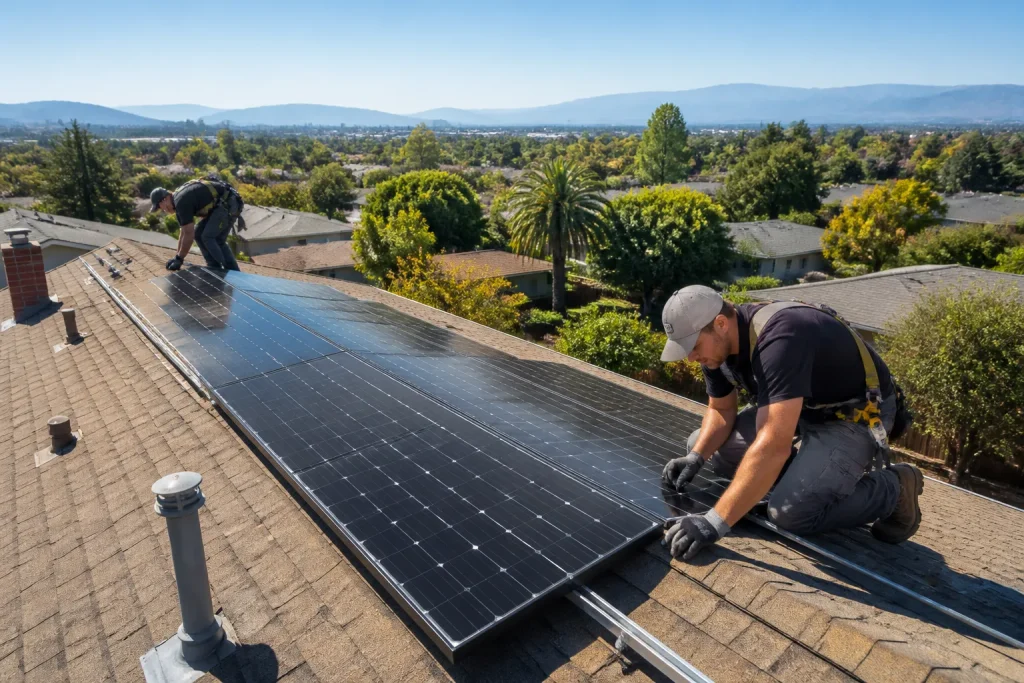
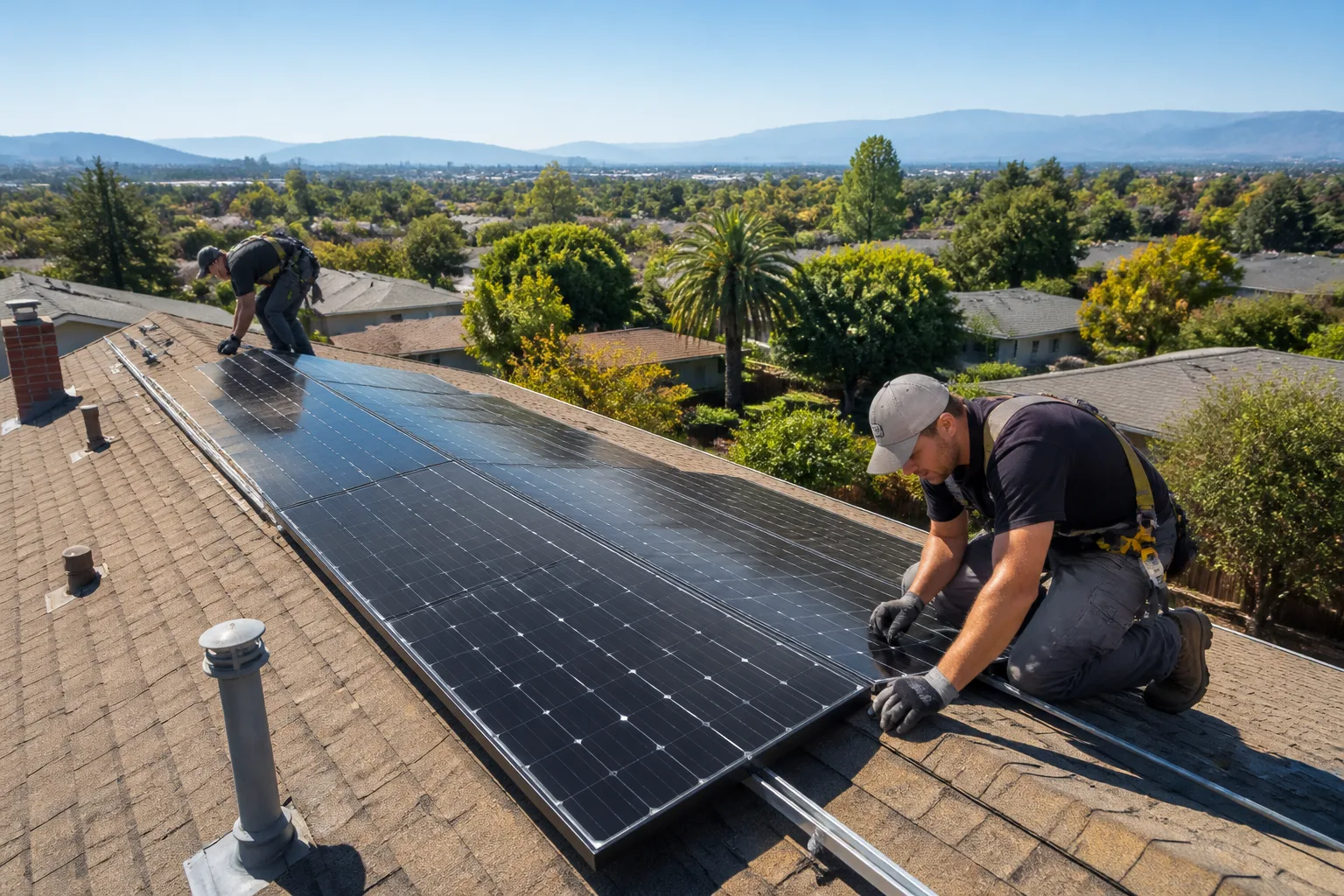
- Days 30-45: Installation. The physical work usually takes one or two days. Panels go up, Enphase IQ microinverters are mounted beneath them, and the IQ Gateway (formerly called Envoy) is wired to your electrical panel and your home internet.
- Day 45+: Inspection and interconnection. A city inspector verifies the work, then PG&E processes your interconnection agreement. Your system goes live once PG&E approves it, typically one to three weeks after inspection.
Permit sign-off matters. We’ve had homeowners call us after another company installed equipment and walked away without closing permits. That creates a hassle if you ever sell the house. The home sale inspector will find an unpermitted solar array and it becomes your problem. Make sure the permit card is signed and the monitoring equipment is noted on the final inspection.
The Four Things to Verify on Installation Day
Most Enphase warranty problems start at installation. Whether you hire Gus’s Solar or anyone else in San Jose, check these four things before the crew leaves your driveway.
- Enlighten app activation. The installer should hand you a working Enlighten login on installation day. Not a promise to send it later. A live dashboard that shows each individual panel producing. If they can’t show you your own array on your own phone, the system isn’t commissioned correctly.
- IQ Gateway pairing. The IQ Gateway is the brain of the system. It needs to be connected to your home Wi-Fi and talking to Enphase’s servers. Ask to see it on the network before the crew packs up.
- Warranty registration confirmation. Enphase sends a confirmation email when warranty registration completes. Make sure it’s in your inbox and make sure your name is on it, not the installer’s. This is the exact step that gets skipped by rushed crews.
- Monitoring equipment on the permit. When the city inspector signs off, the final permit record should include the IQ Gateway and monitoring setup, not just the panels.
The team at Gus’s Solar runs through this entire checklist with you on the final walk-through. We make sure the email hits your inbox while we’re standing there, not three weeks later when someone gets around to it.
Your First 30 Days With Enlighten: What to Watch
The first month matters because you’re the one who lives at your house. Installers move on to the next job three streets away. If a panel isn’t communicating or a microinverter isn’t waking up, you’ll see it in the Enlighten dashboard before anyone calls you.
Open the app and look for these specific things:
- Every panel shows a number. If one panel reads zero or shows a communication error while the others produce normally, that’s likely a loose MC4 connector or a bad microinverter. Call your installer. It’s typically a 30-minute fix.
- Total daily production tracks roughly with weather. A sunny San Jose day in July should produce 4-6 times what a foggy December day produces. If production crashes on a clear day, check for new shade or a tripped breaker.
- Voltage readings stay within the normal band Enphase shows in the app. Out-of-range voltage on a specific panel usually indicates a wiring issue on that branch circuit.
One real example from last spring: a homeowner in the Rose Garden neighborhood watched his system produce beautifully for two weeks, then one panel flatlined. He called us, we traced it to a squirrel-chewed wire under the panel in 20 minutes, and fixed it same day. Caught early, it’s minor. Caught after six months, that one dead panel costs you real money in lost production.
AC-Coupled vs DC-Coupled: What It Means for a San Jose Backup Battery
If you’re adding an Enphase IQ Battery, this distinction affects how your house behaves during a PG&E outage. Most San Jose homeowners who get batteries care about exactly one scenario: the power goes out and they want the fridge and lights to keep running.
AC-coupled means your panels convert DC to AC right at each panel (that’s the microinverter doing its job), and the battery sits on the AC side of your electrical system. When the grid goes down, the IQ Battery has its own built-in inverter that keeps power flowing to your house. Your panels and the battery talk to each other through the IQ Gateway. This is how most Enphase systems in San Jose are configured, and it works cleanly.
DC-coupled sends raw DC from panels to the battery through a single hybrid inverter, with only one AC conversion point. It’s less common with Enphase because it means using a third-party hybrid inverter, which undercuts the whole point of choosing Enphase microinverters in the first place.
With AC-coupled Enphase, during an outage your IQ Battery charges from the panels when the sun is up and discharges to your house when it isn’t. You don’t need a separate charge controller or extra hardware. If you’re planning backup power for a San Jose home, AC-coupled Enphase with an IQ Battery is the configuration that keeps things simple, and simple is what you want at 2 a.m. when PG&E’s equipment fails.
Questions to Ask Any Installer Bidding Enphase
We lose bids to national outfits all the time. Sometimes they come back to us later, after the national company has fabricated a reason the warranty isn’t covered. Here’s what to ask before you sign anything, whether it’s our proposal or someone else’s.
- Are you Enphase-certified? Enphase runs certification programs for installers. Certified installers can access technical support and replacement hardware faster. Non-certified installers can still buy Enphase equipment, so don’t assume the equipment means they’re trained on it.
- Who registers the warranty: you or us? If the answer is crisp and specific, good. If the sales rep blinks and says “the warranty is automatic,” walk. It is not automatic.
- What’s your process if a microinverter fails in year 3? Enphase typically ships the replacement unit under warranty. Somebody still needs to get on your roof and swap it. Ask who pays the labor. We cover labor on any microinverter we installed within the first 25 years, because the failure isn’t your fault and you shouldn’t pay for it.
- Can I see a quote built off my actual PG&E bill? If the installer quotes you off square footage or county averages instead of your real annual usage and current export rates, you’re getting a brochure number. Bring me a bill and I’ll bring you the math. That’s how we’ve done it since 2011.
If a salesman needs an answer tonight, the answer is no. Take two weeks. Think about it. The price will be the same.
What Enphase Installations Cost in San Jose Specifically
San Jose pricing runs higher than national averages because local labor costs, permit fees, and PG&E interconnection charges all land above the national norm. Here are real ranges for Enphase systems in this market, based on what we’ve seen on San Jose roofs this year and what other local installers quote.
- Small system (4-5 kW, 12-14 panels): $12,000-$16,000 before incentives
- Typical system (6-8 kW, 18-22 panels): $16,500-$24,000 before incentives
- Large system (9-12 kW, 26-34 panels): $24,000-$34,000 before incentives
- Enphase IQ Battery 5P added to any of the above: $8,000-$11,000 installed, depending on your panel situation
Panel brand moves the needle some. Qcells and REC panels both pair well with Enphase microinverters, and the price difference usually comes down to efficiency rating and degradation warranty. Panasonic and SunPower panels run higher on the per-watt cost but include longer product warranties. The microinverters are the same Enphase IQ8 series across all of them, because Enphase pairs reliably with every major panel brand.
After the federal tax credit, a typical San Jose system lands between $11,500 and $17,000 out of pocket. Your payoff window against current PG&E rates runs roughly 6 to 9 years depending on your usage and whether you’re on a time-of-use plan. We quote the year-25 output, not the day-one brochure number, because that’s the number that determines whether you actually save money over the life of the system.
If you’re deciding between installing solar now or waiting, look at your last 12 months of PG&E bills. If your annual true-up is over $1,500, the math likely favors installing now. If it’s under $800, you might wait or go smaller. The bill tells the truth every time.
When to Call a Pro
This guide gives you the knowledge to evaluate an installer and verify their work. But there are moments where you should stop reading and call someone.
If a system you already own shows a persistent error you can’t explain, call the original installer first. If that installer is out of business, unreachable, or giving you the runaround, call us. We repair and service Enphase systems installed by other companies all the time. We don’t care who put it on the roof; we care that it’s producing what it should be producing.
If you’re buying a house in San Jose with an existing solar system and want to know if it’s actually working correctly, call before you close. We’ll come out and read the Enlighten dashboard with you. It’s worth knowing before you inherit someone else’s unregistered warranty.
Related services in San Jose: Solar Panel Installation in San Jose · Solar Battery Storage & Backup in San Jose · Solar Panel Cleaning in San Jose
The Bottom Line
Enphase microinverters are the right call for most San Jose roofs, especially in neighborhoods with mature trees and mixed roof orientations. The equipment is genuinely well-built and the 25-year warranty is one of the best in the industry. But the brand on the box matters less than whether the installer registers your warranty, pairs your gateway, activates your Enlighten app, and closes the permit. Verify those four things on installation day and the system will serve you for decades.
If you’re in San Jose and want an Enphase system installed by a local owner who has been doing this since 2011, Gus’s Solar offers free estimates built off your actual PG&E bill. No pressure, no “sign tonight” nonsense. Call (877) 550-6892 and you’ll talk to a person who can answer your questions. You can also see what we’re about at the Gus’s Solar home.
Frequently Asked Questions
Yes, in most cases. San Jose rooflines commonly have split orientations and partial shade from mature trees, both of which cut string inverter output significantly. Enphase microinverters isolate each panel so shade on one panel doesn’t reduce production on the rest. You pay about 10-15% more than a string system, and in our experience it pays back through higher production over the system’s life. Call (877) 550-6892 and we’ll help you run the numbers for your specific roof.
Physical installation takes one to two days for a typical San Jose home. The full timeline from signed contract to permission to operate runs 30 to 60 days, depending on City of San Jose permit processing and PG&E interconnection approval. We’ve seen winter installations clear faster because fewer people are applying, but spring gets busy. Call (877) 550-6892 for a realistic timeline for your address.
No. Enphase microinverters work fine grid-tied without a battery. A battery adds backup power during PG&E outages and lets you shift energy usage to offset time-of-use rates, which can shorten your payback window if you’re on a TOU plan. If backup power matters to you, add one; if you just want to cut your bill, skip it. If you want to see the cost difference on your specific bill, call (877) 550-6892.
You have options. First, contact Enphase directly with your system serial numbers and installation date. If the original installer is still in business, they can often back-register the warranty. If the installer is gone, Enphase sometimes registers retroactively for a fee, and we’ve helped San Jose homeowners navigate that process. If you’re not sure whether your warranty is registered, call (877) 550-6892 and we’ll help you check.
Written by Gus Petrakis, Owner at Gus’s Solar, serving San Jose since 2011.
Need Solar Help?
Call Gus's Solar - licensed & insured, here with fast after-hours help in San Jose.
(877) 550-6892