
Free bill analysis - bring a power bill, get the production math for your actual roof, panel brands like Qcells and REC compared side by side
If the pitch starts at your door and ends with "sign tonight for the special," sleep on it. The sun will still be there tomorrow; so will we.
 Before
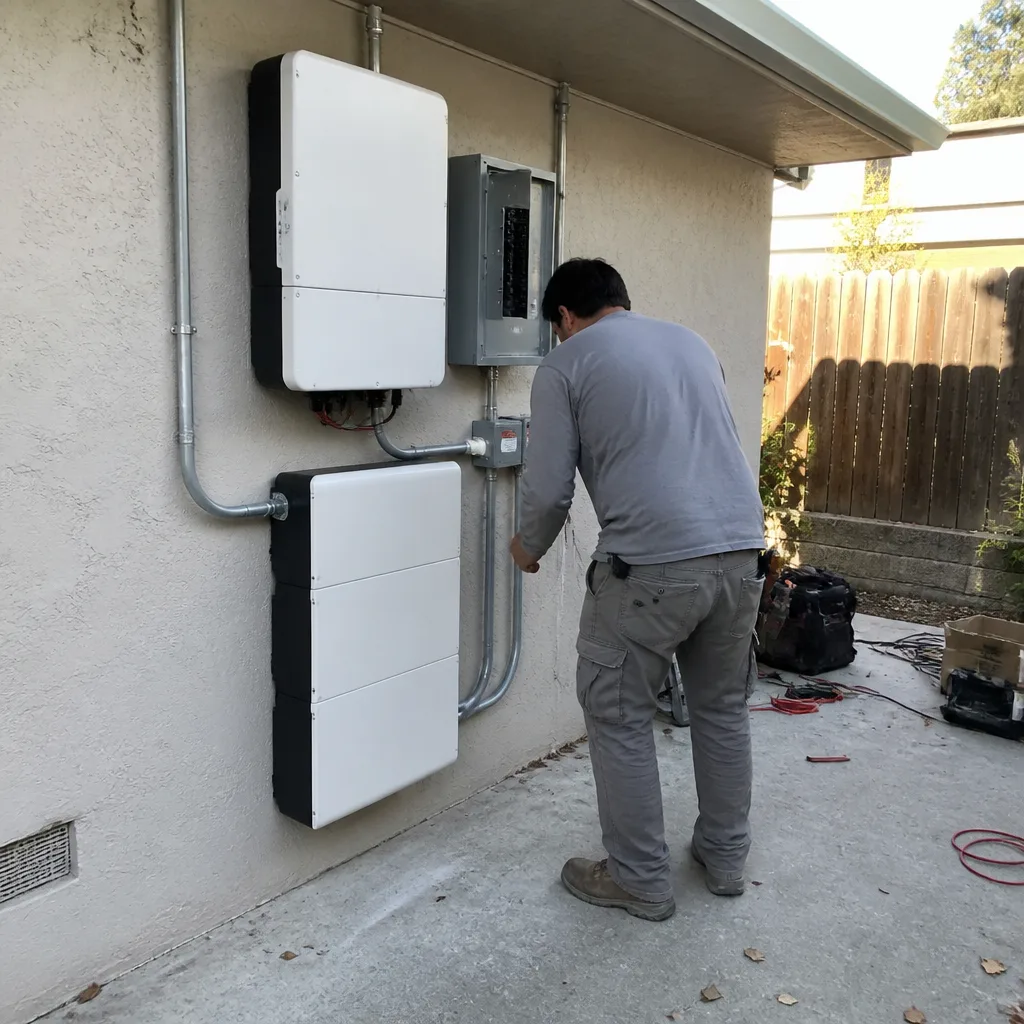 After
After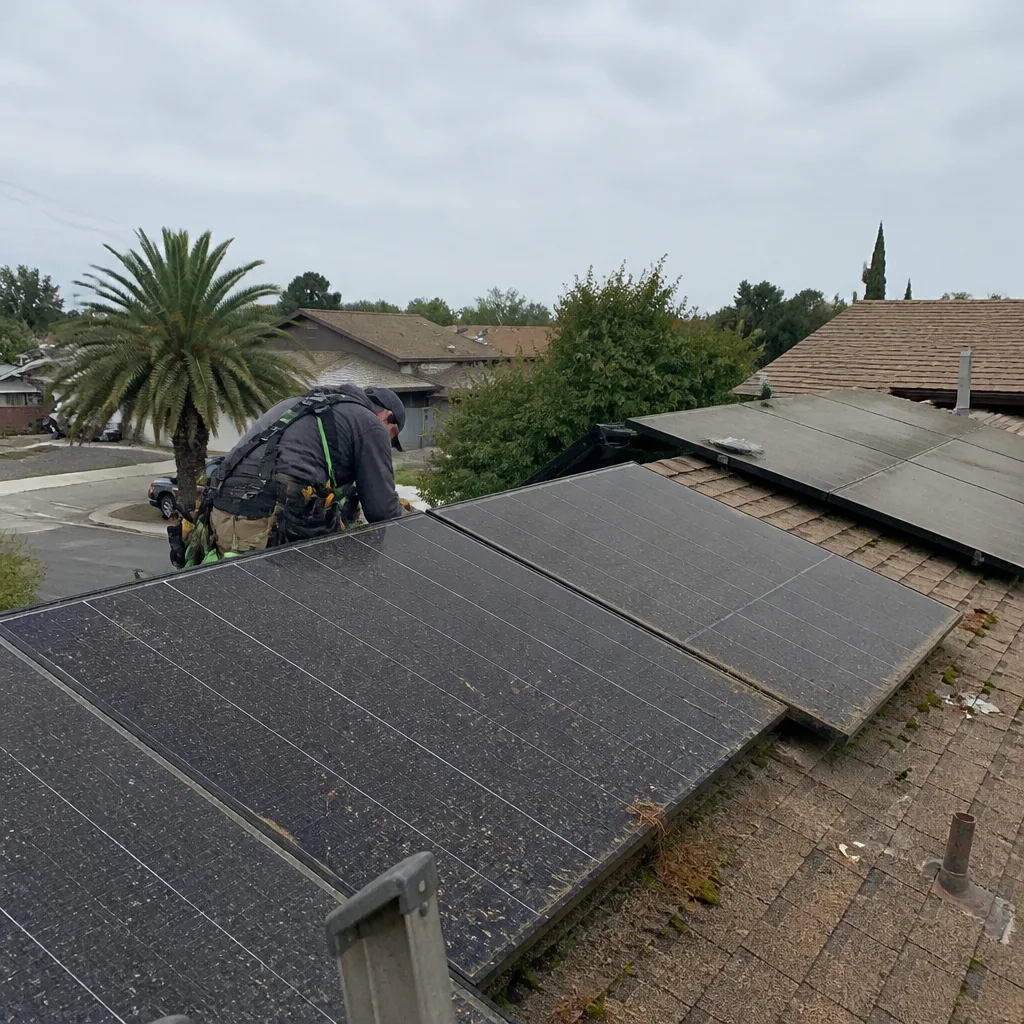 Before
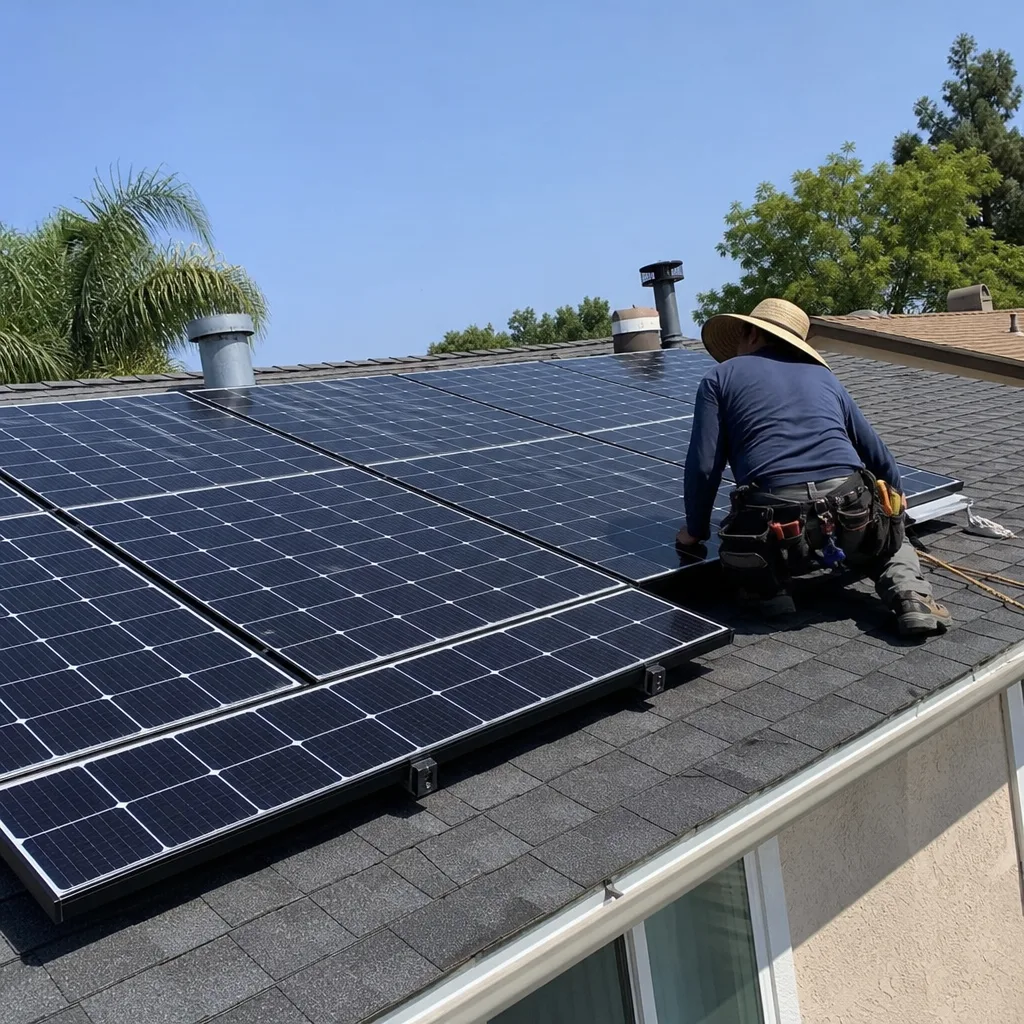 After
After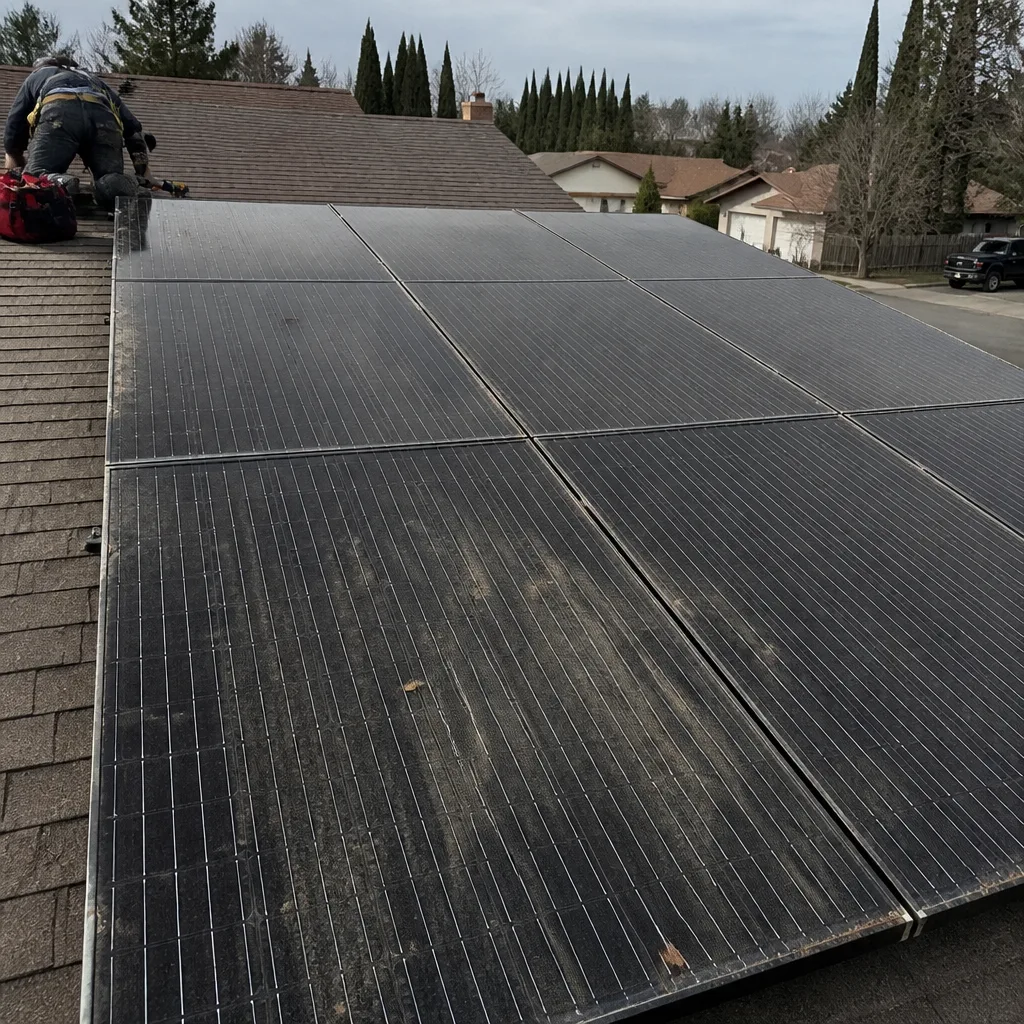 Before
 After
AfterFast, Reliable Commercial Solar Installation Across Firebaugh
Commercial solar in Firebaugh is a different animal than it is in Fresno or Mendota. The dust alone changes everything. We know this because we’ve been out on cotton gins, dairy barns, and packing sheds up and down Highway 33 and Panoche Road for years, watching Westlands dust chew through panel output faster than any spec sheet predicts. If you run a commercial operation in Firebaugh, you need an installer who understands soiling rates, tule fog math, and PG&E agricultural rate structures before a single panel goes up. Call us at (877) 550-6892 and we’ll come out, walk your site, and quote year-25 numbers off your actual bill.
This page gives you the Firebaugh-specific soiling, fog, and agricultural rate-structure math that a generic commercial solar page will never show, because here a panel’s real output isn’t set by the spec sheet. It’s set by the dust on it.
Why Gus’s Solar Is Firebaugh’s Preferred Commercial Solar Installation Company
We’re not a pop-up sales crew running a booth at the Firebaugh Cantaloupe Round-up. Gus Petrakis opened this shop in 2011, put his own name on the truck, and still answers his own phone. When a Firebaugh customer calls about a low-production alert on a ground-mount array, Gus is the one who picks up. Not a call center, not a ticketing portal. That matters when your inverter throws a fault code at 6 a.m. and your dairy cooler is pulling hard off the grid.
Our customers in Firebaugh call back because we show up when we say we will. Dispatch and scheduling are coordinated from our Fresno, Central Valley office, and crews serve Firebaugh locally. We’re not driving in from Sacramento or San Jose. We know Panoche Road, Russell Avenue, and the back roads around the Westlands service area. We know what a 110 degree July afternoon does to a SolarEdge inverter mounted on a south-facing wall with no shade. We spec for that from day one.
The Commercial Solar Installation team at Gus’s Solar operates on the L.O.C.A.L. values: Local roots, On time, Community first, Accountable, Loyal. In Firebaugh, that means we show up for the ag operation running deep-well pumps, not just the clean commercial rooftop in town. Every job is backed by the 90-Day Done Right Promise: if it’s not done right, Gus makes it right. In writing. On every job.
We also answer calls live 24/7. No after-hours voicemail. If your array trips offline on a Saturday night during tomato harvest, a real person answers and Gus’s own crew comes out. Background-checked and uniformed. You know who’s on your property before they get there.
Our Commercial Solar Installation Services in Firebaugh
Here’s what we actually do in Firebaugh, and why each service works differently here than it would in Kerman or Chowchilla.
Agricultural & Ground-Mount Solar
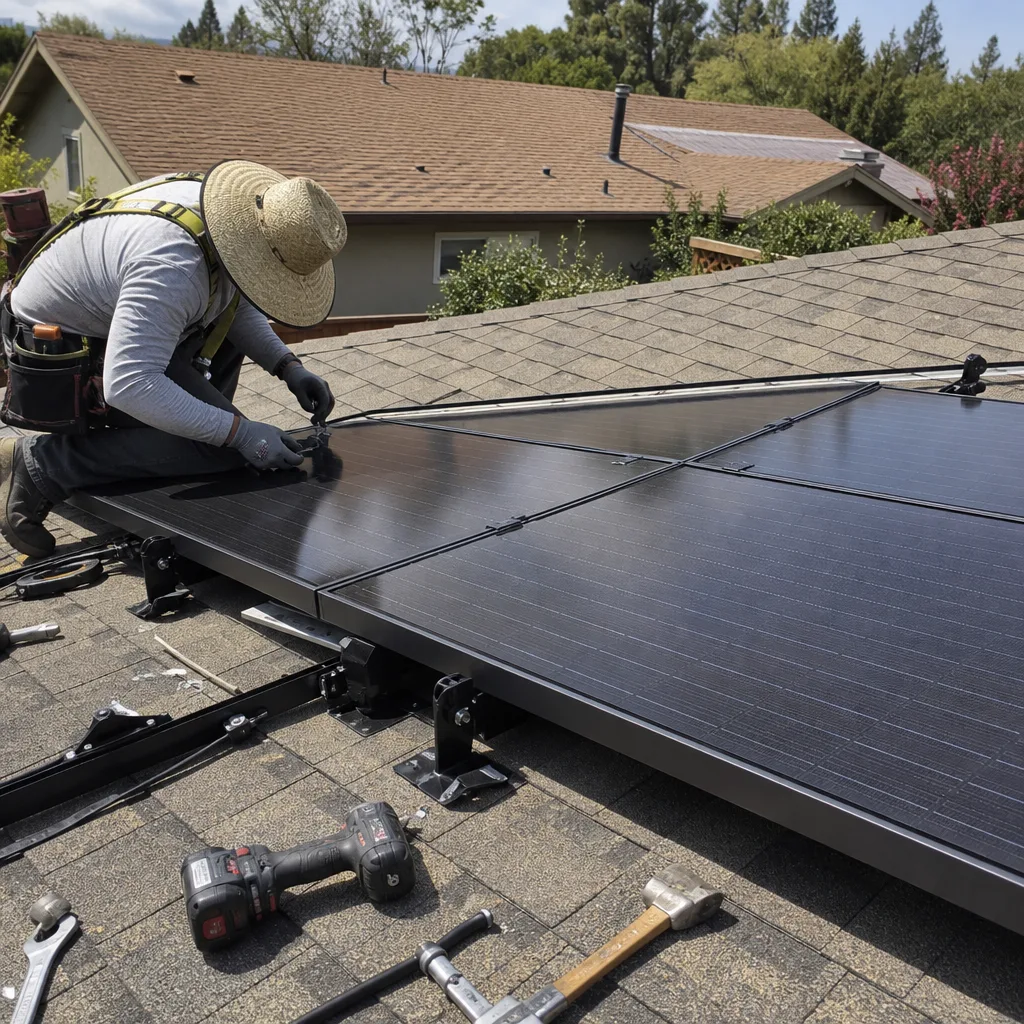
This is the service we build more of in Firebaugh than anywhere else in our county. Ag operations around Firebaugh run deep-well irrigation pumps, dairy cooling equipment, and cold storage that draw massive loads from PG&E’s agricultural rate schedules. The payback math on a ground-mount array offsetting those rates is dramatically better than a typical residential rooftop. A 100 to 300 kW ground-mount system in Firebaugh typically runs $2.10 to $2.60 per watt installed, before any USDA REAP grant money. But here’s the Firebaugh-specific piece: we design tilt angles and row spacing for Westlands dust conditions, because a standard 10 degree tilt lets wind-blown topsoil pile up along the lower module edge and choke your output by summer.
Commercial Rooftop Solar
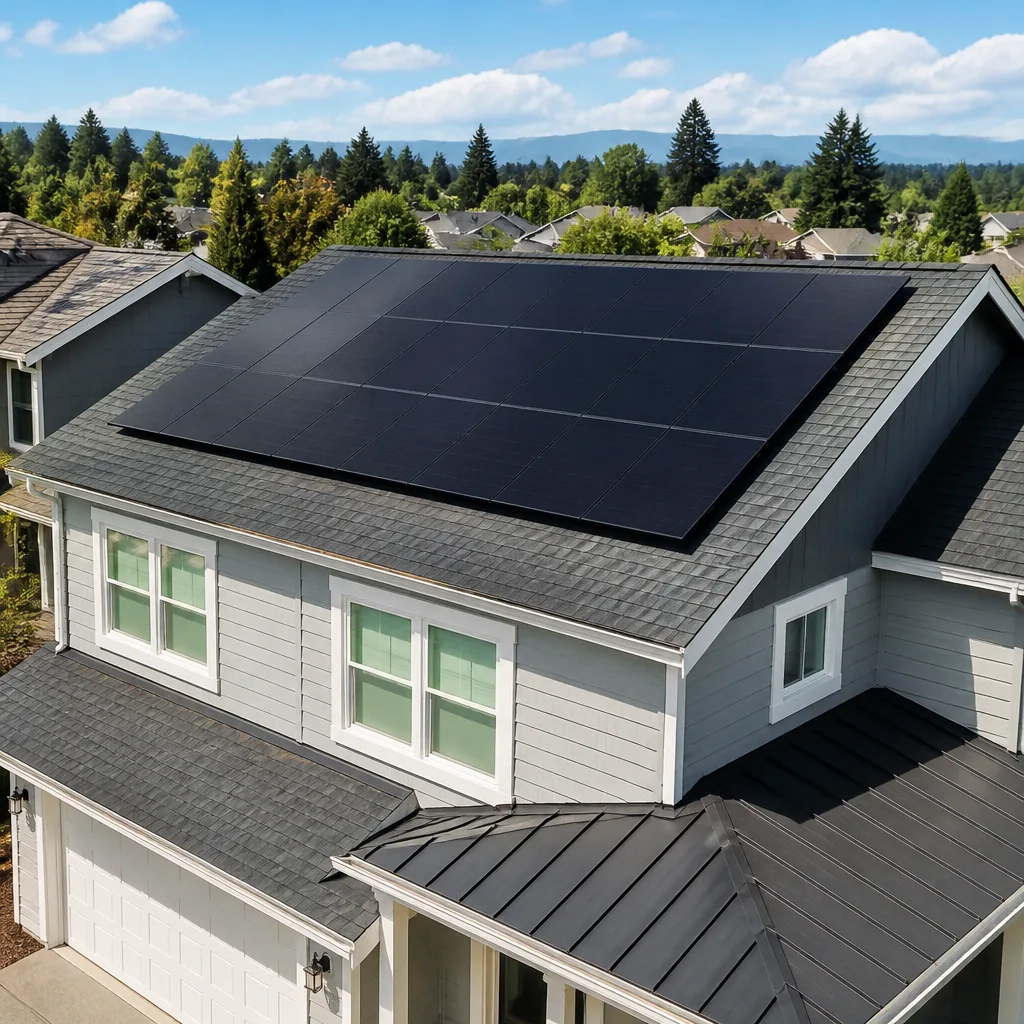
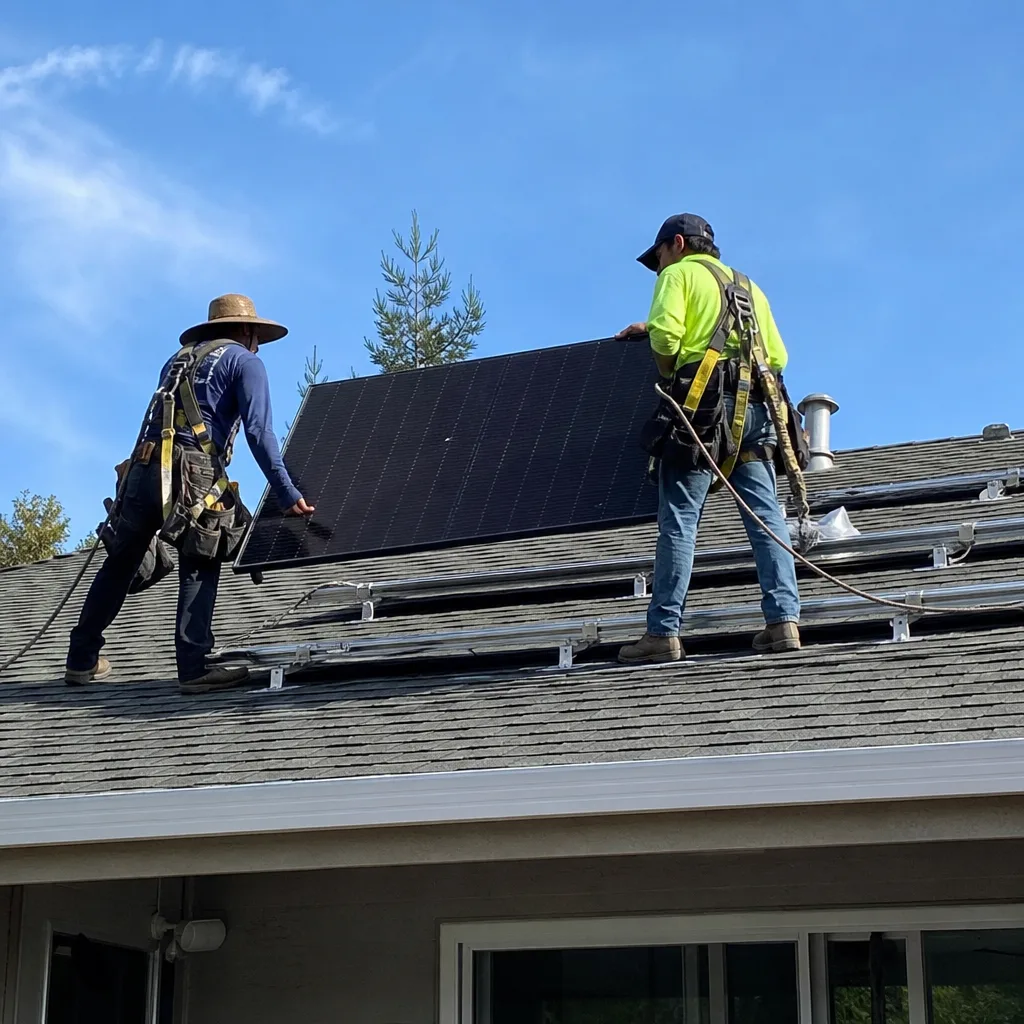
For warehouses, packing sheds, and retail buildings along Highway 33 and the 93622 corridor, rooftop solar in Firebaugh has to account for two things most installers ignore: thermal derating and fog season. Summer highs above 105 degrees Fahrenheit suppress panel efficiency during exactly the hours your building is pulling the most power for cooling. We spec panels and inverter sizing for that heat, not the mild spring day a brochure assumes. And winter tule fog can cut December and January production by half or more, so we model annual yield with real Firebaugh irradiance data, not nearby city numbers.
Solar Carport Installation
Carports make sense for Firebaugh businesses that want covered parking and generation on the same footprint. They also solve a real problem here: ground space is often tight between buildings, and roof structures on older ag buildings can’t always carry panels. A commercial carport array in Firebaugh typically runs $3.20 to $4.10 per watt, depending on steel costs and wind-load requirements. We design for the San Joaquin Valley wind loads and the dust conditions that settle on those flat carport panels faster than tilted rooftop arrays.
Commercial Battery Storage
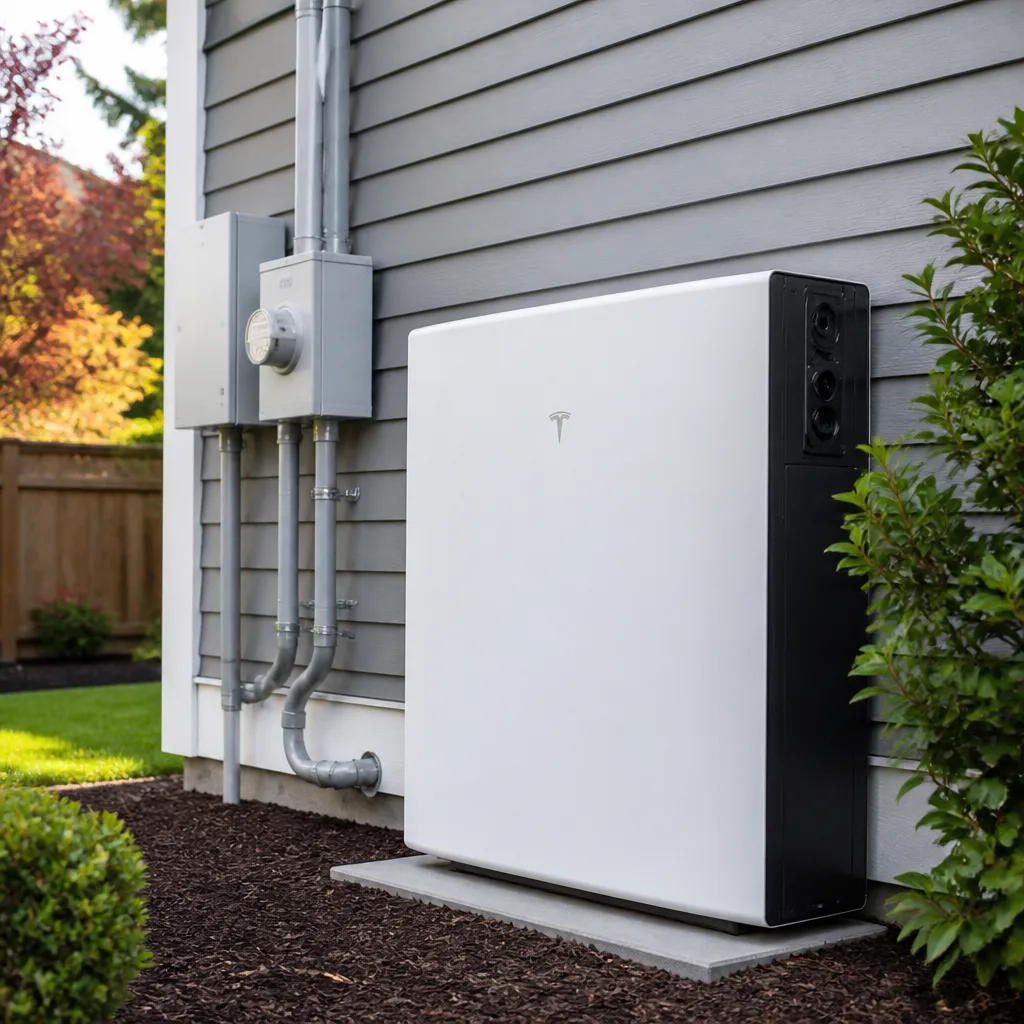
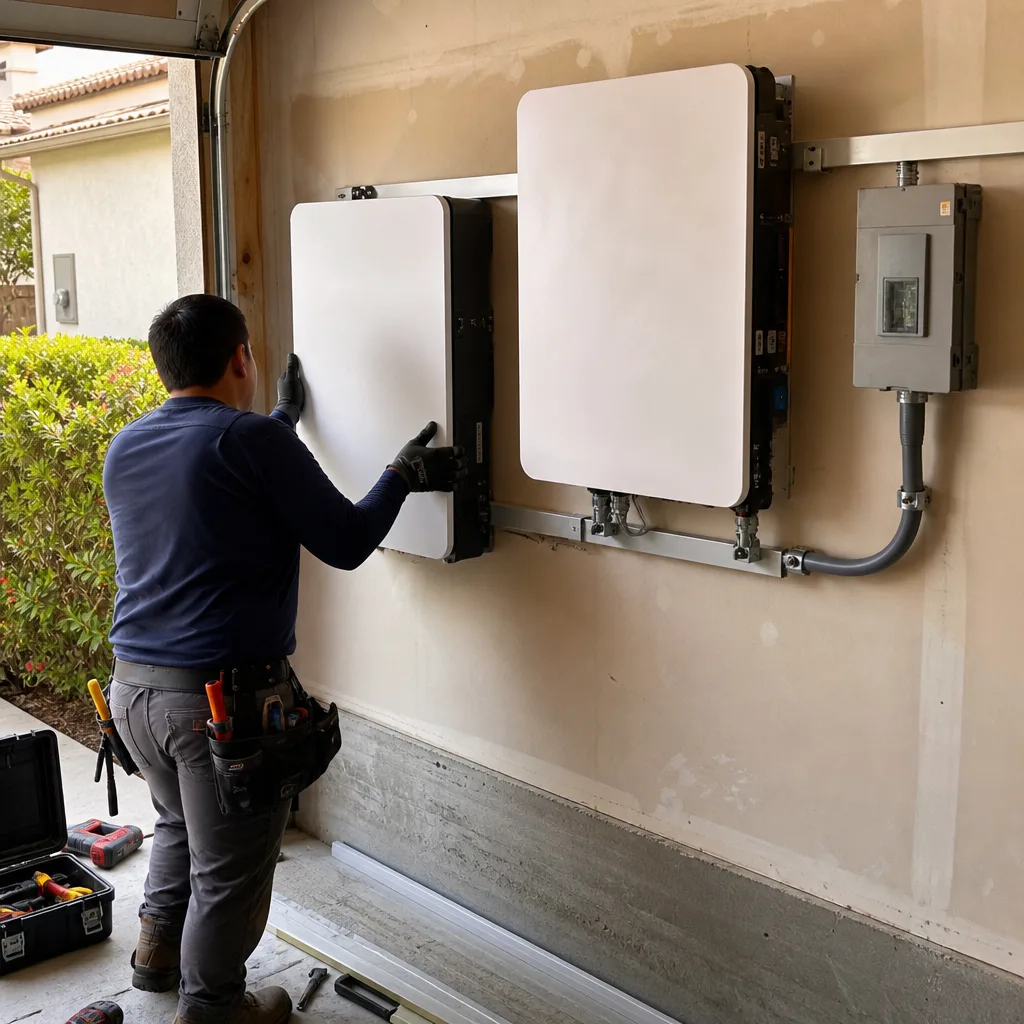
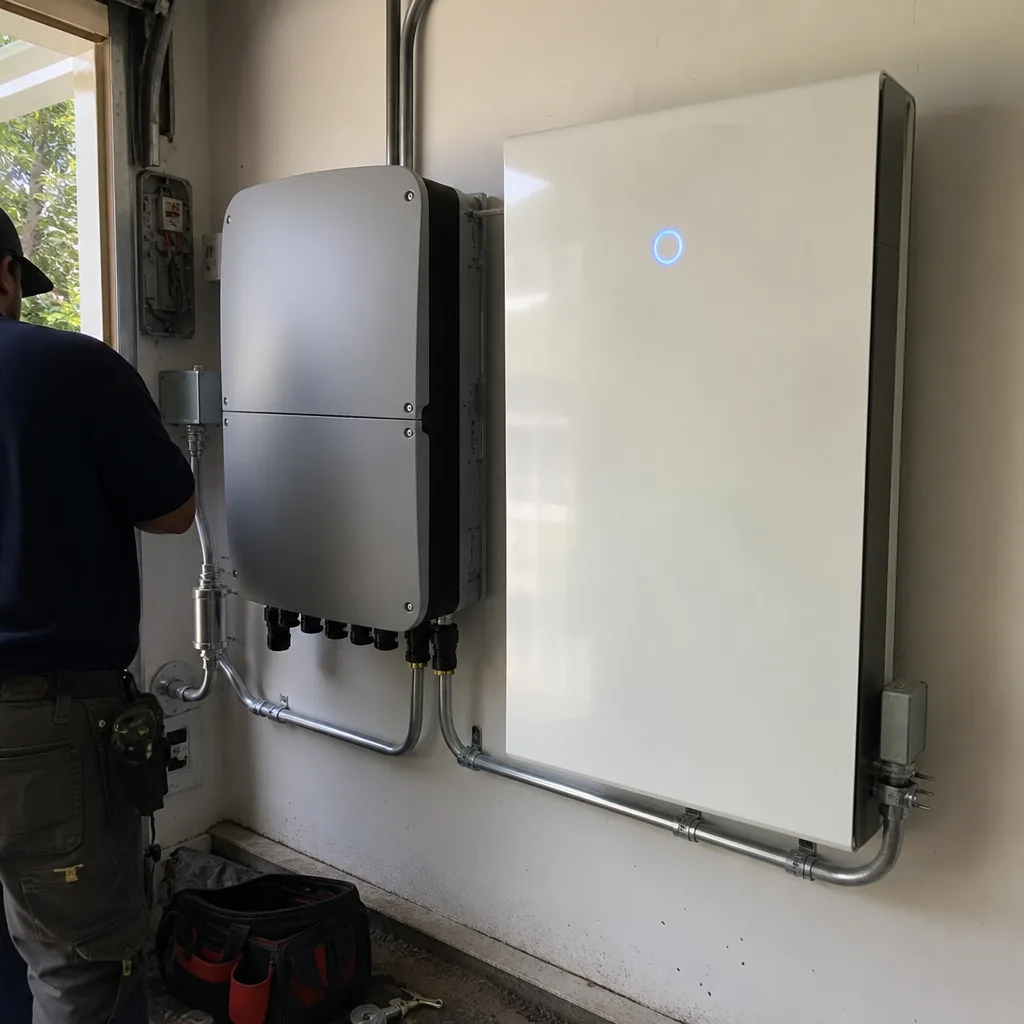
Battery storage paired with commercial solar in Firebaugh is less about going off-grid and more about rate arbitrage. PG&E’s time-of-use rates for agricultural and commercial customers spike hard in the late afternoon and early evening, exactly when solar production is fading. A FranklinWH or other commercial battery array lets you store midday generation and discharge it when rates peak. For Firebaugh ag operations with uncertain water deliveries under Westlands Water District contracts, a battery system sized for critical loads like dairy cooling or cold storage can keep you running through a brownout or a rate spike. Typical commercial battery storage in Firebaugh runs $800 to $1,200 per kWh installed, before any SGIP incentives.
What happens when you call
- 1
A real person answersNo phone trees - you reach a local pro.
- 2
You get an upfront price rangeHonest numbers before anyone is dispatched.
- 3
A background-checked tech heads outLicensed & insured, dispatched right away.
- 4
You approve before work beginsNothing starts until you say go.
Trusted Brands We Service in Firebaugh
We work with the equipment that holds up in Firebaugh conditions. Panasonic and Canadian Solar modules have proven thermal performance in high-heat valley environments, and we’ve seen their degradation rates stay lower than budget under heavy soiling loads when paired with the right cleaning schedule. JinkoSolar panels also perform well on ground-mount ag arrays where cost per watt matters. On the inverter and storage side, FranklinWH systems integrate cleanly with commercial load profiles and hold up to the heat stress we see on south-facing walls in Firebaugh summers. We stock common parts and replacements for Firebaugh customers, so a failed optimizer doesn’t mean waiting a week for a shipment from a warehouse in Texas.
Common Commercial Solar Installation Problems We See in Firebaugh
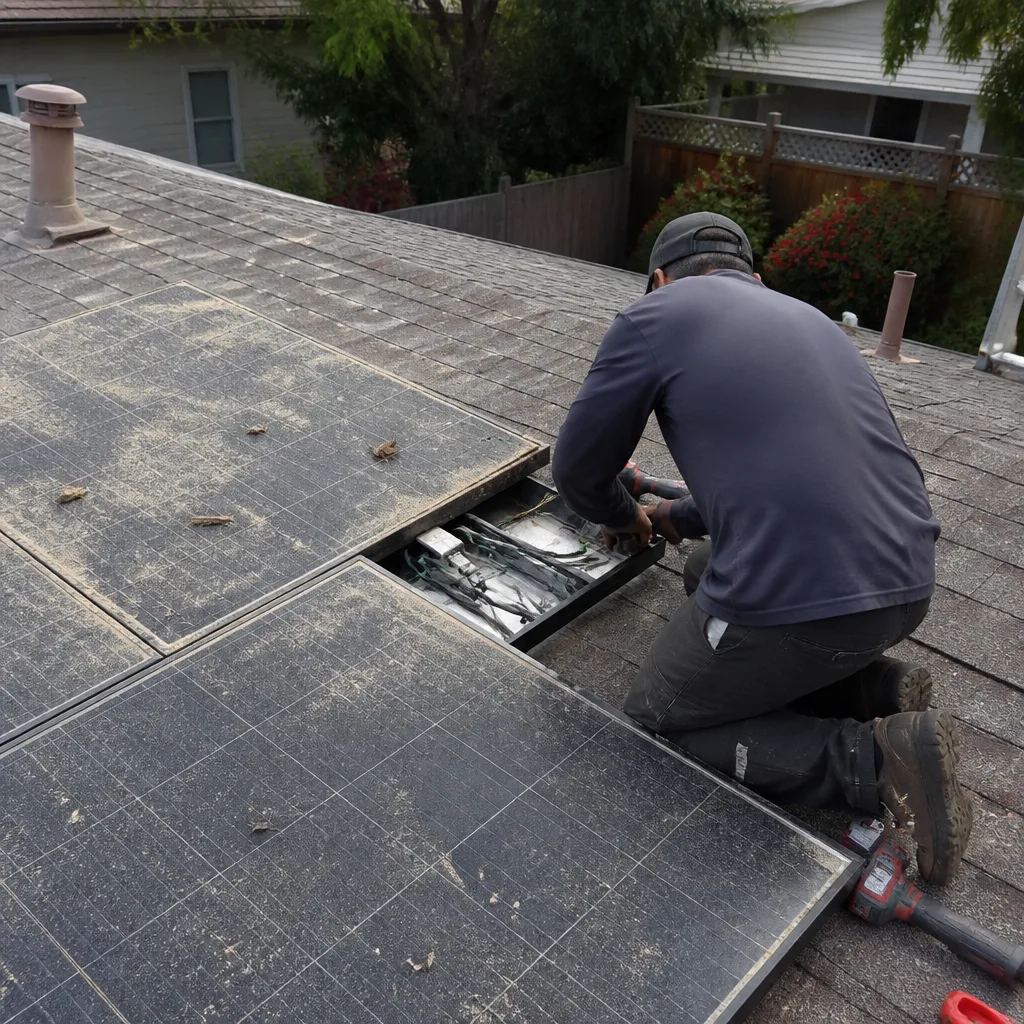
- Undersized arrays from valley-wide soiling averages. Most installers average dust losses across the whole San Joaquin Valley. Firebaugh sits inside the Westlands Water District, where hundreds of thousands of acres of fallowed and bare-soil cropland throw chronic wind-blown dust, and panels here can lose 10 to 20 percent of output between cleanings. If your array is sized on a 2 percent soiling assumption, your true-up statement will hurt.
- Standard tilt angles that trap dust along the lower module edge. A flat-ish tilt lets wind carry topsoil that settles right where the frame meets the glass, triggering inverter derating and hot spots during 110 degree afternoons. We adjust tilt angles and sometimes add hydrophobic coatings so dust sheets off instead of sticking.
- Tule fog production crashes that blow up annual yield projections. Firebaugh winters bring dense San Joaquin tule fog for weeks at a time. If your installer built your payback model on irradiance data from a city 30 miles east, your December and January production will come in far below forecast and your payback period quietly stretches years longer.
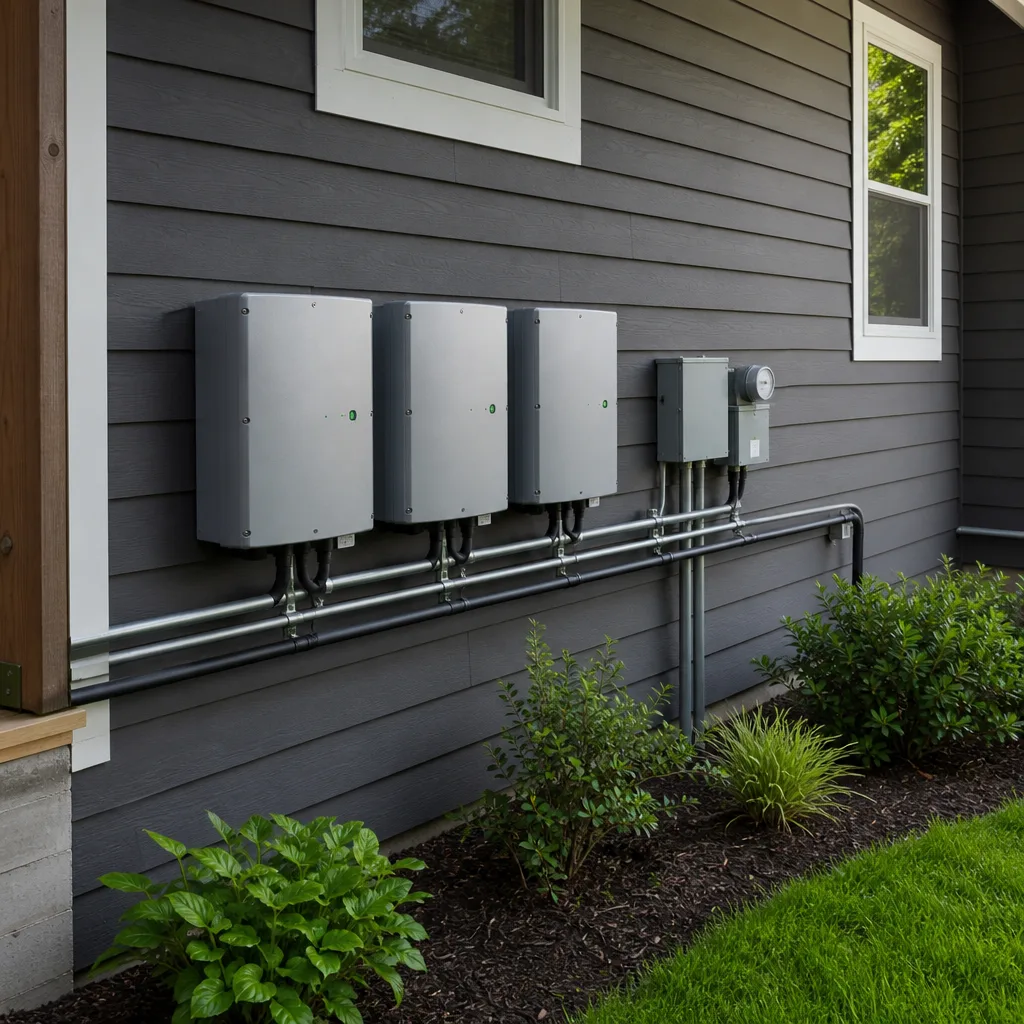
- Inverters mounted on south-facing walls with no shade. We see this constantly on Firebaugh commercial buildings. A SolarEdge or Enphase inverter on a south wall in direct 110 degree sun runs so hot it derates or faults out. We mount them in shaded locations, inside equipment rooms, or add ventilation. It’s a simple fix that most installers skip.
Pricing for Commercial Solar Installation in Firebaugh, CA
Here’s what we actually charge in Firebaugh. A commercial rooftop system on a warehouse or packing shed typically runs $2.40 to $2.90 per watt installed. A ground-mount ag array runs $2.10 to $2.60 per watt. Carports run $3.20 to $4.10 per watt due to steel and engineering. Battery storage runs $800 to $1,200 per kWh installed. What moves the price: your roof or ground condition, how much electrical panel work is needed, whether we’re dealing with Westlands dust mitigation like hydrophobic coatings or tilt adjustments, and the distance from our Fresno office to your specific site in the 93622 area. Bring us a bill, we’ll bring you the math. The estimate is free, the number we quote is the number you pay, and we don’t want a signature tonight. Take two weeks. Think about it. The price will be the same. Call (877) 550-6892 for an exact quote.
We Also Serve Cities Near Firebaugh
Along with our work throughout Firebaugh, Gus’s Solar serves commercial solar customers in Mendota, Chowchilla, Kerman, and Madera. If your operation sits in any of these communities, you get the same owner-operated service, the same 90-Day Done Right Promise, and the same live person on the phone when you call. We understand valley dust, valley heat, and valley ag economics because we work in them every day.
Serving Firebaugh, CA - Our Local Coverage Area
We’re based in the Firebaugh area and know this community well. Use the map below to see our service coverage - if you’re nearby, we can almost certainly help.
FAQs - Commercial Solar Installation in Firebaugh
Panels in Firebaugh soil 2 to 3 times faster than panels in Fresno or Los Banos, driven by chronic wind-blown dust from fallowed and bare-soil cropland inside the Westlands Water District. Where a Fresno commercial array might lose 3 to 5 percent of output between quarterly cleanings, a Firebaugh array can lose 10 to 20 percent in the same window, especially during spring tilling and fall harvest when surrounding cotton, tomato, and melon fields are actively worked. This is why we recommend hydrophobic coatings and a maintenance schedule built for your specific panel tilt and surrounding field conditions. Call (877) 550-6892 and we’ll assess your soiling rate with actual production data from your monitoring portal.
Yes, you absolutely need to account for tule fog in Firebaugh. Dense San Joaquin tule fog can settle in for weeks at a time from late November through January, cutting production by 50 percent or more compared to a clear winter day. If your installer built your annual yield projection on irradiance data from a city without the same fog density, your December true-up statement will be ugly. We model Firebaugh winter production with real fog-season data so your payback math reflects actual output, not a sunshine-and-roses estimate. Call (877) 550-6892 for an annual production projection that includes fog losses.
It can, but it takes a different approach. Many Firebaugh properties are older single-family homes or manufactured homes built for agricultural workforce housing, and many are rentals with lower homeownership rates. For a landlord owner, commercial solar on a rental property comes down to roof condition and whether the structural system can carry panels. Older manufactured homes often need reinforcement or re-roofing before installation, and we’ll tell you honestly if the roof isn’t worth putting panels on. For rental properties, the economics depend on who pays the electric bill and whether the tenant or the landlord benefits, so we walk that math carefully with every Firebaugh landlord who calls.
For an ag operation in Firebaugh running deep-well irrigation pumps, string inverters with good thermal management and active cooling hold up better than microinverters in most cases, especially on large ground-mount arrays where access for maintenance is straightforward. The heat is the real enemy: a south-facing inverter in direct 110 degree sun will derate or fault out regardless of brand. We mount inverters in shaded locations or inside equipment rooms, and we spec thermal derating into our system design so your array produces what we say it will produce, even in July. Bring us your pump load profile and we’ll match the inverter to the job.
It depends on what your operation actually needs, and we’ll be straight with you about it. If Westlands Water District allocation cuts could idle a field or reduce pumping for parts of the year, paying for battery storage sized to a worst-case pumping load doesn’t pencil out. But if you’re running dairy cooling, cold storage, or other critical loads that can’t go down regardless of what happens with water deliveries, a battery system paired with solar makes real sense. It lets you shift midday generation into late-afternoon PG&E peak-rate hours and keeps critical equipment running through a brownout. For most Firebaugh ag customers, we recommend sizing the battery for critical loads only, not the whole operation. Call (877) 550-6892 and bring us your bill, we’ll bring you the math.
Written by Gus Petrakis, Owner at Gus’s Solar, serving Firebaugh since 2011.