
Free bill analysis - bring a power bill, get the production math for your actual roof, panel brands like Qcells and REC compared side by side
If the pitch starts at your door and ends with "sign tonight for the special," sleep on it. The sun will still be there tomorrow; so will we.

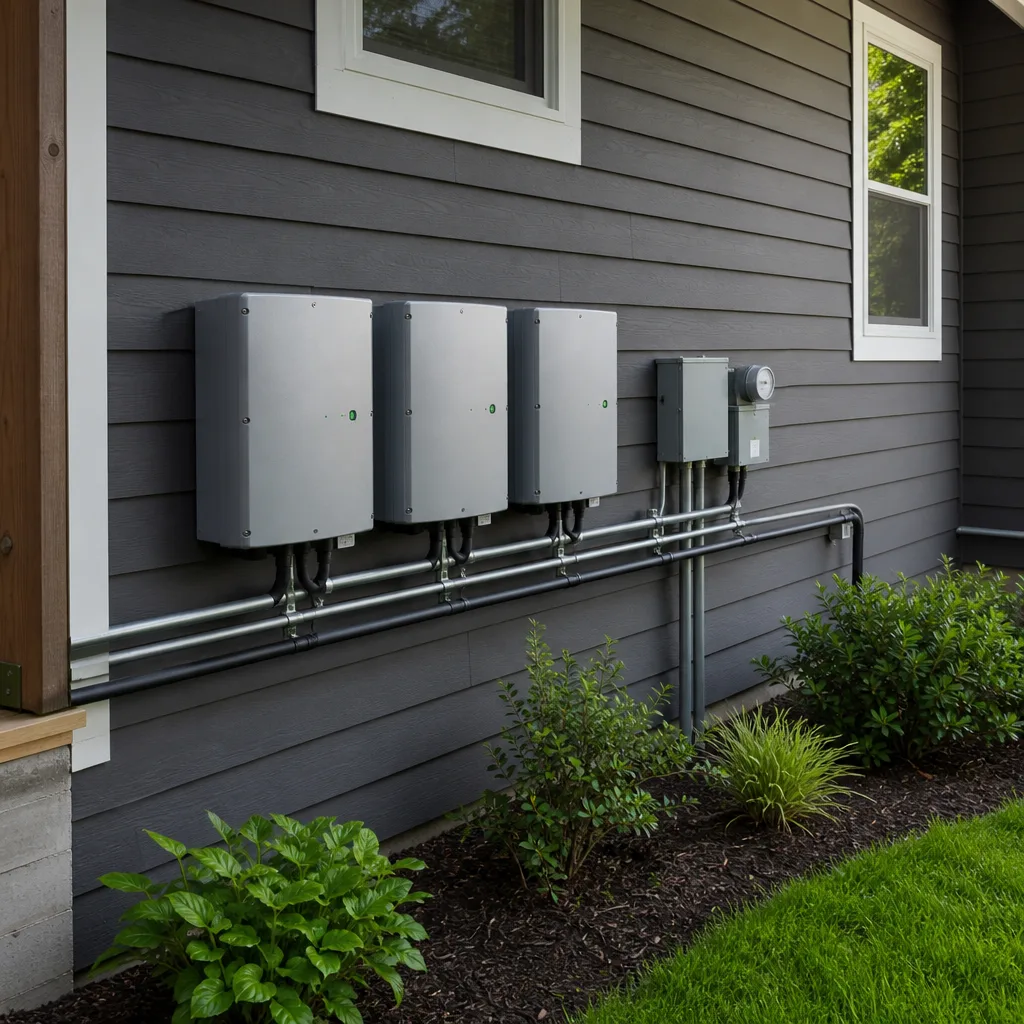
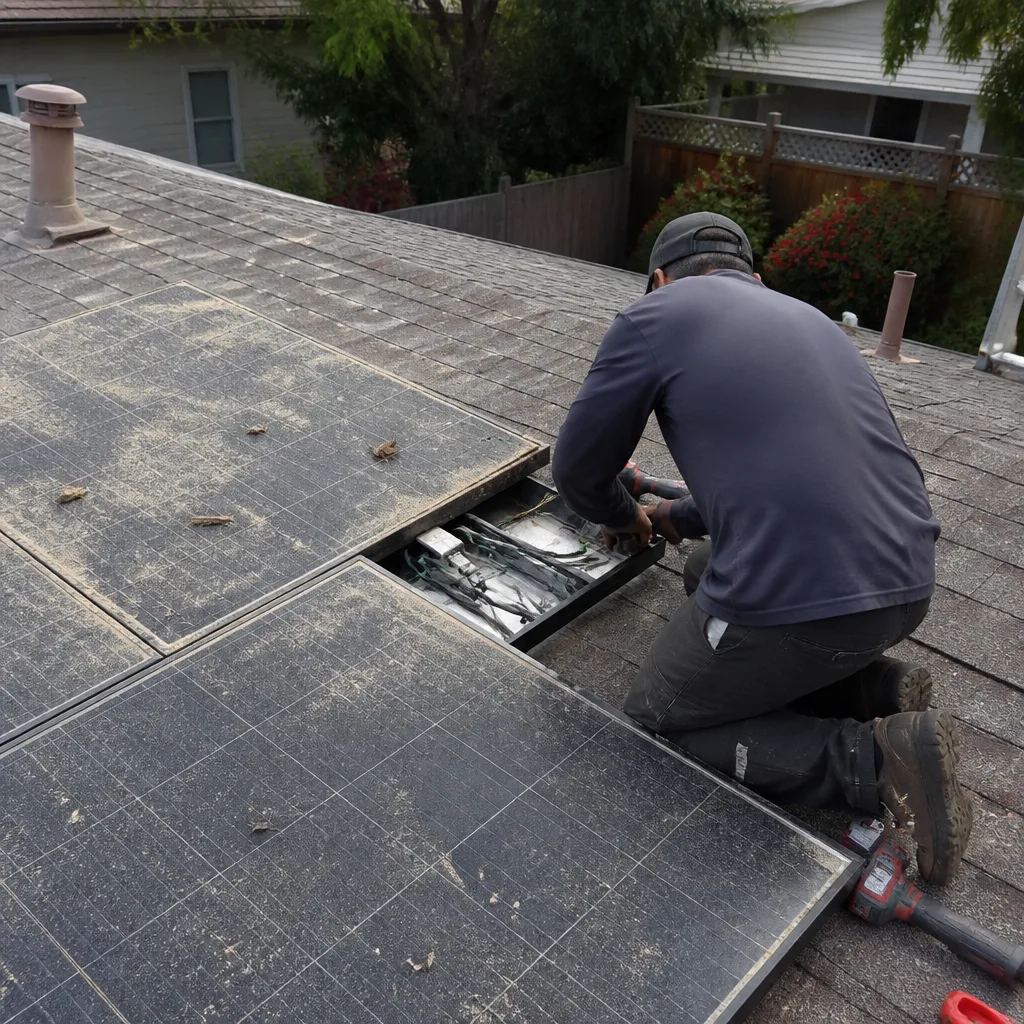 Before
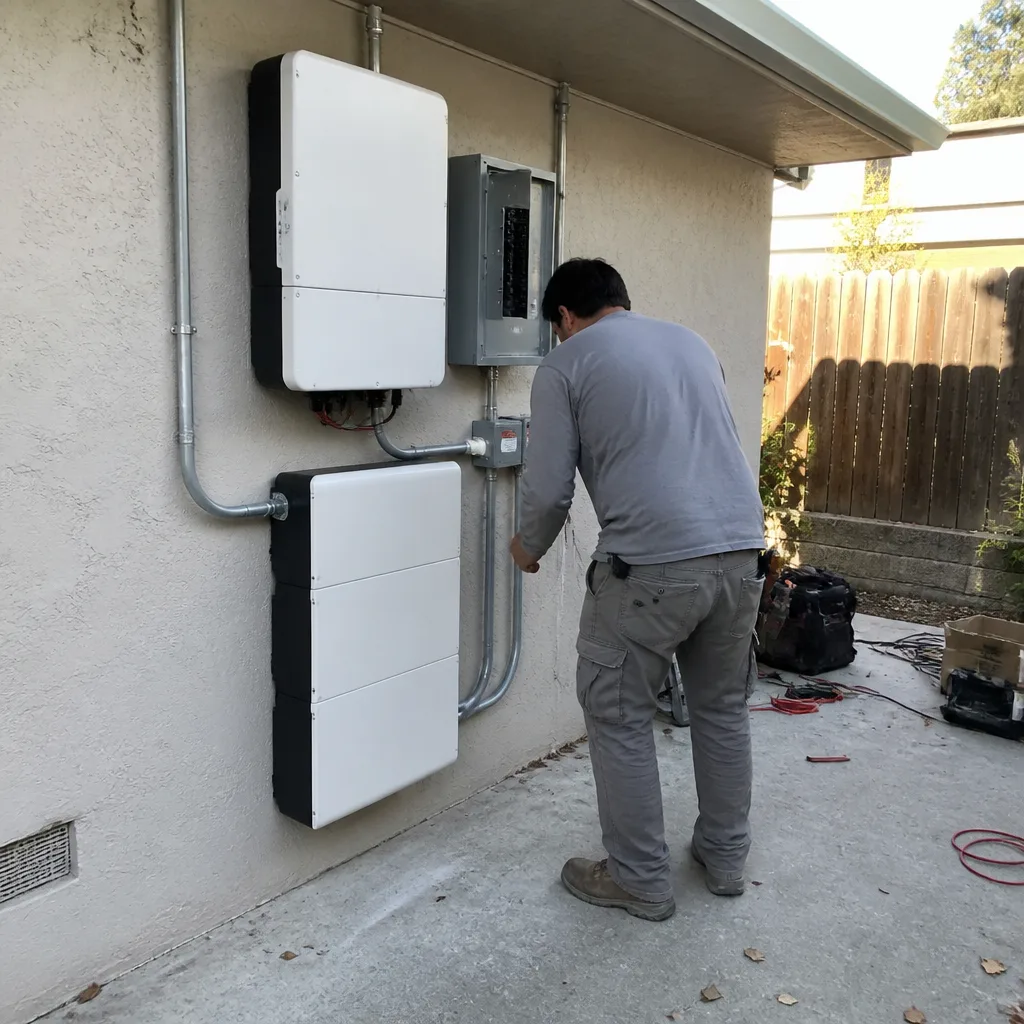 After
After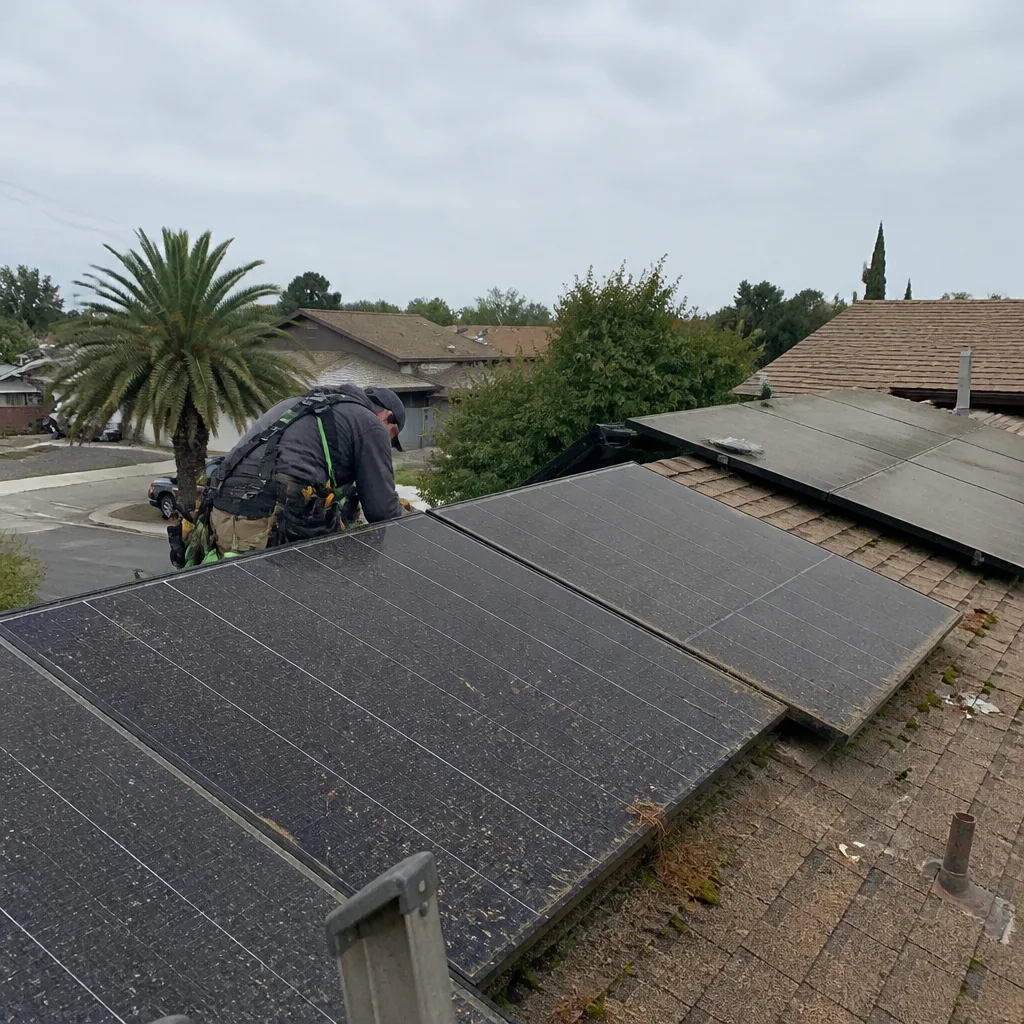 Before
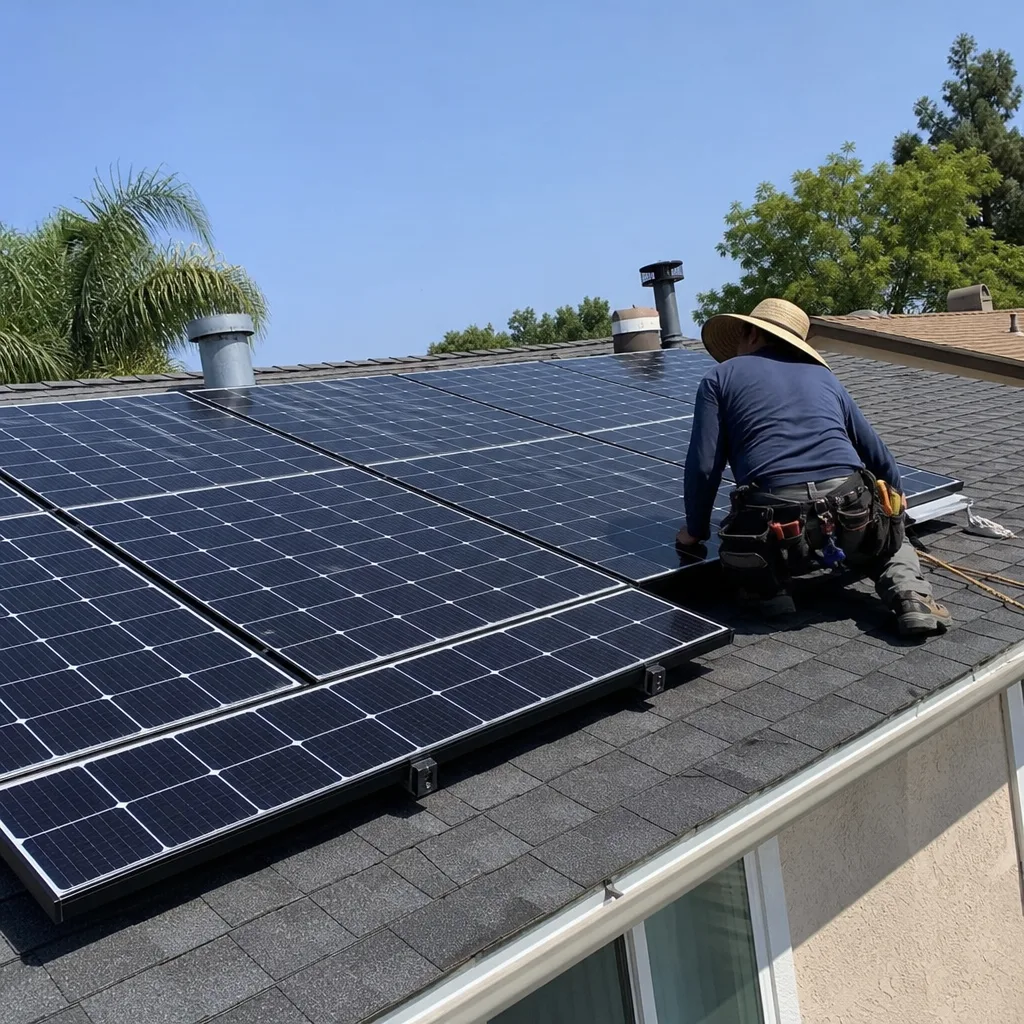 After
After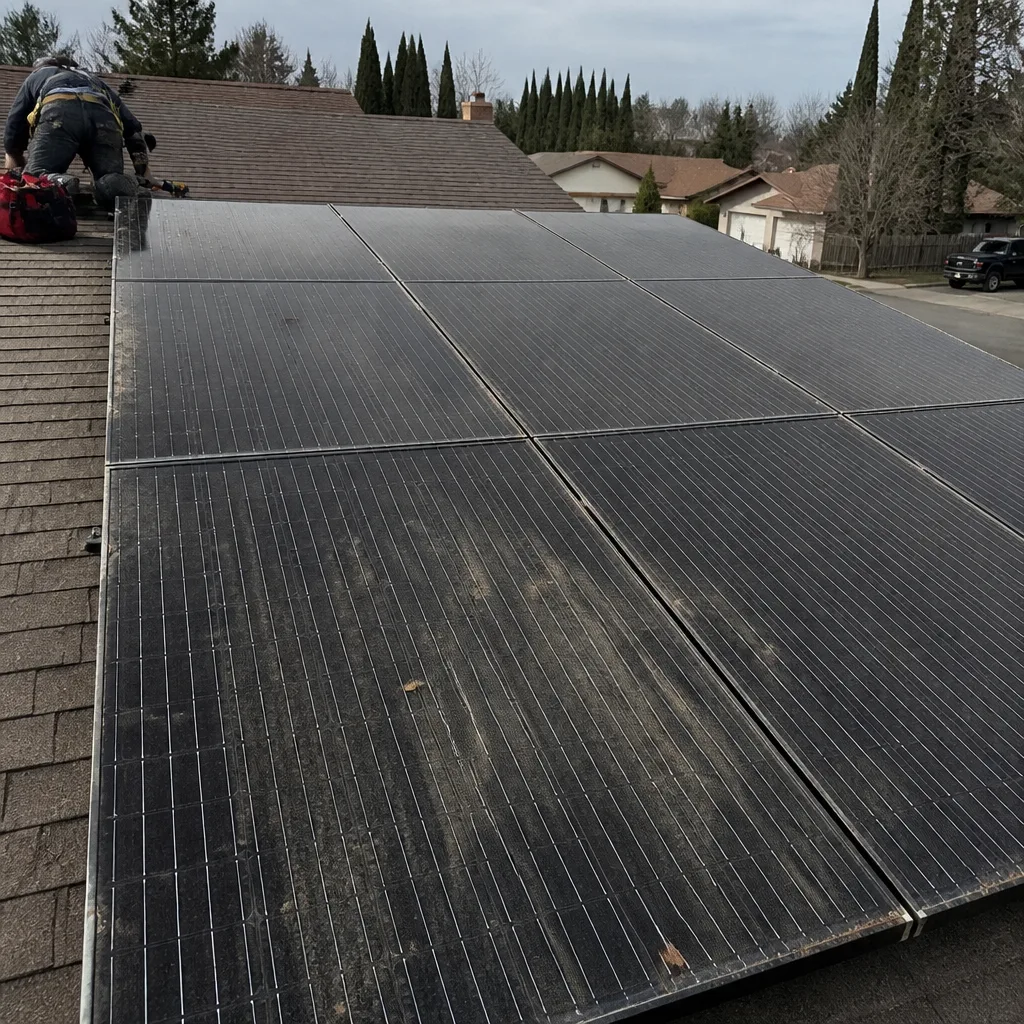 Before
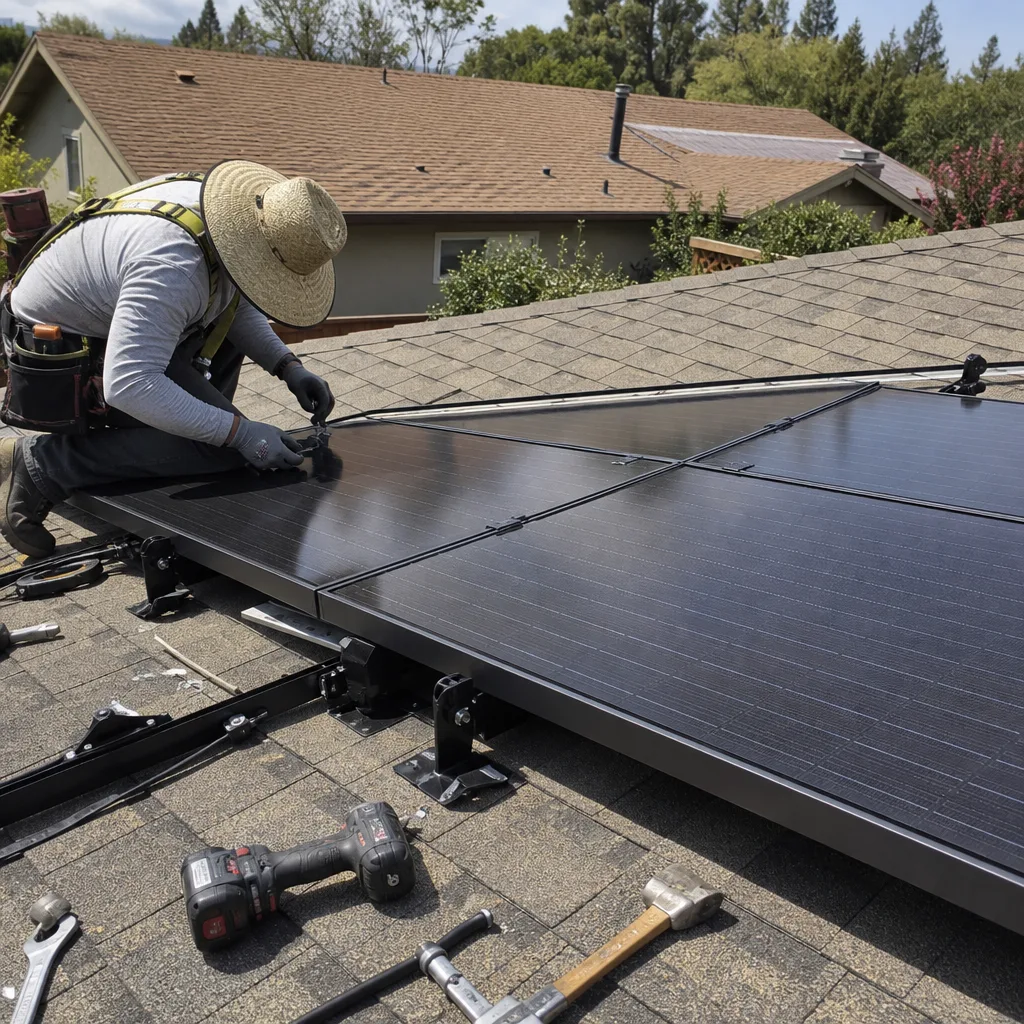 After
AfterPanasonic Solar Panel Maintenance & Monitoring in San Jose: What to Know First
Panasonic solar panel maintenance and monitoring in San Jose typically runs $180 to $340 for a full annual inspection with production diagnostics, and most appointments are completed within one to two weeks of your call. We’re an independent Panasonic service provider, not a manufacturer warranty desk, which means when your system underperforms, we show up, diagnose it, and fix it without asking you to navigate a phone tree in another state. If you own a Panasonic system in San Jose and your monitoring app shows a production dip or has gone dark, call Gus’s Solar at (877) 550-6892. The call goes to a live person, day or night.
This page is for Panasonic owners in San Jose who want straight answers about maintenance schedules, monitoring setup, and what actually goes wrong with these panels and inverters after years of California sun. We service the full range of Panasonic residential equipment still on area roofs, from the older HIT series through the EverVolt line, and we know which failure patterns show up in Santa Clara County specifically.
How Panasonic Products Fail - and How We Fix Them
Panasonic builds a solid panel. Most of what we see on San Jose roofs is not manufacturing defects. It is time, heat, and aging electronics doing what aging electronics do. Here are the five most common problems we diagnose on Panasonic systems in San Jose, and what we do about each one.
- EverVolt microinverter communication drops. The EverVolt series uses an Enphase-based microinverter architecture, and after three to five years of San Jose heat, the module-level power electronics can stop reporting to the monitoring platform even when the panels themselves are producing fine. The panel output is there, but the app shows a dead module. We isolate the non-reporting unit, check the trunk cable and terminator, and replace the microinverter with a compatible OEM or warrantied aftermarket unit. This is the single most common Panasonic monitoring issue we see in San Jose, and the fix usually takes under two hours.
- HIT series junction box seal degradation. Panasonic’s older HIT panels, the ones installed across Willow Glen and Almaden Valley from 2015 through 2020, use a backsheet junction box with a silicone perimeter seal. After enough summers of thermal cycling, that seal can develop hairline cracks that let moisture in. The symptom is a panel that intermittently drops offline after rain and comes back when things dry out. We catch this during annual inspections with an infrared scan before it becomes a permanent short, and we reseal or replace the junction box as needed.
- EverVolt battery communication faults with the smart hub. If your Panasonic setup includes an EverVolt storage system, the battery management system occasionally loses sync with the monitoring hub after a grid event or firmware mismatch. You will see state-of-charge readings that freeze or error codes that do not clear. We re-establish communication, update firmware to matched versions, and verify the battery actually charges and discharges under load. Sometimes it is a software issue. Sometimes a cell voltage sensor has drifted, and that requires a hardware fix under Panasonic’s warranty path, which we help you file properly.
- PID (potential-induced degradation) on ground-mounted and flat-roof Panasonic arrays. San Jose has pockets of high humidity in the early morning, particularly in the Cambrian and Campbell border areas, and Panasonic’s HIT series can experience gradual voltage leakage to ground when the array operates at high DC voltage, especially on ungrounded inverter topologies where the array sits close to soil. The symptom is a slow, steady production decline of 1 to 3 percent per year beyond normal degradation. We can test for PID with a simple voltage-to-ground measurement and correct the DC biasing through the inverter settings or add a grounding kit where the panel chemistry allows. Not every decline is PID, but when it is, it is fixable without replacing panels.
- Rapid shutdown device failures on Panasonic systems with SolarEdge or Enphase architecture. San Jose requires module-level rapid shutdown on most residential installs under current California electrical code, and the Panasonic-branded modules often paired with Enphase or SolarEdge MLPE have small shutdown devices at each panel. These fail in the heat, and when one fails in the closed or open position incorrectly, it can take an entire string offline. We test each module for shutdown response during our annual inspection and replace failed units with code-compliant components that match your system’s architecture.
Our Panasonic Solar Panel Maintenance & Monitoring Process
When you call about a Panasonic system in San Jose, here is exactly what happens. Gus’s own crew handles it from the first call to the cleanup. We do not hand work off to subcontractors.
- 1
The call. You reach a live person at (877) 550-6892. We ask what you are seeing: production drop, app errors, odd inverter behavior, or just a routine checkup. We schedule a time that fits, and we tell you upfront if there is a trip charge. Inside our own county, there is not.
- 2
The inspection. A background-checked, uniformed technician from Gus’s crew arrives and walks the array. We check panel-level output with a module tester, scan for hot spots with an infrared camera, inspect conduit, racking, and sealants, and pull the inverter and monitoring logs.
- 3
The diagnosis. We show you exactly what we found, in plain terms, with the numbers in front of you. If it is a failed part, we show you the error code and the failed component. If it is a settings or firmware issue, we explain what changed and why.
- 4
The parts decision. Where Panasonic OEM parts are available and make sense, we use them. Where a quality aftermarket component matches or exceeds spec and gets you back online faster, we tell you that, and we give you the choice. No hidden markup games.
- 5
The fix and the test. We complete the repair, run the system through a full production test, verify monitoring is reporting correctly, and confirm the array is producing at expected levels for the season and your roof’s orientation in San Jose.
- 6
The guarantee. Every part and every hour of labor on a Panasonic job is backed by our 90-Day Done Right Promise. If something is not right, one call brings Gus back. And you have that in writing.
What Panasonic Solar Panel Maintenance & Monitoring Costs in San Jose
We quote straight numbers because that is the only way we know how to work. Here is what typical Panasonic maintenance and monitoring work costs in San Jose.
- Annual inspection with panel-level diagnostics and monitoring review: $180 to $260, depending on array size and roof accessibility.
- Monitoring setup or app configuration (new phone, new router, or platform migration): $120 to $200.
- Underperformance diagnostic visit with full electrical testing: $220 to $340, credited toward repair if we find something we need to fix.
- Single microinverter or MLPE replacement on EverVolt systems: $380 to $620, parts and labor, depending on the unit and roof access.
- Preventive maintenance plan (annual inspection, cleaning, monitoring review, one priority callout per year): $390 to $600 per year, based on system size.
What moves the price: roof pitch and height, age of the system, whether we need a lift for second-story access, and whether your Panasonic setup uses proprietary monitoring components versus open-platform architecture. What does not move the price: our mood, the season, or how busy we are. The number you are quoted is the number you pay. Call (877) 550-6892 for an exact quote on your Panasonic system. Estimates are free, and a senior or veteran discount of 10 percent never expires.
Why San Jose Homeowners Call Gus’s Solar for Panasonic Work
Gus Petrakis grew up in Willow Glen and still lives about ten minutes from his old high school. He started this company in 2011, and he still puts his own name on the truck. When a Panasonic system in San Jose stops reporting or starts underperforming, the owner of the company is the one reading your production curve and telling you what is actually going on, not a call center reading from a script. Here is what I would do if it were my roof: check the monitoring first, check the panels second, and do not let anyone sell me a new array until an honest test says the old one is dead. That is the standard we work to.
We answer the phone with a live person 24/7. We send background-checked, uniformed technicians from our own crew. We work on Panasonic alongside Tesla, Enphase, SolarEdge, and Qcells systems, which matters when your Panasonic panels are paired with a third-party inverter or battery we already know inside out. And every job carries the 90-Day Done Right Promise, in writing, on every line. If it is not right, Gus makes it right.
FAQs
Yes. Panasonic’s 25-year product and performance warranty on the EverVolt and HIT series is tied to the panel serial number and the original installation, not to which San Jose contractor performs routine maintenance or diagnostics. We keep warranty-safe documentation on every job so if you ever need to file a claim, the service history is clean and complete. We have helped many San Jose homeowners file Panasonic warranty claims, and we can tell you before we start whether a repair is likely a warranty item or an out-of-pocket fix.
Most of the time, yes. Panasonic monitoring runs through an Enphase or SolarEdge platform depending on your system’s vintage, and the most common San Jose failure we see is a communication dropout between the monitoring gateway and your home network or between individual modules and the gateway. We can usually restore monitoring the same visit, whether that means re-pairing devices, replacing a gateway, updating firmware, or reconfiguring the system for a new router. Call (877) 550-6892 and we will walk through what you are seeing before we even schedule, at no charge.
Panasonic maintenance runs about the same as other premium panel brands: $180 to $340 for most diagnostic and inspection work, though Panasonic battery systems can add to the cost when storage components need attention. The brand does not change our hourly rate. What matters more is your system’s age, your roof’s accessibility, and whether you have battery storage paired with the panels. The good news with Panasonic is that the panels themselves are genuinely durable, so most maintenance dollars go to monitoring components, connections, and firmware rather than panel replacement.
At $380 to $620 for a typical microinverter or MLPE repair versus several thousand for even a partial array replacement, repair almost always wins if the panels themselves are still producing. Panasonic panels hold up well in San Jose conditions, and most systems we service from the 2015 through 2020 era need component-level attention, not full replacement. We will only suggest new panels when the old ones have genuinely reached the end of their useful life, and we will show you the production numbers that justify that call. If a salesman needs an answer tonight, the answer is no.
We keep same-day and next-day slots available for San Jose homeowners with a completely down system, especially if you also have battery storage that is not charging. Emergencies get priority, and we do not charge a trip fee inside our own county. Call (877) 550-6892 and tell us what is on your screen. A live person answers, and we will get someone out as fast as the schedule allows.
Written by Gus Petrakis, Owner, Gus’s Solar at Gus’s Solar, serving San Jose and nearby areas.