
Free bill analysis - bring a power bill, get the production math for your actual roof, panel brands like Qcells and REC compared side by side
If the pitch starts at your door and ends with "sign tonight for the special," sleep on it. The sun will still be there tomorrow; so will we.

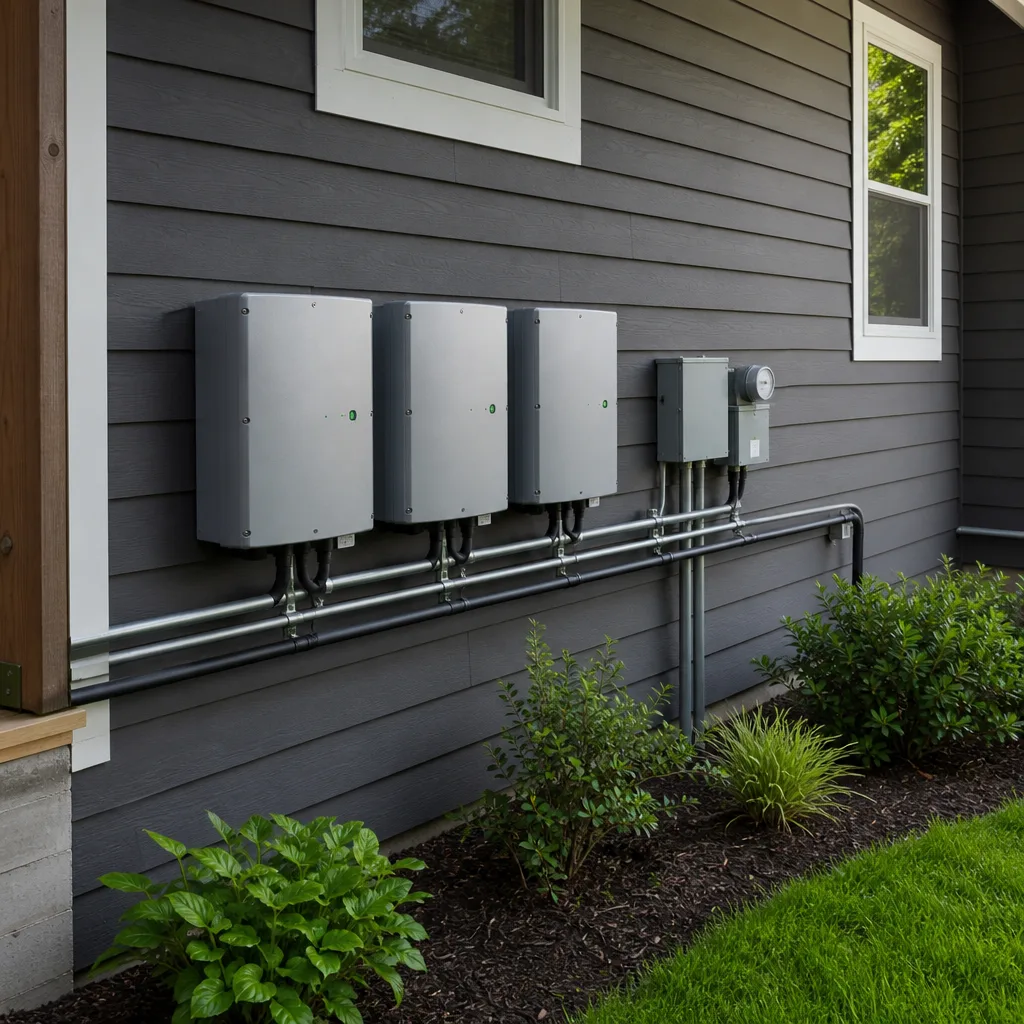
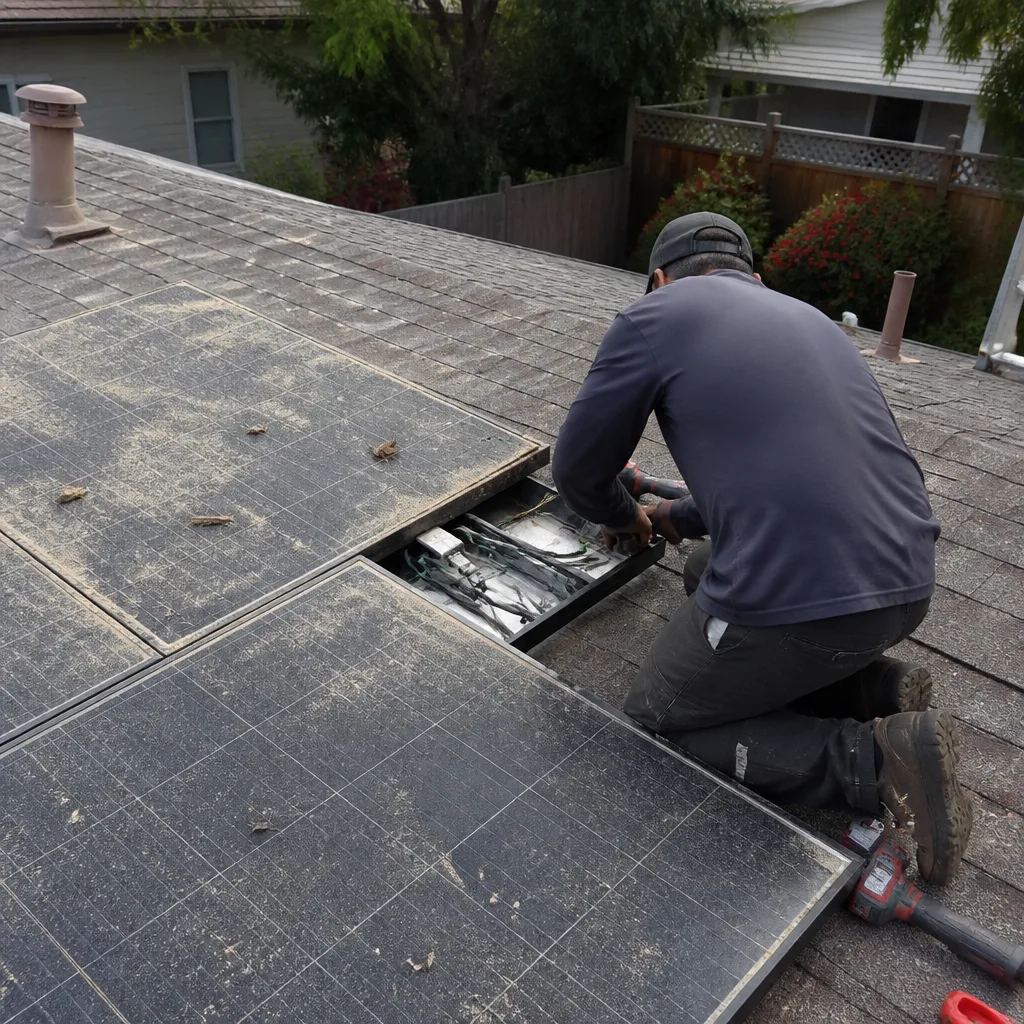 Before
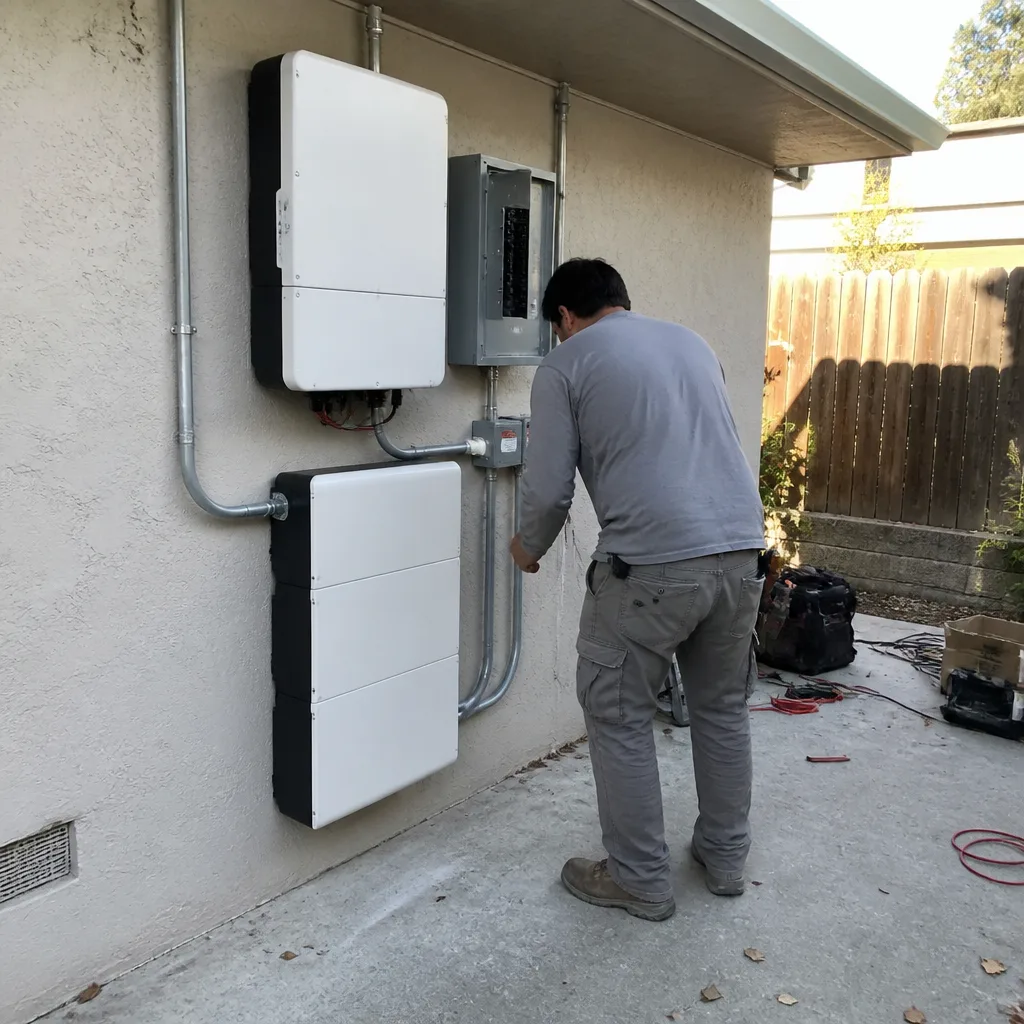 After
After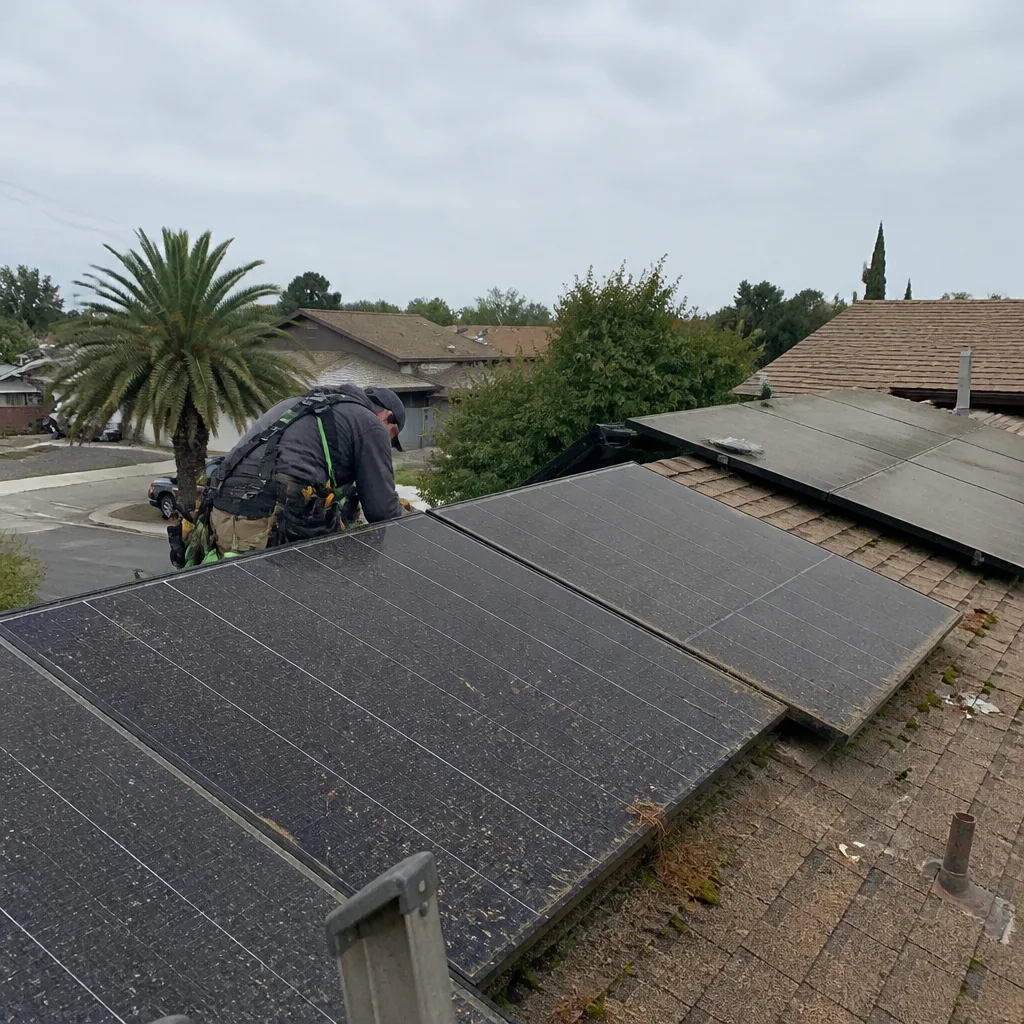 Before
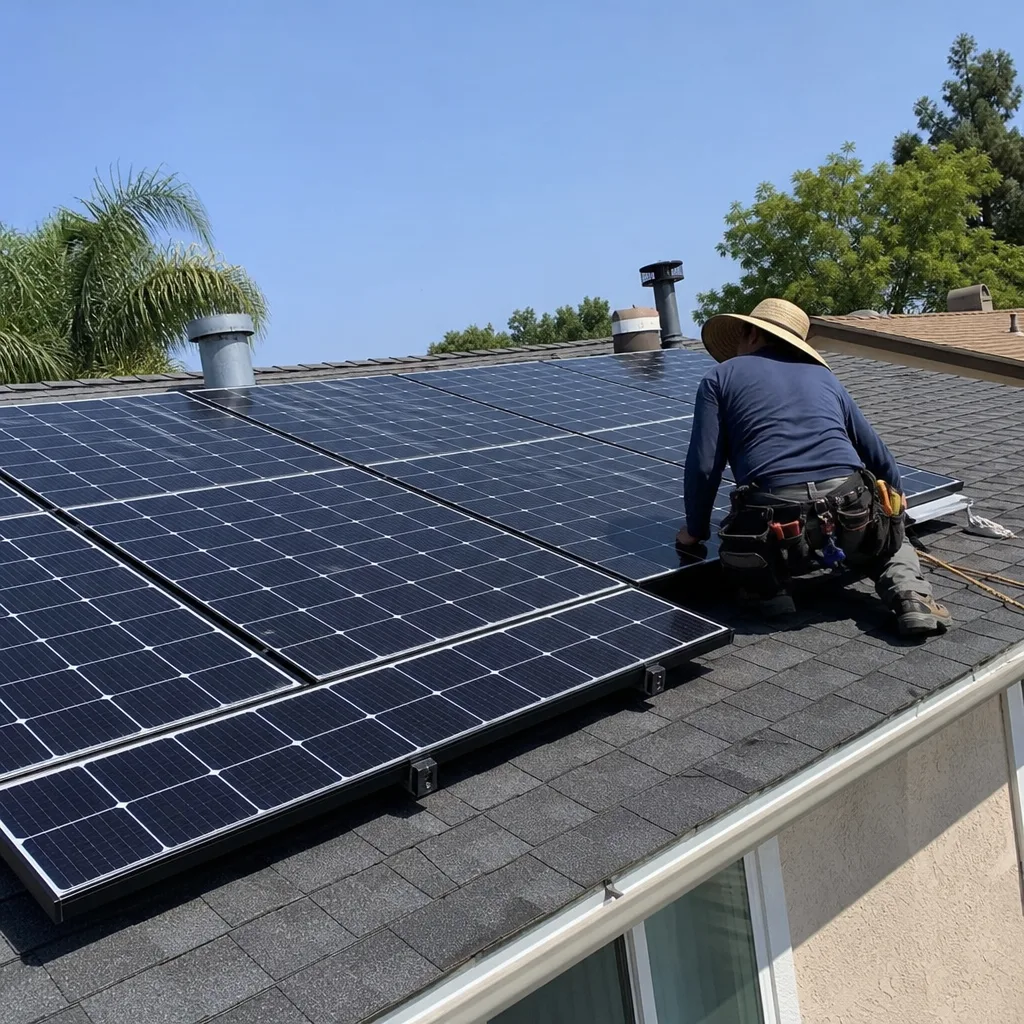 After
After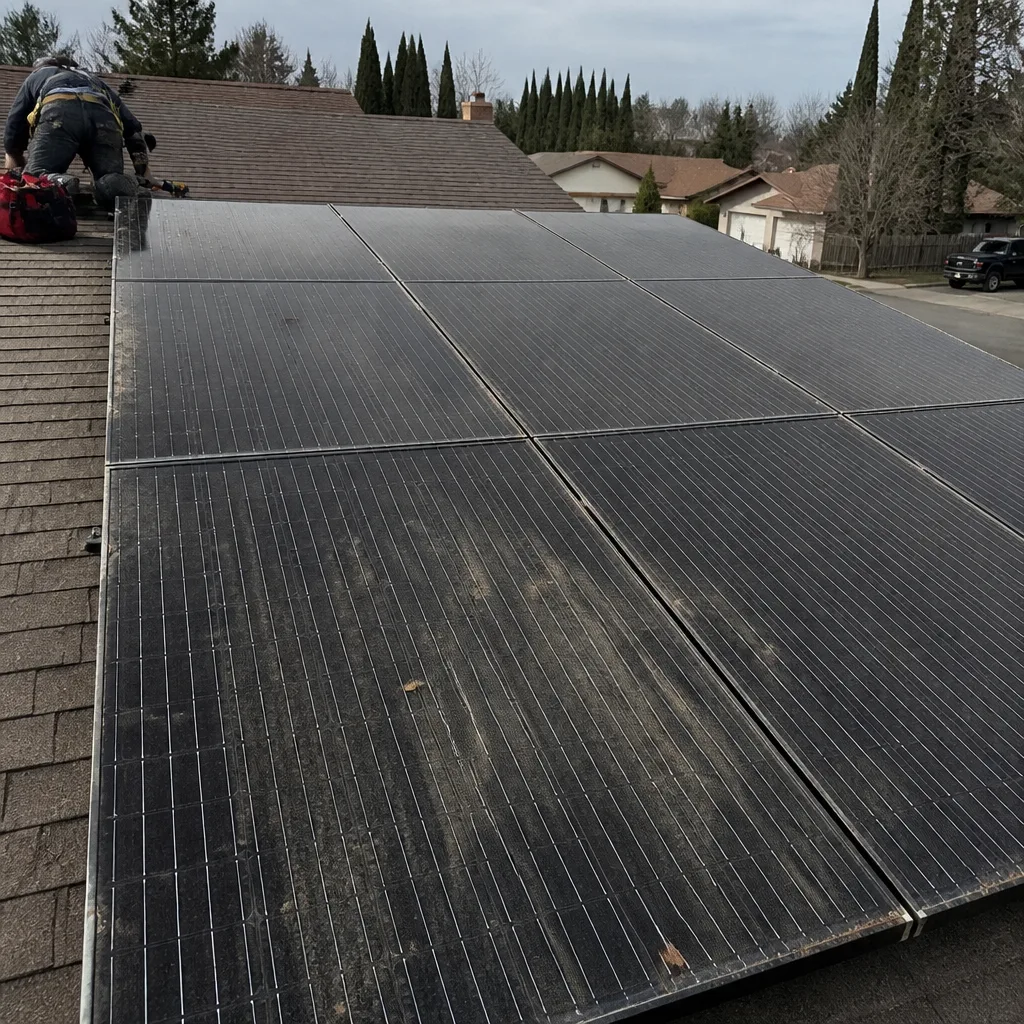 Before
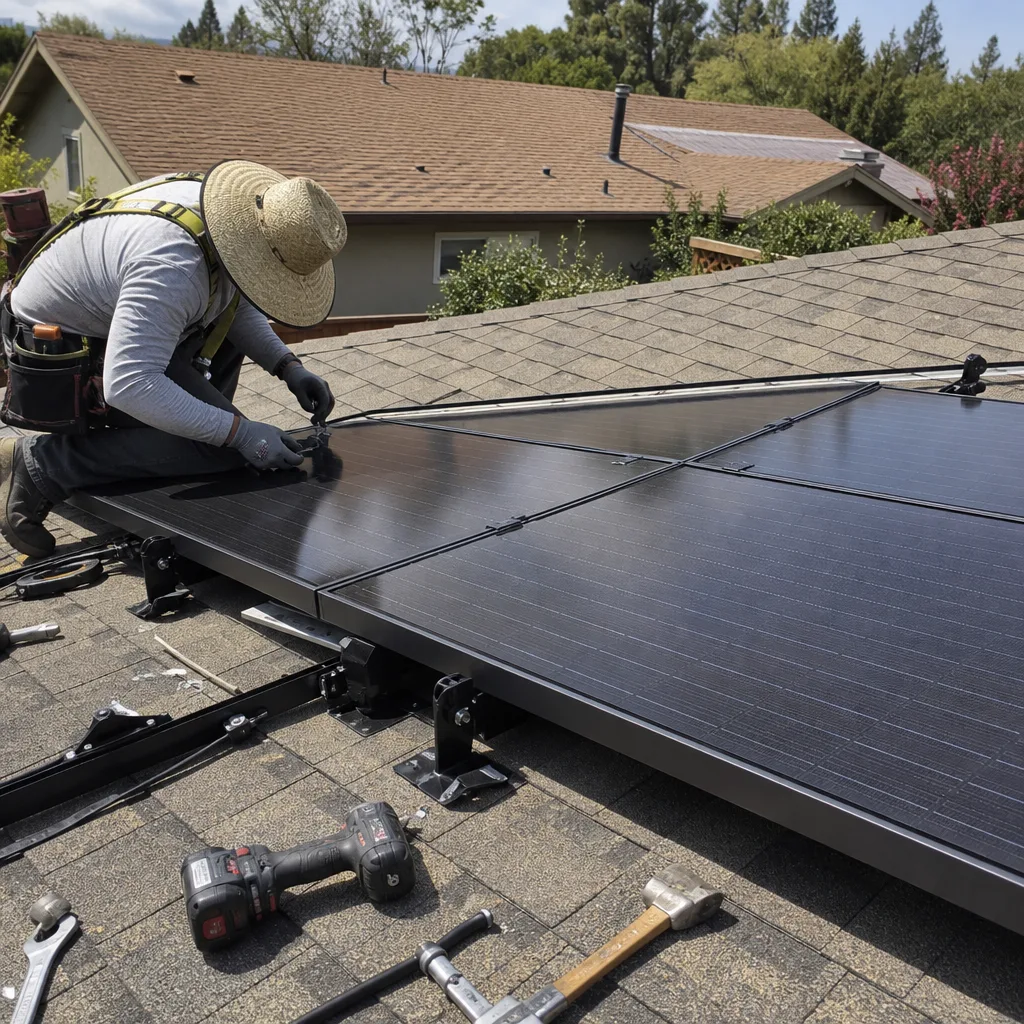 After
AfterPanasonic Solar Battery Storage & Backup: The San Jose Owner’s Guide
Panasonic solar battery storage and backup parts replacement in San Jose typically runs between $900 and $2,800 installed, depending on whether you need a full battery module replacement or a supporting component like an inverter board or gateway swap. We stock Panasonic-compatible parts on our trucks, and in most San Jose neighborhoods we can have your system back up the same day or within 24 hours. The way most owners find out something failed is quiet: the battery stops charging on a sunny afternoon, or the app shows a fault code where yesterday it showed a full charge. No bang, no smoke. Just a system that silently stopped doing its job.
Gus’s Solar is an independent service provider and not affiliated with Panasonic. But we’ve been installing and servicing Panasonic battery systems across San Jose since they first showed up on South Bay rooftops, and we know which parts fail first and why.
Key Takeaways
- Installed Panasonic battery storage repairs in San Jose run $900-$2,800 for most failures, with full module replacement at the higher end.
- The two most common Panasonic failure points are the battery management system (BMS) board and the DC-DC converter, not the cells themselves.
- We carry OEM and quality aftermarket Panasonic-compatible parts on the truck, so most San Jose calls are same-day fixes.
- This is not a DIY repair. The DC side of a Panasonic battery runs at lethal voltage whether the system is switched off or not.
- Call (877) 550-6892 and a live person answers. No ticket portal, no call center.
Which Panasonic Models This Applies To
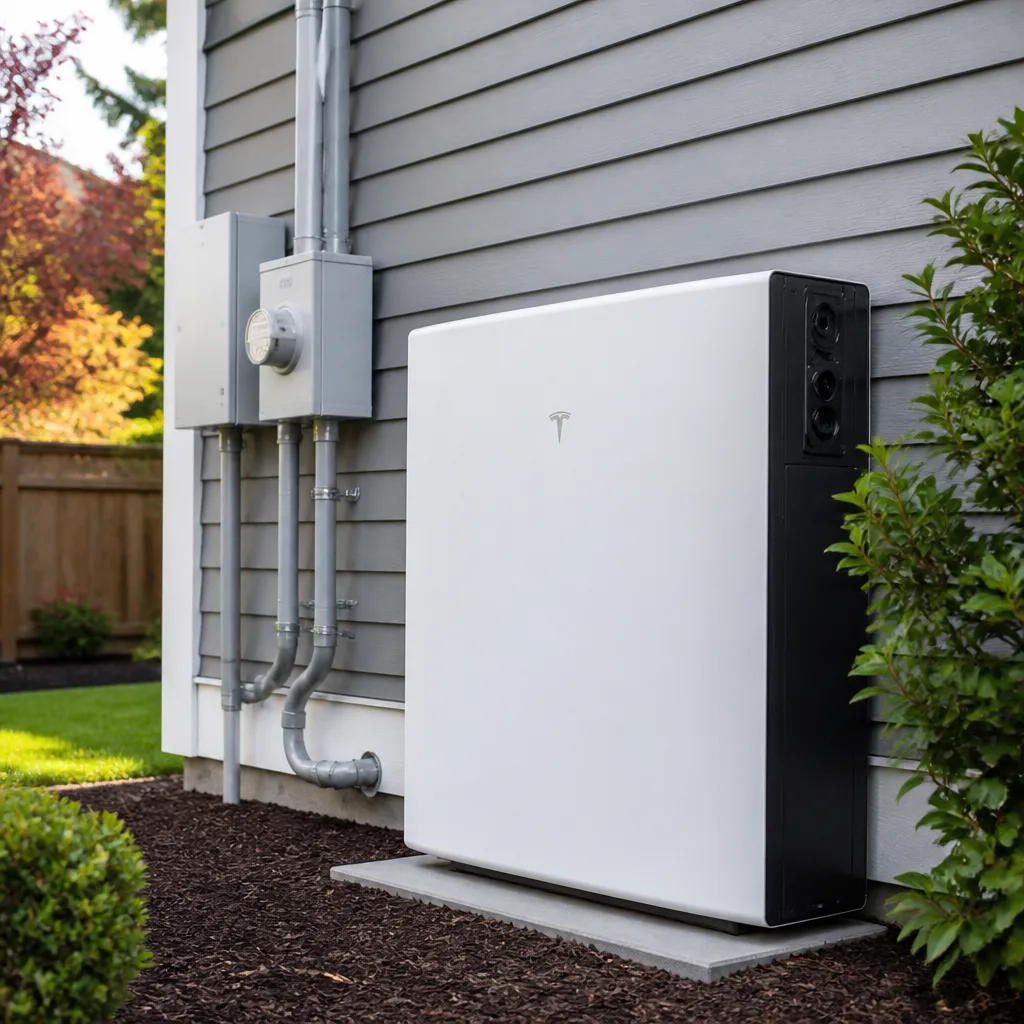
Panasonic has two battery lines that show up on San Jose homes: the EverVolt series (EVAC-105, EVHB-105, and the newer EverVolt 2.0 modules) and the older LJ-SK84A units that were popular in the mid-2010s. The EverVolt line is the one we work on most now. The 2.0 modules use a different BMS communication protocol than the first-gen EverVolt, so a part ordered for the original EverVolt will not talk to a 2.0 battery, even if the physical connector fits. That’s a gotcha we see more than we’d like, usually after someone orders a bargain board online and calls us when the battery still won’t wake up.
To identify your battery, look for the rating plate on the side of the unit. The model number starts with EVAC or EVHB for EverVolt, followed by a capacity number. Snap a photo of the plate and any fault codes on the screen before you call us. That single photo saves a service trip about half the time, because we can match the right part before we leave the shop.
OEM Panasonic boards come with a Panasonic warranty and a premium price. For most EverVolt systems out of warranty, there are quality aftermarket BMS boards and DC-DC converters that perform the same for 30 to 40 percent less. We’ll tell you the difference honestly, and if your battery is still under Panasonic’s warranty, we’ll say so and point you to the warranty path first. We’re not in the business of selling you a part Panasonic owes you for free.
Signs Your Panasonic Solar Battery Storage & Backup Is Failing
- Battery charges but discharges fast or not at all. This usually points to a degraded cell group or a BMS board that’s lost its calibration. The battery still reads full, but the actual usable capacity has dropped hard. San Jose heat accelerates this, especially for batteries mounted on an unshaded south-facing garage wall.
- Fault code on the EverVolt display or the app goes red. Panasonic fault codes for the EverVolt start with F and a number. F3 and F7 series codes almost always trace back to the BMS board or a communication error between the battery and the inverter. Write the code down before you reset anything.
- Battery clicks or buzzes when charging starts. A relay in the battery management system is on its way out. The click is the relay trying to close, and the buzz is it arcing. This one gets worse fast and we tell people to switch the battery off and call us before it welds itself closed.
- System drops offline overnight or during the heat of the day. In San Jose, mid-afternoon heat on a west-facing garage wall pushes battery temps past the safe threshold, and a failing thermal sensor will trip the system offline. If it resets by morning and fails again by 3 p.m., it’s not the grid. It’s the battery.
- Backup power cuts out during an outage even though the battery shows charge. This is the one that makes people furious, and understandably. Usually it’s the DC-DC converter failing under load, not the cells. The battery can idle all day at 80 percent but collapse the moment the grid drops and the inverter asks for real current.
Replacement Cost & What’s Included
Here’s the honest San Jose price picture. A BMS board replacement on a Panasonic EverVolt runs $900 to $1,400 installed, including the part, the labor, and the system re-commissioning. A DC-DC converter runs $1,100 to $1,800. A failed cell group or a full module replacement pushes into the $2,200 to $2,800 range. If the battery is older than 10 years and a full module fails, we’ll tell you straight: it might be time to price a new battery rather than pour money into a unit that’s near the end of its design life.
Every quote we give is parts and labor together, no surprise line items. The price we quote is the price you pay, and it’s built off your actual system, not a generic price sheet. Our 90-Day Done Right Promise applies to every battery repair: if it’s not right, Gus makes it right, in writing. And the Senior and Veteran 10 percent discount never expires, which plenty of our San Jose customers have used on battery work.
DIY or Call Us?
Here’s the line we draw. There’s nothing unsafe about checking your EverVolt’s display for fault codes, verifying the breaker hasn’t tripped, or confirming the battery switch is on. Those are checkable things. What’s not checkable is anything behind the cover. A Panasonic battery’s DC side runs at 380 to 500 volts. That voltage is present even when the battery switch is off and the system is shut down. The capacitors in the DC-DC converter hold charge for a long time after shutdown, and that charge doesn’t care how handy you are. This is the one part of the page where I’ll say it plainly: if you’re tempted to open the battery housing, don’t. That’s a hospital trip or worse, and no savings is worth it.
If you’ve checked the breaker and the battery switch and you’re still seeing a fault, call us at (877) 550-6892. A live person answers, 24/7, and we’ll talk through what you’re seeing before we ever send a truck. If it turns out to be a simple reset, we’ll walk you through it over the phone and there’s no charge for the call.
FAQs
A Panasonic EverVolt is designed for 10 to 12 years of service, but San Jose’s summer heat on an unshaded garage wall can pull that down toward 8 to 10. The cells degrade from heat cycling more than from charge cycles. If your battery is mounted where the afternoon sun hits it directly, you’ll lose lifespan faster than a shaded north-facing install.
Most of what fails on a Panasonic battery is repairable: the BMS board, the DC-DC converter, and the relays are all replaceable components. The cells themselves rarely fail early, and when they do, it’s usually a full module swap rather than a spot repair. Call (877) 550-6892 with your fault code and we’ll tell you which camp you’re in before we schedule anything.
A BMS board or DC-DC converter swap takes 2 to 3 hours on site, and if we have the part on the truck, we can do it same day for most San Jose addresses. A full module replacement takes 4 to 6 hours because it involves a full discharge, removal, re-install, and re-commissioning. Either way, we tell you the timeline before we touch anything.
Yes. We keep OEM and aftermarket BMS boards, DC-DC converters, and relays for the EverVolt series stocked on our trucks, along with parts for Tesla, Enphase, and SolarEdge systems. If we don’t have it on the truck, our San Jose shop usually has it within a day.
If the battery is under 8 years old, a repair almost always makes more financial sense. The math flips once you’re past year 10 and a full module fails, because you’re spending $2,500 on a battery with limited remaining life. Here’s what I’d do if it were my roof: I’d repair up to year 9 and replace after that, if the failure is in the cells. Call (877) 550-6892 and we’ll run the numbers on your actual system, not a brochure.
If you’re in San Jose, Campbell, Los Gatos, Willow Glen, or anywhere nearby in the South Bay, we’ve been fixing and installing these systems since Panasonic batteries first appeared out here. Gus Petrakis grew up in Willow Glen, learned the trade at Evergreen Valley College, and still answers his own phone. No pressure, no signature tonight, and the price we quote is the price you pay. Call (877) 550-6892 for a free estimate.
Written by Gus Petrakis, Owner, Gus’s Solar at Gus’s Solar, serving San Jose and nearby areas.