
Free bill analysis - bring a power bill, get the production math for your actual roof, panel brands like Qcells and REC compared side by side
If the pitch starts at your door and ends with "sign tonight for the special," sleep on it. The sun will still be there tomorrow; so will we.
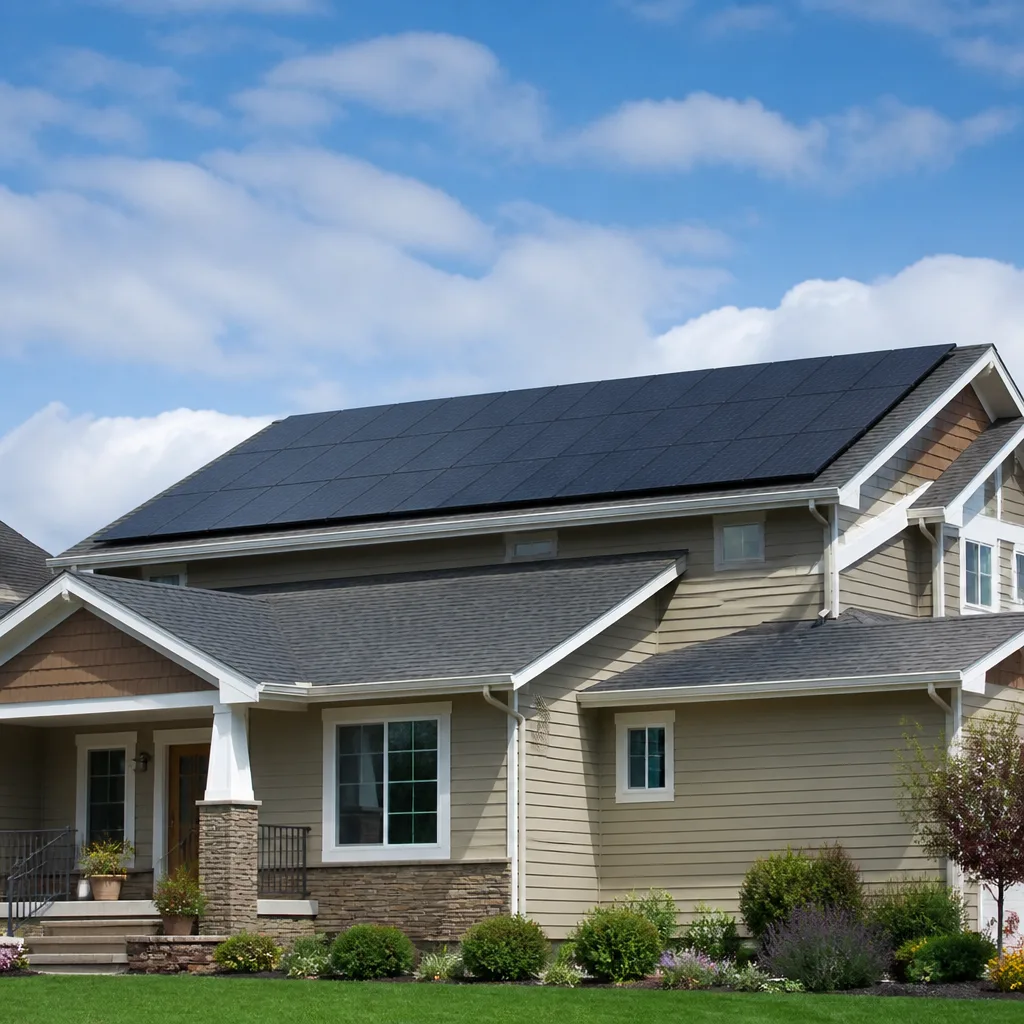
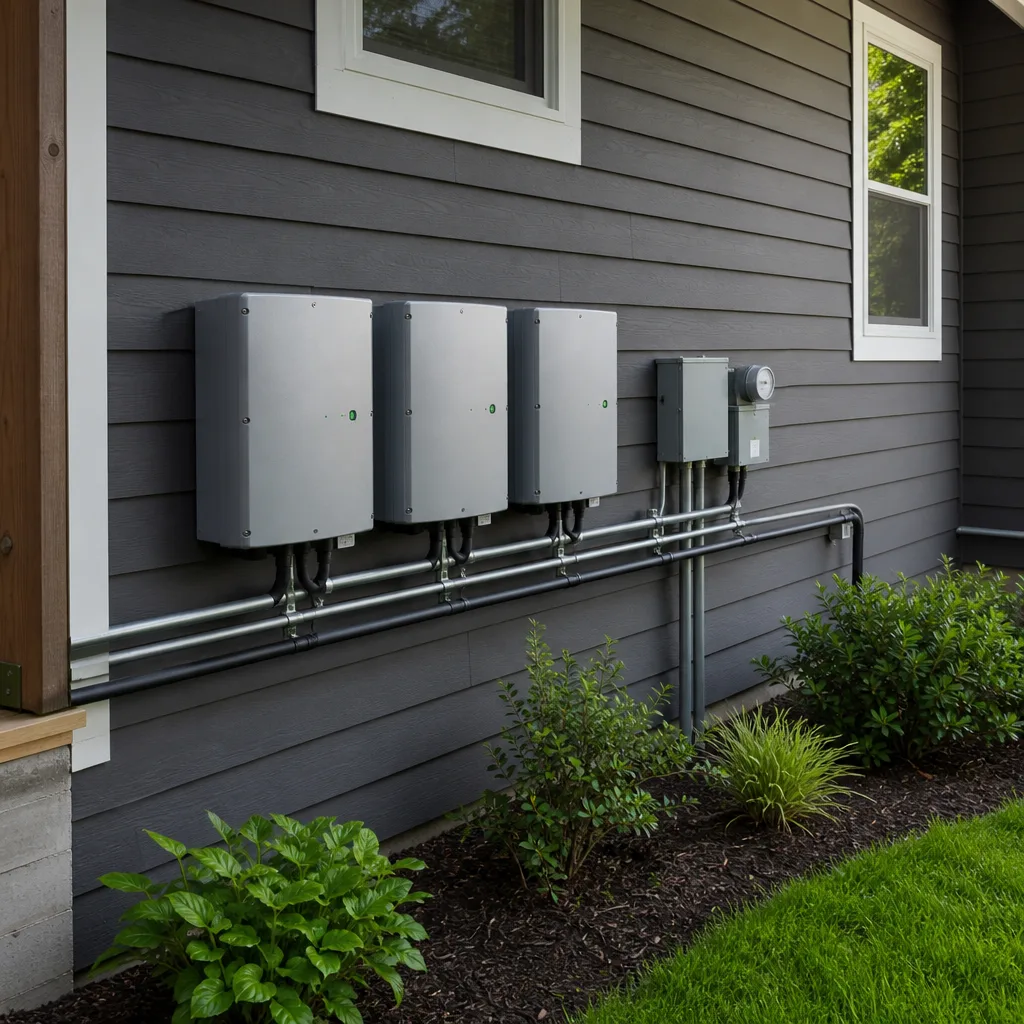
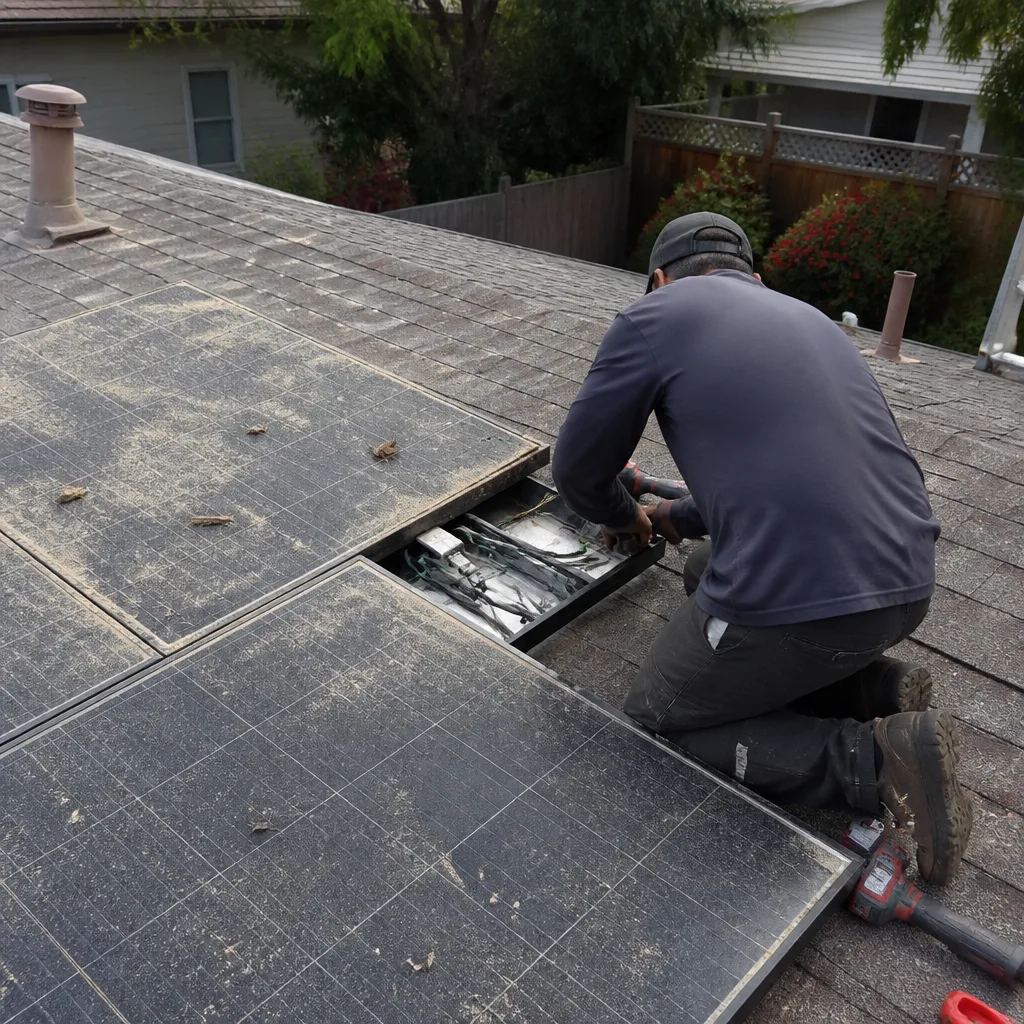 Before
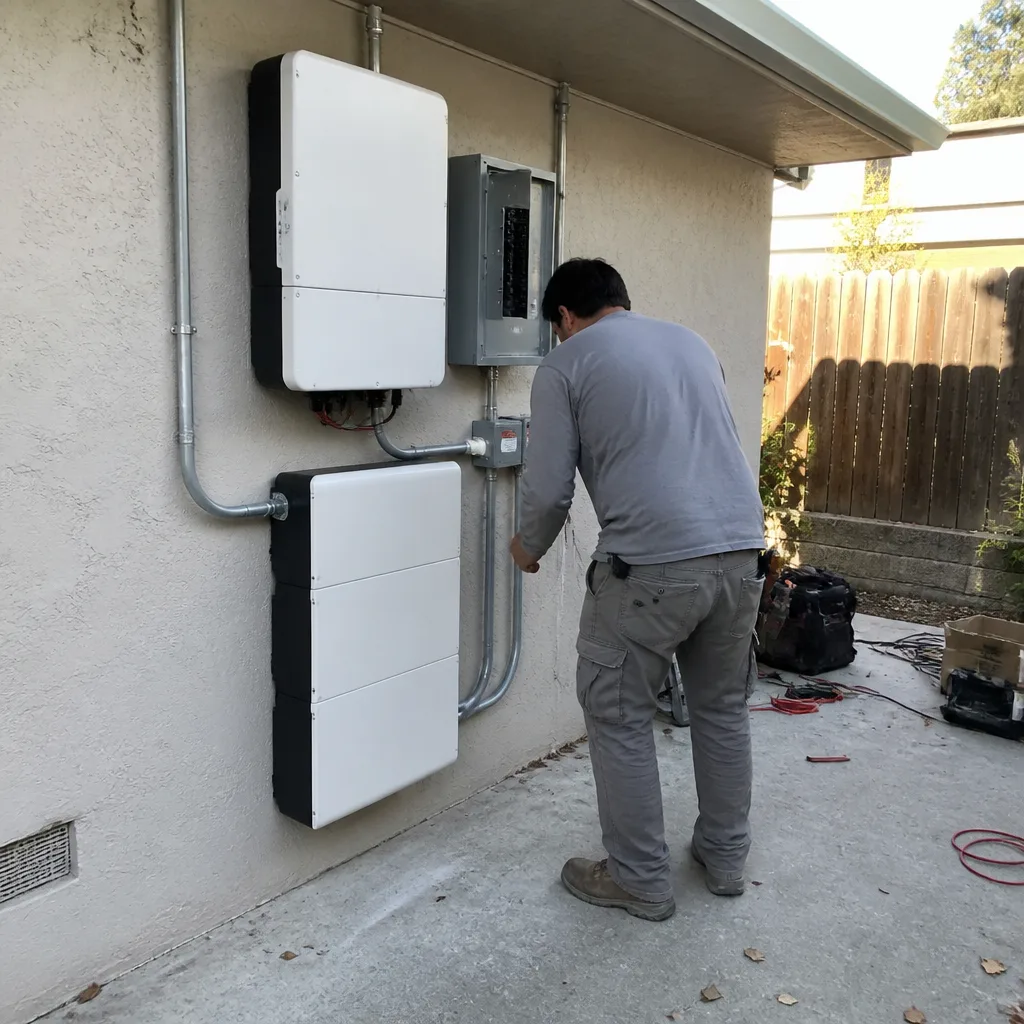 After
After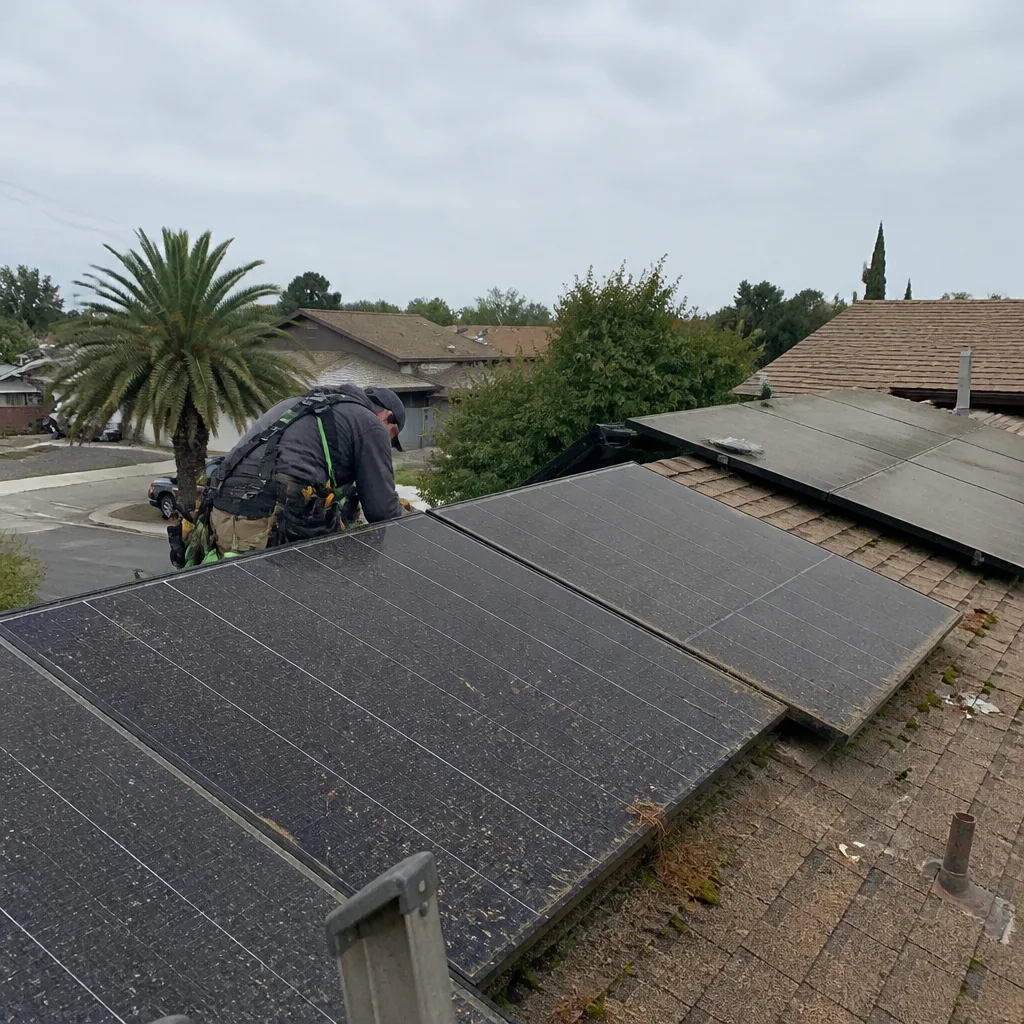 Before
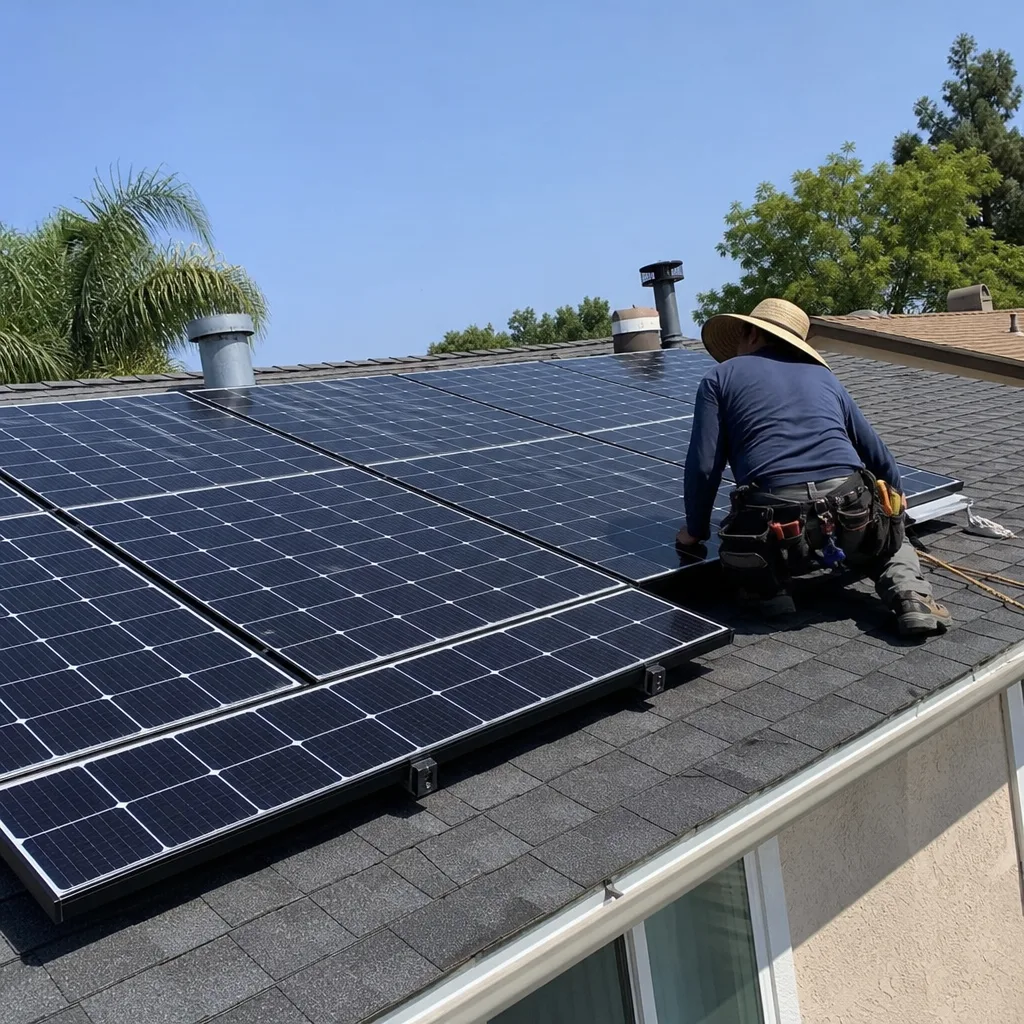 After
After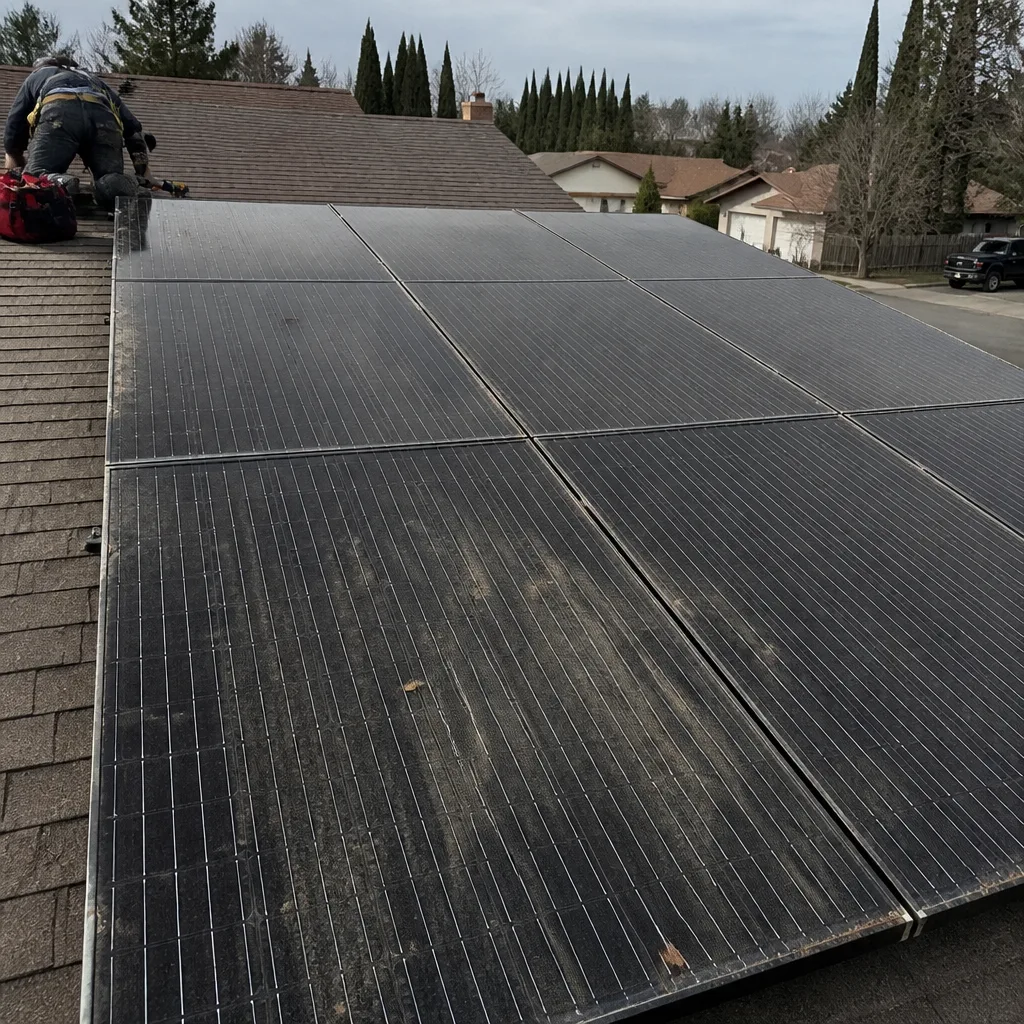 Before
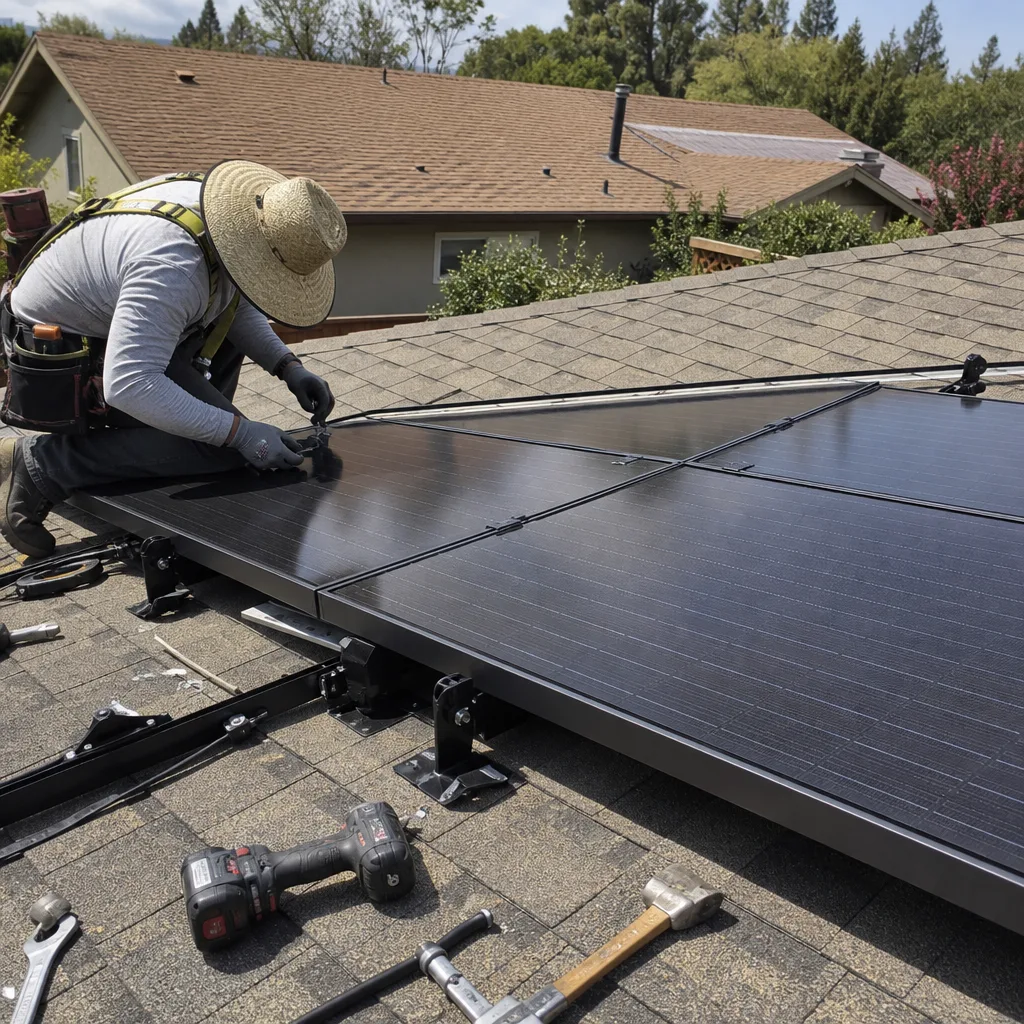 After
AfterSolarEdge Solar Panel Installation: The San Jose Owner’s Guide
If you’ve got a SolarEdge system and a panel that’s underperforming or dead, we stock and install SolarEdge-compatible panels across San Jose, with most residential swaps running $450-$950 installed depending on wattage and roof access. We carry panels on the truck that pair correctly with SolarEdge power optimizers and inverters, and we can usually be on your roof within 24-48 hours. Most San Jose owners find out a panel failed through the SolarEdge monitoring app - one module showing consistently lower output than its neighbors - or through a PG&E bill that crept up a few dollars a month without an obvious reason.
Key Takeaways
- SolarEdge optimizers work with panels from REC, Qcells, Canadian Solar, JinkoSolar, and others - we match wattage and voltage to your existing array.
- Typical single-panel replacement in San Jose runs $450-$950 installed; we quote the panel, optimizer check, and labor as one number.
- Gus’s Solar is an independent installer - we’re not affiliated with SolarEdge, but we’ve worked with their equipment since the early days and we know the compatibility rules.
- Same-week service is the norm; same-day happens more often than not depending on stock.
Which SolarEdge Models This Applies To
SolarEdge panels themselves aren’t the tricky part - it’s matching the right panel to your existing optimizers. SolarEdge power optimizers (the P-series is what we see most in San Jose) are rated for specific input voltage and wattage ranges. If your system was installed between roughly 2015 and 2022, you’re likely running P320, P370, P400, or P505 optimizers. Each one has a maximum panel wattage it can handle, and exceeding that clips your output. A 370-watt panel on a P320 optimizer, for example, works but wastes potential production - and if you go the other direction, a 400-watt panel on a P370, you get the same clipping problem. When we replace a panel, we check the optimizer model number under the existing module before we recommend anything. As for the panel itself: SolarEdge doesn’t manufacture its own panels - the brand is in the inverter and optimizer. So when an owner says “SolarEdge panel,” what they usually mean is a panel installed as part of a SolarEdge system. We stock REC, Qcells, Canadian Solar, and JinkoSolar panels that pair correctly with the optimizers on your roof, plus we also work with Tesla and Enphase gear for homeowners who’ve got mixed systems.
One compatibility gotcha San Jose owners hit more than you’d think: panel frame size. If your array was built with 60-cell panels (roughly 39 inches wide by 65 inches tall) and a newer 66-cell or 72-cell panel won’t fit the same rails without reconfiguring the whole row. We measure before we order, and we won’t sell you a panel that doesn’t physically bolt onto your existing racking.
Signs Your SolarEdge Solar Panel Installation Is Failing
- One module reading 20-40% lower output in the SolarEdge monitoring app. This is the most common tell. A failed bypass diode or a cracked cell will drag one panel’s output down while its neighbors stay consistent. Left alone, that single weak panel pulls the rest of the string down with it.
- Your PG&E bill is up $10-$25 a month with no change in usage. One underperforming panel across thirty or so panels doesn’t sound like much, but it compounds. Over a year, that’s real money - and it’ll get worse as the panel degrades.
- Visible micro-cracks or “snail trails” on the panel surface. In San Jose’s heat, thermal cycling stresses solder joints and glass. Snail trails - those faint silver or brown streaks on the cells - are a sign of moisture ingress and a panel that’s on borrowed time.
- The optimizer shows a fault code for that panel. Sometimes it’s the optimizer, not the panel. We test both before we tell you what to replace - and we won’t sell you a panel if a $180 optimizer swap is actually the fix.
- Physical damage from falling branches, squirrels, or storm debris. The foothill neighborhoods on San Jose’s east side get squirrel-chewed wiring more than you’d believe. A cracked panel glass from a blown branch is obvious; a chewed connector less so.
Replacement Cost & What’s Included
Here’s what we quote for San Jose panel replacement - parts, labor, and the optimizer check as one number:
- Single panel (360-405W, REC/Qcells/Canadian Solar/JinkoSolar): $450-$650 installed
- Single panel (410-440W, higher-efficiency tiers): $600-$800 installed
- Two-to-four panel replacement (common after storm damage or a string-level failure): $1,000-$2,400 installed
- Optimizer replacement (if that’s the actual failure point): $180-$300 installed per unit
- Full string-of-10 panel refresh: $4,500-$6,500 installed, depending on racking condition
What drives the range is roof pitch, whether we’re working on a single-story or two-story, and whether your racking needs any hardware replaced. A flat single-story garage roof in Cambrian is a different job than a steep tile roof in Almaden Valley. Every quote includes the panel, any required flashing or grounding updates, the labor to remove the old panel and install the new one, monitoring re-verification, and our workmanship covered under the 90-Day Done Right Promise - if it’s not right, Gus makes it right, in writing. We don’t charge a trip fee inside Santa Clara County. And we’ve got a $40-off-any-repair-over-$200 offer worth mentioning if the job stays small.
DIY or Call Us?
Here’s what I’d do if it were my roof. The honest split is this: if you’re an owner who’s comfortable with a multimeter and you want to check whether the panel or the optimizer is the problem, you can read the monitoring data and compare string voltages at the inverter - but you shouldn’t be up on the roof handling live DC wiring. SolarEdge systems run high-voltage DC strings, and the optimizers maintain up to 1V safe voltage per panel when disconnected from the inverter, but a mis-wired connector or a shorted bypass diode can still bite hard. We’ve had San Jose homeowners call us after they tried a panel swap themselves and ended up with a connector they couldn’t seat, which is a $75 job inside an hour. The reason to call a pro isn’t the panel itself - it’s the sequence: safe disconnect at the inverter, verifying the optimizer is functioning, matching the panel to the existing racking, and re-commissioning the monitoring so the system reports correctly. Book time with our crew and we’ll have it done right and done fast. Call (877) 550-6892 and you’ll get a live person, not a voicemail.
FAQs
Panels installed in San Jose typically produce usable output for 25-30 years, but the reality of our climate is that heat accelerates degradation. A panel rated for 0.5% annual degradation will likely hit closer to 0.7-0.8% per year here due to the thermal cycling from hot days and cold nights. Most panels carry a 25-year performance warranty from the manufacturer; we file warranty claims on our customers’ behalf when a panel fails early. For an exact read on your panel’s health, call (877) 550-6892 and we’ll check your monitoring data.
No - individual solar panels are sealed units, and we don’t repair a cracked cell or a failed bypass diode inside a panel. What can be repaired is a failed optimizer or a damaged connector or wiring at the panel junction, which is sometimes the actual problem. We test before we quote, and if a $180 optimizer swap fixes your issue, that’s what we’ll tell you. Call (877) 550-6892 to schedule a diagnostic.
A single panel swap on a standard San Jose roof takes our crew two to three hours from arrival to monitoring re-verification. Most jobs are done in one visit. If we’re replacing multiple panels or need to reconfigure racking, allow a half-day to a full day. We’ll give you a window when you book, and we show up when we say we will - that’s been our practice since Gus founded this company in 2011.
We stock common panel sizes and brand lines - REC, Qcells, Canadian Solar, and JinkoSolar - in our San Jose shop, so most single-panel replacements happen same-week without an order delay. If your array uses a less common panel or a discontinued frame size, we source from our local distributors and typically have it within three to five business days. Call (877) 550-6892 with your panel model and we’ll tell you what we’ve got on the shelf.
If your SolarEdge system is showing one bad panel, don’t wait for the monitoring app to make it official. Call Gus’s Solar at (877) 550-6892 for a free estimate - a live person answers, Gus’s crew does the work, and the quote you get is the price you pay. We’ve been serving San Jose and the surrounding South Bay since 2011, and we’re not going anywhere.
Written by Gus Petrakis, Owner, Gus’s Solar at Gus’s Solar, serving San Jose and nearby areas.