
Free bill analysis - bring a power bill, get the production math for your actual roof, panel brands like Qcells and REC compared side by side
If the pitch starts at your door and ends with "sign tonight for the special," sleep on it. The sun will still be there tomorrow; so will we.

 Before
 After
After Before
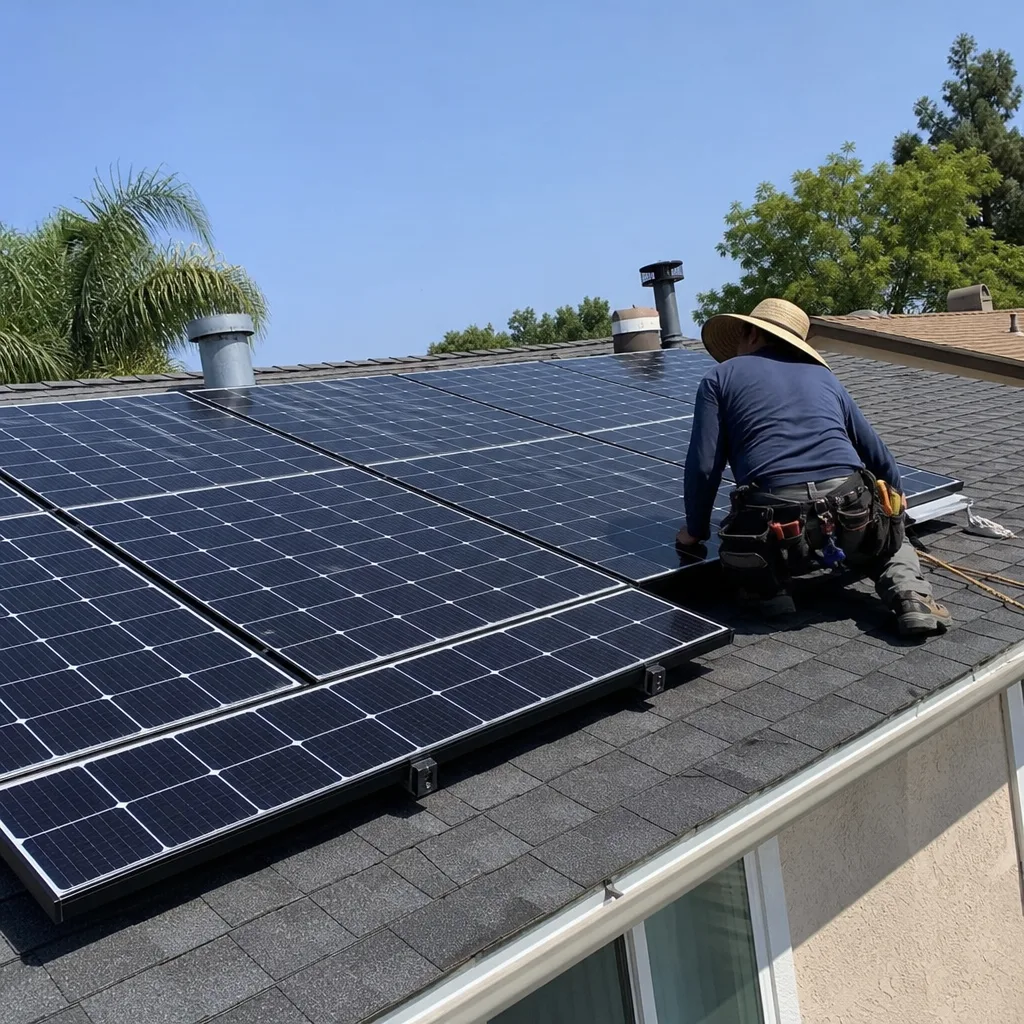 After
After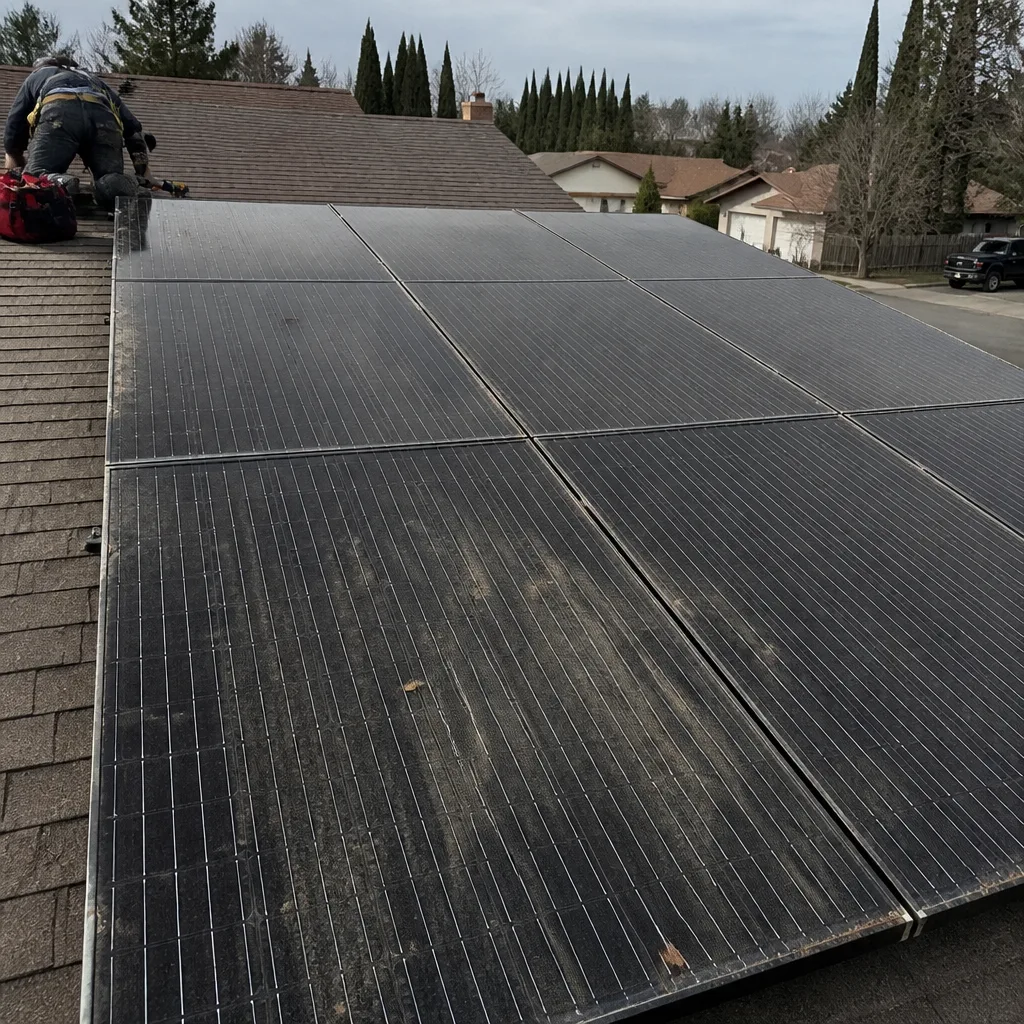 Before
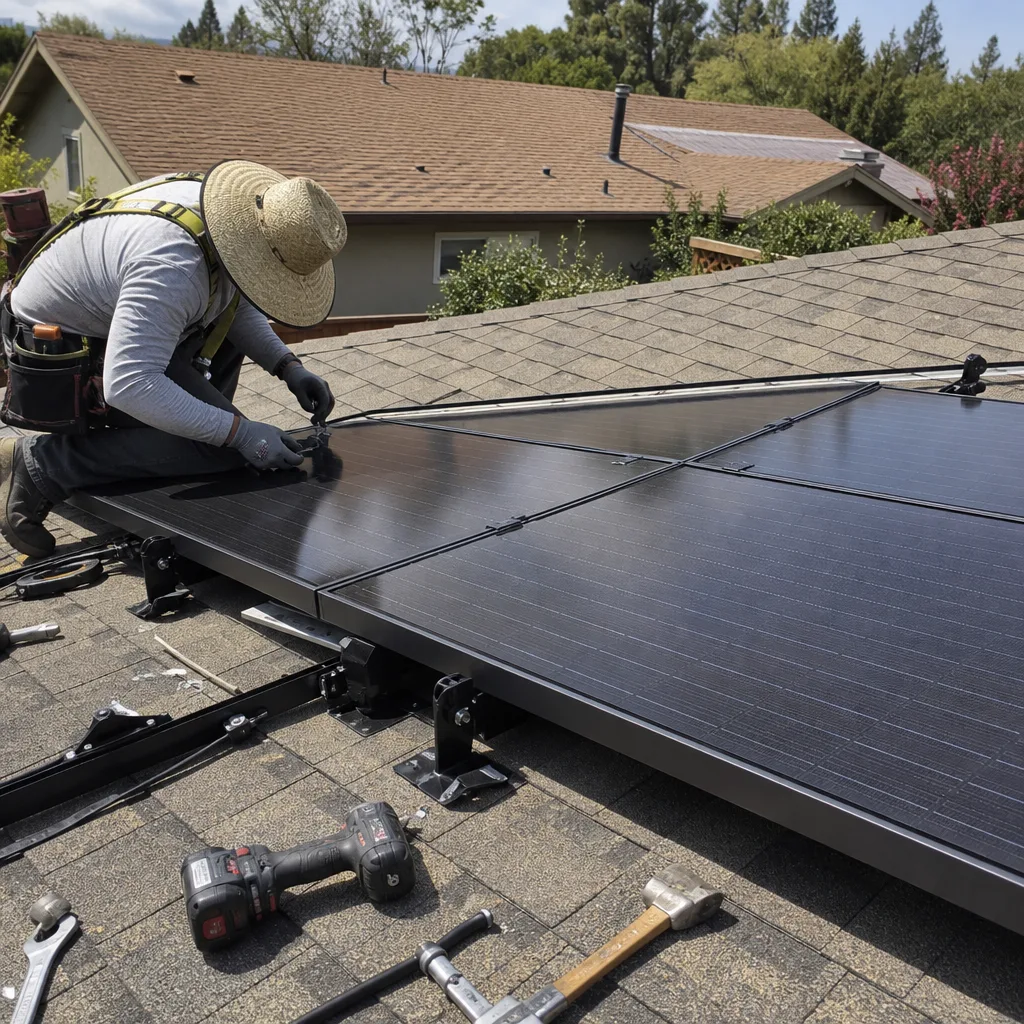 After
AfterEnphase Solar Panel Repair: The San Jose Owner’s Guide
We stock and install Enphase microinverter replacements and panel-level repairs across San Jose, with most jobs running $350 to $900 installed depending on your model and roof access. Same-day service is available for most Enphase repairs in San Jose, and we keep the common IQ7, IQ8, and M-series parts on the truck. Most owners discover the failure the same way: one panel stops reporting in the Enphase app while the rest of the array keeps producing normally.
Here’s what that looks like in practice. You open the Enlighten app on a Saturday morning and notice panel 7 of 19 is grayed out. Production is down maybe 4 or 5 percent. The system still works, but that one panel has gone quiet. That’s the classic Enphase failure signature. It’s almost always the microinverter under the panel, not the panel itself, and it’s a repair we handle regularly for San Jose homeowners.
Which Enphase Models This Applies To
Enphase has been the dominant microinverter brand on San Jose roofs for well over a decade, which means we see everything from early M190 and M215 units to the current IQ8 series. The repair path differs by generation. The M-series and S-series microinverters are now discontinued, so when one fails we typically replace it with a compatible IQ-series unit and update the monitoring profile in your Envoy. The IQ7 and IQ8 lines are current production, and we match the exact model so your array report stays clean.
One compatibility gotcha worth knowing: Enphase microinverters are paired to specific panel wattages. An IQ7+ is rated for 235 to 440 watt panels. An IQ8H works with higher-output panels up to 480 watts. If someone installs a mismatched unit, the panel clips or underperforms. We check the label on the failed unit and the panel spec before quoting anything. This also matters if you’re considering aftermarket equivalents. For Enphase specifically, we recommend staying with genuine OEM parts. The monitoring integration is proprietary, and a generic inverter won’t report correctly to your Envoy. The cost difference is rarely worth the headache.
Gus’s Solar is an independent service provider, not affiliated with Enphase. We work on their equipment every week and stock the parts, but we don’t sell under their name.
Signs Your Enphase Solar Panel Repair Is Failing
- One panel shows zero production in the Enlighten app while neighbors produce normally. This is the most common symptom. It means the microinverter under that panel has stopped converting or communicating. The panel itself is usually fine.
- The Envoy reports a “microinverter not responding” error for a specific panel. That’s often a failed capacitor inside the inverter housing. Heat is the usual culprit, and San Jose summers push these units hard, especially on south-facing roof planes in neighborhoods like Almaden Valley and Evergreen.
- Production from one panel drops by 20 to 40 percent without going to zero. This typically indicates a failing DC connection or partial inverter degradation. It’s less obvious in the app, but your monthly production totals will drift downward.
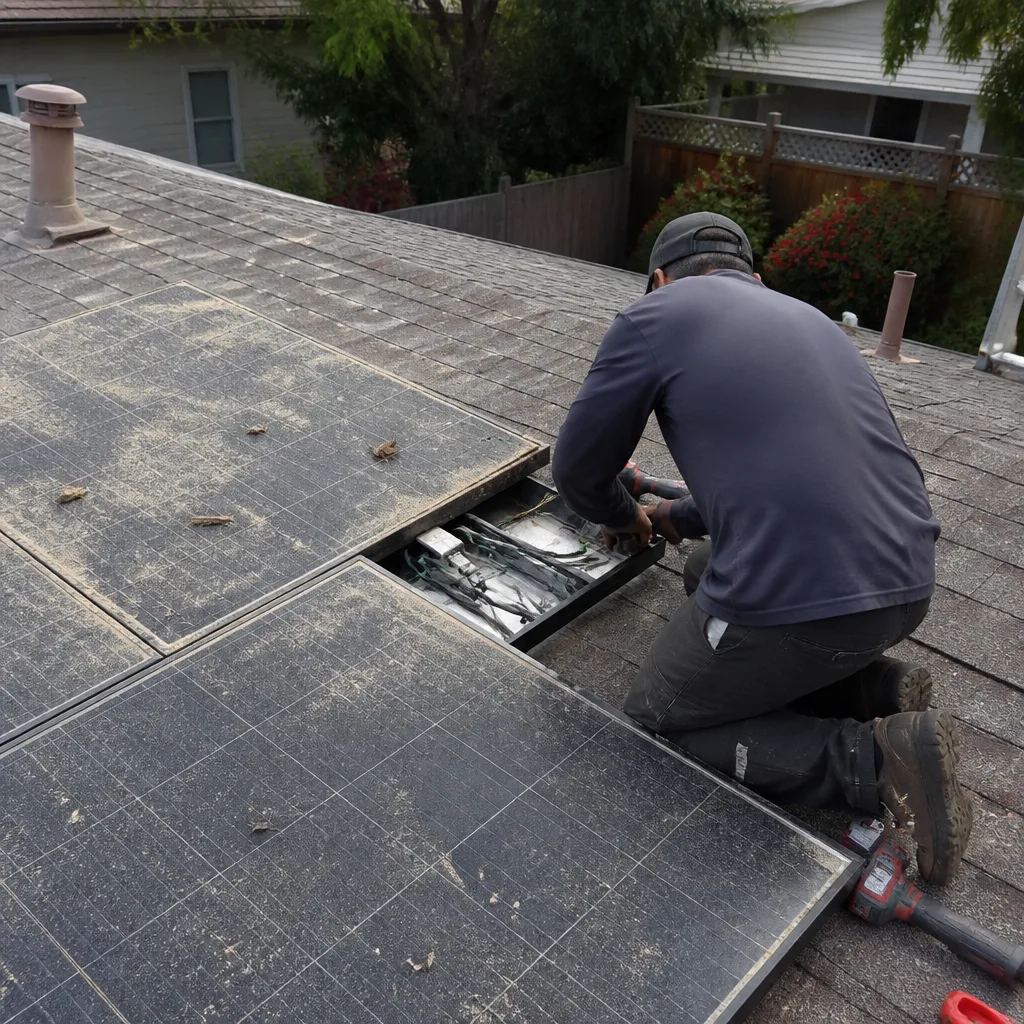
- Visible damage at the panel junction box or frayed wiring under the panel edge. Rodents, roof debris, and solar panel cleaning brushes can damage the trunk cable or connector. We replace the connector and re-terminate the trunk line when this happens; you don’t need a whole new inverter for a chewed wire.
- A red or flashing status light visible under the panel at night. That’s the microinverter’s LED signaling a fault. If you can see it from the ground or a window, it’s worth a service call. If the light is solid green, the unit is fine and the issue is likely communication, not power.
Replacement Cost & What’s Included
In San Jose, an Enphase microinverter replacement typically runs $350 to $550 for a single unit including the part, labor, roof access, and re-pairing with your Envoy. If we’re replacing multiple units in the same visit, the per-unit cost drops, since we’re already on the roof and tooled up. A full IQ8 series upgrade across a 20-panel array runs $5,000 to $8,000 all-in, and we usually recommend that path only when you’re already dealing with three or more failed M or S-series units and your system is over 12 years old.
The main variables are your roof pitch and tile type. Concrete tile roofs in San Jose’s older neighborhoods, think Willow Glen or Rose Garden, take more care and time to lift and reset tiles without breakage. Composition shingle roofs are faster. Every quote includes the OEM microinverter, the trunk cable connection, Envoy re-commissioning, and a full system health check on the remaining panels. You get the 90-Day Done Right Promise in writing on every repair. If something isn’t right, one call brings Gus back.
DIY or Call Us?
Here’s the honest split. You can safely read your Enphase app, check your breaker panel to confirm the array circuit hasn’t tripped, and visually inspect the panels from the ground for obvious damage or debris. Those three checks cost you nothing and occasionally solve the problem without a service call, especially the breaker reset.
What you should not do is get on the roof and start disconnecting microinverter wiring yourself. These are AC and DC circuits operating at high voltage, and the trunk cable carries live current from multiple panels. An incorrect re-termination can damage every other inverter on that branch. We see it a few times a year, and the repair bill for a botched DIY connector job usually runs higher than if we’d just handled the original failure. If your panel is dark in the app and the breaker is fine, call Gus’s Solar at (877) 550-6892. We’ll be out, diagnose it, and tell you exactly what it costs before any work starts.
FAQs
Enphase warranties their current microinverters for 25 years, but in San Jose’s climate we typically see failures start to appear between years 10 and 15, especially on hot south-facing roofs and panels mounted close to the roof deck. The warranty is solid, but the labor to swap a failed unit is on you after the installer’s workmanship window closes, which is why we keep the installed replacement cost reasonable.
Generally no. These units are potted in epoxy and sealed against moisture, which means internal repairs aren’t practical. We replace the failed unit with the correct OEM model. That’s the repair. For a wiring or connector issue at the panel junction, however, repair is real and cheaper: we re-terminate the connector and you’re back online for under $200 in most San Jose cases.
A single microinverter replacement on a typical San Jose single-story home takes 45 to 90 minutes once we’re on site. That includes lifting the panel, swapping the unit, re-terminating the trunk cable, re-pairing with your Envoy, and a quick check of the neighboring panels. Multi-story homes with steep tile roofs add time. We quote the labor honestly before we start, so there’s no surprise on the invoice.
Yes. We carry IQ7, IQ7+, IQ8, IQ8+ and IQ8H microinverters, along with trunk cable, connectors, and Envoy accessories. M-series replacements are ordered to match the specific wattage of your existing unit, which usually adds one to two business days in San Jose. We’ll know which one you need from the model number on your failed unit, and you won’t pay for two trips. Call (877) 550-6892 and we’ll tell you over the phone whether we have the part on hand today.
Written by Gus Petrakis, Owner, Gus’s Solar at Gus’s Solar, serving San Jose and nearby areas.