
Free bill analysis - bring a power bill, get the production math for your actual roof, panel brands like Qcells and REC compared side by side
If the pitch starts at your door and ends with "sign tonight for the special," sleep on it. The sun will still be there tomorrow; so will we.
 Before
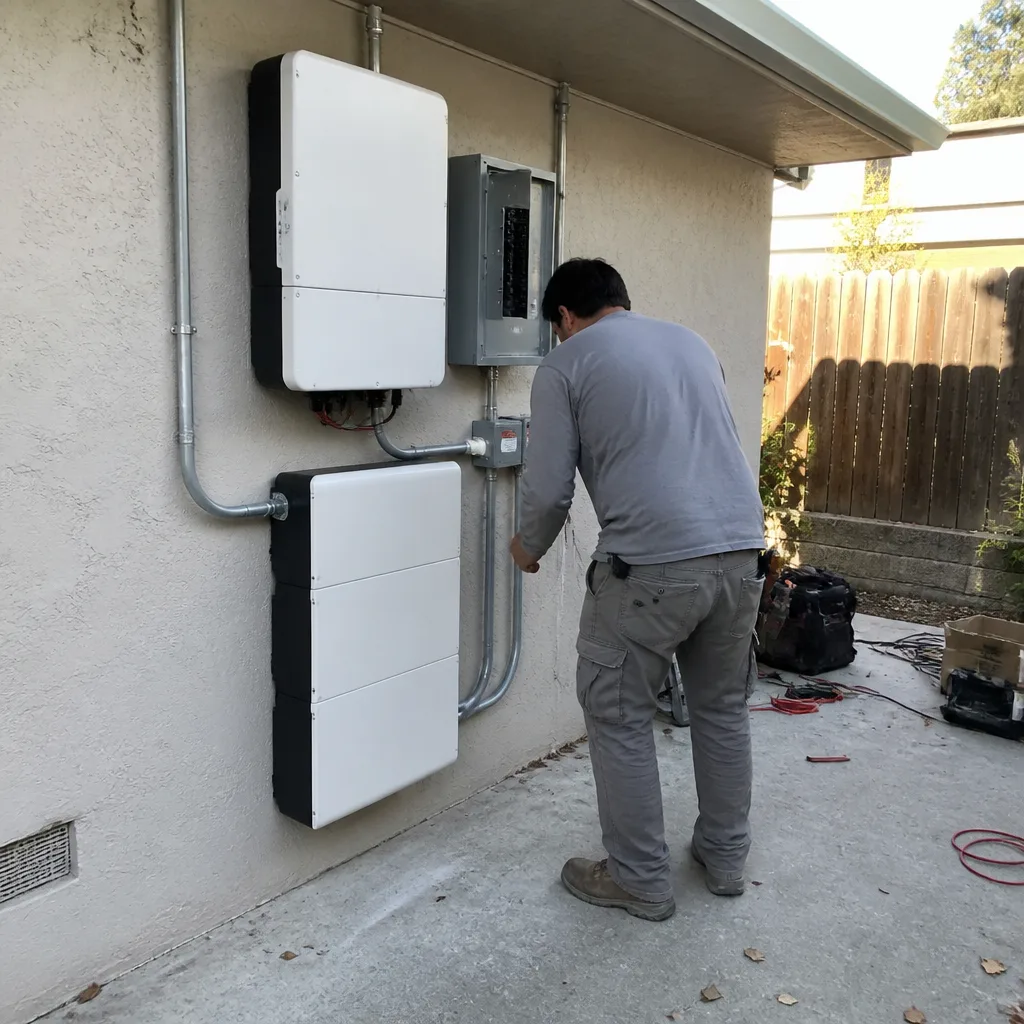 After
After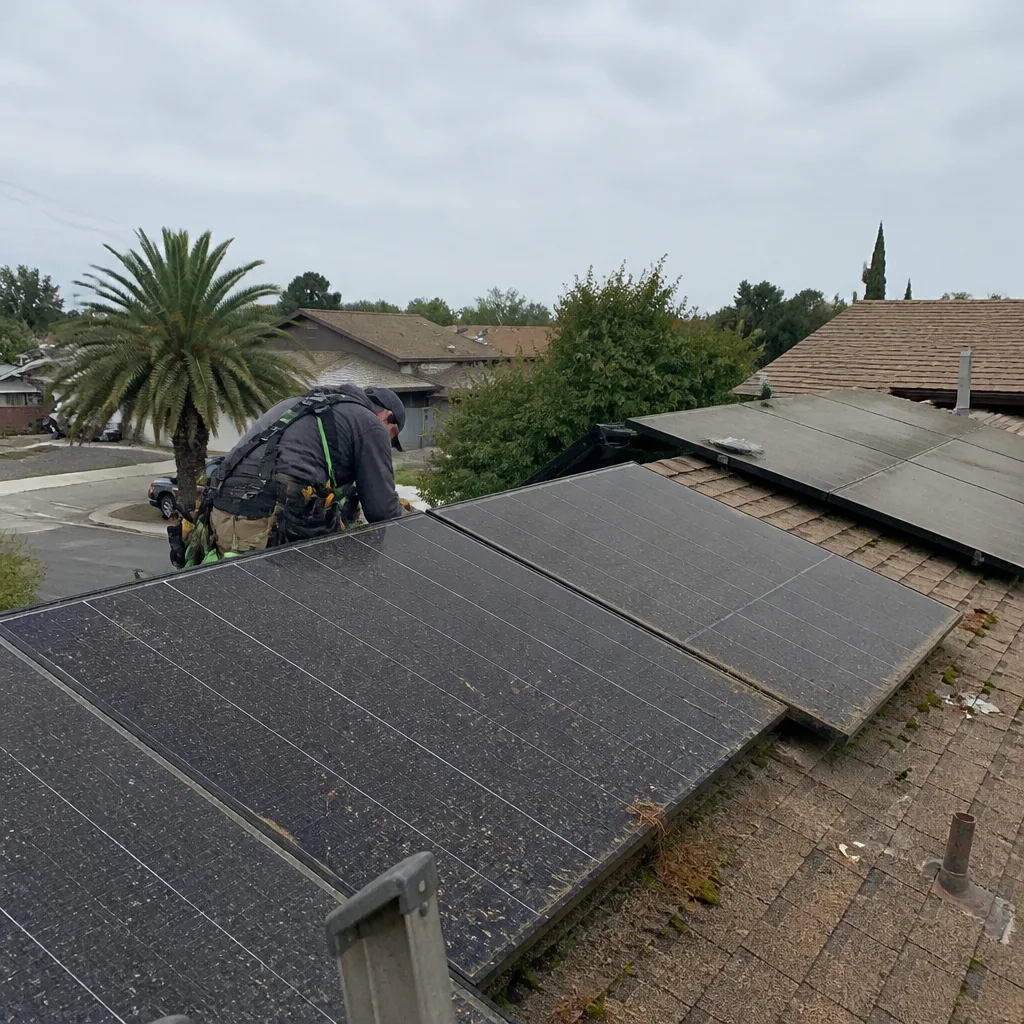 Before
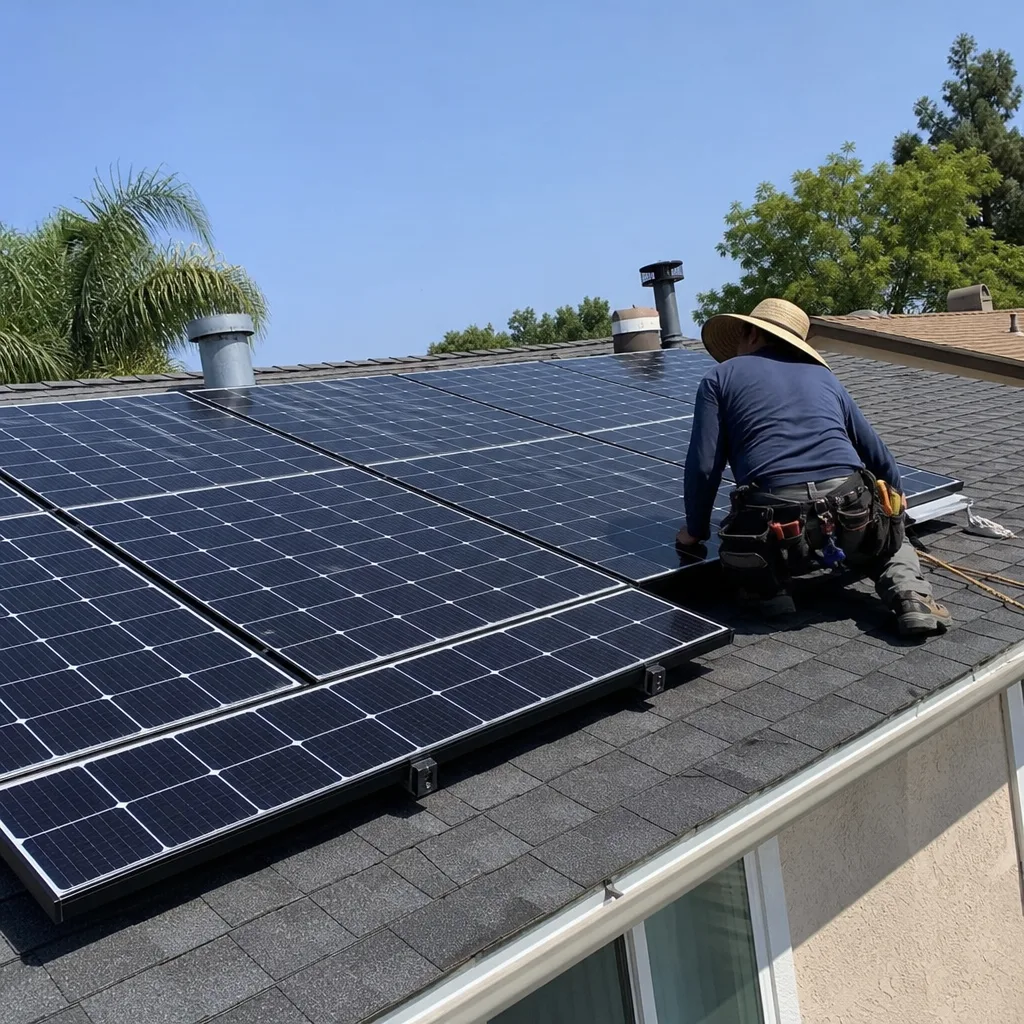 After
After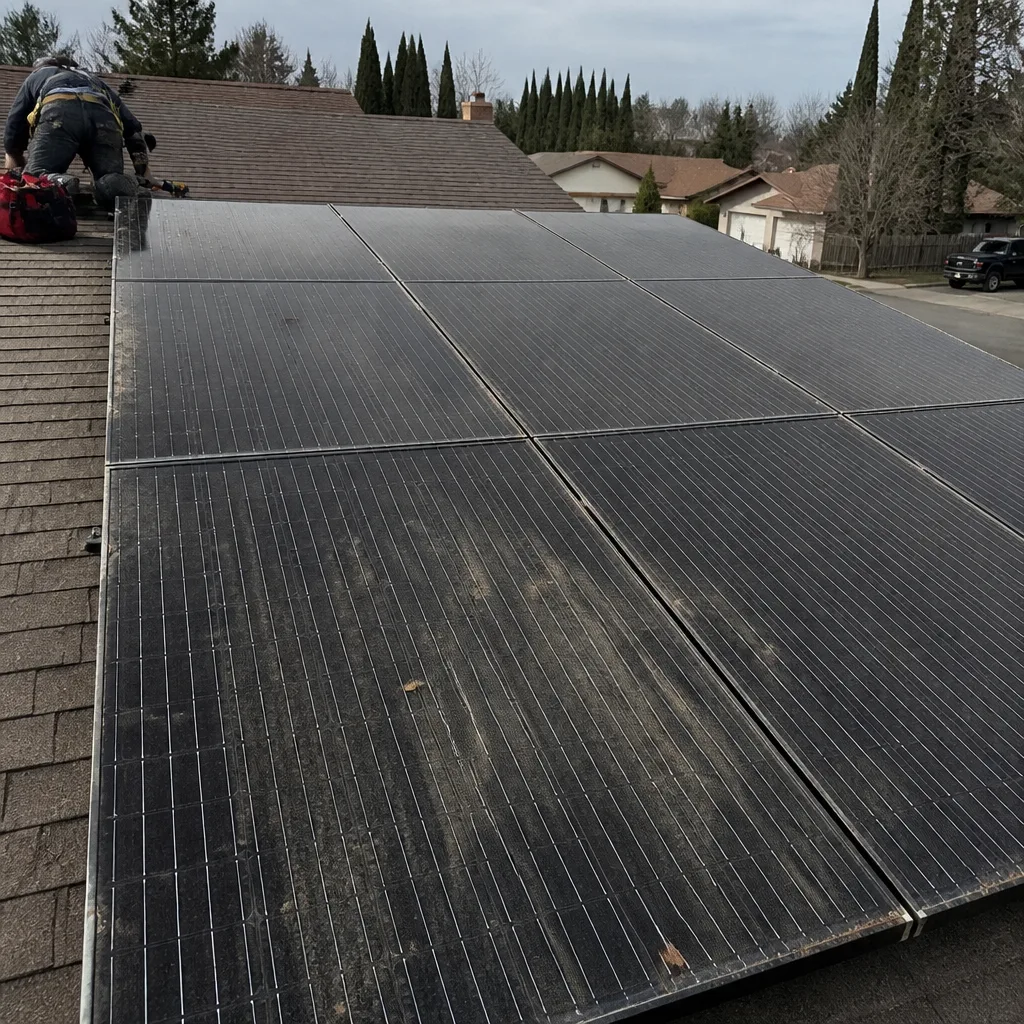 Before
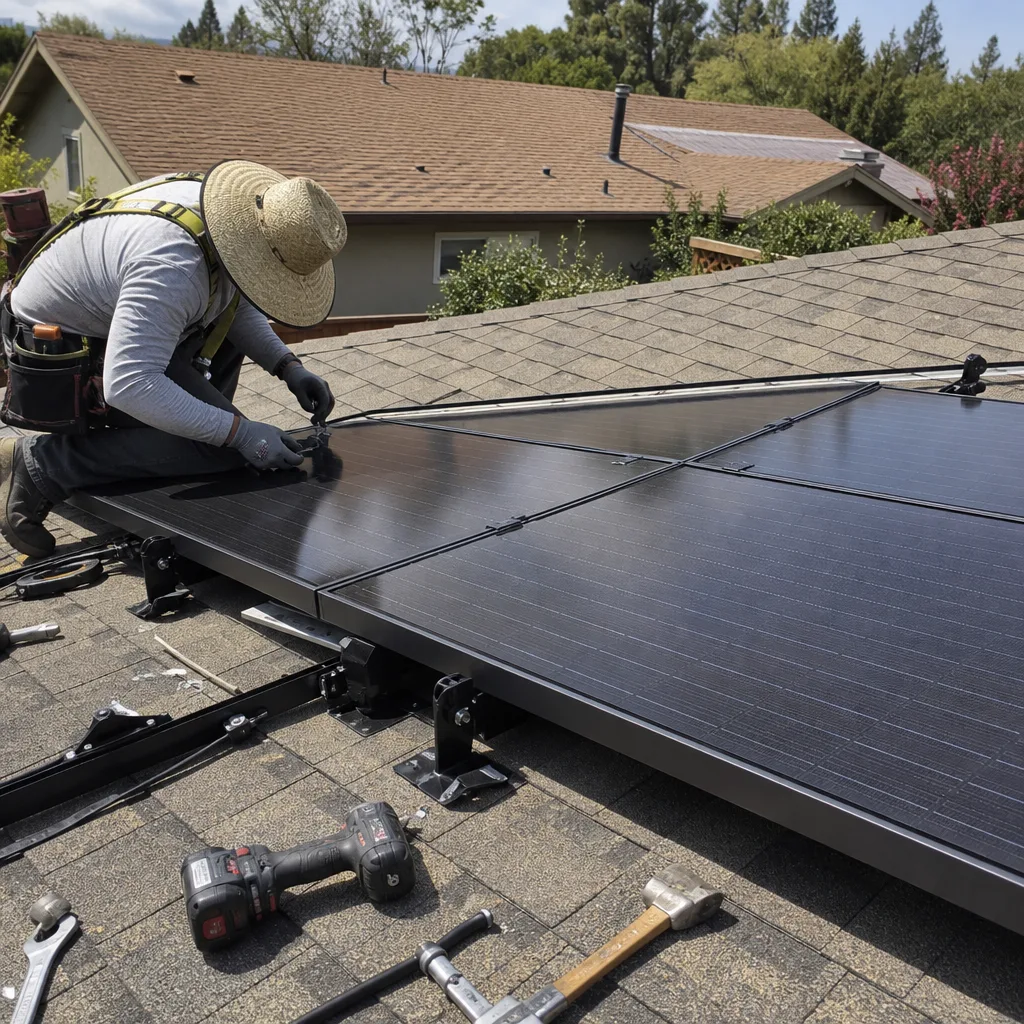 After
AfterFast, Reliable Solar Panel Repair Across Poway
Solar panel repair in Poway typically runs between $220 and $680 for most common fixes, and we can usually have a tech at your door within 24 to 48 hours. That’s a real number, not a brochure range. If your system is down, producing less than it should, or throwing fault codes, call us at (877) 550-6892 and a live person answers. We know Poway’s roof stock, its fire-zone setback rules, and its specific failure patterns because we work them every week.
Why Gus’s Solar Is Poway’s Preferred Solar Panel Repair Company
Gus Petrakis founded this company in 2011 and still answers his own phone. That’s not a marketing line. When you call about a dead inverter or a chewed connector on a Green Valley or Old Poway roof, you’re talking to the person whose name is on the truck. We don’t route you through a call center, and we don’t hand your roof to a subcontractor. Our crew is background-checked, uniformed, and trained on the specific equipment we service.
Poway homeowners call us because we’re honest about what’s repairable and what isn’t. Sometimes a $300 microinverter swap restores full production. Sometimes a 2012-era string inverter needs to be retired and replaced. We’ll tell you which, with a straight answer and a written quote before any work starts. The 90-Day Done Right Promise is on every repair we do: if it’s not right, Gus makes it right. One phone call brings him back.
Our Solar Panel Repair Services in Poway
Inverter Repair & Replacement
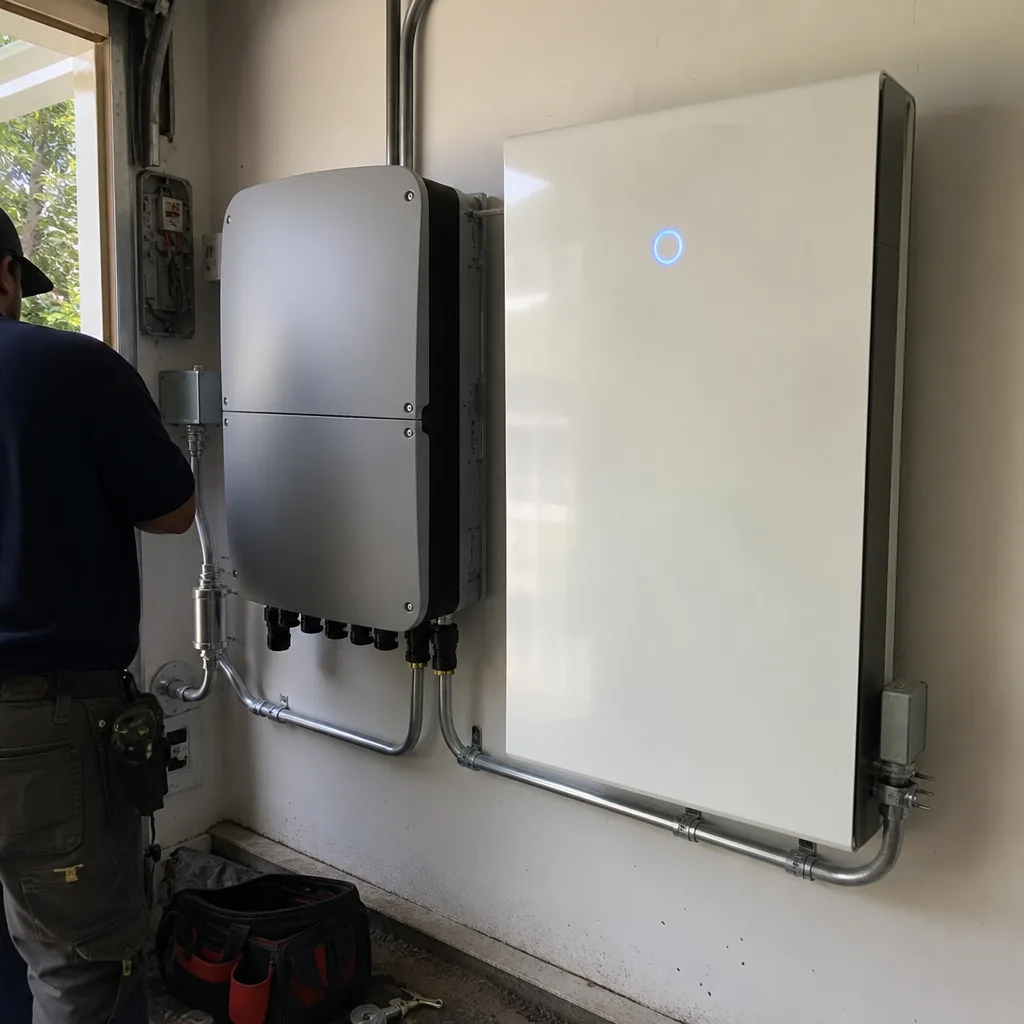
A failed inverter is the single most common reason a Solar Panel Repair call turns into a system replacement quote from a less-scrupulous outfit. That’s rarely necessary. In Poway’s inland heat, string inverters from the 2010-2015 era run hot and fail early, but many are repairable: capacitor swaps, cooling-fan replacement, and firmware updates can buy you another five to seven years. When replacement is the honest call, we stock and install current inverters and do the DC re-wiring to match your existing array.
Microinverter Replacement
Poway’s east/west-split rooflines on canyon lots mean panels age unevenly. The west-facing microinverters sit in direct afternoon sun and heat-soak at 104°F-plus summer temperatures, which shortens their service life noticeably. We routinely replace individual microinverters under the panel rather than quoting an entire array swap. On concrete-tile roofs, we remove tiles carefully, swap the unit, re-flash, and put it back watertight. A single microinverter replacement in Poway runs $240-$420.
Wiring & Connector Repair
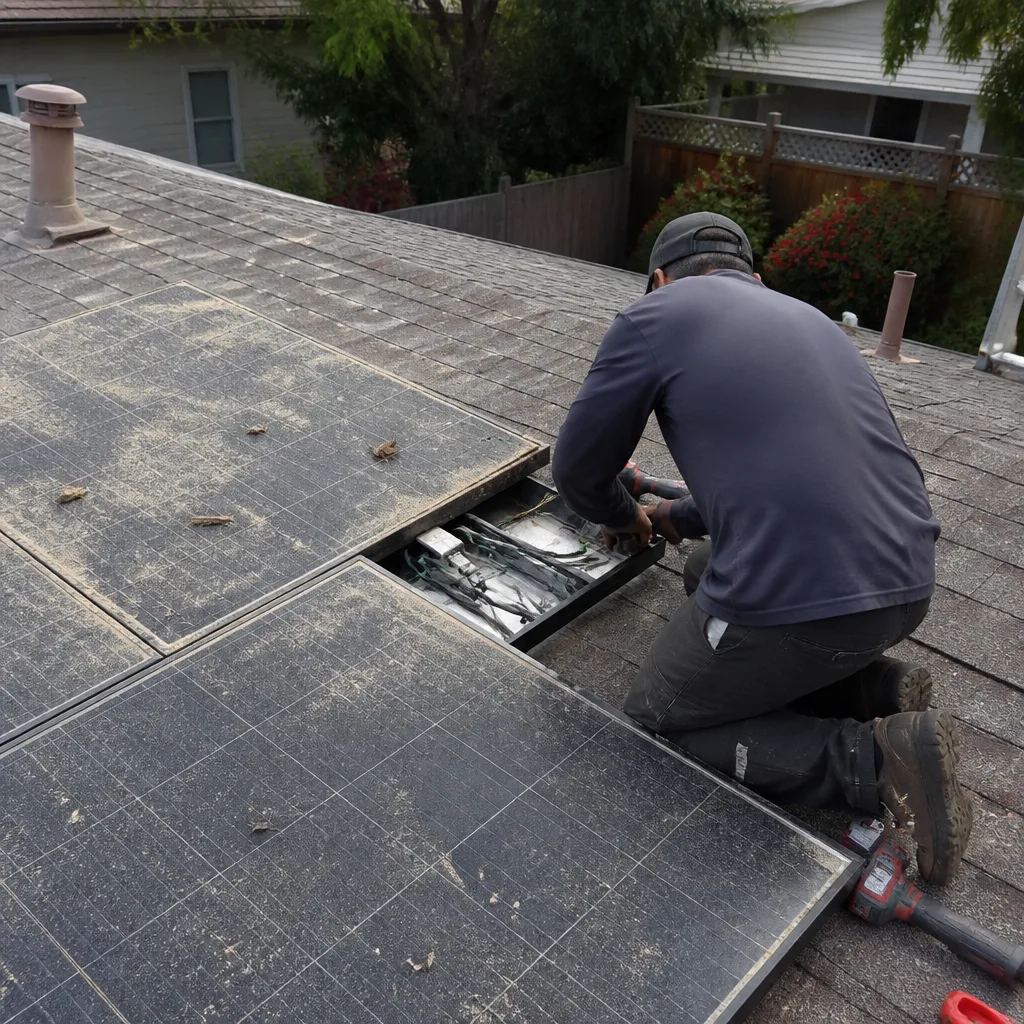
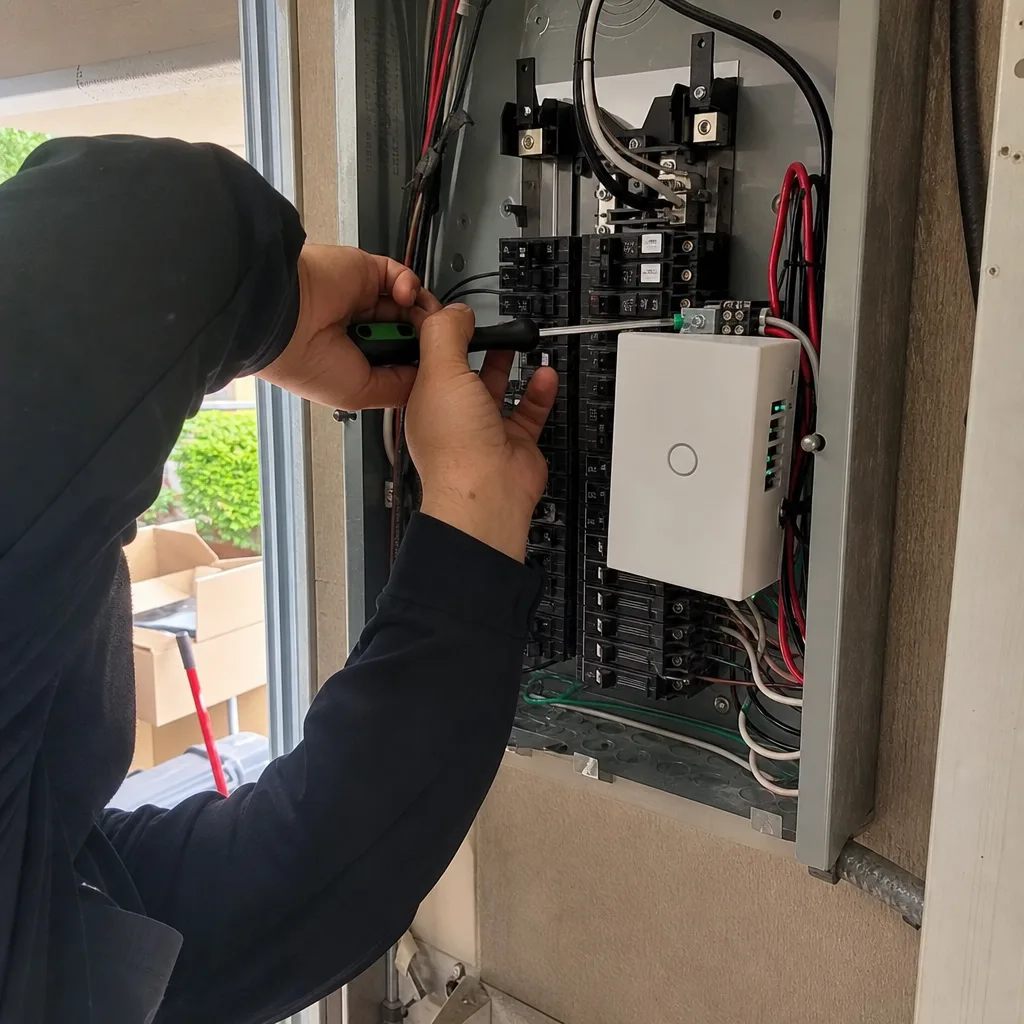
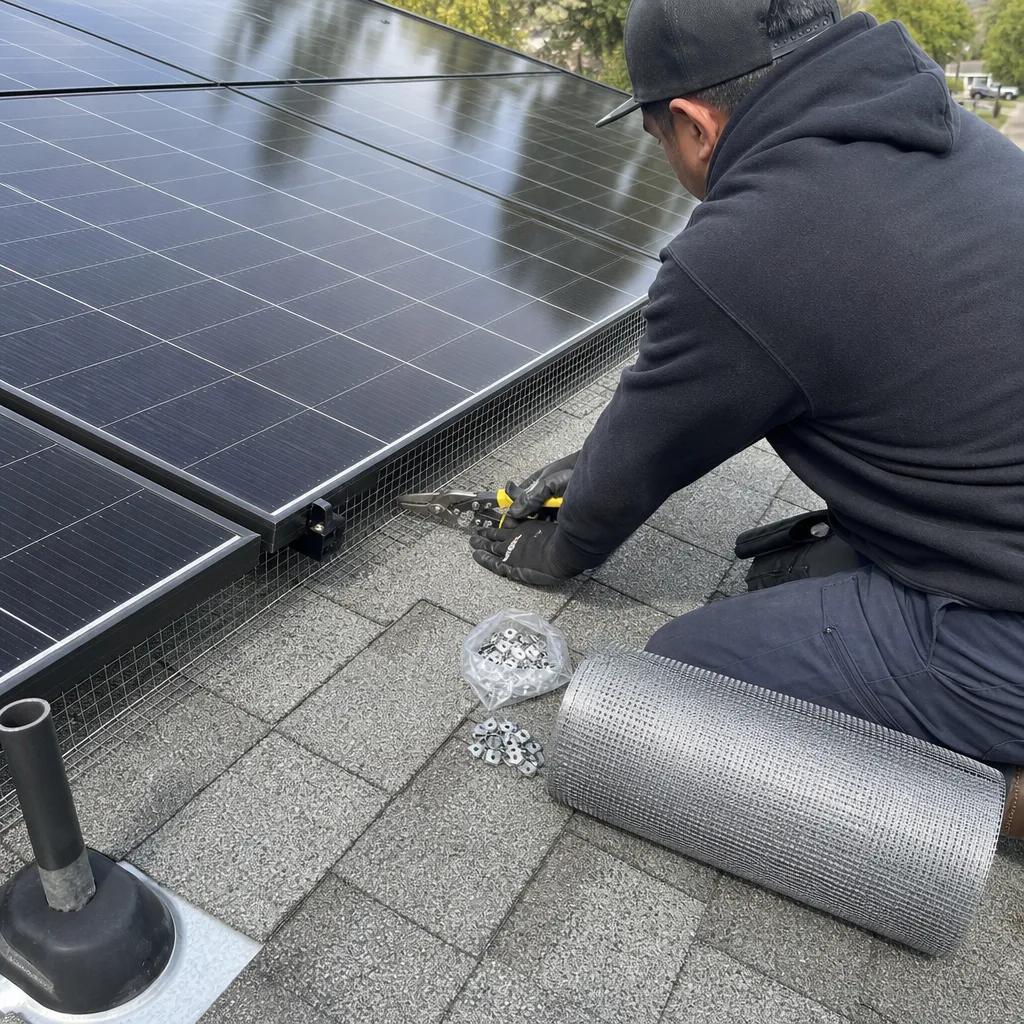
Squirrels, rats, and valley winds do real damage to exposed DC home-runs. In Poway’s canyon-adjacent neighborhoods like Green Valley and the hillside lots off Espola Road, we regularly find chewed insulation, stressed connector locks, and intermittent arcing from wind-whipped debris. These faults are dangerous if left alone: DC arcing can start a roof fire. We repair or re-pull damaged wiring, re-terminate connectors, and test every string under load before we leave. Expect $180-$380 for typical connector and wiring repairs.
Panel Replacement After Damage
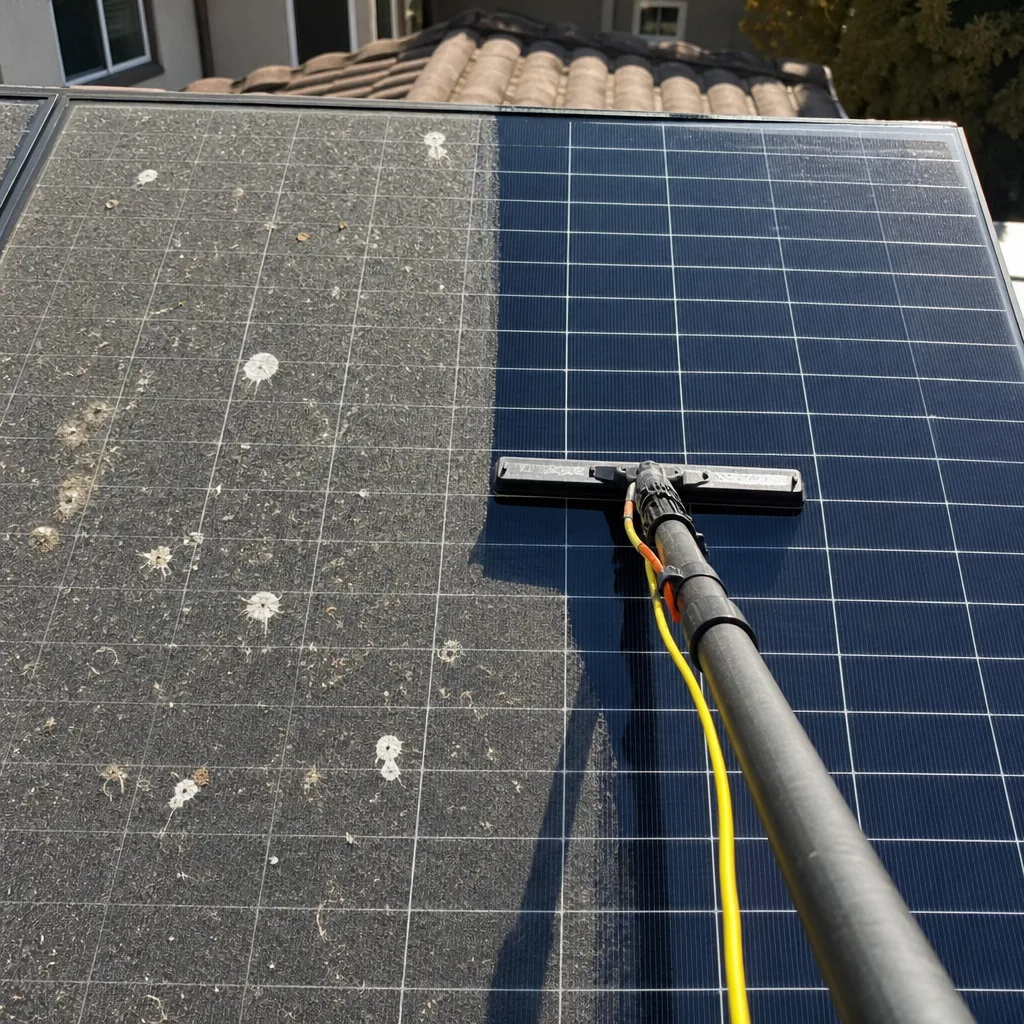
Hail is rare in Poway, but cracked glass from falling branches, kicked-up rocks from mowers, and heat-related delamination are not. If a panel is cracked, shattered, or showing visible cell delamination before year 12, replacement is the right fix, not a patch. We match your remaining panels’ electrical characteristics as closely as possible and verify the new panel won’t drag down the string. A straightforward single-panel replacement on a composition-shingle roof runs $350-$700, including labor and re-flashing. On concrete tile, add tile-replacement waterproofing work, which we do in-house.
What happens when you call
- 1
A real person answersNo phone trees - you reach a local pro.
- 2
You get an upfront price rangeHonest numbers before anyone is dispatched.
- 3
A background-checked tech heads outLicensed & insured, dispatched right away.
- 4
You approve before work beginsNothing starts until you say go.
Trusted Brands We Service in Poway
We work on systems built with Enphase, SolarEdge, Tesla, SunPower, Panasonic, Canadian Solar, Qcells, REC, JinkoSolar, and FranklinWH equipment. We don’t push one brand over another; we fix what you have. For Poway customers, we keep common microinverters, optimizers, connectors, and monitoring hardware on our trucks, so a lot of repairs are same-visit. If a part is unusual, we source it directly from our distributor network and have it in hand within two to three business days. We’ll tell you the lead time before we schedule, not after.
Common Solar Panel Repair Problems We See in Poway Homes
- Cracked concrete tiles from foot traffic. A lot of Poway’s 1980s and 1990s tract homes have original concrete-tile roofs. Tiles this age crack under a technician’s weight during a repair, which means a simple microinverter swap can turn into a tile-replacement and waterproofing job. We plan for this before we go on the roof, not after we hear something snap.
- Arc-fault trips in July and August. When outdoor temperatures push past 100°F on Poway’s inland days, inverters derate and heat-stressed connectors expand. We see afternoon arc-fault codes regularly in the summer, especially on SolarEdge systems from 2013-2016. Often the fix is a connector re-termination and firmware update, not an inverter replacement.
- Uneven aging on east/west-split rooflines. Canyon and hillside lots in Poway frequently have roofs split east/west instead of south-facing. The west plane catches brutal afternoon sun, and those panels degrade faster. Delamination and hot-spot damage show up earlier on those panels than the manufacturer’s 25-year warranty would suggest. We identify which specific panels are dragging down the string and replace only those.
- Connector damage from wind and animals. Poway’s valley winds whip small debris across rooftop arrays, and squirrels are common in the eucalyptus stands and canyon brush. Chewed DC connectors and loosened MC4 locks cause intermittent ground faults and reduced production. This is one of the cheapest repairs we do, and one of the most overlooked causes of a mysteriously climbing SDG&E true-up.
Pricing for Solar Panel Repair in Poway, CA
Here are the numbers we quote most often in Poway, honest and current:
- Diagnostic visit (applied to repair): $75-$125
- Single microinverter replacement: $240-$420
- DC connector repair or re-termination (per string): $180-$380
- Wiring repair or partial home-run replacement: $300-$650
- Single panel replacement (composition-shingle roof): $350-$700
- Single panel replacement (concrete-tile roof, with tile work): $500-$900
- Inverter replacement (string or central, parts and labor): $1,400-$2,800
- Roof-leak investigation around mounts: $200-$400
We honor $40 off any repair over $200, a free second opinion on any written estimate, and a 10% senior and veteran discount that never expires. These offers stack where they apply and they’re real, not a gimmick to get a salesman in your kitchen.
Roof Leaks Around Mounts: The Poway Concrete-Tile Problem
Poway’s housing stock skews toward single-family tract homes built in the 1980s and 1990s, and a large share still have original concrete-tile roofs. That matters when you have a roof leak near a solar mount. Old tiles crack, old flashing corrodes, and the original sealant around the lag bolts dries out and fails. A roof leak around a mount is rarely a leaking panel; it’s almost always failed flashing or a cracked tile that lets water follow the mount’s lag bolt down to the decking.
Here’s what makes Poway specific: the eastern hillside areas that burned in the 2003 Cedar Fire have a cluster of post-fire rebuilt homes with newer roofs and cleaner structural assessments. Repairs on those homes are typically straightforward. But in the older tracts off Poway Road and Community Road, we’re dealing with original 1980s underlayment that’s reached the end of its life. Patching a leak without addressing the underlying deck rot is a temporary fix. We’ll tell you if the right call is a targeted mount repair or a section re-flash before you spend money on the wrong fix. Roof-leak investigation around mounts runs $200-$400, and if the repair is straightforward, we typically complete it on the same visit.
Orphaned-System Takeover: When Your Installer Is Gone
A lot of Poway systems were sold between 2011 and 2016 by companies that no longer exist. We take over orphaned systems regularly. Last August, we took over a 2014 SolarEdge system in the Green Valley neighborhood after a squirrel chewed through the DC home-run connectors near the ridge. The original installer had folded, the homeowner’s true-up statement had doubled versus year one, and the inverter was throwing arc-fault codes every afternoon when 104°F heat derating kicked in. We replaced the damaged wiring and connectors, re-terminated the optimizers, and updated the inverter firmware, then ran a new production estimate showing the repaired array would cover 91% of annual usage at current net metering rates.
If your installer is gone and your system is underperforming, we can take over the monitoring, rebuild the wiring map, and restore production. No new panels, no full reinstall, no sales pitch. Just a working system.
Why a Small Repair Matters More in Poway Than on the Coast
Poway sits far enough inland to sit almost entirely outside the coastal marine layer that routinely suppresses solar production in beach-side San Diego communities like Del Mar or Encinitas. Poway gets 5.5 to 6.0 daily peak sun hours, among the highest in San Diego County. At the same time, Poway is in SDG&E service territory with some of the highest residential electricity rates in the nation. That combination means a repaired system that regains even 10 percent output can shift a true-up statement by hundreds of dollars. In Encinitas, the same repair barely moves the needle because the cloudier microclimate dilutes the gain. In Poway, every kilowatt-hour counts, and a system running at 80 percent of capacity is money leaking out of your pocket every single afternoon.
That’s also why we quote the year-25 output, not the day-one brochure number. If a repair restores 10 percent on a 6-kilowatt system in Poway, that’s not a rounding error. That’s your SDG&E bill changing shape for the next decade.
Poway’s Fire-Setback Rules and What They Mean for Repairs
A large portion of Poway’s parcels fall within California’s Very High Fire Hazard Severity Zone, which means every permit set must incorporate the state’s solar fire-setback requirements: 3 feet of clear space from all roof edges and ridge lines. On the steep, multi-plane hillside roofs common in Poway, those mandatory setbacks can cut usable panel area by 15 to 25 percent. That has real consequences when you’re repairing an older system. Sometimes a homeowner wants us to replace a failed panel in a location that no longer meets current setback rules. We have to tell them no, and then we re-engineer the array layout to stay code-compliant while maximizing yield from the remaining roof sections. That’s why many Poway repairs go beyond a simple panel swap, and it’s a design consideration that rarely comes up with the same frequency in flatter coastal neighborhoods.
If a repair moves panel positions or adds panels, we pull a permit. If we’re repairing in place without layout changes, typically no permit is required. We’ll tell you which applies before any work starts, so you’re never surprised by a code violation or an SDG&E rejection.
We Also Serve Cities Near Poway
Our crews handle Poway jobs throughout 92064 and 92074, and we regularly work in Rancho Penasquitos, Mira Mesa, Santee, and Eucalyptus Hills. If you’re in one of those communities or in an unincorporated pocket east of the city, call and ask. We’ll tell you straight whether we can get a truck to you this week. Dispatch and scheduling are coordinated from our San Diego office, and crews serve Poway locally, which keeps response times short.
Serving Poway, CA - Our Local Coverage Area
We’re based in the Poway area and know this community well. Use the map below to see our service coverage - if you’re nearby, we can almost certainly help.
FAQs - Solar Panel Repair in Poway
Because heat derating is real. On Poway’s 100°F-plus summer afternoons, a 2010-era string inverter runs hot, and its internal cooling fan is often failing silently. The inverter throttles output to protect itself, even under clear skies. We see this pattern all over Poway every summer. The fix is frequently a cooling-fan replacement and firmware update, not a full inverter swap. Call (877) 550-6892 and describe the production numbers you’re seeing; we’ll tell you honestly what’s likely going on before we schedule a visit.
Usually, yes. A competent repair crew can lift only the tiles needed to access the mount or microinverter, replace the faulty component, re-flash, and re-set the tiles without disturbing the rest of the roof. The risk is on 1980s and 1990s Poway tract homes where the tiles are brittle. We assess tile condition before we walk the roof, and we’ll tell you if your tiles will survive the repair or if you should budget for tile replacement at the affected mounts. We’ve done hundreds of these repairs in Poway’s 92064 ZIP without triggering a re-roof, but we won’t tell you it’s risk-free if your tiles are crumbling.
A blank inverter screen after a brownout or power surge usually means the inverter’s internal AC board or fuse took the hit, not the panels. Panels rarely fail all at once. We see this in Poway when SDG&E grid events or the hot-weather brownout cycles spike line voltage. A board-level repair typically runs $400-$800, compared to $1,400-$2,800 for a full inverter replacement. We’ll test the inverter, the DC strings, and the AC connection before we quote either.
If a repair is in place, no layout change, setbacks don’t come into play. But if we need to move a panel, replace a row, or add capacity, the new work has to meet current Very High Fire Hazard Severity Zone rules: 3 feet clear from ridge lines and roof edges. On some older Poway installs, panels were mounted closer to the edge than today’s code allows. We’ll re-layout the affected section to code and explain the production trade-off before you approve anything. We won’t quietly leave a non-compliant array up there.
Ask for the electrical specs, not just the physical dimensions. A 2012-era panel’s wattage, voltage, and current ratings are not the same as a 2026 panel, even at the same size. If the new panel’s electrical characteristics don’t match the remaining string, it can drag down the whole string’s output. A straight answer from whichever company you choose: ask them to match open-circuit voltage and maximum-power-point voltage within 5 percent of the original panel, and to confirm the panel’s compatibility with your inverter’s input range. If they can’t answer that on the spot, that’s a sign to call (877) 550-6892 for a free second opinion. We’ll review the quote and tell you if it’s honest.
Written by Gus Petrakis, Owner at Gus’s Solar, serving Poway since founding the company in 2011.