
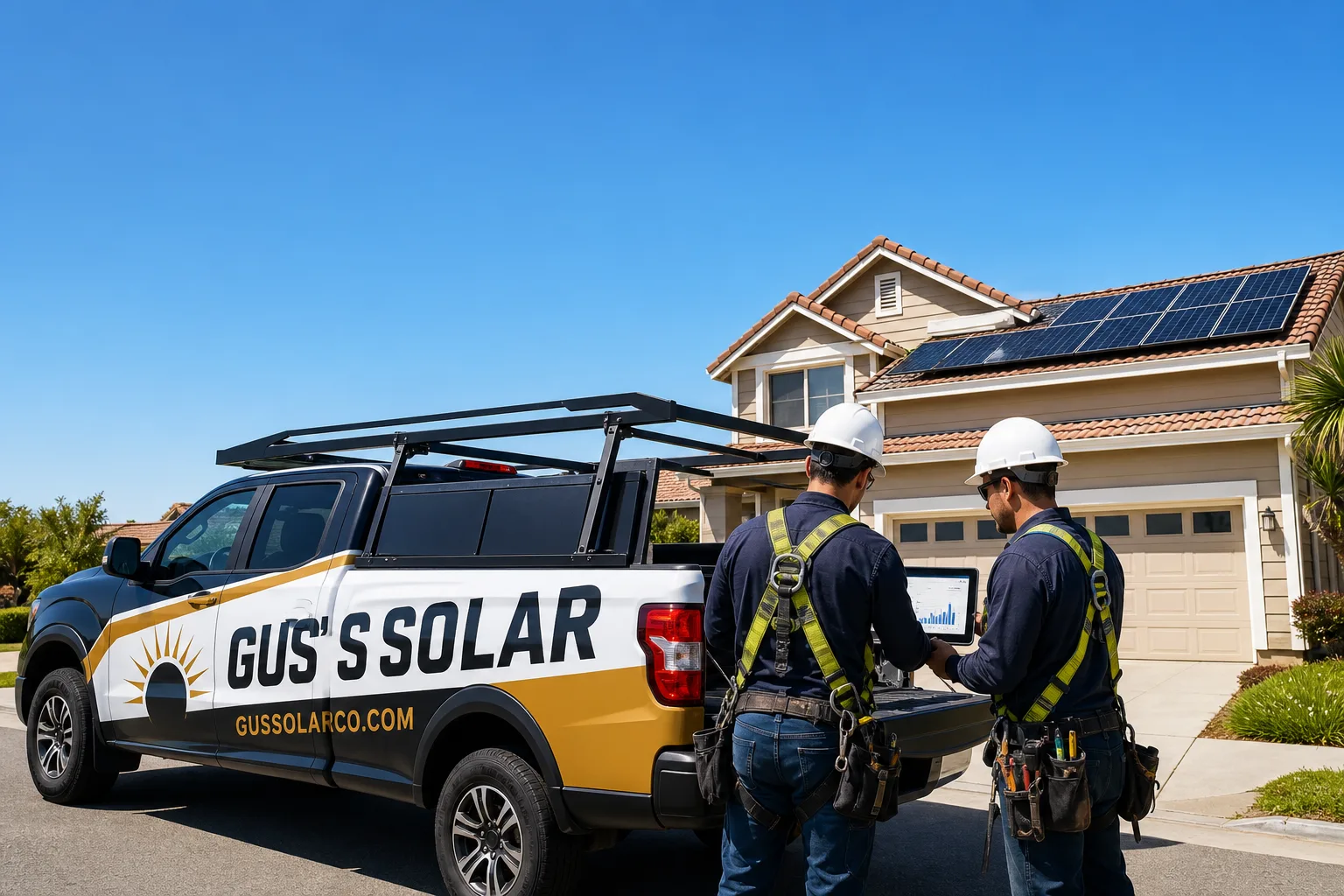
Free bill analysis - bring a power bill, get the production math for your actual roof, panel brands like Qcells and REC compared side by side
If the pitch starts at your door and ends with "sign tonight for the special," sleep on it. The sun will still be there tomorrow; so will we.
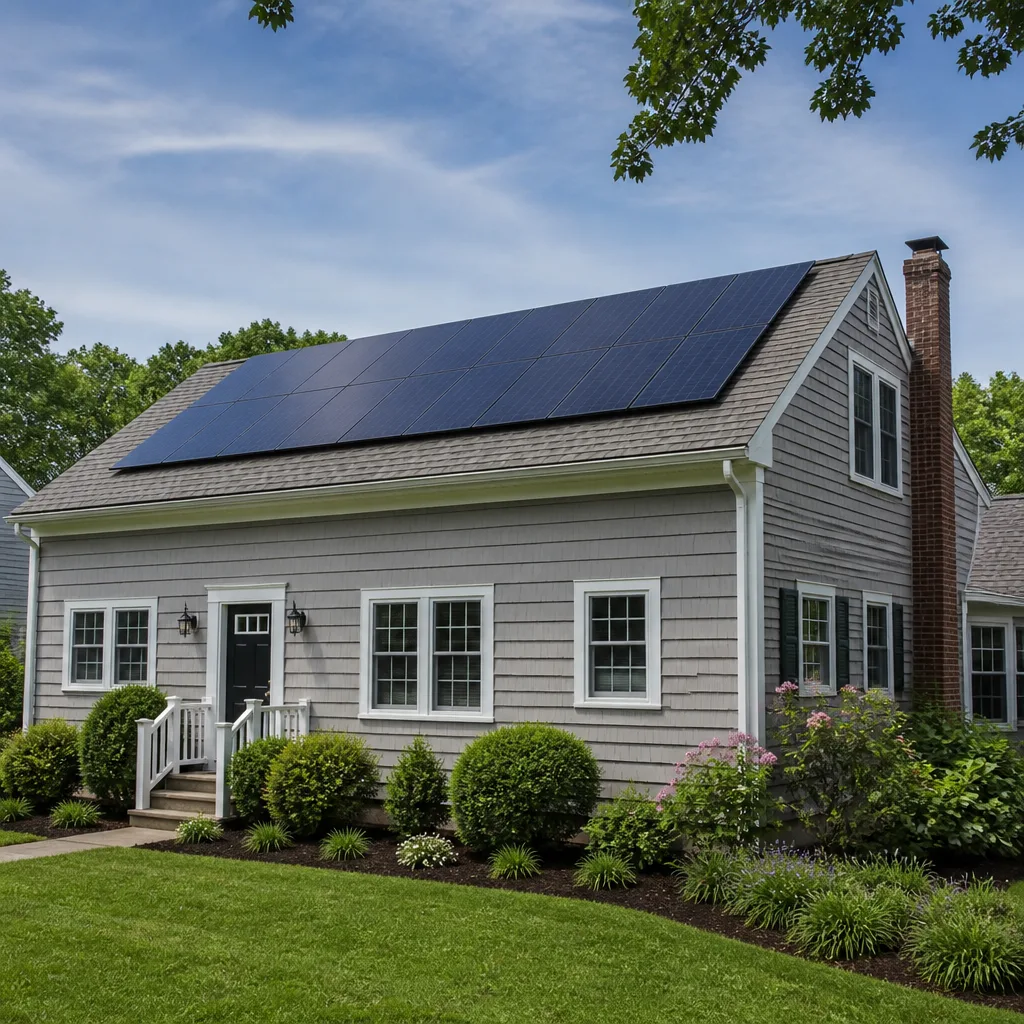
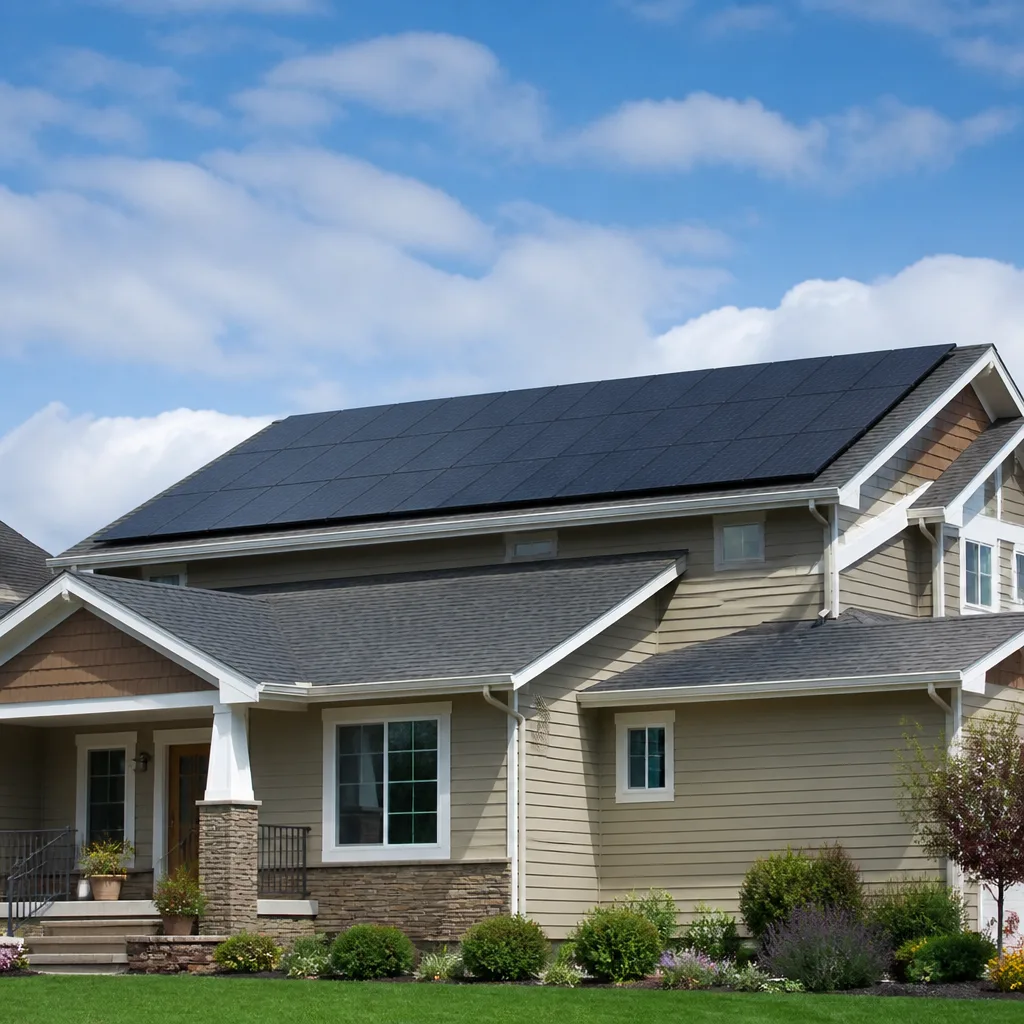
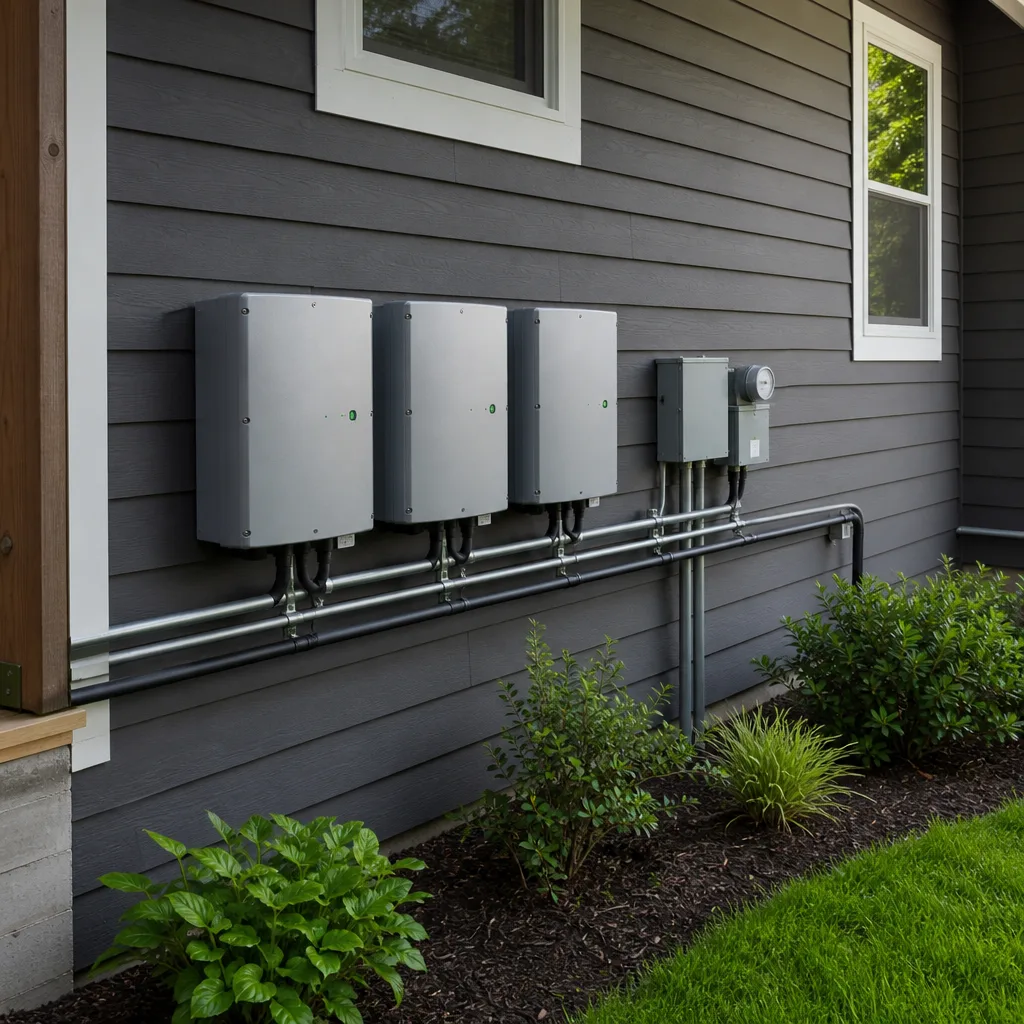
 Before
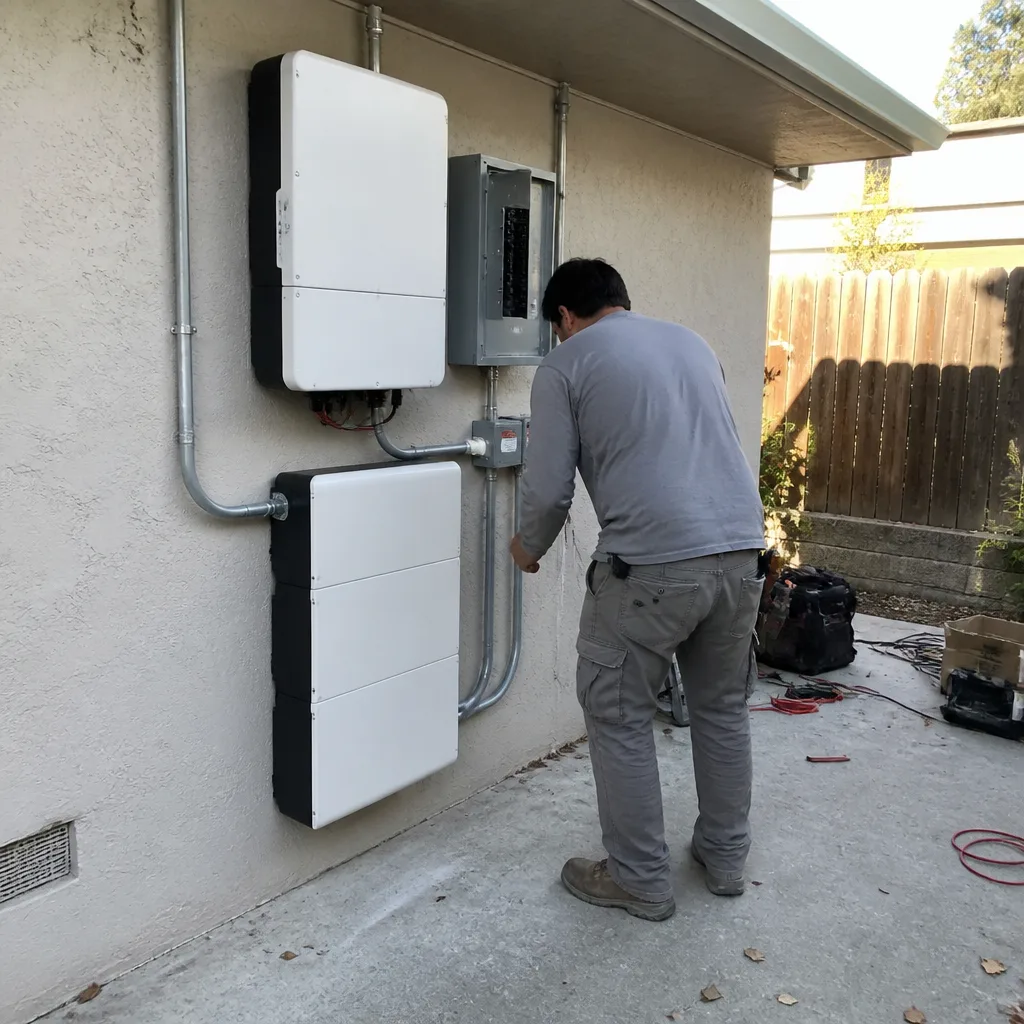 After
After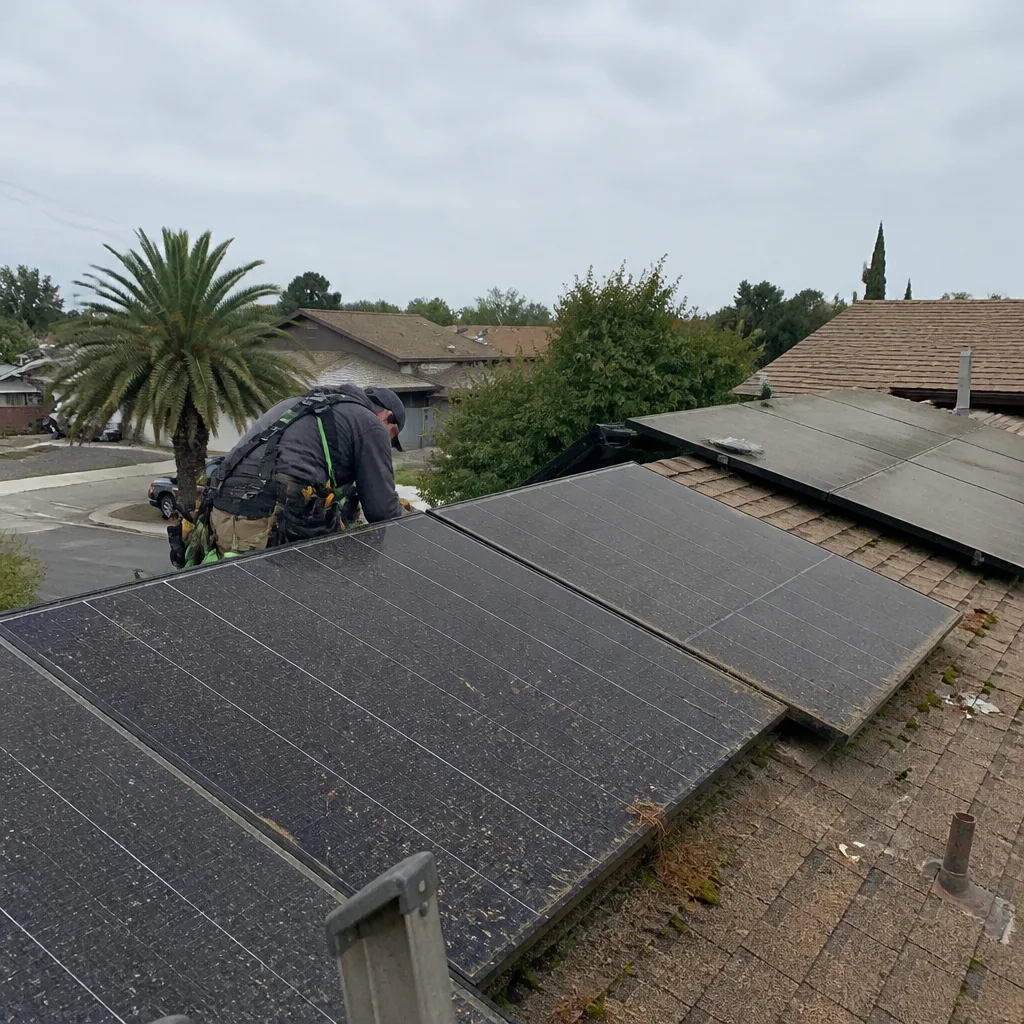 Before
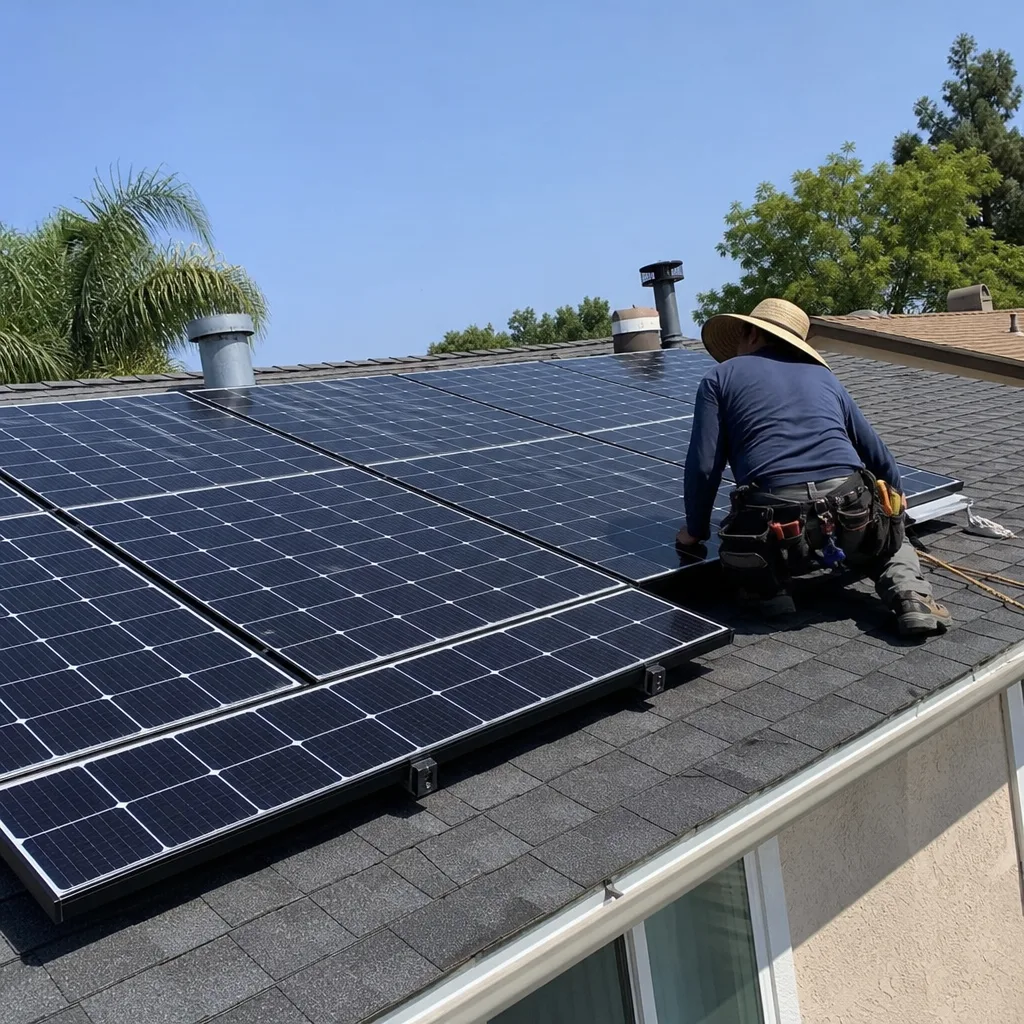 After
After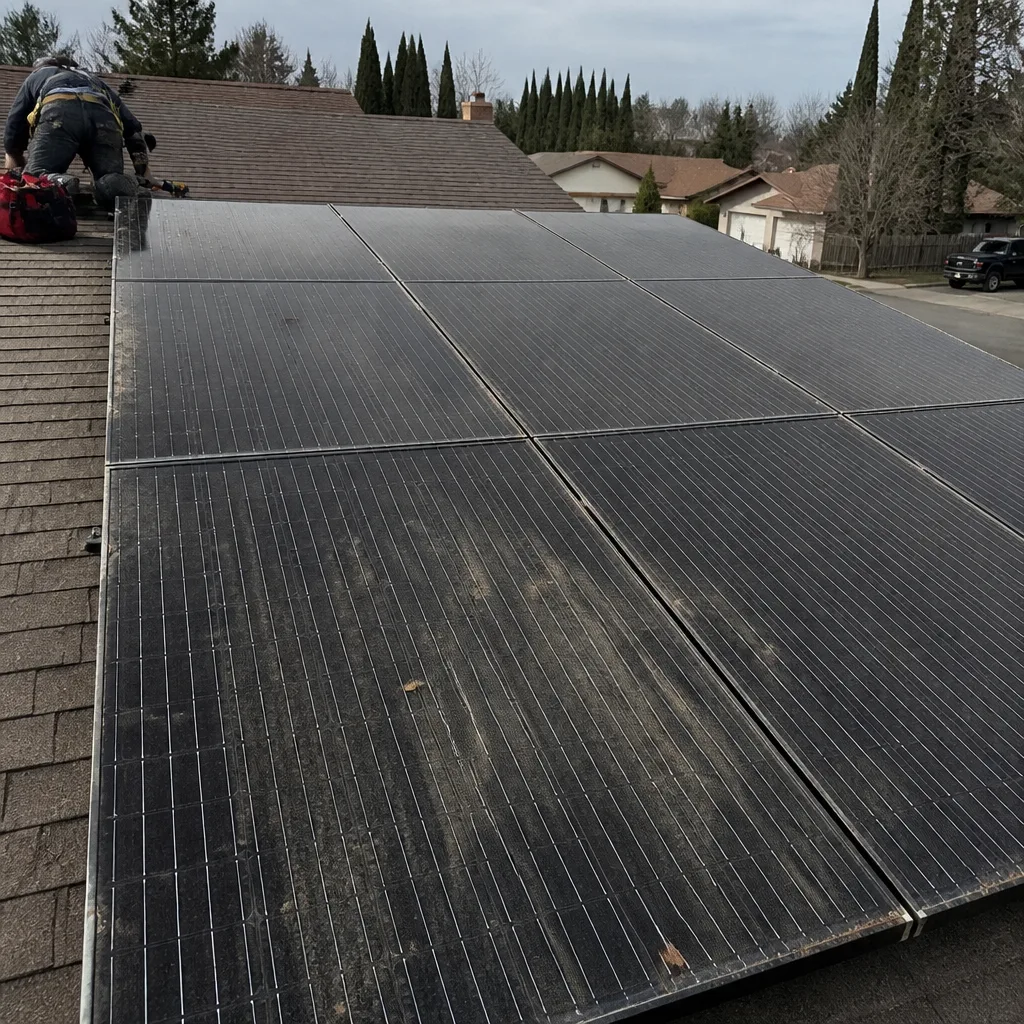 Before
 After
AfterFast, Reliable Commercial Solar Installation Across Communications Hill
Commercial solar in Communications Hill runs $65,000-$180,000 for rooftop systems on office and retail buildings, and $150,000-$400,000 for carports, ground mounts, and battery-backed warehouse arrays. Most commercial jobs here take 6-10 weeks from permit to final inspection, and Gus’s Solar answers the phone live at (877) 550-6892 when you call about your building. We know this hillside better than any out-of-town installer ever will, because we’ve pulled permits, argued with HOAs, and climbed multi-pitch roofs up and down Communications Hill Boulevard for years.
This page covers what commercial solar actually costs up here, why the hill changes your production numbers, and how to avoid the three mistakes out-of-area installers make on almost every Communications Hill job.
Why Gus’s Solar Is Communications Hill’s Preferred Commercial Solar Installation Company
Gus Petrakis started this company in 2011, and he still answers his own phone. That matters on Communications Hill, where every commercial building sits on graded terrain with its own set of azimuth headaches. When you call (877) 550-6892, you get Gus or a member of his crew, not a call center three states away. He’ll quote the year-25 output off your actual utility bill, not a brochure number, and he’ll tell you to take two weeks before you sign anything. If a salesman needs an answer tonight, the answer is no.
We’ve worked on office buildings, retail pads, and mixed-use structures throughout 95136, including properties along Communications Hill Boulevard and up into the townhome clusters east of Cahalan Park. The hill’s contour-following street grid means a south-facing plane on one parcel sits directly across from a northeast-facing pitch on the next lot over. Aerial estimates from out-of-state software miss that. Our techs don’t.
We’re not a pop-up sales crew. Gus publishes his name, address, and license number. Our background-checked, uniformed crew does the install themselves, and the 90-Day Done Right Promise is in writing on every commercial job. If something isn’t right, one call brings Gus back.
Why the Hill Changes Your Commercial Solar Math
Communications Hill is a single graded hillside master-planned community, built in phases mostly between the early 2000s and the early 2010s. That fact alone changes how commercial solar has to be designed here. Because the entire development was cut and benched into the hillside, the same street can contain adjacent parcels with wildly different roof azimuths. One townhome’s south-facing plane sits directly across from a neighbor’s northeast-facing pitch. On a flat-grid commercial street in the valley below, every building faces the same way. Up here, nothing faces the same way twice.
That means per-parcel shading models and tilt analysis decide your payback, not a standard aerial estimate. A panel that produces 100% of its rated output on a true south-facing plane might produce 68% on a northeast plane with afternoon shading from the next building over. Out-of-town installers who assume a flat commercial roof and use a single azimuth for the whole array leave real money on the table. Or worse, they put panels on the wrong plane entirely and you find out three years in that your true-up bill never zeroed out.
There’s a second hill-specific factor that works in your favor. Communications Hill sits several hundred feet above the Santa Clara Valley floor, which means the marine fog layer that settles over flat south San Jose neighborhoods usually burns off sooner at elevation. More morning sun, more production hours. And the hilltop exposure generates stronger afternoon breezes that keep panel temperatures lower during summer, which keeps efficiency higher when the grid is drawing its peak. These aren’t marketing bullet points. They show up in the per-panel data from systems we monitor across 95136.
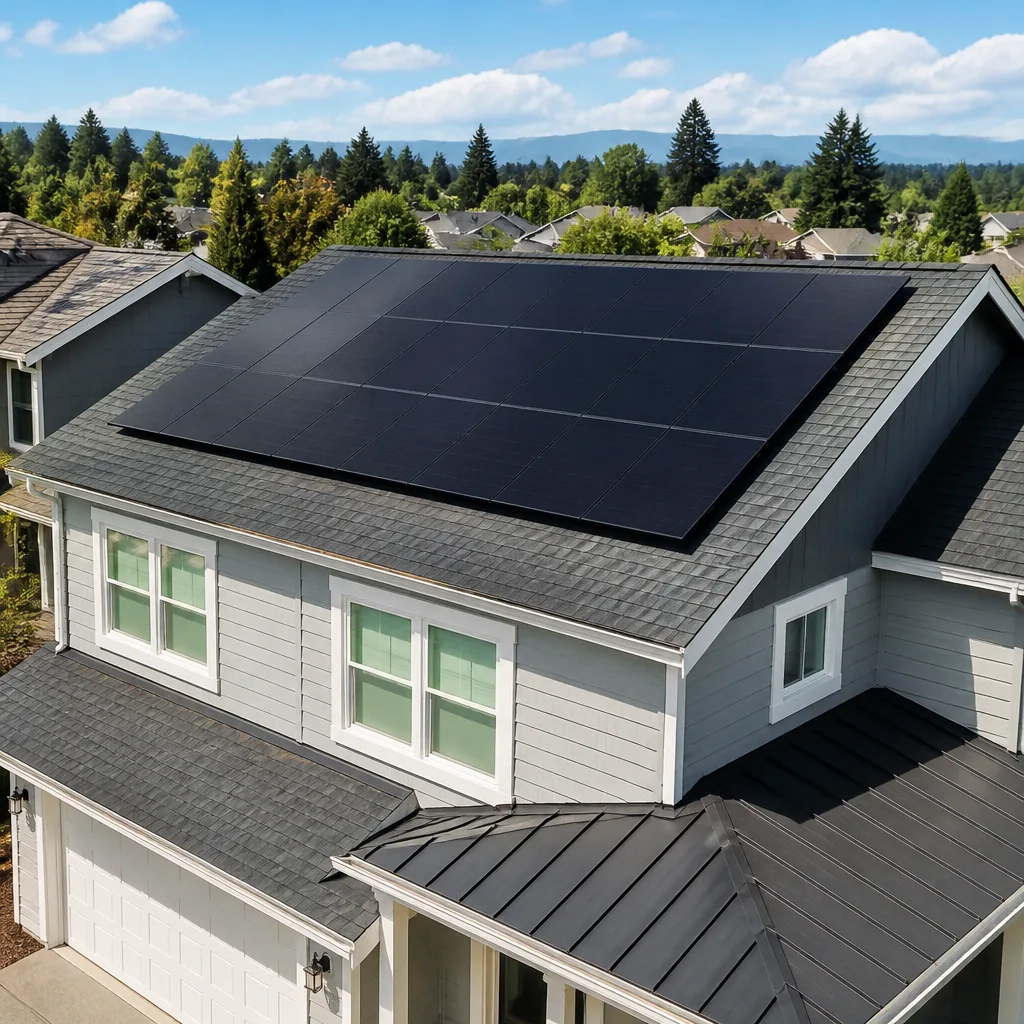
One recent job explains the difference. Our techs completed a commercial rooftop array on a two-story office building on Communications Hill Boulevard where the only viable plane was an 18-degree southwest pitch. We paired Enphase microinverters with REC panels after running a drone-based shading model that ruled out three neighboring roof planes. The final production estimate came in at 94% of ideal azimuth, and the net metering setup should zero out the owner’s true-up statement over a 7-year payback period. A string-inverter design with panels spread across those shaded planes would have delivered maybe 70% of that.
Our Commercial Solar Installation Services in Communications Hill
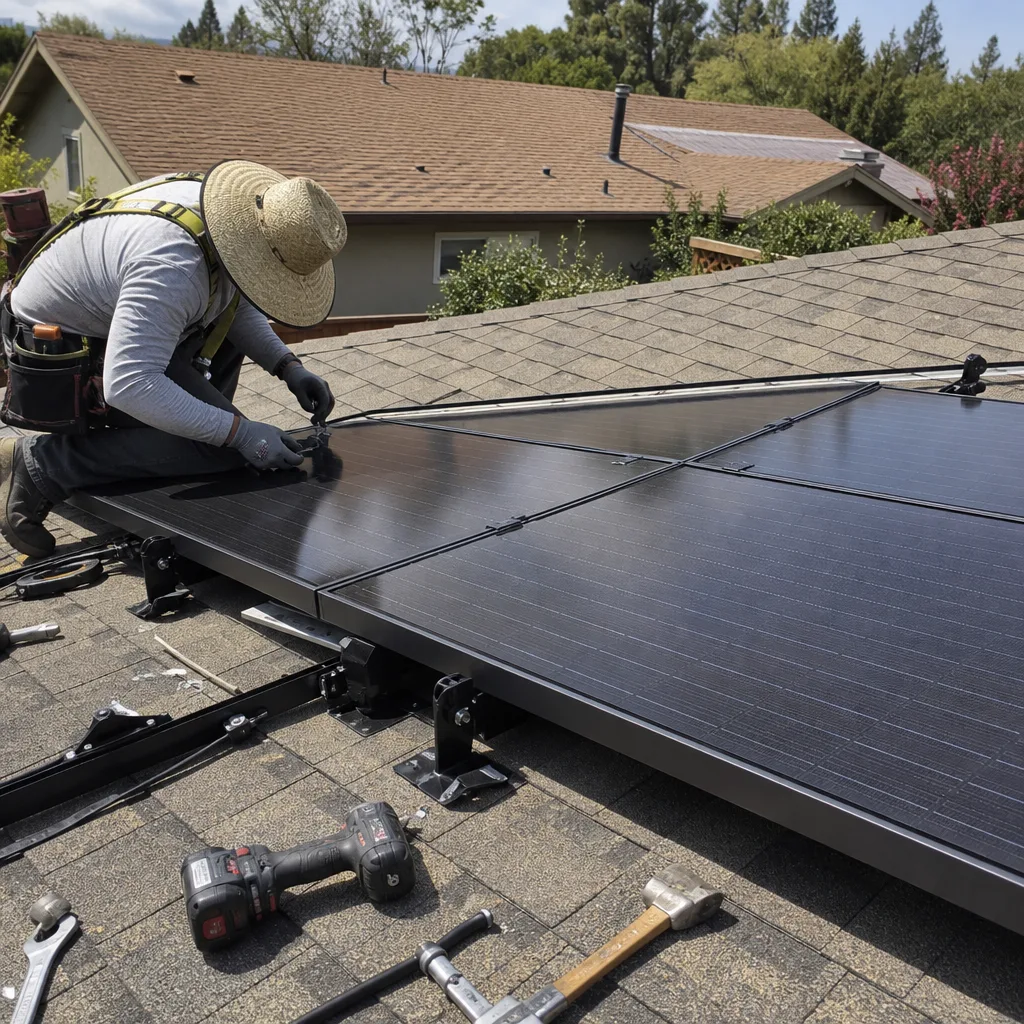
Commercial Rooftop Solar
The newer construction on Communications Hill means most commercial roofs are relatively young, with engineered trusses that simplify structural load calculations. But the hill’s multi-pitch roof planes make panel placement a design problem, not an afterthought. We model every plane individually, and we tell you which pitch is worth covering and which one isn’t. That’s the difference between a system that pays for itself in seven years and one that limps along for fifteen.
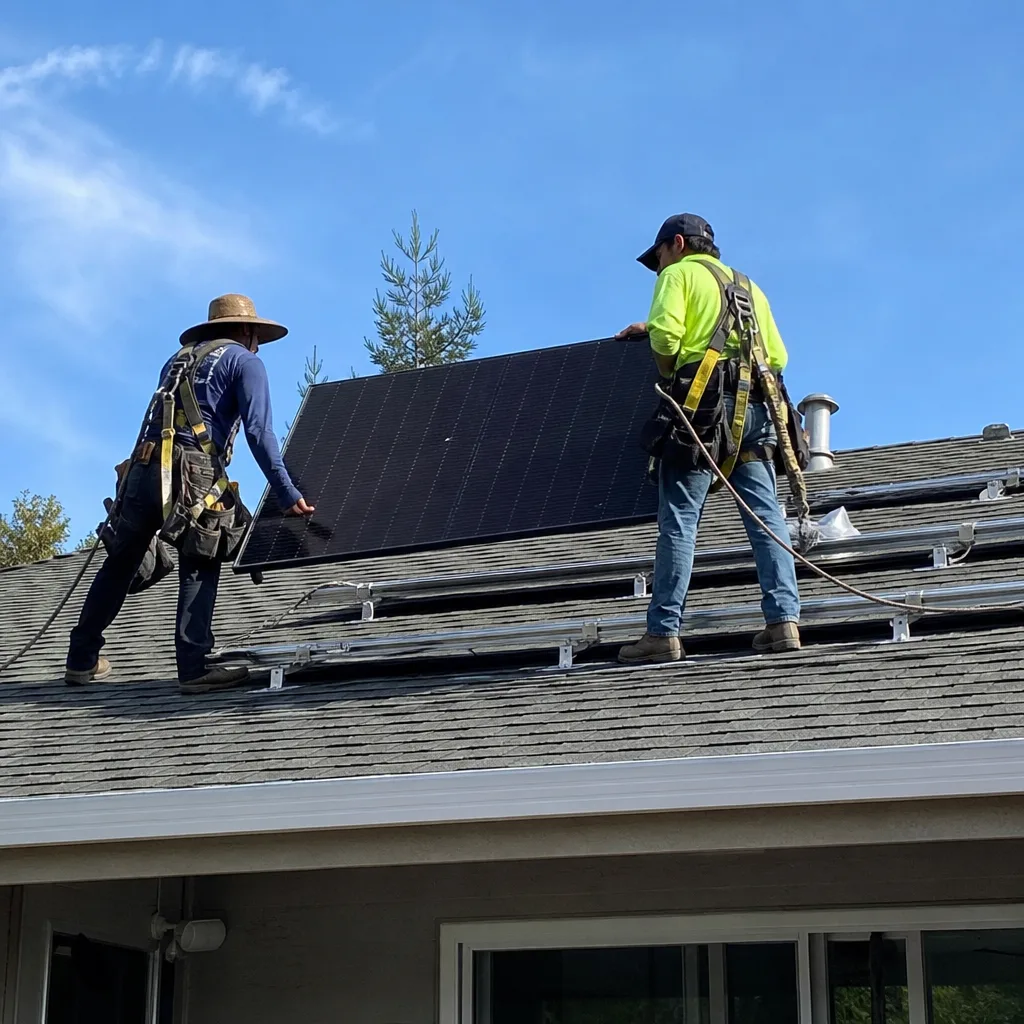
Commercial Battery Storage
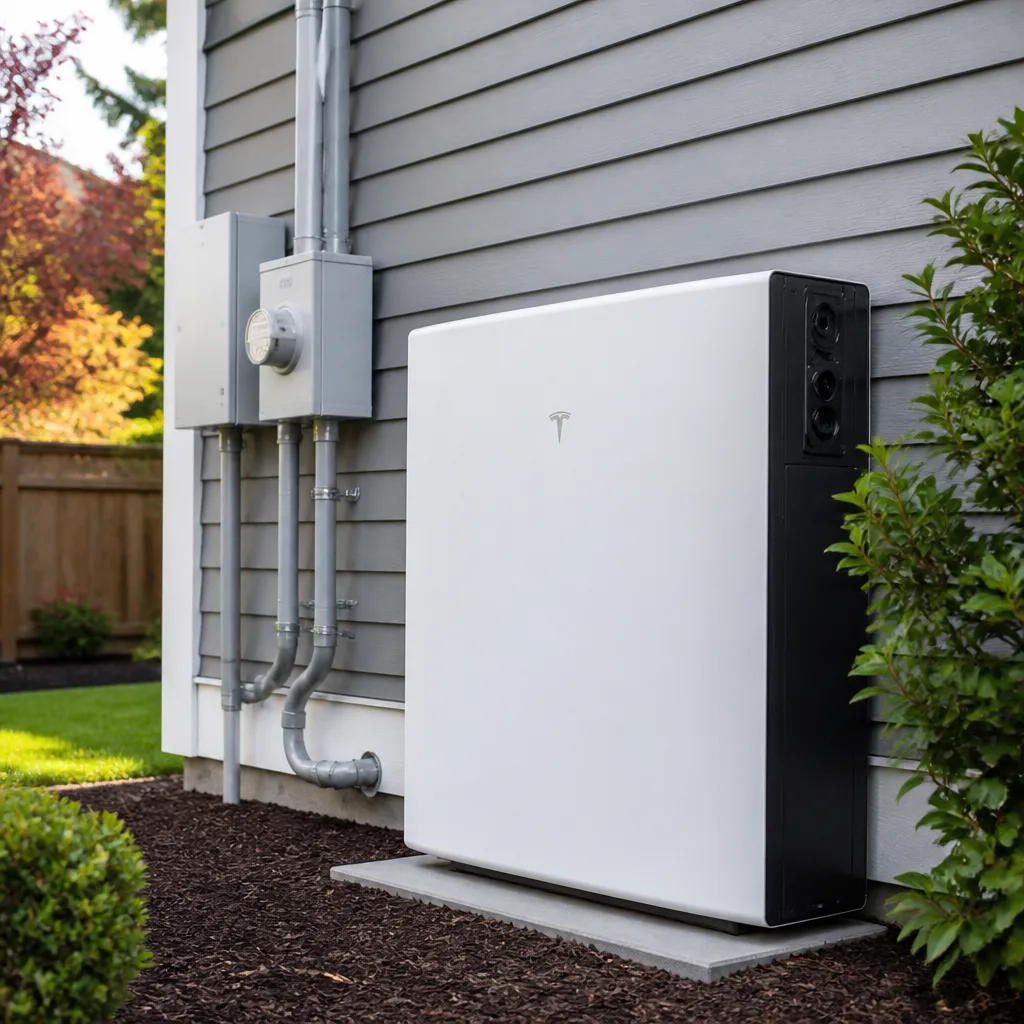
Commercial battery storage on Communications Hill makes particular sense for buildings with afternoon-elevated rates and no net metering headroom. We install FranklinWH and Tesla battery systems sized to your actual load profile, not a generic “one battery per building” guess. For healthcare offices, dental practices, or any business that can’t sit through a four-hour outage, a battery array on the hill is cheaper than a generator install and quieter by a mile.
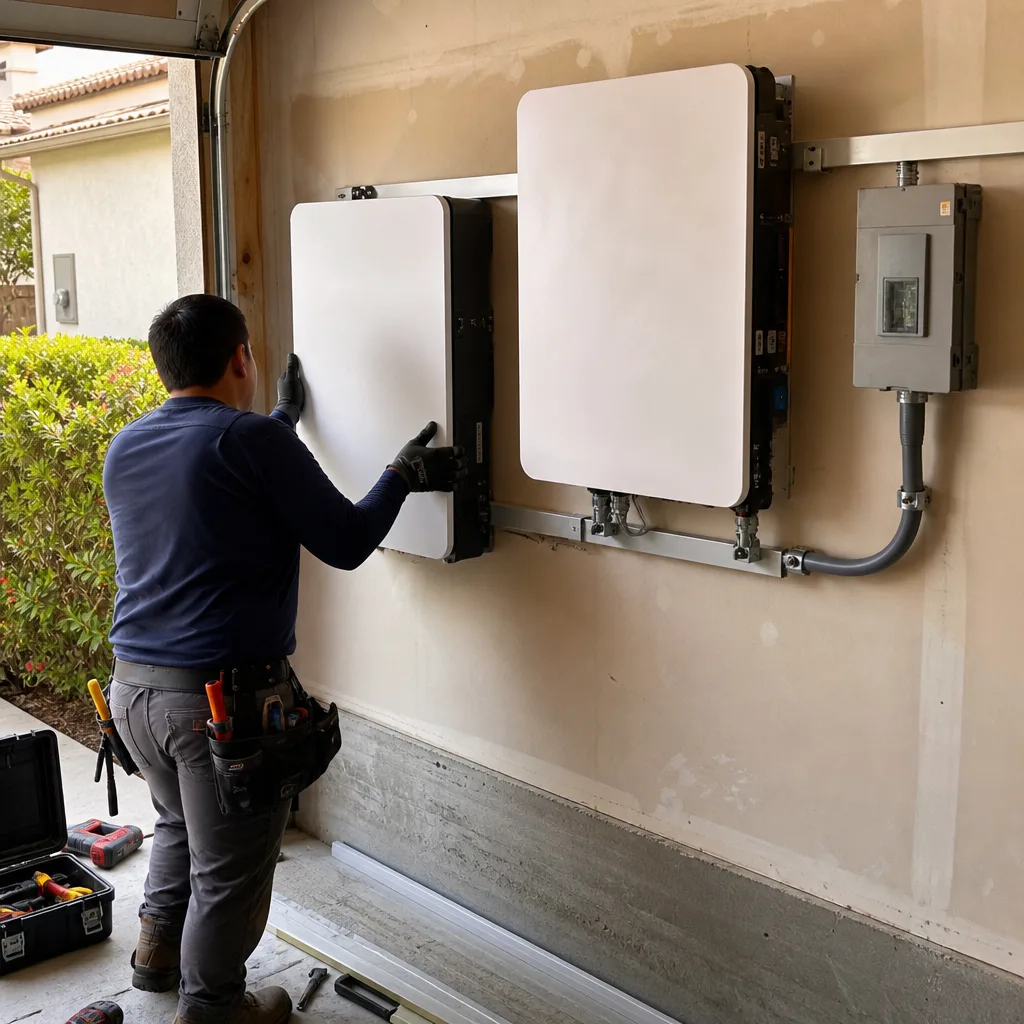
Solar Carport Installation
Carports solve the one problem every Communications Hill business shares: limited flat roof space on terrain-following structures. A solar carport turns your parking lot into a generation asset while shading vehicles and keeping the panel array at an optimal tilt. HOA design review applies to carports in some of the commercial parcels near the residential clusters, so we file renderings and elevation drawings before permit submission. We’ve been through that process enough times to know what the review board flags and what sails through.
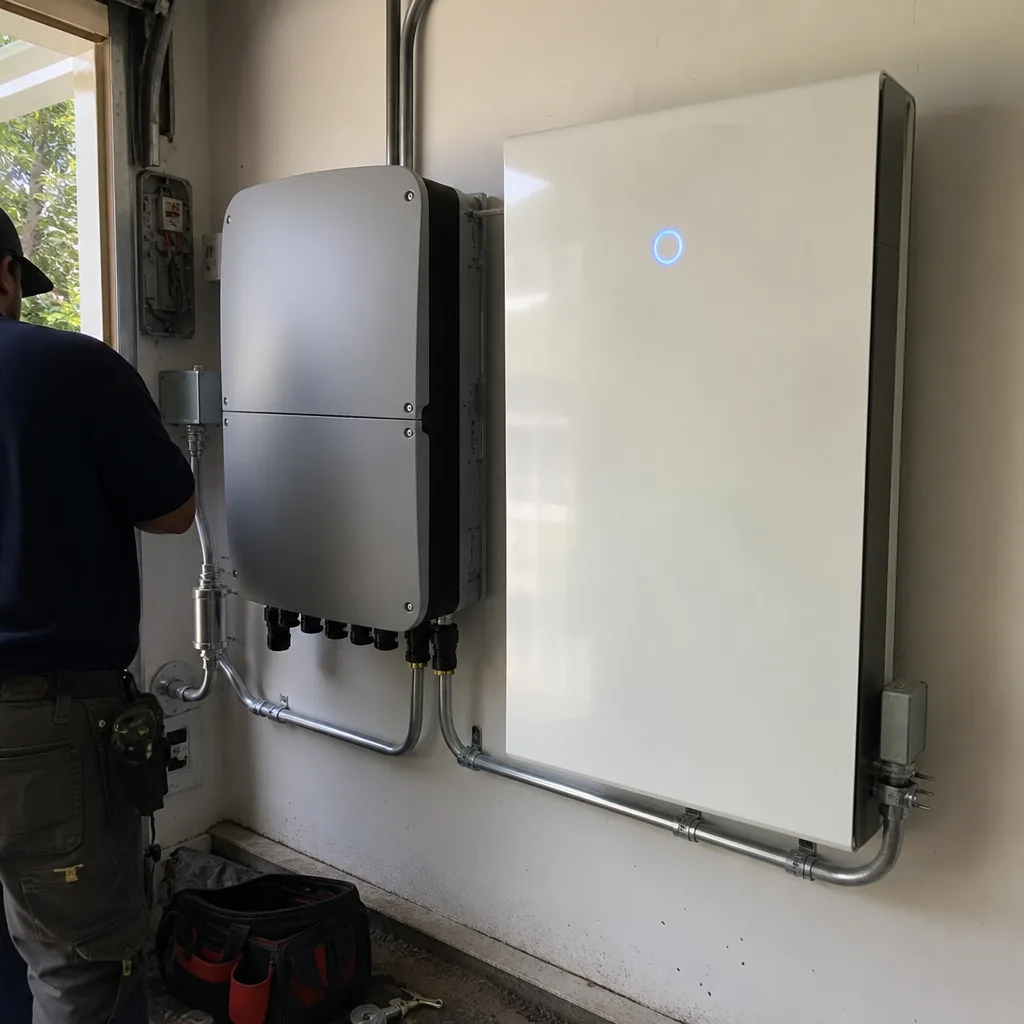
Commercial Solar Maintenance
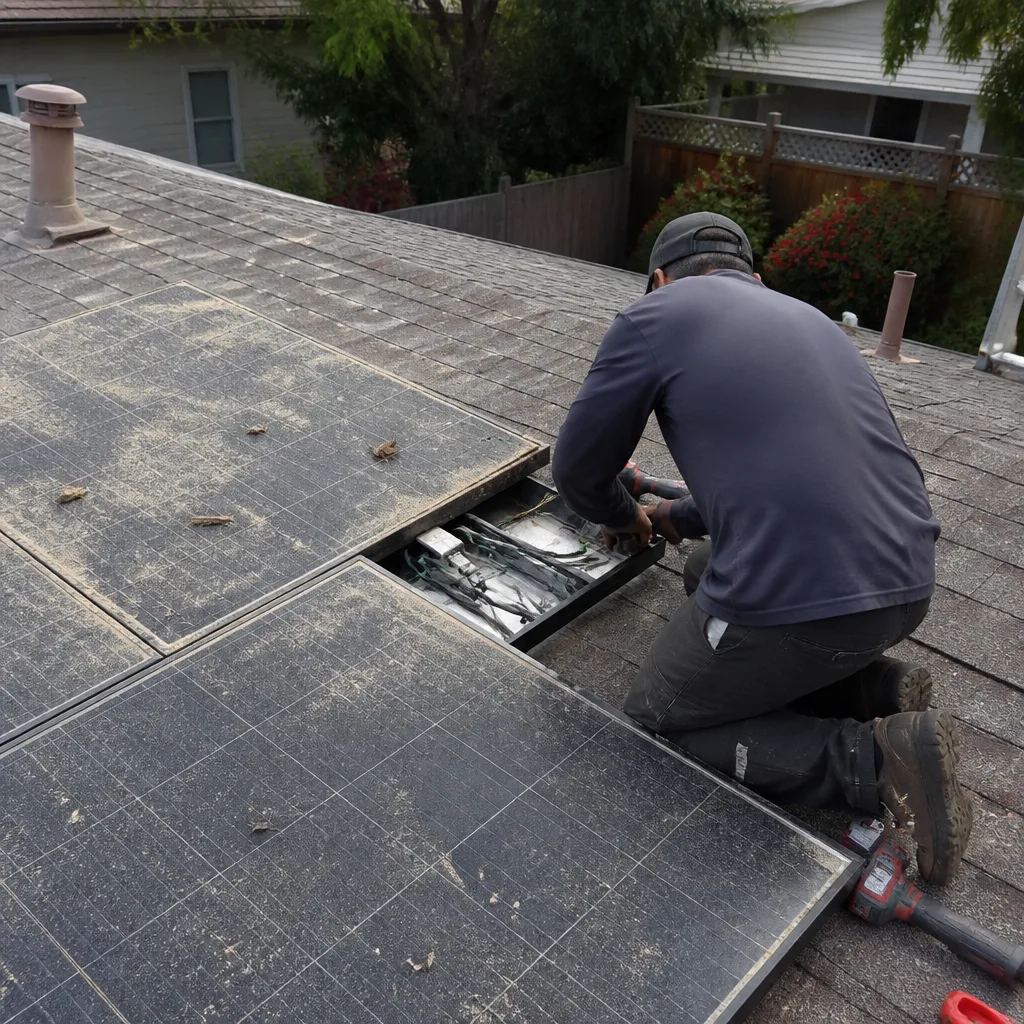
Systems on the hill collect less dust than valley-floor arrays, but the afternoon breezes carry more airborne debris from the hillside’s oak and scrub vegetation. We offer annual cleaning and monitoring for every commercial system we install, and we’ll take over maintenance on systems other companies put in. If a panel drops output, Gus calls you before you notice it on your bill. That’s what our Commercial Solar Installation team does after the install, not just during it.
What happens when you call
- 1
A real person answersNo phone trees - you reach a local pro.
- 2
You get an upfront price rangeHonest numbers before anyone is dispatched.
- 3
A background-checked tech heads outLicensed & insured, dispatched right away.
- 4
You approve before work beginsNothing starts until you say go.
Trusted Brands We Service in Communications Hill
We work with Tesla, Enphase, SolarEdge, and FranklinWH inverters and battery systems, which covers the equipment landscape for commercial buildings on Communications Hill. Our parts inventory in the Bay Area means we don’t wait three weeks on a replacement microinverter when a system flags one underperforming panel. That matters more up here than it does on flat commercial lots in San Jose proper, where replacing a failed panel is a simple roof walk. On a multi-pitch hillside roof, you want the crew that knows the building from the last install, not a dispatcher routing a stranger from three counties over.
Common Commercial Solar Problems We See on Communications Hill
- Multi-pitch roofs with zero azimuth planning. Installers from the flat grid of 95136 assume one roof plane, one azimuth, and order panels accordingly. The second they see a split-level terrain-following pitch on Communications Hill, the layout falls apart. We model every plane with drone imaging before we order a single panel.
- HOA design review triggering permit resubmission. Some commercial parcels on the hill fall under architectural standards tied to the master-planned development. A panel layout that ignores the hillside’s design standards gets bounced at permit review, costing you 3-6 weeks. We file renderings that pass review the first time because we know what the committee is looking for.
- String inverters on shaded split-level roofs. A string inverter on a commercial building with three roof pitches and partial afternoon shading from the next parcel over will drag the entire array’s output down to its worst-performing panel. That’s not a small efficiency loss on the hill; it can be 20-30% of annual production. Enphase microinverters solve it by letting each panel operate independently.
- Forgetting the fog burn-off advantage in the production estimate. Valley-floor installers model communications Hill like everywhere else in 95136, which shortchanges your production estimate. The hill’s elevation means fog clears faster in the morning, and the afternoon breeze keeps panel temps lower in July and August. A properly modeled estimate here forecasts 6-9% more annual kWh than the same footprint at valley elevation. If your estimate doesn’t show that uplift, it was built wrong.
Pricing for Commercial Solar Installation in Communications Hill, CA
A typical commercial rooftop array on Communications Hill runs $65,000-$180,000 before any applicable tax credits or depreciation benefits. Carport systems run $150,000-$280,000 depending on structural complexity and HOA review requirements. Ground-mount arrays on the hill’s larger commercial parcels start around $90,000 and climb with grading and tilt-frame engineering. Battery storage adds $40,000-$120,000 depending on capacity and whether you’re stacking FranklinWH or Tesla Powerpack-style units.
What moves the number on Communications Hill is the roof. A single-pitch commercial roof with clean south exposure costs less to design and install than a three-plane split-level where we have to model shading, work around skylights, and add microinverters. If your quote from an out-of-town installer doesn’t ask which way your roof planes face, you’re paying for a generic valley-floor array that won’t produce hill numbers.
Bring us a bill, and we’ll bring you the math. Every estimate is built off your actual utility usage and the current net metering rates for your commercial rate class. Free, in writing, and good for two weeks. Take the time. The price will be the same. Call (877) 550-6892.
We Also Serve Cities Near Communications Hill
Gus’s Solar serves commercial buildings throughout Communications Hill and the surrounding south bay communities. If your business is across the freeway in San Jose, up in Campbell, or over in Alum Rock or East Foothills, we’ll come out and give you the same straight answer. Same crew, same 90-Day Done Right Promise, same live person on the phone at (877) 550-6892.
Serving Communications Hill, CA - Our Local Coverage Area
We’re based in the Communications Hill area and know this community well. Use the map below to see our service coverage - if you’re nearby, we can almost certainly help.
FAQs - Commercial Solar Installation in Communications Hill
A properly modeled estimate on Communications Hill forecasts 6-9% more annual kWh than the same array footprint at valley elevation, because the hill sits above the marine fog layer that settles over flat south San Jose neighborhoods and the afternoon breezes keep panel temperatures lower in summer. But that uplift only shows up if the installer models your actual roof azimuths, not a flat-grid default. Call (877) 550-6892 and we’ll run the real numbers off your utility bill.
Yes, several commercial parcels on Communications Hill fall under architectural standards tied to the master-planned hillside development, and carports almost always trigger design review because they’re visible from the street and adjacent residential clusters. We file renderings, elevation drawings, and panel-layout documentation before permit submission, and we’ve been through the review process enough times to know what gets flagged and what passes clean.
A multi-pitch roof with partial afternoon shading from the next parcel over makes Enphase microinverters the right call, because a string inverter will drag the entire array’s output down to its worst-performing panel. On Communications Hill, that loss can reach 20-30% of annual production. Microinverters let each panel operate independently, so a shaded northeast plane doesn’t kill the output from your clean south plane.
Most commercial rooftop arrays on Communications Hill pay back in 6-9 years when modeled accurately against your actual utility bill and current net metering rates. Systems with battery storage typically run 8-12 years, and carports land in the 8-10 year range depending on structural costs. If a quote promises a 3-year payback, ask to see the math. Gus will show you his.
Because the hill’s contour-following street grid means adjacent parcels have wildly different roof azimuths, and a standard aerial estimate that assumes one orientation for the whole array will overstate production on any plane that isn’t close to true south. A per-panel shading model tells you exactly which roof planes are worth covering and which ones aren’t. We run one on every Communications Hill commercial job, and we’ll show you the output before you sign anything.
Call Gus’s Solar for Commercial Solar in Communications Hill
If you own or manage a commercial building on Communications Hill, call (877) 550-6892 and ask for Gus. He’ll answer the phone, he’ll look at your bill, and he’ll tell you what the hill-specific production numbers actually look like. No pressure, no call center, no overnight decision deadline. Free estimate, in writing, good for two weeks. We serve the entire 95136 zip code and the surrounding south bay, and our L.O.C.A.L. values – Local roots, On time, Community first, Accountable, Loyal – are how we’ve run this business since 2011.
Written by Gus Petrakis, Owner at Gus’s Solar, serving Communications Hill and the south San Jose area since 2011.