
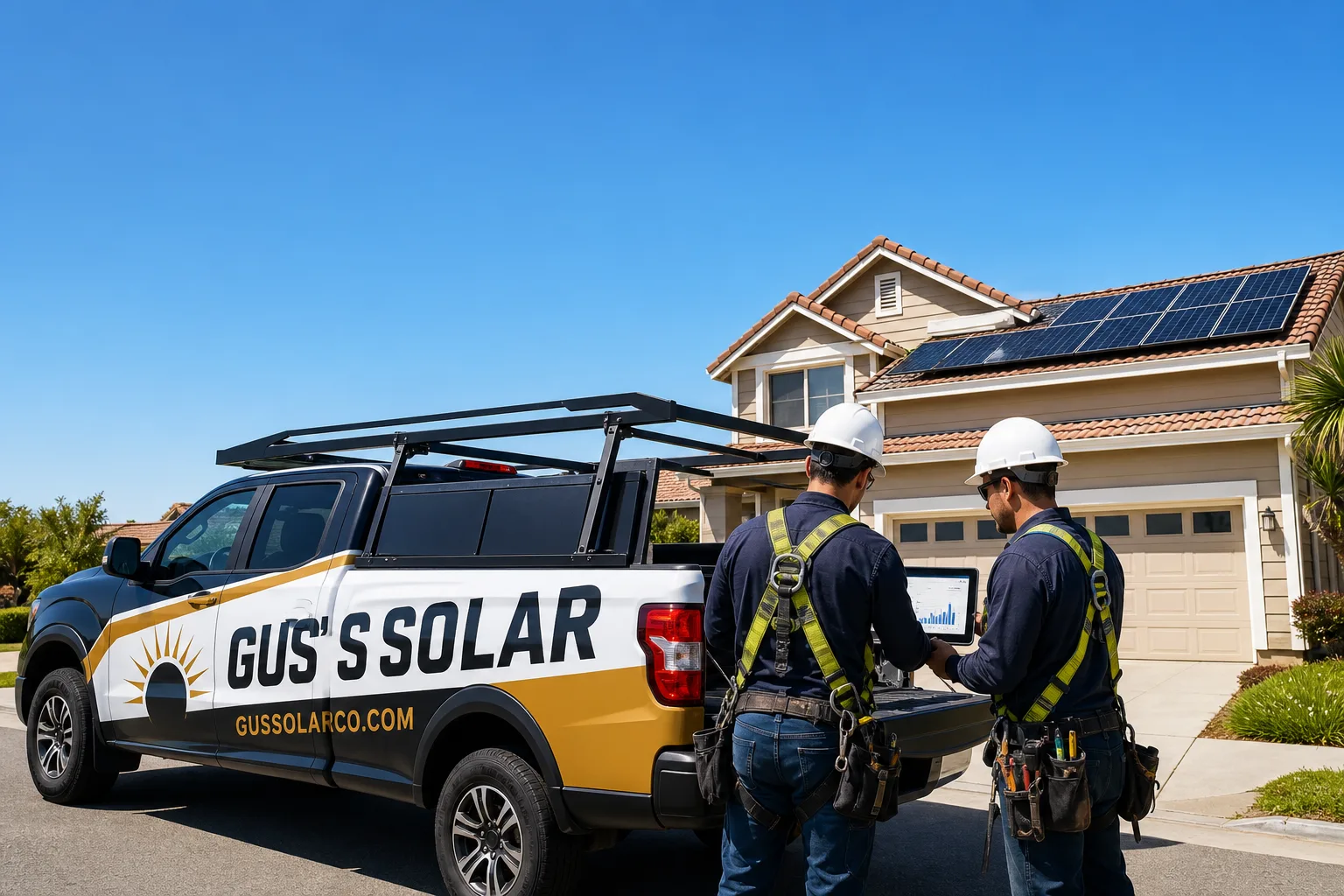
Free bill analysis - bring a power bill, get the production math for your actual roof, panel brands like Qcells and REC compared side by side
If the pitch starts at your door and ends with "sign tonight for the special," sleep on it. The sun will still be there tomorrow; so will we.
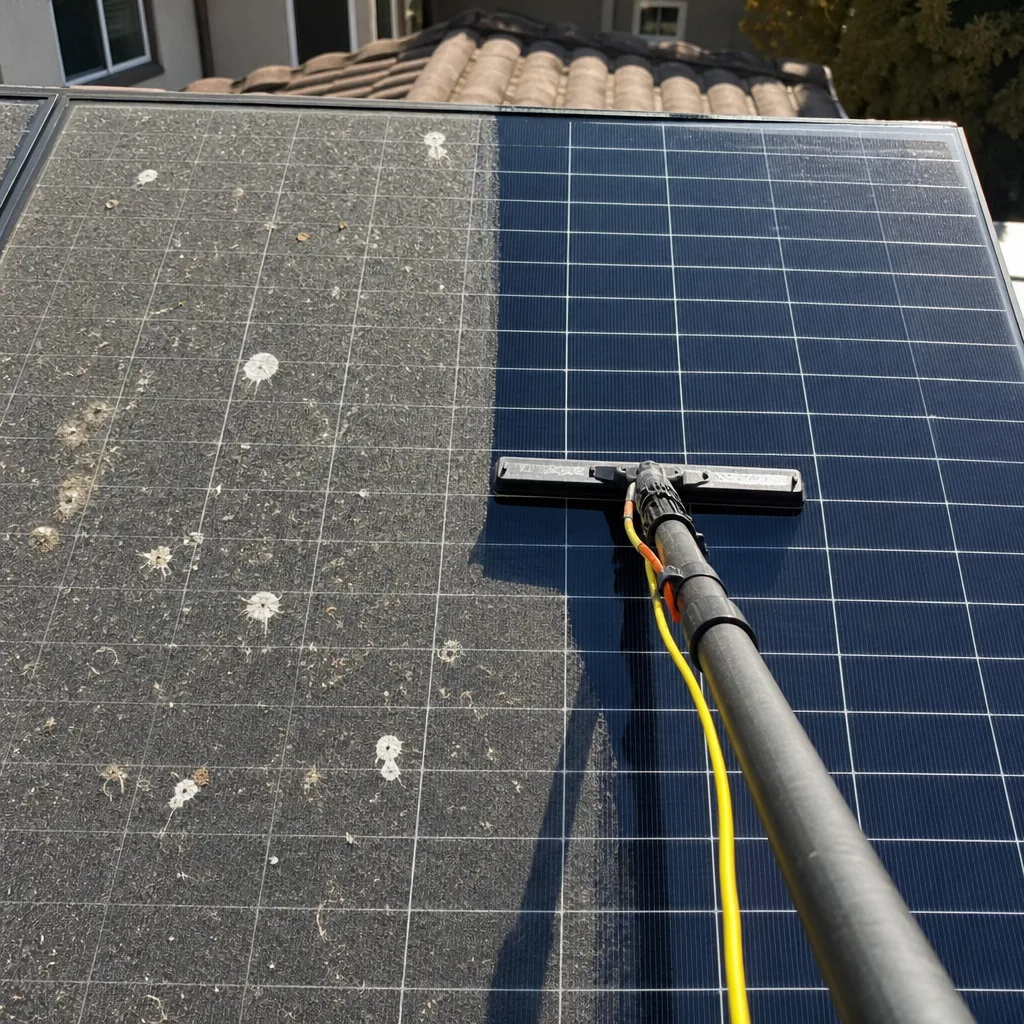
 Before
 After
After Before
 After
After Before
 After
AfterFast, Reliable Commercial Solar Installation Across Big Bear City
Commercial solar installation in Big Bear City typically runs $2.85 to $3.60 per watt before incentives, meaning a 50 kW system lands between $142,500 and $180,000. Most projects take 6 to 12 weeks from permit to power-on, with snow-load engineering review adding a few extra weeks versus valley jobs. We know this because we’ve done it here, not because we read it in a brochure. Gus’s Solar has been on roofs and ground mounts along Highway 38, throughout the Moonridge corridor, and up near Baldwin Lake for years. Call (877) 550-6892 and you’ll get Gus or someone on his crew, not a call center.
Why Gus’s Solar Is Big Bear City’s Preferred Commercial Solar Installation Company
Most solar companies won’t touch a commercial job at 6,750 feet elevation. The engineering reviews, the snow loads, the freeze-cycle flashing concerns, the steep A-frame roofs that were never built for a mounting rail. We don’t blame them for passing. But that means Big Bear City business owners get stuck with out-of-town installers who quote valley prices and then discover why the job costs more once the structural engineer looks at the plans.
Gus Petrakis started this company in 2011 and put his name on the building. His crew does the install. Background-checked, uniformed, and trained on mountain-specific racking that sheds snow instead of catching it. When a business owner on Big Bear Boulevard calls us, a live person answers. When something goes wrong two winters later, Gus is the one who comes back. That’s the whole model.
We serve the entire 92314 ZIP and the surrounding commercial districts. If you’re running a restaurant, a lodge, a hardware store, or a warehouse anywhere from Highway 18 over to Shay Road, we’ll be there. We coordinate scheduling and dispatch from our Inland Empire office, but the crews working your job know Big Bear City’s specific code requirements and weather patterns. Not a sub we found last week. Our own people.
Our Commercial Solar Installation Services in Big Bear City
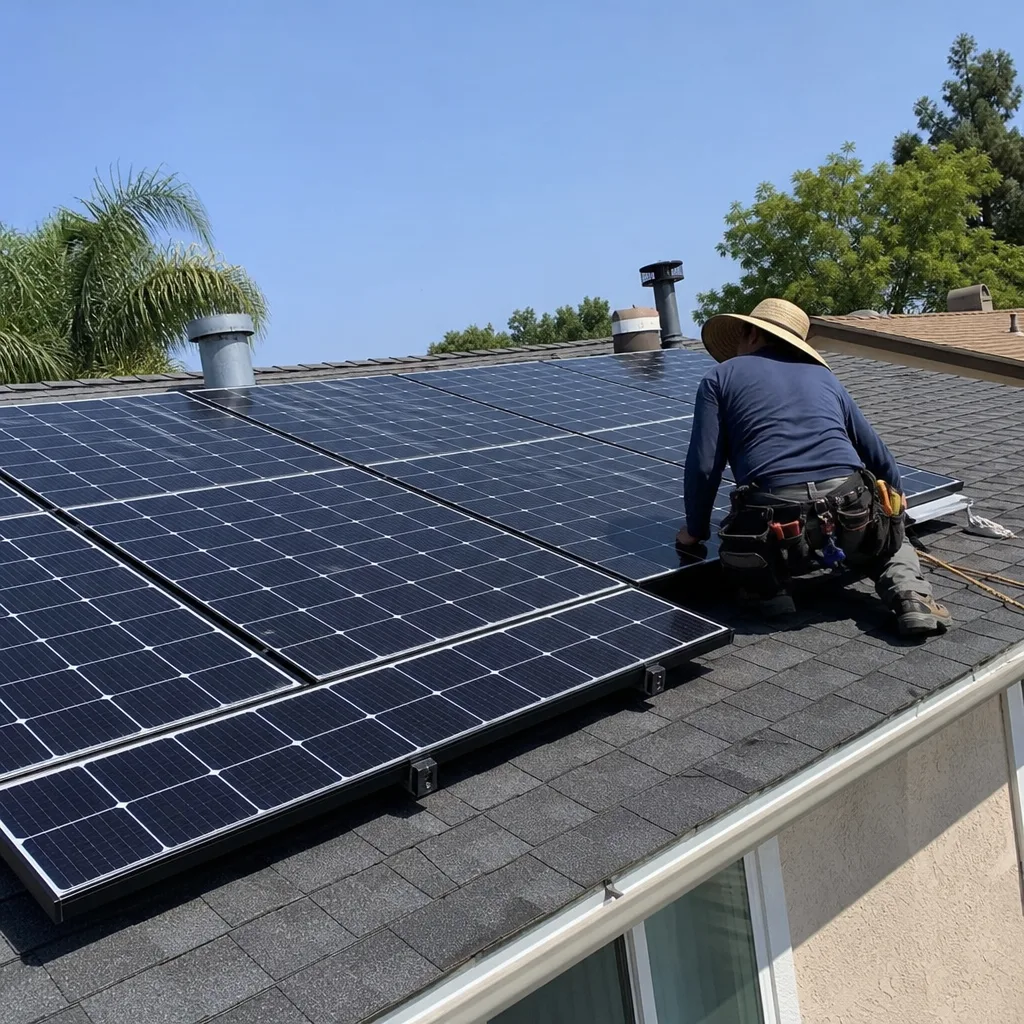
Commercial Rooftop Solar
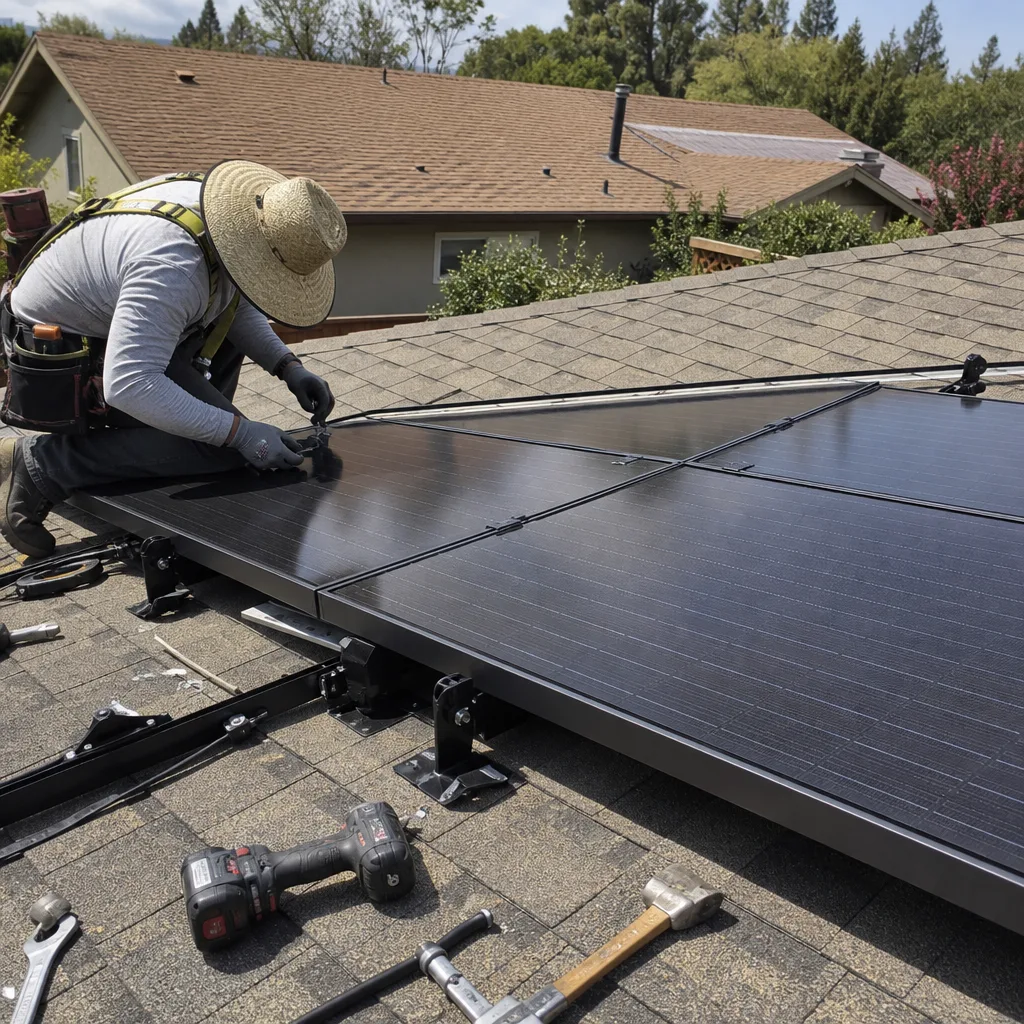
Rooftop commercial solar in Big Bear City starts with a structural engineering review, because San Bernardino County requires every array here to handle 100+ psf ground snow load. That’s not a valley requirement. That’s the mountain. We engineer tilt-up racking that promotes snow shedding while keeping the array anchored against wind-driven drift. Most commercial rooftops here are 1950s-to-1980s wood-frame construction, so we assess rafter condition before anything gets bolted down. If the roof can’t take it, we say so and we show you the math for a ground mount instead.
Warehouse & Industrial Solar
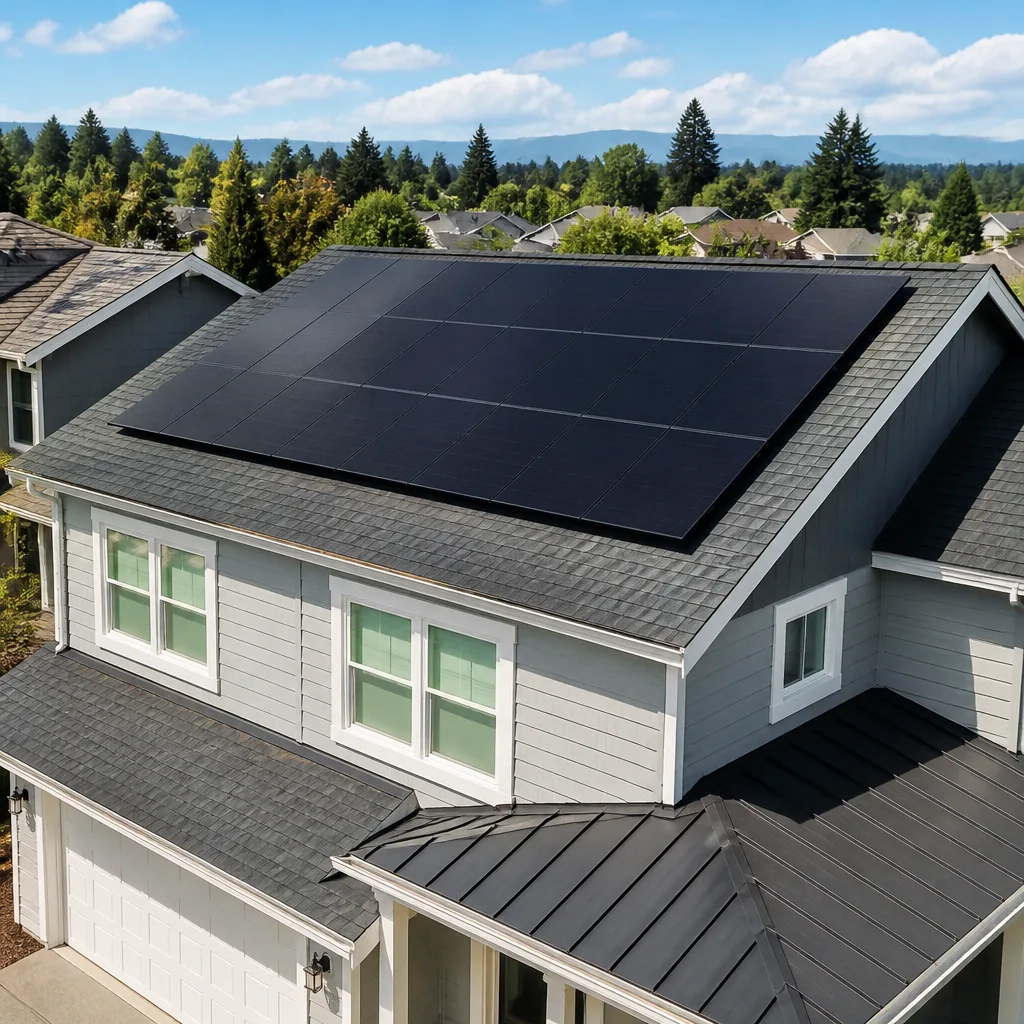
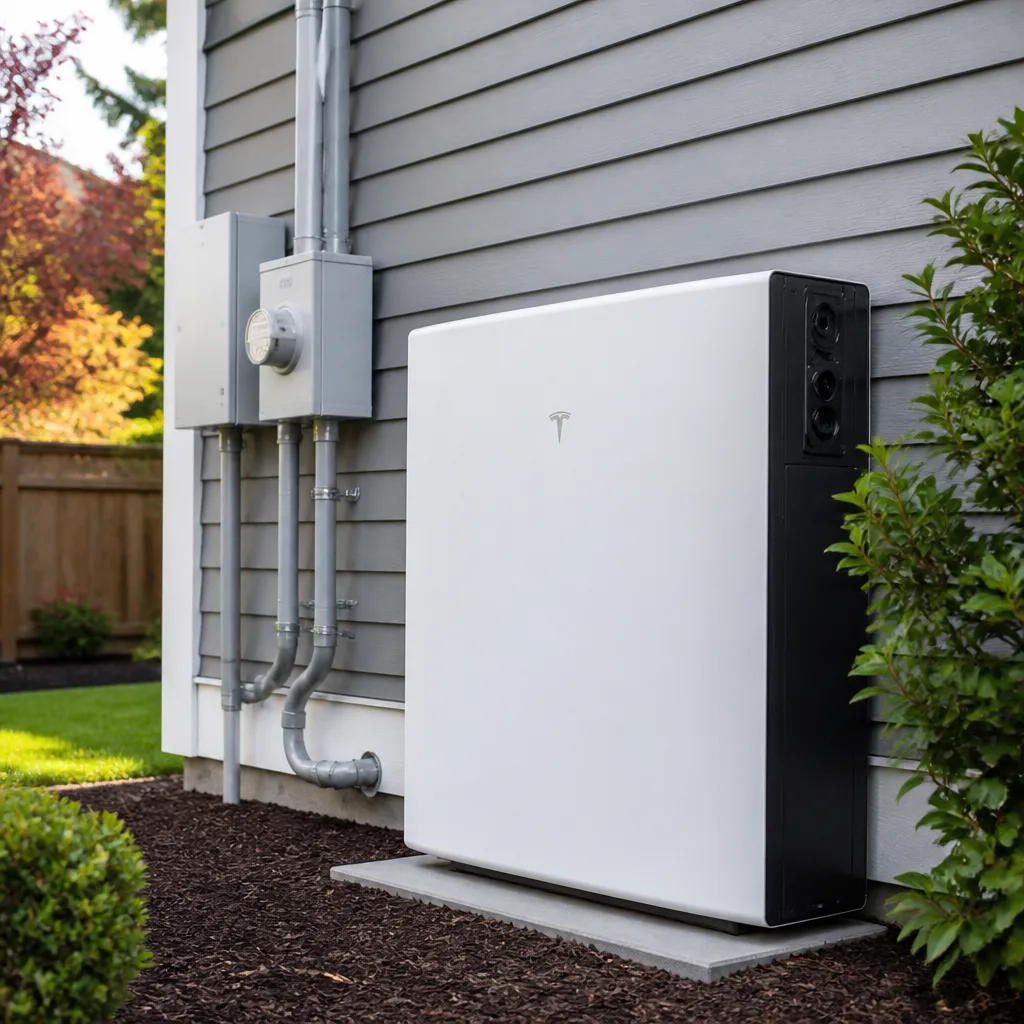
Warehouse solar in Big Bear City is different from warehouse solar anywhere else in Southern California. A flat metal roof in the valley gets a standard flush-mount system and nobody thinks twice. Up here, flush-mount means panels buried under snow for weeks. We design for minimum 35-degree tilt where the building can handle it, and we map prevailing drift patterns before we place rows. On one job in the Moonridge corridor, our crew installed a 42 kW REC Alpha Pure-R array with Enphase IQ8 microinverters on a steep-pitched metal roof, engineering tilt-up racking to shed snow into a known drift zone while keeping the array off the building’s propane tank fill path. We paired it with a Tesla Powerpack and tied the inverter’s rapid shutdown into the building’s existing fire alarm panel. No snow-related production gaps after the first winter.
Solar Carport Installation
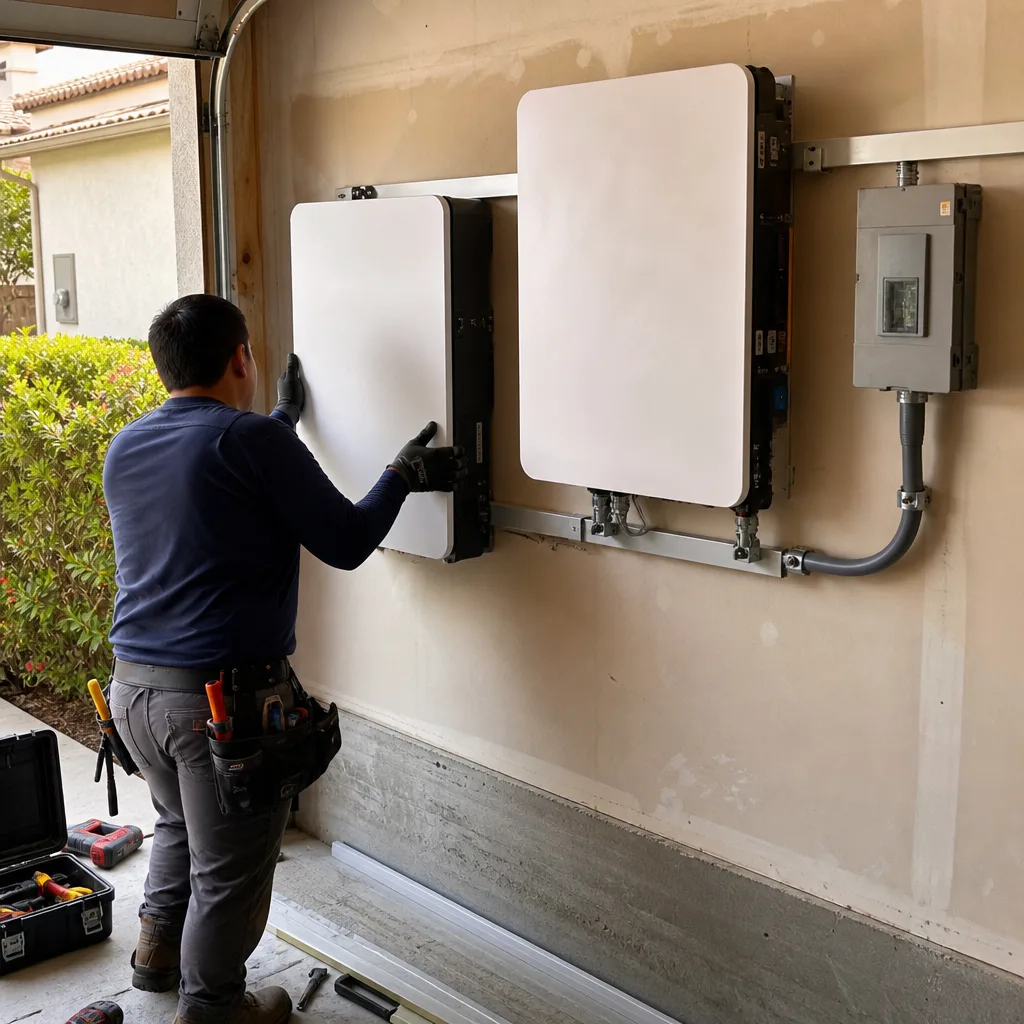
A solar carport in Big Bear City does double duty. It generates power and it keeps snow from piling on your fleet vehicles or customer parking. Carport structures have to be engineered for the same 100+ psf snow load as rooftop systems, which means heavier steel and deeper footings than you’d spec for a valley carport. We handle that engineering in-house and coordinate with the county from permit application through final inspection. For businesses with limited roof area or a roof that can’t support additional weight, a carport is often the cleanest answer.
Commercial Battery Storage
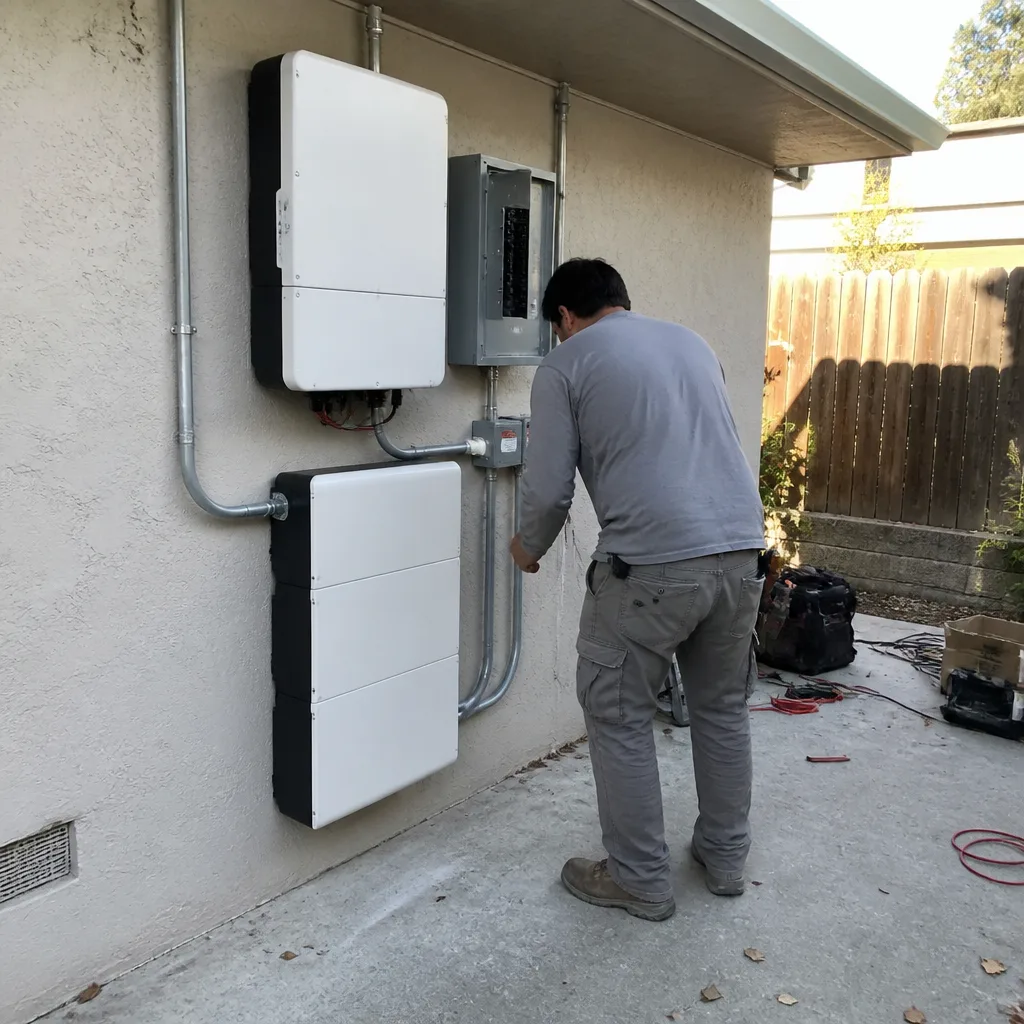
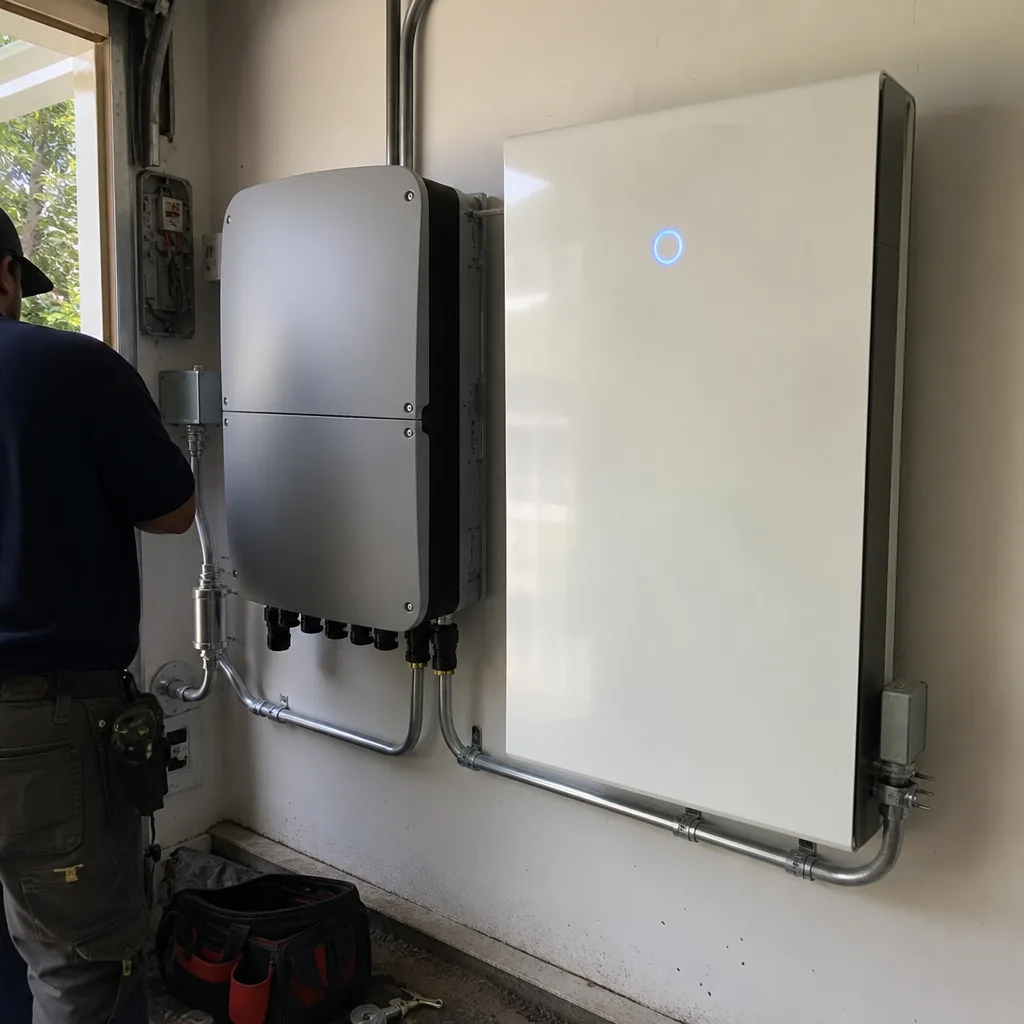
Battery storage matters more in Big Bear City than almost anywhere else in San Bernardino County. When panels get snow-covered for days, your business still needs power. And if you’re running on propane heat or a propane generator, you’re paying $5 to $6 a gallon for fuel that gets trucked up Highway 18. A properly sized commercial battery paired with solar can displace a huge chunk of that propane cost. We size batteries to your actual winter profile, not a valley solar curve. That’s the difference between a system that carries you through a February snowstorm and one that watches the generator run for a week.
What happens when you call
- 1
A real person answersNo phone trees - you reach a local pro.
- 2
You get an upfront price rangeHonest numbers before anyone is dispatched.
- 3
A background-checked tech heads outLicensed & insured, dispatched right away.
- 4
You approve before work beginsNothing starts until you say go.
Trusted Brands We Service in Big Bear City
We install and service commercial systems built on Qcells, REC, and Panasonic, paired with Enphase and SolarEdge power electronics. We stock common replacement components and microinverters for Big Bear City customers, so a failed unit in January doesn’t mean waiting a week for a part to ship from Phoenix. If your existing system was installed by another company and they’ve stopped answering, we’ll take a look. Gus offers free second opinions on any written estimate, and if another company quoted you, bring us the paperwork. We’ll tell you honestly whether the number holds up against Big Bear City’s actual engineering requirements.
Common Commercial Solar Installation Problems We See in Big Bear City Homes
- Flush-mount arrays buried under snow drifts. Installers who don’t know Big Bear City design panel tilt for valley sun, and the first winter the array produces zero for weeks at a time. The snow doesn’t slide off, it piles up, and ice dams form at the roof edge.
- Racking and flashing that fails from hard freeze cycles. Repeated freeze-thaw at 6,750 feet stresses sealants and fasteners in ways valley installers never see. Water gets into aging 1970s rafters that are already at structural capacity from snow load, and now you’ve got a leak plus an engineering problem.
- Undersized battery systems sized to valley solar profiles. A battery bank that works in Yucaipa won’t hold up in Big Bear City when panels are snow-covered for days. We see businesses running generators full-time because nobody accounted for the mountain’s winter generation gap.
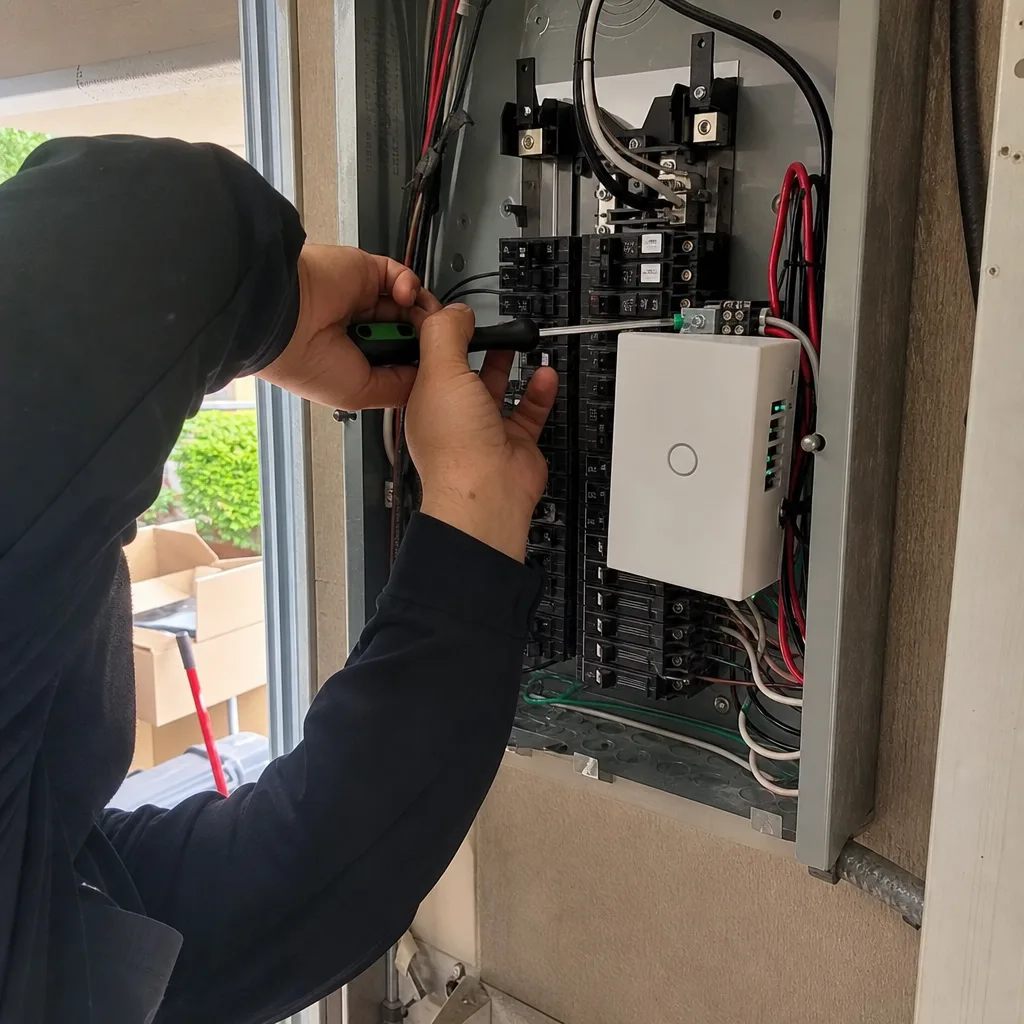
- Inverter failures from rapid shutdown integration mistakes. Big Bear City’s building code requires rapid shutdown tied into fire alarm panels on commercial buildings. If the original installer wired it wrong, you don’t find out until an inspection fails or the fire department flags it.
Pricing for Commercial Solar Installation in Big Bear City, CA
Here are straight numbers for the Big Bear City market, not a generic quote sheet.
- Commercial rooftop solar (25-75 kW): $2.85-$3.40 per watt, or roughly $71,000-$255,000 before incentives.
- Warehouse & industrial solar (75-250 kW): $2.60-$3.10 per watt, so $195,000-$775,000 depending on roof condition and racking needs.
- Solar carport installation: $3.50-$4.50 per watt for the structure and array combined. A 50 kW carport typically lands between $175,000 and $225,000.
- Commercial battery storage: Most Big Bear City businesses need 30-100 kWh of storage. Installed cost runs $1,000-$1,400 per kWh before incentives, so $30,000-$140,000 depending on chemistry and sizing.
Snow-load engineering reviews add $1,500-$3,500 to a typical commercial job here. That’s not an upsell. It’s a county requirement, and skipping it means your permit doesn’t get approved. We give you the engineering line item up front, not after you’ve signed. Call (877) 550-6892 for a real estimate built off your actual utility bill and your actual roof. Take two weeks to think it over. The price will be the same when you call back.
We Also Serve Cities Near Big Bear City
Gus’s Solar handles Commercial Solar Installation throughout the San Bernardino Mountains and the foothills below. If your business is in Big Bear Lake, Lucerne Valley, Yucaipa, or Mentone, we’ll come out. Same crew, same snow-load engineering, same live person on the phone. Whether you’re on Highway 18 or down in the valley off the 210, Big Bear City sets the engineering standard we apply everywhere else. If you’re nearby and wondering whether we cover you, call. The answer is usually yes.
Serving Big Bear City, CA - Our Local Coverage Area
We’re based in the Big Bear City area and know this community well. Use the map below to see our service coverage - if you’re nearby, we can almost certainly help.
FAQs - Commercial Solar Installation in Big Bear City
San Bernardino County requires every commercial solar array in Big Bear City to pass a structural engineering review based on a 100+ psf ground snow load, which means heavier racking, deeper footings for ground mounts, and a stamped engineering letter before the permit is issued. We handle that review in-house and include it in our quote from the first conversation. Call (877) 550-6892 and we’ll walk you through what your specific roof or lot will need.
A properly designed solar-plus-battery system in Big Bear City typically offsets 70 to 85 percent of annual electric costs, but winter production drops meaningfully when panels are snow-covered, so your battery and any propane generator fill the gap. The system is sized for your full-year usage, not the sunny months. We model your actual bill and your actual winter snow coverage before we quote anything, and we’ll show you the month-by-month numbers.
For most Big Bear City businesses with steep-pitched A-frame or cabin-style roofs, a ground-mount array is the better call, because flush-mounting panels on a steep wood-frame roof creates snow shedding problems and puts real stress on aging rafters. A ground mount lets us set the tilt angle for maximum winter production and snow shedding. It does cost more structurally up front, but we’ll show you both options with real numbers so you can decide. No pressure either way.
Yes, Enphase microinverters and SolarEdge power electronics are built for outdoor temperature swings and they hold up fine in Big Bear City’s freeze-thaw cycles when installed inside or under properly ventilated enclosures off the ground. The failure points we see are almost always sealant and flashing, not the electronics. If you’re buying a system for a Big Bear City commercial building, choose microinverters over a single central inverter so a single snow-damaged unit doesn’t take down your whole array.
Most Big Bear City commercial solar-plus-battery systems pay back in 7 to 10 years when you factor in current Southern California Edison rates, net metering, and the avoided cost of $5 to $6 per gallon propane that many businesses burn for heat and backup generation. That’s faster than a valley system because mountain propane is so expensive to truck up Highway 18. We’ll build your payback forecast off your actual utility and propane receipts, not a generic spreadsheet. Bring us a bill and we’ll bring you the math.
Get a Straight Answer on Commercial Solar in Big Bear City
You don’t need a sales pitch. You need someone who has engineered arrays at 6,750 feet and knows what San Bernardino County will require before your permit hits the desk. That’s what Gus’s Solar does. Call (877) 550-6892 and ask for Gus. He’ll answer, he’ll ask about your building and your bill, and he’ll tell you if solar makes sense before he ever asks for a signature. If a salesman needs an answer tonight, the answer is no. Gus won’t rush you.
Written by Gus Petrakis, Owner at Gus’s Solar, serving Big Bear City and the San Bernardino Mountains since 2011.