
Free bill analysis - bring a power bill, get the production math for your actual roof, panel brands like Qcells and REC compared side by side
If the pitch starts at your door and ends with "sign tonight for the special," sleep on it. The sun will still be there tomorrow; so will we.
 Before
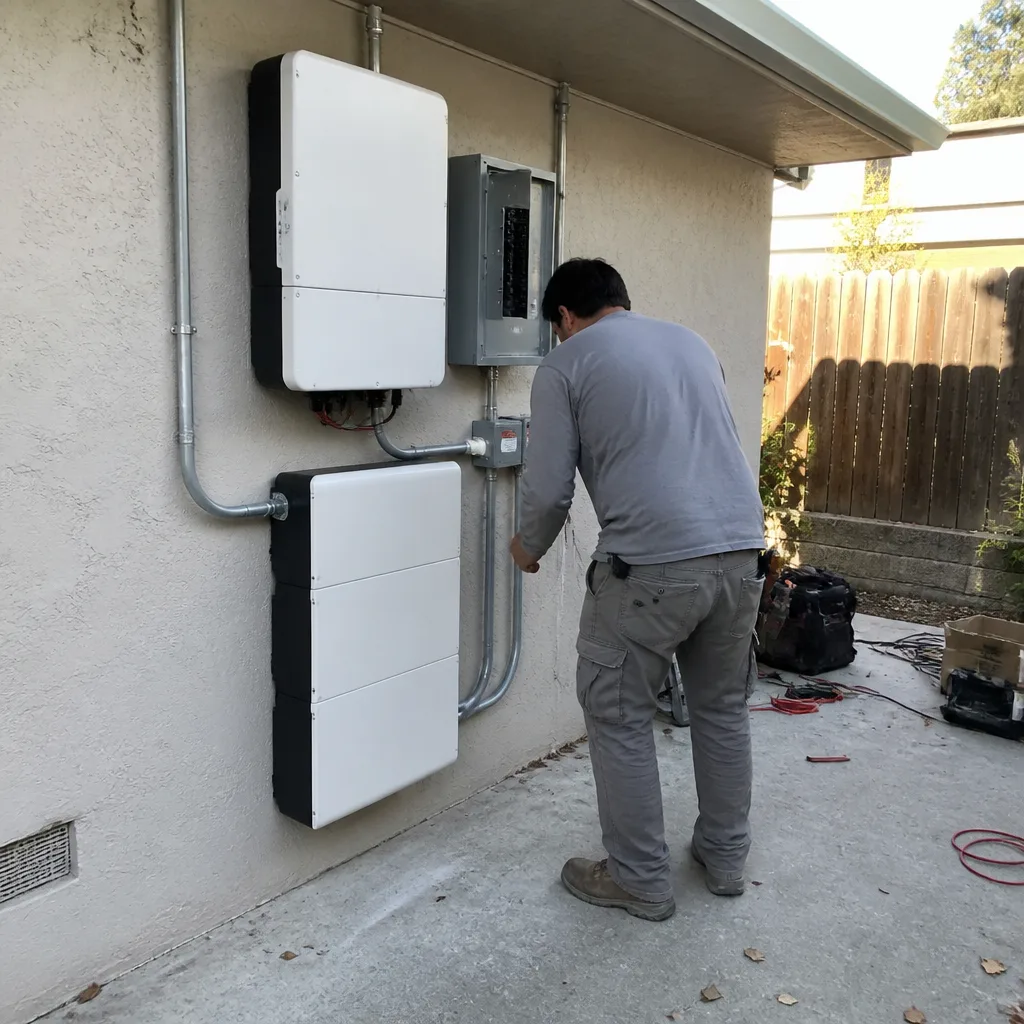 After
After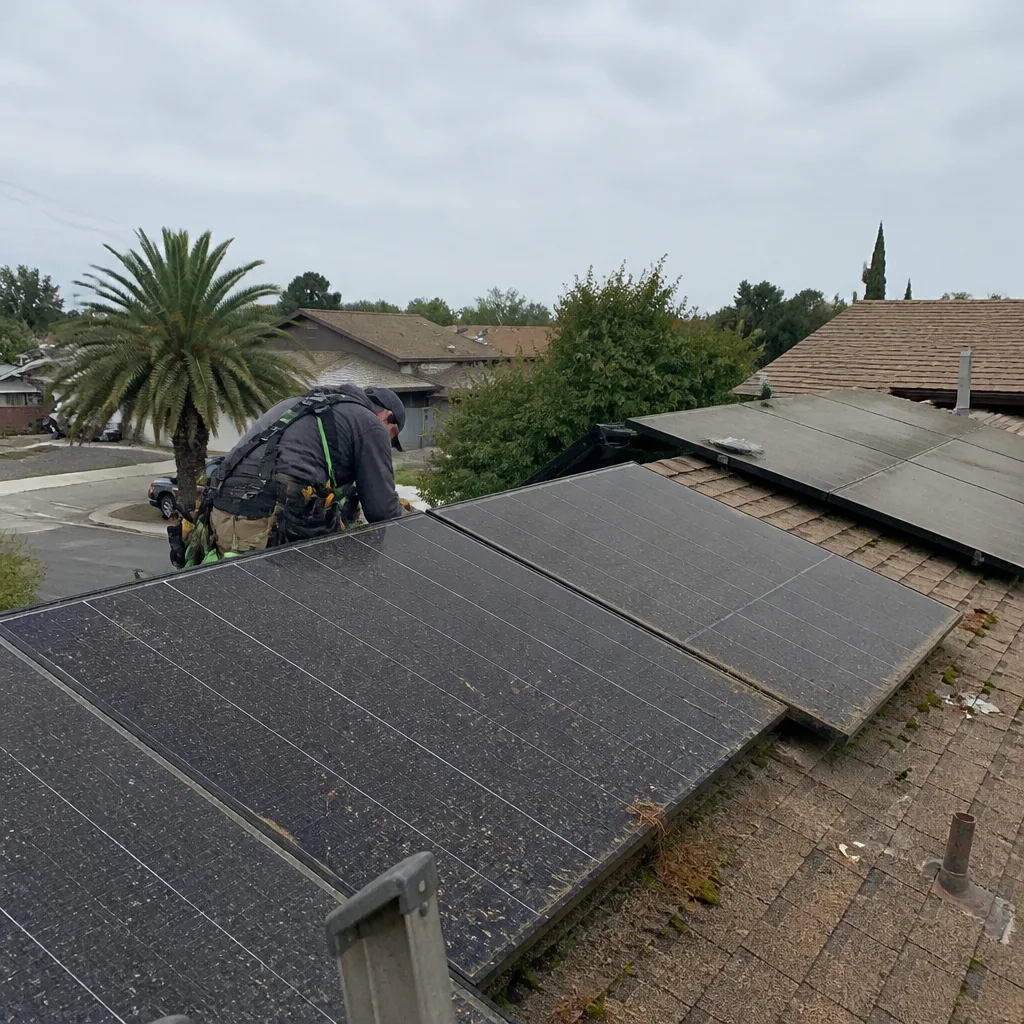 Before
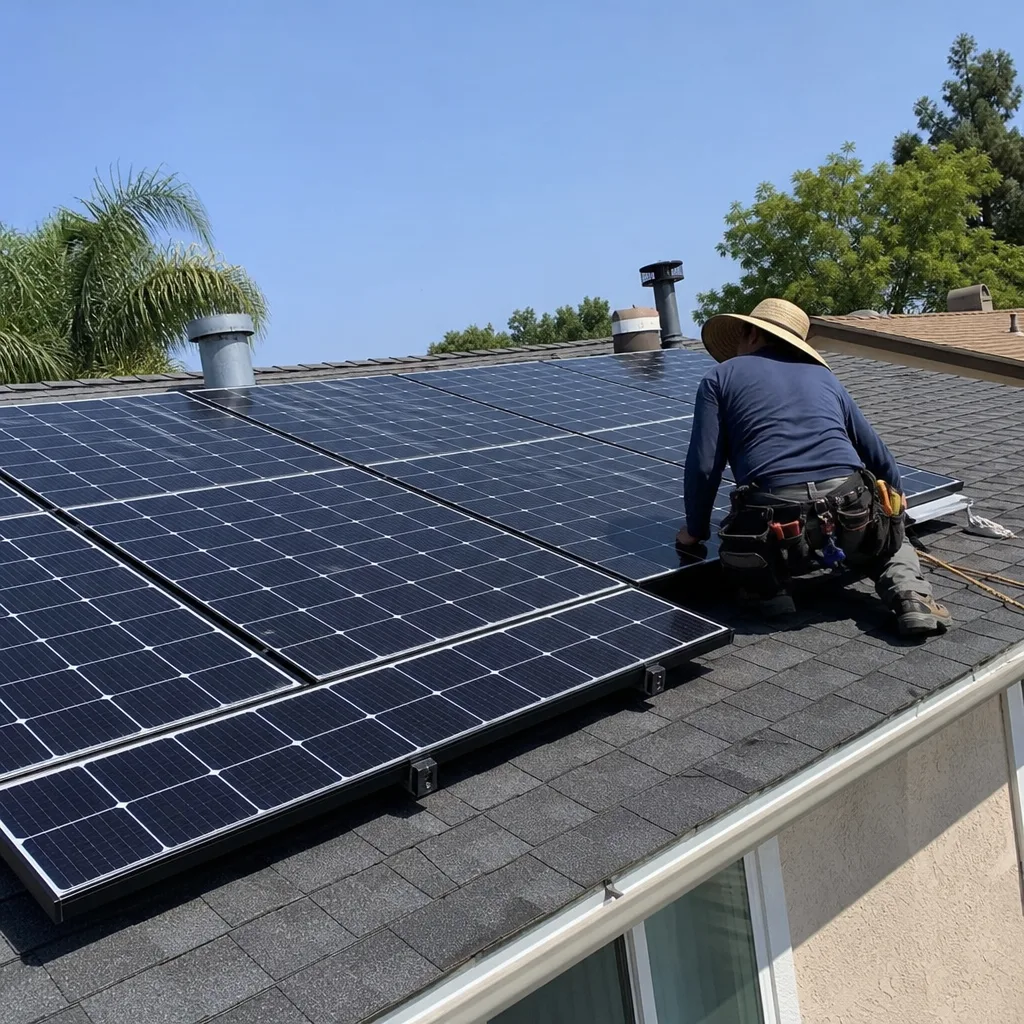 After
After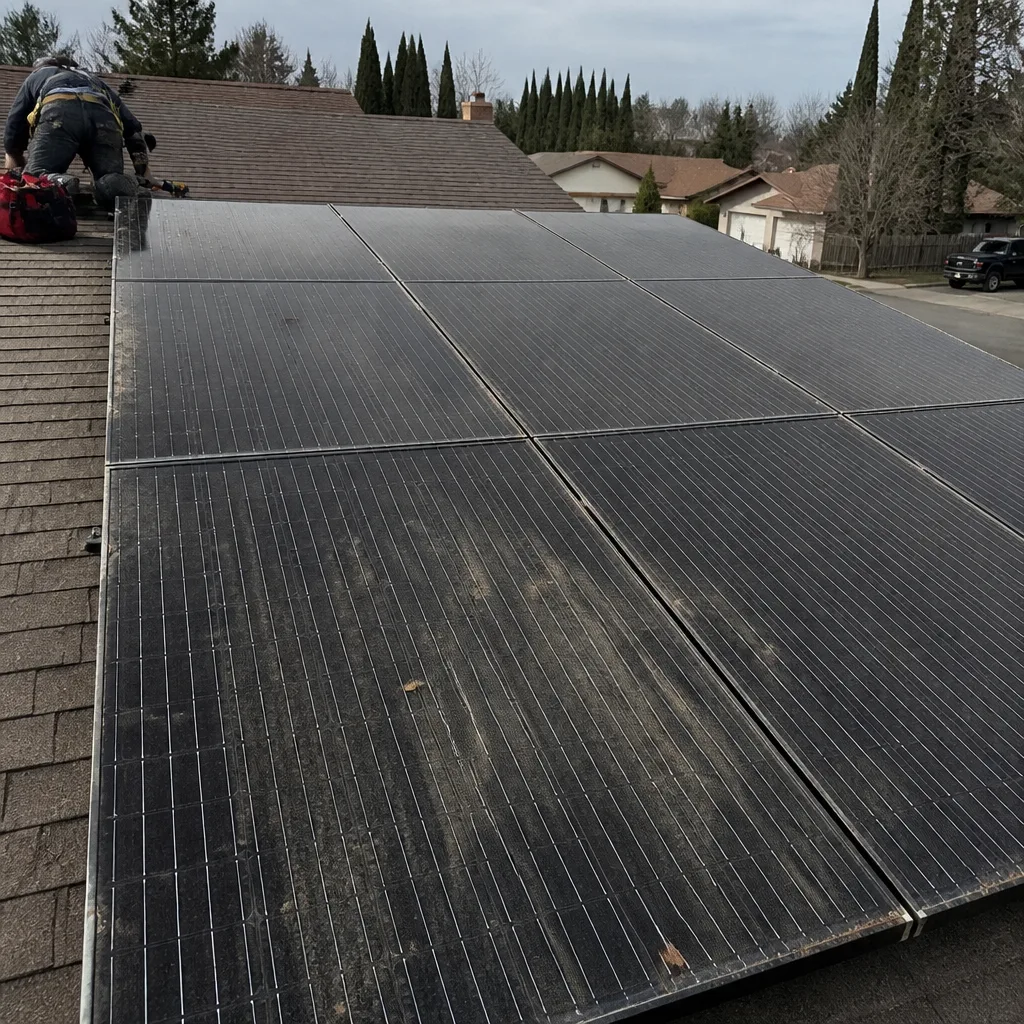 Before
 After
AfterFast, Reliable Solar Panel Maintenance & Monitoring Across Pleasanton
Solar panel maintenance and monitoring in Pleasanton means one thing above all: catching underperformance before your PG&E true-up statement does. A system that quietly loses 10-15% of its output for six months costs you real money, and most Pleasanton homeowners don’t notice until the bill arrives. Gus’s Solar handles inspections, monitoring setup, diagnostics, and firmware work for Pleasanton homeowners who want their array running at full output, not just “good enough.” Call (877) 550-6892 and a live person picks up. No ticket queue, no call center three states away.
We know Pleasanton’s particular challenge better than anyone: inland sun that’s stronger than the coastal fog belt, HOAs that dictate panel aesthetics, and two-story homes that hide shading problems from basic monitoring dashboards. The systems here don’t fail the way they fail in Fremont or Oakland. They fail in ways you can only catch if you know what Pleasanton’s sun, heat, and housing stock actually do to solar equipment.
Why Gus’s Solar Is Pleasanton’s Preferred Solar Panel Maintenance & Monitoring Company
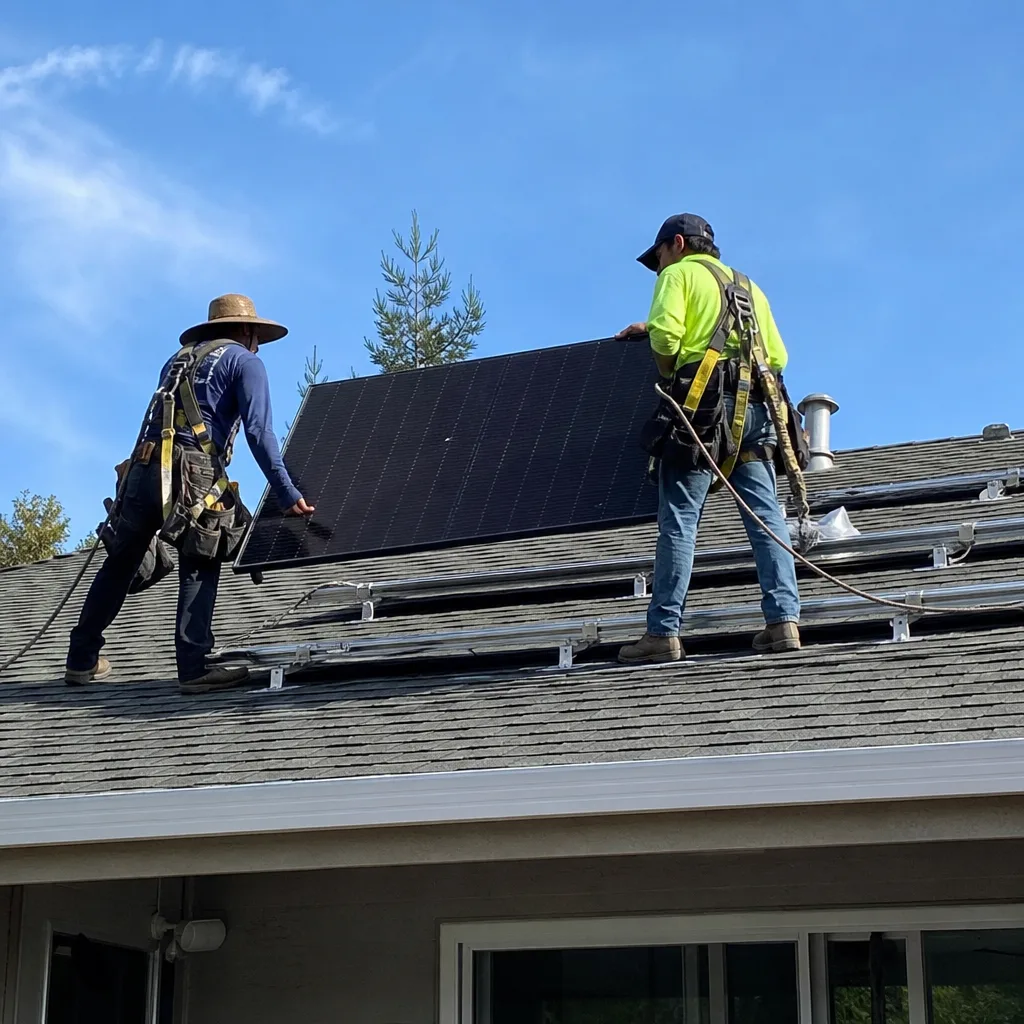
Gus Petrakis founded this company in 2011 and put his name on it. That matters in Pleasanton, where a lot of solar maintenance work goes to whoever the installer subs it out to. Gus’s crew does the work themselves. Background-checked, uniformed, and accountable to the guy whose name is on the truck. When something goes wrong with a Pleasanton array, one call brings Gus back. The 90-Day Done Right Promise is in writing on every job. If it’s not done right, he makes it right.
Our Solar Panel Maintenance & Monitoring team services arrays across Pleasanton’s planned communities, from Vintage Hills to Ironwood to Ruby Hill. Those HOA-governed neighborhoods have specific failure patterns, and we see them every week. Inter-row shading on two-story footprints. Inverter thermal throttling on 95°F afternoons. Microinverters that went offline after a PG&E voltage sag and never came back. A national outfit’s technician might not recognize these. We do, because we see Pleasanton arrays every week, not once a quarter.
Response time to Pleasanton is typically same-day for urgent issues and within 48 hours for scheduled inspections. A live person answers the phone 24/7, which means when your Tesla app shows a string that stopped reporting at 2 p.m., you talk to a human at 2:15, not a voicemail.
Our Solar Panel Maintenance & Monitoring Services in Pleasanton
Here’s what we actually do for Pleasanton homeowners, and why each service matters more here than in the fog belt west of the hills.
Annual System Inspection
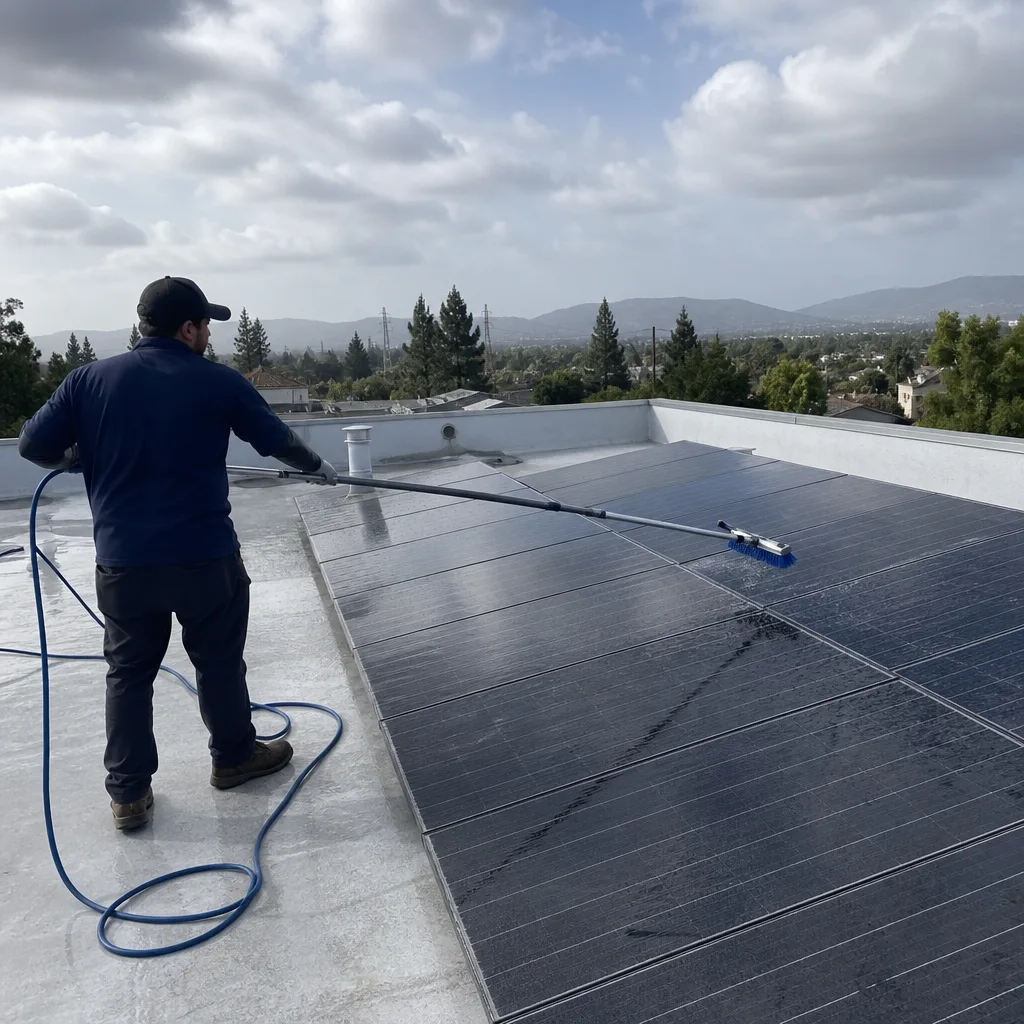
In Pleasanton’s summer heat, rooftop temperatures climb well above ambient. Wiring connections expand and contract. Conduit seals dry out. A thorough annual inspection in Pleasanton runs $150-$295 depending on array size and roof accessibility. We check every module, every connector, every piece of conduit, and we compare actual production against what your system should be producing given Pleasanton’s specific sun-hour profile. That last part is key: a national inspector will check against a generic California baseline. We check against Tri-Valley irradiance data, which is 10-15% higher than coastal East Bay cities. An array that looks fine by Fremont standards may be underperforming here, and we catch it.
Production Monitoring Setup
Most Pleasanton arrays were installed with monitoring enabled but never properly calibrated. The dashboard says “System OK” when it should say “System at 82% of expected output.” Production monitoring setup in Pleasanton typically runs $200-$450, depending on whether we’re configuring existing Enphase, Tesla, or SolarEdge hardware or adding third-party consumption monitors. We set alert thresholds so a single-panel failure trips a text message before your next true-up, not after. For Pleasanton homeowners, that’s the difference between catching a problem in May and discovering it in January on a PG&E bill.
Underperformance Diagnostics
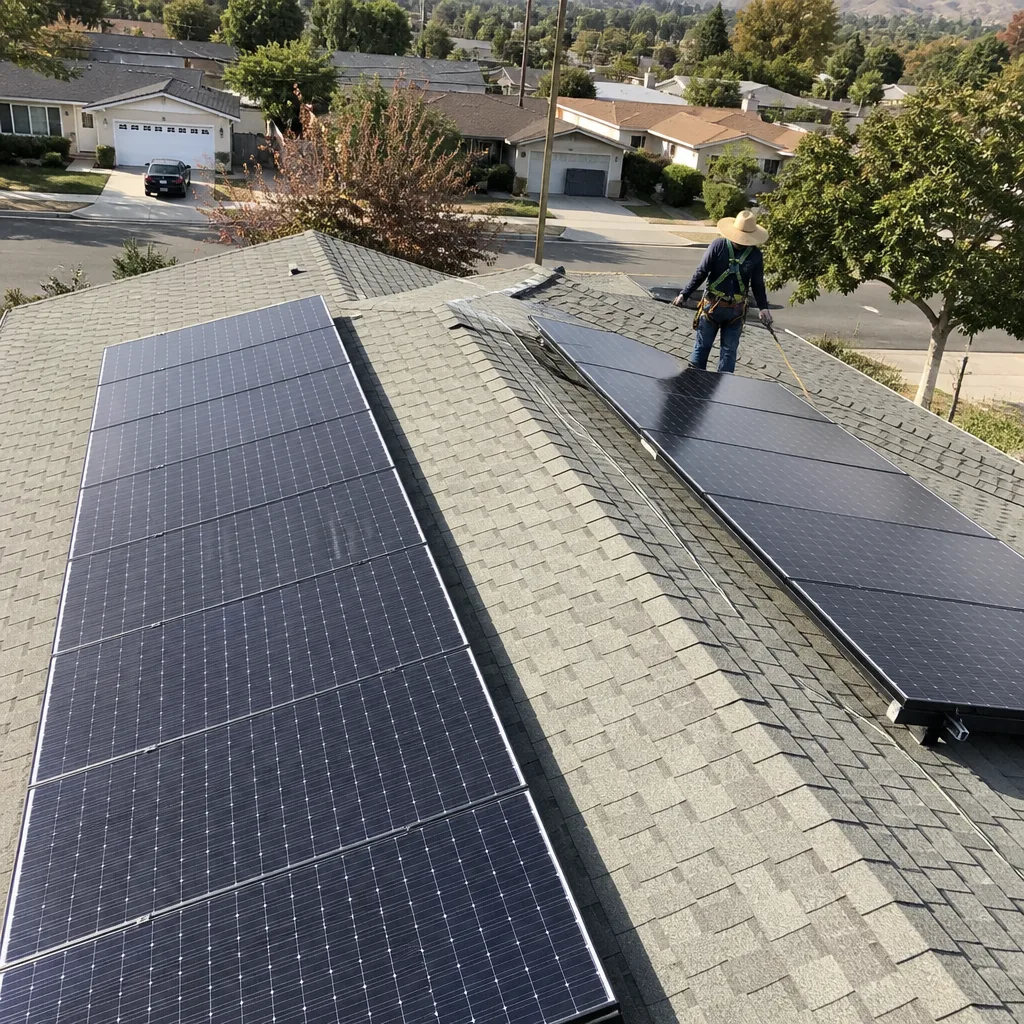
This is the service Pleasanton homeowners need most and know least about. Your system says it’s producing. Your bill says otherwise. Diagnostics in Pleasanton run $250-$500 depending on system complexity and whether we need to pull inverter logs, test individual strings, or inspect wiring at the array level. We were called to a two-story Vintage Hills home because the homeowner’s Tesla app showed a persistent 18% underproduction versus the original production estimate. Our crew found two microinverters on the southwest azimuth had stopped reporting after a PG&E voltage sag; we pulled the Enphase logs, confirmed the rapid shutdown circuit was intact, and replaced the failed units under warranty, then recalibrated the monitoring alerts so a single-panel failure would trip a text before the next true-up statement. That’s what underperformance diagnostics actually looks like in Pleasanton.
Firmware & App Configuration
Inverter firmware updates get pushed by Enphase, Tesla, and SolarEdge, but they don’t always apply cleanly. Sometimes the update fails and the inverter drops offline for weeks. Sometimes the update resets the grid-protection thresholds and the inverter starts tripping on PG&E’s voltage swings in the Tri-Valley. Firmware and app configuration in Pleasanton runs $95-$180 per visit. We’ll review your inverter firmware, confirm the app is showing the right data, and reconfigure alerts so they’re useful. Not ten generic notifications a month, but two or three that actually mean something: a panel is down, a string is underperforming, an inverter is running hot.
What happens when you call
- 1
A real person answersNo phone trees - you reach a local pro.
- 2
You get an upfront price rangeHonest numbers before anyone is dispatched.
- 3
A background-checked tech heads outLicensed & insured, dispatched right away.
- 4
You approve before work beginsNothing starts until you say go.
Trusted Brands We Service in Pleasanton
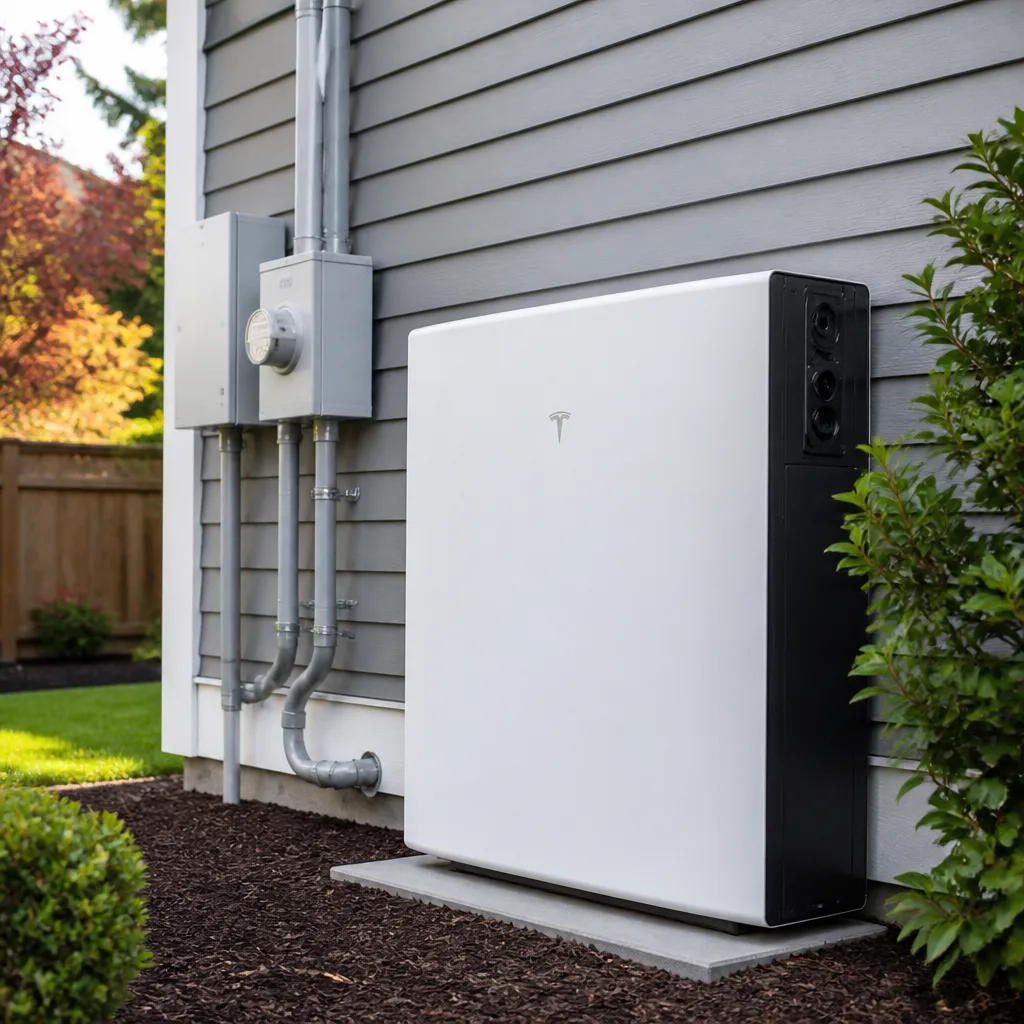
Gus’s Solar works on systems built with Enphase, Tesla, SolarEdge, FranklinWH, and the rest of the major equipment brands. We stock common replacement parts for these systems locally, which means when a Pleasanton homeowner has a failed microinverter or a tripped rapid shutdown circuit, we’re not waiting on a shipment from a distributor in Stockton. We carry what we need to get your array back to full output, usually in one visit. We know the firmware quirks on each brand and the specific failure modes they exhibit in Pleasanton’s heat and PG&E’s voltage conditions.
Common Solar Panel Maintenance & Monitoring Problems We See in Pleasanton Homes
- Silent microinverter failures after voltage events. PG&E’s Tri-Valley grid experiences sags and swells that trip microinverter grid-protection features. Individual panels go offline and stay offline for weeks. Homeowners only discover it when the true-up statement shows lower kWh offset than expected. This is the most common issue we find in Pleasanton, and basic monitoring dashboards hide it unless array-level diagnostics are enabled.
- Inter-row shading on two-story footprints. The bulk of Pleasanton’s housing stock is 1980s-2000s two-story tract homes and upscale subdivisions. On smaller footprints, the lower roof deck can be shaded by the upper story for part of the day. Modules on the lower deck show 12-15% less output than upper modules, but a dashboard that reports total system production won’t show you that. You need array-level monitoring to see it.
- Inverter thermal throttling on HOA-approved all-black designs. HOA covenants in communities like Ruby Hill and Ironwood effectively require flush-mount, all-black panels. Those panels trap more heat behind the module on Pleasanton’s 95°F afternoons. Some SolarEdge string inverters derate 5-7% without active cooling, and the underperformance goes unnoticed until the annual inspection. We set temperature-aware monitoring thresholds for these systems.
- Firmware updates that knock systems offline. Auto-pushed inverter updates occasionally fail in Pleasanton’s PG&E service territory, leaving the inverter disconnected from the grid until someone manually intervenes. The homeowner’s app shows “System Offline” but nothing explains why. We see this every month. It’s usually a 30-minute fix, but you have to know what to look for.
Pricing for Solar Panel Maintenance & Monitoring in Pleasanton, TX
Here are the numbers we quote to Pleasanton homeowners, in writing, before we do any work. An annual system inspection runs $150-$295. Production monitoring setup runs $200-$450. Underperformance diagnostics run $250-$500 depending on how deep we go. Firmware and app configuration runs $95-$180 per visit. We’re not going to quote you one number on the phone and another at the door. The price quoted is the price charged. We offer a free second opinion on any written estimate from another company, $40 off any repair over $200, and no trip charge if you’re inside Atascosa County. Seniors and veterans get 10% off, and that discount never expires. Call (877) 550-6892 for an exact quote. Bring us a bill, we’ll bring you the math.
If a salesman needs an answer tonight, the answer is no. Take two weeks. Think about it. The price will be the same.
We Also Serve Cities Near Pleasanton
Our crews serve Pleasanton and the surrounding area, including Floresville, Lackland Air Force Base, San Antonio, and Alamo Heights. If you’re in one of those communities and need solar maintenance, the same team that works on Pleasanton arrays will handle yours. Our full service area and local expertise is detailed on our Pleasanton page.
Serving Pleasanton, TX - Our Local Coverage Area
We’re based in the Pleasanton area and know this community well. Use the map below to see our service coverage - if you’re nearby, we can almost certainly help.
FAQs - Solar Panel Maintenance & Monitoring in Pleasanton
An annual inspection is sufficient for most Pleasanton homeowners, but we recommend a mid-summer diagnostic if you’re in a two-story home with a shaded lower roof deck. HOA-approved all-black arrays in communities like Ruby Hill and Ironwood also benefit from a thermal check during peak summer, since heat-trapping flush-mount designs can mask inverter throttling. Call (877) 550-6892 to schedule an inspection; we’ll tell you upfront what it costs.
Yes. PG&E’s net metering in Pleasanton credits you for exported kWh at rates that change throughout the day, so your true-up statement reflects dollar value, not just raw production. A system can be underproducing by 15% and still show a “reasonable” true-up if your consumption patterns shifted. That’s why array-level production monitoring matters: it shows you the kWh shortfall directly, not through the lens of PG&E’s billing calendar. We calibrate monitoring specifically for Pleasanton’s PG&E rate structure.
Panels in Pleasanton typically degrade 0.5-0.7% per year, which is standard, but the Tri-Valley’s sustained 95°F afternoons add thermal stress that can accelerate inverter degradation faster than panel degradation. We see inverters in Pleasanton fail 2-3 years earlier than the same models in cooler coastal climates. The panels are fine. The electronics take the beating. Annual inspections catch inverter degradation before it becomes a full failure.
You can catch total-system outages, but not subtle underperformance. The default Enphase and Tesla apps in Pleasanton report aggregate production, and they don’t flag single-panel failures or array-level shading unless those diagnostics are explicitly enabled. We regularly meet Pleasanton homeowners who watched their app say “System OK” for six months while a string was down. Professional monitoring setup adds the alert thresholds and array-level views that the default apps hide. It’s a one-time cost, not a subscription, unless you want ongoing monitoring.
Yes, and it’s something we plan for. Most Pleasanton HOAs in planned communities like Vintage Hills and Ironwood require architectural review before panel changes, and they typically mandate all-black, flush-mount designs. That affects maintenance access because flush-mount arrays leave less clearance between the roof deck and the panel frame, which can complicate wiring access during diagnostics. We’ve worked with enough Pleasanton HOAs to know what passes review and what doesn’t, and we sequence HOA approval before pulling permits so the clock doesn’t restart. If you’re considering panel work, call (877) 550-6892 and we’ll tell you what your specific HOA will require.
Call (877) 550-6892 for a free estimate on solar panel maintenance and monitoring in Pleasanton. A live person answers. We’ll give you an honest number, put it in writing, and tell you to take two weeks to think about it. Gus’s name is on the work.
Written by Gus Petrakis, Owner at Gus’s Solar, serving Pleasanton and the surrounding communities.